Gardens of the Palais-Royal

Thinking back and itching to get back to Paris.

The first garden of the Palais was planted by Cardinal Richelieu in 1629, where the Court of Honor is today. In 1633, Richelieu obtained authorisation to extend the garden northeast into the land occupied by the obsolete medieval city walls of Paris. He also received permission to sell forty-five building sites around the garden.

The new garden site was 170 meters by 400 meters, making it the third largest garden in Paris, after the Tuileries and Luxembourg Gardens. The new garden featured long alleys shaded by trees, elaborate parterres and flower beds, a fountain in the centre, and a circular water basin at the north end. The master hydraulics engineer Jean-Baptiste Le Tellier designed the fountain, which, like the Louvre Palace, took its water from the La Samaritaine pump on the Seine.

The garden was redesigned several times, notably in 1674 by Andre Le Notre, and his nephew Claude Desgots in 1730. In 1817, under Charles X of France, the main water basin was enlarged to twenty-five meters in diameter, and the longitudinal parterres were remade in 1824. In 1992 the landscape gardener Mark Rudkin created new lawns and flower beds, termed “Salons of greenery,” with seasonal flowers enclosed by grills covered with climbing plants. The garden was classified as a French historical monument in 1920, followed by the rest of the Palais-Royal in 1994.

A small cannon was installed in the middle of the bowling green at the north end of the garden in 1786. It fired a shot each day at noon, regulated by an ingenious mechanism that used a magnifying lens pointed at the sun’s noontime position to light the match which fired the gunpowder. Between 1891 and 1911, the official noontime in France was defined by the cannon shot. It was stolen in 1998, but recovered and returned to its place in 2002.

The two major alleys of the gardens are named for two of the famous 20th-century residents of the neighbouring buildings, the writers Colette and Jean Cocteau.

The Alley of Colette

Parma, Italy and a notable nose

Two years ago today I was enjoying the charms of Parma for the first time. It seems like it was yesterday. Parma impressed me and I have plans to return soon.

One of the things I learned on that trip was that the Duchess of Parma was the sister of Marie Antoinette and the daughter of Empress Maria Theresa and Emperor Francis I. She, the duchess, was born in 1746 as Maria Amalia Josepha Johanna Antonia. She married Ferdinand I, Duke of Parma and became the duchess of Parma, Piacenza and Guastalla.

In Parma I learned that the Duchess of Parma and was in love with violets and their scent. I bought several vials of violet perfume and some lovely handmade soaps in the same fragrance. What I didn’t know is that Parma has a reputation for scent science and craft!

And so I was fascinated by this article in today’s New York Times.

The incredible Palais-Royal, Paris

Entrance front of the Palais-Royal

Ah, this incredible building complex in Paris!

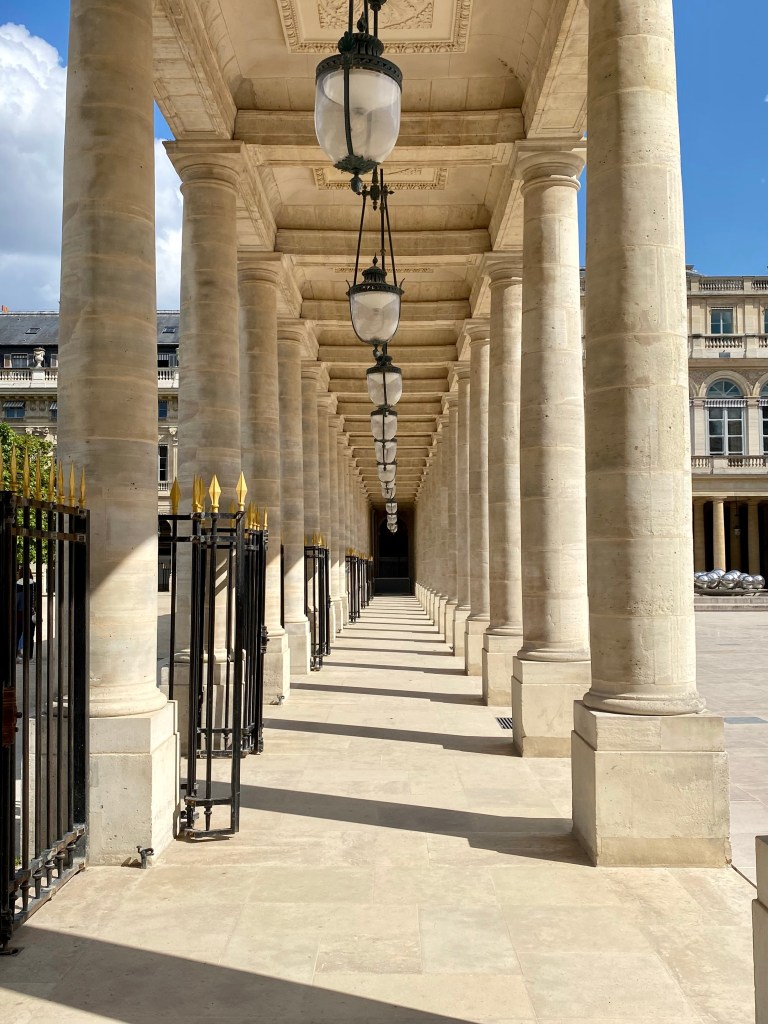
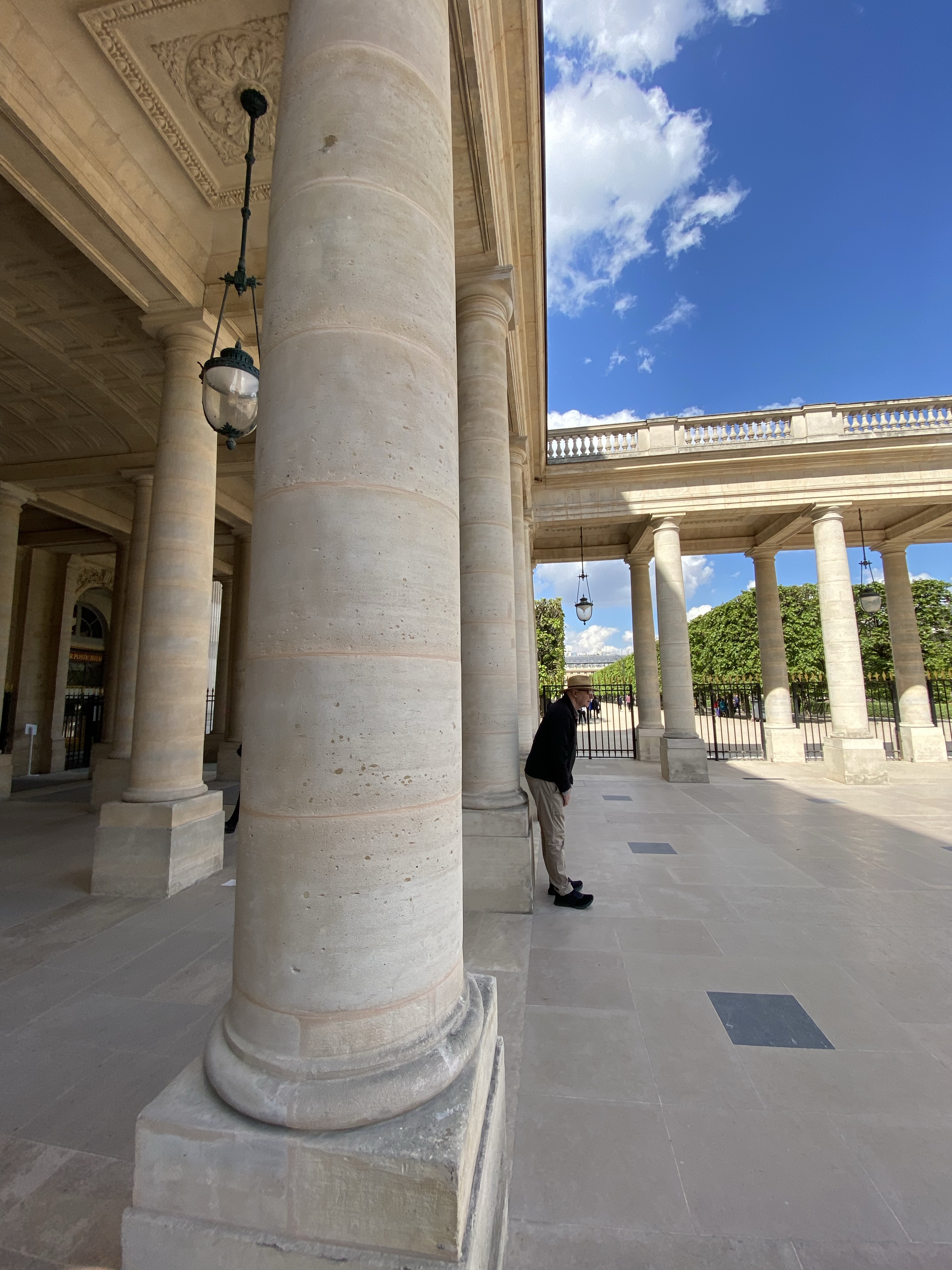
I think you could just about spend your whole life in the Palais-Royal, if you were very, very lucky! It has everything! Beautiful apartments, excellent restaurants, nice shops housed in lovely arcades and a drop-dead gorgeous garden with a pond and fountain. You’d be a princess or prince, to live such a life here!

I’m not a princess, but I’d like to live here anyway.

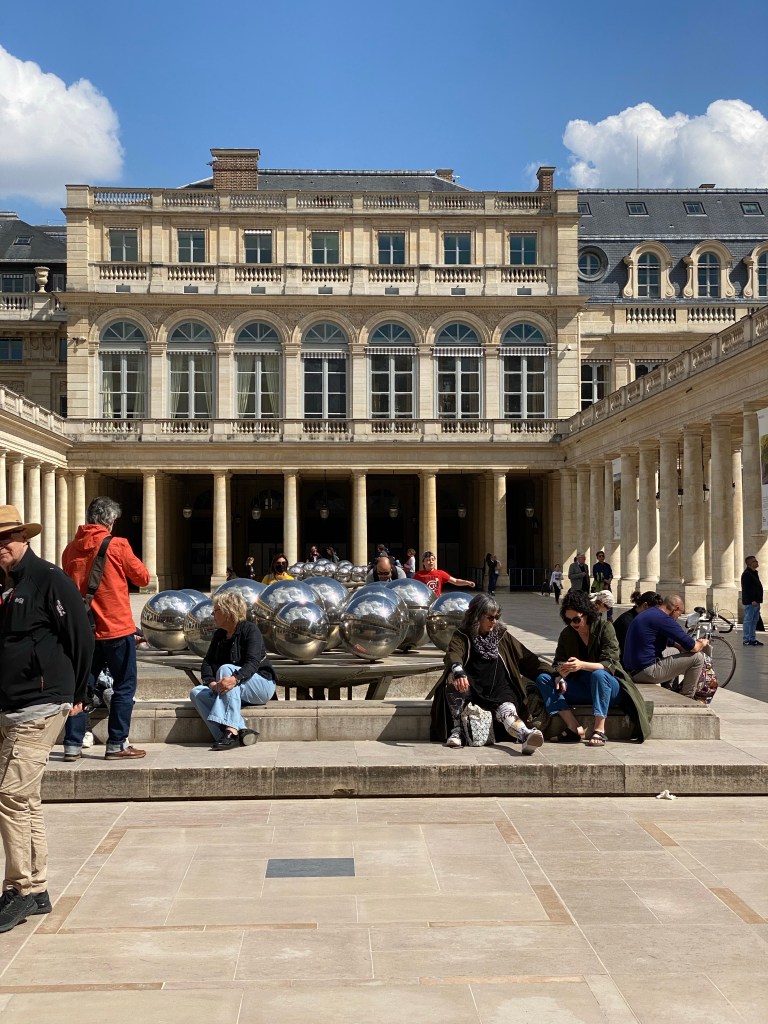
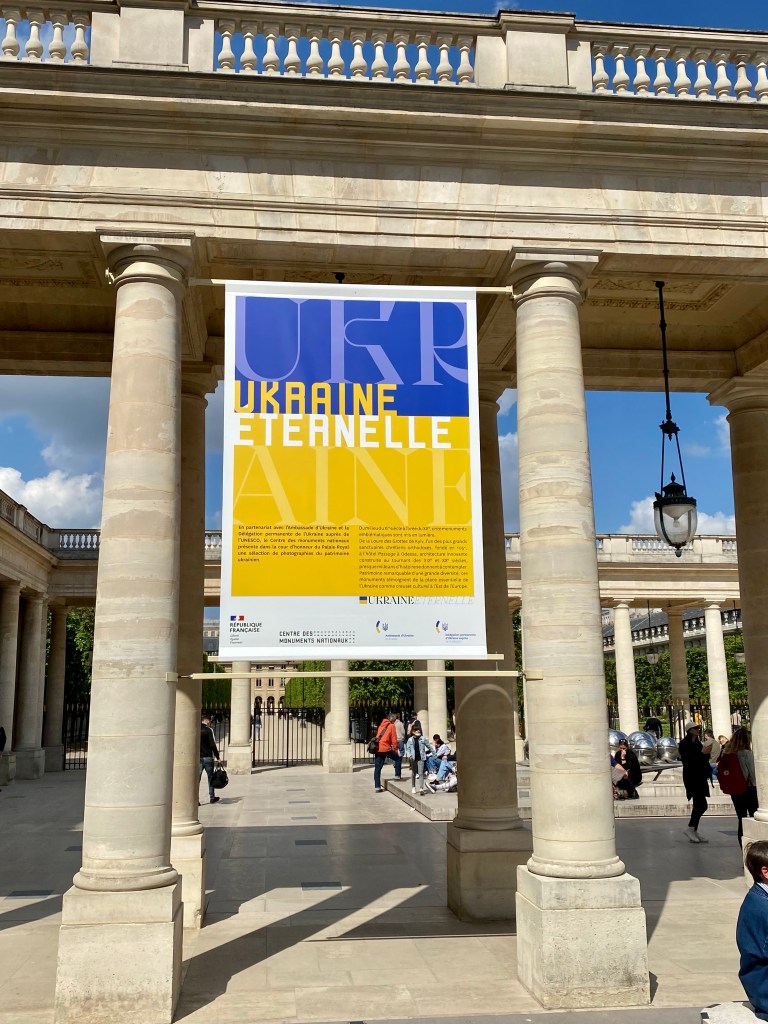
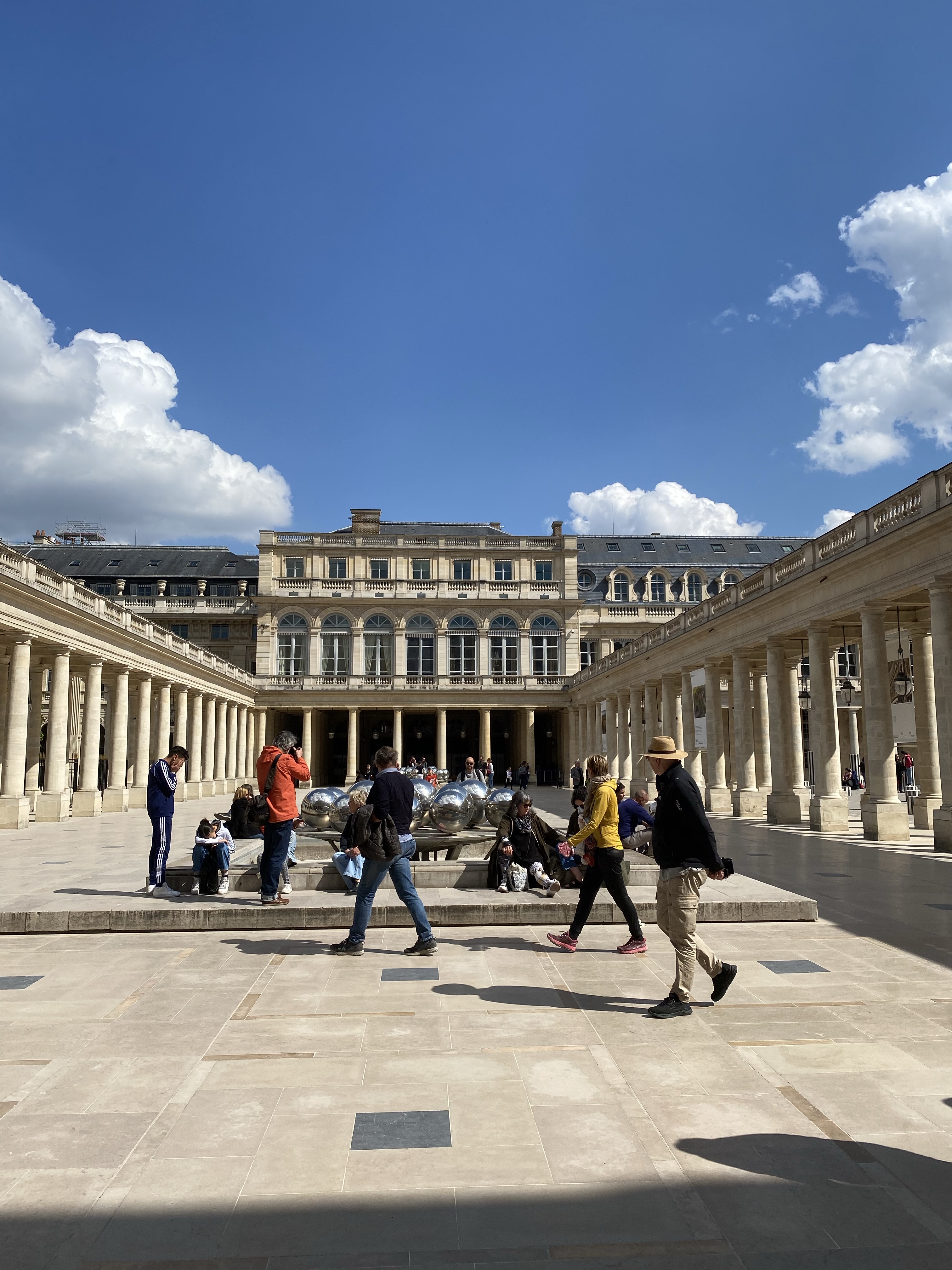
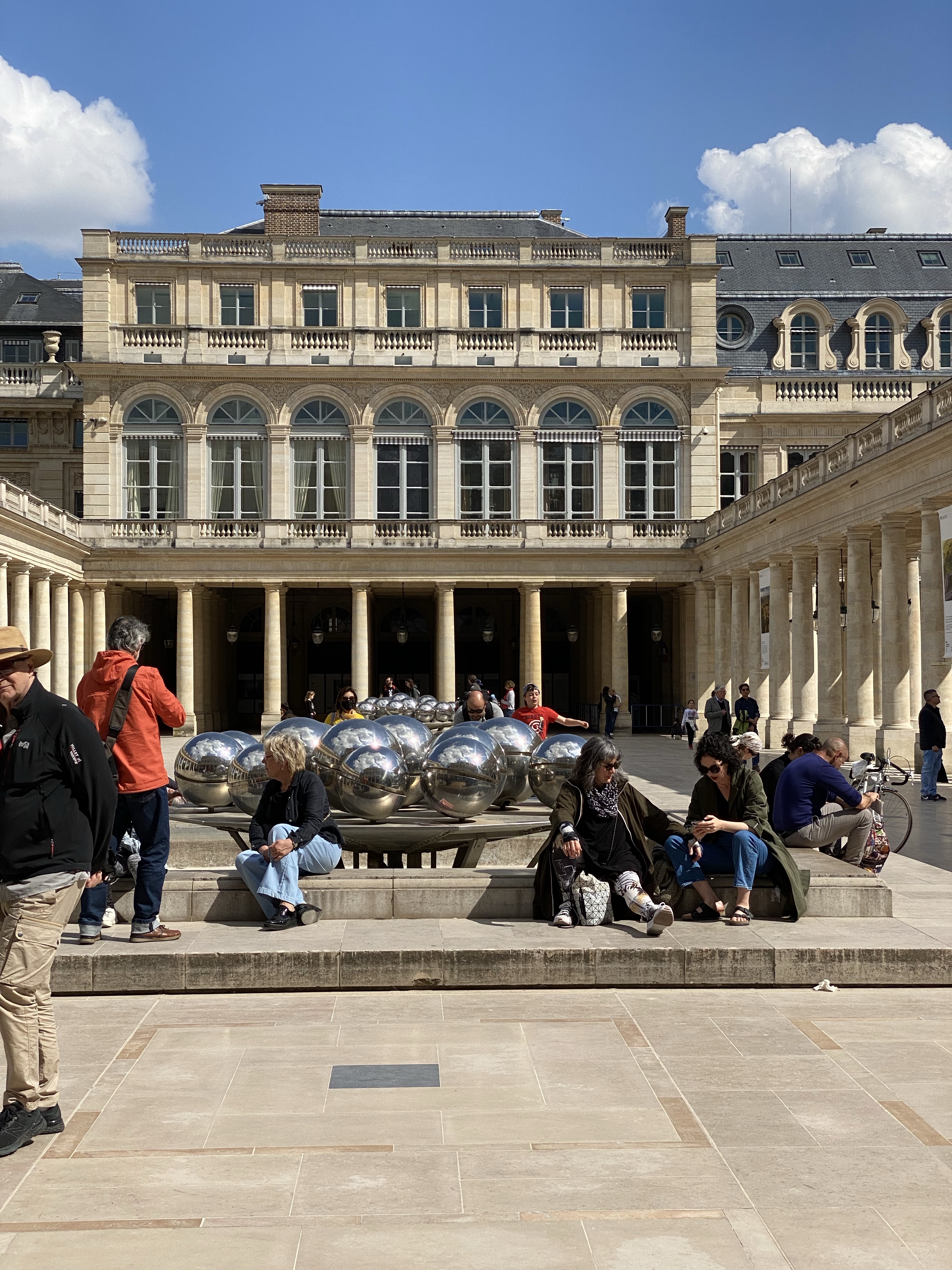
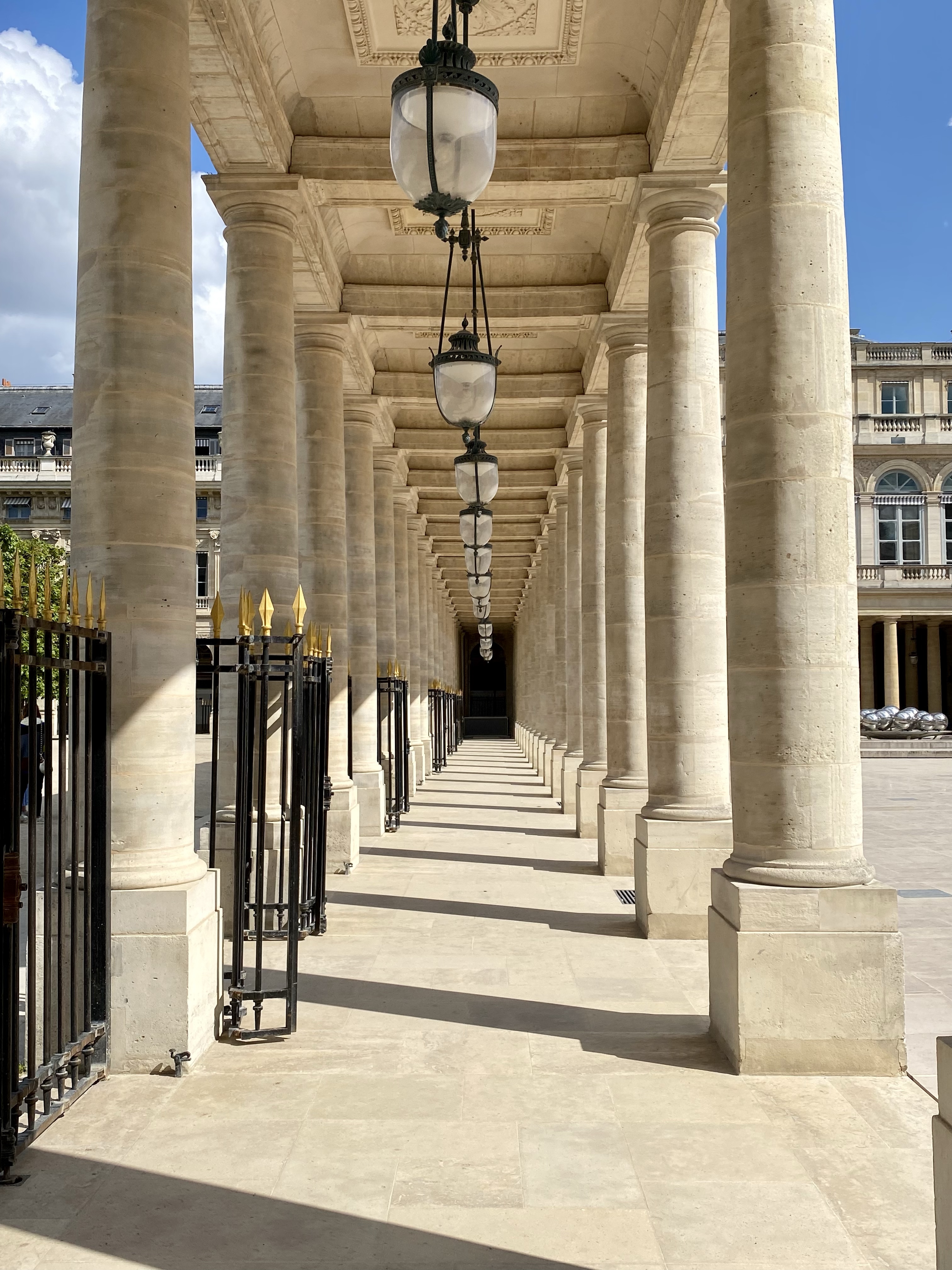
Above and below are shots of The Courtyard of Honor, with the spheres of the Palais Royal fountain visible. There are two fountains by sculptor Pol Bury, located within this roofless Gallery of Orleans, which separates the Courtyard from the gardens. It consists of two square basins each containing seventeen polished metal spheres of different sizes, with water flowing around them. The polished spheres reflect the architecture of the arcades around them.

Ok, let’s get serious.

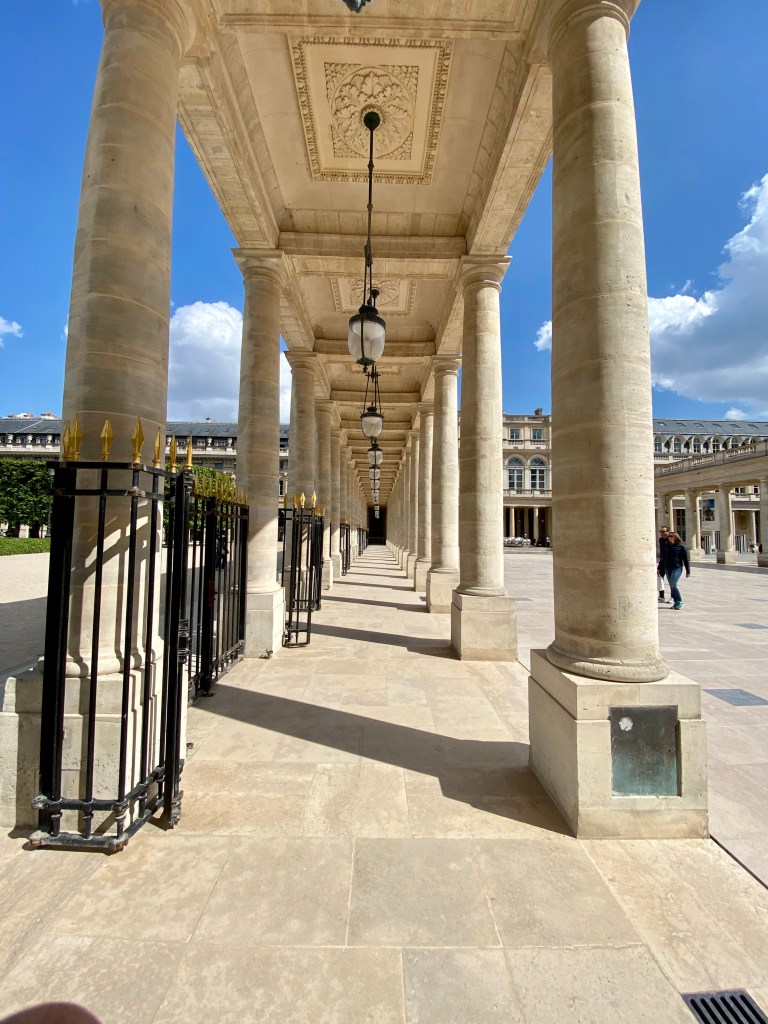
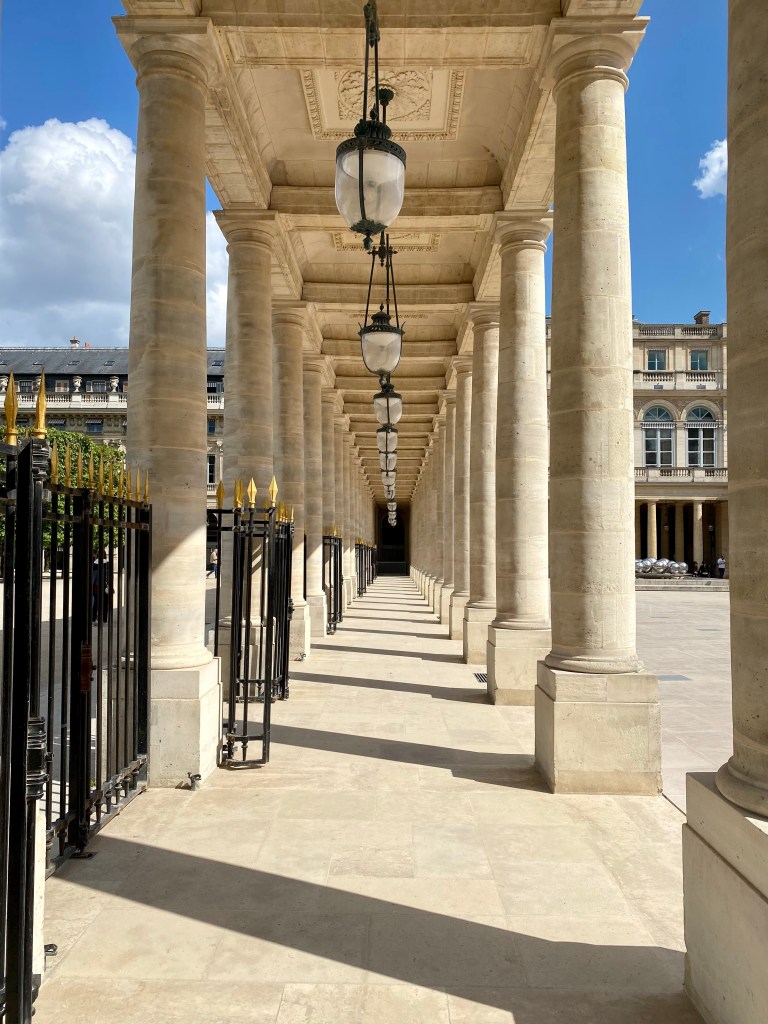
The Palais-Royal is a former royal palace located in the 1st arrondissement. The screened entrance court faces the Place du Palais-Royal, opposite the Louvre. Originally called the Palais-Cardinal, it was built for Cardinal Richelieu from about 1633 to 1639 by the architect Jacques Lemercier. Richelieu bequeathed it to Louis XIII, and Louis XIV gave it to his younger brother, the Duke of Orléans. As the succeeding dukes of Orléans made such extensive alterations over the years, almost nothing remains of Lemercier’s original design.

The Palais-Royal now serves as the seat of the Ministry of Culture, the Conseil d’État and the Constitutional Council. The central Palais-Royal Garden (Jardin du Palais-Royal) serves as a public park, and the arcade houses shops. More on the garden in a later post.

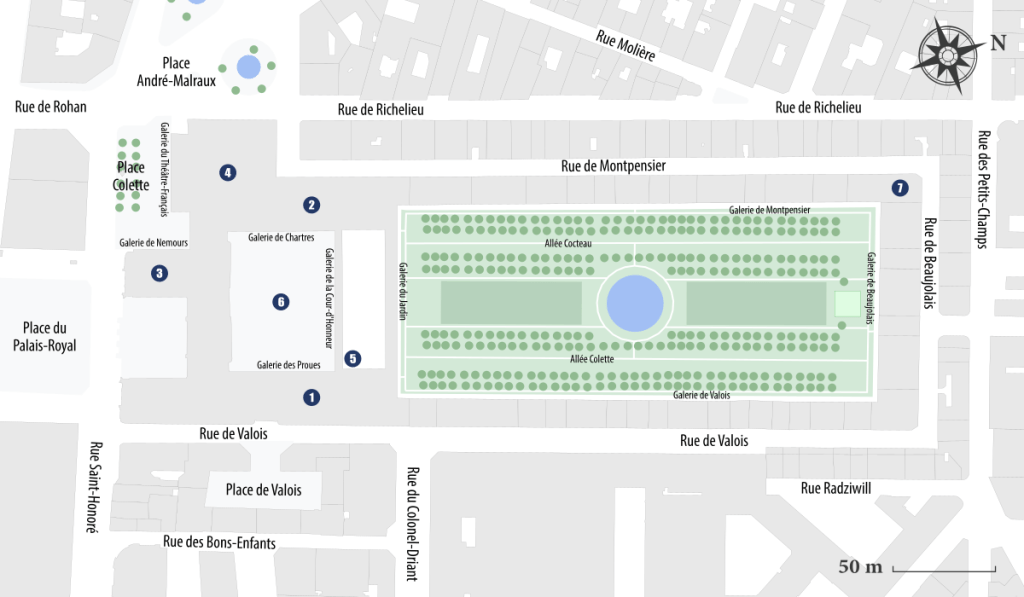
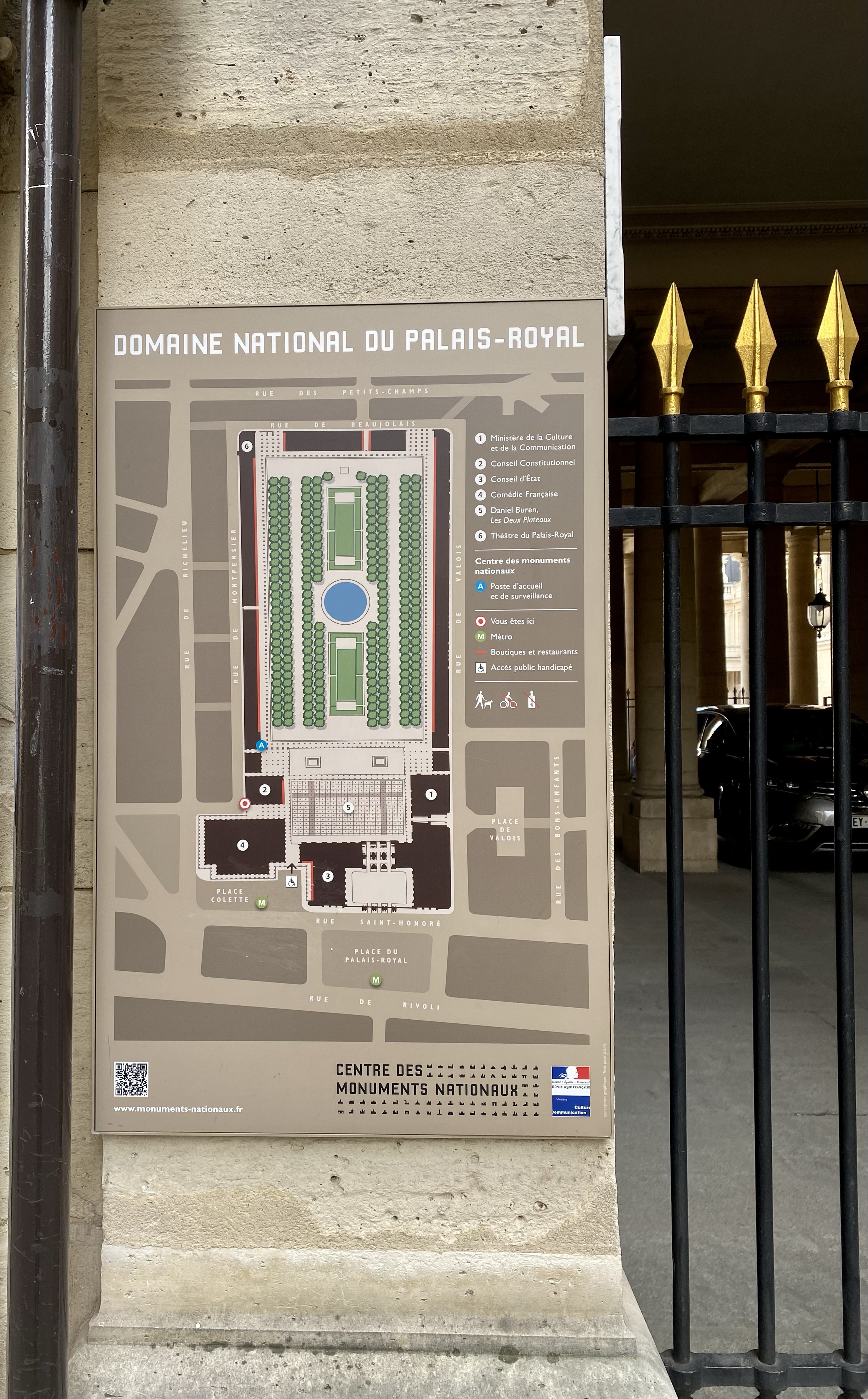
Below is a map of the Palais today.

Palais-Royal, Paris: 1. Ministère de la Culture – 2. Conseil constitutionnel – 3. Conseil d’État – 4. Comédie-Française – 5. Théâtre éphémère – 6. Colonnes de Buren – 7. Théâtre du Palais-Royal

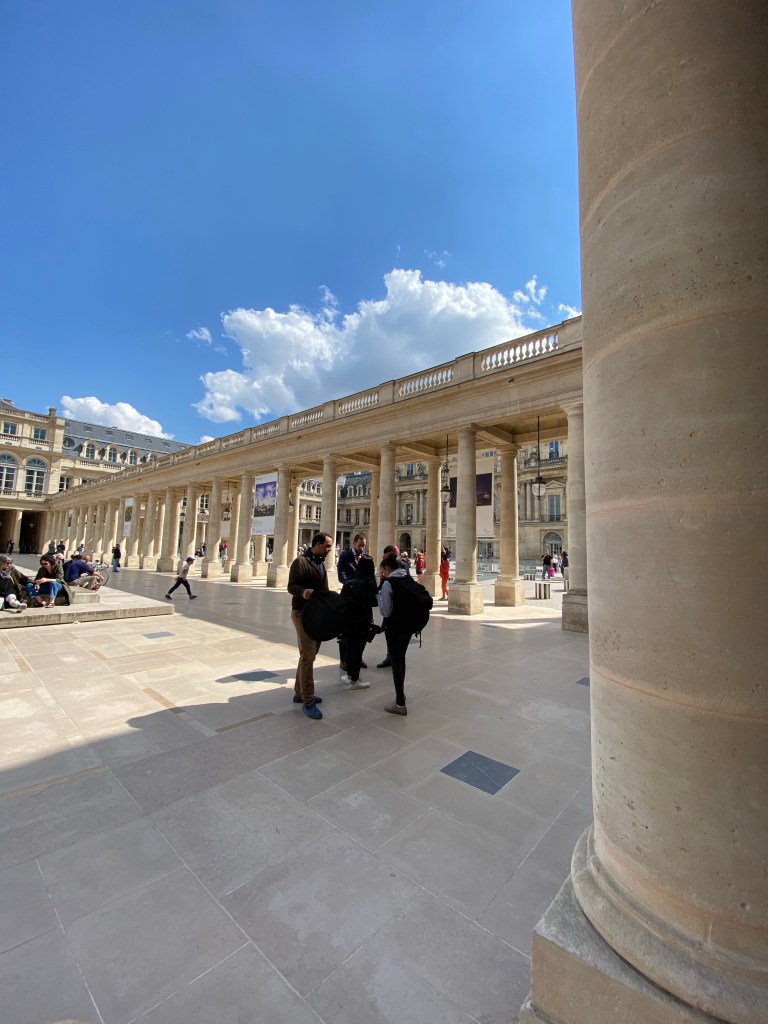
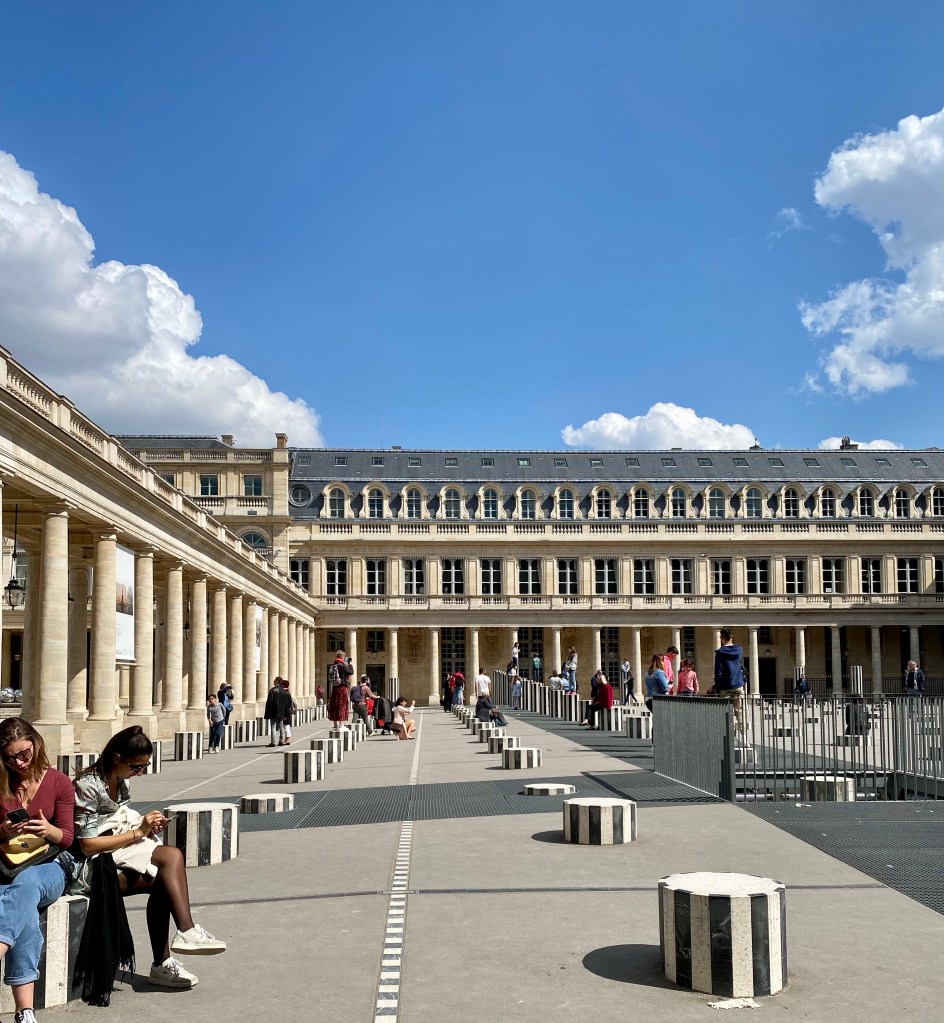
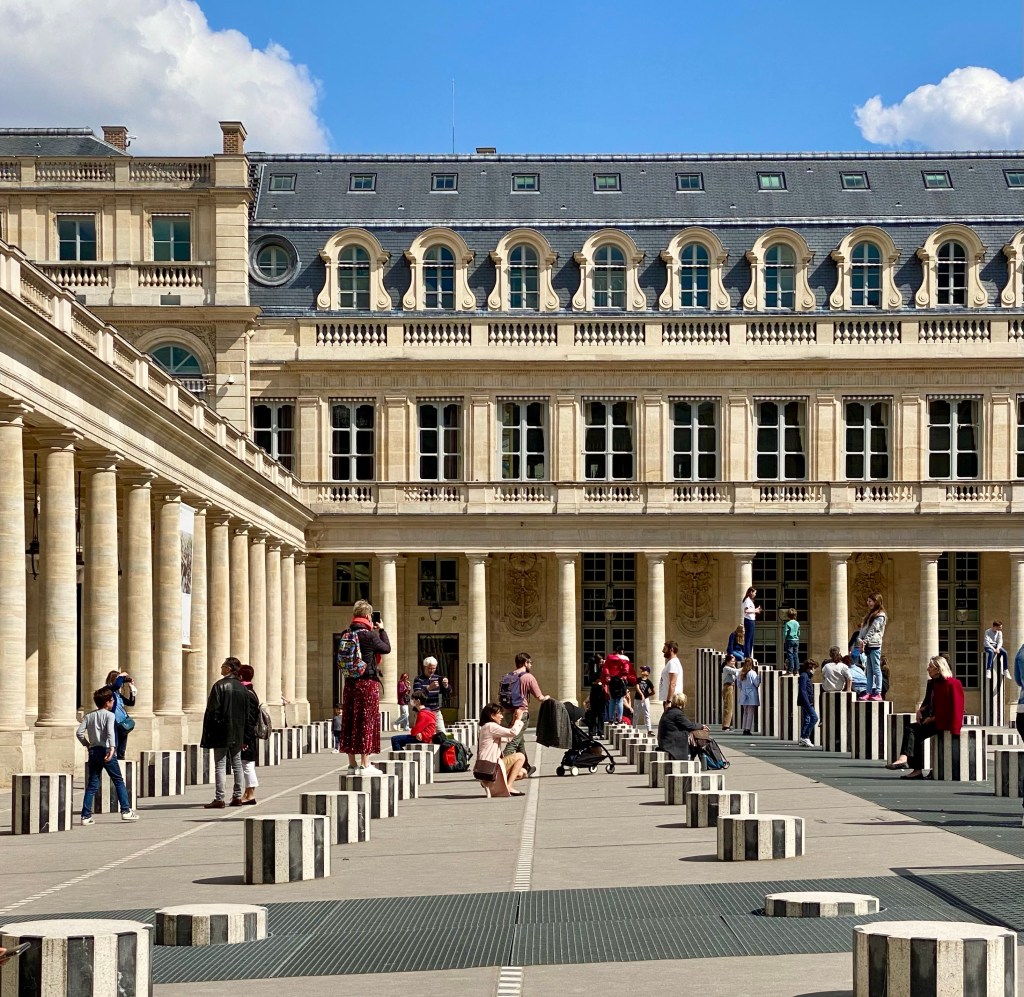
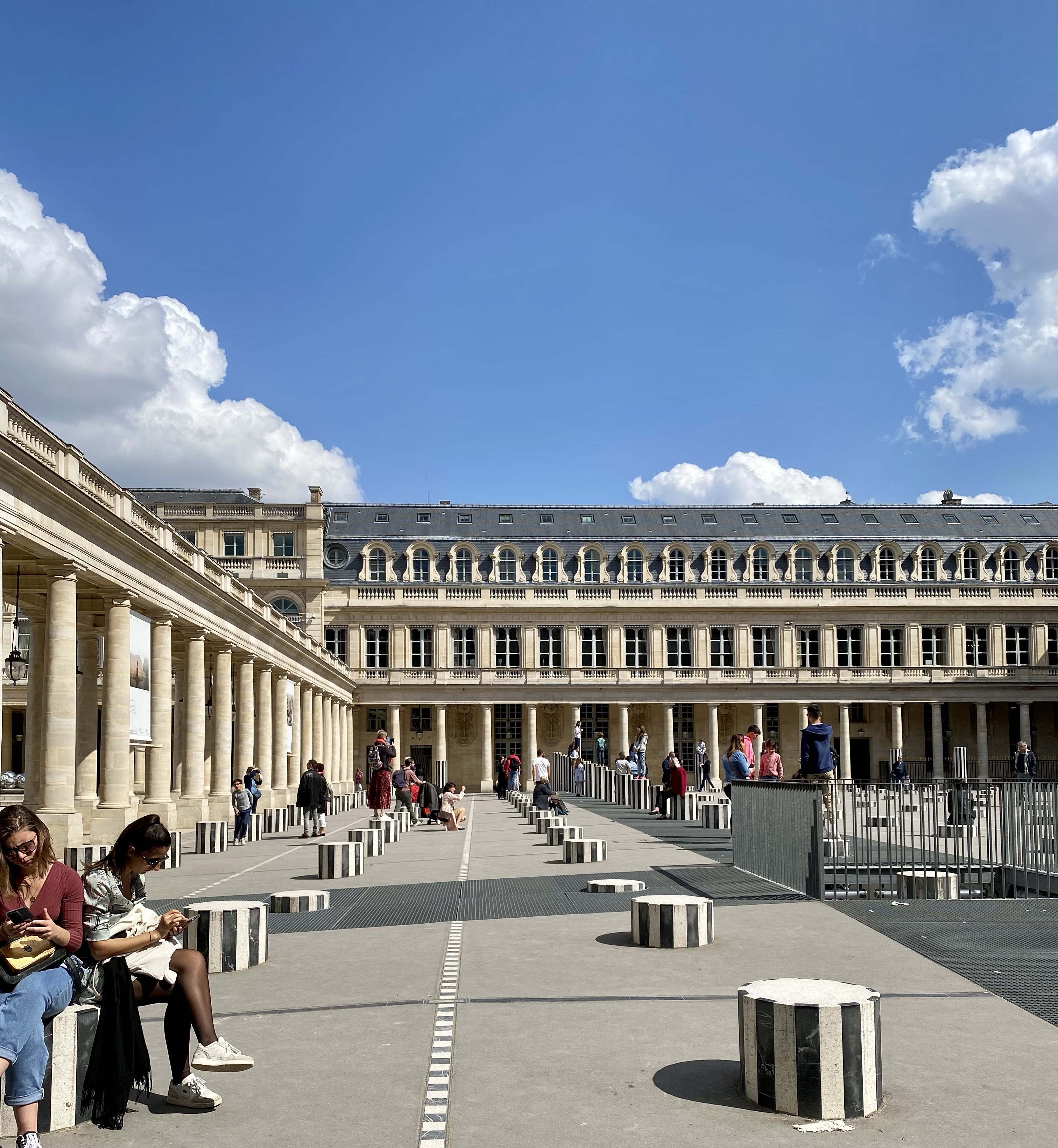
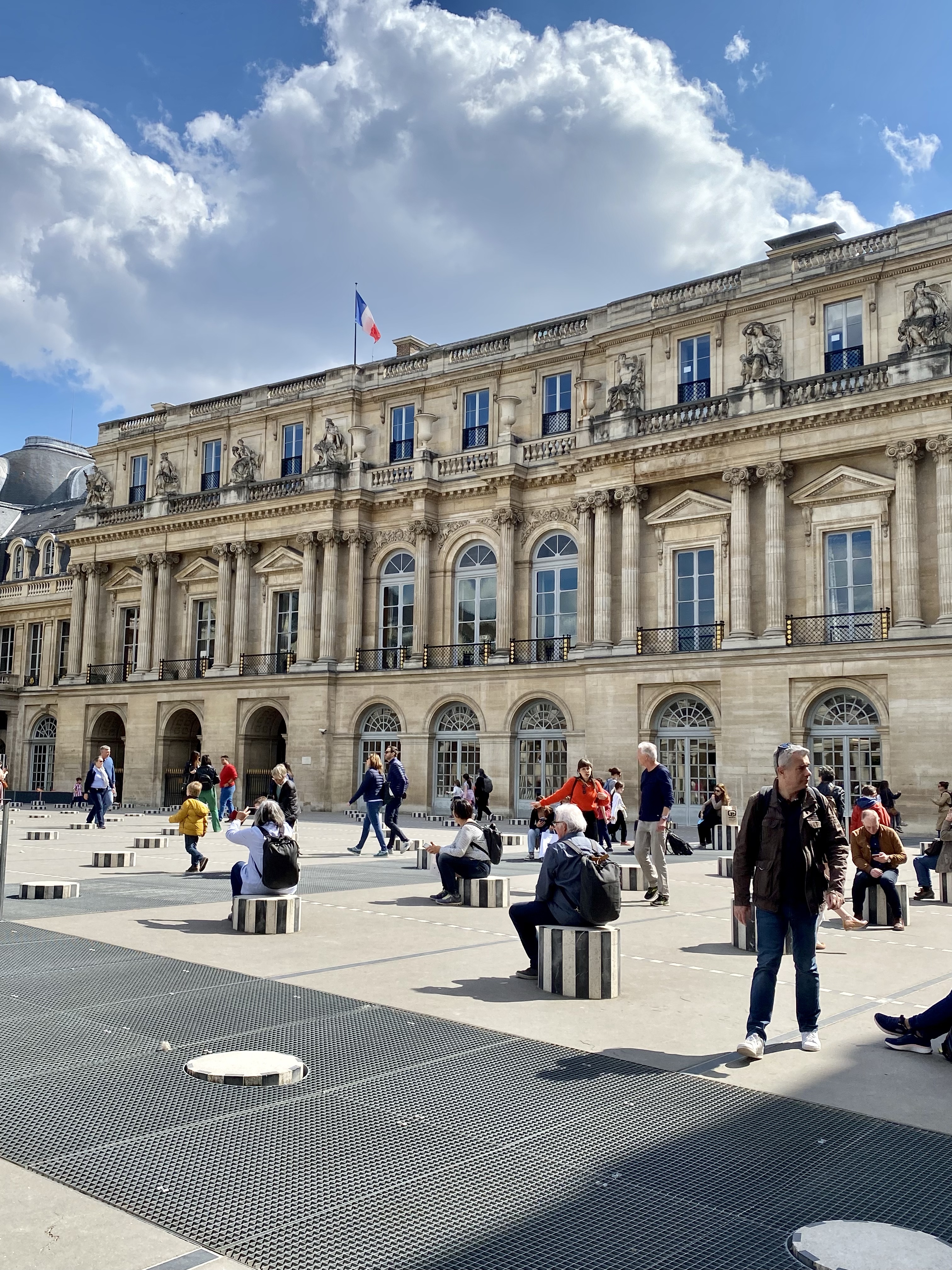
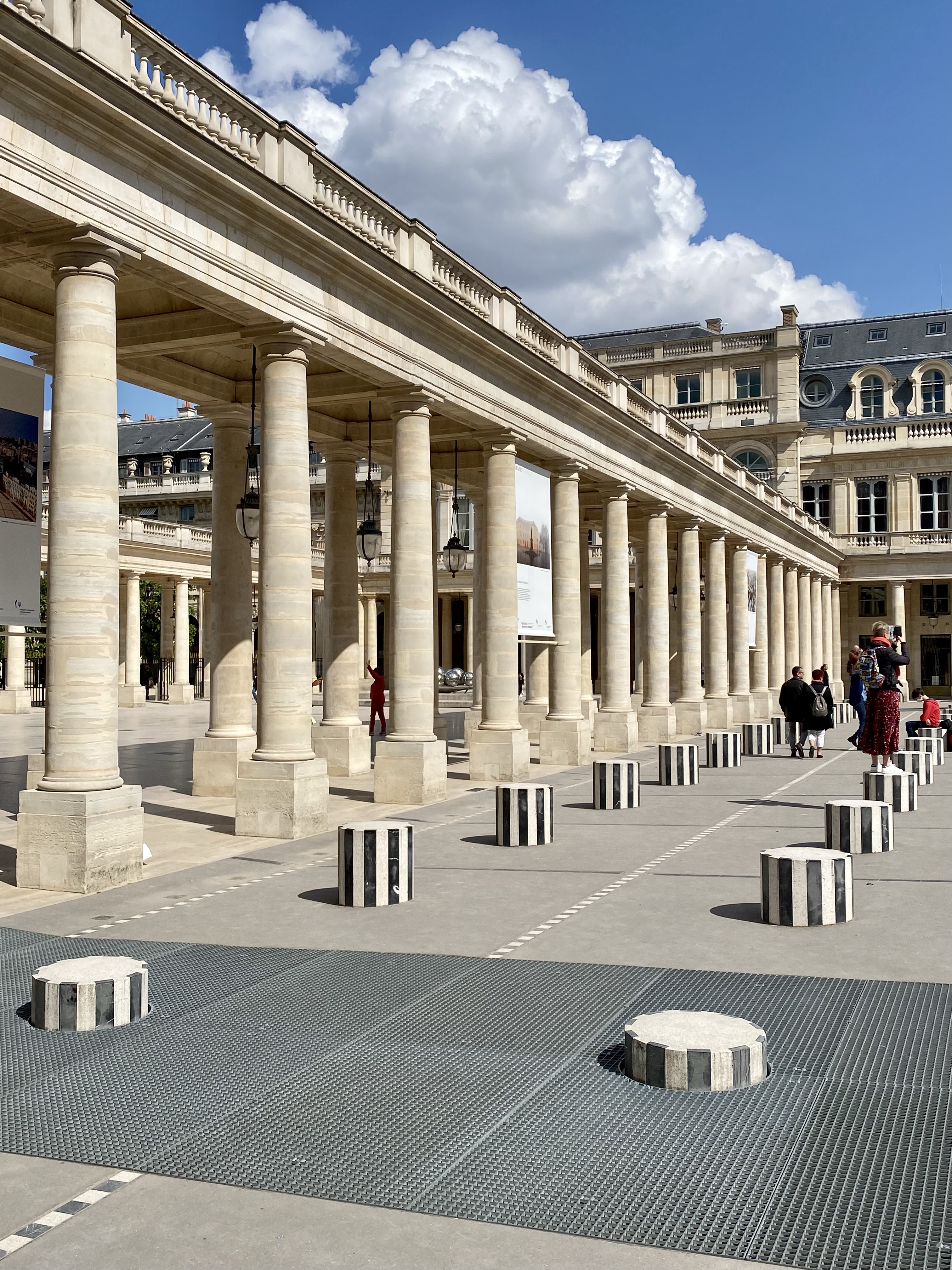
On the other side of the rows of columns is the courtyard. In 1985-86 the Ministry of Culture sponsored two sculptural works in the courtyard; the first, called “Photo-Souvenir – Les Deux Plateaux”, by Daniel Buren, which consists of short columns of various sizes arranged across the courtyard and shown below.

The idea is to create two virtual platforms, without floors; the columns vary in height because of differences in height of the illusionary platforms; some of the column rows are purely horizontal, aligned to the height of the column bases of the gallery of Orleans, while the smaller columns all rise to the elevation of a lower non-existent platform; their variation in height is caused by the difference of elevation in parts of the courtyard. Each column has vertical bands of black and white. This is a very popular place for photographs.