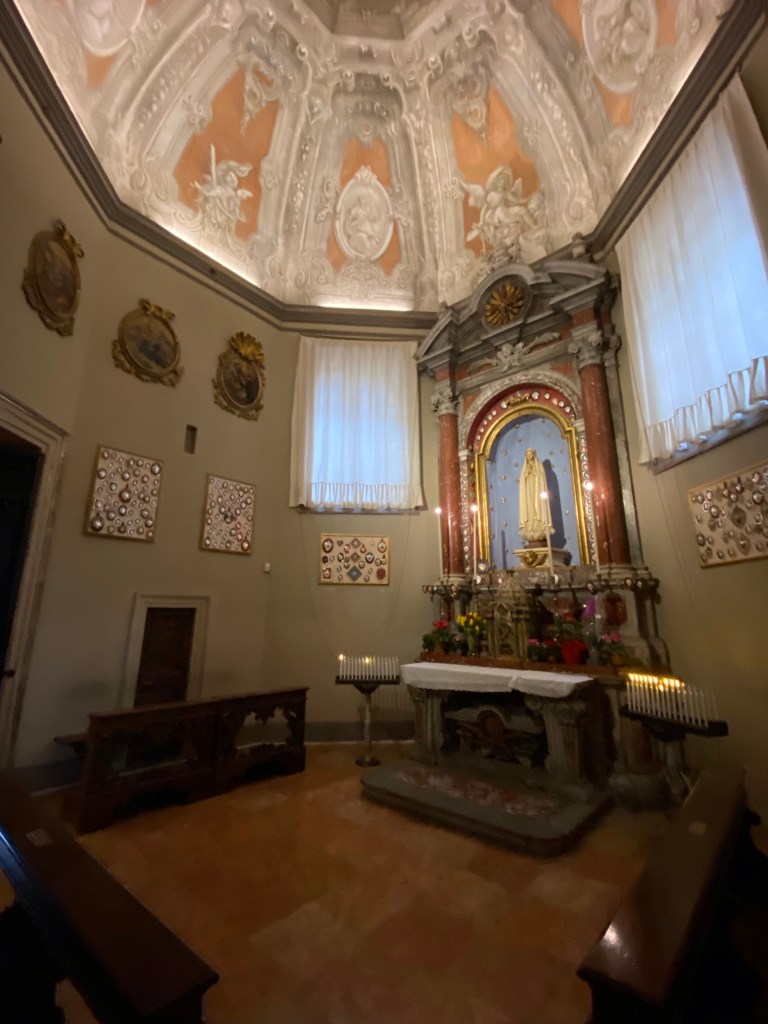
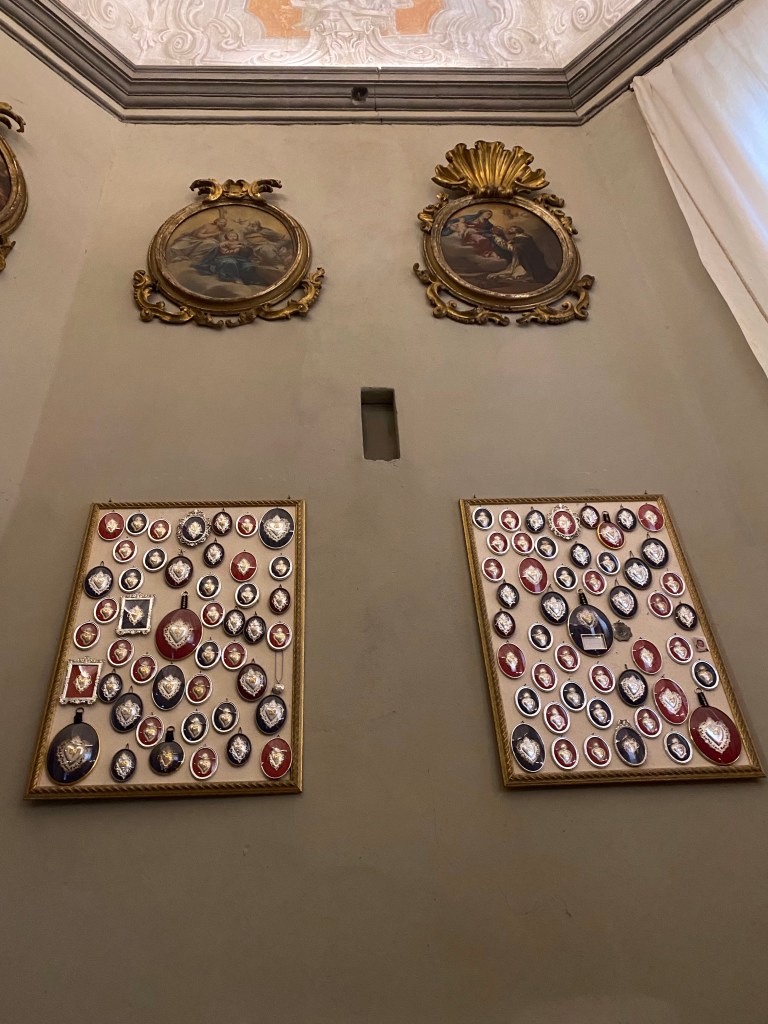
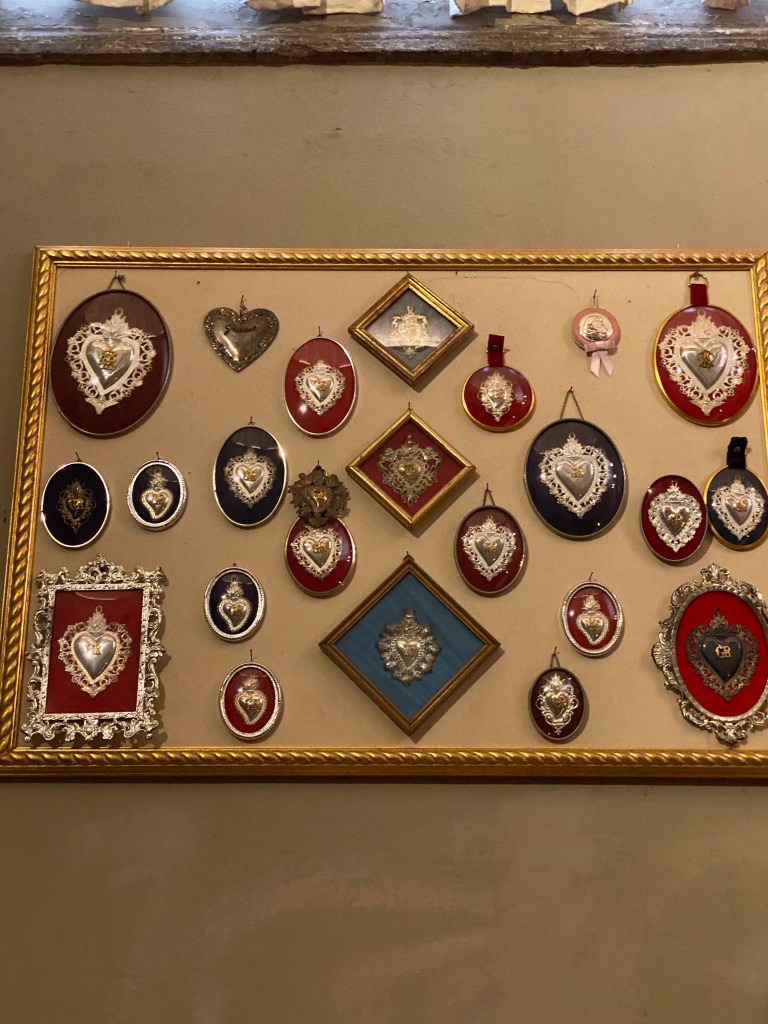
These are not the best pictures ever took, but until I can get back to beautiful Parma, they are the best I’ve got!

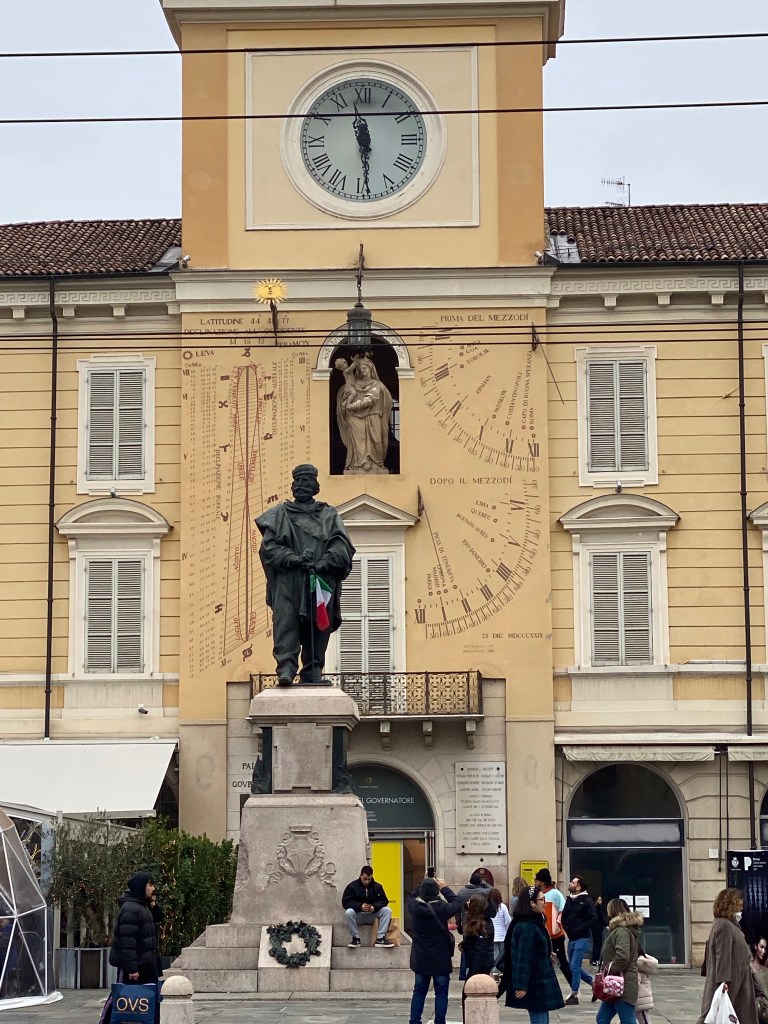


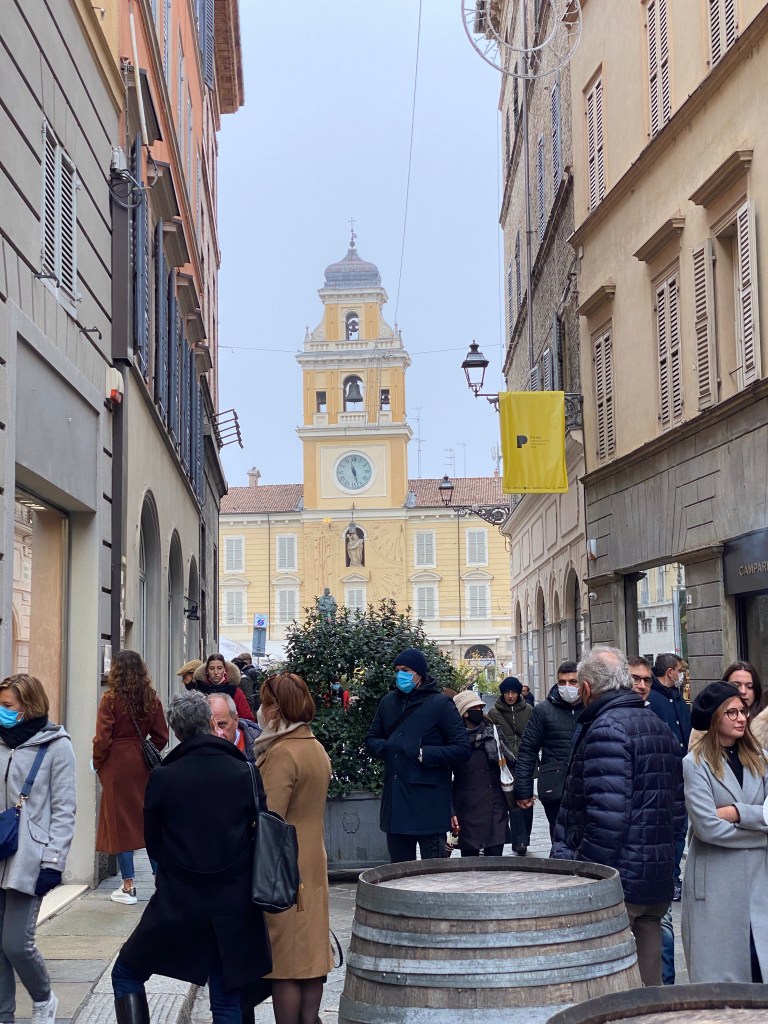
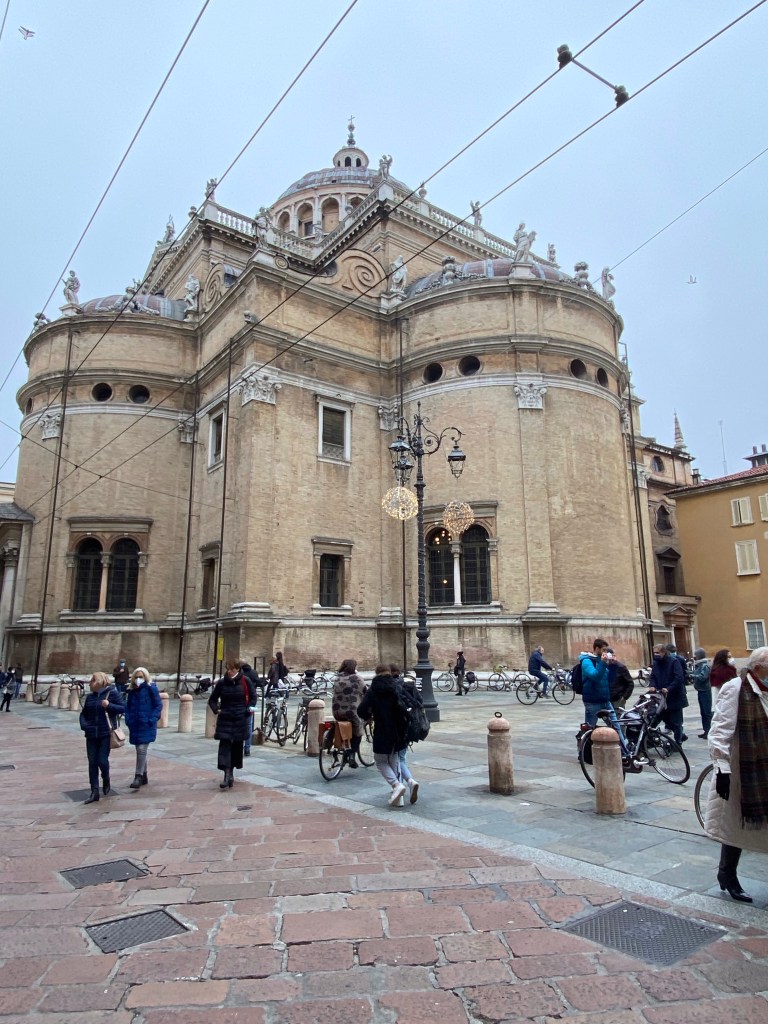


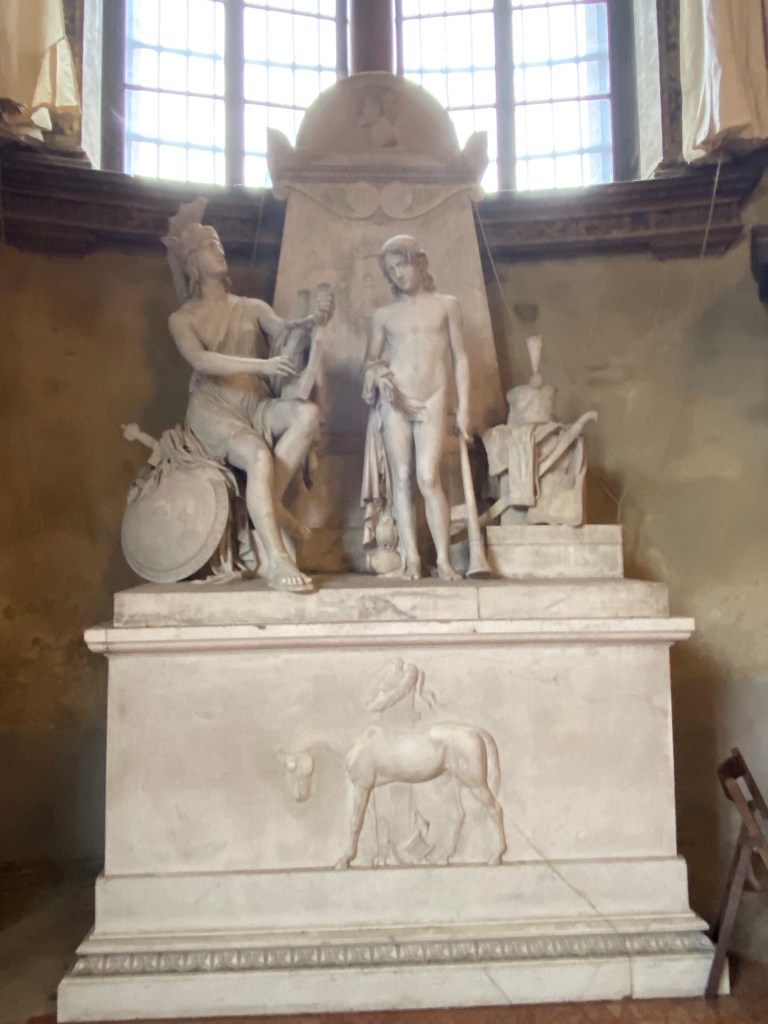

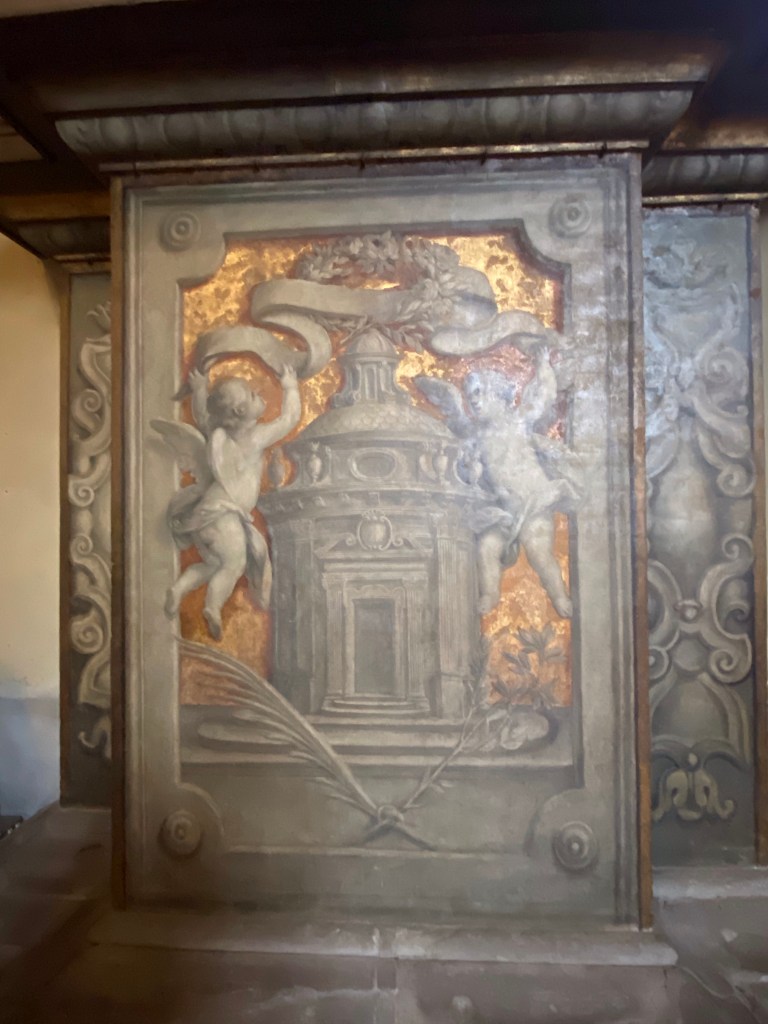
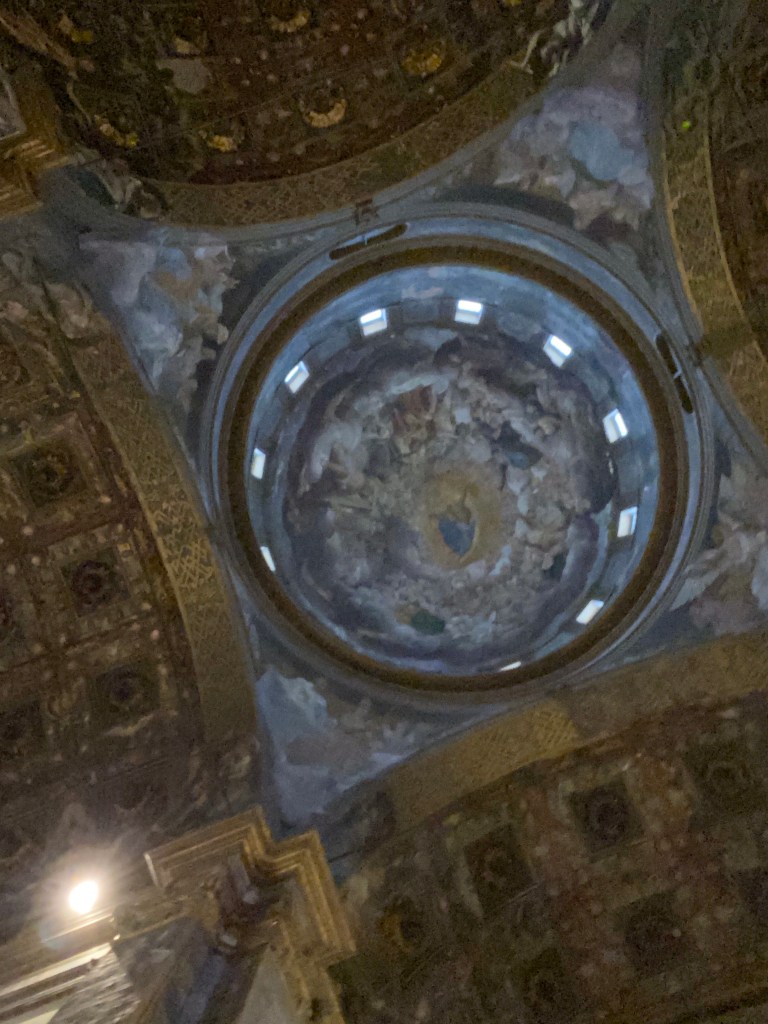
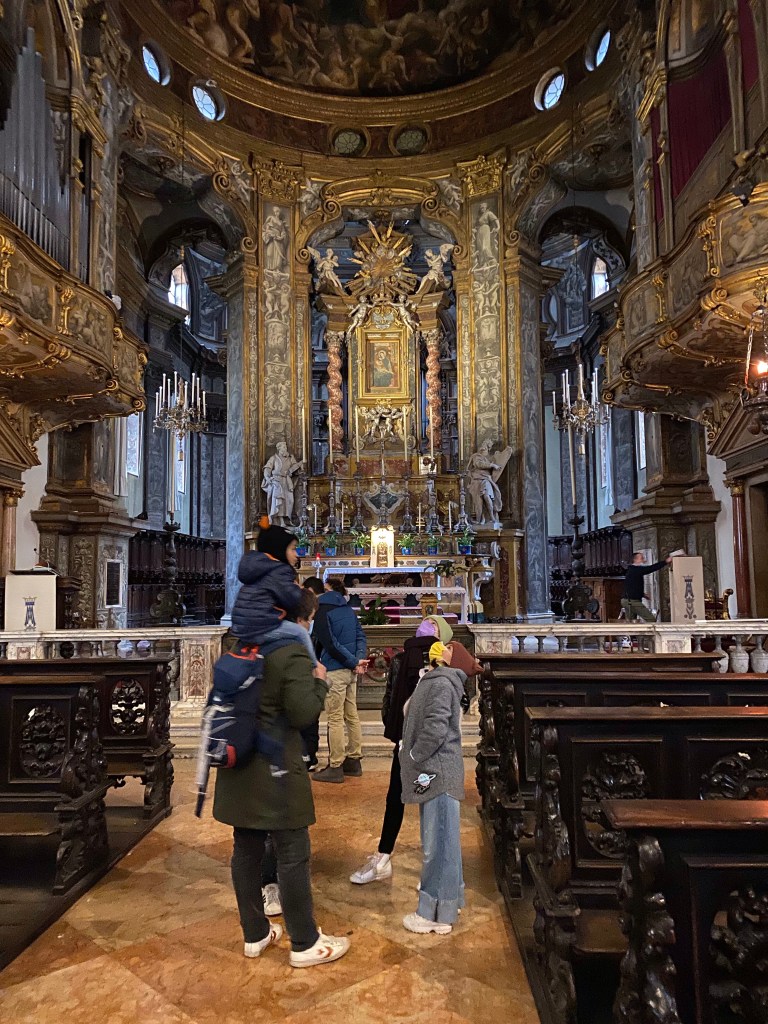

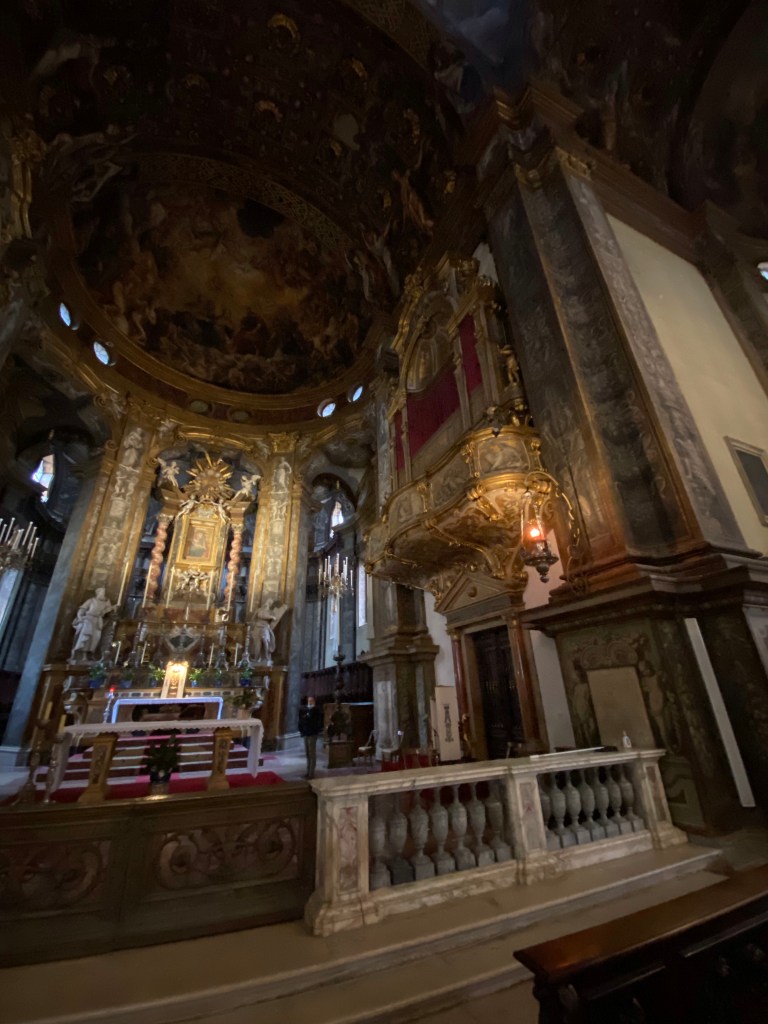
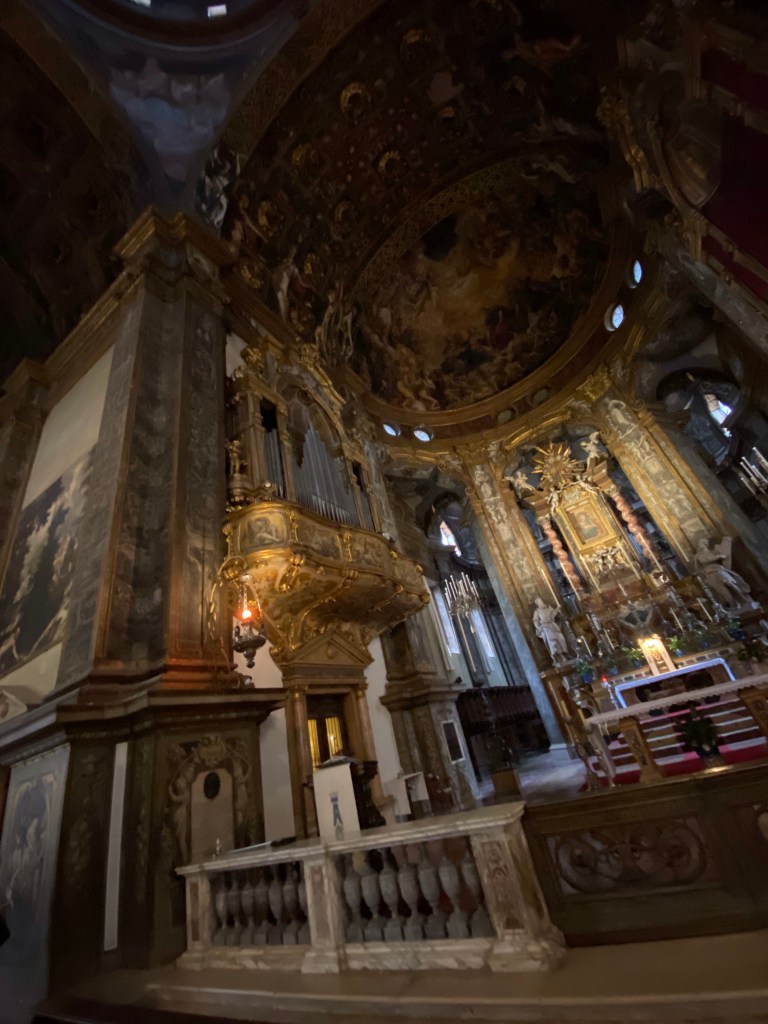
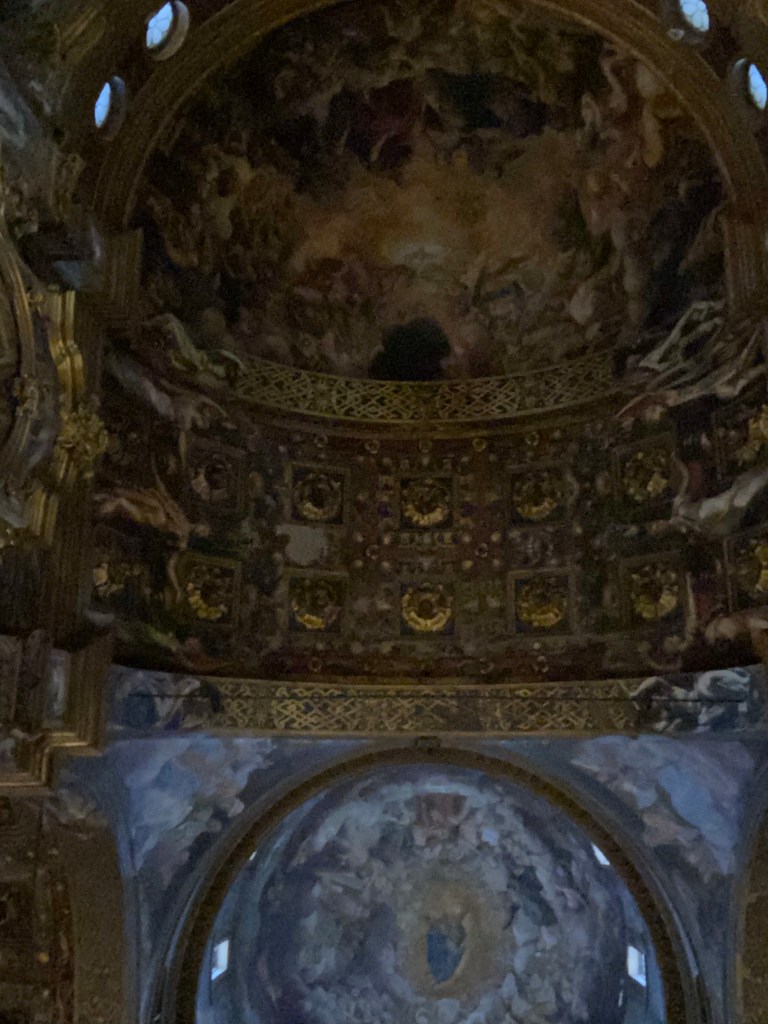
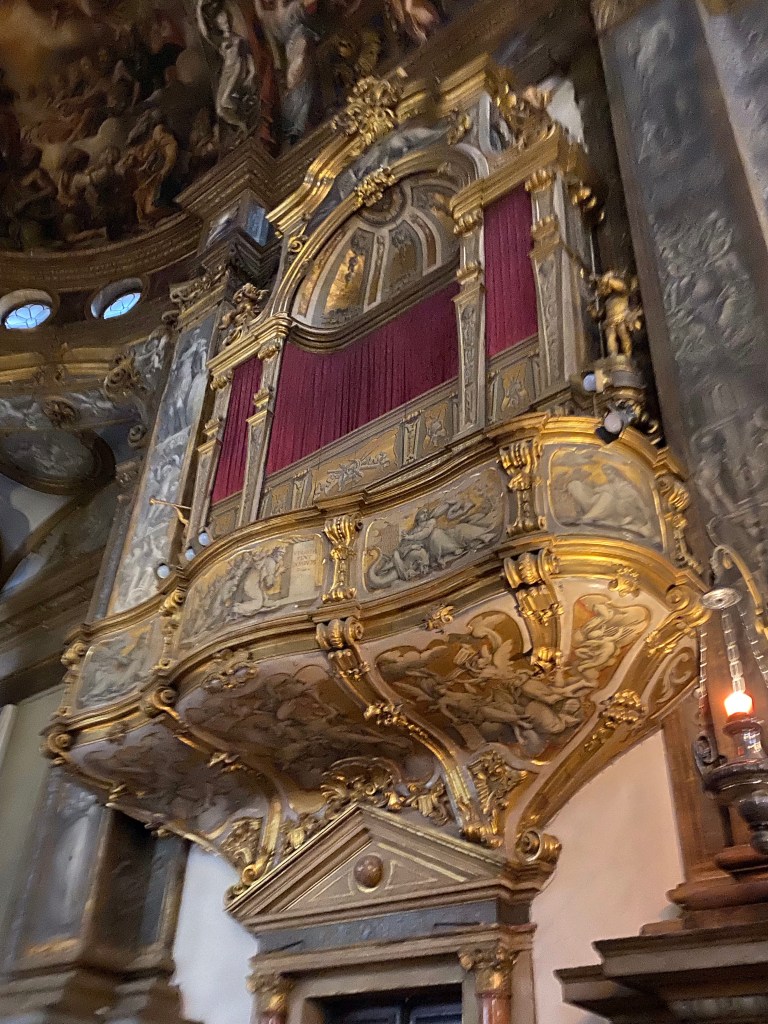
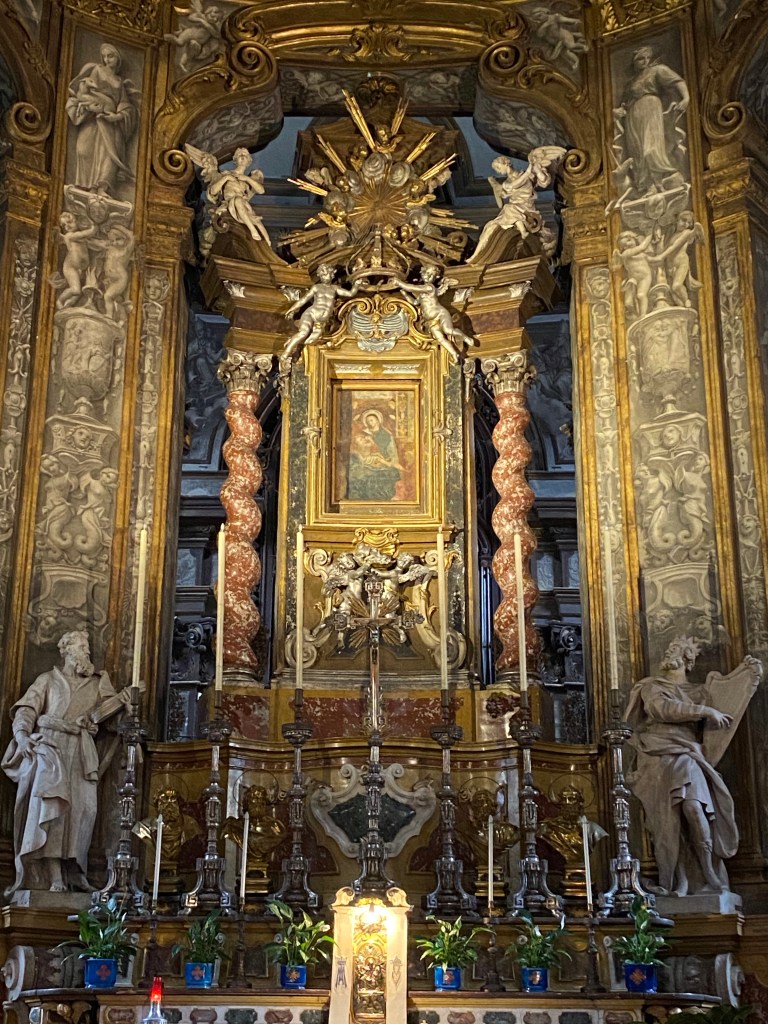





These are not the best pictures ever took, but until I can get back to beautiful Parma, they are the best I’ve got!










Mix one part Pucci and one part antique landmark and what do you get? A moment of magic.
Step 1. Take a famous old Italian monument (Medieval is the best flavor if you can get it. It is hard to come by, so just do the best you can):
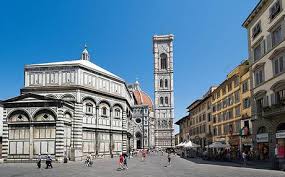
For the purpose of our post today, we will start with the Baptistery in Florence. It is the striped building in the front of this 3 part complex, which includes the Cathedral (il duomo), the campanile (belltower), and the octagonal Baptistery.
Step 2. Add a colorful vintage design from a later master, say something from the 20th century. The Marquise Emilio Pucci will do nicely for our demonstration. 
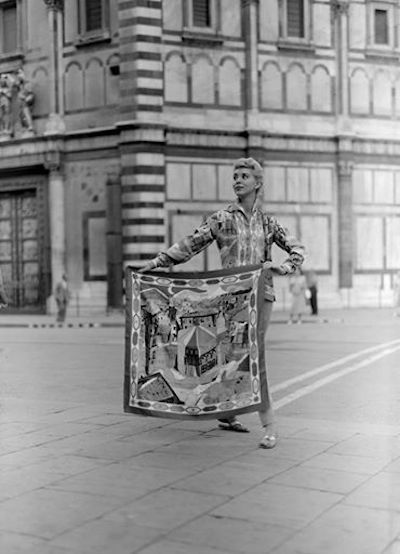
We’ll use this Pucci scarf today, which was created in 1957 with the Florence Baptistery as its central motif. Pucci created a series of silk scarves using the most famous world cities as inspiration. He was a Florentine, so it is quite interesting that, of all the structures in his native city, he chose the Baptistery above all others as his iconic symbol of his town.
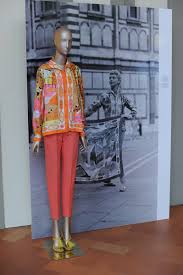
Step 3. Put the ingredients into a large vessel of some sort, kind of like a giant cocktail shaker, while wearing a pair of vintage Pucci capri pants and a top fashioned from the same silk as the scarf you are shaking up, as seen above.
This next step is important to the success of your final product: Be sure to notice your background while you are mixing things up. You see one of your ancestors standing in front of the Baptistry and holding the scarf. This will get you in the right frame of mind to enjoy your dressed up monument.
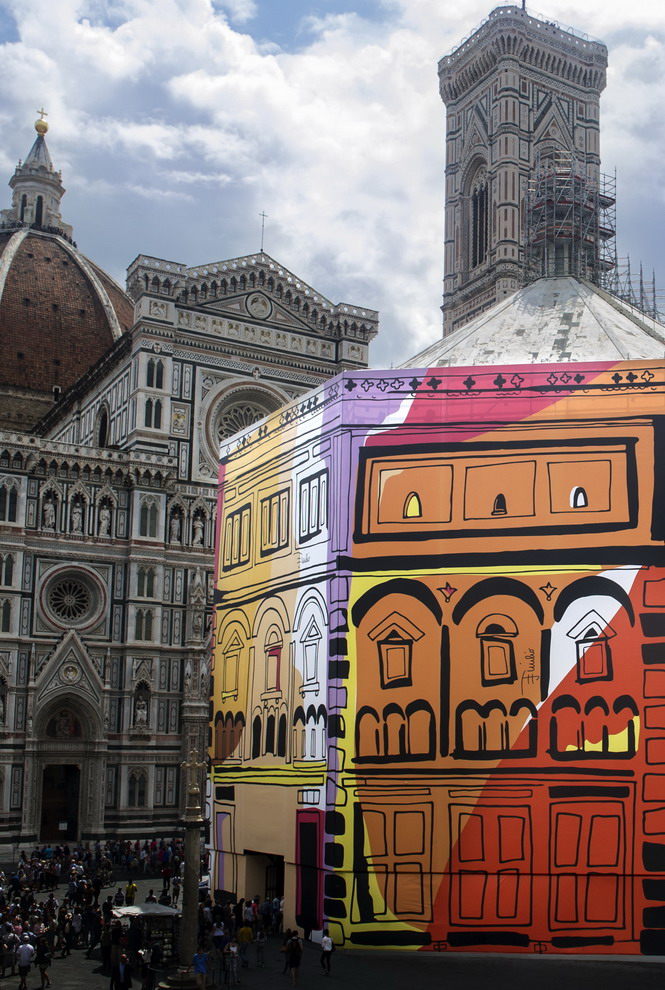
Step 4. Shake, shake, shake. And eccola!
Step 5. Enjoy! You’ve got yourself a dressed up monument! A new masterpiece! You have breathed new life into an old item. Think of it as re-purposing on a grand scale. What was old is new again. You can see something old with new eyes. Whatever saying floats your boat.

Step 6. Stand back and look at your newly finished monument.

Be brave, because change can be hard…you can bet that not everybody will embrace it…
Step 7. Move all around your monument to see it from every imaginable angle…

And in every kind of weather condition…

You want to see it on sunny days…
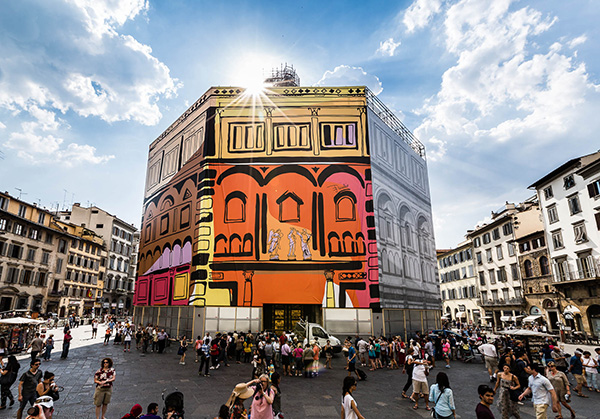
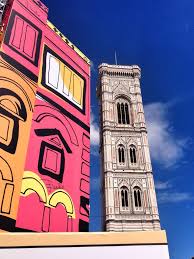
See how it shines!
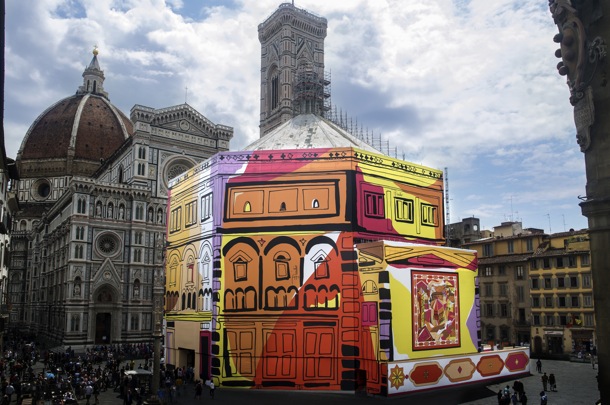
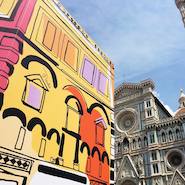
And on cloudy days:
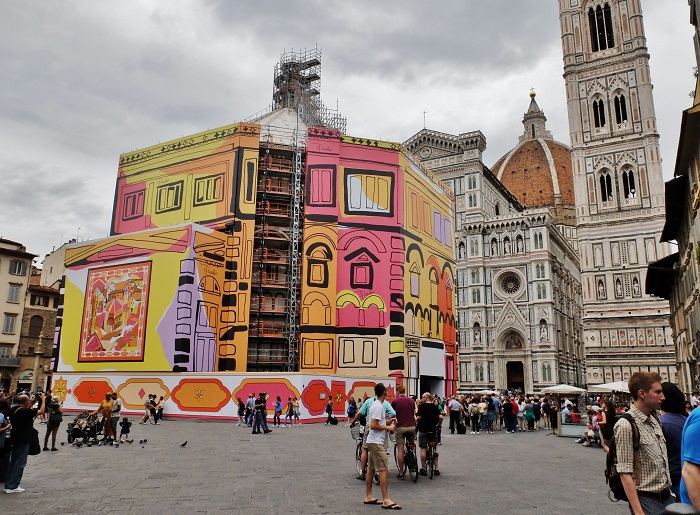
And even in the rain:
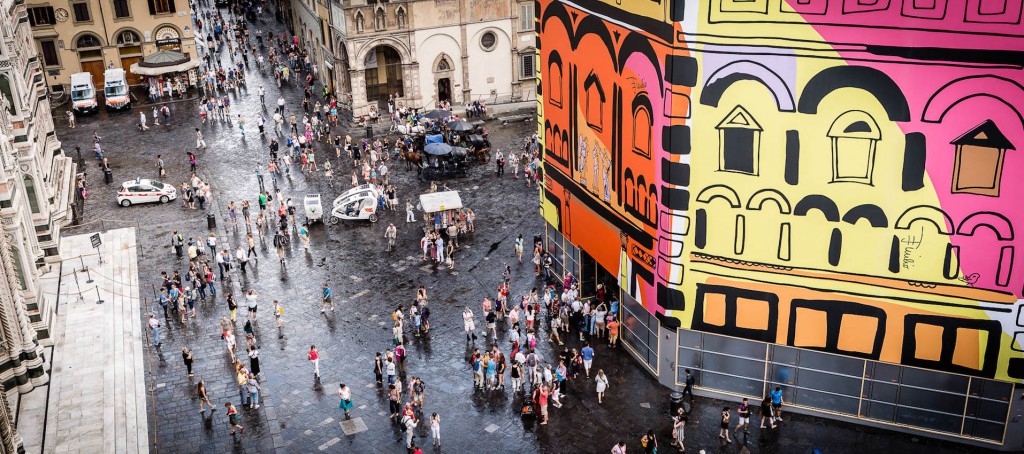
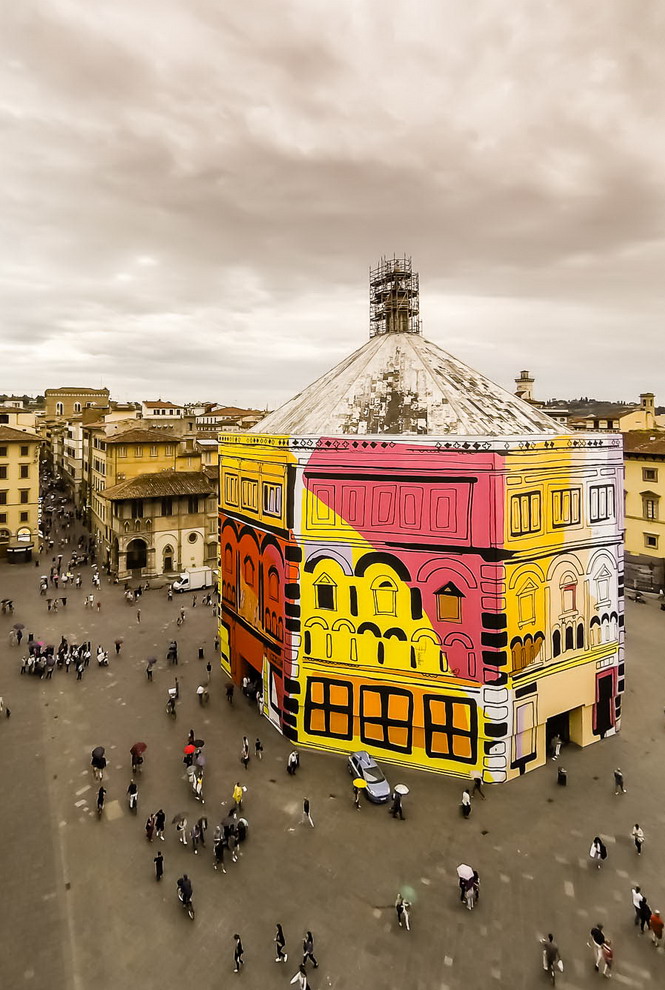
Step 8. Look, look, look. Looking can be hard work, but not when you have something this fun to gaze at. Look at your masterpiece at night:

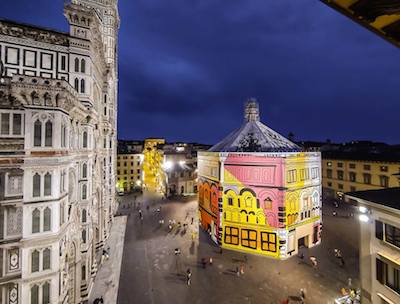

And try to catch it with the moon in the sky…

Step 9. Then, look at it again in the sunshine, because…
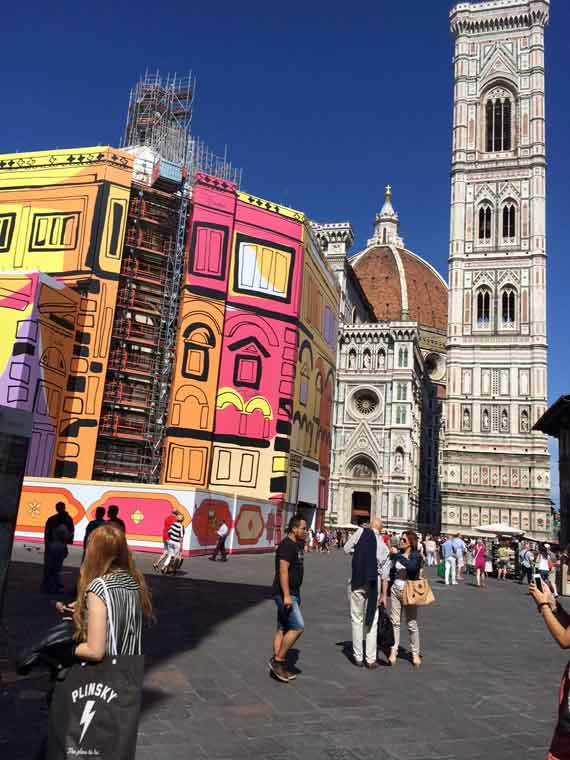
Now you see it…

And now you don’t.

Poof! The cover is gone and you are back to your old monument. But, now you will have a better appreciation for it.
Ha ha. If you’re wondering what is up with all of this, it is very simple to explain.
Last June 17-20, for only 3 days, the iconic Baptistery in Florence was decorated with a reproduction of Pucci’s Battistero scarf, designed in 1957. Pucci’s scarf interprets an aerial view of Battistero San Giovanni in the brilliant hues of a Mediterranean landscape, using vibrant lemon yellow, orange, fuchsia and the emblematic Emilio pink. Never before had the Baptistery been so artistically reinterpreted, as it was for three days last June, in canvas printed with a Pucci design.
The Apse side of the Baptistery was clad in a scale reproduction of the original Battistero scarf design as a whole, having been reproduced and framed in large scale in its entirety.

The other seven sides of the octagonal building were covered in almost 2.000 square-meters of canvas, printed in a to-scale rendering of the famous Pucci design. Faithfully following the contours of the building, it was completely enveloped in rich and loud splashes of Pucci line and color.
The City of Florence was delighted to drape its iconic monument with a design by the famous Italian fashion House of Emilio Pucci, for the city has been celebrating this year the 60th anniversary of the Center of Florence for Italian Fashion. Several fashion labels, including Gucci, Ferragamo, and Cavalli also participated in the festival to help celebrate their Florentine heritage as a part of the Firenze Hometown of Fashion initiative. Palazzo Pucci opened its archives during the celebration as well and fifty photos from editorials shot by Vogue Italia were also on display in the city.
Pucci’s gigantic scarf building covering was conceived by Pitti Imagine, the branch of the Center of Florence for Italian Fashion that creates fashion events.
Fans could follow the unveiling of the Baptistery’s new look using the hashtag #MonumentalPucci on social networks. While the display was being put up, Pucci posted teasers of the finished product. This tag was also used to share archival images of the house’s fashions over the years.
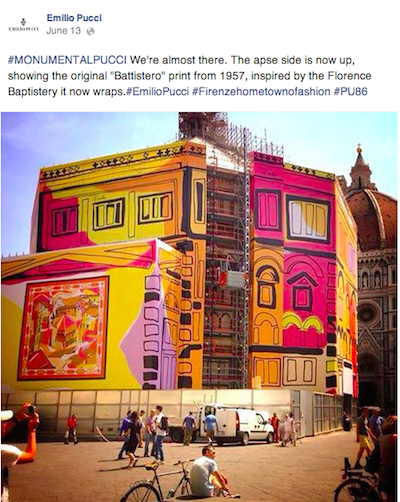
Facebook post from Pucci
The Baptistery is currently being restored and Pucci, which is part of the LVMH (Moët Hennessy Louis Vuitton) group, will substantially contribute financially to the restoration on the octagonal monument, in the same way that other design-related companies are supporting to the care and upkeep of the many of Italy’s monuments.

A detail of the scarf designed by Emilio Pucci in 1957
This temporary new landmark of the Baptistery wrapped in a Pucci design captured the attention of every tourist, who were seen gawking at and taking selfies in front of the monument. The whole atmosphere was a bit surreal. Lucky were all those who managed to see Florence with its Baptistery “dressed” in Pucci—such moments go down in the history of fashion and stay there forever.
Even if you weren’t one of the lucky ones who saw the dressed up monument in the flesh, you can experience a sense of it in these cool videos.
For me, this is what the entrance to heaven would look like. If I am right, color me happy.

When I landed at the Delhi airport last January, I was instantly ready to love with India!
My feeling was based simply upon this stunning first impression of contemporary art which represents timeless Indian culture in a simple, modern fashion.
First impressions ARE everything!
Nameste! See more after the jump.


I knew I had come to the right place! I was jet-lagged into next week, but I noticed this artwork! When a work of art can speak to me through the fog of severe jet-lag, I know I’ve hit the motherlode. India did not disappoint!
Arriving at the Indira Gandhi International Airport’s brand-new Terminal 3, filled me with a sense of awe. The incredible visual experience of this series of giant gesticulating hands, jutting from a wall of what look like copper discs, made me stop in my tracks in wonder. I like anything that has that power. It’s why I travel. It’s why I read. It’s why I study art and culture. It’s why I live.
Jaipur-based artist, Ayush Kasliwal, was commissioned to produce these giant, expressive hands. The builders of the new concourse of the truly modern airport were keen to give the terminal an Indian context, to infuse it with Indian values. The idea of the hands emerged as the winning concept, for all forms of Indian classical dance use hand gestures called mudras. Thus, mudras are a both a distinctly Indian and common vocabulary. The writer of this blog heartily adds her compliments to the designers. It really works!
If you’d like to know more about this stunning installation, please go to
Click to access DIALmudras.pdf
and
http://archive.indianexpress.com/news/friendly-gestures/638563/0
The Taj Mahal.

Just the mention of the name brings forth notions of exotic, white-marbled opulence. The name means “crown of palaces” in Arabic and Persian, and most people know there is a story of romance behind the structure.

The Taj was built in the 17th century by Mughal emperor Shah Jahan, seen here standing on the dome of the world:

in memory of his third wife, the Persian princess known as Mumtaz Mahal, who died while giving birth to their 14th child. OMG, poor thing. Here she is:

The Taj is universally recognized as the jewel of Muslim art in India and one of the great masterpieces of the world heritage. It is one of the seven wonders of the world.

The complex of buildings that creates the vast Taj Mahal is the finest extant example of Mughal architecture, a style that combines elements from Islamic, Persian, Ottoman Turkish, and Indian architectural styles.

While the white domed mausoleum is the most familiar component of the Taj Mahal, it is actually an integrated complex of structures as seen in the following CAD design.

Here’s another computerized representation of the complex.

Thousands of artisans were employed to create the vast complex. Typically, Indian architecture used red sandstone as a primary building material, but the Emperor had the Taj constructed in white Indian marble inlaid with precious and semi-precious stones.


The marble dome that surmounts the tomb is the most spectacular feature, and is decorated with a lotus design, which accentuates its height.

The dome and chattris (smaller domed kiosks on the sides) are topped by a gilded finial, which mixes traditional Persian and Hindustani decorative elements.

The finial is topped by a moon, a typical Islamic motif whose horns point upward towards the heavens. When you add the horns of the moon and the finial point of the main spire, you obtain a trident shape, which may be a reference to the traditional Hindu symbols of Shiva.

Four minarets frame the tomb, one at each corner of the supporting plinth. The minarets, which are each 130 feet tall, are working minarets used by the muezzin to call the Islamic faithful to prayer.

Each minaret is effectively divided into three equal parts by two working balconies that ring the tower. At the top of the tower is a final balcony surmounted by a chattri that mirrors the design of those on the tomb.

The main chamber houses the false sarcophagi of both the princess Mumtaz Mahal, and for her husband, Shah Jahan; their actual graves are at a lower level. I will be showing the interior in Part 3 of these blogs on the Taj. Stay tuned.
I included many shots of the inlay at the Taj in my post entitled “This is India 4. Let’s look at inlaid tiles and other patterns.” Please have a look at that post for more Taj details. Thanks!

In the meantime, feast your eyes on some more views of the exterior. It is a very photogenic structure to say the least!


Gorgeous, no?

The Baptistry in Firenze, all dolled up in 60’s pop colors. Hmmm. I wonder where this is headed…stay tuned, ragazzi!
 get back, lauretta!
You must be logged in to post a comment.