Today a wonderful ancient art collection is housed in this fine palazzo and I visited it for the first time recently. Wow! I wish I hadn’t waited so long. And it is so close to Stazione Termini there is absolutely no excuse for missing it!
Within the next couple of weeks, I’m going to be writing about some of the incredible ancient artworks in this collection. In fact, I posted the first of many yesterday: https://getbacklauretta.com/2026/09/06/ancient-roman-fresco-boats-swimming-fish-on-the-tiber-river/
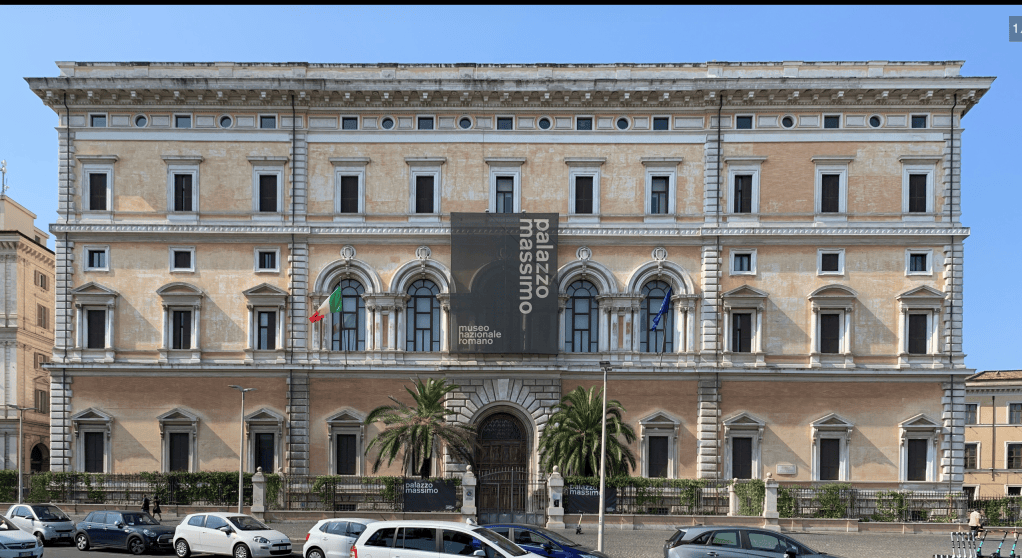
Inspired by the magnificent palaces of the 16th century, Palazzo Massimo was built between 1883 and 1887 by the Jesuit priest Massimiliano Massimo, based on a design by Camillo Pistrucci, to house the new Jesuit school.
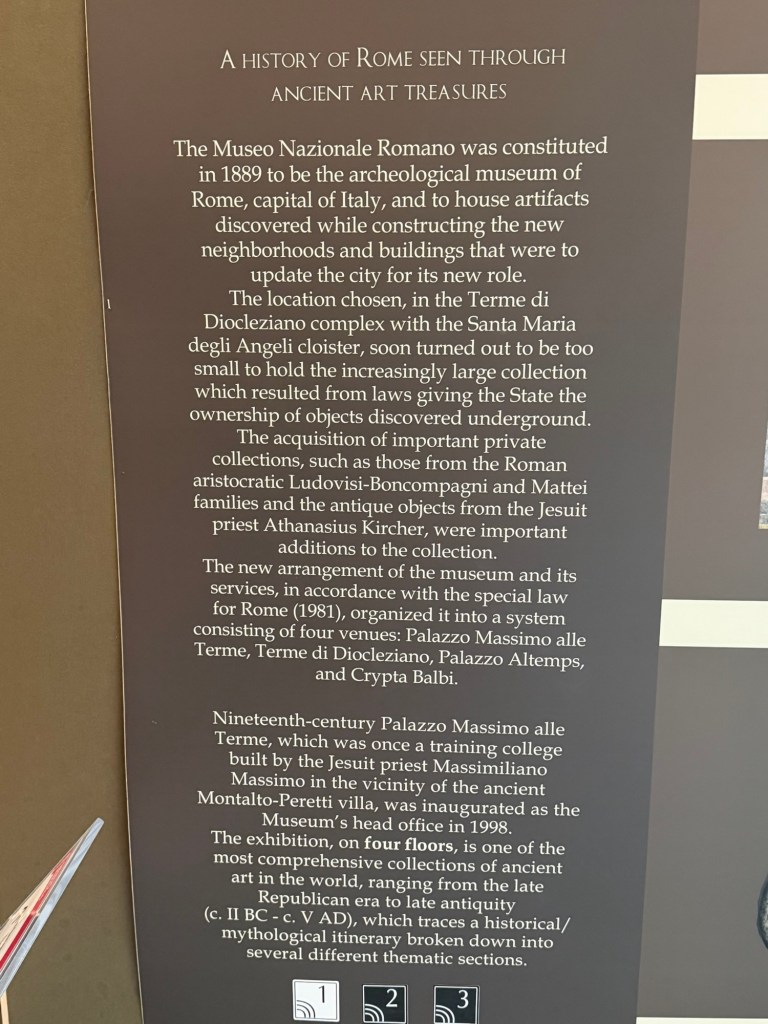
In 1981, the palazzo was acquired by the Italian government to become one of the new sites for the National Roman Museum. A radical renovation of the building was entrusted to Costantino Dardi and the palazzo opened to the public in 1998.
Since then the curators have sought o interweave the various threads of the collections using a design based on chronology and theme. By referring to the contexts in which the artefacts were found, this creates the suggestion that different works are jumbled together following the model of the bustling displays of collectors of the 16th century.
Today, moving through the rooms of the Palazzo Massimo is like leafing through the pages of a wonderful book in stunning 3-D. Its four floors contain some of the greatest masterpieces of the entire artistic output of the Roman world: sculptures, reliefs, frescos, mosaics, stuccoes and sarcophagi, originating, like all of the treasures of the National Roman Museum, from excavations undertaken in Rome and the surrounding region from 1870 onwards.
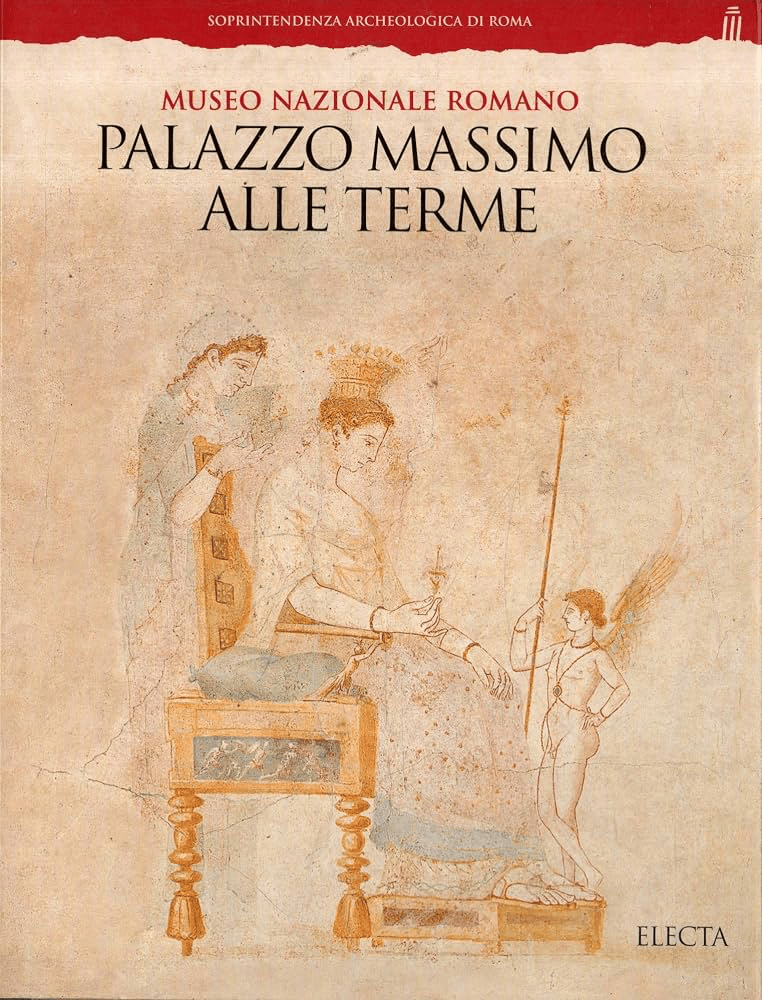
The route of the visit begins with the theme of the portrait and its evolution, from exclusive use by the most illustrious citizens in the Archaic Period to the widespread use of portraits among freedmen, from portraits of Greek origin, such as those of Alexander the Great, to those of simple Roman citizens eager for self-celebration at the end of the Republic, like the Tivoli General, and new forms of portraiture linked to the birth of the Empire, such as Augustus dressed as the Pontifex Maximus.
Greek originals in marble, such as the Niobid from the Horti Sallustiani (Gardens of Sallust), and in bronze, including the Boxer at Rest and the Hellenistic Prince from the Baths of Constantine, are typical examples of the models of Greek art that came to Rome with the wars of conquest.
Continuing the history of portraits in the Imperial Age, the first floor displays the Roman taste marble copies of Greek ideal sculptures, like the Discobolus of Myron, presented in two well-known reproductions – the Lancellotti Discobolus and the Discobolus of Castel Porziano -, the Sleeping Hermaphroditus, the Aphrodite of Menophantos, and innumerable works depicting gods and mythological figures.
However, sculpture also became a means of expression for celebrating victories at the borders of the Empire, such as the monumental Portonaccio sarcophagus, and a method for paying tribute to the greatness of well-known figures in the society of the late Roman Empire, as can be seen from the Acilia and Annona Sarcophagi.
The second floor of the Palazzo is dedicated entirely to frescos, stuccoes and mosaics. One element that is fundamental in fully grasping the taste and aesthetic sense of the Roman aristocracy is the superb wall decorations of major archaeological complexes, such as the Villa di Livia in Prima Porta, the Villa Farnesina in Trastevere and the Villa di Termini.
The basement level offers a selection from the collections from the National Roman Museum’s Coin and Medal Collection and is dedicated to the economy and the use of money, interpreted through an exhibition of coins, jewellery, precious ornaments and documents relating to the daily cost of life.
Highly recommend multiple visits to this museum!
Alla prossima!


You must be logged in to post a comment.