Uno, due, tre. Numbers the Italian way.
Let’s call it Florence 1, 2, 3 today, with 3 fun Florence-related topics.
We’ll designate numero uno as the mighty Arno. Do you know much about the Arno River besides the fact that it flows through Florence?
No? Well, come on along.
Here’s where it flows.


The Arno and the Tiber, which flows through Roma of course, are the two most important rivers in central Italy. But only the Arno is Tuscan, which makes it extra special.
Our river Arno originates on Mount Falterona in the Apennine Mountains. As you can see in the map, the river heads south and then turns to the west near the town of Arezzo and then north and then west before passing through Florence, Empoli, and Pisa, before flowing in the Tyrrhenian Sea at Pisa’s marina, as you see in the photo below.

When the Arno flows through Florence, it passes underneath several notable bridges including the Ponte Vecchio and the Santa Trinita bridge that Michelangelo inspired but was built by Bartolomeo Ammanati. Of all the bridges in town, Hitler left only the Ponte Vecchio standing, but I’ll discuss that later.
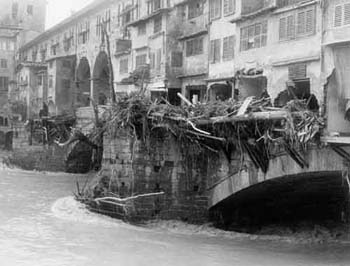
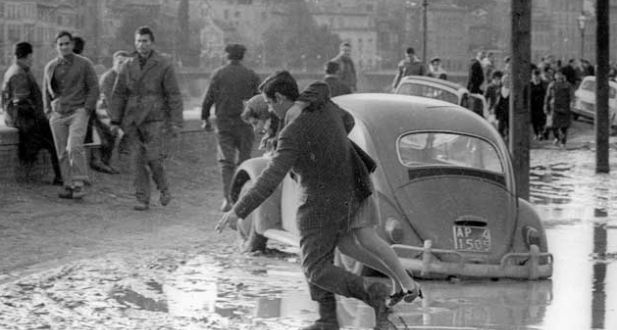
The Arno can be dangerous. Sometimes, it can devolve to almost dry. However, with heavy rainfall, the river can surge to calamitous levels and output. The river has flooded Florence regularly throughout history and the last occasion was the horrendous flood of 1966, which I wrote a bit about here. Dams have been built upstream from Florence and have, presumably, decreased the chances of Florence flooding again.
According to Wikipedia, the 1966 flood collapsed the embankment in Florence, with a loss of life numbering 40 and damaging or destroying millions of works of art and rare books. The only good thing anyone can say about the 1966 flood was that new conservation techniques for artworks were developed afterwards, but even 40 years later, hundreds of works still await restoration.
Just last January in this year of 2014, the Arno rose precipitously high. Here’s what it looked like on Jan. 31, 2014 in Pisa:
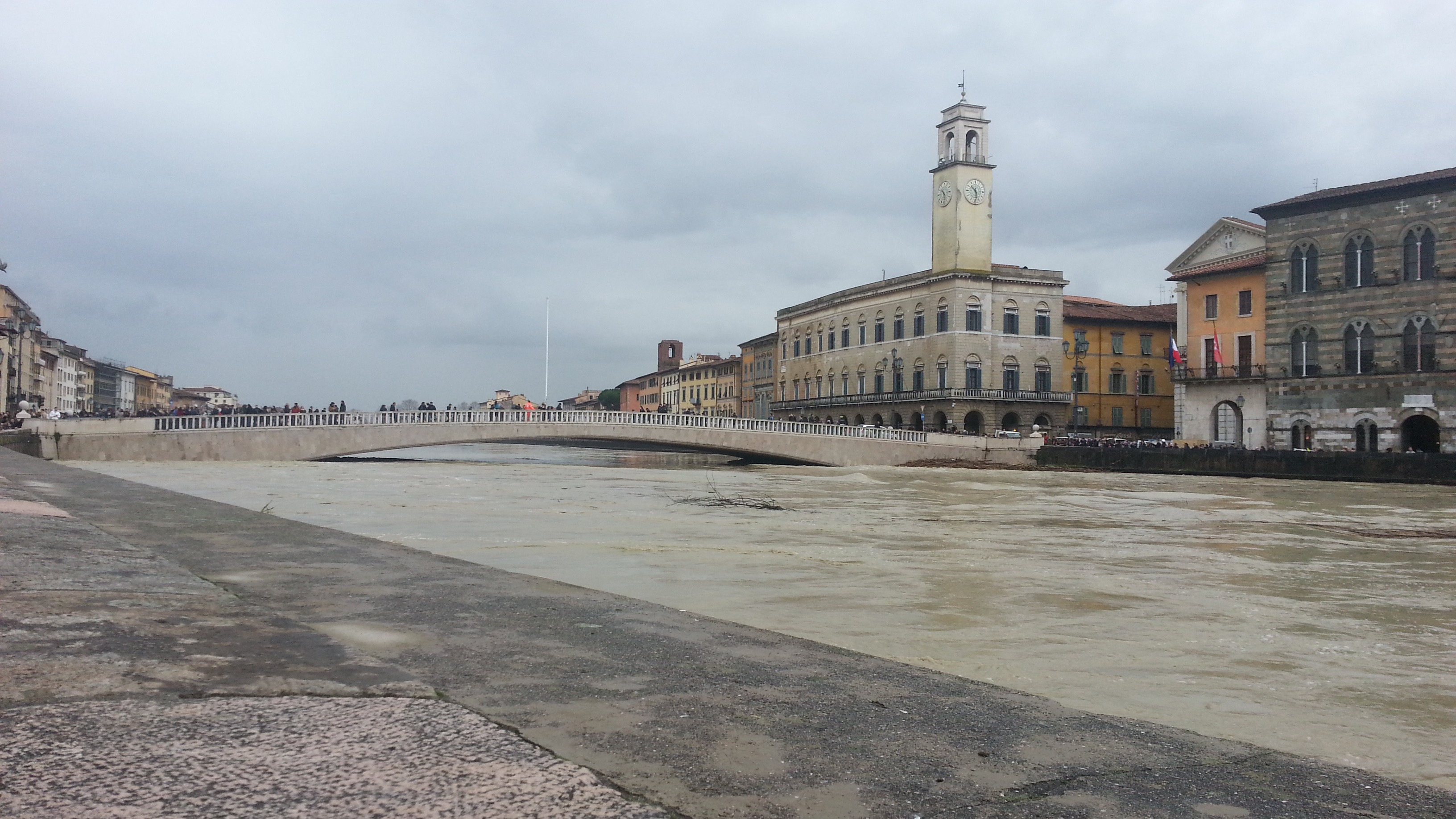
Yikes!
Topic numero due is the Ponte Vecchio, which means “Old Bridge” in Italian.


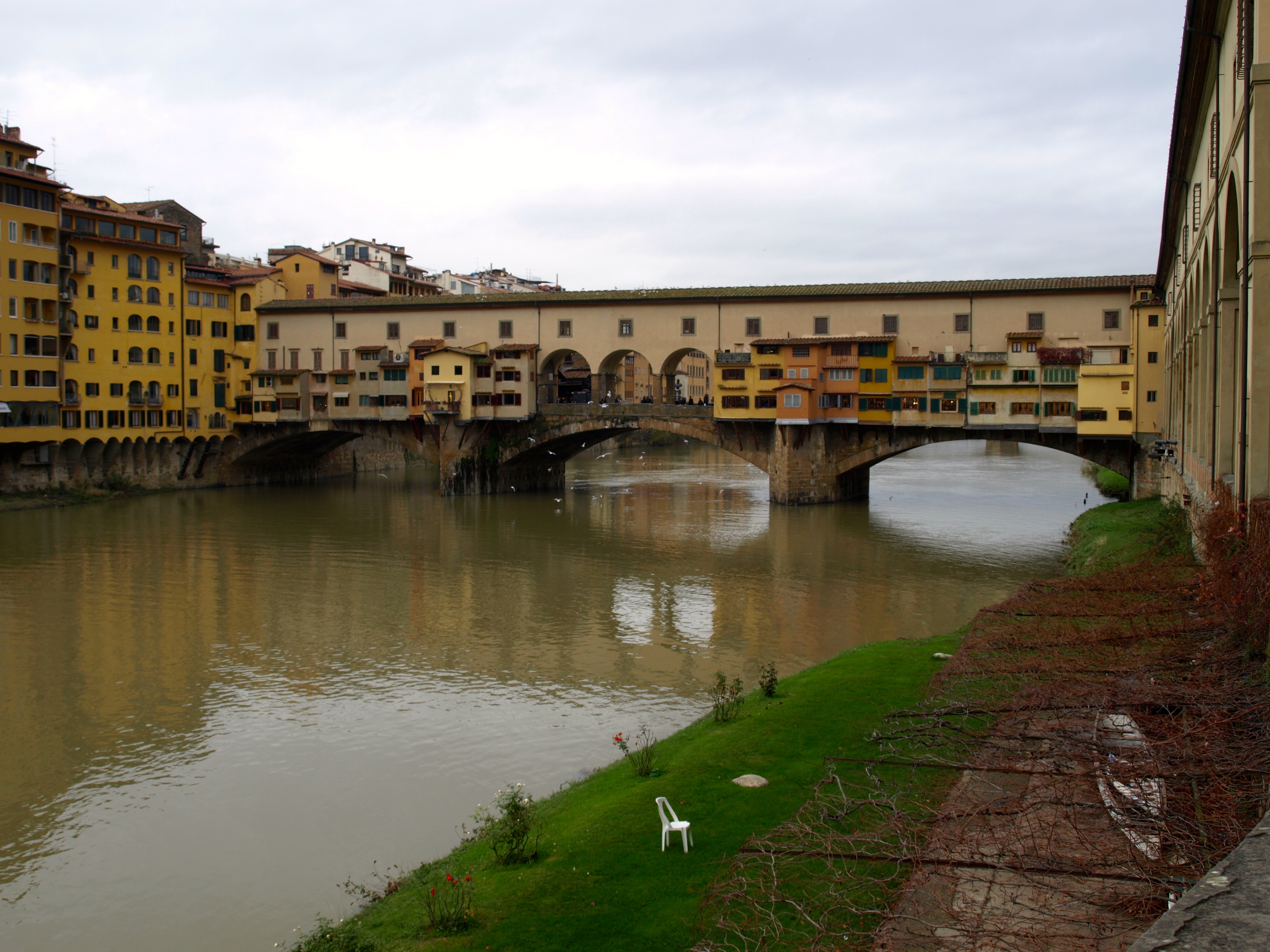

And yep, it’s pretty old alright. How about Medieval even? This landmark, Medieval, stone, pedestrian-only bridge, is noted for having ritzy shops all along it. Today jewelers and art dealers are located across the bridge, whereas originally it was butchers who occupied the shops.
The bridge spans the Arno at its narrowest point and it is believed that the very first Roman era bridge also crossed the river at this same spot. The bridge is first documented in 996. It was destroyed by a flood in 1117; reconstructed in stone but swept away by a flood again in 1333; and rebuilt in 1345 with the Torre dei Mannelli erected at its SE corner for defense.
Here’s an interesting point: The Ponte Vecchio was the only bridge the retreating Germans did not destroy on August 4, 1944. This was allegedly because of an express order by Herr Hitler himself who had visited Florence and supposedly loved the medieval Ponte Vecchio. Despite letting the Medieval bridge stand, the Germans made it all but impossible to access the Ponte Vecchio, however, because both ends of the bridge were obstructed by the destruction of the neighboring buildings. All we can say is, “thanks a lot Herr Hitler.” You’re all heart as we have always known.
In true Florentine tradition, the Ponte Vecchio was again restored and rebuilt, using a combination of original and modern design techniques.
And now for numero tre: let me see, what random fact would be fun to talk about?
How about this “what does it mean in cooking when you say something is ‘florentine?’ ”
I am so happy you asked that!
What Does Florentine Mean in Cooking, anyhoo??

You’d probably think that it just means anything prepared in the cooking style of Florence, Italy but actually, in modern usage, it for some reason means dishes created using spinach as a main ingredient. Spinach may have become associated with Florence as a result of the influence of Catherine de Medici. According to popular folklore, in the mid 1600s, Catherine, the queen consort of King Henry II and a native of Florence, introduced spinach dishes at court and proclaimed the culinary innovation as “Florentine.”
No matter how obscure the reasons, however, the term “Florentine” is now synonymous with spinach, often in egg dishes and dishes with rich, creamy sauces.

Uh…yum!
So there you go, 1 due 3.



 get back, lauretta!
You must be logged in to post a comment.