Pink magnolia blossoms set against a weeping willow that is chartreuse with new leaves. All of this about ready to burst open with the Seattle sunshine. Set against the blue backdrop of Lake Washington.
I know you think I am smoking the legal mj, but I swear to you this is what it looks like here. Shhh, don’t tell anybody!!
But, let’s looks at some other aspects of the extravaganza.
For example, the warring factions, on the part of the Nutcracker and the Mice, were picturesque beyond belief.
I can’t locate a good photograph of the cavalry component of this Nutcracker online, but I did find this illustration.
I
You’ll have to take my word for it: the cavalry rocked! I’ve never seen anything like their spectacular horse costumes.
The ethereal dance sequence with the corps de ballet dancing in a lightly falling snow was awesome.
Can you see what I mean? It snows rarely in Seattle, so this aspect of the ballet is beloved locally. By me for sure!
I’ve run out of superlatives to describe the Nutcracker, so I just show you some random photos of some great parts. A picture is worth a thousand words anyway.
And yes, I had to sneak in the peacock again. I can’t help it. I love it so much!
So, to close, let me remind you that this is the very last year to see the Stowell-Sendak version of The Nutcracker in Seattle. So, what are you waiting for, people? Go!
Second, I love a classic as much as the next person. Maybe more.
Tchaikovsky-The Nutcracker Ballet
Third, I love a new twist on an old favorite. Shaking things up is almost always a good thing. Especially in the arts!
Fourth, I love rousing live music from a top notch orchestra.
Fifth, I am a sucker for the holiday season and the spectacle of falling snow.
Put all these things together, and they elicit the Pacific Northwest
Ballet Company's Nutcracker, what else? Ma oui, mesdames et messieurs!
(I have no idea why I just went all les français.
It just seemed appropriate!)
The Pacific Northwest’s is an entirely different Nutcracker than any you’ve ever seen.
And that’s because one of the company’s directors, Kent Stowell, had a brainstorm back in the 1980s. He thought a new, updated version of the Christmas classic would be nice.
As I noted in an earlier post, Kent Stowell invited famed children’s book author and illustrator, Maurice Sendak, to collaborate on a new version of the Nutcracker. Fortunately, although his initial impulse was to say no, Sendak agreed. The ballet that I enjoyed yesterday in Seattle is the carefully nurtured product of that enlightened collaboration.
Thanks to technology and the www, we can hear the late Sendak himself and see him at work.
Thank goodness they did it, for I’ve been to a few Nutcrackers (indeed I have been drug to many to watch friend’s children perform as mice and other nonsense) in my lifetime, but never one as charming as this.
I could give you the whole rundown, but you don’t need that and neither do I. So let’s jump right to my favorite parts of the Seattle spectacle.
First, let’s skip the turkey and talk all peacock. Personally, I never have liked turkey.
The illustration above is courtesy of the PNB’s website. No credit is given for the artist, but I guess we can take credit all the way back to the early 1980s and give it to Maurice Sendak, who originally envisioned all of this bravado on display at McCaw Hall at the Seattle Center for the next month.
There are hundreds of things to love about the Stowell-Sendak Nutcracker. Maybe more.
But, personally, I could not get enough of this joyous peacock who arrives on stage in her own gilded cage.
Then the gorgeous bird struts her stuff and it is a joy to behold.
The choreography, the costume, the music, the beautiful, skilled ballerina–it all comes together in this all too brief moment of peacock madness.
If you ever wondered what it is like to dance the part of the gorgeous peacock in the Sendak Nutcracker, and come on, who hasn’t?, then watch this:
But, as I often do, I have gotten way, way ahead of myself.
This light-hearted, magical stage front awaits you upon your arrival in the theater. While the orchestra tunes up and all the little sugarplums and sourpusses in the audience take their bumper chairs, your eyes and mind have much to enjoy in admiring this warm Sendak illustration. It literally sets the stage for the magical moments ahead of you. The stagefront makes you feel all warm and fuzzy, like you are sitting on your grandmother’s knee and she is about to read you one of your favorite stories with fantastically attractive illustrations for you to admire.
The curtain(s) rises and you are confronted by this whimsical nutcracker’s face and unending teeth.
Another curtain rises and we see the young protagonist of the story, our fraulein, asleep, about to have some wild REM sleep! Out come the mice, the tale’s “narrator” (he is silent, but he still narrates), and the fantastic dreaming begins.
It would take pages for me to go through the chronology and details of the ballet, and I don’t want to write for pages. So, here are some of the scenes from the dream sequence. I present them out of order, the way I would like to dream it.
Three dances in harlequin costumes present a lively interlude. I loved this part!
I’ll be back with another post on this masterpiece soon. But for now, run, don’t walk, to the Seattle Center to see this ephemeral delight while you still can.
May we all have visions of sugar plums dancing in our heads this next month!
It is almost time for the holiday season to begin! And, in Seattle, that means only one thing! The Pacific Northwest Ballet’s Stowell-Sendak version of the classic Nutcracker ballet.
The PNB’s Nutcracker is a very special work, a collaboration between famed children’s book author and illustrator, Maurice Sendak, and PNB Founding Artistic Director and choreographer, Kent Stowell and drawing from the classic story by E.T.A. Hoffmann and music by Tchaikovsky.
The Sendak and Stowell Nutcracker production premiered at the Seattle Center Opera House on December 13, 1983.
It was an instantaeous mega hit both in Seattle and nationally. Newsweek Magazine extolled: “Forget the Space Needle, forget the Ring Cycle, forget Mt. Rainier—this Nutcracker alone is worth a trip to Seattle.”
“Pacific Northwest Ballet broke all box office records in its nine-year history of performances with an incredible 99% capacity audience for the new Nutcracker. Twenty-six performances were presented December 13–31 to 78,000 people; approximately 16% of Seattle’s population!” PNB press release following 1983 Nutcracker premiere.
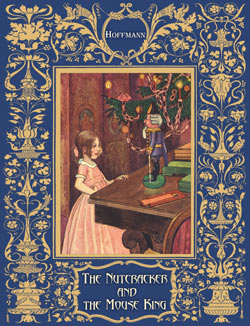
As most people know, the Nutcracker ballet is based upon a story written in 1816 by E. T. A. Hoffmann, entitled “The Nutcracker and the Mouse King.” The tale reveals that young Marie Stahlbaum’s favorite Christmas toy, a nutcracker, comes to life, defeats the evil Mouse King, and whisks the Fraulein away to a magical kingdom. In 1892, Russian composer Pyotr Ilyich Tchaikovsky collaborated with choreographers Marius Petipa and Lev Ivanov to turn Alexandre Dumas pere’s adaptation of the story into the ballet we all know and love. Over time, the Nutcracker became one of Tchaikovsky’s most famous compositions and arguably the most popular ballet world wide.
So, how did Seattle’s Stowell and famed illustrator Maurice Sendak decide to update the old ballet? It is a very interesting story, told here by the principals:
Maurice Sendak in 1984 said of his collaboration on the ballet: “My immediate reaction to the request that I design Nutcracker was negative. I was flattered, but my reasons for saying no were plentiful. To begin with, who in the world needed another Nutcracker? ….Of course I did it. Most of my doubts and worries were put to rest when Kent Stowell and I met for the first time early in 1981 in New York City. I liked him immediately for not wanting me to do Nutcracker for all the obvious reasons but rather because he wished me to join him in a leap into the unknown. He suggested we abandon the predictable Nutcracker and find a fresh version that did honor to Hoffman, Tchaikovsky, and ourselves. Later that year, Kent invited me to Seattle to see the company’s old Nutcracker. By then I had fallen in love with the project and after that Christmas of 1981, I set to work in earnest.”
Kent Stowell discussed the collaborative work in 1983, “Maurice and I went back to the original Nutcracker story by E.T.A. Hoffman and incorporated much more of the story into the production.”
Stowell and Sendak delved deeply into the original story of Hoffman’s “The Nutcracker and the Mouse King,” infusing their new ballet with a drama and strength that fully complements Tchaikovsky’s rich score, while creating a kaleidoscope of roles for all levels of the Company and School.
Stowell continued: “Clara and Herr Drosselmeier are the central figures though the story essentially remains the same. The essence of the Nutcracker story is really a fantasy dreamed by Clara, a young girl on the verge of growing up. The ballet is seen unfolding through her eyes, in an atmosphere tinged with mystery, where there are no boundaries between dream and reality. We worked on this new production for two years; seeing our plans become a reality for our company is an incredible accomplishment—one we feel will be well worth it for all our Nutcracker fans.”
In 1984, the year following the premier of the brilliant Stowell-Sendak Nutcracker in Seattle, a new edition of the original E.T.A. Hoffman story, illustrated by Sendak, was published and hit the New York Times Bestseller List. It remained there for eight weeks.
In 1986, a feature-length film of the Stowell-Sendak Nutcracker was produced, premiered in Seattle, and was released nationwide.
The important thing to remember about this ballet, however, is that this is the last year it will be performed.
A Million Kisses to my Skin, Before After, Rassemblement, Debonair McCaw Hall, Seattle, WA; November 8, 2014
Dean Speer
I was reflecting on Artistic Director Peter Boal’s Director’s Notebook piece in the program where he turns on its head the concept of out-of-town tryouts (the typical New Haven to New York route) by suggesting how appropriate it is now to try out a new ballet in New York and have it actually premiere elsewhere, as was the case with Peck’s new work. I believe we’ve come a long way since the days of artistic ratification and the blessing by hands by New Yorkers, telling us what’s good and what’s not – and leaving us looking to them for these crumbs from the master’s table – there being the unwritten belief that they are somehow intrinsically more sophisticated, or that what comes out of New York is somehow better.
These urban myths are shattered when experiencing pieces like Peck’s or Dawson’s, or for that matter the middle two works of the program: Annabelle Lopez Ochoa’s “Before After” and “Rassemblement” by Nacho Duato.
Perhaps it’s hometown pride, but many of us have long felt that New York is no longer the dance center of the universe. We should be supporting and aware that Pacific Northwest Ballet has, for many years, been one of the best ballet companies globally.
While in many ways an ensemble piece, Lesley Rausch was clearly the star of “Kisses”, followed closely by Lindsi Dec and Carrie Imler. The choreography calls for extraordinarily strong technique, attack, and control and they carried out the assignment with aplomb. Ditto Sarah Ricard Orza, Emma Love Suddarth, and Margaret Mullin. Then there were the men – Batkhurel Bold, William Lin-Yee, and Jonathan Porretta – who easily showed the high standard that’s become the expectation of male ballet dancing, each getting their own brief solo to show off and who also complemented their partner’s strengths. Men, as we know, not only dance but partner and have to be in sync with their ballerina – and all have to dance as an ensemble – almost literally breathing as one.
My only fuss is the actual title of the piece. A really, really good work, this is not reflected in its title – while perhaps meaningful to the choreographer, I think it could be more poetic and better. When I first heard the title, it suggested to me a modern dance mood work and not a quick, bright, allegro showcase work to Bach.
In a darker mood is Ochoa’s “Before After” which, through exploring the technique of partnering, looks at the sad conclusion of a relationship. It was vividly danced with great depth and fluidity of resonating shapes by Angelica Generosa and Raphaël Bouchard.
“Rassemblement” is Duato’s Haitian voodoo piece with a small story line, suggesting soldiers that ‘disappear’ local men, leaving bereft and grieving females. While an ensemble piece, its star was clearly Carrie Imler, whose deep second position strides and torment unearthed and underscored this story.
Greatly anticipating Justin Peck’s new ballet (his oeuvre entirely new to me), we were not disappointed but rather pleased – he seems to be living up to the hype on social media and elsewhere. His “Debonair” has a sweep to it that is one part intellect and one part feeling and mood. He had come into the creative process with a plan but smartly allowed his interactions with the dancers inform and redirect the product. With the dancers dressed in brushed-nickel toned costumes, I found the production values rather more bleak than Autumnal and would have liked some kind of backdrop and/or color changes to the grim black back and wing curtains and legs. The work is not at all dark, although it is serious. Suggesting perhaps a ballerina’s career journey – the central pas de deux was made for the retiring principal dancer Carla Körbes, though danced in this performance by Lindsi Dec – a dozen dancers appear at what I presume to be a ball. Dec was attentively partnered by Lin-Yee.
Three corps men – Kyle Davis, Ryan Cardea, and Matthew Renko – got to show their stuff, beginning with a held relevé in effacé devant that was both elegant and impressive. Unusually, the work concludes with the duet couple upstage with the curtain ringing down.
Warming us up prior to “Debonair” the mighty PNB Orchestra, which is celebrating their 25th year, played the wonderful “Praeludium” from Grieg’s “Holberg Suite, Op. 40.”
It was so sunny and clear that I spent some time this afternoon at one of my favorite Seattle locales, the Japanese Garden. It is 5 minutes from my place.
So sorry to all of you in the rest of the nation! :-(
I’ve lived in many great American cities. Some of them have great ballet and some of them have so-so ballet. I very much prefer cities with the former! Seattle is a great city with a great ballet company and it feels so fine! Thank you PNB and Peter Boal!!
My enthusiasm was stoked tonight because I was lucky enough to attend “Director’s Choice” and I am so glad I did.
Of the four performances within the evening’s program, my favorite was David Dawson’s lyrical, fast-moving, hyper-extended, fun-loving A Million Kisses to My Skin, set to Bach’s lively Concerto No. 1 in D Minor.
Inthis fairly short and entirely fresh work, the dancers wore various shades of light blue in an entirely empty set lit with very bright and very white lighting. The floor was so white it appeared to glow. The combined effect of color, light and movement was simple, glowing, and crisp. Everything focused on the virtuoso movement of the PNB’s fine ensemble, and they shone in this exuberant, modern work. It was as refreshing to watch as the fantasy of a tall white iceberg is to look at on a hot summer’s day. In case you can’t tell, I loved it!
The choreographer had been a dancer with the Dutch National Ballet and he created A Million Kisses in 2000, just as he was preparing to leave the company. A Million Kisses was written to evoke the feeling of complete bliss a dancer sometimes experiences while performing. Dawson said he had that feeling “… a couple of times on stage, and it feels just like that—a million simultaneous kisses to your skin.”
At first, A Million Kisses seems completely familiar, for it uses classical ballet vocabulary. But you very quickly understand that Dawson has played with the classic forms, tweaking and stretching them into something completely 21st-century.
I can’t describe A Million Kisses any better than the PNB program, so let me quote: “The choreography is an expansive, extravagantly free-flowing bravura vocabulary of movement, which sets aside the classical proprieties. Arms and legs are hyper-extended by both men and women, and asymmetry, off-center turns, broken lines, swoops, dips, and swirls are passed on from dancer to dancer as though they are sharing the sheer joy of movement. Bodies are flung in the air and swept into lifts, with the dancers in a continuously changing torrent.” I’ll say!
Dawson said he “…wanted to create something that was structured in its own musicality….The concerto’s three movements reminded me of my whole experience as a dancer….It was also a kind of goodbye to my classical career. It was important for me to create this piece using classical steps, but also to create a ballet that was about individuality and freedom.”
“Now I have the opportunity to research and create my own ideas” Dawson continues, “Now I try to create works that I want to watch, something that will excite me. I try to be expressive, to use what I know, to try and encourage or direct dancers to be individual and fearless and enjoy dancing, to be big, enjoy their bones, to draw huge shapes with their limbs, and leave behind a three-dimensional piece of art on stage when they are through.” Dawson said he was aiming for fireworks and I’d say that he achieved them! It was joyful as it was virtuosic!
Another work included in “Director’s Choice” is the world premier of Debonair, by Justin Peck, the New York City Ballet’s rising dancer-choreographer, set to George Antheil’s Serenade for String Orchestra No. 1.
Six couples glide across the stage, the women dressed in exquisite flowing skirts that looked like liquid metal in color, sheen, and movement.
When the PNB ensemble previewed Debonair in New York, the Times described the work as exuding “…carefree exuberance from the start: The men, standing or kneeling along the stage’s perimeter, snap to attention the moment a woman dashes to the center. In this opening section, the stage flashes with translucent skirts as dancers etch the stage with quicksilver turns. They converge in the center, grab their partners and splinter off.”
Here’s the Seattle Times review of today, 11/10/14:
A shy young woman extends her hand to her lover, and then snatches it away before he can catch it. The lover dances for her, trying to impress, while she awaits her turn to show off for him. Together, they embrace then pull apart as if embarrassed by the physical closeness.
These are some of the most stirring moments in Justin Peck’s “Debonair,” which had its world premiere on Friday night at Pacific Northwest Ballet. The 15-minute ballet may not be Peck’s most striking piece yet, but “Debonair” reveals many of this rising star’s choreographic talents.
Chief among these are his ability to subtly suggest character and story, skillful use of the ensemble and sophisticated musical taste.
In George Antheil’s complex “Serenade for String Orchestra No. 1,” played with intensity and flair by the stellar PNB orchestra, Peck has found a multicolored score that lends itself to “Debonair’s” changing moods.
In the first sections, Antheil’s hints of jazz rhythms and cowboy tunes provide the perfect backdrop for exuberant ensemble dancing. The gorgeous costumes by Reid Barthelme and Harriet Jung — long, shimmering dresses for women, tights and vests for men — have the formality of 19th-century ballet but serve as a surprisingly successful juxtaposition to the jaunty score.
Visually it seems almost as though we’ve been dropped into the ballroom scene from “Romeo and Juliet,” with the young couple’s friends replacing the warring families. Each pair expresses its own love dynamic until they all peel off, leaving one couple alone on stage.
The music changes and hints of Prokofiev creep in (more “Romeo and Juliet”?) as the young lovers, danced by Carla Körbes and Jerome Tisserand, begin their duet. Körbes is PNB’s most graceful ballerina, shaping a phrase beautifully and inflecting even the tiniest movement with intense feeling. Tisserand, growing into the company’s most elegant male, is able to match her in warmth and charm. Together they make Peck’s ode to love and longing memorable.
The first three works on the program — David Dawson’s breakneck “A Million Kisses to my Skin,” Nacho Duato’s ”Rassemblement” and Annabelle Lopez Ochoa’s “Before After” — offer a complete contrast. All three are compelling, but “A Million Kisses” is the blockbuster.
The real stars of this program, however, are the corps members and soloists who are often overshadowed by PNB’s dynamic principals. From Margaret Mullin, who dances with an almost scary ferocity, to Angelica Generosa, Raphaël Bouchard, Leah Merchant, Chelsea Adomaitis and virtually everyone who performed on opening night, it’s clear the entire company deserves the national attention it is now receiving.
The remaining two works in “Director’s Choice” include the critically-acclaimed Annabelle Lopez Ochoa’s signature piece, Before After, also a PNB premiere, which “unmasks the turmoil just before a relationship ends” according to the printed program.
Finally there is Rassemblement, by Nacho Duato, a poignant work set to slave songs by Haitian artist Toto Bissainthe. The latter “embodies communal yearning and resistance in a climate of oppression.”
You can see a moment of both Before After and Rassemblement, as well as all the other dances in this year’s season, in this video:
While I enjoyed both of final two works, it seems unfortunate to chose dances that are accompanied by recordings, when the ballet has an incredible orchestra at the ready. But, regardless of the music, there is no question about it, “Director’s Choice” brings Seattle a great night of dance!




 get back, lauretta!
You must be logged in to post a comment.