My subtitle would be: I love Florence in the winter!
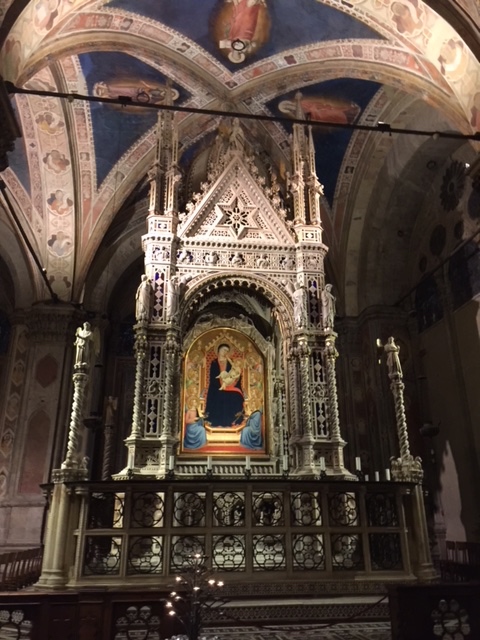
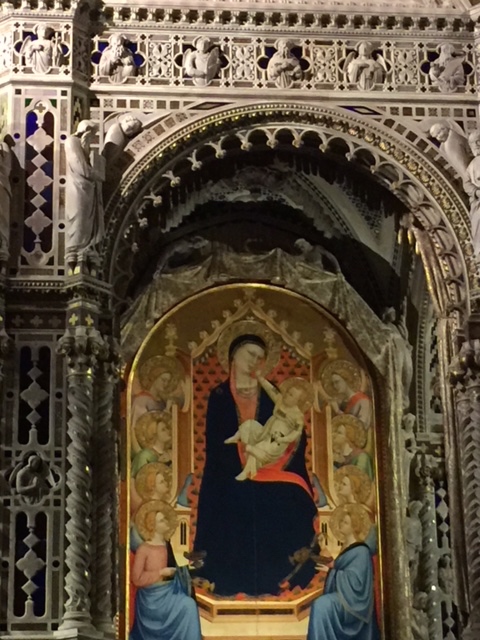
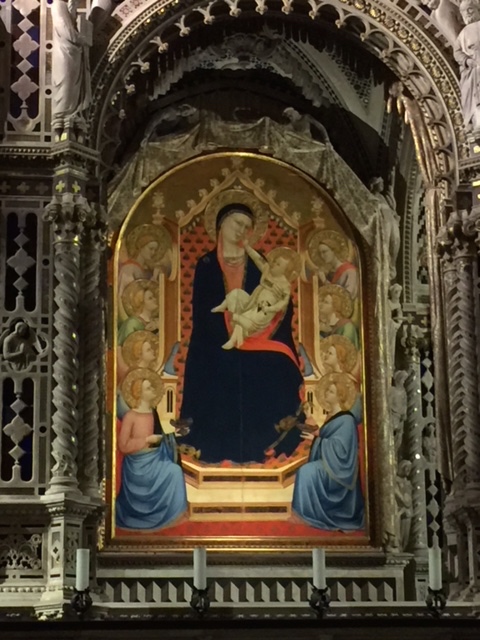
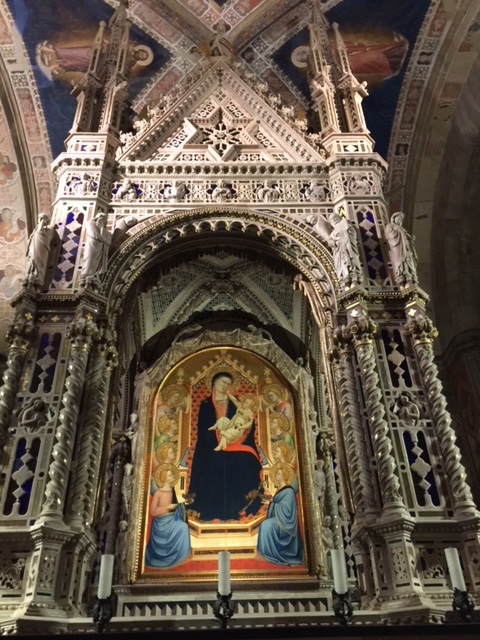
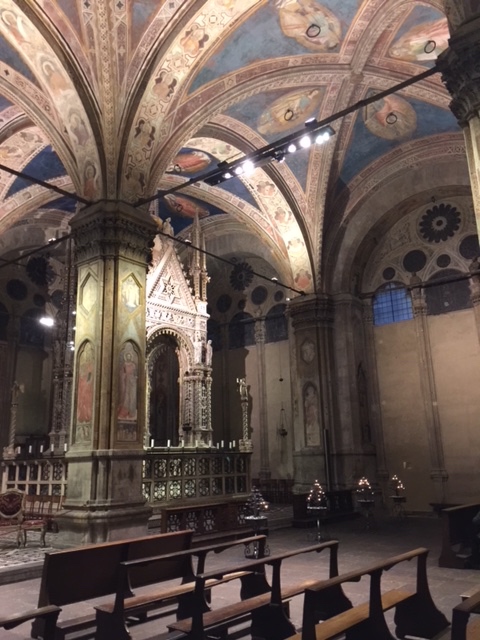
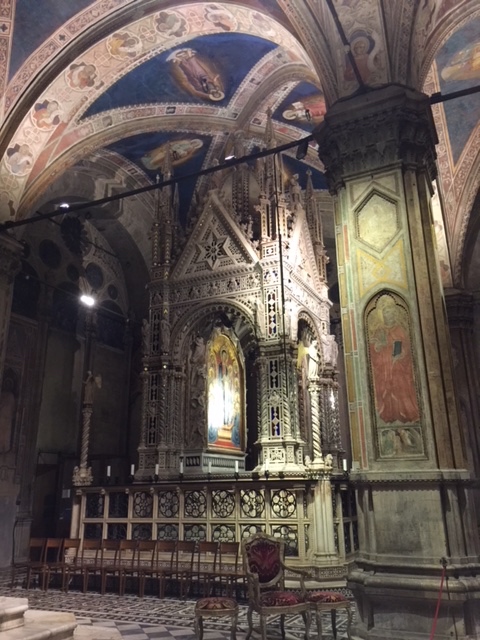
I wandered into Orsanmichele today and had the masterpiece all to myself. I lit candles for some beloved family members and took a pew, gazing at Orcagna’s magnificent altarpiece for a long, long time. It was a gorgeous moment in Florence, the kind of thing I live for.
I started thinking about the name: Orsanmichele. It is not a common name for a church. What is the significance, I wondered?
“San Michele” or Saint Michael is easy to extract from the name, but I had to head to Wikipedia for the full answer. Orsanmichele (or “Kitchen Garden of St. Michael“, from the contraction in Tuscan dialect of the Italian word orto) is a church that was constructed on the site of the kitchen garden of the monastery of San Michele, which no longer exists.
Located on the Via Calzaiuoli in Florence, the square building was constructed as a grain depository and market in 1337 by Francesco Talenti, Neri di Fioravante, and Benci di Cione.
Between 1380 and 1404, the building was converted into a church, to be used as the chapel of Florence’s powerful craft and trade guilds.
From the exterior, the ground floor contains the 13th-century arches that originally formed the loggia of the grain market.
The second floor was devoted to offices, while the third housed one of the city’s municipal grain storehouses, maintained to withstand famine or siege.
Late in the 14th century, the guilds were charged by the city to commission statues of their patron saints to embellish the four facades of the church.[1]’
Orsanmichele’s sculptures are a relic of the fierce devotion and pride of Florentine trades, and a reminder that great art often arises out of a competitive climate. Each trade hoped to outdo the other in commissioning original, groundbreaking sculptures for public display on Florence’s most important street, and the artists hired and materials used (especially bronze) indicate the importance that was placed on this site.
The Renaissance sculptures have been removed to museums, but faithful copies of each work of art have been placed in the niches.
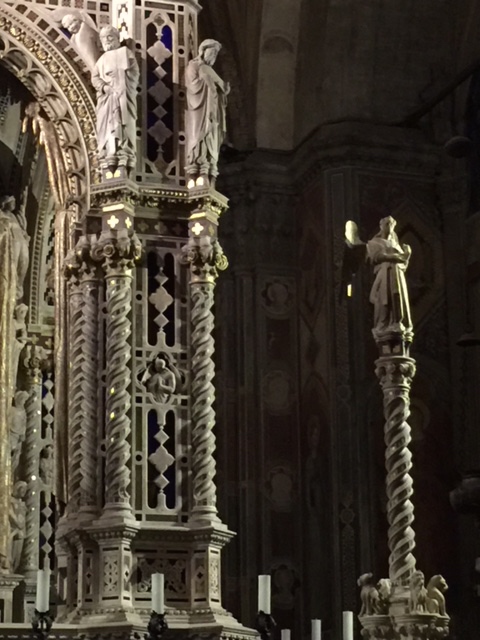
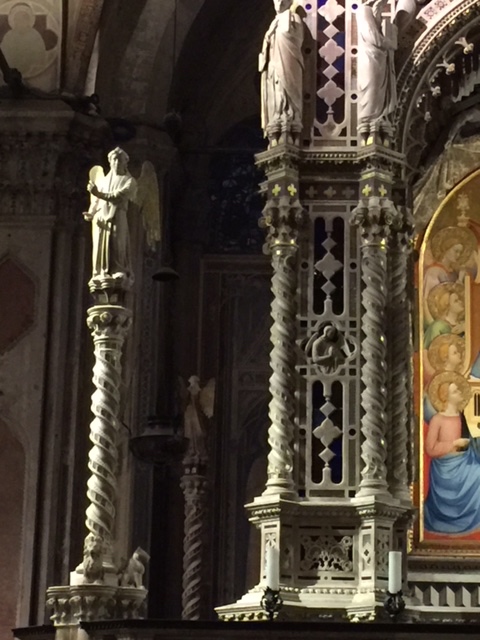
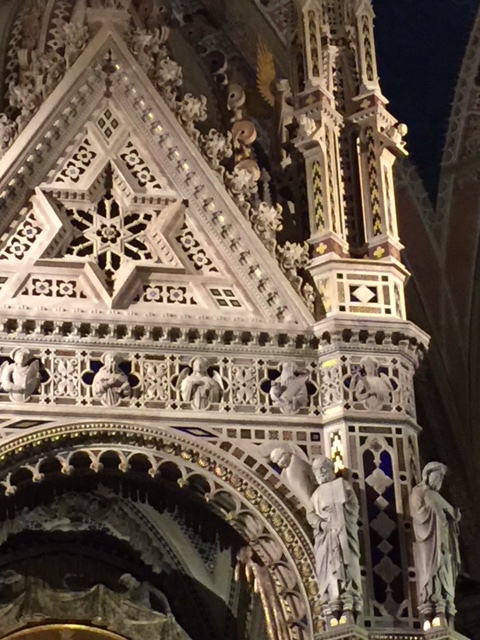
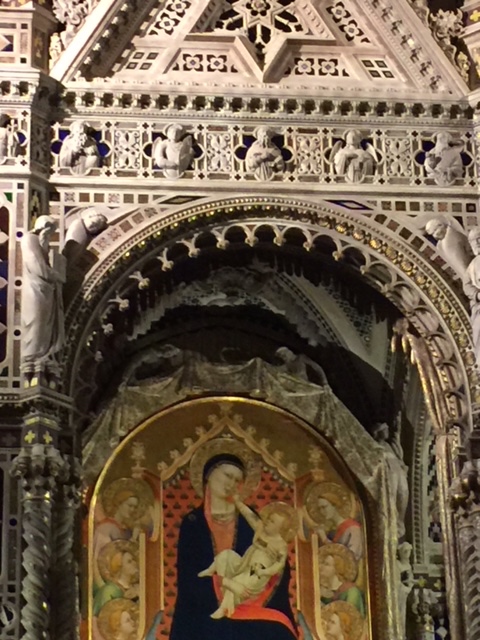
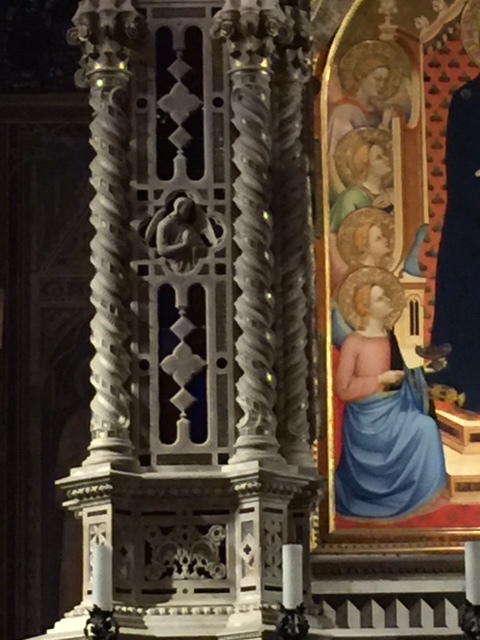
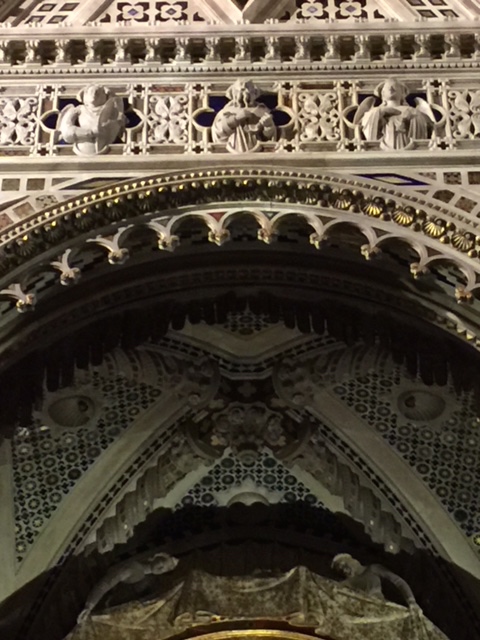
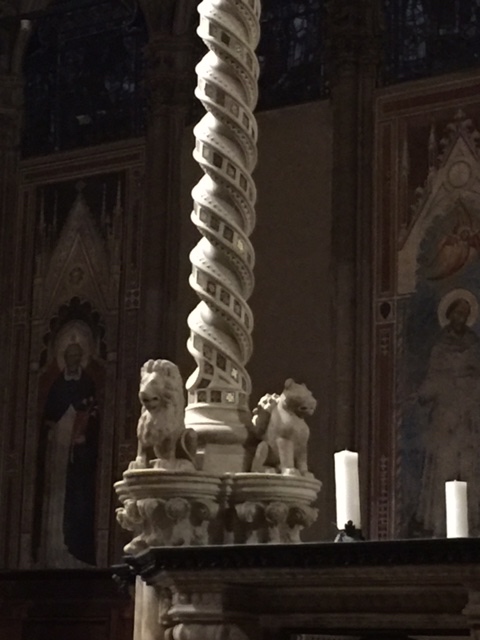
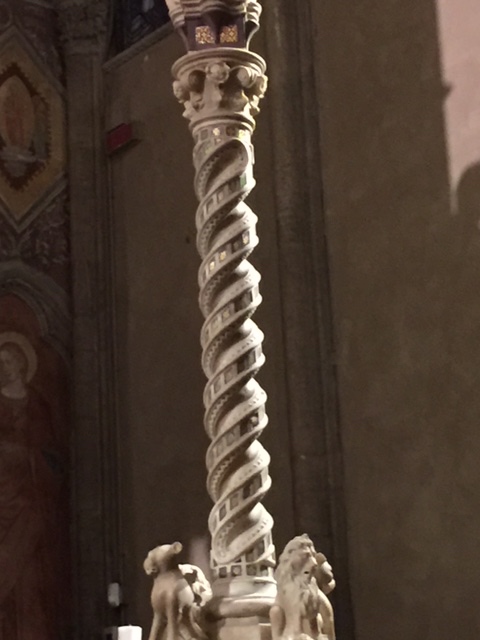
Another day I will illustrate the niche sculptures, but today I felt like sitting inside the church and studying Andrea Orcagna‘s seemingly bejeweled Gothic Tabernacle (1355-59), which encases a repainting by Bernardo Daddi‘s of an older icon, the ‘Madonna and Child’.[2]
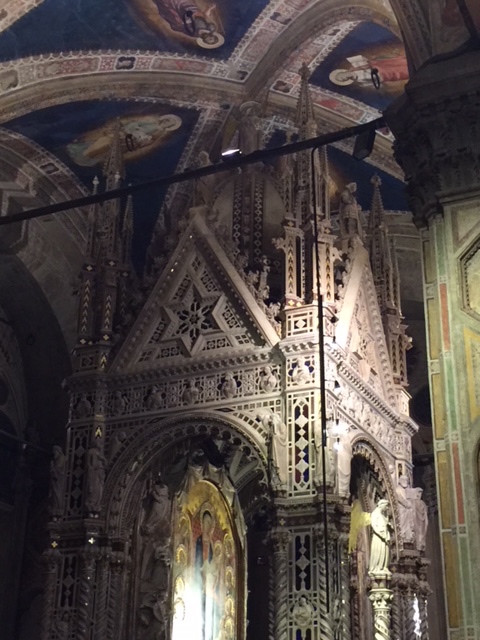
I don’t think there are actual jewels in the tabernacle, but the encrusted mosaics make it seem that way.
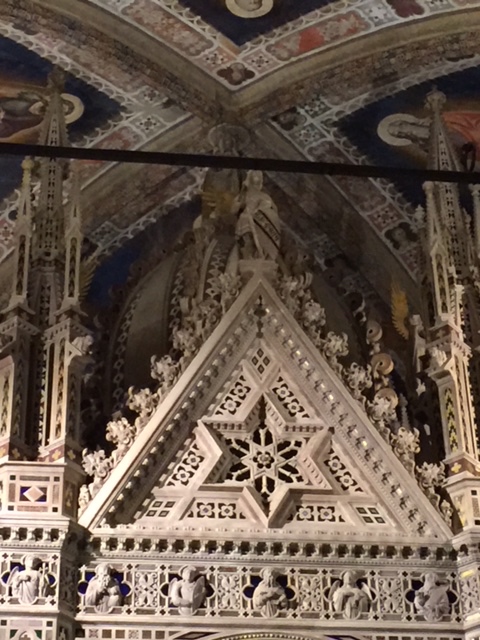
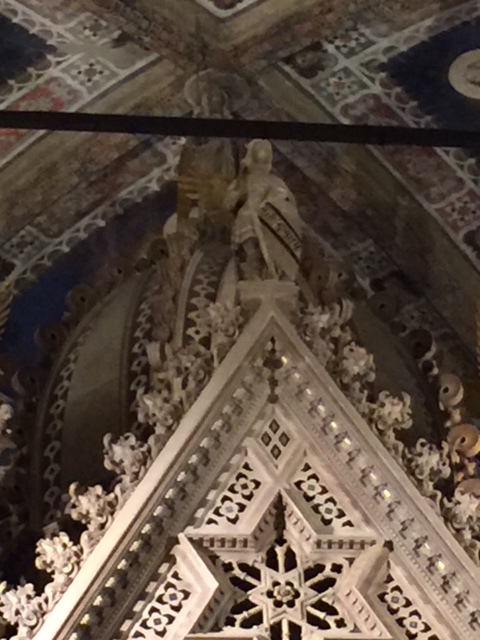
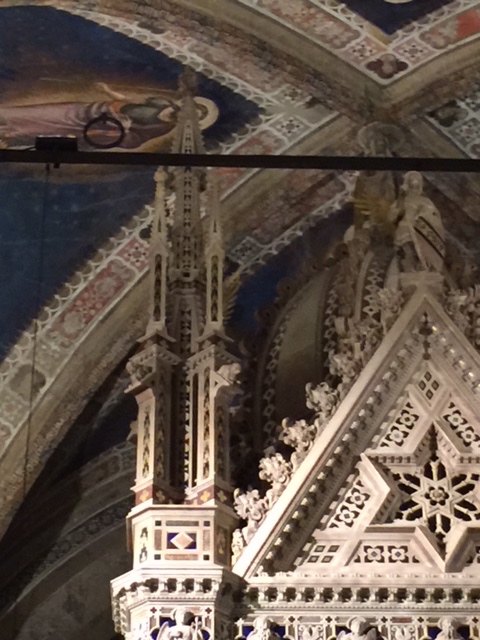
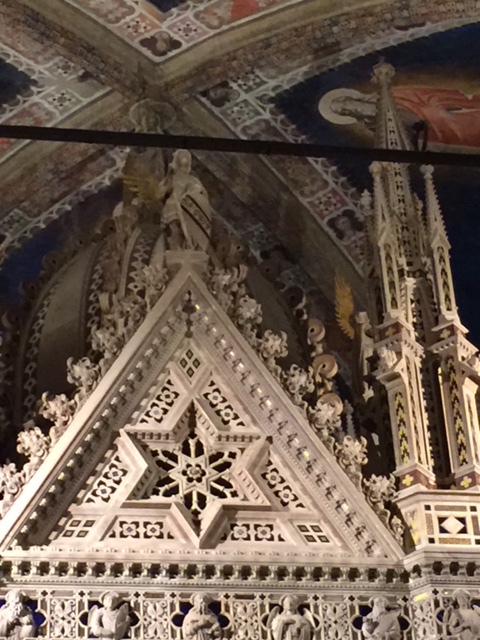
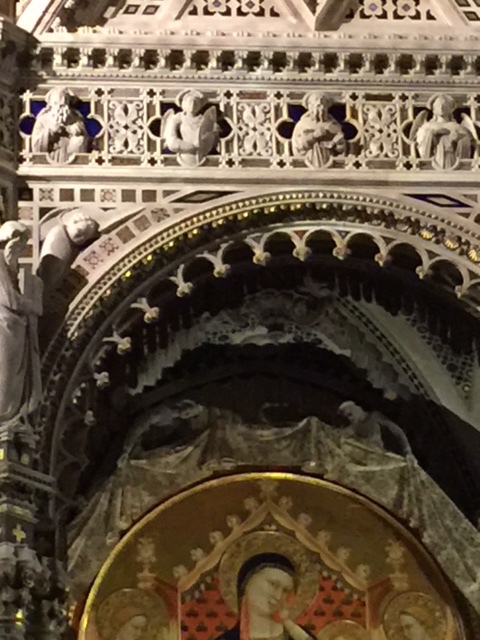
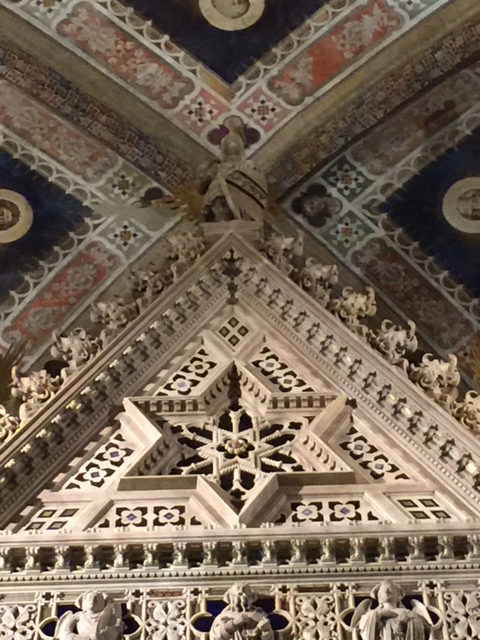
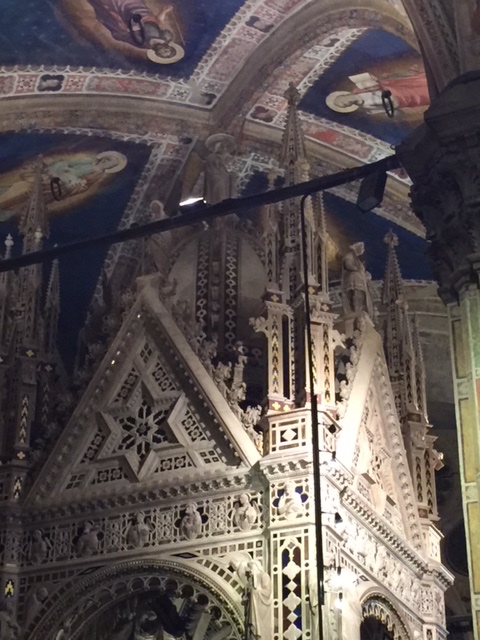
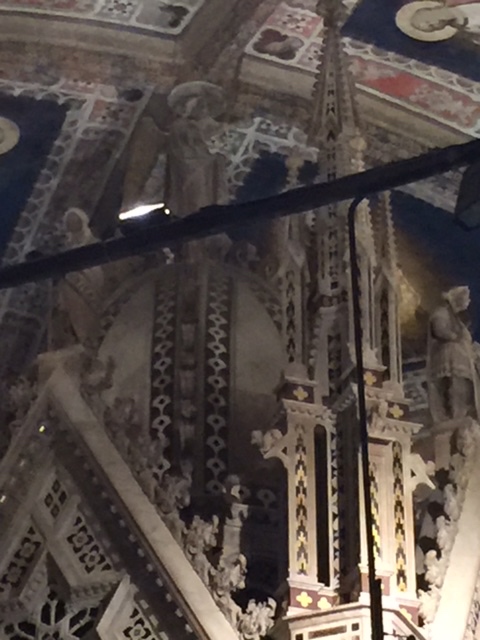
One of the first things I noticed is that the exterior of the cupola of the altarpiece is shaped and decorated like a Fabrege egg. You can see what I mean in the photo below.
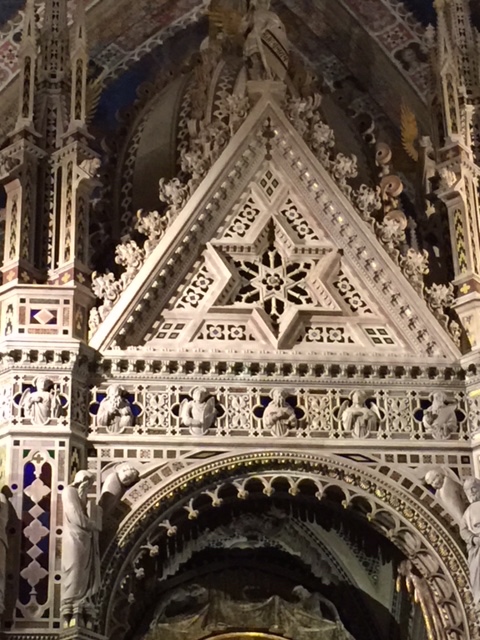
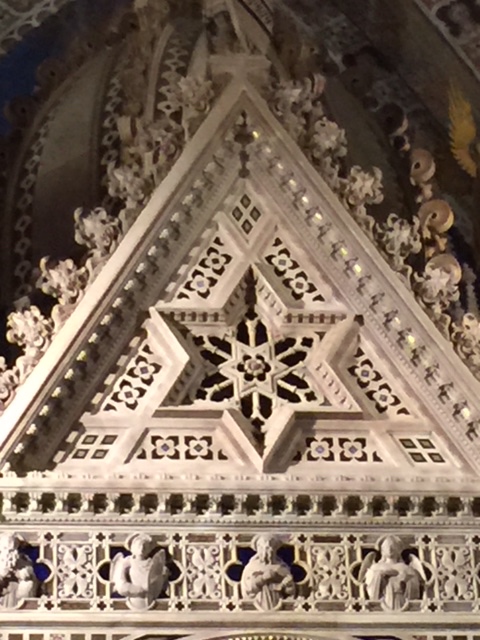
Here’s a detailed look at the egg shape, right behind the triangle of the facade:
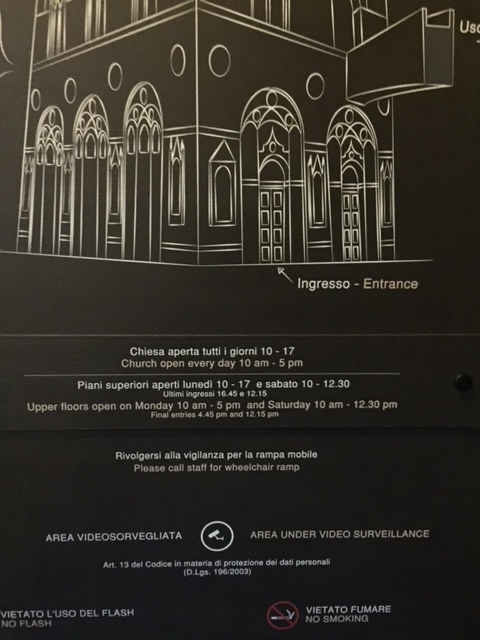
If you are ever fortunate enough to spend the winter in Florence, you can enjoy Orsanmichele all to yourself as well. Here’s info on opening hours. The museum on the upper floor is NOT to be missed.
 get back, lauretta!
Lauretta, back doing what you love and I get to love it too! Thanks for your knowledge and great eye.
Grazie mille Karen! I am so thankful and grateful to be back where I belong! Merry Christmas!