Italian seems to have a word to capture the idea of many wonderful things; take, for example approfondire, the wonderful Italian word for deepening knowledge and appreciation.
Month: April 2018
Street art, poetry on the vie of Florence
Graffiti is an unending spectacle on the walls of the streets in Florence. Then there is Clet and all the other recognizable signmakers and graffiti artists who “decorate” our streets here.
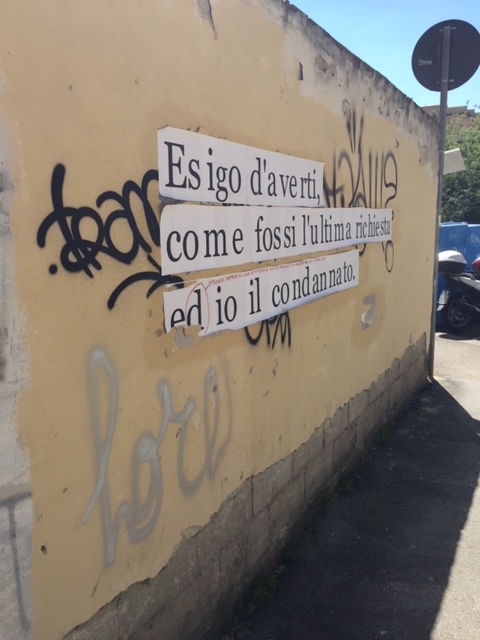
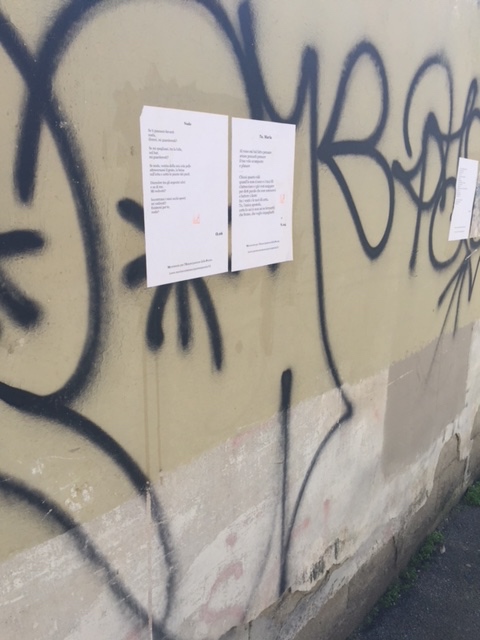
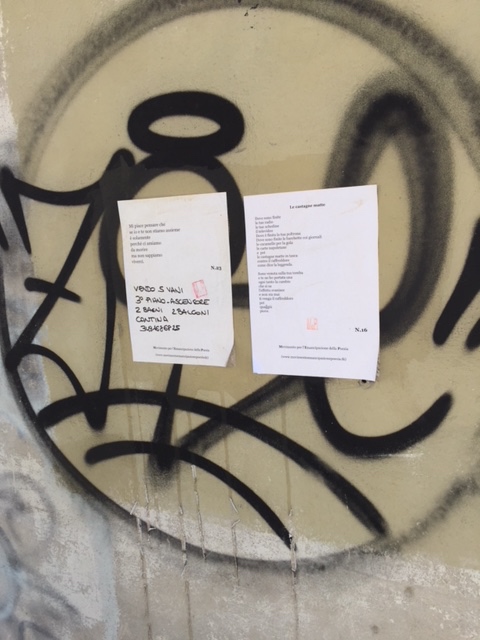
While these things are to be seen all over many urban landscapes, one thing I see here often that I’ve never seen anywhere else is the literal postings of newly minted poetry. See here:

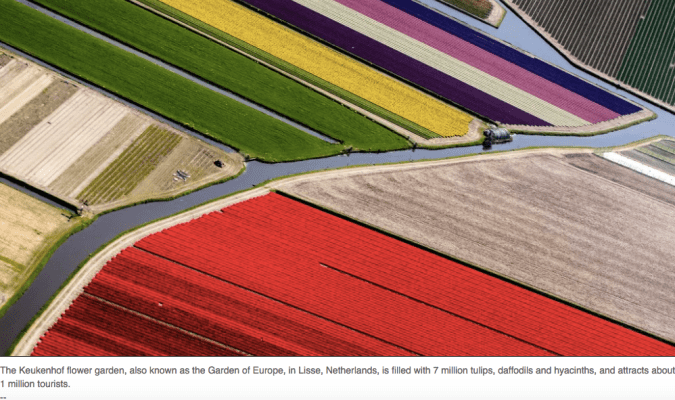
The Netherlands–one of the largest flower gardens on earth
Amici della Musica e il Teatro della Pergola
 Amici Della Musica
Founded in 1920, the Amici della Musica or Friends of Music is one of the oldest and most prestigious concert groups in Florence. The group presents some of the best works and performers on the international scene. And its home is the beautiful Teatro della Pergola, Florence’s oldest theater built in in 1656, so you can enjoy a wonderful Florentine evening from boxes once maintained for the private entertainment of the city’s aristocracy and social elite.
There is surely also much scope, now that Italian performers have become experts in this field, for further exploration of the Baroque repertoire, not to mention the grandsopéras of Meyerbeer, which were staged for the first time in Italy at the Pergola in the mid-nineteenth century and have been absent from the Maggio Musicale since the 1971 production of L’Africaine with Jessye Norman. The neglect of the French repertoire in general has been one of the weaknesses of operatic programming in Florence. It is hoped that the galvanizing presence of the new general manager will succeed in breaking down this barrier, too. 
For more, see http://amicimusicafirenze.it
Rome: broom with a view
Migrants have begun cleaning up the dirty eternal city:
https://slate.com/business/2018/04/rome-is-broke-and-dirty-african-migrants-are-cleaning-it-up.html
Art is a part of daily life in Italy
Italy was a place where art was part of daily routine. It was in the fabric and facades of the buildings and in the way towns and villages. Aestheticism was instinctive, a common trait, as if it were one of the senses. Artfulness was ubiquitous, from the wrapping of one’s purchases in a shop to the arrangement of food on a plate.
The most common word in the language appeared to be bella, which prefixed everything from the morning espresso to the design of a dress. Great effort – and great importance – was placed on how things looked. Tuscany’s landscape was the ultimate expression of this. It was the view that travellers dreamt of, composed who knew how by diverse hands over centuries.
It even smelled wonderful, of clean air and woodsmoke, of rosemary and new leather, of frying garlic and pungent parmigiano.
Taylor, Alan F.. Appointment in Arezzo: My Life with Muriel Spark (Kindle Locations 859-865). Birlinn Ltd. Kindle Edition.
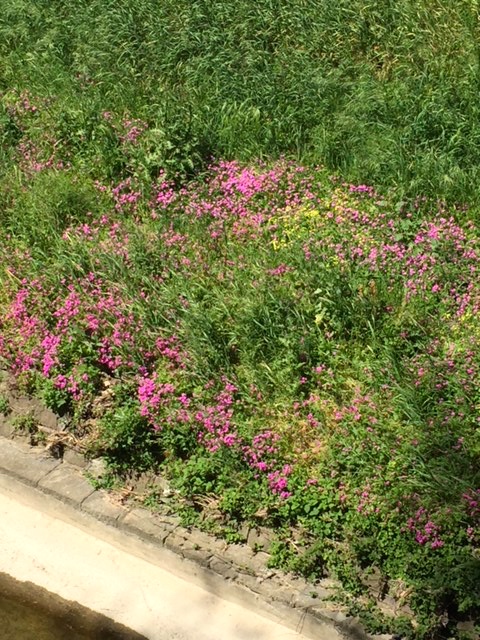
The banks of the Mugnone river in Florence
All green and pink with a spatter of yellow.
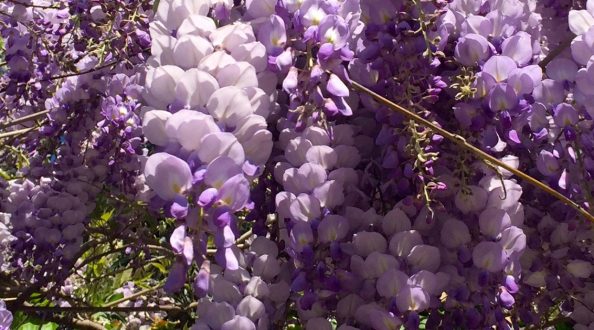
Wisteria season!
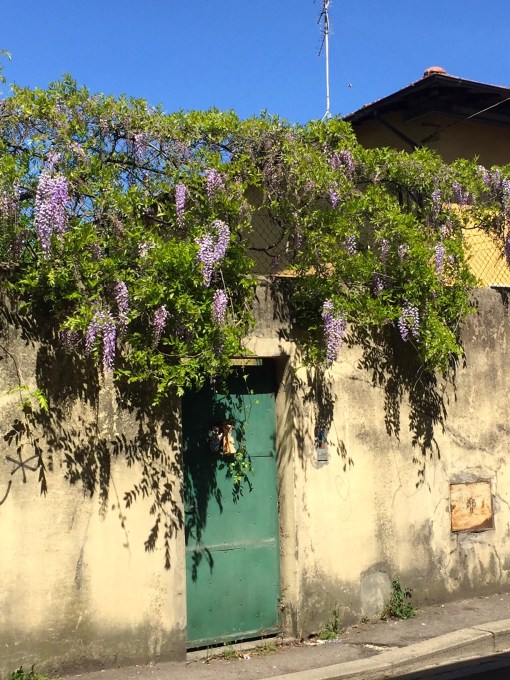
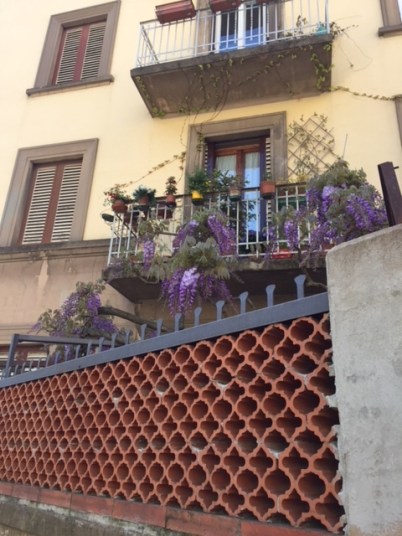
I’m in love with wisteria and I always have been. We are having a late spring here in Florence; last year the wisteria had already bloomed and withered by this time. But this year the vine is just coming into its glory! Just look!
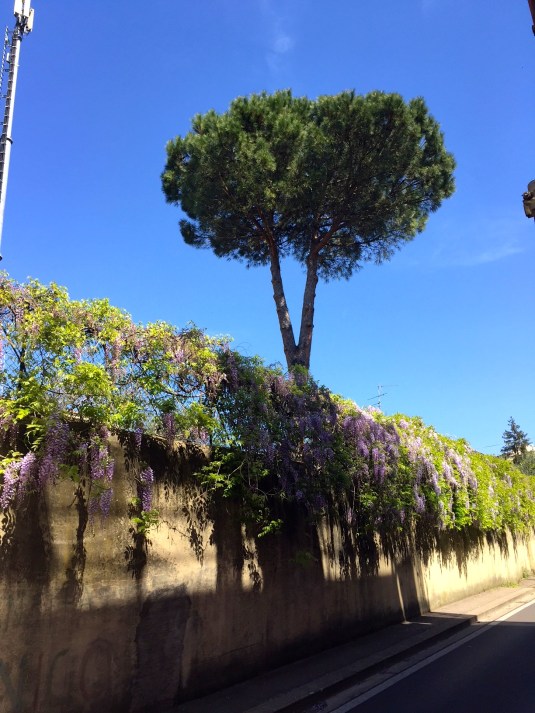
The story the pictures don’t tell is that the sky was blue, the breeze was warm, the birds were singing and the sweet scent of wisteria was wafting.
Flour types for baking in Italy
If you are accustomed to buying flour in the USA, you will encounter some unusual products when you peruse the baking aisle of a grocery store in Italy. The first thing you might notice is the packages are much smaller than in America. And then there is the milling process and wheat berry type to consider.
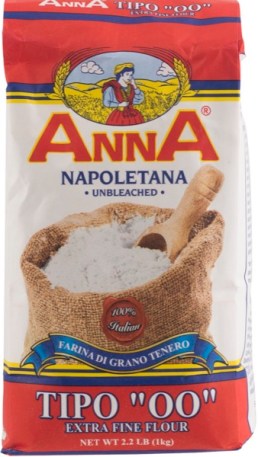
For one thing, you will have a lot more choices in the grinding of the wheat berry: the names 00 and 0 Flour refer to specifically Italian milled flour that is used for pasta making. You will find that this is also called Doppio Zero, just meaning double zero.
The grading system is 2, 1, 0 or 00 and indicates to how finely ground the flour is and how much of the bran and germ has been removed. 2 for instance is a wholemeal flour while 00 is the most refined of the three and has the lowest level of bran. It is similar to unbleached all purpose/plain flour, which is a mix of hard and soft wheat, and though while finer, it creates a dough that is silkier and maintains a chewiness when the pasta is cooked.
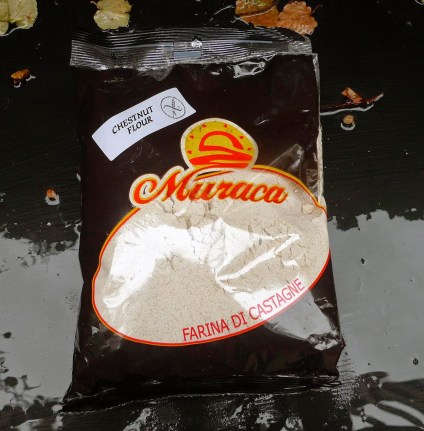
If you are looking for pasta, bread flour or baking flour, 00 will work for all and you can substitute 00 flour if you run out mid way through pasta making with just plain old high-grade flour. Again this has been refined more so than standard flour making it higher in protein. Pizza dough is perfect with single 0 flour but again it is interchangeable.

The French grade their flours as well with a similar system.
To make life more confusing the terms hard and soft get used to also explain flours so to try and put it simply:
Low Protein + Low Starch + Low Gluten = soft flour – 00 flour or high grade flour – use this for pasta, pizza and cakes as you would any high grade flour
High Protein +High Starch + High Gluten = hard flour – semolina flour or standard flour – perfect for bread doughs and most other uses.
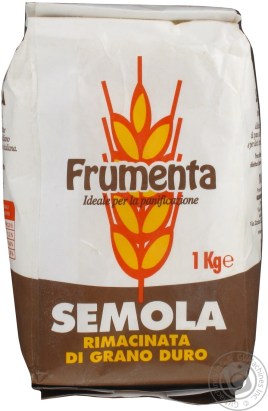
Italian millers will also combine different wheat varieties to make flour to suit different purposes. So you can buy a ‘00’ flour suitable for pasta with a very golden color, and a ‘00’ flour suitable for plain white bread.
The packaging will usually suggest what items you can make with any particular flour to get the best result.
Much of this post is based upon: virtuousbread in Bread and conversation, Flour and milling, International bread adventures
For those looking for additional info, here you go:
Bake the same recipe in the same way with 00 flour and with stong white flour and you will see that the 00 loaf is flatter and the crumb has holes that are different sizes and are not evenly distributed.
Bake the same recipe in the same way with 00 flour and with strong white flour that has been stone milled and you will see that the 00 loaf is white white white and the stone ground loaf is a bit beige.
This is because the stone milling mills for whole meal flour first grind and then and seive it to separate the bran and the germ. Industrially milled flour (of whatever strength) has the bran and the germ milled out at a very early stage because industrial millers want white flour.
The lesson is that if you want the very white, soft, holey bread from your childhood you need to get the flour from your childhood.
The big difference, in addition to texture and look, is that the stone ground white flour is higher in the naturally found nutrients because the white flour absorbs some of the nutrients from the bran and the germ before they are seived off. Industrially milled flour is rather bereft of these nutrients because the bran and the germ are removed so early in the process. For a more comprehensive discussion about this, please click here.
How do I love thee, let me count the ways. Elizabeth Barrett Browning and her husband in Florence.
The Casa Guidi, as we see it today, has the same number of rooms and the same plan as it was when the Robert and Elizabeth Barret Browningrented it in 1847. The Brownings lived here happily for many years, and Elizabeth died there in 1861.
The Brownings took two years to furnish the apartment, buying at high cost one or two precious pieces such as the golden mirror of the living room, while most of the paintings and other furniture was found in small Florentine shops.
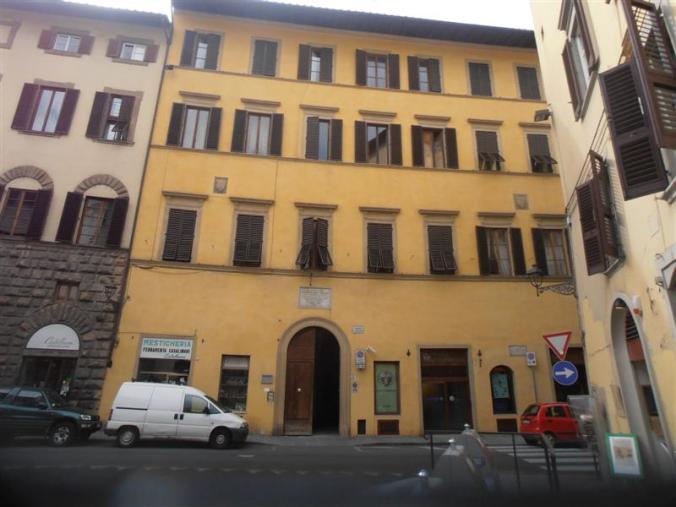
https://www.visittuscany.com/it/attrazioni/casa-guidi-firenze/


In restoring the property, the Landmark Trust and Eton College tried to maintain the original atmosphere, preventing the apartment from   looking like a museum.


There are currently some paintings and furniture that belonged to    both the Barrett family and the Browning family and that have been   generously donated to Casa Guidi, but overall the furnishings remain similar to those of the 19th century. The walls and ceilings in the  living room and main bedroom and the ceiling of the poet's studio    have been restored with the original colors of the period. All doors and fireplaces are original.


After the poet's death, the Commune commemorated her life placed an  inscription on the door (composed by Niccolò Tommaseo) according to  which her poetry had created a golden ring that binds Italy and      England.
Accesso handicap:
Non accessibile a persone su sedia a ruote
Contatti:
P.zza San Felice, 8
Telefono: 055 354457
E-mail: elena.capolino@fastwebnet.it
 get back, lauretta!
You must be logged in to post a comment.