Off to Pisa, Italy!

Finally we are in Zone Yellow and able to travel from commune to commune within our regione. I am so fortunate to live in Tuscany and there are so many great communes to visit; it will keep me occupied until we can leave our regions.

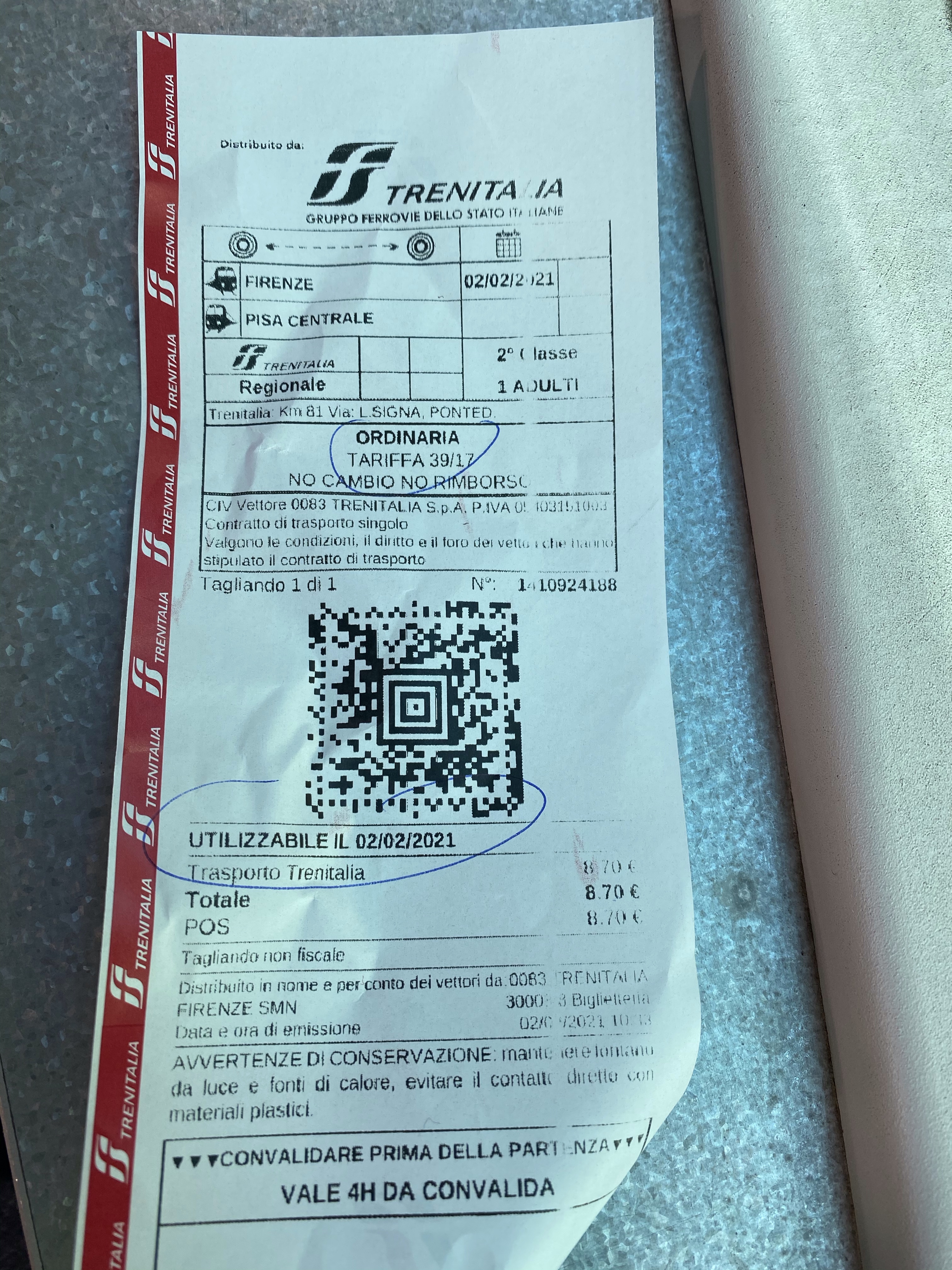
On the first sunny day in quite a while, I took off for Pisa. It felt great to be at the train station once again and I was so happy to get on the train!
I made a short video of my visit, but the pictures below give more color of the wonderful things I saw.

After taking a quick spin around the Piazza Vittorio Emaneule II, not far from Pisa’s central train station, I spotted the first church on my itineary:
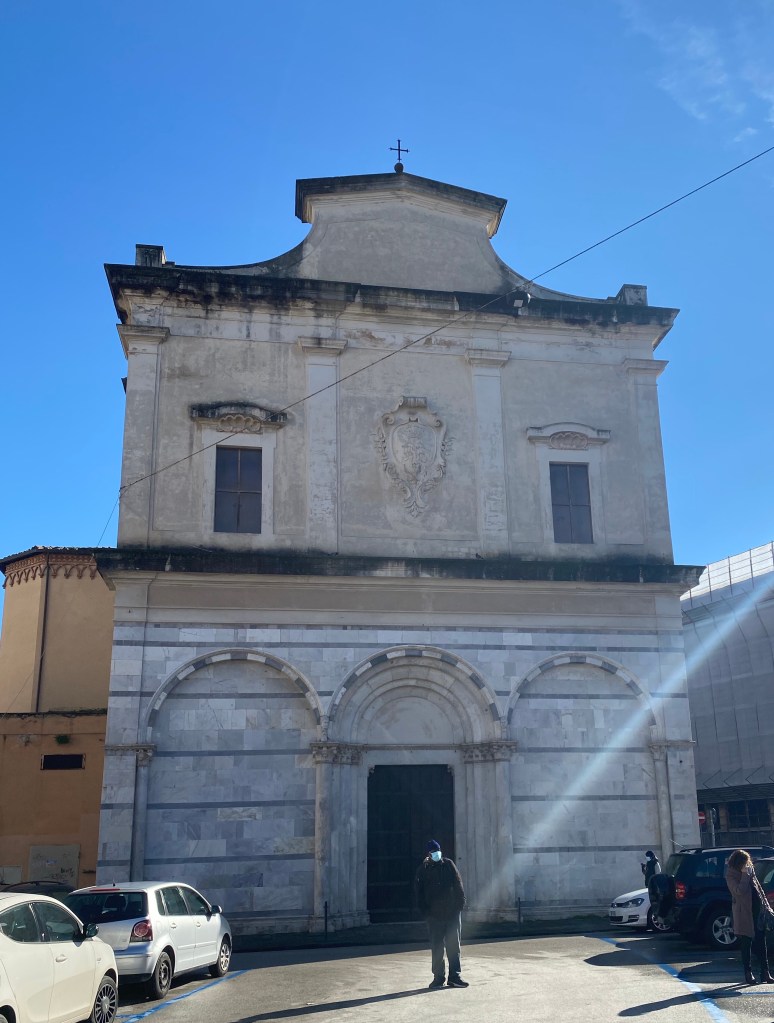
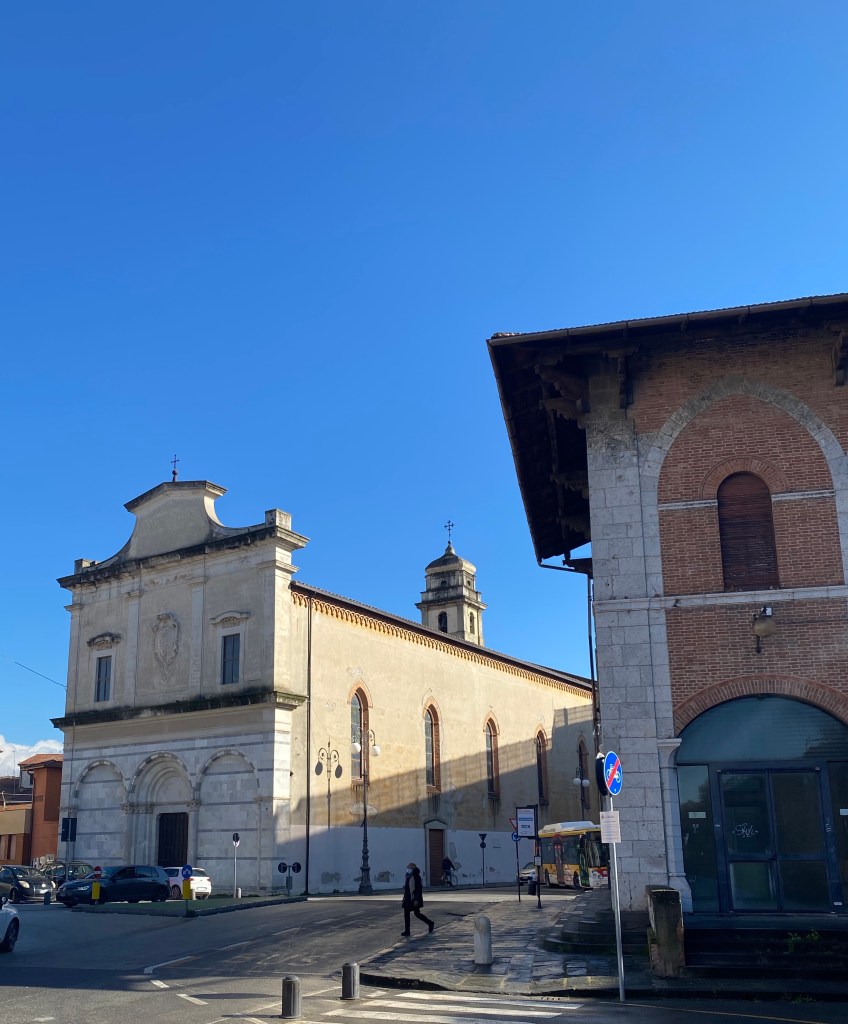
The Chiesa di Sant’Antonio Abate is a Romanesque-style building, founded in 1341, with an adjacent convent. It was nearly destroyed in World War Two, and was rebuilt. The façade, in two colors of marble, was the design product of Lupo, Giovanni di Gante, and Simone di Matteo of Siena.

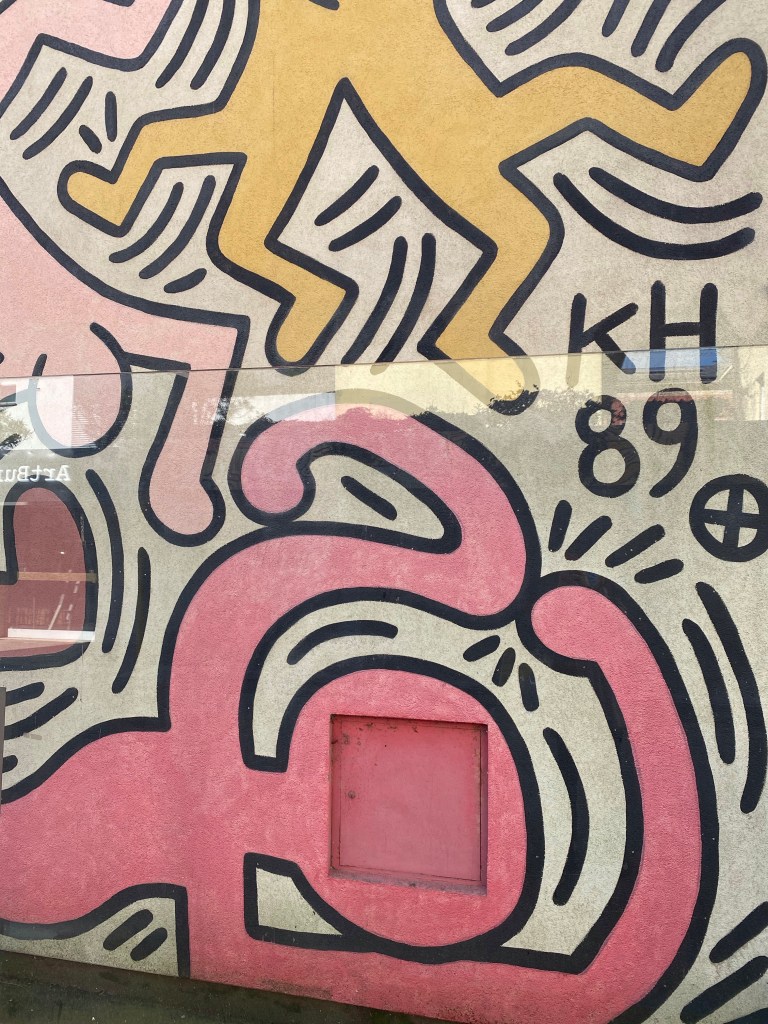
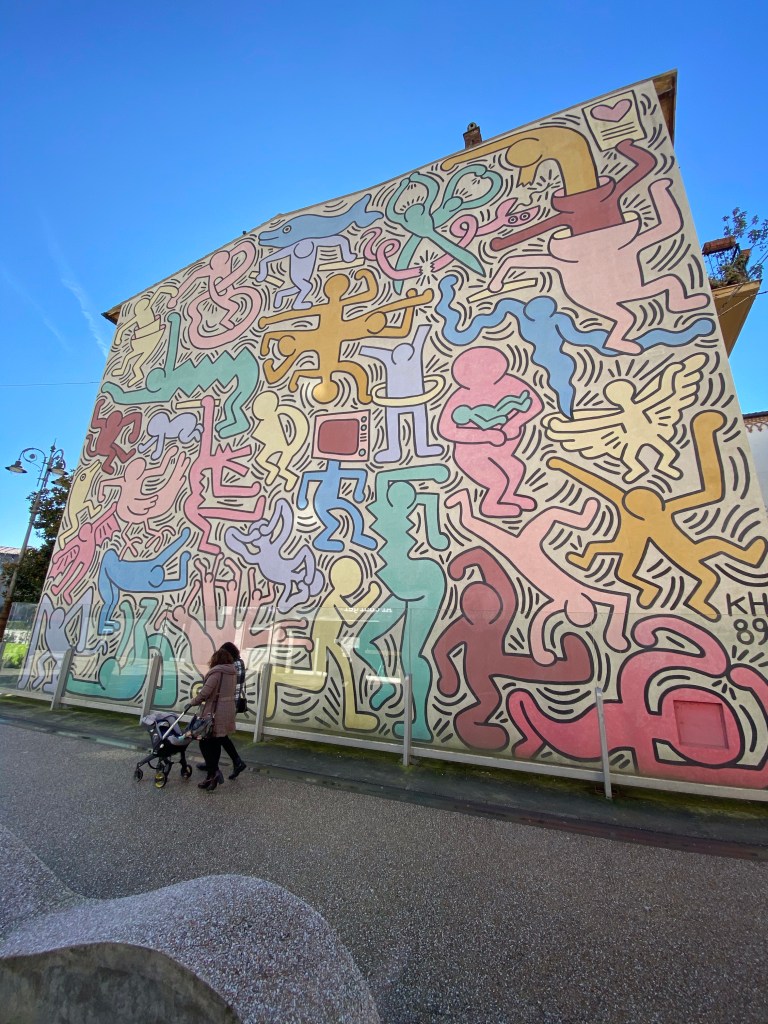
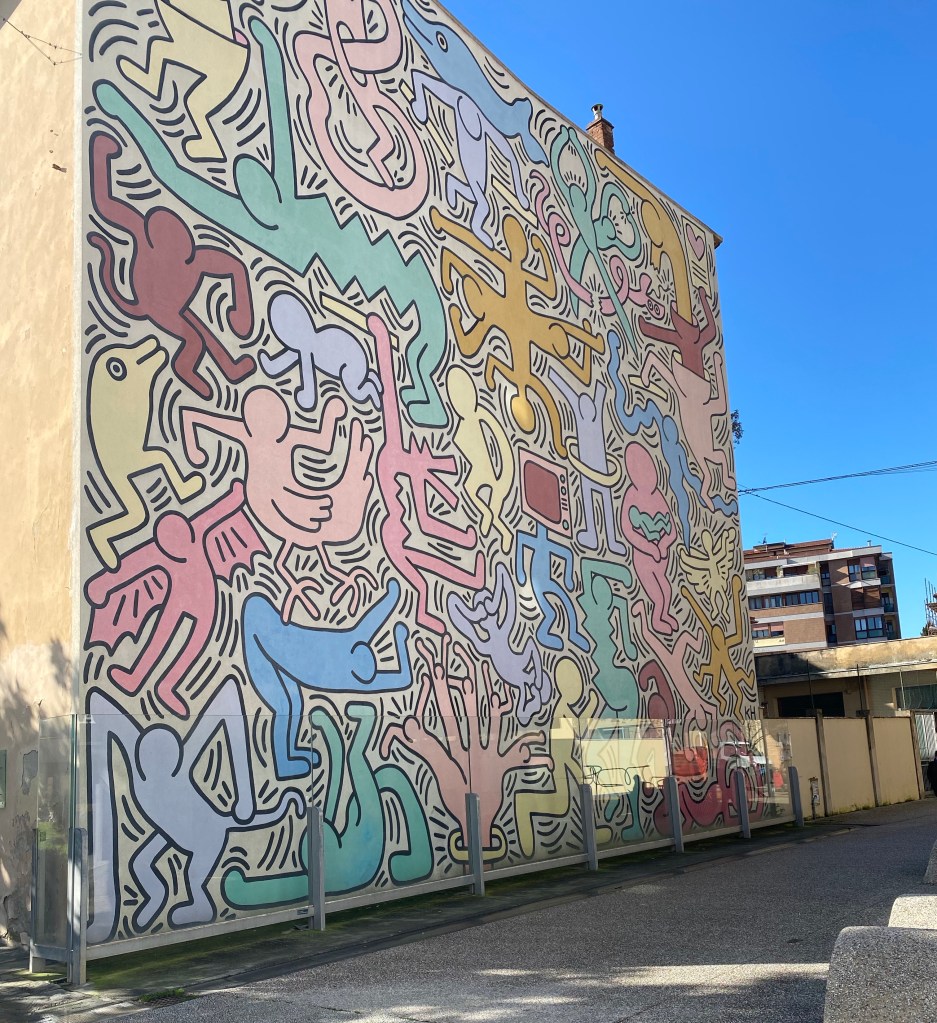
On a back wall that was rebuilt after WWII, the American graffiti artist, Keith Haring, painted a great mural he entitled Tuttomondo, in 1989.
Speaking of graffiti artists, I enjoyed some less retrained examples around Pisa.
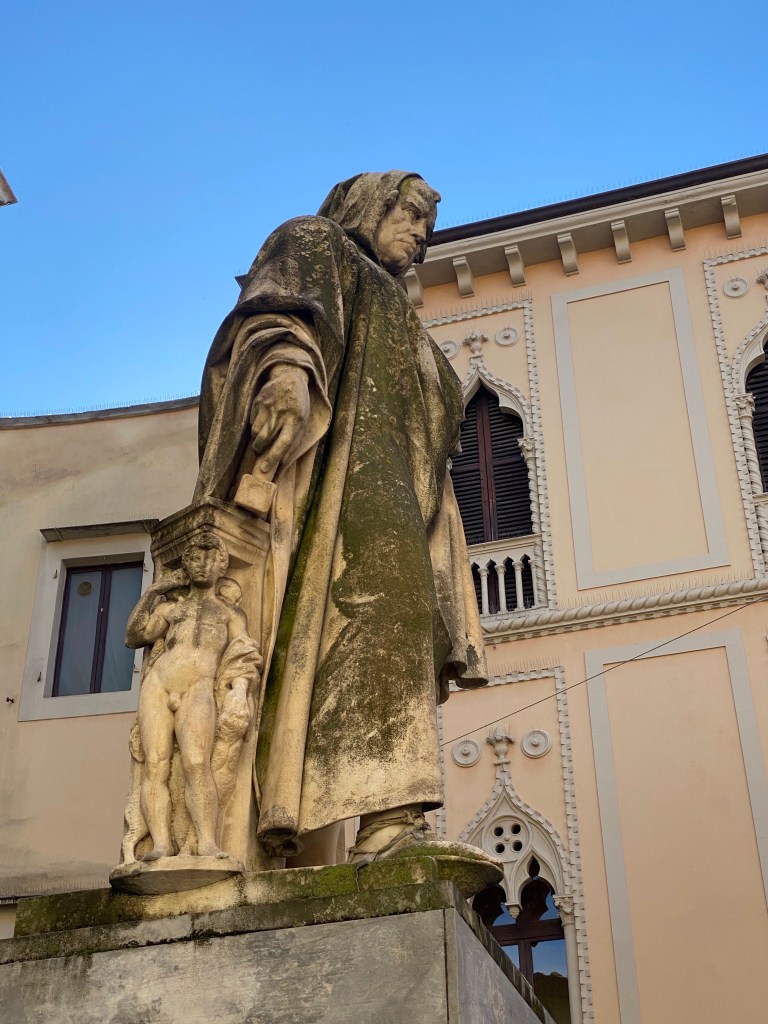
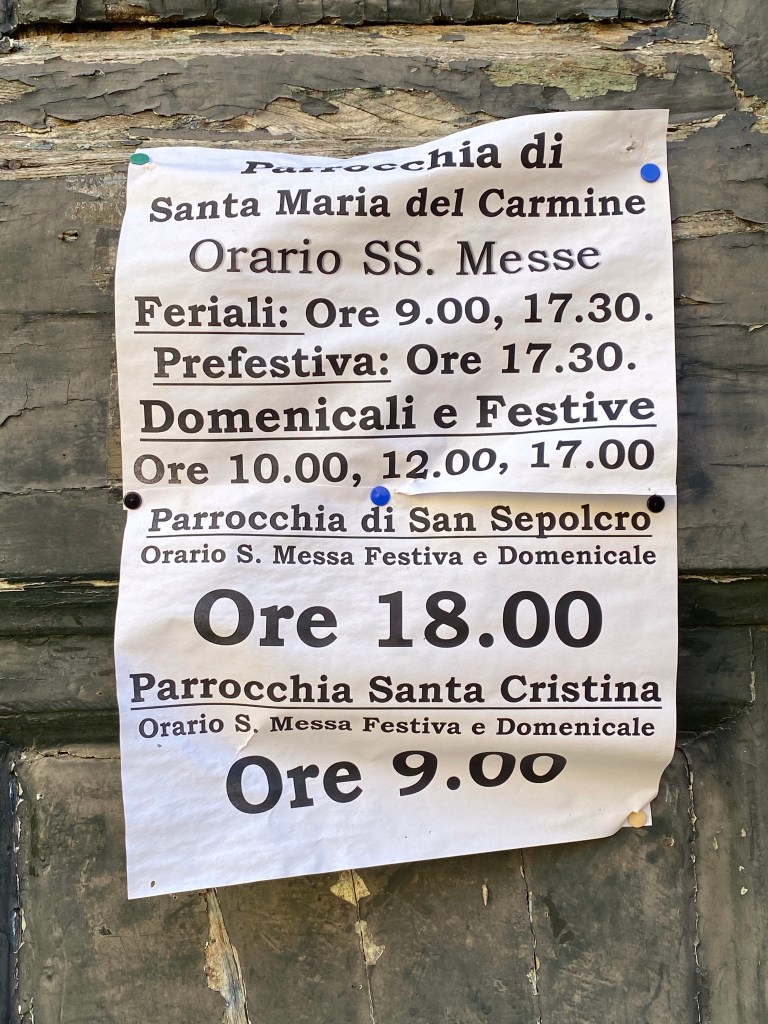
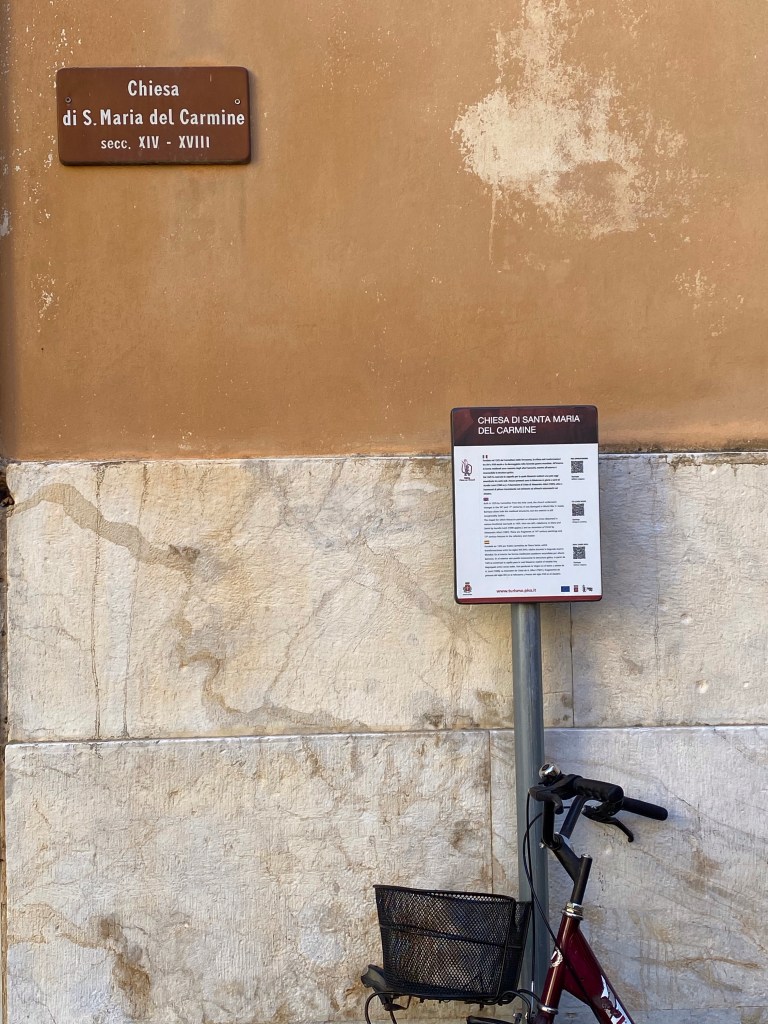
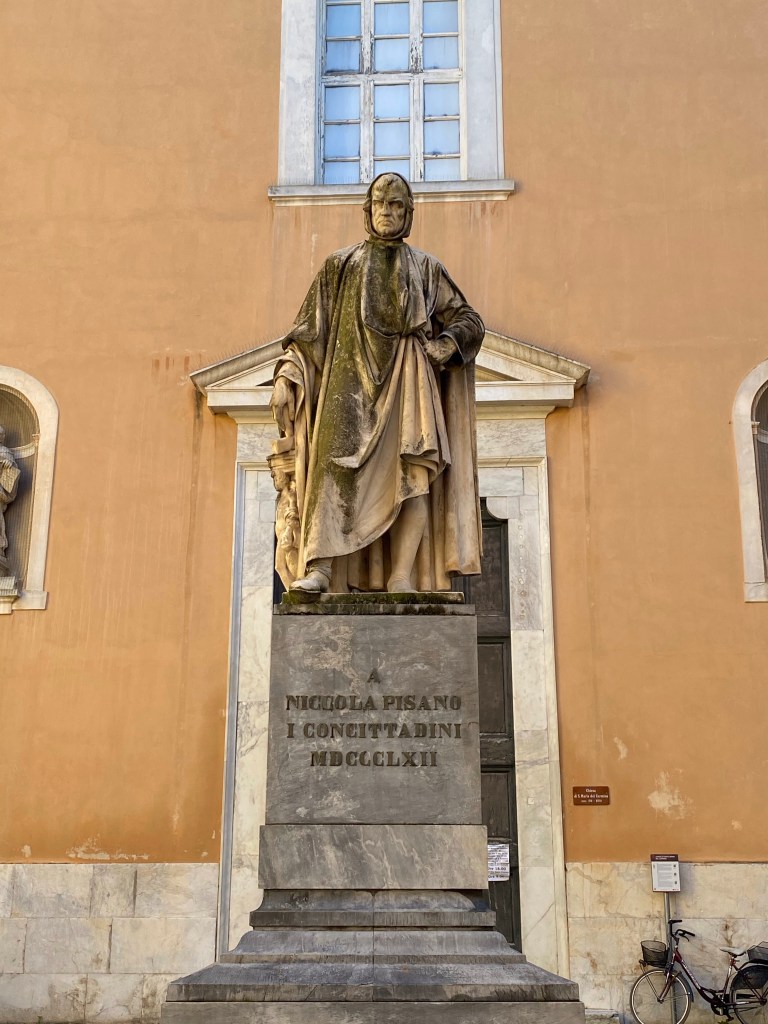
Next up, I spotted the Chiesa di S. Maria del Carmine, with its statue of the famed Pisan sculptor, Niccolo Pisano, out front. The church was originally built for the Carmelite order in 1324-1328. Perhaps most notably, at least for art historians, is that the Florentine Quattrocento painter, Masaccio, created a polyptych for this church, by 1425. Unfortunately, the altarpiece has been dismantled and parts of it are dispersed around the world. Only one panel of the altarpiece remains in Pisa in the National Museum of San Matteo. You can find info about the Masaccio masterpiece here: https://en.wikipedia.org/wiki/Pisa_Altarpiece
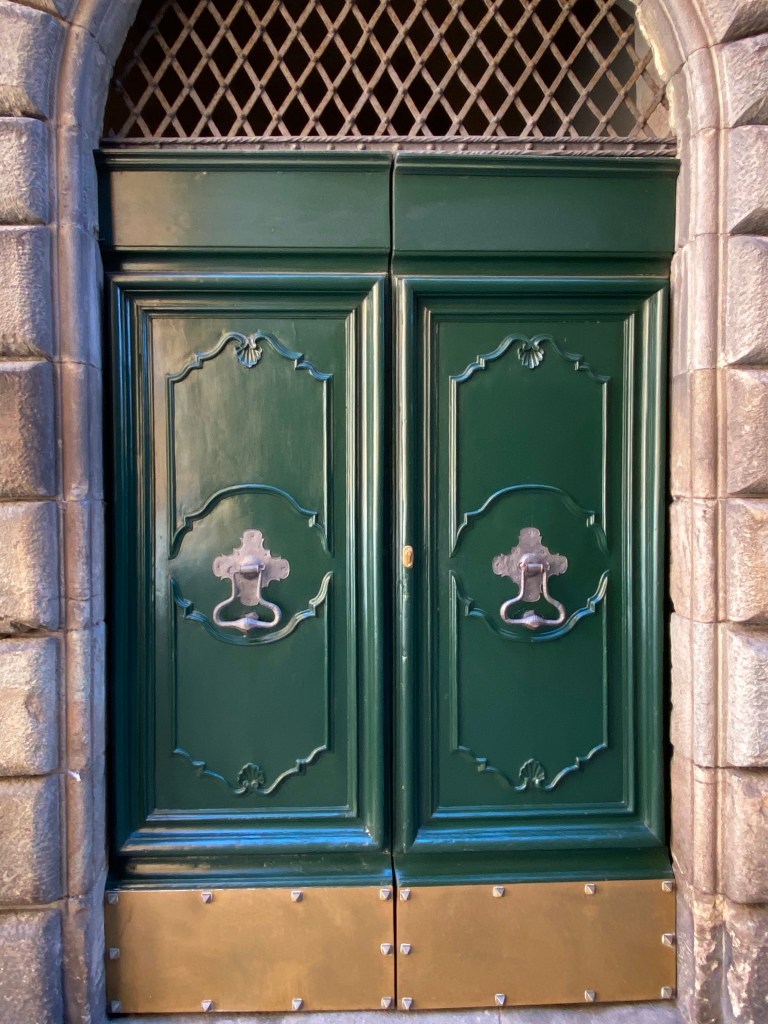
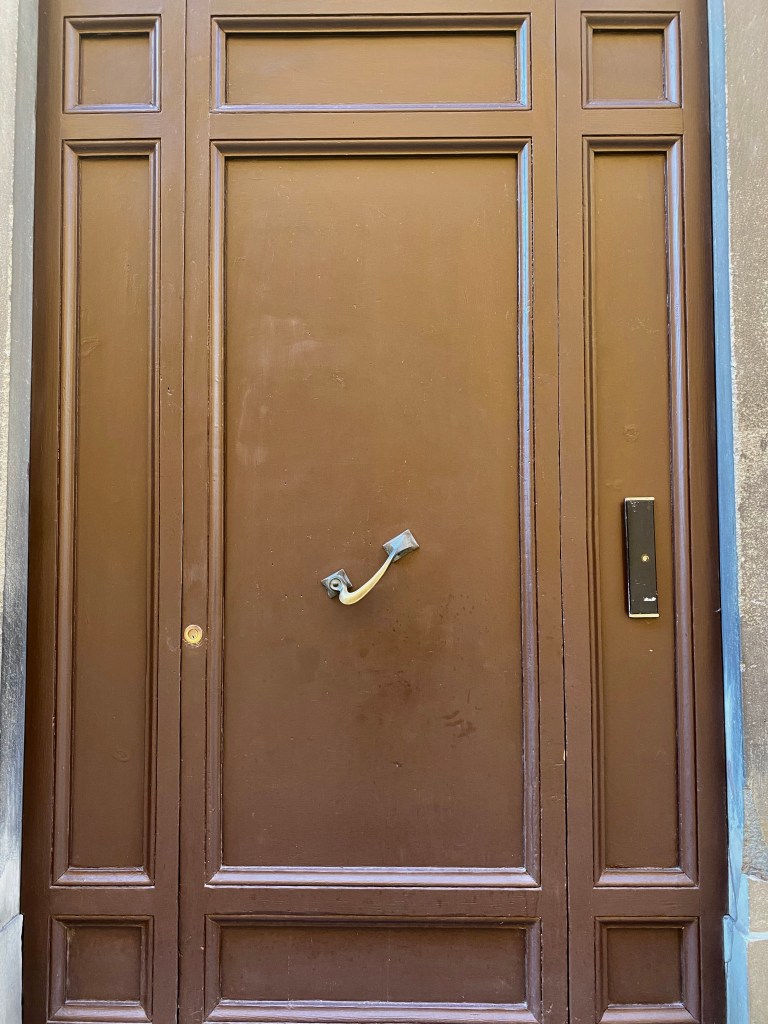
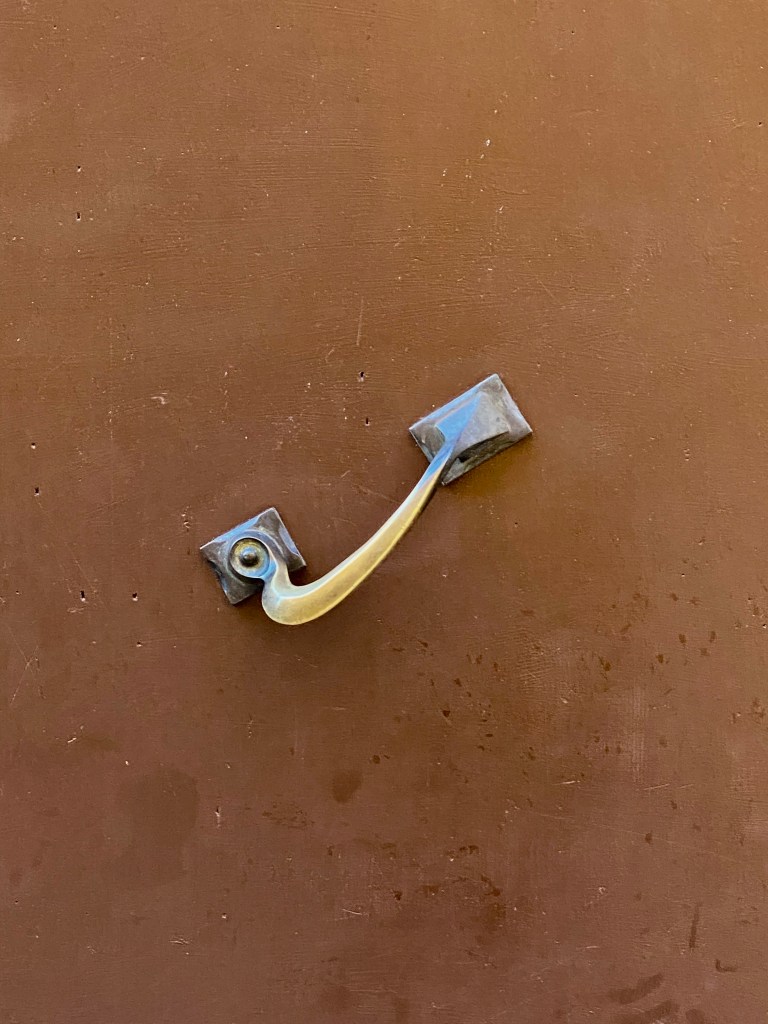
I enjoyed looking at the various door styles found around Pisa, which are distinctively different than those I see every day in Florence. I particularly admired the spare, modern brass on this simple door.
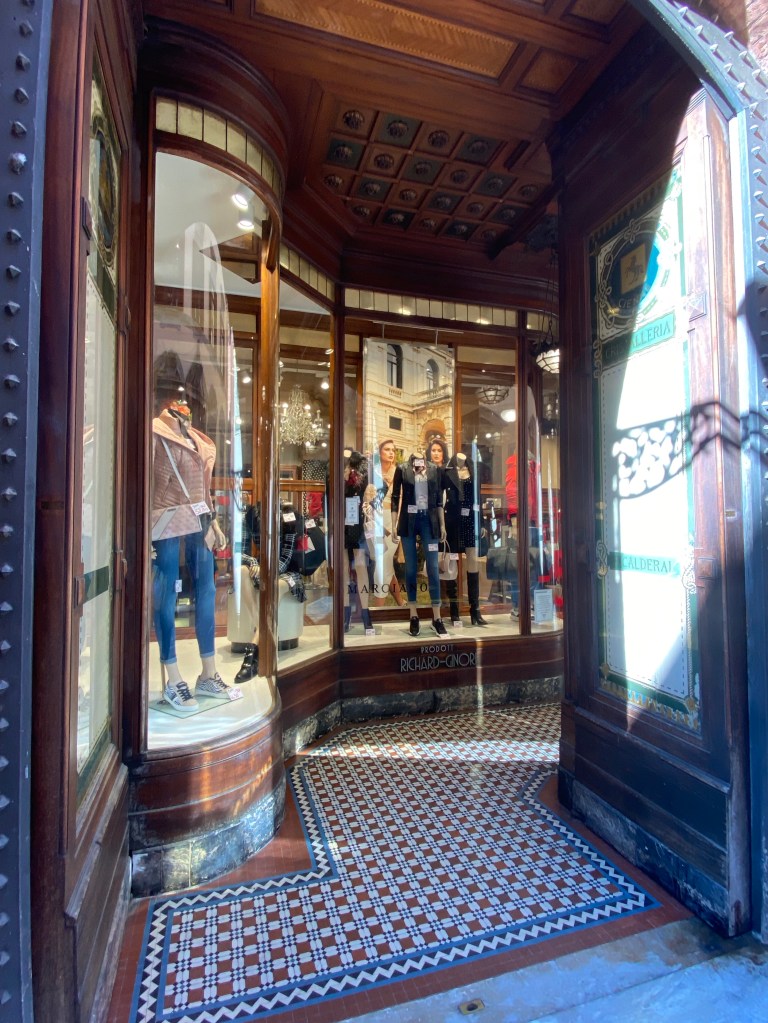
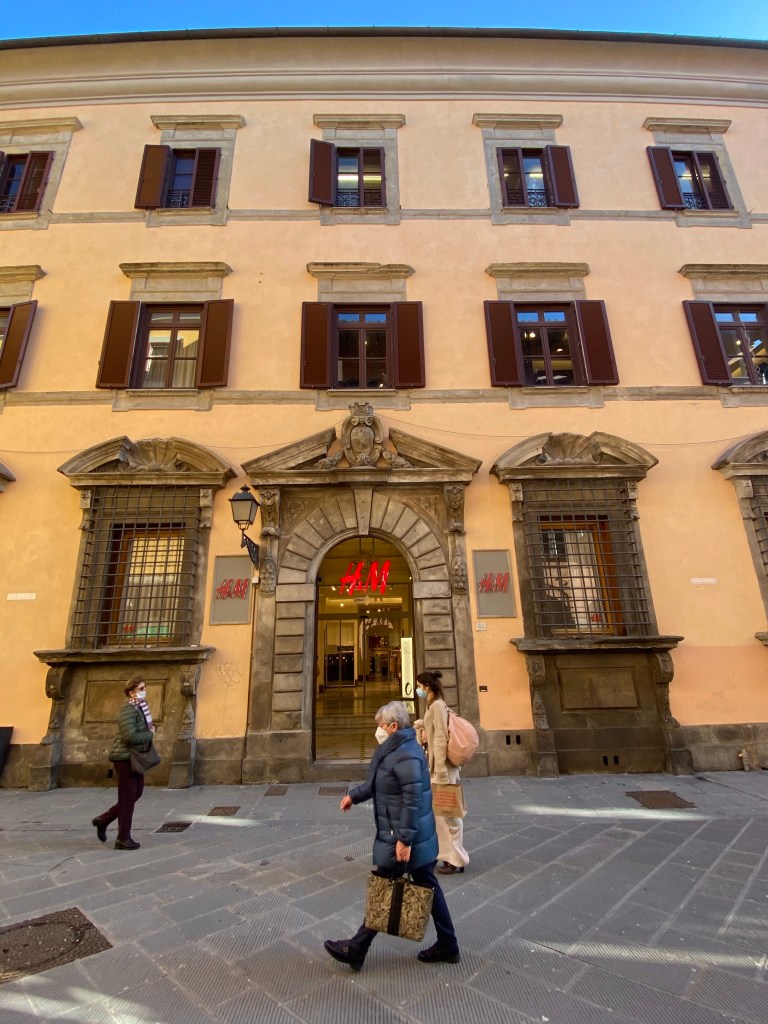
I also enjoyed browsing at the store windows. One shop, on the left below, was sited in an elegant, old shop space, with mosaic floors and gorgeous woodwork and windows, while the ultra current H & M store was sited in an elegant old palazzo.
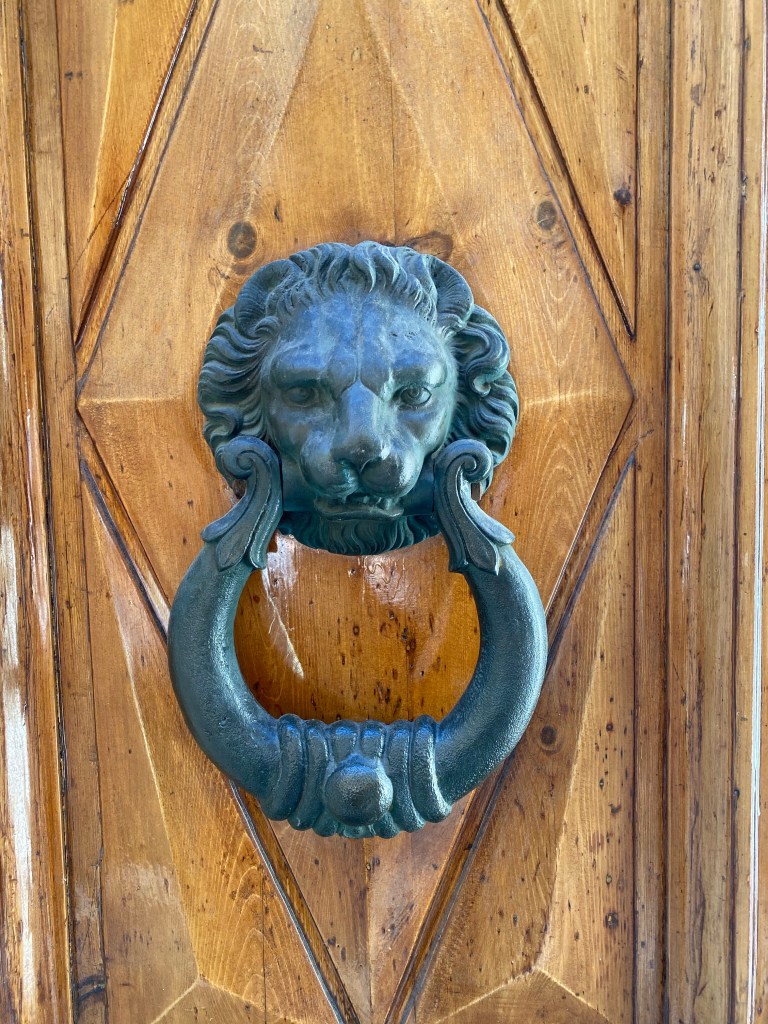
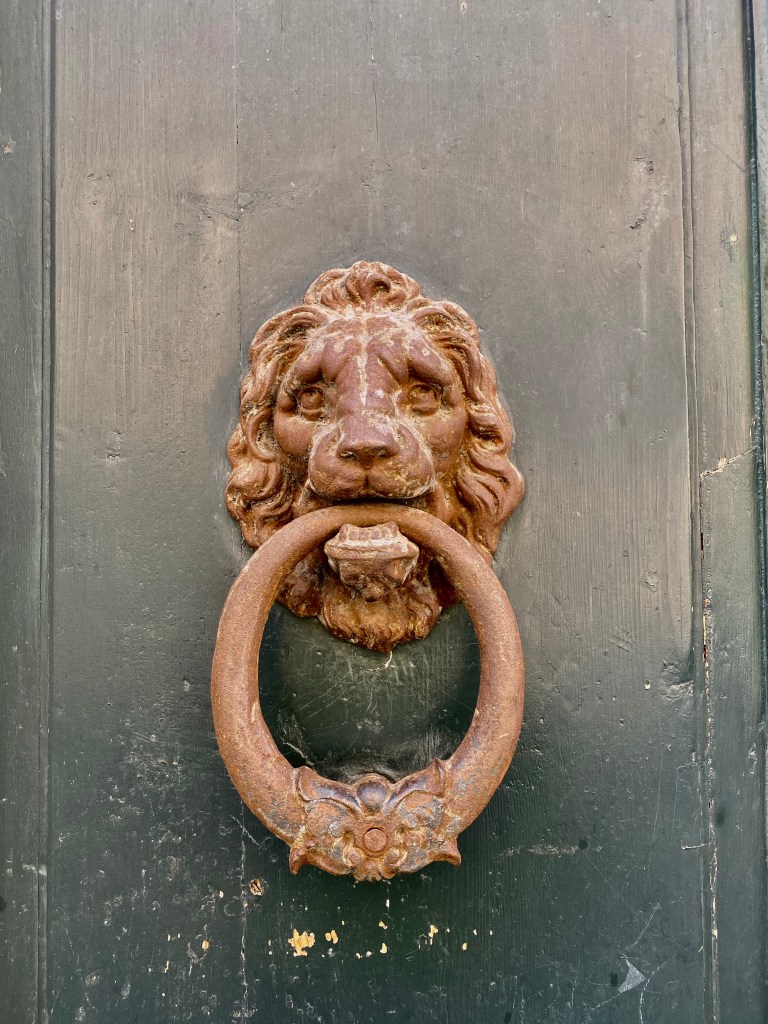
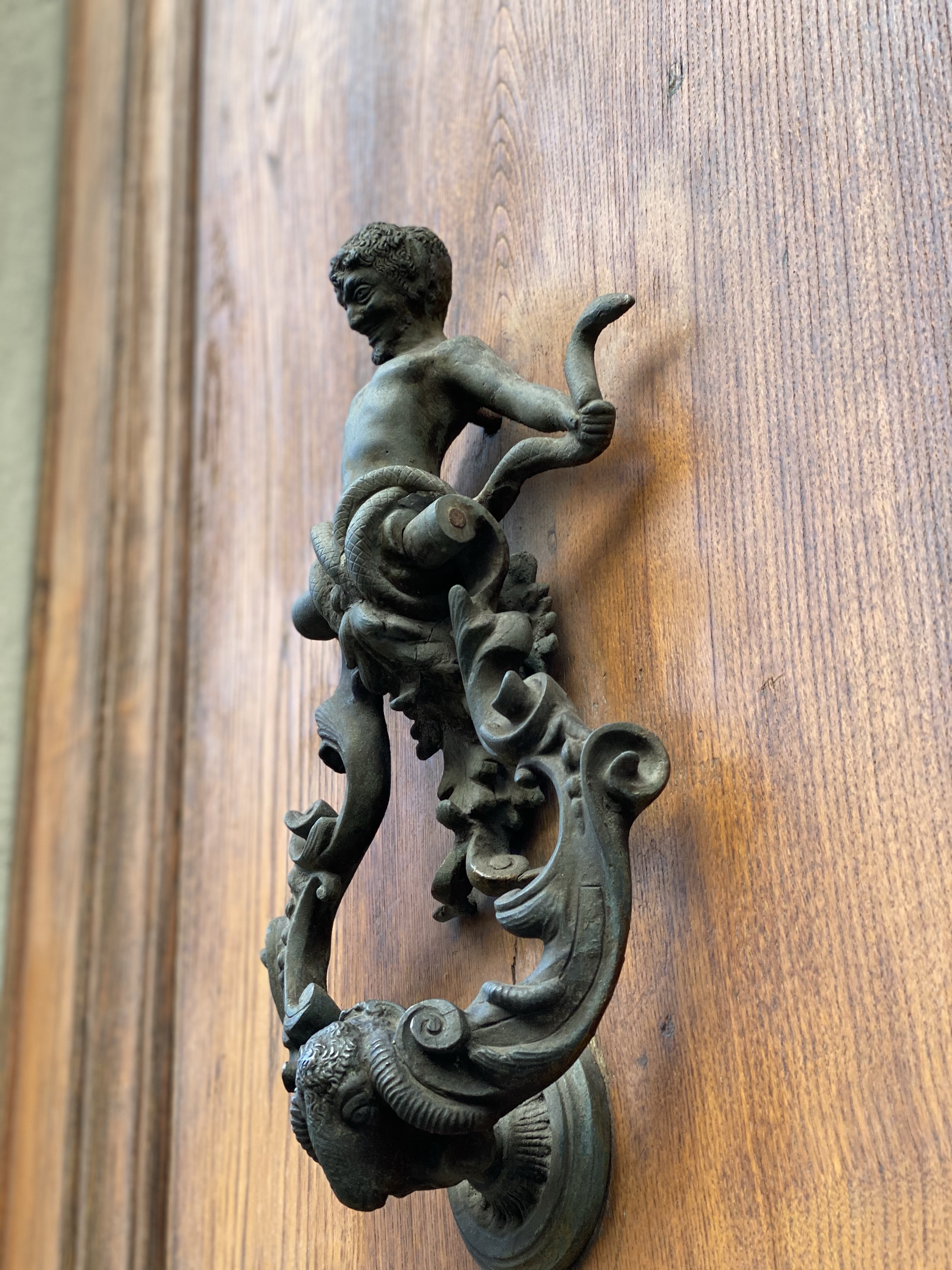
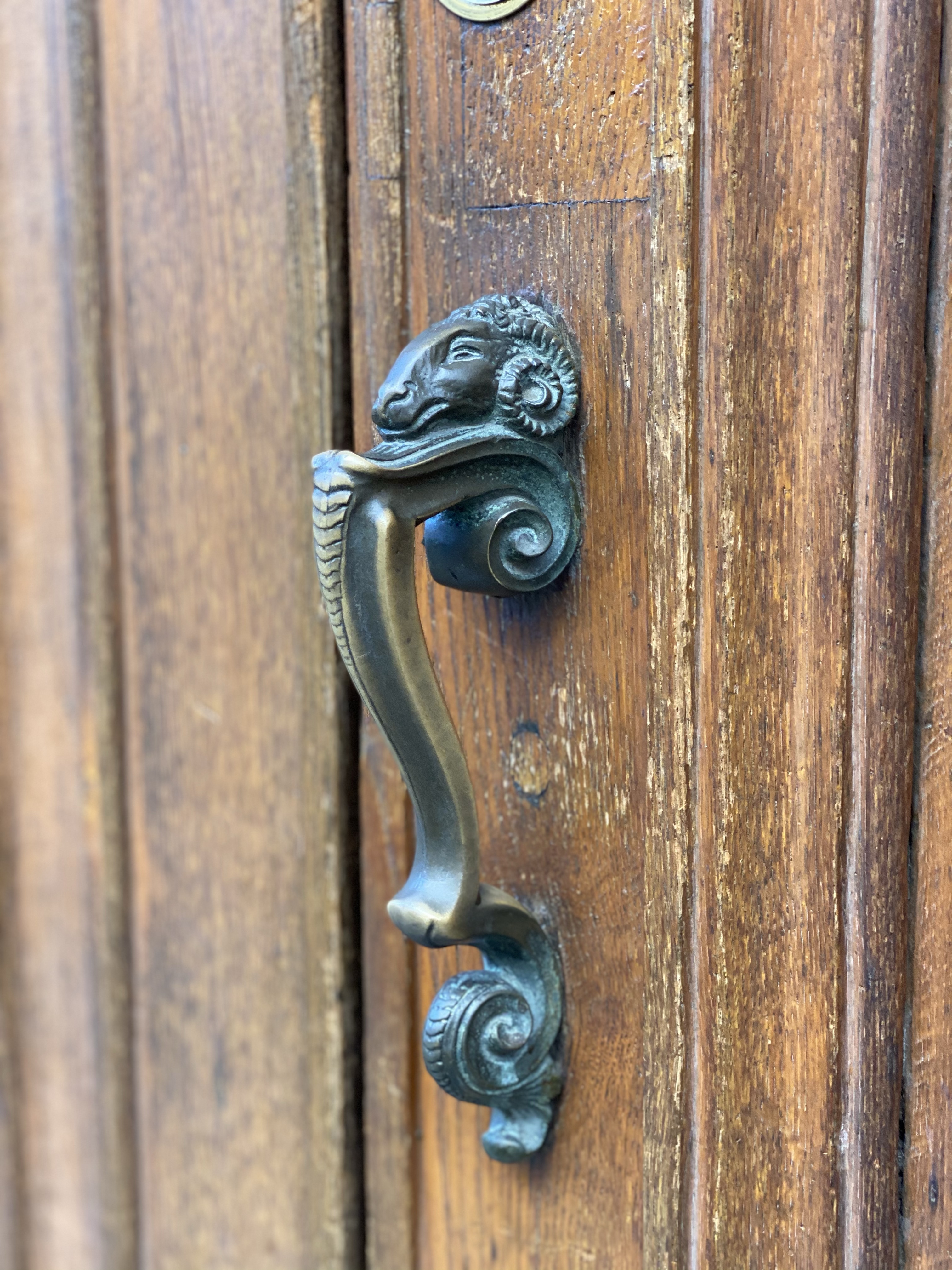
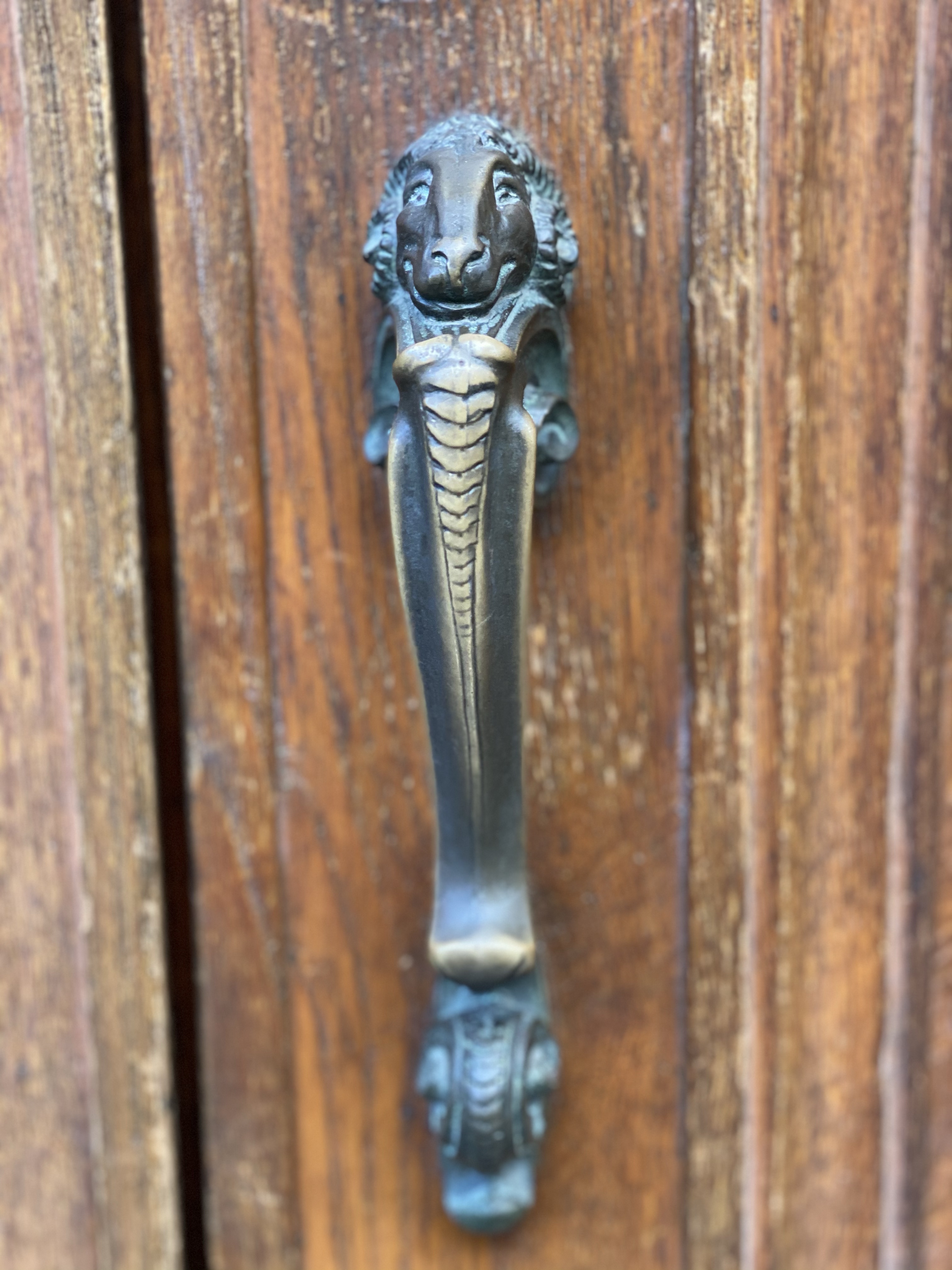
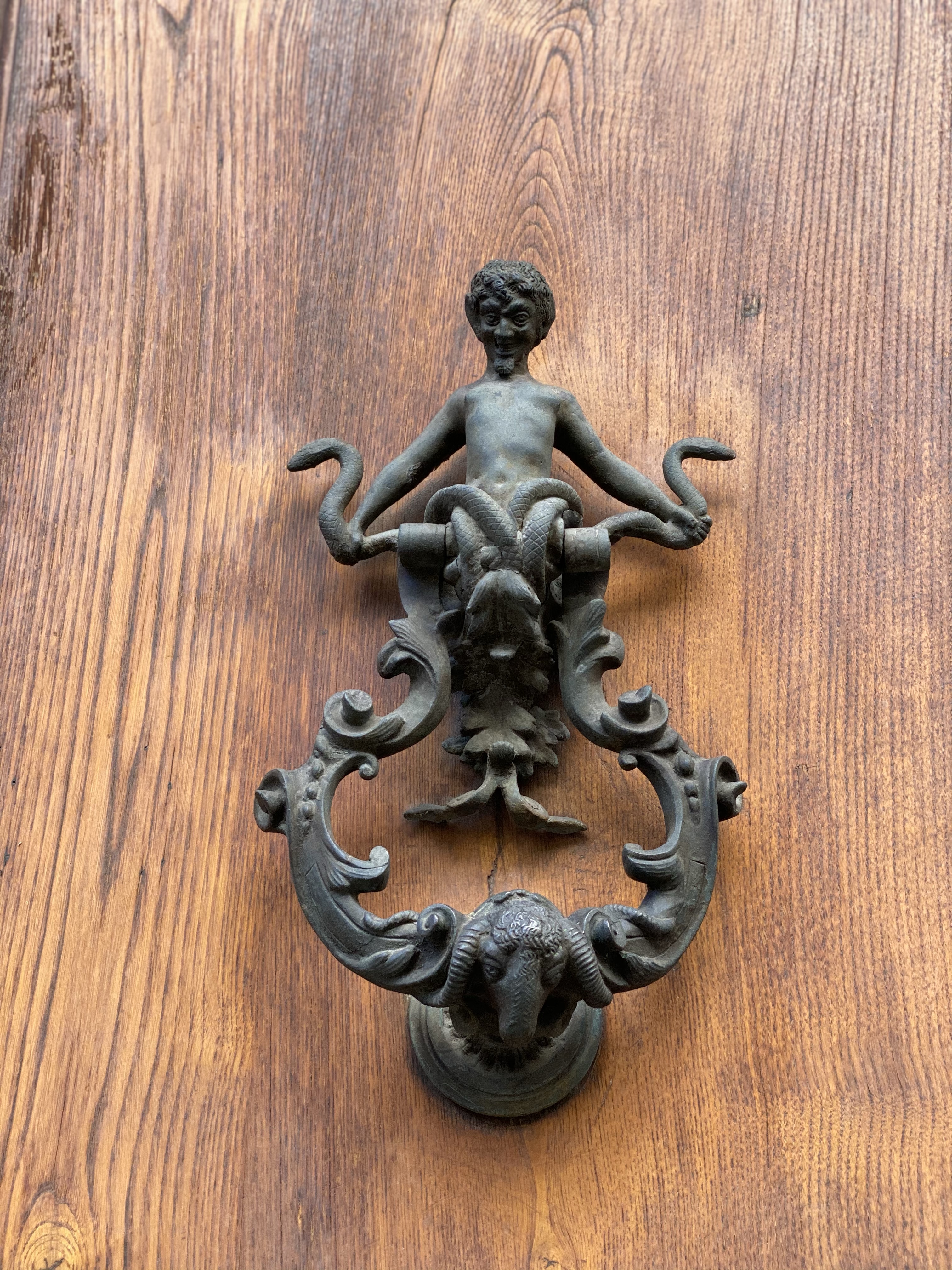
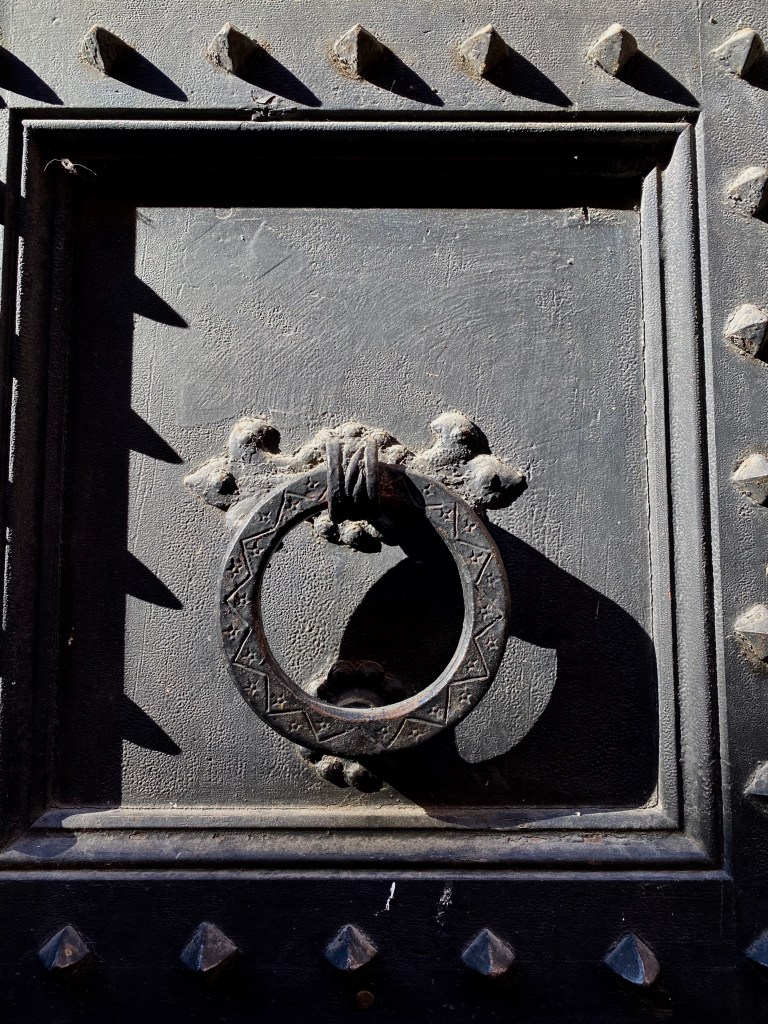
Here is an array of door knocks I spotted:
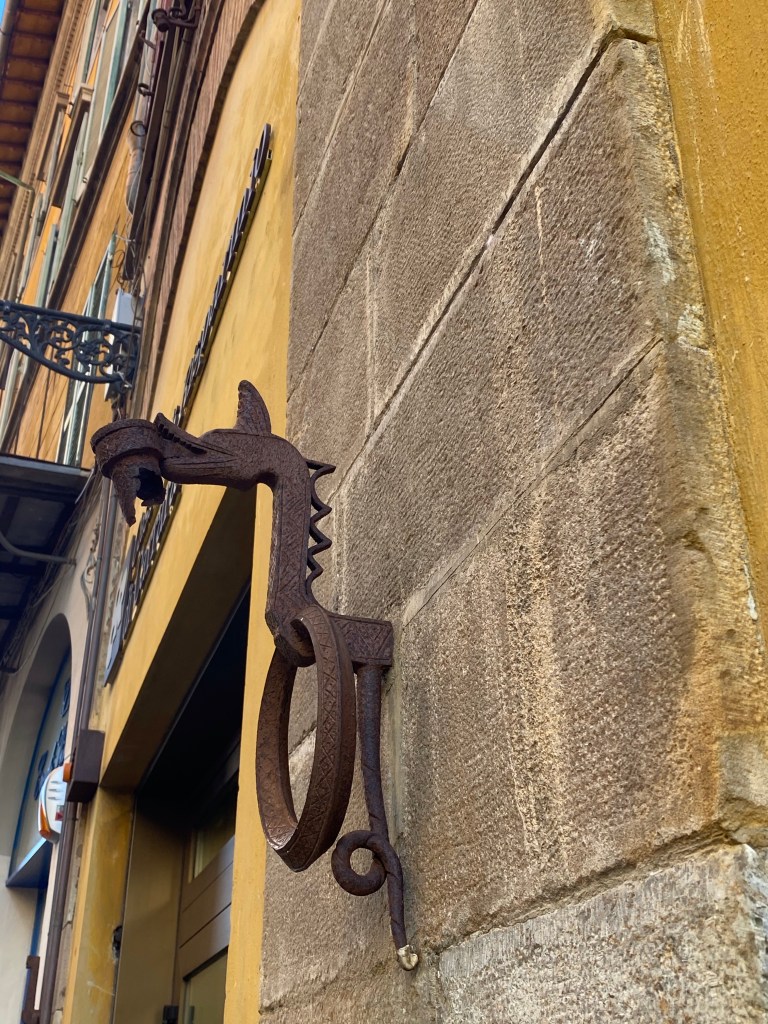
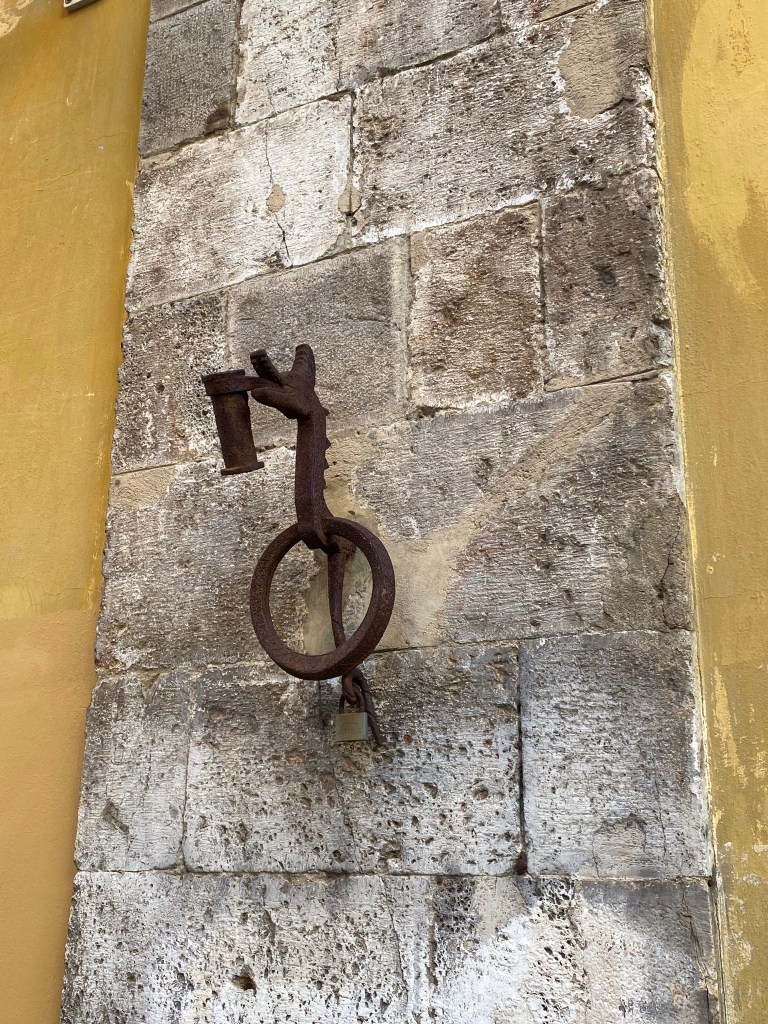
And equally interesting were some iron torch holders still visible on an old palazzo.
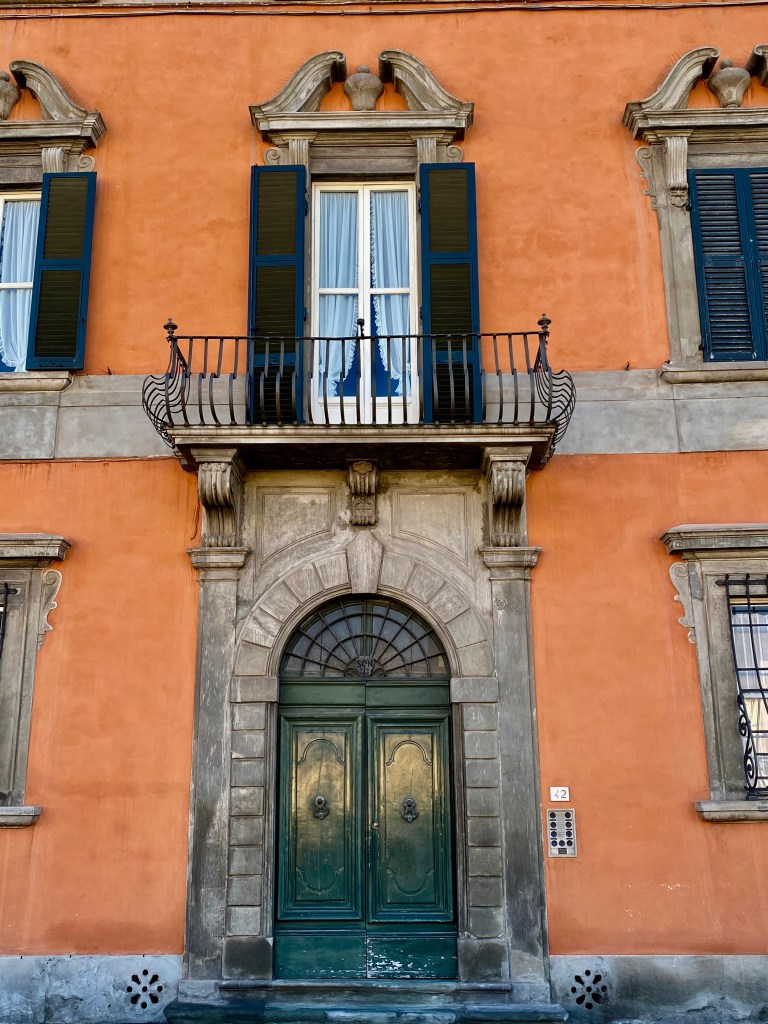
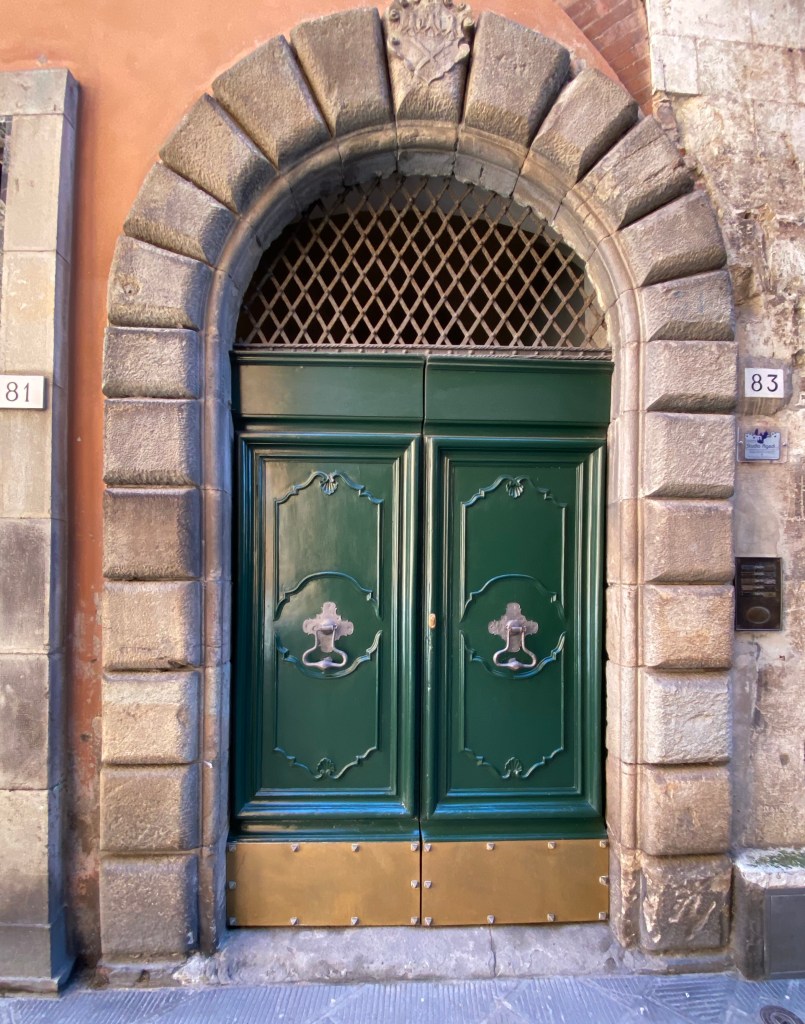
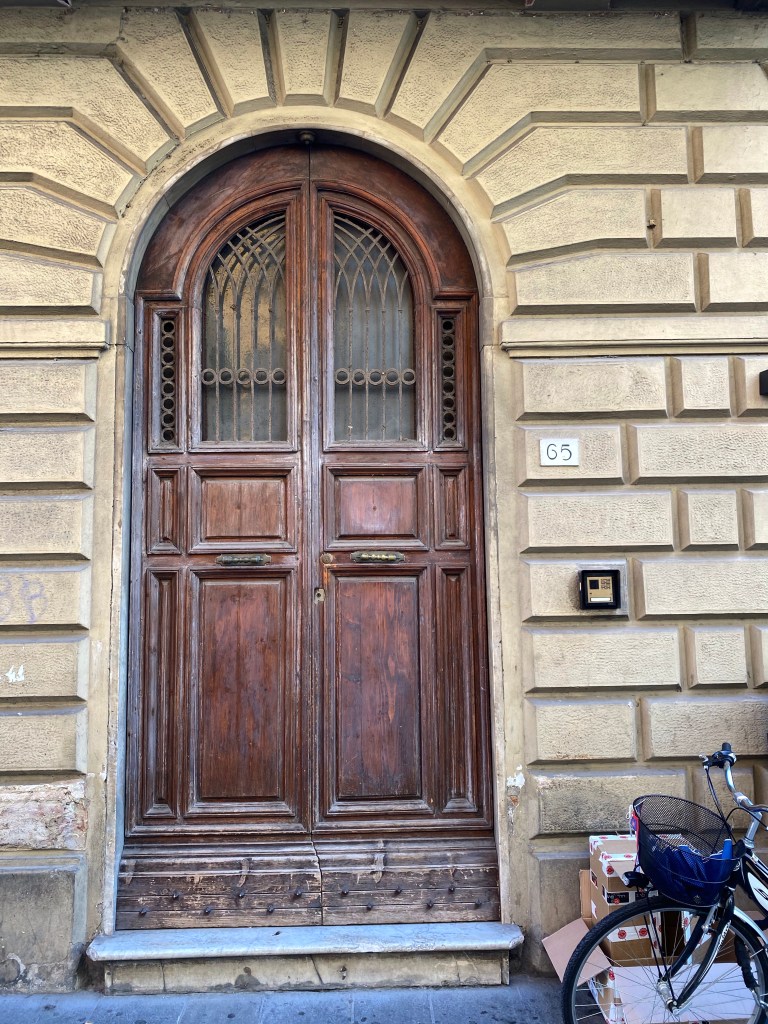
There were many door ensembles to admire throughout the old center of the city:
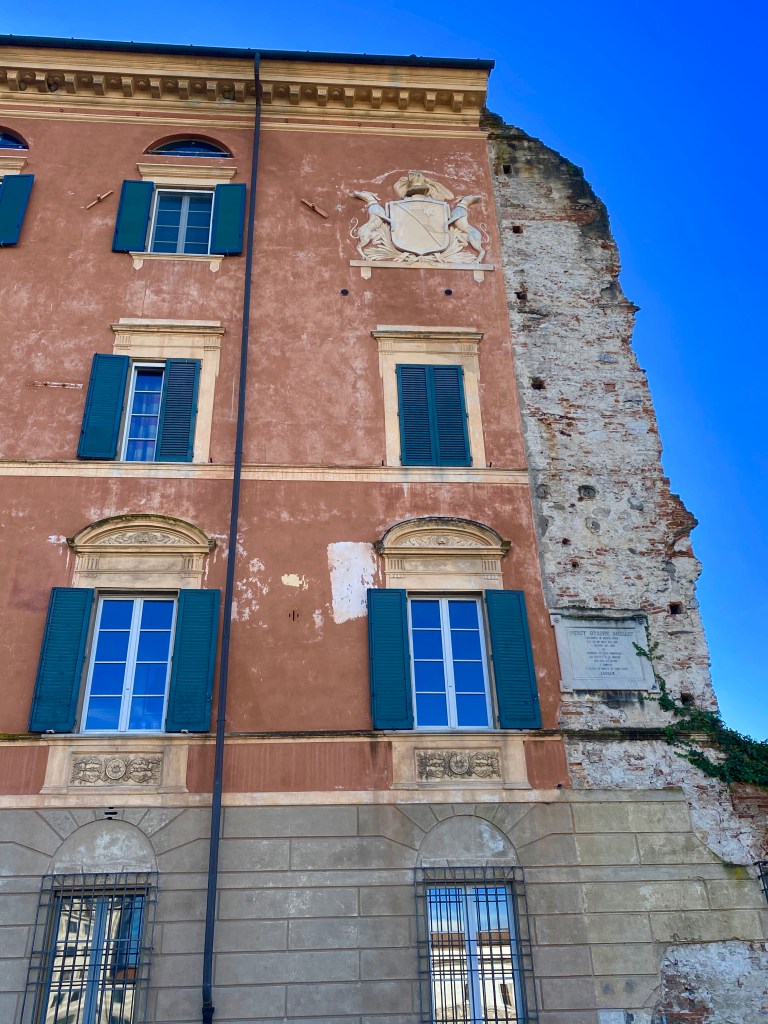
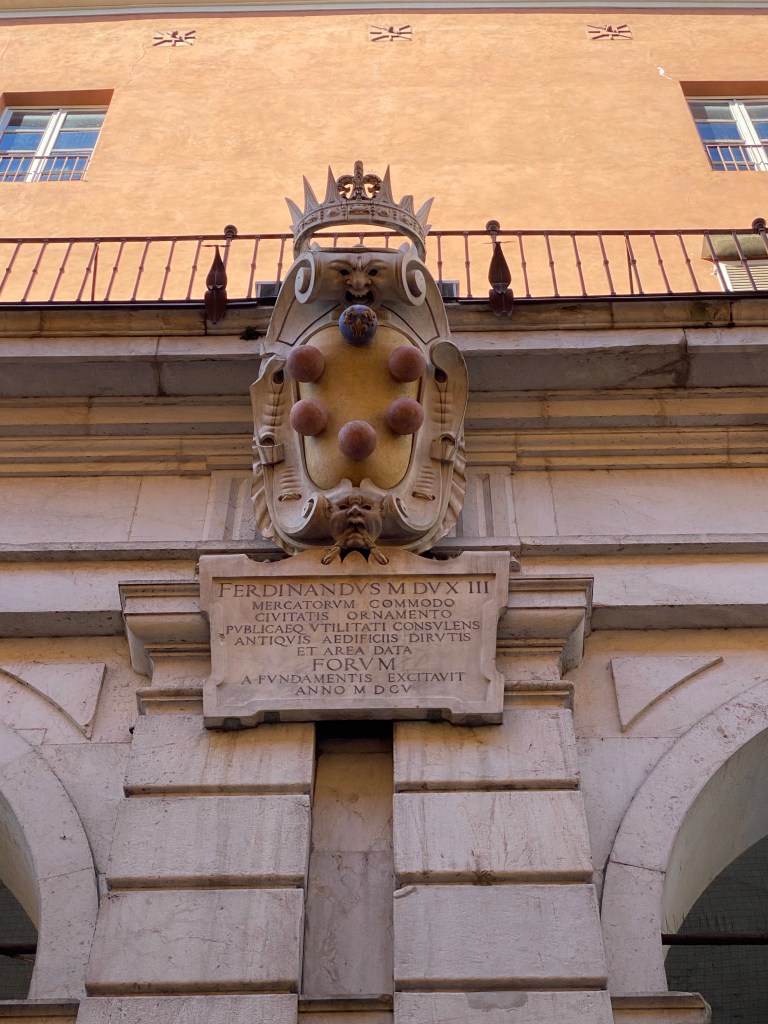
As I headed north through the city center, towards the Arno river, I saw this Medici coat of arms, reminding me that while Pisa and Florence were often in conflict through the centuries, the Medici dukes eventually ruled both communes.
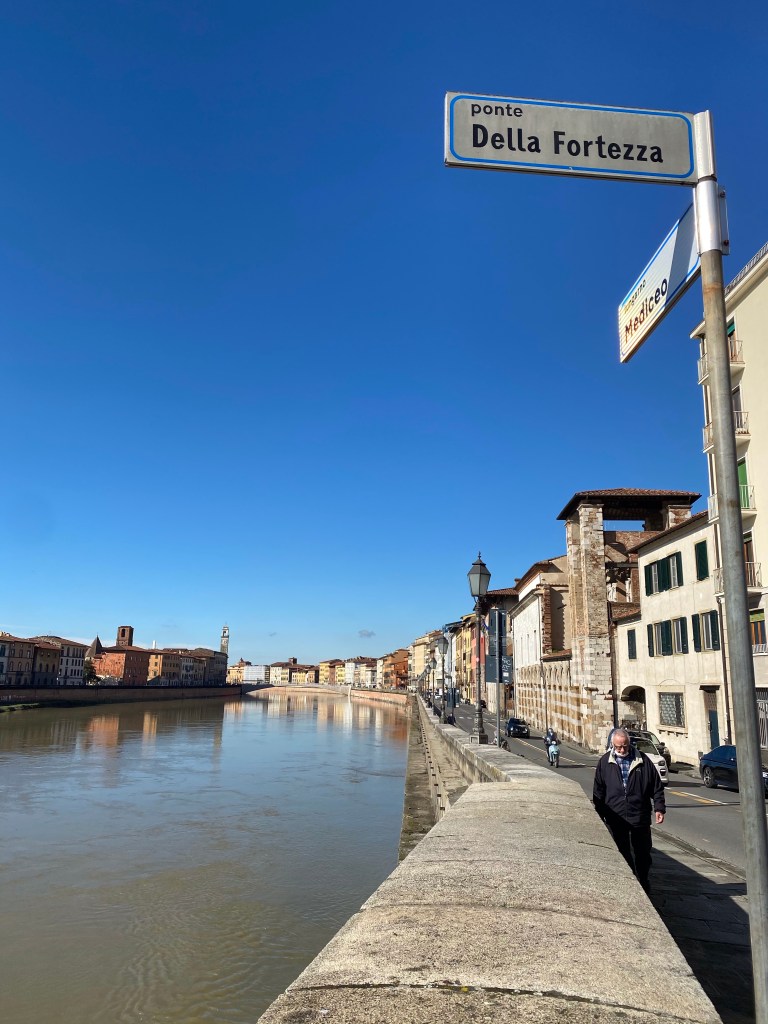
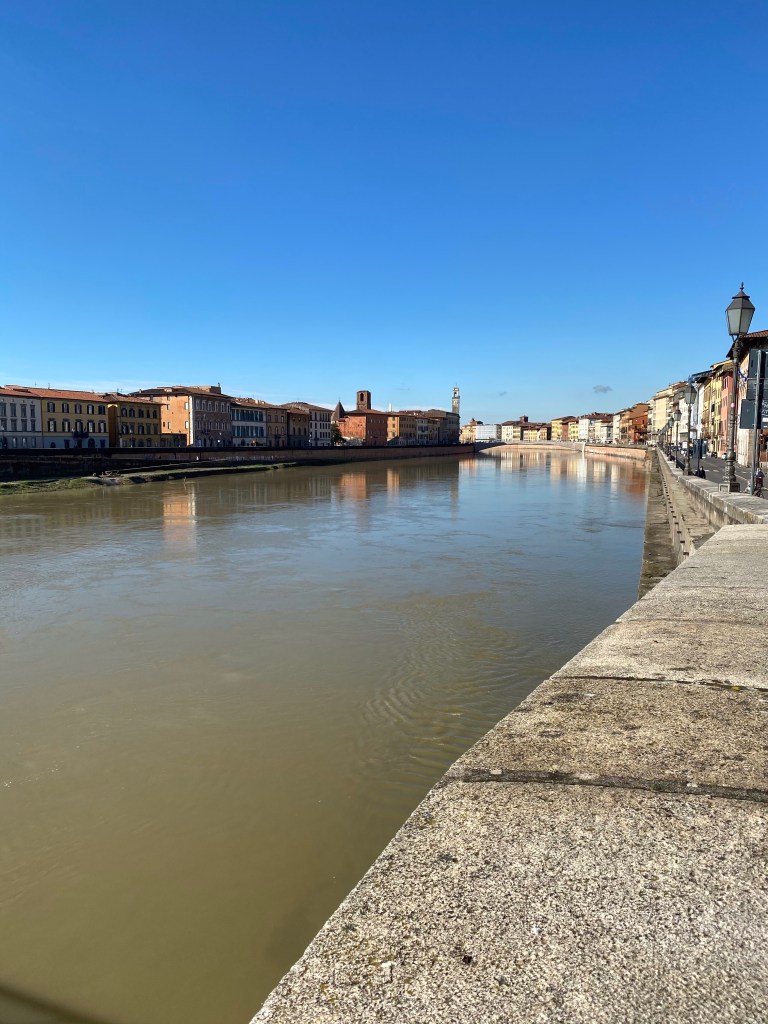
I enjoyed walking along the Lungarno Mediceo on the north side of the river, as well as along the Lungarno Galileo Galilei on the south side. As you can see from the pictures, it was a spectacular February day, with temperatures in the 60s F.
While walking along the Lungarno Galilei, I spotted a plaque commemorating Percy Bysshe Shelley. I remembered that Shelley had spent some time in Pisa and I looked it up.
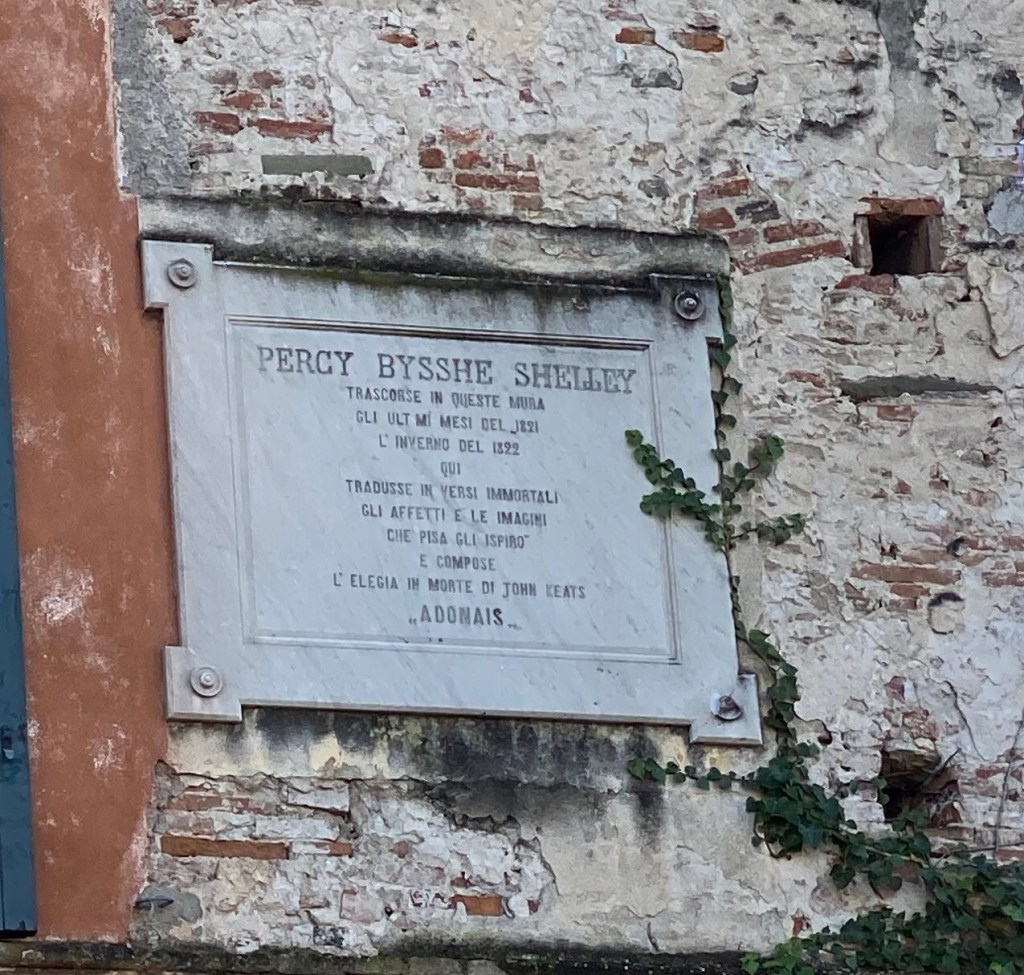
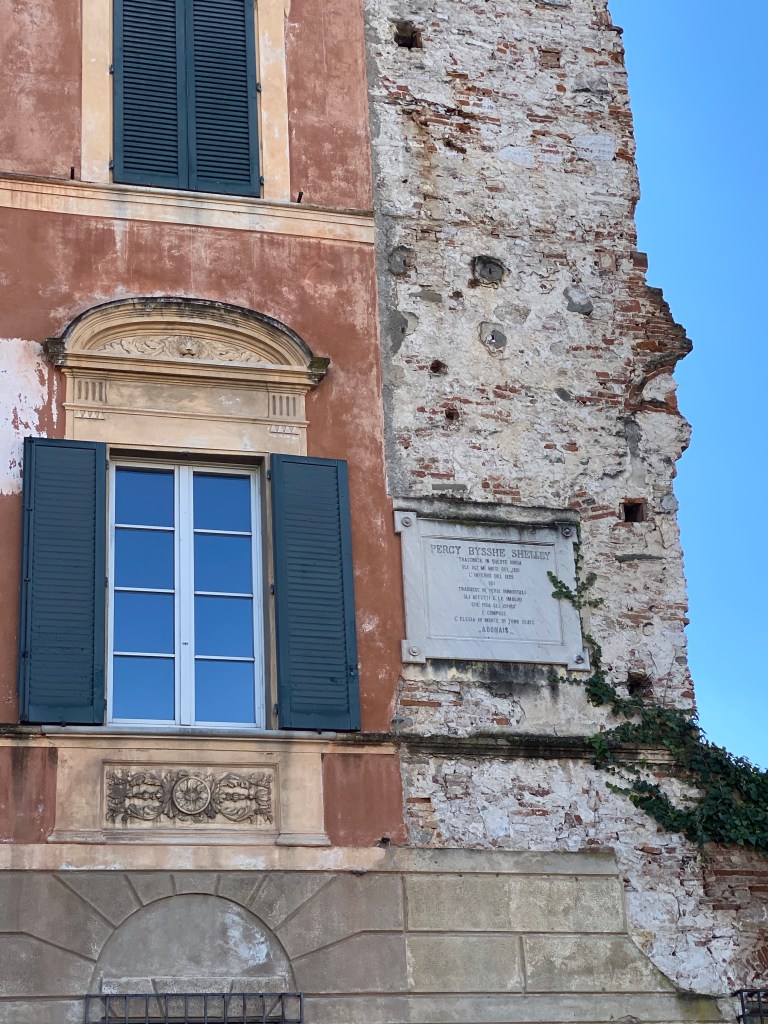
Here’s what I learned about Shelley’s stay in Pisa from this source: https://it.wikipedia.org/wiki/Circolo_pisano

“After wandering around Europe and in particular Italy, Shelley arrived in Pisa in 1820 with his family and his wife Mary Wollstonecraft Godwin, author of the novel Frankenstein. It was a relatively happy stay for Shelley in his turbulent life; in fact, his goal was to move there permanently and create a circle of English gentlemen who could devote themselves to poetry.

“At the invitation of Shelley, in 1821 George Gordon Byron also reached Pisa where he settled in Palazzo Toscanelli on the Lungarno Mediceo. Byron brought his doctor, John Polidori, who was originally from Bientina, near Pisa, with him. Polidori was also the uncle of Dante Gabriel Rossetti, a British painter and poet, as well as one of the founders of the Pre-Raphaelite art movement.

“Shelley’s group, called the Circolo Pisano, and for two intense years, the poet’s home became a cultural center where English writers passing through Italy gathered. Many illustrious personalities were attracted to Pisa, among them the English writer Edward John Trelawny, who arrived in Pisa in 1822 and later also the poet and journalist Leigh Hunt.

“After Hunt’s arrival in Pisa, Byron and Shelley also founded a periodical called The Liberal. This literary periodical was supposed to host the works of poets, but the magazine was short-lived. Only four issues came out, in which appeared a series of translations of Shelley’s Faust and a work composed by Byron, the Vision of Judgment.

“In 1822 Shelley moved to Lerici, on the coast of the Ligurian sea, where he lost his life a few weeks later. A book of poems by Keats and the manuscripts of the works composed in Pisa were found together with his body .

“Thus ended the adventure of the Circolo Pisano and with it also a great period of English romantic poetry in Italy.”
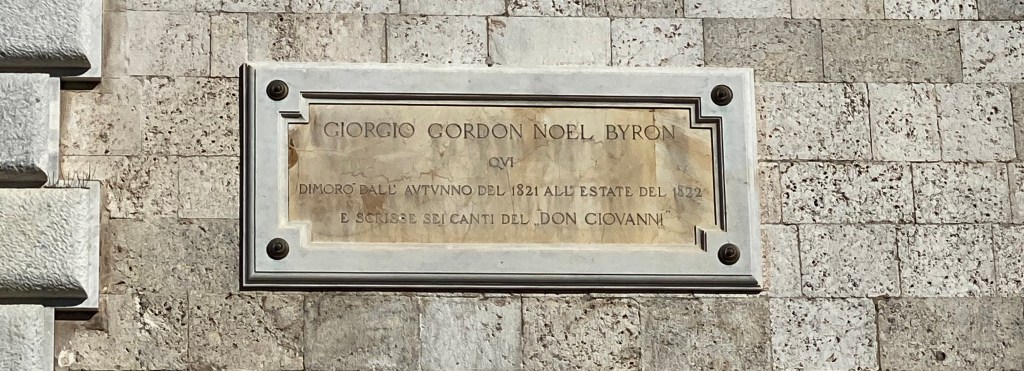
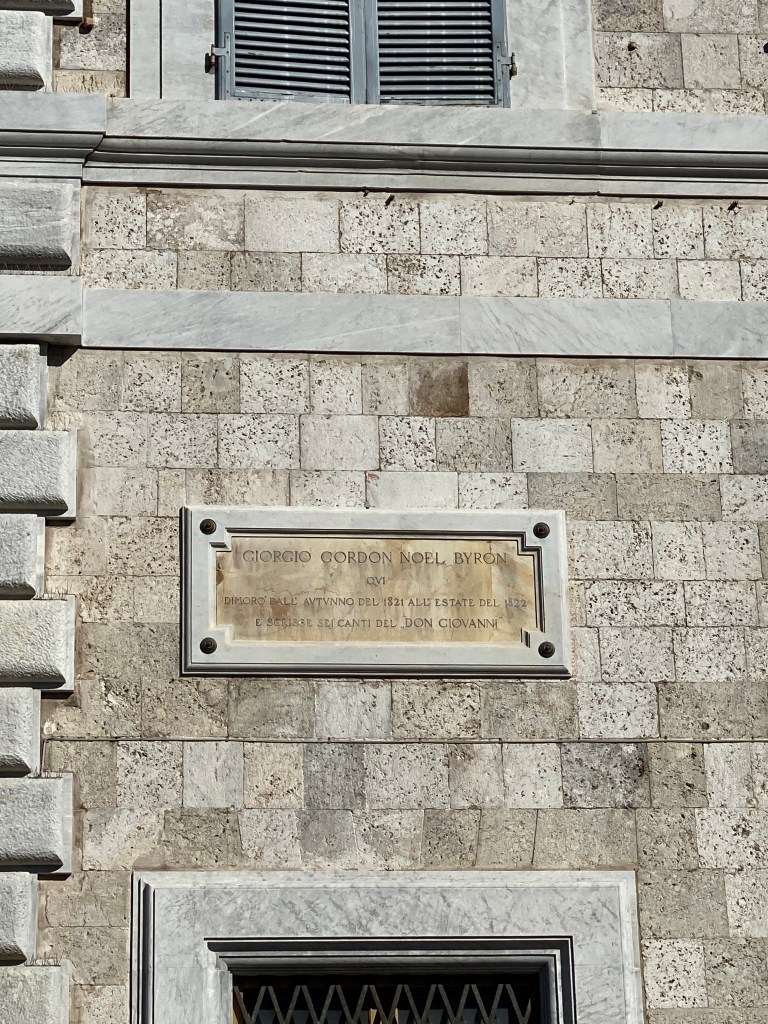
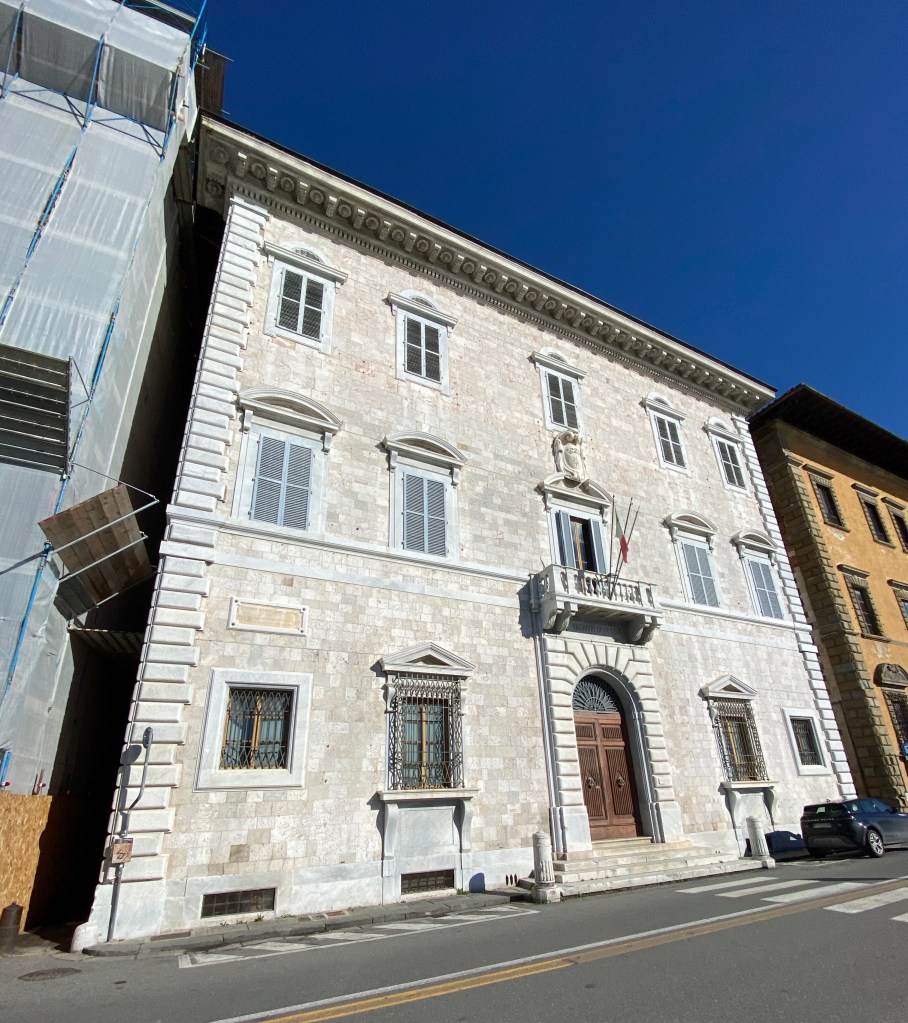
On the opposite bank of the Arno river, along the Lungarno Mediceo, sits this fabulous palazzo, bearing a plaque commemorating the other famous English Romantic poet, Lord Byron.

There is much more to show and tell about Pisa, which I will be doing in coming posts!

Arrividerci!
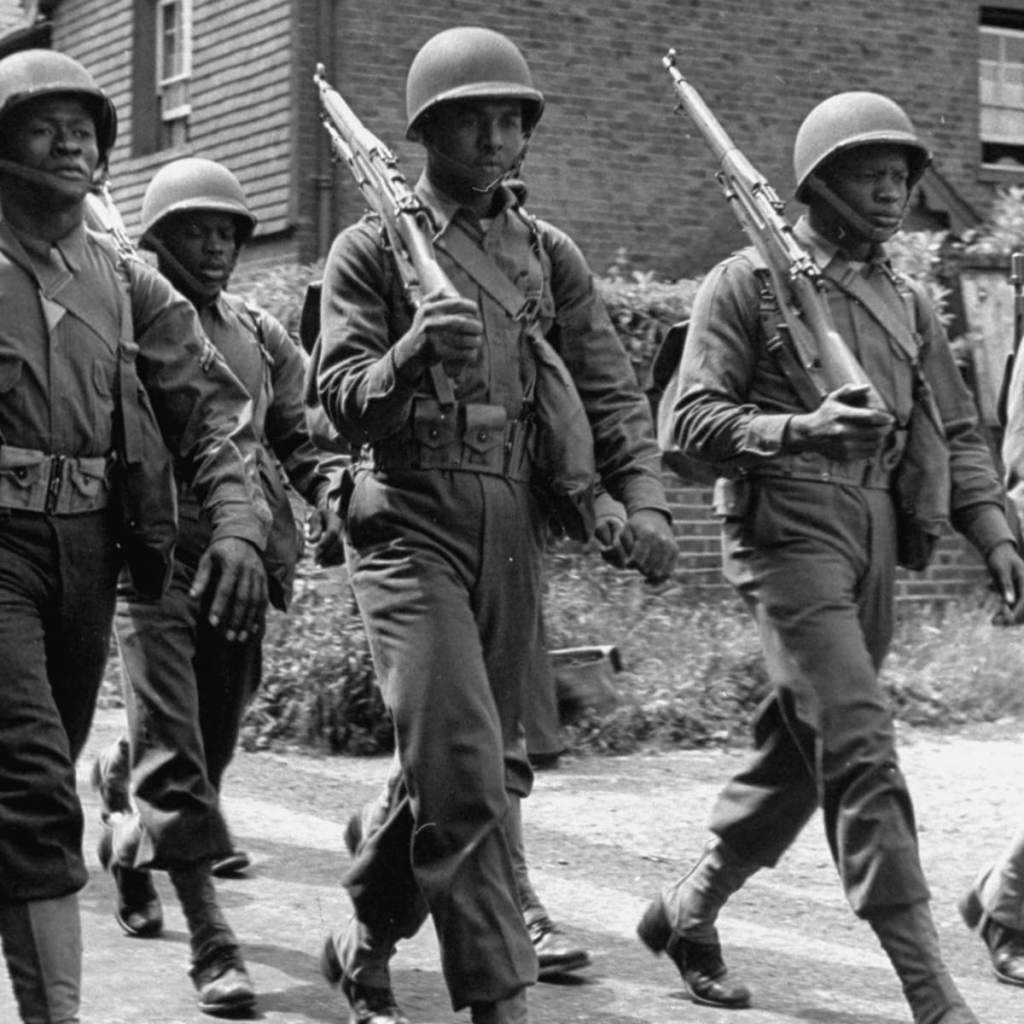
All black American regiment in Florence 1944

The following remarks come from David Leavitt, Florence (pp. 137-139). Bloomsbury Publishing. Kindle Edition.

“After the liberation, divers scoured the bottom of the Arno for the statues [from the Santa Trinita bridge], even as members of the all black American 387th Engineer Battalion set to work building temporary Bailey bridges of wood and steel in order to reconnect the two halves of the severed city.

Every time this happens I think, for a moment, of the liberation I wasn’t alive to witness, its much-heralded scenes – American soldiers giving chewing gum to children – as well as those that remain unnarrated: the black members of the 387th Engineering Batallion, prohibited from actually fighting because of their race, and now going quietly about the unglamorous job of making the city whole again. Little is recalled of them, yet they did as much to save Florence as any foreigner ever has, as much as Berenson, or Henry James, or Zeffirelli’s histrionic old Englishwomen. May their story, in all its amplitude, someday be told.

Leavitt, David. Florence (pp. 137-139). Bloomsbury Publishing. Kindle Edition.

Leavitt’s remarks led me to look a little further into black forces in American services: https://www.historynet.com/african-american-platoons-in-world-war-ii.

“With the Union reunited in 1865, Congress authorized the creation of six black regiments. Made up largely of Civil War veterans, the 9th and 10th Cavalry and 38th, 39th, 40th and 41st (later consolidated into the 24th and 25th Infantry regiments) were sent to the frontier, where they performed well. The men of these regiments were dubbed ‘buffalo soldiers. The black units would also serve in the Spanish-American War.

“In World War II, the United States opposed governments that embraced fascism and all its deluded racial theories, yet when the conflict started the Army resisted the rising chorus of black — and some white — citizens who were demanding that the military be integrated. Unfortunately for those advocates, many generals shared the bias of the majority of Americans and were adamant that it was not the Army’s duty to engage in a social experiment such as integration. Not only were they concerned about whether blacks would make capable soldiers, but they also believed that forcing such a controversial policy down the throats of white recruits might severely cripple the effectiveness of the Army they were frantically trying to build.

“As far as the average American was concerned, World War II was a white man’s war. In the hundreds of photographs, films and histories that have documented the conflict, blacks are seldom depicted in heroic roles. Even the comics of the era leave out blacks. Bill Mauldin’s famed cartoon characters Willie and Joe were white. Blacks, it seemed, were merely adjuncts to victory, primarily occupying the unglamorous jobs of truck driver and stevedore.

“Despite this impressive service record, the Army continued to enforce its strict segregationist policies. During World War I, the vast majority of the 367,410 blacks drafted were assigned to service units or used as laborers. The few who saw action were in the all-black 92nd and 93rd divisions. The 92nd served under American command and was reported to have performed poorly. Meanwhile the 93rd’s four regiments served separately under French commanders, who offered high praise for their contributions.

“When the United States entered World War II, most Americans expected blacks to perform the same auxiliary roles. Of an estimated 922,965 blacks who donned olive drab, the majority toiled away in segregated service units where their work went largely unrecognized. These forgotten men built airfields, cleared mines, unloaded ships, maintained roads and rail lines, served as medics and drove the trucks that supplied the armies.

“As unbreachable as the color barrier seemed to be, however, the realities of combat in the ETO eventually produced the first cracks in the walls separating the races. In the months after D-Day, casualties mounted at a terrifying rate. Six months after the landings, losses among U.S. forces in Europe had risen to nearly 350,000 troops killed, wounded or missing. The Battle of the Bulge, which began on December 16, 1944, inflicted an additional 80,000 casualties. The problem that Allied Supreme Commander General Dwight D. Eisenhower faced in January 1945 as he planned for the final offensive into Germany was that he desperately needed riflemen — and he did not care where they came from or what color they were.

“Back in the States, training time for recruits was shortened and noncombat units were culled for anyone who could be spared to hold a rifle. Next it was the turn of Army Specialized Training personnel and aviation cadets, who were wrenched from the comfort and security of their classrooms and taught the nomenclature of the M-1 rifle and the intricacies of drill. Even these measures were not enough, and when the demand for men could not be met, the Army sent out word that it would accept volunteers from black units.

“The original proposal came from Lt. Gen. John C.H. Lee. As the Service of Supply (SOS) commander in the European theater, he was in charge of many of the African-American units and was more familiar than most with the caliber of the men. Even with the pressing need for troops, however, Lee’s suggestion hit like a bombshell. Nothing could have been more drastic than making combat soldiers of substantial numbers of black men, historian Russell Weigley would write years later.

“Lee saw the hundreds of thousands of black service troops under his command as an untapped resource, and his initial proposal called for the Army to take 2,000 African Americans and insert them individually into the ranks of white infantry units. Two thousand men represented the largest number that could be trained at one time at the Ground Forces Reinforcement Center (GFRC) in northern France. More could be trained later.

“Old attitudes die hard, however, and despite the pressing need for manpower, the European high command rejected Lee’s proposal to treat blacks as individual replacements, and as a half-measure instead opted to integrate by platoons.

“Even this half-hearted breach of the color line was not enough to prevent some 2,000 blacks — many of whom were long-serving NCOs willing to give up their stripes — to immediately volunteer for combat duty. With a stroke of the pen, Eisenhower soon had enough men to form 53 all-black rifle platoons that after training would be assigned as the 5th Platoon to all-white infantry companies. By March, 37 of these platoons were ready for combat, and a number were formed into all-black company-sized units and assigned to the 12th and 14th Armored divisions.

“Even though many of the volunteers were soldiers of long service and considerable experience, they would still be led into combat by white officers. As was expected, many of these shavetails were unhappy with their new assignments. First Lieutenant Richard Ralston, a combat veteran with the 99th Division, was assigned to command the 5th Platoon of K Company, and he remembered the disdain of many white lieutenants upon learning they were to command black troops.

“By war’s end, black platoons had served in 10 infantry and armored divisions in the ETO. The 1st, 8th, 9th, 69th, 78th, 99th, 104th and 106th Infantry divisions and the 12th and 14th Armored divisions had all benefited from the bravery and dedication of their African-American comrades in arms. They were veterans who could be proud of their Combat Infantryman Badges. Ralston’s praise for his men echoed among most commanders on the Western Front. Looking back on the performance of his platoon, the lieutenant remembered that the men of the 5th of K performed without fear and carried out instructions with zest and efficiency.

“Curious to see how its experiment had been working, in the summer of 1945 the Army conducted a study of the black platoons and interviewed some 250 officers and 1,700 enlisted men who had fought with or alongside the black soldiers. A chief finding was that the colored soldiers performed well in combat (84 percent of the officers say the colored troops did ‘very well,’ and the remainder says ‘fairly well.’ In no instance was the performance rated as poor.)

“They were the best platoon in the regiment, one company commander said. I wish I could get a presidential citation for them. They are very aggressive as fighters — really good in woods and at close-quarters work. Said another officer, The only trouble is getting them to stop; they just keep pushing.

“It was not until 1948 that President Harry S. Truman forced the end of a shameful policy that was without merit, ordering all branches of the military desegregated. Volunteer Arthur Holmes believed the integration of the black platoons was a turning point. The platoons had a lot to do with the later integration of the Army in 1948. I never believed they would put us black boys up there with white boys. And I didn’t believe it until we were actually being shot at. I thought they would put us back with the quartermaster working in supply.

“Even with Truman’s landmark legislation, it again took the exigencies of combat to complete the job. Most units were still segregated when the Korean War broke out in 1950, and it was not until the Army was again faced with a critical shortage of replacements that the president’s order went into full effect.”

https://www.historynet.com/african-american-platoons-in-world-war-ii.htm