As with the recent Neuschwanstein Castle post, we are again discussing a royal residence designed by the eccentric King Ludwig II. This jewel is the smallest of the three palaces built by the King of Bavaria and the only one which was actually completed and that he lived in most of the time from 1876.
Ludwig II, who was crowned king in 1864, began his building activities in 1867/68 by redesigning his rooms in the Munich Residenz and laying the foundation stone of Neuschwanstein Castle.
In 1868 he was already making his first plans for Linderhof. However, neither the palace modelled on Versailles that was to be sited on the floor of the valley nor the large Byzantine palace (see next picture) envisaged by Ludwig II were ever built. Instead, the new building developed around the forester’s house belonging to the king’s father Maximilian II, which was located in the open space in front of the present palace and was used by the king when crown prince on hunting expeditions with his father. Linderhof Palace, the eventual result of a long period of building and rebuilding, is the only large palace King Ludwig II lived to see completed.
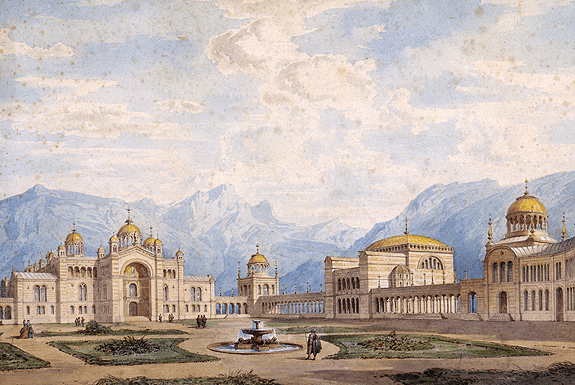
In fact, the earliest construction of this site was a wood-framed building shown at the bottom of this post.
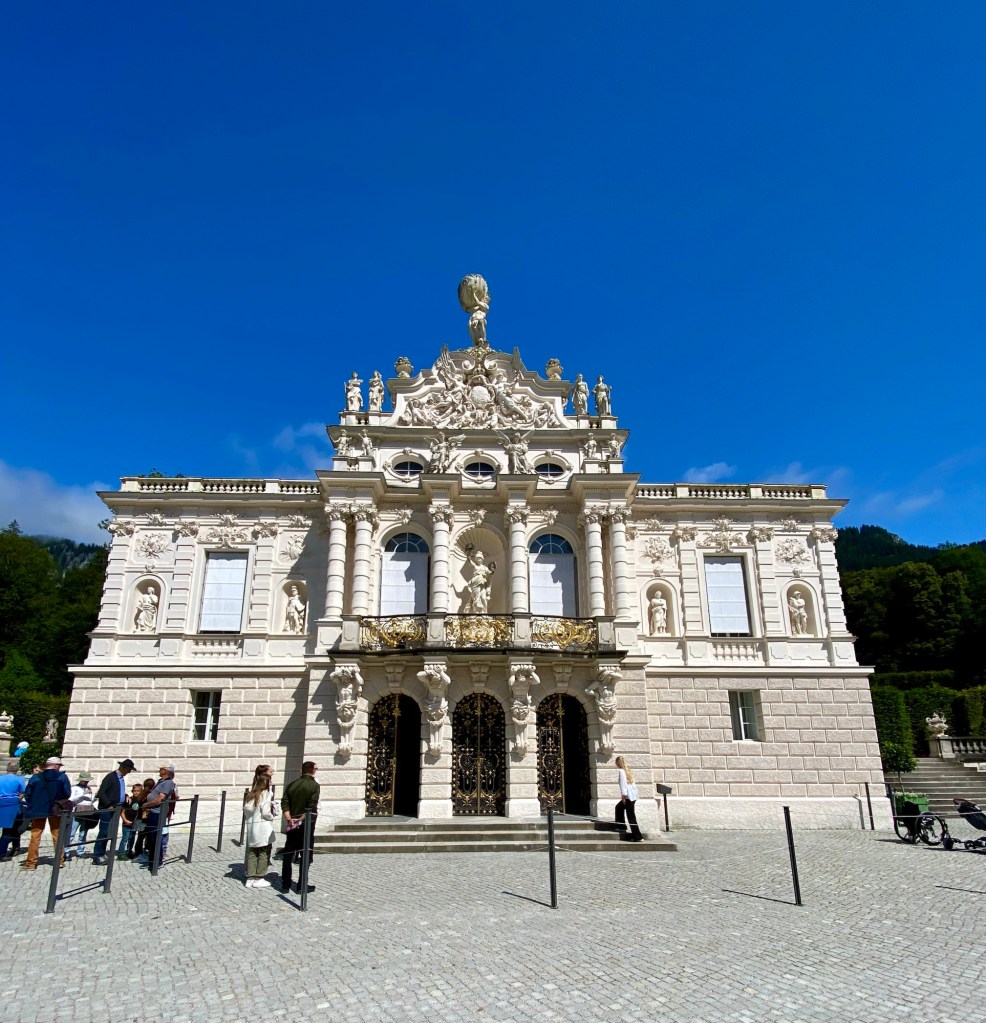
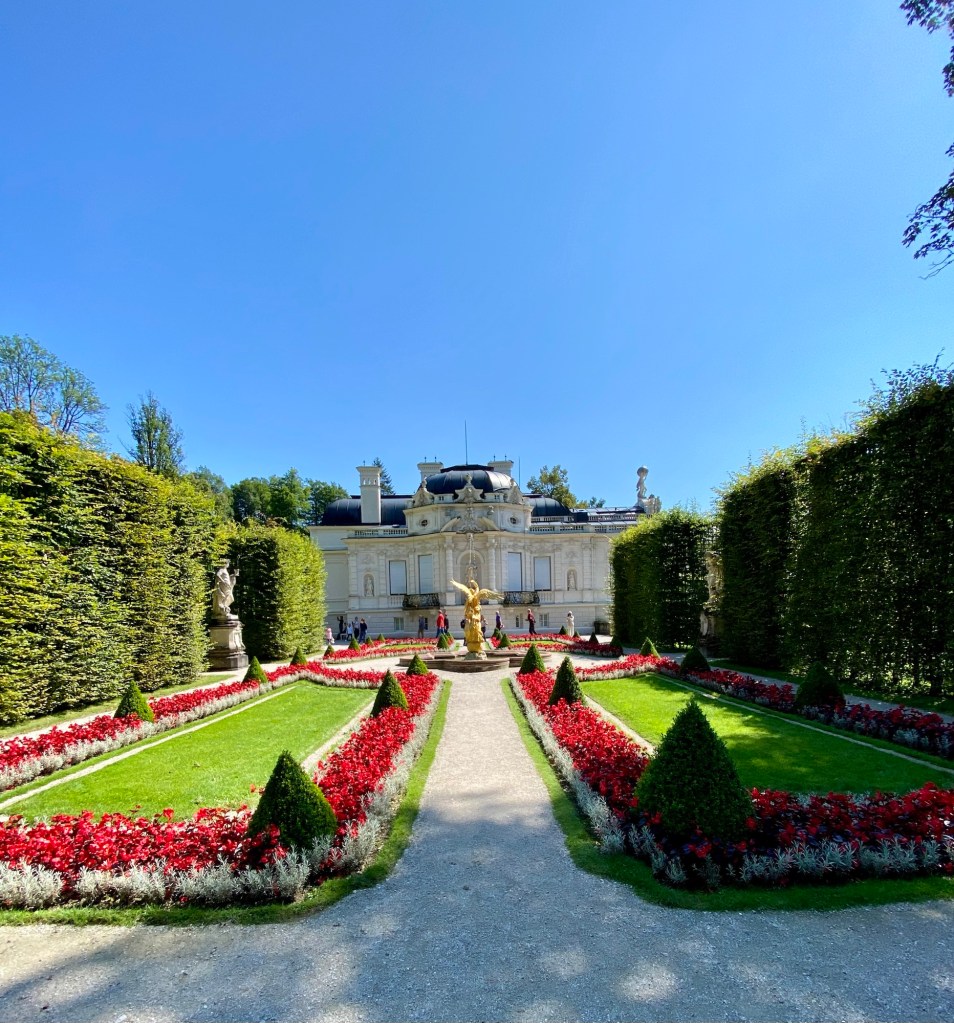
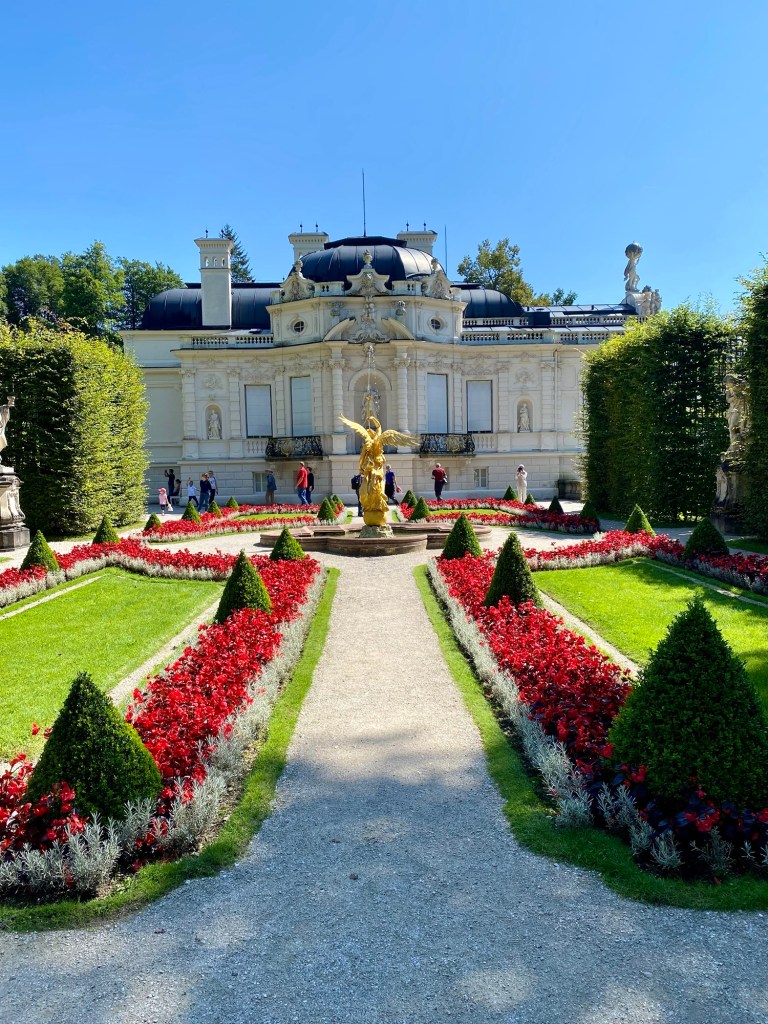
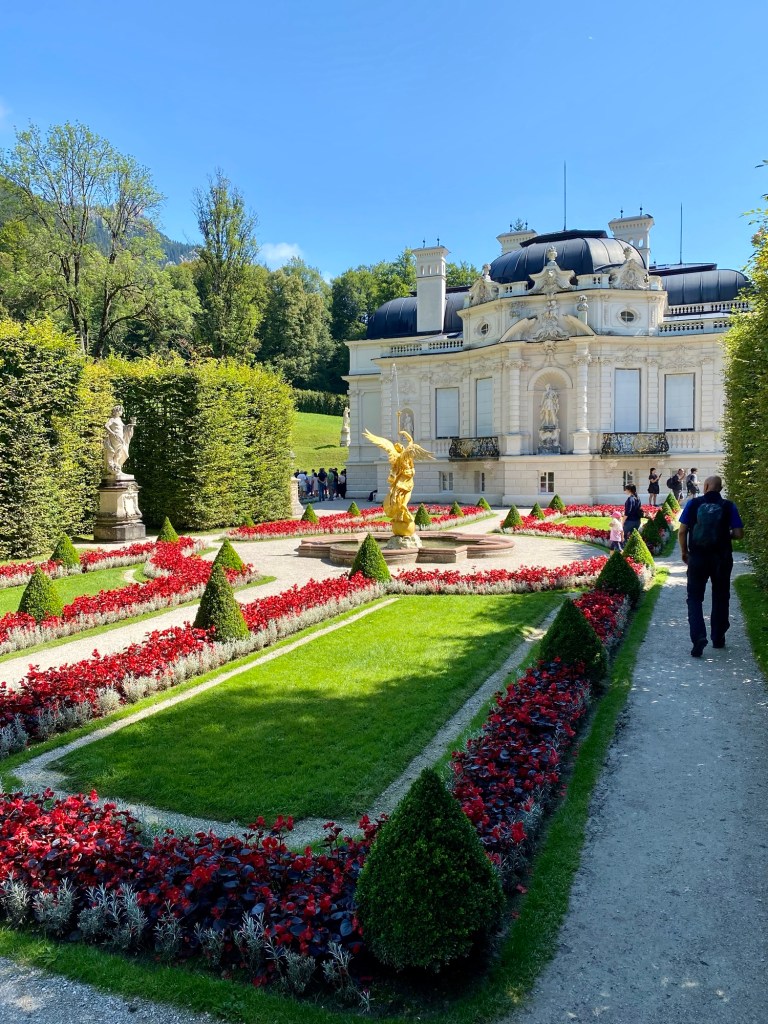
Ludwig already knew the area around Linderhof from his youth when he had accompanied his father King Maximilian II of Bavaria on his hunting trips in the Bavarian Alps. When Ludwig II became King in 1864, he inherited a hunting lodge, the so-called Königshäuschen (King’s little house) from his father, and in 1869 began enlarging the building. In 1874, he decided to tear down the Königshäuschen and rebuild it in its present-day location in the park. At the same time three new rooms and the staircase were added to the remaining U-shaped complex, and the previous wooden exterior was clad with stone façades. The building was designed in the style of the second rococo-period. Between 1863 and 1886, a total of 8,460,937 marks was spent constructing Linderhof.
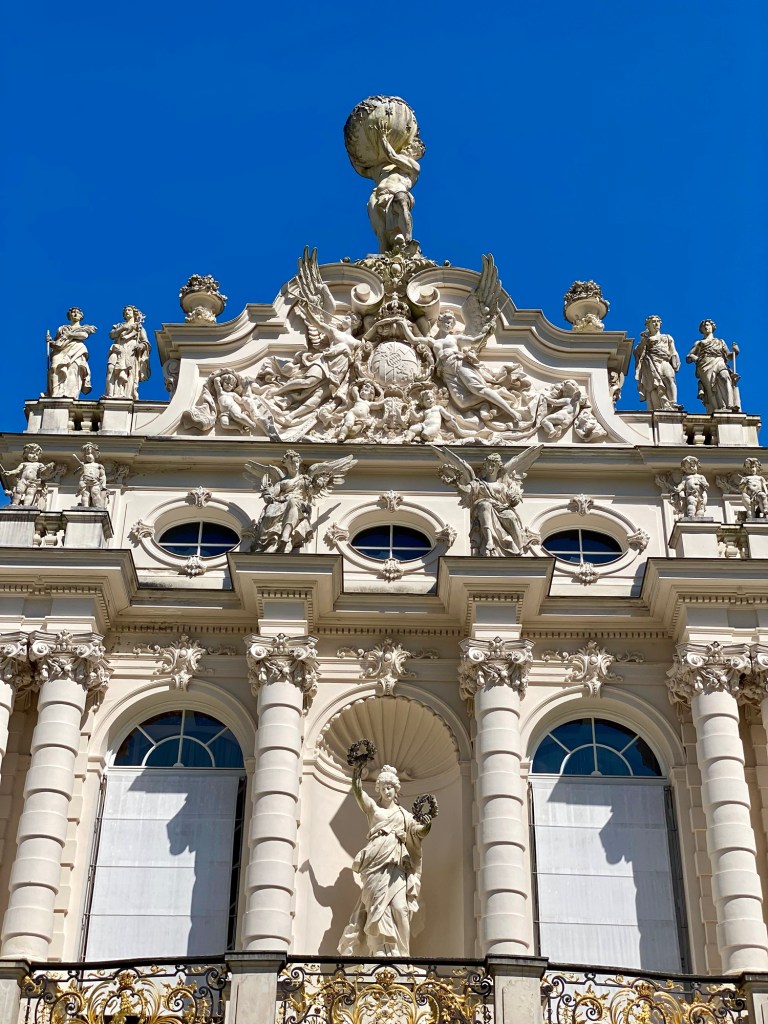
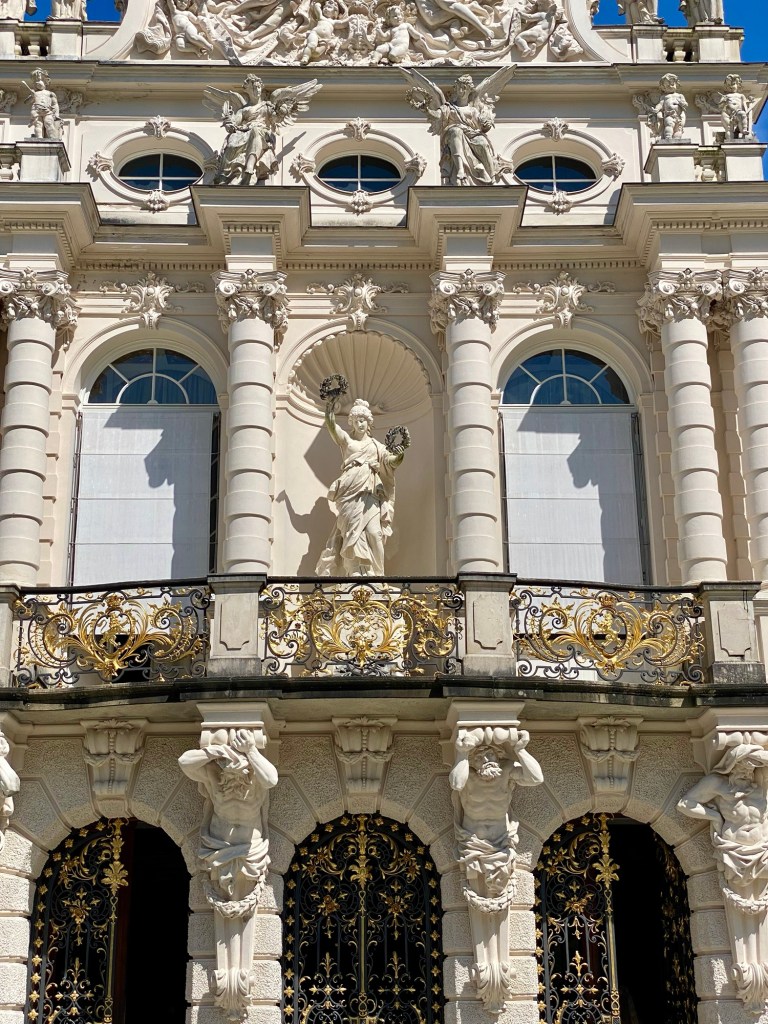

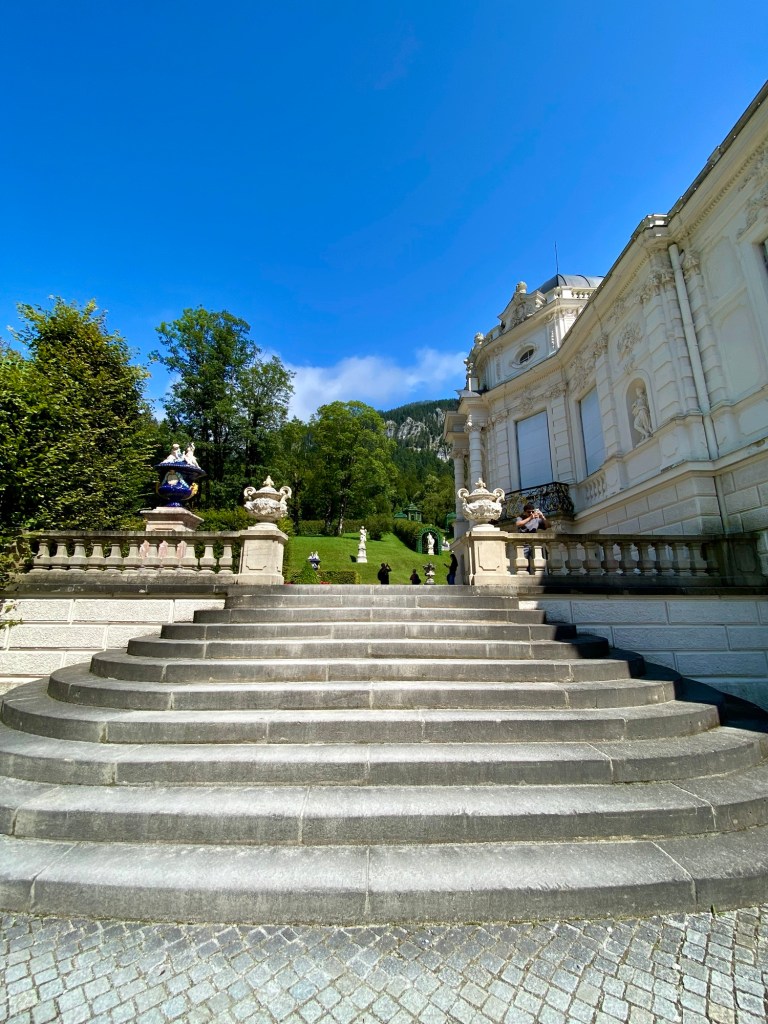
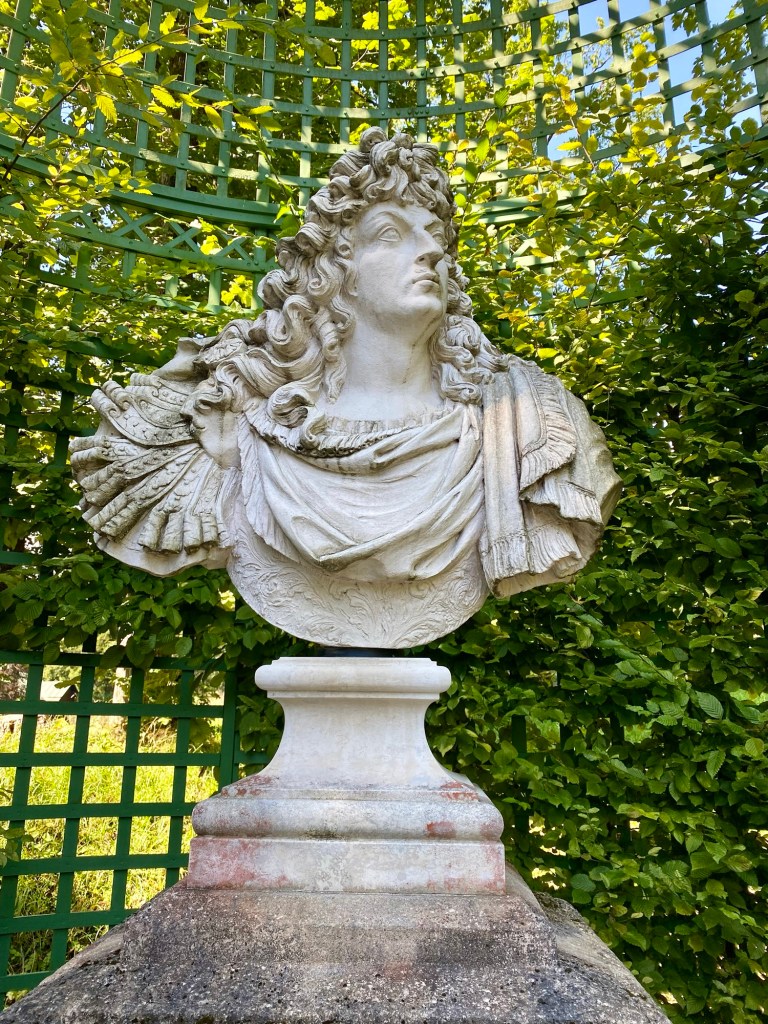
Although Linderhof is much smaller than Versailles, it is evident that the palace of the French Sun-King Louis XIV (who was an idol for Ludwig) was its inspiration. The staircase, for example, is a reduction of the famous Ambassador’s staircase in Versailles, which would be copied in full in Herrenchiemsee, another palace project by Ludwig that was designed less as a residential building than as a homage to the Sun-King.
Stylistically, however, the building and its decor take their cues from the mid-18th century Rococo of Louis XV, and the small palace in the Graswang was more directly based on that king’s Petit Trianon on the Versailles grounds. The symbol of the sun that can be found everywhere in the decoration of the rooms represents the French notion of absolutism that, for Ludwig, was the perfect incorporation of his ideal of a God-given monarchy with total royal power. Such a monarchy could no longer be realised in Europe in the second half of the nineteenth century. The bedroom was important to the ceremonial life of an absolute monarch; Louis XIV of France used to give his first (lever) and last audience (coucher) of the day in his bedchamber. In imitation of Versailles, the bedroom is the largest chamber of Linderhof Palace. By facing north, however, the Linderhof bedroom inverts the symbolism of its Versailles counterpart, showing Ludwig’s self-image as a “Night-King,” because he had gotten into the habit of turning night into day and vice versa.
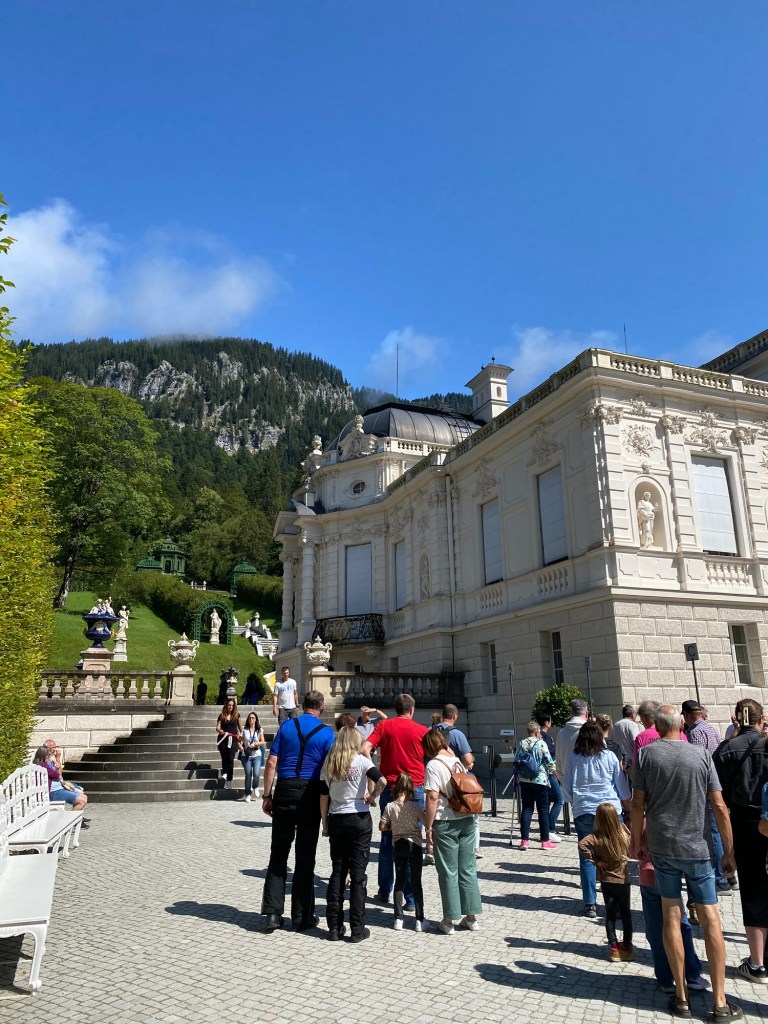
Linderhof, in comparison to other palaces built by other kings, has a rather private atmosphere. In fact, there are only four rooms that have a real function.
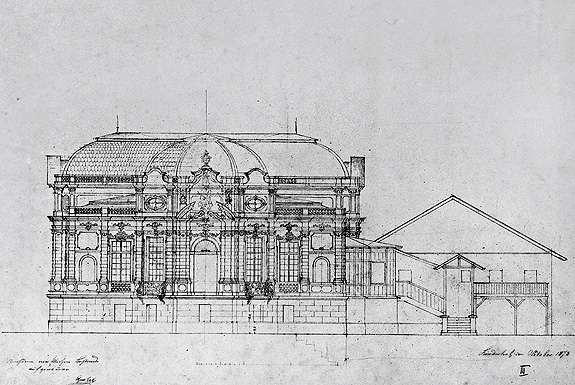
Plan for the west façade after the stone cladding (building phase 4)
and with the Royal Lodge still in place, 1873

