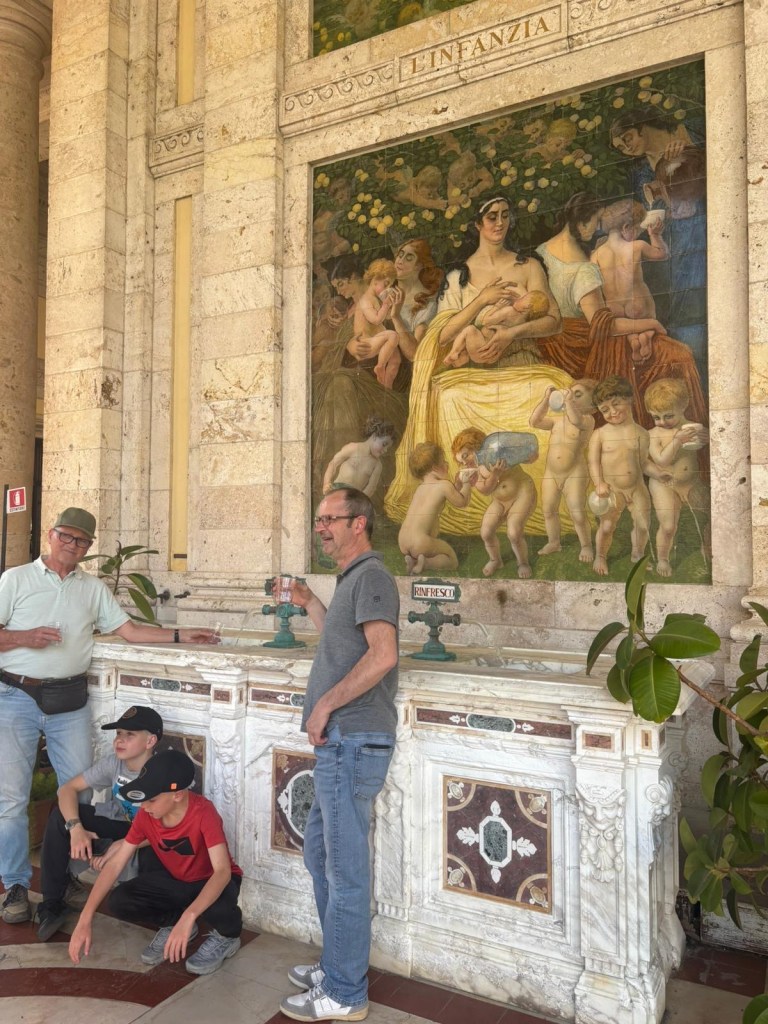
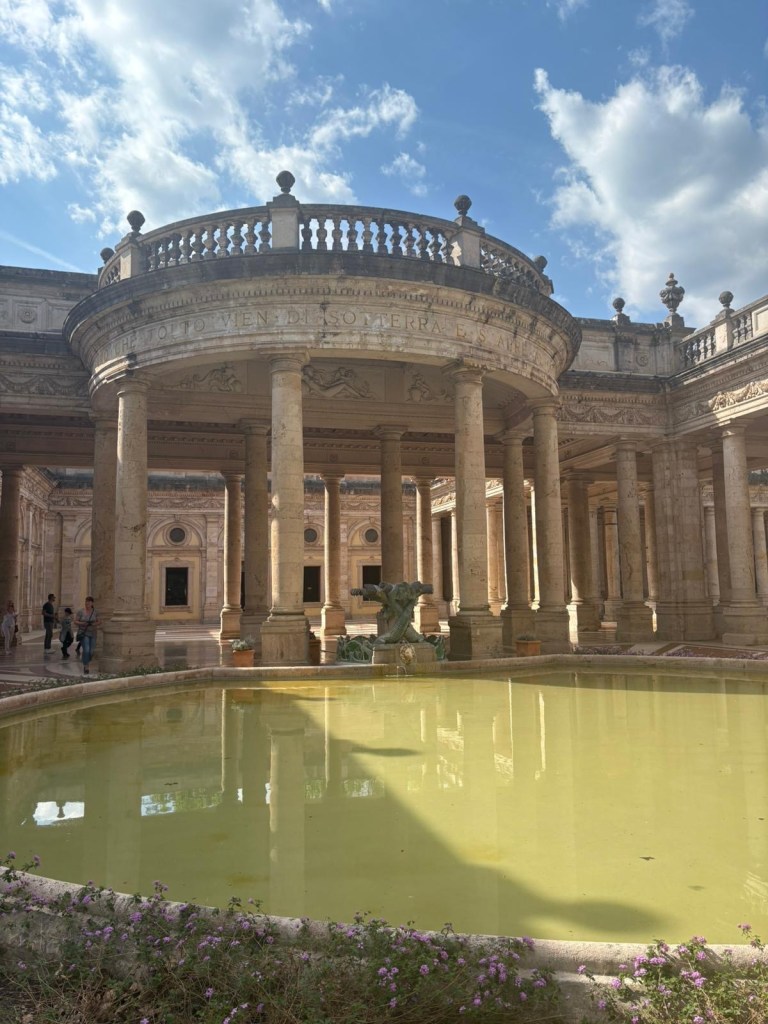
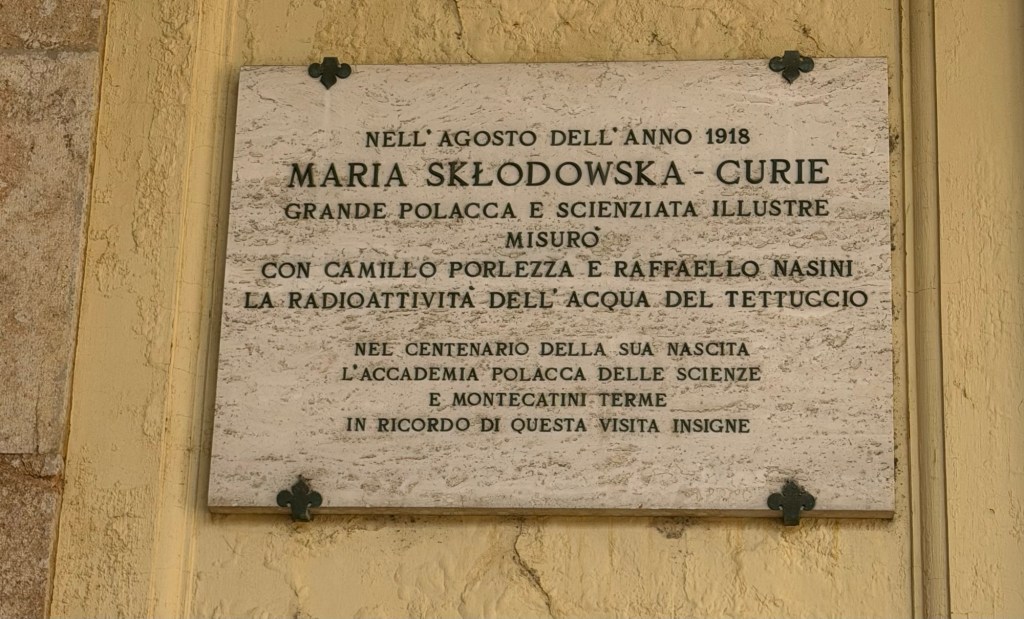
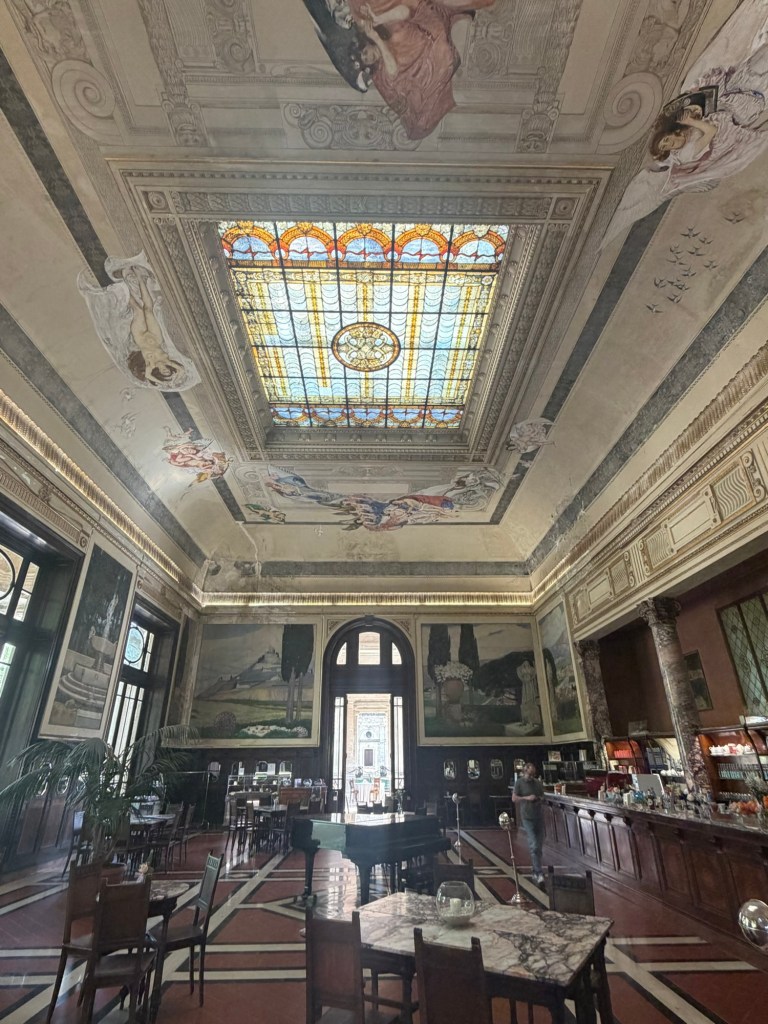
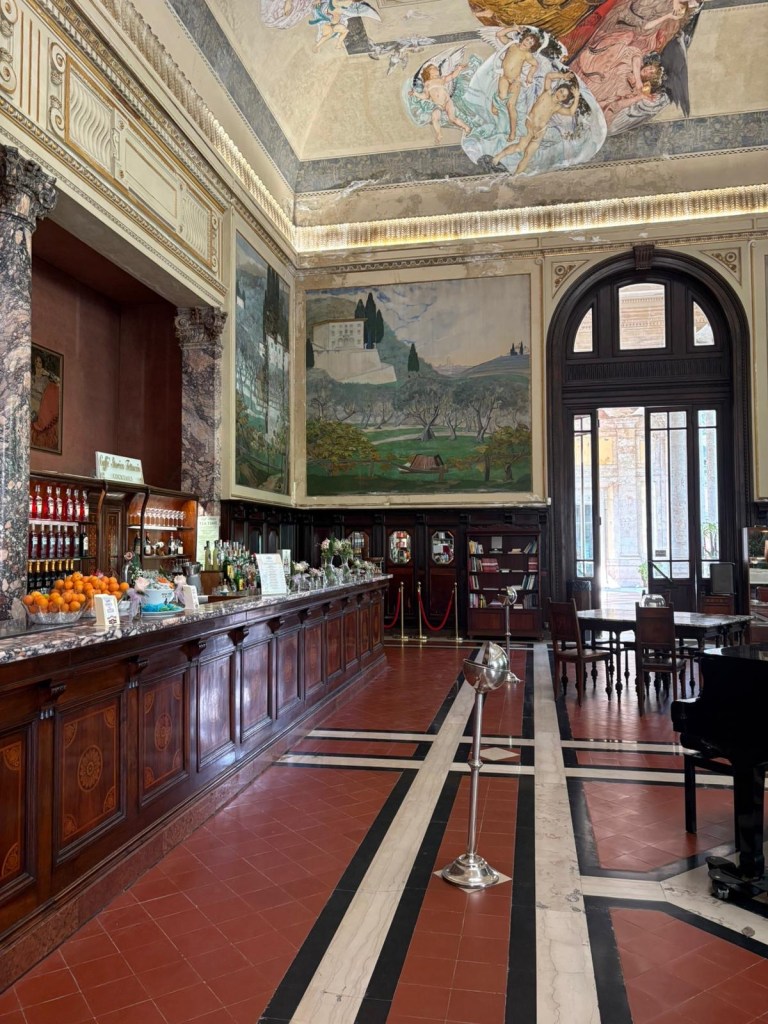
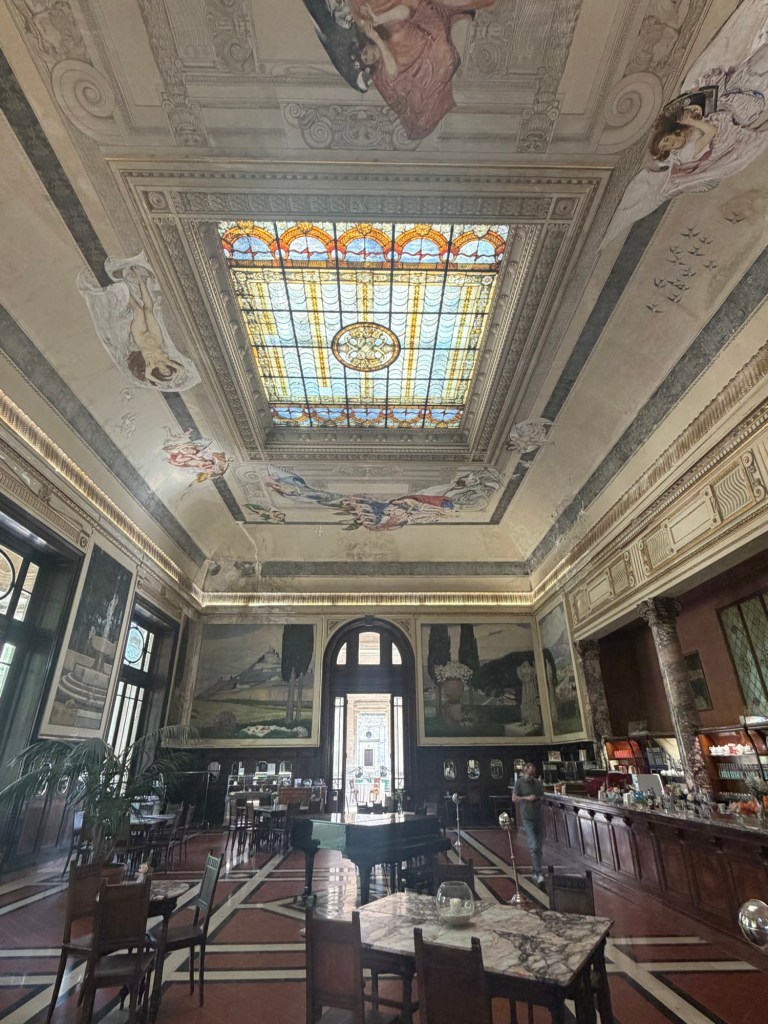
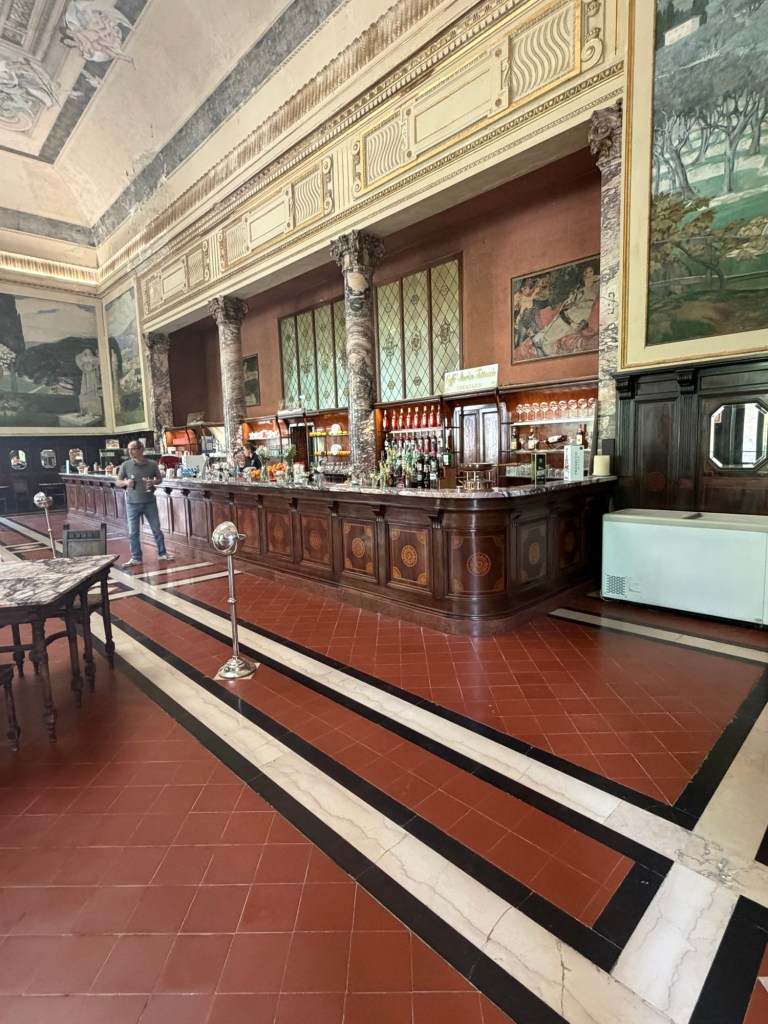
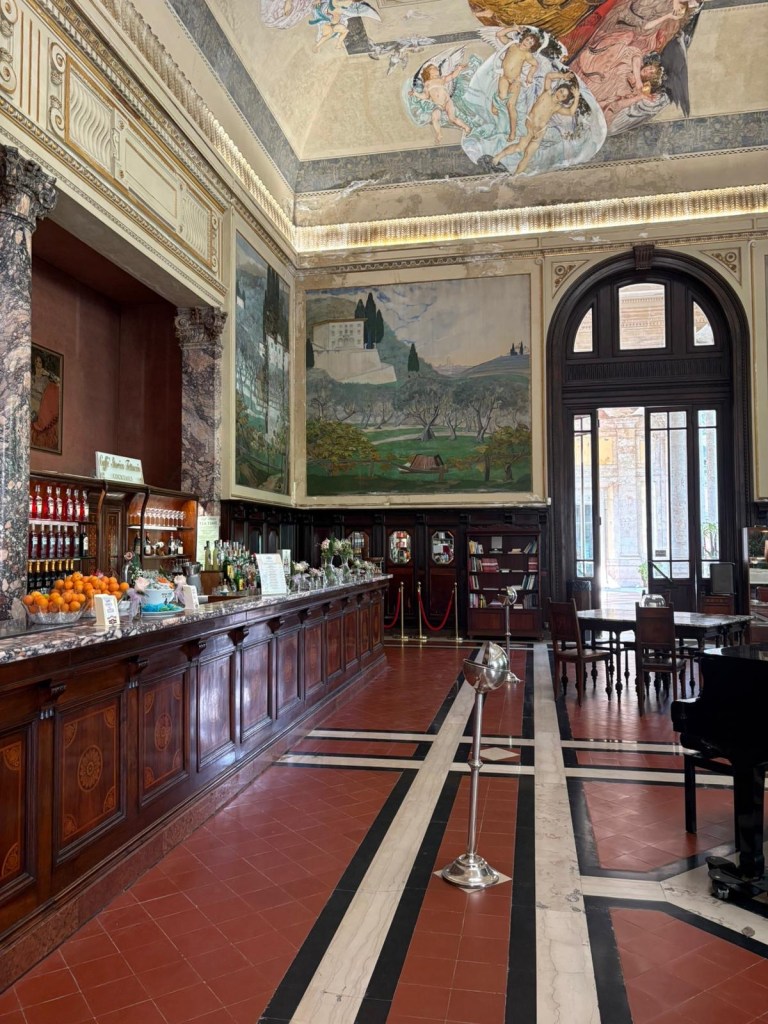
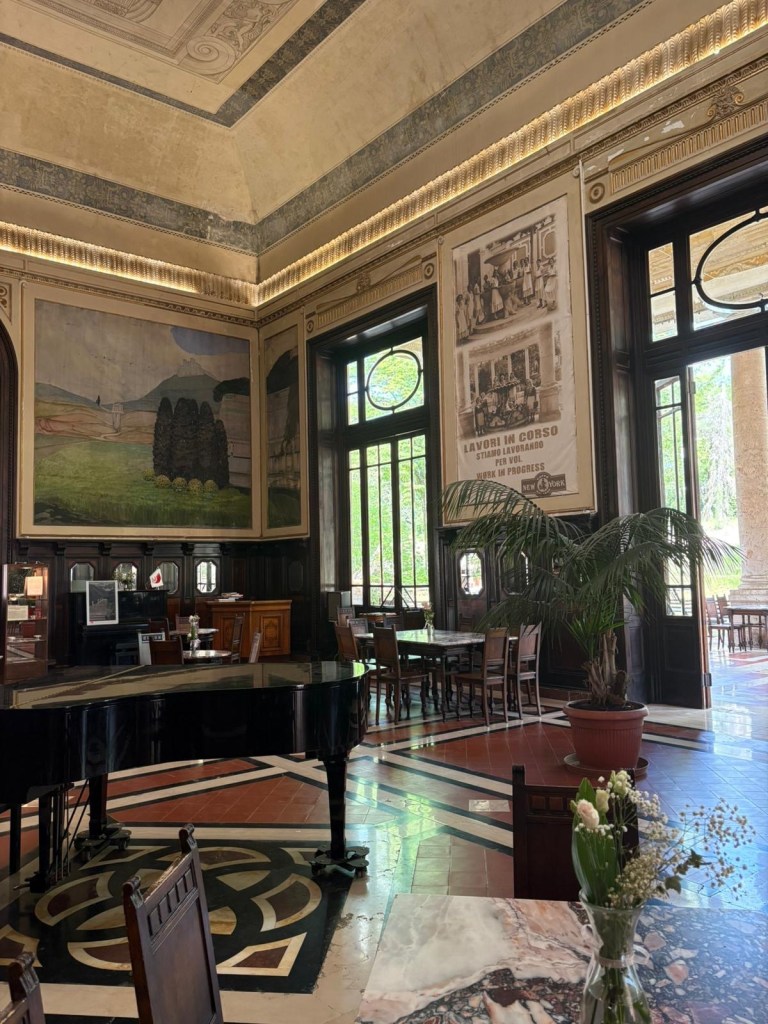
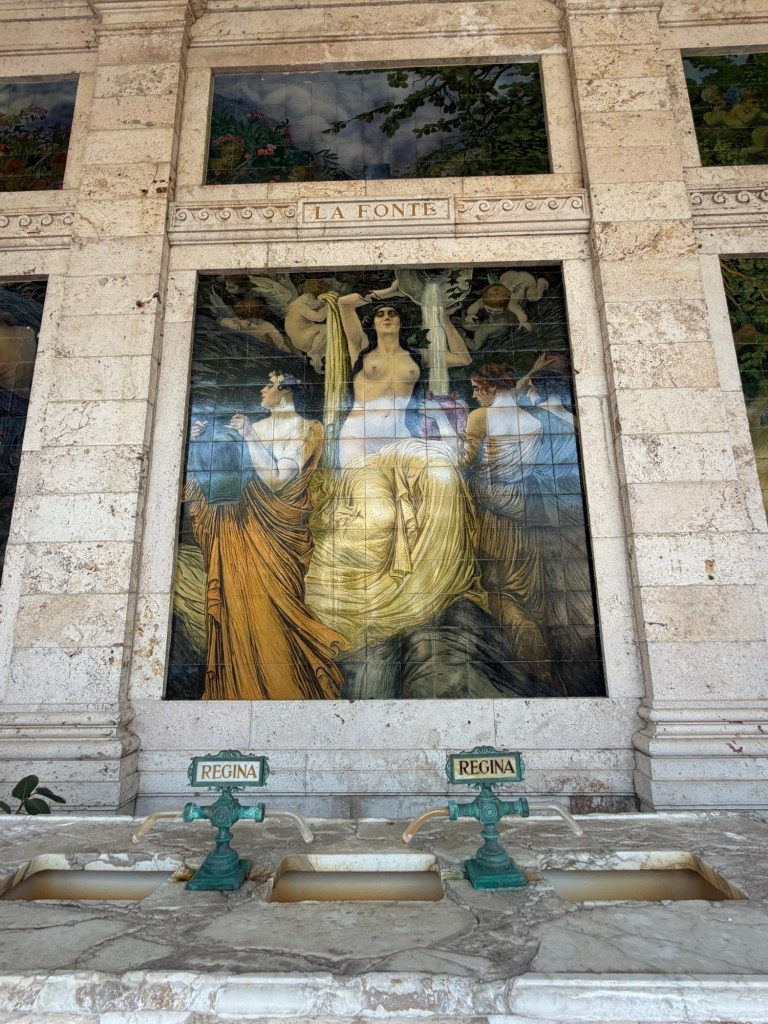
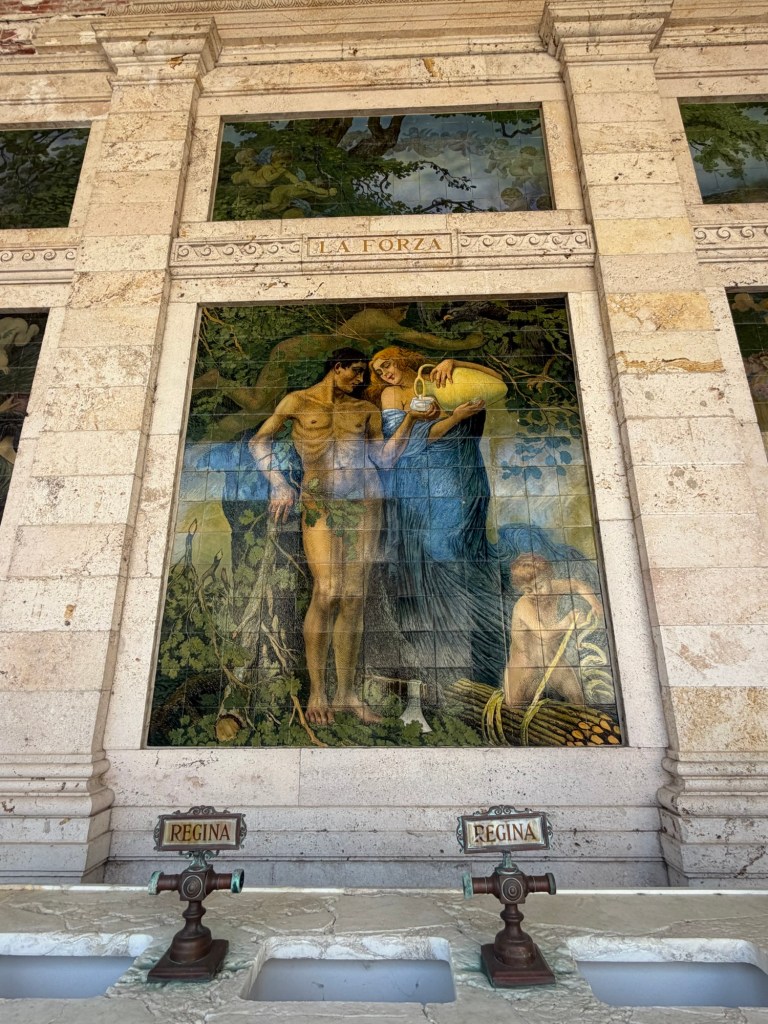
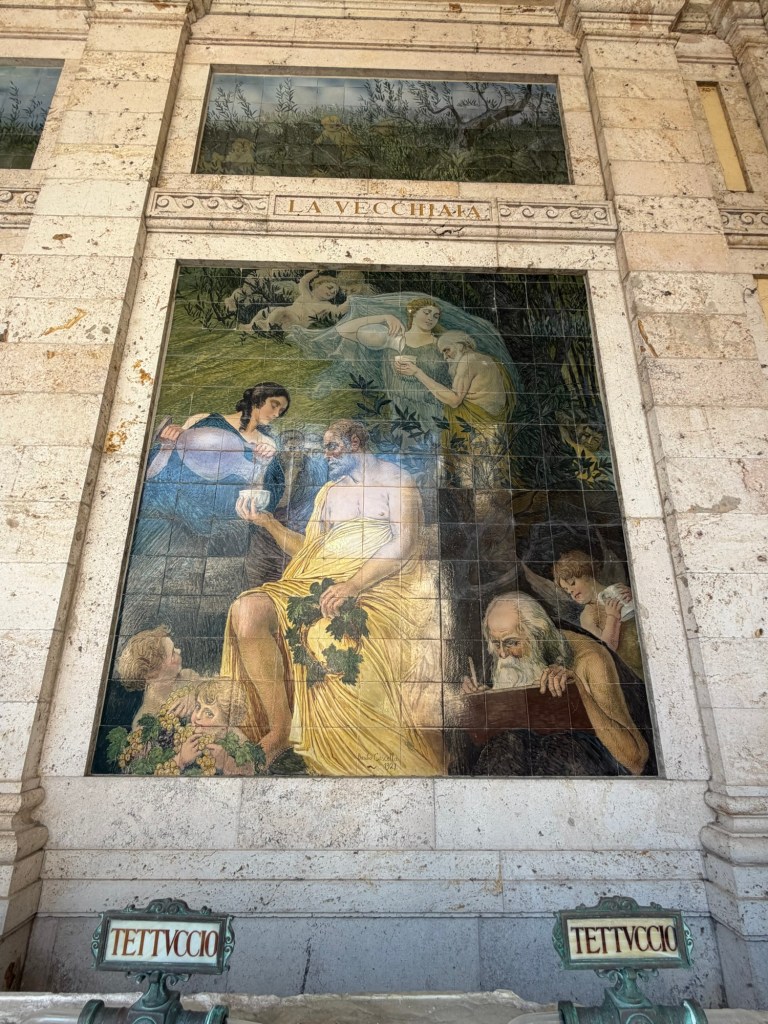
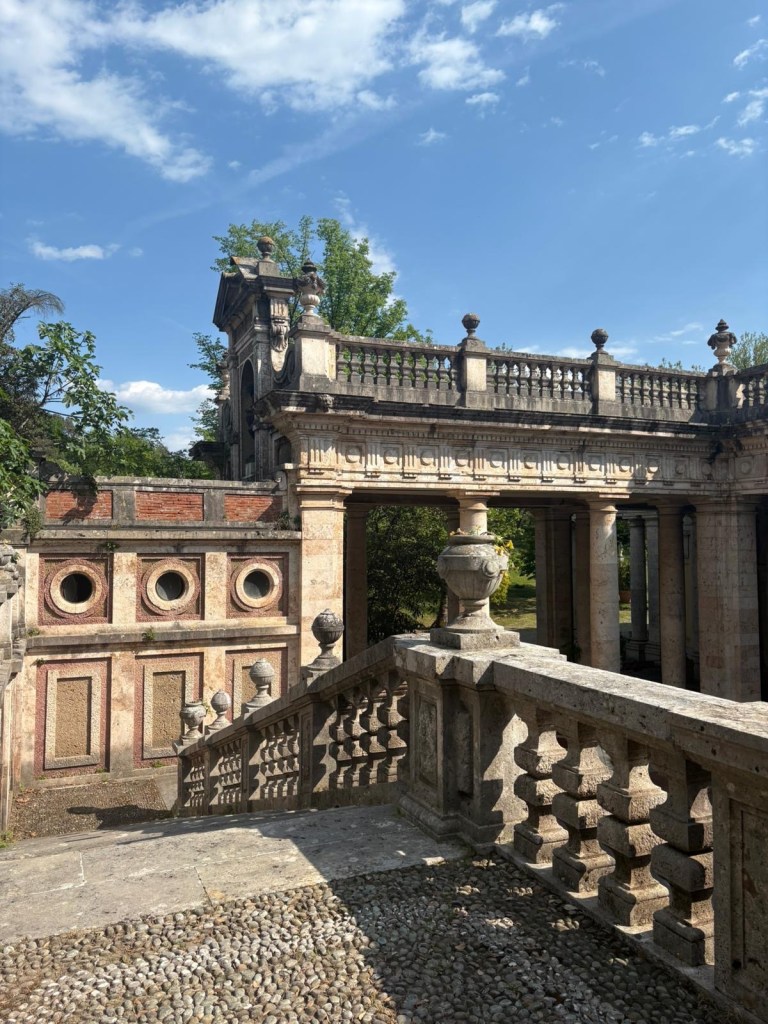
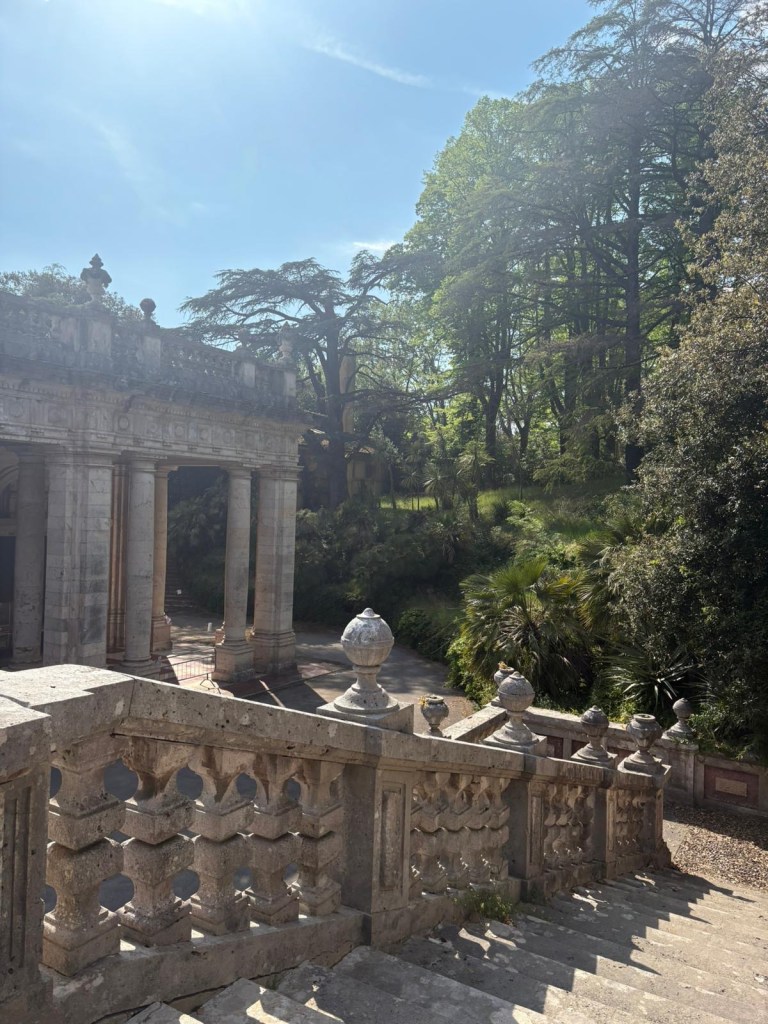
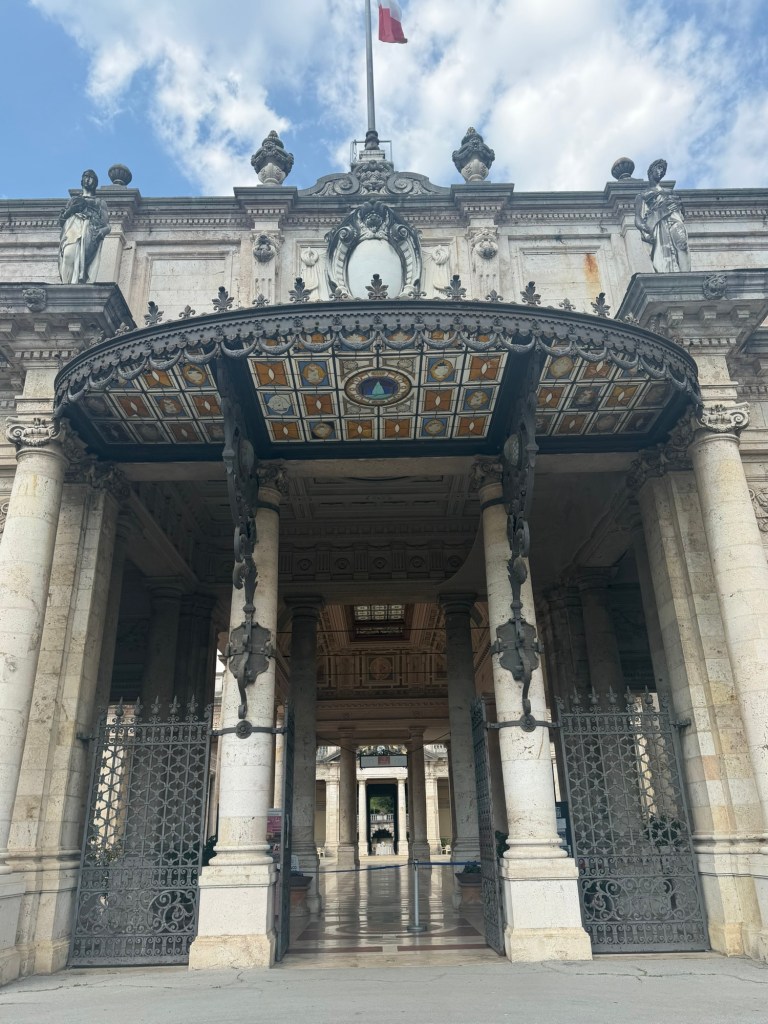
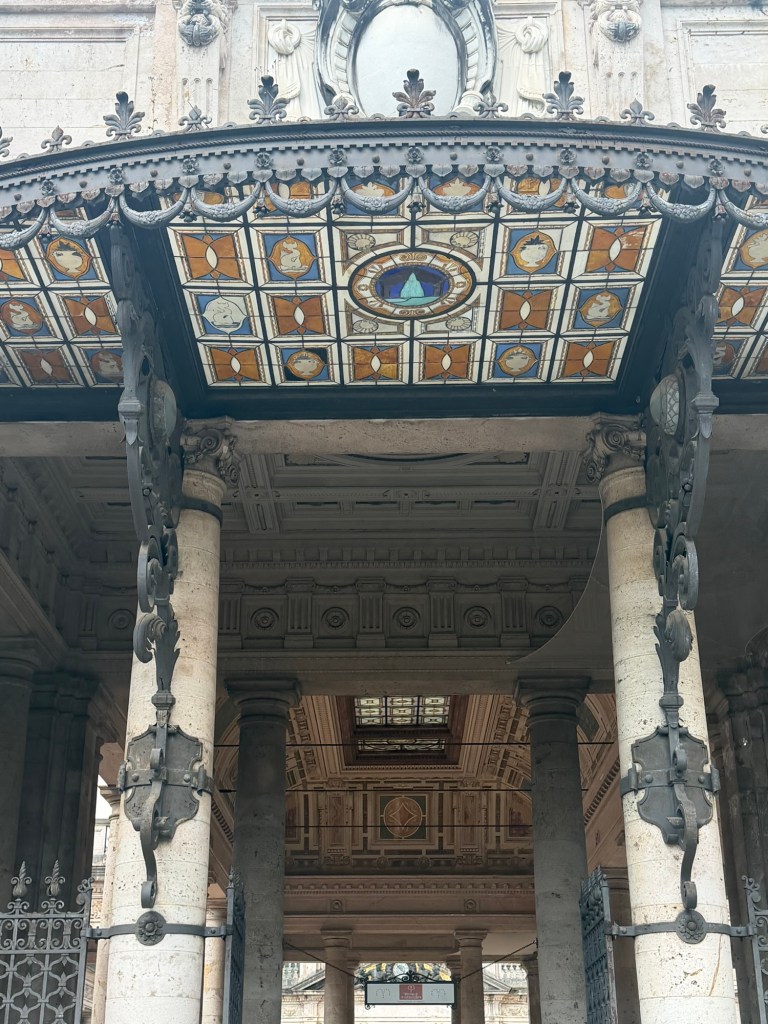
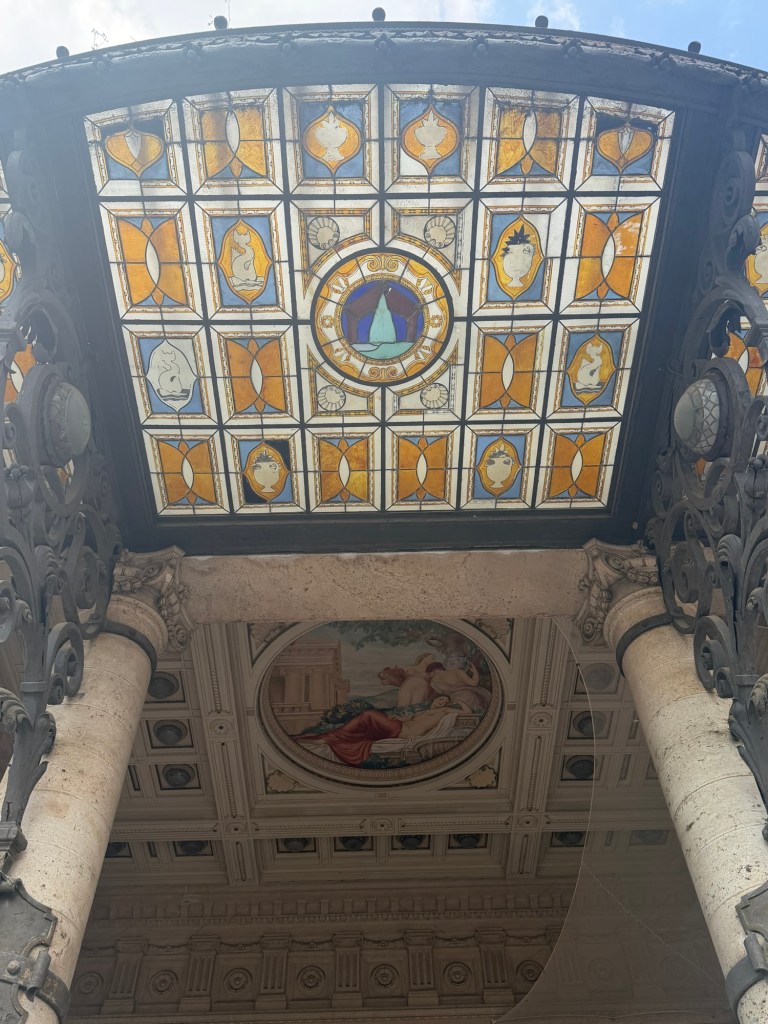
After visiting Montecatini Alto, we descended by funicular and found the entrance to this grand building complex devoted to the thermal waters: Tettuccio Thermal Baths
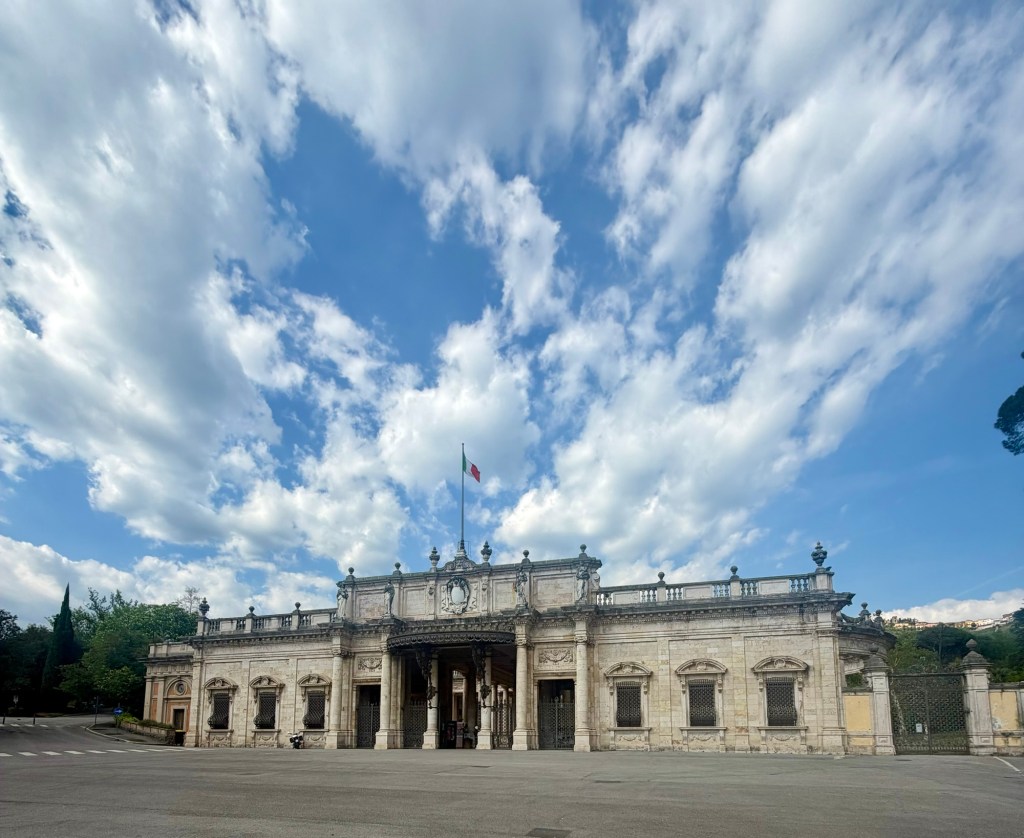
Water as an element of life and as the city’s raison d’être is celebrated by this monumental complex, which also enhances the historical importance of the thermal waters.
The curative properties of Montecatini’s waters were probably first discovered in
Roman times. Evidence of this comes from a number of small statues of pagan
idols found during excavation of the spring-crater at the Leopoldine Spa. The
statues were most likely votive offerings to the gods, cast into the spring in
thanks for a cure.
Clear and certain historical documentation on Montecatini dates
back to the 15th century, when the renowned physician and ‘father’ of Italian
medical hydrology, Ugolino Caccini, studied the characteristics of Italy’s
springs and published the results of his research in the treatise Balneorum
Italiae proprietatibus (1417). He described the therapeutic properties
of many Italian spring waters, in particular those at Montecatini. It was this
groundbreaking work, set out in a clear, authoritative fashion – still valid today
– that set the stage for the further, detailed observations of other distinguished
scholars.
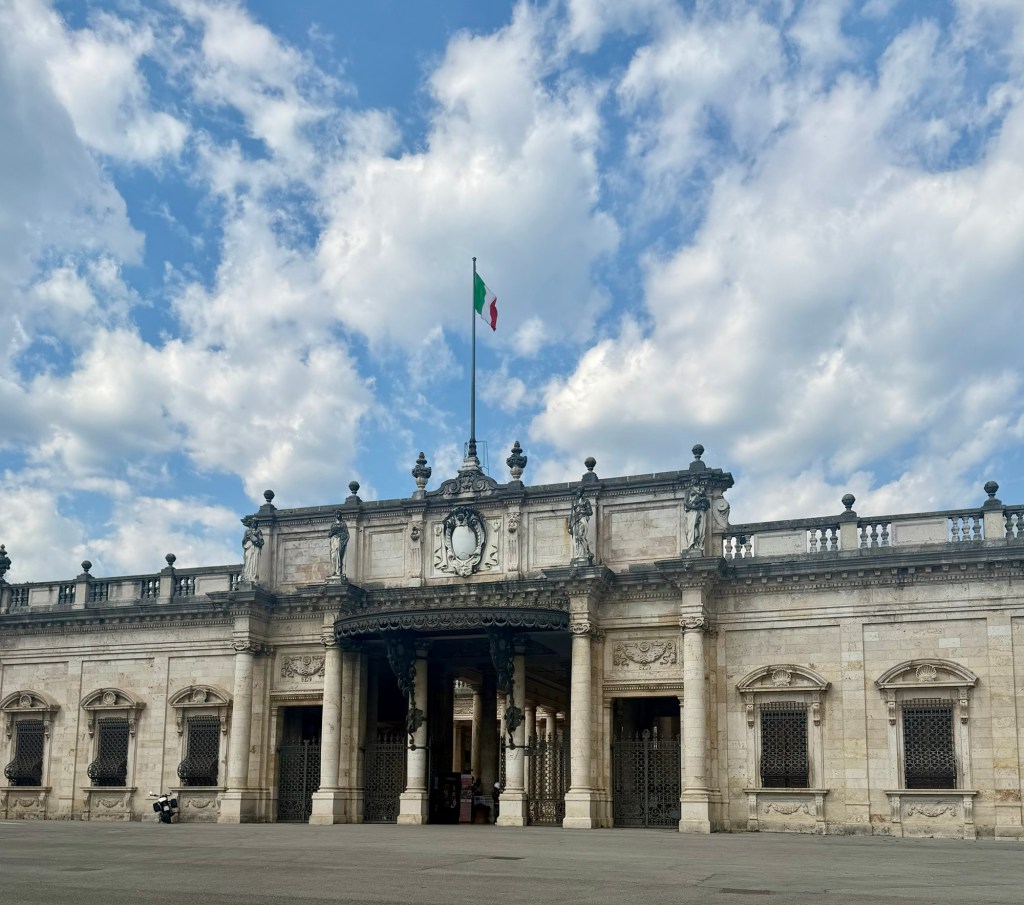
The work of channeling the spring waters and building the hydropathic
establishments was begun in 1700 by order of the Tuscan grand duke Leopold. Then, during the late 19th and
early 20th centuries, modern scientific methods came to be applied to studying
Montecatini’s waters, including contributions by many of Italy’s most prominent scholars.
More recently, Frugoni, Pisani, Bovet and especially Messini and his ‘school’
added strong impetus to the scientific research effort and are in large part
responsible for the wealth of wide-ranging clinical and experimental data now
available on Montecatini’s waters. Nowadays, a Scientific Advisory Committee,
made up of some of the most prestigious figures in Italian academe, conduct
research studies on the hydrotherapies, using the most up-to-date methods
and techniques available and publishing their results for the benefit of the
international medical and scientific community.
Montecatini spa waters spring from four sources, each of which boasts particular
therapeutic properties.
The waters of the Montecatini Spa all have a more or less salty taste. (Yes, I can attest to that. The water tastes awful!) The origins of this characteristic feature have been the object of much study and debate on the part of geologists and hydrologists alike.
The Montecatini springs arise from an aquifer, or water table, 60-80 meters below ground level, at which depth the water progressively takes up more and more mineral salts, as well as a full complement of the organic compounds
held within the earth’s crust for over 500 million years. As it rises towards the surface, the water also passes through deposits of limestone, jasper, calcareous sandstone and clay, which act as a true natural filter, purifying the waters and
eliminating all noxious contaminants. By the time it emerges at the surface, the water has therefore been thoroughly filtered: it is bacteriologically pure and ready to be drunk or bottled.
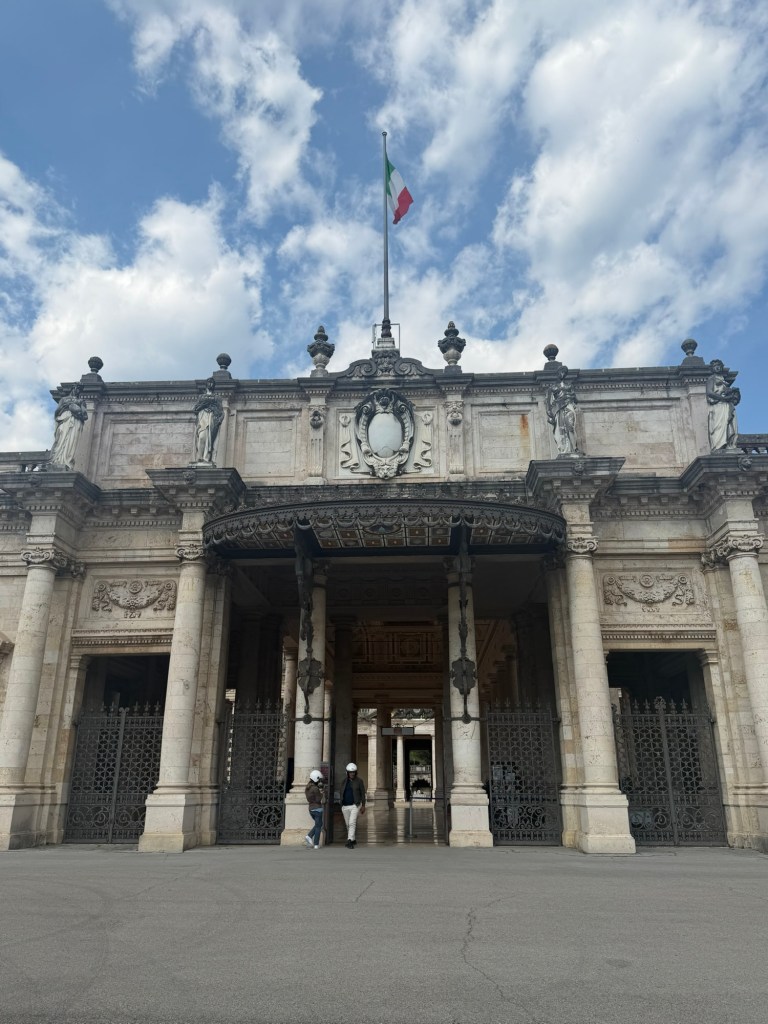
The largest and most famous of Tuscany’s spa towns, Montecatini Terme has been revered for its curative waters since at least the 16th century, when the first baths were built here. Two centuries later, aristocrats traveled here after the town opened of the first grand spas.
The 1800s saw an infinite number of kings and queens, politicians and businessmen, actors and dancers, cardinals and Presidents of the Republic walking along the Viale dei Bagni in Montecatini. Among the well-known names is Giuseppe Verdi, who often stayed in this area.
In 2021, Montecatini became part of the UNESCO World Heritage list as one of the Great Spa Towns of Europe. The transnational serial site “The Great Spa Towns of Europe” includes a group of 11 cities located in 7 European countries (Austria, Belgium, Czech Republic, France, Germany, Italy and the United Kingdom), considered by UNESCO as the most representative sites of the important European thermal activity from the 1700s until the 1930s.
The modern history of the area:
In 1339, the Valdinievole was conquered by the Florentine armies led by the Medici in Florence, but this did not bring rapid benefits to the Baths and the City of Montecatini.
Cosimo the Elder de’ Medici was the first to build a bridge-dam to cross the muddy waters of the area. The initiative brought great economic improvements, but it was detrimental to the inhabitants of the Valdinievole. In 1447, Florence approved a contribution to the restoration of the buildings belonging to the Baths. Because of its location, Montecatini was often a battlefield. In fact, in 1554, it was the center of the clash between the emperor Charles V, allied with Cosimo I, and the Sienese and French militias which, under the command of Pietro Strozzi, were stationed in the castle of Montecatini. As a result, Cosimo had the castle dismantled.
In 1529, the owner of the Baths of Montecatini had financial problems so he offered them to Cosimo, who would become Duke in 1532, and Grand Duke, thanks to his nomination by Pope Pius V, in 1569. Since the consort of Cosimo, Eleonora of Toledo, made frequent use of the waters of Montecatini, the Medici had the baths analyzed by their agents. However, the proposal did not go through. In 1538, the offer was made again to Francis I, son of Cosimo. However, he had to grant the use of the baths to the citizens of Montecatini. In those years, the population and the economy of the Valdinievole grew. However, between 1500 and 1756, there were repeated epidemics because of the flooding of the meadows, forests, fields, and pastures, due to the collapse of the bridge at Cappiano.
During their regency, the Medici profited from renting farms and fishing. As a result, there were lawsuits to defend the residents of the area and to enable them to pay for the reclamation of the padule (marshes) with the money they recovered.
Francesco I of Lorraine and Maria Teresa of Austria went to Florence in 1739 and stayed there for three months. They then entrusted the government to a Council of Regency that operated until 1765. The Regency tried to resolve promptly the problem of reclaiming the marshes, but the whole thing was more difficult than expected. In those years, epidemics, fevers and famines again appeared. To solve the problem it was necessary to settle the land near the padule by channeling the springs that were stagnating in the Valdinievole and invigorating the agriculture and livestock. In 1765, with the death of Francesco, Pietro Leopoldo assumed the title of Grand Duke, as his mother, Maria Teresa of Austria, had scrupulously prepared him for the responsibilities of reigning. Unfortunately, as a second son, he only inherited the throne in Vienna during the last two years of his life (1790–92). In 1765 he arrived in Tuscany and immediately proved himself open to innovation. During his regency he reformed governance from Palazzo Pitti into towards a far more progressive government than his predecessors. He was also an innovator in the management of the economy, public administration, health and science. He went several times to Montecatini to understand first-hand the problems of the Valdinievole and as a result the story of the baths began with the Grand Duke Leopold of Tuscany. He had the territory inspected by scholars and tried to make the just and reasonable decisions for it. The Grand Duke went to Montecatini in 1772 and ordered the demolition of the locks and the weirs of Ponte a Cappiano. The channeling of the thermo-mineral waters and the restoration of the city began. Pietro Leopoldo returned many times, even with his family, to Montecatini to check the state of the works. On 1 March 1790 he left Florence to return for Vienna to succeed his brother Josef who had died.
Montecatini Terme in the 19th century
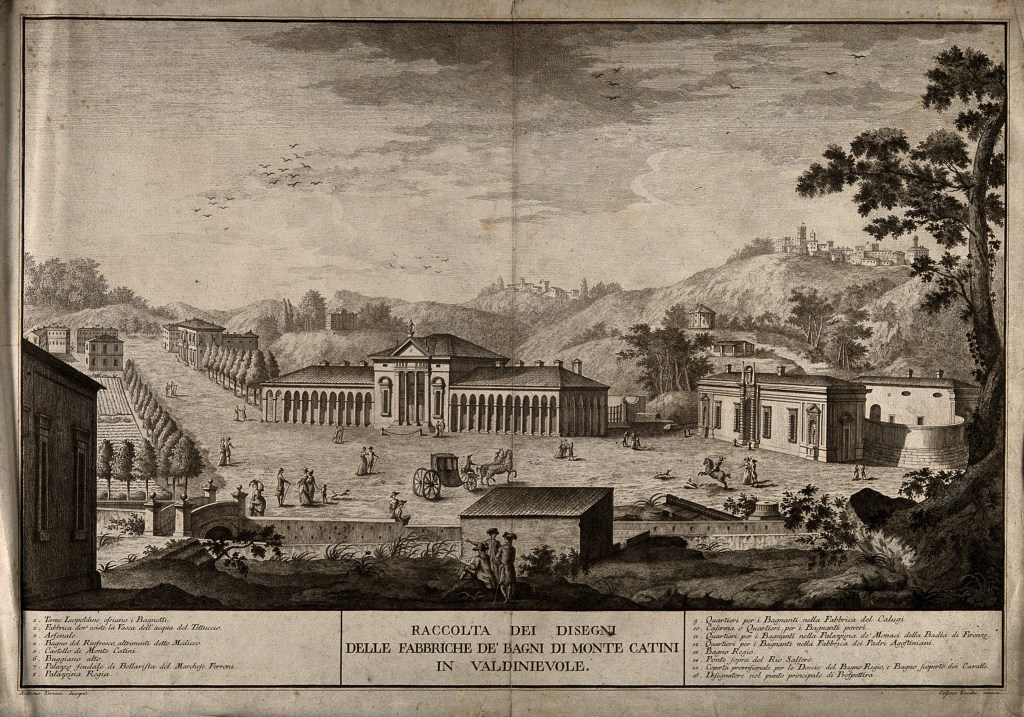
Credit: Wellcome Library, London. Wellcome Images
images@wellcome.ac.uk
http://wellcomeimages.org
Montecatina Terme, Tuscany, Italy. Etching by C. Zocchi after A. Terreni.
By: Antonio Terreniafter: Cosimo ZocchiPublished: –
Copyrighted work available under Creative Commons Attribution only licence CC BY 4.0 http://creativecommons.org/licenses/by/4.0/
The third Habsburg-Lorraine Grand Duke was Ferdinando III who came to rule when only 21 years old. He wavered in his support for Napoleonic rule, and by 1801 faced exile to Austria. Restored to rule on 10 June 1817, Ferdinando decreed the Bagni di Montecatini complex was granted to the community and they were given money to keep them efficient. On 18 June 1818 the baths were put under the management of a committee up of esteemed people of the time, including Giuseppe Giusti’s father. With this new administration of the baths there were innovations and improvements. When Ferdinando III died, he was succeeded by Leopold II who is remembered for the reclamation work in the Maremma and for the construction of railways and roads. Leopold II also collaborated in the construction of the Locanda Maggiore. The Lorraine period concluded with the Risorgimento and the end of the Grand Duchy occurred in 1859. In 1860 Montecatini came under the Province of Lucca with its headquarters in Montecatini Alto. In 1889, thanks to an international medical congress in Florence, the city commenced activity in the field of thermal medicine. In the same year, the urban project proposed and initiated by Pietro Leopoldo was extended and improved.
Terme Excelsior
On 16 June 1905 Montecatini Alto and Bagni di Montecatini became autonomous municipal entities. On 28 October 1928 the name of the Bagni di Montecatini was changed to Montecatini Terme. In 1928 the municipality of Montecatini, together with all the other municipalities of the Valdinievole, passed from the province of Lucca to the newly formed province of Pistoia. Between 1904 and 1915 the Torretta and Excelsior establishments were born. Giovannozzi restored the Leopoldine and Tettuccio baths between 1919 and 1928. Mussolini also went to the establishments to see how the funds given by the State for their restoration had been spent and entrusted their administration to Schweiger.
In 1958 the State reappropriated the baths, symbolizing a second phase with the reconstruction of the Redi and Excelsior baths. Montecatini in those years was frequented by important persons; nobility and people from the worlds of entertainment and politics. In 1970 the baths remained open all year, but from that moment on there has been a slow decline until today, when the fashion for visiting the spa has clearly diminished. Efforts to relaunch the baths began in the 1990s and the City succeeded in doing this in 2000.
The emblem of the municipality is regulated by the Royal Decree of 12 August 1908. It is a truncated shield: the first version is of Montecatini which is blue and mounted on six small Italian hills, supporting two gold lions surrounded by an oval silver shield laden with a red lily, facing each other and holding a red basin; in the second version everything is handled in silver and blue. The motto, also present in the coat of arms and in the banner states: «Salus» (Latin: Health).
There are 11 thermal springs in the area around Montecatini Terme, with temperatures ranging from 24 to 33.4 degrees C. Of those, six have been used for their supposed therapeutic qualities. These springs all come from the same source: an aquifer fed by meteoric waters roughly 60–80 meters below ground level. These waters get their minerals from being in contact with Triassic-period strata of calcareous stone, travertine, jasper and limestone.
Thermal Baths
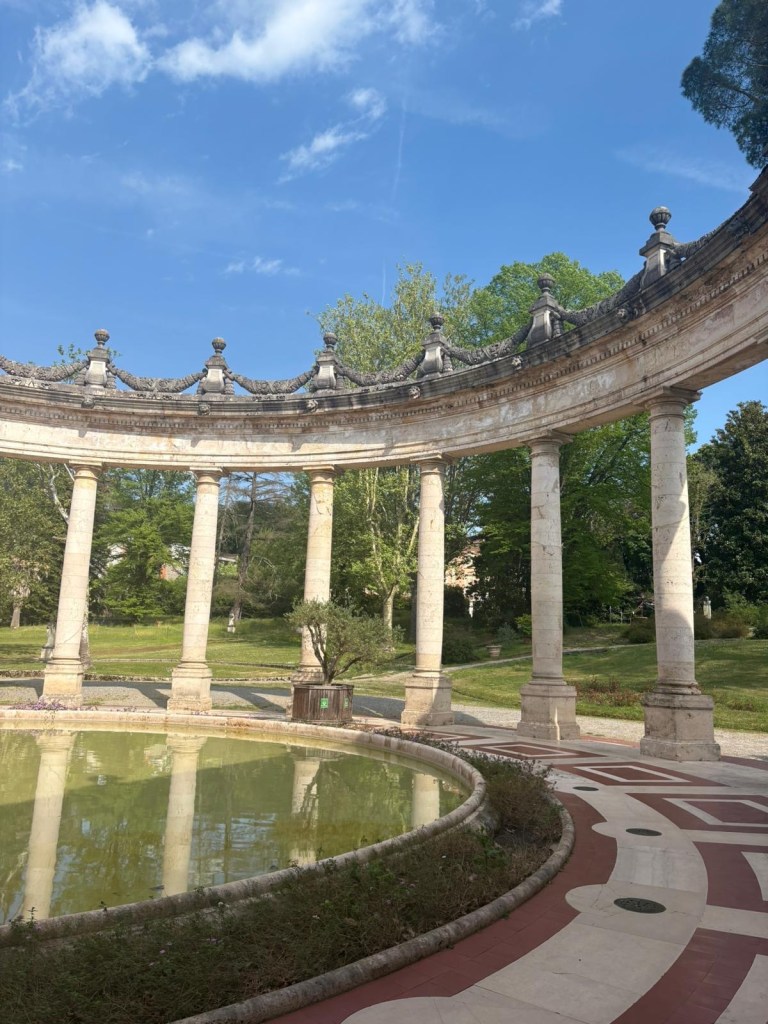
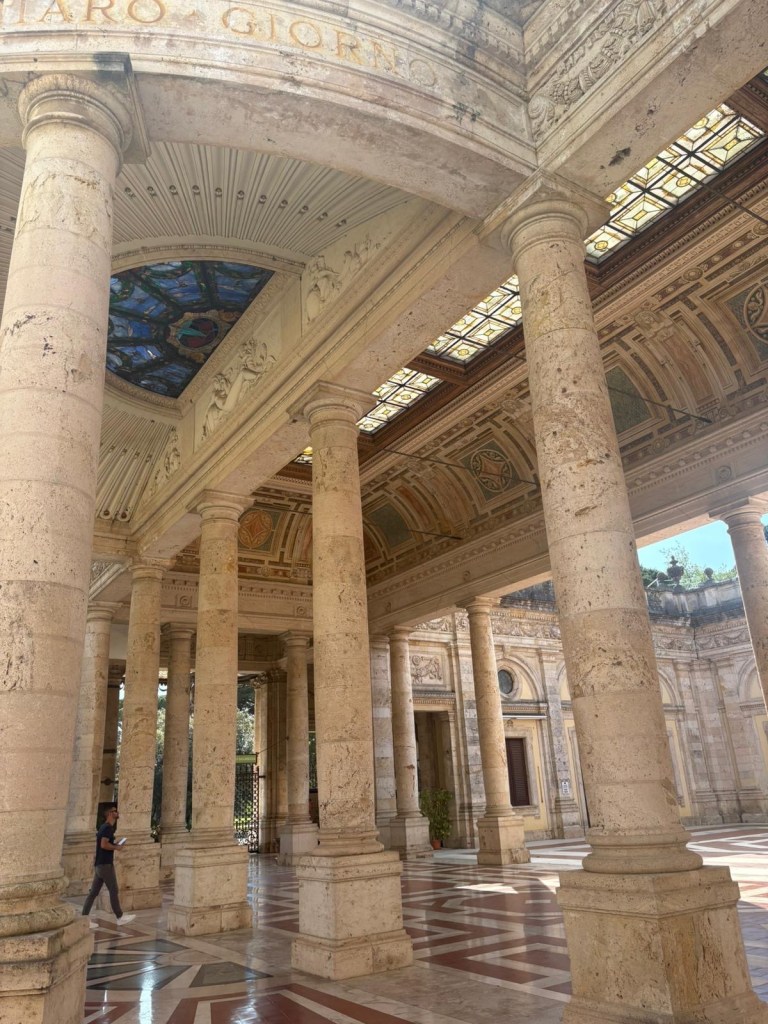
Magnificent Neo-classical buildings are arranged around the beautiful and charming thermal park.
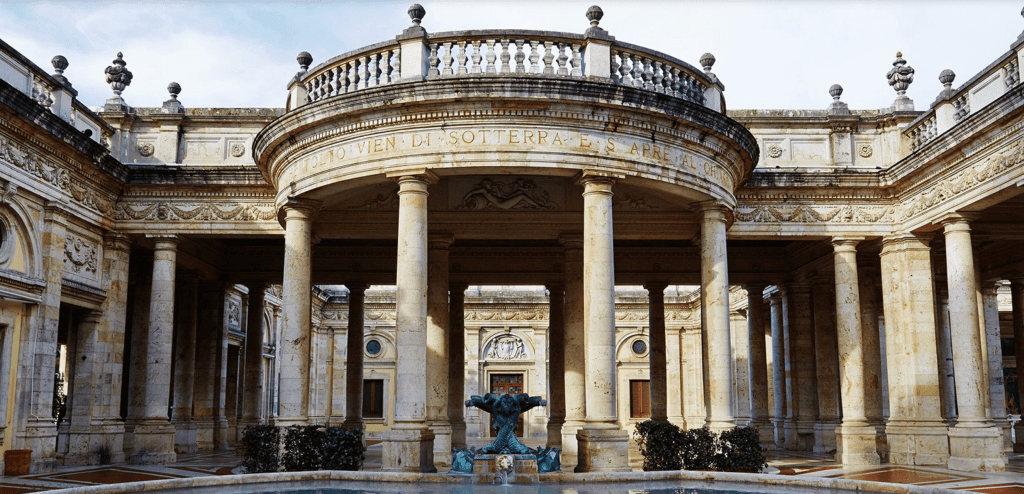
The Terme Tettuccio above
The Terme Tamerici
Montecatini-Terme is home to ten separate thermal water springs. The water from each spring is accessible from a series of buildings and estates that bear the name of the spring they house. These are:
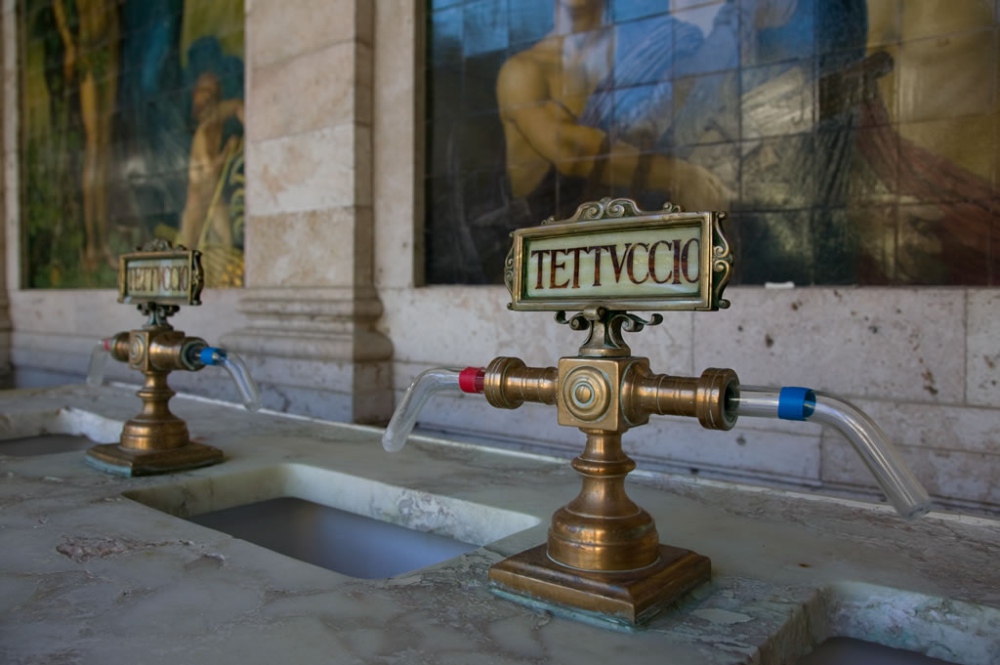
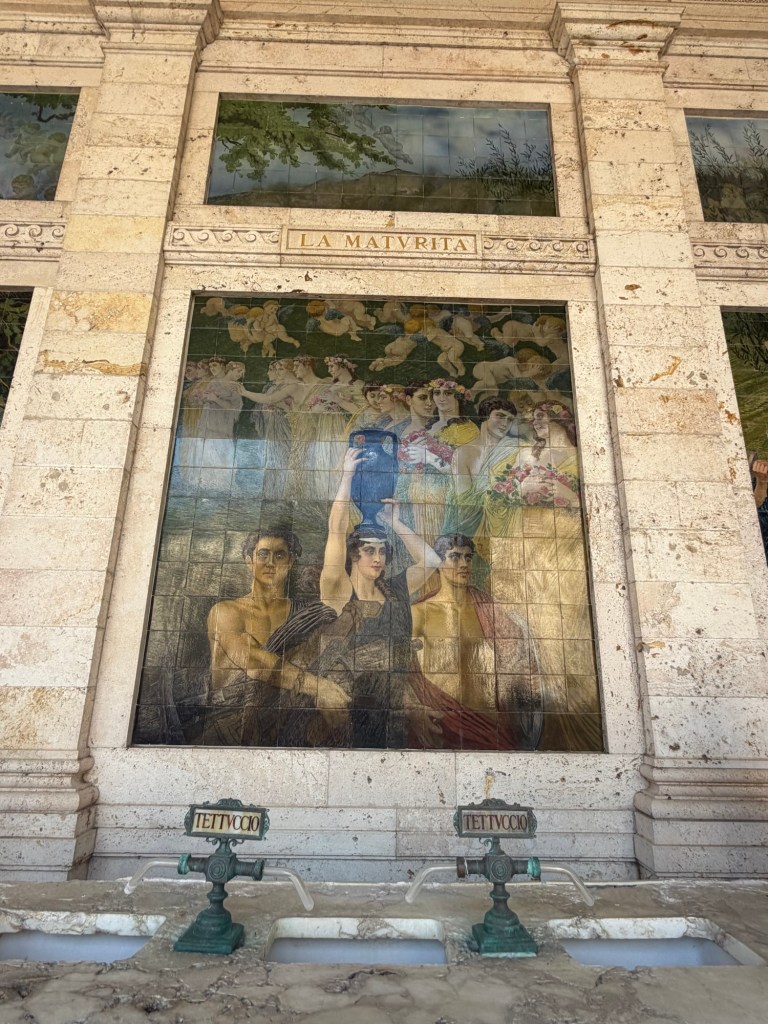
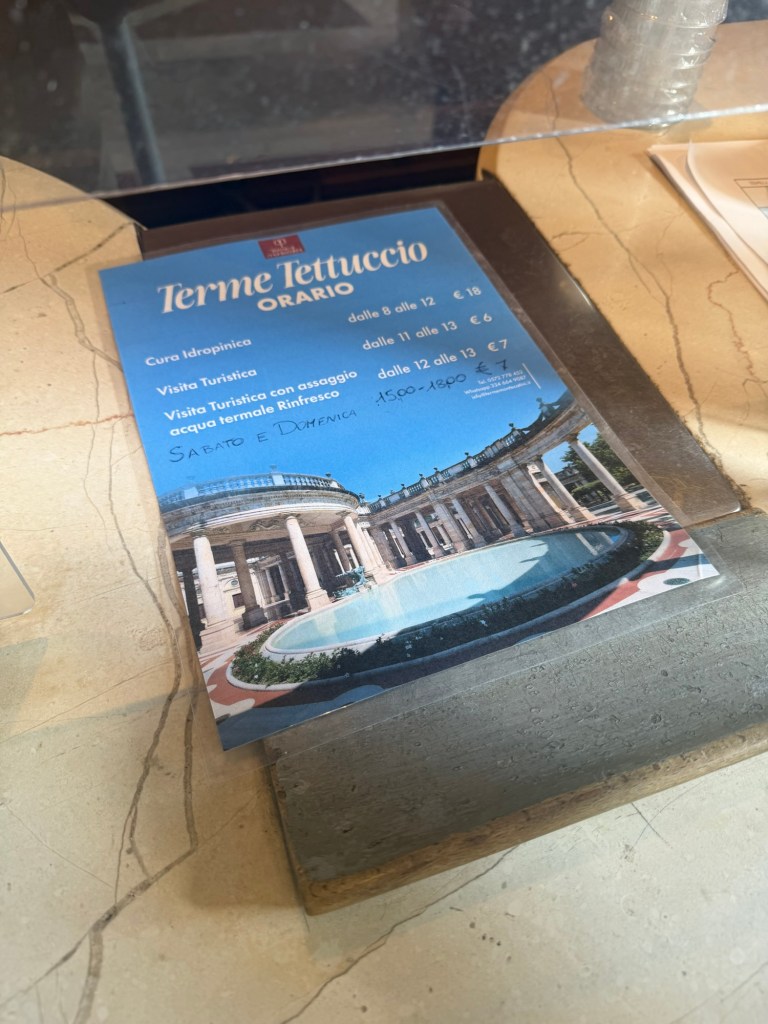
Terme Tettuccio (1928), the largest of the city’s thermal establishments, laid out in an open-air configuration. The first complex of pavilions, as well as part of the manicured garden they sit in, were designed by Gaspare Maria Paoletti between 1779 and 1781. In 1929, part of the Tettuccio estate was reworked drawing inspiration from the late Renaissance period.
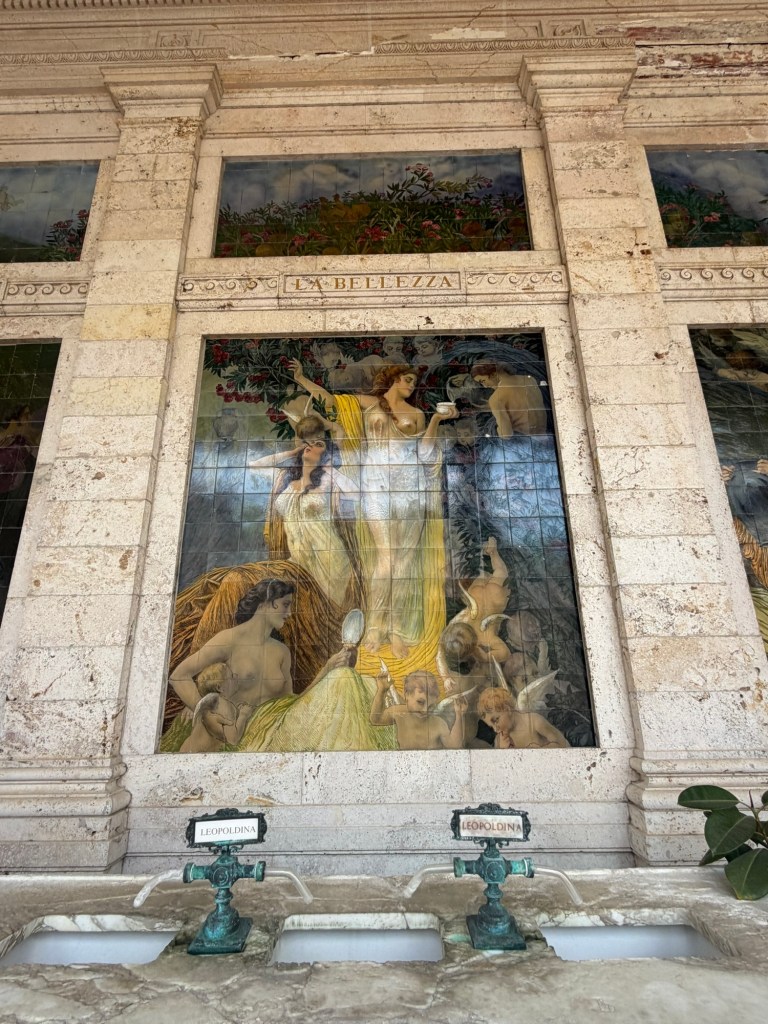
Terme Leopoldine (1926), named after Grand Duke Leopold II of Habsburg-Lorraine, first opened in 1775. The current complex dates back to the restoration carried out between 1919 and 1926. They currently remain closed to the general public.
Terme Torretta (1928) take their name from the river that flows beneath them. Built from 1829 onwards by Count Baldino Baldini, the buildings underwent an important restoration operation between 1925 and 1928.
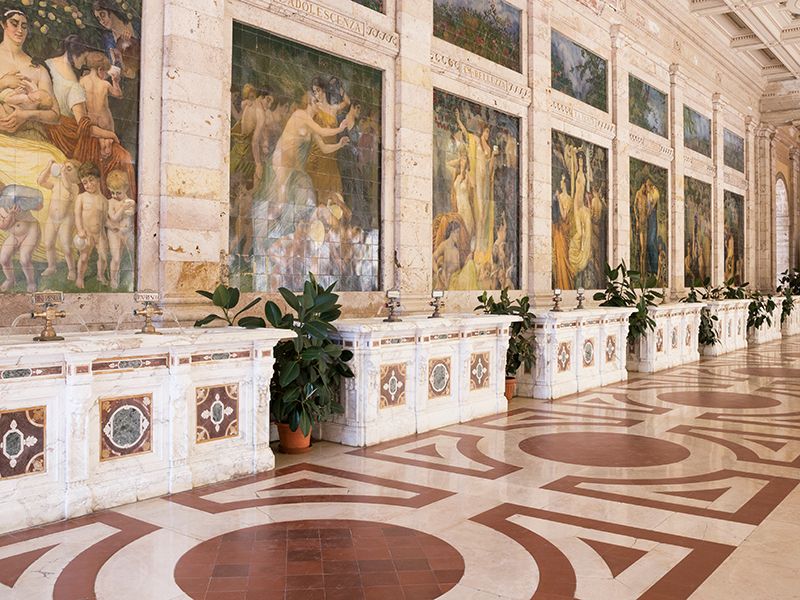
The four waters of Montecatini, which are located at a depth of 60-80 meters, are Leopoldina, Tettuccio, Regina and Rinfresco. Th water comes to the surface full of mineral salts and precious elements, pure and ready to be tasted or, if you can do it, drunk.