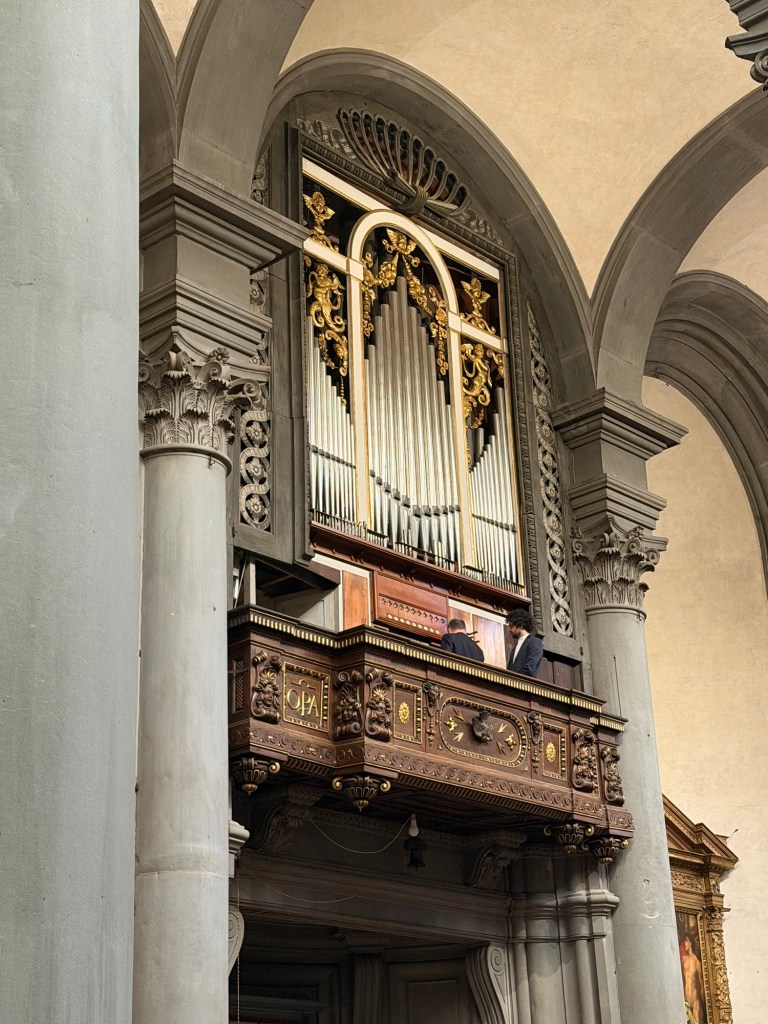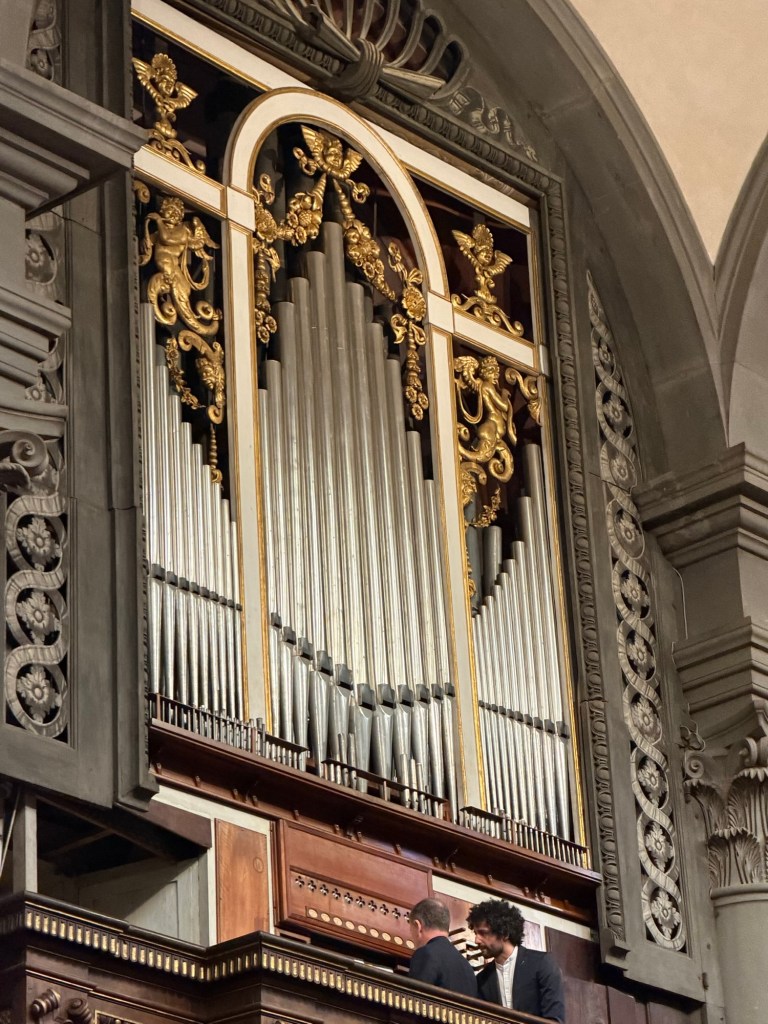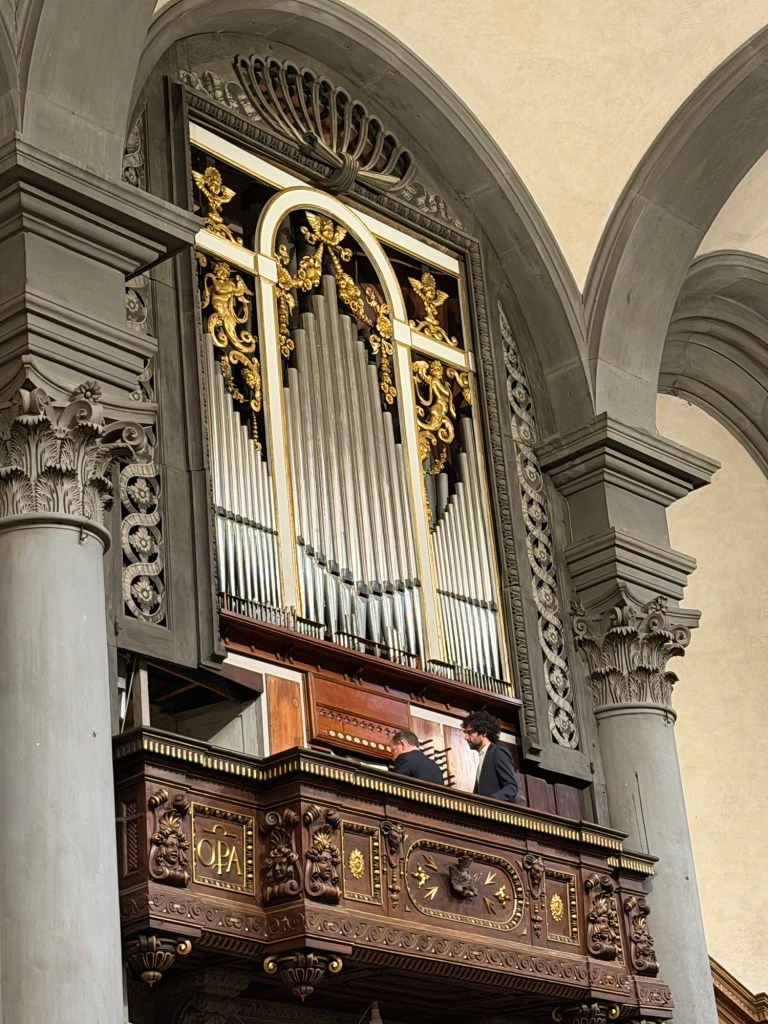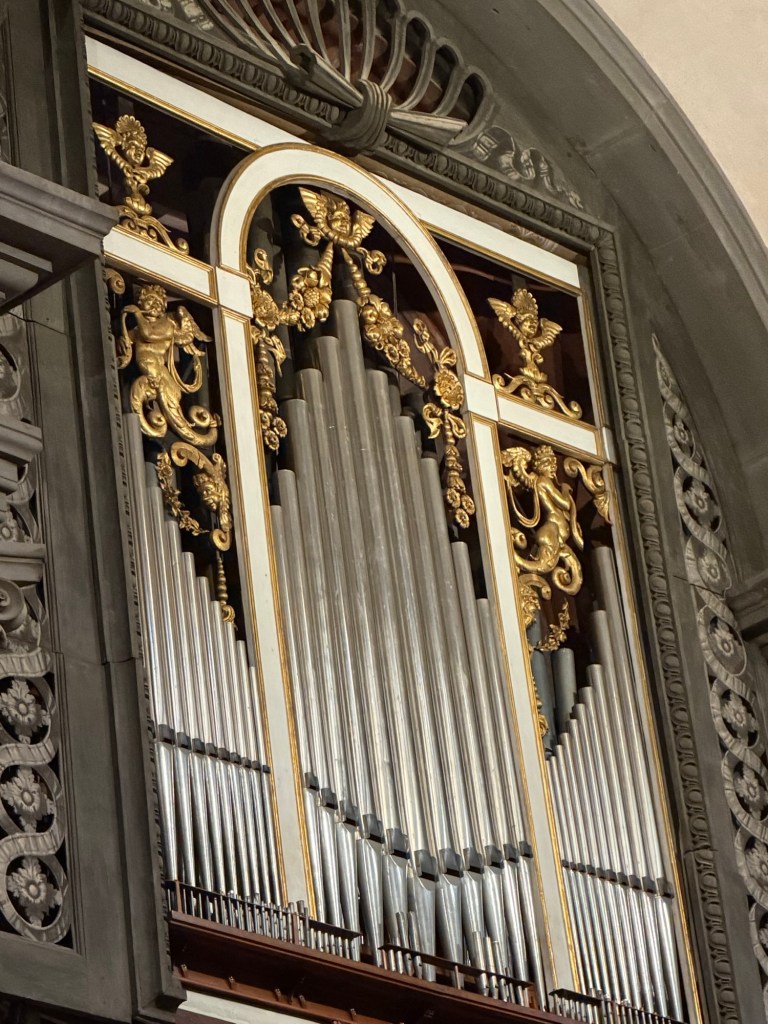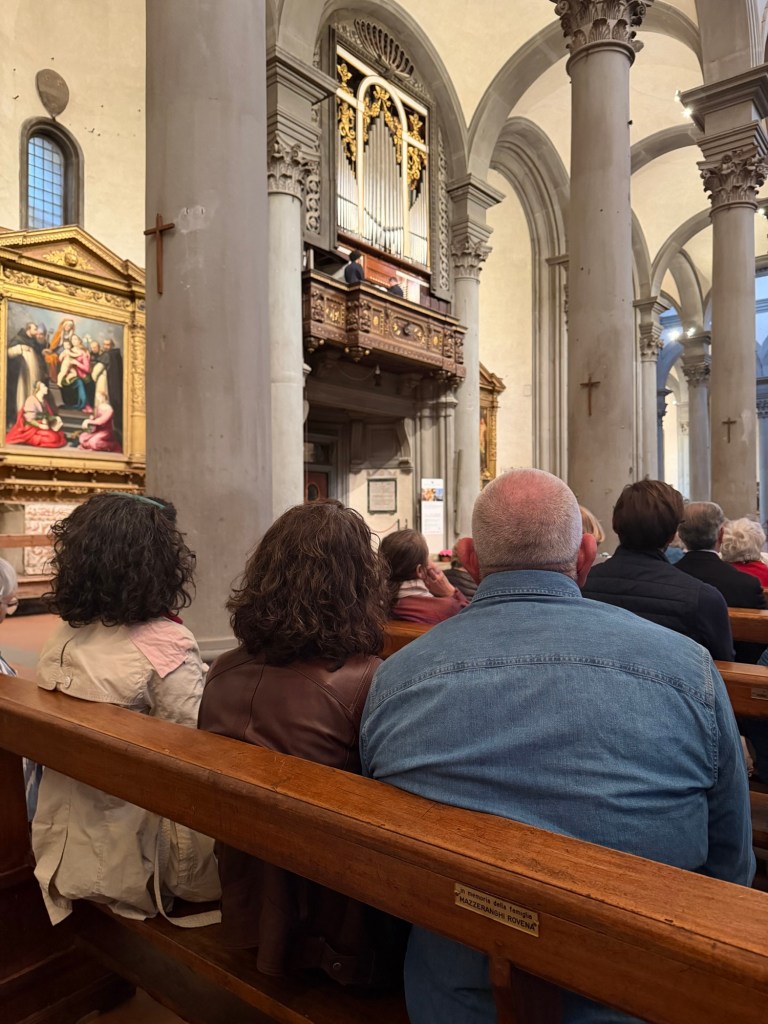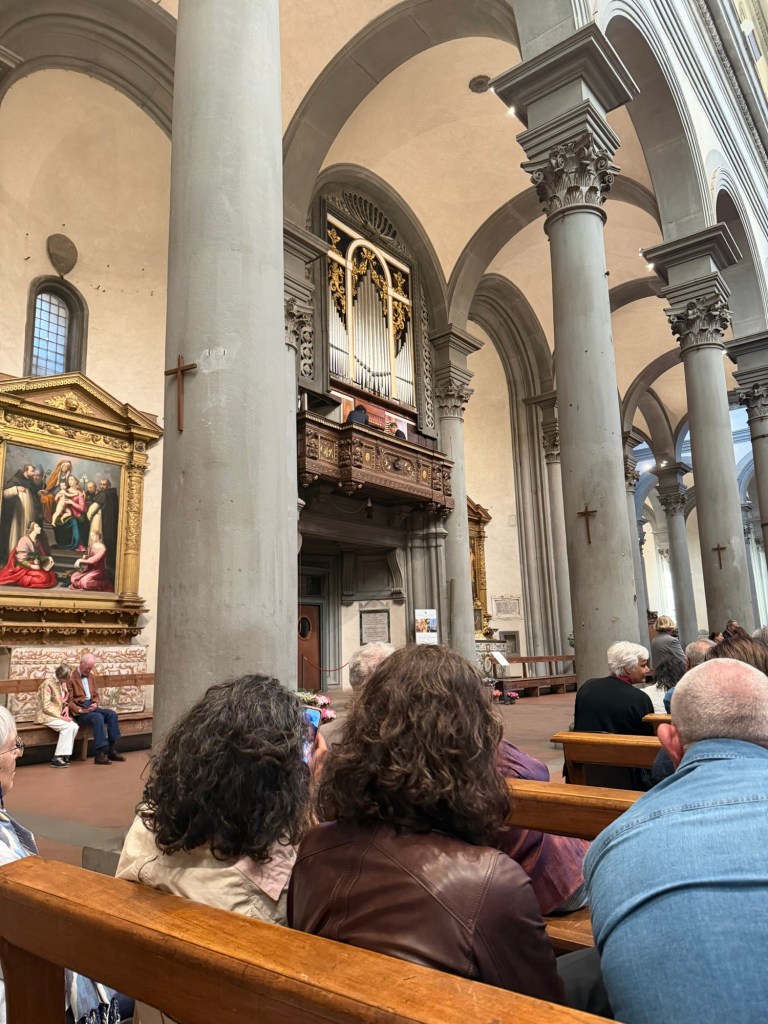
Recently I had the opportunity to experience a beautiful concert of organ music, such as I had never heard before. The musical program was written to show off the wide range of sounds this particular organ can emit, and it was as surprising to me as it was enjoyable.
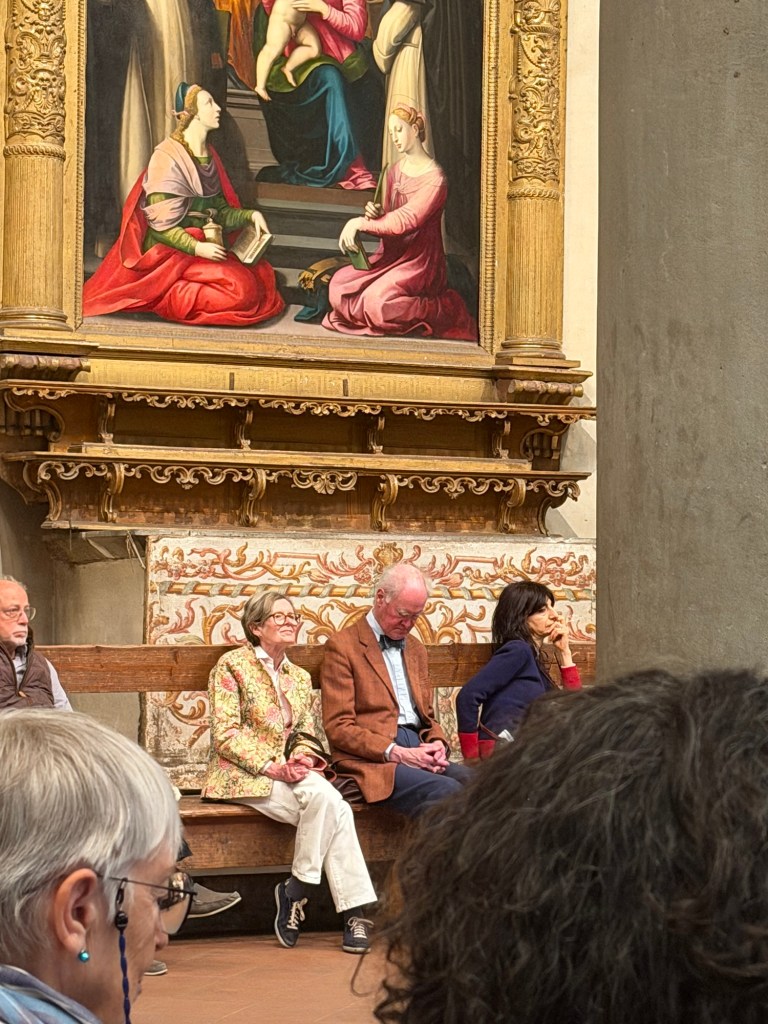
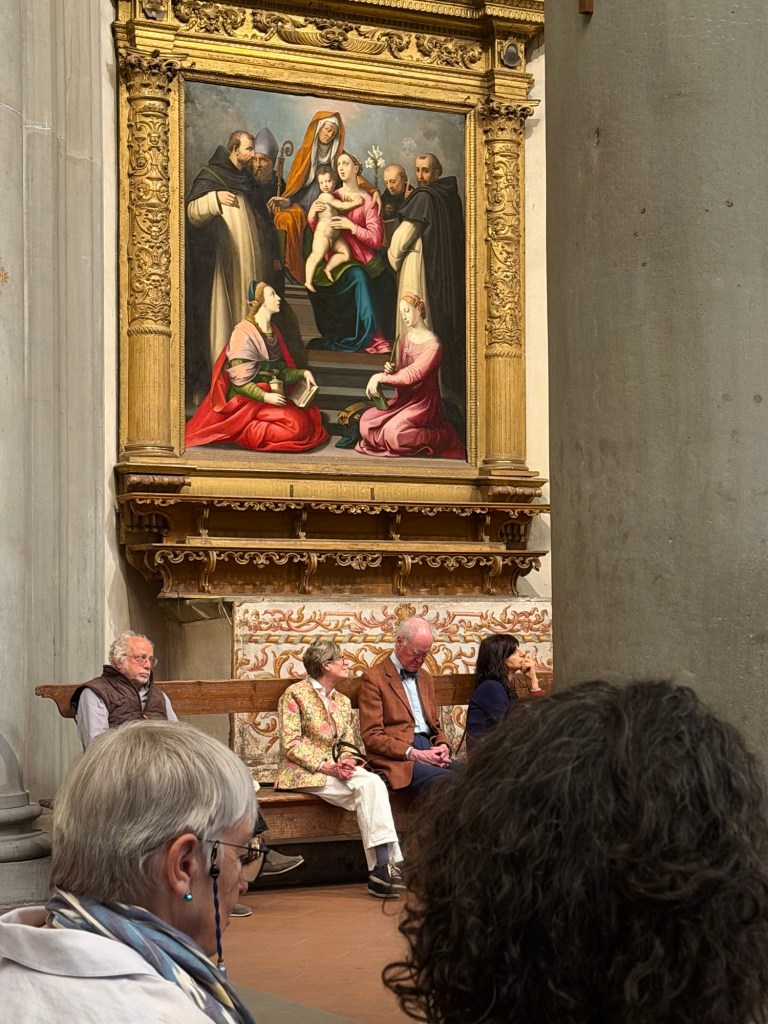
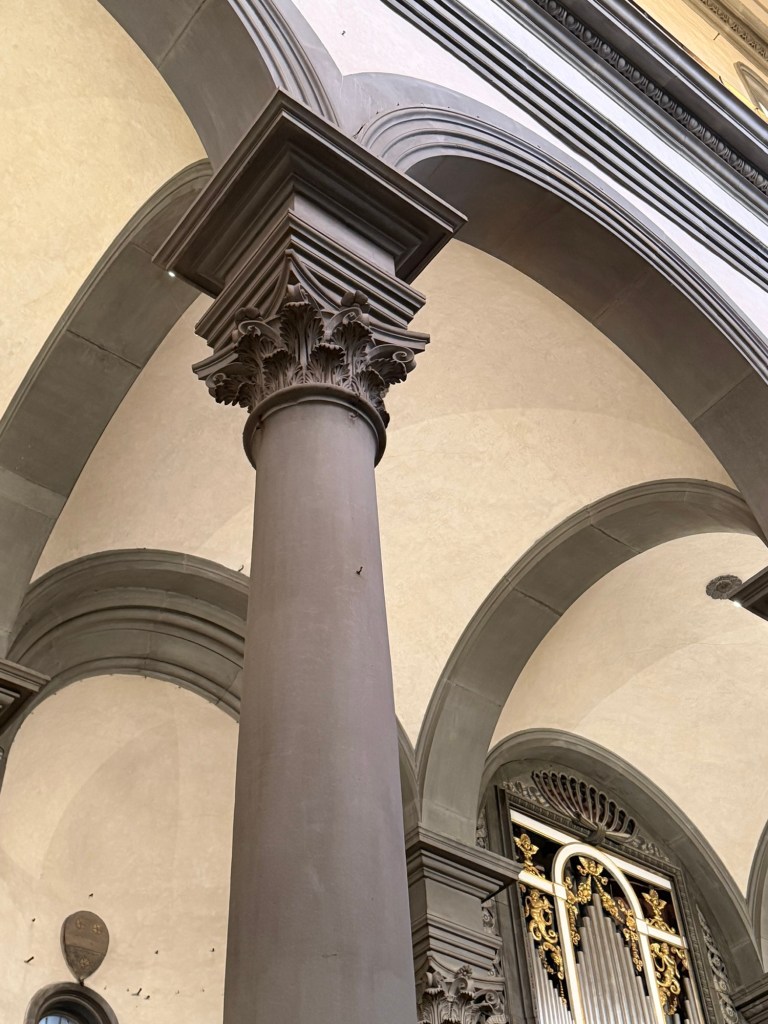
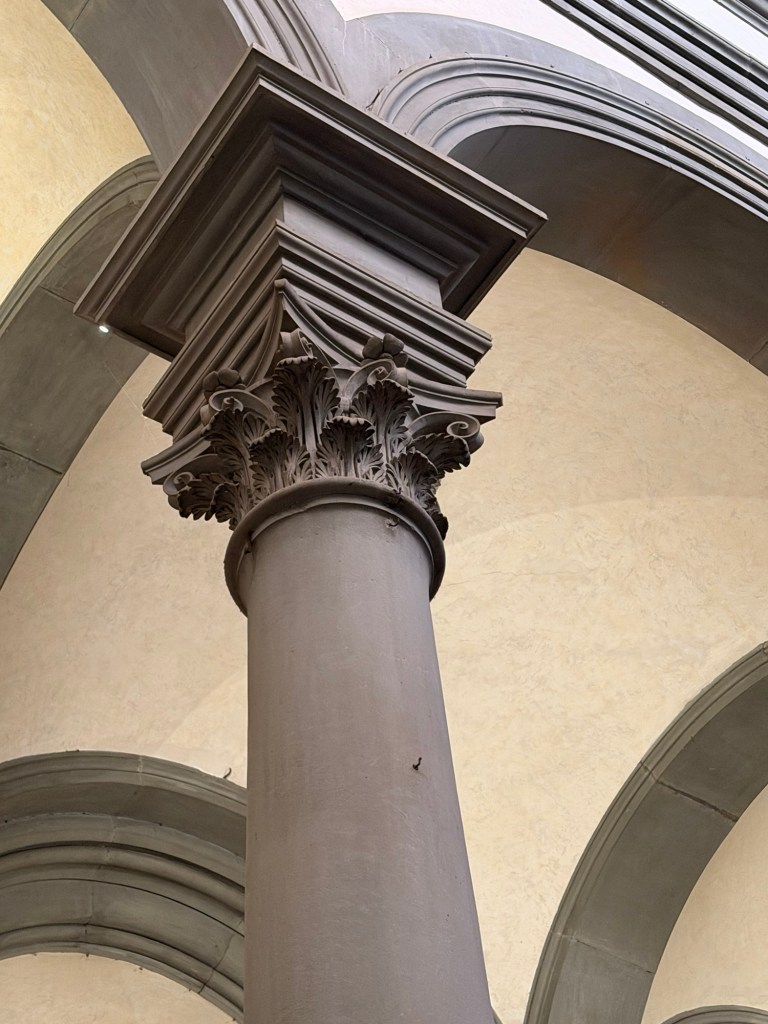
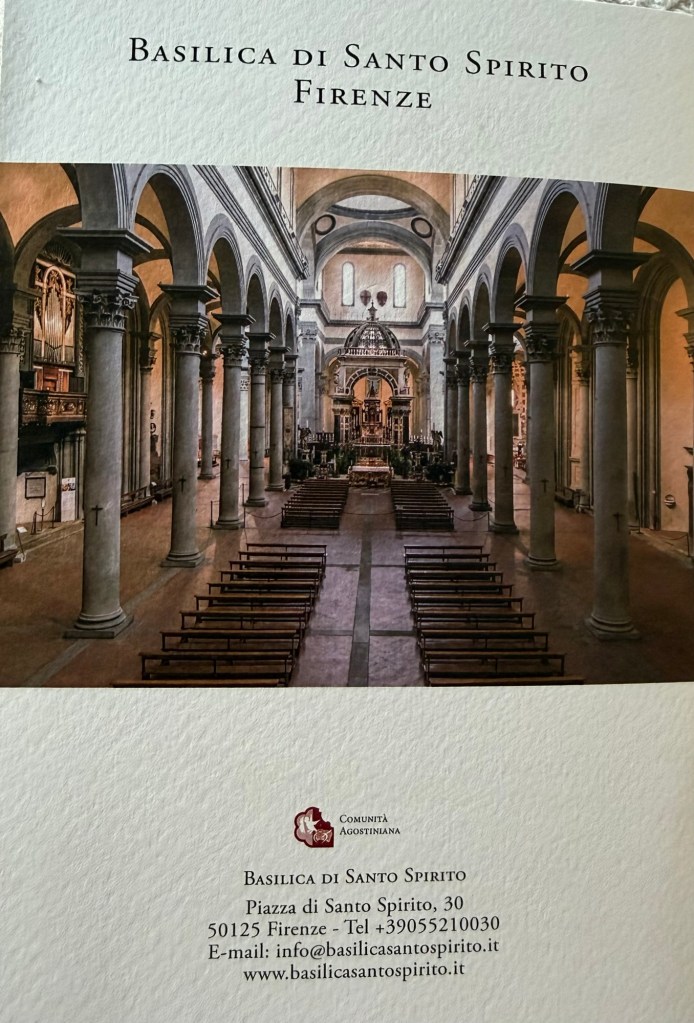
Not to mention the opportunity to sit for an hour or so, serenaded, in a magnificent Renaissance church in Florence, and the chance to study slowly and with purpose, many of the architectural details that are so easily missed on a visit.
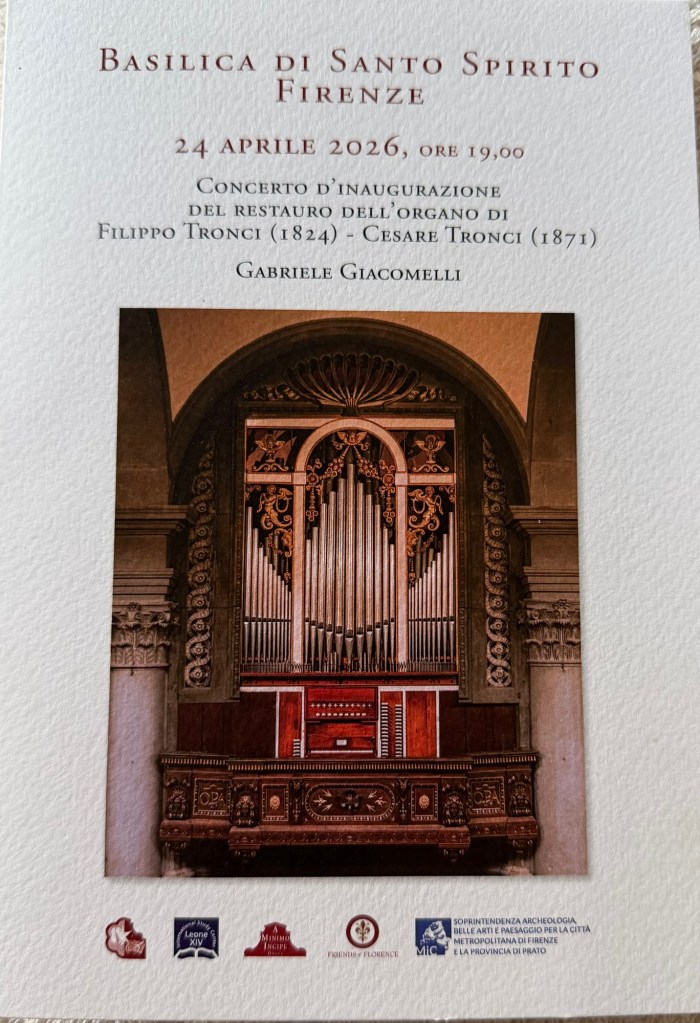
Here is the program for the evening.
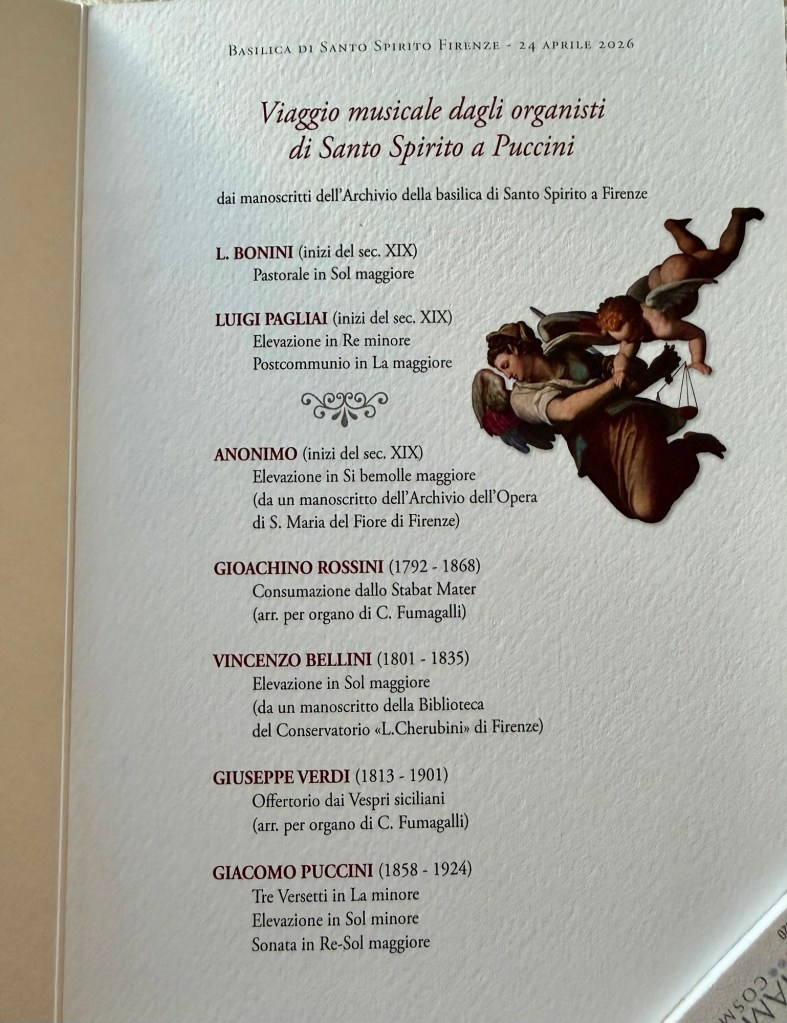
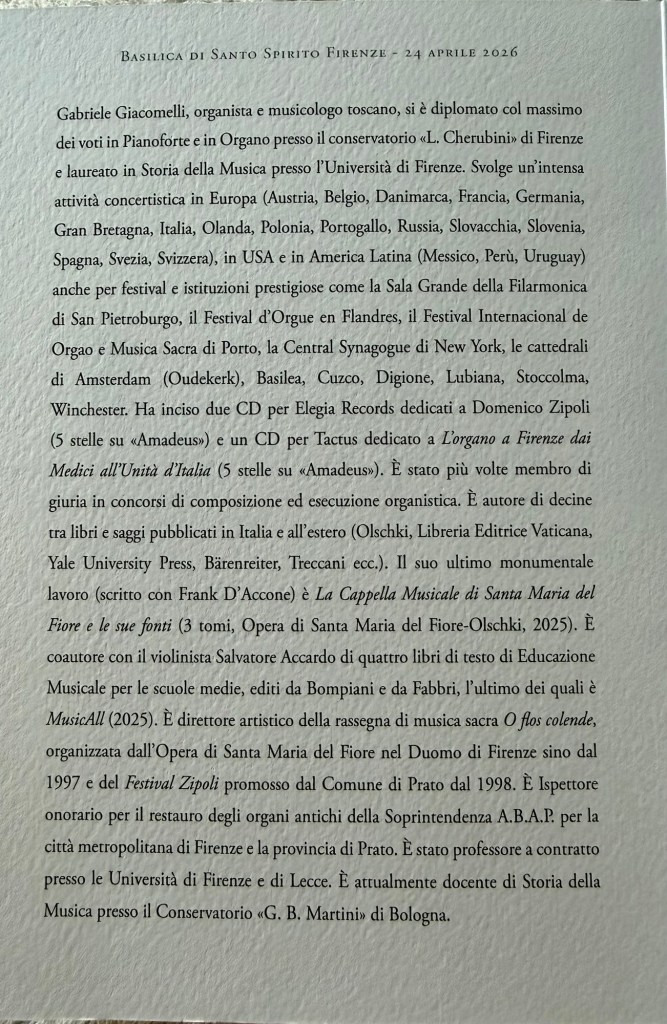
How did this opportunity come to be? The Friends of Florence are again to thank.
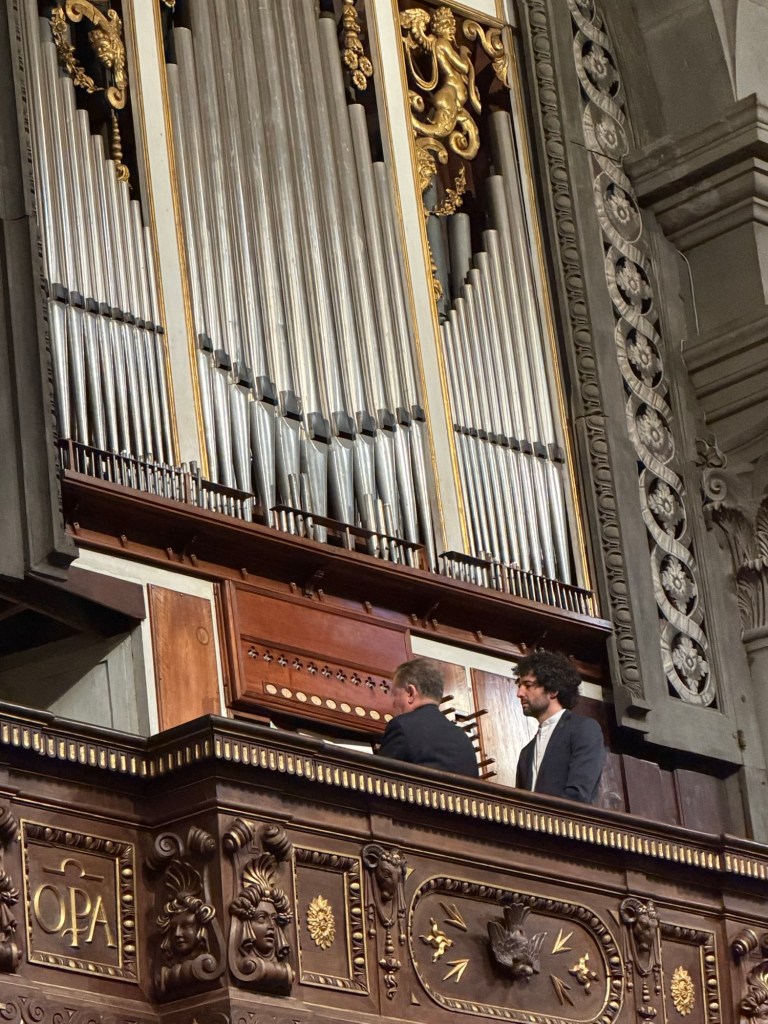
The historic Tronci organ inside the Basilica of Santo Spirito in Florence sounds again after more than six decades of silence, following a complex restoration made possible by the support of the non-profit foundation Friends of Florence.
The instrument and its decorative structure — including the carved wooden choir loft (cantoria) and case — were formally presented on 23 April 2026, after an intervention carried out under the supervision of Italy’s heritage authority.
The project involved both the musical instrument and its elaborate decorative setting, restoring not only the physical integrity of the structure but also its original function within the church. The organ, rebuilt in 1824 by the Tronci family of organ makers and later expanded in the 19th century, is a large Romantic-era instrument with 68 keys and 38 stops, designed to reproduce orchestral sounds ranging from trumpets to clarinets and bells.
Restoration works were carried out by the firm Chichi Organi for the instrument itself, while the decorative elements were restored by a team led by conservator Sandra Pucci.
Beyond technical repairs, the intervention also revealed the original appearance of the wooden choir loft. Layers of later grey paint were removed, bringing back the walnut surface and gilded details, and restoring the overall aesthetic coherence of the structure.
The restoration highlights once again the role of Friends of Florence, a US-based foundation that funds conservation projects across the city’s cultural heritage. In Santo Spirito alone, the organization has supported multiple interventions over the years, including works in the sacristy, major altarpieces and sculptures. With the organ project, the foundation has contributed not only to preserving an artwork, but also to reactivating a key element of the basilica’s liturgical and cultural life.
More broadly, the project reflects the foundation’s approach: combining conservation with public accessibility and long-term use, ensuring that restored works remain part of the living fabric of the city rather than static museum pieces.