The Circus Flaminius was a large, circular area in ancient Rome, located in the southern end of the Campus Martius near the Tiber River. It contained a small race-track used for games, and various other buildings and monuments. It was “built”, or sectioned off, by Gaius Flaminius in 221 BC. After Augustus divided the city into 14 administrative regions, the Circus Flaminius gave its name to Regio IX, which encompassed the Circus and all of the Campus Martius west of the Via Lata.
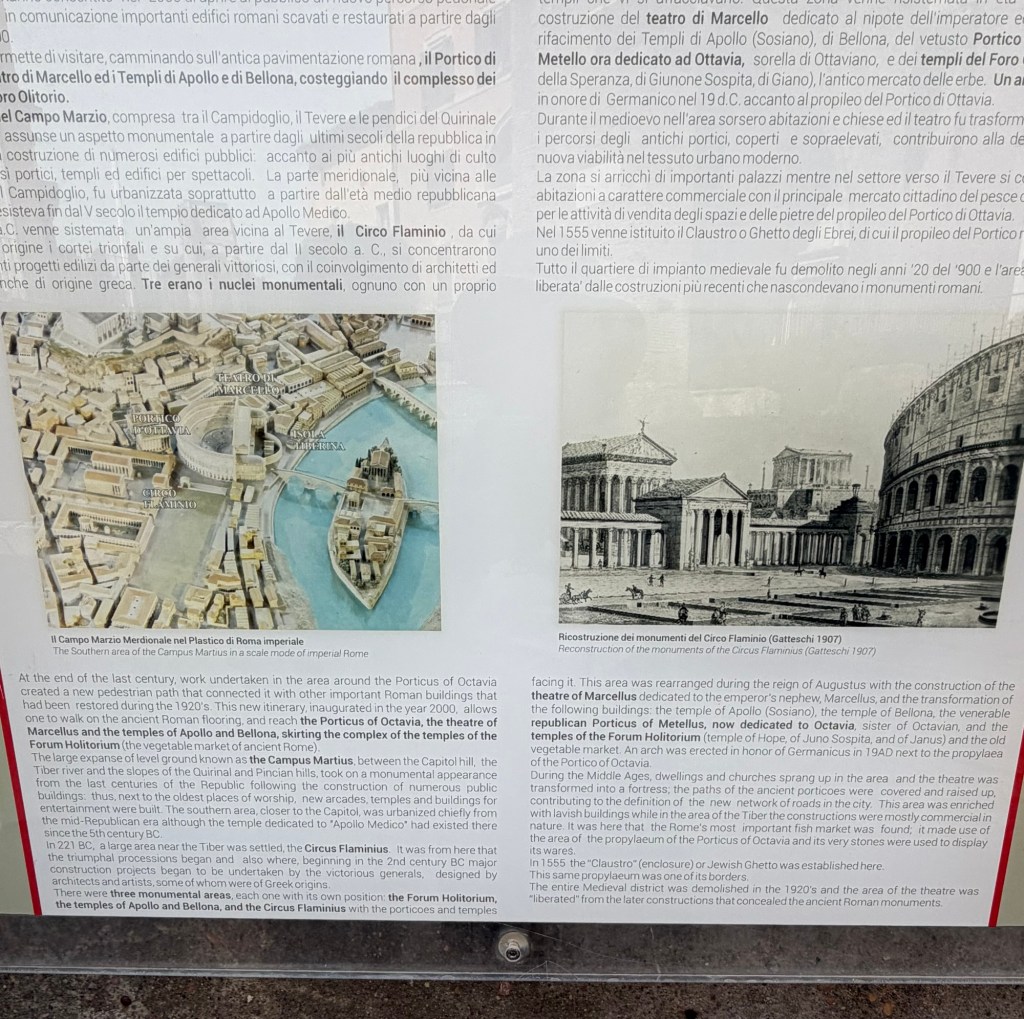

During the 2nd century BC, this broad space was encroached upon by buildings and monuments. The circus had no permanent seating, nor were there any permanent structures to mark the perimeter of the race track. By the early 3rd century AD, the only open space that remained was a small piazza in the center, no more than 300 meters long, where the ludi (public games) had always been held.
There were many structures in the vicinity of the circus (“in circo Flaminio”). The Temple of Pietas lay on the edge of the Forum Holitorium to the southeast. The Temple of Mars was situated in the northwest. It is estimated that by 220 BC there were six temples, including one to Apollo, in the Flaminian Fields. A theatre dedicated to Apollo was also set up in 179 BC, close to the temple of Apollo, and later rebuilt under the dictatorship of Caesar. The rebuilding of the theatre necessitated shortening the Circus itself, and required that several temples be destroyed.
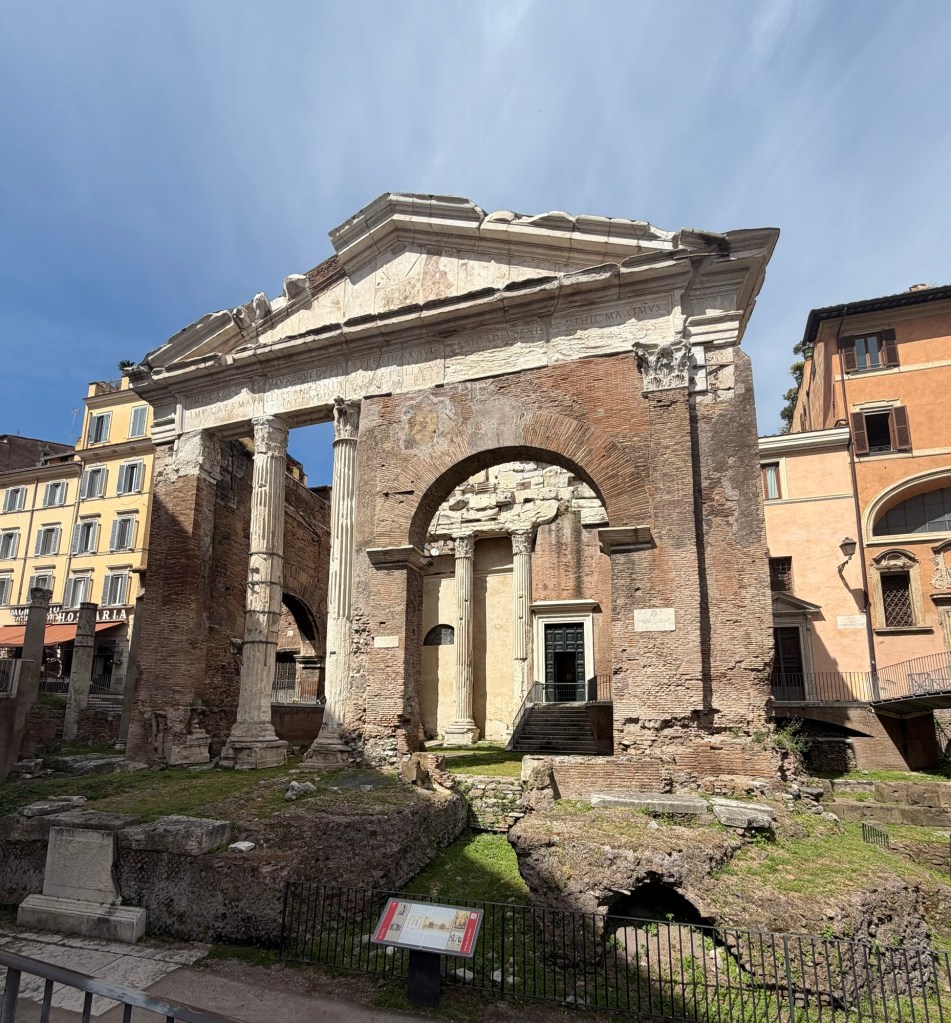
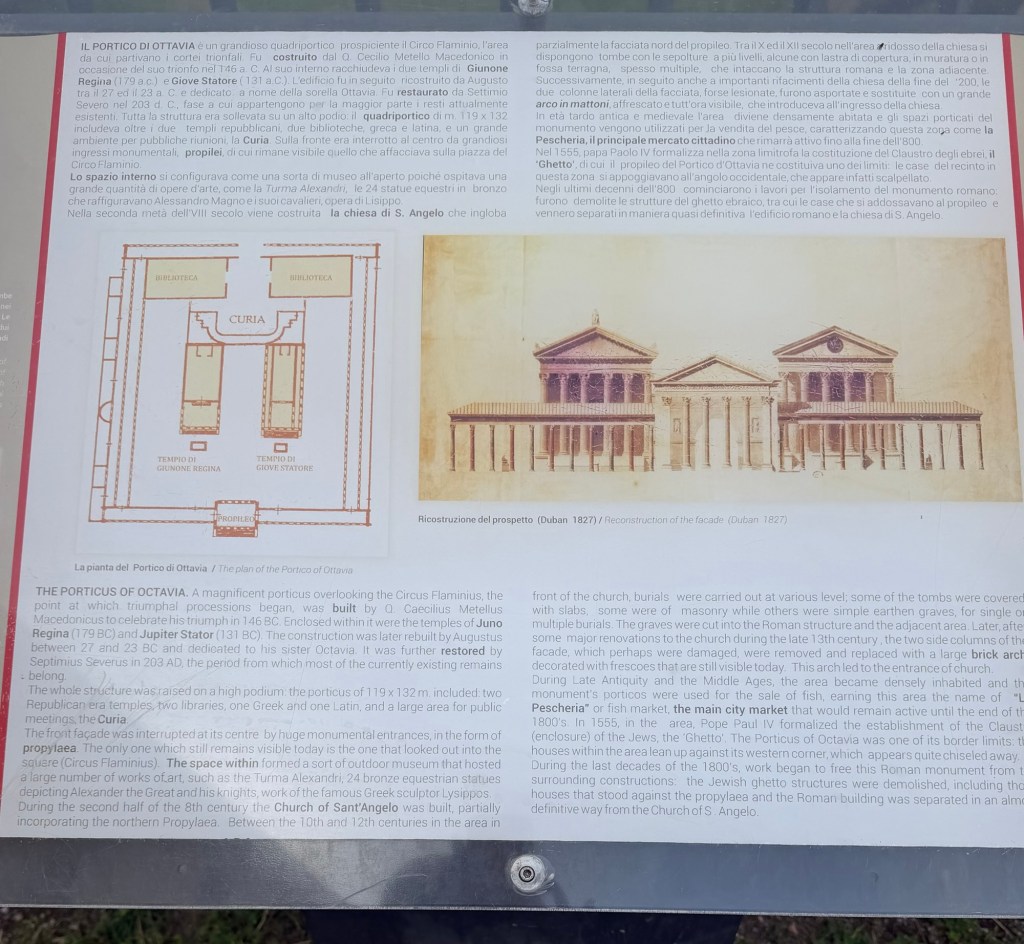
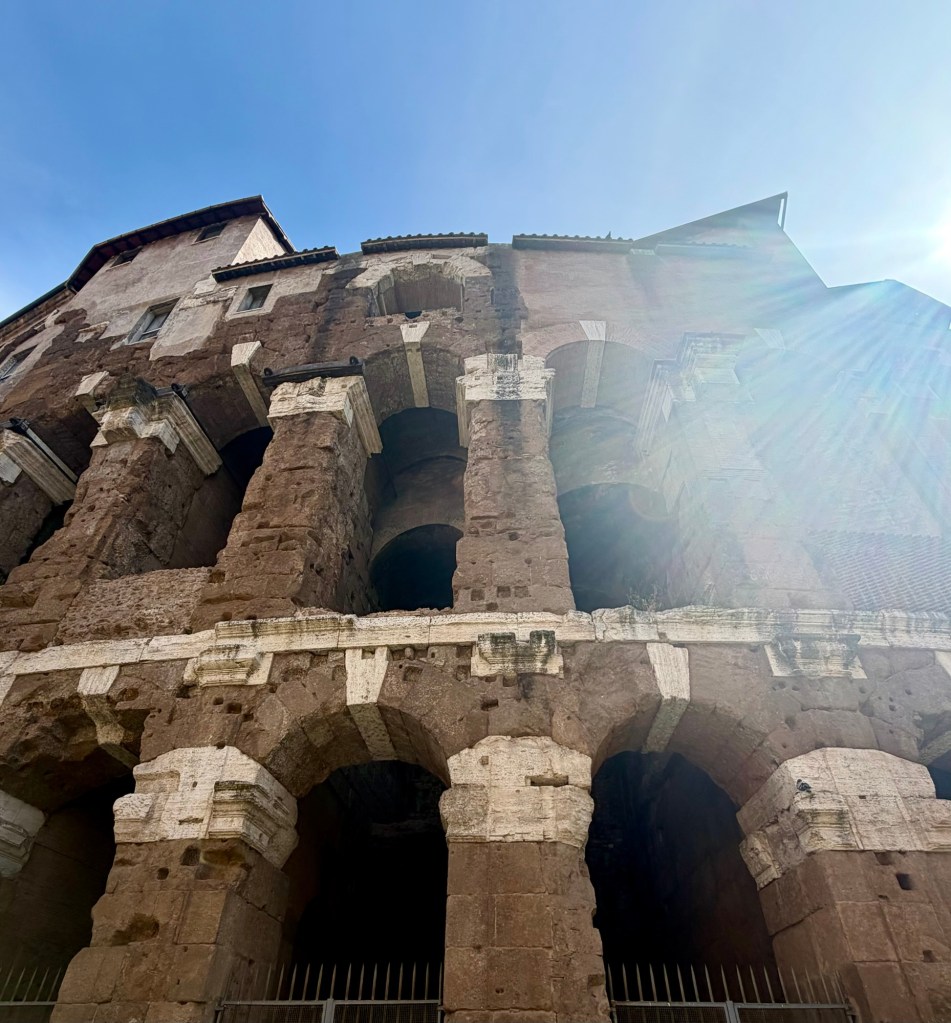
The temple of Apollo “in circo” acquired special significance under Augustus, as a popular legend developed that he had been sired by the god while his mother Atia was visiting the temple. Augustus undertook myriad new constructions around the Circus, and probably had it paved for the first time. Most notably Augustus demolished the small theater dedicated to Apollo, as well as the temples of Diana and Pietas, to build the Theatre of Marcellus on the eastern side of the Circus. Augustus also built the Porticus Octaviae, which hemmed in the Circus on its northeastern side. Augustus’ relation Lucius Marcius Phillipus restored the Temple of Hercules Musarum with a surrounding portico that could be accessed from the Circus.
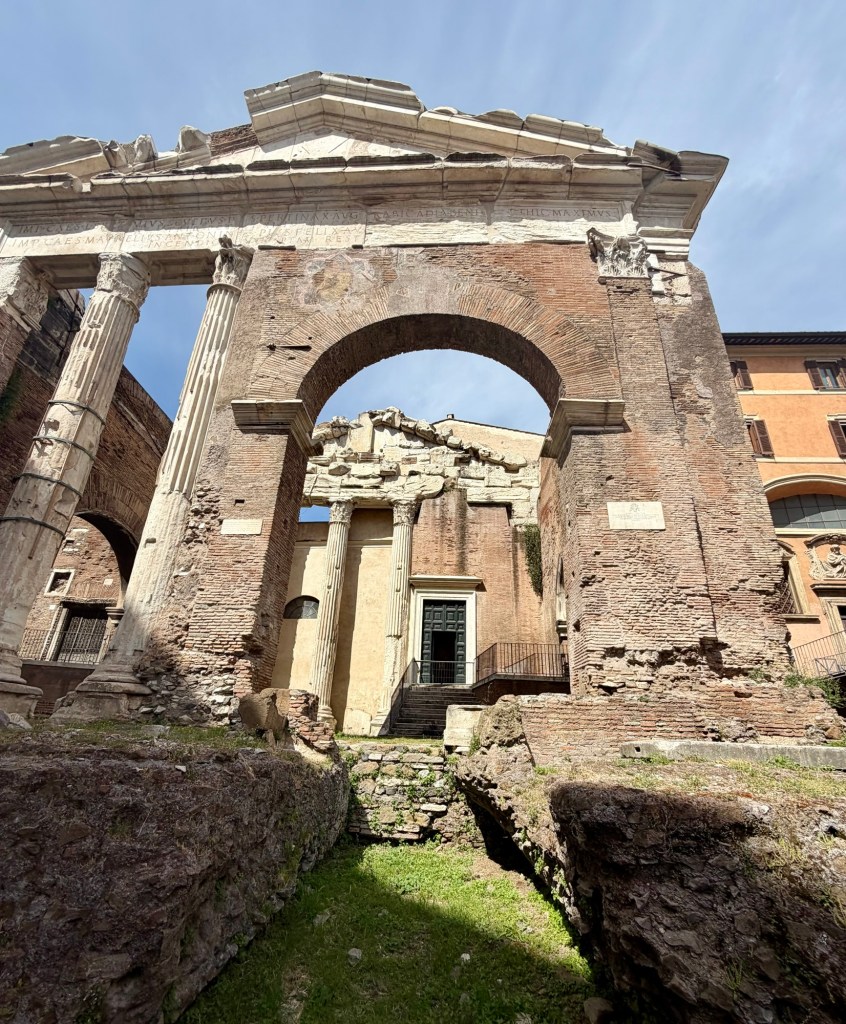
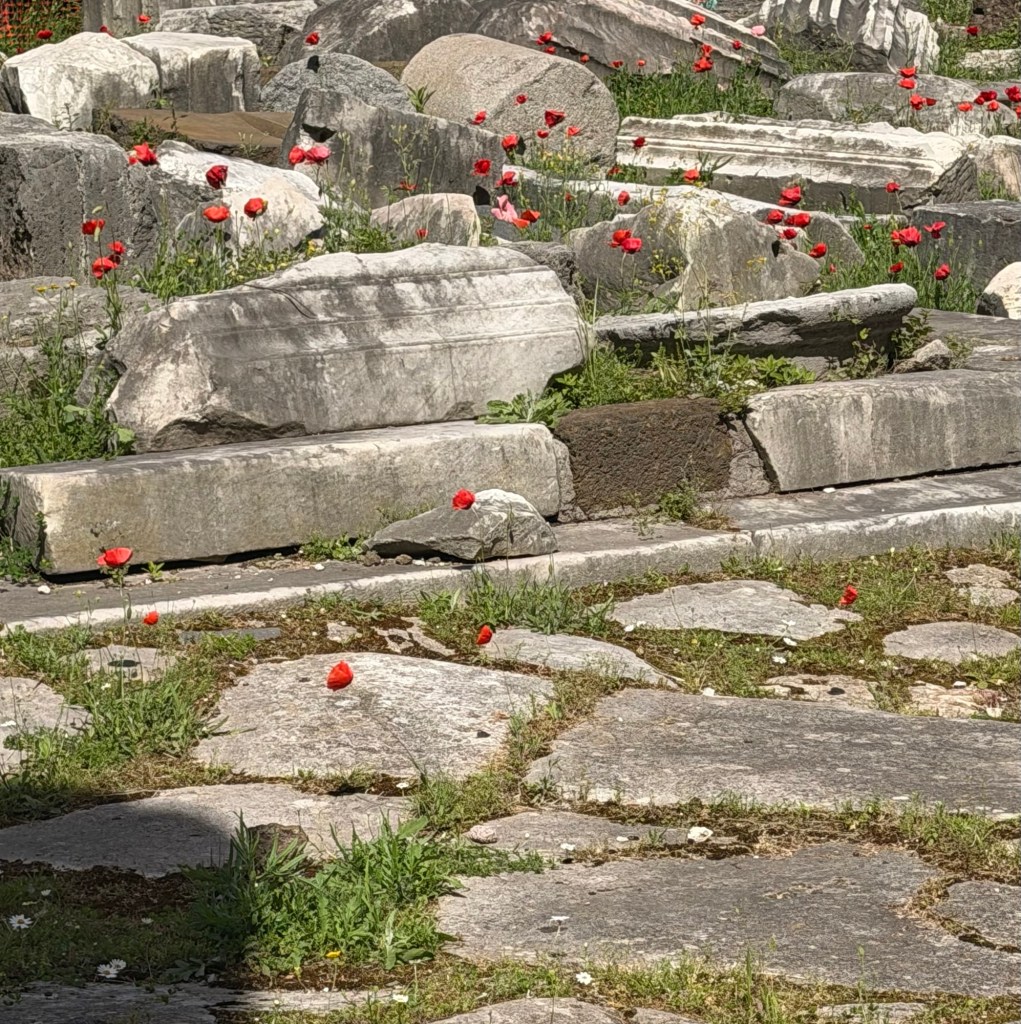
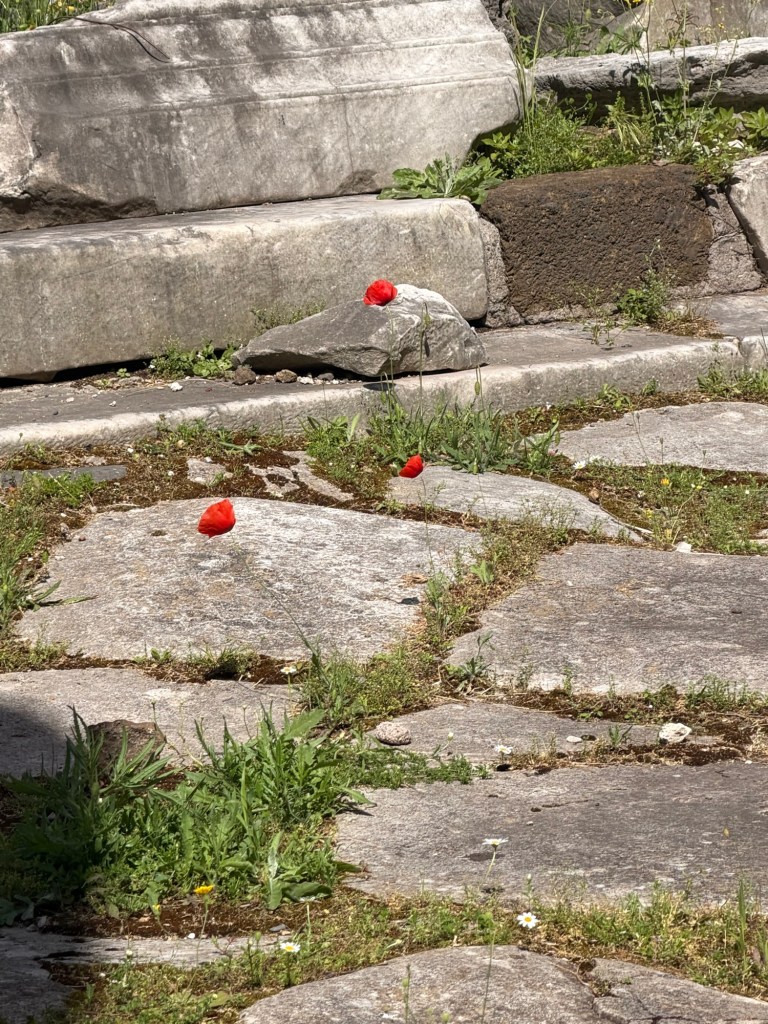
All of the above, borrowed from Wikipedia, is heavy duty archaeology. But what speaks to me even more from this ancient site is the loveliness of bright red poppies, self-seeded throughout the country of Italy, and blooming gloriously throughout the month of May. What could be more evocative than these fragile little pops of red flowers among the ruins?
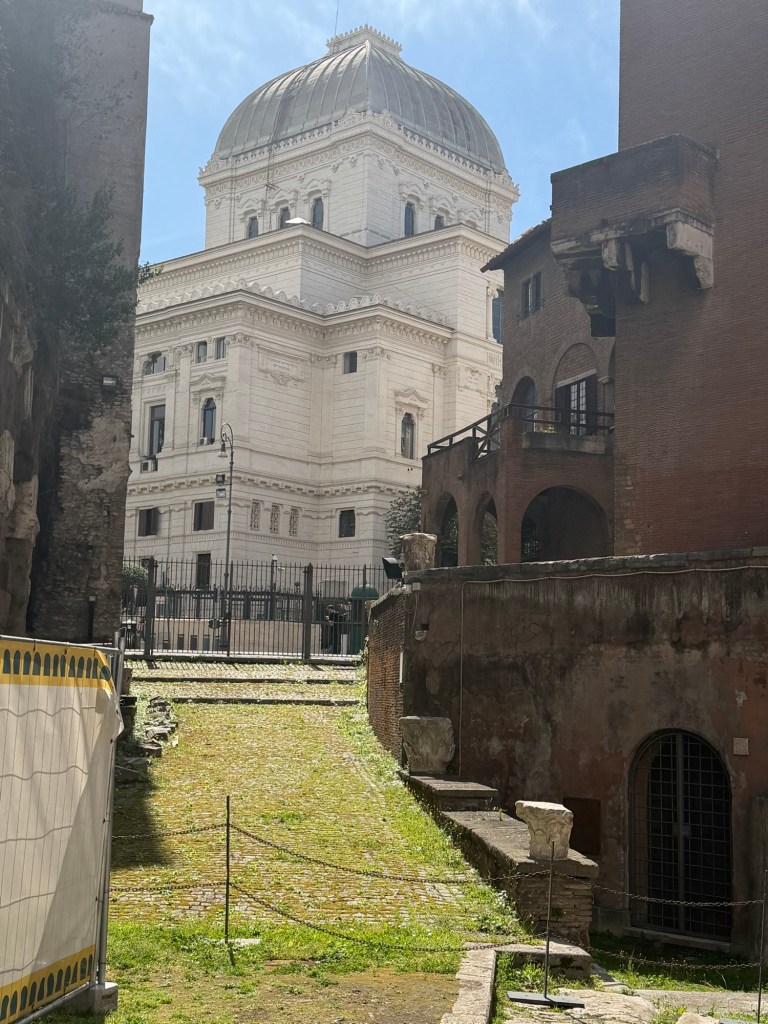
You can see the modern synagogue near the ruins.
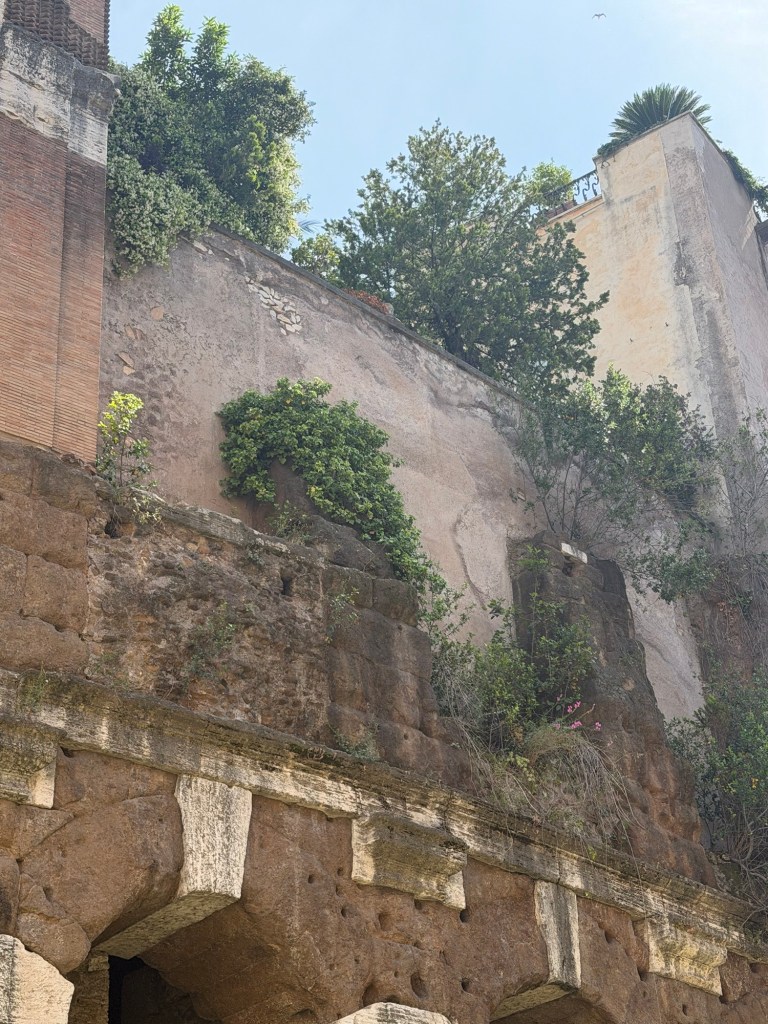
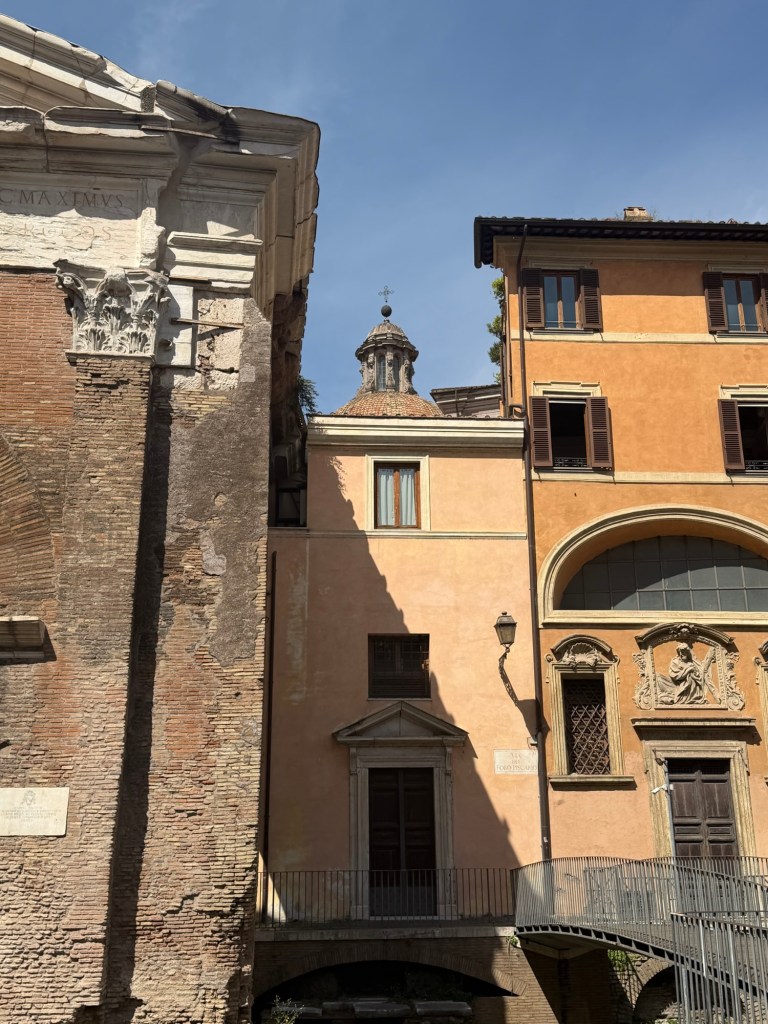
The modern city encroached!