In late August, I came to Rome on a mission. I failed.
But I made the best of it and found replacements that sufficed while my original mission is postponed.
Confused? I’ll explain.
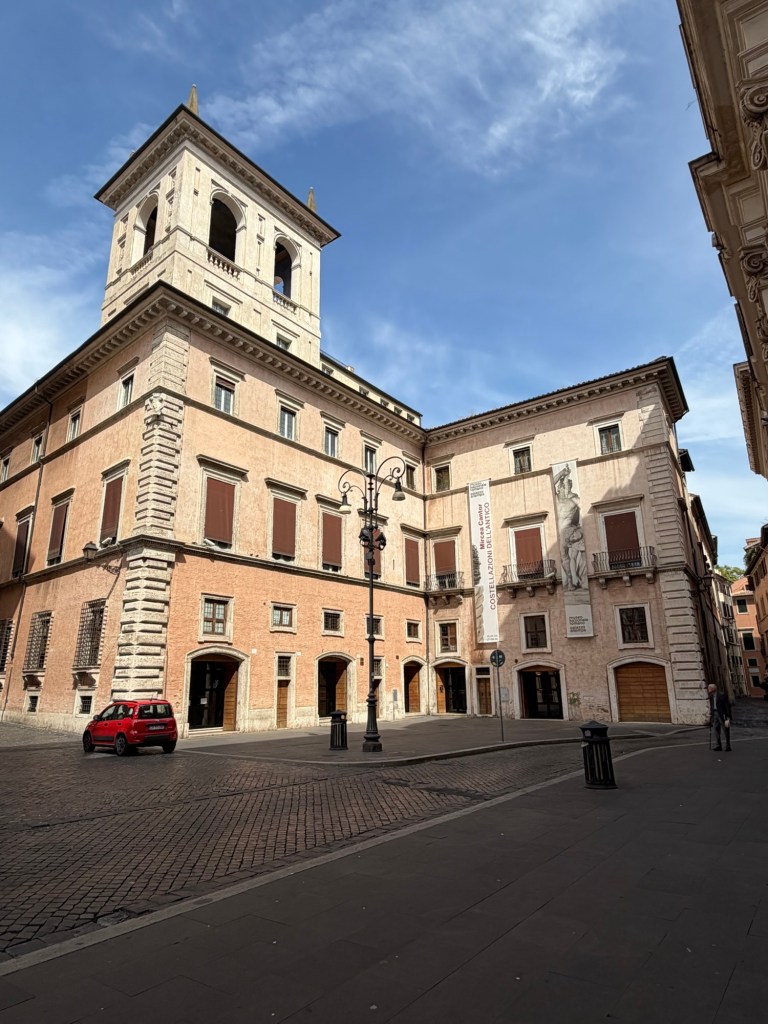
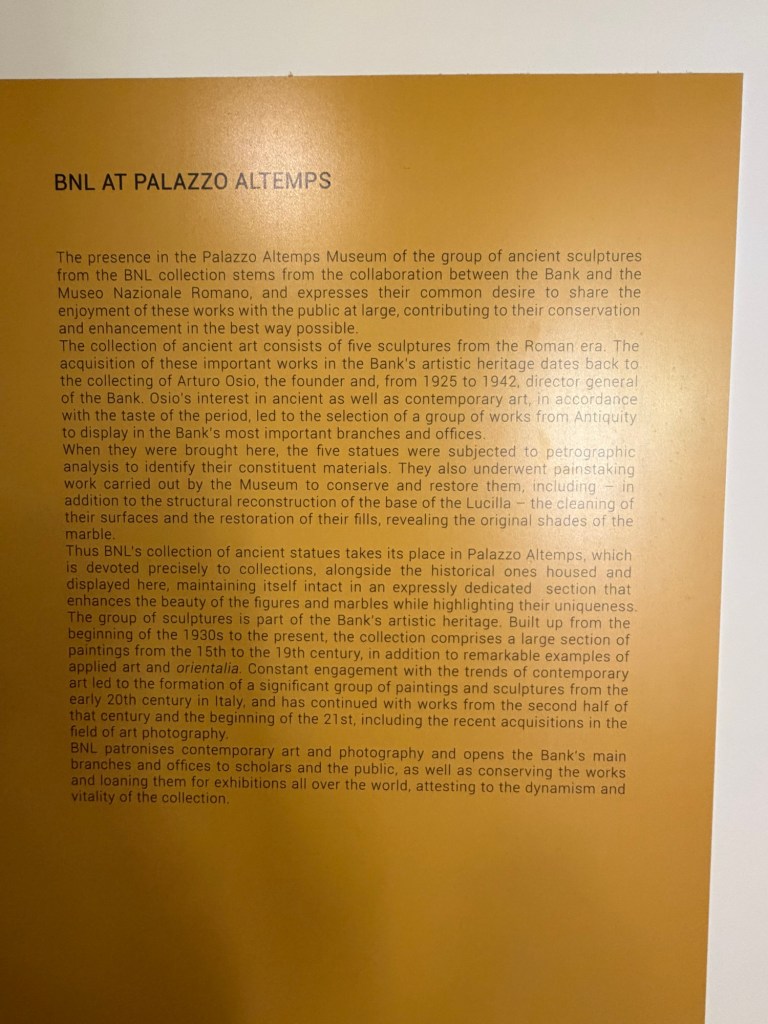
First you need to know: There is a great family of 4 museums in Rome, administered under the name and authority of the Museo Nazionale Romano. One of the 4 locations overseen is the Palazzo Altemps, a stone’s throw from the Piazza Navona.
It was in this palazzo that my mission was supposed to occur.
Many years ago, when I was an art historian in training at the beginning of my career, I fell in love in Rome. It was not with a handsome Latin man, though. It was with this work of art, known as The Birth of Aphrodite from the so-called Ludovisi Throne.

The relief is part of this marble confection.
When I came upon the sculpture, I almost fainted from the beauty of it. You think I’m exaggerating but I am not. I’ve had a physical reaction to a work of art 3 times in my life. This was the first one. I simply thought it was the most beautiful thing I had ever seen and was overcome with sensation. The 2nd time was not even with the work of art itself, but a color slide of Simone Martini’s Annunciation. When my art history professor showed us this slide in a course on Italian art, I nearly fell out of my chair, I was so overcome by the sheer beauty of it. Later, when I made it to Florence for the first time and saw the work in person, I felt almost as strongly; for sure it is still one of my favorite artworks ever. The 3rd time I had a physical reaction to an artwork was still in the Uffizi. When I encountered Michelangelo’s painting of The Holy Family, the so-called Doni Tondo, I jumped backwards because I felt that Joseph’s left elbow was jutting out into my space and was about to hit me. Seriously. I was exhausted when I was walking through the museum and certainly it would have been summer or a hot fall and the heat combined with the tiredness I was feeling made me have a physical reaction to the master’s painting. Those are the 3 times I’ve had physical reactions to a work of art.
Believe it or not, I had never seen the Ludovisi relief of Aphrodite again since that first encounter. I always wanted to. But if you’ve been to Rome you will know: it would take a lifetime to see everything housed in the city. I’ve been to Rome countless times, now, and I still have not seen everything I want to see. Retracing my steps to see Aphrodite just never happened.
And then this visit, I made it my priority, my mission:
The name “throne” was attributed at the time of the discovery in 1887 in Rome in the area of the Villa Ludovisi. Considered to be the throne of a divinity or the enclosure of a colossal cult statue or a stair balustrade, the work has also been referred to as the crowning of an altar or a base on which, on special occasions, the simulacrum of the divinity could be placed.
The stylistic analysis of the relief and the comparisons with terracotta votive plaques from Magna Graecia date to the period 460-450 B.C. the sculpture, perhaps coming from the sanctuary of Aphrodite in Lokri Epizefiri, on the Ionian coast of Calabria, or, according to another hypothesis, from the Sicilian sanctuary of Aphrodite in Erice. Its presence in Rome was in fact connected to the republican temple of Venus Erycina located just outside an urban gate, Porta Collina, later incorporated into the Horti (gardens) of Julius Caesar.
But, after all my hype: Guess what!
That’s right, the relief was not on view! I nearly fainted from disappointment!
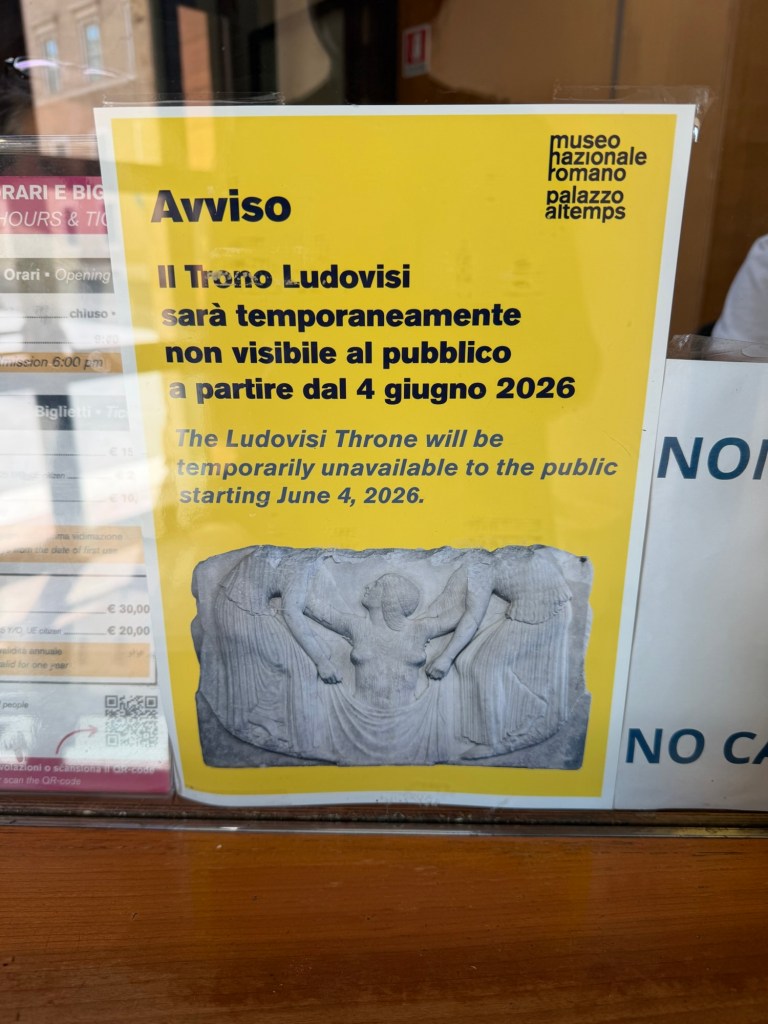
One of the employees at Palazzo Altemps told me the sculpture I had come on purpose to see is currently on loan to Athens and will be back in a year! If I had a nickel for every time I have been to a place in Italy to see something specific, only to find it being restored or removed temporarily, I would be a very rich woman.
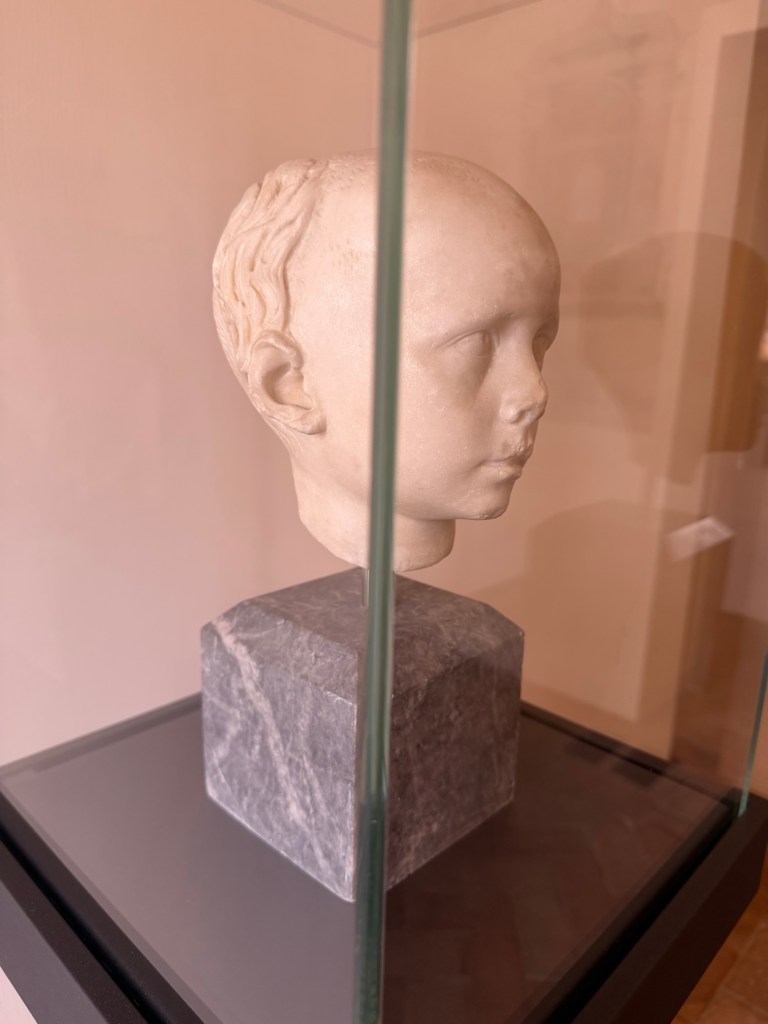
But, I knew this museum had to have something to make the visit worthwhile, and I set out to find it/them. It was successful.
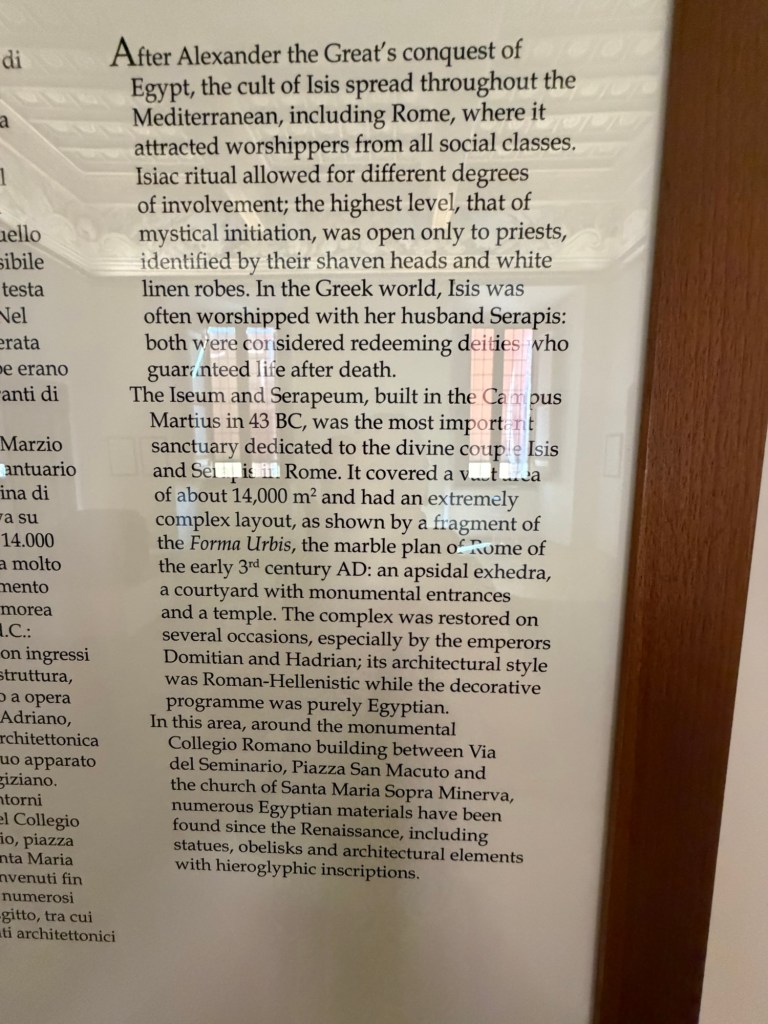
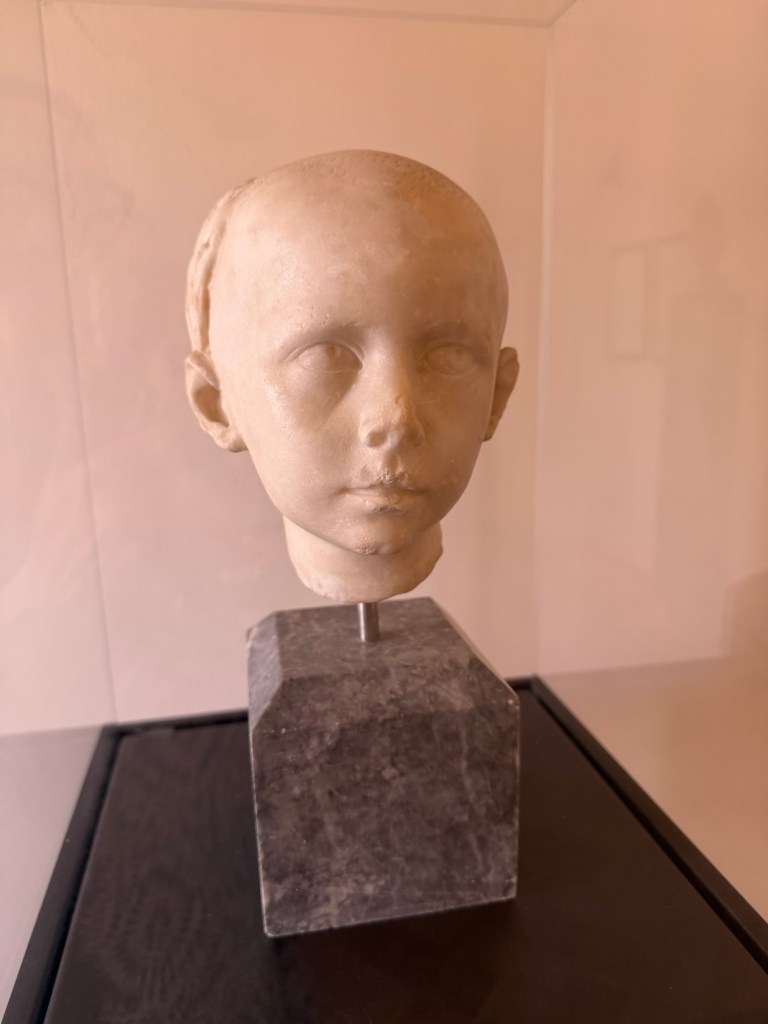
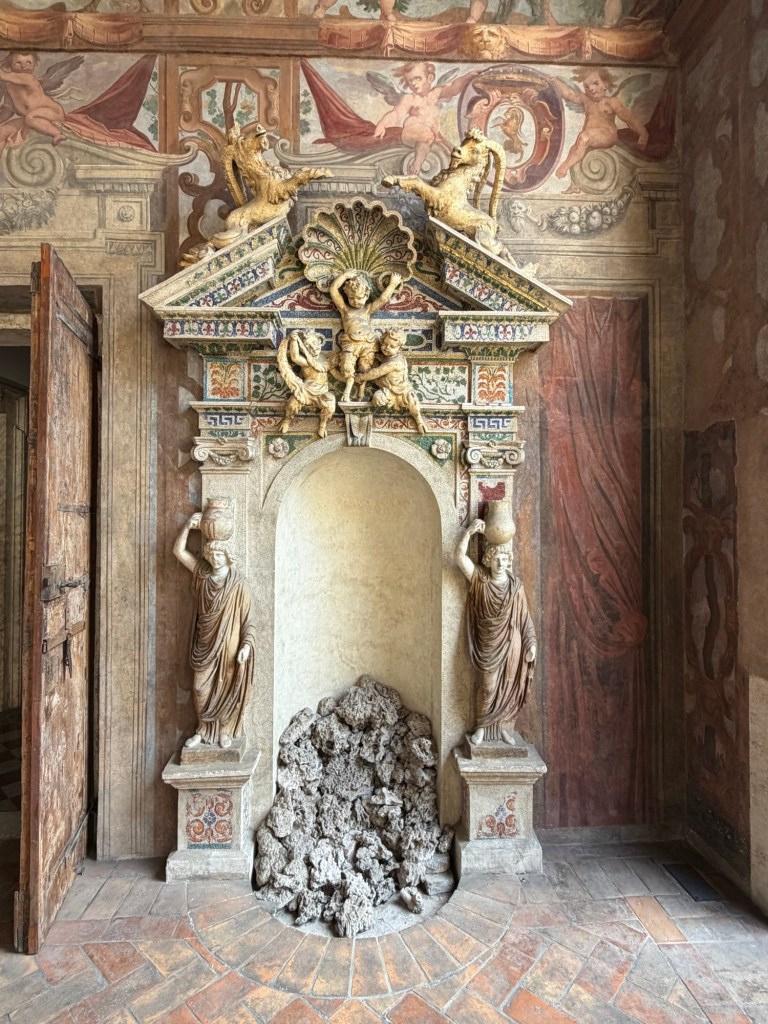
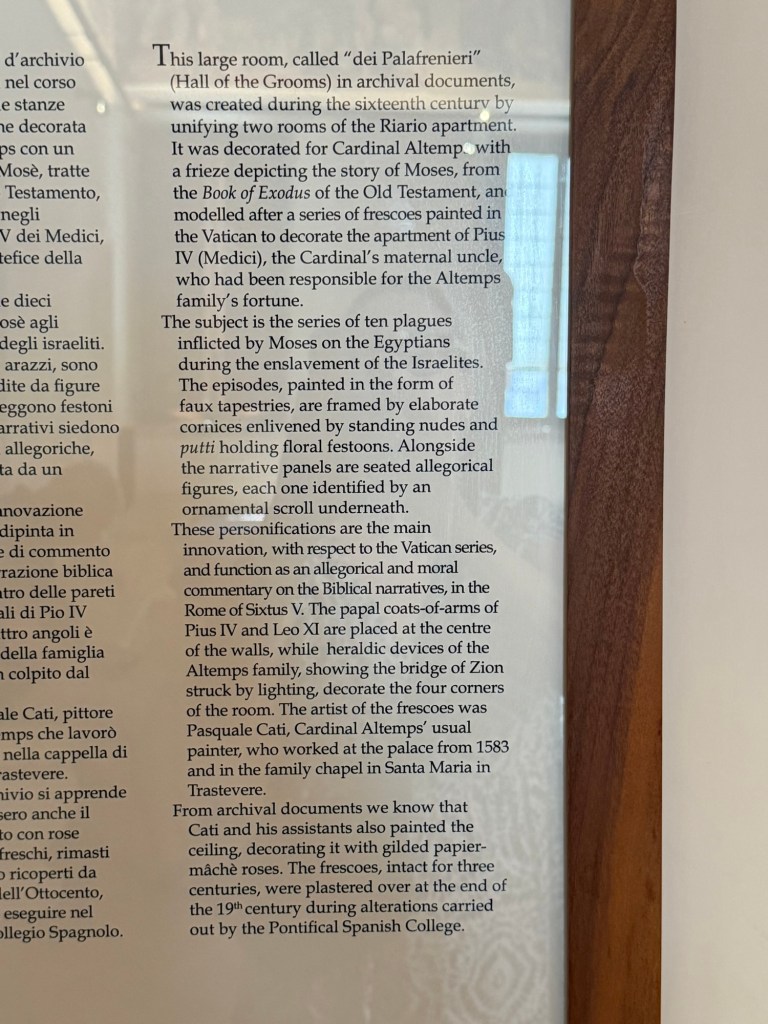
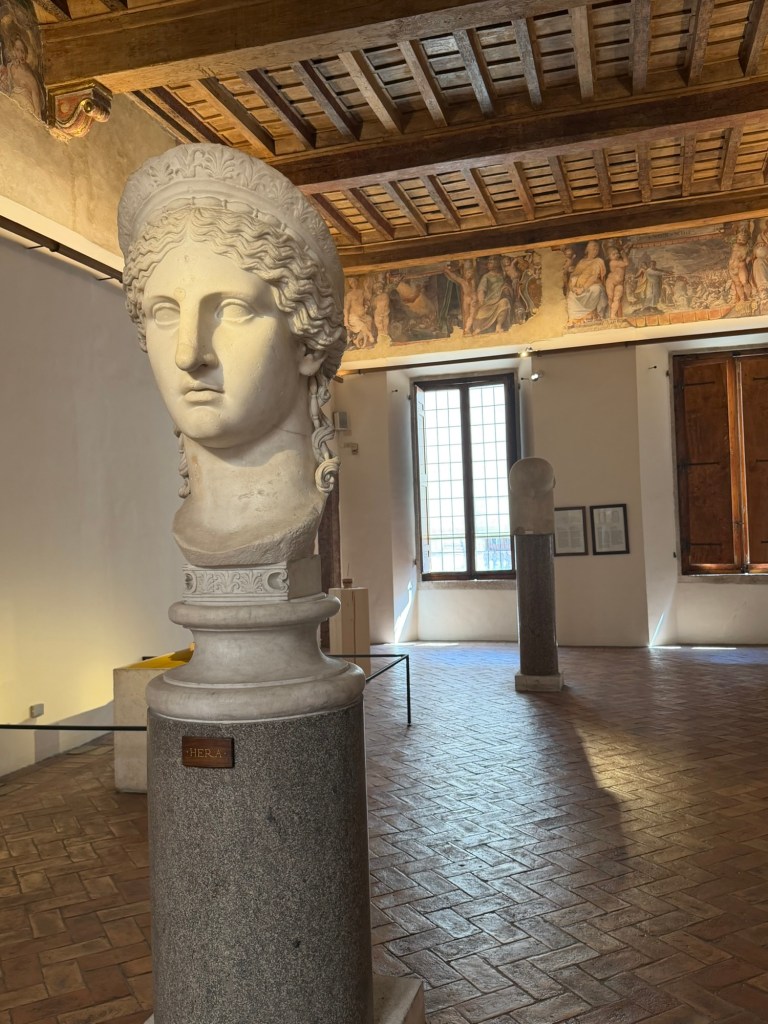
This building was an aristocratic palace, and some of the rooms are still quite like they must have been in the building’s heyday.
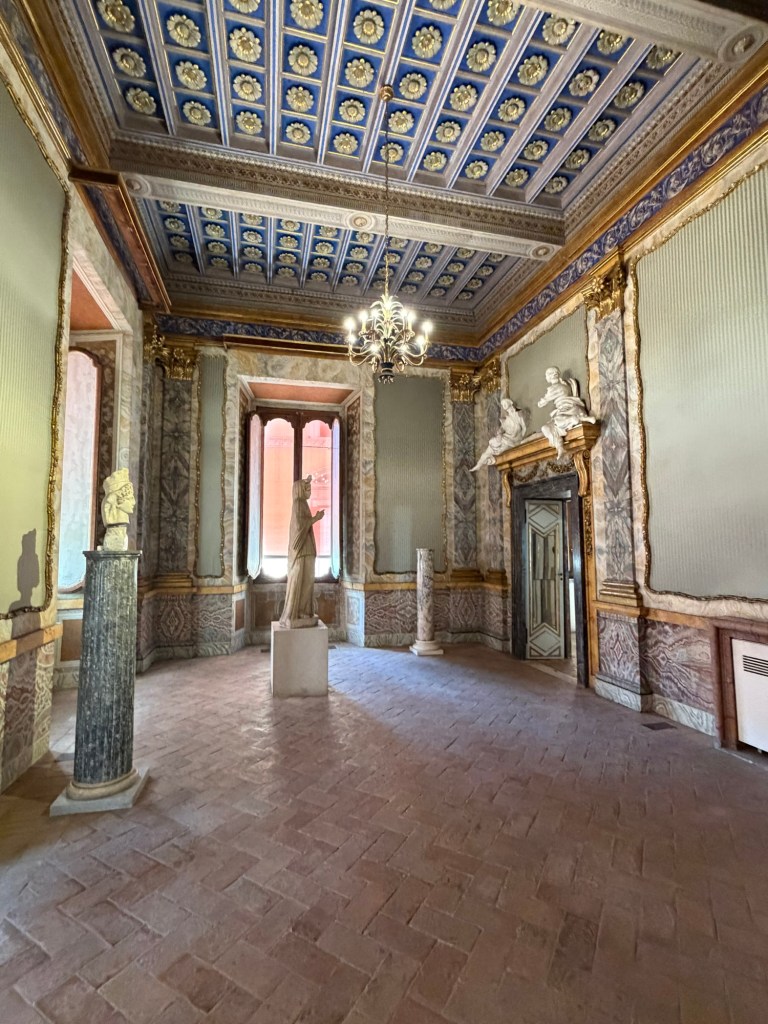
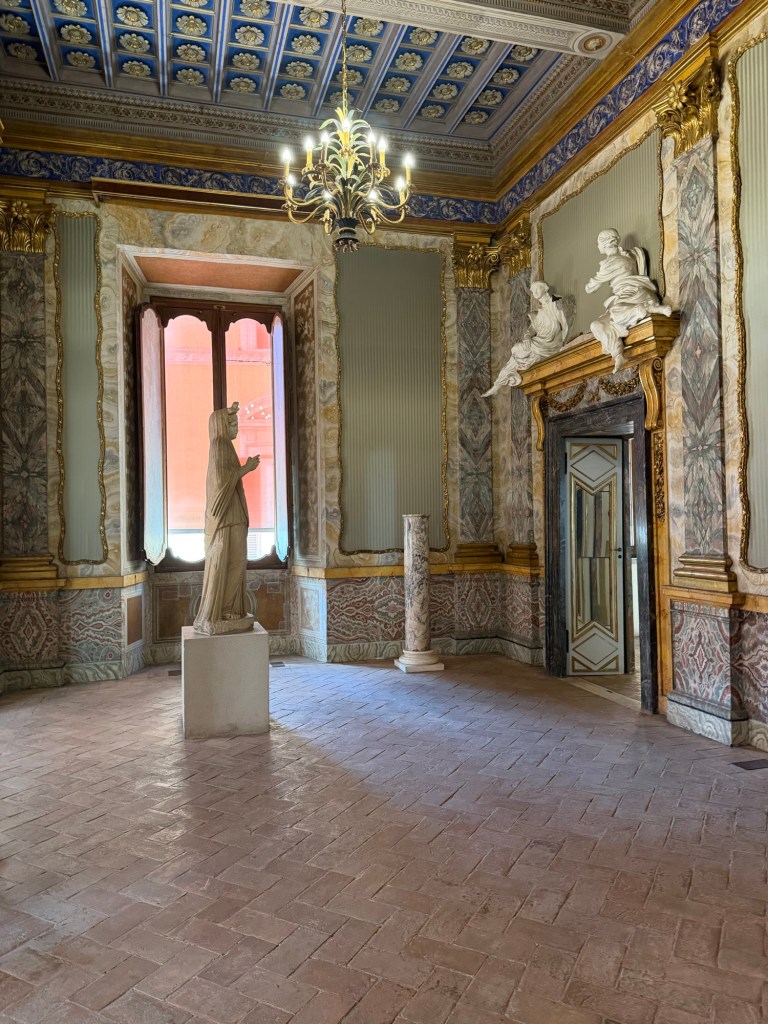
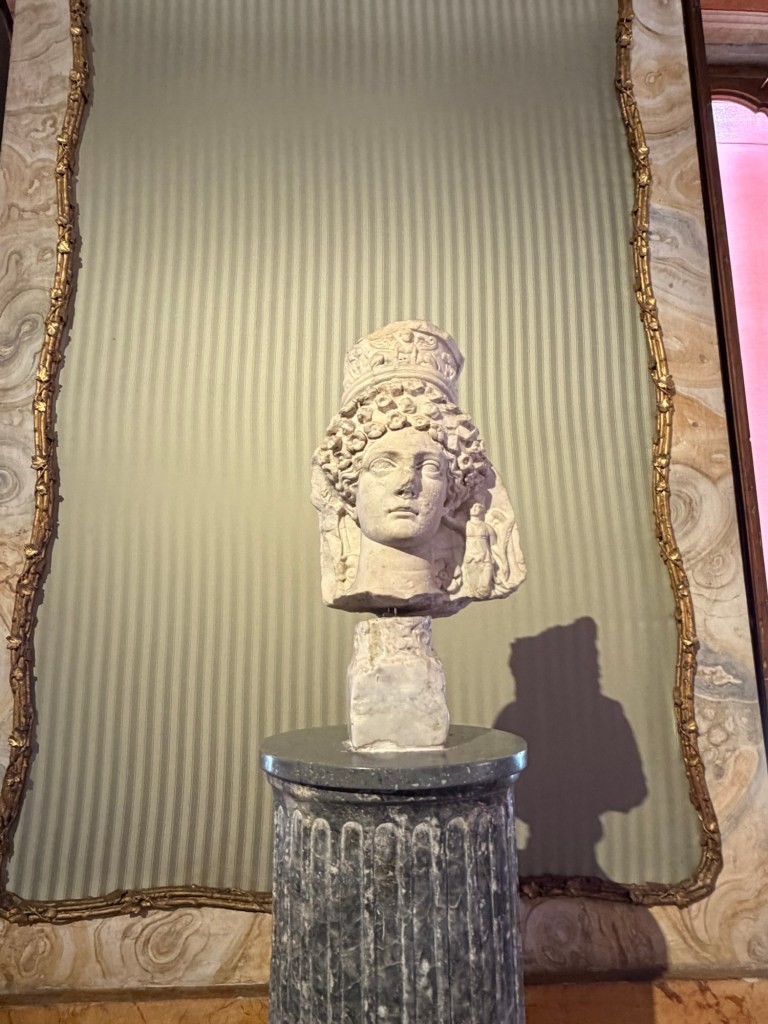
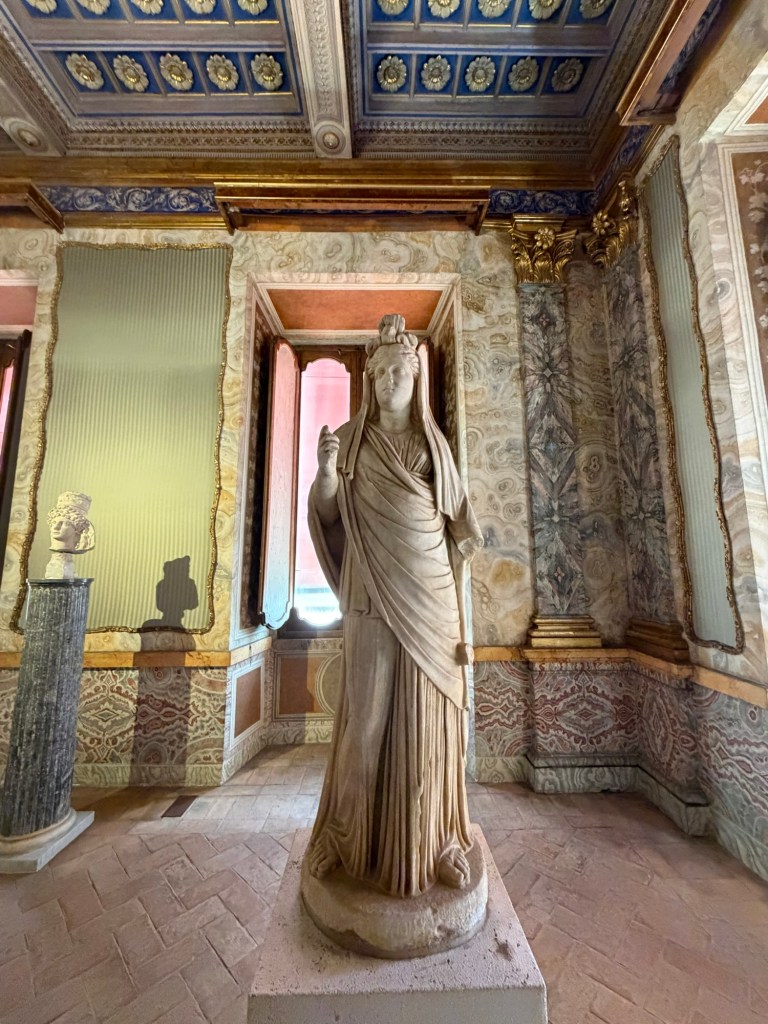
I’d have to say, while much of the ancient statuary on display here was truly spectacular, it was this frescoed loggia on the piano nobile that took my breath away.
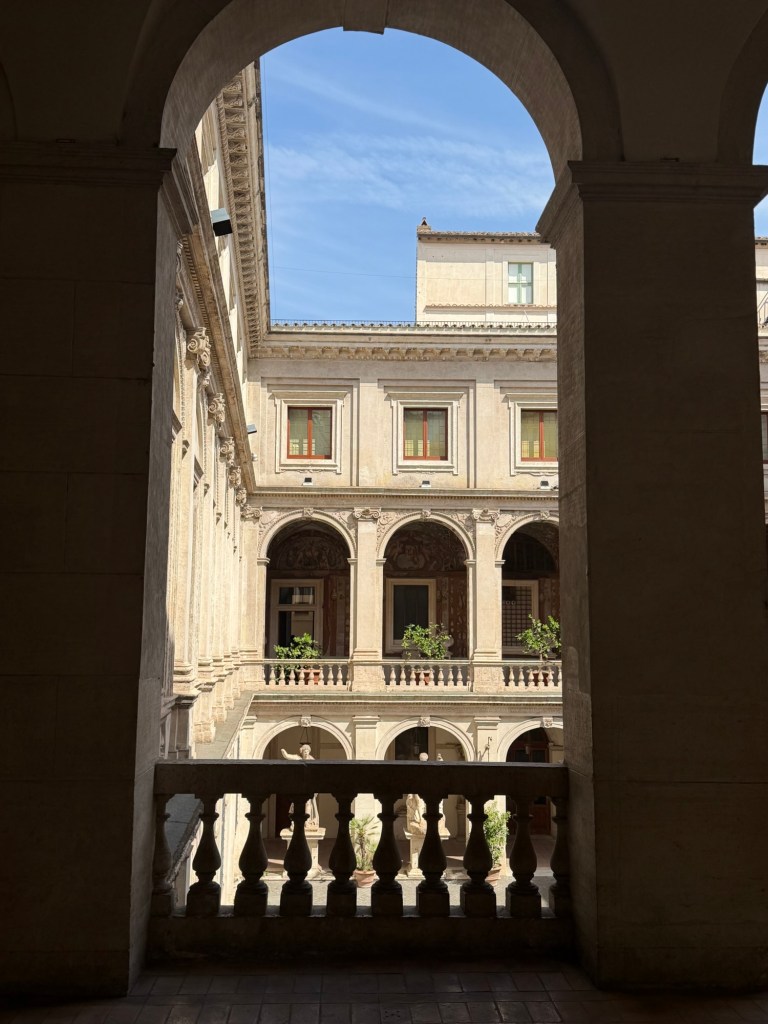
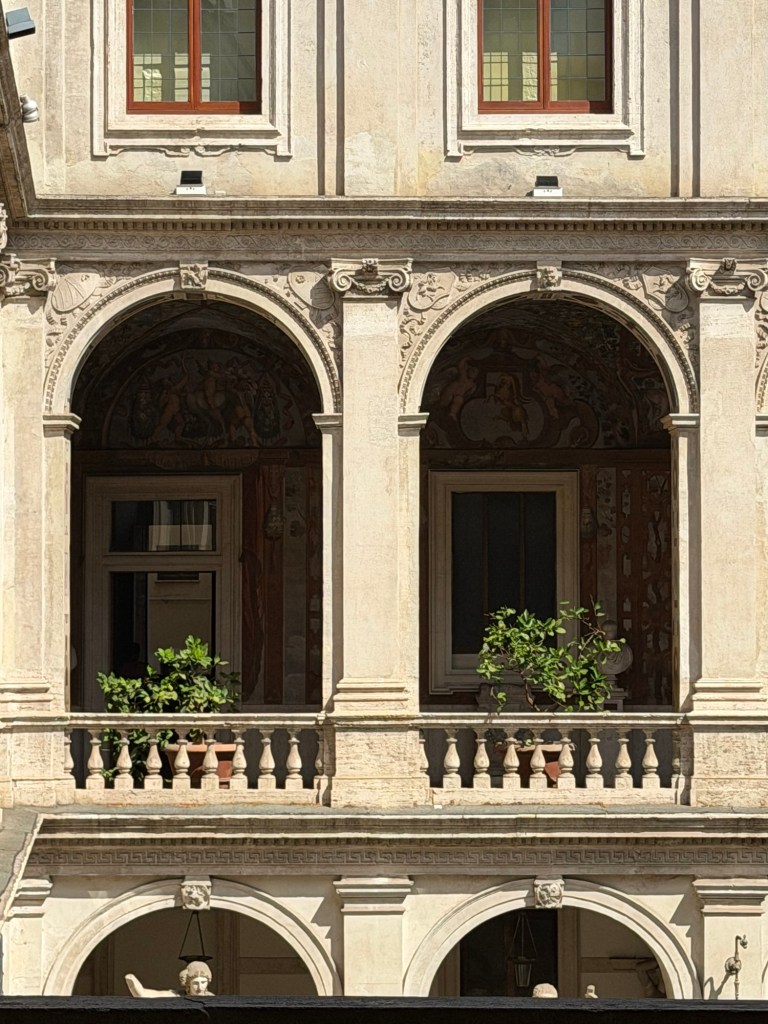
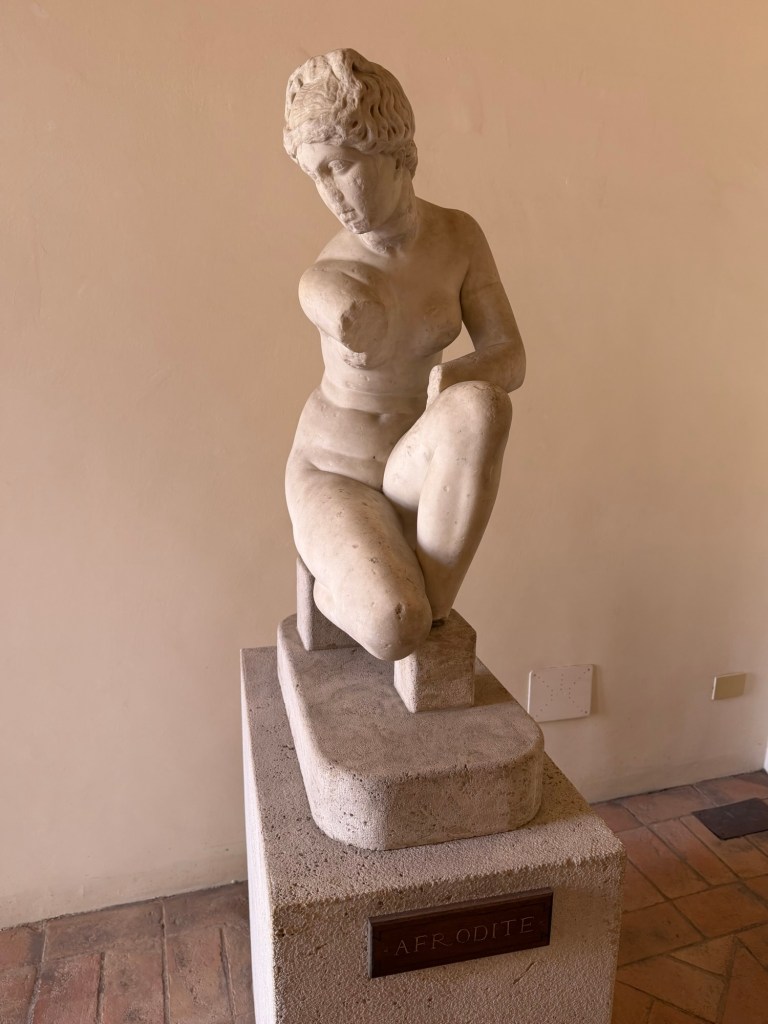
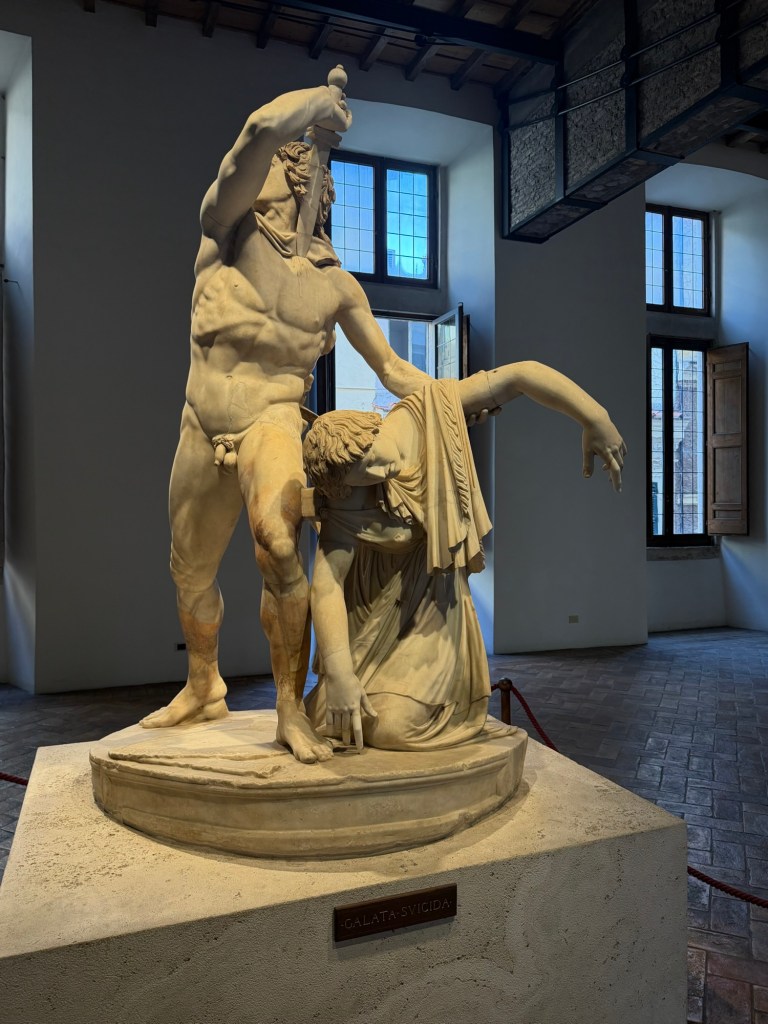
But the sculpture was also quite wonderful to see and enjoy.

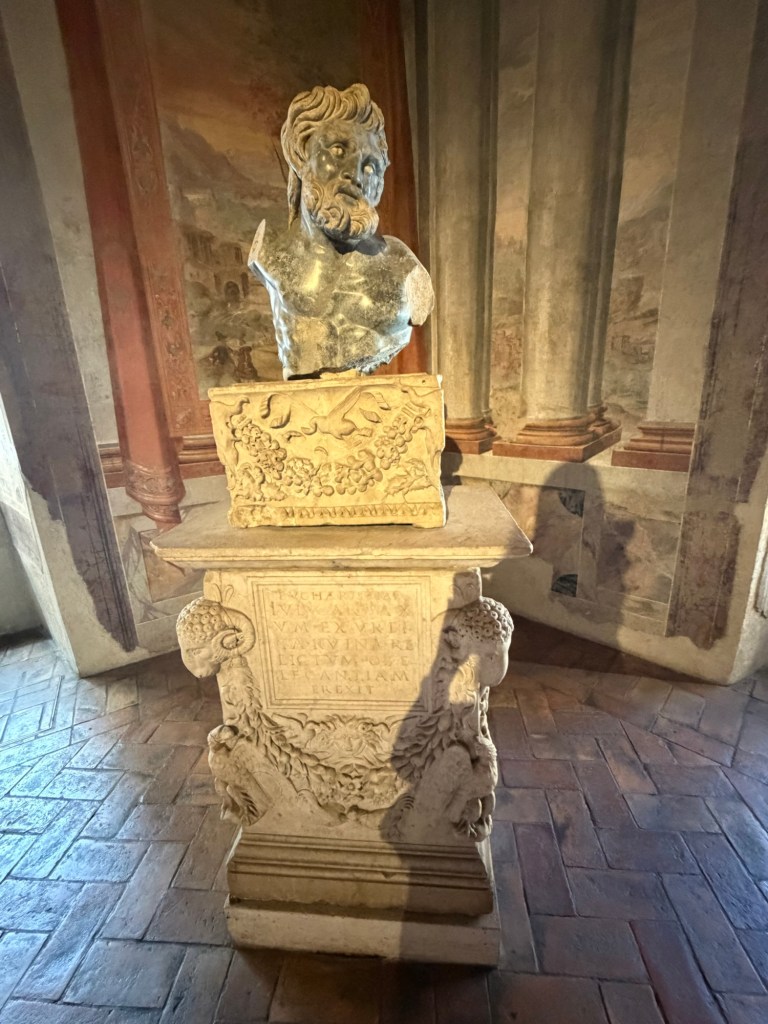
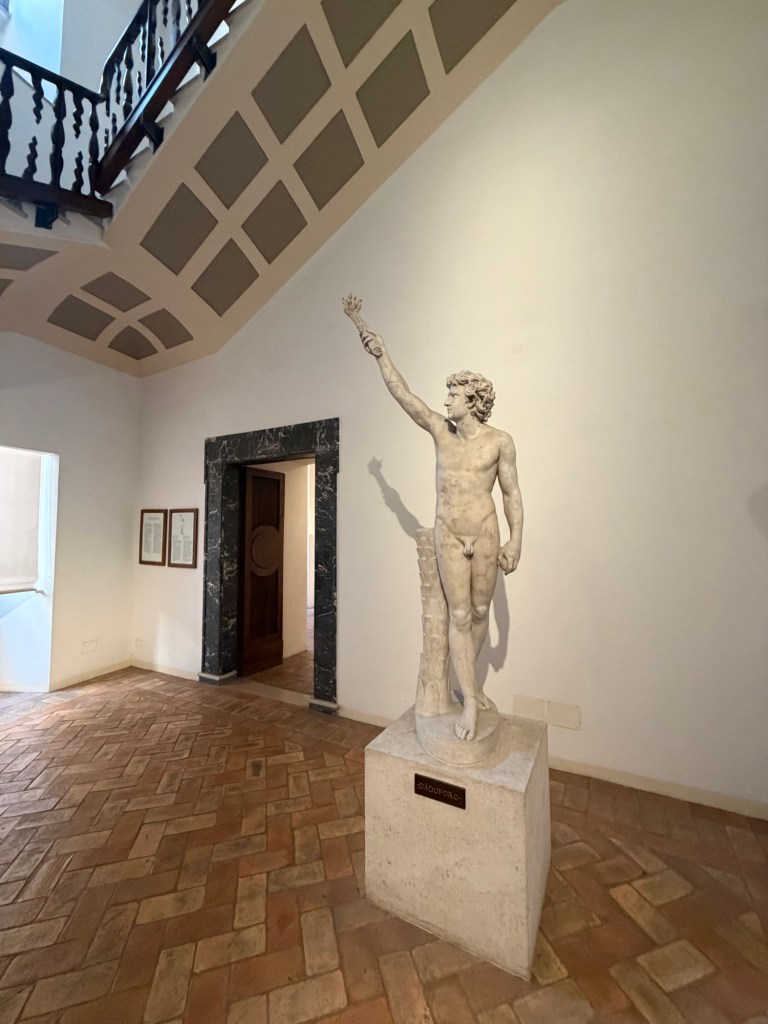
Ha ha, I’m sorry, but even an art historian can laugh at the placement of this fine, ancient statue! He’s been set here to direct people up the stairs, in my mind at any rate. What do you think?
But, let’s get serious again.
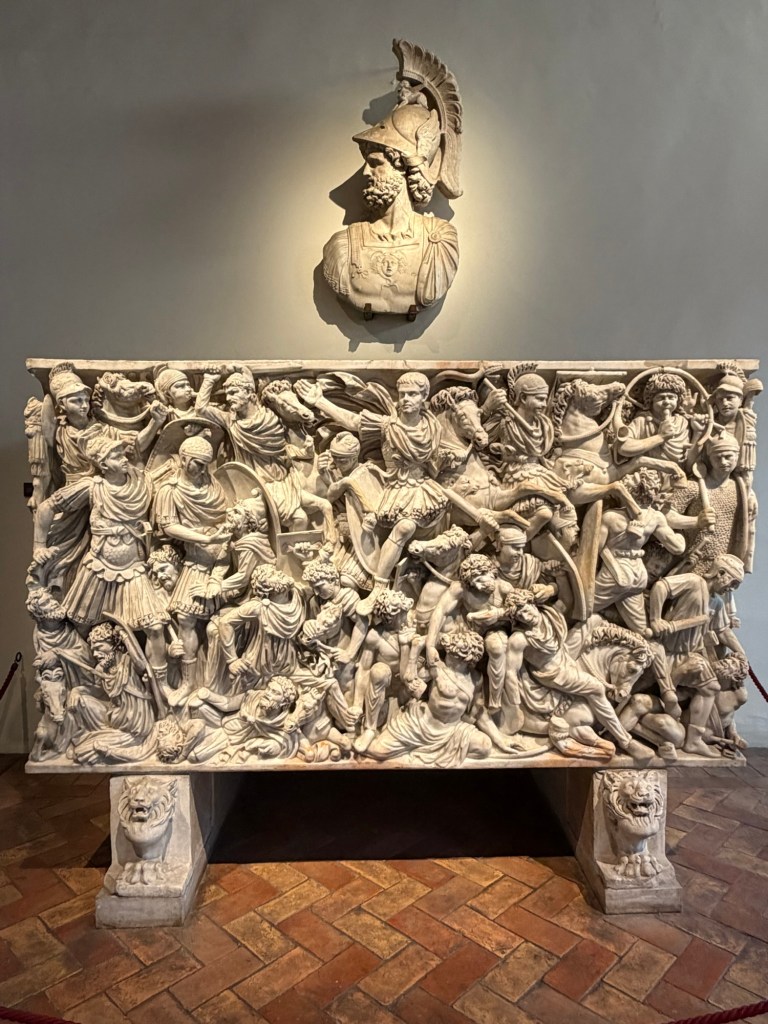
Fabulous, absolutely fabulous ancient sarcophagus.
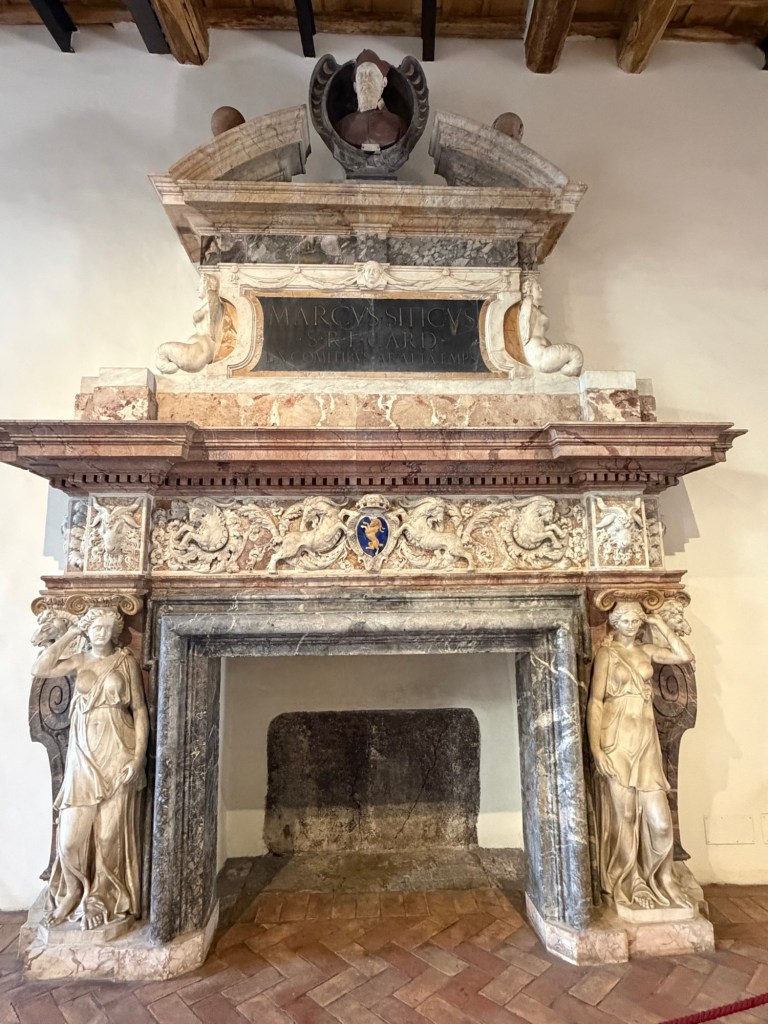
As fireplaces go, this one is pretty amazing!
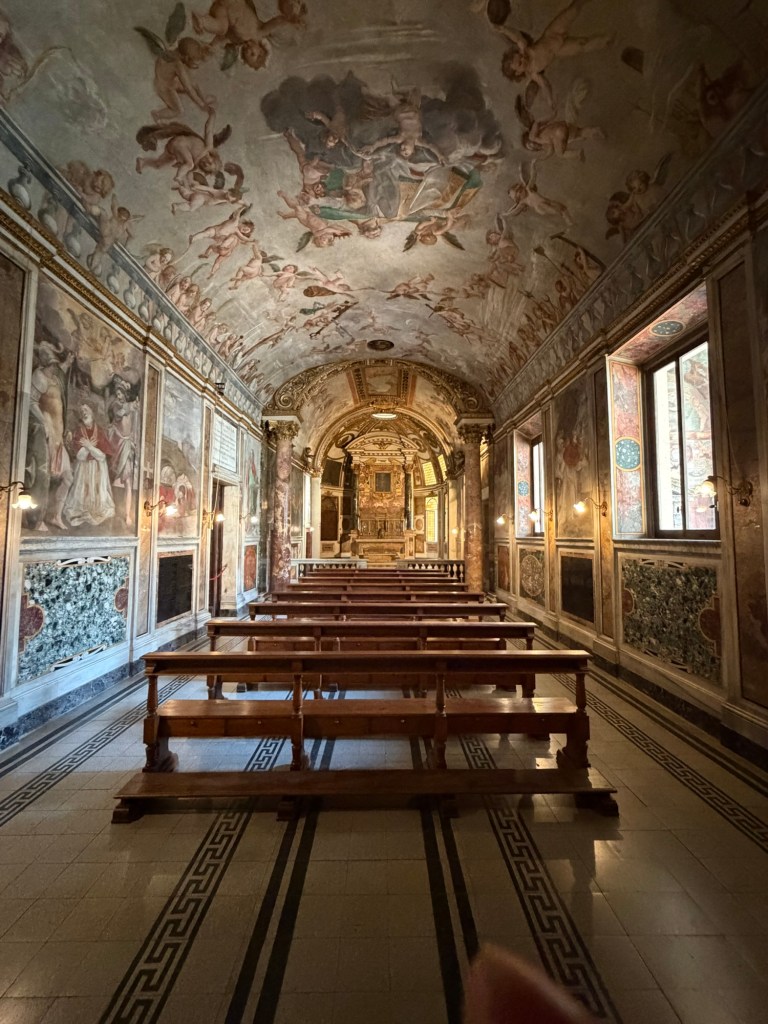
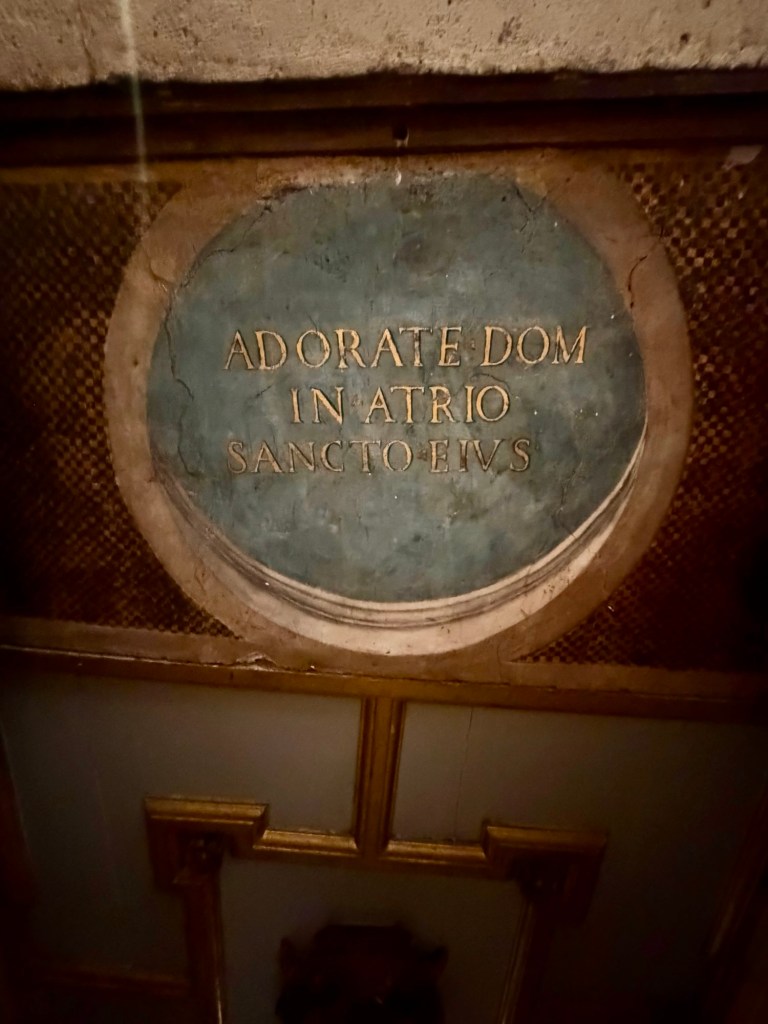
Above, every fine palazzo needs its own chapel, no? I noticed the inscription, shown below, on the ceiling when I walked into the chapel.
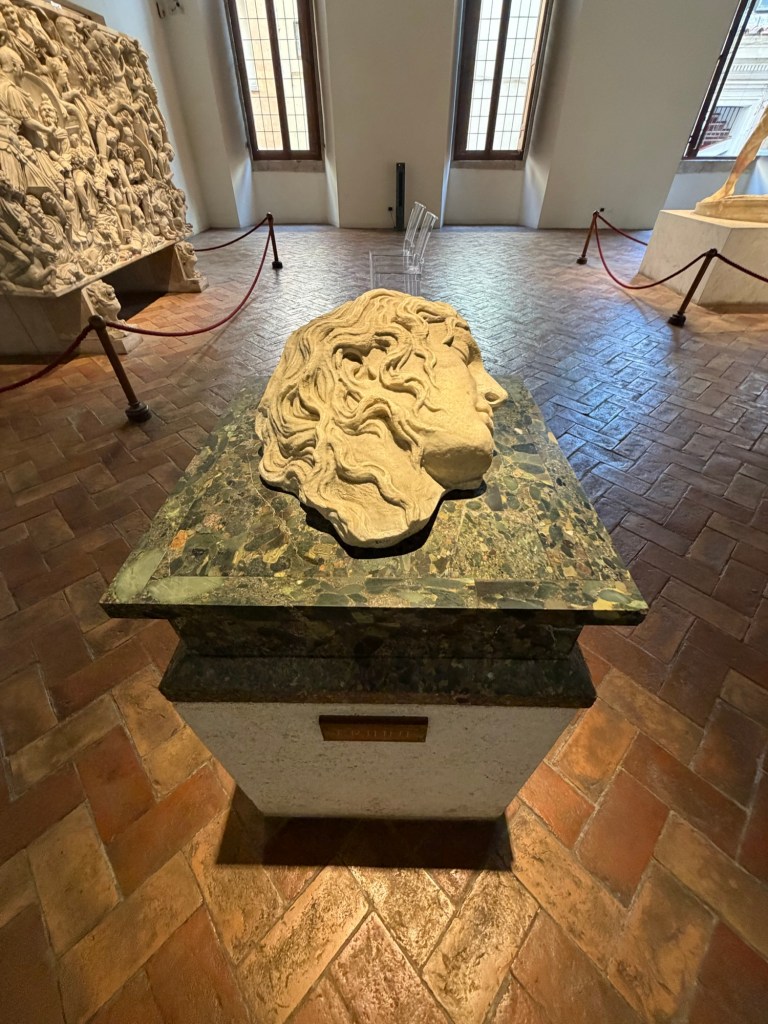
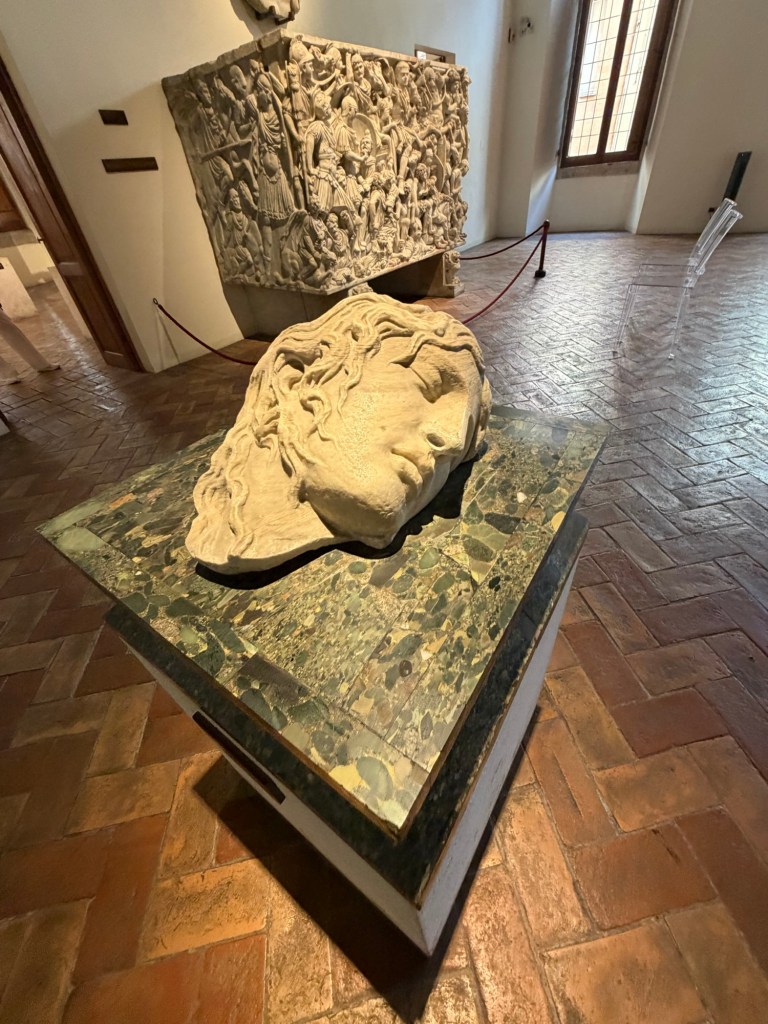
Well worth a visit, I’ll be going back in a year’s time to hopefully see the Birth of Aphrodite relief sculpture!


Absolutely amazing! But the Aphrodite is as you might say stupendous. You lucky, lucky person just to have seen these.
Thanks Michael! We get each other big time.
Pingback: Maenad, priestesses of the god Dionysus, Palazzo Massimo alle Terme, Rome | get back, lauretta!