I might have mentioned this before, but I am frustrated with the Covid pandemic. Who isn’t? In Italy we are still more or less locked down. It isn’t the red zone lock down, during which we can’t leave our homes without a good reason and a document.
But we are in the next zone, the orange zone. We can go out, but we can’t leave town. Fines are heavy for any one who does, and they are strict.
I’ve been criss-crossing Florence for months now. I feel like I know almost every nook and cranny.
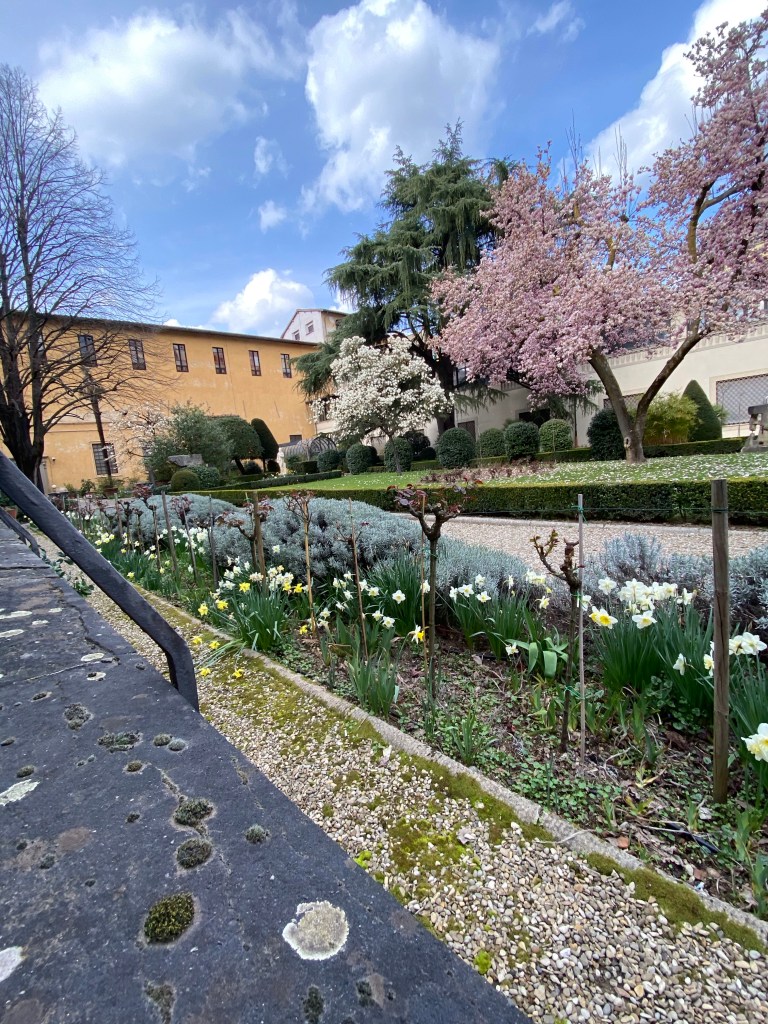
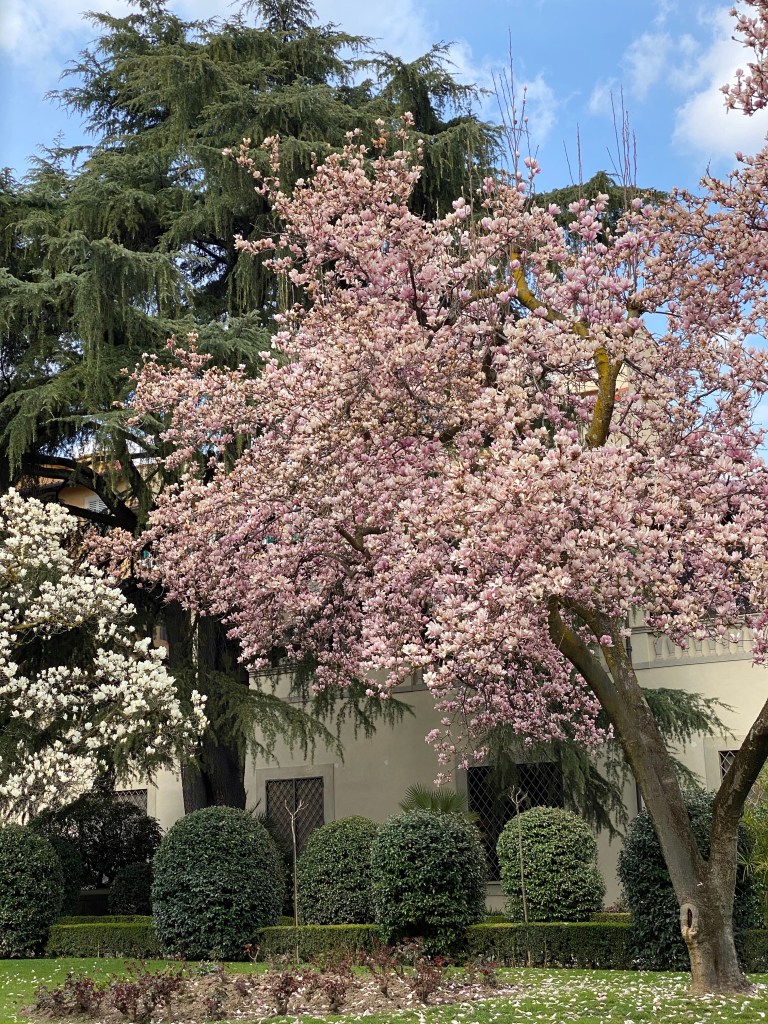
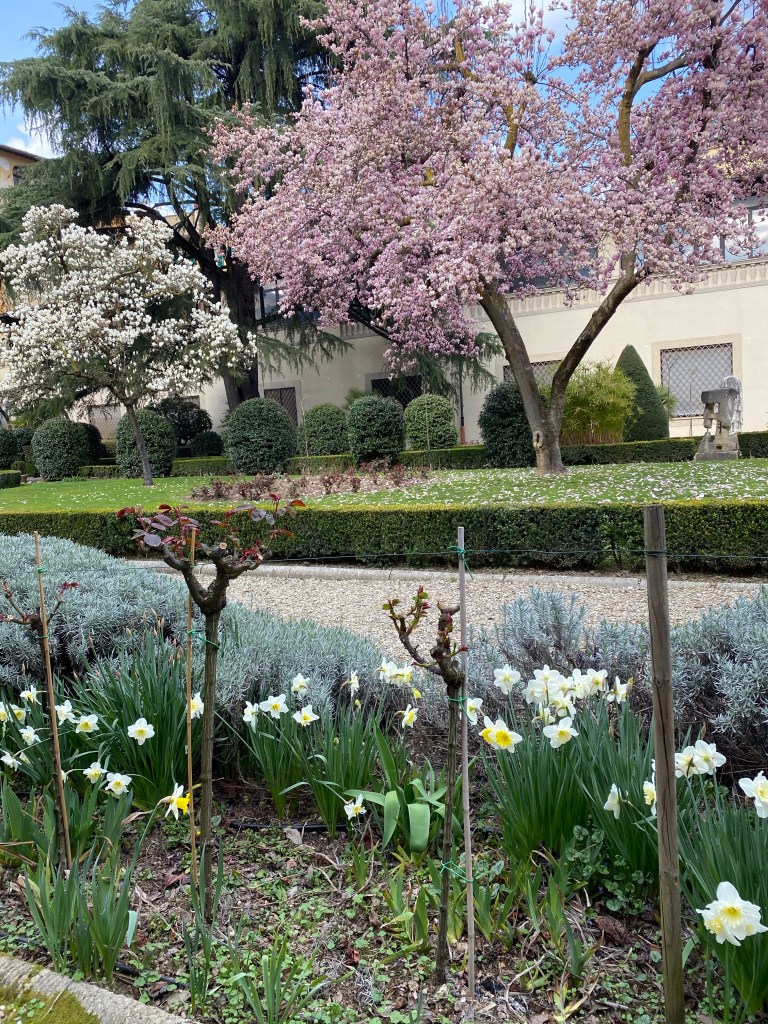
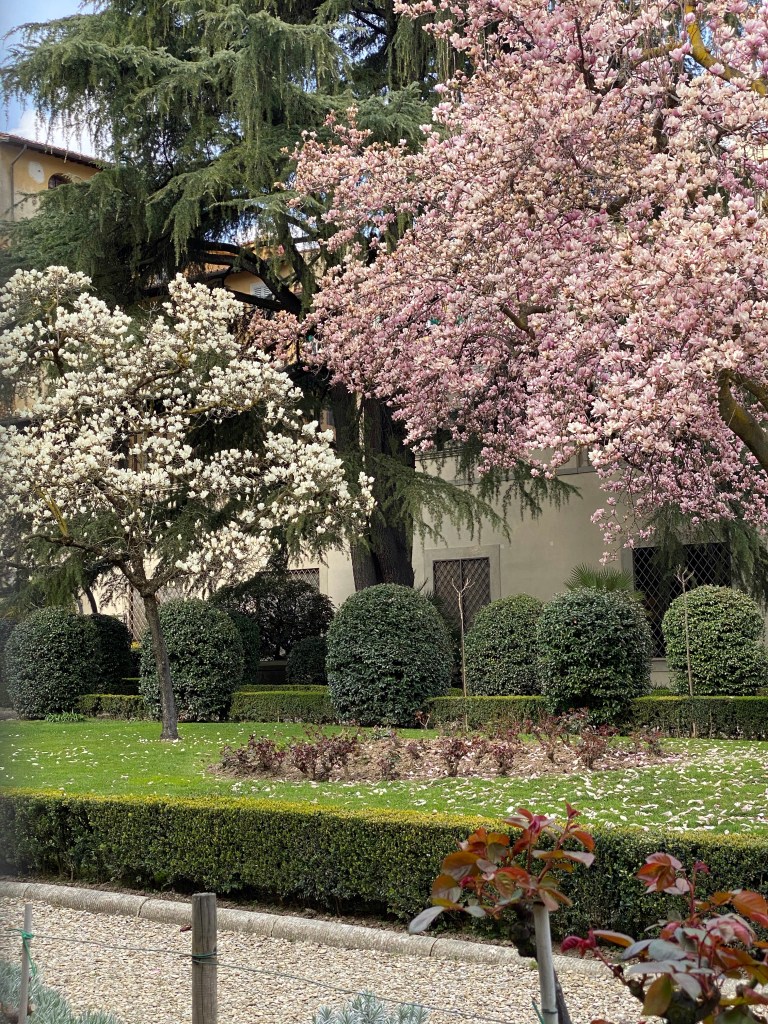
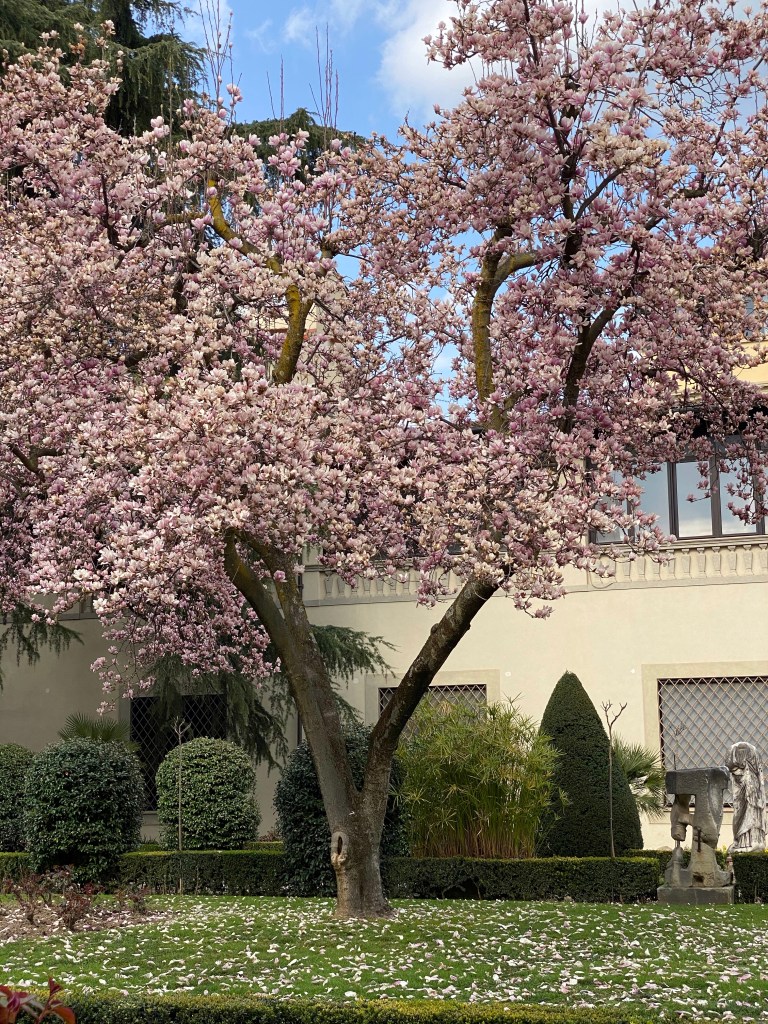
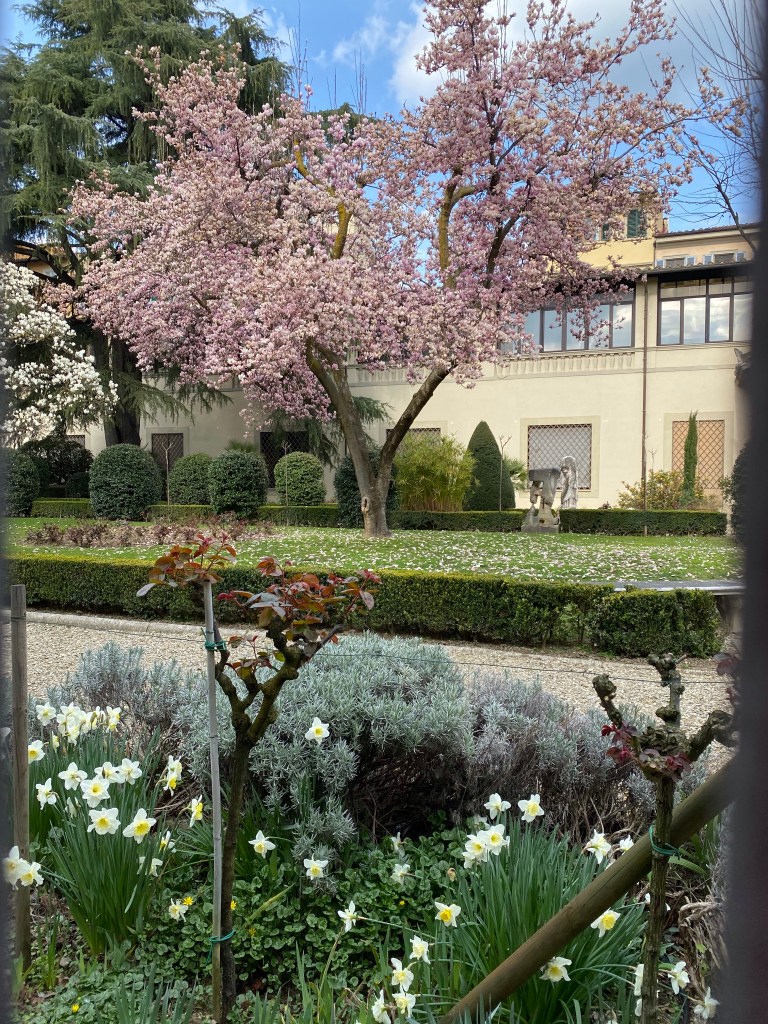
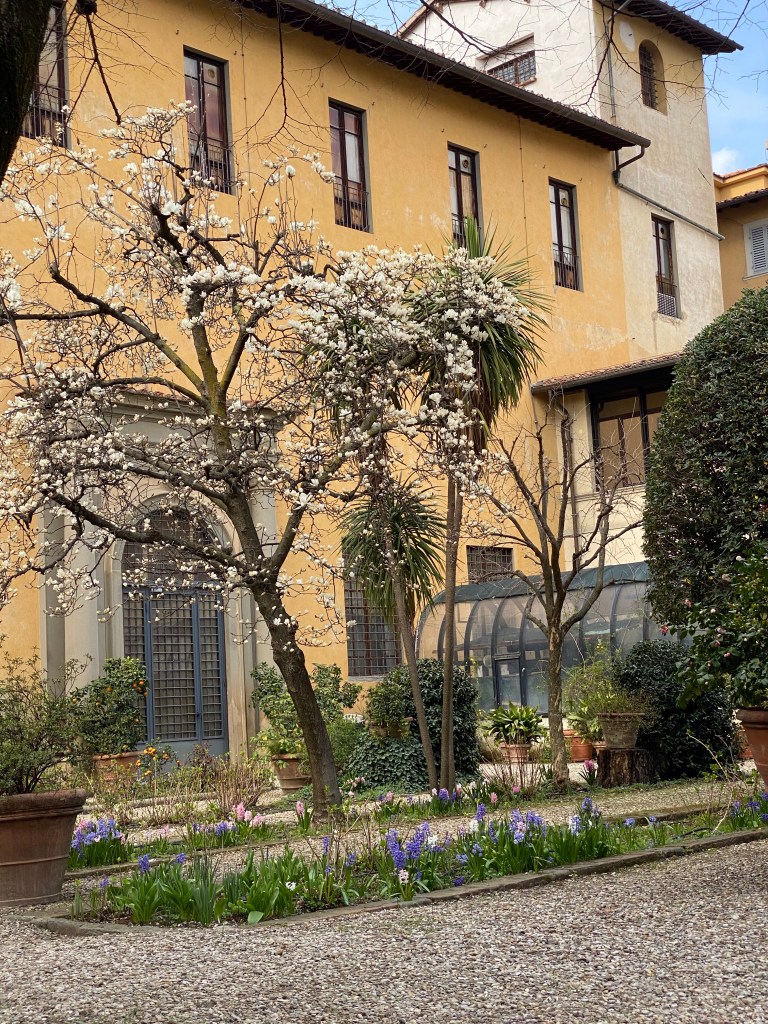
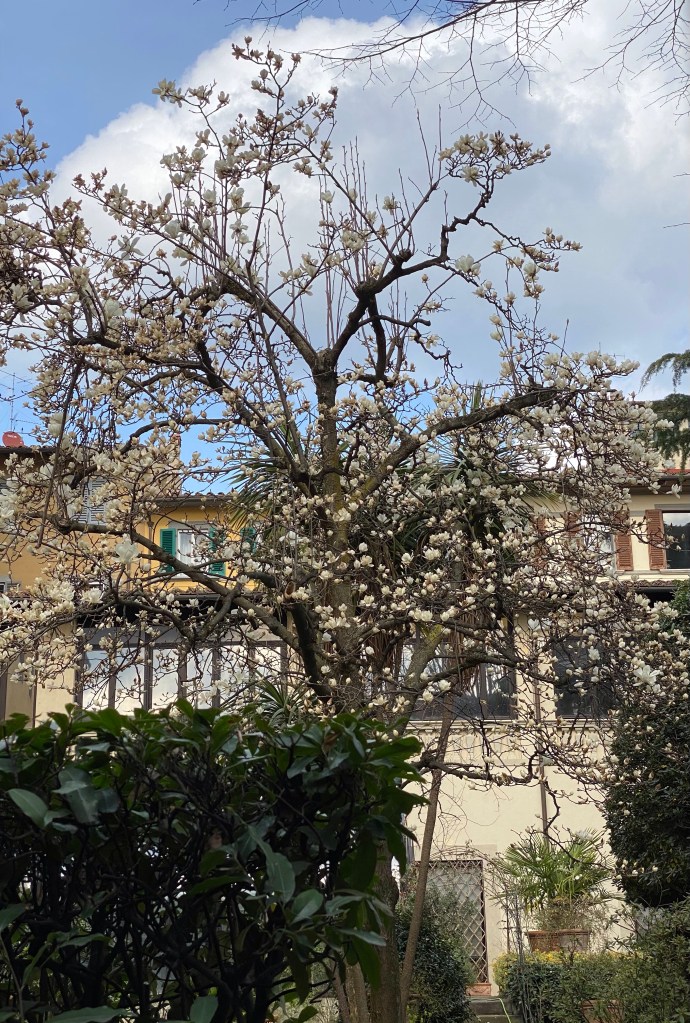
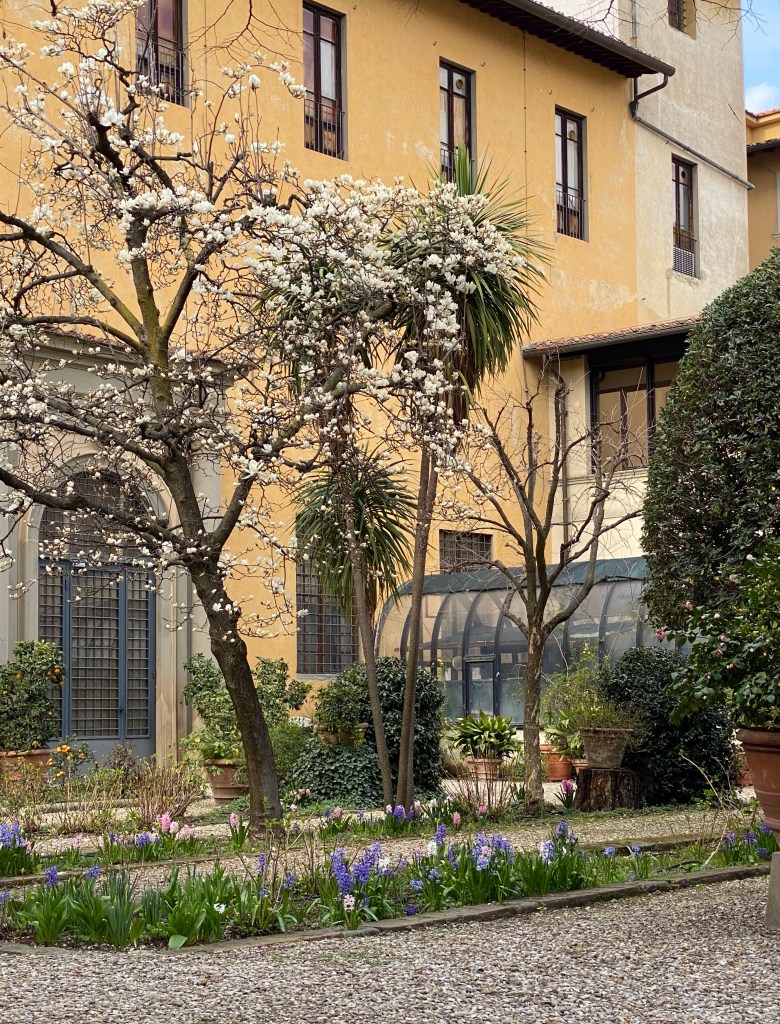
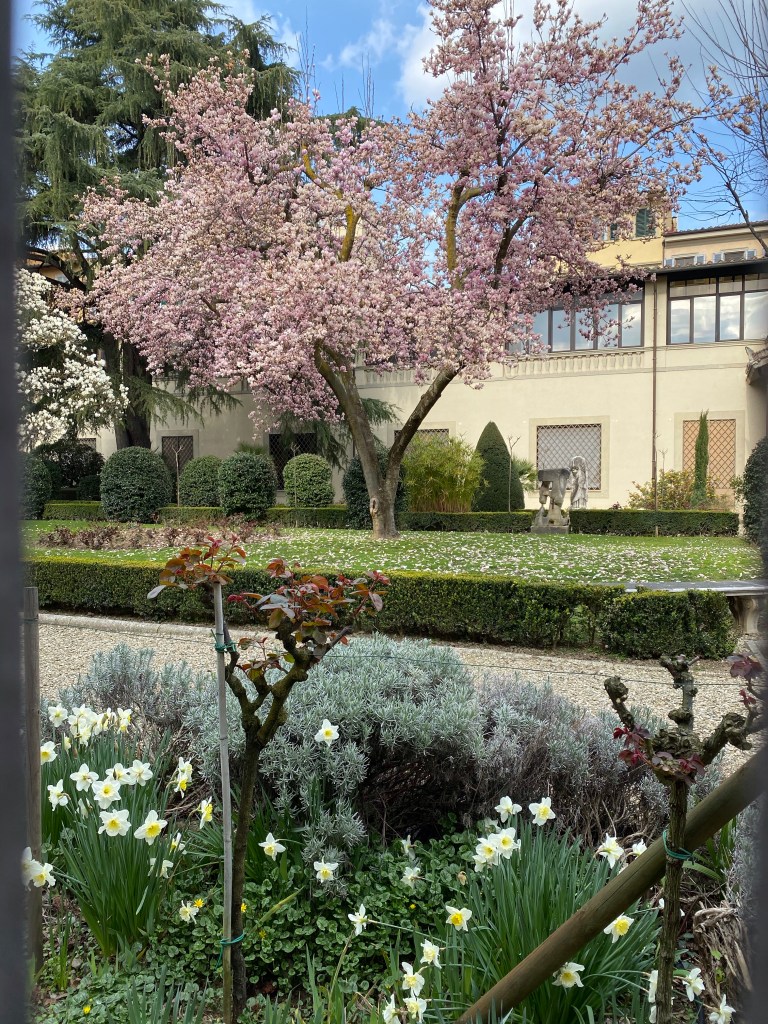
The garden behind the Archaeological Museum frustrates me in particular this week. Look at this early beautiful springtime tableau! These are the only daffodils and other spring-blooming bulbs I’ve seen flowering in Florence and they, along with the pink and the white magnolia trees, are behind bars. Florence doesn’t have (m)any gardens planted with spring bulbs as you would see in the UK or the USA.
My pictures look fulsome, but they were taken by holding my phone between the bars. Imagine that!
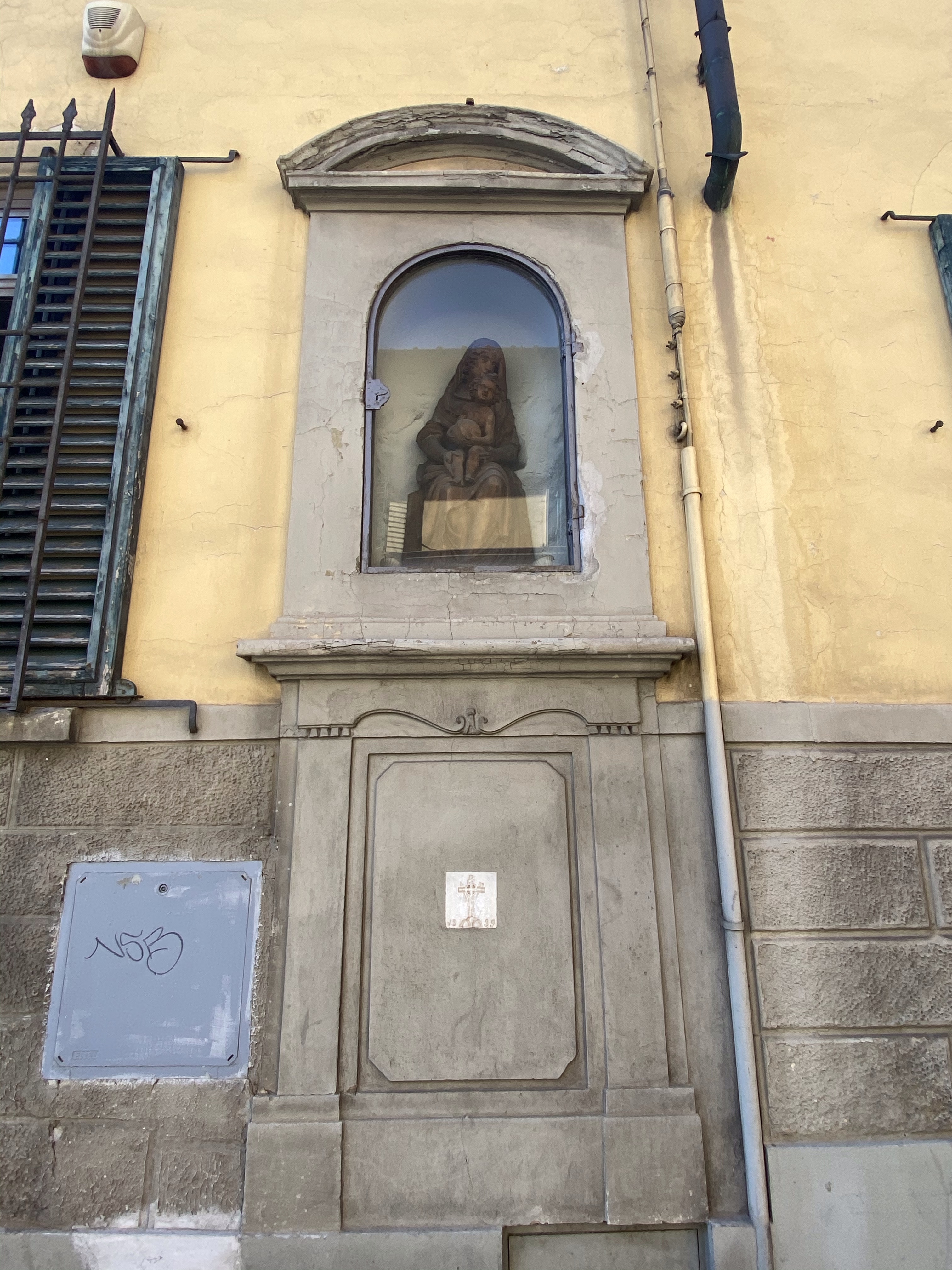
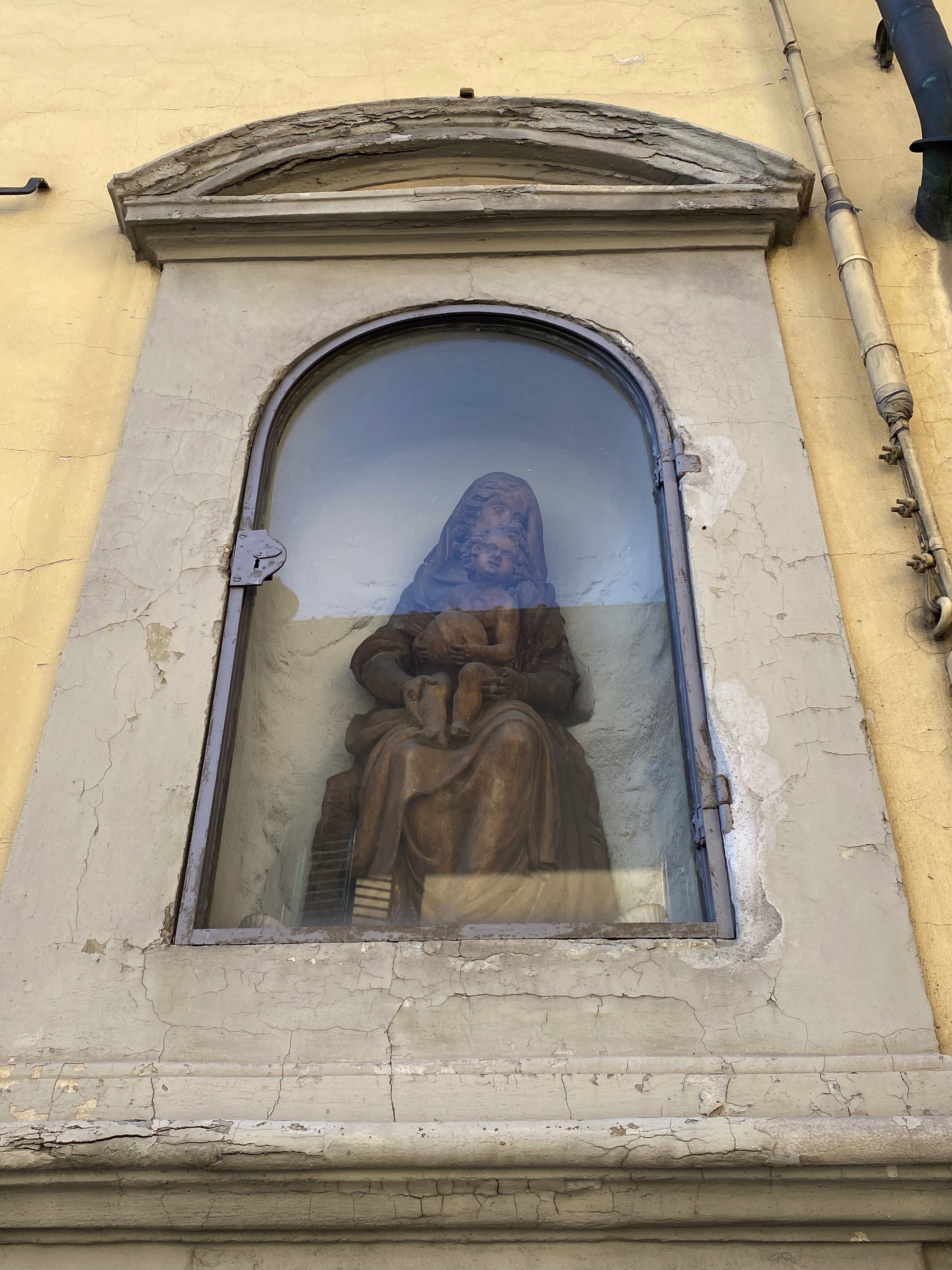
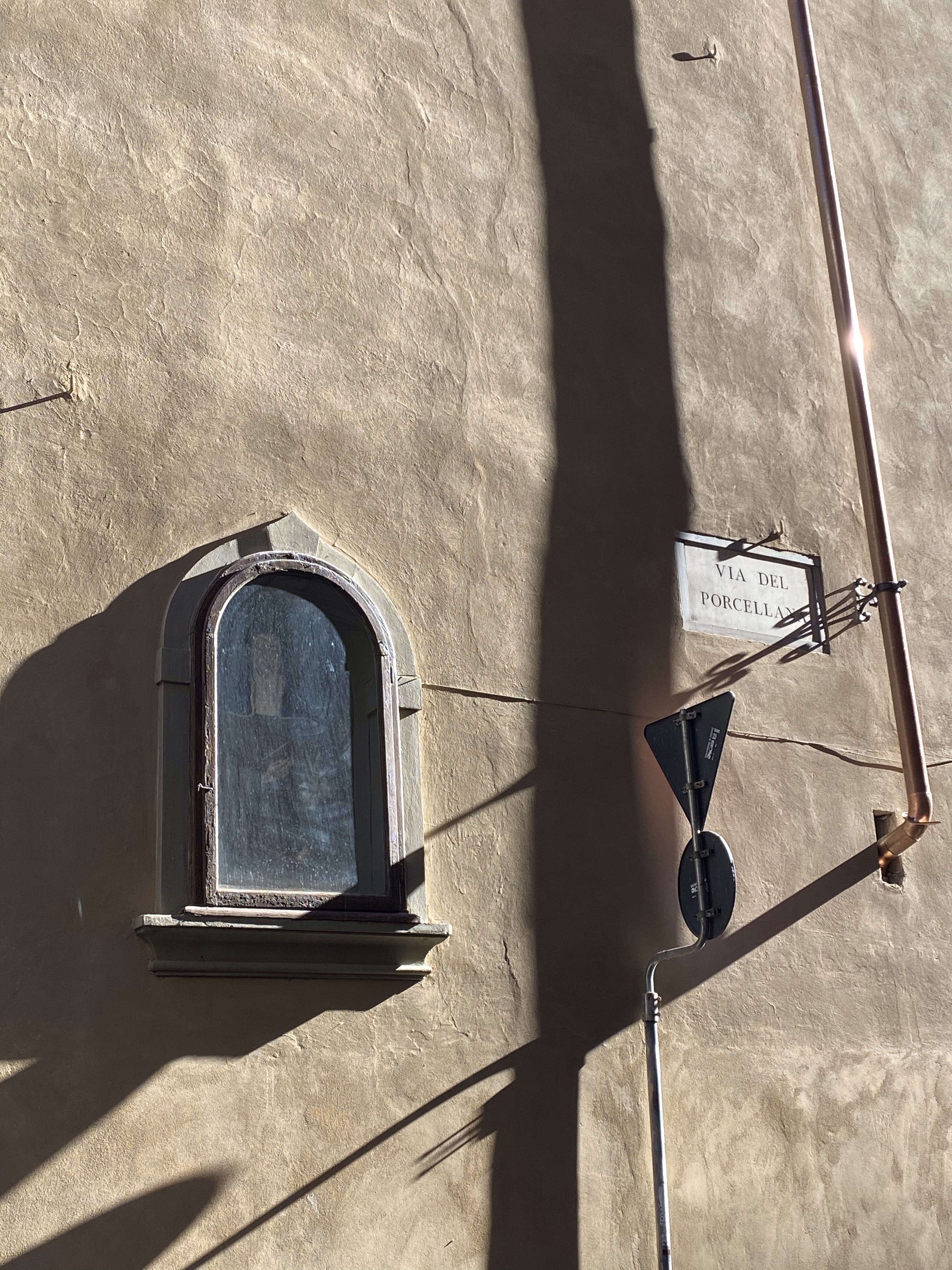
Walking along the very long Via dei Serragli for the umpteenth time, I spotted a tabernacle overhead that I’d not seen before. How often do I say that? About every day.
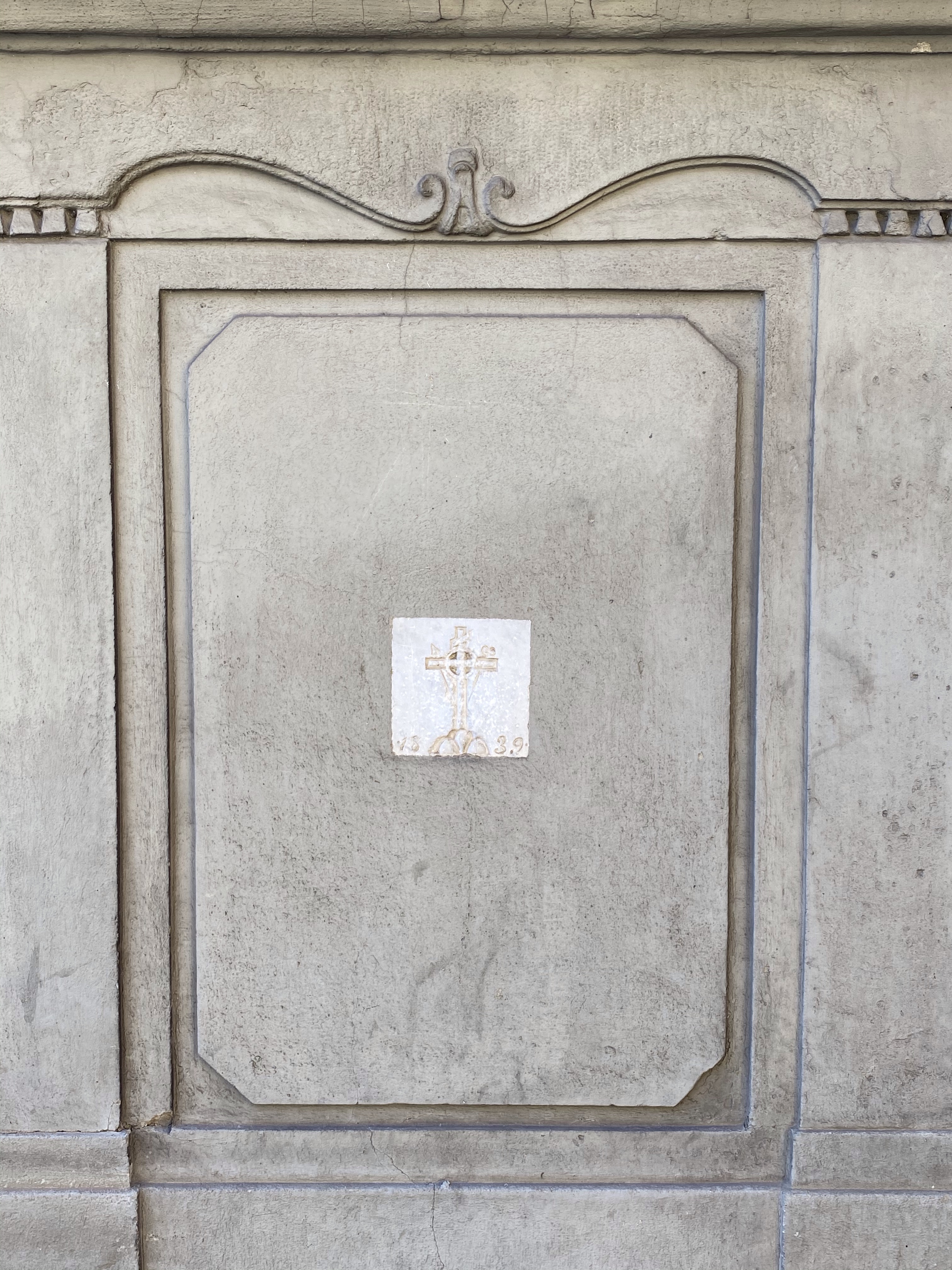
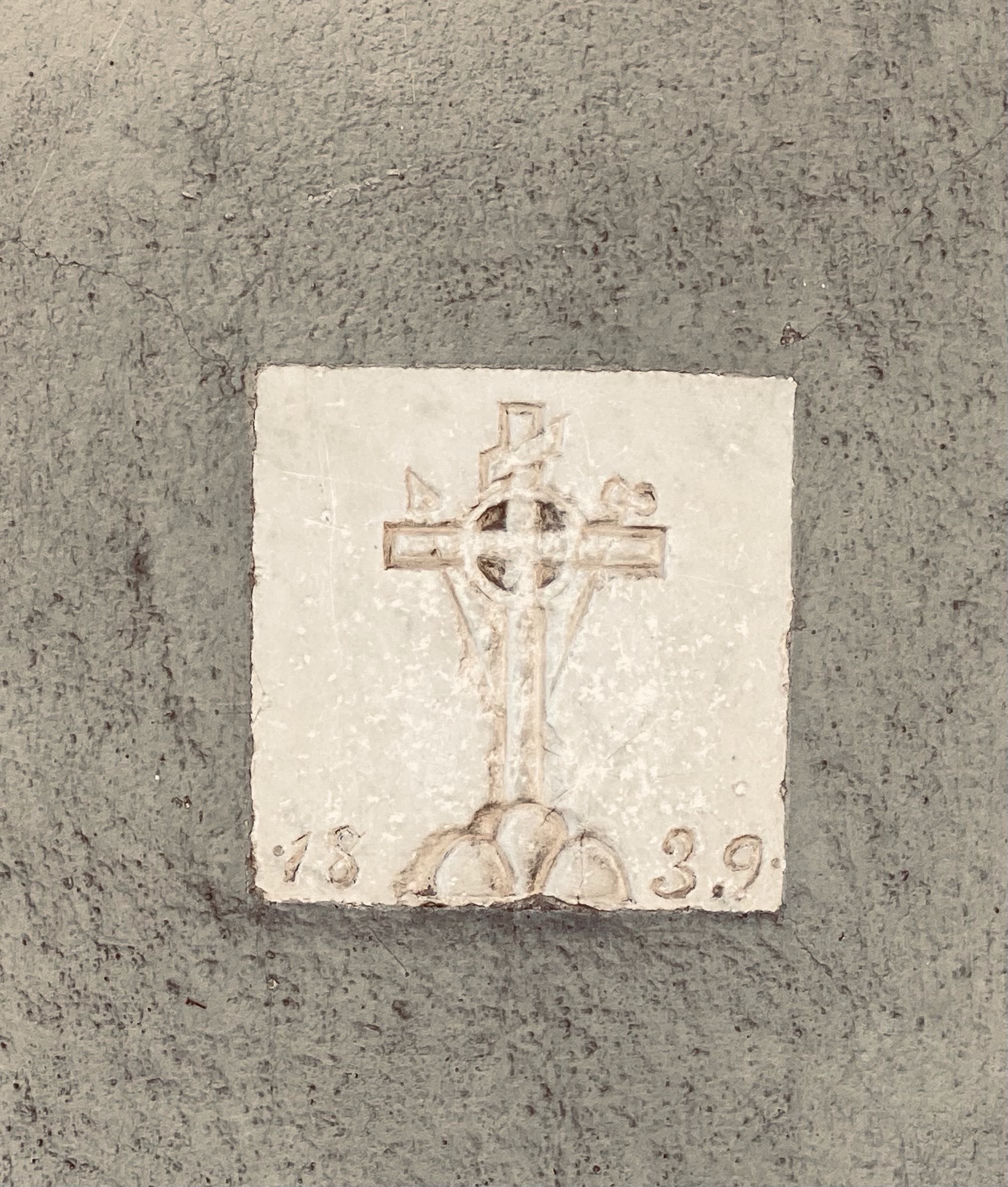
But what caught my eye to begin with was the simple white marble square inserted in a modestly decorative panel, incised with the date of 1839. That stopped me in my tracks and I looked up.
Keep your eyes open! You will see something new every time!
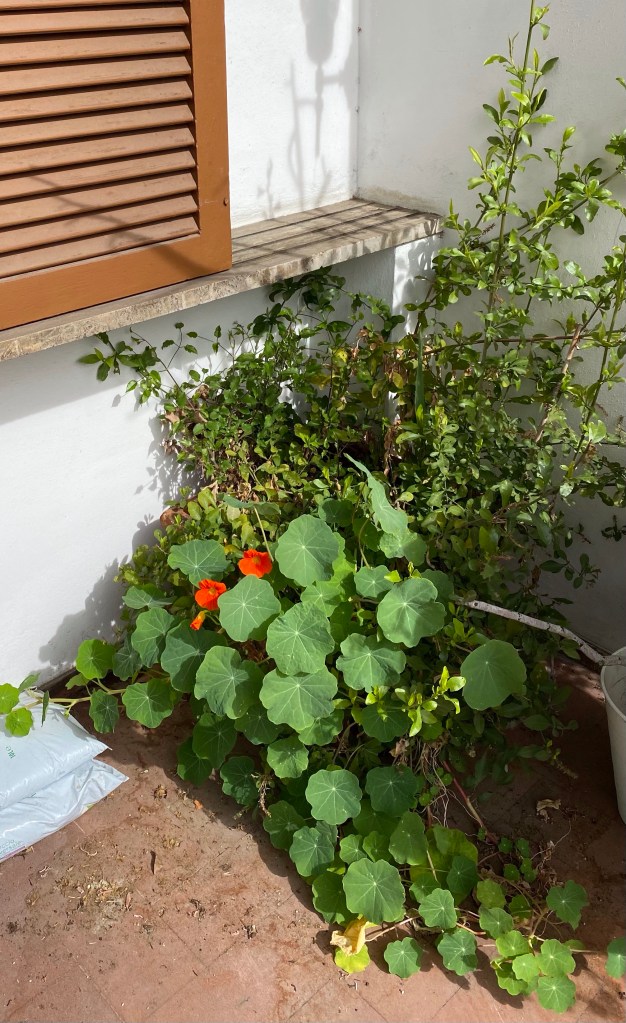
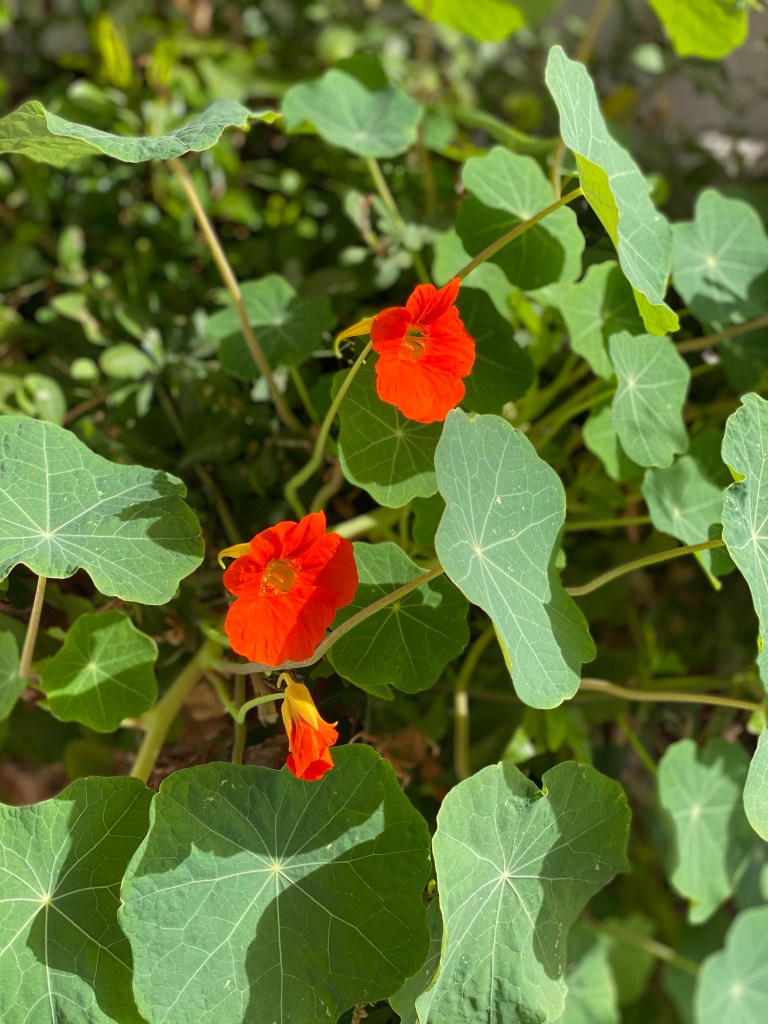
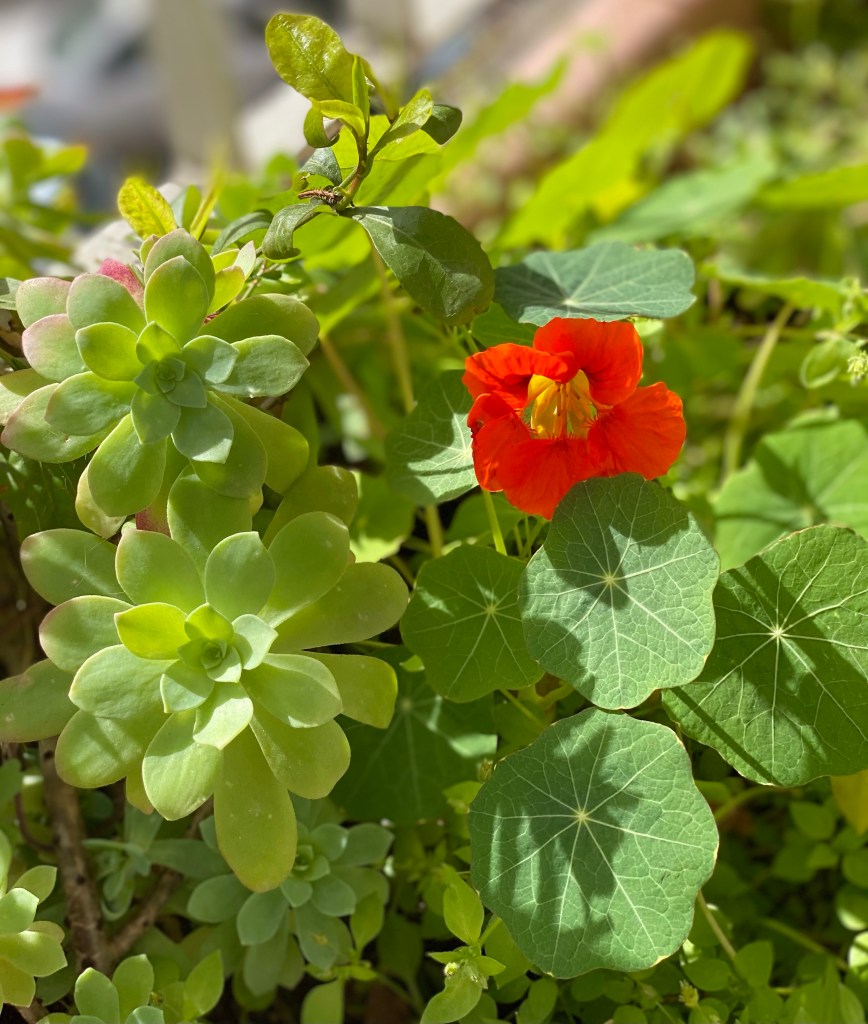
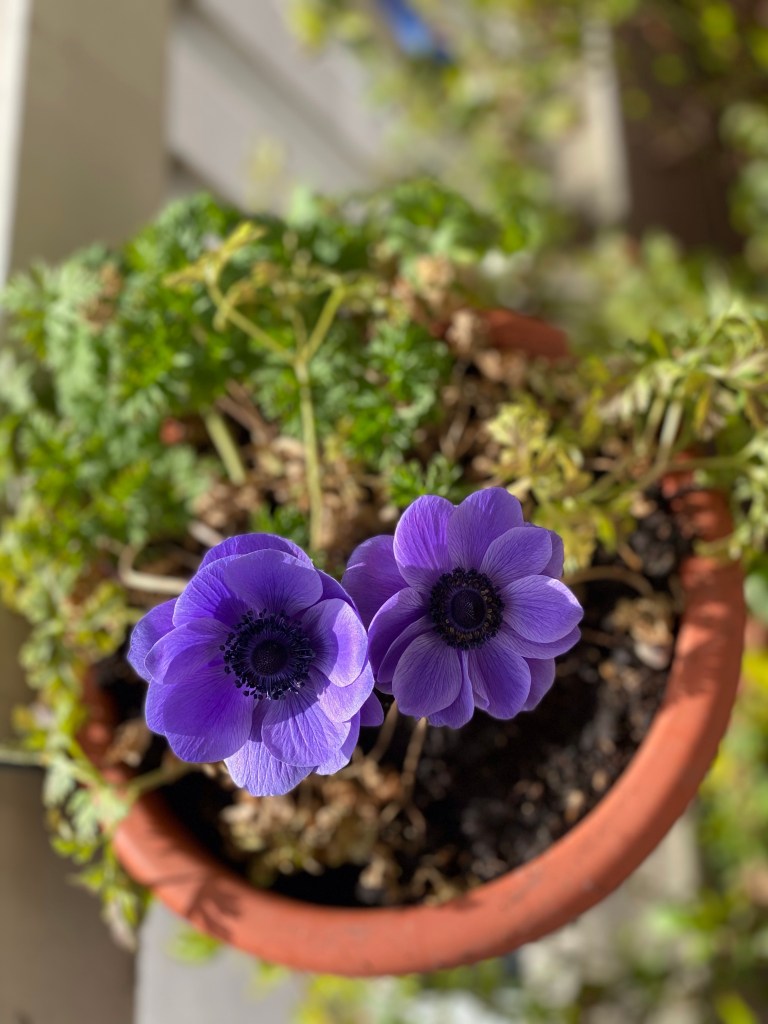
My nasturtiums over-wintered all on their own and have begun their 2021 blooming season! Along with this purple anemone. Despite cooler temps this weekend, spring is in the air!
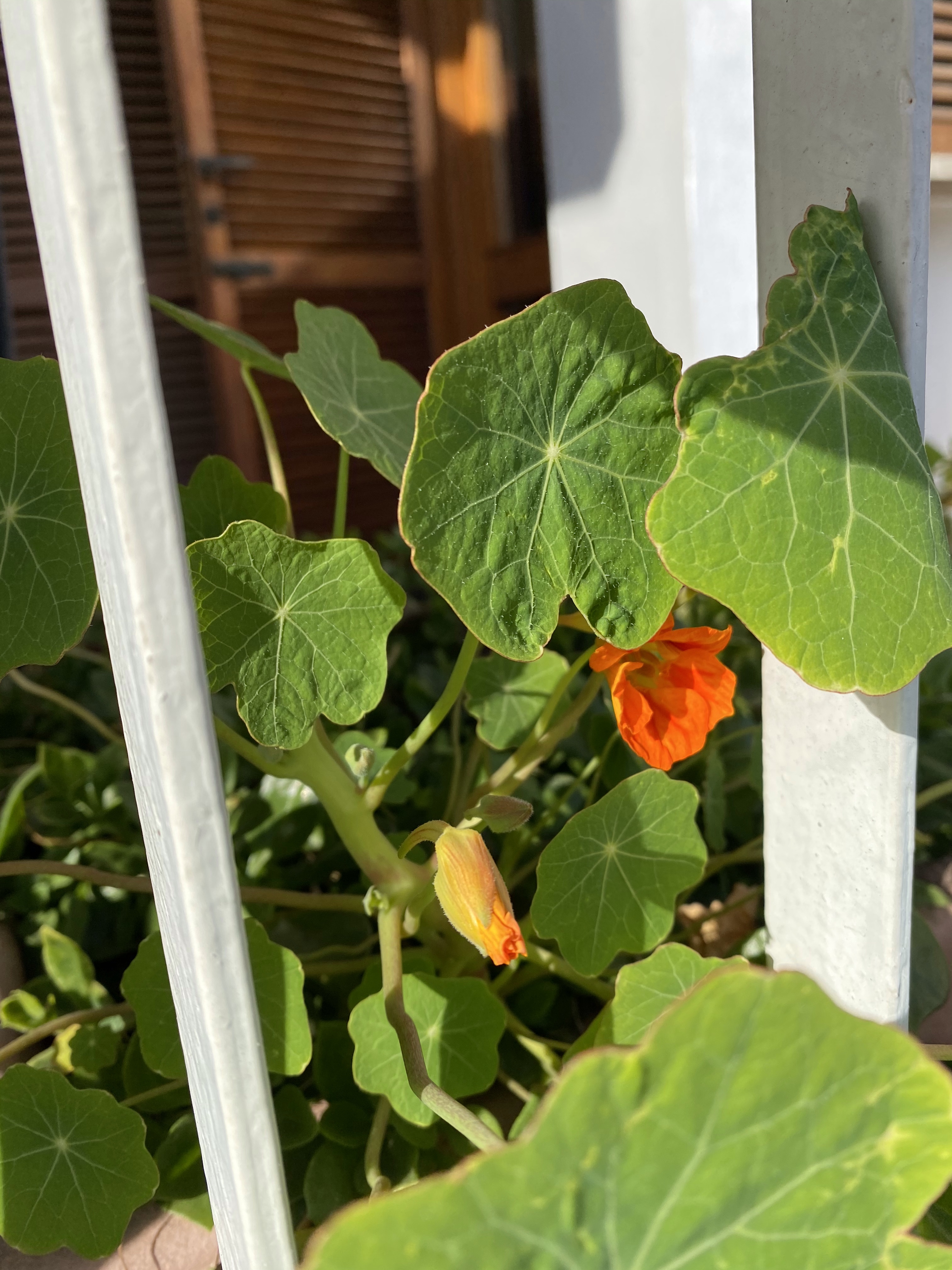
Look who just showed up, all on her own?! This little nasturtium blossom. The plant survived the cold winter on my balcony and has just started giving me pretty flowers!
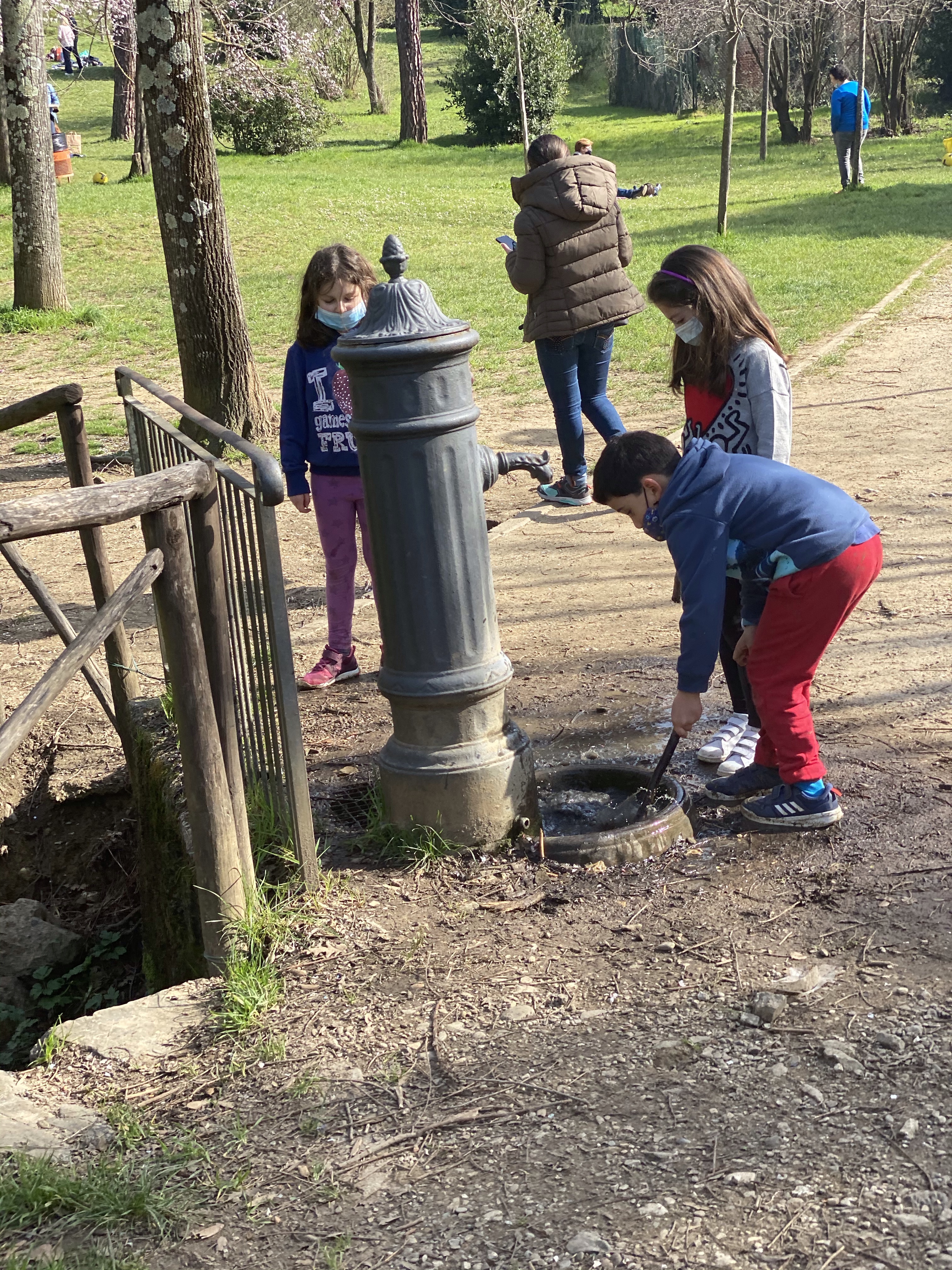
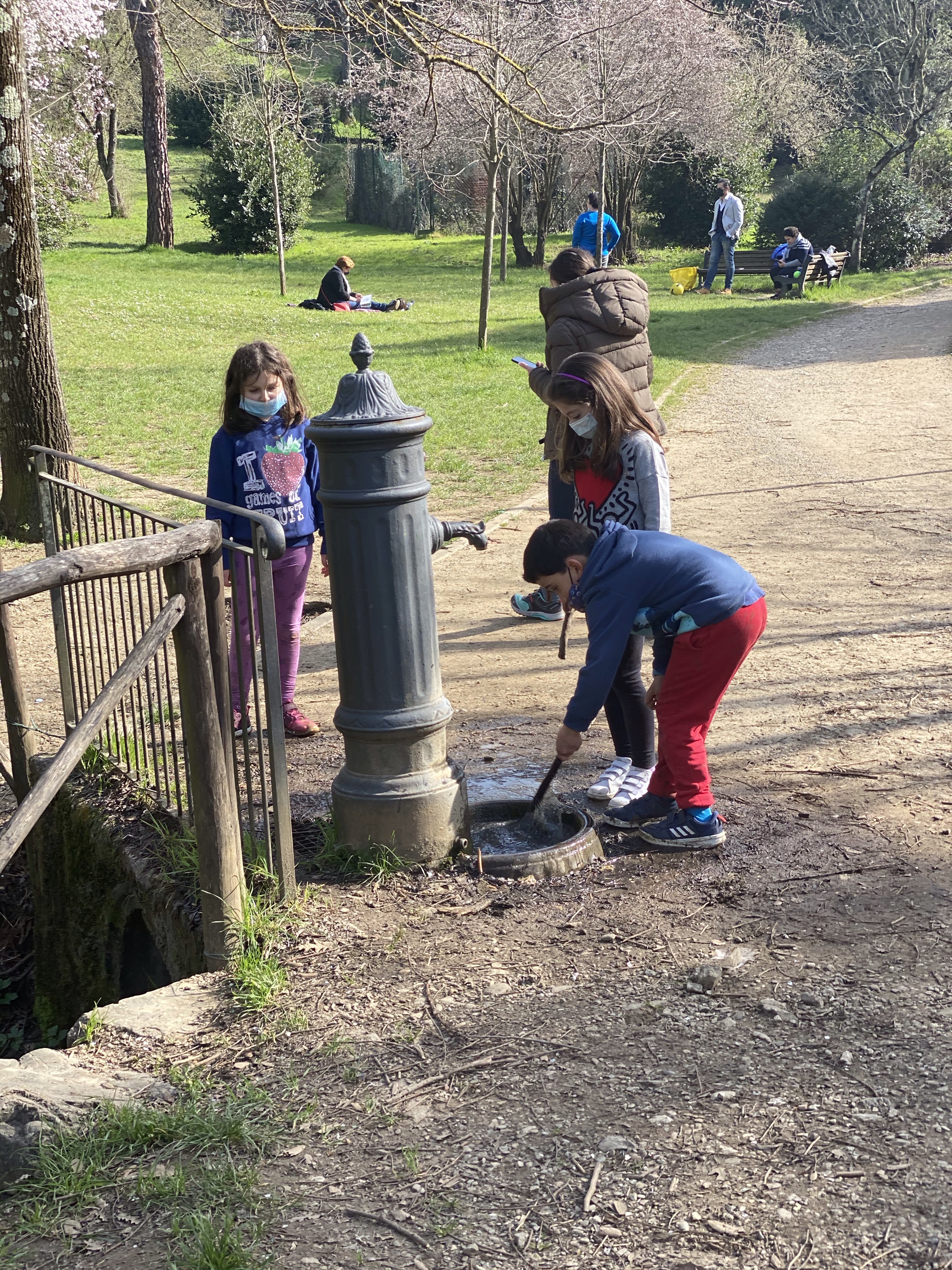
The next two pictures were taken in a local park. Where there is water and a little boy, there will be sticks and water play!
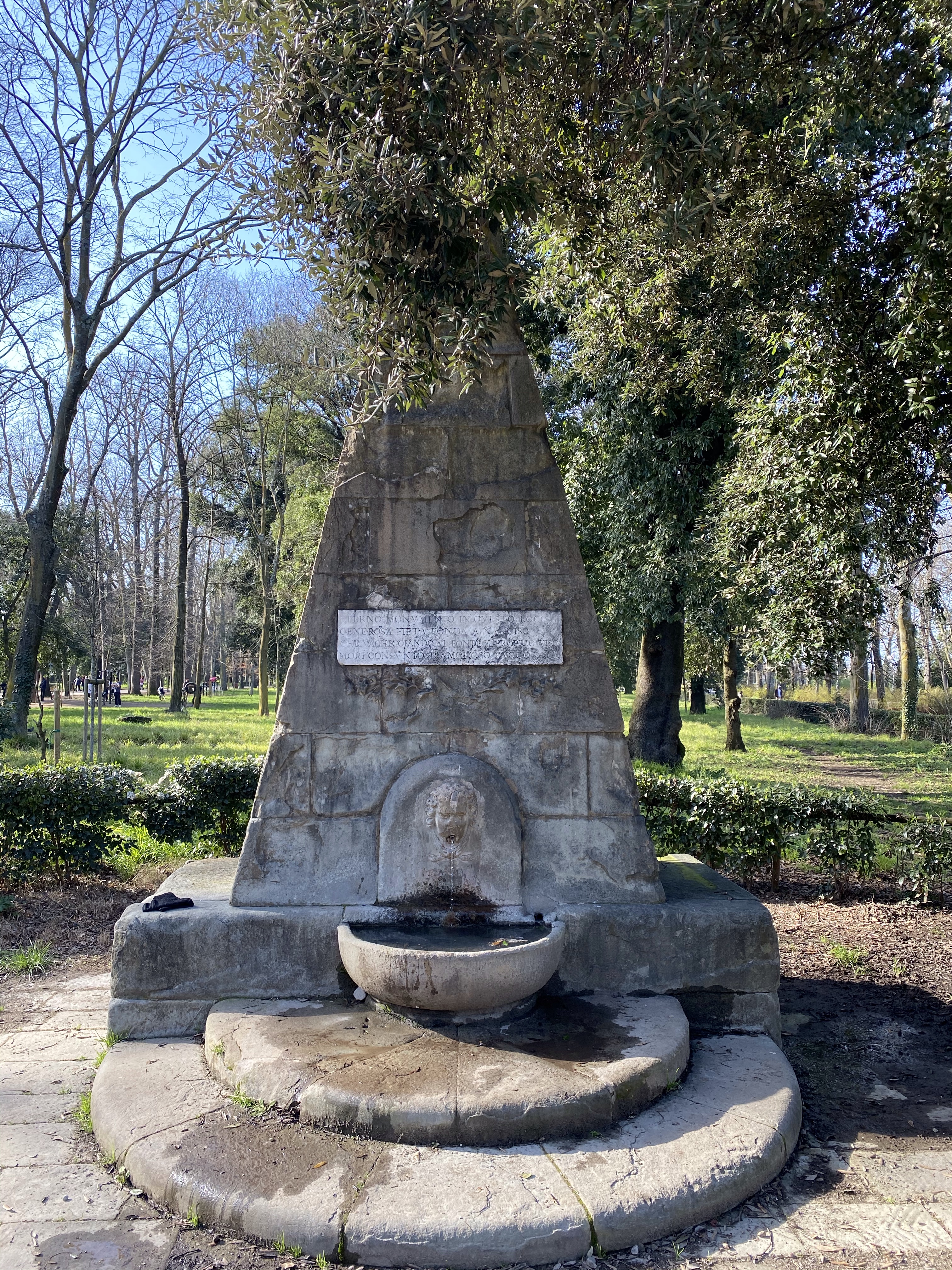
Yesterday I posted on the history of the Cascine; here are some pictures from some recent walks.
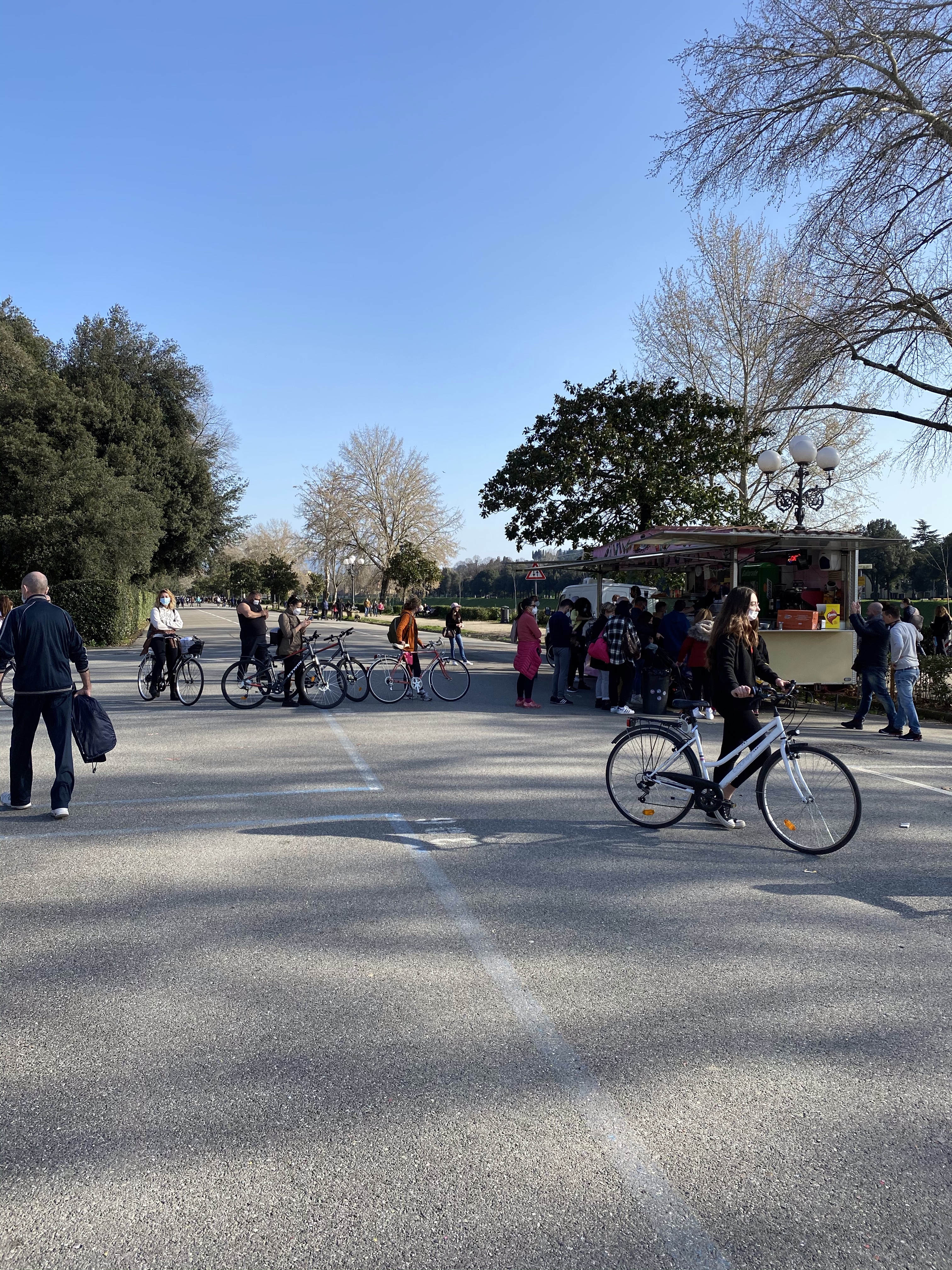
One of the million things I love about Italy, is that you are never far from a food truck. They sell coffees and all manner of cold drinks, candy, chips, sometimes panini, and sometimes gelato. They are always popular.
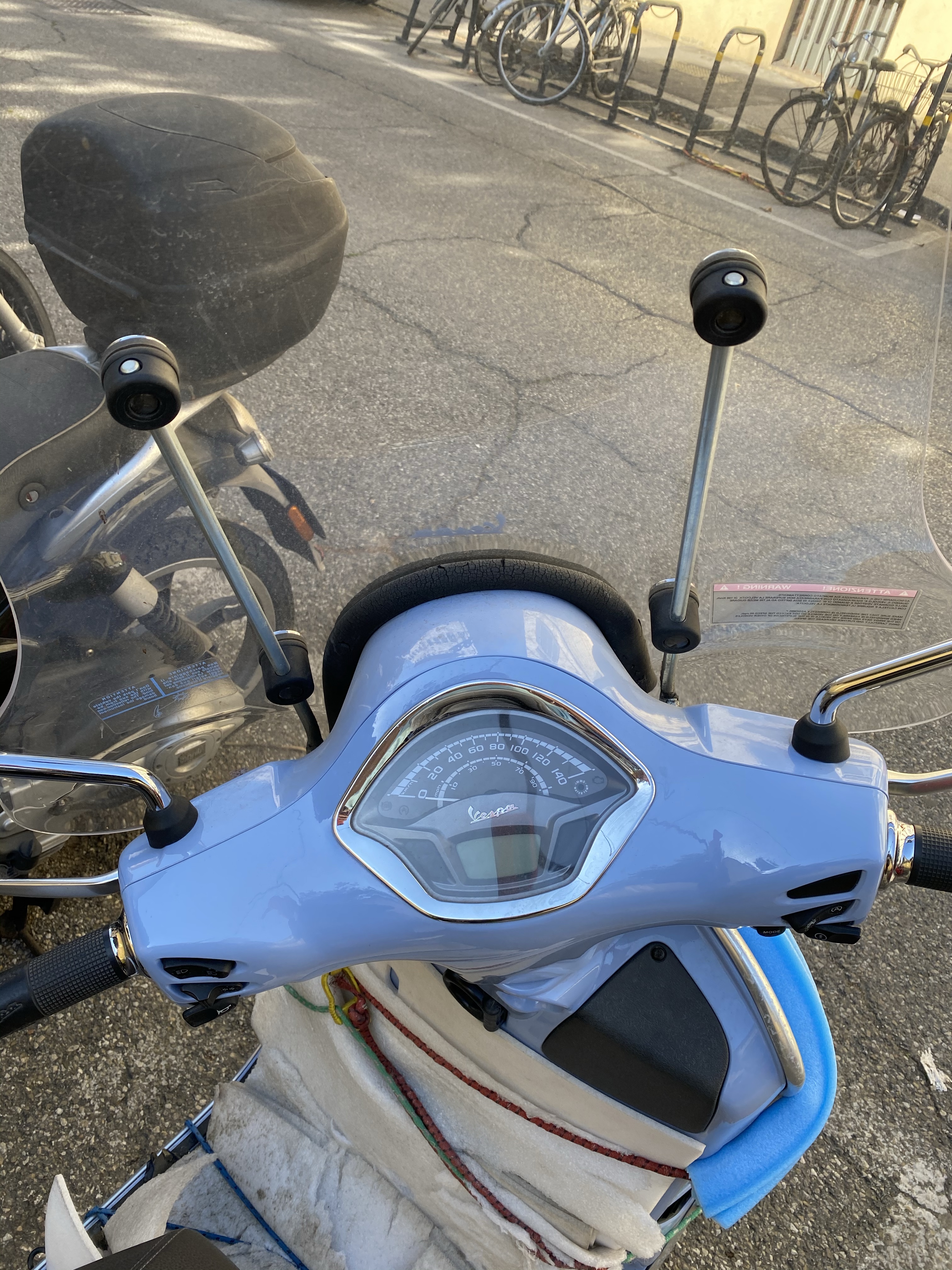
In the video above, I finally found the Vespa I have been looking for. I wonder where this little boy and his sister found theirs? I want one!
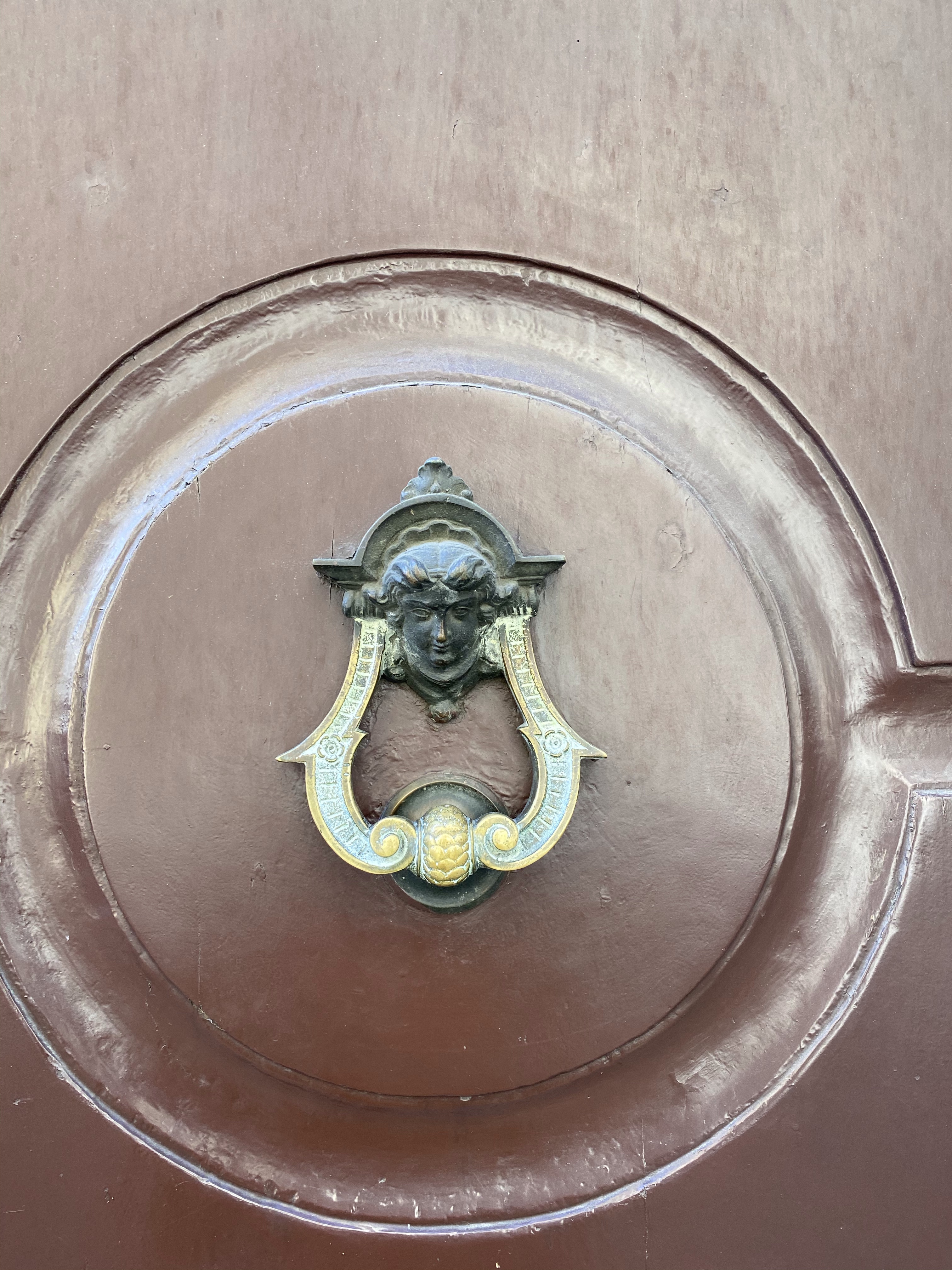
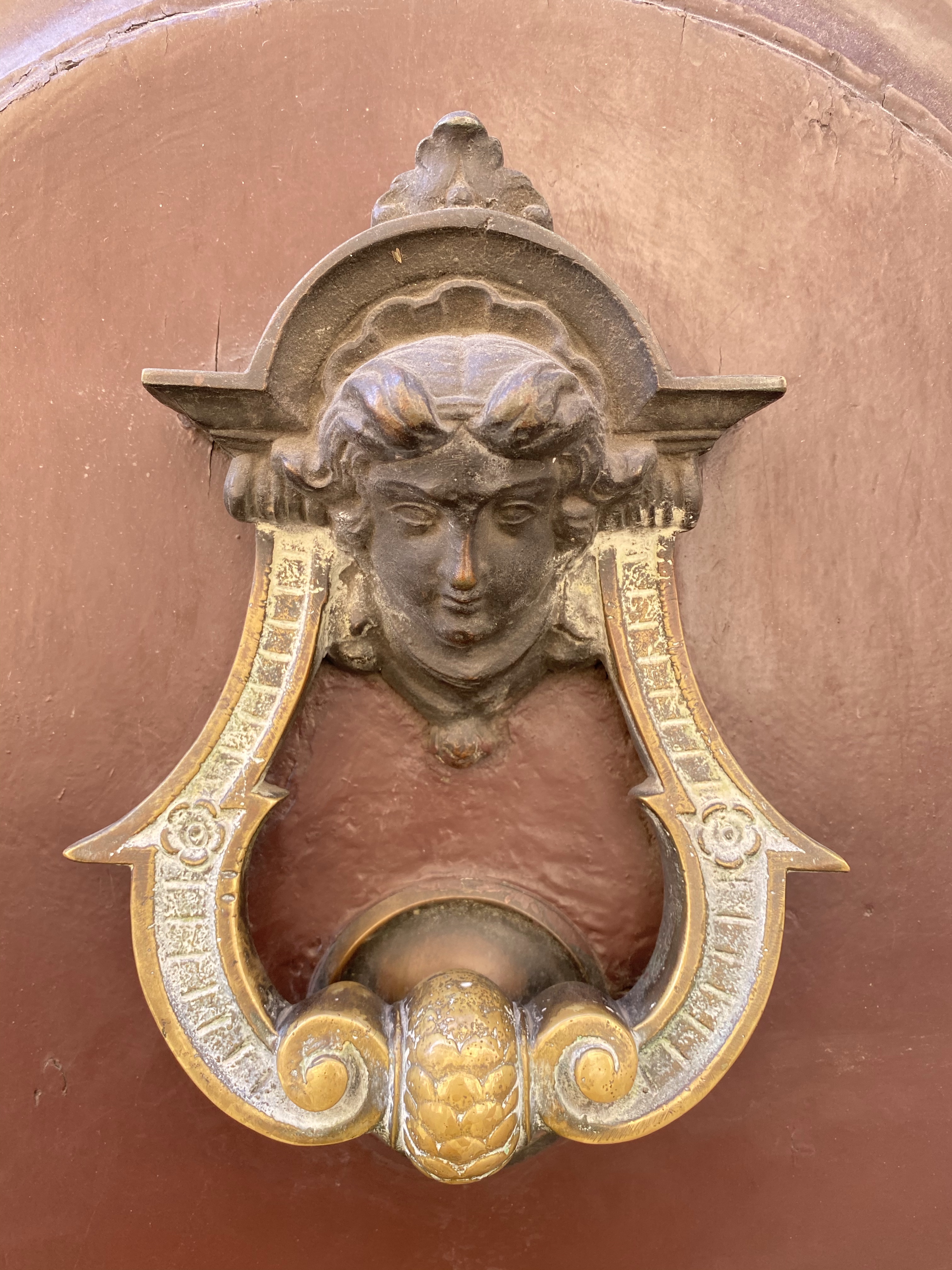
Another day, another walk, more door knocks. Italy is full of them and I love finding new (to me) designs.
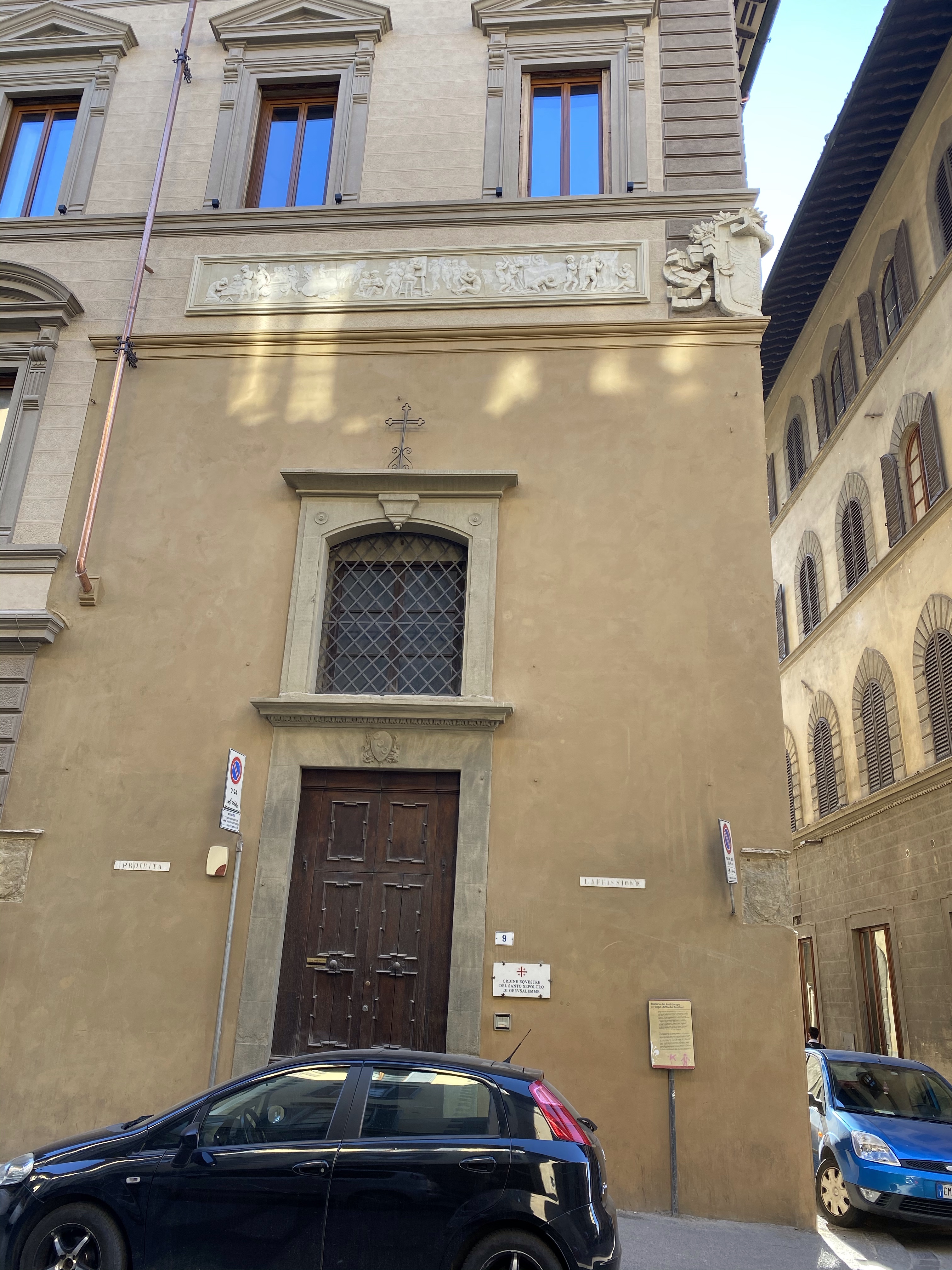
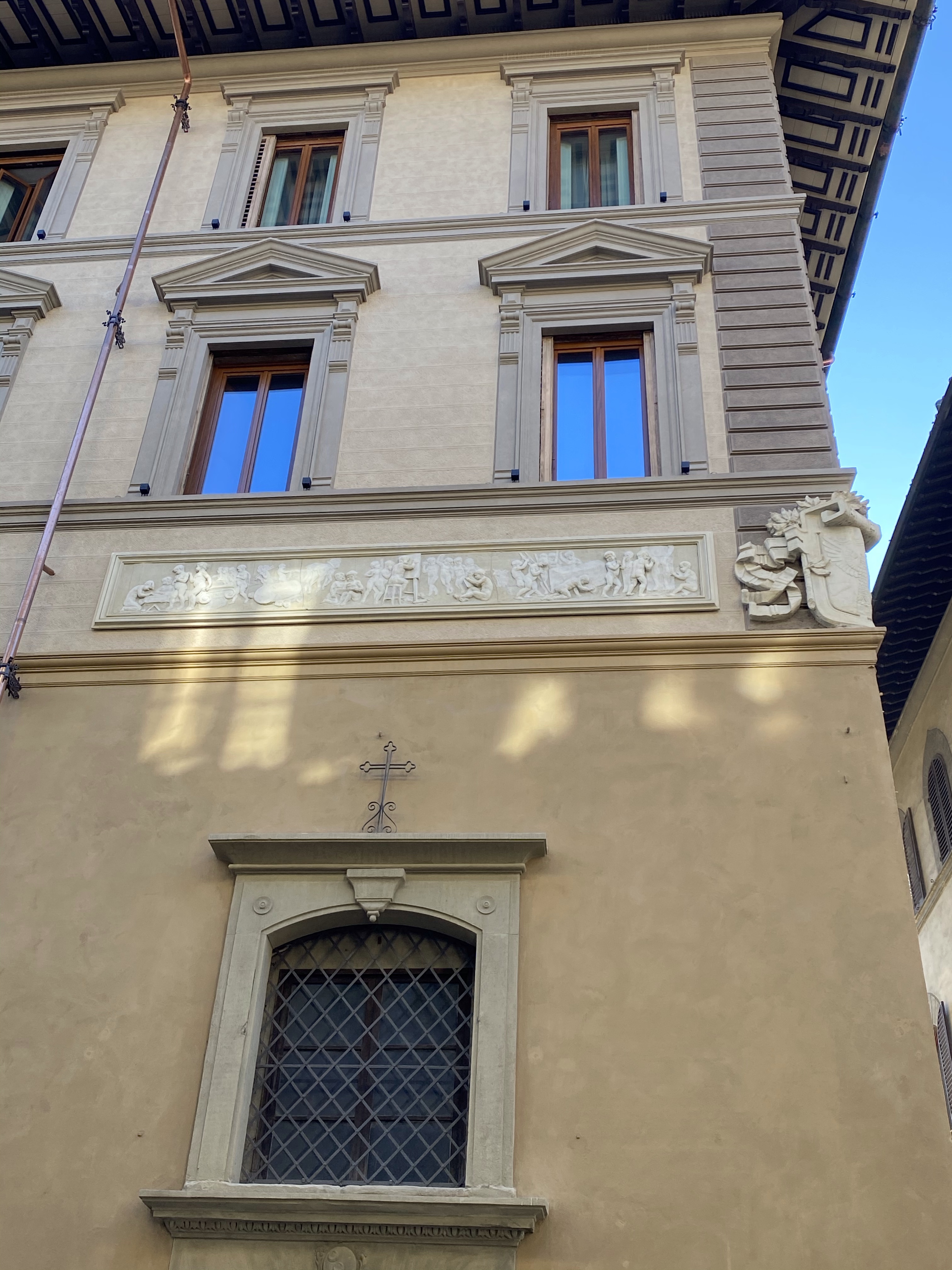
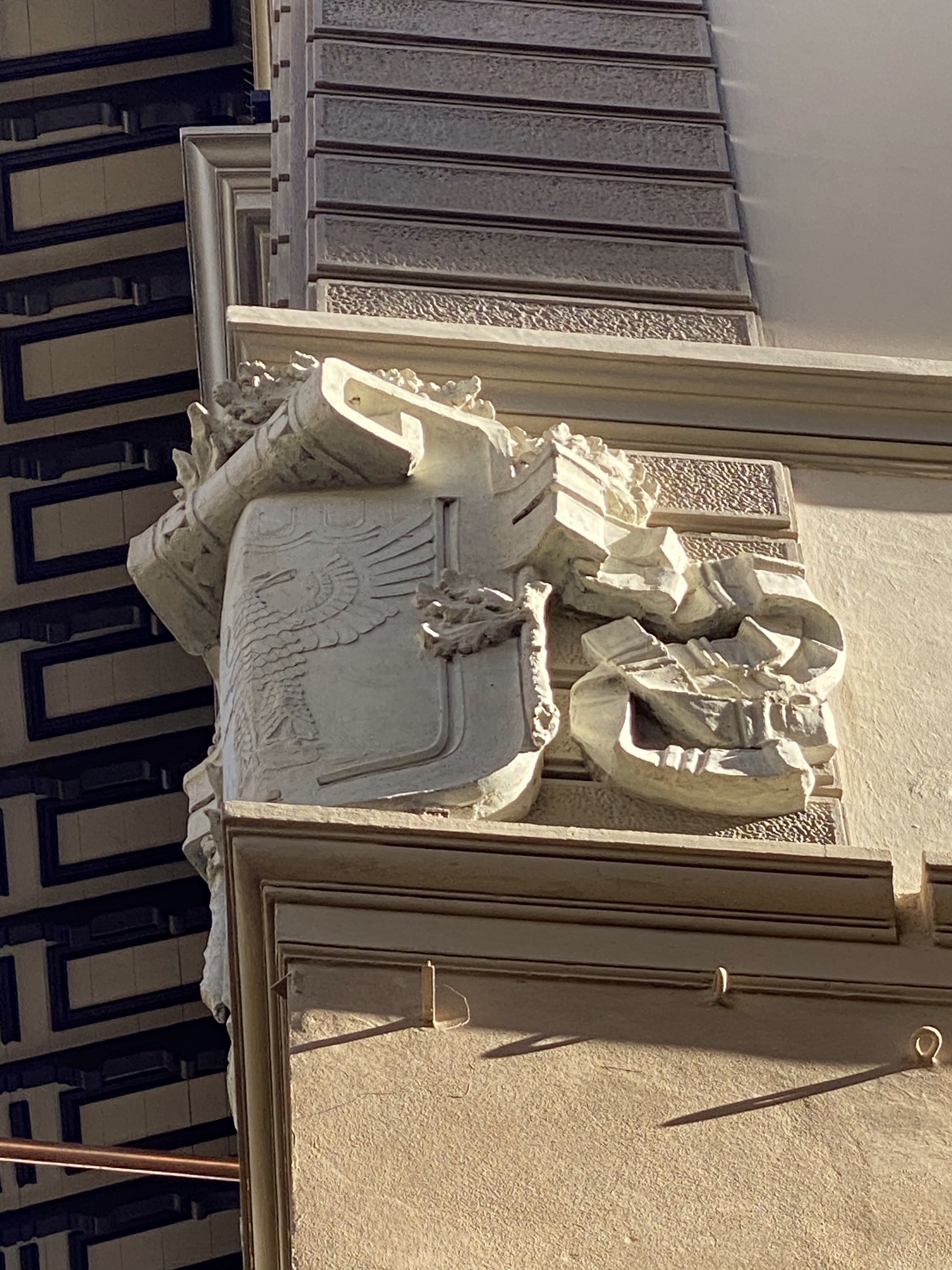
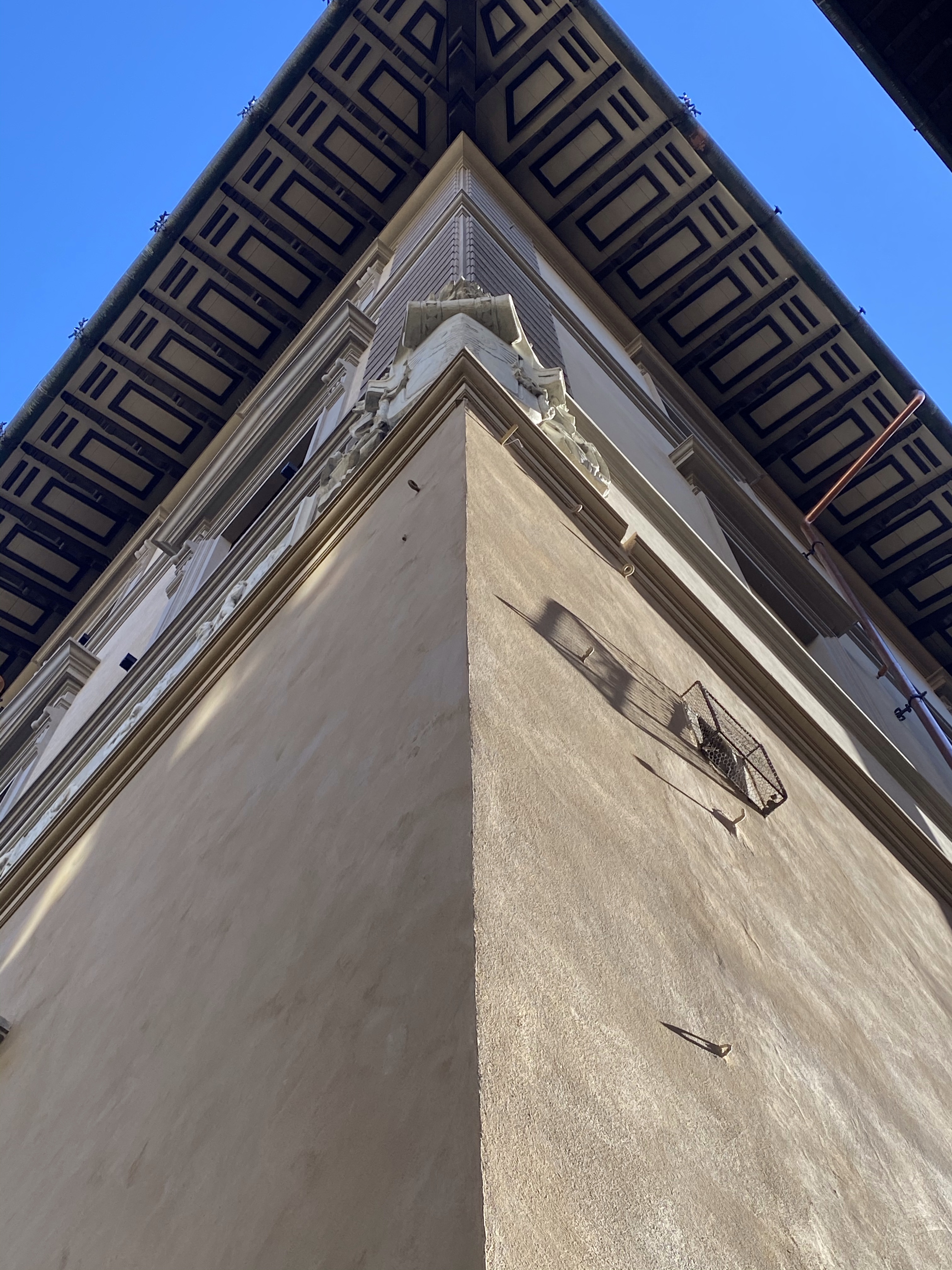
The way the sun was shining on this particular day, the relief sculpture above this doorway on the right caught my eye. Guess what, I’d never noticed it before!
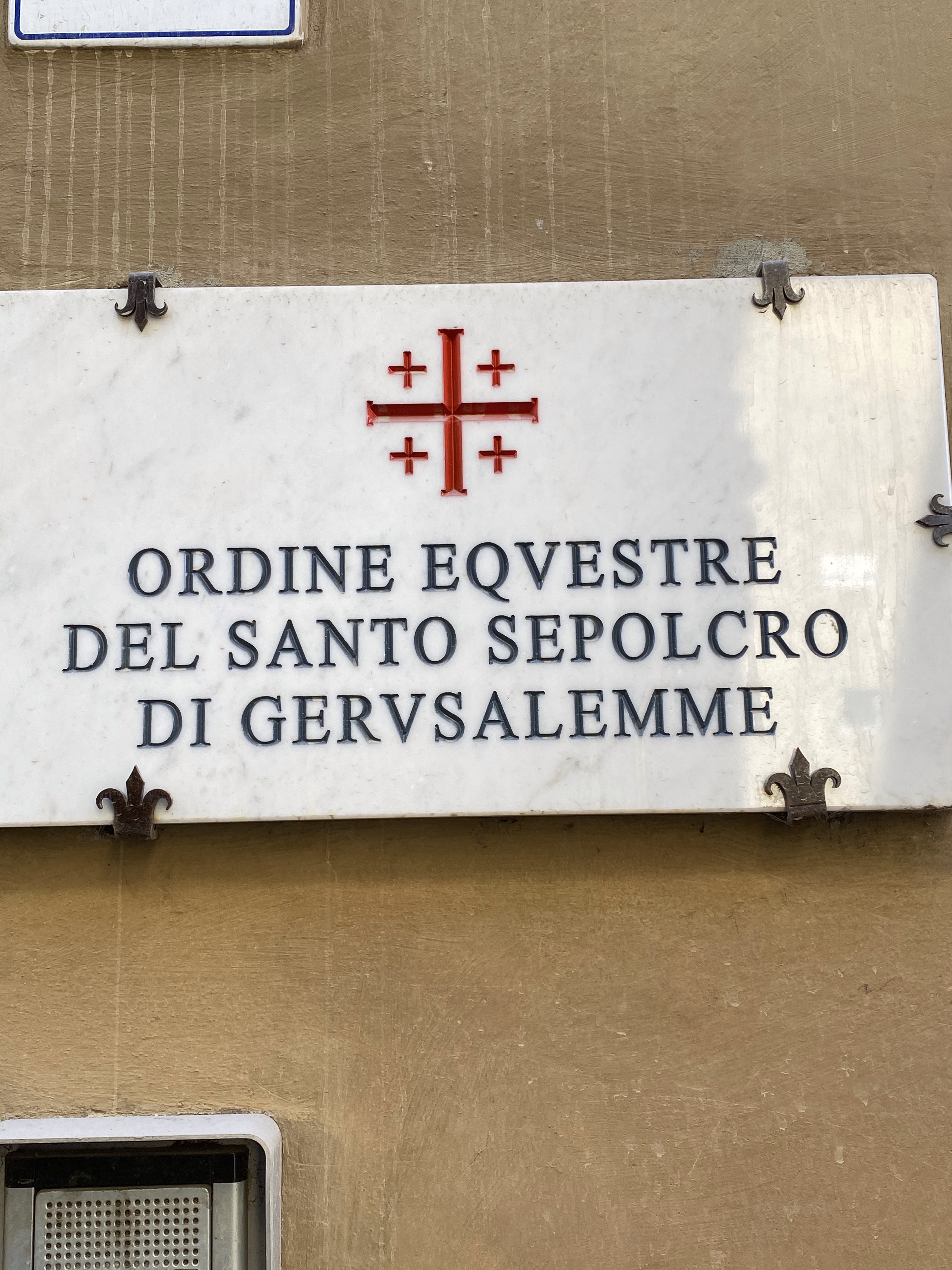
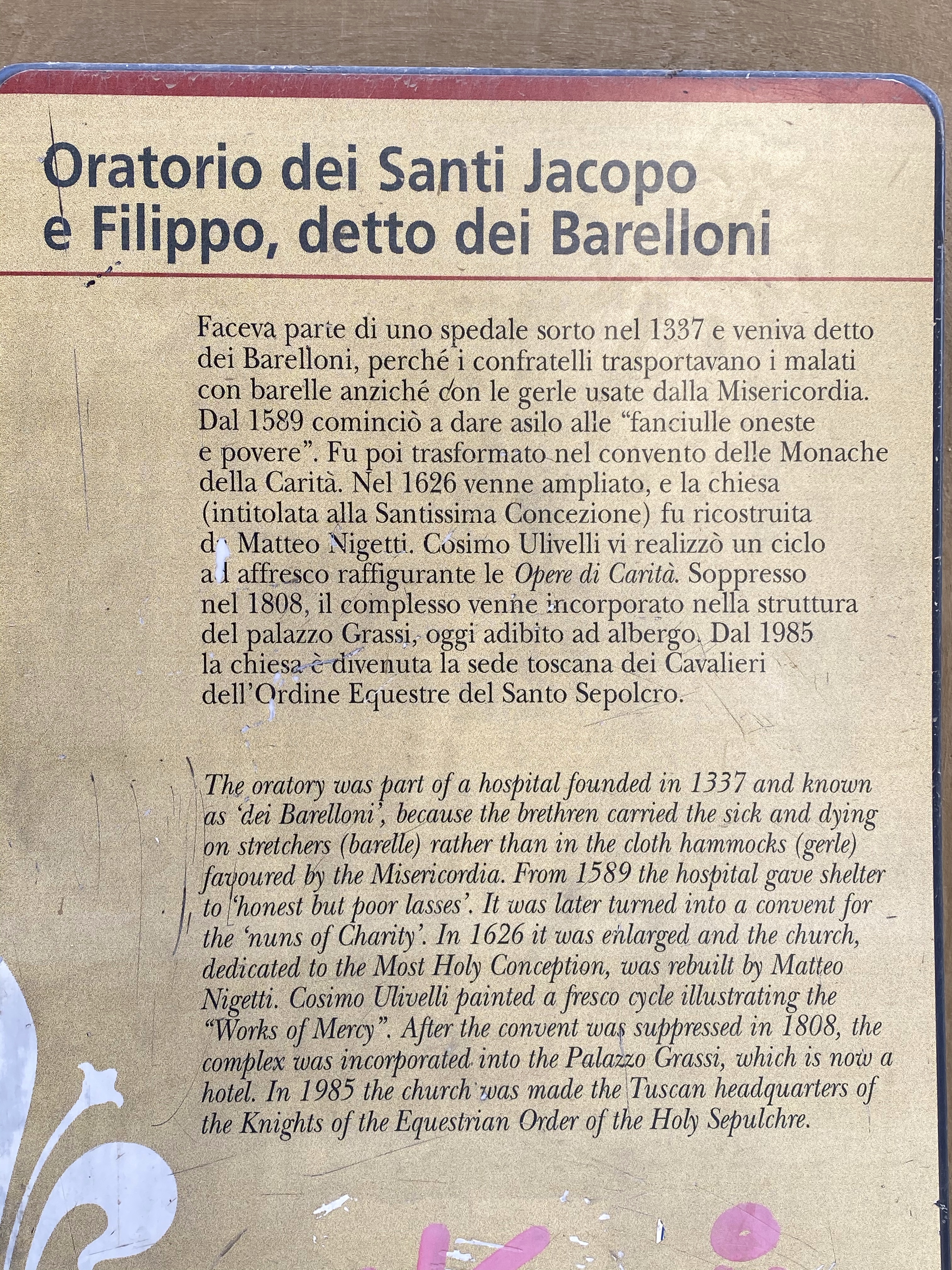
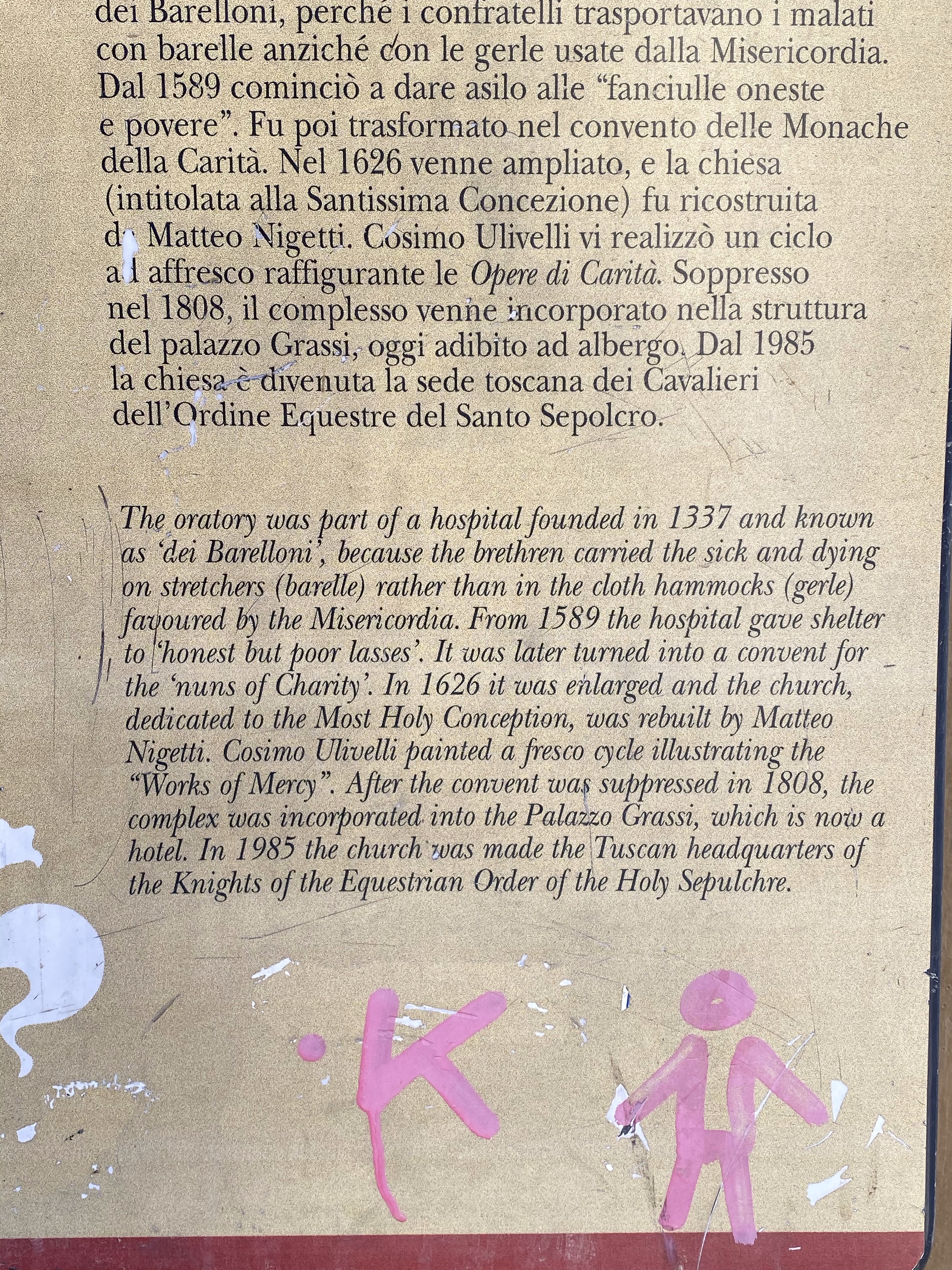
Upon closer inspection, there was a sign telling me this building has historical significance, which I’d guessed, due to the reliefs. It was the Oratorio dei Santi Jacopo e Filippo, detto dei Barelloni, or the Oratoy of Saints Jacob and Phillip, called the Barelloni.
The oratori was part of a hospital founded in 1337 and known as “dei Barelloni” because the brethren carried the sick and dying on stretchers (barelle) rather than in the cloth hammocks (gerle) favored by the Misericordia, which was a sister charitable association. The building occupied the block between via della Scala and via Palazzuolo. In 1504, the hospital was suppressed and in 1589 it began to give asylum to “honest and poor girls,” it was then transformed into the convent of the Nuns of Charity. In 1626 it was enlarged and the church, dedicated to the Most Holy Conception, was rebuilt by Matteo Nigetti. Cosimo Ulivelli painted a fresco cycle illustrating the “Works of Mercy.” After the convent was suppressed in 1808, the complex was incorporated into the Palazzo Grassi, which is now a hotel. In 1985 the church was made into the Tuscan headquarters of the Knights of the Equestrian Order of the Holy Sepulchre.
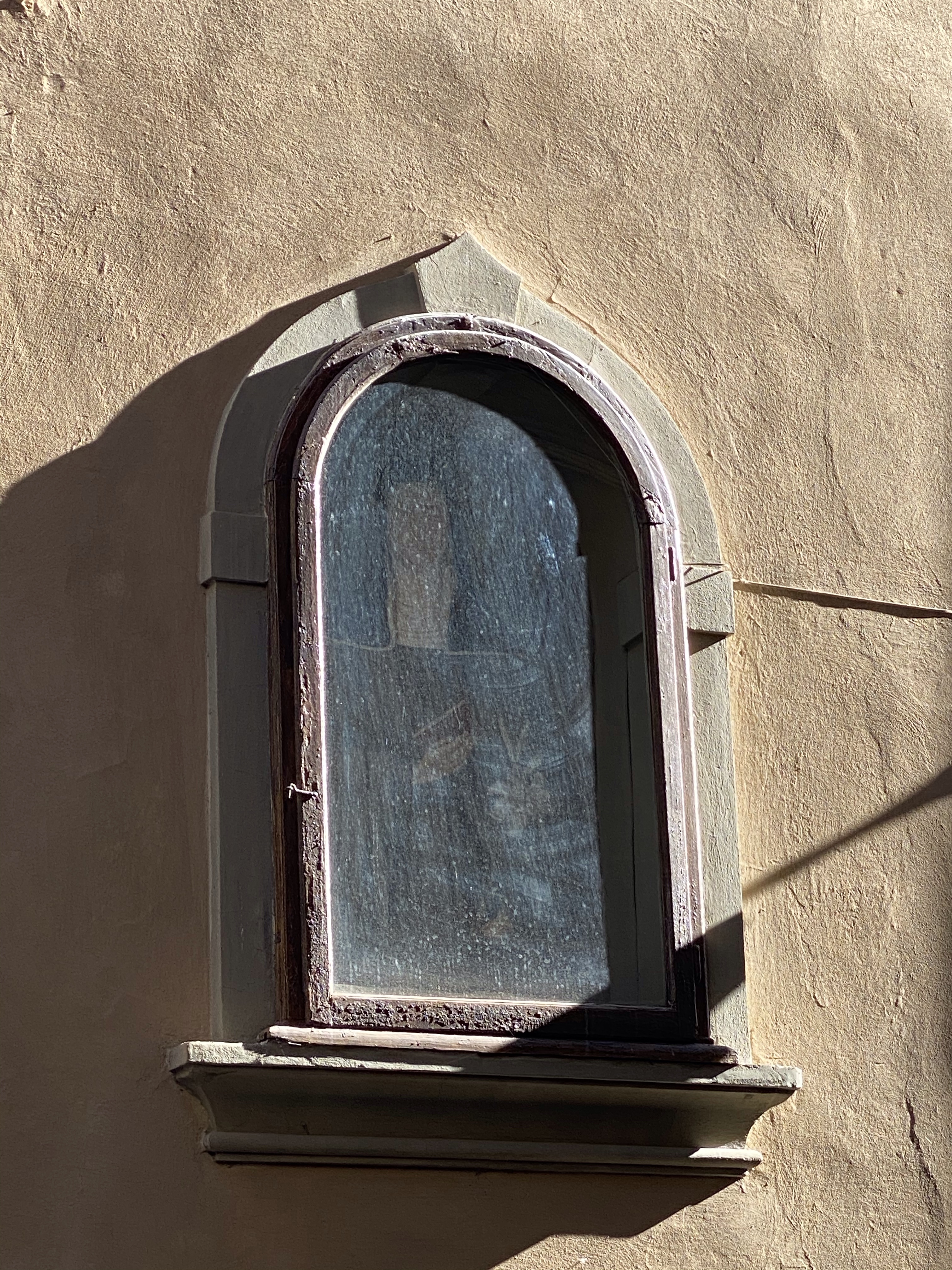
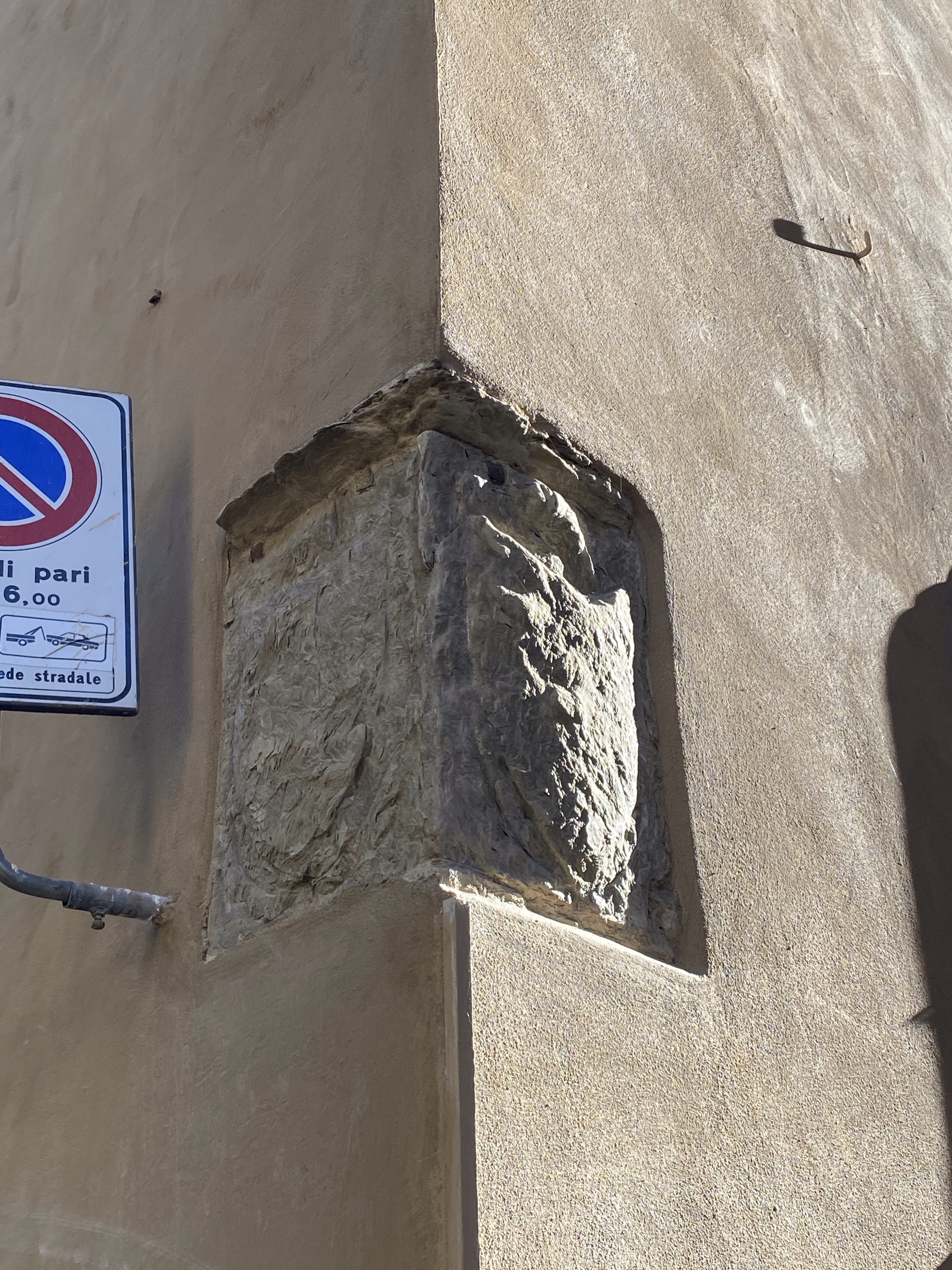
My pictures show some details of this interesting exterior, including a tabernacle on its western wall as well as the remnants of a former building seen on the corner.
It turns out that the Equestrian Order of the Holy Sepulchre of Jerusalem, also called Order of the Holy Sepulchre or Knights of the Holy Sepulchre, is a Catholic order of knighthood under the protection of the Holy See and very much a living thing. The pope is the sovereign of the order which, with the five other papal equestrian orders and the Sovereign Military Order of Malta, are the only orders of chivalry that are recognised and protected by the Holy See.
The order creates canons as well as knights, with the primary mission to “support the Christian presence in the Holy Land”.
The order today is estimated to have some 30,000 knights and dames in 60 lieutenancies around the world. The cardinal grand master has been Fernando Filoni since 2019, and the Latin Patriarch of Jerusalem is grand prior. Its headquarters are situated at Palazzo Della Rovere and its official church in Sant’Onofrio al Gianicolo, both in Rome, close to the Vatican City.
Pilgrimages to the Holy Land were a common, if hazard ridden, practice from shortly after the crucifixion of Jesus onward through the Middle Ages. Numerous detailed commentaries have survived as evidence of this early Christian devotion. While there were many places the pious visited during their travels, the one most cherished was the Church of the Holy Sepulchre, first constructed by Constantine the Great in the 4th century AD.
During the era of the Islamic expansion, Emperor Charlemagne (c. 742–814) sent two embassies to the caliph of Baghdad, asking Frankish protectorate over the Holy Land. An epic chanson de geste recounts his legendary adventures in the Mediterranean and pilgrimage to Jerusalem.
In feudalism it was common practice for knights commanders to confer knighthoods upon their finest soldiers, who in turn had the right to confer knighthood on others upon attaining command. Tradition maintains that long before the Crusades, a form of knighthood was bestowed upon worthy men at the Church of the Holy Sepulchre. In any case, during the 11th century, prior to the Crusades, “milites sancti Petri” were established to protect Christians and Christian premises in the Occident.
Persecution of Christians in the Holy Land intensified. Relations with Christian rulers were further strained when Caliph Al-Hakim bi-Amr Allah ordered the destruction of the Church of the Holy Sepulchre in 1009.
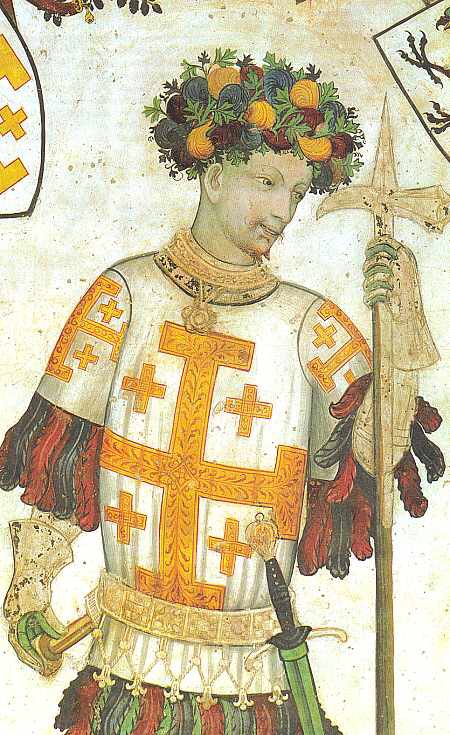
The Order of the Holy Sepulchre traces its roots to circa 1099 under the Frankish knight Godfrey of Bouillon (1060–1100), “advocate of the Holy Sepulchre” (Latin: Advocatus Sancti Sepulchri), leader of the First Crusade and first ruler of the Kingdom of Jerusalem. Fresco by Giacomo Jaquerio in Saluzzo, northern Italy (circa 1420).





 get back, lauretta!
You must be logged in to post a comment.