Florence baptistry restoration underway now

The following text comes from the Youtube description of this wonderful restoration project:

Here come all those who wish to see admirable things” is the English translation of the words set in the marble inlay of the floor of Florence’s baptistery, as visitors enter through the Gates of Paradise. These worthy items include the fourteenth-century mosaics depicting prophets, bishops and cherubs, which are enjoying renewed vigour after the restoration of four of the eight sides of Florence’s oldest monument.

The internal walls of the baptistery began to be restored towards the end of 2017 following a restoration campaign on the external walls and roof. Many discoveries emerged from the diagnostics, the first of their kind to be conducted on the monument, including the original technique used in the parietal mosaics; the presence of a pigmented wax on the green Prato marble, used to cover the white limestone that had formed due to water coming in through the roof, now removed to reveal the stone’s natural hue; and traces of gold leaf on one of the capitals of the matroneum, which could form evidence that the capitals were all originally covered in gold leaf.

In the first couple of decades of the fourteenth century, having completed the colossal feat of the mosaics inside the baptistery’s dome, the decision was made to extend the technique to the parietal sides, something that wasn’t part of the original plans. It was a solution that allowed the mosaics to be superimposed over the marble covering and solve the issue of the monument’s static nature. Made-to-measure hollow terracotta tiles were used, cut and fixed to the marble on the baptistery’s walls with central iron linchpins driven back and welded in a straight line.

“A hurried sinopia was then conducted on the tiles and later the mosaic with a direct method and over days, which can still be identified and interpreted today,” explained Beatrice Agostini, planner and head of the restoration campaign of Opera di Santa Maria del Fiore. “Even the mixture used to apply the mosaic tiles is absolutely unique. Ordinary mortar wasn’t used. Instead it was more of a glue, and it’s the decline of this compound that has caused the most problems in this restoration.”

See also this great article:
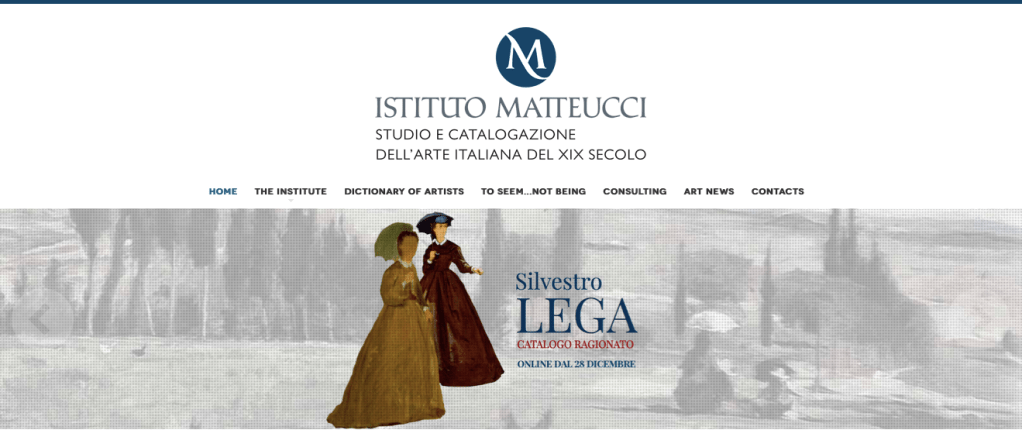
The Istituto Matteucci, for the study of 19th and 20th century Italian art

Based in Viareggio is an amazing resource for any students of “modern” Italian art: http://www.istitutomatteucci.it/en/

From the website:

“The Matteucci Institute has as its main mission the critical examination and the study of the 19th and 20th century Italian painting, one of the most attractive and innovative period of modern art. Its primary purpose is the systematic cataloguing through scientific index cards, drawn up according to the OA model adopted by the Ministry of Cultural Heritage and Activities.


“A unique resource which allows the Institute to offer support and competence for initiatives and services about the art of that period: exhibitions, events, editorial projects, inventories, expert’s reports and evaluations.


“This activity is accompanied by the organisation of exhibitions, seminars and educational plans which take place at Viareggio premises.


The real strength of the Institute is the cognitive and philological research of the painting in order to reconstruct its genesis and cultural ambit, as well as establish its autography and stylistic authorship.”

Dante 700 Exhibition

DIVINE DANTE
The year 2021 marks the 700th anniversary of Dante’s death, and his epic poem, The Divine Comedy, is more relevant than ever.

It’s a story about hitting rock bottom and making the arduous but joyful climb up to the stars. Dante’s tale is proof that the only way out is through.

Reading the Diving Comedy, you find yourself immersed in poetry, beauty, and a deeper understanding of the universal human experience.

Of course Italy, and particularly Florence, the birthplace of the poet, are celebrating the anniversary, Covid or no.

I was fortunate to have a look recently at the exhibition on view at Santa Maria Novella. It is a group of oversized color photographs, beautifully displayed. Here is info on the exhibit from the brochure:

“In what used to be the dining hall of the monumental complex of Santa Maria Novella you can find the photography exhibition “Dante 700 – A portrait of Dante and the poet’s places in the photographs of Massimo Sestini”.

“Organized by MUS.E and sponsored by the City of Florence and the Florentine Civic Museums, with support from the Ministry of Heritage, Cultural Activities and Tourism and the Ministry of Foreign Affairs and International Cooperation, the exhibit was first shown in the Quirinale rooms in Rome, where it ran until October 11, 2020, kicking off the celebrations of the 700th anniversary of the death of the great poet in 2021.

“Calling upon the artistic advice of Sergio Risaliti, art critic, curator, writer and director of the Museo Novecento in Florence, and the scientific advice of Domenico De Martino, professor at the University of Pavia and director of the Dante 2021 festival in Ravenna, “Dante 700” is an exciting journey through 23 special shots in search of the legacy left to us by the author of the Divine Comedy.

“Massimo Sestini, an internationally renowned photo-reporter, pursues this theme and analyzes it with a highly original eye with experimental and unconventional photography techniques. It ranges from Florence to Ravenna, where Dante’s remains are preserved, passing the source of the Arno River on Mount Falterona. It also goes to Venice, Rome, Verona and Poppi, to discover the extent in which the poet’s countenance continues to be part of our lives.

Below are just a couple of shots of the photos on display.

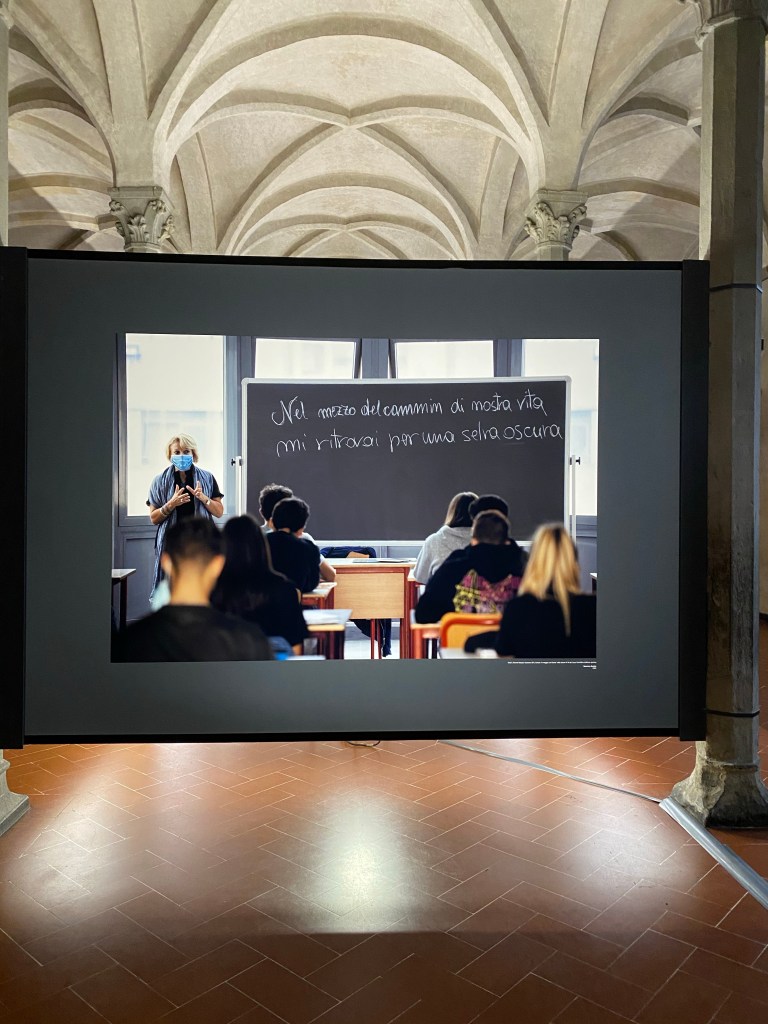
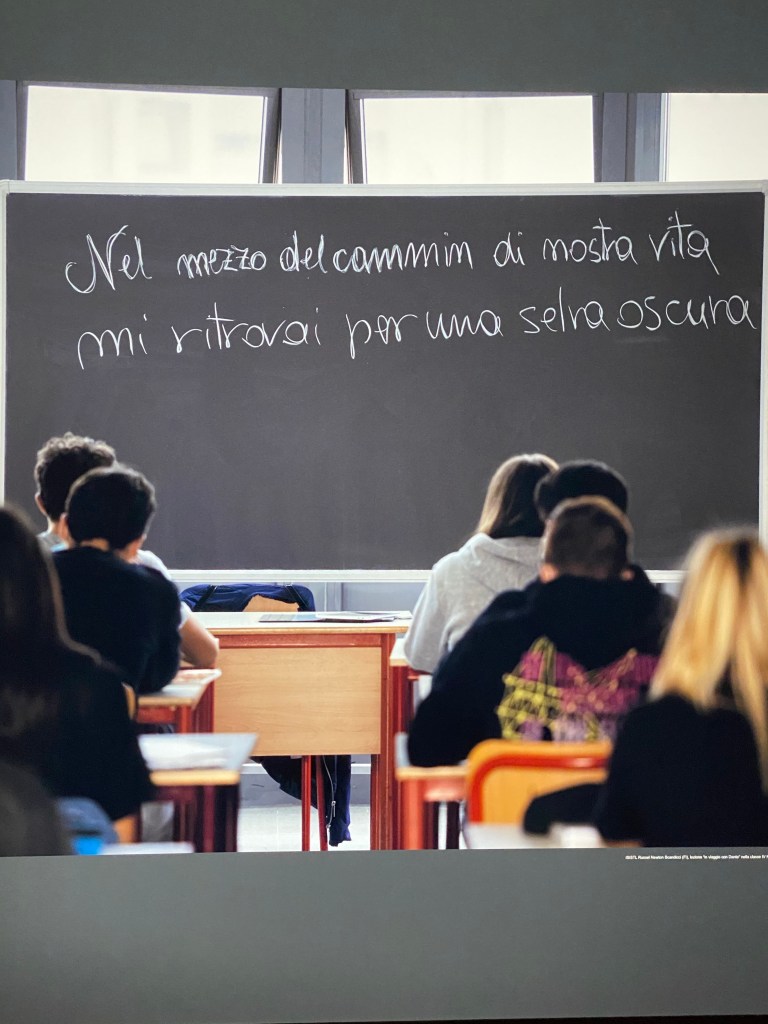
I love this photo, showing a high school classroom, in which the teacher guides the students through the initial lines of the Divine Comedy. It’s Covid season, judging from the teacher’s mask.
I want to learn to print in the Italian manner. I love the way the writing looks.
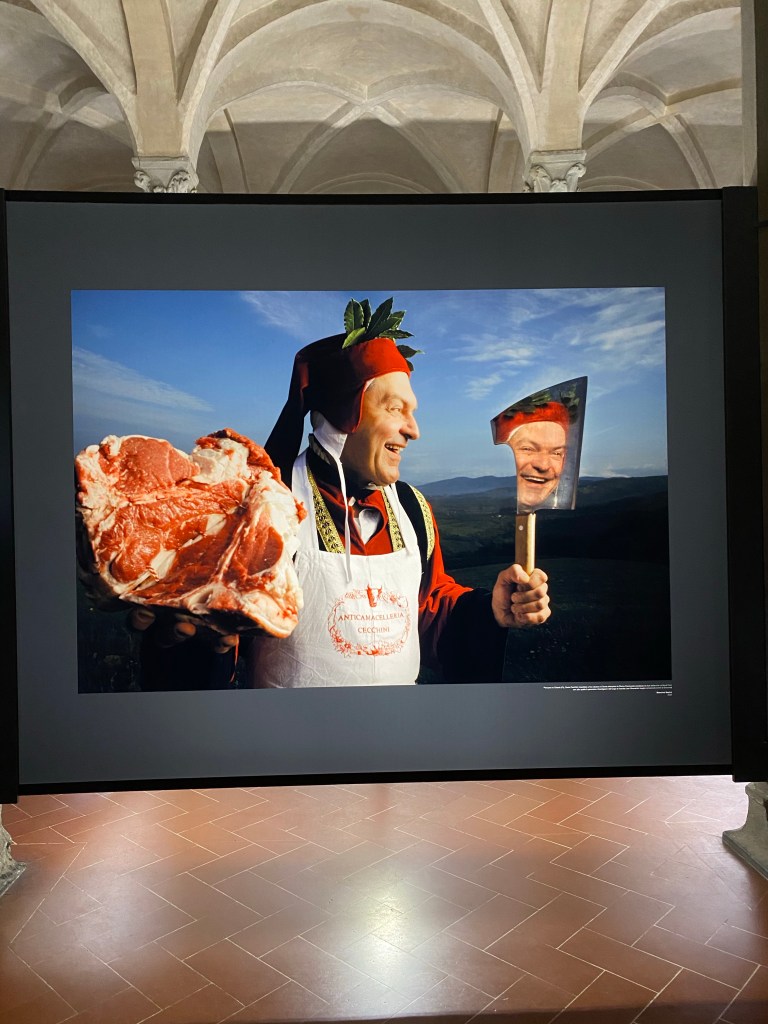
The photographer reveals not only art in his works, but also a sense of humor. This photograph places the contemporary, famous Tuscan chef, Dario Cecchini, in the guise of Dante!

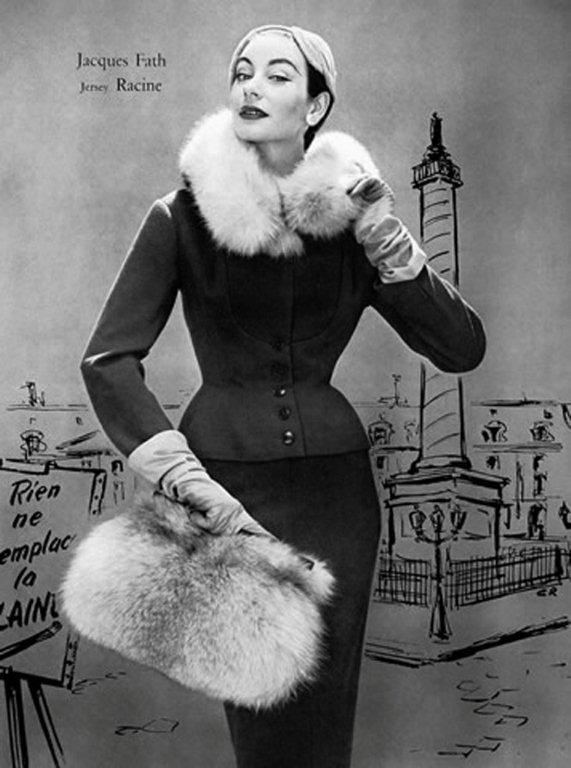
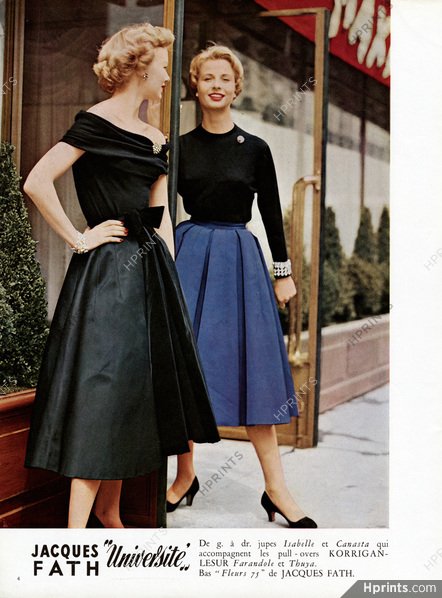
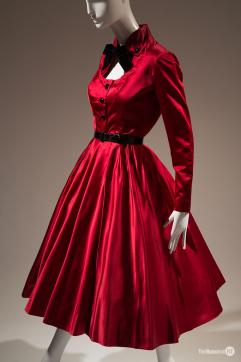
Jacques Fath, the French fashion designer

I love the fashion of the 50s and 60s (and still hate the fashions of the 70s and 80s), but I had never heard of Jacques Fath until I watched “The Marvelous Mrs. Maisel.” Midge wears one of his designs in a scene and Rose, her mother asks her if is is Dior. No, she replies, Jacques Fath.

Of course, I looked him up.


Jacques Fath (1912 – 1954) was a French fashion designer who was considered one of the three dominant influences on postwar haute couture, the others being Christian Dior and Pierre Balmain.

He was a self-taught designer, who learned his craft from studying museum exhibitions and books about fashion. He hired a number of young designers as assistants and apprentices, some of which later went on to form their own houses, including Hubert de Givenchy, Guy Laroche, and Valentino Garavani.

A popular and occasionally innovative designer known for dressing “the chic young Parisienne.” Fath utilized such materials as hemp sacking and sequins made of walnut and almond shells. His 1950 collection was called Lily, with skirts shaped to resemble flowers.

For eveningwear, he advocated velvet gowns. During World War II, Fath was known for “wide fluttering skirts” which, The New York Times explained, “he conceived for the benefit of women forced to ride bicycles during gasoline rationing.” His clients included Ava Gardner, Greta Garbo, and Rita Hayworth, who wore a Fath dress for her wedding to Prince Aly Khan.

Jacques Fath also dressed Eva Perón. In one of the few remaining paintings of the 1940s and 1950s not destroyed by the Revolución Libertadora in 1955 (three years after Evita’s death), when Perón was ousted from power, Evita is depicted beside General Perón wearing a white evening dress designed by Fath. This same dress is showcased beside the painting on a mannequin under a protected glass cover in the Museo del Bicentenario in Buenos Aires, Argentina.

Fath appeared in Scandale au Champs-Elysées (1949, directed by Roger Blanc) and he designed costumes for several films.

There is a current website devoted to Fath:

All my facts come from my old friend, Wikipedia:

https://en.wikipedia.org/wiki/Jacques_Fath