Uffizi, the Leonardo da Vinci gallery

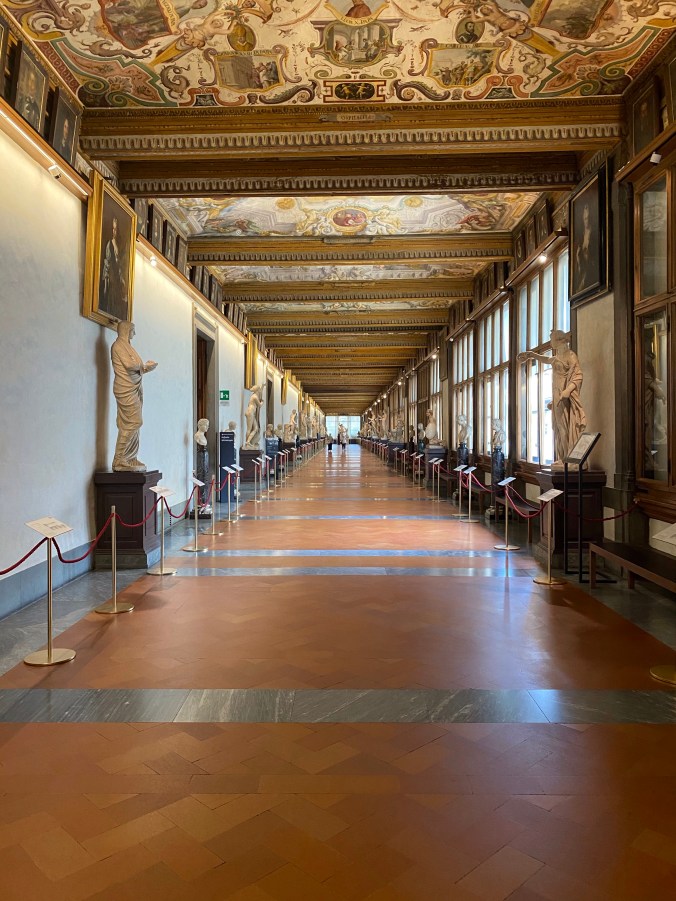
My recent first trip back to the Uffizi allowed me to enjoy the famed museum without the usual crowds.  This is my idea of heaven.  Just look:


img_6815


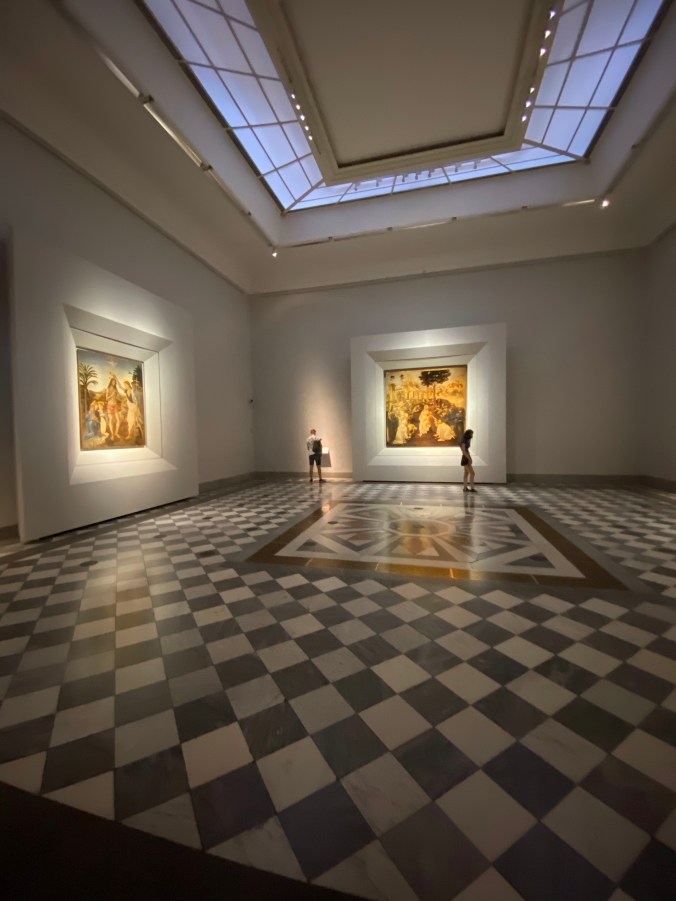
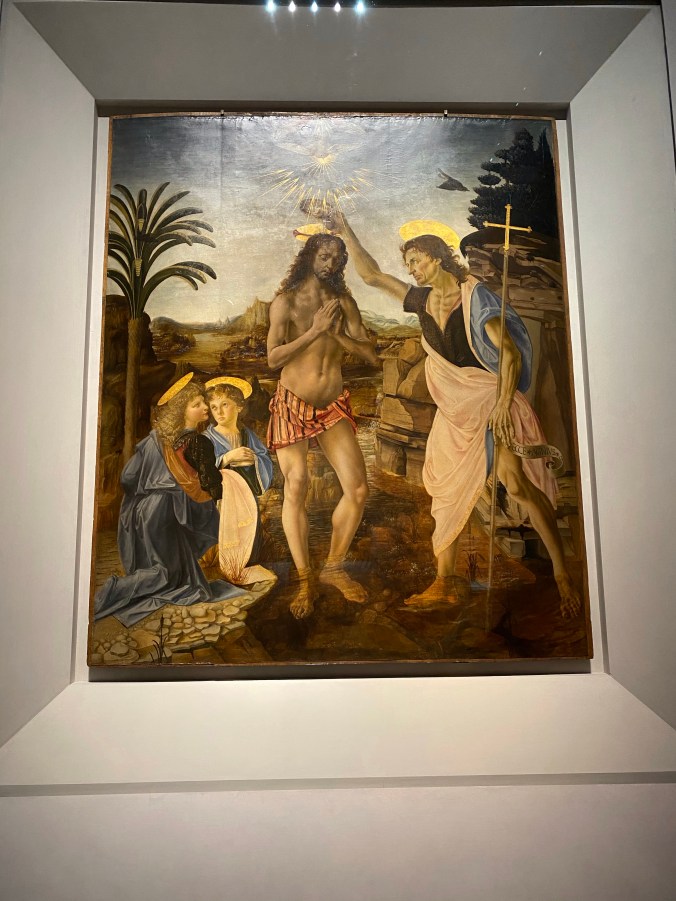
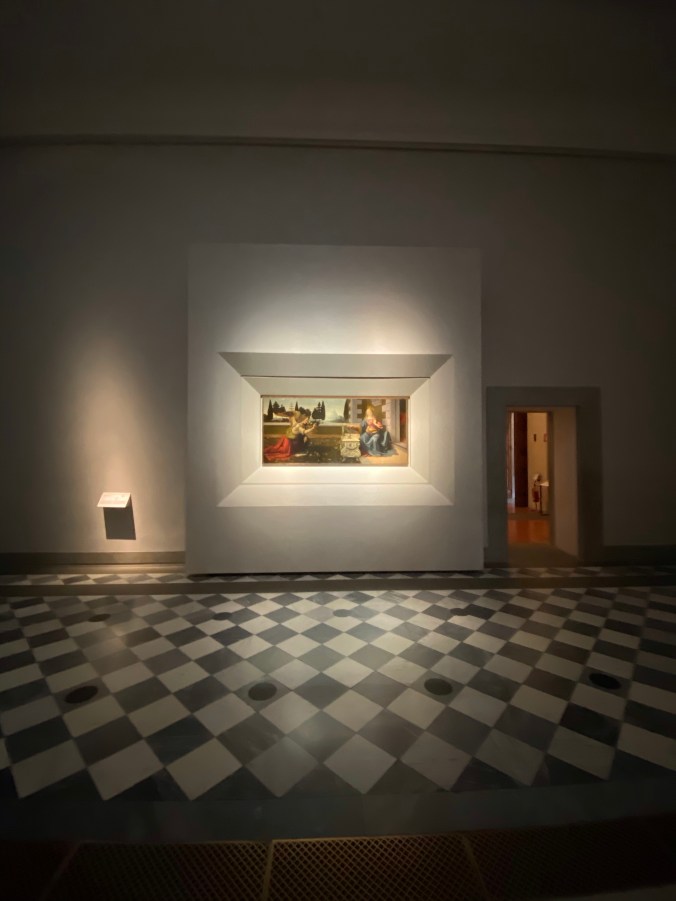
Come with me into the new Leonardo da Vinci and Andrea del Verrochio gallery. Look at the blissful moment capture below, during which I had the gallery almost to myself.

img_6792


img_6793


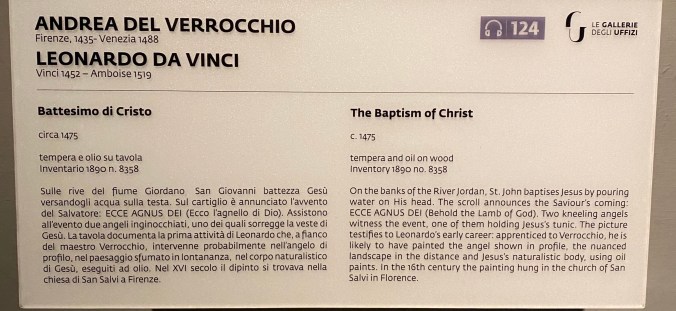
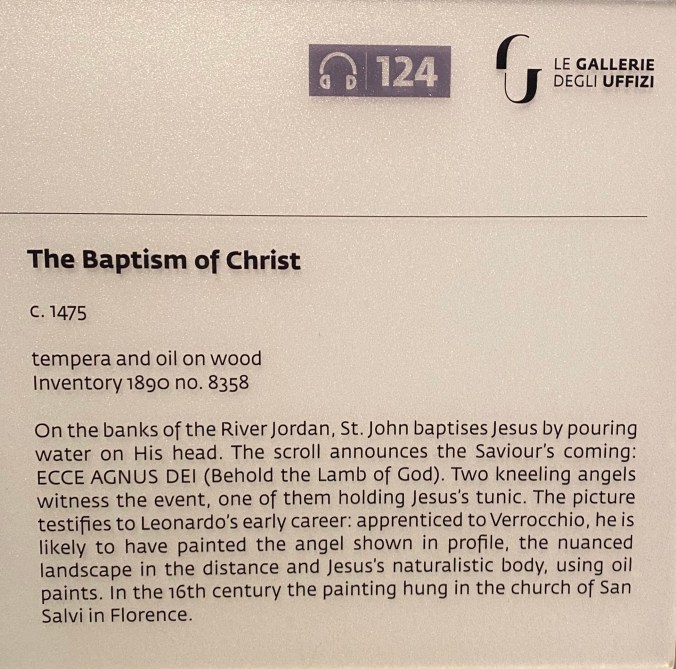
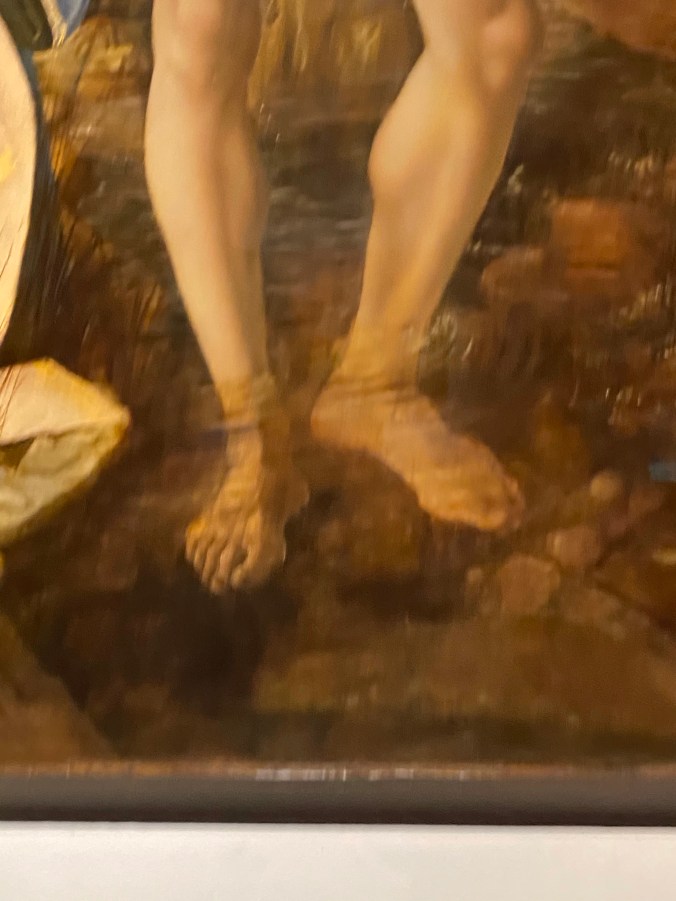
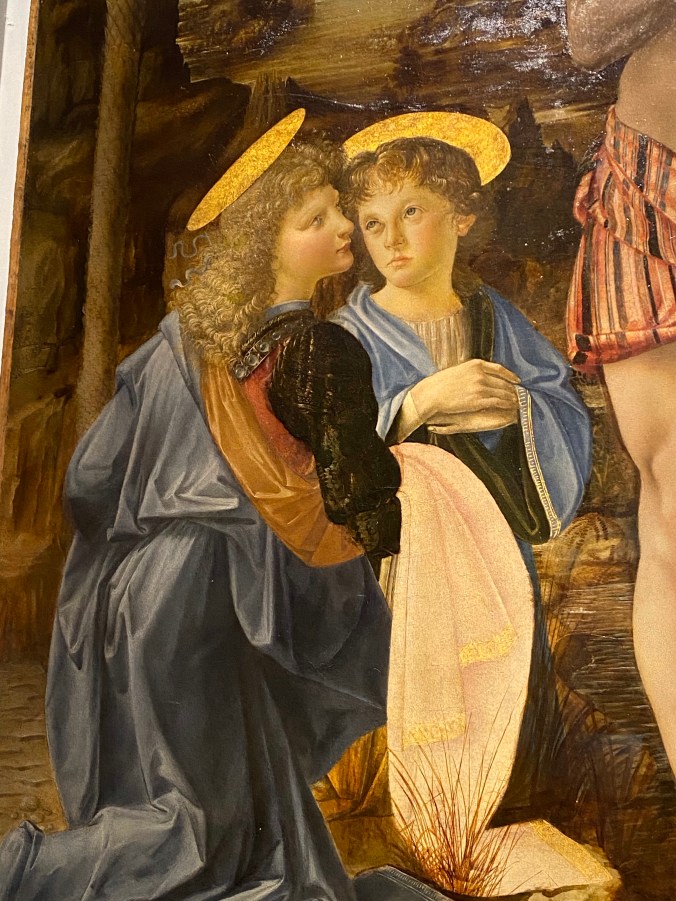
Andrea del Verrochio’s painting of the Baptism of Christ.  Verrochio’s student, Leonardo da Vinci, assisted in painting. Most notably, the far left angel.

img_6796

img_6794


img_6795


img_6797


img_6798


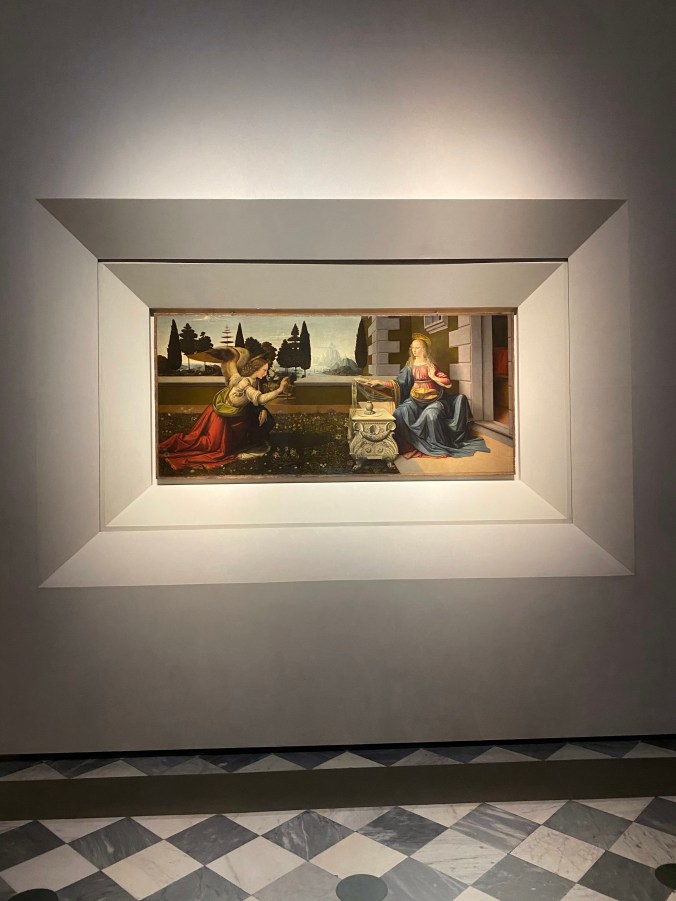
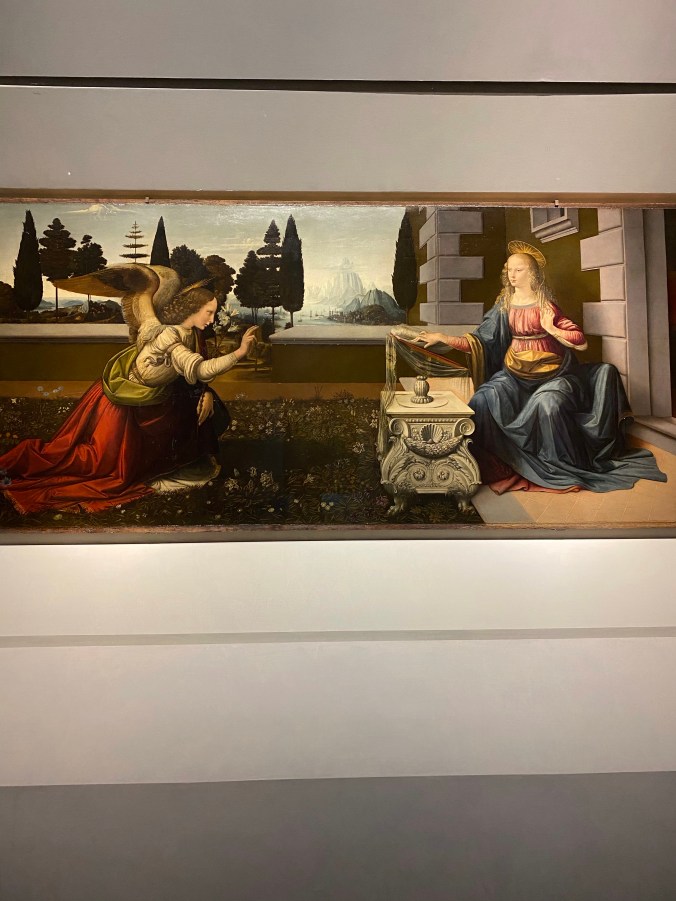
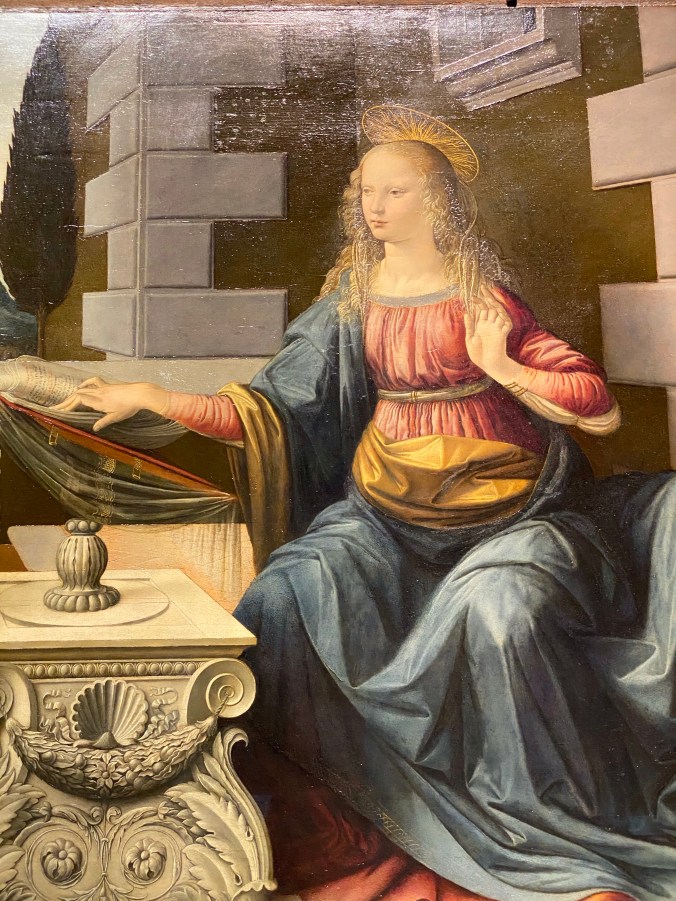
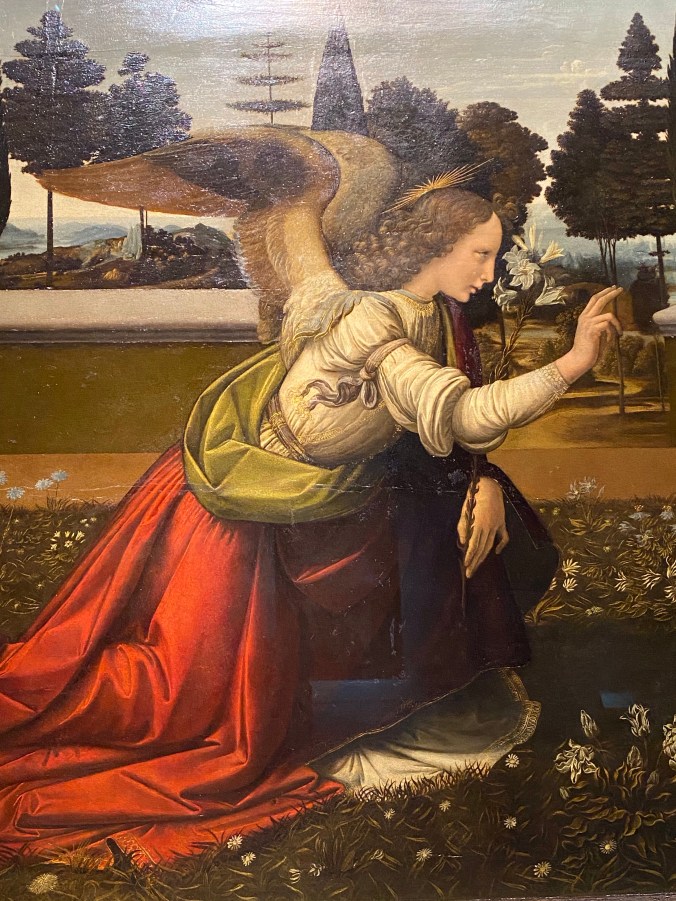
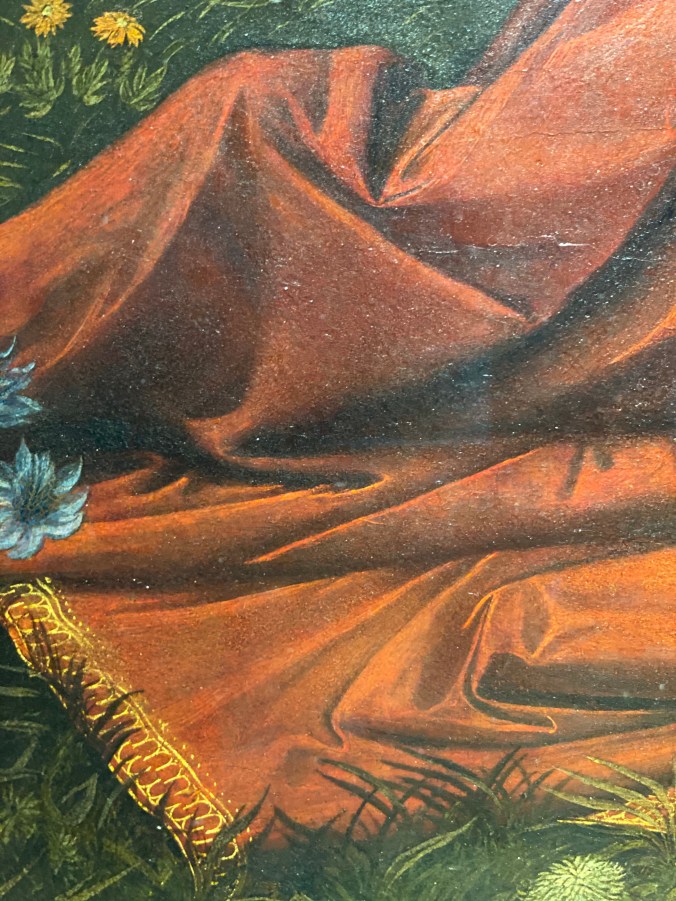
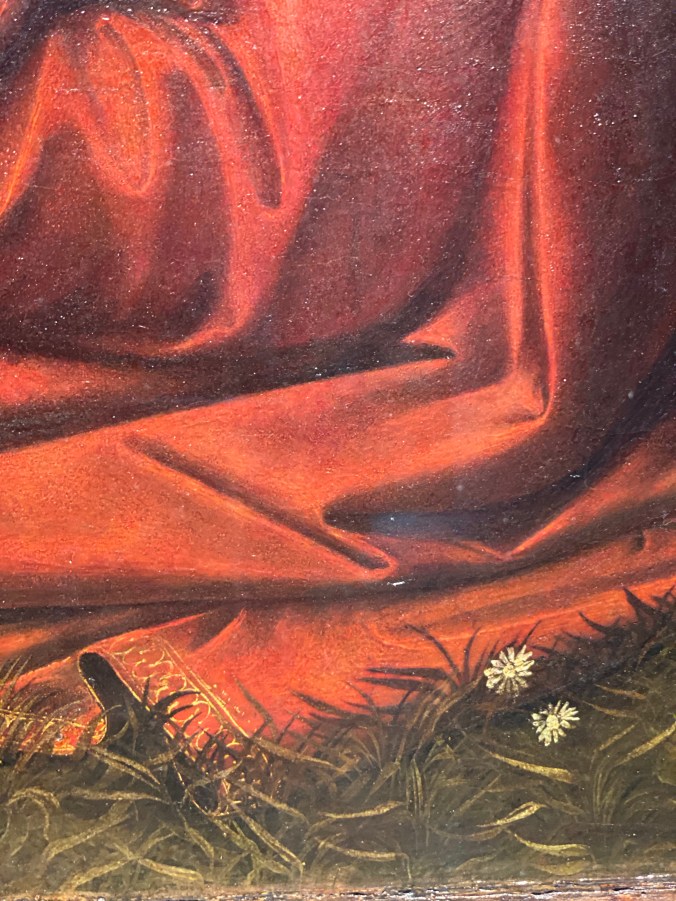
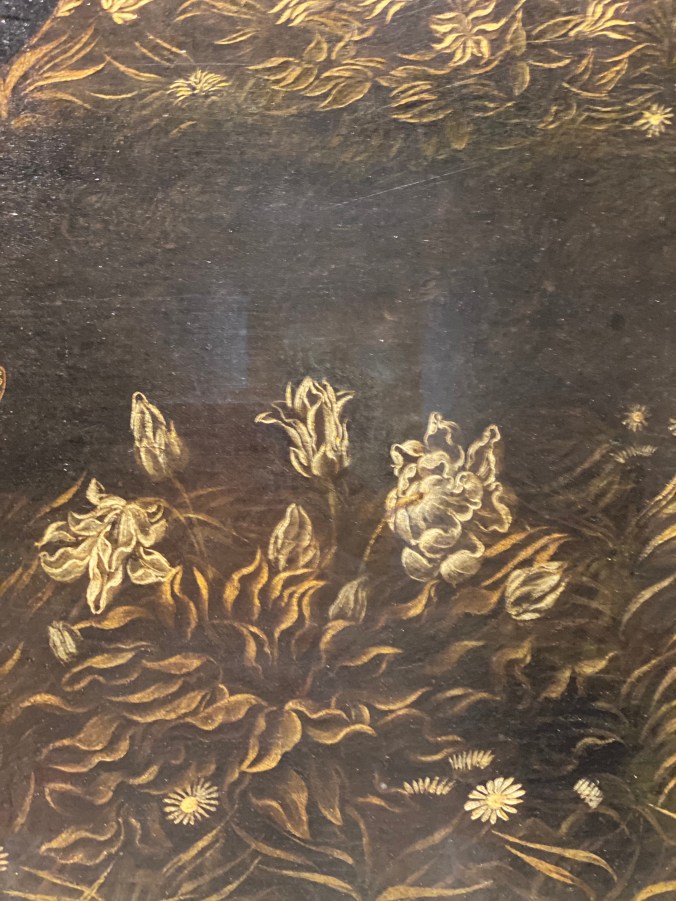
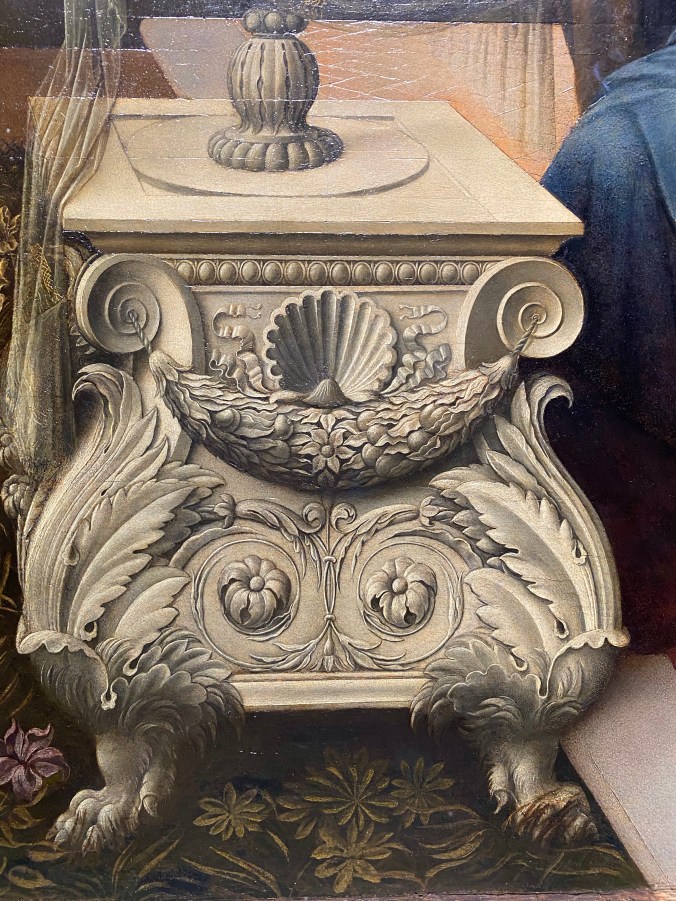
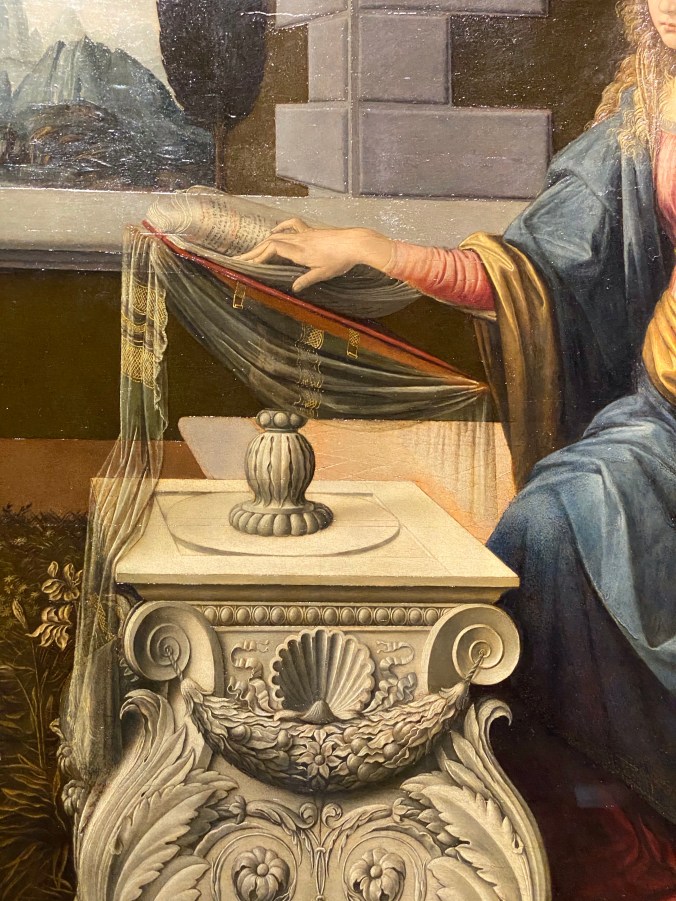
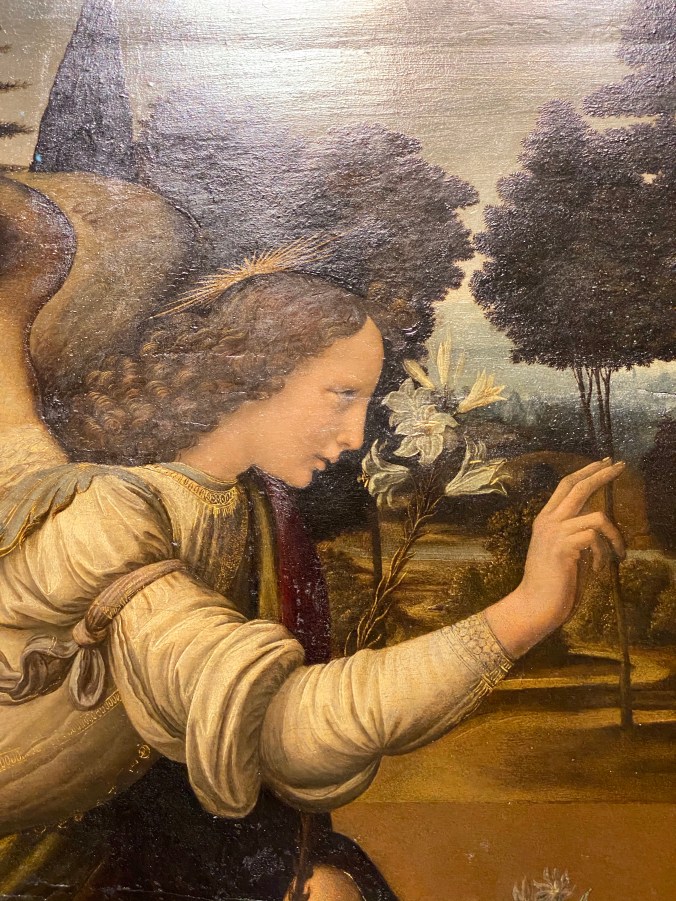
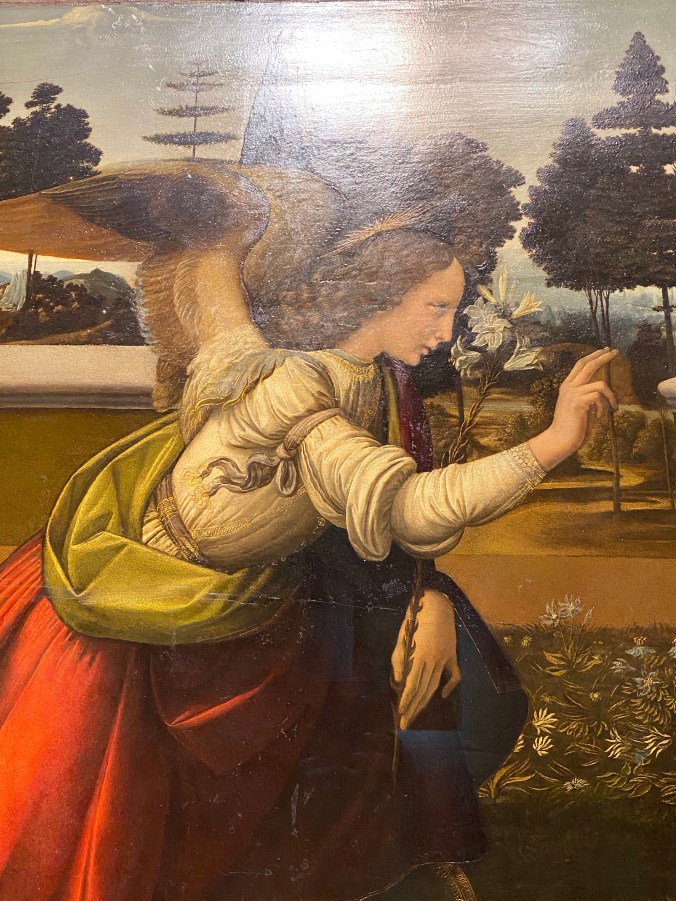
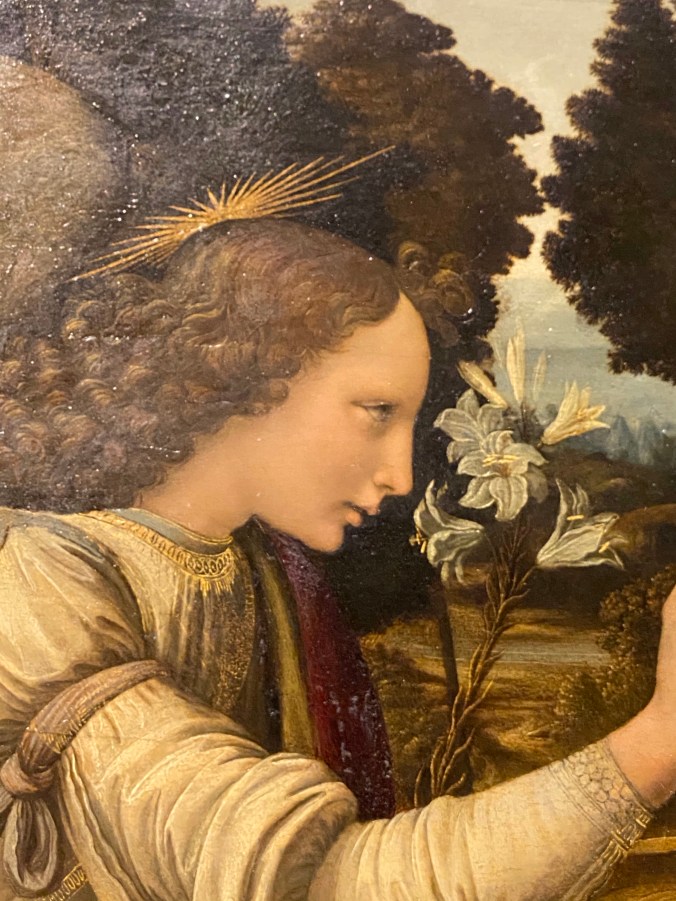
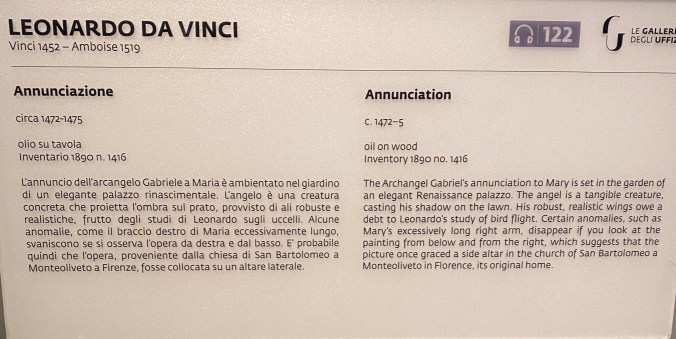
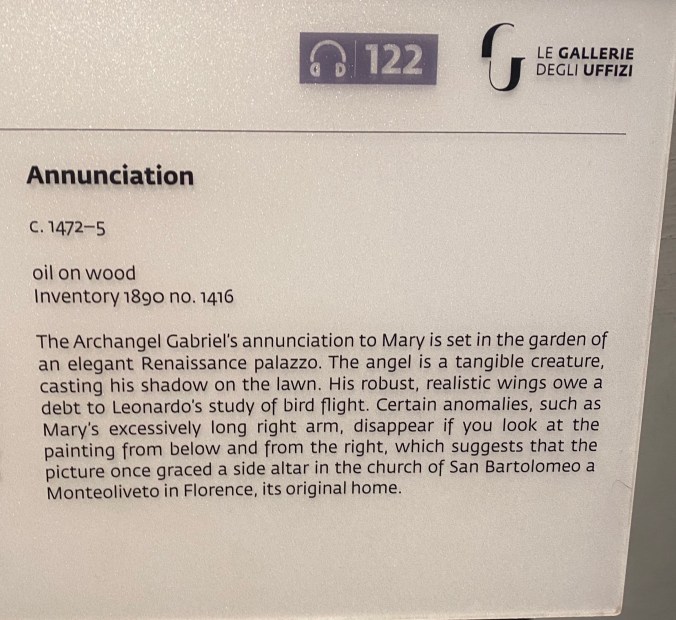
Leonardo’s Annunciation in a virtually empty gallery. My idea of heaven.

img_6799


img_6800


img_6801


img_6802


img_6803


img_6804


img_6805


img_6806


img_6807


img_6808


img_6809


img_6810


img_6811


img_6812


img_6813


img_6814


More to come from my June 25, 2020 visit.

Back to the Uffizi! Part 1, June 2020

What a joy to return to this wonderful museum.  Despite the fact that Americans still can’t travel to Italy because of the Covid 19, I was surprised by the line outside the Uffizi.  Once inside, however, the crowds thinned out after the first few galleries.

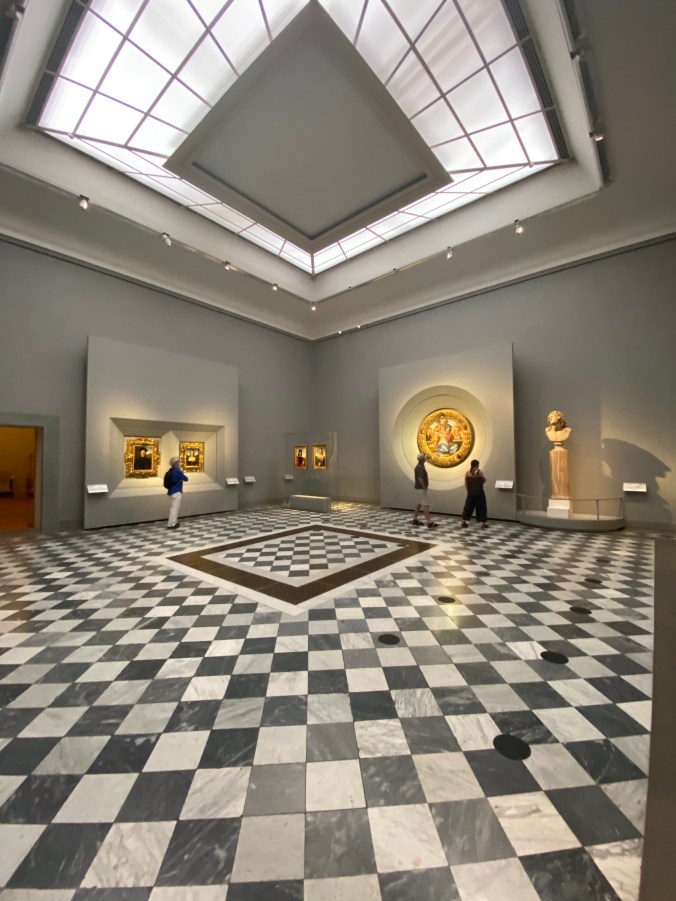
I had the new Michelangelo and Raphael gallery virtually to myself.  Speaking of joy.  It was so meaningful to me to be able to get up close and personal again with these amazing works of art.
img_6776


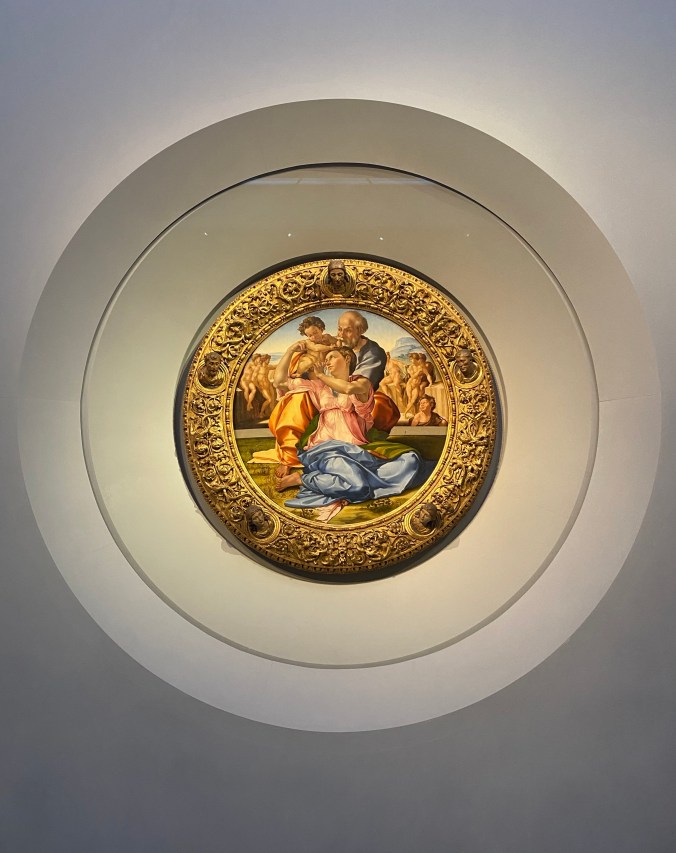
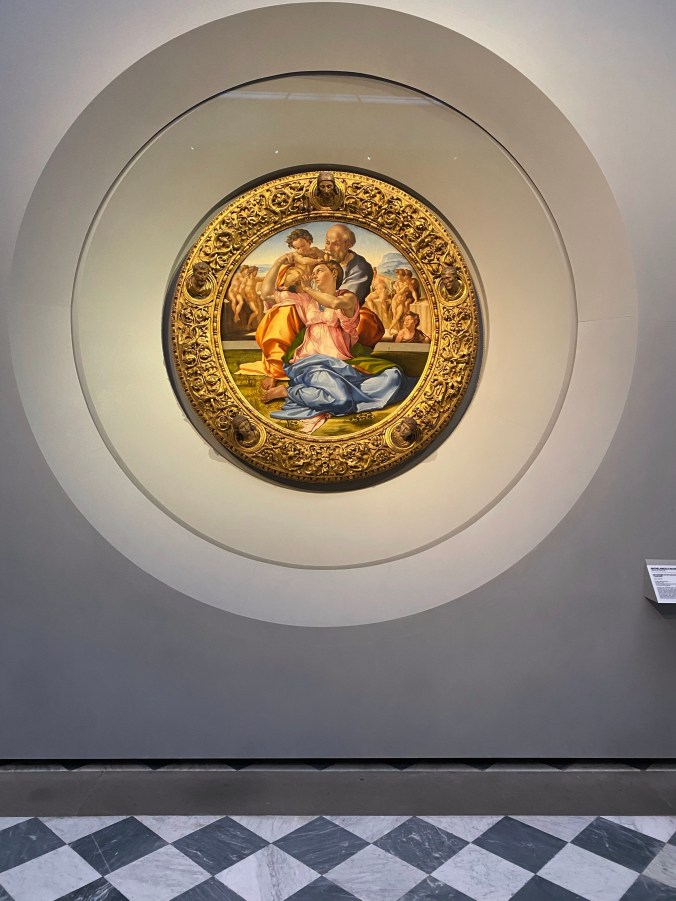
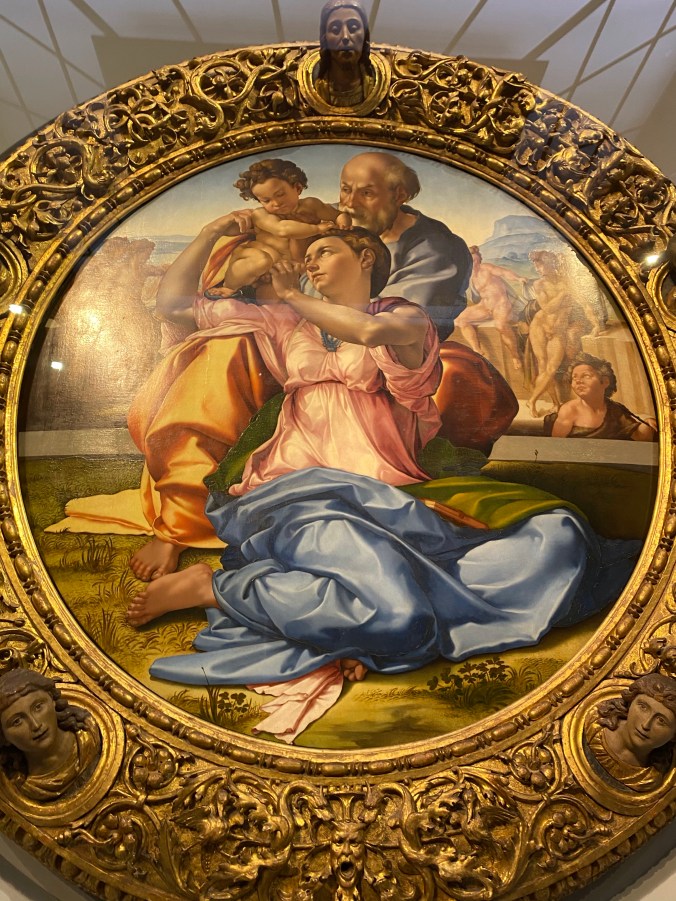
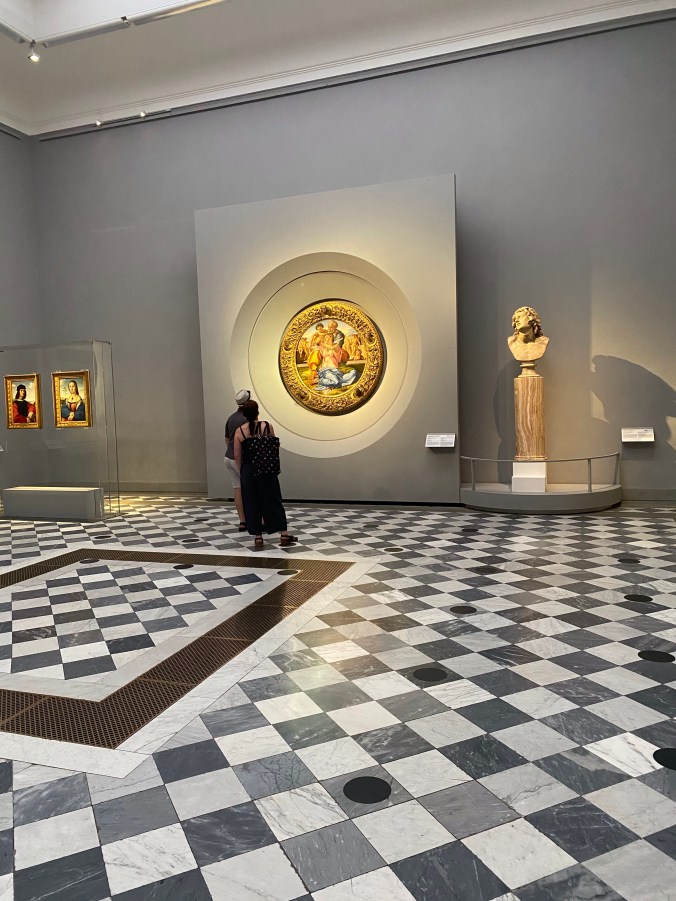
Michelangelo’s Doni Tondo:

img_6769


img_6791


img_6770


img_6771

The Uffizi says of this painting:
This painting dates to when Michelangelo returned to Florence after his first stay in Rome, the same period when the great artist sculpted the famous David.

The work (c. 1506-1508) is the only painting by Michelangelo in Florence and is one of the masterpieces of the 16th century Italian art.

During the Renaissance, the “tondo” was a typical work for private clients. This tondo was commissioned by the wealthy banker Agnolo Doni, probably at the time of his marriage to Maddalena, member of the very important Strozzi family.

The figures of Mary, Joseph and the Child, are grouped in a single volume in which the rotation of the Madonna gives the composition a spiral movement that will later be used by many artists. In the background a group of young nudes brings to mind a classic theme, symbolizing the pagan humanity still ignorant of Christian doctrine. It is also interesting to notice the beautiful carved wooden frame, designed by Michelangelo himself.

From the artistic point of view, the Tondo Doni laid the foundations of the so-called Mannerism, the style of painting that preferred bizarre, unnatural poses and iridescent colors to the composed painting of the XV century.

The Tondo Doni is therefore a very important work of art because it is one of the few examples of Michelangelo’s painting, together with the magnificent frescoes in the Vatican’s Sistine Chapel.
 

img_6775


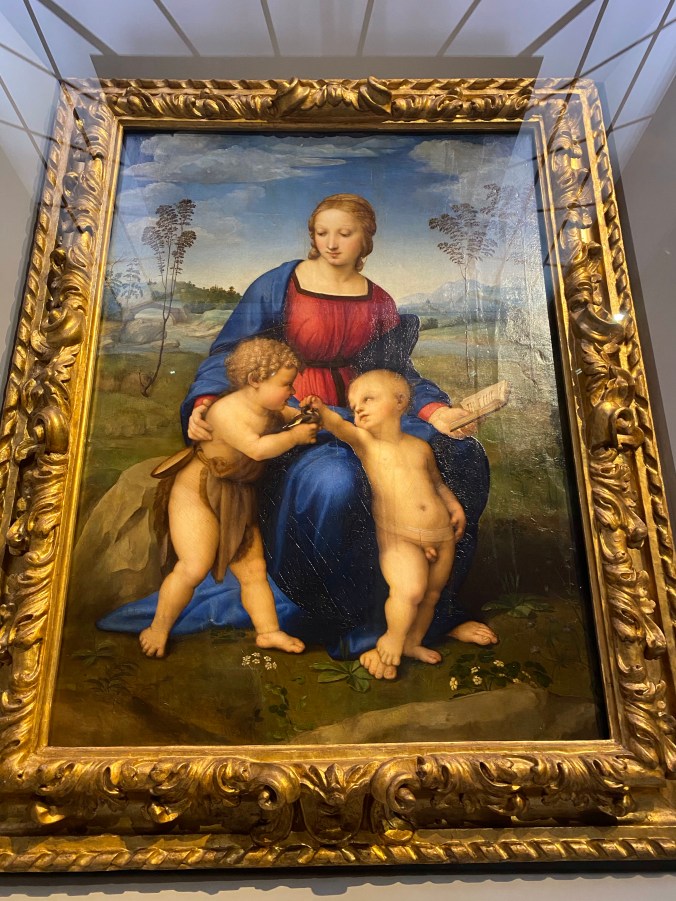
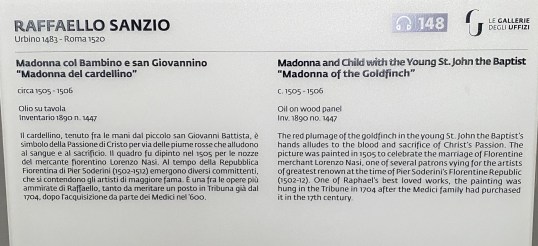
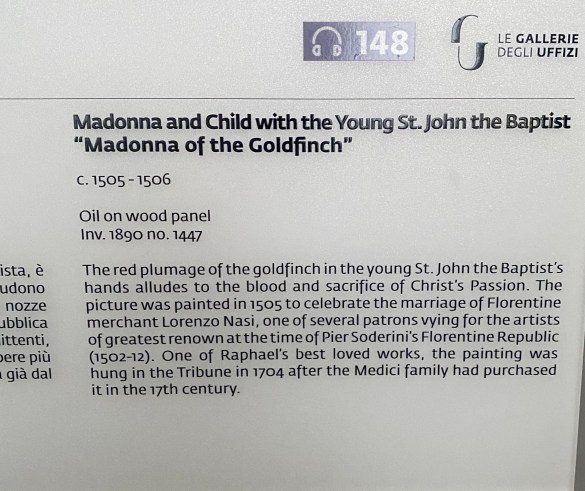
Raphael’s Madonna of the Goldfinch:
 

img_6772


img_6774

img_6773


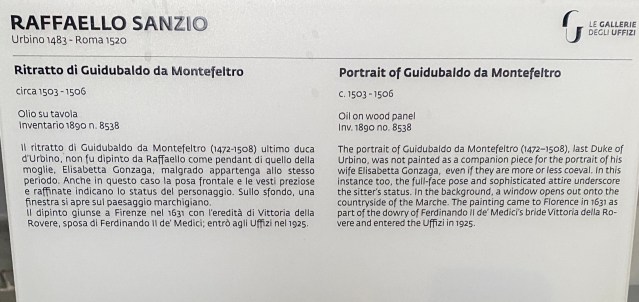
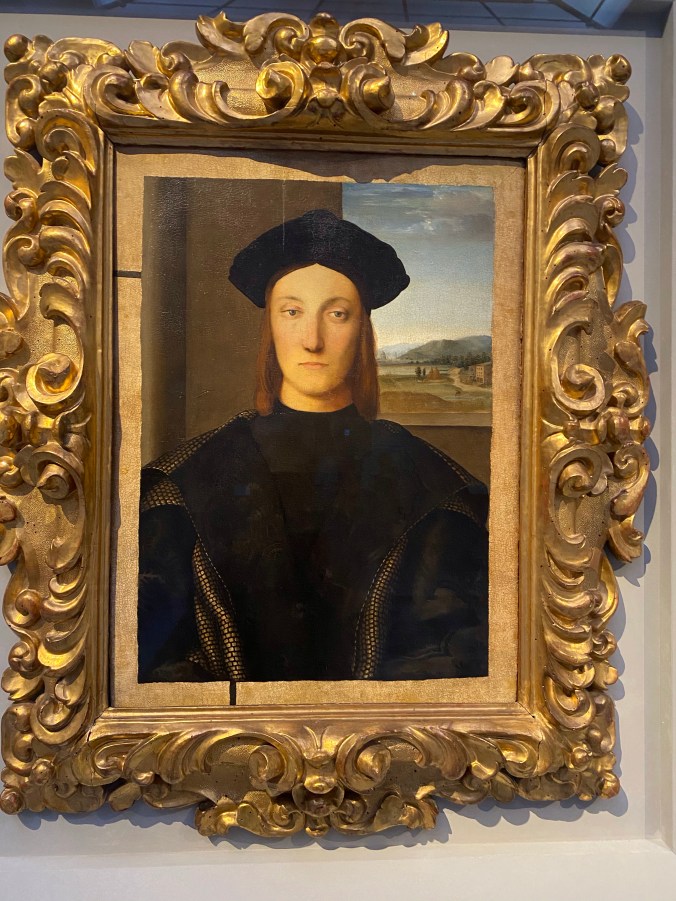
Raphael’s portrait of Guidobaldo da Montefeltro, 1503-06:
img_6781


img_6780


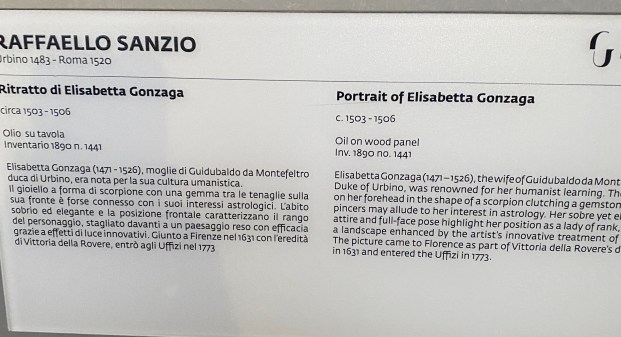
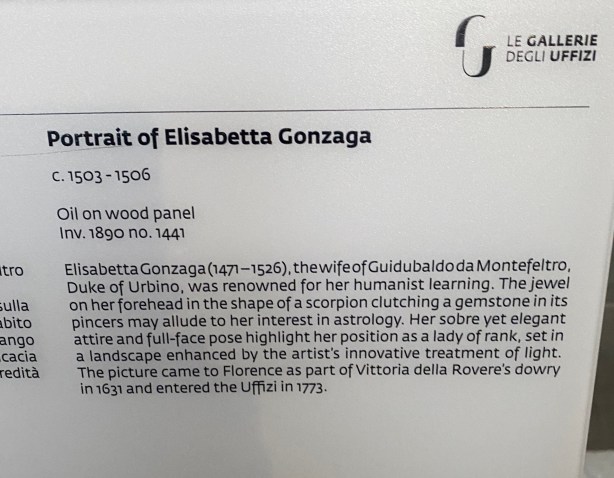
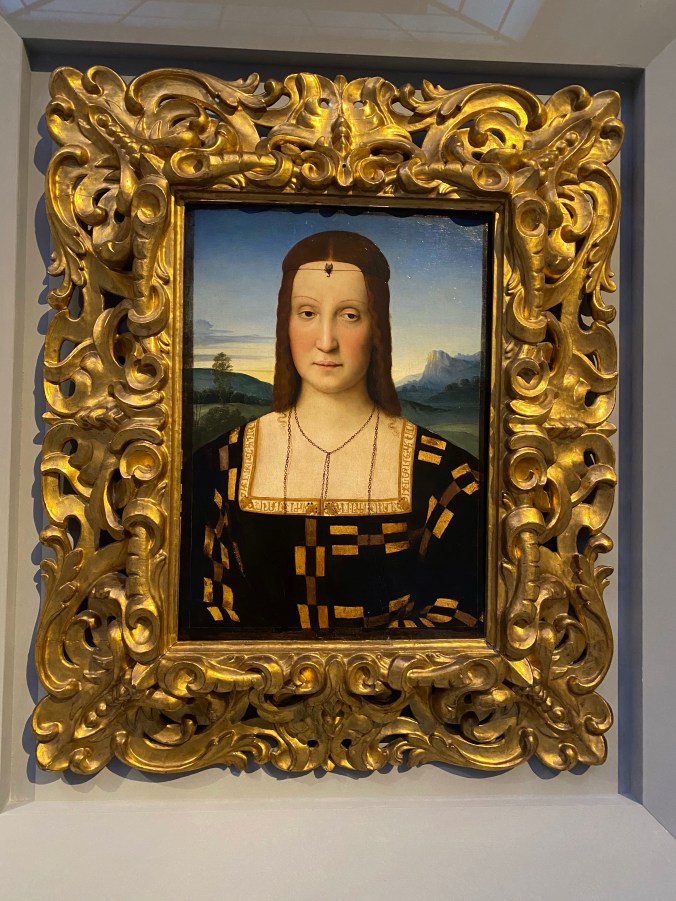
Raphael: Portrait of Elisabetta Gonzaga, 1503-06.
img_6782


img_6783


img_6784


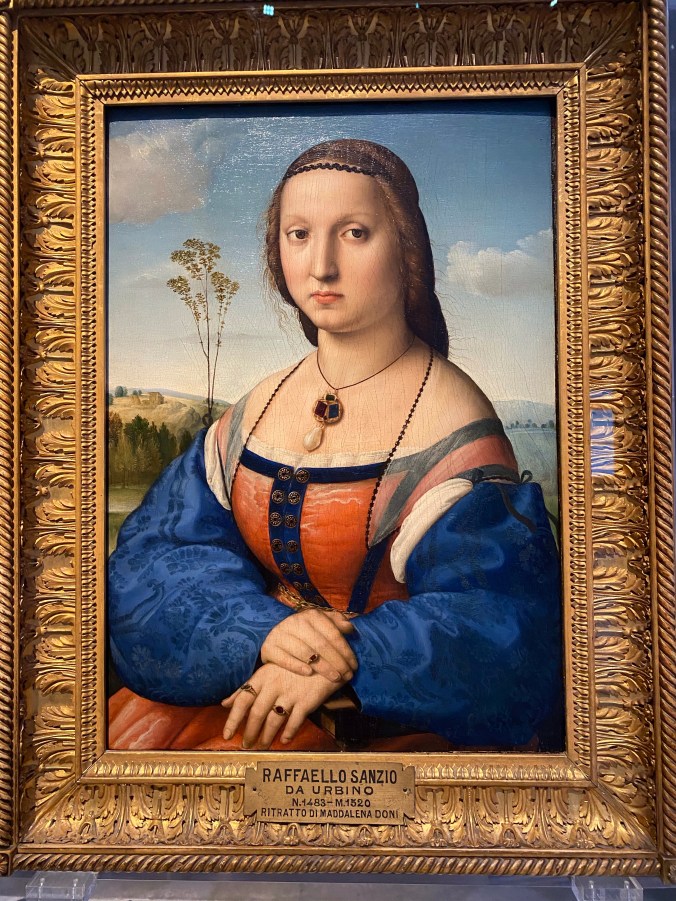
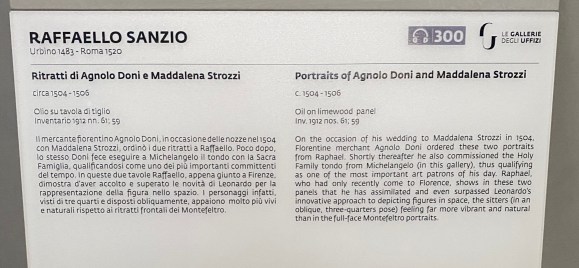
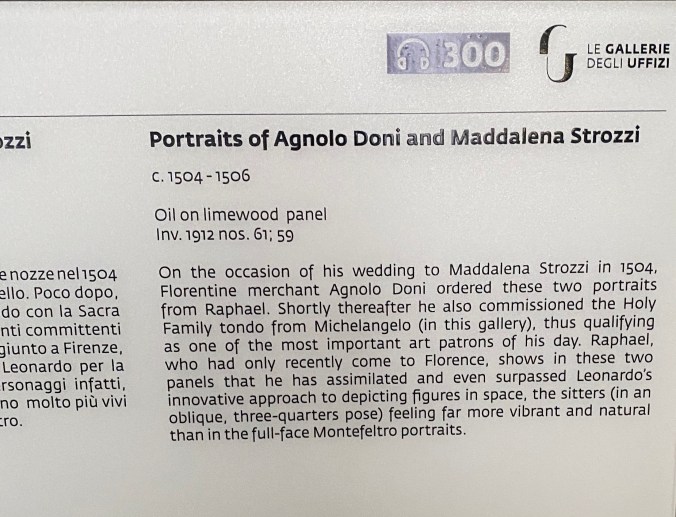
Raphael: Portraits of Agnolo Doni and Maddalena Strozzi, 1504-06/
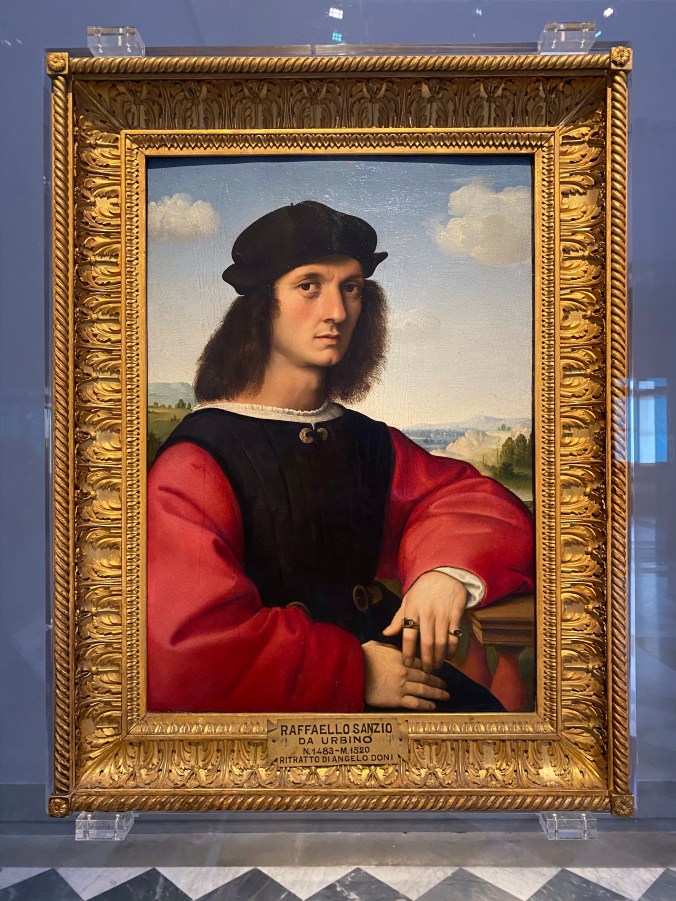
img_6785


img_6786


img_6787


img_6788


The Uffizi has hung the Doni portraits in a manner allowing us to see the very interesting backs of the paintings:
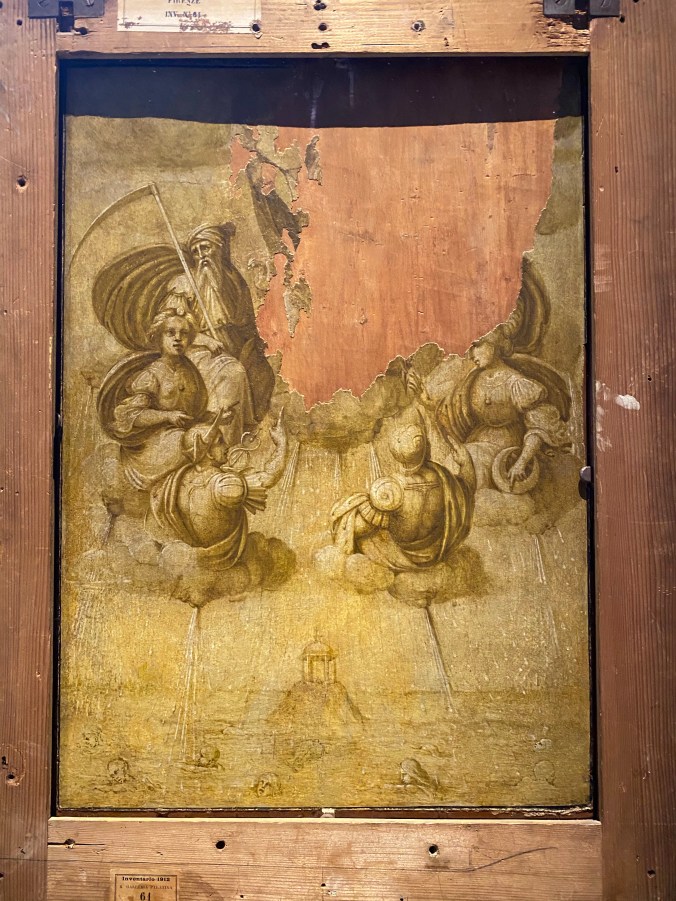
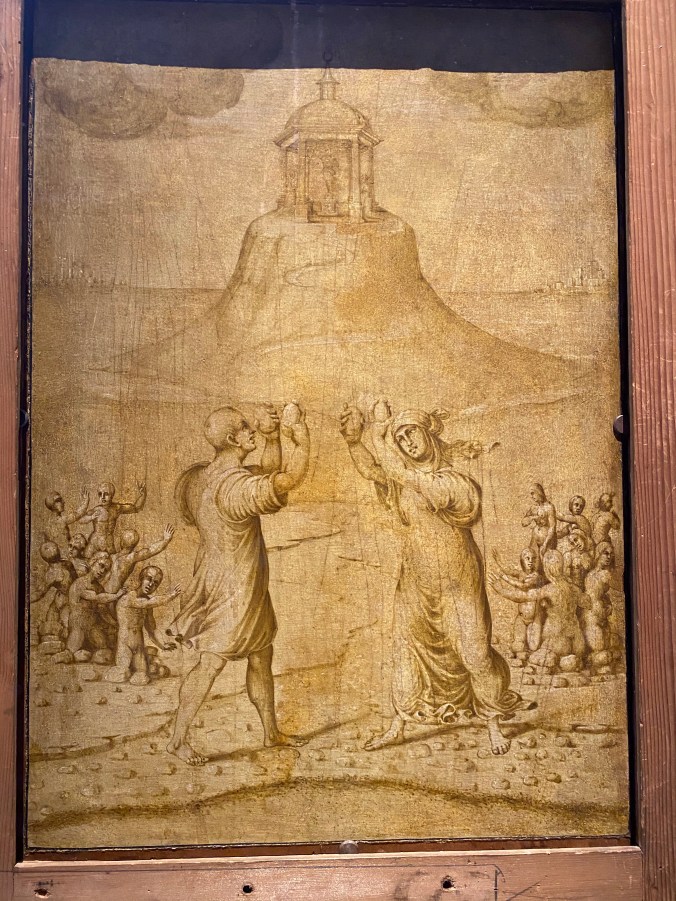
img_6789


img_6790


Today (June 25, 2020) was a great day in Florence!


On the Michelangelo trail in Rome

I’m in Rome!  Woo hoo!  All roads lead here and I couldn’t wait to follow one of them and to enjoy the city without the usual summer hordes of tourists.
I spent the lockdown refreshing my study of Michelangelo and I’m on his trail here in Rome.  I started my visit today by admiring the beautiful Porta Pia.

fullsizeoutput_39a9

The elaborate Porta Pia is a gate in the Aurelian Walls of Rome, designed by Michelangelo for Pope Pius IV.  Construction began in 1561 and ended in 1565, after the artist’s death. A 1561 bronze commemorative medal by Gianfederico Bonzagna shows an early plan by Michelangelo, very different from his final design. 


baN0BnvQR1qAsNHiWVeLnA

A new gate was needed because by the mid 16th century,  the newly developing urban area outside the walls couldn’t gain access through the nearby ancient Porta Nomentana from the Via Nomentana. It was decided to add a new gate to the walls, and, according to Vasari, Michelangelo presented three different designs to the Pope, which were beautiful but too extravagant, and the Pope chose the least expensive of the three. Unfortunately, the drawings are not extant and it is not known if  the work was actually carried out to Michelangelo’s original plan.

The gate was, however, Michelangelo’s last architectural work.  He died shortly before the structure was completed. The work was carried out by Giacomo Del Duca, who also built Porta San Giovanni, seen below.

Brána_sv._Jana,_Řím


fullsizeoutput_39ab

The Porta Pia is one of the 18 gates inserted in the defensive Aurelian Walls.


fullsizeoutput_39ad

PIVS IV PONT MAXPORTAM PIAMSVBLATA NOMENTANA EXTRVXITVIAM PIAM AEQVATA ALTA SEMITA DVXIT


lV0GT+OPTSqme+eSet%5Lg


lV0GT+OPTSqme+eSet%5Lg

Interestingly, the opposite side of the Porta Pia is also quite interesting. It was constructed in 1869 in the Neo-Classic design by Virginio Vespignani.

UdeHSzI+ThmqaL4l3NarTA


The Aurelian wall was breached during the Risorgimento.  This fabulous vintage photograph, dating to after 1870, shows the breach to the right of the gate.

1024px-BrecciaPortaPia

It was through an artillery-opened breach – known as the “Porta Pia breach” – that on September 20, 1870 Bersaglieri soldiers entered Rome to complete the unification of Italy. A marble and bronze monument is to be found at the exact point of the breach.

This painting by Carlo Ademollo, 1880, shows the Kingdom of Italy troops breaching the Aurelian Walls at Porta Pia during the Capture of Rome.

Here also, on September 11, 1926, the antifascist activist Gino Lucetti threw a bomb against the car transporting Benito Mussolini.  It was without effect.


Donatello, Verrochio and Michelangelo at the Palazzo Vecchio; 3 master Florentine sculptors

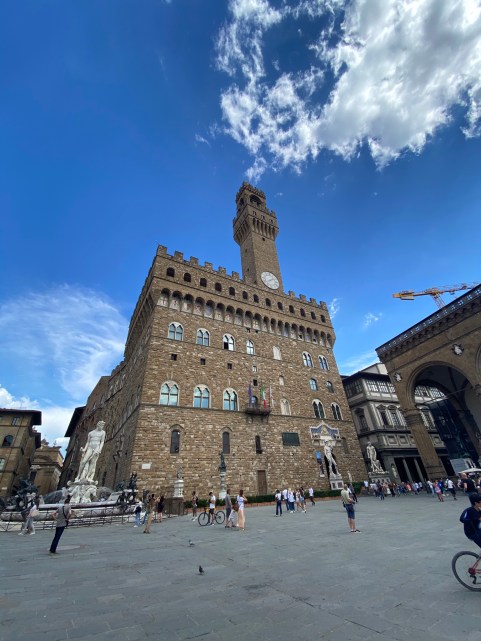
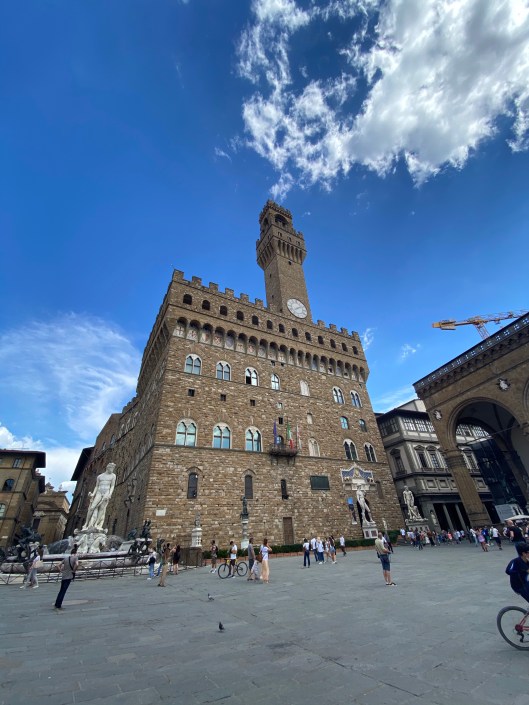
In this imposing, Medieval Florentine city hall,

img_6760


Reside 3 works by master sculptors of the Italian Renaissance:

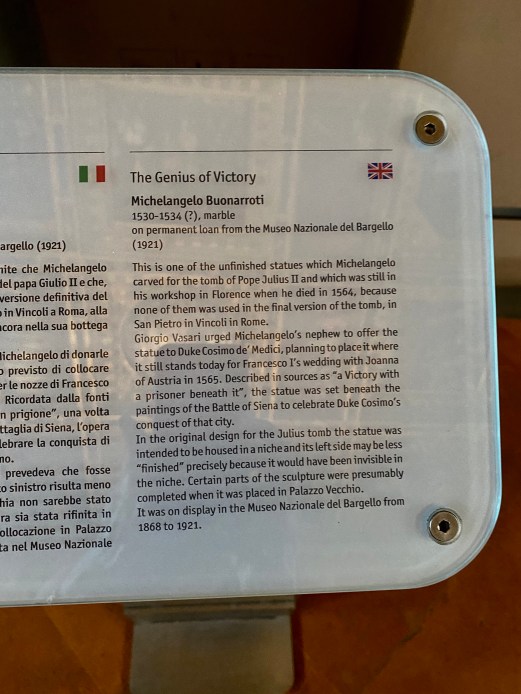
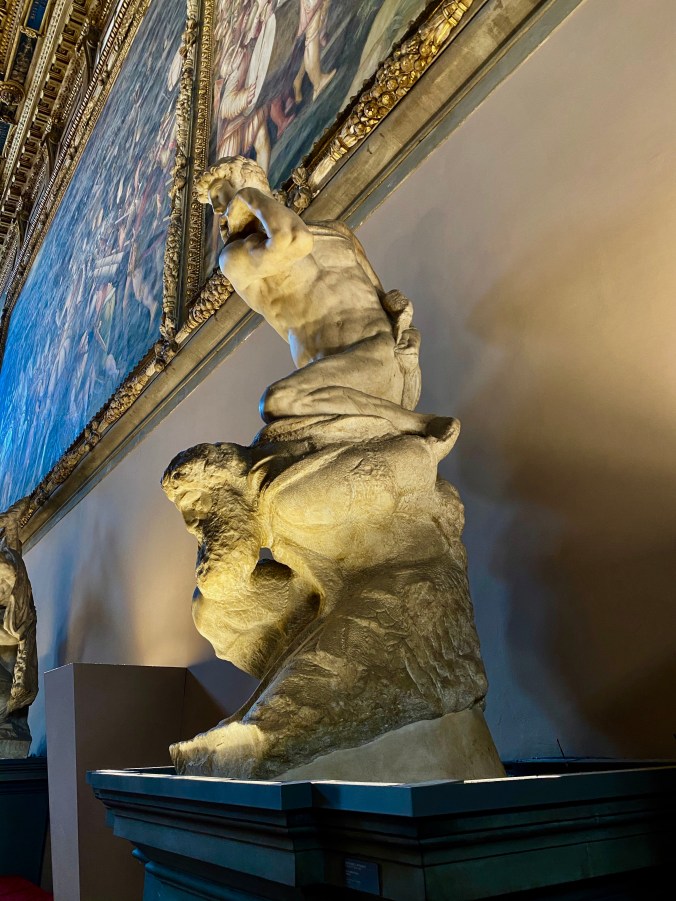
First, The Genius of Victory by Michelangelo

img_6615


img_6616


img_6617


img_6618


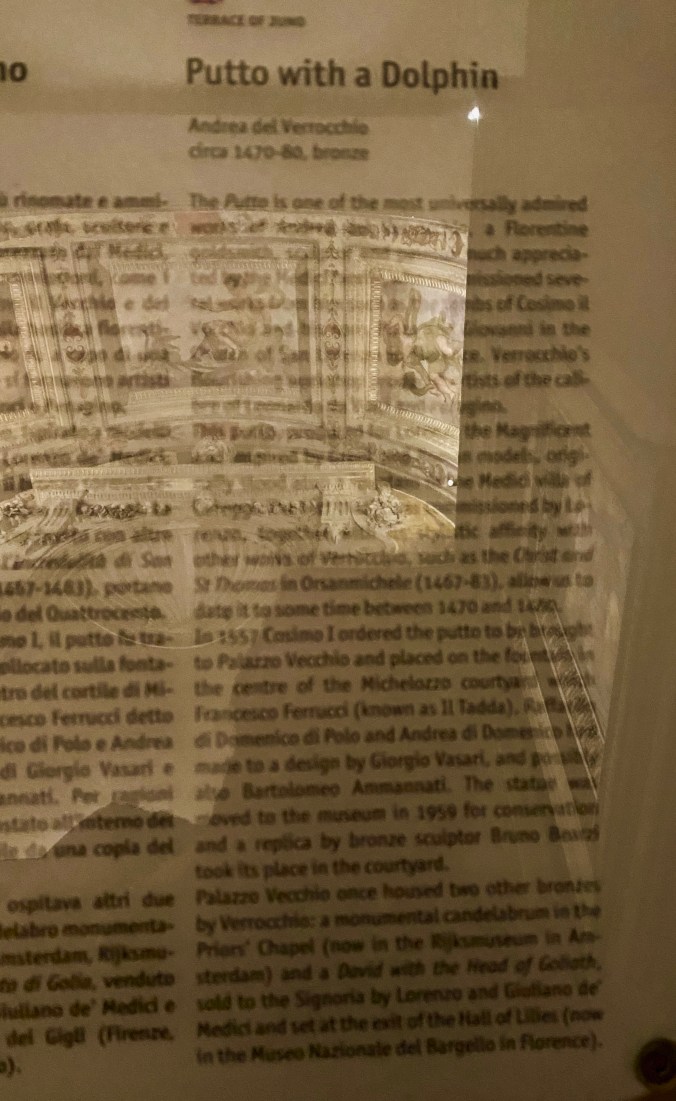
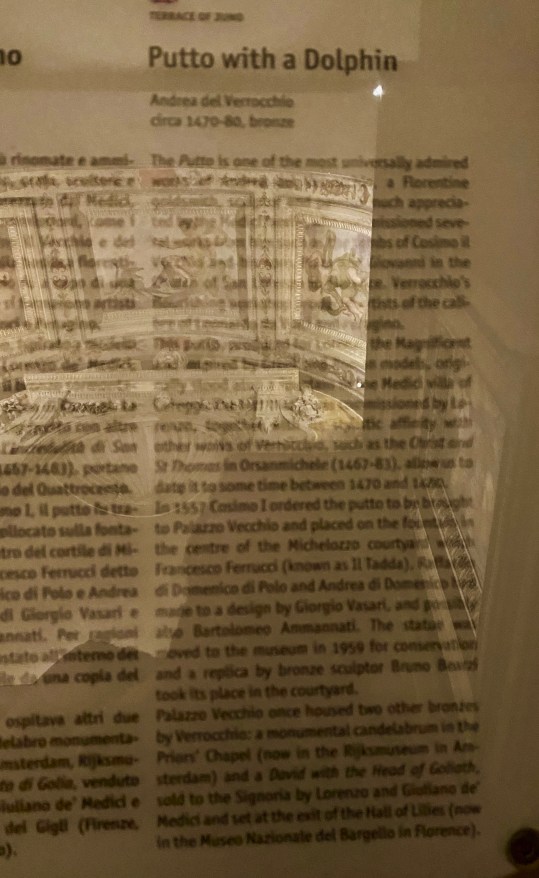
Andrea Verrochio is up next, with his wonderful Putto with a Dolphin:

img_6639


img_6641


img_6642


img_6644


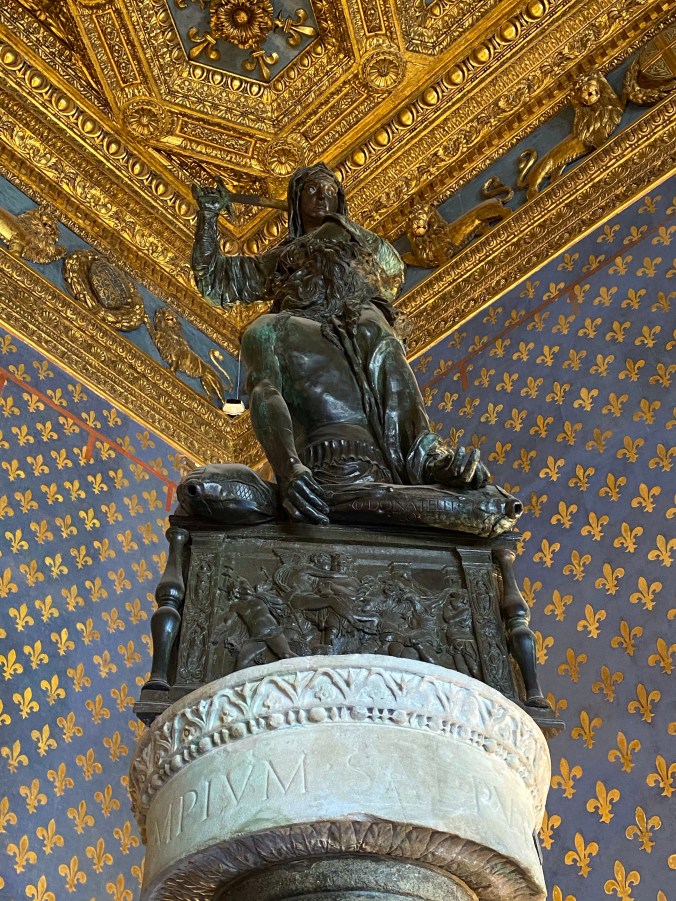
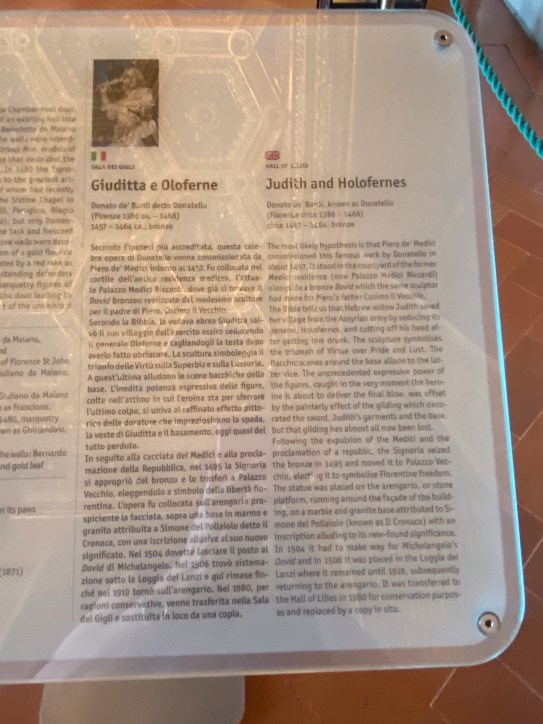
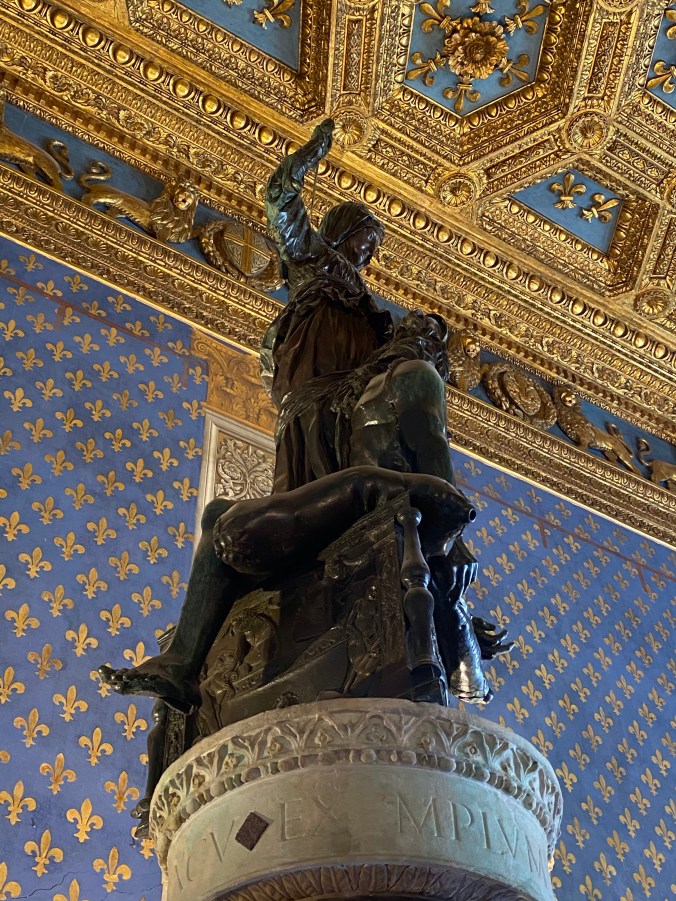
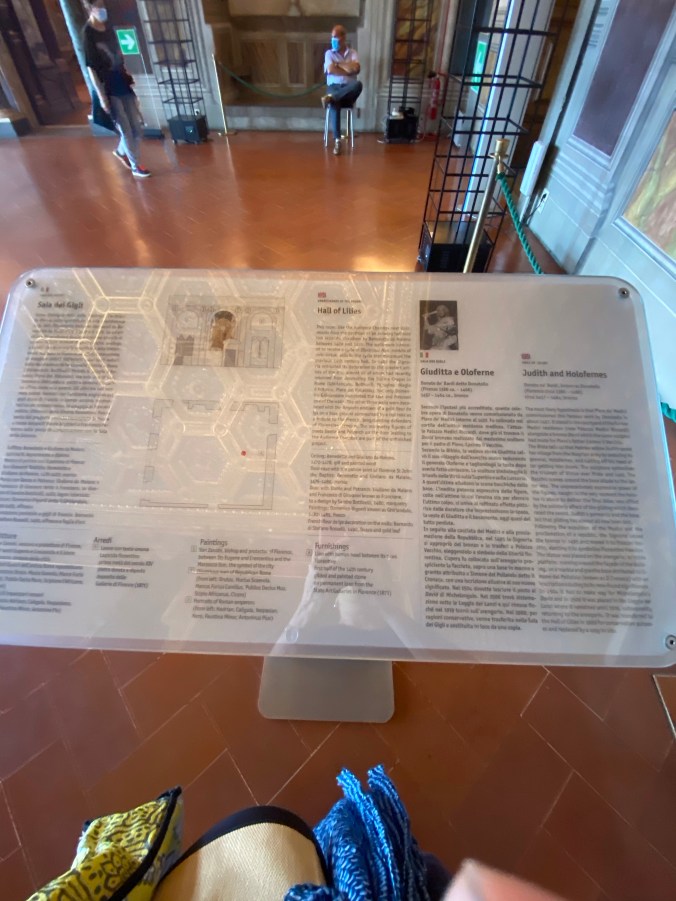
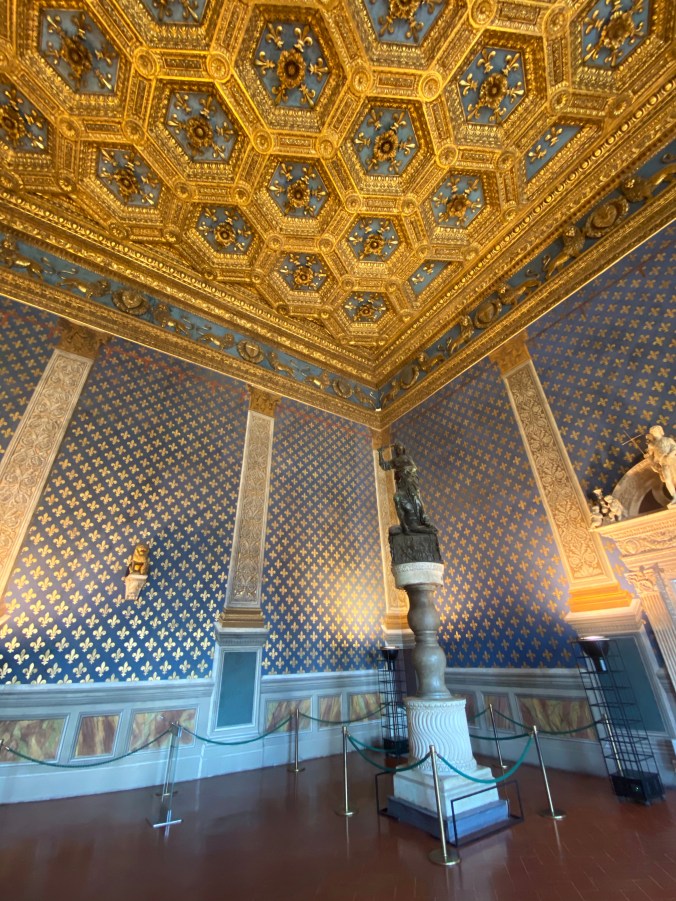
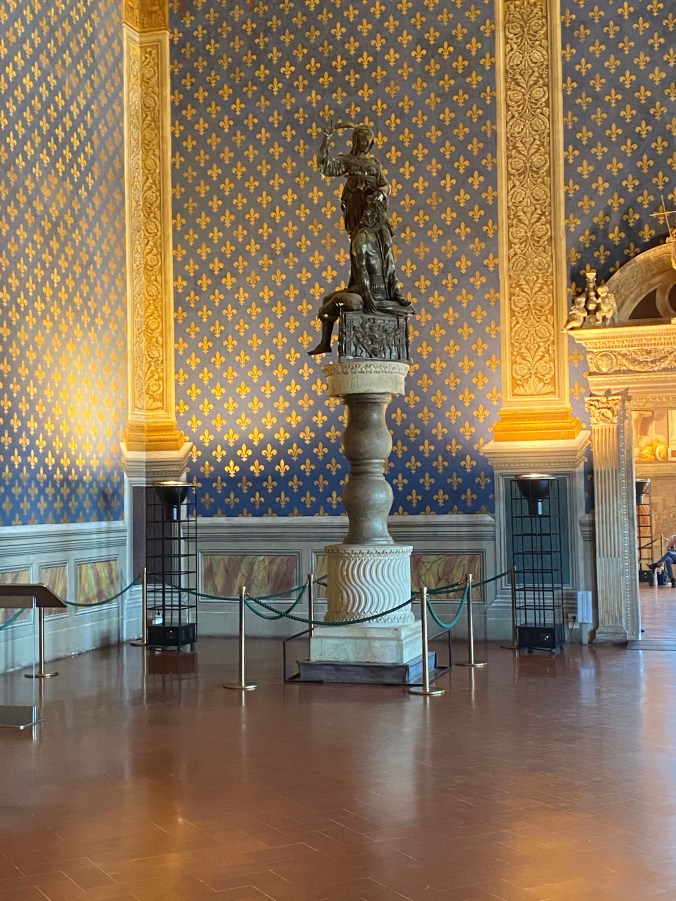
And, thirdly, Donatello.  He is one of all-time favorite artists and this sculpture, Judith and Holofernes, is one of his masterpieces. It resides in this gorgeous room.  You can see it on its pedestal to the right.


img_6710


img_6711


img_6712


img_6714


img_6713


img_6715


img_6720


img_6721


img_6741


img_6742

Palazzo Vecchio (June 2020) Part 2

Here’s the next part of my recent visit to the re-opened Palazzo Vecchio:

img_6677

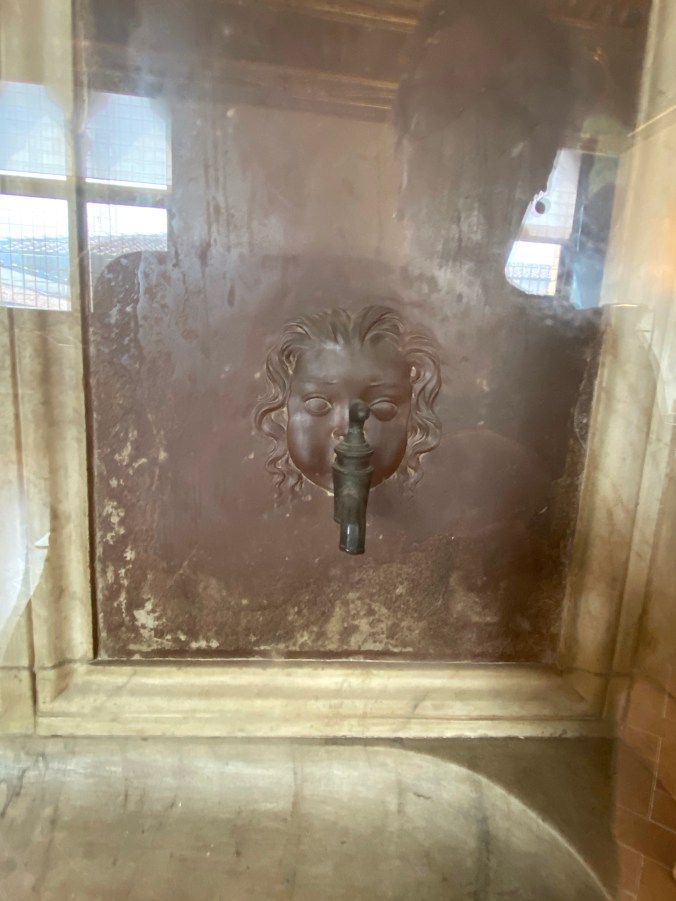
I love the view of the rustic stone through the glass.


img_6678


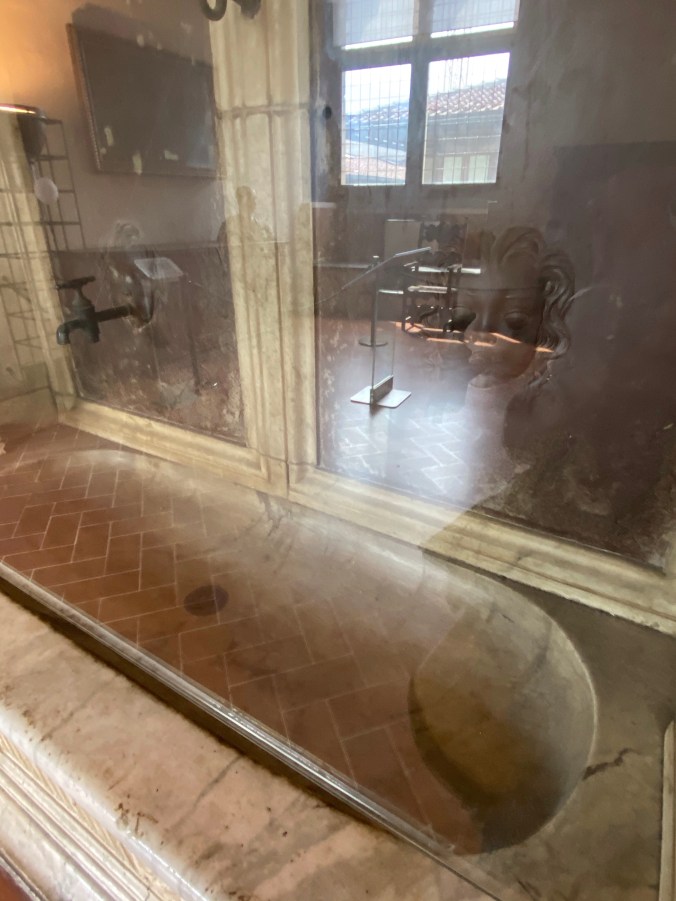
What a wonderful sink below!  Two spigots that look like fountains:

img_6680

The sink is in this elaborate niche:

img_6679

Below, you can see the shape of the sink itself:

img_6681


img_6682


img_6683


img_6684


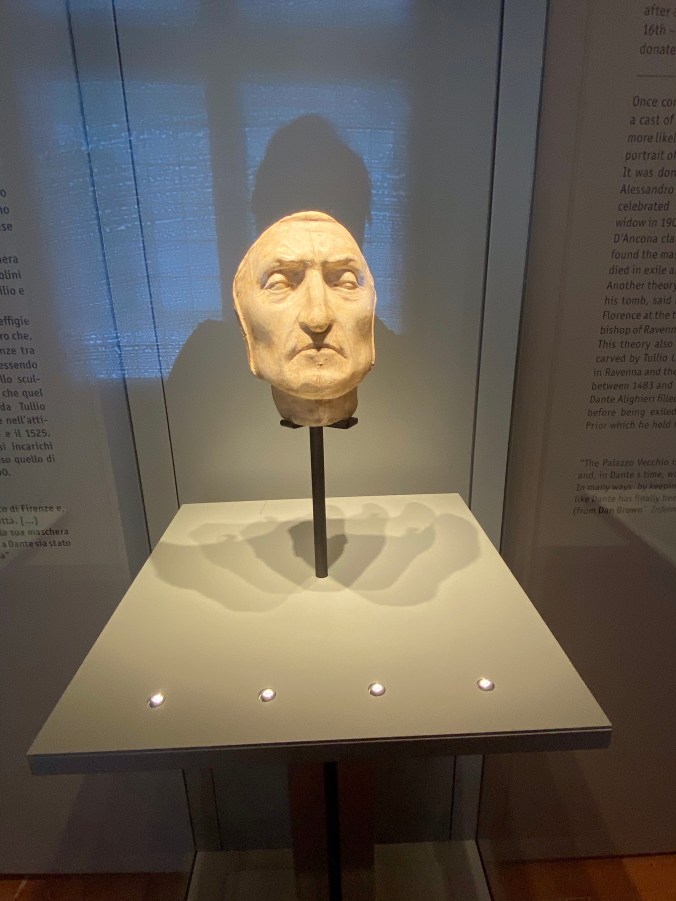
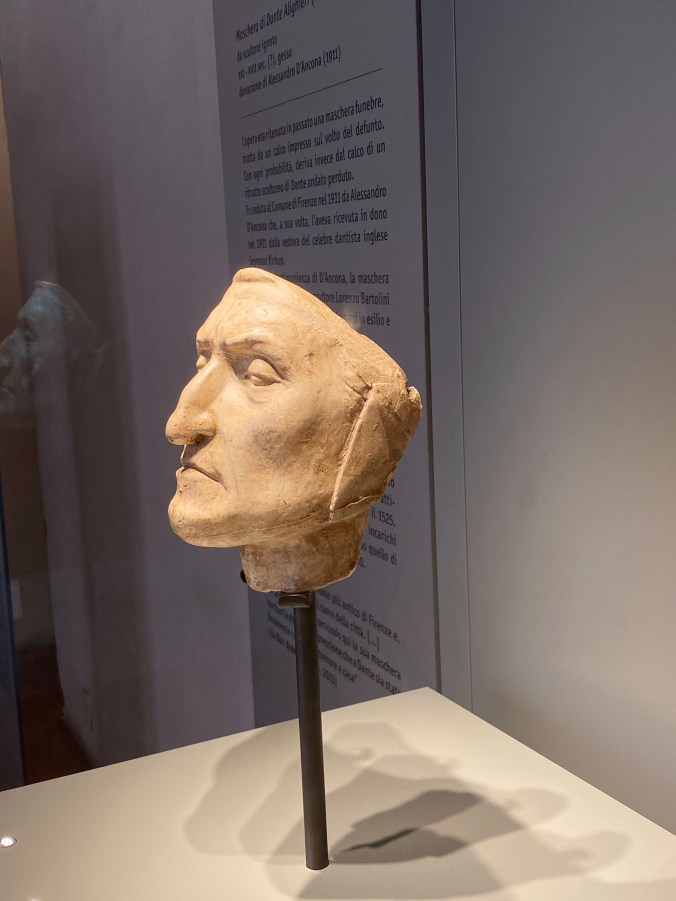
Below: the death mask of Dante:

img_6685

img_6686

img_6687


img_6688

img_6689

img_6690

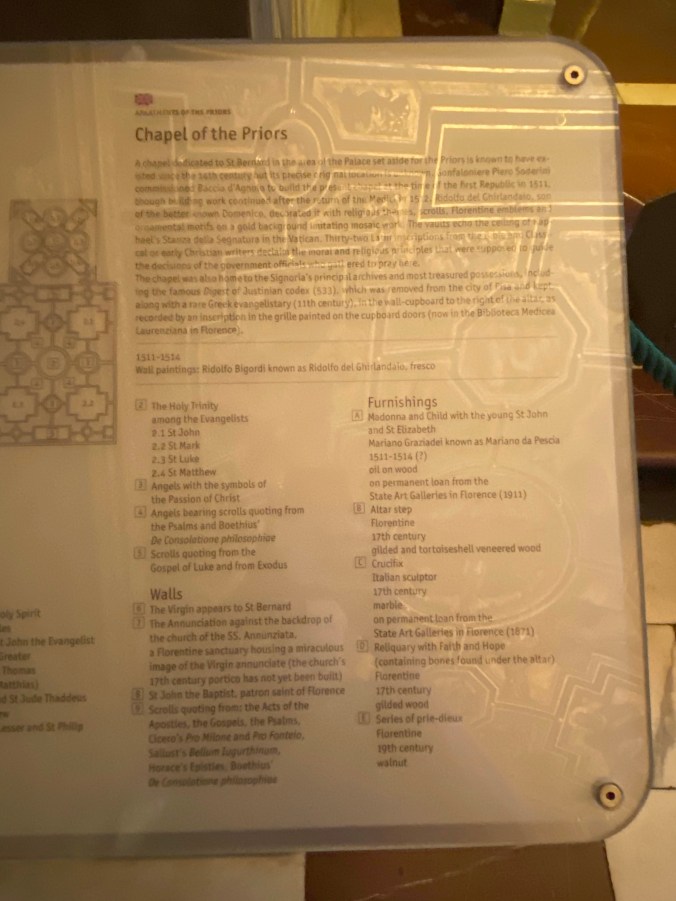
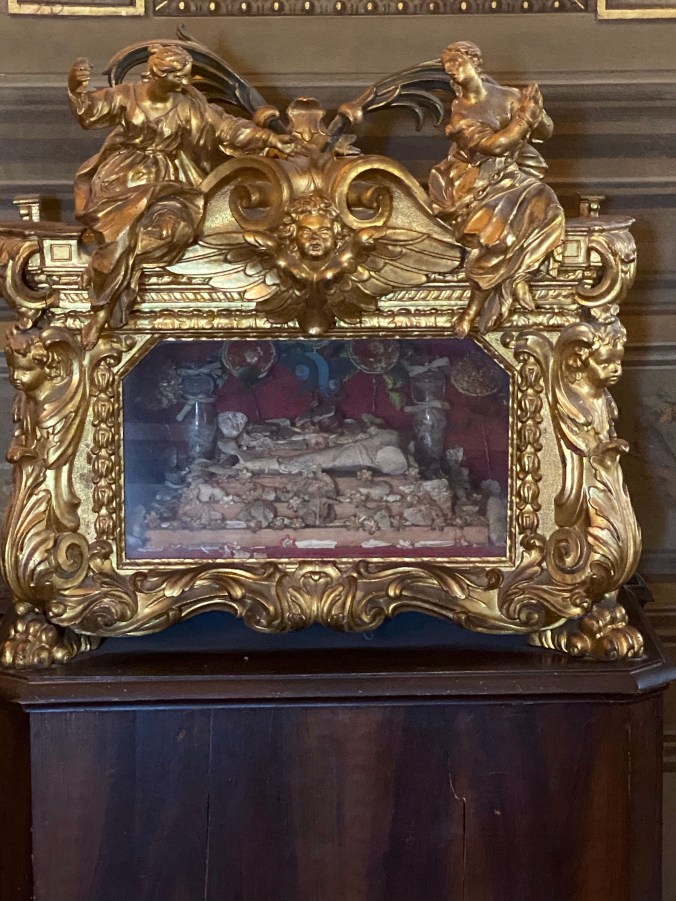
An amazingly elaborate reliquary:

img_6691

img_6692


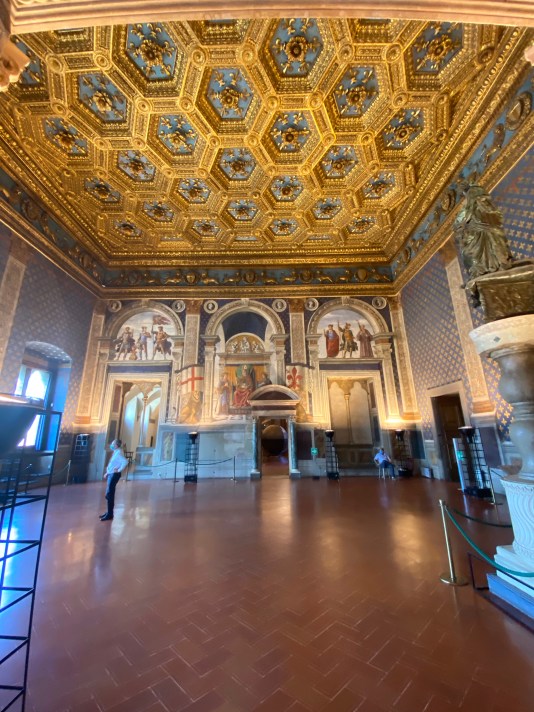
Next up, the elaborate Audience Chamber:

img_6693


Here’s the ceiling:

img_6694


img_6695


img_6696


img_6697


img_6698


img_6699


img_6701


img_6700


img_6702


img_6703


img_6704


img_6705


img_6706


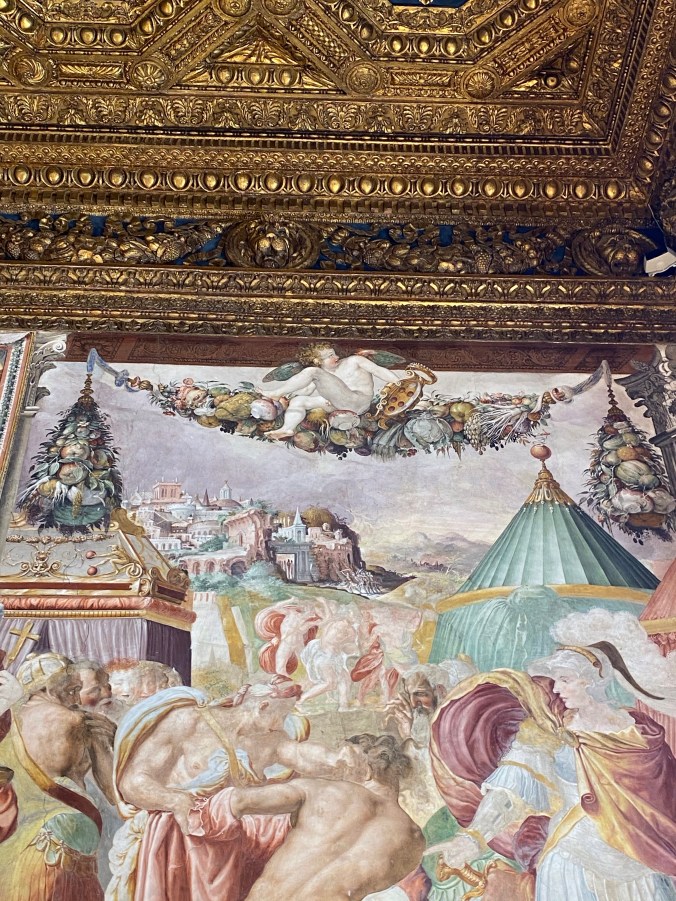
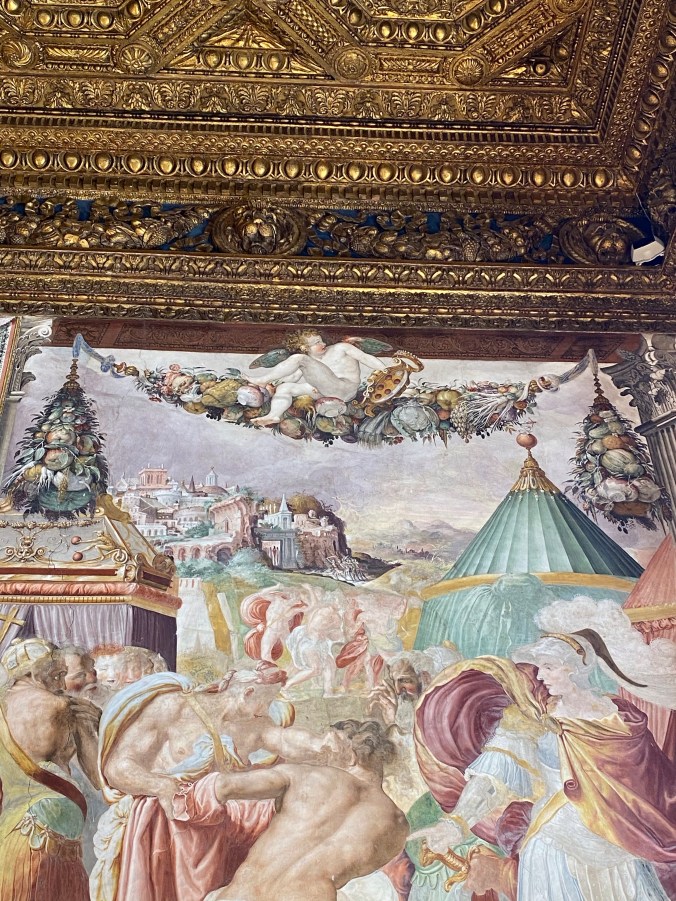
These frescoes “idealize” even war.  I like the colorful tents that housed the troops.  I doubt they were this lovely in real life.

img_6707


img_6708


img_6709


img_6710


Donatello’s Judith and Holofernes:

img_6711


img_6712


img_6714


img_6713


img_6715


img_6716


img_6717


img_6718


img_6719


img_6720


img_6721


img_6722


img_6741


img_6742


img_6727


img_6723

Early morning walk in Florence

30 June 2020.

The only way to beat the heat of a Florentine summer is to walk the city early in the morning.  Here are some pix from today’s path.

First up: some hot cars on a hot morning.

x8j3n3kORtacw9TOez6opg


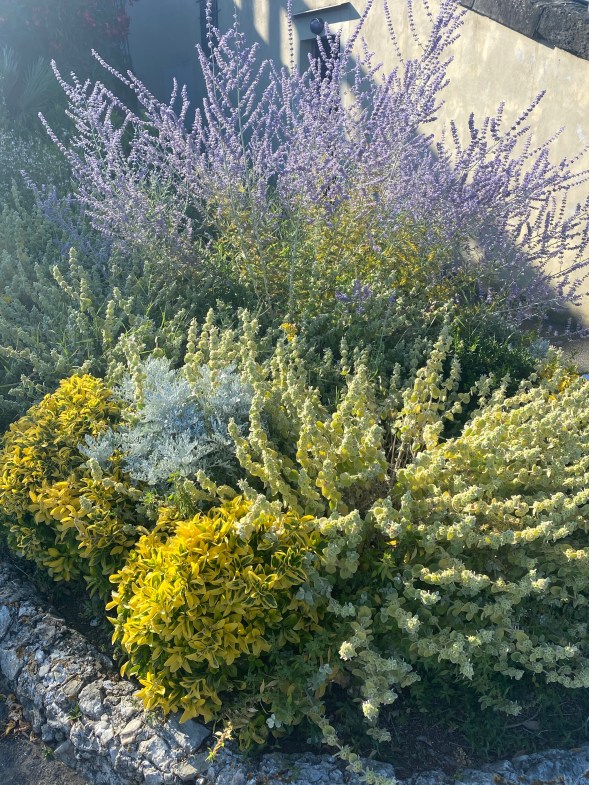
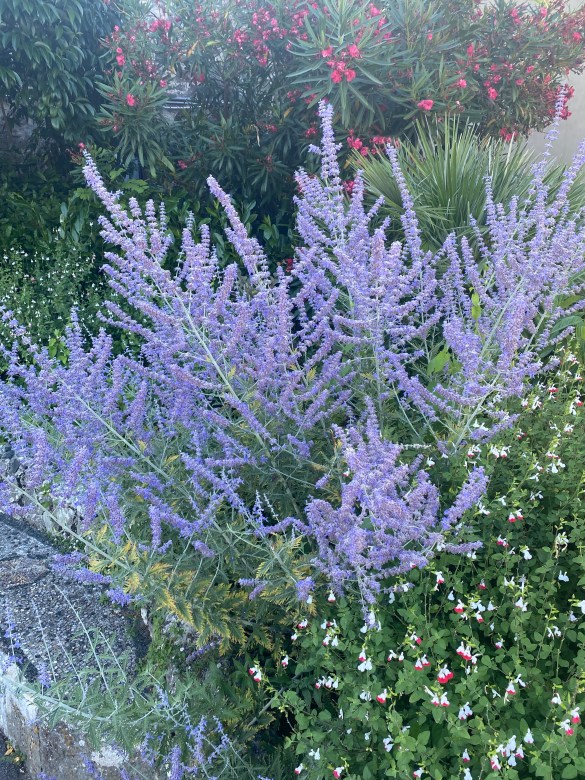
The area in front of the restaurant at the Piazzale Michelangelo has a beautiful and well cared for planting.  I love the hues of greens/yellows and lavender.

0knX4vAKScurkM8nq0Ul6Q


+fEHMGt7Ti+w68HqMRmGKQ


FvatvNIzQEiERxVda6EYlw


sUWnw40ASbu0oMgcHpeUig


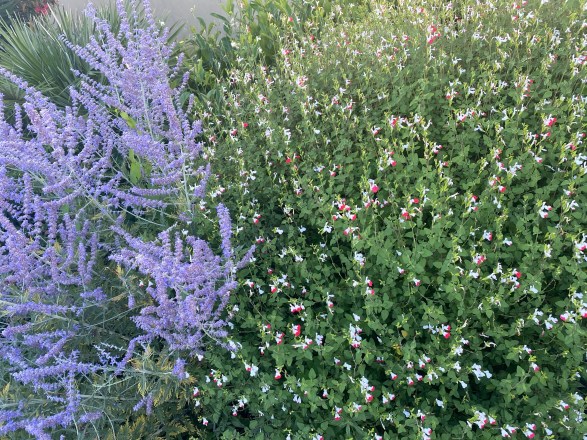
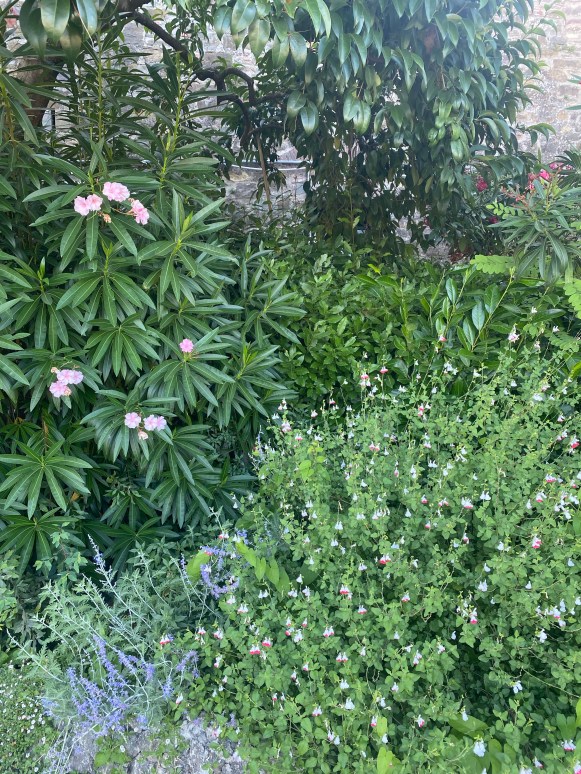
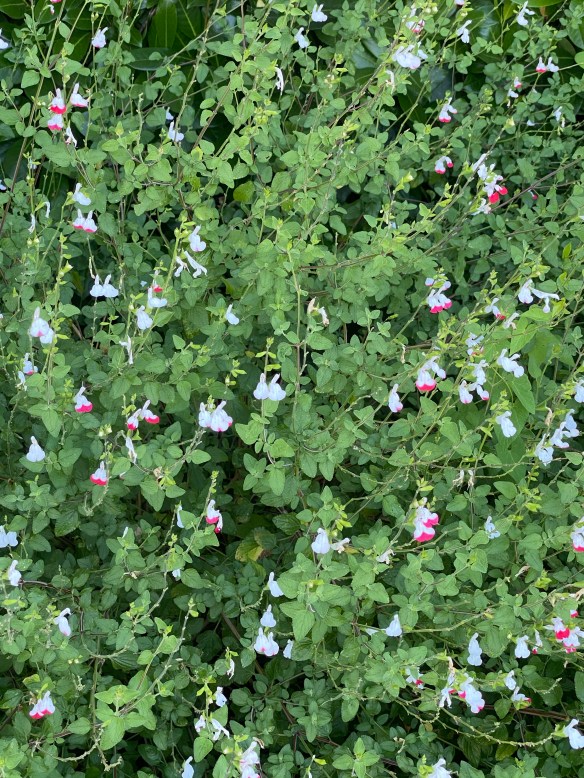
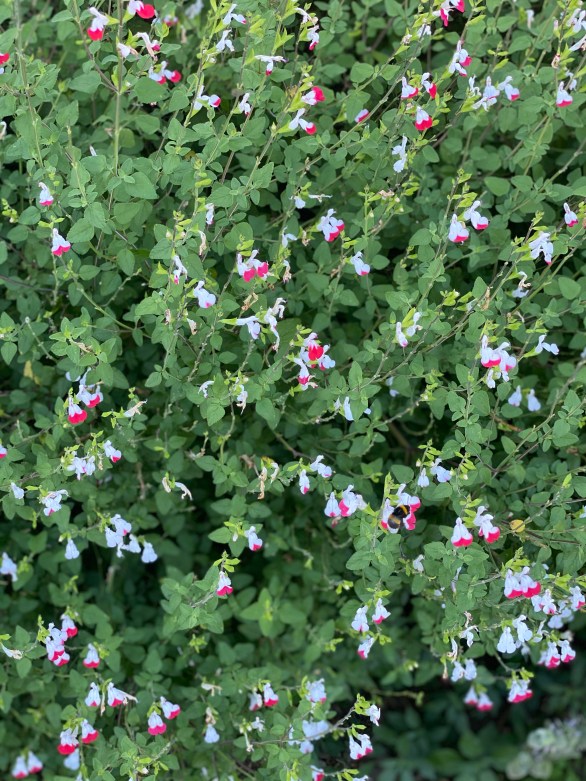
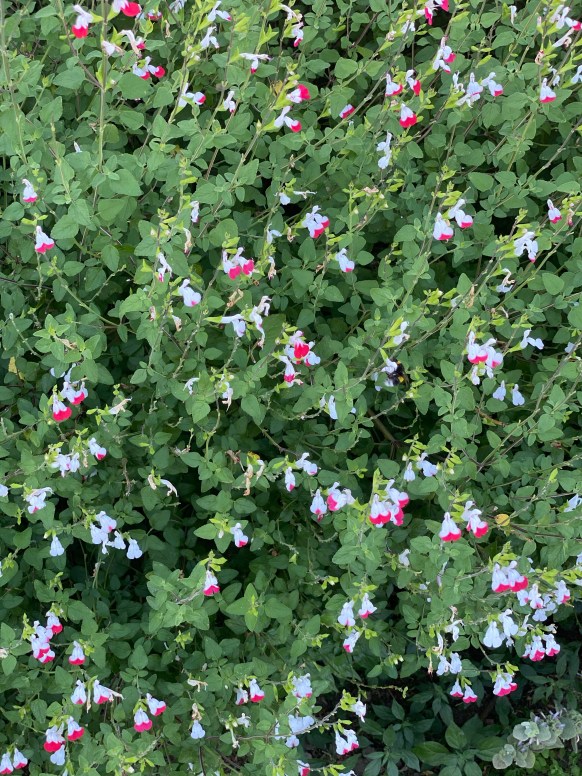
There’s a ubiquitous perennial I see all around Florence and I don’t know it’s name.  But it has the prettiest white and vivid red blossoms.  I love it.

hpYLzE2XRvu9PhkR0jflUQ


fullsizeoutput_3933


fullsizeoutput_3932


dZRtivMARvyjycahEzpBgA


This bee loves these flowers as much–or more–than I do!


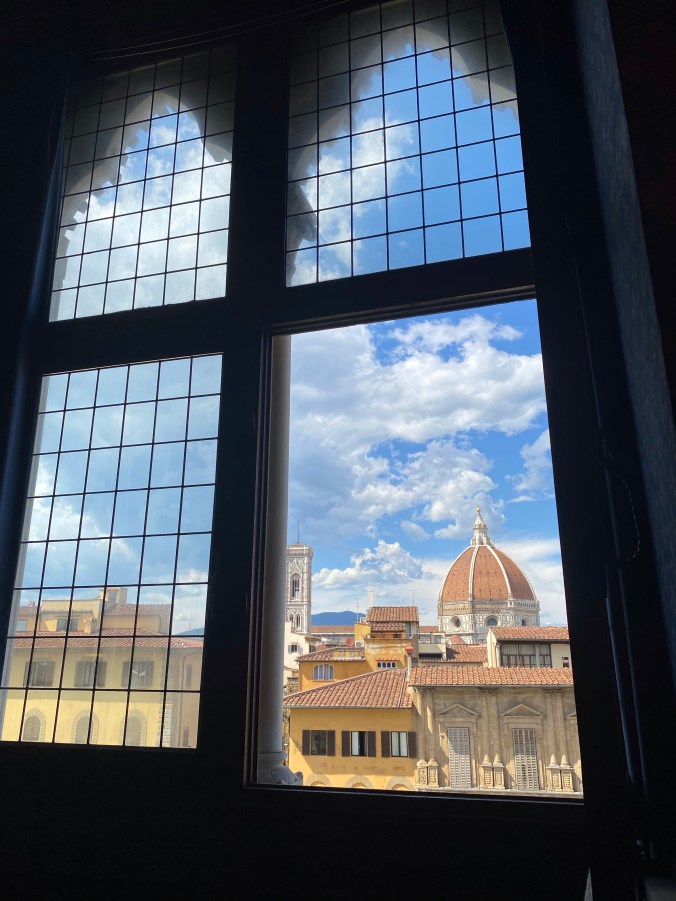
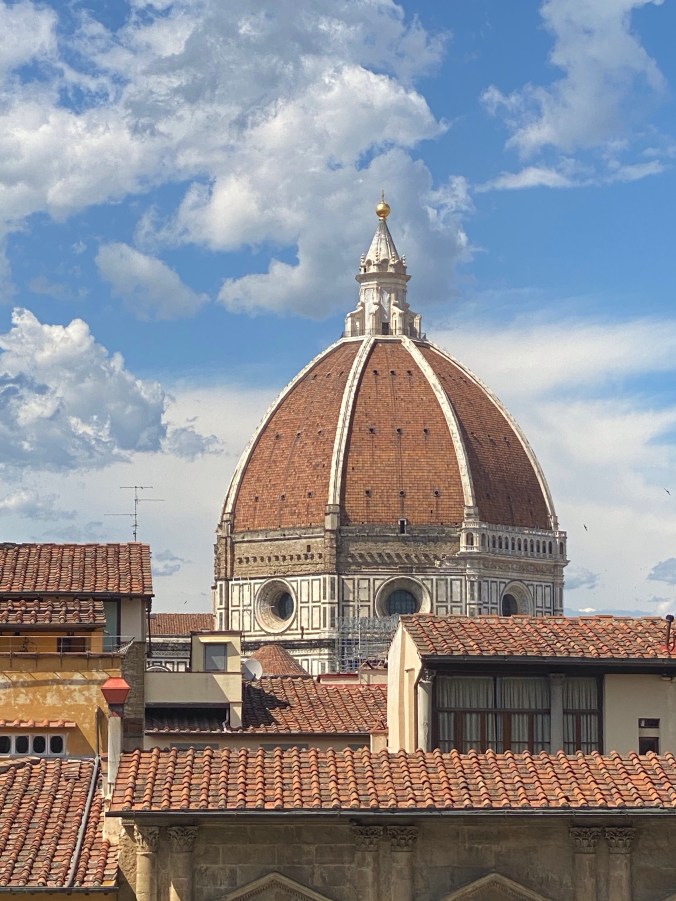
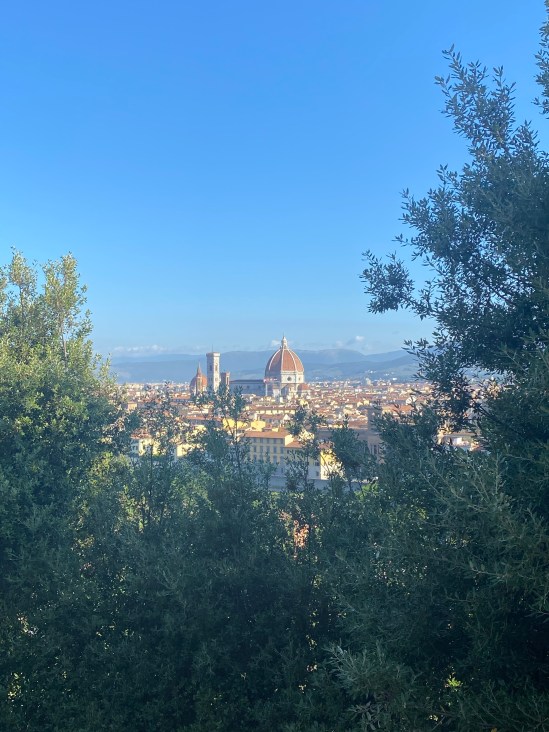
Every morning, I think I won’t take another picture of the duomo.  And then I see another view that demands that I do!

oddv5QFPSFOrI4YM6f6YeA


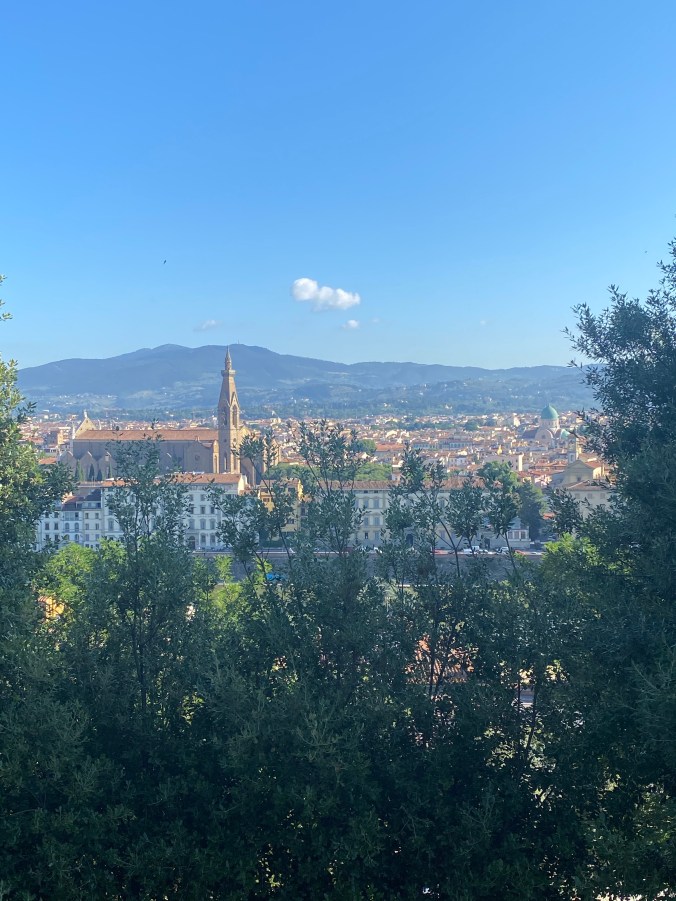
I love this view of Santa Croce and the aquamarine dome of the synagogue on the right side.

K4qJYNIATeOGIIz4RUeBhQ


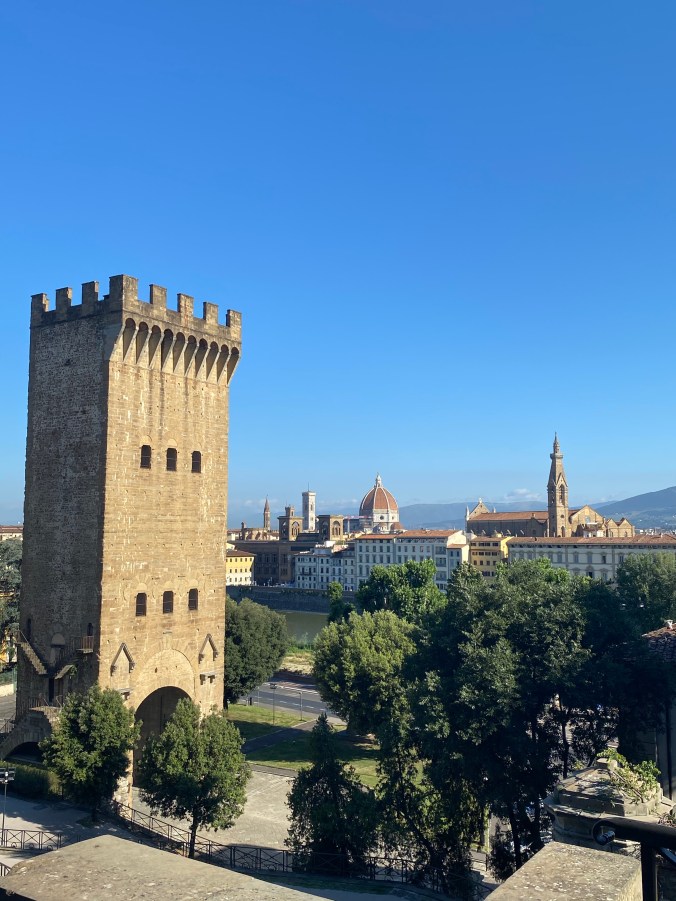
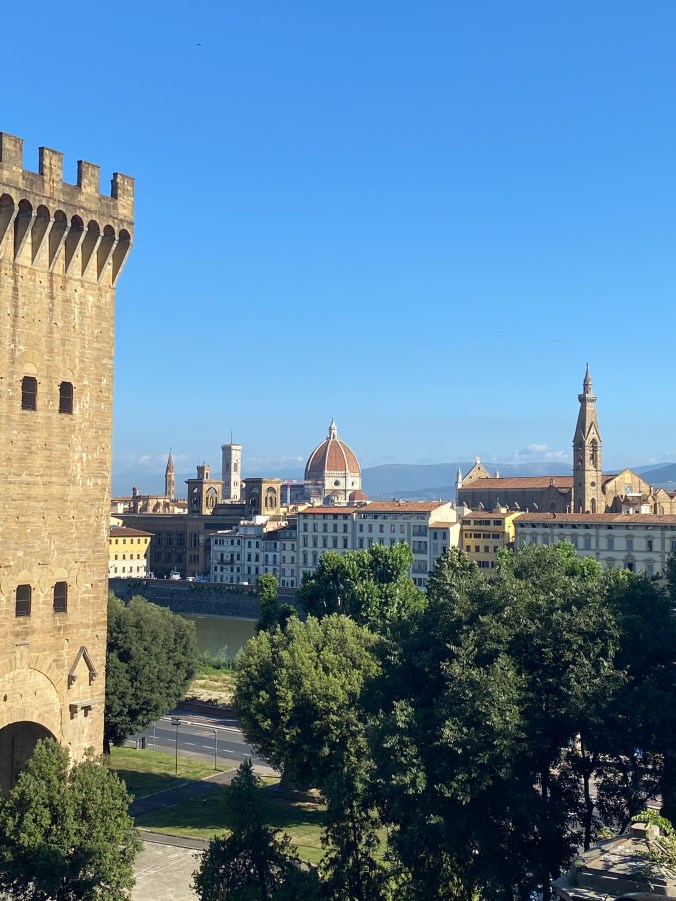
And then, walking down the ramps designed in the 19th century by Poggi, I see more incredible views from the Porta San Niccolo.

qzONf1yqTCebtpxEQS+KhQ


emkEKTSJSZe7aKKx+9sF0A


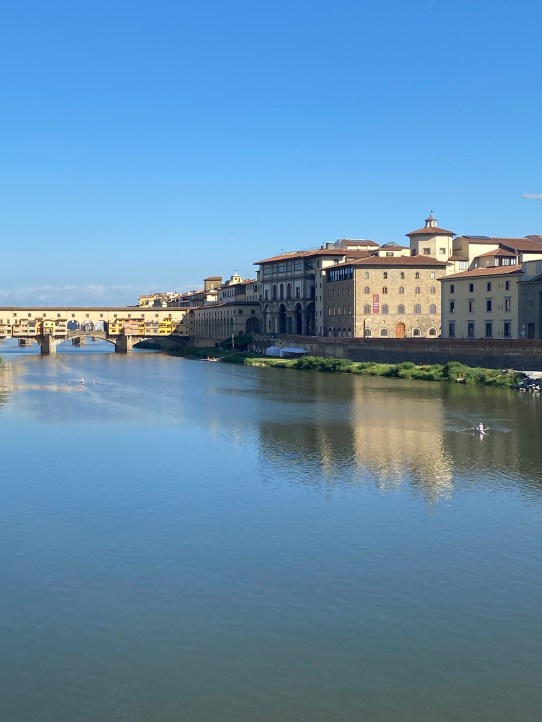
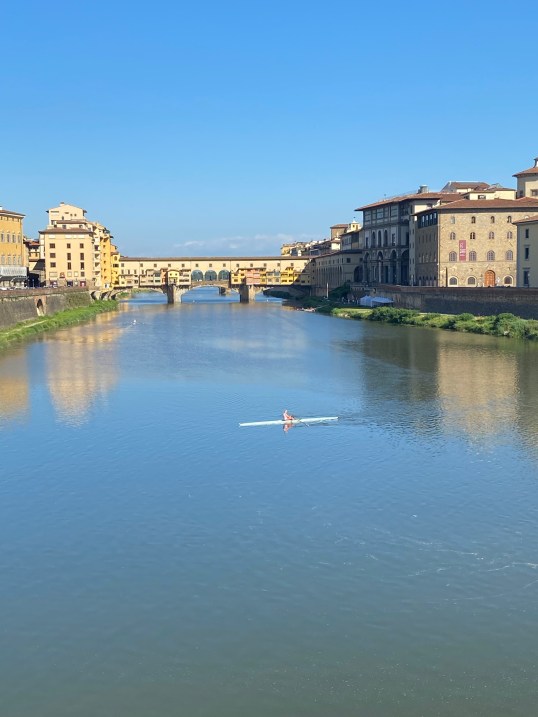
Walking across the Ponte alle Grazie, it is fun to see the boaters out on the water near the  Società Canottieri down on the banks of the Arno.


q%ZqJZAGQdmJMZvh+em47g


YAN+Ee4jRm61SNyfezVoQw


OHdCX+ELRnutEb5Nxf8Wpw


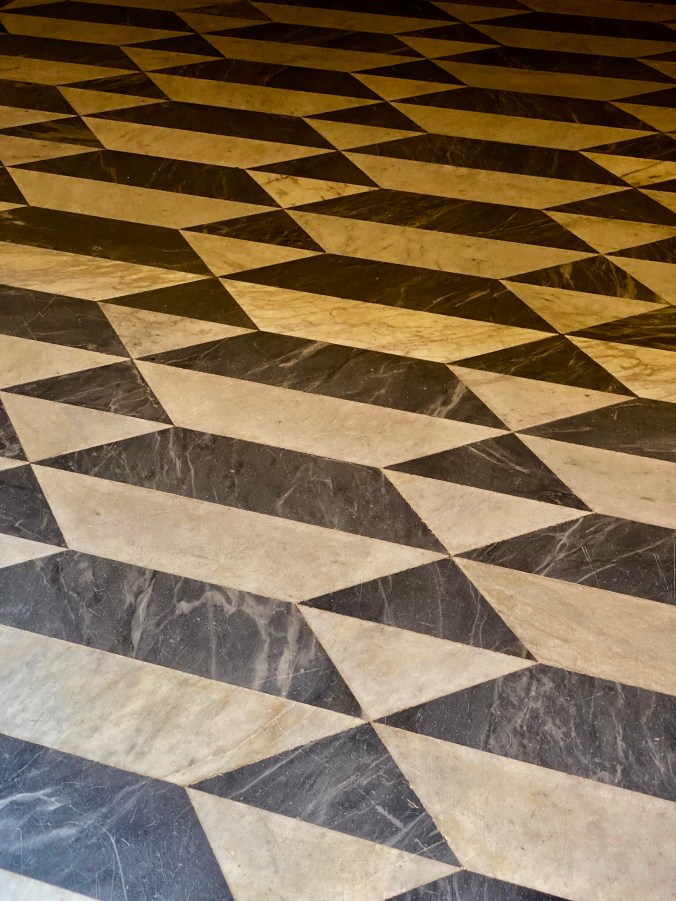
I spotted yet another pattern of marble inlay.  I love these old patterns.

fullsizeoutput_3943


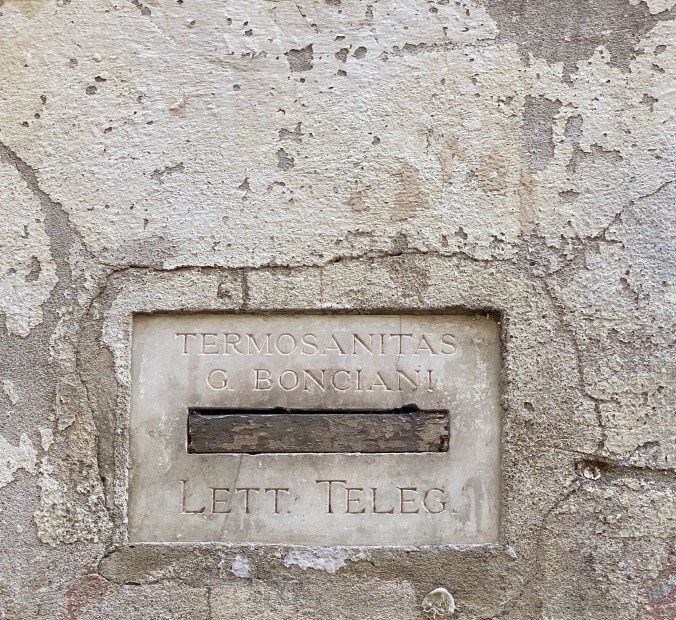
And, a reminder that a century ago, important news often came by letter and telegram.

fullsizeoutput_3941