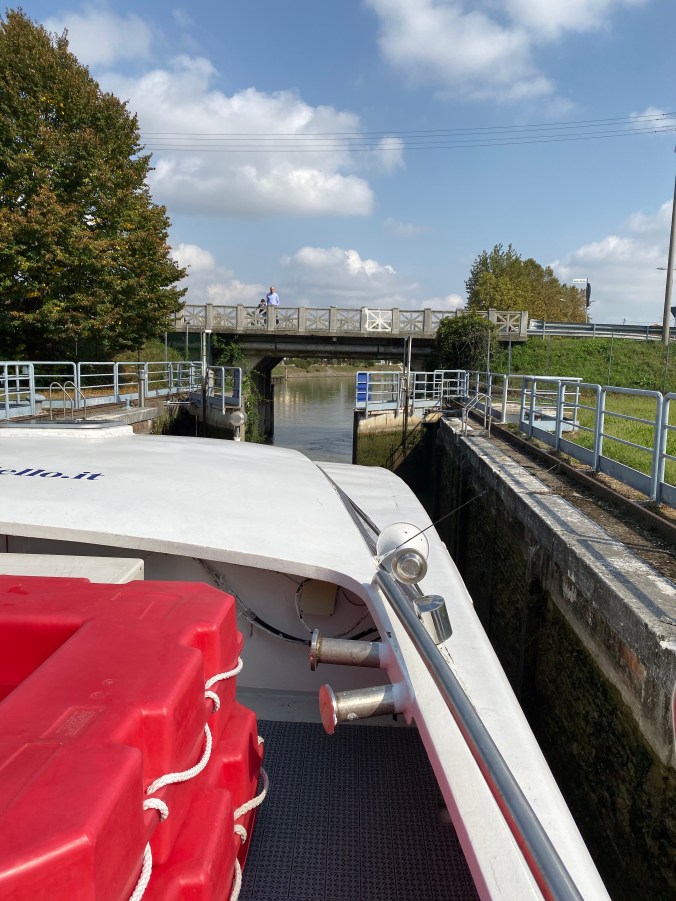
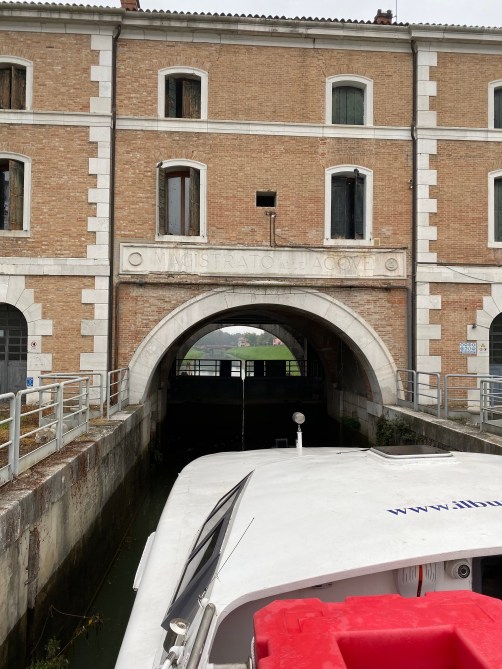
Back onboard the Burchiello, my cruise continued toward Venice from Stra. First we had to sail through the Dolo Locks.
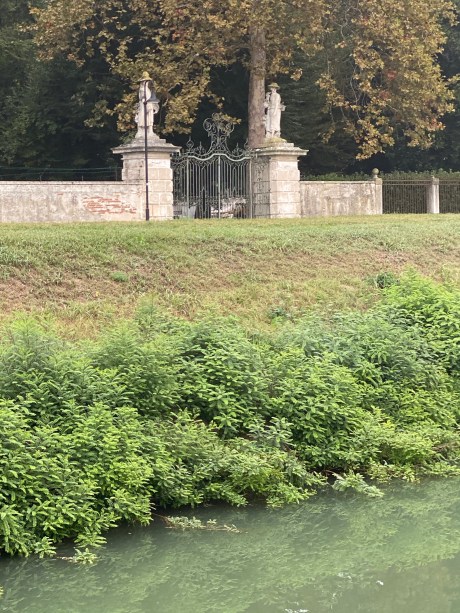
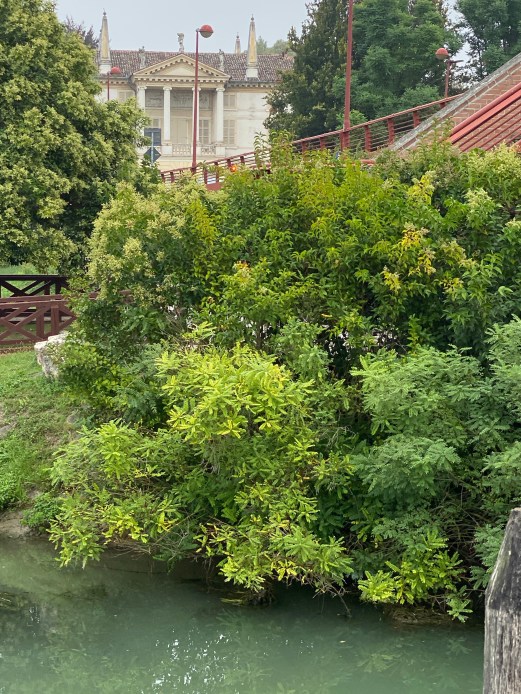
Soon we were passing many amazing ville, visible on the left and right banks of the canal. This area is around Mira, and has a high percentage of villas per square mile! We also passed very beautiful sections of the canals, with willow trees skimming the water and many fisherman catching their Sunday lunch.
It was smooth sailing and I had one of the best seats on the boat.
Next we passed through the Mira Locks.
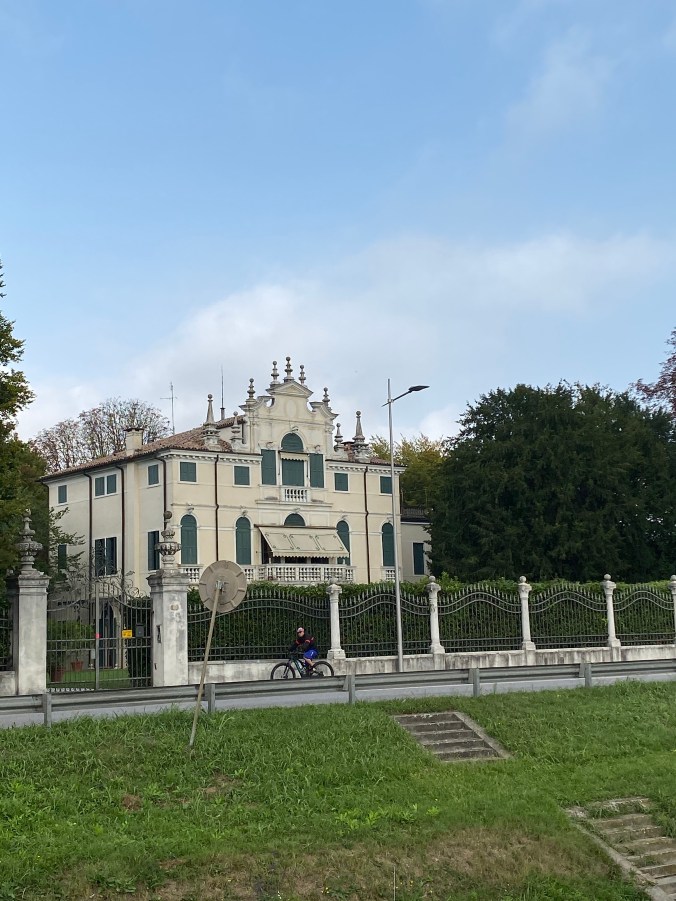
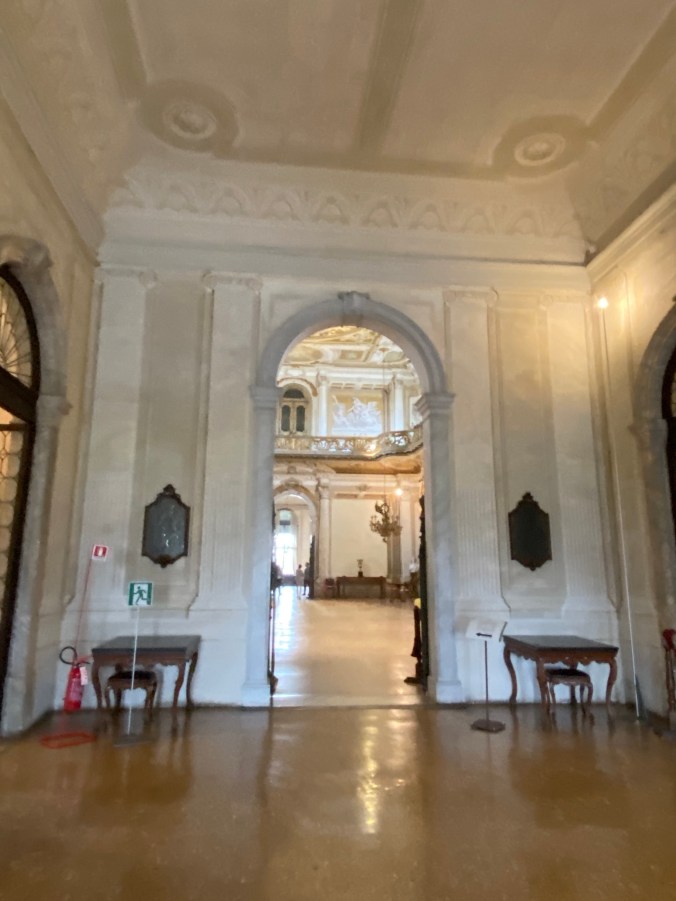
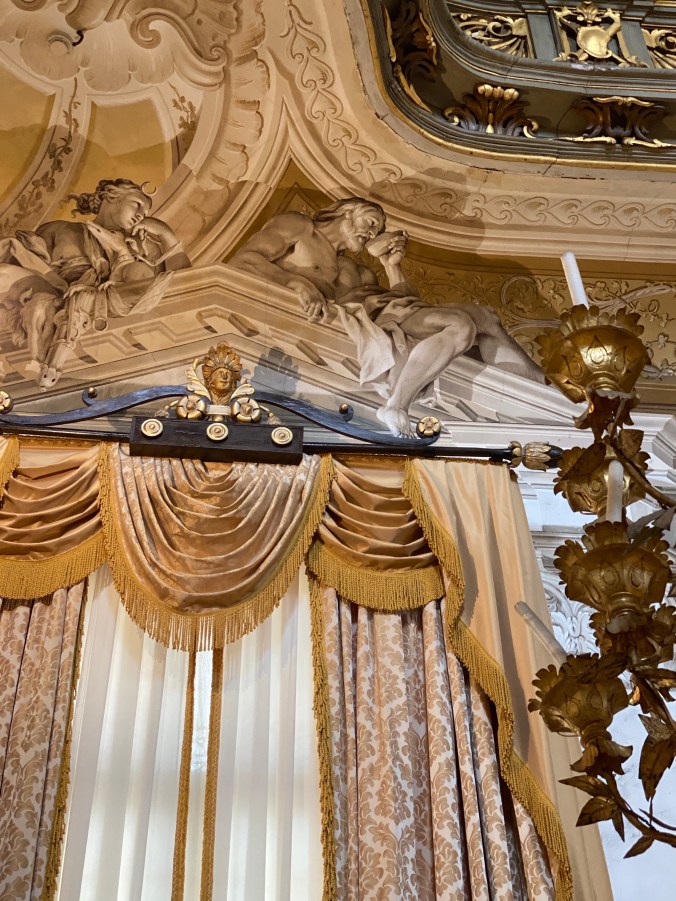
We stopped at Villa Widmann, said to be a typical 18th century residence (that is if you were a part of the aristocracy!). It houses luscious frescoes and has lovely gardens.
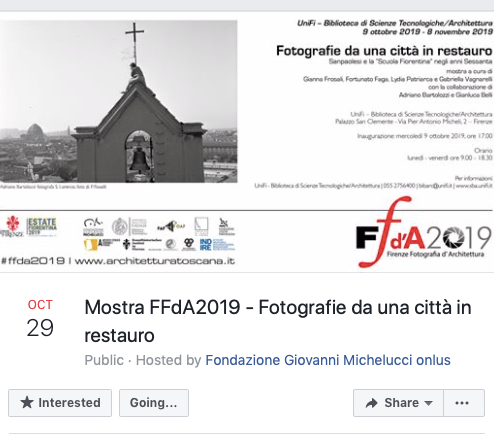
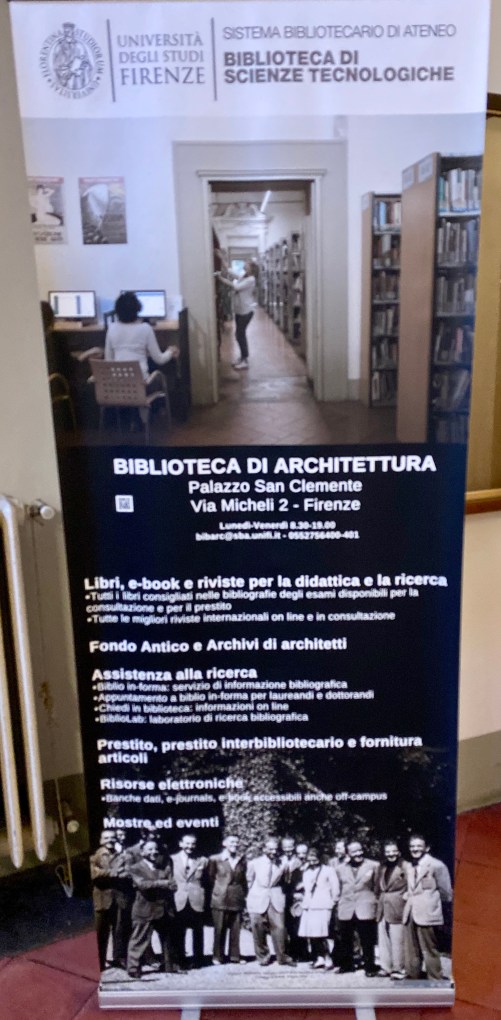
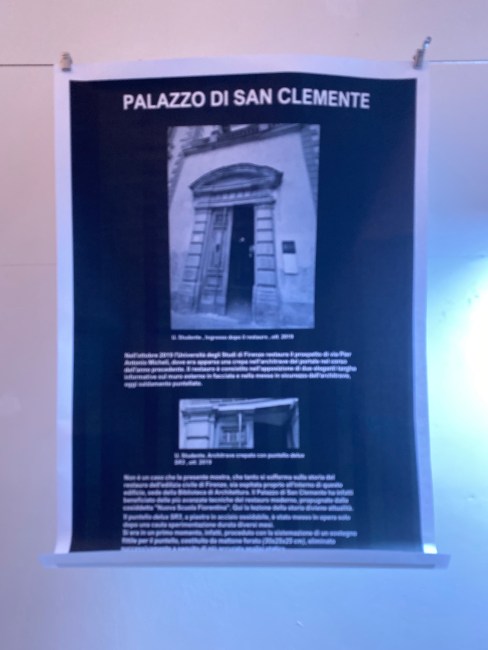
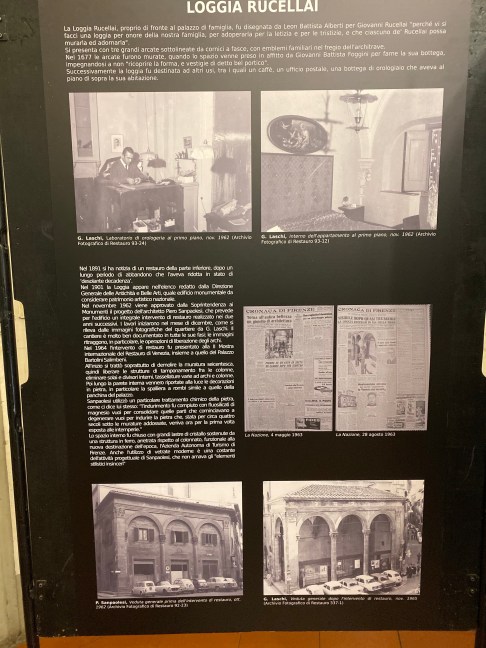
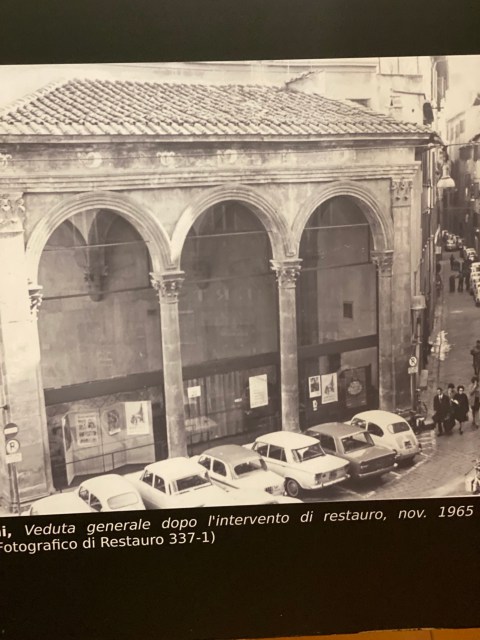
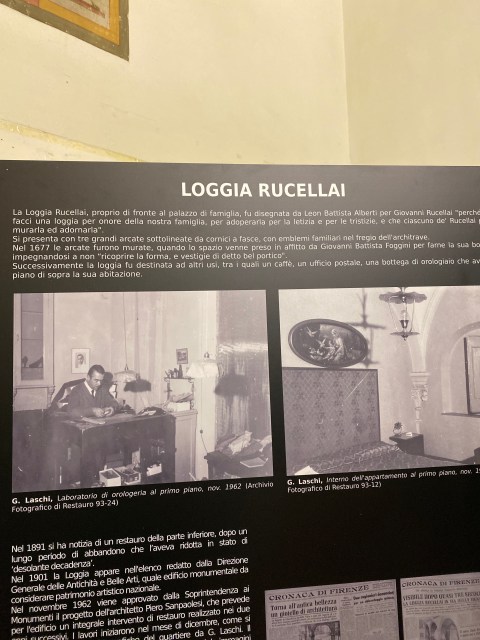
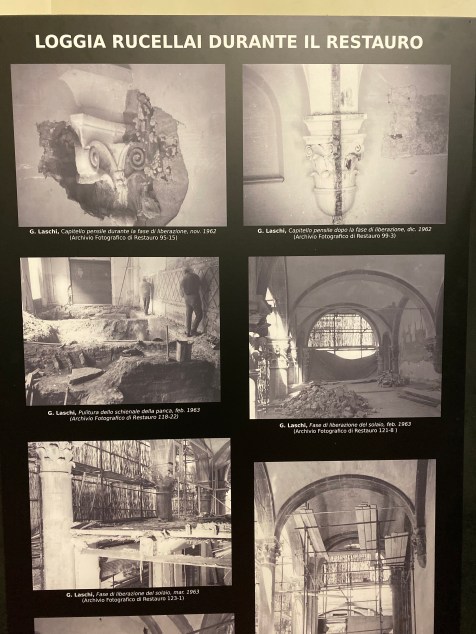
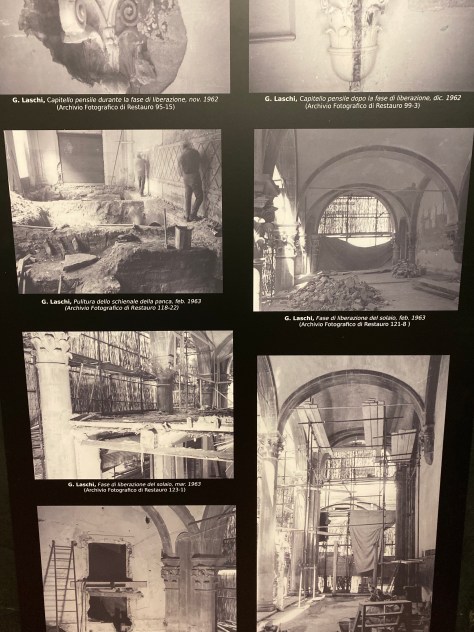
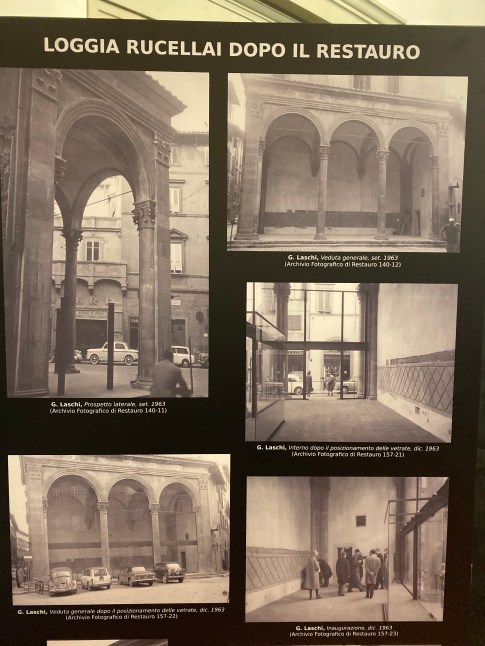
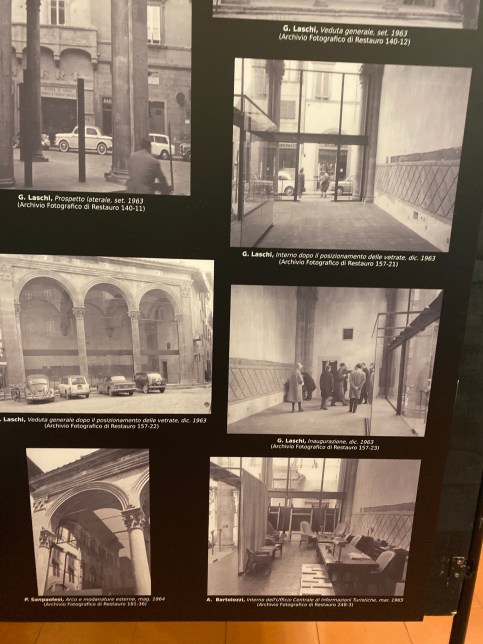
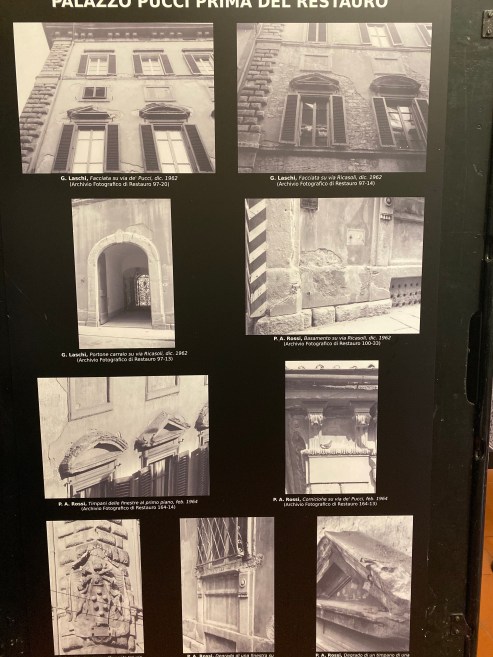
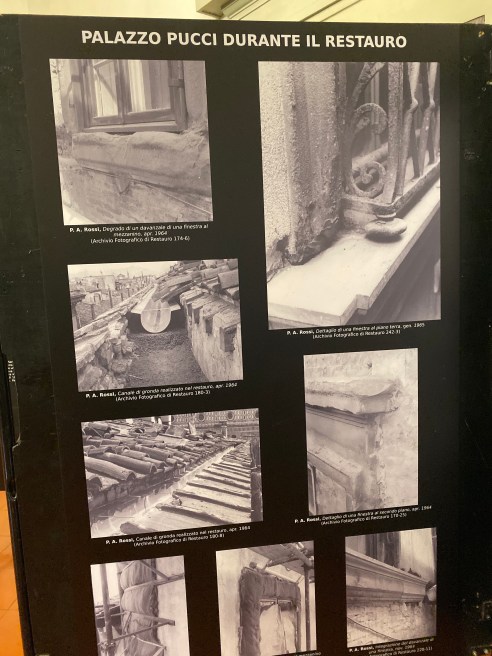
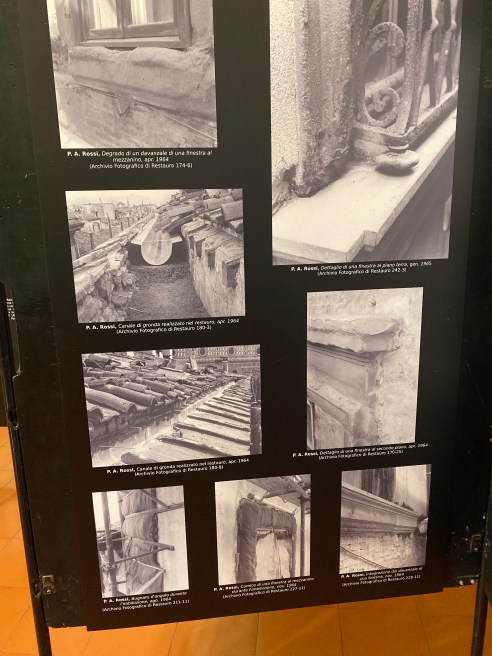
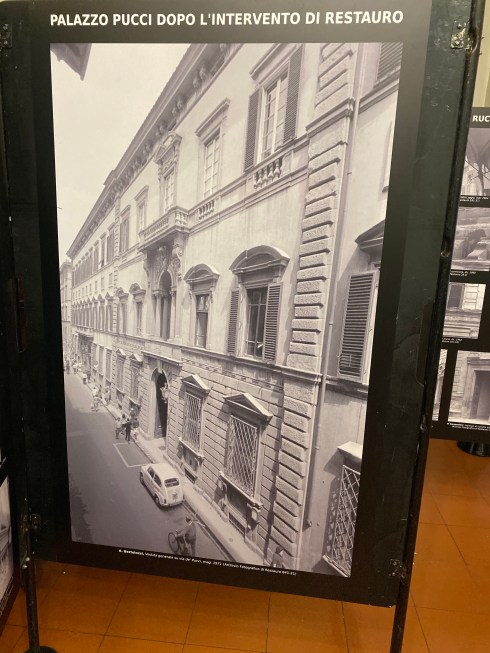
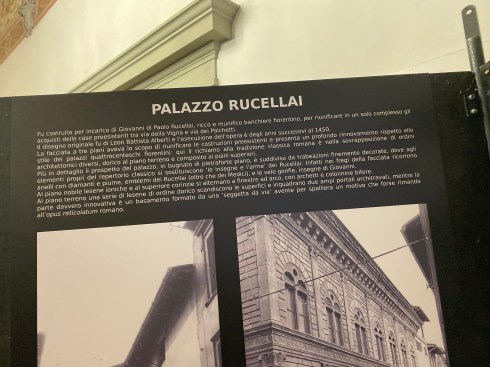
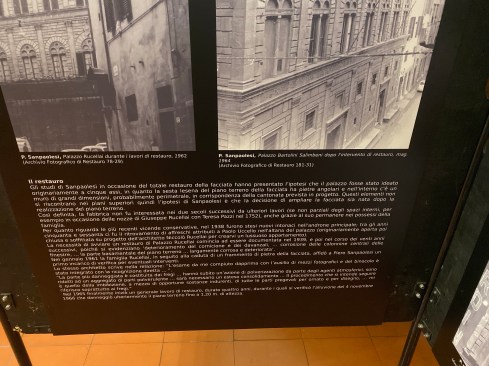
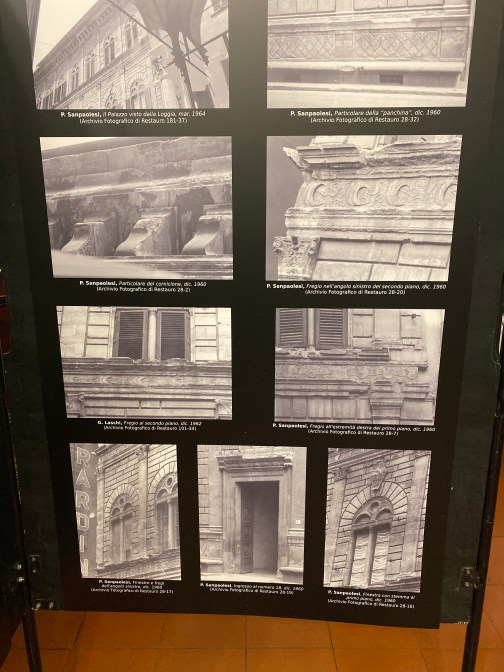
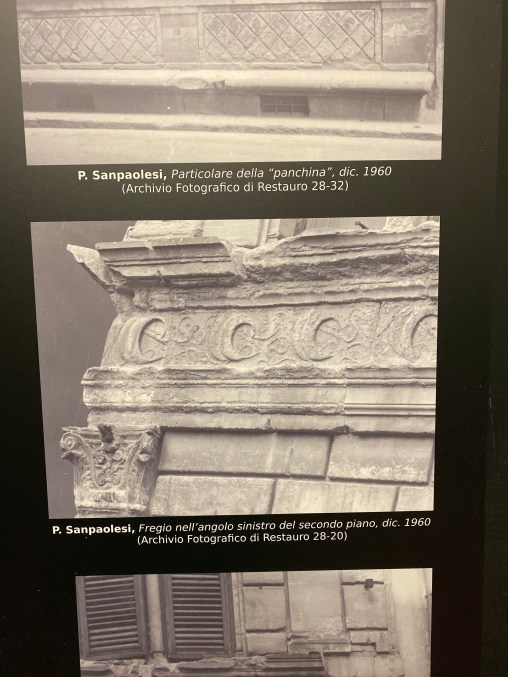
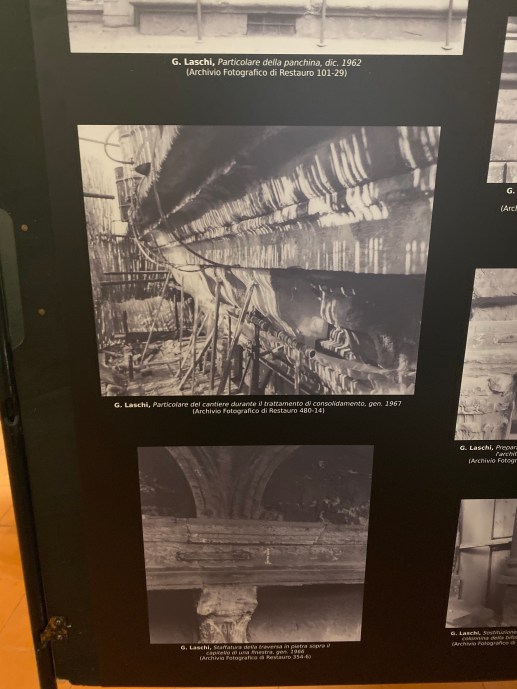
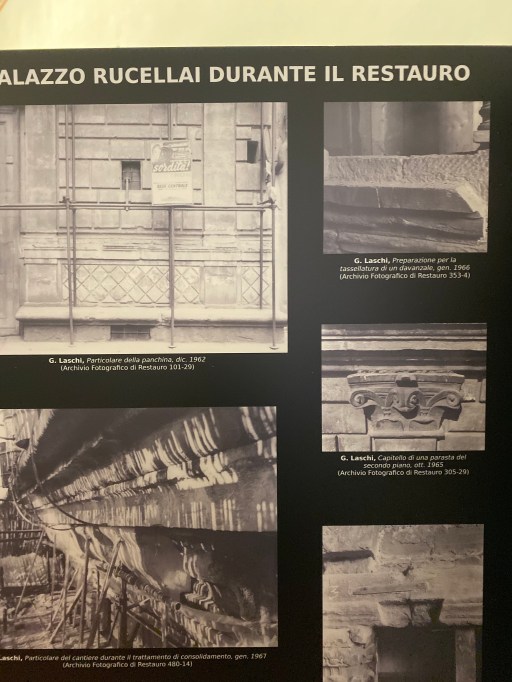
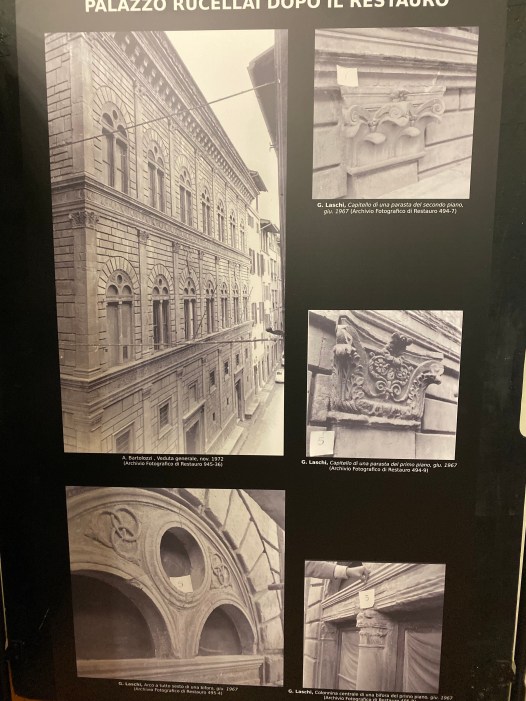
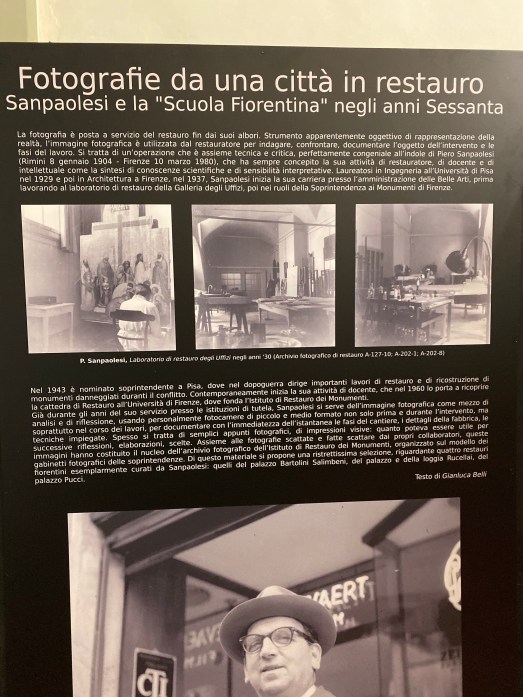
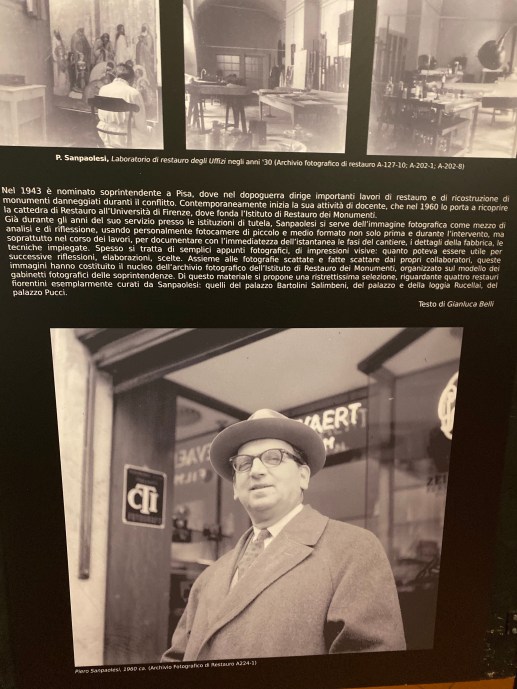
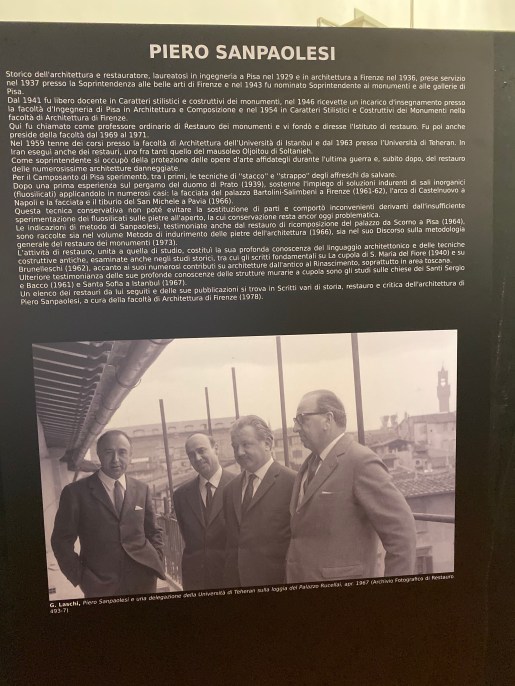
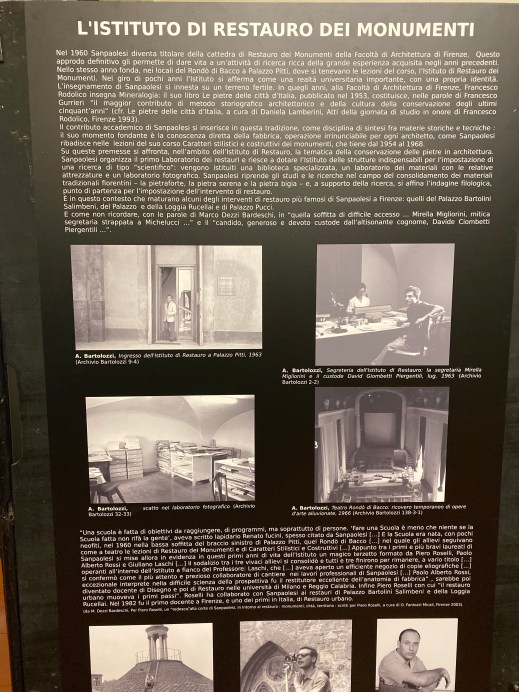
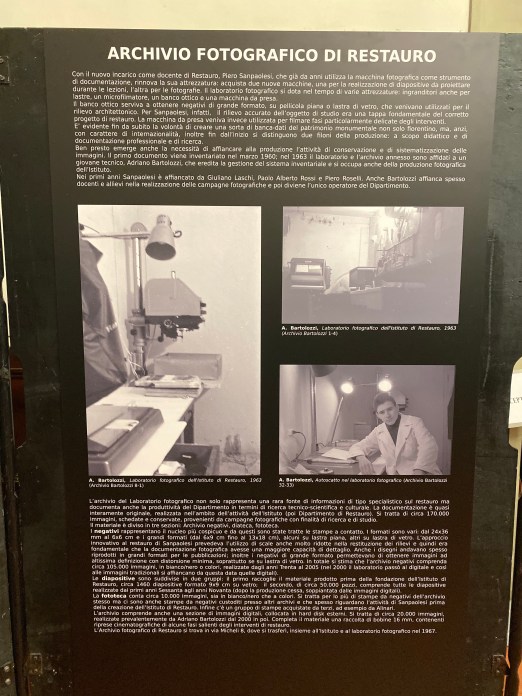
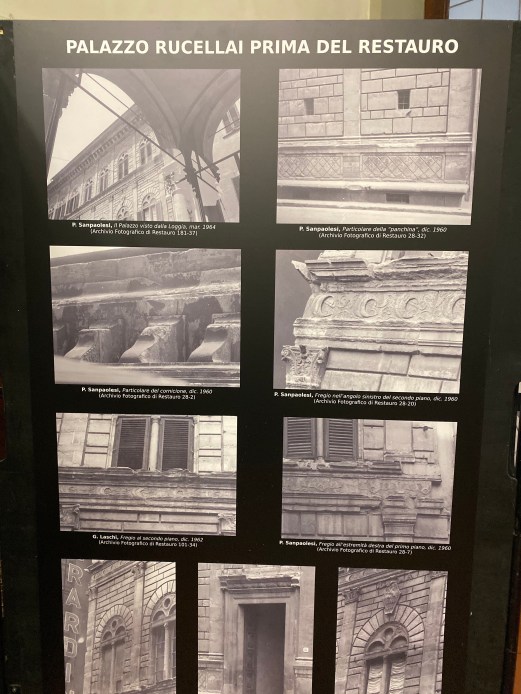
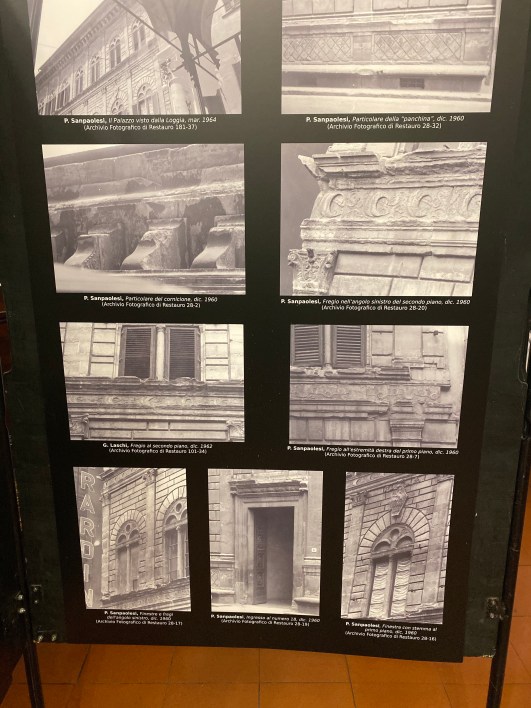
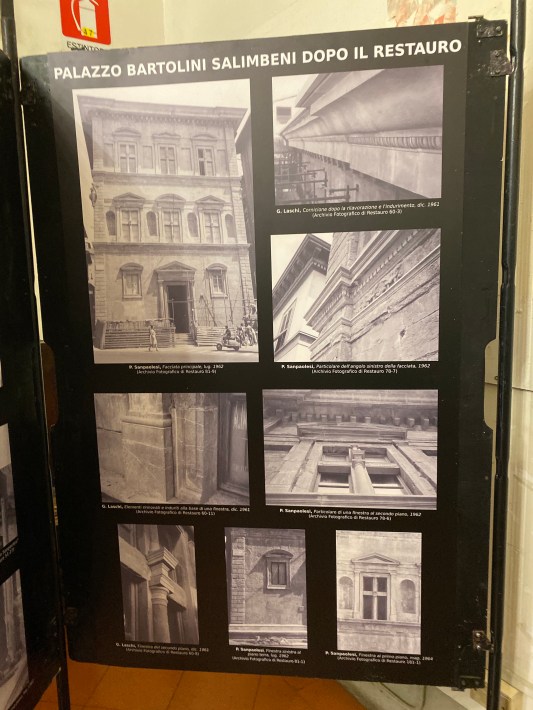
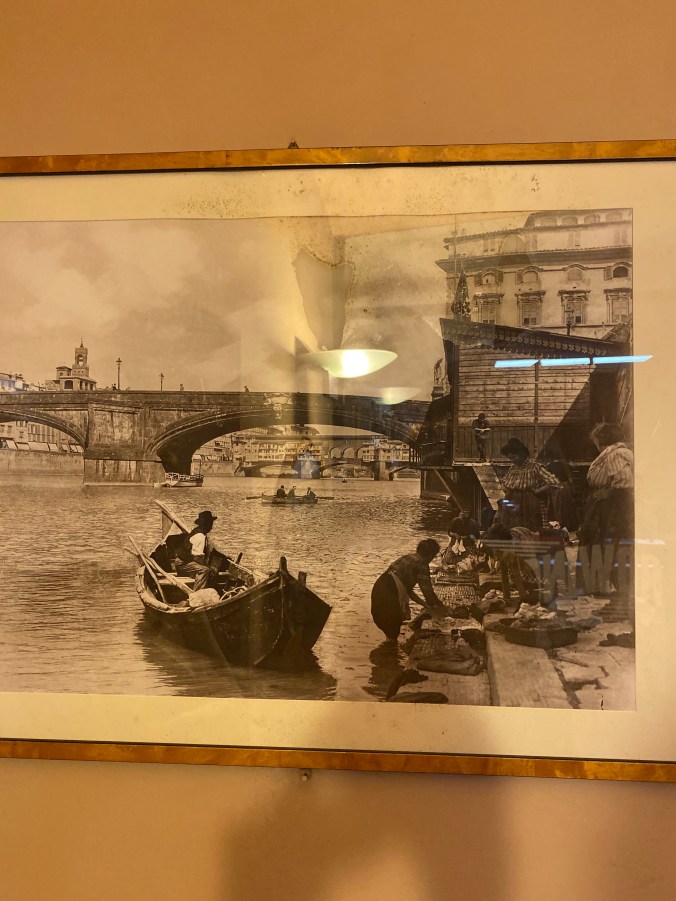
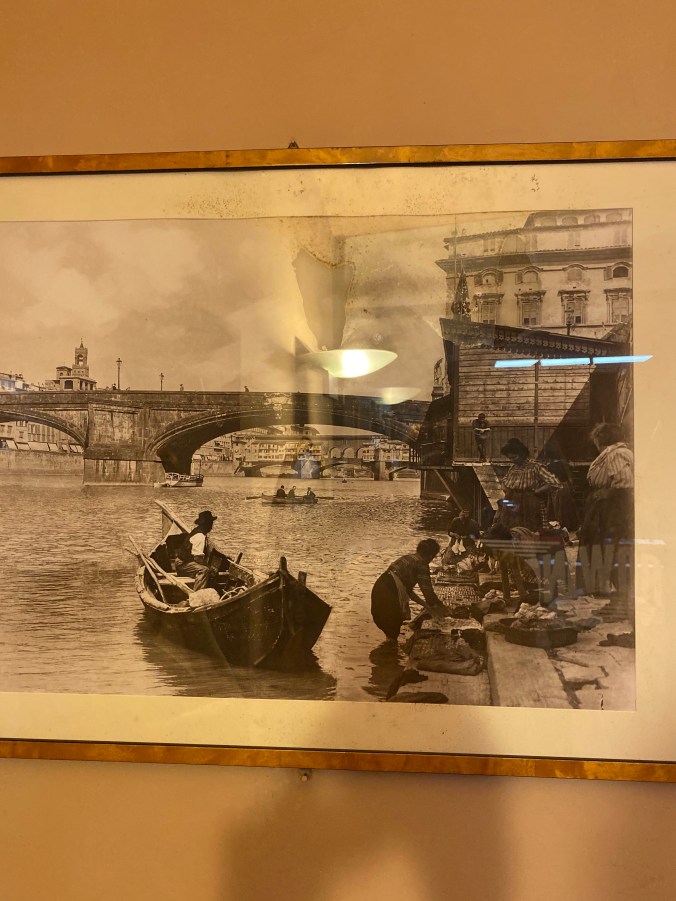
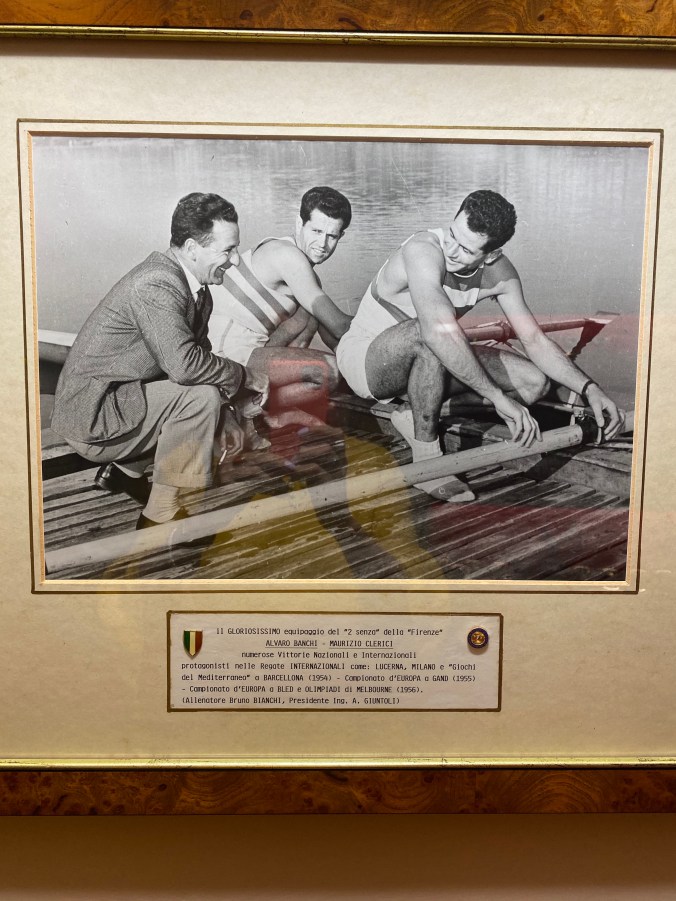
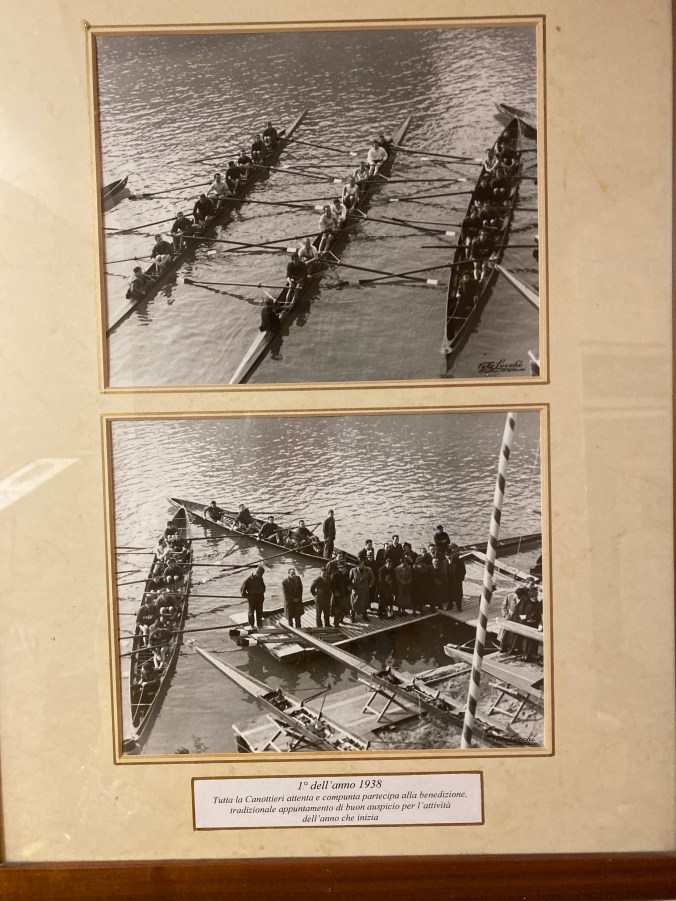
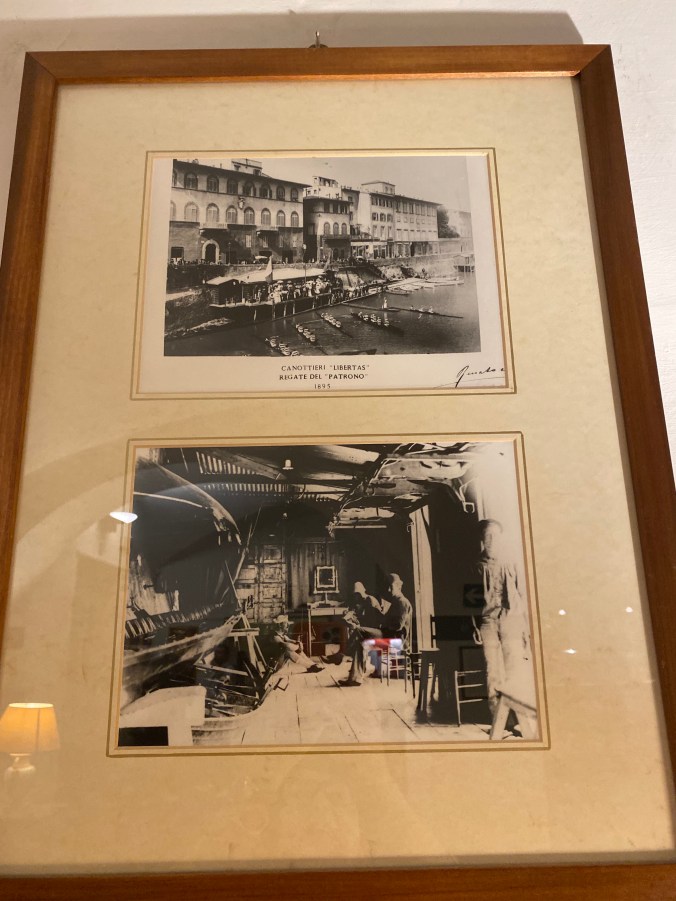
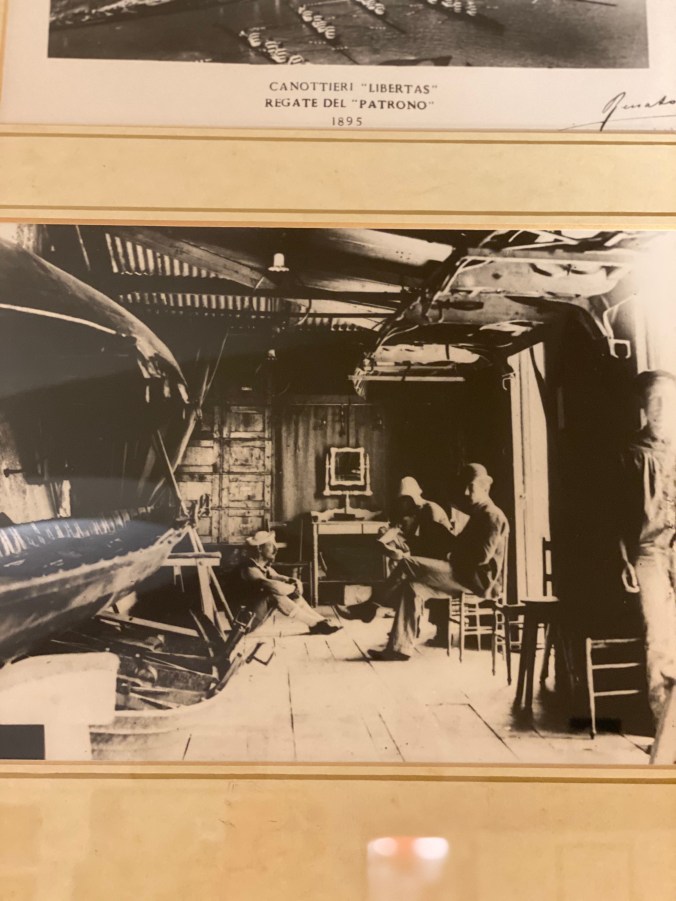
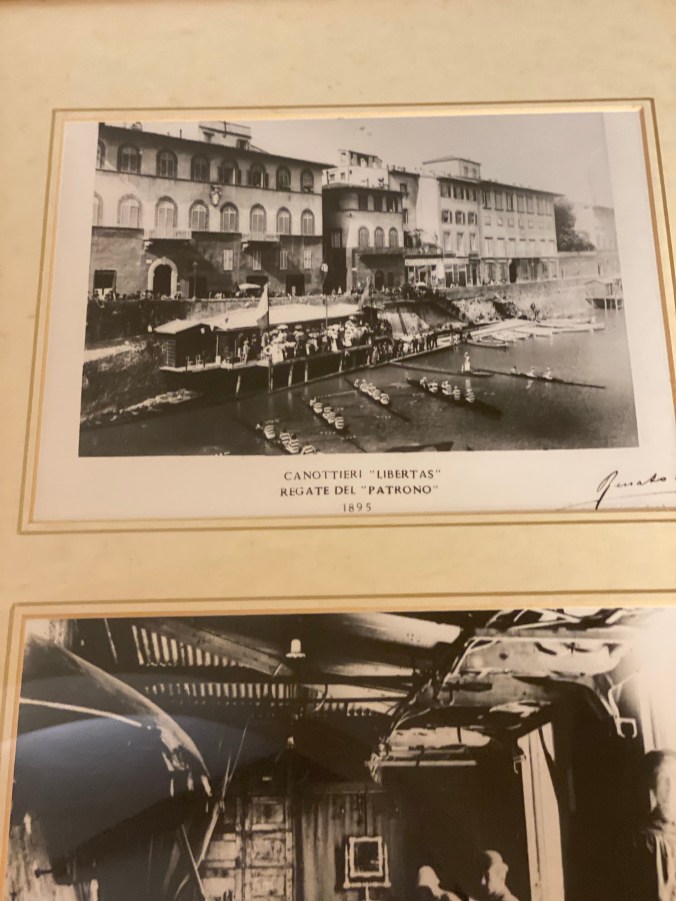
There’s an interesting exhibition of vintage photography documenting the restoration of some famous Florentine palazzi on view currently at Library of Science/Technology Architecture.
It’s a small show and in a rather dark room, so my photographs below are not great. However, they show some great pictures of before and after shots of some of the wonderful Florentine palazzi. This library would be a great source for any scholar working in the fields connected to the city of Florence.
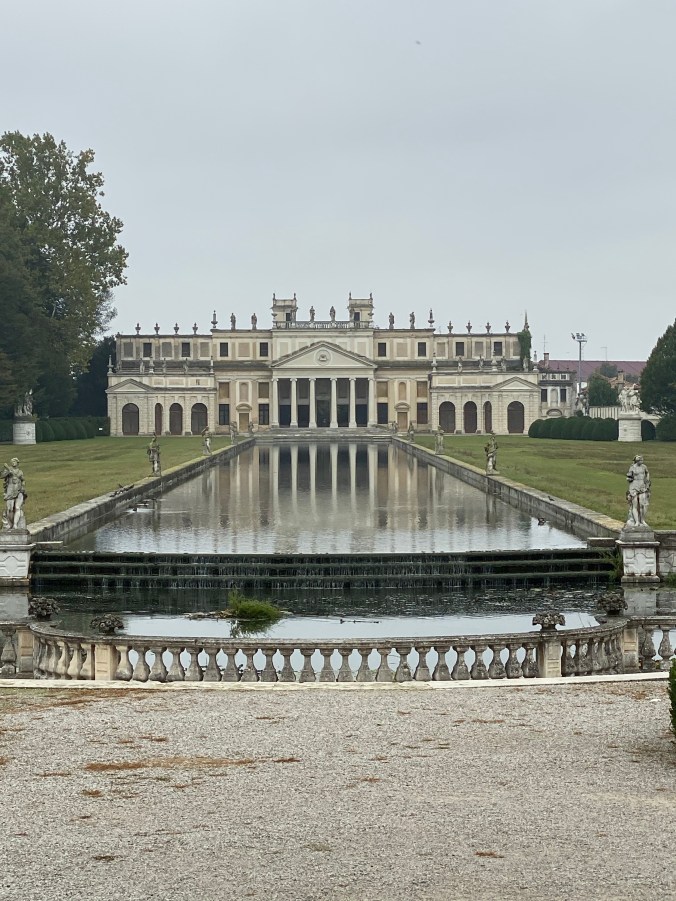
I recently posted about this day-long cruise here (here, here and here) and now I pick up where I left off. Our first stop on the cruise after leaving Padua was in Stra at Villa Pisani. This incredible villa is now a state museum and very much work a visit. It was built by a very popular Venetian Doge.
The facade of the Villa is decorated with enormous statues and the interior was painted by some of the greatest artists of the 18th century.
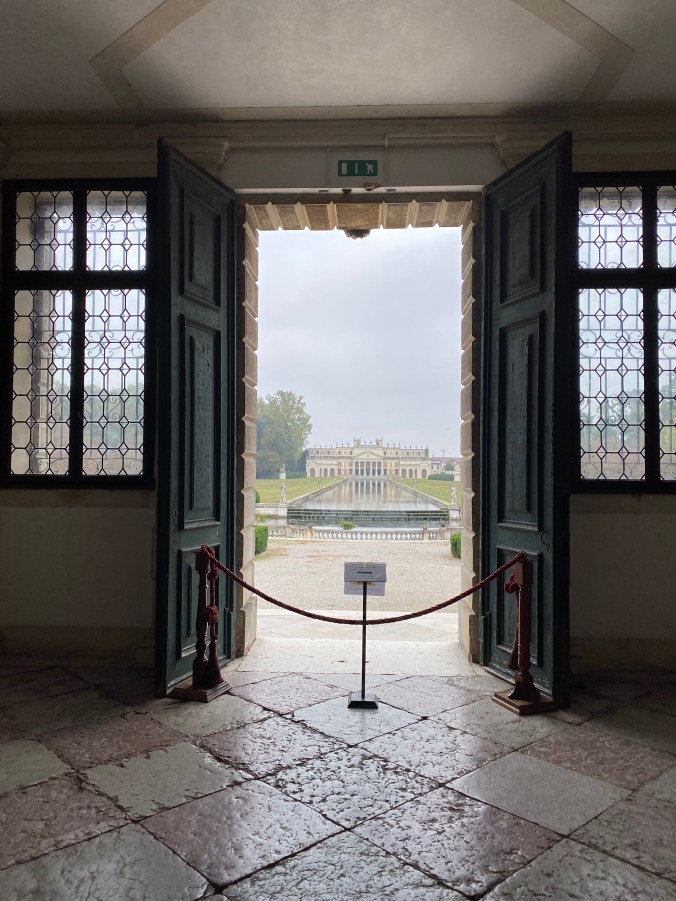
Villa Pisani at Stra refers is a monumental, late-Baroque rural palace located along the Brenta Canal (Riviera del Brenta) at Via Doge Pisani 7 near the town of Stra, on the mainland of the Veneto, northern Italy. This villa is one of the largest examples of Villa Veneta located in the Riviera del Brenta, the canal linking Venice to Padua. It is to be noted that the patrician Pisani family of Venice commissioned a number of villas, also known as Villa Pisani across the Venetian mainland. The villa and gardens now operate as a national museum, and the site sponsors art exhibitions.
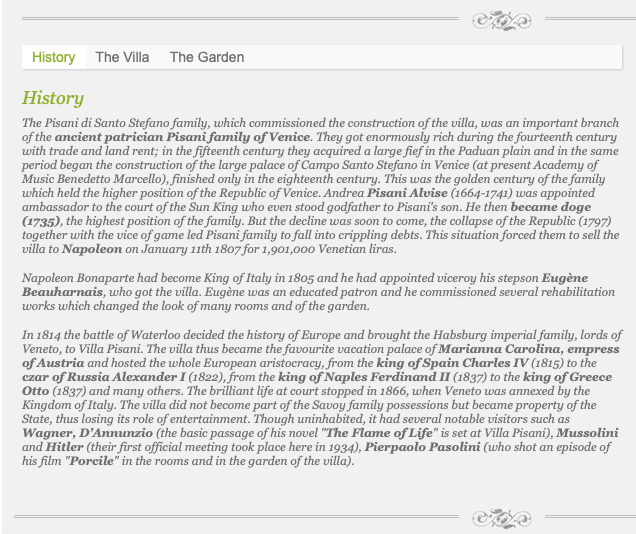
Construction of this palace began in the early 18th century for Alvise Pisani, the most prominent member of the Pisani family, who was appointed doge in 1735.
The initial models of the palace by Paduan architect Girolamo Frigimelica still exist, but the design of the main building was ultimately completed by Francesco Maria Preti. When it was completed, the building had 114 rooms, in honor of its owner, the 114th Doge of Venice Alvise Pisani.
In 1807 it was bought by Napoleon from the Pisani Family, now in poverty due to great losses in gambling. In 1814 the building became the property of the House of Habsburg who transformed the villa into a place of vacation for the European aristocracy of that period. In 1934 it was partially restored to host the first meeting of Adolf Hitler and Benito Mussolini, after the riots in Austria.
From the outside, the facade of the oversized palace appears to command the site, facing the Brenta River some 30 kilometers from Venice. The villa is of many villas along the canal, which the Venetian noble families and merchants started to build as early as the 15th century. The broad façade is topped with statuary, and presents an exuberantly decorated center entrance with monumental columns shouldered by caryatids. It shelters a large complex with two inner courts and acres of gardens, stables, and a garden maze.
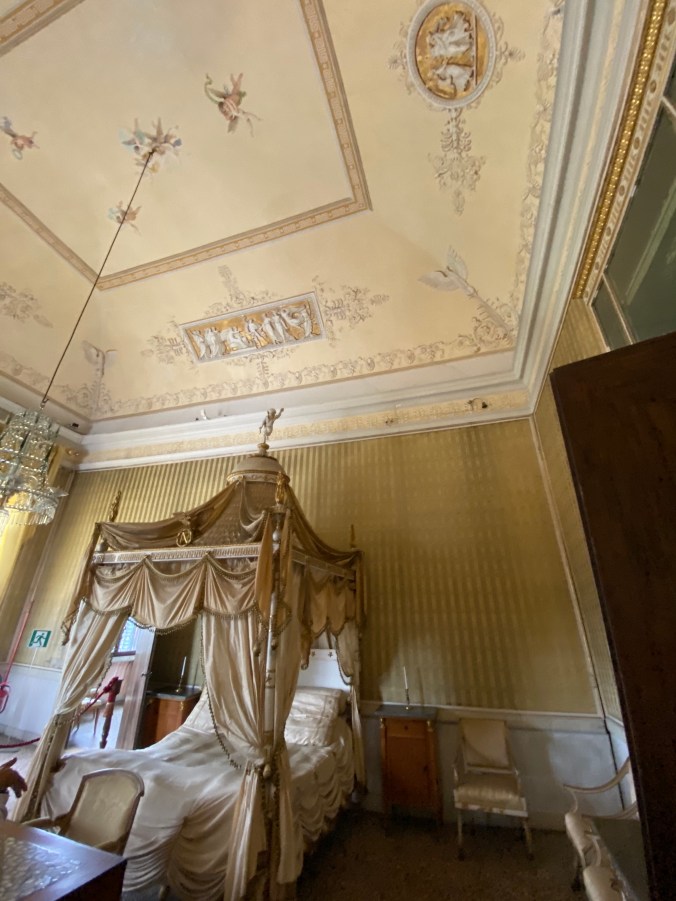
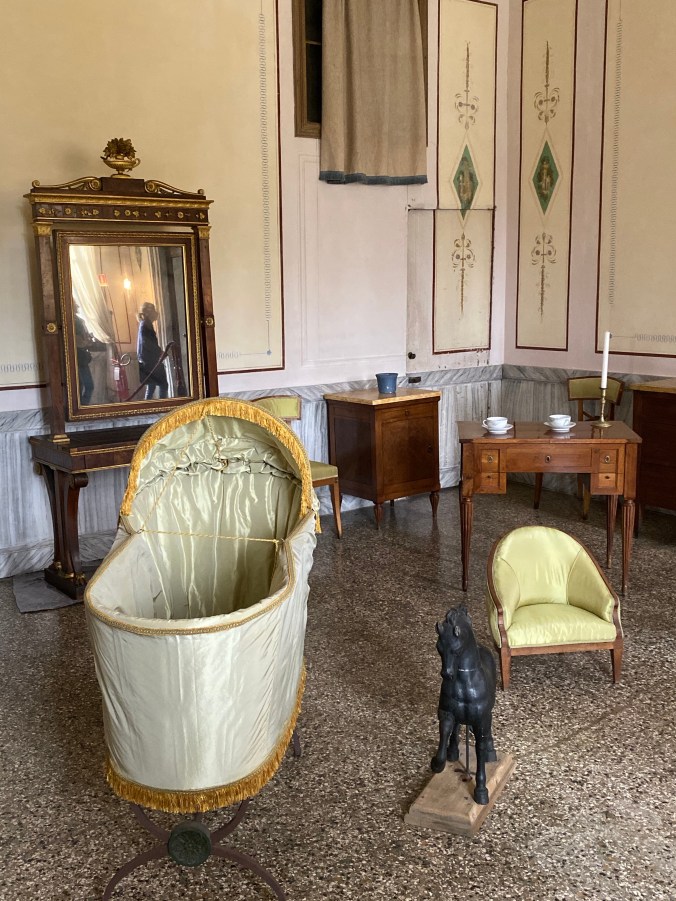
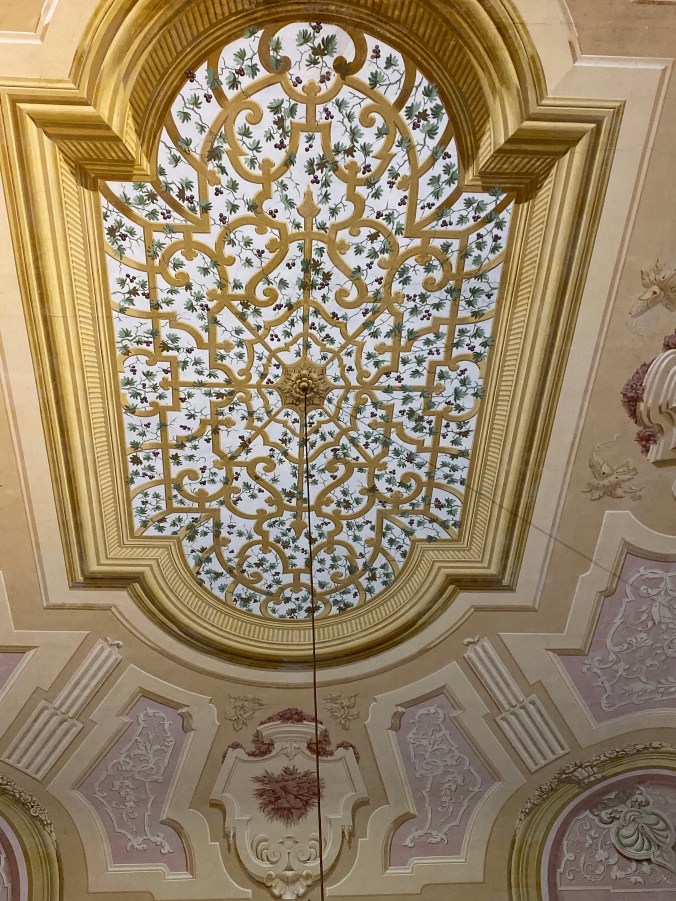
The largest room is the ballroom, where the 18th-century painter Giovanni Battista Tiepolo frescoed the two-story ceiling with a massive allegorical depiction of the Apotheosis or Glory of the Pisani family (painted 1760–1762).[2] Tiepolo’s son Gian Domenico Tiepolo, Crostato, Jacopo Guarana, Jacopo Amigoni, P.A. Novelli, and Gaspare Diziani also completed frescoes for various rooms in the villa. Another room of importance in the villa is now known as the “Napoleon Room” (after his occupant), furnished with pieces from the Napoleonic and Habsburg periods and others from when the house was lived by the Pisani.
The most riotously splendid Tiepolo ceiling would influence his later depiction of the Glory of Spain for the throne room of the Royal Palace of Madrid; however, the grandeur and bombastic ambitions of the ceiling echo now contrast with the mainly uninhabited shell of a palace. The remainder of its nearly 100 rooms are now empty. The Venetian playwright Carlo Goldoni described the palace in its day as a place of great fun, served meals, dance and shows.
Check out this sunken bathtub below:
Bear with me: in the next few photos I am trying out all of the fancy settings on my new camera:
Would you ever want to sail down a canal in Northern Italy that was built during the Renaissance? I really wanted to and I did!
The Brenta Canal stretches for many miles between Chioggia on the coast, to Padua where it turns into the Brenta River. Created in the 15th century, the canal expanded trading routes for Venice and the other major cities in Northern Italy.
I was lucky enough to cruise through the canal last week, beginning at Porta Portello in Padova and ending at San Marco, Venezia. A day to remember! It was a beautiful fall day with mild temperatures. A great day to be on the water. And, what waters! OMG.
My cruising companions and I met our boat, il Burchiello, on the stairway at Porta Portello, the ancient river port of Padua. We would cruise along the original course of the old Venetian Burchielli of the 18th century, passing in front of the beautiful Villa Giovanelli at Noventa Padovana.
Below: we are departing Padua itself, just outside the Renaissance era city walls:
Below, coming upon the first of so many villas located along the canal.
We glided through the Noventa Padovana and Stra lock systems. This system of locks on the canal were really interesting to experience and to watch from the boat. The next 2 videos show the locks closing behind the boat.
We passed under some low bridges and buildings! Watch you head!
Now, at the front of the boat, the locks are opening:
Scenes along the canal on such a peaceful September Sunday morning. A lot of fishing going on:
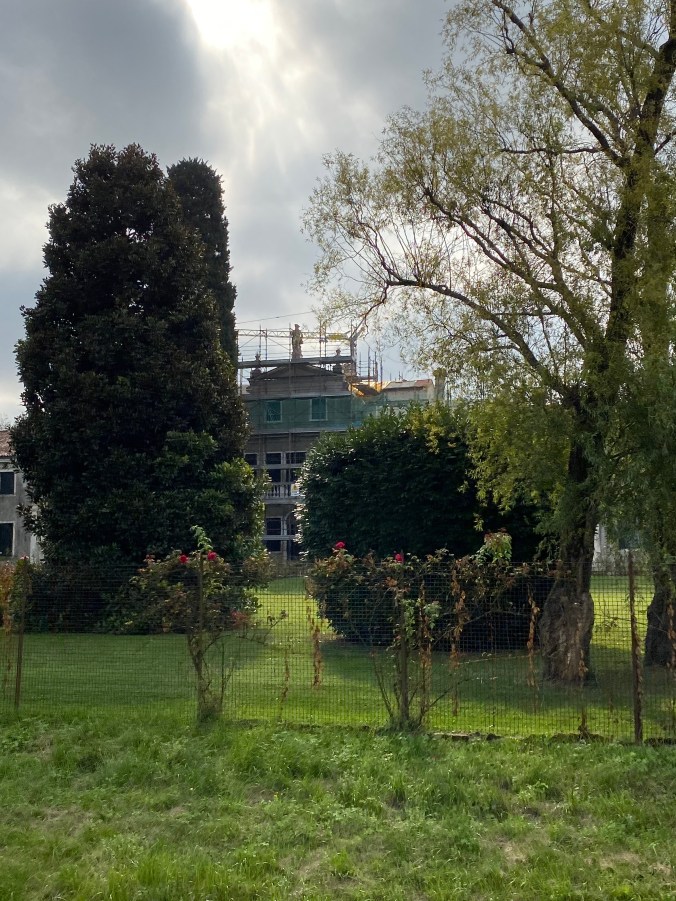
A sighting of the next villa:
My next post will talk about the villa seen below:
A couple of weeks ago I had the immense pleasure of cruising the Brenta Canal from Padua to Venice. I will be posting about that day soon, here, here and here. In the meantime: spoiler’s alert! In this post I chronicle our sailing out of the Canal and into the Venetian Lagoon.
I can promise you that everything changes immediately: the scale, the weather, our speed, the traffic, the feeling.
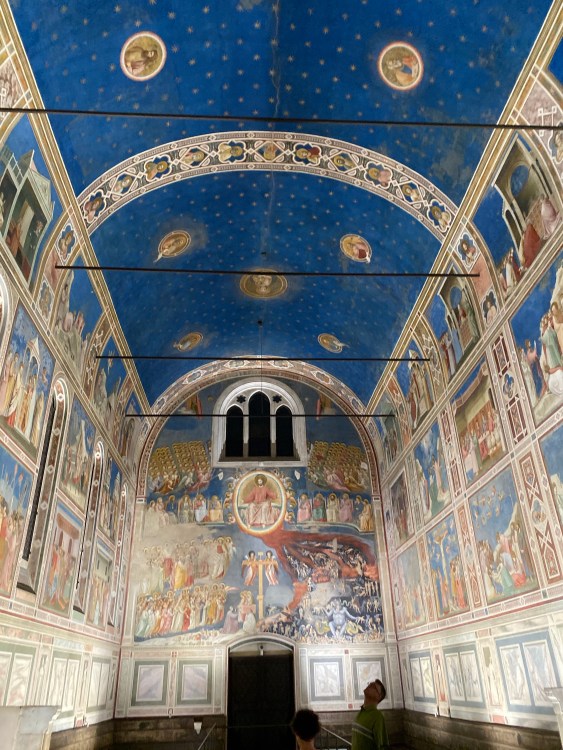
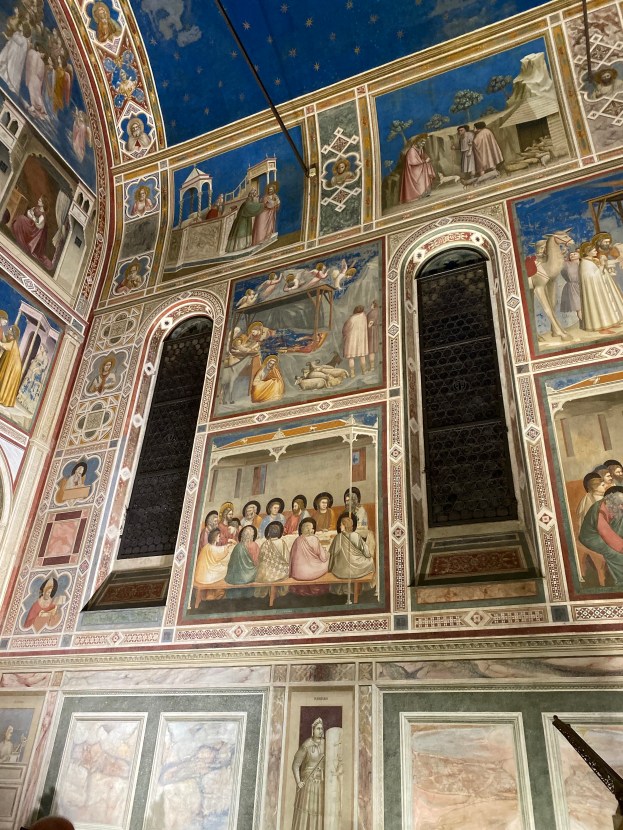
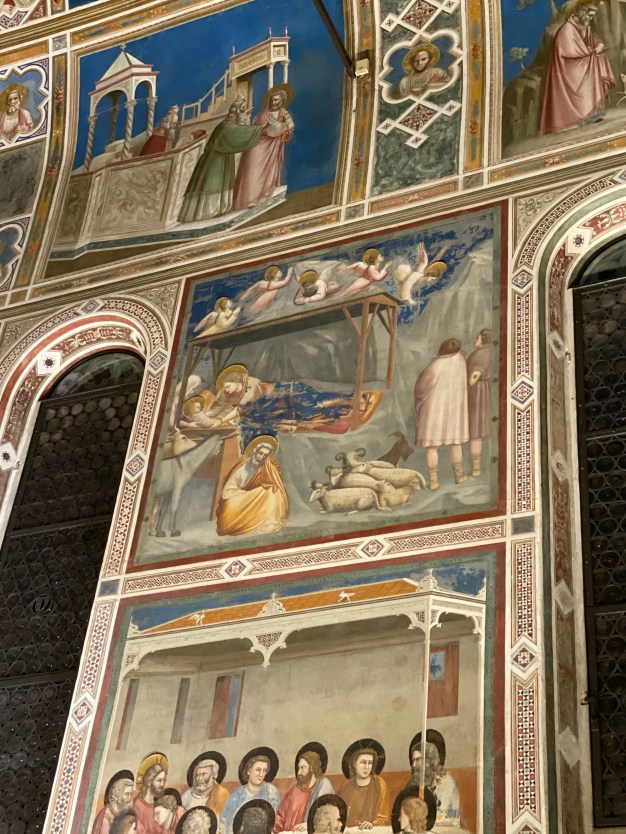
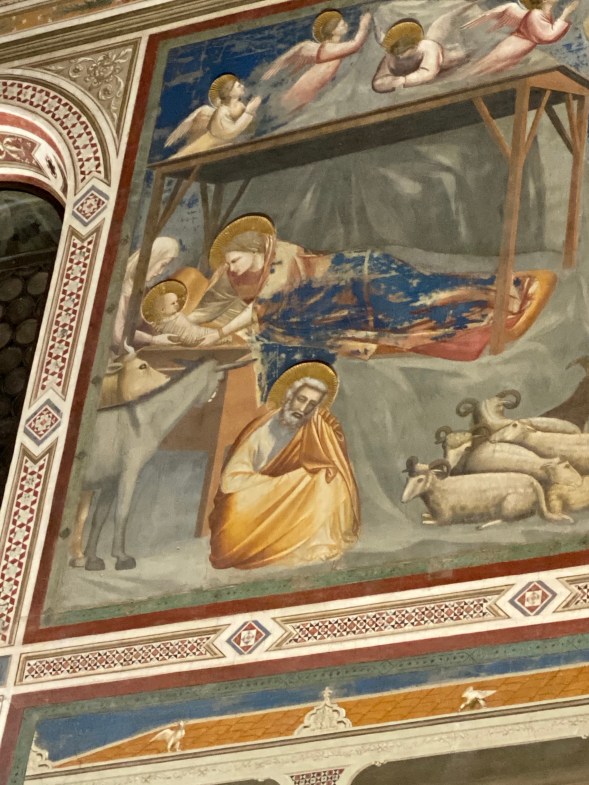
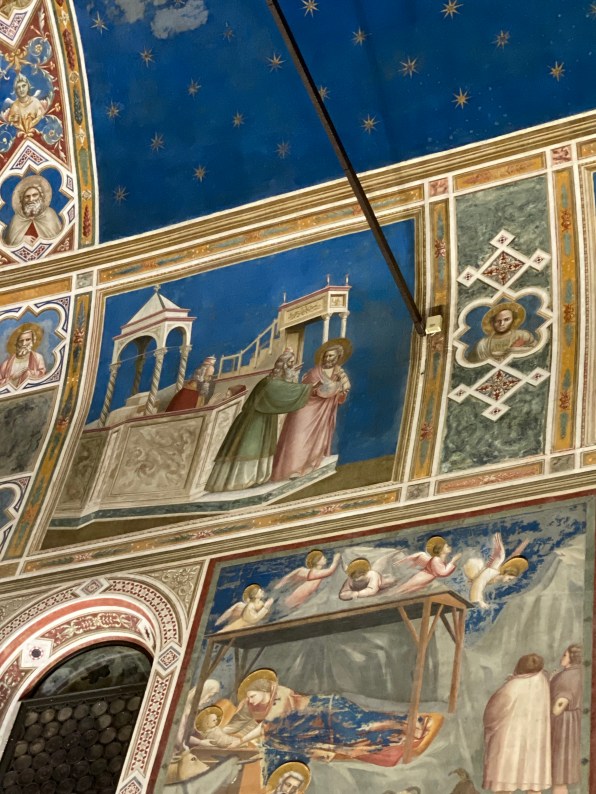
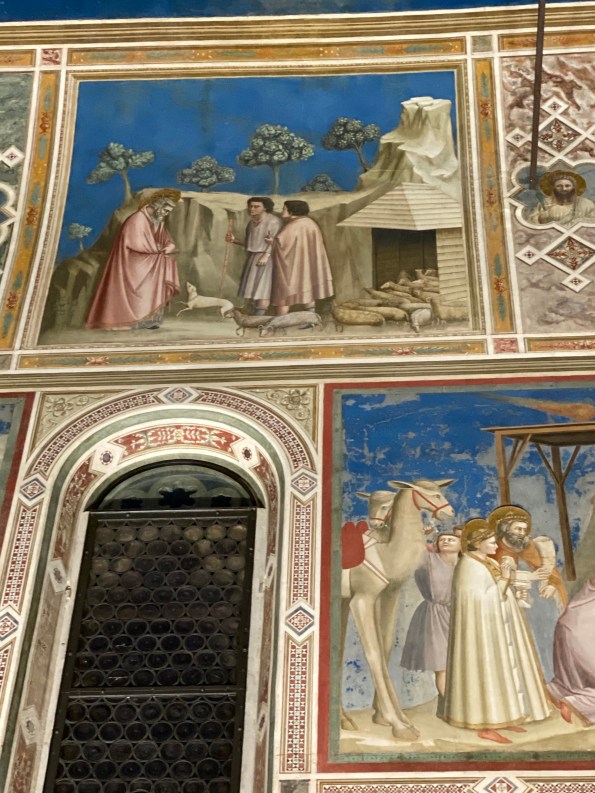
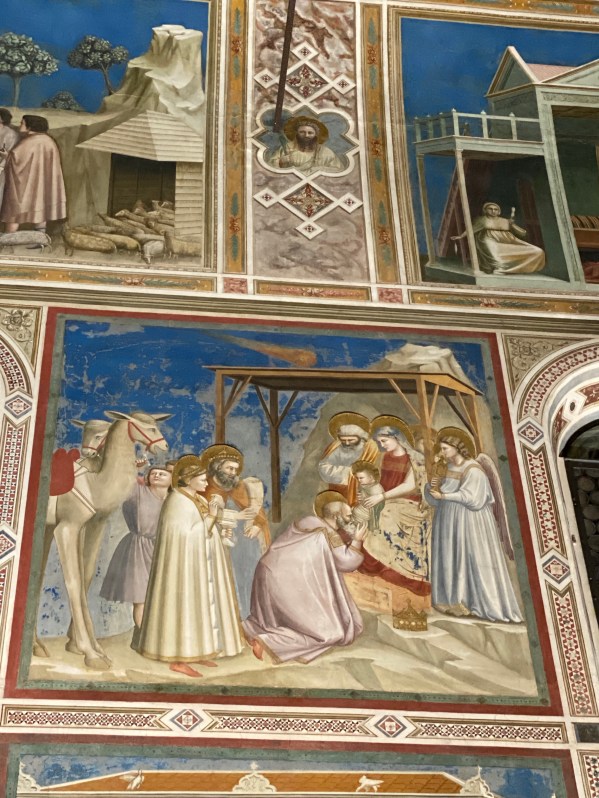
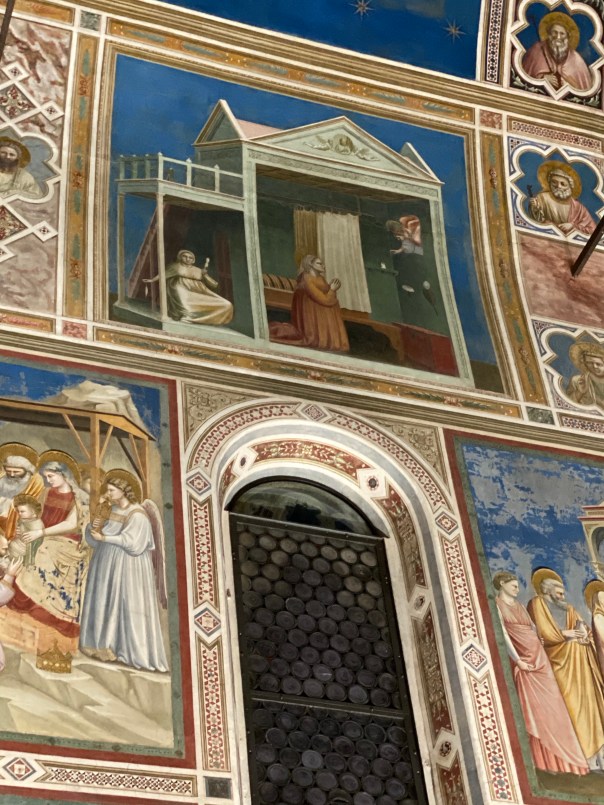
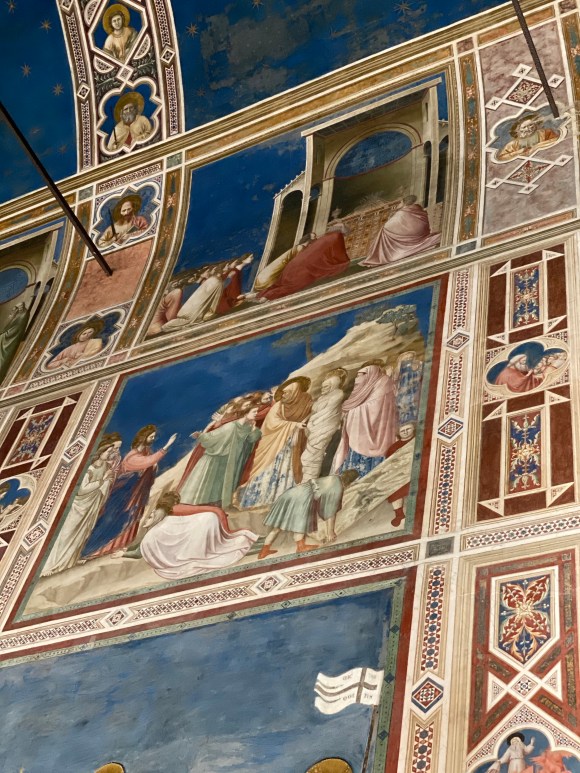
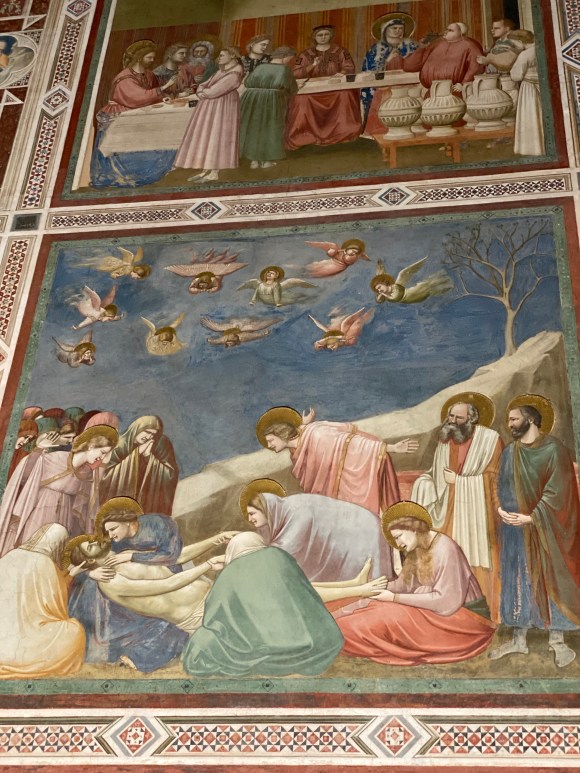
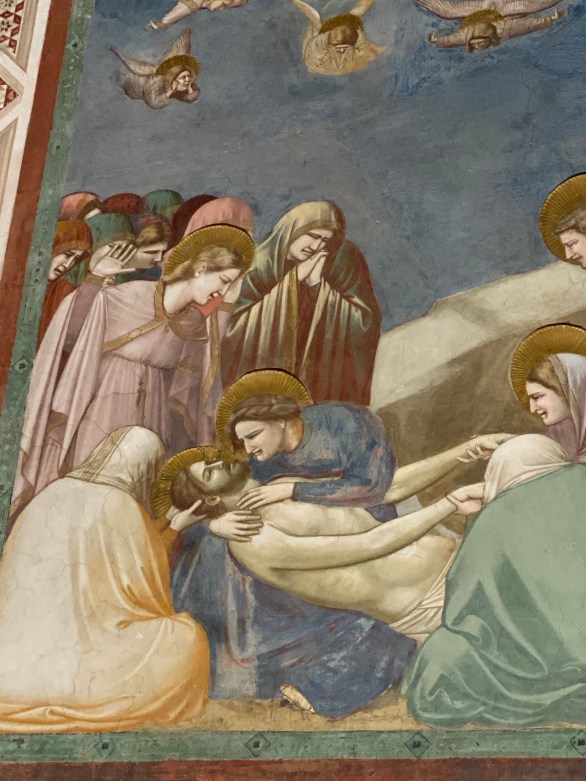
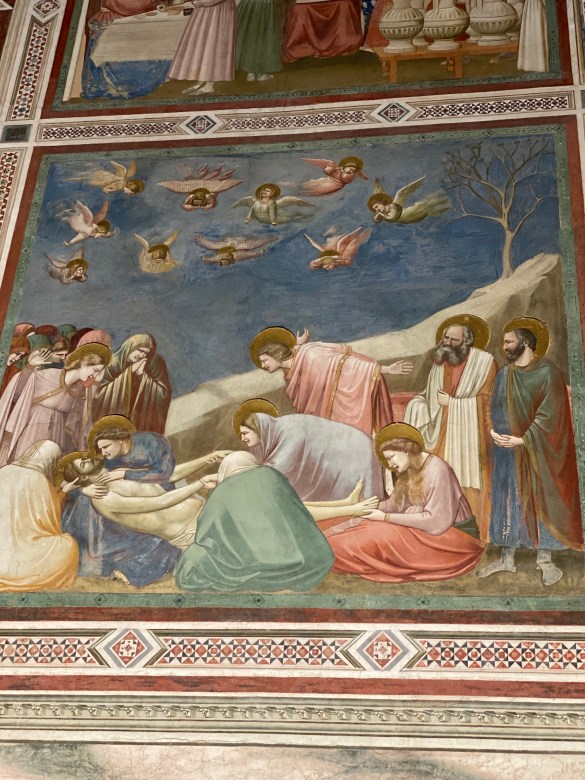
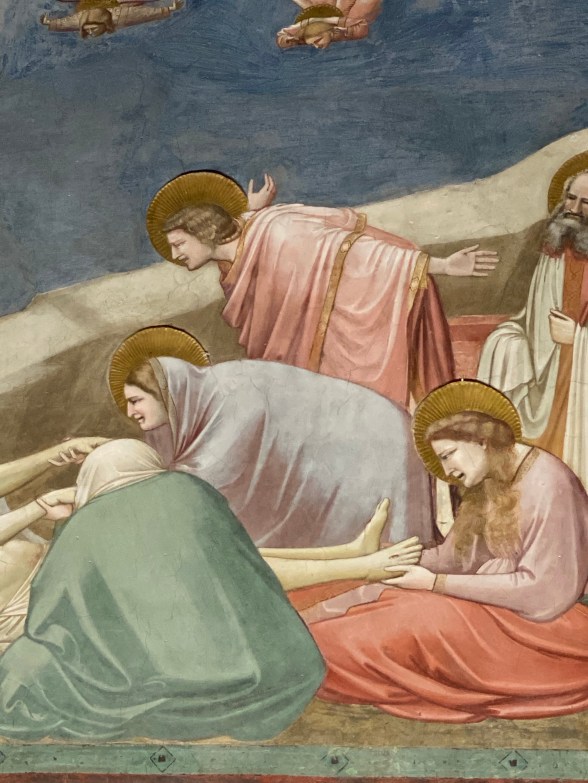
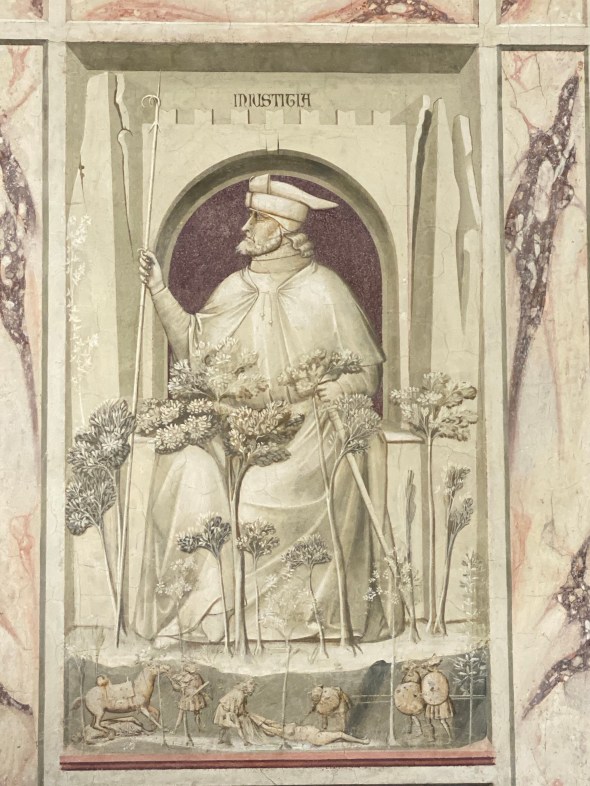
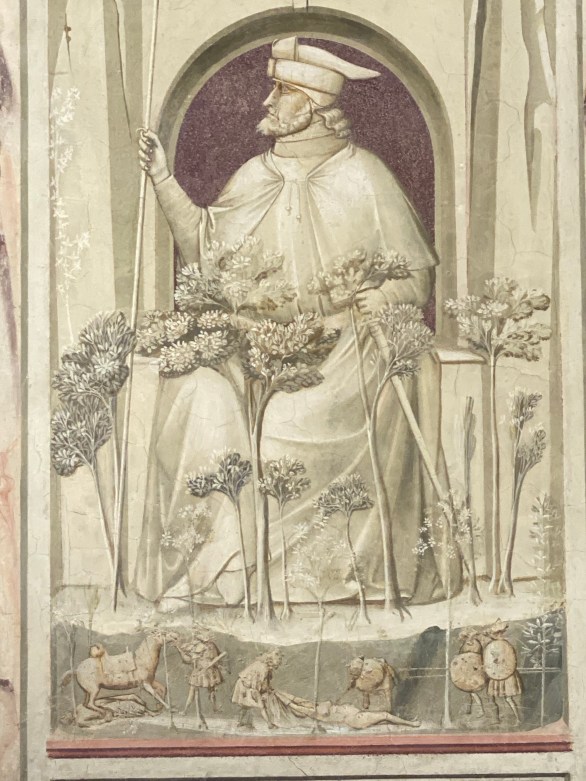
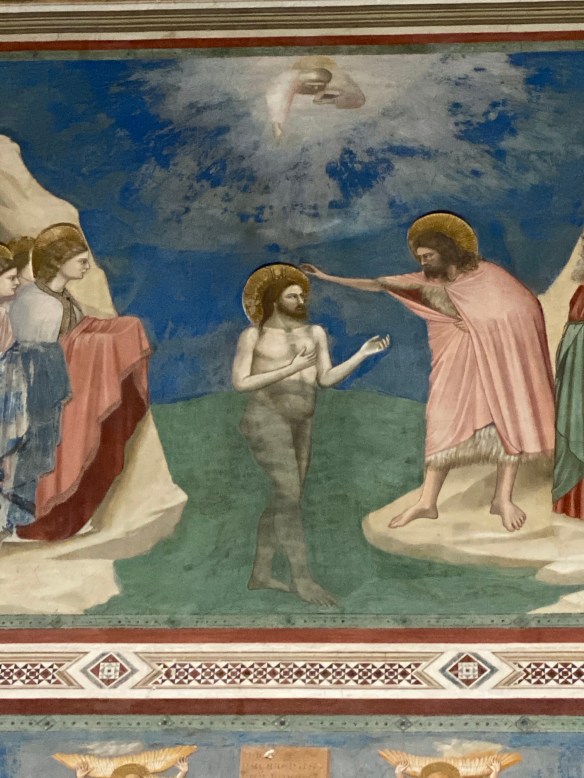
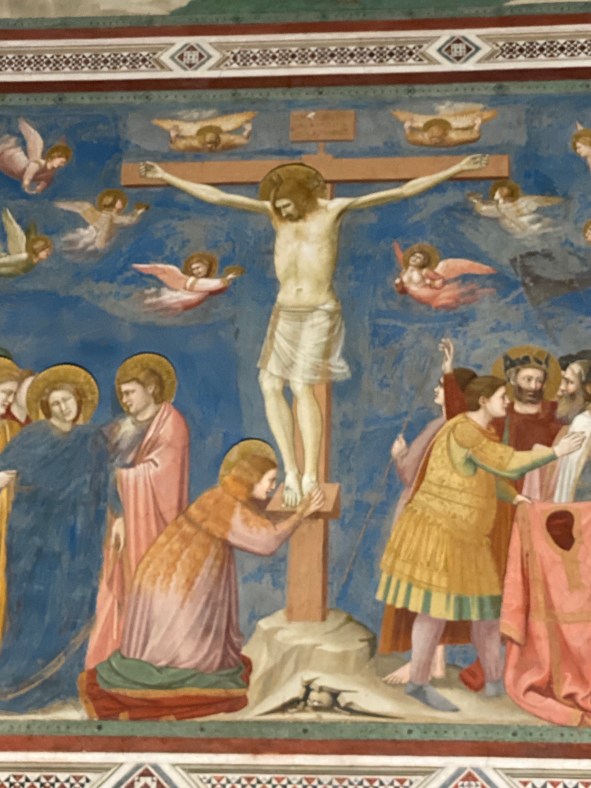
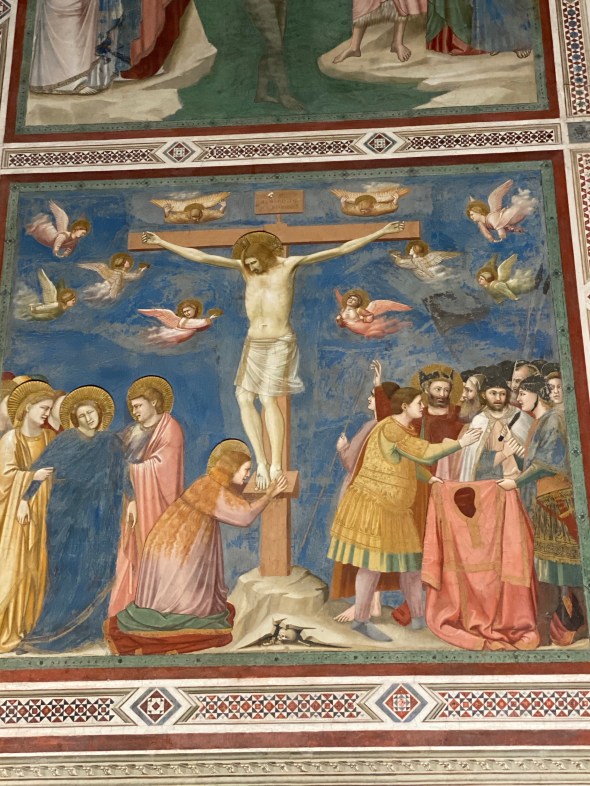
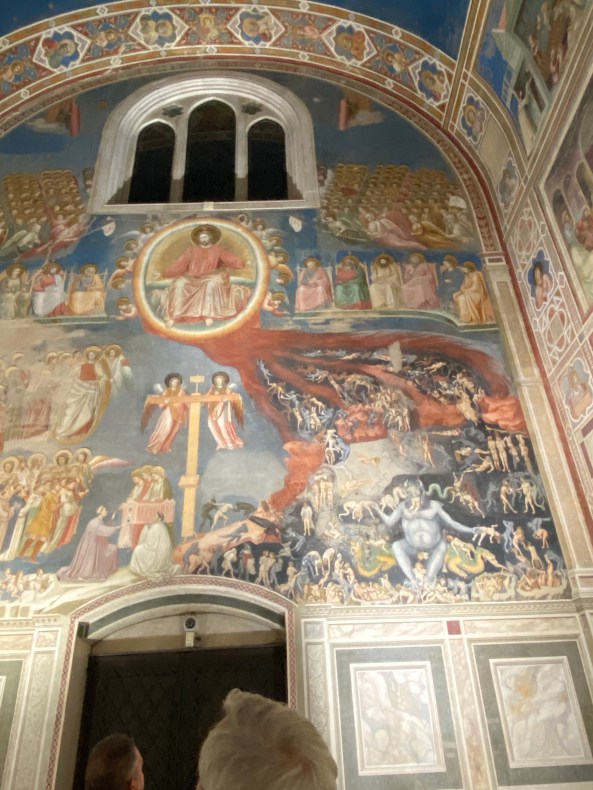
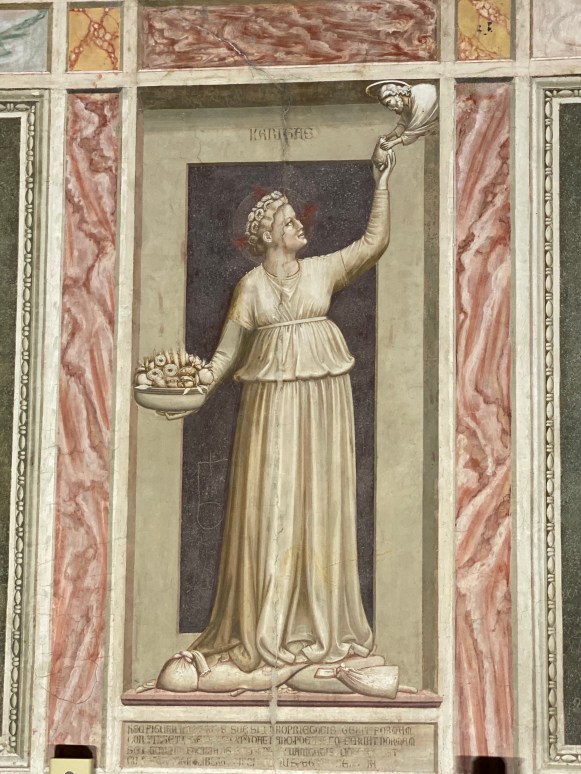
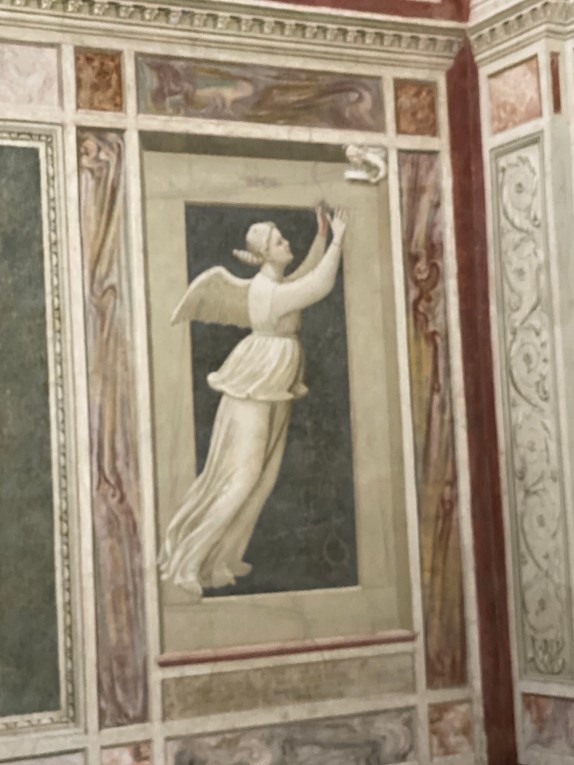
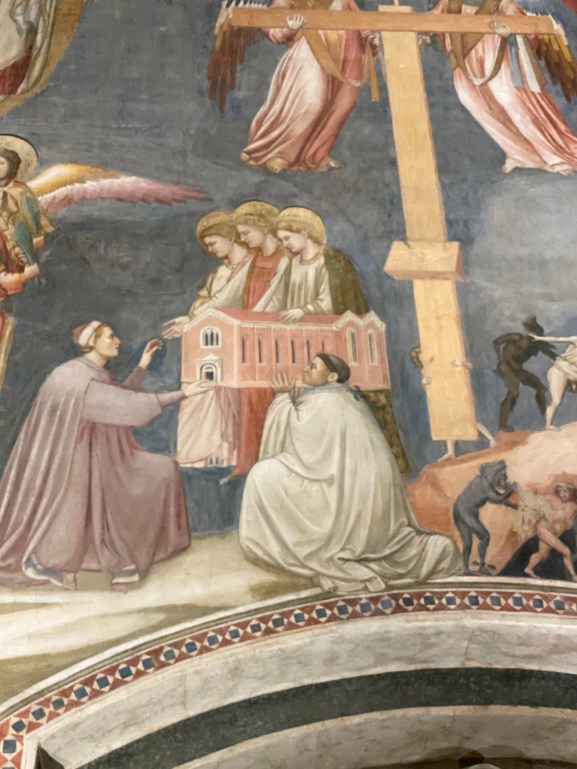
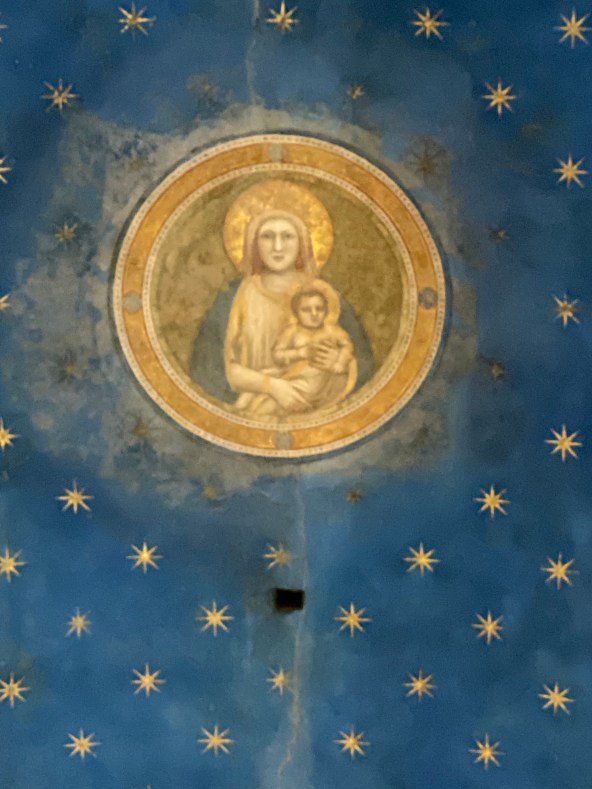
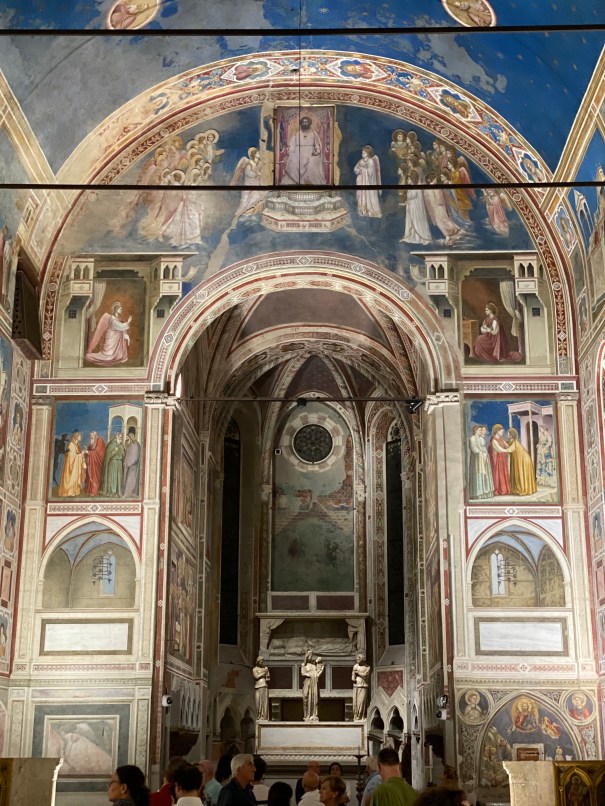
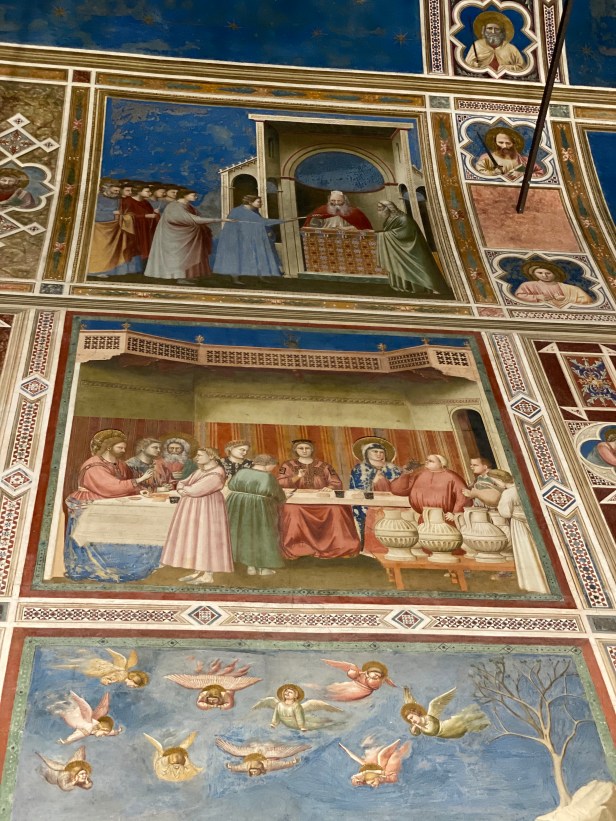
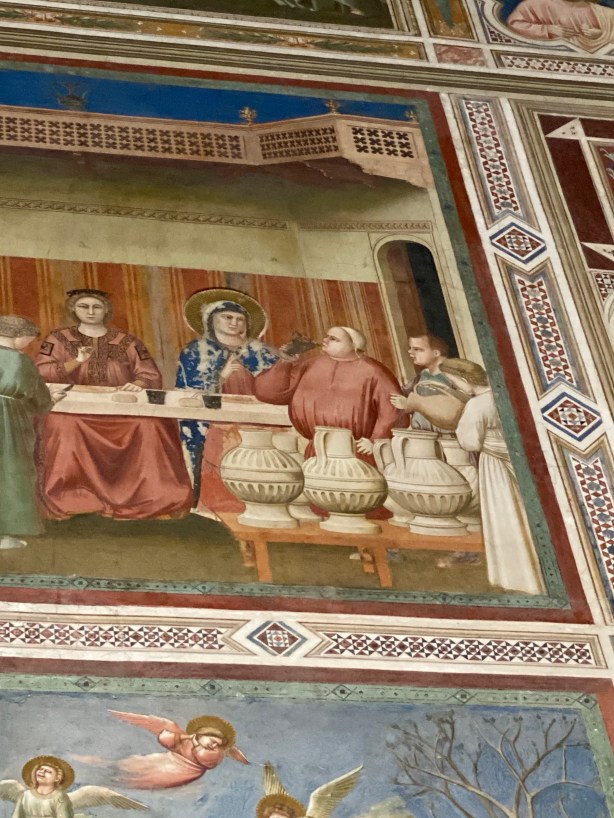
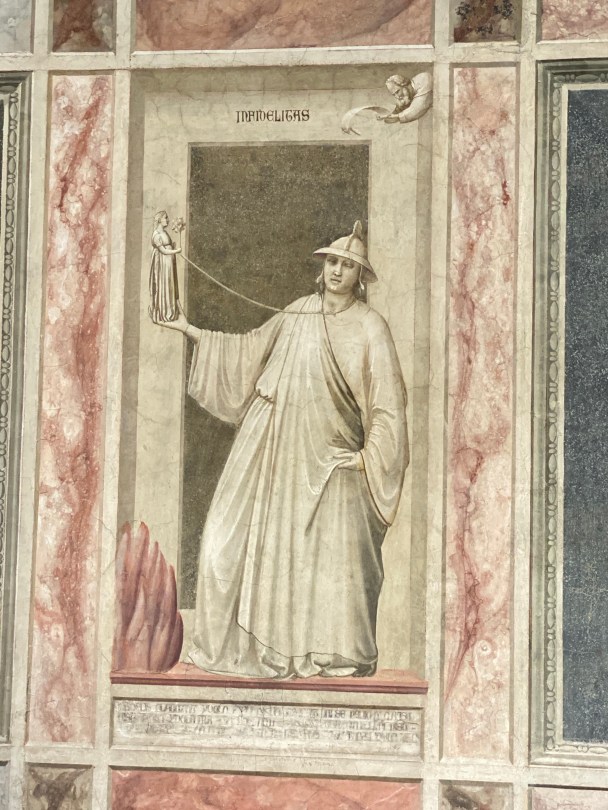
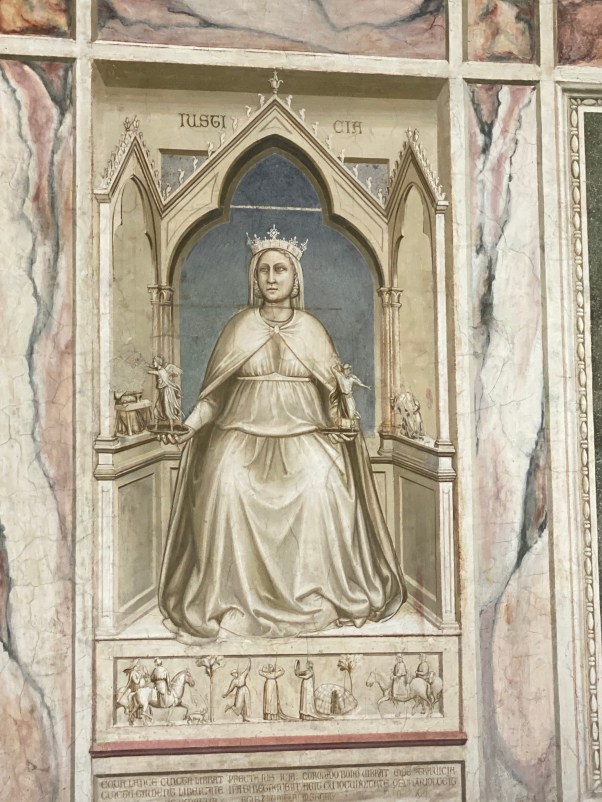
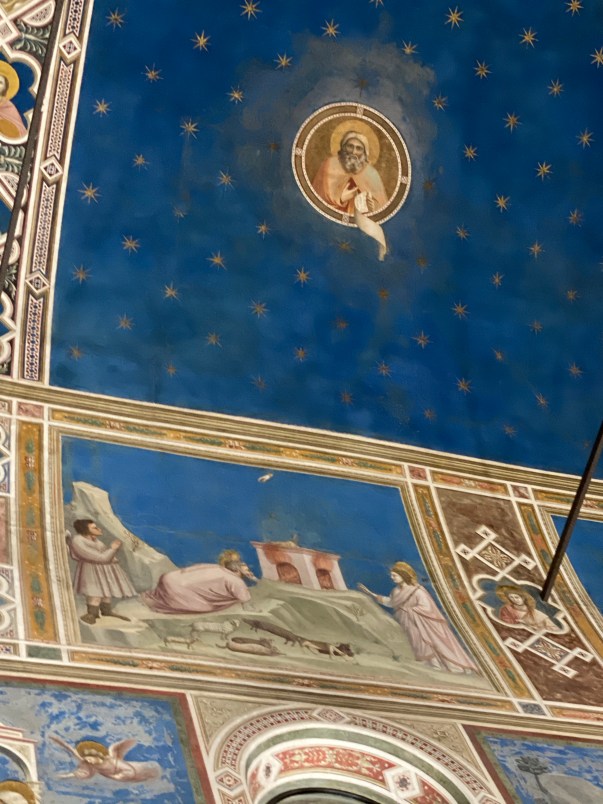
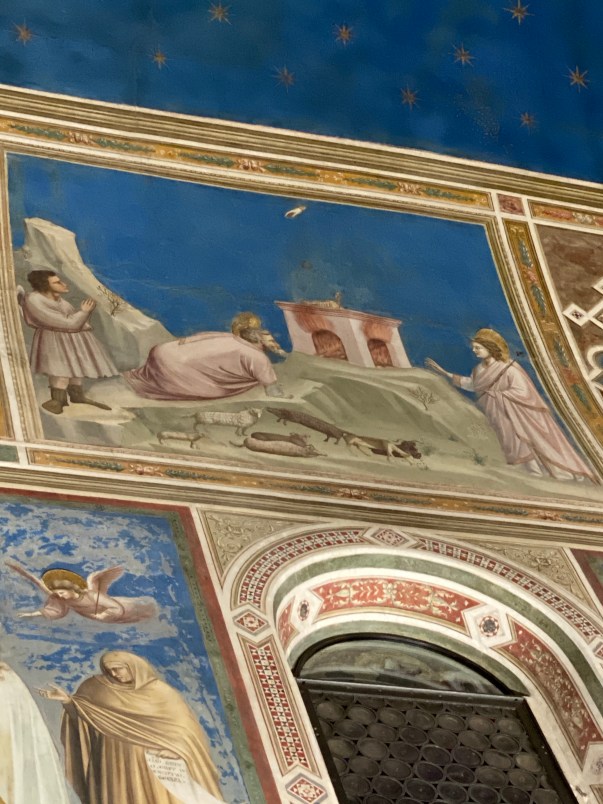
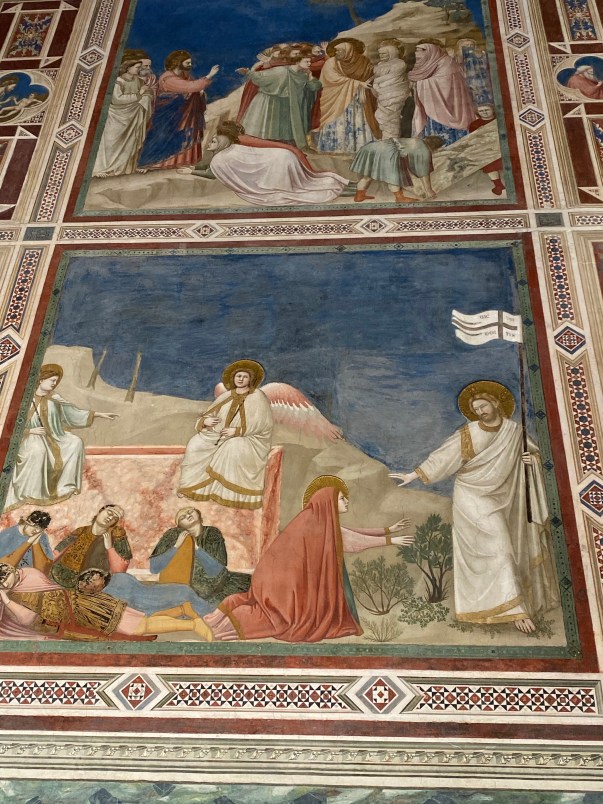
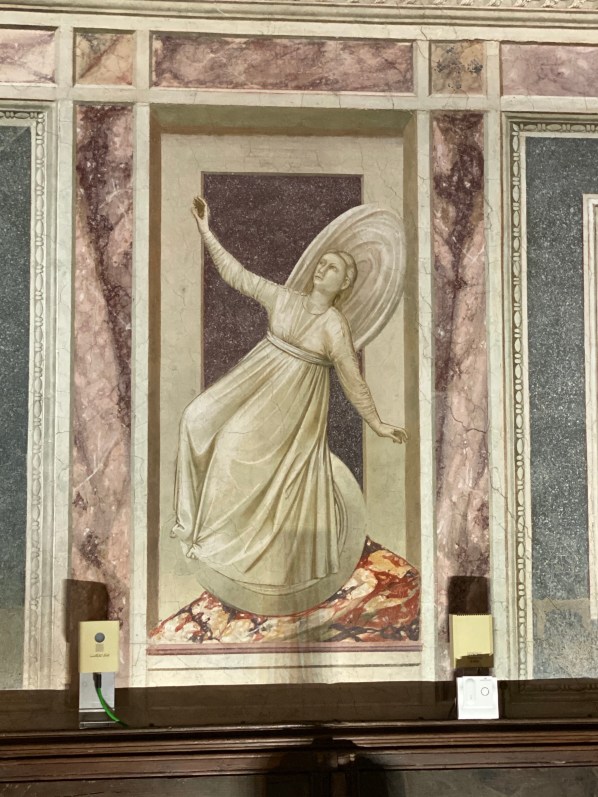
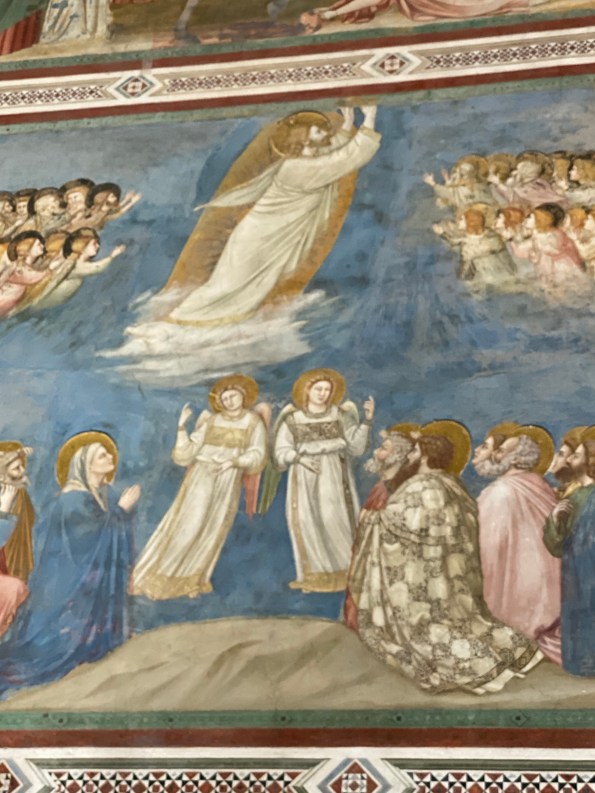
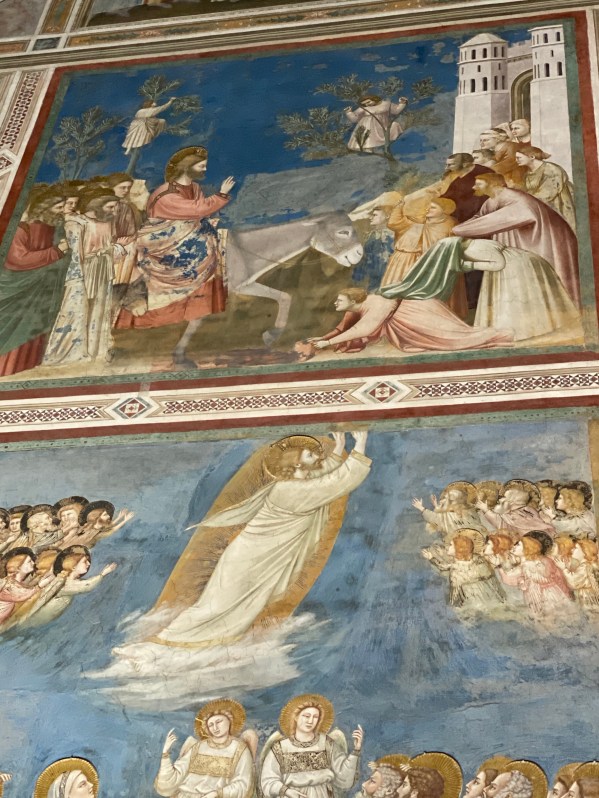
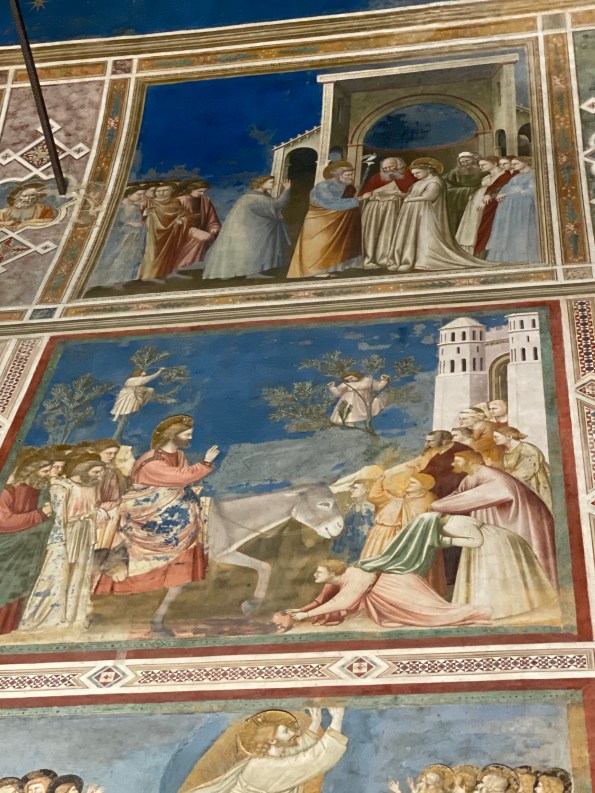
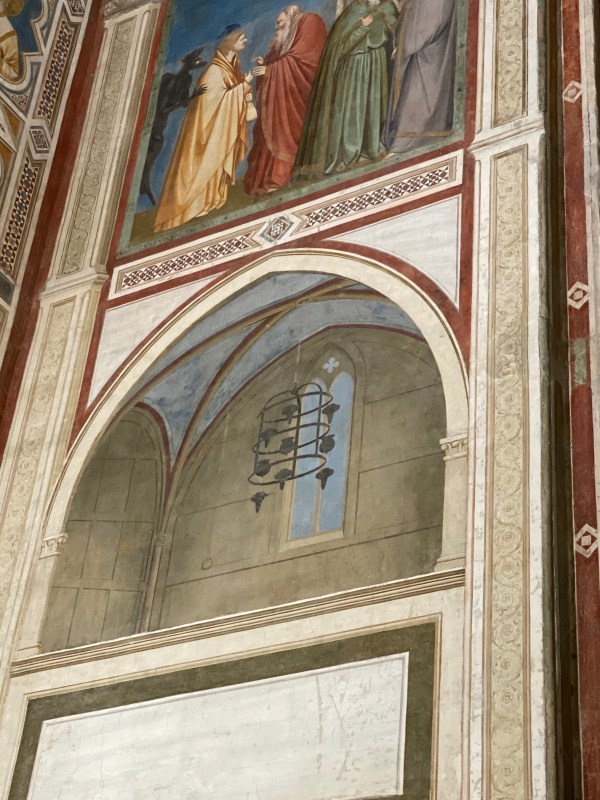
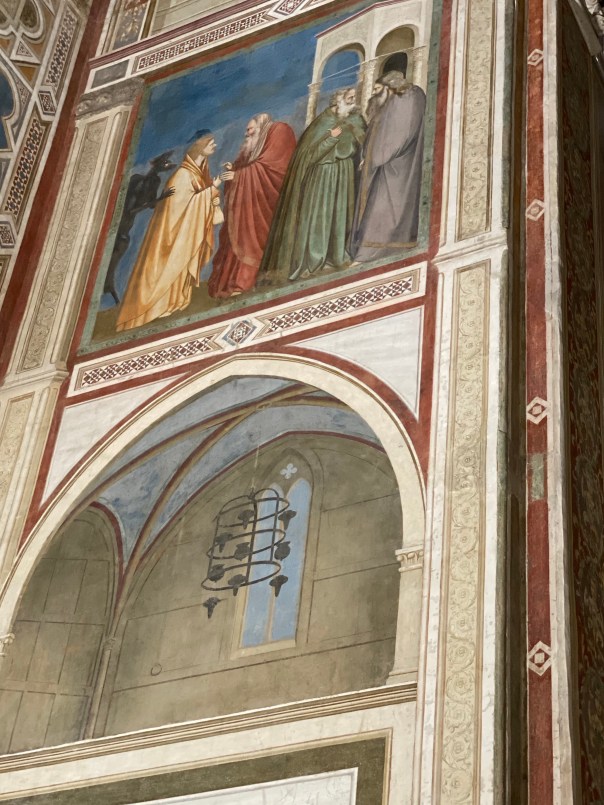
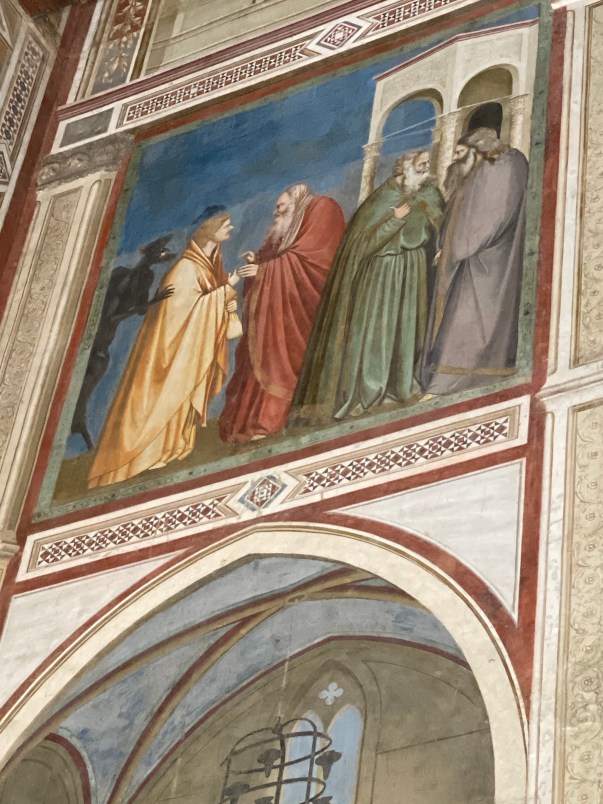
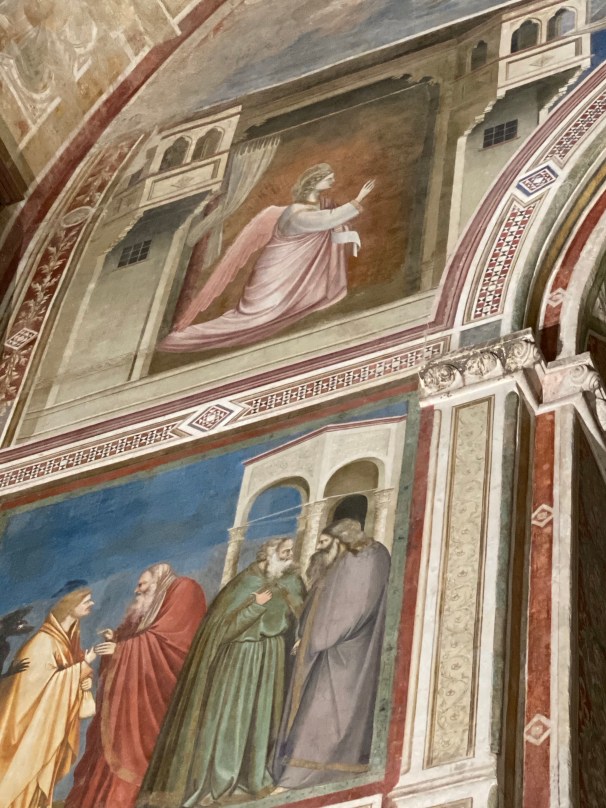
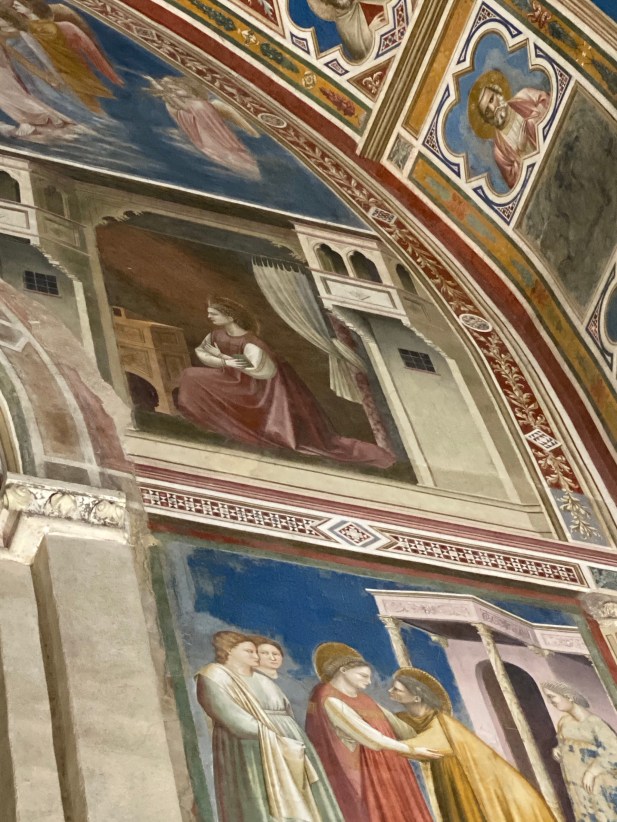
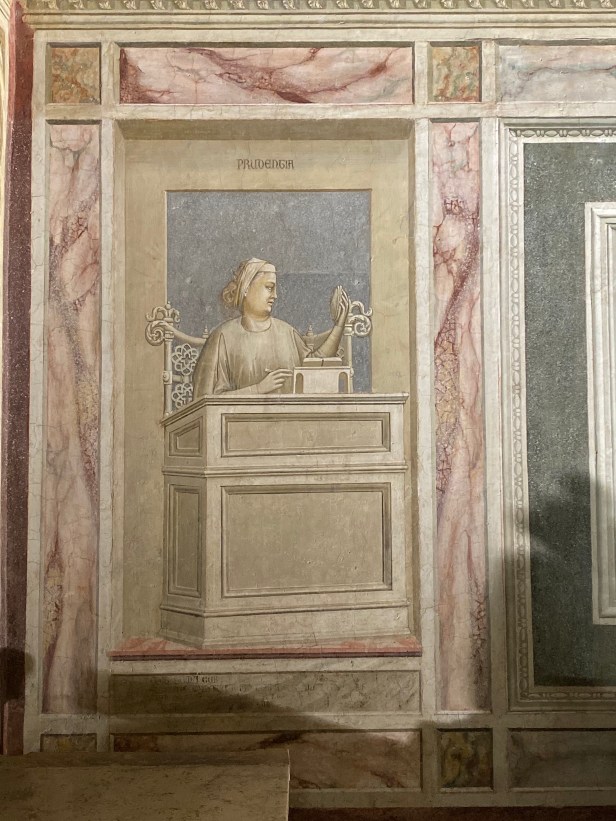
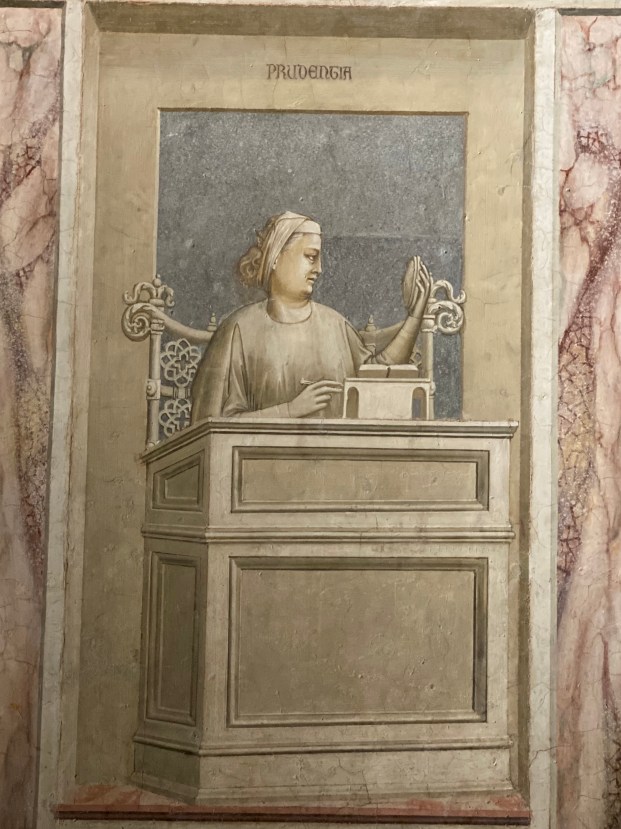
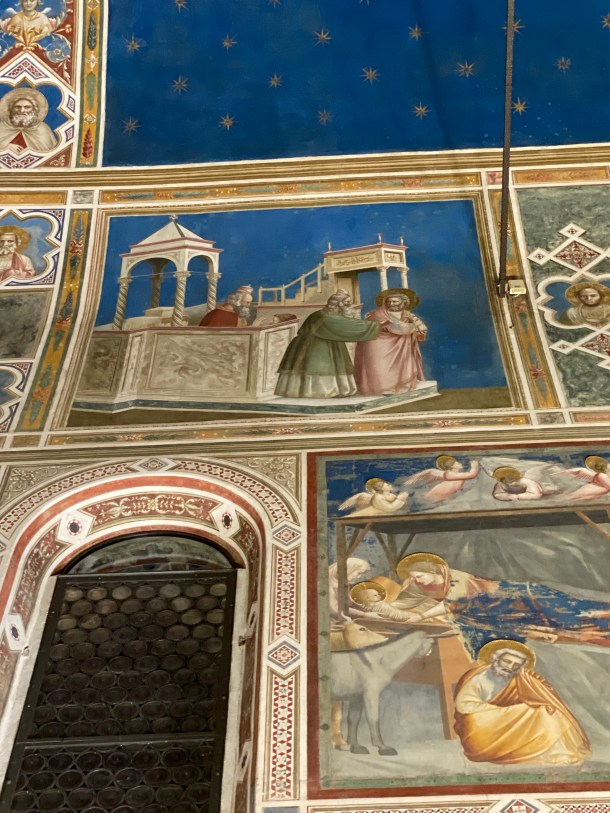
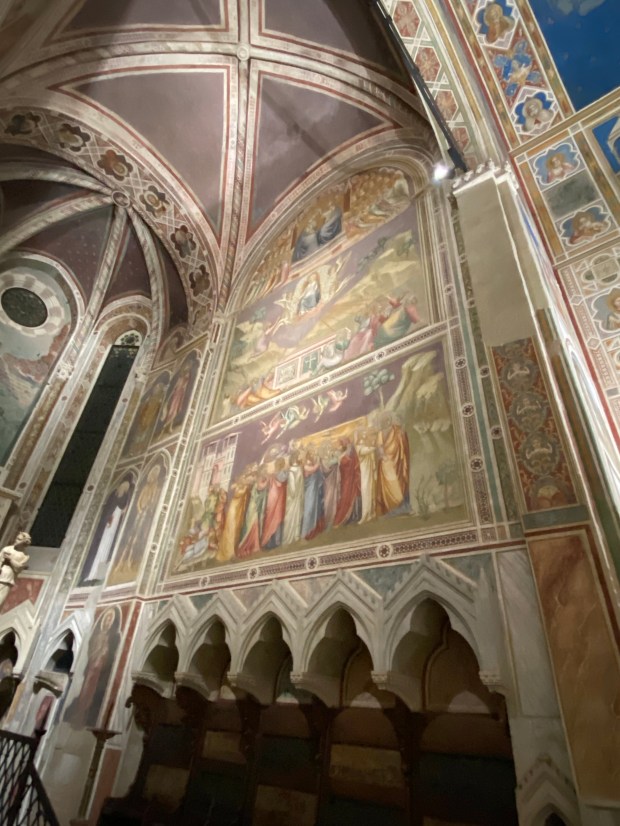
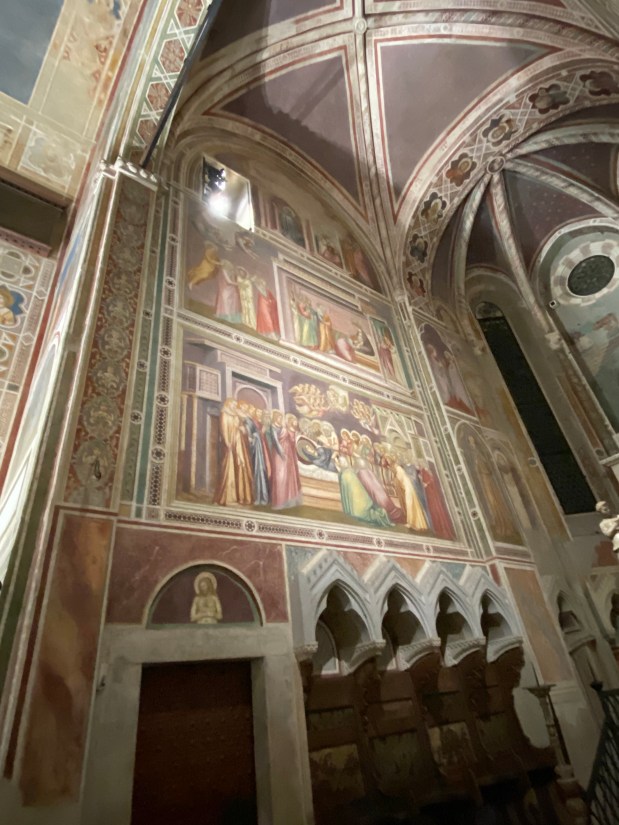
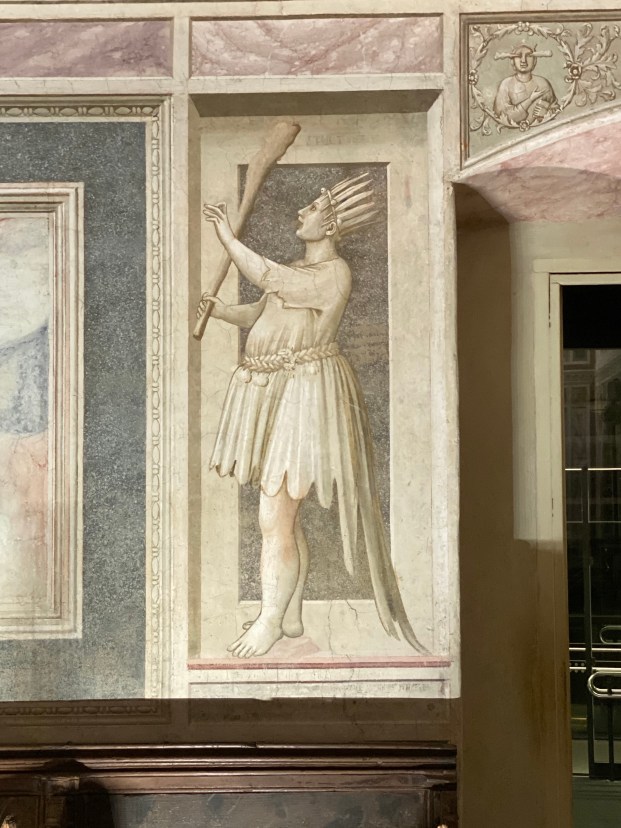
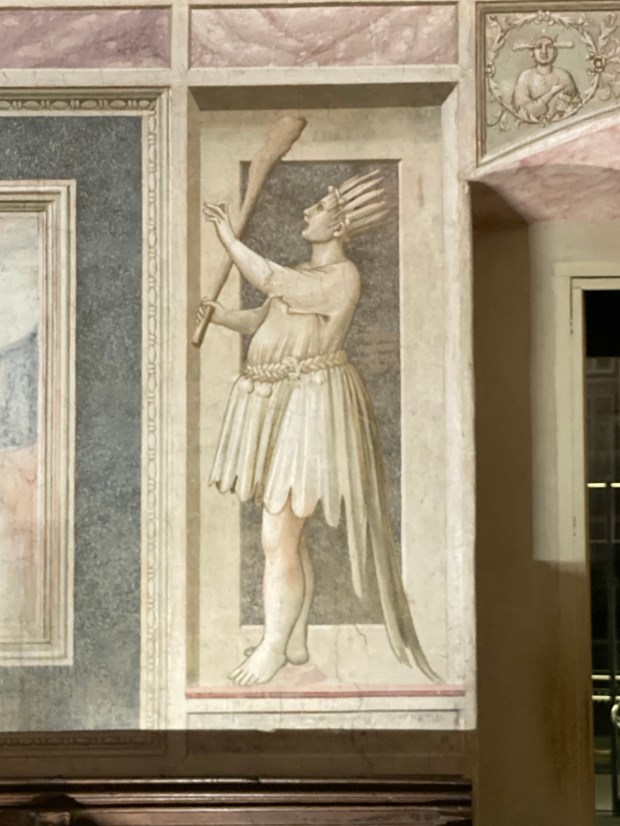
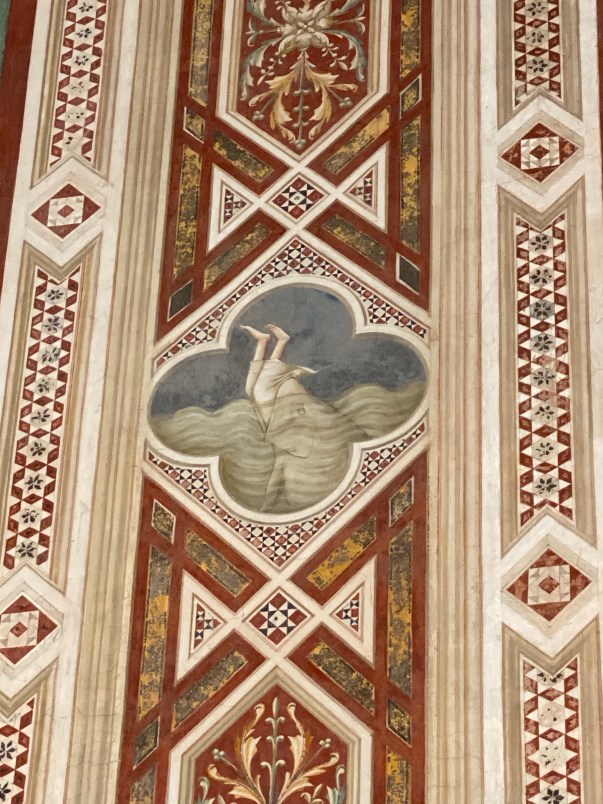
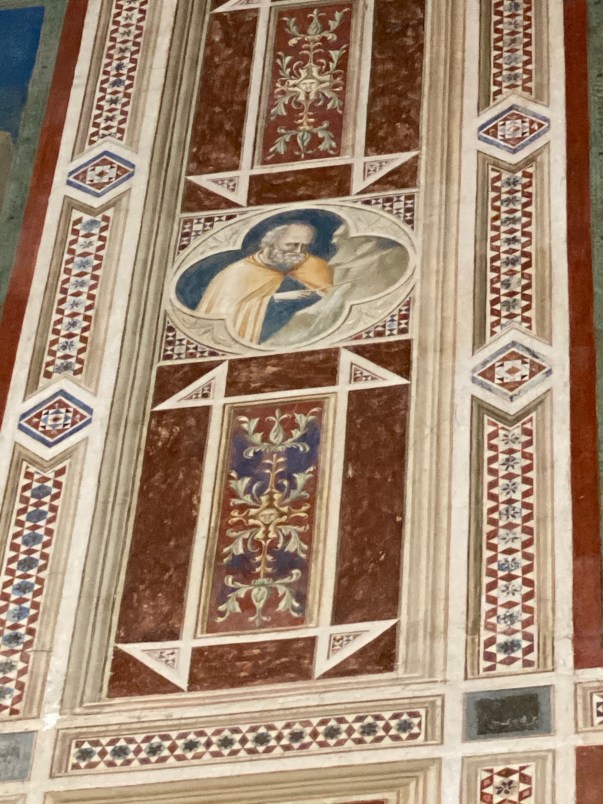
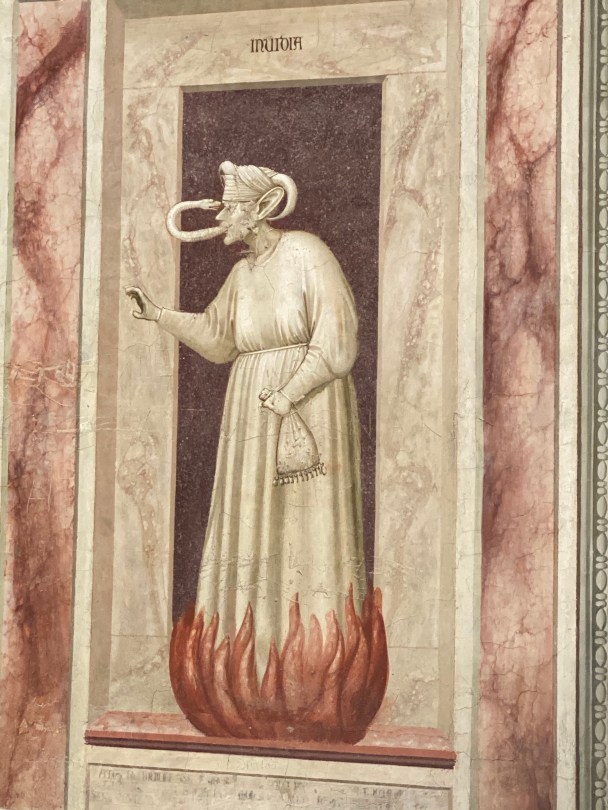
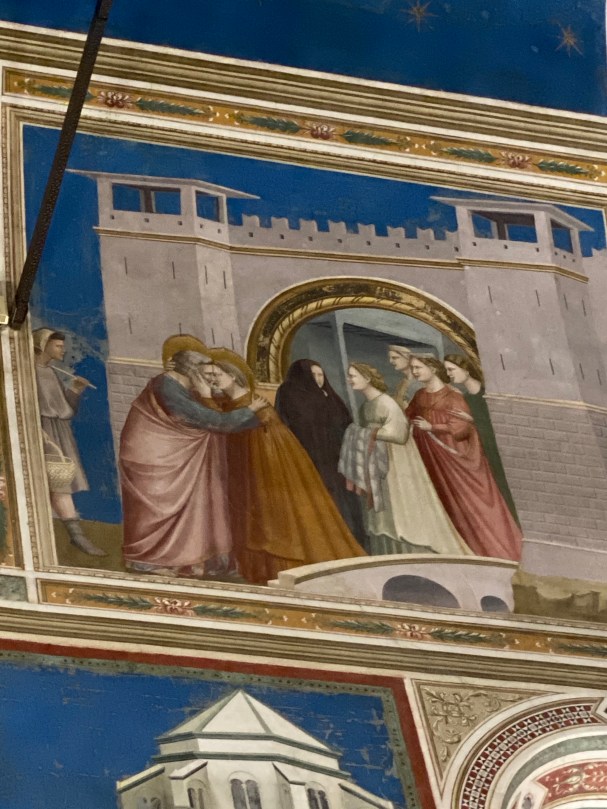
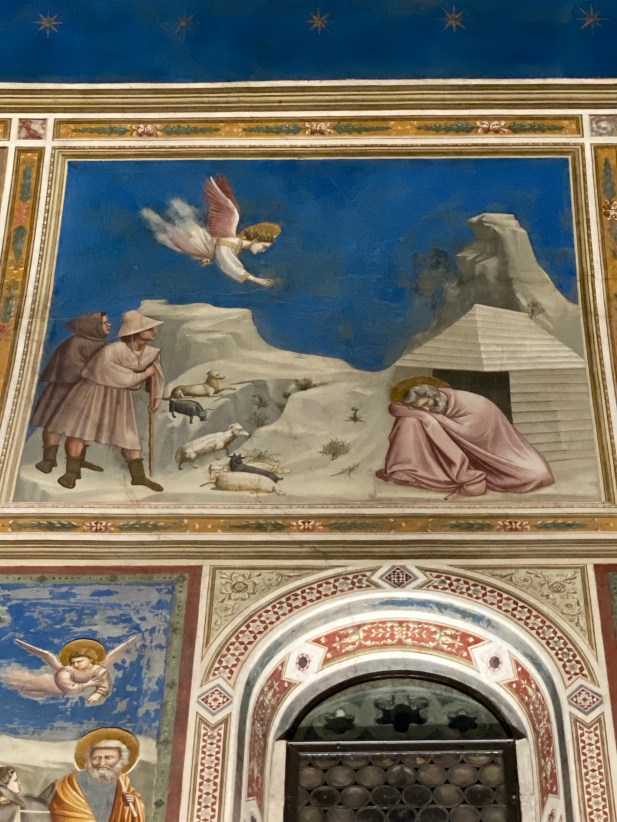
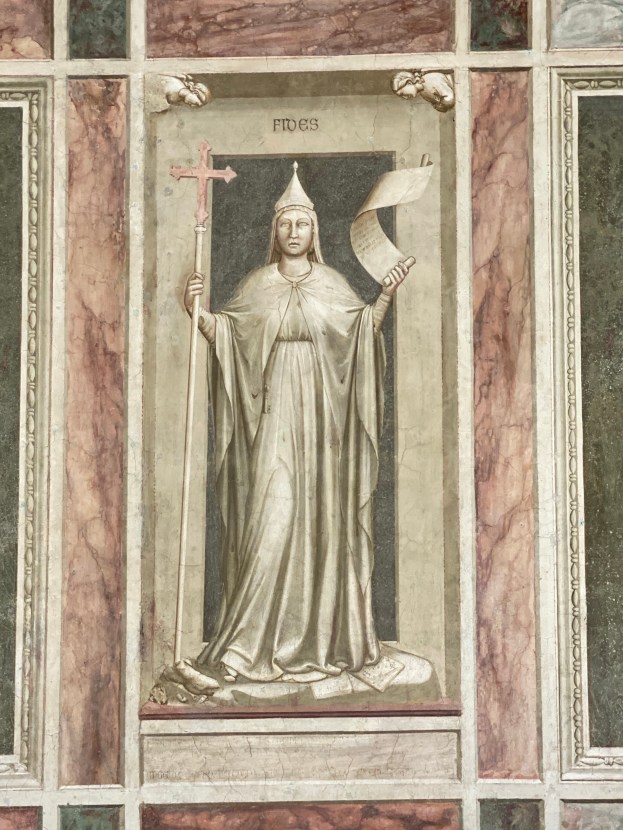
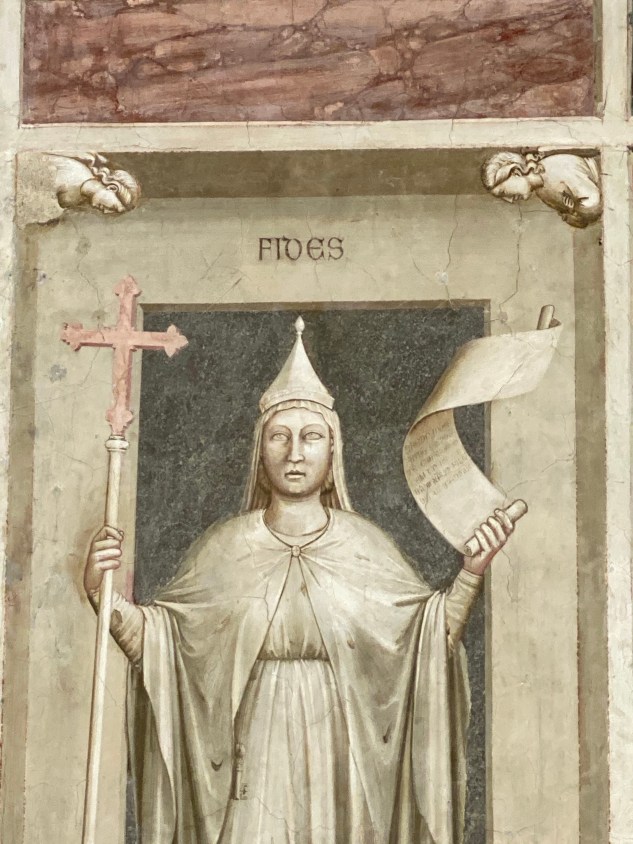
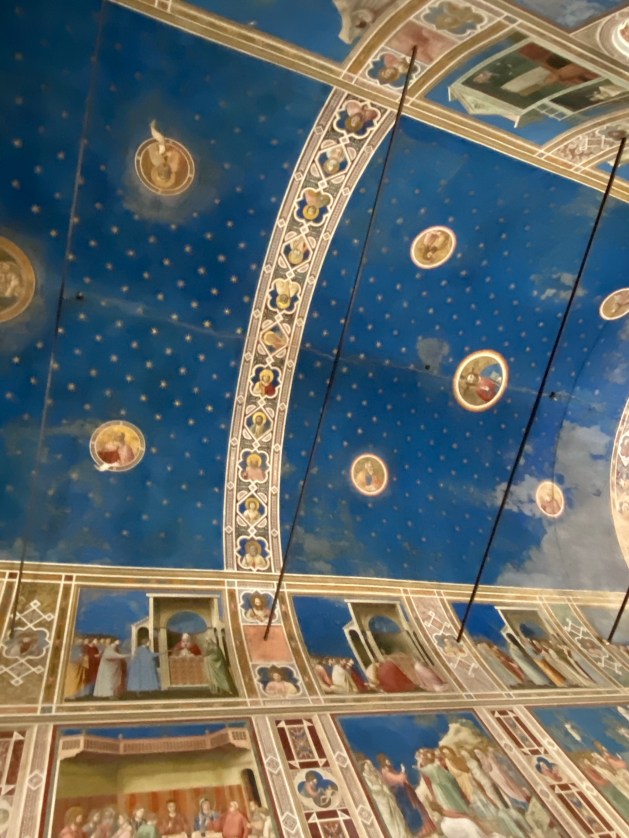
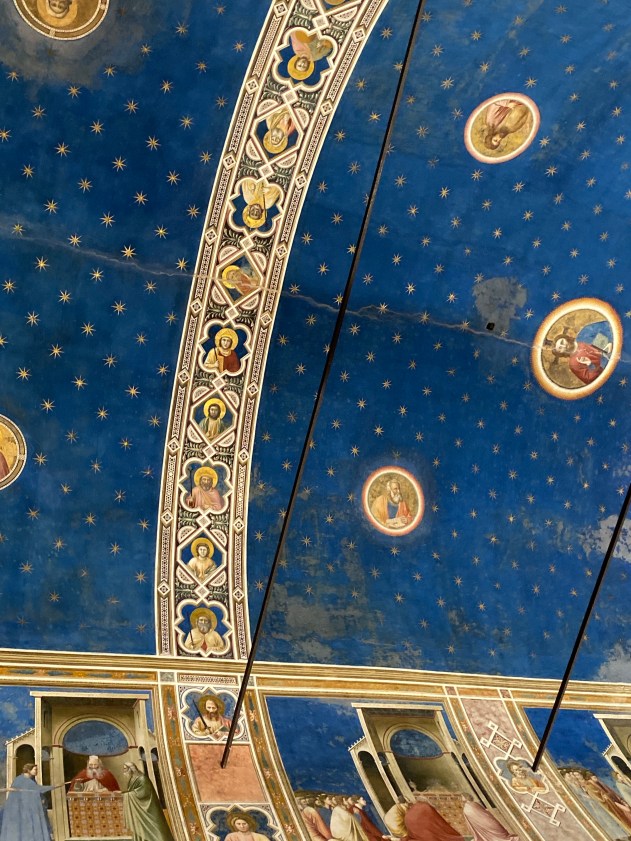
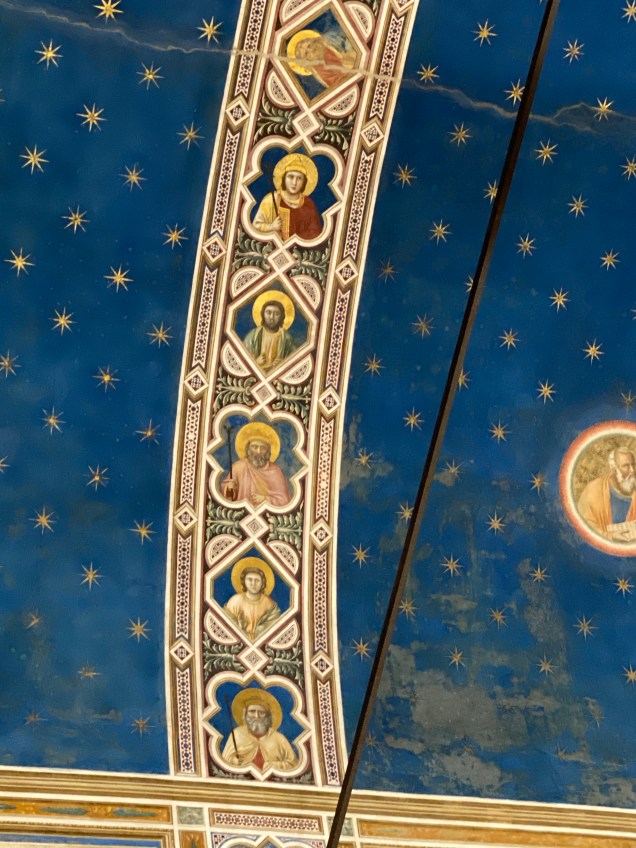
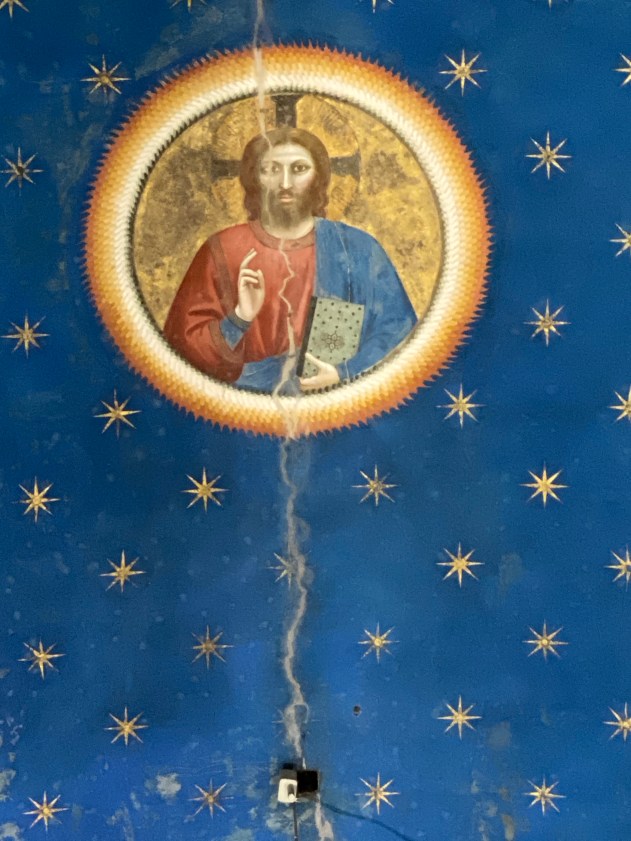
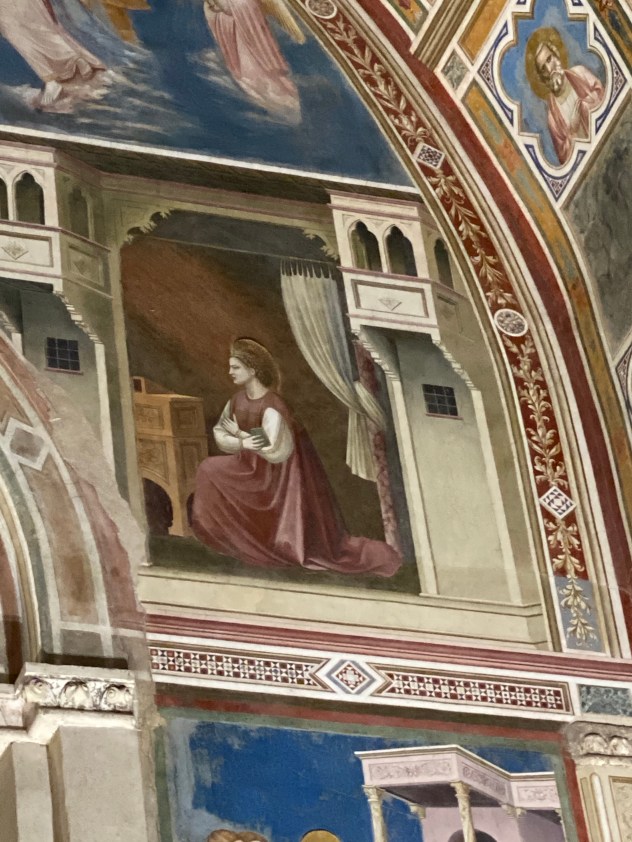
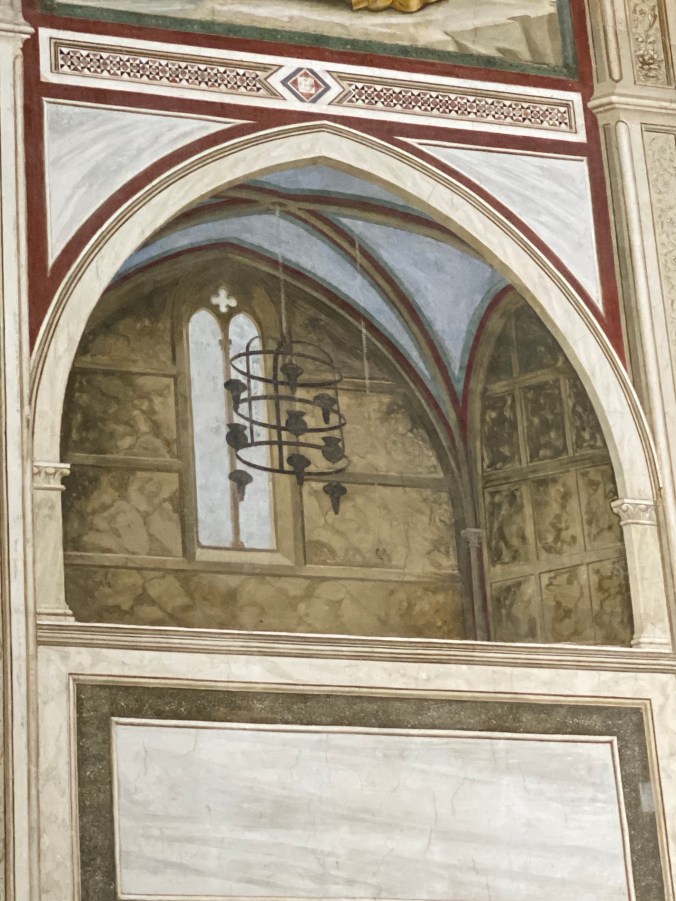
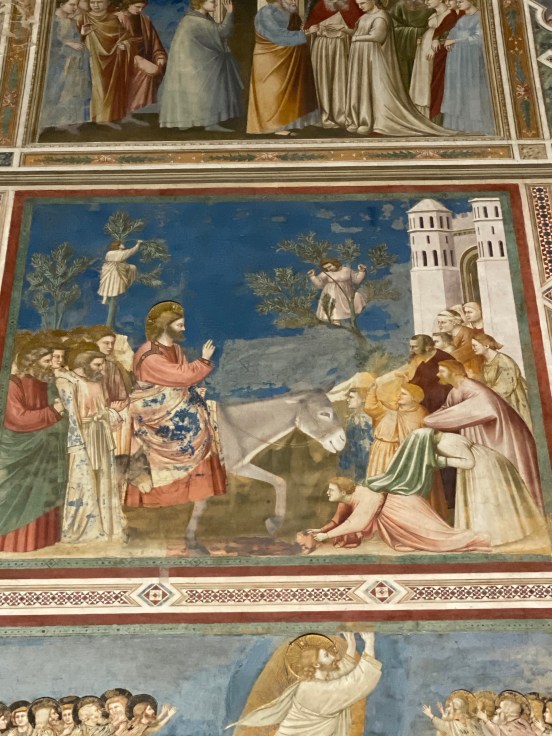
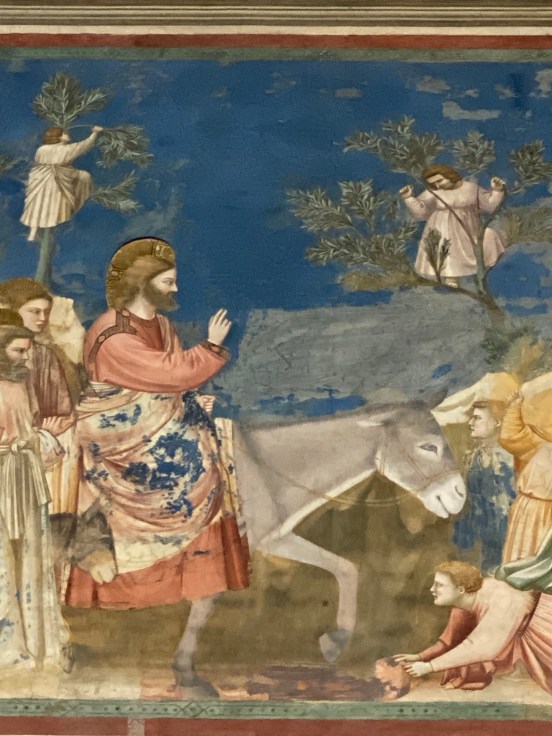
I had to go back to Padua to see the masterpiece of Medieval fresco painting and I’m so happy I did. One, two, even three times in a lifetime is not enough. I’m now at 4 times and counting.
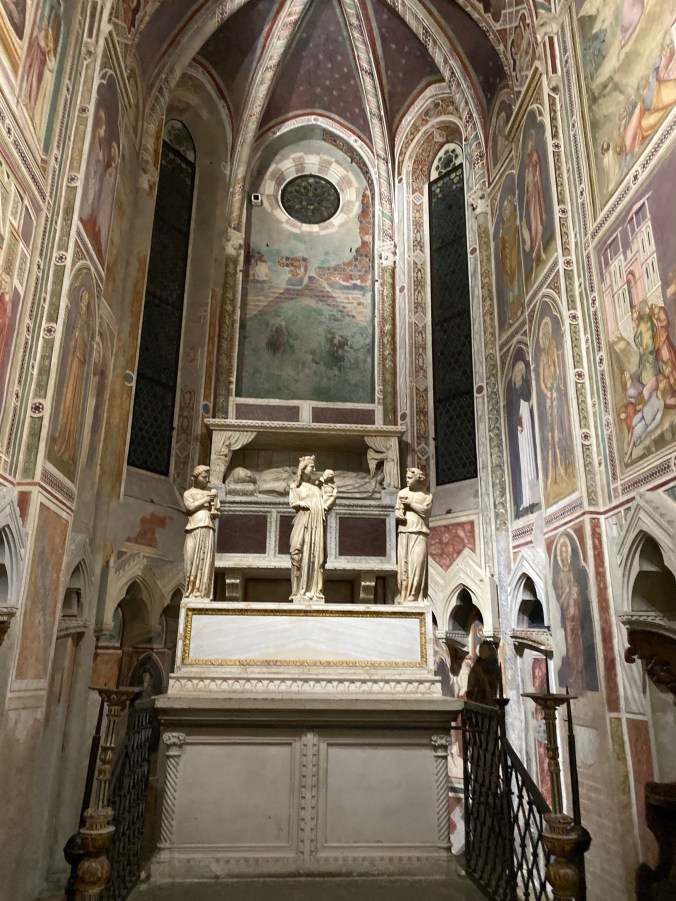
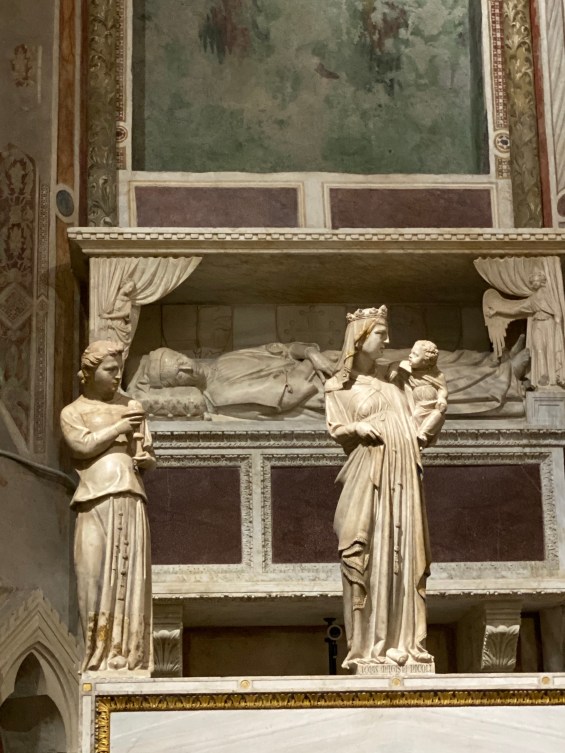
Tuscan sculptor, Giovanni Pisano, is also well-represented in the chapel.
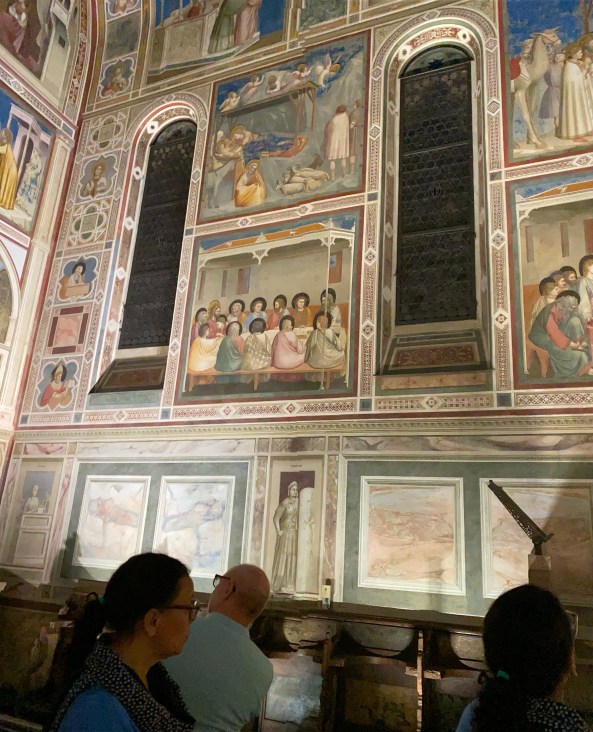
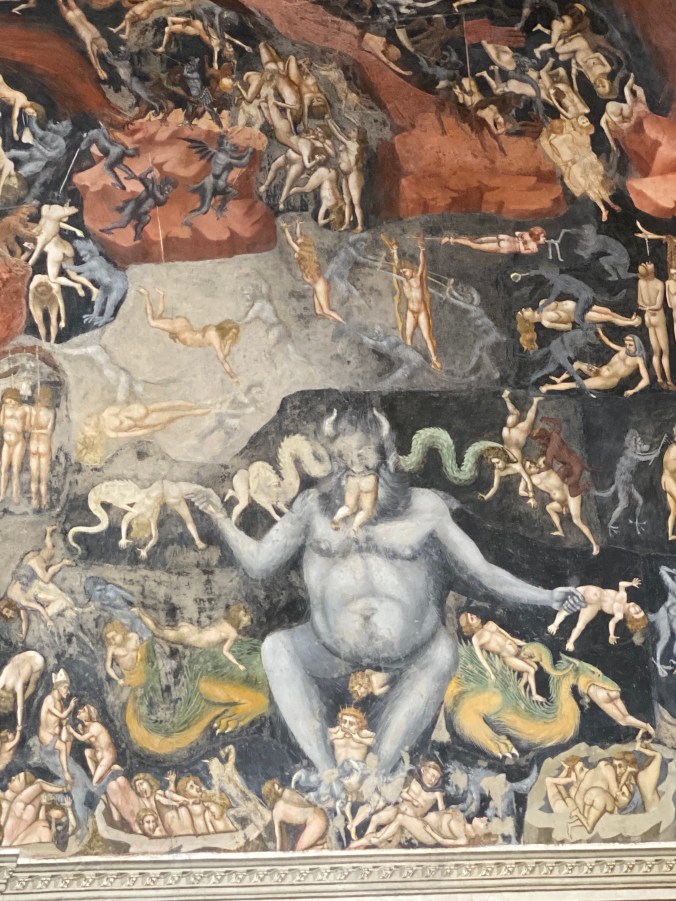
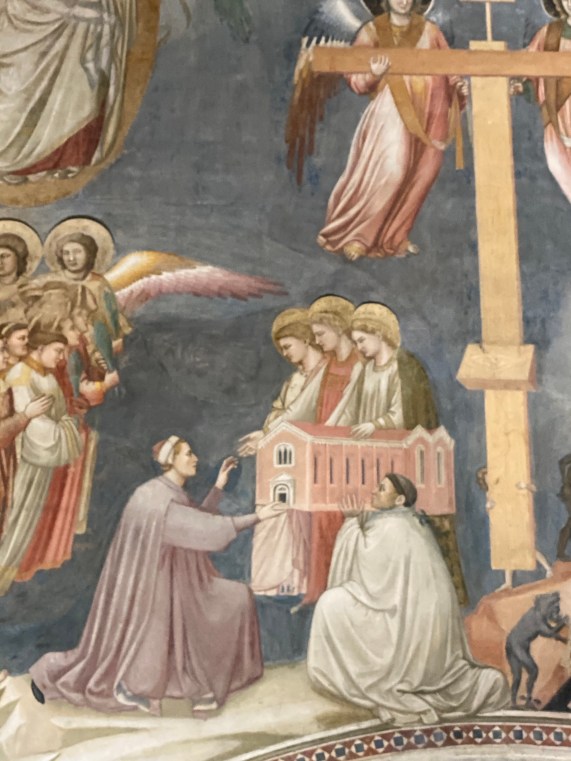
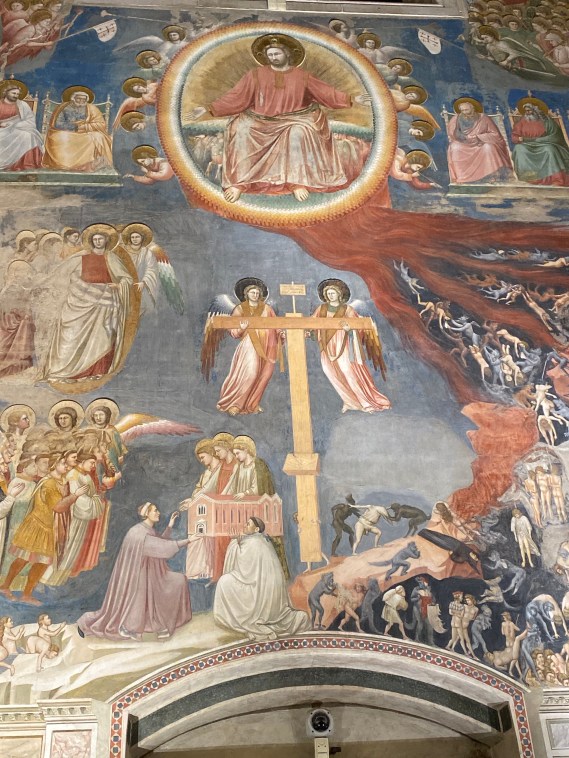
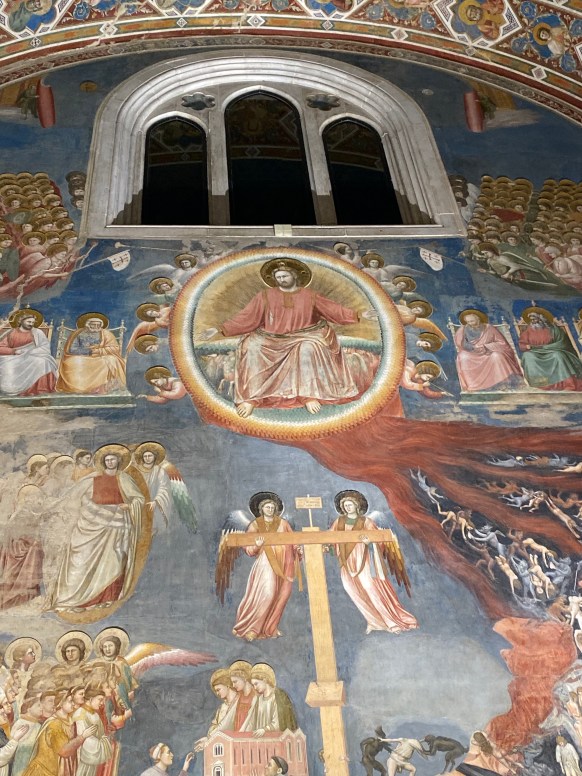
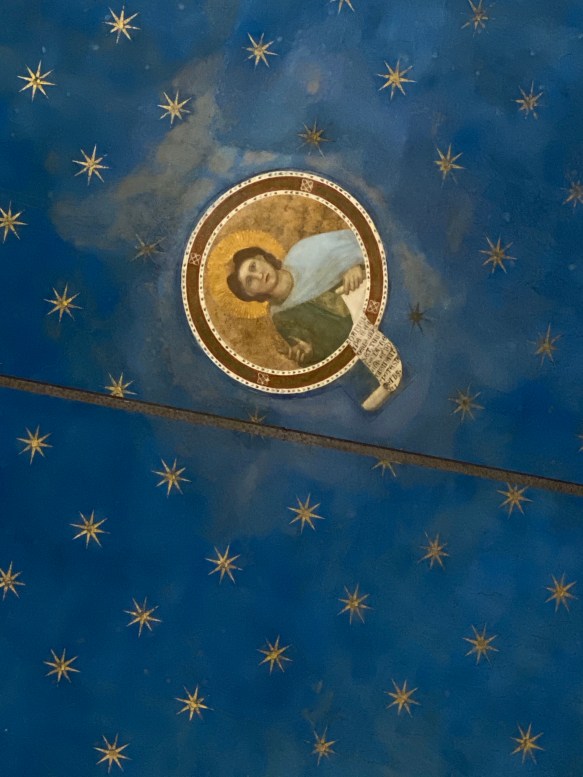
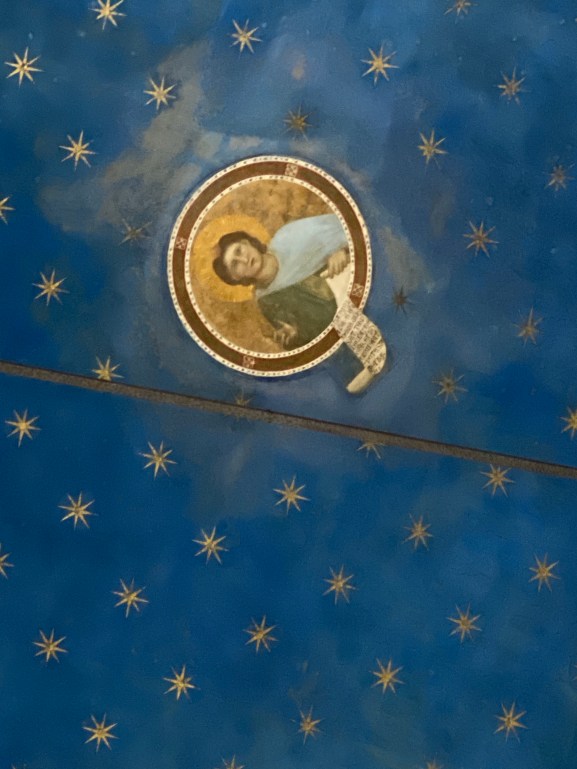
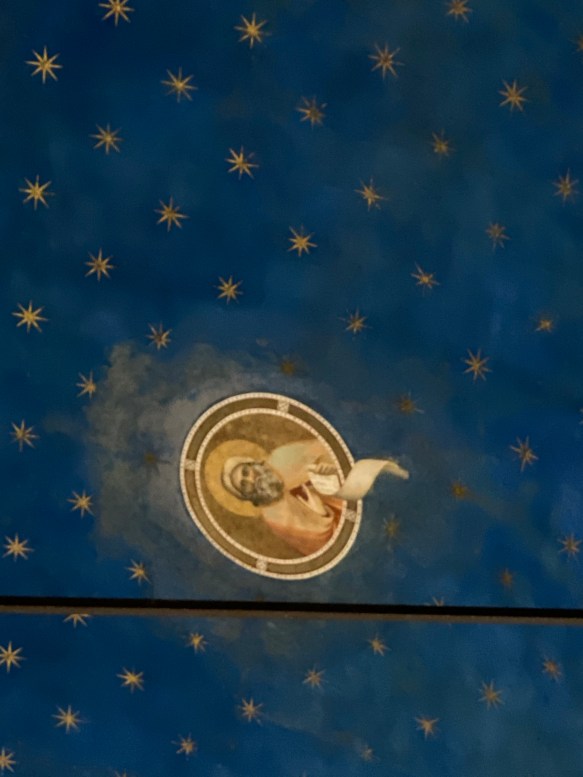
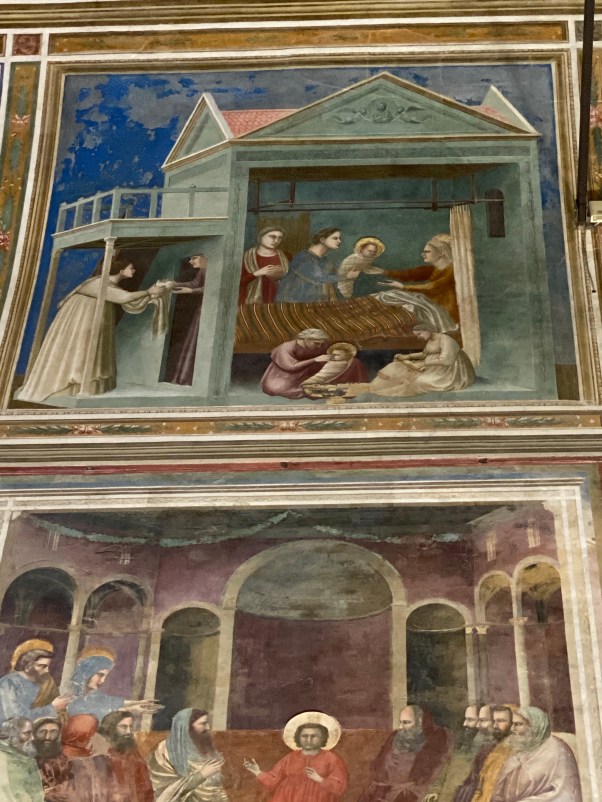
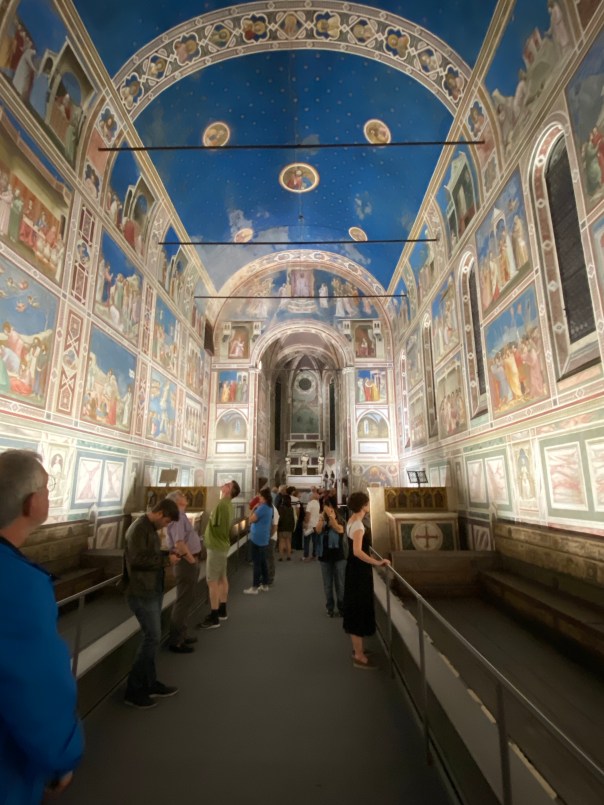
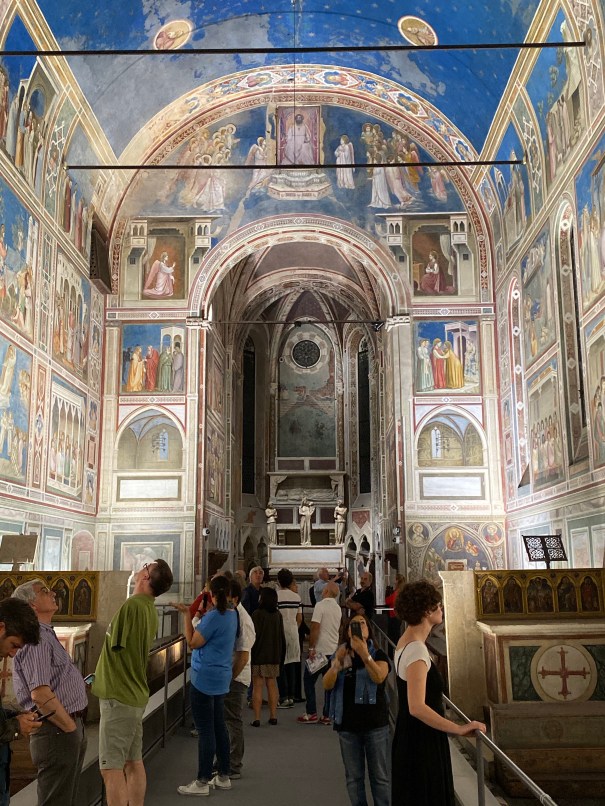
The brochure for the Chapel tells us this about the Scrovegni Chapel: “In 1300, the rich nobleman Enrico Scrovegni acquired the area of the Roman Arena [in Padova], on which he intended to build a fine town house. Next to it, he had a chapel built and dedicated to the Holy Virgin, for the soul of his father Reginaldo, the usurer mentioned in the 17th canto of Dante’s ‘Inferno.’ Scrovegni commissioned Giotto to decorate the chapel with frescoes which, according to most reliable information, was done between 1303-05. The frescoes cover the interior walls and ceiling of the building completely. The lower part of the blue star-spangled vaulted ceiling depicts the prophets and the important episodes in the lives of the Holy Virgin and Jesus Christ. Above the main door is ‘The Last Judgment:’ Christ, as judge, is surrounded by the angels and the apostles; below him, to the right, are the Blessed; to the left, the Damned are depicted as suffering eternal punishment, according to medieval tradition.”
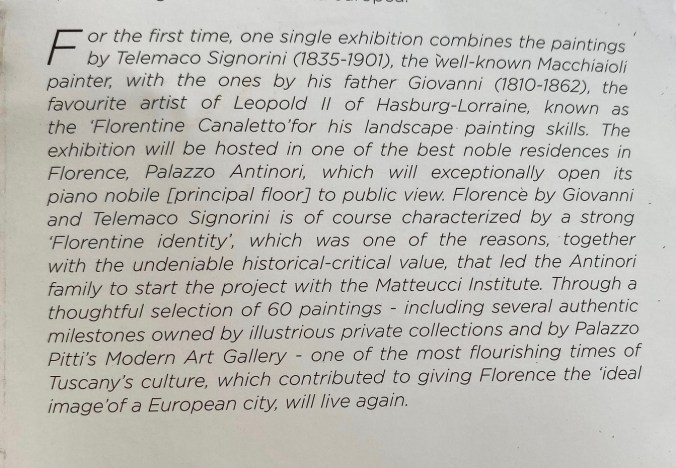
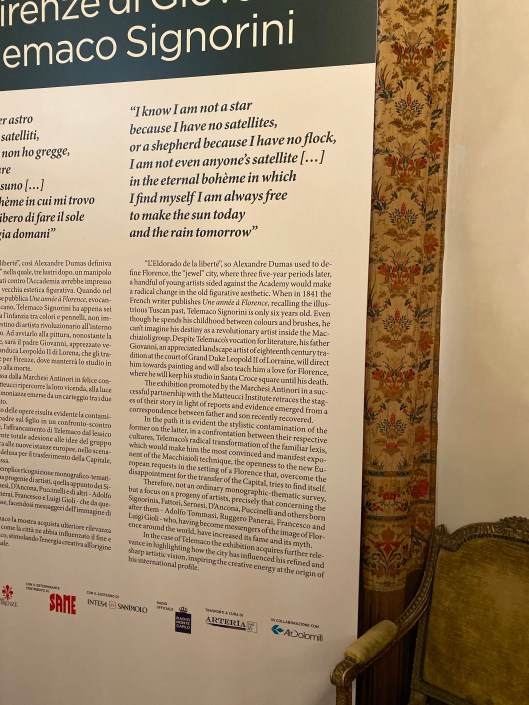
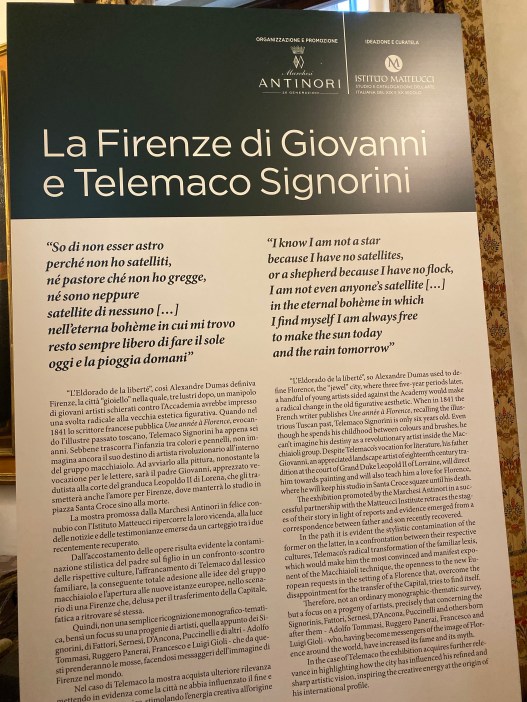
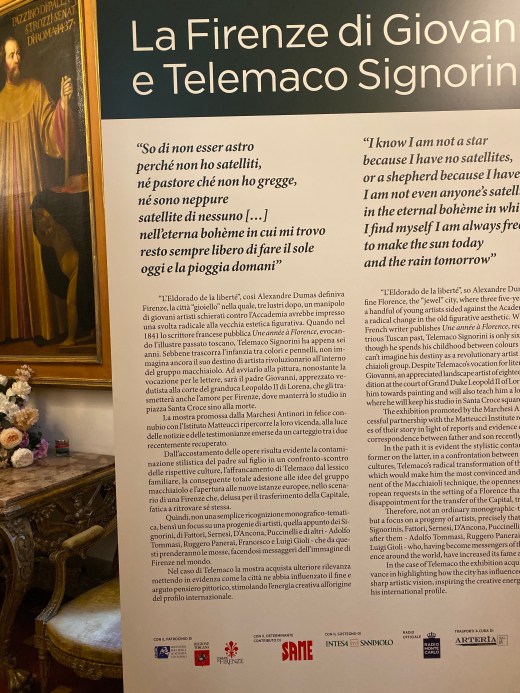
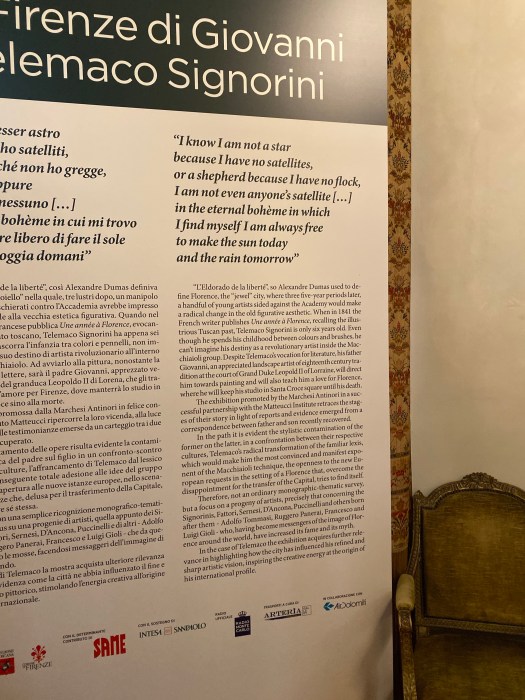
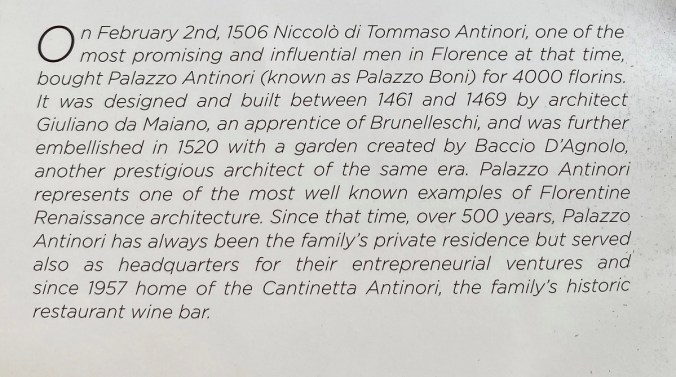
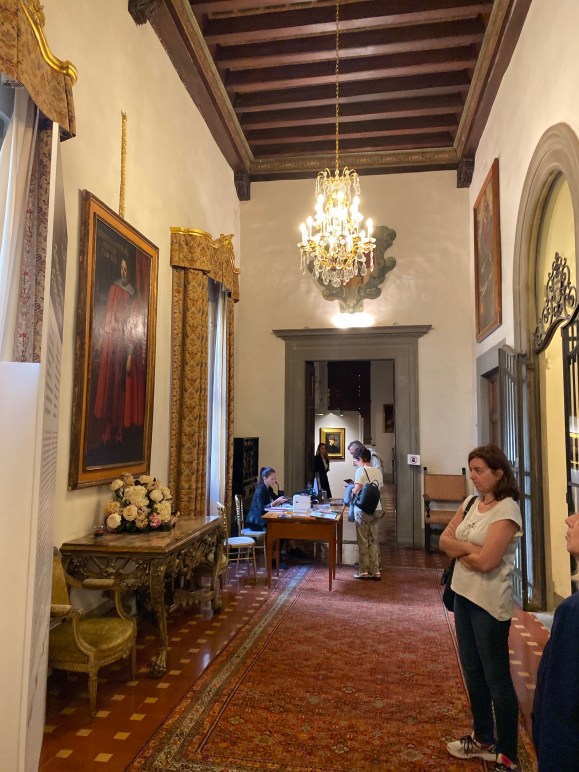
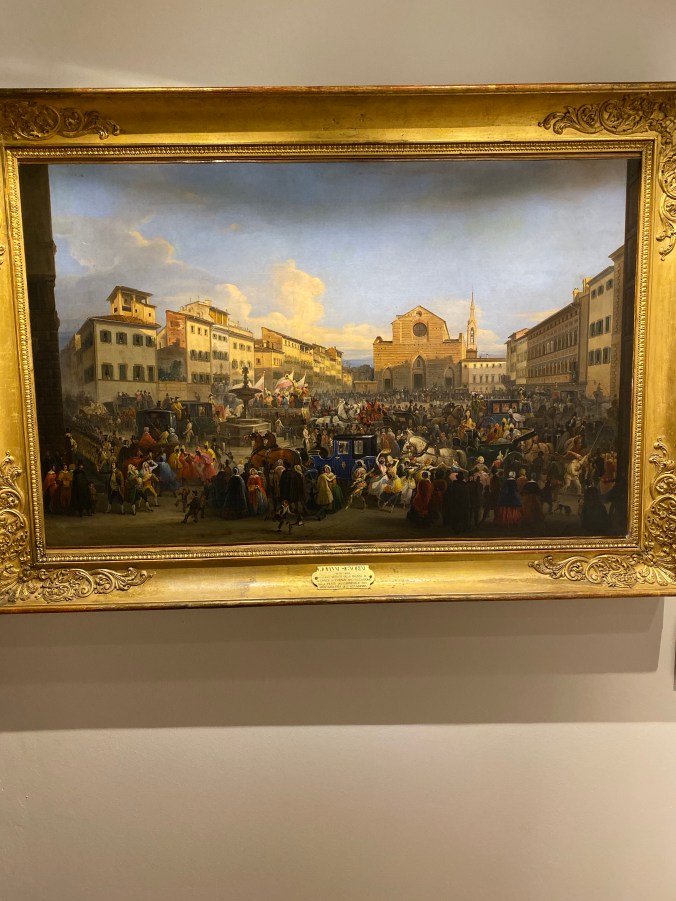
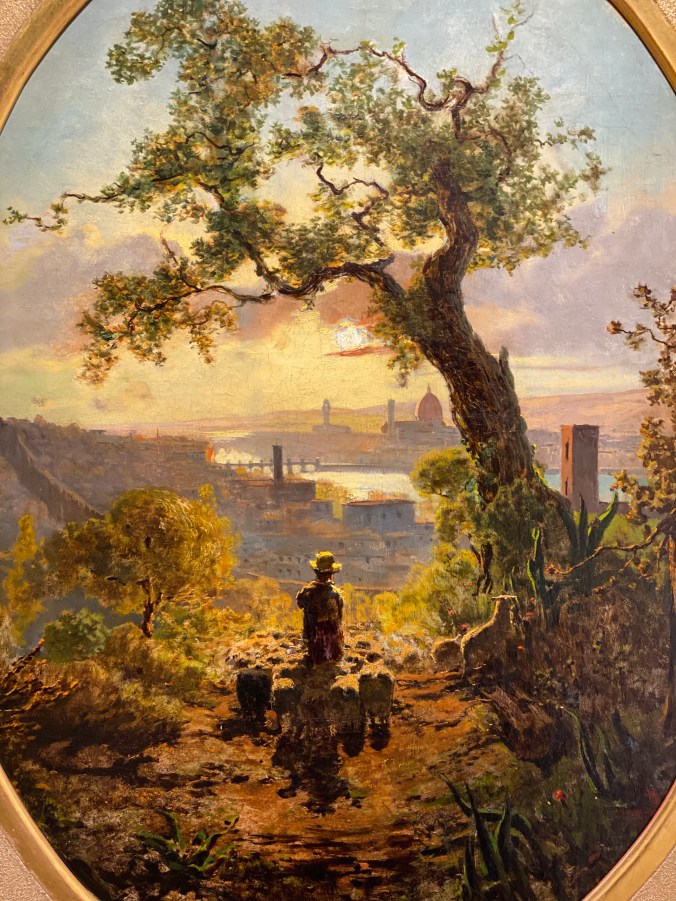
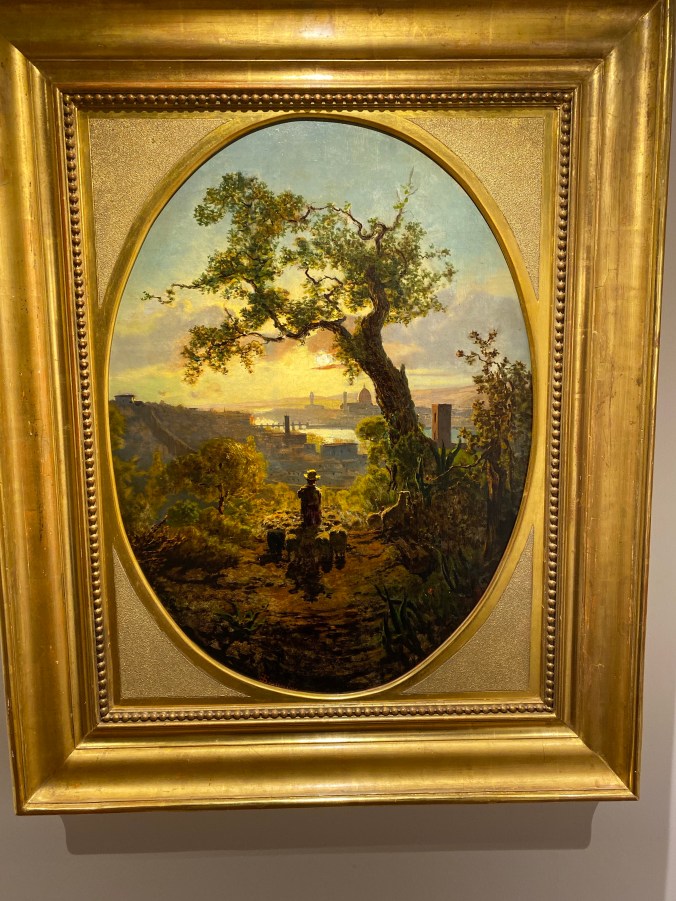
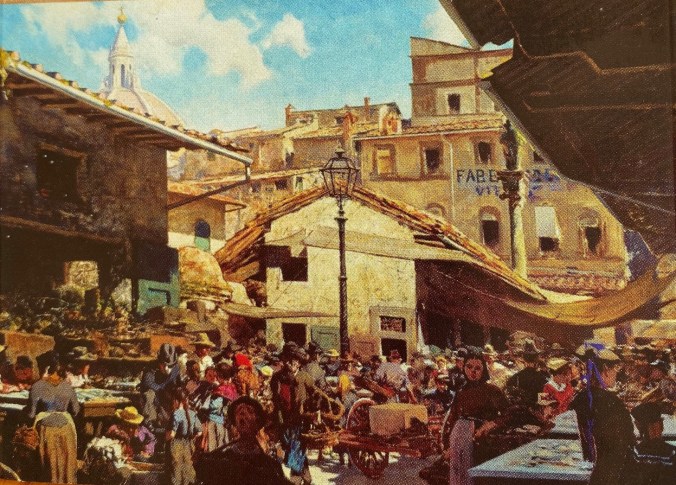
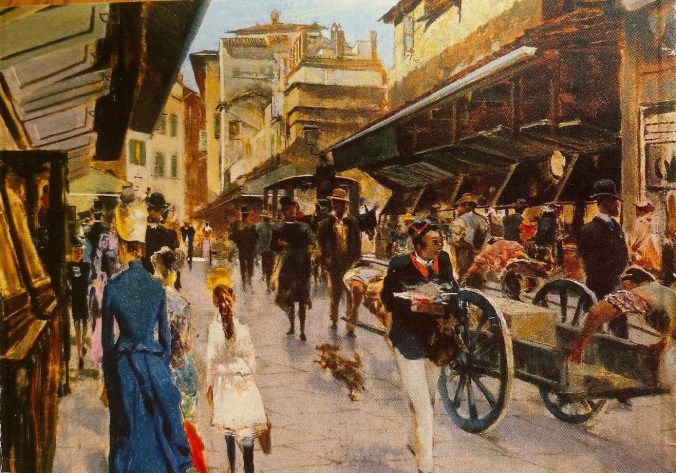
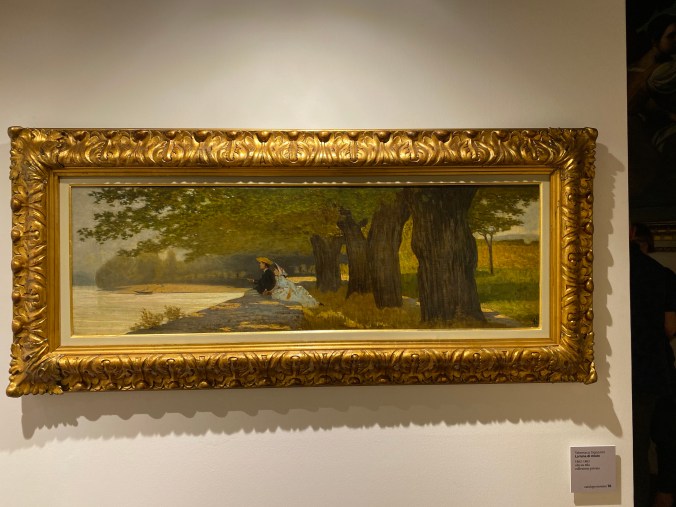
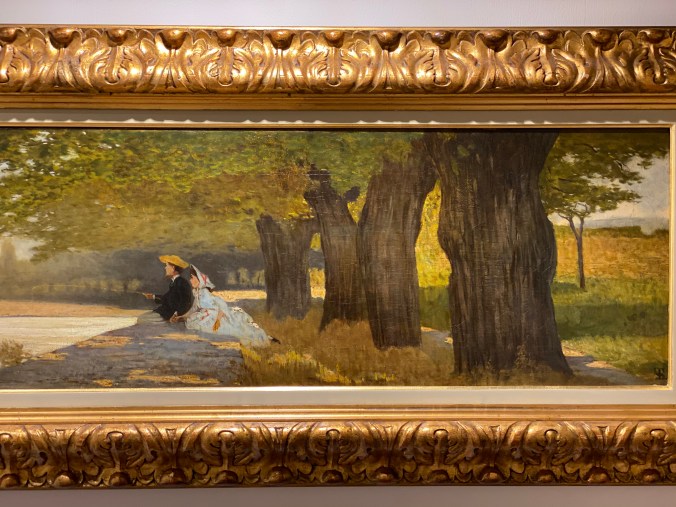
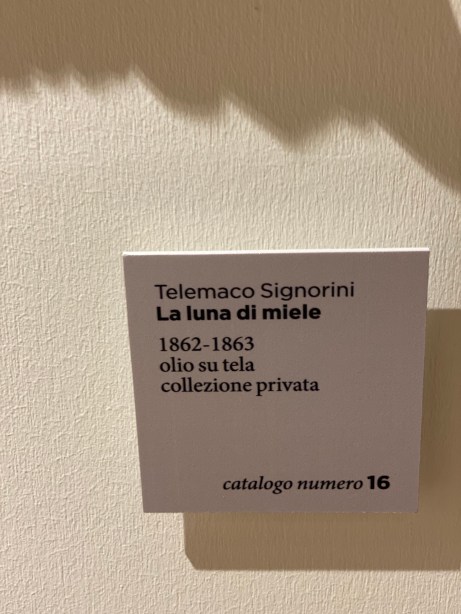
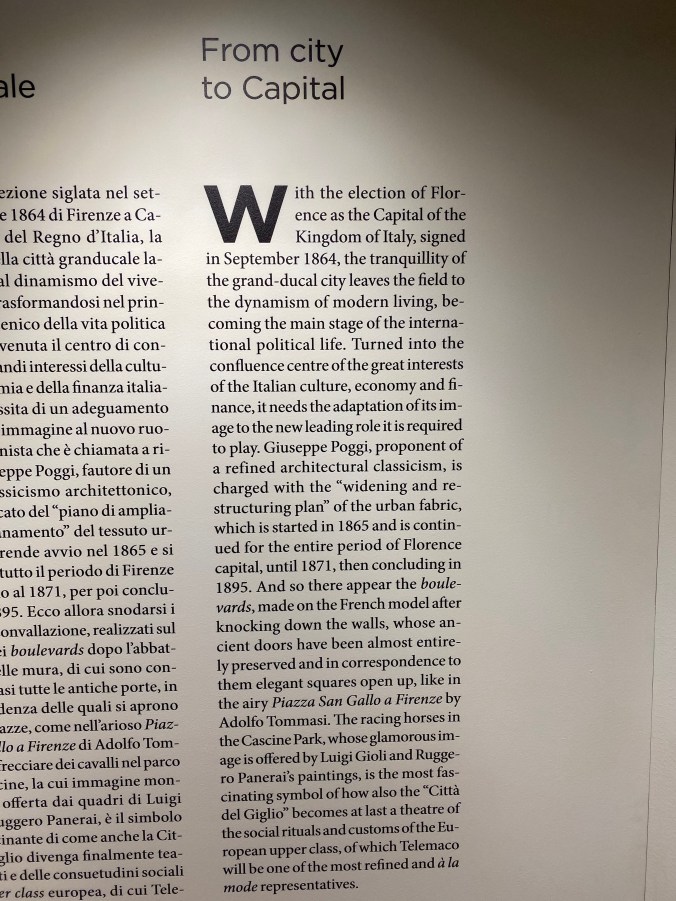
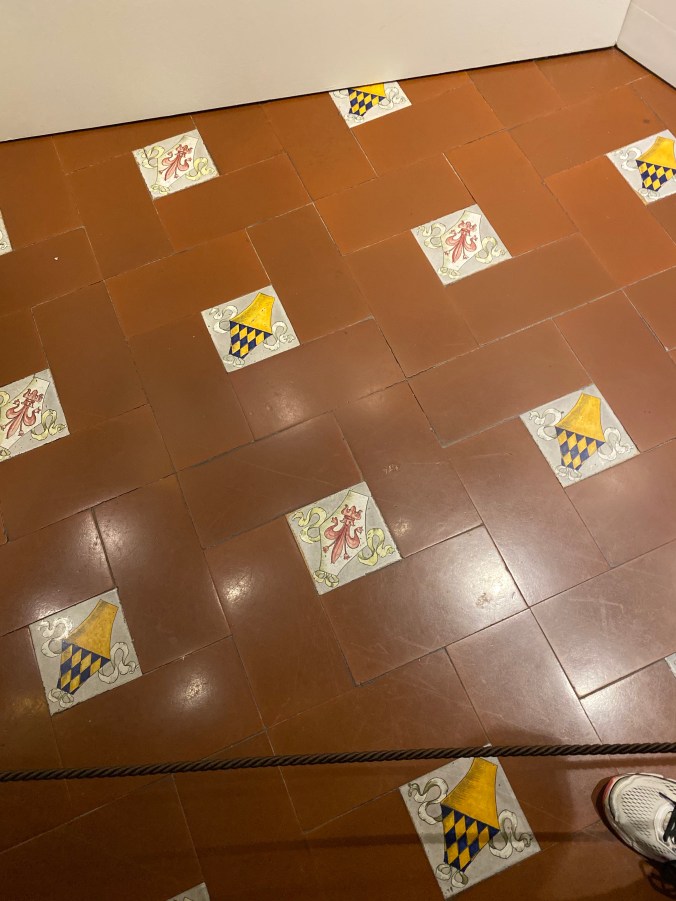
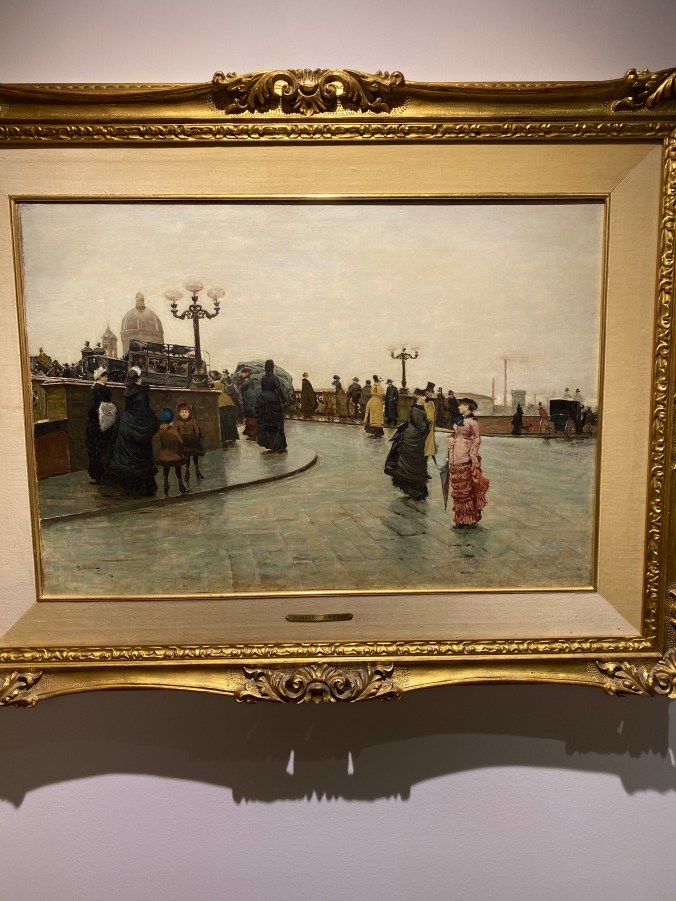
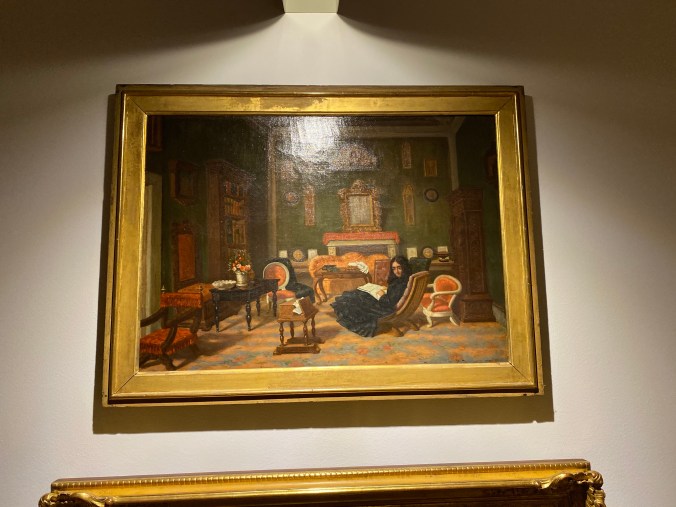
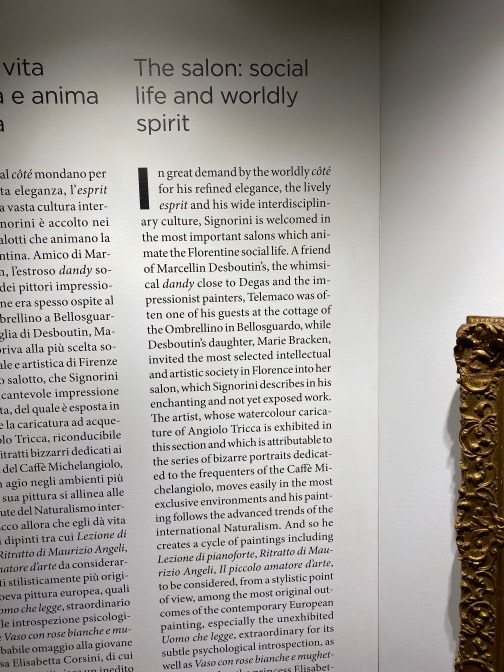
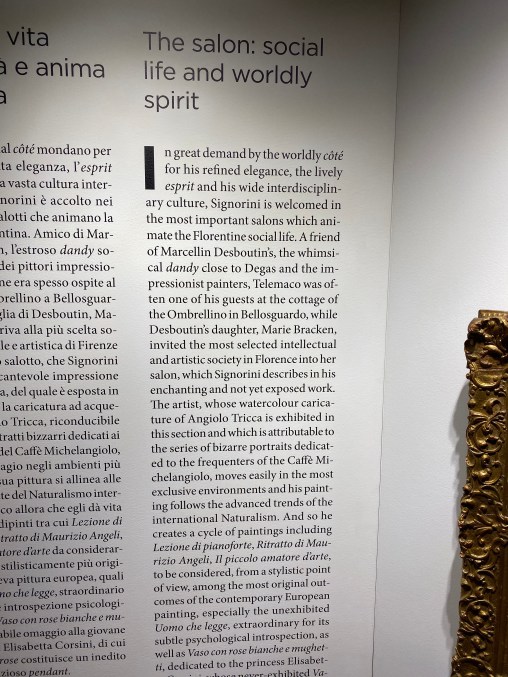
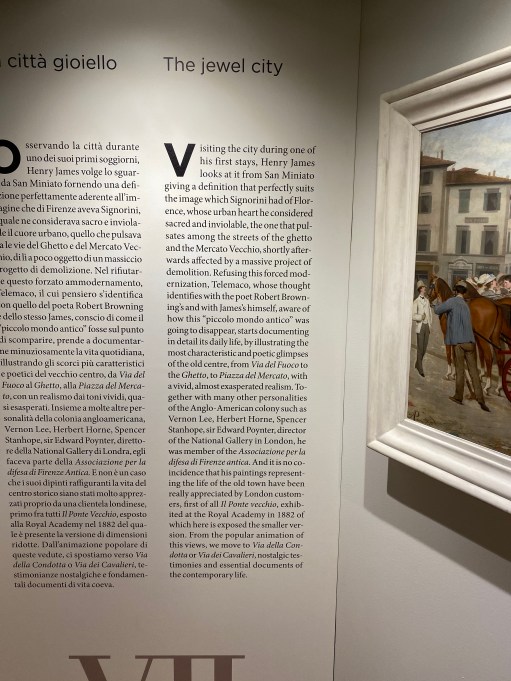
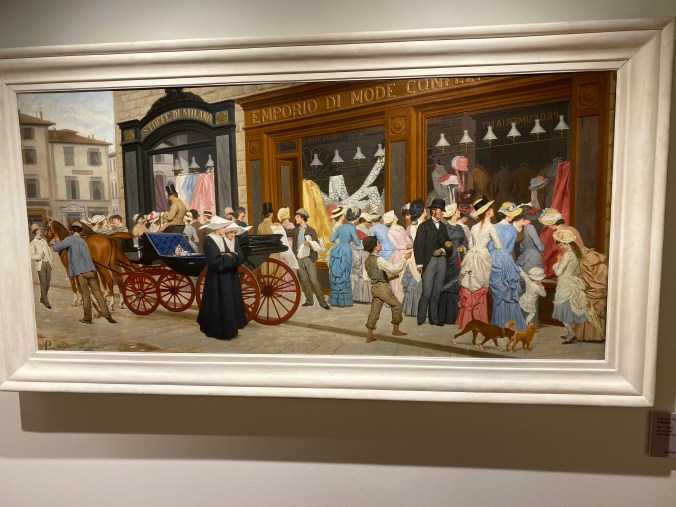
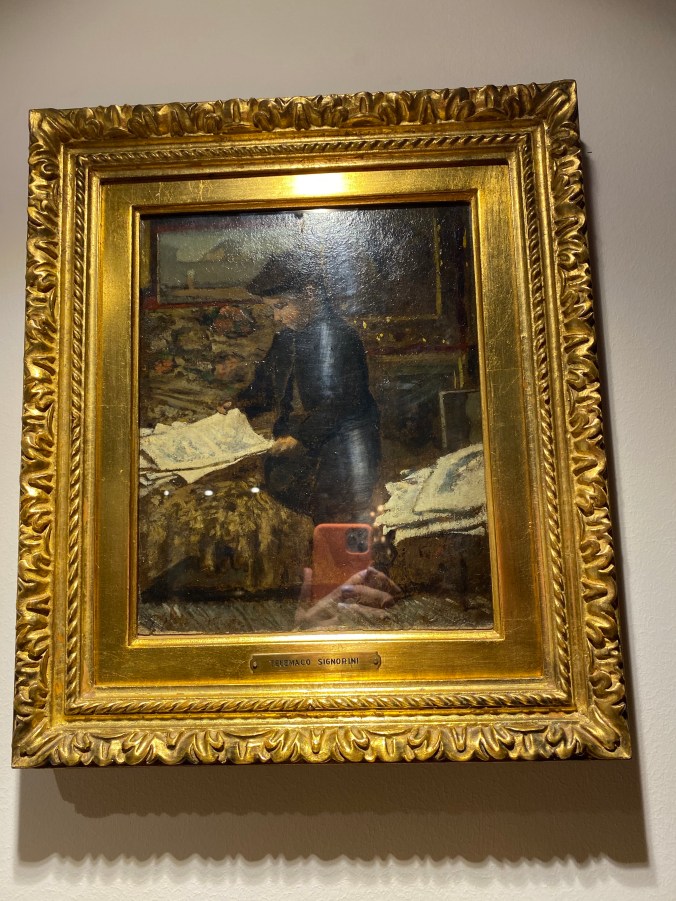
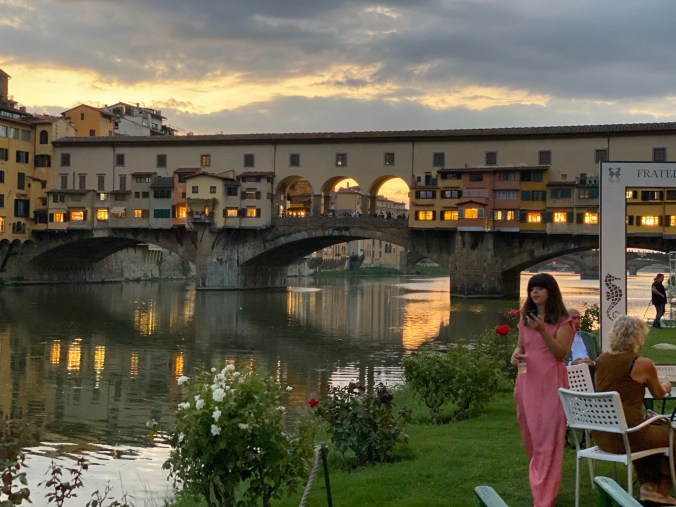
Lovers of the ottocento and of old Florence will love the current exhibition at the Palazzo Antinori. Entitled “The Florence of Giovanni and Telemaco Signorini” (father and son), the show runs through 10 November 2019. For people like me, it is a delightful experience to not only see the show, but to also have a look at the piano nobile of the Antinori Palace.
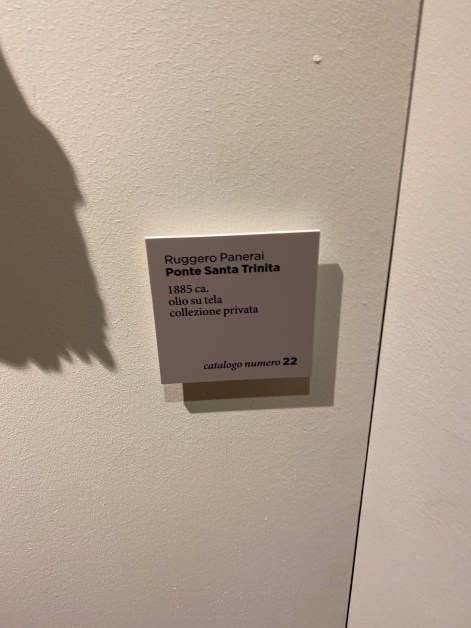
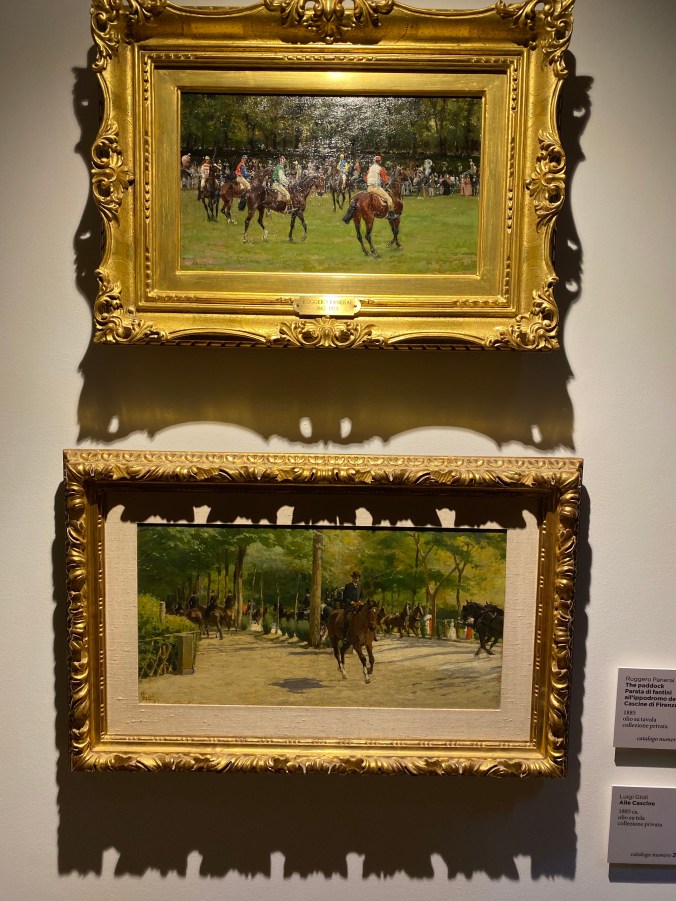
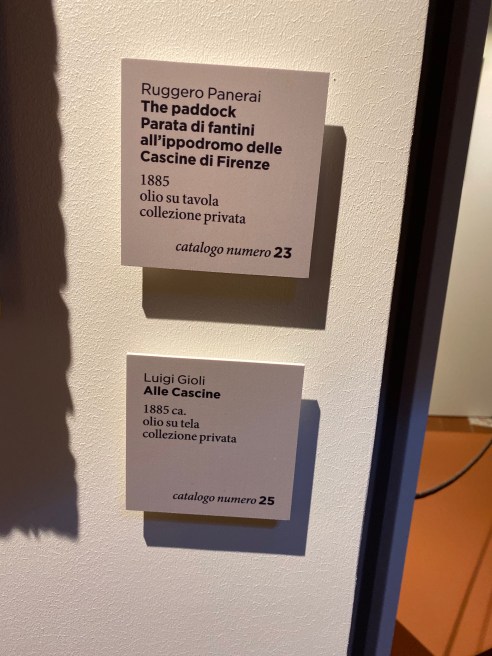
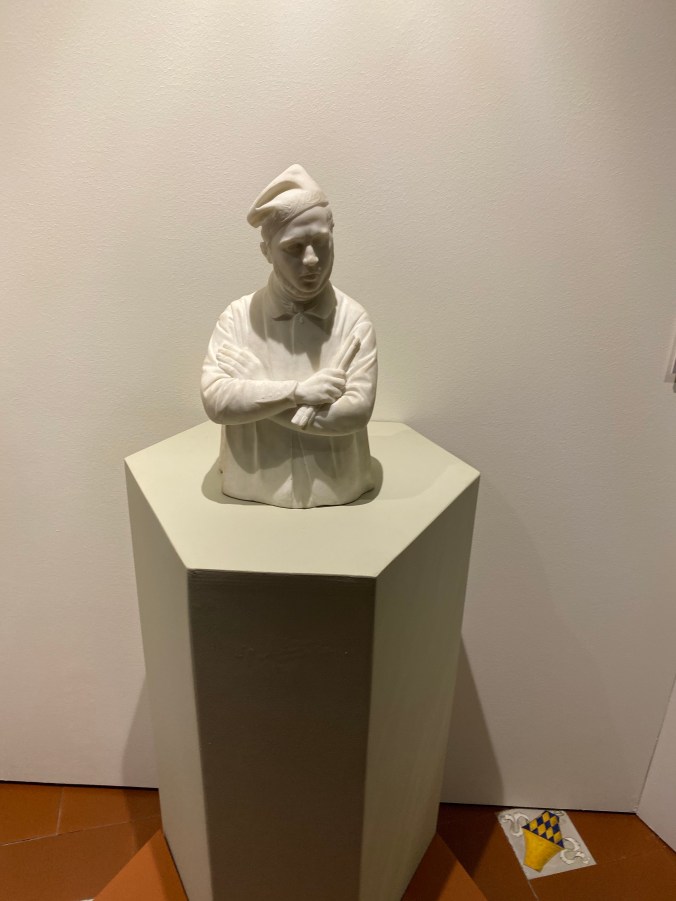
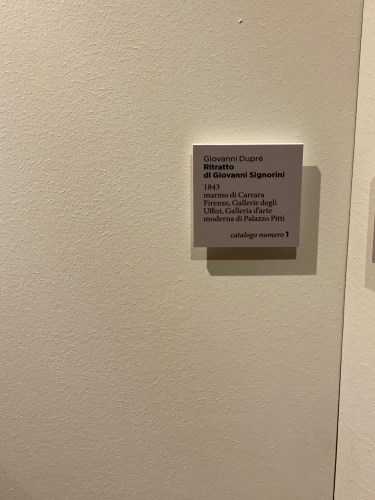
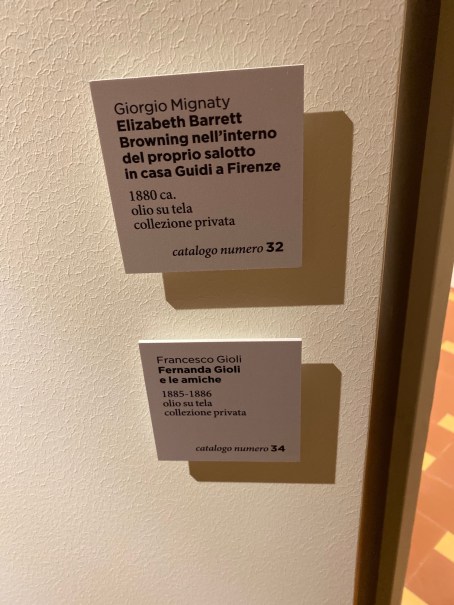
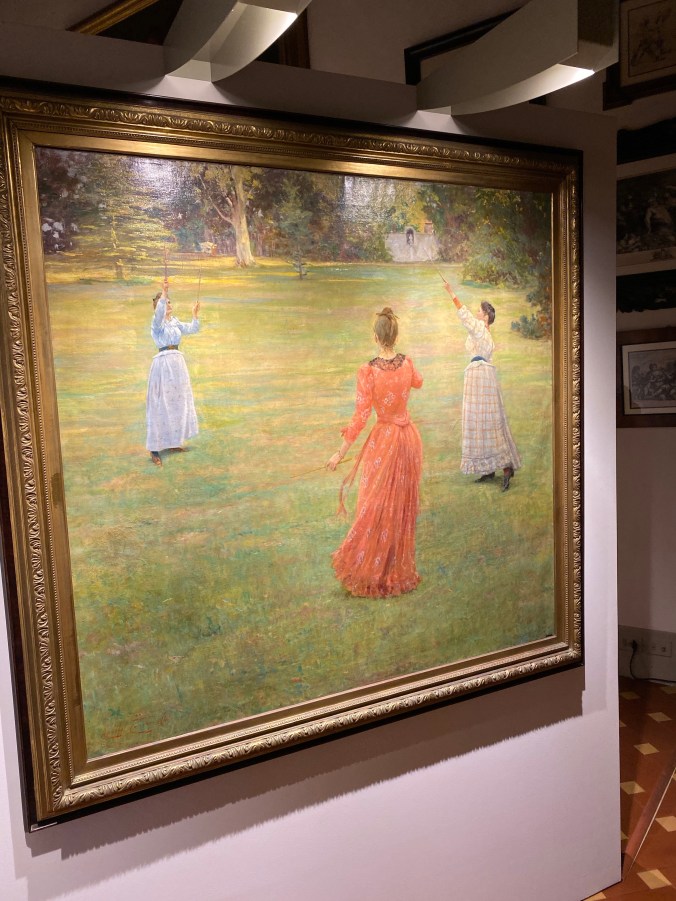
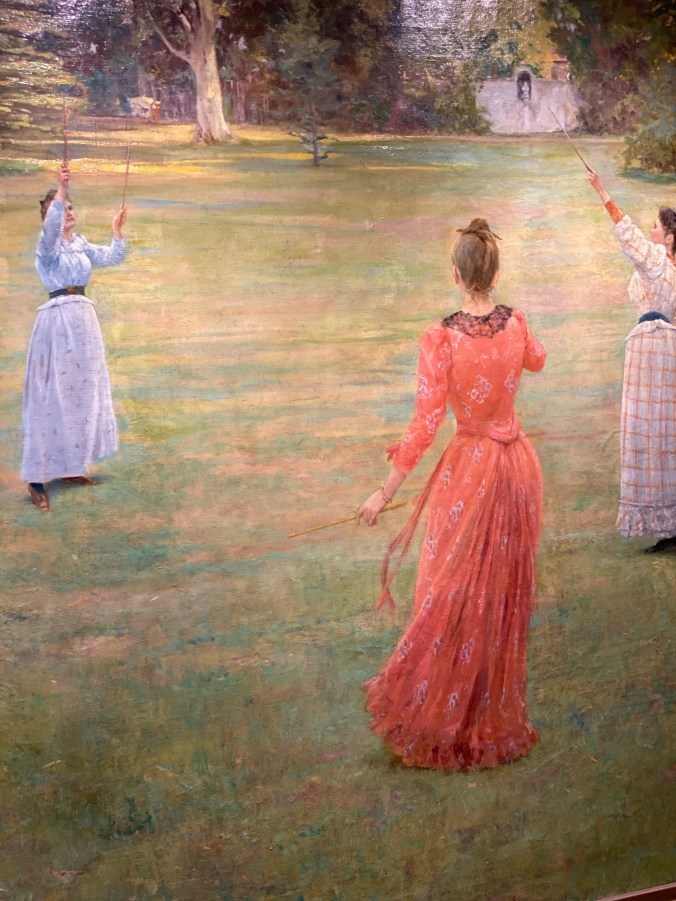
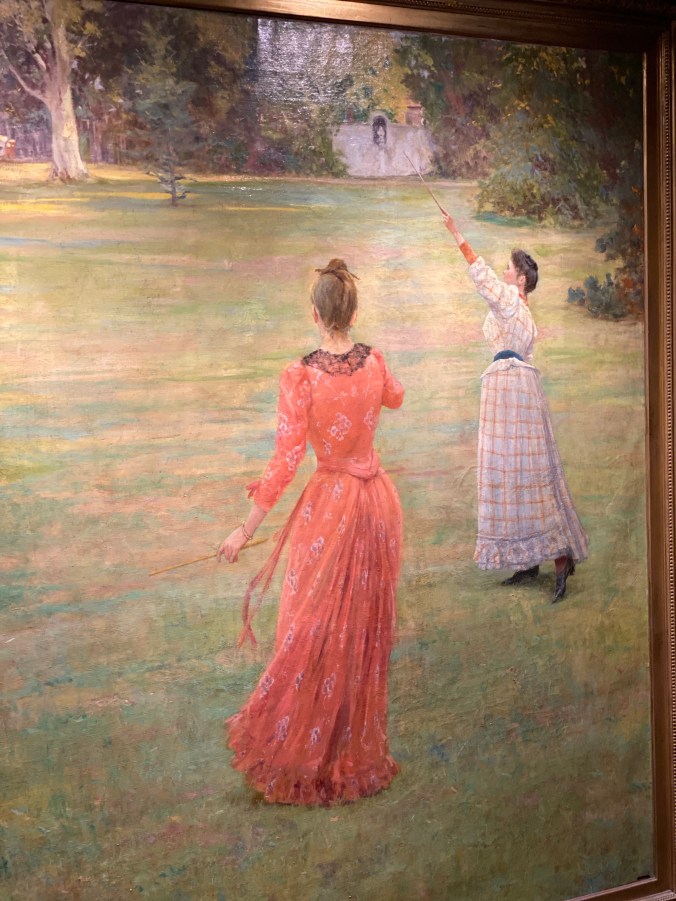
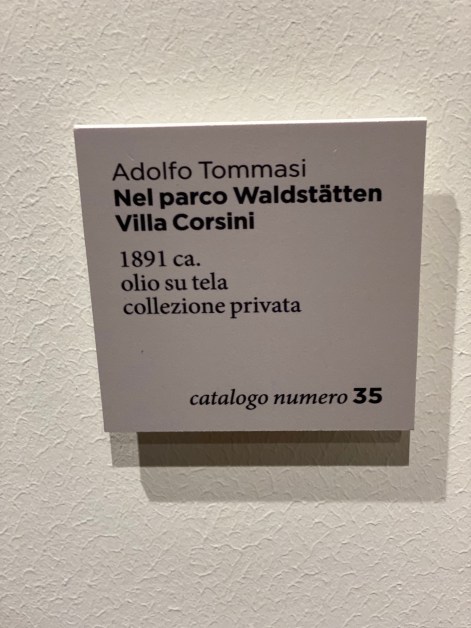
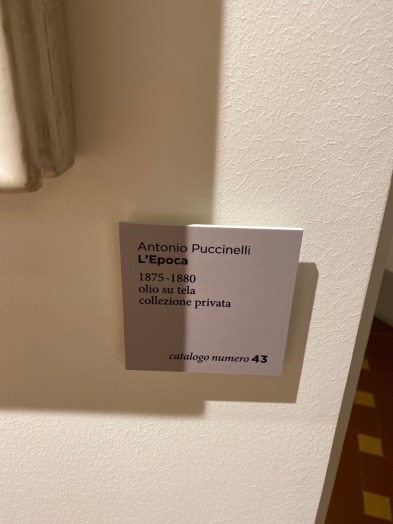
The exhibition also includes a few paintings by contemporaries of the Signorini father/son painters. It includes: Ruggero Panerai, Luigi Gioli, Francesco Gioli, Giorgio Mignaty, Adolfo Tommasi, and Antonio Puccinelli. There is also a sculpted bust of Telemaco Signorini by Giovanni Dupre.
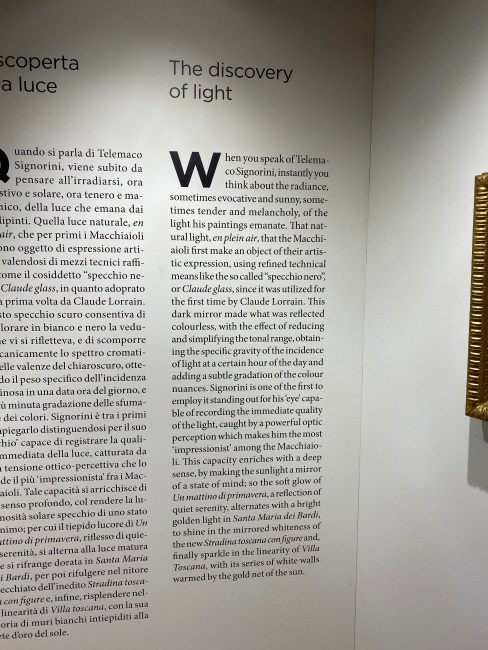
Here’s what the brochure announces about this exhibition:
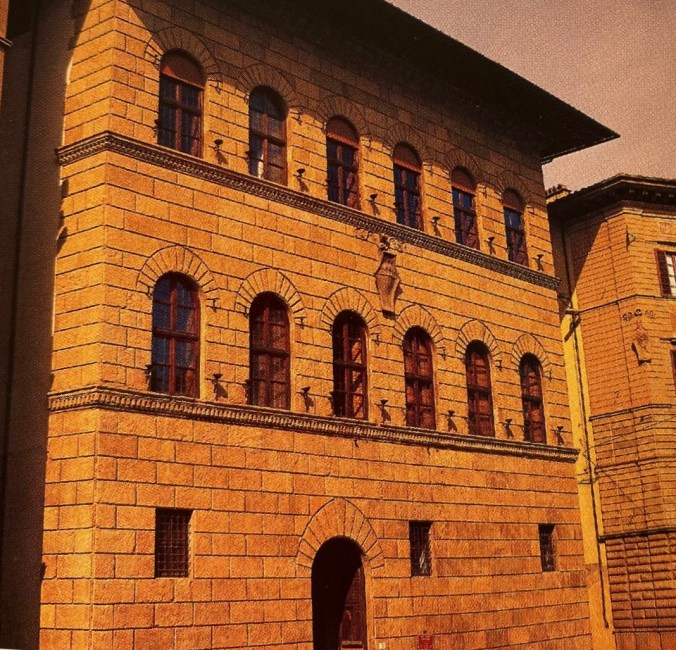
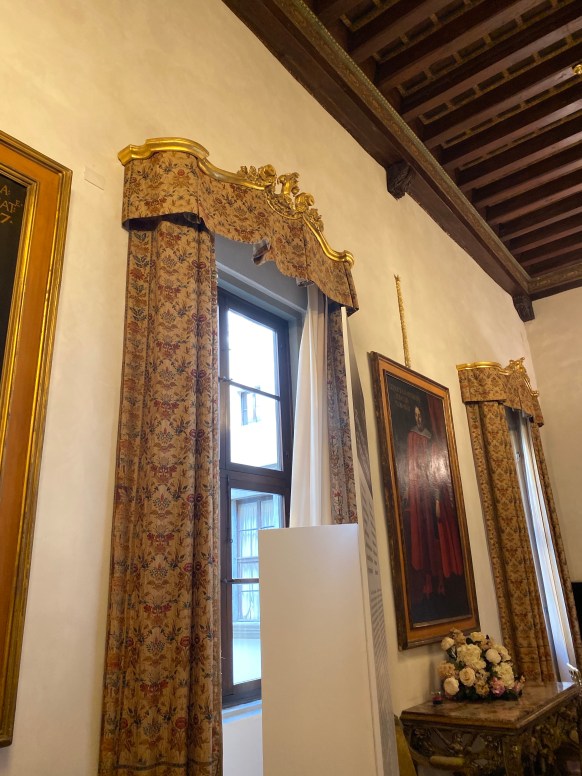
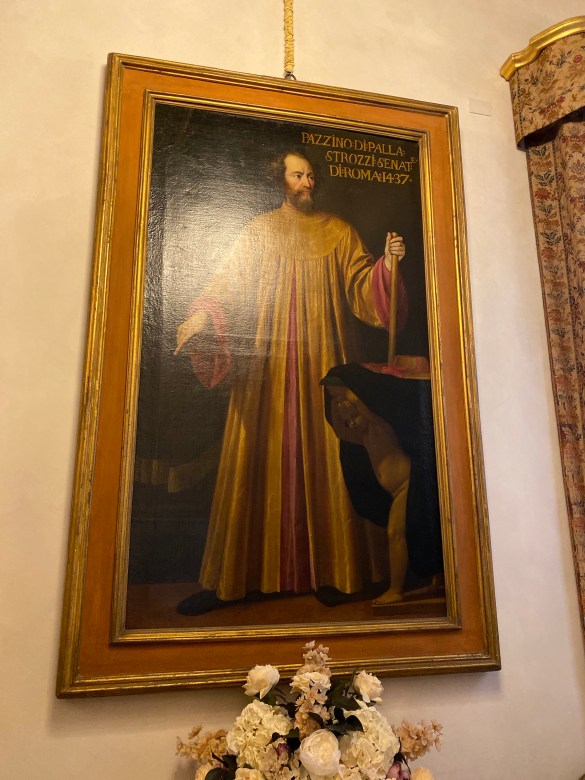
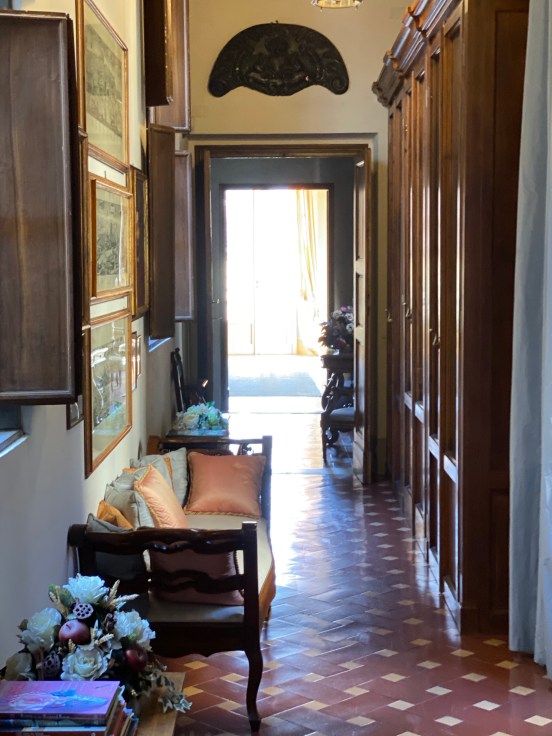
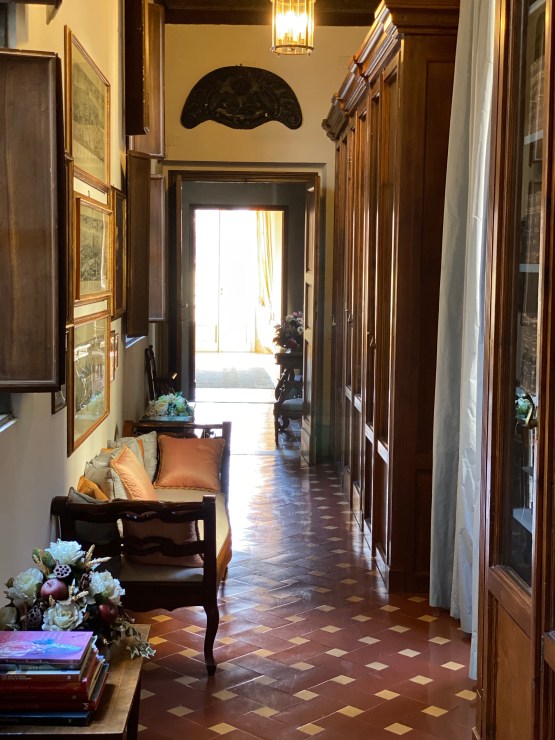
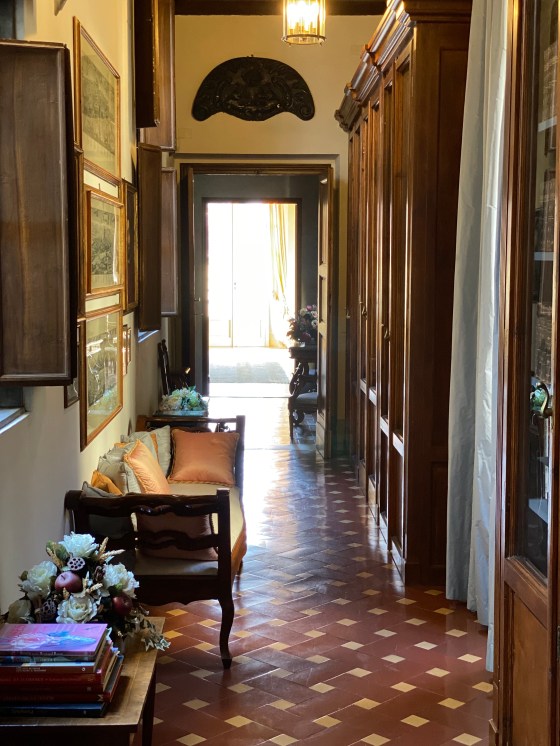
Regarding the beautiful palazzo itself:
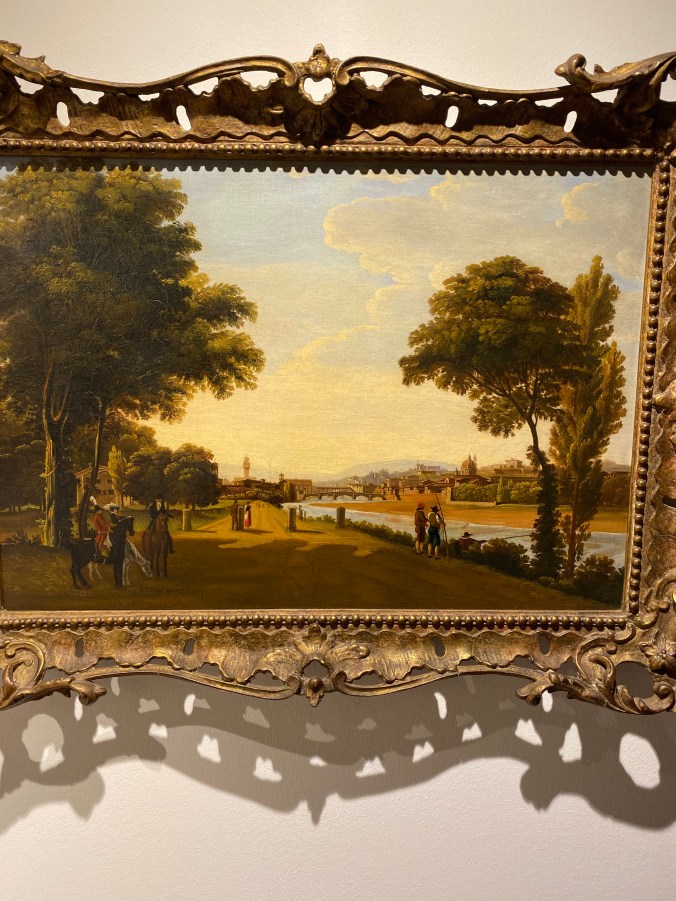
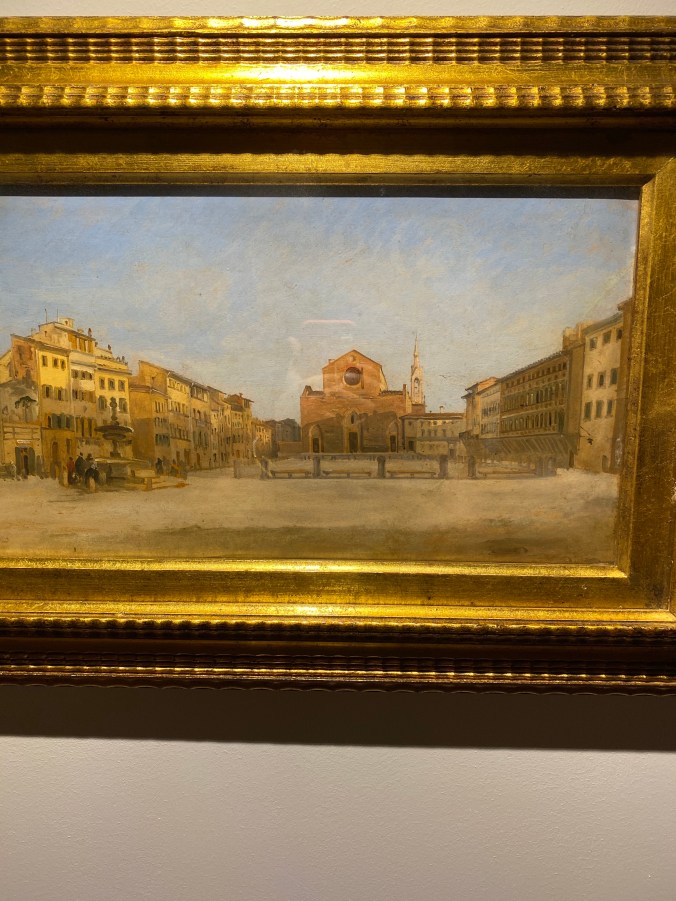
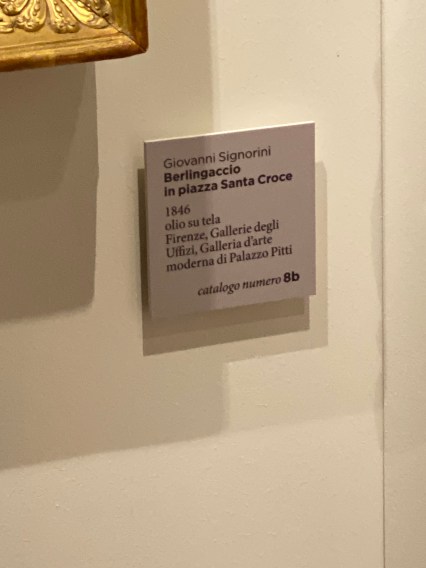
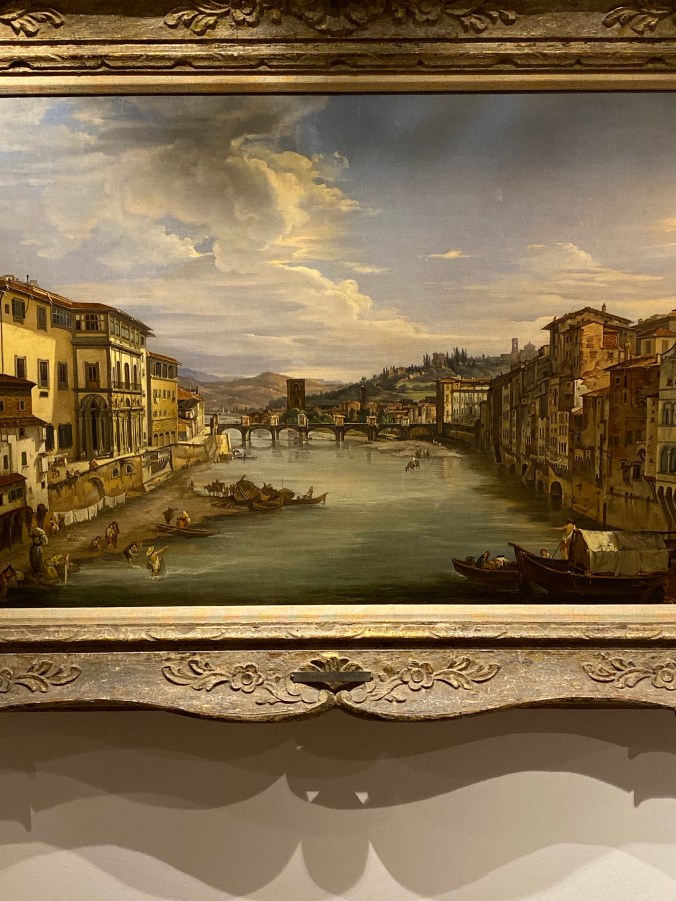
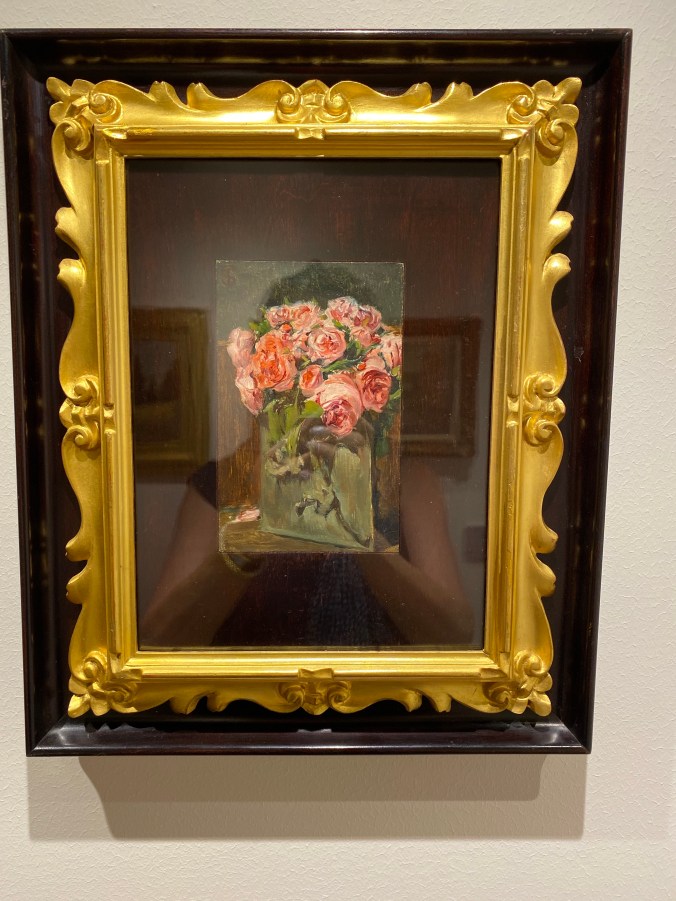
Allora, now that I am done being a voyeur for the palazzo itself, let us look at some of the paintings in the exhibition: First up, a few paintings by Giovanni Signorini
Above, Giovanni Signorini, Veduta dell’ Arno da Ponte alla Carraia, 1846
Last weekend I returned to Padua for another opportunity to see the Giotto frescoes at the Scrovegni Chapel. Since the visits are only 20 minutes long, it takes me more than one trip to Padua to really see the frescoes as I want to see them.
But, I also wanted to return to Padua to enjoy more of the city, now that I have discovered it fully. I went armed with my new fancy smartphone and its powerful camera. Some of the pictures below are of pretty Padova and some are just experiments with my camera.
I love any city with a street named for one of my favorite sculptors, Donatello.
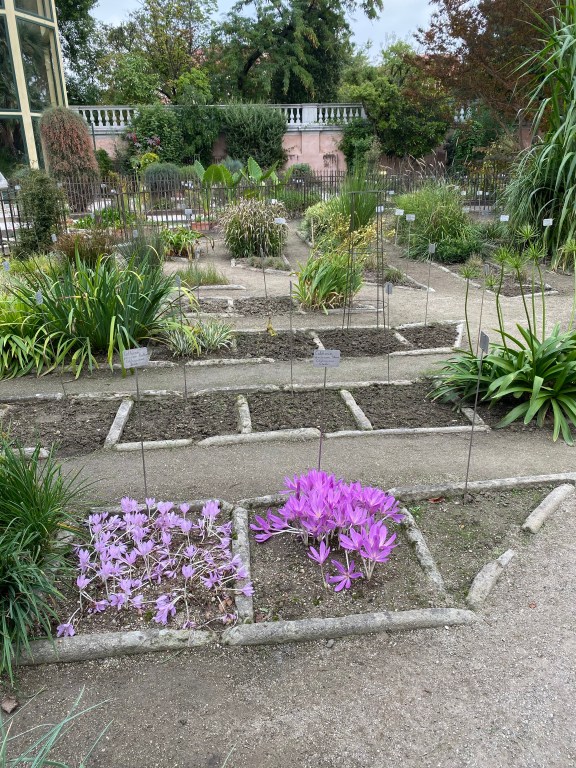
The Botanic Garden of Padua dates back to 1545 and is regarded as the most ancient university garden in the world. Founded to foster the growth of medicinal plants, in Italian called semplice, since the remedies were obtained directly from nature without any manipulation. The garden was named Hortus Simplicium. The first keeper of the garden was Luigi Squalermo called Anguillara.
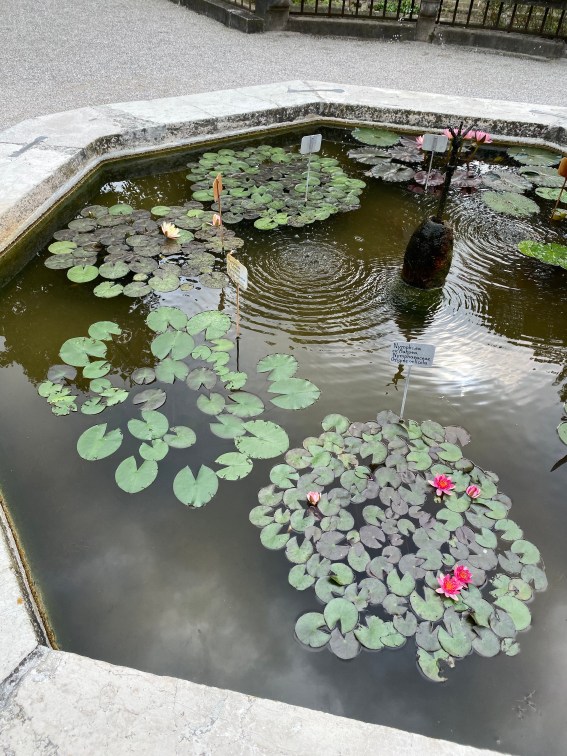
Nymphaea:
‘
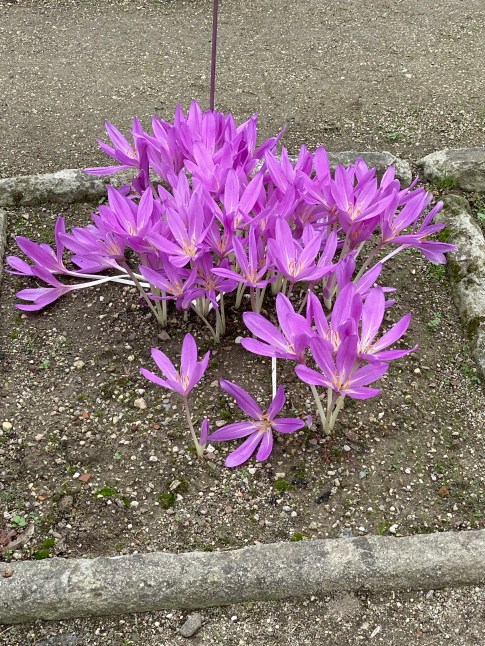
Below, fall blooming crocus:
More water lilies:
Random plant life:
Nature with a background of Italian church bells:
Gigantic lily pads:
The horticultural complex in Padua is very impressive and state of the art.
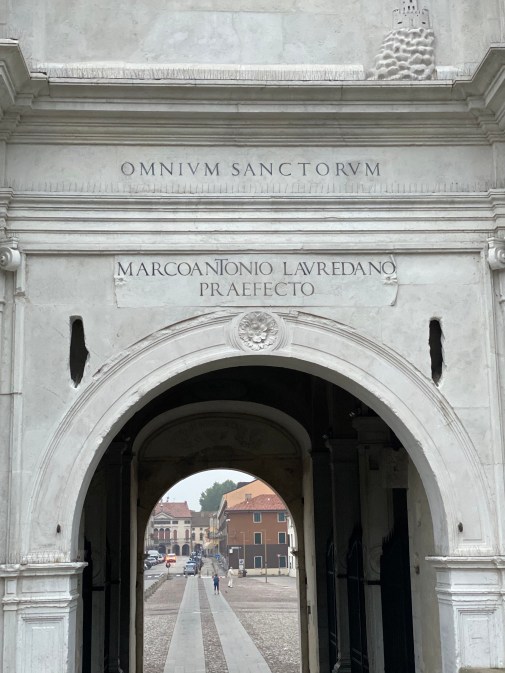
Porta Portello:
Reminders of the influence of Venice on Padua are everywhere in this city:
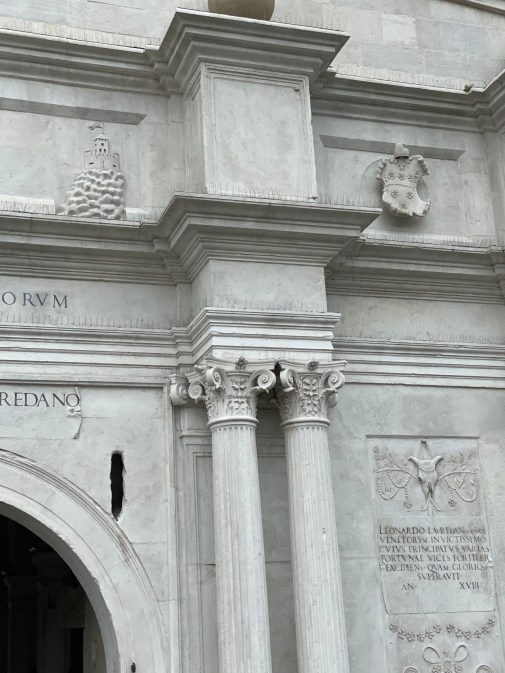
Padova is surrounded by water. The canals make lovely views. I love to think back to the times when people and goods moved here by gondole, burci and mascarete, all typical boats, along internal canals, following the waterways and floating under bridges.
Padua has a lot of beautiful architecture. I want to make another trip there to enjoy and photograph all the great sculptural embellishments on the palazzi.

























































 get back, lauretta!
You must be logged in to post a comment.