Error
This video doesn’t exist
During my first walk through Hyde Park and Kensington Gardens, I noticed these markers in the pavement, guiding the visitor to the Princess Diana Memorial. I wasn’t sure I wanted to go see it. I remember her death all too well, just like I can remember the day President Kennedy was shot. Markers of time that I wish I could forget.

In the end, I couldn’t not go. I’m so glad I did. It is a lovely, lighthearted place. I think Diana would have loved it. On the sunny Sunday afternoon I was there, families and especially children were enjoying the water as it flowed through the monument. I loved it. But, I couldn’t bring myself to take pictures. It was still too raw for me.

The Diana, Princess of Wales Memorial Fountain is a memorial in London dedicated to Diana, Princess of Wales, who died in a car crash in 1997. It was designed to express Diana’s spirit and love of children.
The fountain was built with the best materials, talent and technology. It contains 545 pieces of Cornish granite – each shaped by the latest computer-controlled machinery and pieced together using traditional skills.

The design aims to reflect Diana’s life, water flows from the highest point in two directions as it cascades, swirls and bubbles before meeting in a calm pool at the bottom. The water is constantly being refreshed and is drawn from London’s water table.

The Memorial also symbolises Diana’s quality and openness. There are three bridges where you can cross the water and go right to the heart of the fountain.

The memorial was designed by American landscape architect and artist Kathryn Gustafson.
The fountain is located in the southwest corner of Hyde Park, just south of the Serpentine lake and east of the Serpentine Gallery. Its cornerstone was laid in September 2003 and it was officially opened on 6 July 2004 by Queen Elizabeth II. Also present were Diana’s younger brother Charles Spencer, her ex-husband Prince Charles, and her sons William and Harry.
Working on the project began in 2001. The fountain was designed by Gustafson Porter. Kathryn Gustafson, an American landscape artist said she had wanted the fountain, which was built to the south of the Serpentine, to be accessible and to reflect Diana’s “inclusive” personality. Gustafson said: “Above all I hope that it provides a fitting memorial for the princess and does credit to the amazing person that she was.”
The memorial has the form of a large, oval stream bed about 165 by 260 ft that surrounds, and is surrounded by, a lush grassy field. The granite stream bed is from 10 to 20 ft wide. It is quite shallow and is laid out on a gently sloping portion of the park, so that water pumped to the top of the oval flows down either side. One side of the stream bed descends fairly smoothly to the downhill end of the oval with gentle ripples; the other side consists of a variety of steps, rills, curves, and other shapes so that the water plays in interesting ways as it flows to the tranquil pool at the bottom. The two sides were intended to show two sides of Diana’s life: happy times, and turmoil.
My home away from home these days is in the Marylebone neighborhood of London. A key feature of this burgh is The Marble Arch, a 19th-century white marble-faced triumphal arch. It sits, rather isolated, on one edge of Hyde Park.
But, once upon a time, the Marble Arch was located in a much more regal place. This rather simple triumphal arch is neither in its intended location, nor was it completed in the intended way. Nevertheless, during their coronations, the processions of both Queen Victoria and Queen Elizabeth II passed through the arch.

Marble Arch
John Nash (1752-1835) was the favoured architect of the Prince Regent, later King George IV. Under George’s auspices Nash designed and planned such landmarks as Regent’s Park, Regent Street, Carlton House Terrace, much of Buckingham Palace and Marble Arch. Marble Arch was designed to be both a grandiose gateway to an expanded Buckingham Palace and an exuberant celebration of British victories in the Napoleonic Wars – a Triumphal Arch. But the Grade I listed Arch that we see today is nowhere near as grand as Nash originally intended.

This model below, now in the Victoria and Albert Museum, gives an impression of how Marble Arch might have looked. Nash had it made to illustrate his intended design to George IV.

Bristling with sculpture, including an imposing equestrian statue of George IV crowning the structure, the overall design was approved and sculptures were commissioned in 1828.
By 1830, most of the statues and panels were complete and Nash’s work at Buckingham Palace and on the Arch was progressing. And then the King died.
Shortly after the King’s death Nash was sacked by the Prime Minister, the Duke of Wellington, for overspending on the project. The architect Edward Blore was commissioned to complete the works in a more economic and practical fashion.
Alas, had George IV lived a little longer we would certainly have a very different Marble Arch today.
Edward Blore found himself in possession of a jumbled collection of statues and panels. Blore tried to get Nash to provide drawings to explain how the jigsaw was intended to fit together but Nash, unhappy about his dismissal, would not cooperate.
All Blore really had to go on was Nash’s model and the assortment of sculptures in his yard.
The model has a “military side,” celebrating the Duke of Wellington’s victories, including the Battle of Waterloo and a “naval side” putting Lord Nelson’s achievements center stage. Both sides were to have friezes of battle scenes and allegorical panels along with a selection of “winged victories” and other figures.
On each end of the Arch these two themes were to have been repeated. One end would bear the word “Waterloo” and the other the “Trafalgar” and under each, the names of commanders and battles.
The model was never intended to be a definitive plan, but rather to give an overall impression of how the finished arch might look. It contains at least one big mistake, the military side is topped with the portrait of Nelson and the naval side with one of Wellington.
Blore eventually decided to complete the Arch but without most of the sculpture. So, the Arch today has only four allegorical panels and a little decoration. The ends are blank except for three laurel wreaths.
The Arch was completed in 1833, although the central gates were not added until 1837, just in time for Queen Victoria’s accession to the throne.
Blore incorporated most of the battle scene friezes high up in the central courtyard of Buckingham Palace. In 1835, the rest of the sculptures were given to William Wilkins to use in the construction of the new National Gallery.
Wilkins used some of the statues, but he wanted less military symbolism so he adapted many of figures. Statues representing Asia, seated on a camel, and Europe sat upon a horse with an empty frame between them can still be seen above the main door of the National Gallery. Above both the western and eastern doors of the gallery are some figures of “winged victories,” many shorn of their wings. Some of the statues even had their laurel wreaths replaced; one now holds a painter’s easel and brushes.
A portrait of Wellington that was to have filled the empty frame between Europe and Asia is now inside the staff entrance to the gallery.
The other significant surviving remnant is the Equestrian Statue of George IV, by Francis Chantrey, which stands on a plinth in the north-eastern corner of Trafalgar Square.


The Marble Arch stood as a formal gateway to Buckingham Palace for seventeen years. But, it was overshadowed by Blore’s enlarged Buckingham Palace and seen as unsatisfactory.
In 1850 the decision was made to move the Arch to its current location of Cumberland Gate where it would form a grand entrance to Hyde Park in time for the Great Exhibition of 1851.
The stone by stone removal and reconstruction of the Arch was overseen by architect Thomas Cubitt who completed the entire complex process in just three months.
The relocation was a success, vast crowds of people passed through the Arch en route to the Great Exhibition in Hyde Park and Marble Arch remained a grand and direct entrance to the park for more than 50 years.
In 1908 a new road scheme cut through the park just south of the Arch, leaving it completely separated from Hyde Park. In the 1960s roads were widened still further, leaving the Arch in its current isolated position, no longer part of a Royal Park.
The whole Arch is clad in ravaccione, a grey/white type of Carrara marble from Italy. This was the first time marble had been used in this way on any British building. The eight enormous Corinthian columns were each cut from a single slab of marble.
North side of the Arch:

The sculpted panels on this side are by Richard Westmacott, who also produced the statue of Achilles nearby at Hyde Park Corner.
Three female figures representing England (center) wearing Britannia’s helmet, Ireland (left) with her harp and Scotland (right) with the shield of St Andrew.

“Peace with Trophies of War” Peace stands on a heap of shields, helmets and weapons. She holds an olive branch and two cherubs hold her gown. The cherub on the right side makes me laugh; he looks like he is on a carnival ride.

Above each of the three arches are pairs of “Victories” with their laurel wreaths.
The central keystones of the lower arches are the heads of warriors wearing Greek helmets pushed back in the manner of statues of Athena. The central arch has a magnificent lion’s head carving as its keystone, with clawed feet protruding from under its mane.
South side of the Arch:

On this side the panels are by E.H. Baily, who is perhaps best known for the statue of Nelson in Trafalgar Square.
“Virtue and Valour” Virtue is the figure on the right holding the fasces (a bundle of rods around an axe) that symbolise strength through unity and on the left stands a soldier in Roman dress representing valour.
“Peace and Plenty” The Angel of Peace is to the left. Plenty with her cornucopia to the right. The flame in the middle represents liberty.

On this side, between the Victories, the keystone of all three arches is a bearded male head, possibly Neptune.
The Central Gates:
Originally planned to be cast in “mosaic gold”, the gates were actually cast in less expensive bronze. Each gate features the same three designs: a lion at the top, George IV’s cypher in the middle and St George slaying the dragon at the bottom.

The smaller side gates were added in 1851.

Above: Coronation procession of Queen Elizabeth II passes through Marble Arch, 1953 © Press Association.
The arch at night, below:

Today, the neighborhood around it is called Marble Arch, particularly the southern portion of Edgware Road and also to the underground station.
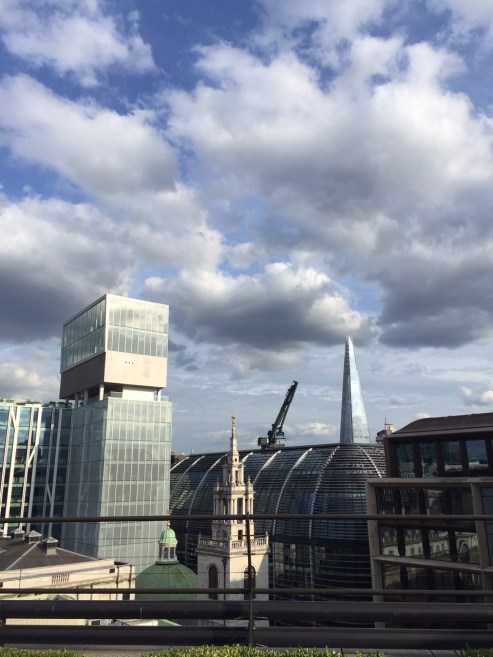
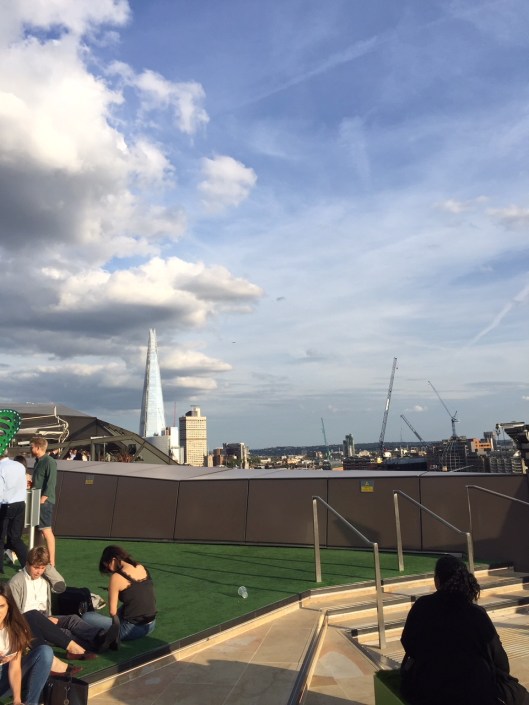
Shortly after arriving in London last week, I visited terraces on top of 2 skyscrapers in the city center to see the city from above.

The first stop (see above and the video below) was atop 1 Poultry Street. There’s a well-known French restaurant up there, but the real draw are the panoramic views of London.

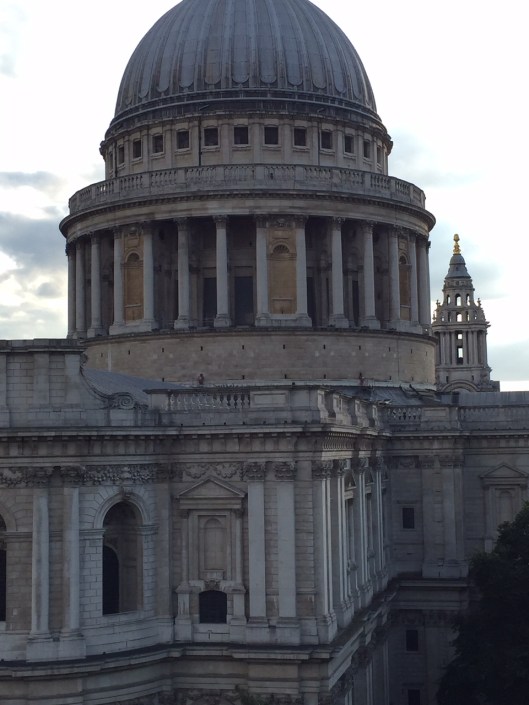
The second stop was on the rooftop terrace at One New Change Street. Located opposite St. Paul’s Cathedral, this terrance offers a unique perspective of the London skyline, as you can see in the picture above and this video:
Here are my pictures.








Mention The Monument to a Londoner and, as generic as that title might seem to the average person, a Londoner knows that you mean The Monument to the Great Fire, London. The horrible conflagration swept through the central parts of London from Sunday, 2 September to Thursday, 6 September 1666.
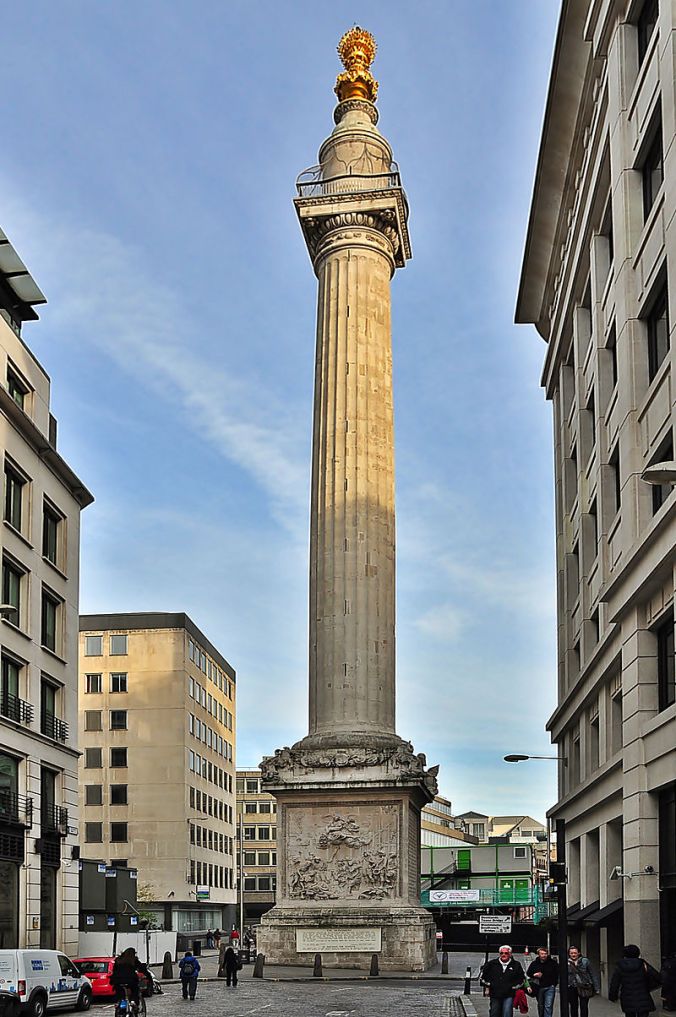
Modern-day view of The Monument, designed by Sir Christopher Wren.
The Monument to the Great Fire of London takes the form of a Doric column in Portland stone, situated near the northern end of the London Bridge. Atop the column is a gilded urn of fire. Commemorating the Great Fire of London, the monument stands at the junction of Monument Street and Fish Street Hill, 202 feet in height and 202 feet west of the spot in Pudding Lane where the Great Fire started on 2 September 1666. It was designed by Christopher Wren and Robert Hooke. Its height marks its distance from the site of the shop of Thomas Farriner (or Farynor), the king’s baker, where the blaze began.
Constructed between 1671 and 1677, the monument was built on the site of St. Margaret’s, Fish Street, the first church to be destroyed by the Great Fire. Another monument, the Golden Boy of Pye Corner, marks the point near Smithfield where the fire was finally stopped.
The viewing platform near the top of the Monument is reached by a narrow winding staircase of 311 steps. A mesh cage was added in the mid-19th century to prevent people jumping to the ground, after six people had committed suicide there between 1788 and 1842.
Three sides of the base carry inscriptions in Latin. The one on the south side describes actions taken by King Charles II following the fire.
The inscription on the east side describes how the Monument was started and brought to perfection, and under which mayors.
Inscriptions on the north side describe how the fire started, how much damage it caused, and how it was eventually extinguished.
The Latin words Sed Furor Papisticus Qui Tamdiu Patravit Nondum Restingvitur (“but Popish frenzy, which wrought such horrors, is not yet quenched”) were added to the end of the inscription on the orders of the Court of Aldermen in 1681 during the foment of the Popish Plot.
The inscription on the east side originally falsely blamed Roman Catholics for the fire (“burning of this protestant city, begun and carried on by the treachery and malice of the popish faction”), which prompted Alexander Pope (himself a Catholic) to say (in
Moral Essays, Epistle iii. line 339 (1733–1734) of the area:
Where London’s column, pointing at the skies,
Like a tall bully, lifts the head, and lies.
The words blaming Catholics were chiselled out with Catholic Emancipation in 1830.
The west side of the base displays a sculpture, by Caius Gabriel Cibber, in bas and alto relief, of the destruction of the City; with Charles II and his brother, James, the Duke of York (later King James II), surrounded by liberty, architecture, and science, giving directions for its restoration.


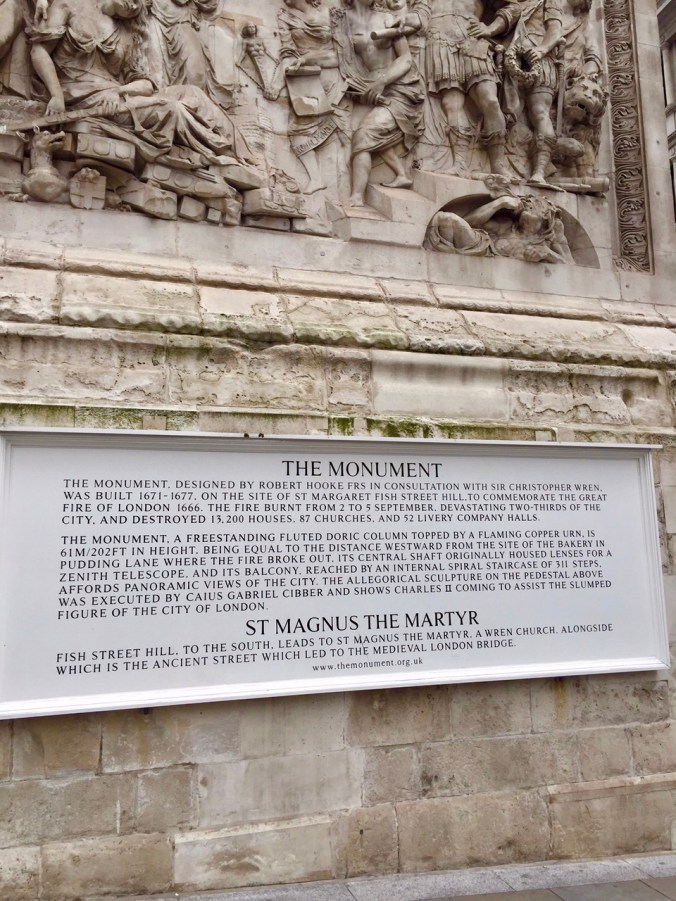


The fire gutted the medieval City of London inside the old Roman city wall. It threatened but did not reach the aristocratic district of Westminster, Charles II’s Palace of Whitehall, or most of the suburban slums.
The fire consumed 13,200 houses, 87 parish churches, St Paul’s Cathedral, and most of the buildings of the City authorities. It is estimated to have destroyed the homes of 70,000 of the city’s 80,000 inhabitants.
The death toll is unknown but was traditionally thought to have been small, as only six verified deaths were recorded. This reasoning has recently been challenged on the grounds that the deaths of poor and middle-class people were not recorded; moreover, the heat of the fire may have cremated many victims, leaving no recognisable remains. A melted piece of pottery on display at the Museum of London found by archaeologists in Pudding Lane, where the fire started, shows that the temperature reached 1,250 °C (2,280 °F; 1,520 K).
The first Rebuilding Act, passed in 1669, stipulated that “the better to preserve the memory of this dreadful visitation,” a column of either brass or stone should be set up on Fish Street Hill, on or near the site of Farynor’s bakery, where the fire began.
Christopher Wren, as surveyor-general of the King’s Works, was asked to submit a design. Wren worked with Robert Hooke on the design. It is impossible to disentangle the collaboration between Hooke and Wren, but Hooke’s drawings of possible designs for the column still exist, with Wren’s signature on them indicating his approval of the drawings rather than their authorship.

The Monument depicted in a picture by Sutton Nicholls, c. 1753.
It was not until 1671 that the City Council approved the design, and it took six years to complete the 202 ft column. It was two more years before the inscription (which had been left to Wren — or to Wren’s choice — to decide upon) was set in place. “Commemorating — with a brazen disregard for the truth — the fact that ‘London rises again…three short years complete that which was considered the work of ages.'”
The Edinburgh-born writer James Boswell visited the Monument in 1763 to climb the 311 steps to what was then the highest viewpoint in London. Halfway up, he suffered a panic attack, but persevered and made it to the top, where he found it “horrid to be so monstrous a way up in the air, so far above London and all its spires.”

Views published in The Graphic, 1891.
[edit]
During the 2007–2009 refurbishment, a 360-degree panoramic camera was installed on top of the Monument. Updated every minute and running 24 hours a day, it provides a record of weather, building and ground activity in the City.

Panorama of London taken from the top of the Monument
You might know that almost the first place I would go once I got to London would be the “Italian Gardens!” Ma, certo! Like a bee to honey.
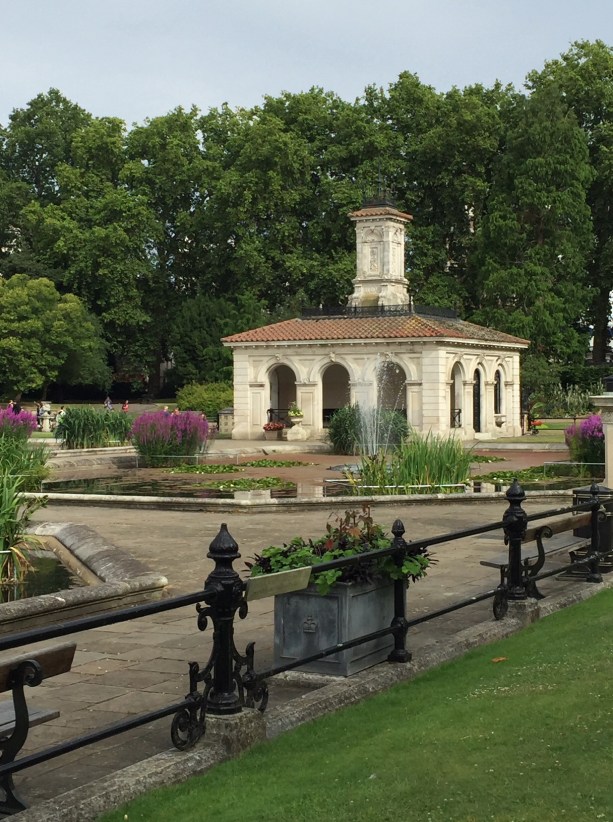
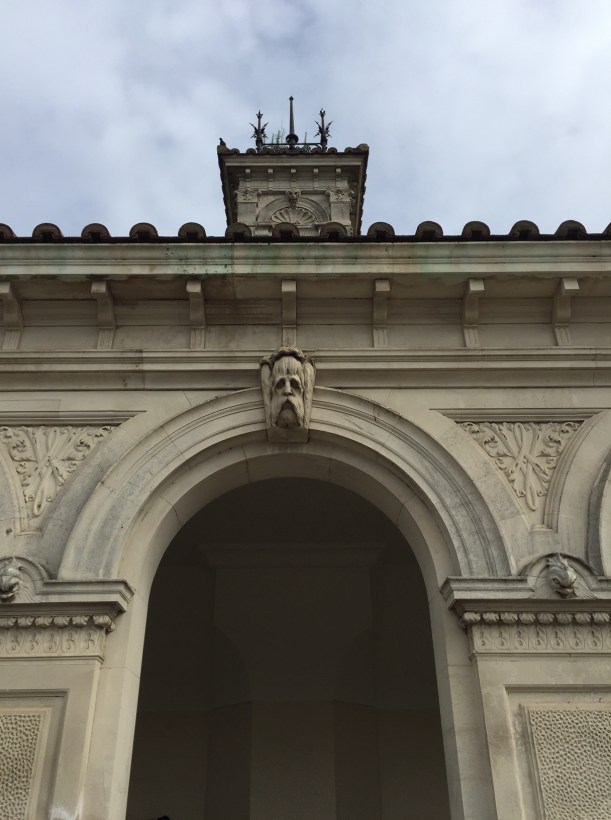
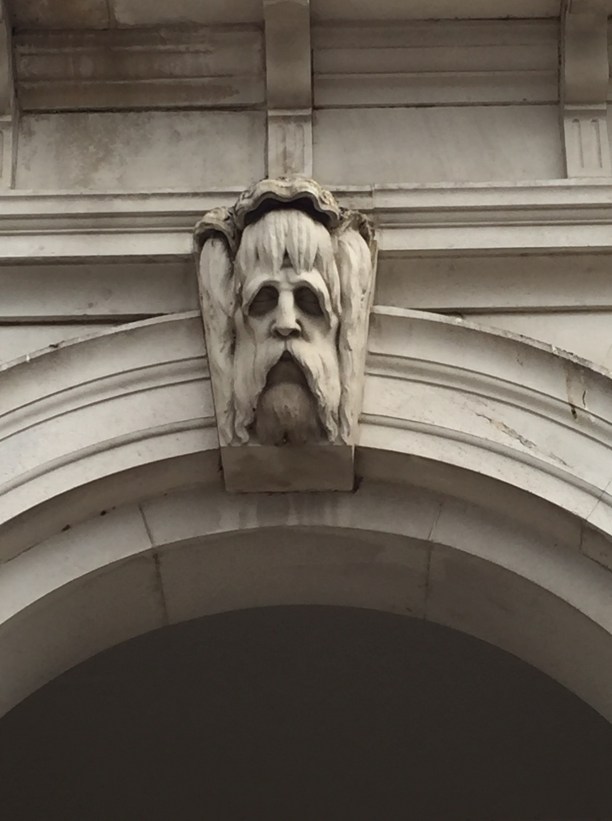
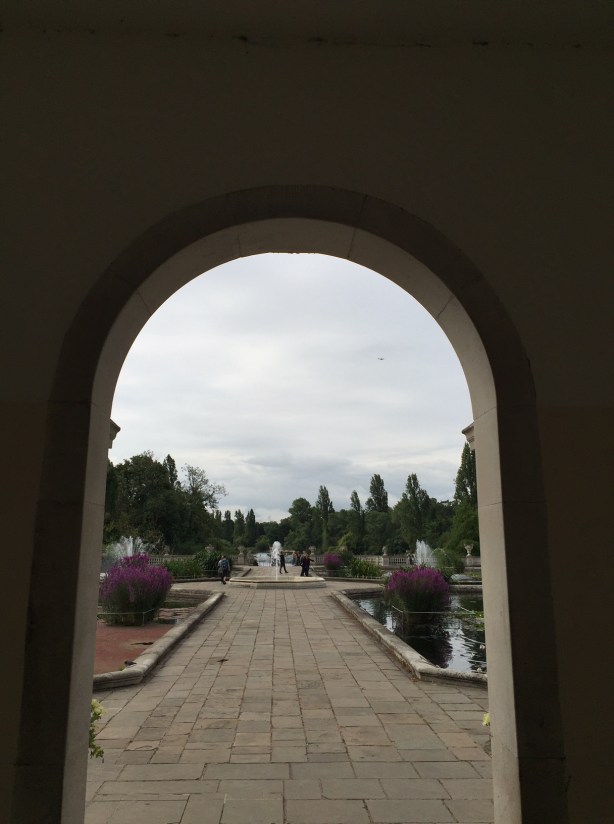

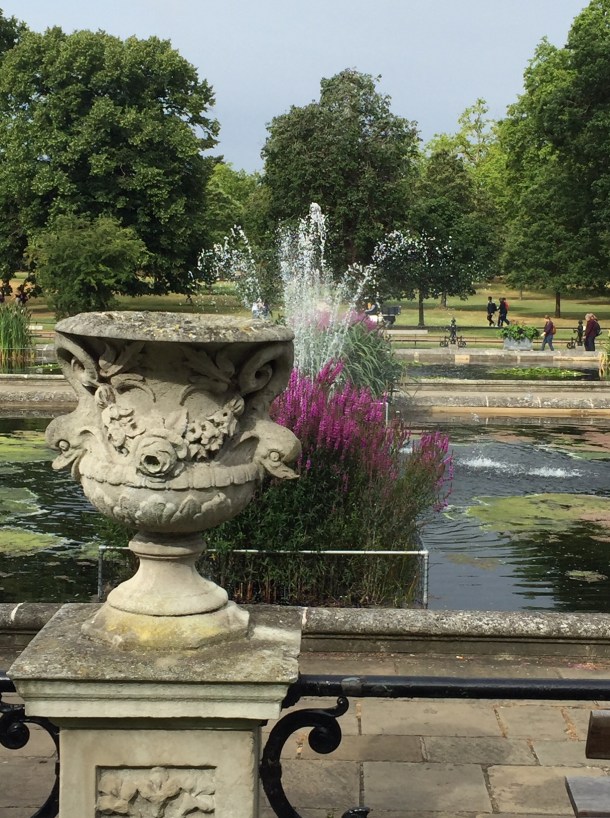
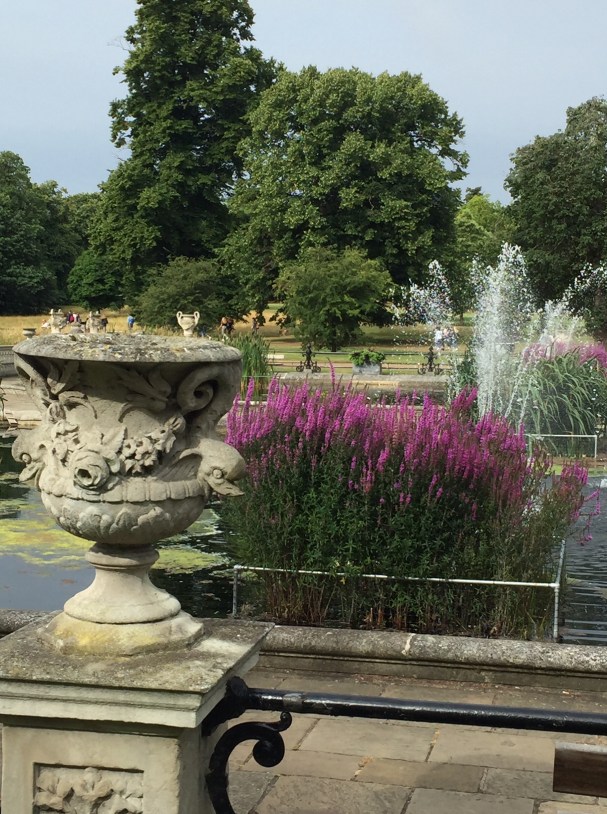
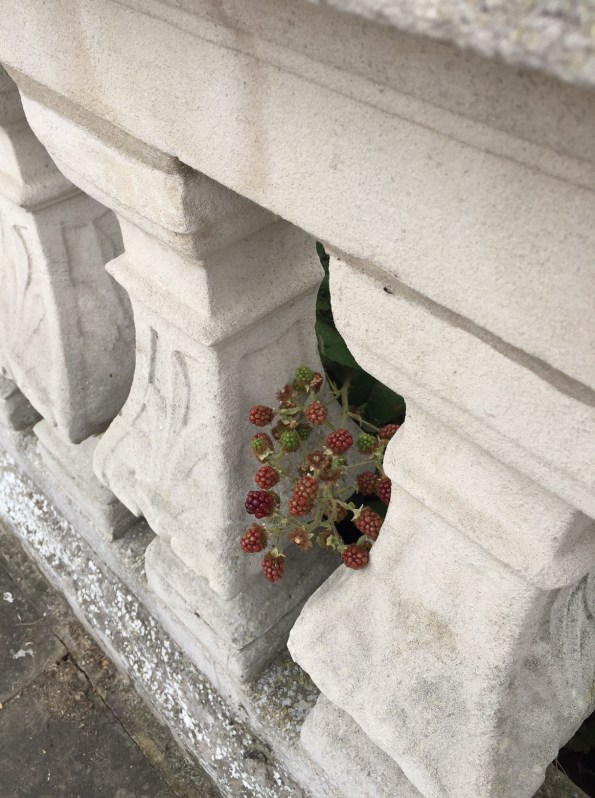
This lovely, smallish ornamental water garden was created in the 1860s and is to be found on the north side of park, near Lancaster Gate. It is believed the garden was a gift from Prince Albert (he died 1861) to his beloved wife, Queen Victoria. Regardless of the why, they are now recognized as a site of particular importance and are listed Grade II by Historic England.
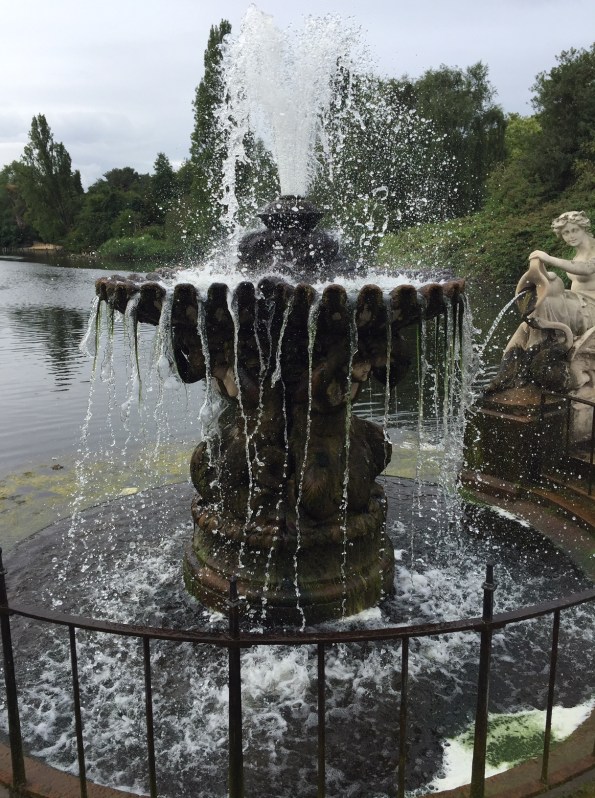
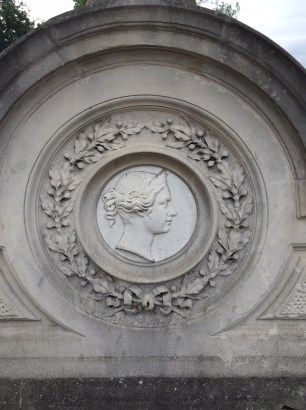
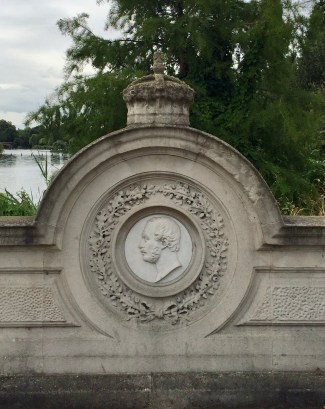
Portraits of Victoria and Albert flank the 2 sides of the balustrades overlooking the lake.
BTW, about once every six months while I am living in Italy I will see something in some work of art that causes me to say: “that’s a new one–I’ve never seen that before.” I love it when that happens.
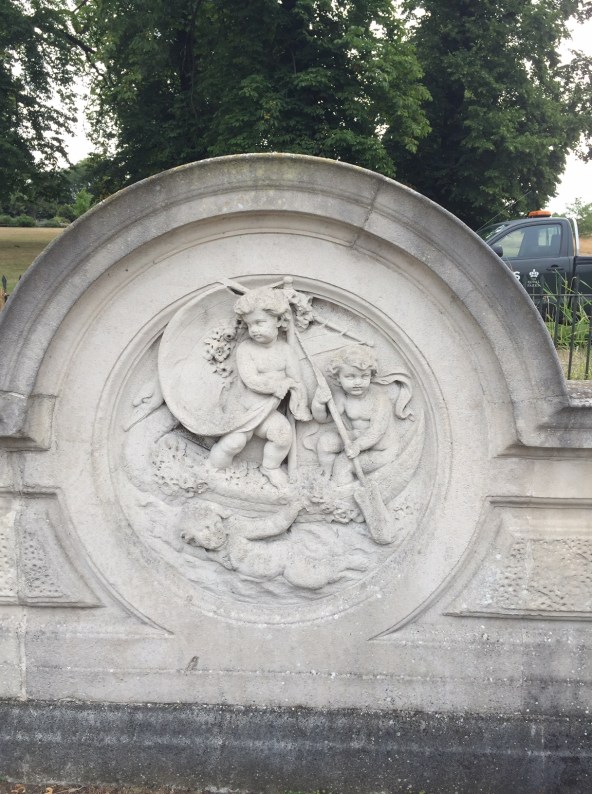
But, today, at the Italian Gardens, I had one of those moments, caused by the bas-relief below:
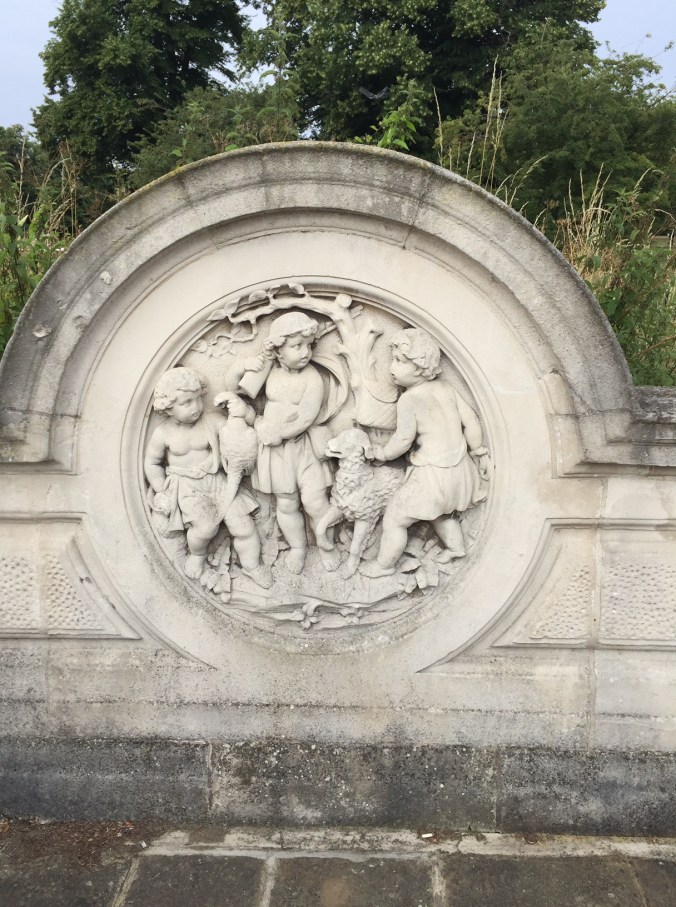
I’ve seen a lot of weird images captured in marble sculpture, especially in the form of putti of various stripes, but I have never seen a rifle in a Neo-classical sculpture before today! A detail of it is below:


The Italian Gardens are found within the grounds of Kensington Gardens; you can locate them at the top of the Serpentine River in the map below:

The Italian Gardens are an elaborate mix of four main basins. They feature central rosettes carved in Carrara marble, the Portland stone and white marble Tazza Fountain, and a collection of stone statues and urns. It’s fun to see if you can spot the five main urn designs – a swan’s breast, woman’s head, ram’s head, dolphin and oval.

Strengthening the supposition that this decorative complex was commissioned by Prince Albert is the fact that the layout of the Italian Gardens is very similar to that of Osborne House on The Isle of Wight, where the royal family spent holidays. Prince Albert was a keen gardener and took charge of the gardens at Osborne House, where he introduced an Italian garden with large raised terraces, fountains, urns and geometric flower beds.

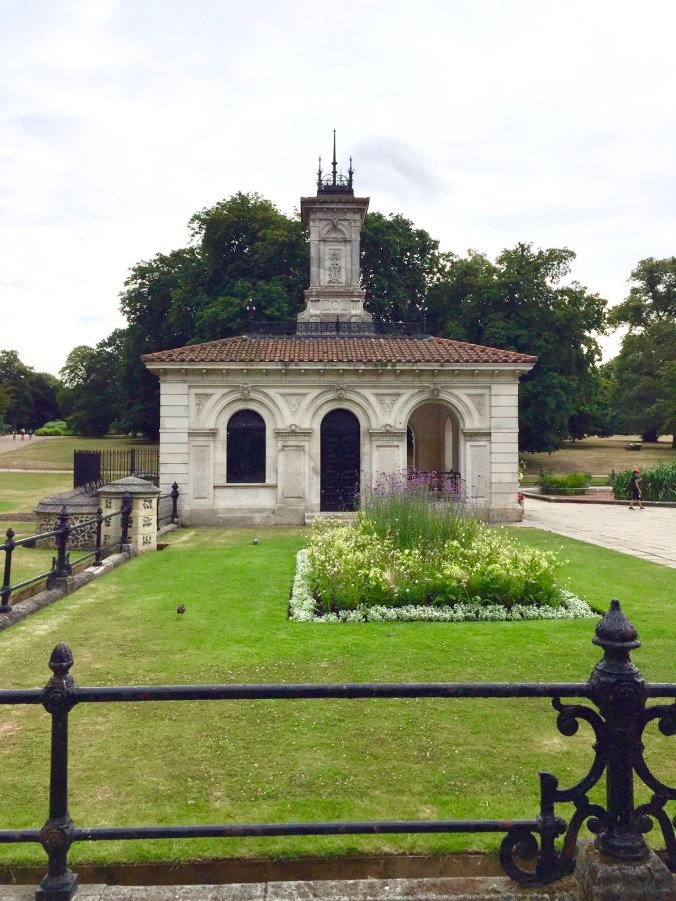
It’s thought that in 1860 he brought the idea to Kensington Gardens. The design by James Pennethorne includes many features of the Osborne garden.
The initials of Queen Victoria and Prince Albert can be found on one of the walls of the Pump House, at the north of the gardens.
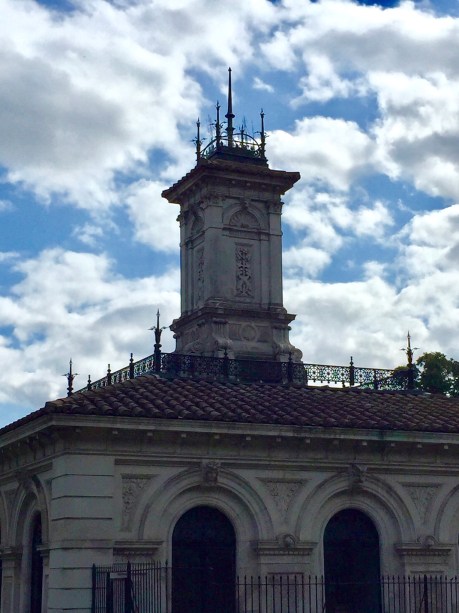
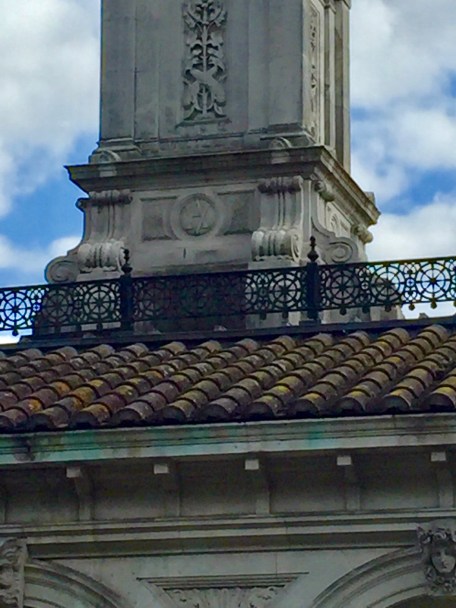 You can see the V & A monogram in this photo.
This building once contained a steam engine which operated the fountains – the pillar on the roof is a cleverly-disguised chimney. A stoker kept the engine running on Saturday nights to pump water into the Round Pond, so on Sundays there was enough water pressure to run the fountains.
In 2011, the gardens were restored to their original splendour. The project involved:
The restoration was funded by The Tiffany and Co. Foundation as part of a project to restore ornamental and drinking fountains across the eight Royal Parks, and known as Tiffany – Across the Water.
Also, just for fun, the Italian Gardens have provided a star location in several films.

If you are a regular reader of my blog, you know that I rarely post images of the decorative arts. I am typically not a fan of fussy porcelains or fine cabinetry. I just don’t seem to have the gene that lets me appreciate that stuff.
But, today in London, I visited the Wallace Collection and it knocked my socks off. I mean, this place is crazy! The former mansion of the Wallace family was gifted to the country of Britain in the last years of the 19th century, and is still set up in a similar manner to the way in which the family lived.

As you might know, I’ve been to a few museums and house museums in my day, but this place is more opulent than any other.
All I can say is WOW! And then show you some (a lot, probably too many) pictures of this amazing place.
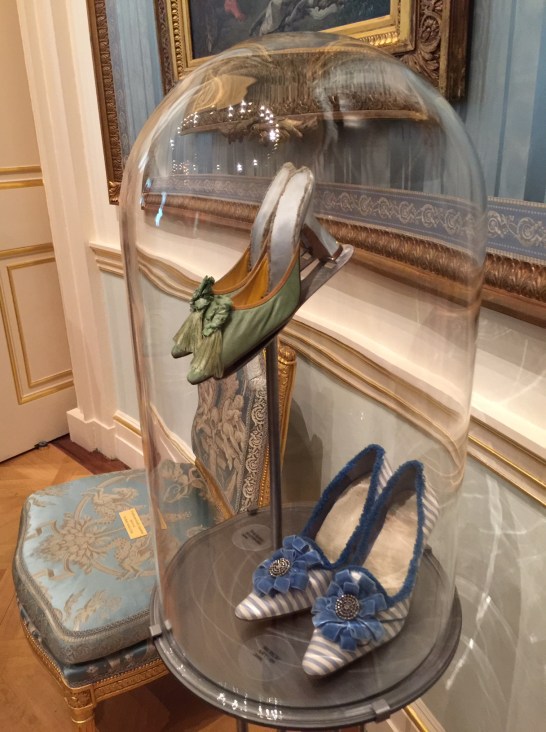
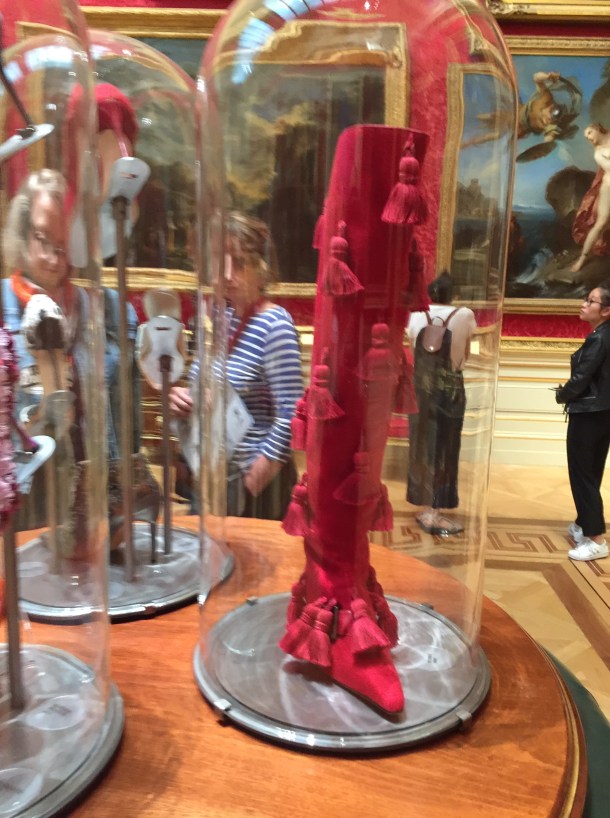
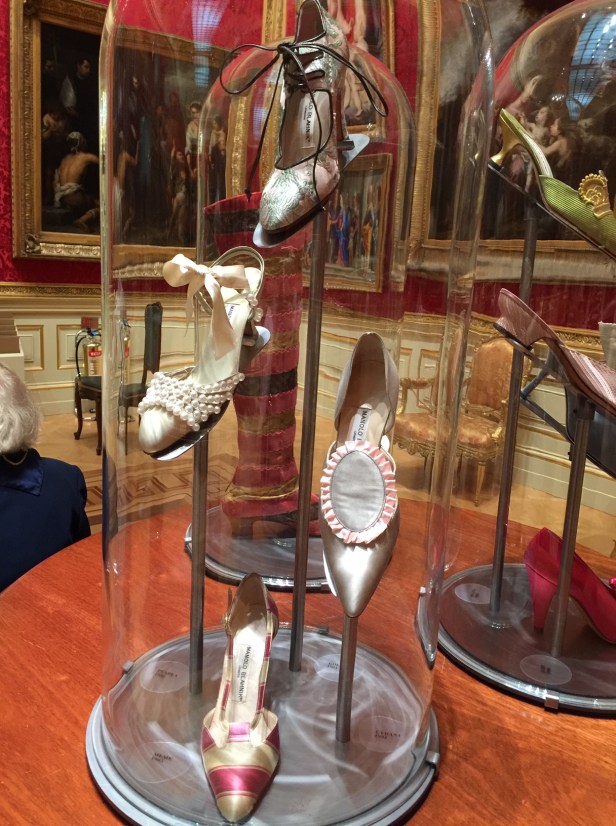
Oh, and p.s….Manolo Blanik shoes were also on display. I’ve never owned a pair and never will. But, to see the shoes interspersed with the collections added an element I’d not thought of before. My guide at the Wallace Collection told me that Blanik was an Anglophile and was particularly interested in the Wallace Collection. This is a new point of approach for me, and I could dig it!

Let’s go!
The first thing I heard in the excellent tour I joined, is that when this Japanese chest (and its matching partner) arrived in Europe, it absolutely blew the minds of connoisseurs. They were obsessed with the black lacquer and wanted to emulate it. They couldn’t, it turned out, because the plant that produces the lacquer did’t grow in the west.

Here’s my guide, standing in front of the Japanese chest.

That didn’t daunt them. The king of France set up a artisanal workshop, patronizing the best of the artistic producers known to France, and they experimented and experimented, trying to produce–if not lacquer itself–at least something that looked very close to it.

Above, King Louis XV, the king who developed the French fine arts.
This is the time period in which France is lifted by the decorative arts. France would no longer import fine luxury goods–they would produce them. It started then and is still going strong today.
The wardrobe below was produced in this workshop.


Before having a gander at the million photos I took today, introduce yourself to the Wallace Collection here with the director:
Now, please join me as I wander through the collection:


Can you say “opulence?”


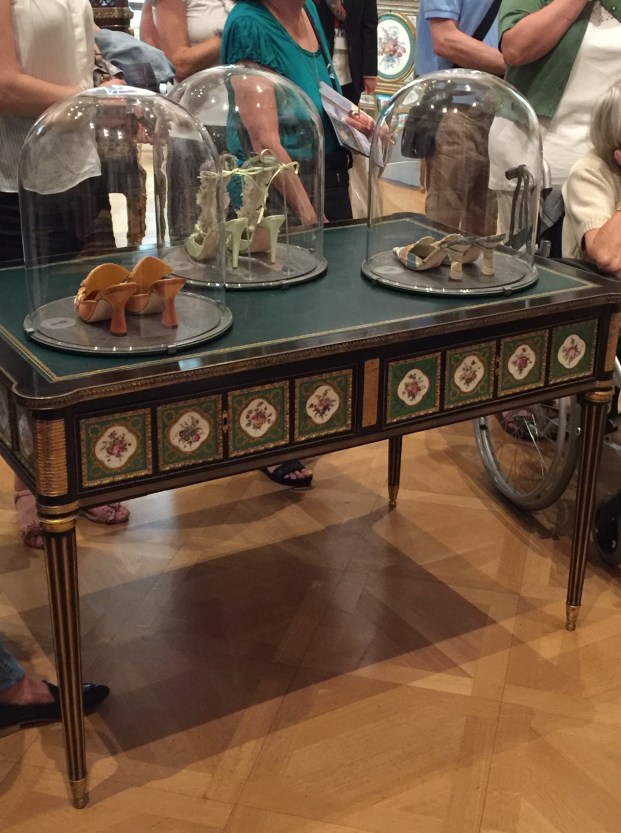
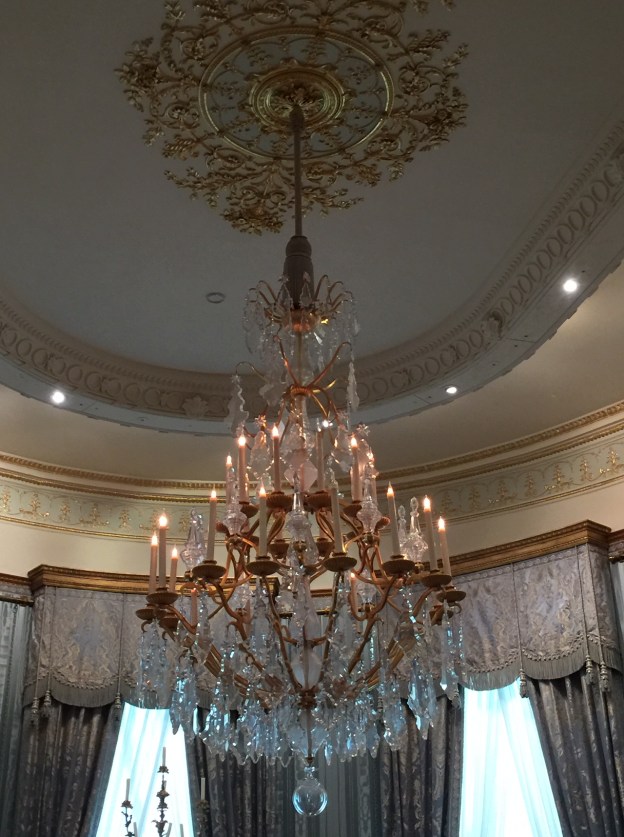


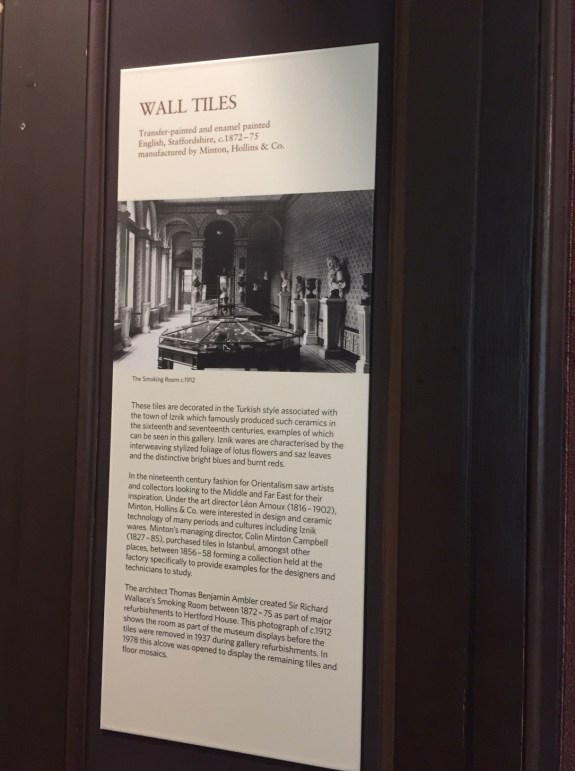
Also, the Wallace Collection has a lovely restaurant!

And then, on to the armor!


And to a Gothic crown. Because, why not?

Check out the line of matching armor head pieces and shields.
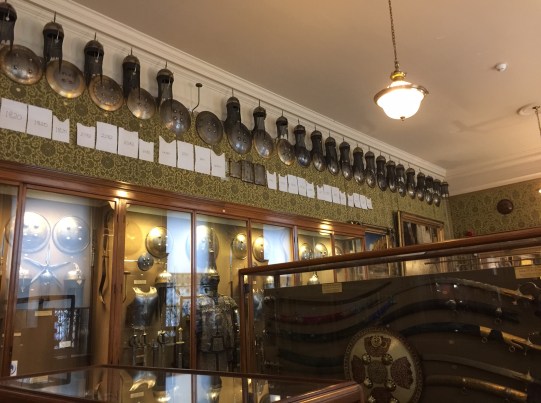

Below: a portrait of Madame de Pompadour, commissioned by herself. My guide told the fascinating story of this woman and her involvement with the French king, and discussed the fascinating iconography of this portrait. Please note her tiny shoe peeking out from under her “Pompadour pink” gown, for which she set the fashion of the day. This is the type of detail by which Blanik was inspired. Looking at his shoes today, I could see it.




And, then there is this Jean-Honoré Fragonard masterwork: The Swing (1767).






Without a doubt, the most moving monument I’ve seen in the few short days I’ve been in London so far is the Animals in War Memorial. They had no choice. Simple. Direct. Heartbreaking.

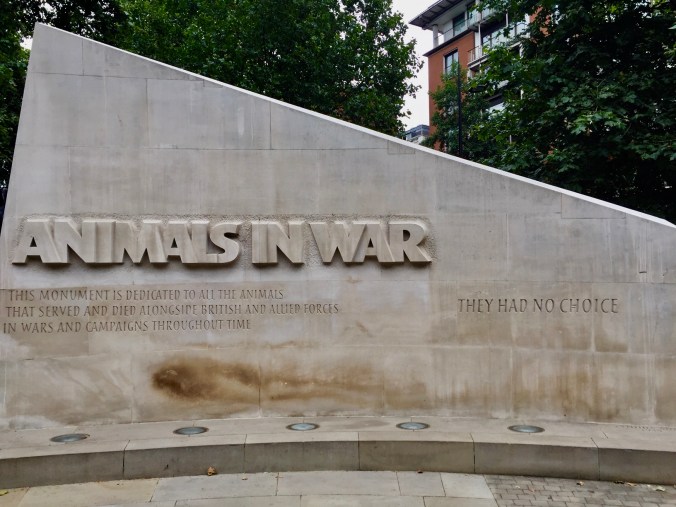
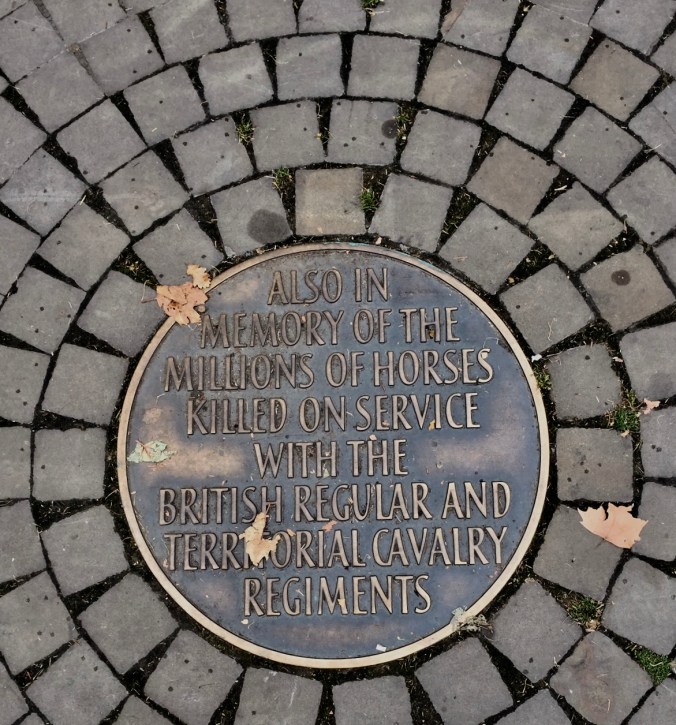


The Animals in War Memorial is a war memorial, in Hyde Park, London, commemorating the countless animals that have served and died under British military command throughout history. It was designed by English sculptor David Backhouse and unveiled in November 2004 by Anne, Princess Royal.
The memorial was inspired by Jilly Cooper’s book Animals in War, and was made possible by a specially created fund of £1.4 million from public donations of which Cooper was a co-trustee. The memorial consists of a 55 ft by 58 ft curved Portland stone wall: the symbolic arena of war, emblazoned with images of various struggling animals, along with two heavily laden bronze mules progressing up the stairs of the monument, and a bronze horse and bronze dog beyond it looking into the distance. The horse was modelled on a retired Charger from The King’s Troop Royal Horse Artillery called Ben Bragg.
The inscriptions on the moving monument are in various fonts and sizes and are all uppercase. In addition to the ones on the front, here are several inscriptions on the rear or outside, and on the inner edges of the wings (in the gap), attributing the creators and funders.
On the face of the right wing when viewed from the front or inside
Main heading, with the largest and heaviest cut inscription:
Animals in War
Directly beneath the main heading:
This monument is dedicated to all the animals
that served and died alongside British and allied forces
in wars and campaigns throughout time
Beneath and to the right of the main heading:
They had no choice
On the face of the left wing when viewed from the rear or outside (on the reverse of the main heading):
Many
and various
animals were employed
to support British and Allied Forces
in wars and campaigns over the centuries
and as a result millions died · From the pigeon to the
elephant they all played a vital role in every region of the world
in the cause of human freedom · Their contribution must never be forgotten
 get back, lauretta!
You must be logged in to post a comment.