
Sadly, the reforms that allowed even foreign art world personnel to guide Italian public museums have been repealed. You can read about it here:
Sadly, the reforms that allowed even foreign art world personnel to guide Italian public museums have been repealed. You can read about it here:
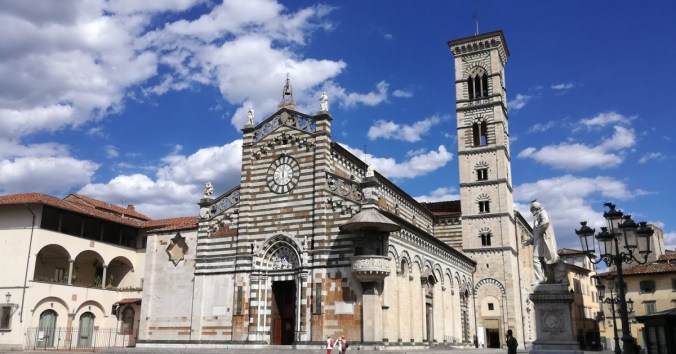
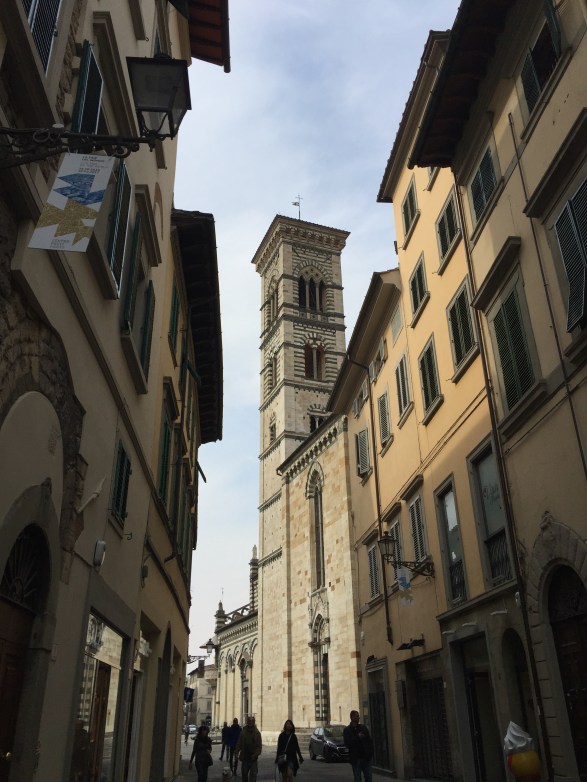
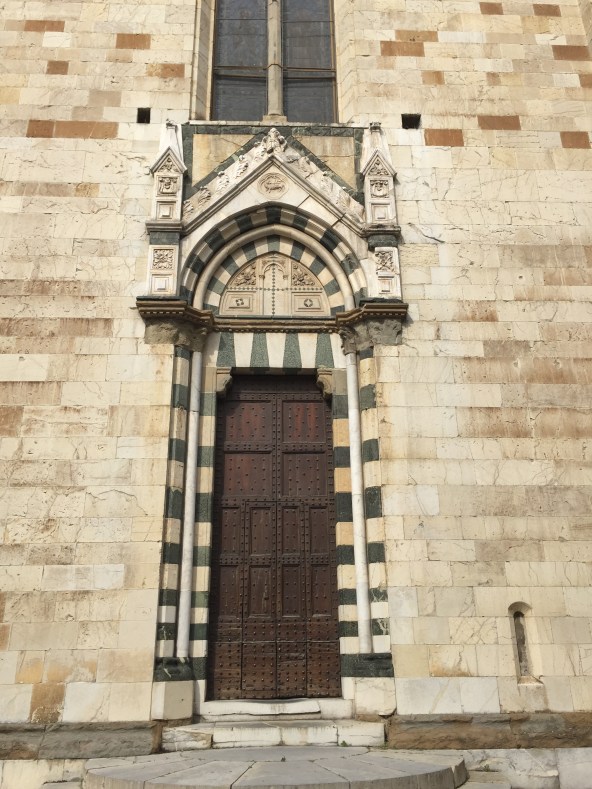
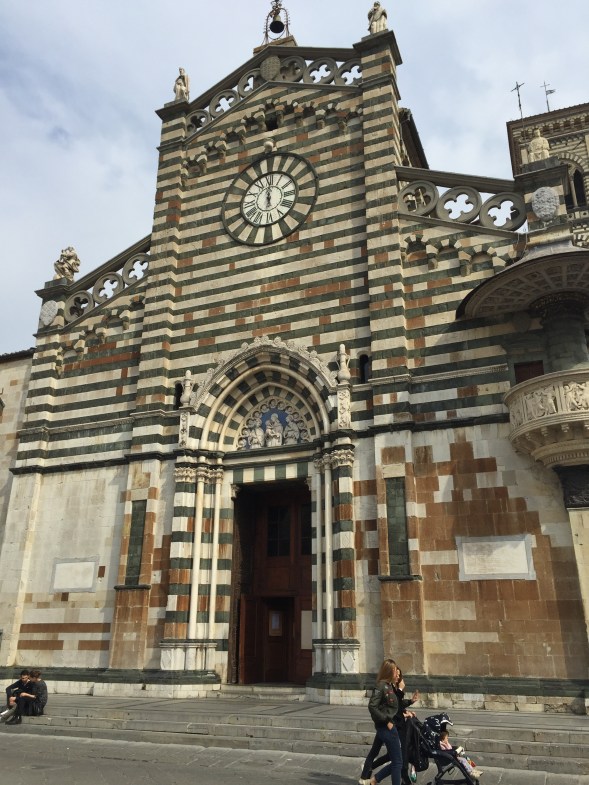
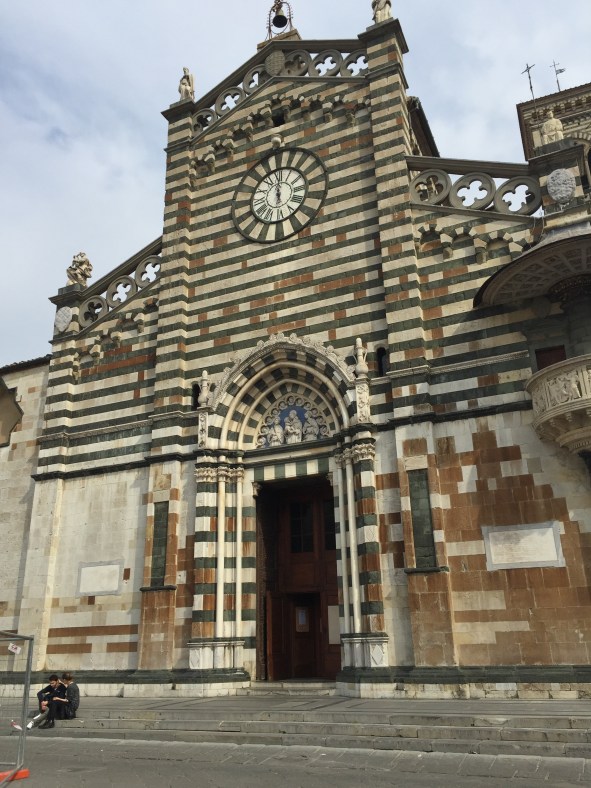
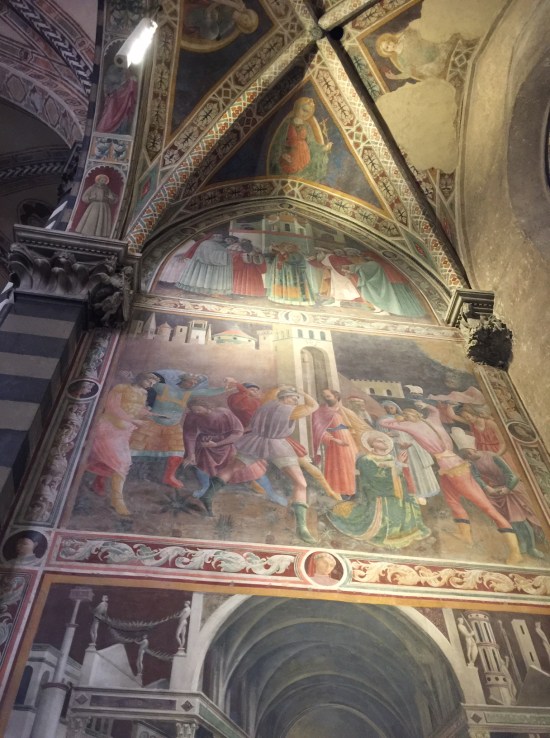
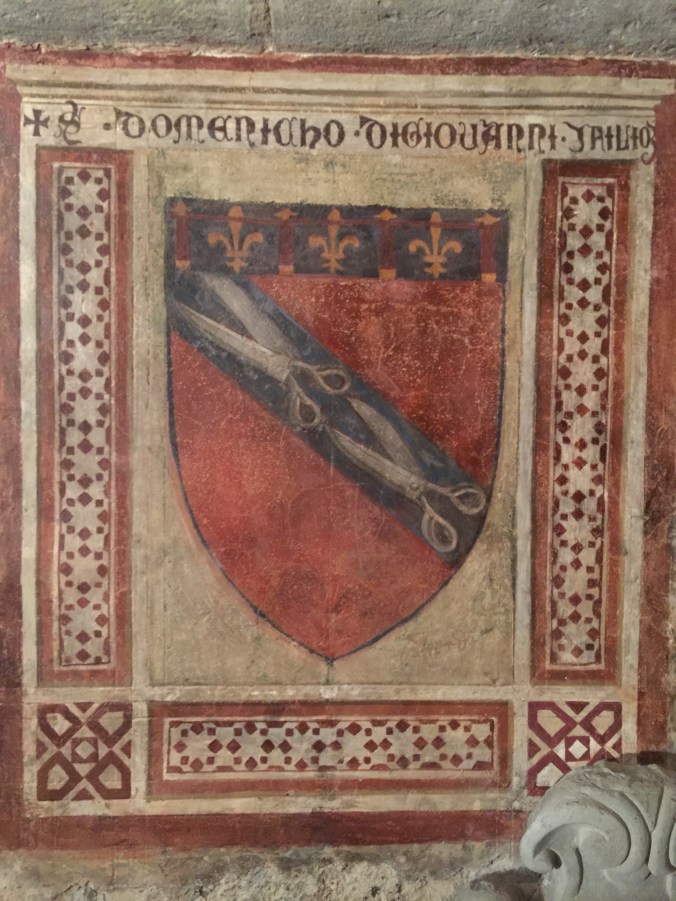
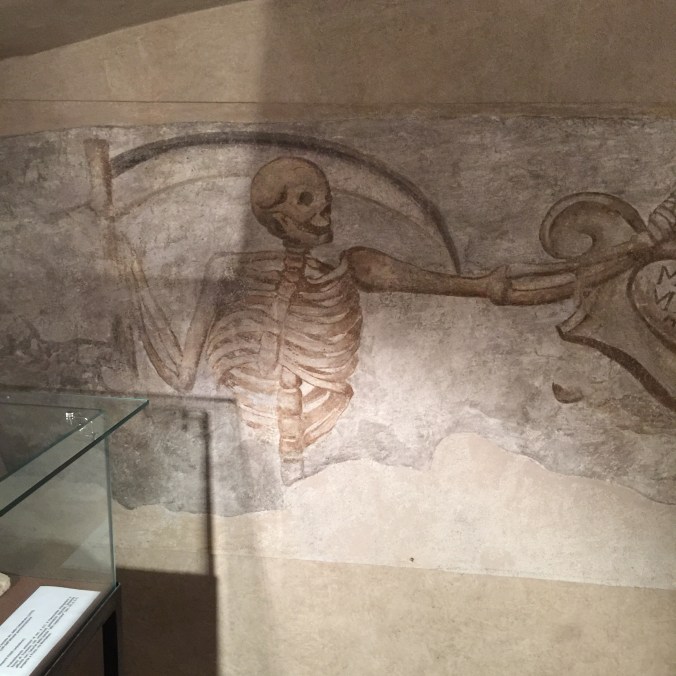
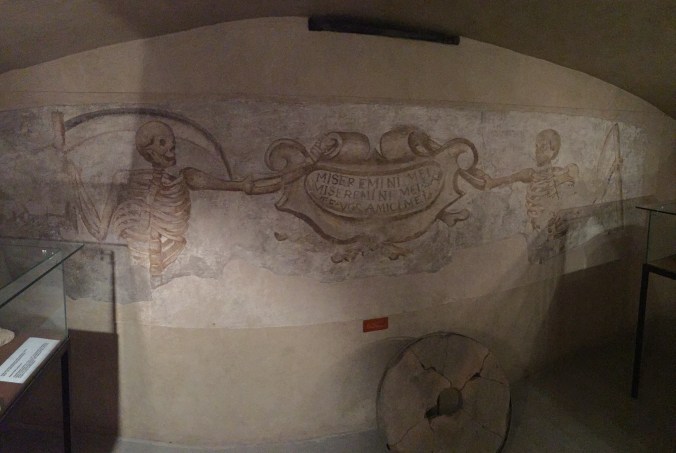
The Prato Cathedral (Cattedrale di San Stefano) is a handsome Roman Catholic Church in Prato, Tuscany, Central Italy. It is one of the most ancient churches in the city, already in existence in the 10th century. It was built in several successive stages in the Romanesque style. The church contains a number of notable works of art, in particular fine sculpture.
Prato’s church of Saint Stephen was built in a green meadow (in Italian: prato) after an appearance of the Virgin Mary near the village of Borgo al Cornio (the present center of Prato). The first building was a small parish church. which the earliest document dates to AD 994.
The expansion of the church began in the 15th century and transformed the modest building into one of the most lovely Gothic-Romanesque buildings in Tuscany.
The video below shows the annual celebration during which the relic, the so-called “sacred belt or girdle” of the Virgin Mary is shown.

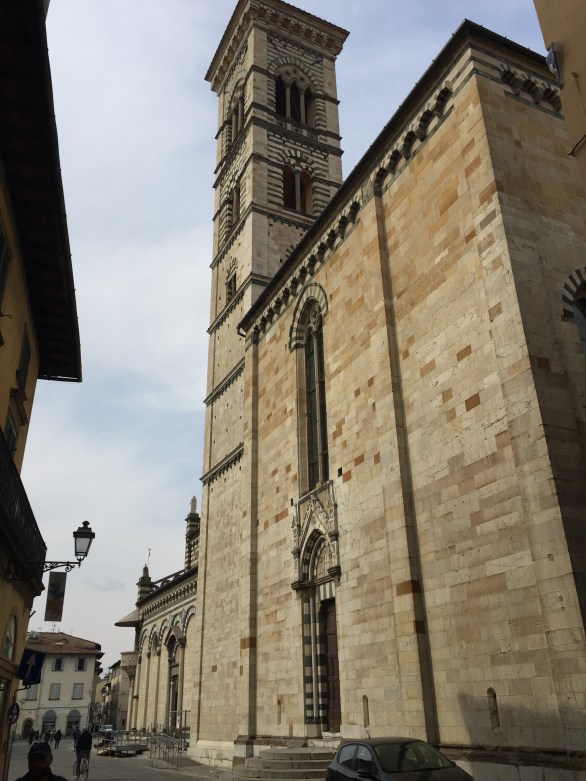
The church we see today dates from the Romanesque period of the 12th century: the nave, side walls and greater part of the bell tower remain from this date. The upper stage of the bell tower was constructed in 1356.
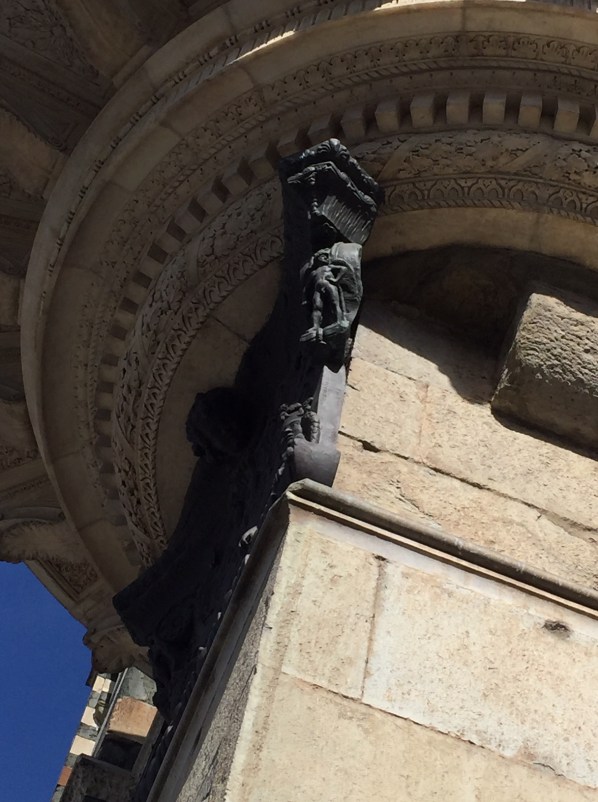
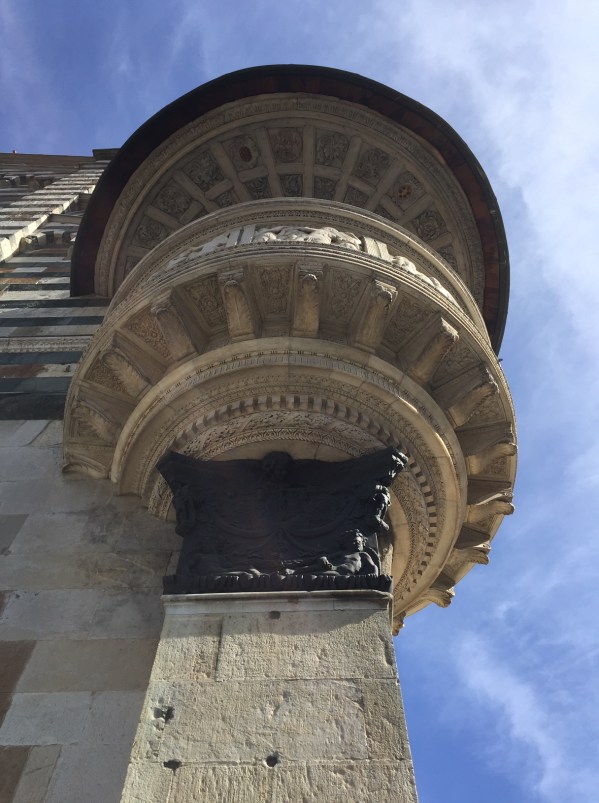
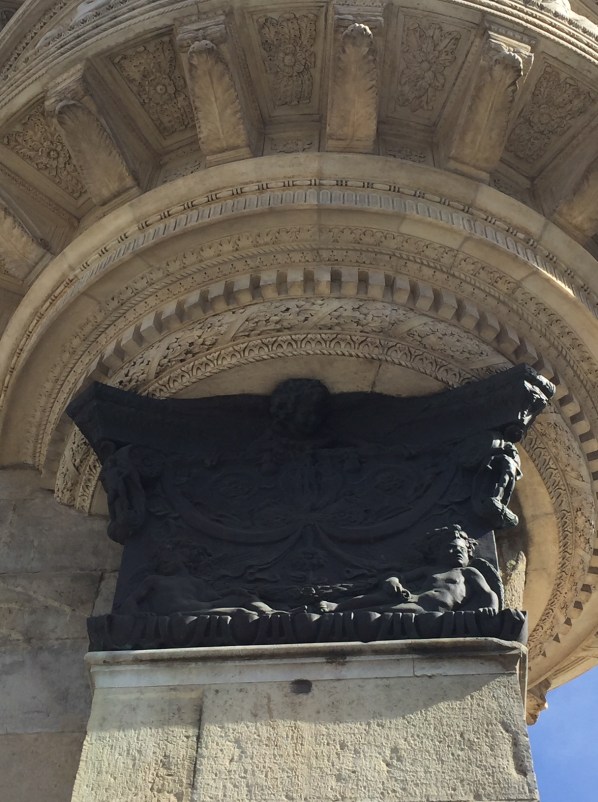
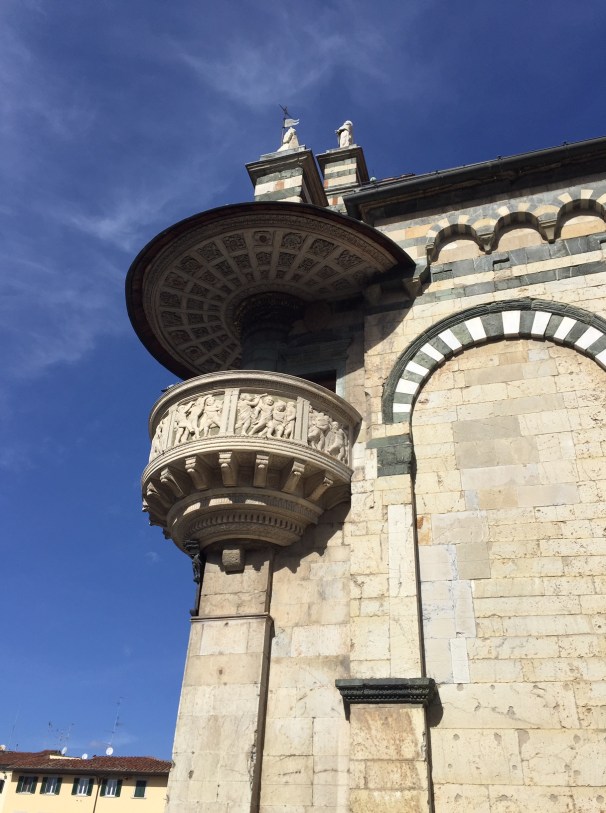
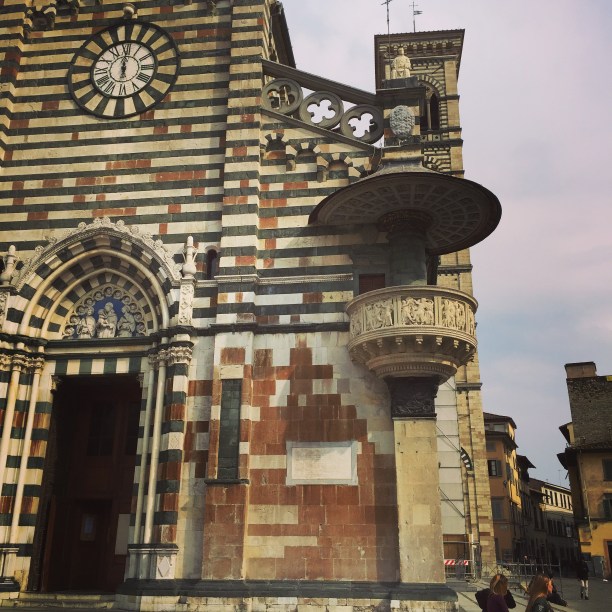
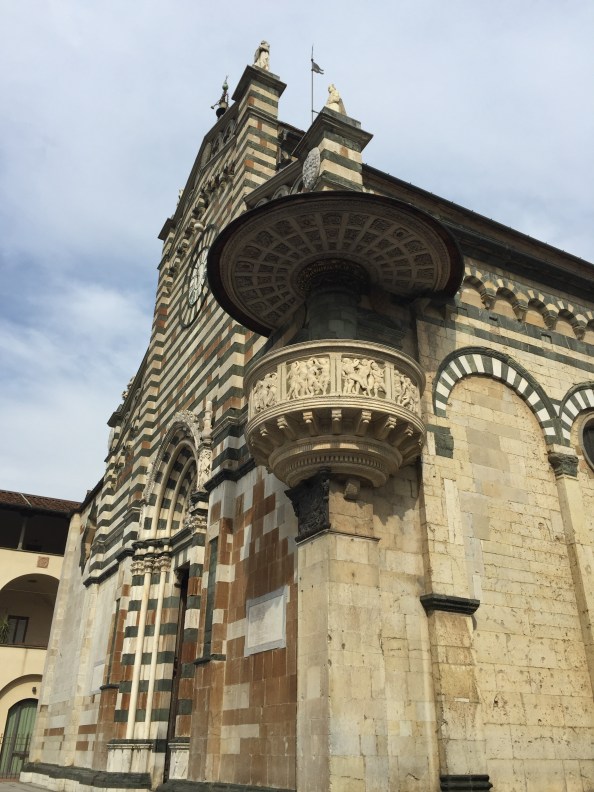
The church’s exterior pulpit by Donatello and Michelozzo:
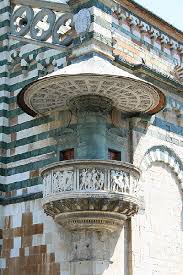
In the 14th century, the cathedral obtained a relic, the so-called Sacra Cintola or “Holy Belt” of the Virgin Mary and the church was re-envisioned. The 2nd facade was built, allowing a transept to be constructed between the old facade and the new one. This space gives way to a new, exterior pulpit, built by Michelozzo and decorated by Donatello, between 1428 and 1438.
The exterior pulpit was constructed on the right front corner of the facade.
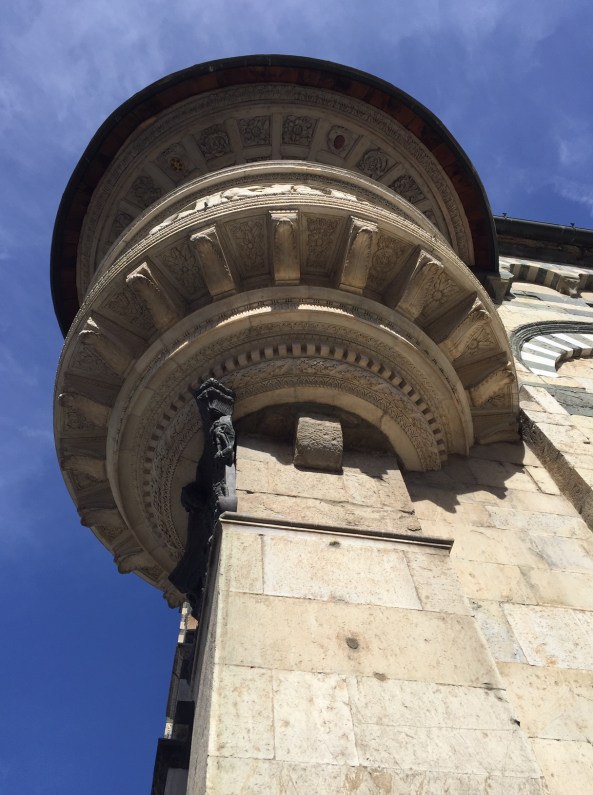
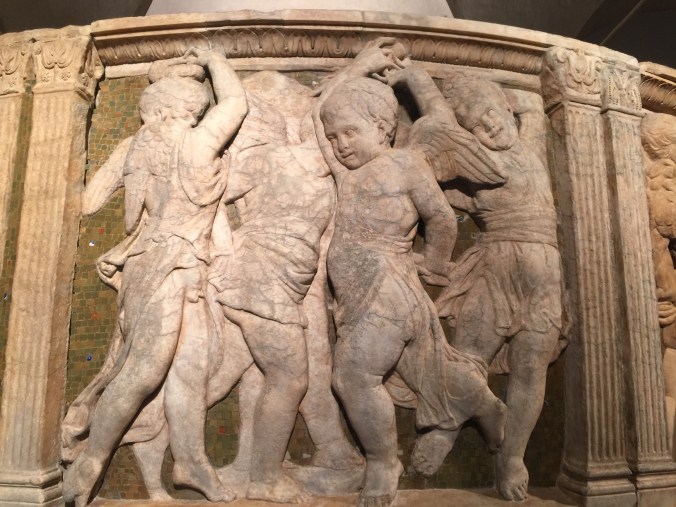
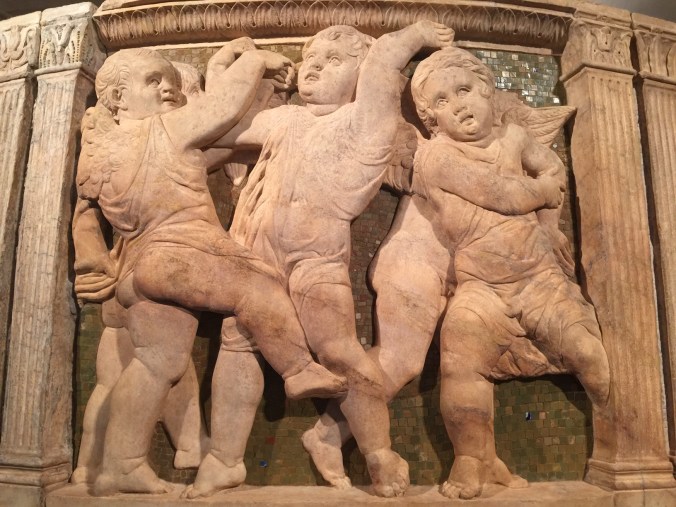
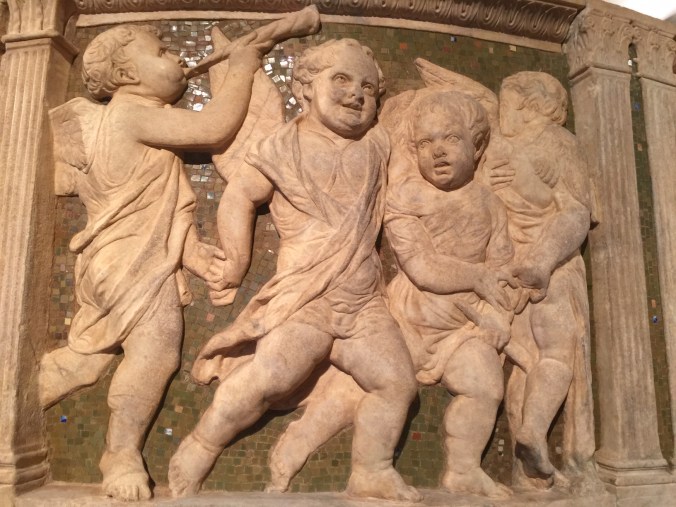
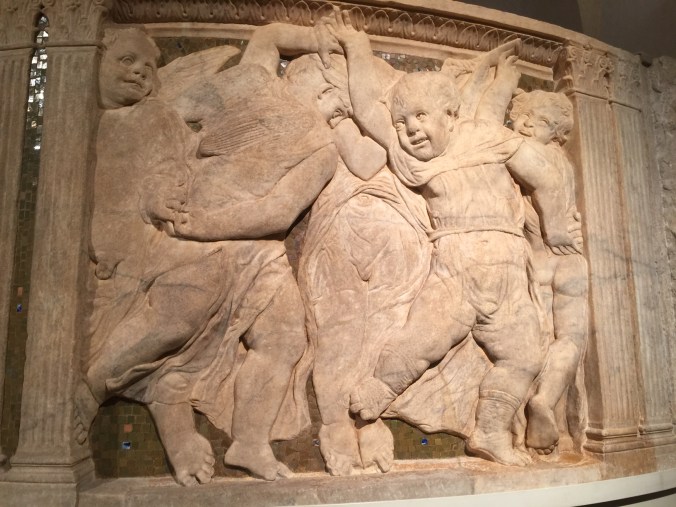
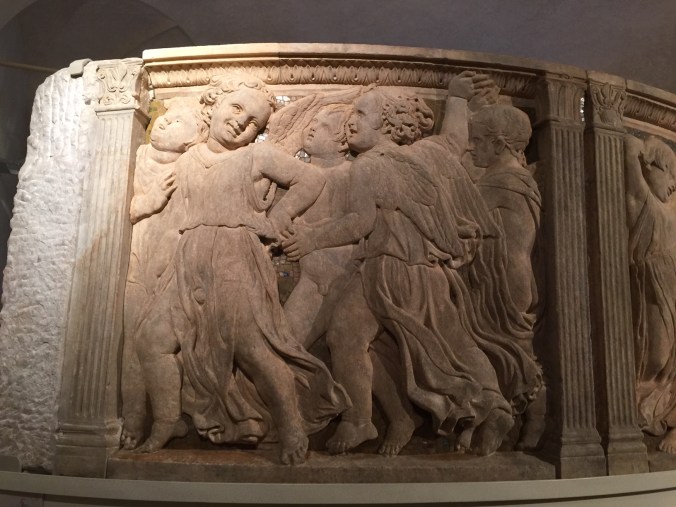
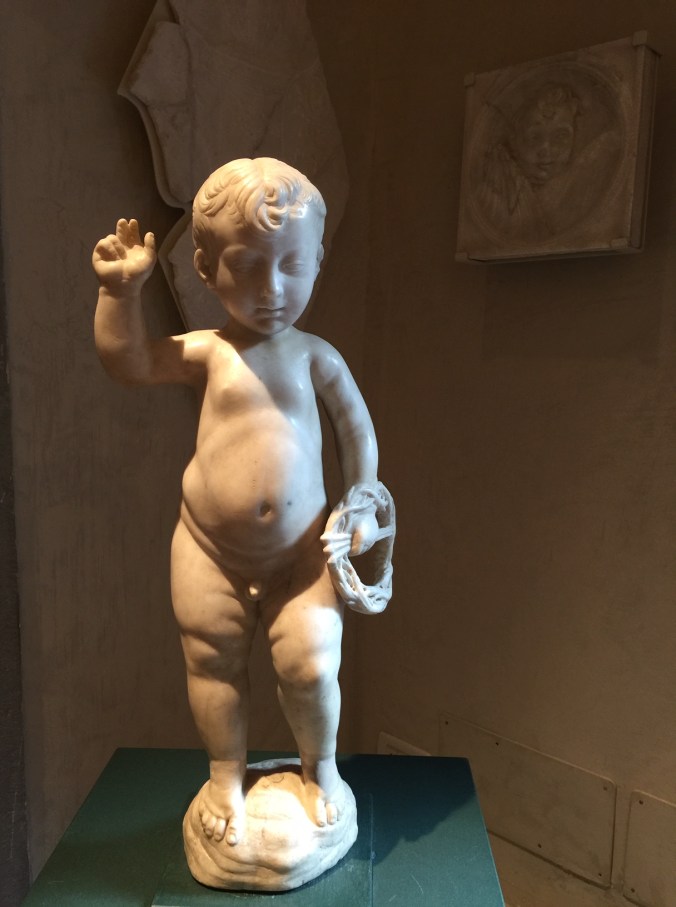
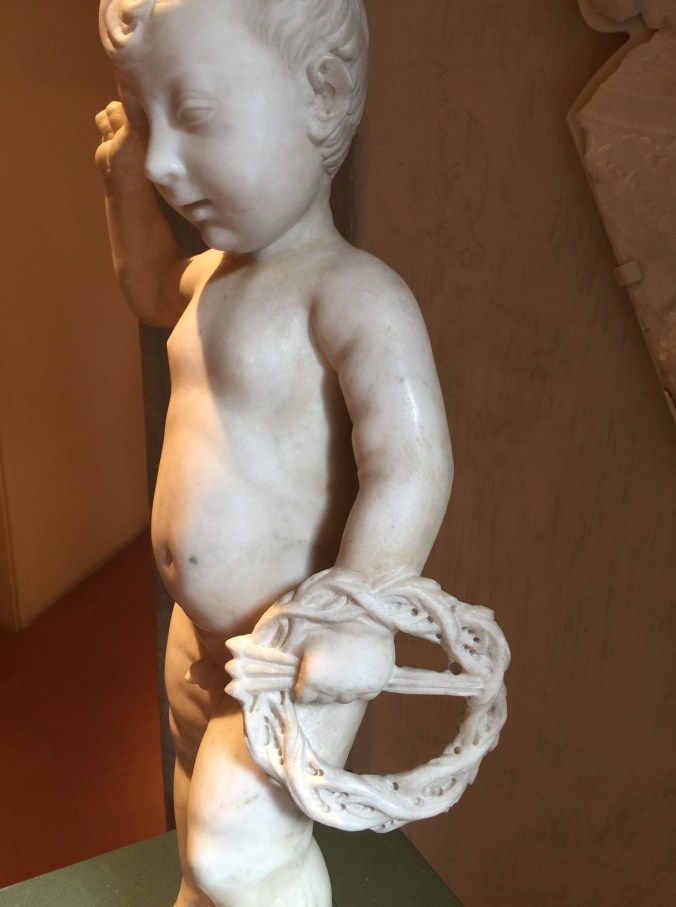
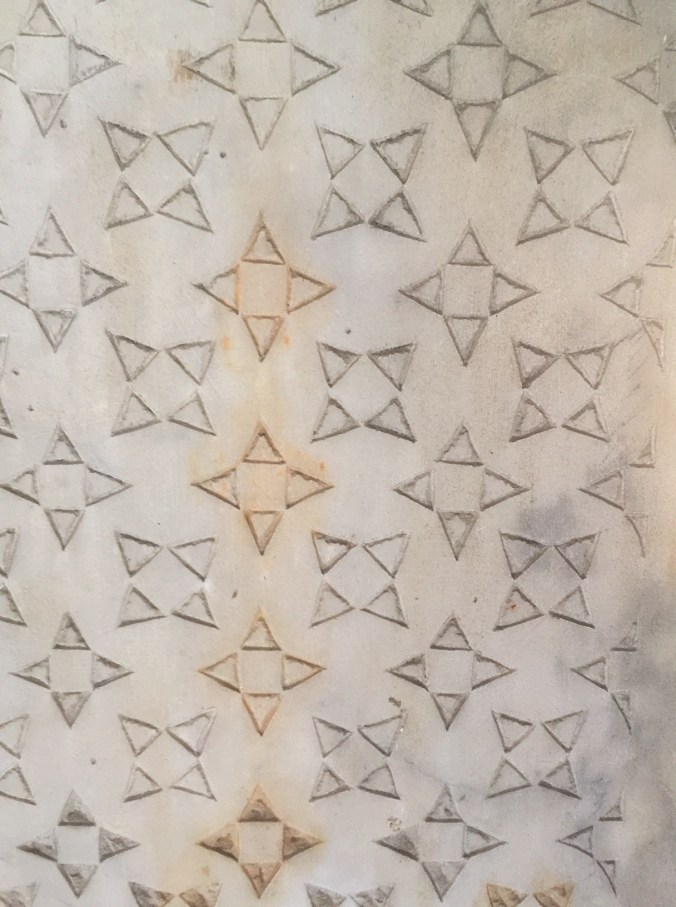
The seven original reliefs of the parapet were removed from the pulpit in 1967 and can be seen today in Prato’s cathedral museum. Here they are, photographed inside the museum:
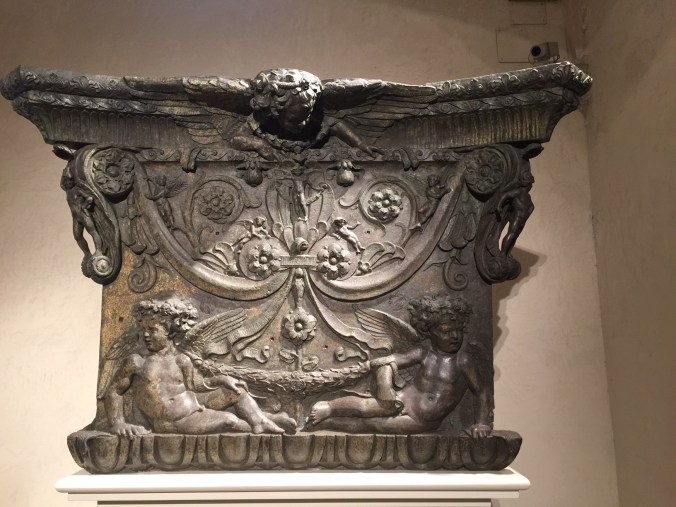
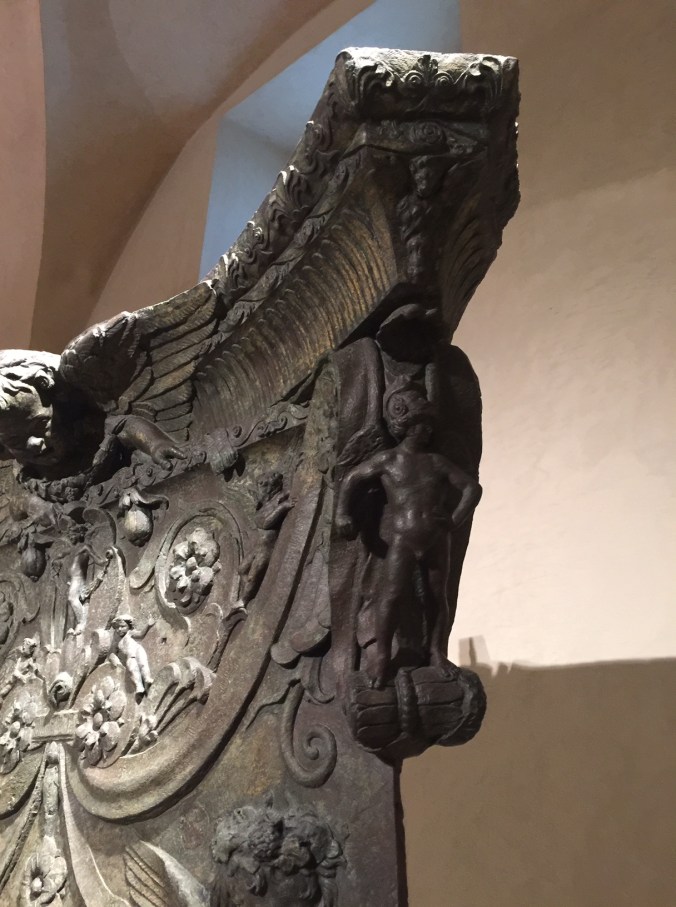
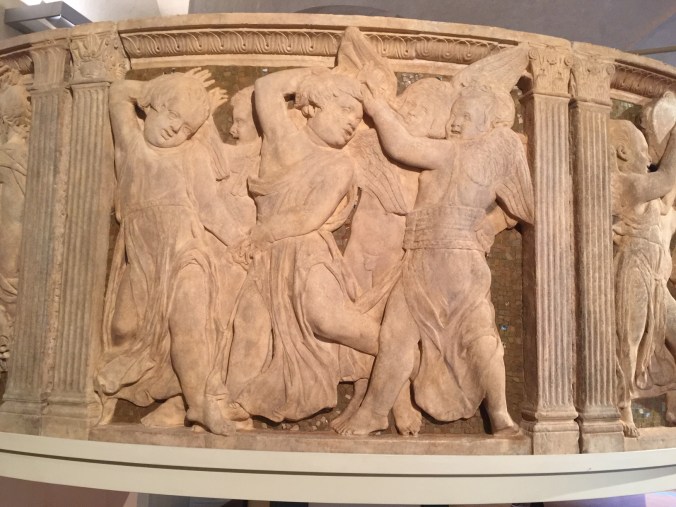
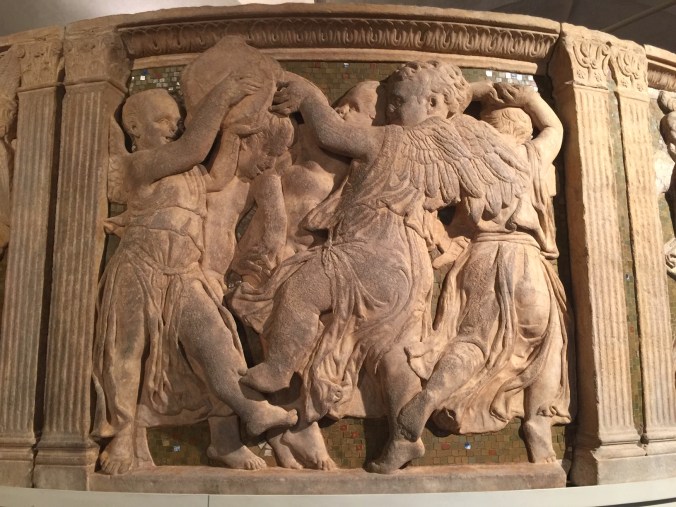
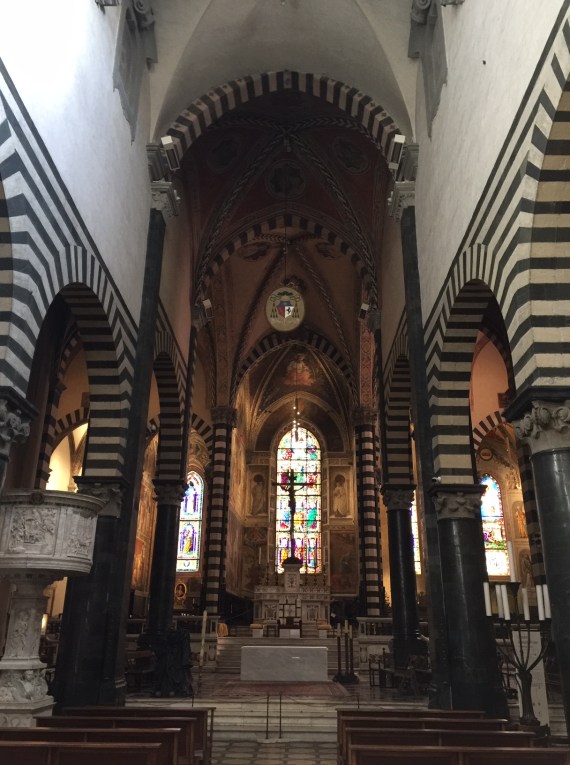
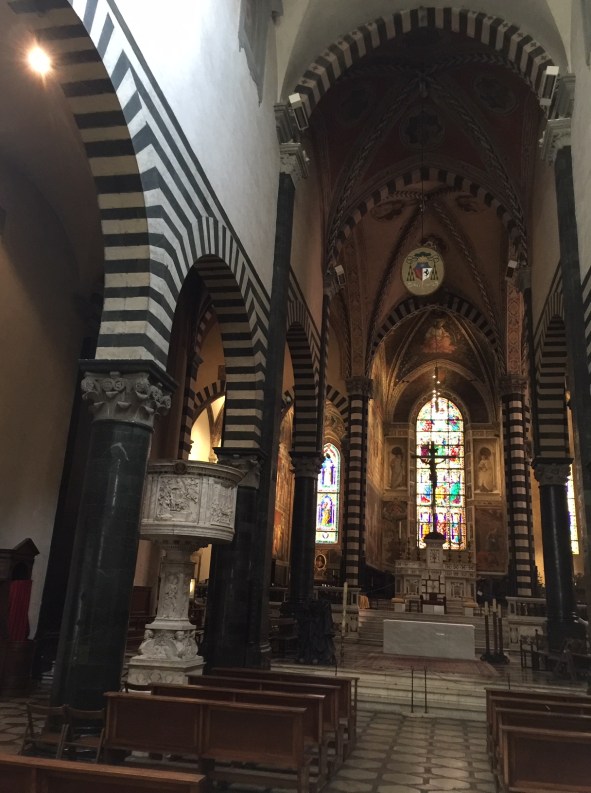
The church was built with a Latin cross ground plan in Romanesque style. The aisles are separated from the nave by elegant columns of green serpentine, the capitals being attributed to Guidetto. The vaults, designed by Ferdinando Tacca, were added in the 17th century.
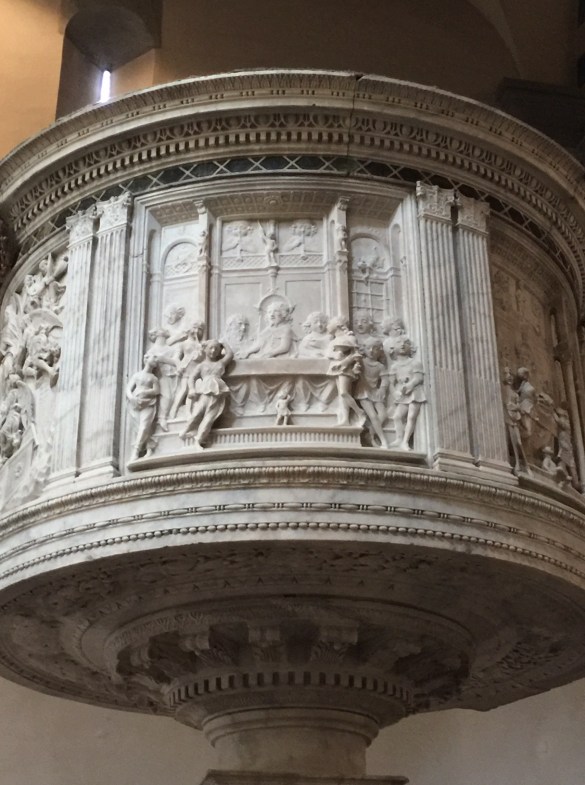
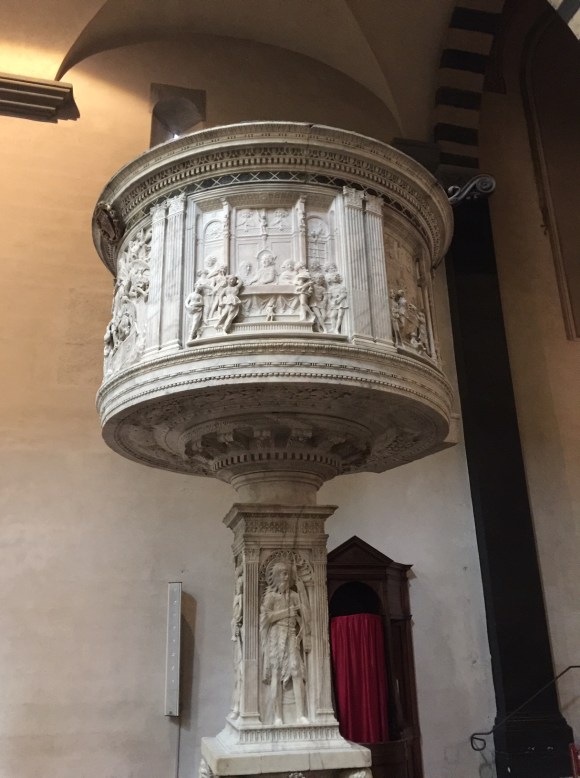
The north aisle houses a notable Renaissance pulpit in white marble (1469–1473). The base is decorated with sphinxes. The parapet has reliefs by Antonio Rossellino, portraying the Assumption and the Stories of St. Stephen, and by Mino da Fiesole portraying the Stories of St. John the Baptist.
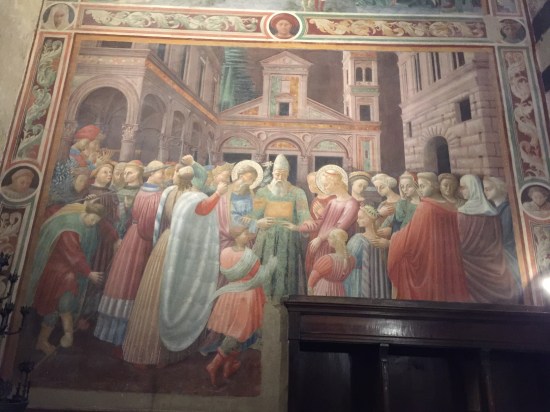
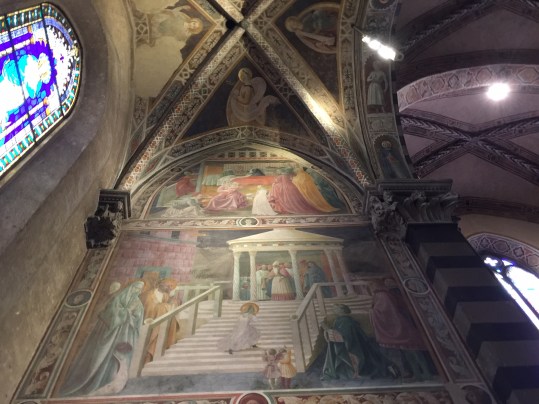
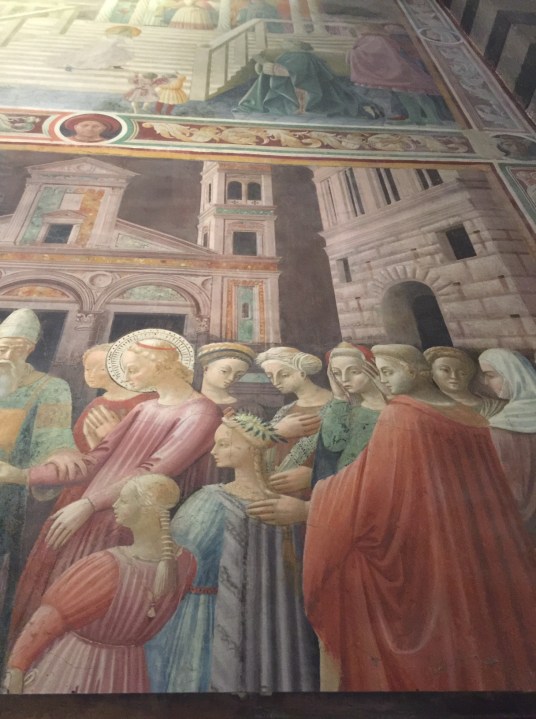
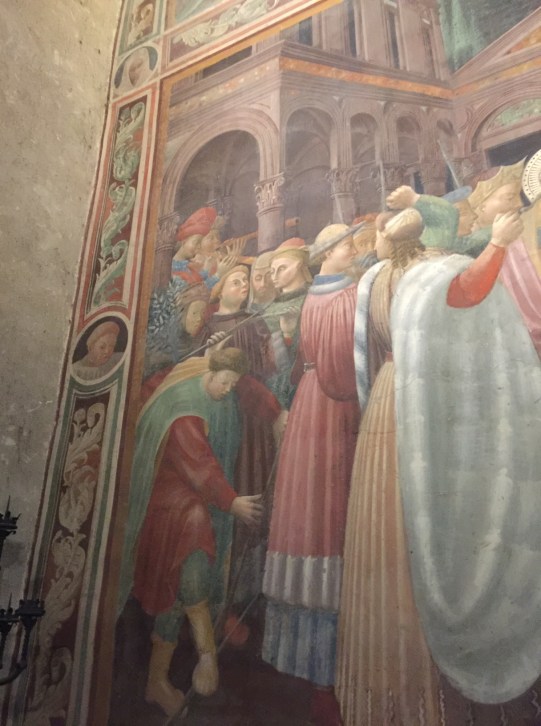
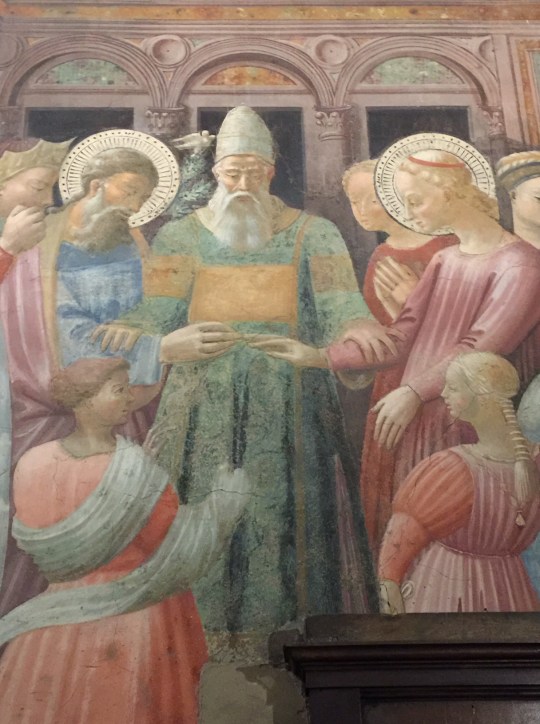
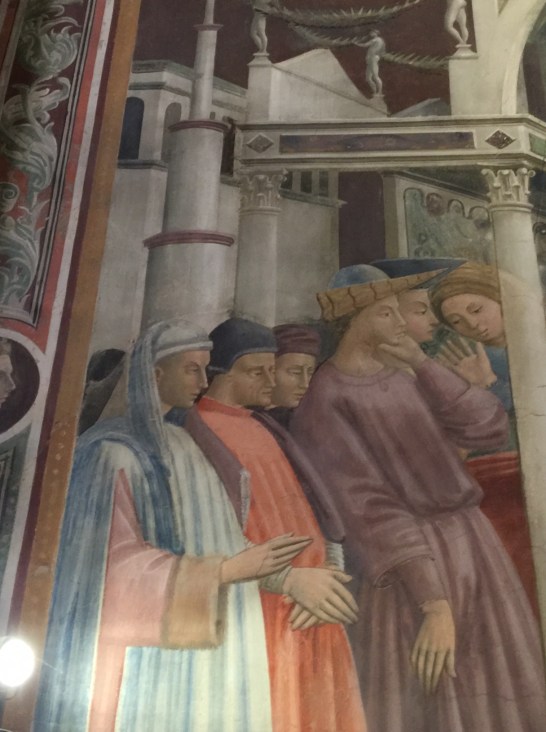
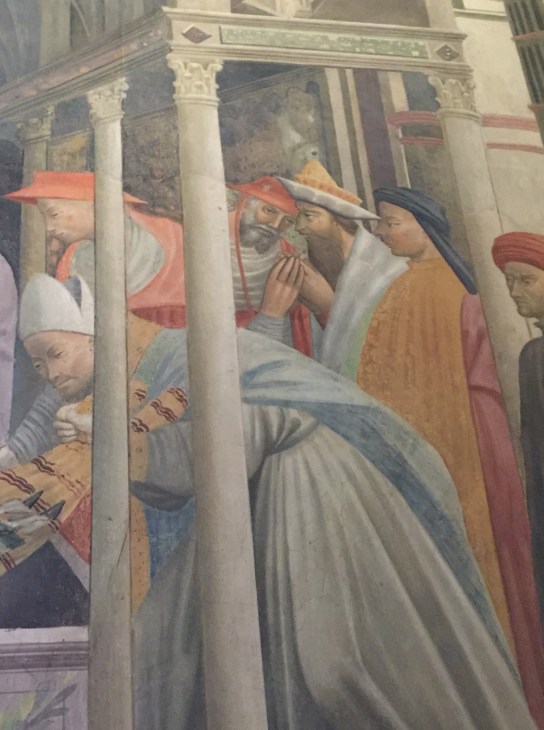
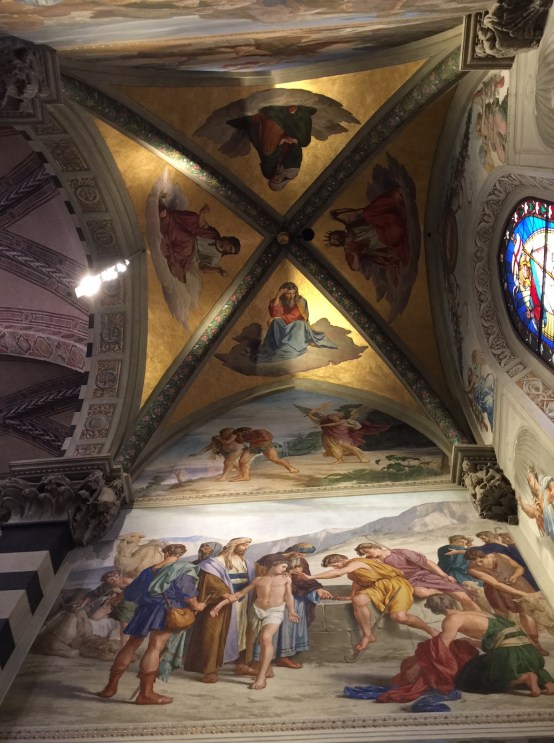
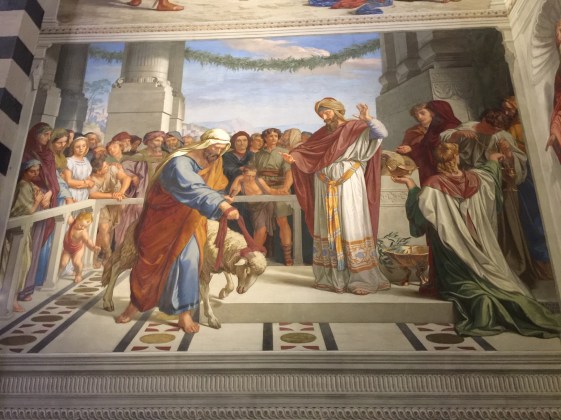
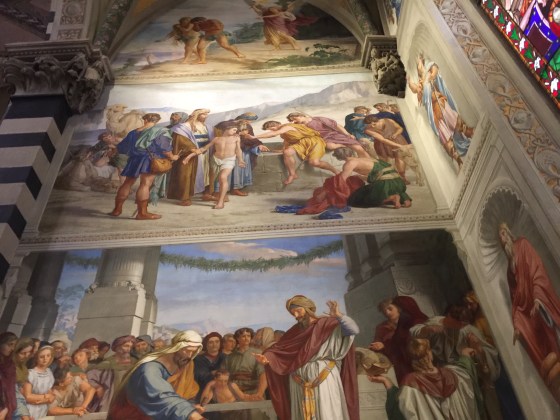
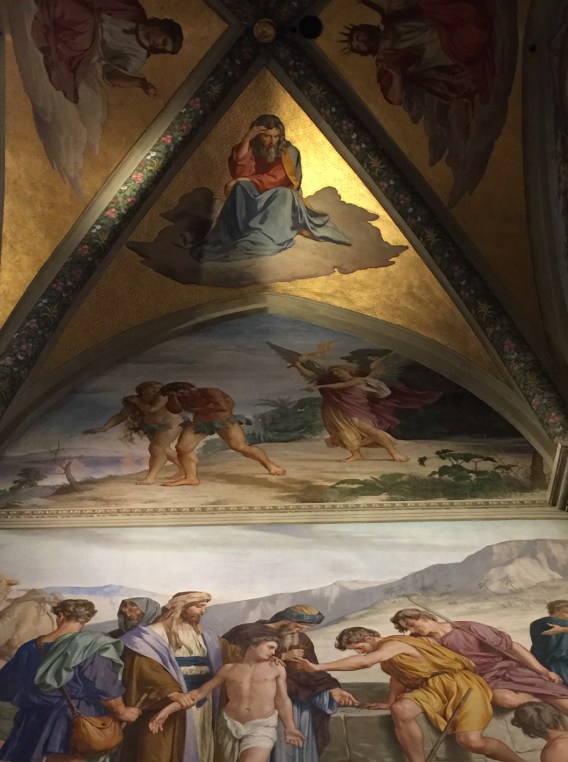
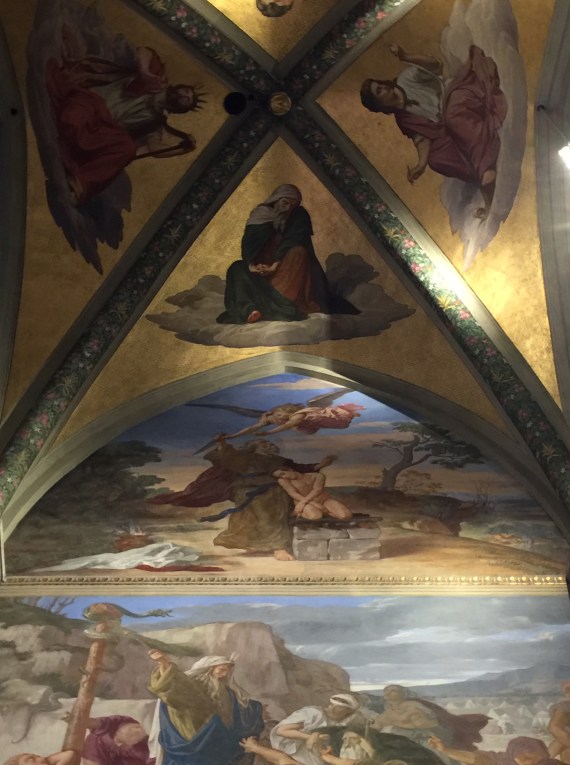
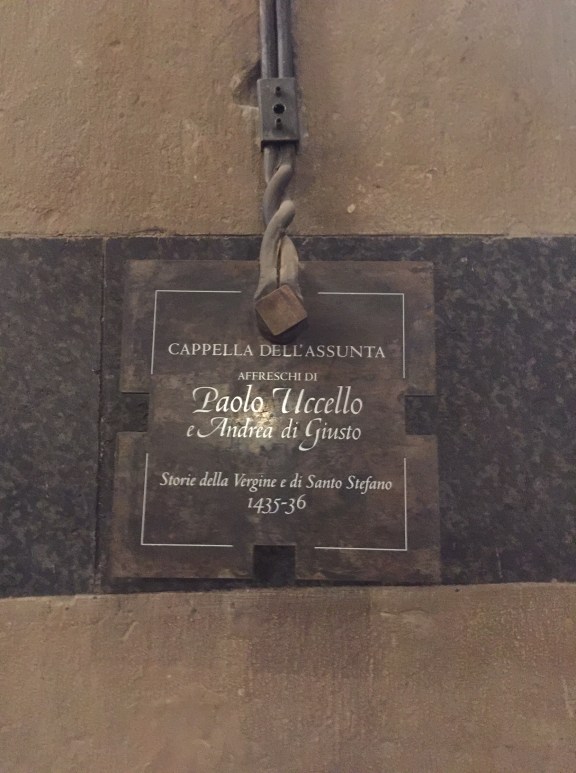
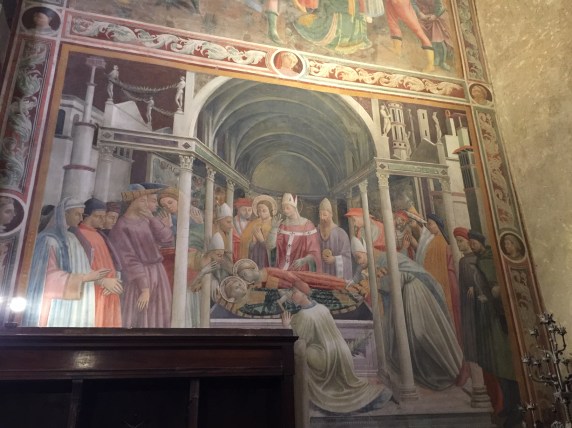
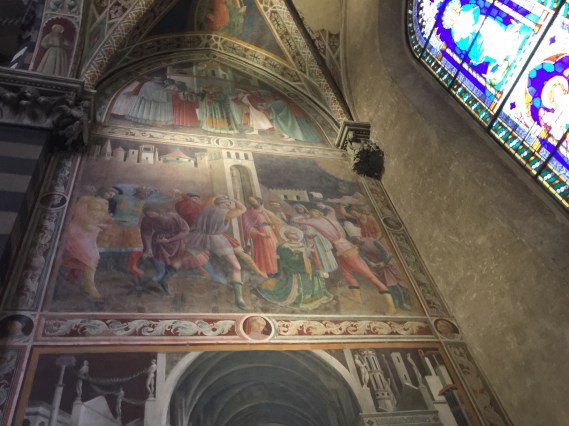
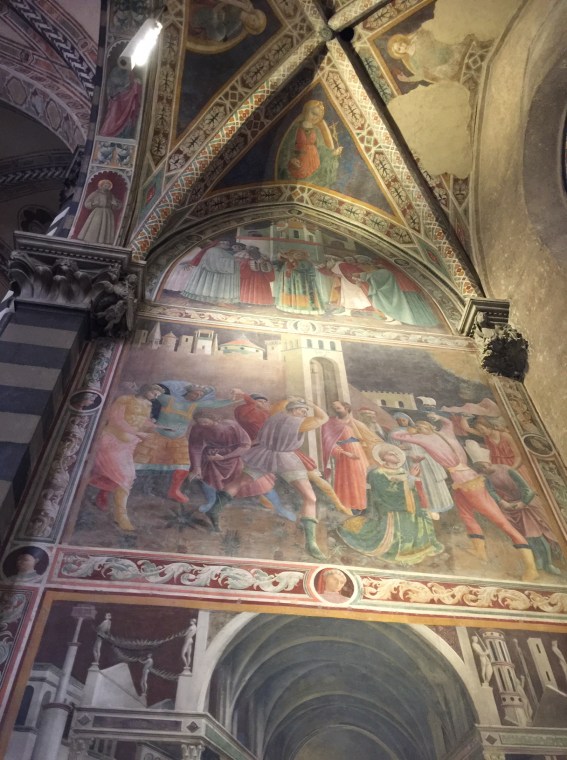
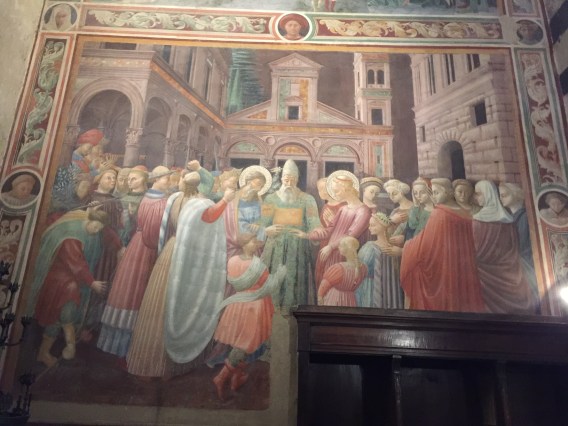
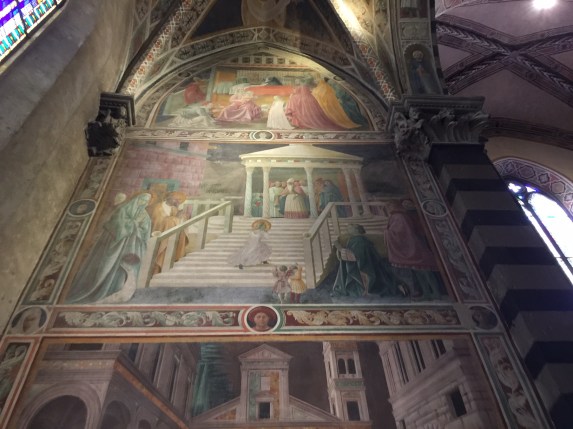
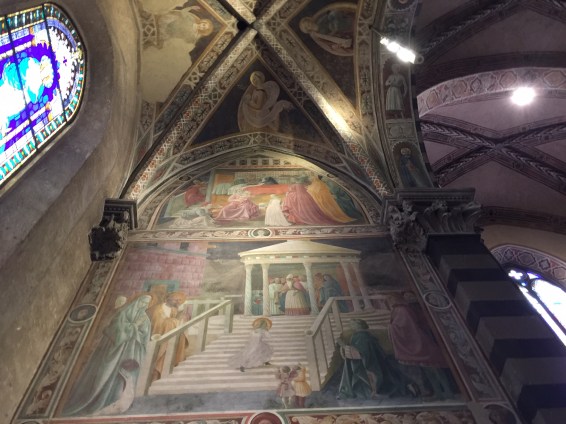
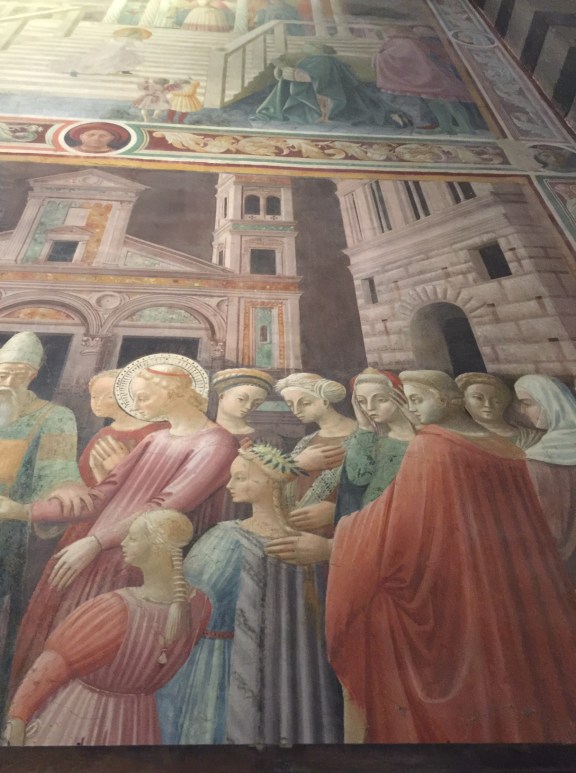
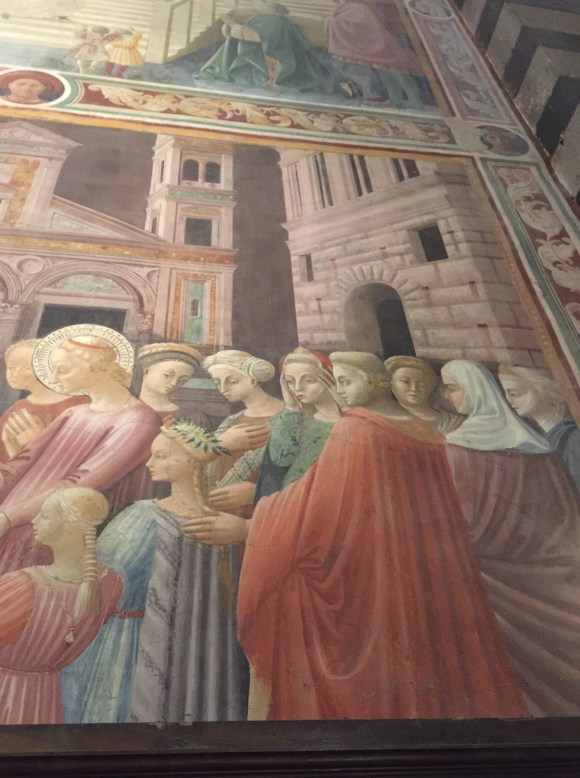
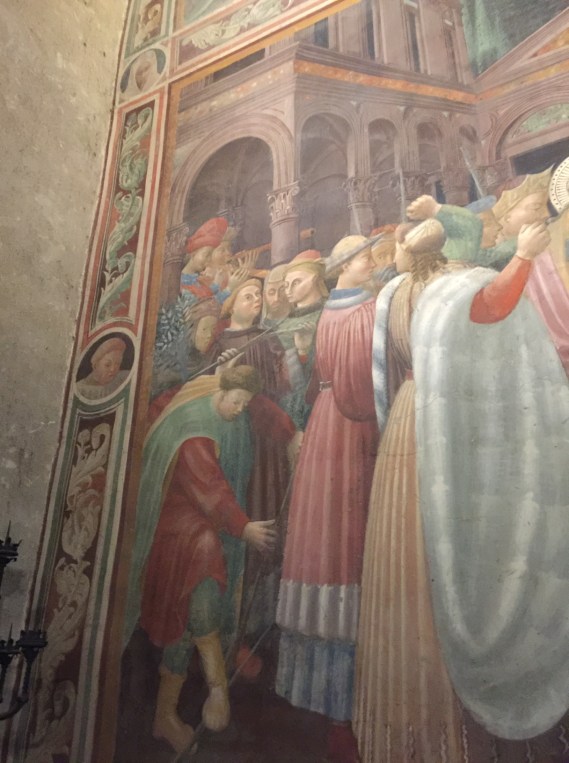
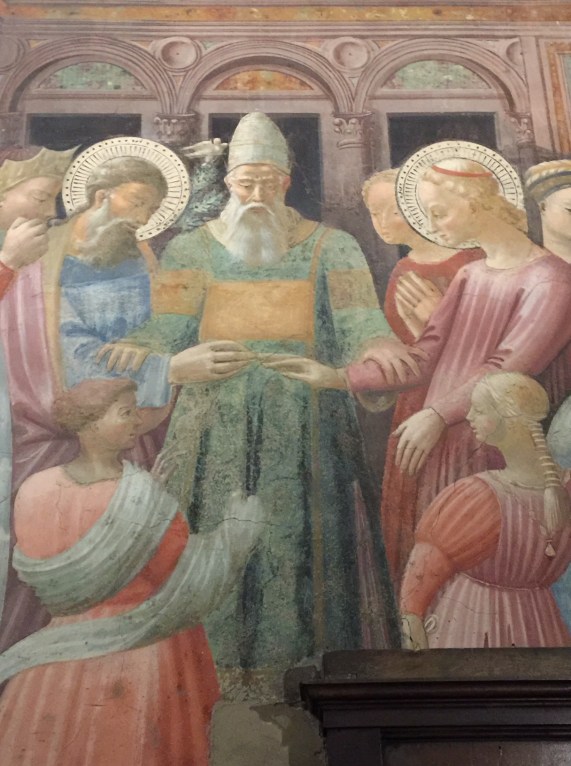
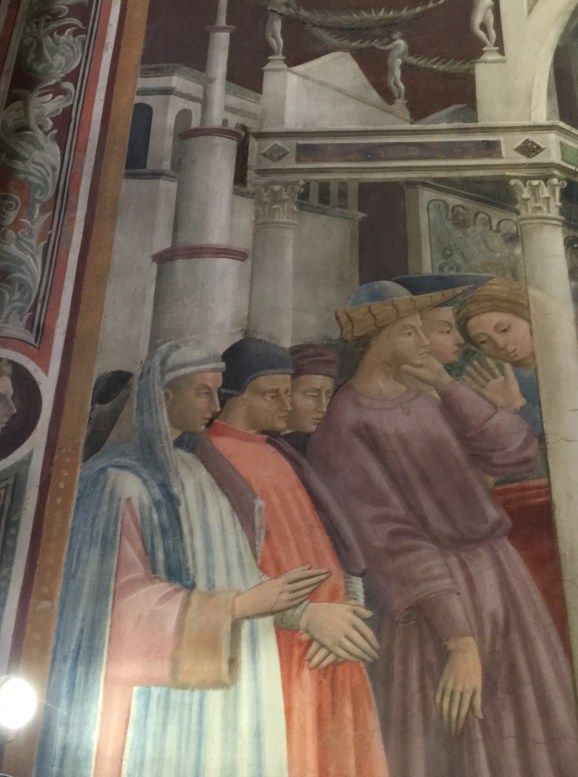
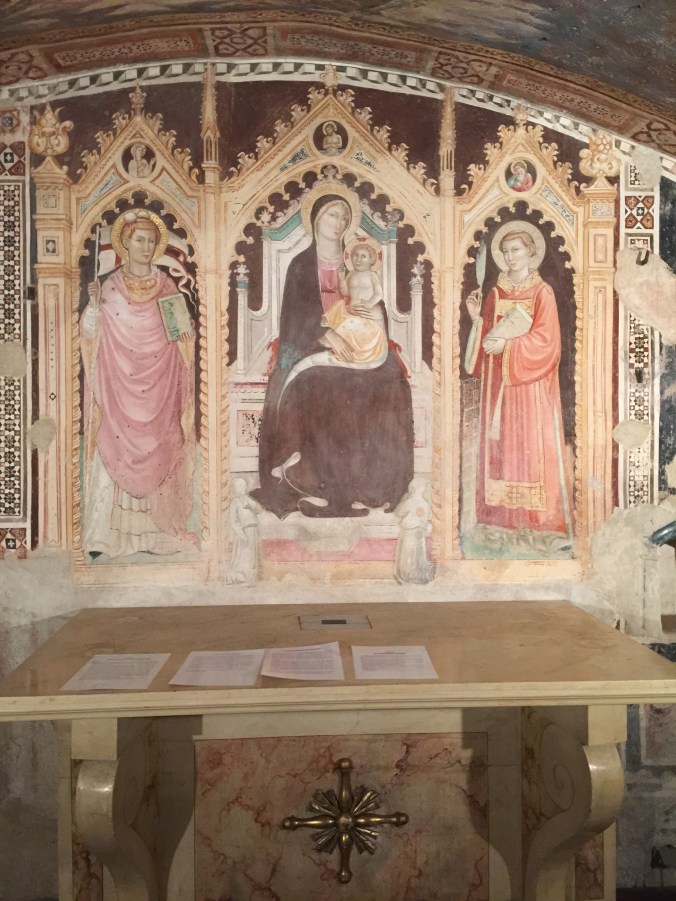
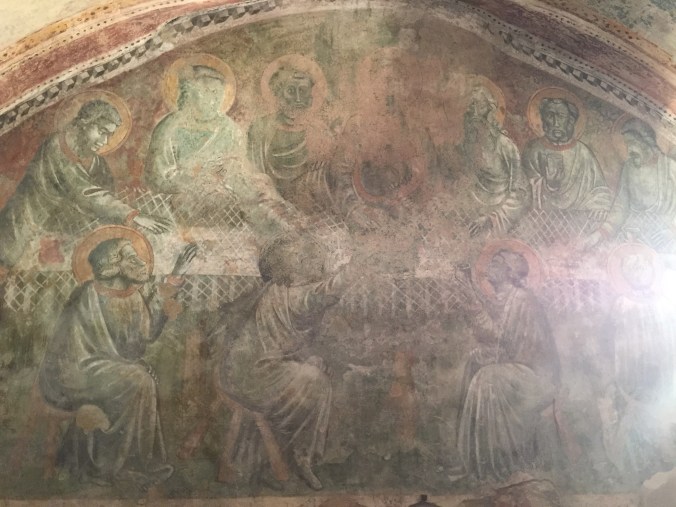
The Assumption Chapel in the transept was frescoed in 1435-1436 by the so-called Master of Prato and by a young Paolo Uccello, who painted the Stories of the Virgin and St. Stephen. They show a bizarre fantasy of enchanted figures caught in a wide range of brilliant colors, and surrounded by Brunelleschi-like architectures.
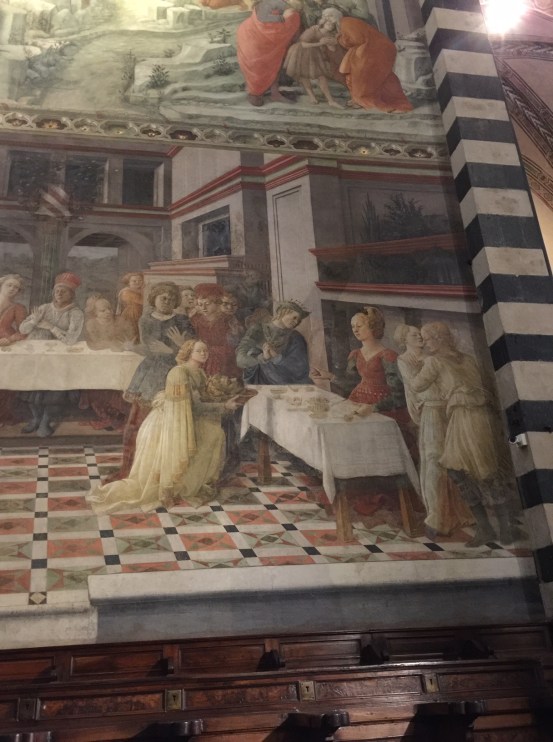
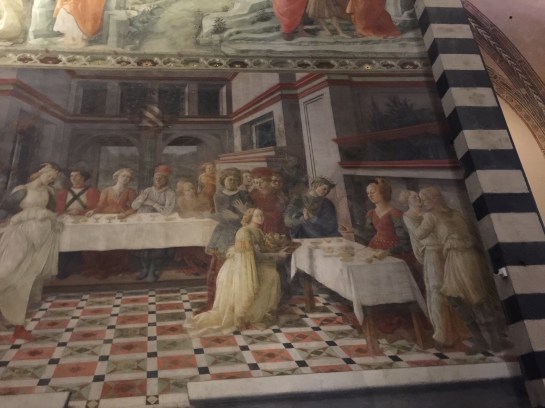
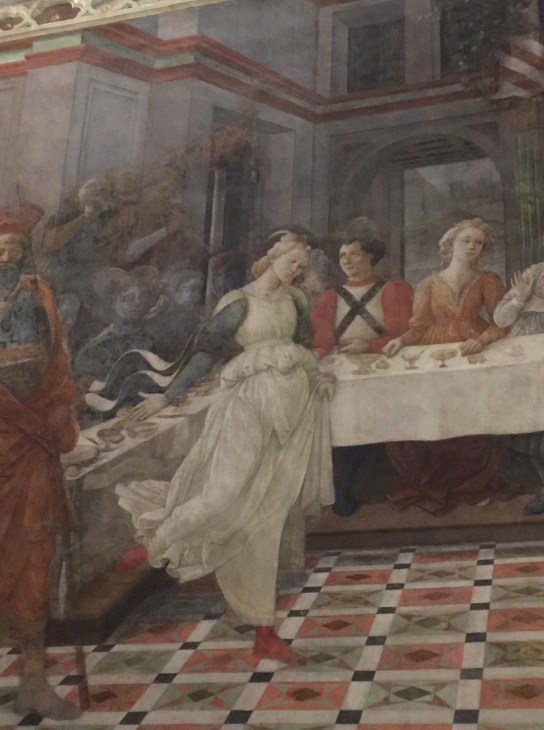
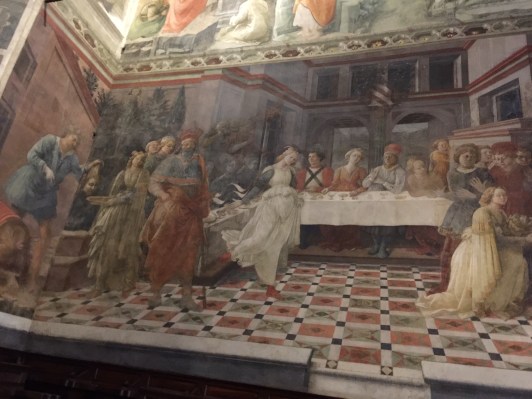
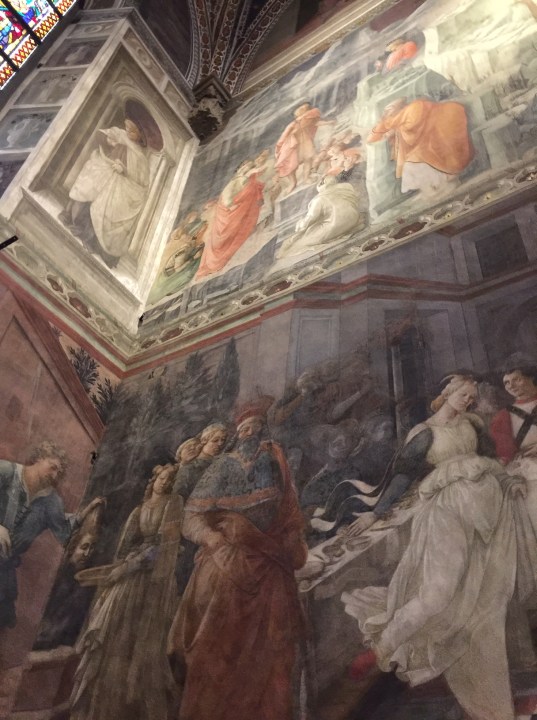
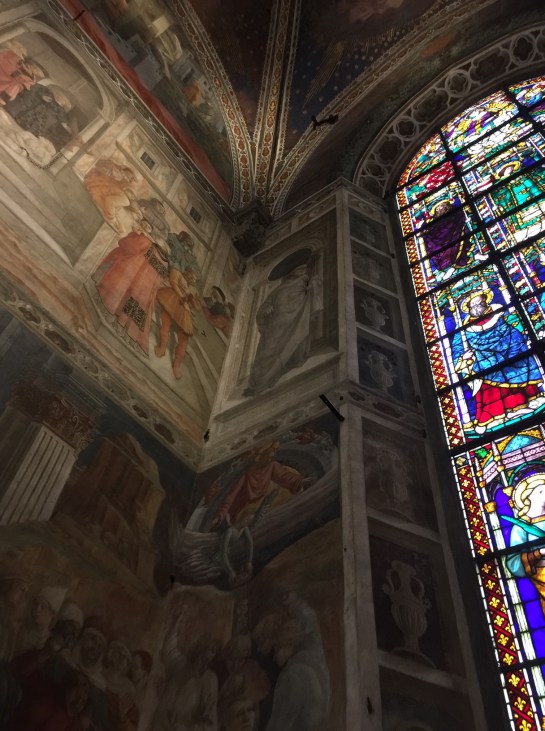
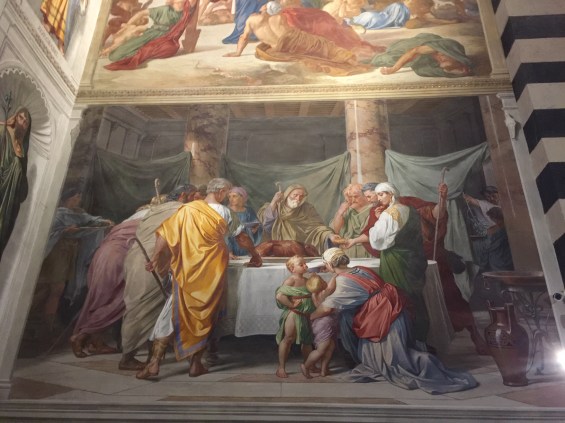
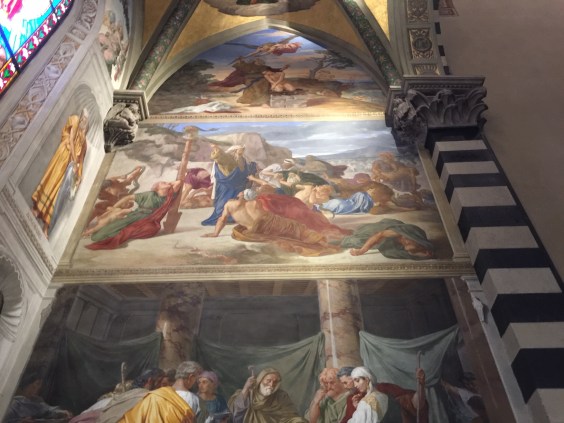
In the main chapel, or chancel, Filippo Lippi and Fra Diamante painted the Stories of St. Stephen and St. John the Baptist.
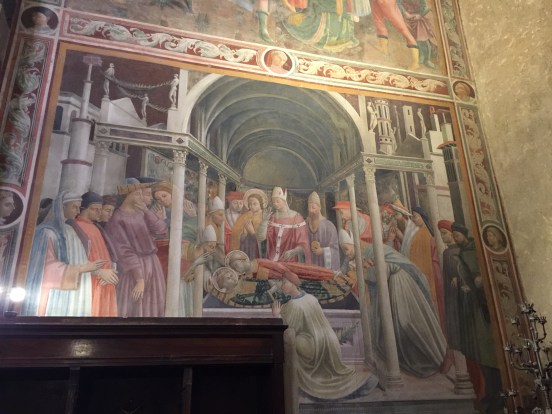
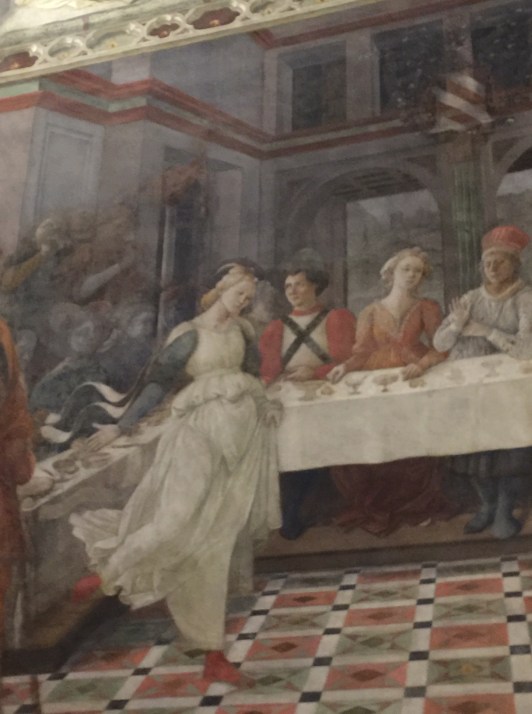
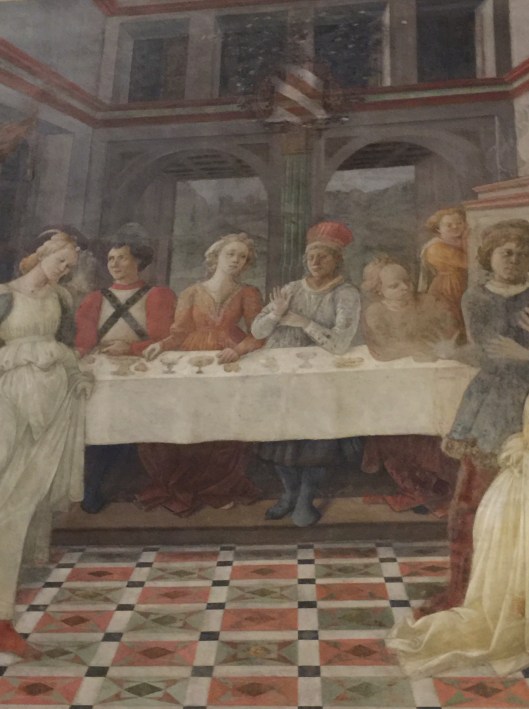
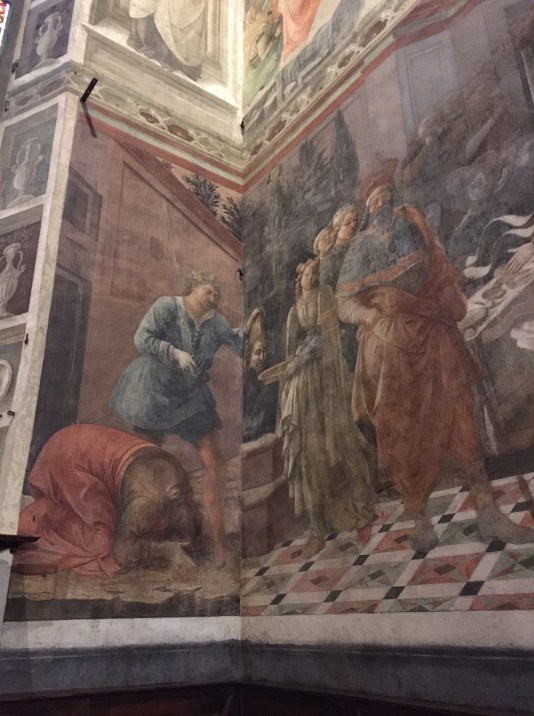
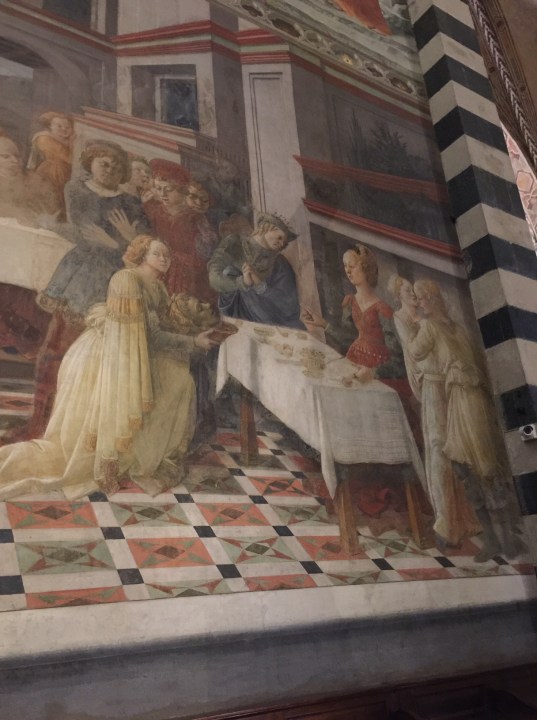
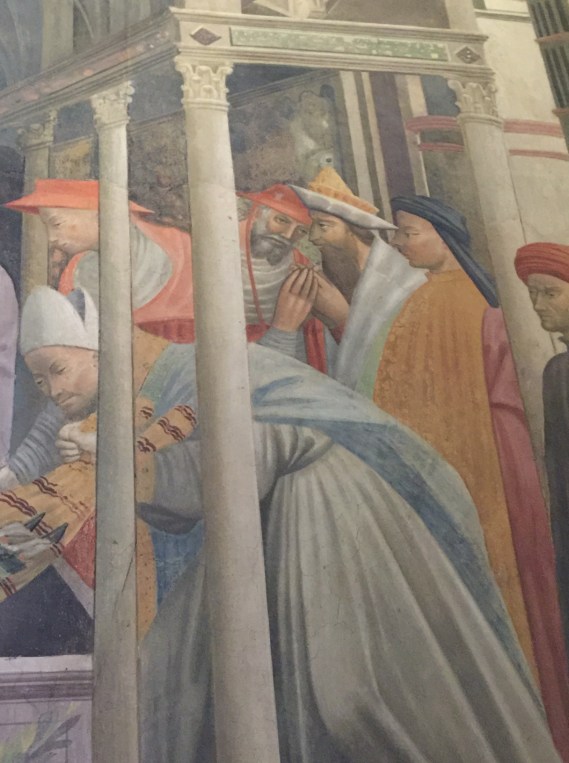
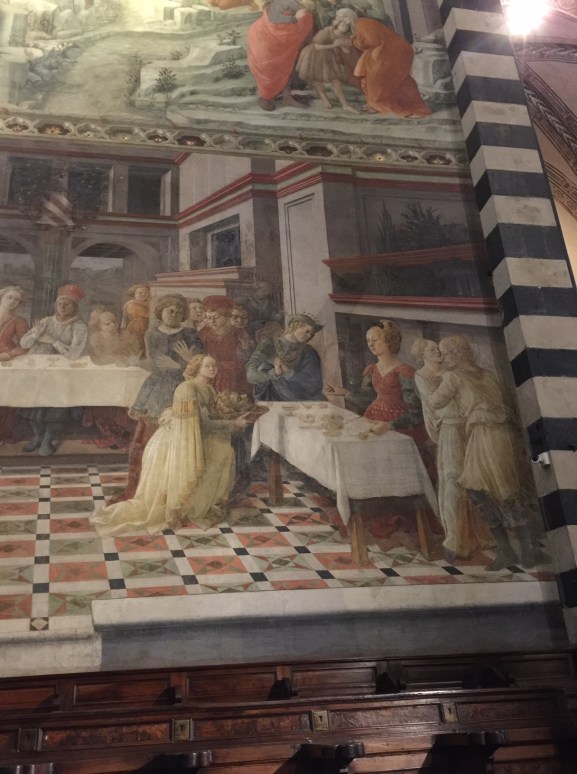
On the lower north wall are depicted the Obsequies of St. Stephen, in which Lippi portrayed Pope Pius II, set in a Palaeo-Christian basilica, as an imposing figure in scarlet costume. On the right is the artist’s self-portrait. On the opposite wall is Herod’s Banquet, showing a large hall in which Salome is performing her ballet, and the handing over of the head of John the Baptist to Herodias. The altar is by Ferdinando Tacca (1653).
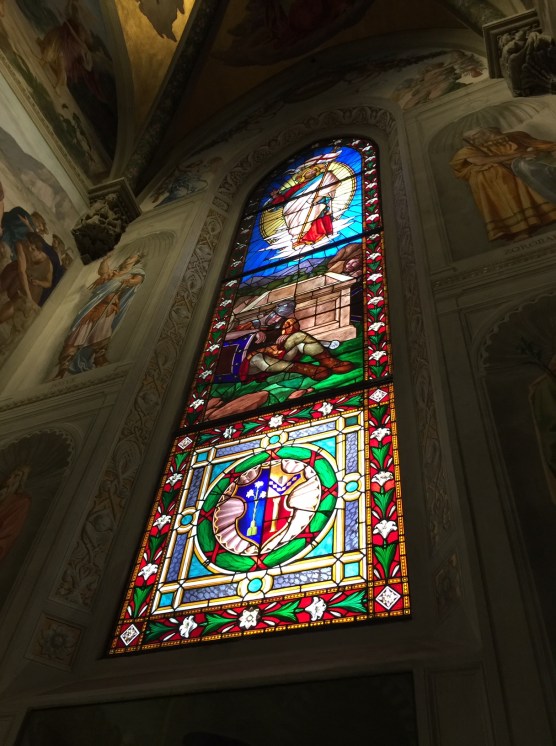
The Manassei Chapel was frescoed by a pupil of Agnolo Gaddi in the early 15th century with Stories of St. Margaret and St. James. The last chapel on the left, the Chapel of the Inghirami, houses a funerary monument attributed to Benedetto da Maiano and a stained glass window from the early 16th century.



A fixture in the London shopping scene, Liberty is a department store in Great Marlborough Street, in the West End of London. It sells highly curated selections of women’s, men’s and children’s clothing, make-up and perfume, jewelry, accessories, furniture and furnishings, stationery and gifts. The firm is well known for its floral and graphic prints.
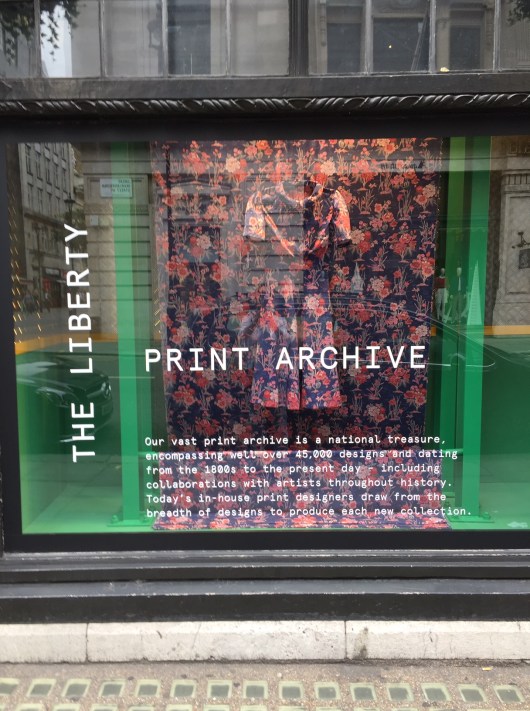
I love any business with a great history and didactic information in a store window. They could just as well be showing their product line for sale, but they choose to edify. That’s my kinda store. Especially when it’s Liberty of London!

While the exterior of this classic London stop has remained in its mock Tudor style best, the interior and the product lines have changed vastly, even in my lifetime. While I prefer the way the store was when I first visited it with my mother in the 1980s, I have no doubt the management knows how to keep the store vital. I always enjoy a visit to this lovely emporium on any trip to London.


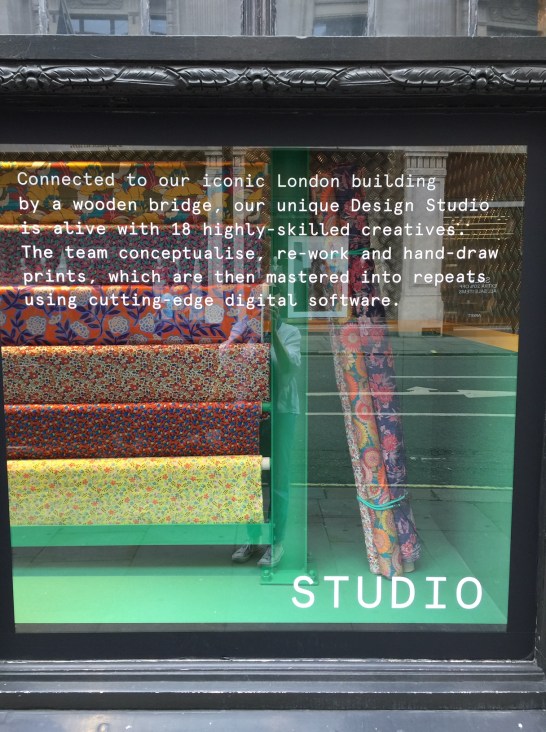

Before this summer, the last time I was at Liberty was in the early 2000s with my then 11-year-old red-headed son. At that time, Paula Pryke had a flower shop at the Liberty main entrance. It was dynamic! Her shop is gone and the store still has a ghost of a flower shop at its front door. But, I miss seeing Paula Pryke’s gorgeous arrangements there. He was less interested in Liberty than in going in and out of tube stations and traveling by train.


Liberty was created by Arthur Lasenby Liberty, who was born in Chesham, Buckinghamshire, in 1843. His father was a draper and, beginning work at 16, he was apprenticed to a draper. Later, Liberty took a job at Farmer and Rogers, a women’s fashions specialist in Regent Street, rising quickly up the ranks.
He was employed by Messrs Farmer and Rogers in 1862, the year of the International Exhibition. By 1874, inspired by his 10 years of service, he decided to start a business of his own, which he did the next year.

With a £2,000 loan from his future father-in-law, Liberty took the lease of half a shop at 218a Regent Street with three staff members. His shop opened in 1875 selling ornaments, fabric and objets d’art from Japan and the East.
Liberty hadn’t wanted to open just another store — he dreamed of an “Eastern Bazaar” in London that could fundamentally change homeware and fashion. Naming his new shop “East India House,” his collection of ornaments, fabrics and objects d’art from the Far East captured the attention of London, already in the crux of orientalist fervor.
It only took 18 months for Liberty to repay his loan, purchase the second half of the store, and begin to add neighbouring properties to his portfolio. From the beginning, the store also imported antiques, with the original V&A museum actually purchasing pieces of Eastern embroidery and rugs for its collection. As the business grew, neighboring properties were bought and added.
In 1884, he introduced the costume department, directed by Edward William Godwin (1833–86), a distinguished architect and a founding member of The Costume Society. Godwin and Liberty created in-house apparel to challenge the fashions of Paris.

In 1885, 142–144 Regent Street was acquired and housed the ever-increasing demand for carpets and furniture. The basement was named the Eastern Bazaar, and it was the vending place for what was described as “decorative furnishing objects”.

Liberty renamed the property “Chesham House,” after the place in which he grew up. The store became the most fashionable place to shop in London, and Liberty fabrics were used for both clothing and furnishings. Some of its clientele included famous Pre-Raphaelite artists.

To show the kind of innovative approach Liberty had for his business, in November of 1885, he brought 42 villagers from India to stage a living village of Indian artisans.
Liberty’s specialised in Oriental goods, in particular imported Indian silks, and the aim of the display was to generate both publicity and sales for the store.

During the 1890s, Liberty built strong relationships with many English designers. Some of these designers, including Archibald Knox, practiced the artistic styles we now call Arts and Crafts and Art Nouveau. Liberty helped develop Art Nouveau in England through his encouragement of such designers. The company became associated with this new style, to the extent that even today in Italy, Art Nouveau became known as the Stile Liberty, after the London shop.
In 1882, author and playwright Oscar Wilde went on a tour of the United States, bringing with him a wardrobe full of clothes from Liberty, creating a demand for the store’s fashions with Americans. Wilde was obviously a huge fan of Liberty.

The iconic Tudor revival building was built by Liberty so that business could continue while renovations were being completed on the other premises. This great building was constructed in 1924 from the timbers of two ships: HMS Impregnable (formerly HMS Howe) and HMS Hindustan.

HMS Impregnable (c.1900), one of the two ships used to build Liberty
The emporium was designed by Edwin Thomas Hall and his son, Edwin Stanley Hall. They designed the building at the height of the 1920s fashion for Tudor revival.
In 1922, the builders had been given a lump sum of £198,000 to construct it, which they did from the timbers of two ancient ‘three-decker’ battle ships. Records show more than 24,000 cubic feet of ships timbers were used including their decks now being the shop flooring: The HMS Impregnable – built from 3040 100-year-old oaks from the New Forest – and the HMS Hindustan, which measured the length and height of the famous Liberty building.
The ships were not Liberty’s only association with warfare. Carved memorials line the department store’s old staircase pay tribute to the Liberty staff who lost their lives fighting in WWII for a different kind of liberty – freedom from the regimes of the Axis powers.
One only need to look up to the roof , upon which stands a marvel of a gilded copper weathervane. Standing four feet tall and weighing 112 pounds, this golden ship recreates The Mayflower, the English vessel famous in American history for taking pilgrims to the new world in 1620.

The interior of the shop was designed around three light wells that form the main focus es of the building. Each of these wells was surrounded by smaller rooms to create a cosy feeling. Many of the rooms had fireplaces and some of them still exist.

Liberty of London was designed to feel like a home, with each atrium was surrounded by smaller rooms, complete with fireplaces and furnishings.
Ever the purveyor of craftsmanship, Arthur Liberty had a furniture workshop in Archway, London. Run by Lawrence Turner, the workshop produced Liberty Arts and Crafts furniture and the intricately carved panels and pillars found throughout the store. The craftsmen allowed his fantasy, ensuring every ornament was a one-off – paving the way for discovery.

Sadly, Arthur died seven years before the building’s completion and so never saw his dream realised. But, his statue stands proudly at our Flower Shop entrance to welcome you warmly into his emporium of wonder.

The architectural historian Nikolaus Pevsner was very critical of the building’s architecture, saying: “The scale is wrong, the symmetry is wrong. The proximity to a classical façade put up by the same firm at the same time is wrong, and the goings-on of a store behind such a façade (and below those twisted Tudor chimneys) are wrongest of all”.

During the 1950s, the store continued its tradition for fashionable and eclectic design. All departments in the shop had a collection of both contemporary and traditional designs. New designers were promoted and often included those still representing the Liberty tradition for handcrafted work.

In 1955, Liberty began opening several regional stores in other UK cities; the first of these was in Manchester. Subsequent shops opened in Bath, Brighton, Chester, York, Exeter and Norwich.
During the 1960s, extravagant and Eastern influences once again became fashionable, as well as the Art Deco style, and Liberty adapted its furnishing designs from its archive.

LIBERTY PRINT ‘CONSTANTIA,’ 1961
In 1996, Liberty announced the closure of all of its department stores outside London, and instead focused on small shops at airports.
Since 1988, Liberty has had a subsidiary in Japan which sells Liberty-branded products in major Japanese shops. It also sells Liberty fabrics to international and local fashion stores with bases in Japan.
Liberty’s London store was sold for £41.5 million and then leased back by the firm in 2009, to pay off debts ahead of a sale. Subsequently, in 2010, Liberty was taken over by private equity firm BlueGem Capital in a deal worth £32 million.

In 2013, Liberty was the focus of a three-part hour-long episode TV documentary series titled Liberty of London, airing on Channel 4. The documentary follows Ed Burstell (Managing Director) and the department’s retail team in the busy lead up to Christmas 2013.
Channel 4 further commissioned a second series of the documentary on 28 October 2014. This series featured four, one hour-long episodes based on six months worth of unprecedented footage. Series two aired in 2014.
Liberty has a history of collaborative projects – from William Morris and Dante Gabriel Rossetti in the nineteenth century to Yves Saint Laurent and Dame Vivienne Westwood in the twentieth.
Recent collaborations include brands such as Scott Henshall, Nike, Dr. Martens, Hello Kitty, Barbour, House of Hackney, Vans, Onia, Manolo Blahnik, Uniqlo, Superga, Drew Pritchard of Salvage Hunters and antique lighting specialist Fritz Fryer.
The website for Liberty also has these suggestions for you to watch for as you sally throughout the sprawling store:

The clock on the Kingly Street entrance of the Liberty store has some words of wisdom for the shoppers who pass by. It says “No minute gone comes back again, take heed and see ye do nothing in vain.” Above the clock, the striking of the hour chime brings out figures of St. George and the Dragon, to recreate their legendary battle every sixty minutes. On each corner of the clock are the angels of the Four Winds: Uriel (south), Michael (east), Raphael (west), and Gabriel (north).
What can I say that hasn’t already been said 1,00,000 times or more about this incredible museum?
I will let my pictures speak for me.


Whenever I am lucky enough to visit the British Museum, I always go right to the Elgin Marbles.


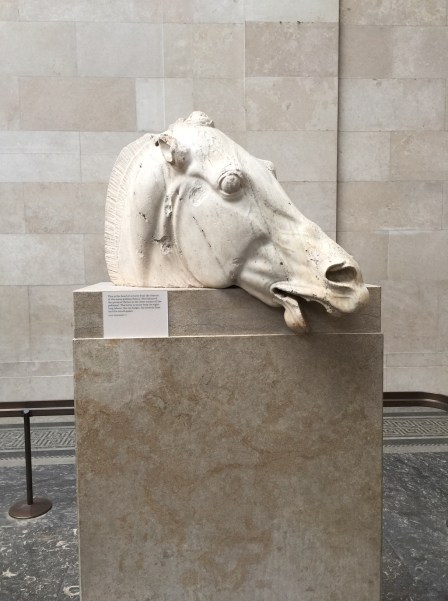


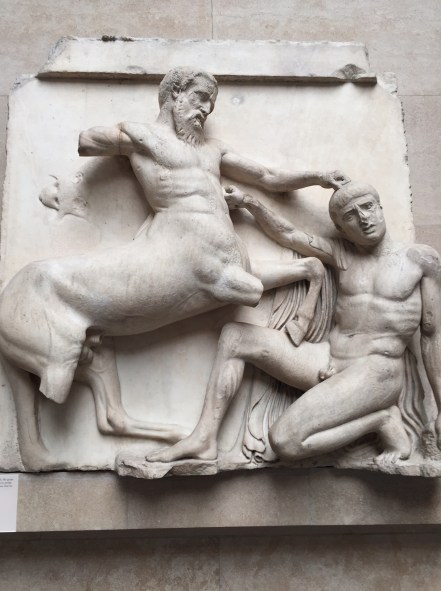

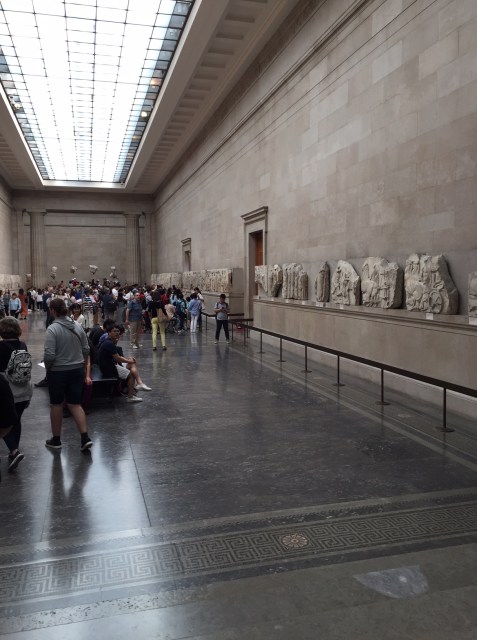

Mass tourism is the bane of my existence. I hate it with every fiber in my being.
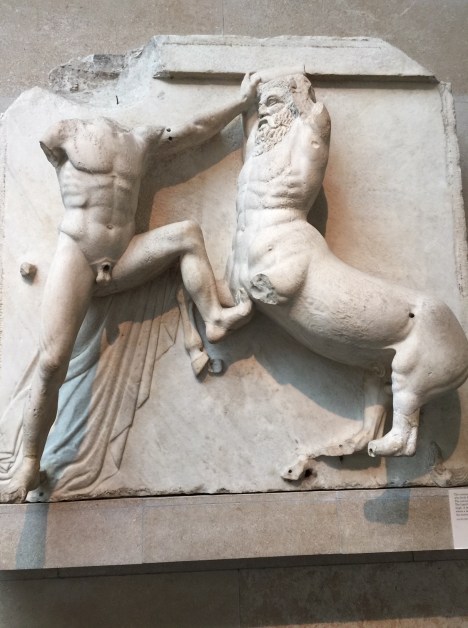


Did I mention that I detest mass tourism? I do.


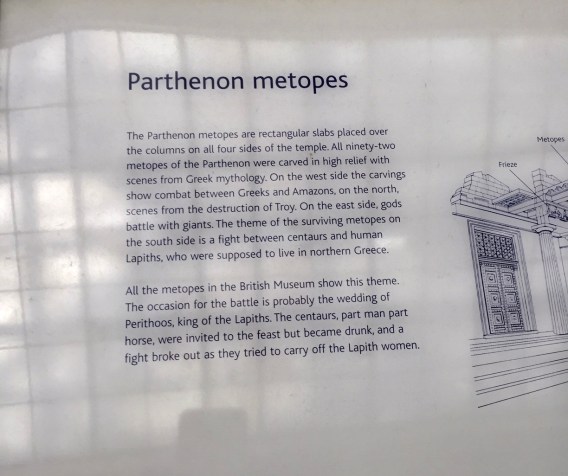


Mass tourism.


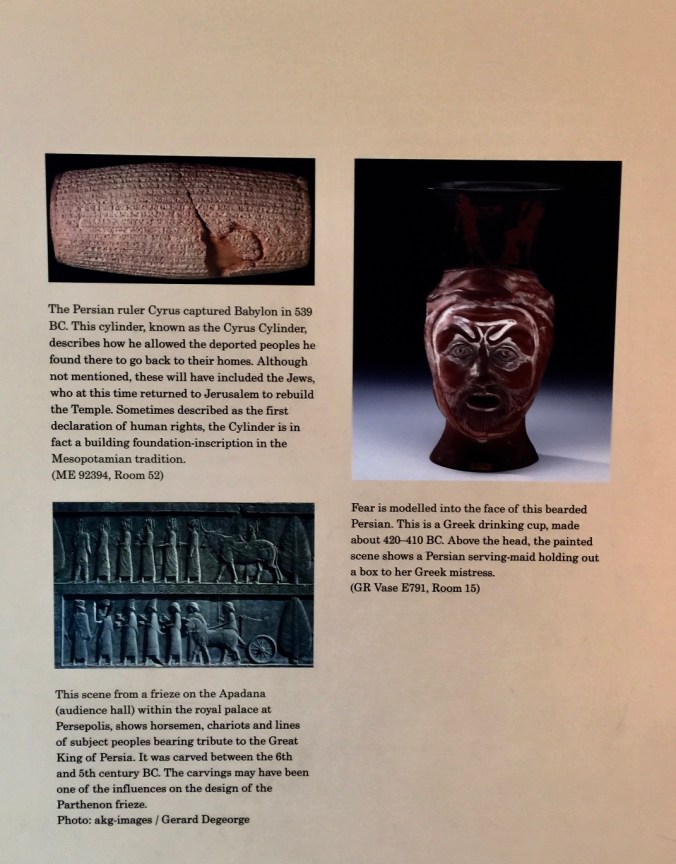


It’s a beautiful park in the heart of London, but did you know it takes its name from a leper hospital! It sure does! Read on…
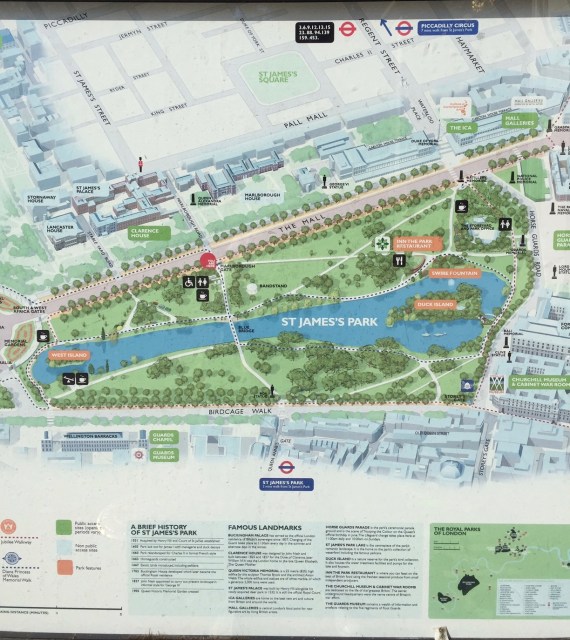
St James’s Park is a 57-acre park in the City of Westminster, central London. The park lies at the southernmost tip of the St James’s area, which was named after a leper hospital dedicated to St James the Less. It is the most easterly of a near-continuous chain of parks that also includes (moving westward) Green Park, Hyde Park, and Kensington Gardens.

The park is bounded by Buckingham Palace to the west, the Mall to the north, Horse Guards to the east, and Birdcage Walk to the south. It meets Green Park at Queen’s Gardens with the Victoria Memorial at its center, opposite the entrance to Buckingham Palace. St James’s Palace is on the opposite side of The Mall.


The park has a small lake, St James’s Park Lake, with two islands, West Island, and Duck Island, named for the lake’s collection of waterfowl.
A resident colony of pelicans has been a feature of the park since pelicans were donated by a Russian ambassador in 1664 to Charles II. While most of the time the wings are clipped, there is a pelican who can be seen flying to the London Zoo in hopes of another meal.
The Blue Bridge across the lake affords a view west towards Buckingham Palace framed by trees. Looking east the view includes the Swire Fountain to the north of Duck Island and, past the lake, the grounds of Horse Guards Parade, with Horse Guards, the Old War Office and Whitehall Court behind. To the south of Duck Island is the Tiffany Fountain on Pelican Rock, and past the lake is the Foreign and Commonwealth Office, with the London Eye, the Shell Tower, and the Shard behind.
I first visited St Jame’s Park with my mother on a trip to London many years ago. She delighted in the flower beds, planted seasonally, and always lush and beautiful. As I walked through the gardens last month, I thought of my mom and how much she would love how they looked that day!


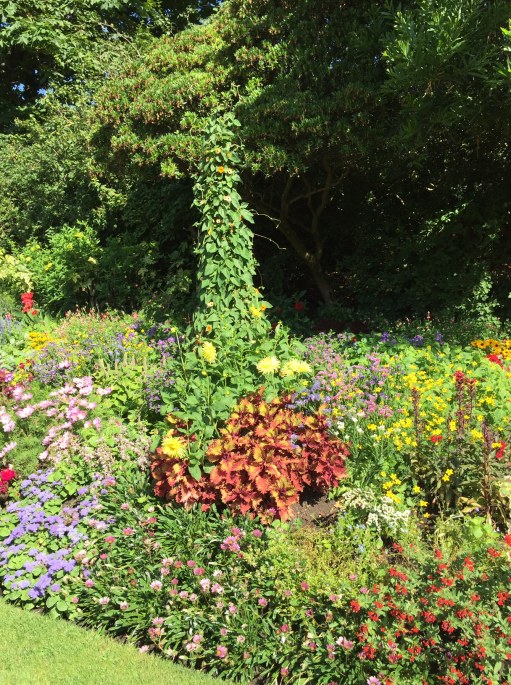


Nerd Alert: the history part of this post:
In 1532, Henry VIII purchased an area of marshland through which the Tyburn flowed from Eton College. It lay to the west of York Palace acquired by Henry from Cardinal Wolsey; it was purchased in order to turn York Palace, subsequently renamed Whitehall, into a dwelling fit for a king.
On James I’s accession to the throne in 1603, he ordered that the park be drained and landscaped, and exotic animals were kept in the park, including camels, crocodiles, an elephant and exotic birds, kept in aviaries.
While Charles II was in exile in France under the Commonwealth of England, he was impressed by the elaborate gardens at French royal palaces, and on his ascension he had the park redesigned in a more formal style, probably by the French landscaper André Mollet.
An 850 x 42 yard canal was created as evidenced in the old plan. The king opened the park to the public and used the area to entertain guests and mistresses, such as Nell Gwyn. The park became notorious at the time as a meeting place for impromptu acts of lechery, as described by John Wilmot, 2nd Earl of Rochester in his poem “A Ramble in St James’s Park.”
In the late 17th and early 18th centuries cows grazed on the park, and milk could be bought fresh at the “Lactarian,” described by Zacharias Conrad von Uffenbach in 1710.
The 18th century saw further changes, including the reclamation of part of the canal for Horse Guards Parade and the purchase of Buckingham House (now Buckingham Palace) at the west end of the Mall, for the use of Queen Charlotte in 1761.
Further remodelling in 1826–27, commissioned by the Prince Regent (later George IV) and overseen by the architect and landscaper John Nash, saw the canal’s conversion into a more naturally-shaped lake, and formal avenues rerouted to romantic winding pathways.
At the same time, Buckingham House was expanded to create the palace, and Marble Arch was built at its entrance, while The Mall was turned into a grand processional route. It opened to public traffic 60 years later in 1887.
The Marble Arch was moved to its current location at the junction of Oxford Street and Park Lane in 1851 and the Victoria Memorial was erected between 1906 and 1934.


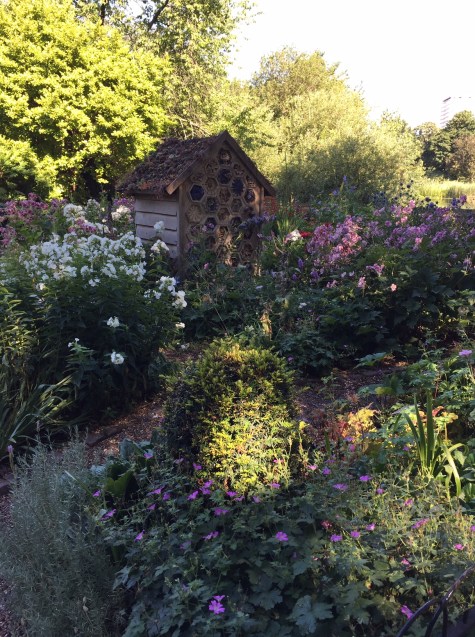


Duck Island Cottage, in the pictures above, has a long history and is now the headquarters for the London Parks & Gardens Trust.
The park is Grade I listed on the Register of Historic Parks and Gardens.


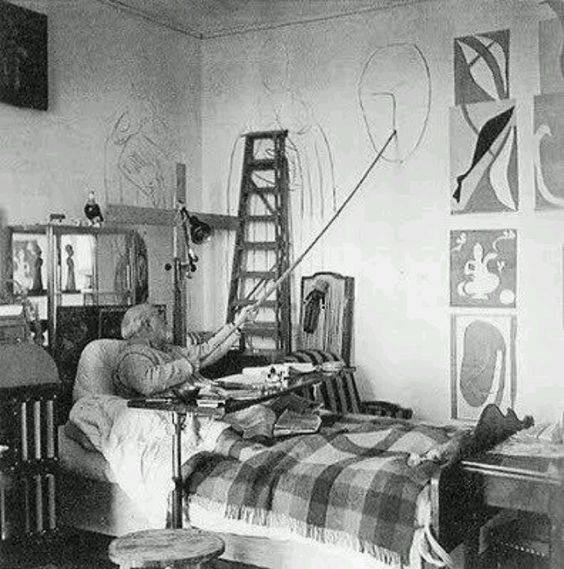
Henri Matisse, towards the end of his life in art.
During my first walk through Hyde Park and Kensington Gardens, I noticed these markers in the pavement, guiding the visitor to the Princess Diana Memorial. I wasn’t sure I wanted to go see it. I remember her death all too well, just like I can remember the day President Kennedy was shot. Markers of time that I wish I could forget.

In the end, I couldn’t not go. I’m so glad I did. It is a lovely, lighthearted place. I think Diana would have loved it. On the sunny Sunday afternoon I was there, families and especially children were enjoying the water as it flowed through the monument. I loved it. But, I couldn’t bring myself to take pictures. It was still too raw for me.

The Diana, Princess of Wales Memorial Fountain is a memorial in London dedicated to Diana, Princess of Wales, who died in a car crash in 1997. It was designed to express Diana’s spirit and love of children.
The fountain was built with the best materials, talent and technology. It contains 545 pieces of Cornish granite – each shaped by the latest computer-controlled machinery and pieced together using traditional skills.

The design aims to reflect Diana’s life, water flows from the highest point in two directions as it cascades, swirls and bubbles before meeting in a calm pool at the bottom. The water is constantly being refreshed and is drawn from London’s water table.

The Memorial also symbolises Diana’s quality and openness. There are three bridges where you can cross the water and go right to the heart of the fountain.

The memorial was designed by American landscape architect and artist Kathryn Gustafson.
The fountain is located in the southwest corner of Hyde Park, just south of the Serpentine lake and east of the Serpentine Gallery. Its cornerstone was laid in September 2003 and it was officially opened on 6 July 2004 by Queen Elizabeth II. Also present were Diana’s younger brother Charles Spencer, her ex-husband Prince Charles, and her sons William and Harry.
Working on the project began in 2001. The fountain was designed by Gustafson Porter. Kathryn Gustafson, an American landscape artist said she had wanted the fountain, which was built to the south of the Serpentine, to be accessible and to reflect Diana’s “inclusive” personality. Gustafson said: “Above all I hope that it provides a fitting memorial for the princess and does credit to the amazing person that she was.”
The memorial has the form of a large, oval stream bed about 165 by 260 ft that surrounds, and is surrounded by, a lush grassy field. The granite stream bed is from 10 to 20 ft wide. It is quite shallow and is laid out on a gently sloping portion of the park, so that water pumped to the top of the oval flows down either side. One side of the stream bed descends fairly smoothly to the downhill end of the oval with gentle ripples; the other side consists of a variety of steps, rills, curves, and other shapes so that the water plays in interesting ways as it flows to the tranquil pool at the bottom. The two sides were intended to show two sides of Diana’s life: happy times, and turmoil.


 get back, lauretta!
You must be logged in to post a comment.