





Florence (Firenze)
Henry Wadsworth Longfellow in Florence and the first American translation of Dante’s Divine Comedy
There’s a grand old hotel facade in Florence that proclaims on a marble plaque that Henry Wadsworth Longfellow, the revered American poet, stayed in this place and called the piazza in front of it “the Mecca for the foreigners.” The plaque also notes that Longfellow translated Dante’s Divine Comedy.

Roughly translated, the plaque reads:
Henry Wadsworth Longfellow
(1807 – 1882)
American Poet
A master in the neo-Latin language
Translator of the Divine Comedy
Among the Florentine palazzi
It was Here
In the Piazza that he called
“The Mecca of the foreigners”


While most Americans are familiar with Longfellow from their high school literature classes, I bet there are many things about the poet that are not commonly known.
Longfellow was born February 27, 1807, in Portland, Maine, to an established New England family. His father, a prominent lawyer, expected his son would follow in his profession. Young Henry attended Portland Academy, a private school and then Bowdoin College, in Maine. Longfellow was an excellent student, showing proficiency in foreign languages.
Upon graduation, in 1825, he was offered a position to teach modern languages at Bowdoin, but on the condition that he first travel to Europe, at his own expense, to research the languages. He did so, touring Europe from 1826 through 1829. There he developed a lifelong love of the Old World civilizations and taught himself several languages. It must have been at that time that he stayed in the Florentine palazzo, upon which his visit is proudly announced on the plaque.


Upon his return from Europe, Longfellow married and began the teaching of modern languages at Bowdoin. Because the study of foreign languages was so new in America, Longfellow had to write his own textbooks.
In addition to teaching and writing textbooks, he published Outre-Mer: A Pilgrimage beyond the Sea, a collection of travel essays on his European experience. His outstanding work earned him a professorship at Harvard University in Cambridge, Massachusetts.
Before he began at Harvard, Longfellow and his wife traveled to northern Europe. Tragically, on this trip his wife, Mary, died in 1836 following a miscarriage. Devastated, Longfellow returned to the United States seeking solace. He turned to his writing, channeling his personal experiences into his work.
He soon published the romance novel Hyperion, where he unabashedly told of his unrequited love for Frances Appleton, whom he had met in Europe soon after his first wife died. After seven years, they married in 1843, and would go on to have six children.

Above: Fanny Appleton Longfellow, with sons Charles and Ernest, circa 1849
Over the next 15 years, Longfellow would produce some of his best work such as Voices of the Night, a collection of poems including “Hymn to the Night” and “A Psalm of Life,” which gained him immediate popularity. Other publications followed such as Ballads and Other Poems, containing “The Wreck of the Hesperus” and the “Village Blacksmith.” During this time, Longfellow also taught full time at Harvard and directed the Modern Languages Department. Due to budget cuts, he covered many of the teaching positions himself.
Longfellow’s popularity grew, as did his collection of works. He wrote about a multitude of subjects: slavery in Poems on Slavery, literature of Europe in an anthology The Poets and Poetry of Europe, and American Indians in The Song of Hiawatha. One of the early practitioners of self-marketing, Longfellow expanded his audience, becoming one of the best-selling authors in the world. He was able to retire from teaching and became the first self-supported American poet.
In the last 20 years of his life, Longfellow continued to enjoy fame with honors bestowed on him in Europe and America. Among the admirers of his work included Queen Victoria, Alfred, Lord Tennyson, Prime Minister William Gladstone, Walt Whitman and Oscar Wilde.
Unfortunately, Longfellow experienced more sorrow in his personal life. In 1861, a house fire killed his 2nd wife, Fanny, and that same year, the country was plunged into the Civil War. His young son, Charley, ran off to fight without his approval.
It was after his wife’s death that he immersed himself into the translation of Dante’s The Divine Comedy, which was, by any reckoning, a monumental project.
Why, you might wonder, would he attempt this translation?
In fact, although “The Divine Comedy” is hailed today as a major work in the Western canon, it was not always so highly regarded. Although recognized as a masterpiece in the centuries immediately following its publication in 1320, the work was largely ignored during the Enlightenment, with some notable exceptions such as Vittorio Alfieri; Antoine de Rivarol, who translated the Inferno into French; and Giambattista Vico, who in the Scienza nuova and in the Giudizio su Dante inaugurated what would later become the romantic reappraisal of Dante, juxtaposing him to Homer.
The Comedy was “rediscovered” in the English-speaking world by William Blake – who illustrated several passages of the epic – and the Romantic writers of the 19th century.
Longfellow spent the several years following his 2nd wife’s death by translating Dante’s Divine Comedy. To aid him in perfecting the translation and reviewing proofs, he invited friends to meetings every Wednesday starting in 1864. The “Dante Club,” as it was called, regularly included William Dean Howells, James Russell Lowell, and Charles Eliot Norton, as well as other occasional guests.
In his celebrated translation, instead of attempting hendecasyllables, Longfellow used blank verse (unrhymed iambic pentameter). He followed Dante’s syntax when he could, and wrote compactly in unrhymed tercets (the “Mountain”/”fountain” rhyme here would appear to be accidental). The effect is nothing like Dante’s sinuous tide of terza rima, but Longfellow’s verse flows not un-melodiously, the cadence of the line pleasantly varied with both feminine and masculine endings. In general, the style is plain rather than florid.
The full three-volume translation, the first American translation, was published in the spring of 1867, though Longfellow continued to revise it. It went through four printings in its first year.


The elite of the New World were already familiar with Dante from their travels to Italy as well as British translations of his work. But, owning a copy of Longfellow’s translation of Dante was a must for those Americans who identified with the highest Western culture.
Instead of attempting hendecasyllables, the American poet uses blank verse (unrhymed iambic pentameter). He follows Dante’s syntax when he can, and writes compactly in unrhymed tercets (the “Mountain”/”fountain” rhyme here would appear to be accidental). The effect is nothing like Dante’s sinuous tide of terza rima, but Longfellow’s verse flows not un-melodiously, the cadence of the line pleasantly varied with both feminine and masculine endings. In general, the style is plain rather than florid.
It was an amazing achievement. Moreover, Longfellow’s translation has held up through the 150 years since it was published. A leading expert in the written word notes it as perhaps the best of the many subsequent translations of the work in English.

You can read her blog post here:
In it, Professor Haven notes:
I have a number of translations of Dante’s The Divine Comedy in my home – among them the translations of Charles Singleton, Dorothy L. Sayers, Peter Dale, and others.
But perhaps the most neglected one is the battered volumes I found on ebay, translated by Henry Wadsworth Longfellow. This overlooked translation finds a new champion in Joseph Luzzi, in “How to Read Dante in the 21st Century” in the online edition of The American Scholar:
… one of the few truly successful English translations comes from Henry Wadsworth Longfellow, a professor of Italian at Harvard and an acclaimed poet. He produced one of the first complete, and in many respects still the best, English translations of The Divine Comedy in 1867. It did not hurt that Longfellow had also experienced the kind of traumatic loss—the death of his young wife after her dress caught fire—that brought him closer to the melancholy spirit of Dante’s writing, shaped by the lacerating exile from his beloved Florence in 1302. Longfellow succeeded in capturing the original brilliance of Dante’s lines with a close, sometimes awkwardly literal translation that allows the Tuscan to shine through the English, as though this “foreign” veneer were merely a protective layer added over the still-visible source. The critic Walter Benjamin wrote that a great translation calls our attention to a work’s original language even when we don’t speak that foreign tongue. Such extreme faithfulness can make the language of the translation feel unnatural—as though the source were shaping the translation into its own alien image.
Another scholar recently recommends Longfellow’s translation as the best way to read Dante in the 21st century.

You can read Mr. Luzzi’s essay here:
https://theamericanscholar.org/how-to-read-dante-in-the-21st-century/#.XbR2Mi2B0U1
See also: Longfellow’s Dante: Literary Achievement in a Transatlantic Culture of Print
by Patricia Roylance https://www.jstor.org/stable/41428522?read-now=1&seq=14#metadata_info_tab_contents
Or, you can read the translation for yourself. Fortunately for us, in the 21st century you can read Longfellow’s translation online:
https://en.wikisource.org/wiki/Divine_Comedy_(Longfellow_1867)
As for me, whenever I walk through the piazza that Longfellow is said to have named “the Mecca for the foreigners” I will remember the poet and his time in Florence. I feel the same keen appreciation for this lovely space as he apparently did.

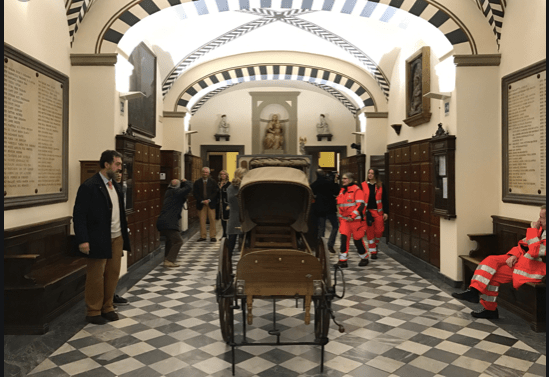
The Misericordia of Florence and its great museum

The Venerabile Arciconfraternita della Misericordia di Firenze (La Misericordia) is a lay confraternity founded in Florence in the 13th century by St. Peter Martyr (St. Peter of Verona) with the aim of extending evangelical mercy to the needy.
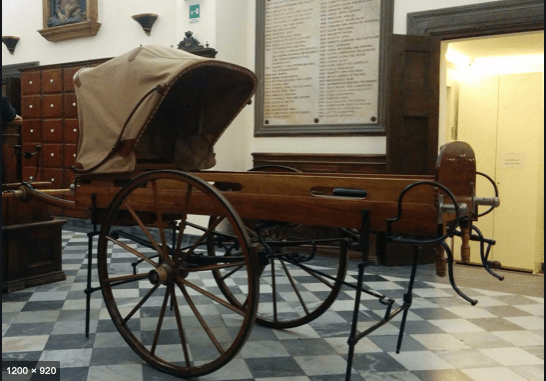
It is the oldest Brotherhood in Florence dedicated to caring for the sick and, in general, the oldest private voluntary institution in the world still active since its foundation (1244). Its lay members, called brothers, still continue to provide part of the transport of the infirm in the city.
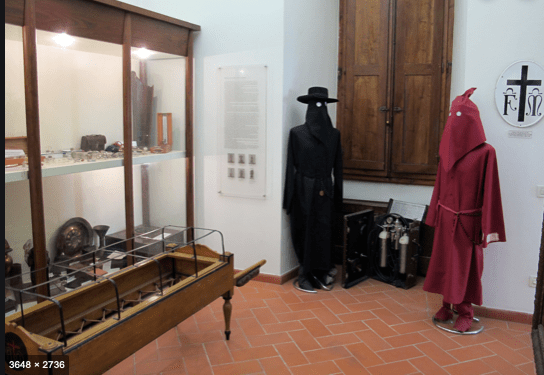
To preserve the egalitarian spirit of the company, all of its members wore long black robes (during the Middle Ages the garments were red) and black peaked hoods that cover the face with two holes for the eyes. With this disguise patients never knew if they were being carried to the hospital by a count or a cobbler. It was only in 2006 that the traditional black dress was relegated for use only in ceremonies, due to national regulations.
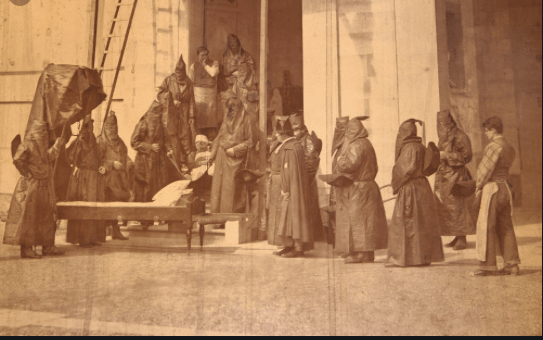
For a century or so, the confraternity shared space with the Compagnia del Bigallo. In 1525, the Misericordia moved elsewhere; but in 1576 it moved to the corner of Via Calzaiuoli, where it has remained ever since.
The Venerable Archconfraternity of Mercy, which has never known a single break in its charity work since its foundation, was established “for the purpose of assisting and accompanying the sick and the accident-prone to hospital and removing bodies from the street”. The latter role was crucial during such disasters as flooding or the plague. The company also collected alms to help poor girls marry and to the bury the dead.
When the association was founded in the 13th century, it was a time when family feuds and plagues were leaving a high number of disabled and dying people in the streets. This group of volunteers banded together to carry the wounded to hospitals and the dead to cemeteries.
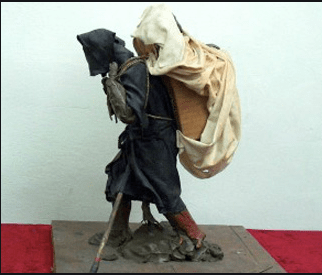
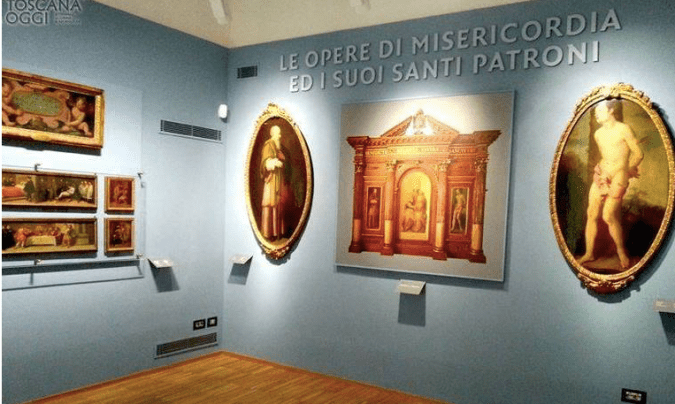
The headquarters for the Misericordia is in Piazza del Duomo 20 across the street and to the right of the Cathedral. Even if you’re not in need of any medical attention, you’re welcome to visit the headquarters and the church. It’s customary to leave a small donation. But, whatever you do, don’t fail to visit the museum. It’s hardly known and here, in the heart of Florence, where the hordes of tourists congest the city, you’ll be almost alone.
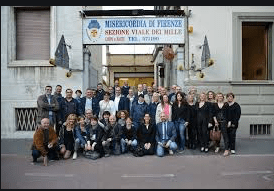
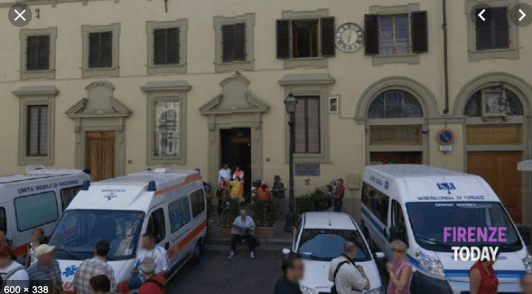
I highly recommend a visit of at least an hour to this interesting place; you will learn all kinds of things about the history of Florence and medicine here.
Gelato and Florence
Ask anybody who visits Florence: is gelato important there?
Why, certo! Gelato plays a key role in Florence’s history. In the 16th century, a man named Ruggeri, a Florentine poultry seller, who liked to cook as a hobby, took part in a competition put on by the Medici between the best chefs of Tuscany for the “most original dish ever seen.” His “sorbet” ended up winning over all the judges and he and his recipe gained instant great fame.
Also in 16th-century Florence, Bernardo Buontalenti, a famous architect, sculptor, and painter, who also loved cooking, was asked to prepare lavish banquets. His delicious zabaglione cream and fruit were an enormous hit, the start of the famous “crema fiorentina” and “gelato buontalenti” still around to be enjoyed in all of Florence’s top gelato spots.
Venchi (via dei Calzaiuoli, 65/R): a gelato made with select ingredients, like hazelnut (exclusively from I.G.P. Piedmont hazelnuts) and the famous “Venchi” chocolate they make themselves.
Vivoli (via dell’Isola delle Stinche, 7/R): Florence’s oldest gelateria, featuring sophisticated combinations as well as gluten-free options.
Dei Neri (via dei Neri, 9/11): a great variety of flavors, including some original ones, and gelato-based creative pastries.
La Carraia (piazza Nazario Sauro, 25/R): a secret, exclusive recipe, all natural, makes its gelato one of Florence’s most famous.
Grom (via del Campanile, 2): fresh fruit only, from the farm of the owner, uses no dyes, flavorings, preservatives, or emulsifiers for a gelato like “the days of yore.”
And, hand’s down, my favorite ice cream in Florence is “Buontalenti” from Badiani. It is second to none.
Russians in Florence

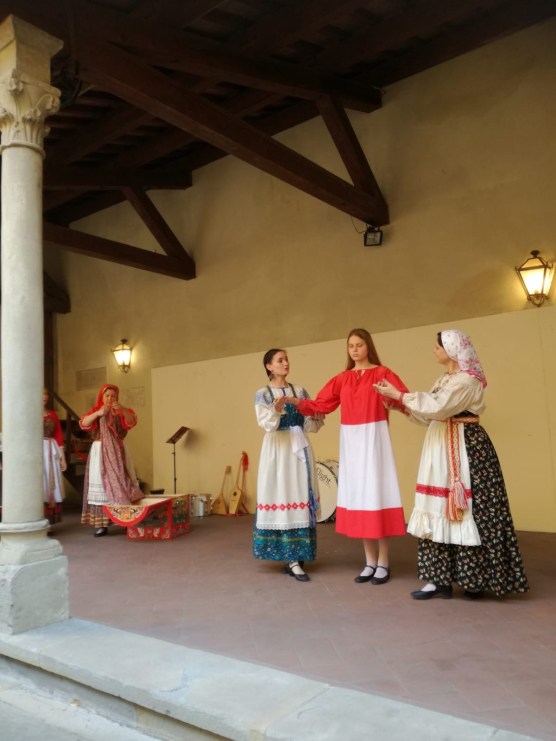
My friend and I were rendezvousing at the Piazza San Marco recently and noticed that there was music pouring out of the door leading to a small cortile to the left of the church. We followed the sound and happened upon a troupe of Russian singers and dancers who were performing in the beautiful autumn afternoon under the 500 year old roof of the cortile.
Amazing.
Florence is endlessly fascinating.




Amazing grace and sound
Dateline: Florence, Tuesday evening around 8 p.m., in my favorite Florentine piazza, Santa Trinita. How this lovely woman can master this space with her voice, while cars and Vespas are whizzing by, is a marvel to me.
Today in history: the Florence flood of Nov. 4, 1966
Mary Shelley in Florence
Mary Shelley, wife of Percy Bysshe Shelley and author of Frankenstein, wrote of Brunelleschi’s Gates of Paradise in Florence: “Let us turn to the gates of the Battistero, worthy of Paradise. Here we view all that man can achieve of beautiful in sculpture, when his conceptions rise to the height of grace, majesty, and simplicity. Look at these, and a certain feeling of exalted delight will enter at your eyes and penetrate your heart.”
Jones, Ted. Florence and Tuscany: A Literary Guide for Travellers (The I.B.Tauris Literary Guides for Travellers) (pp. 24-25). I.B.Tauris. Kindle Edition.
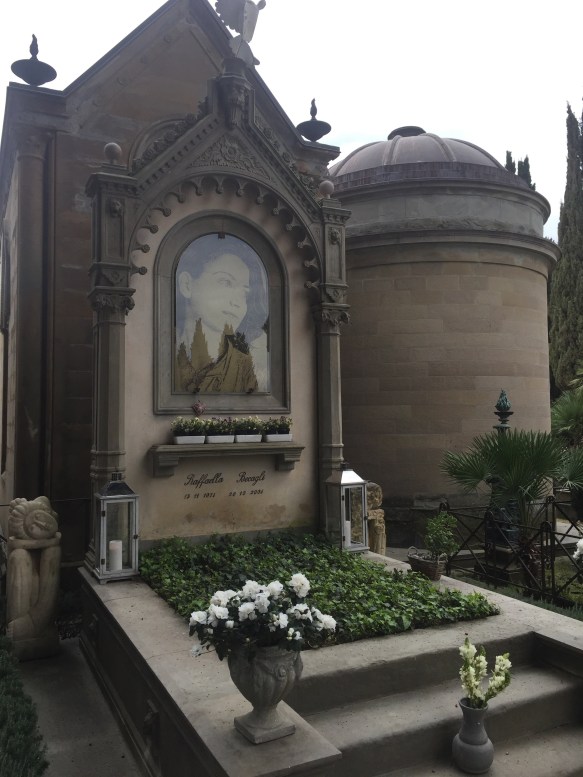
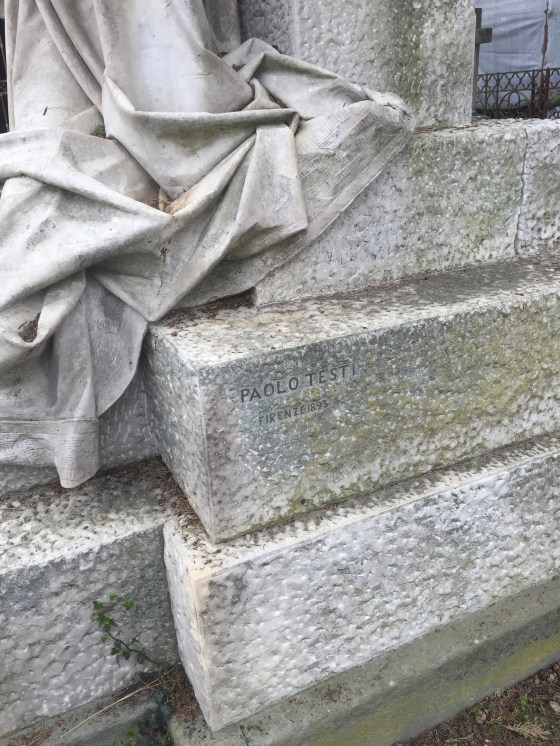
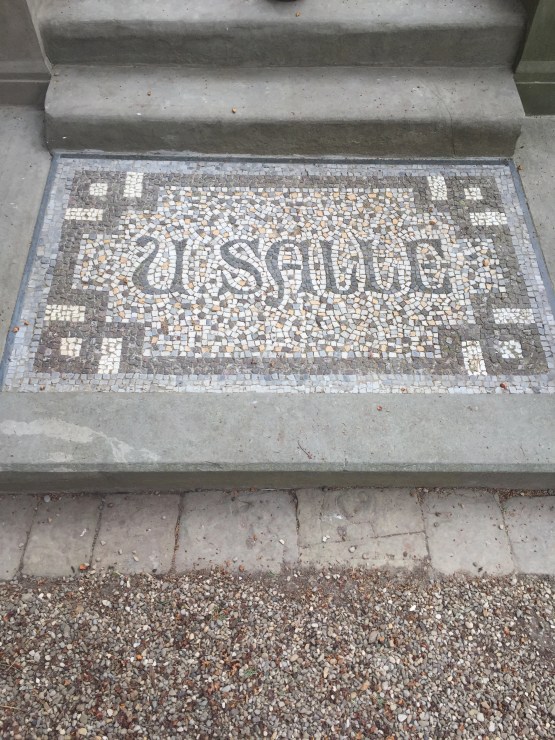
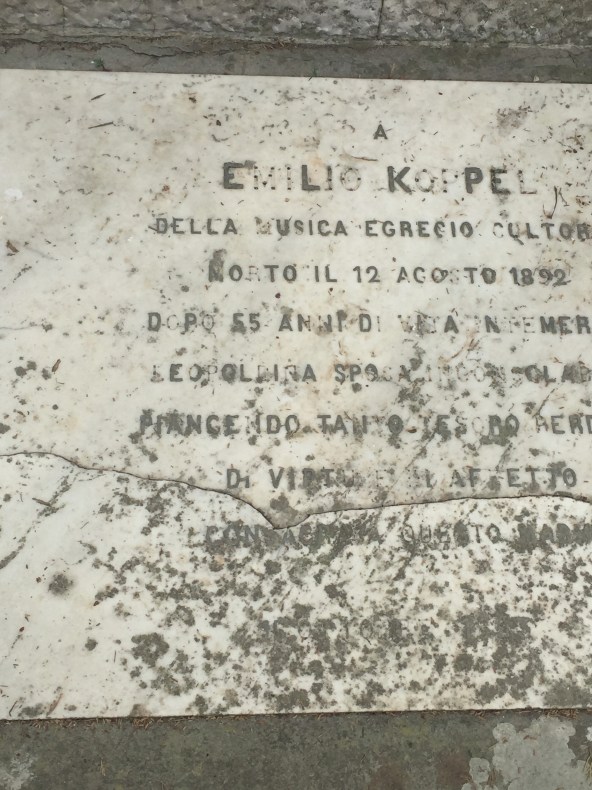
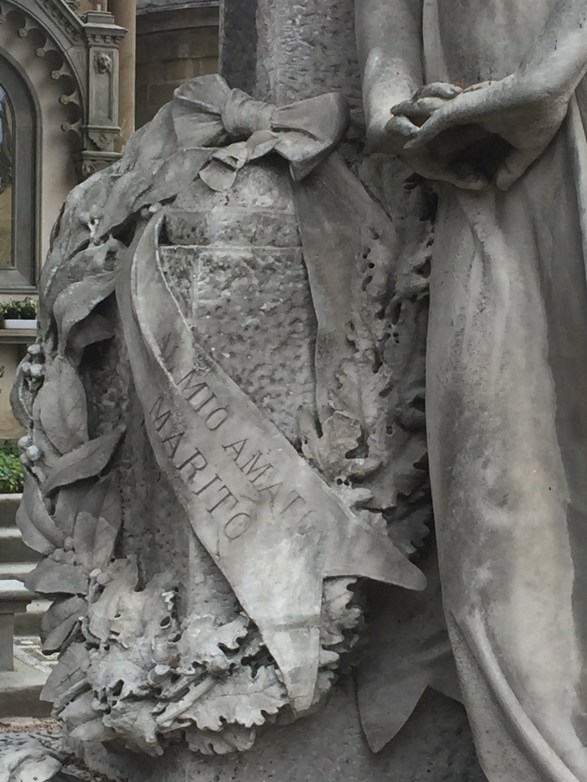
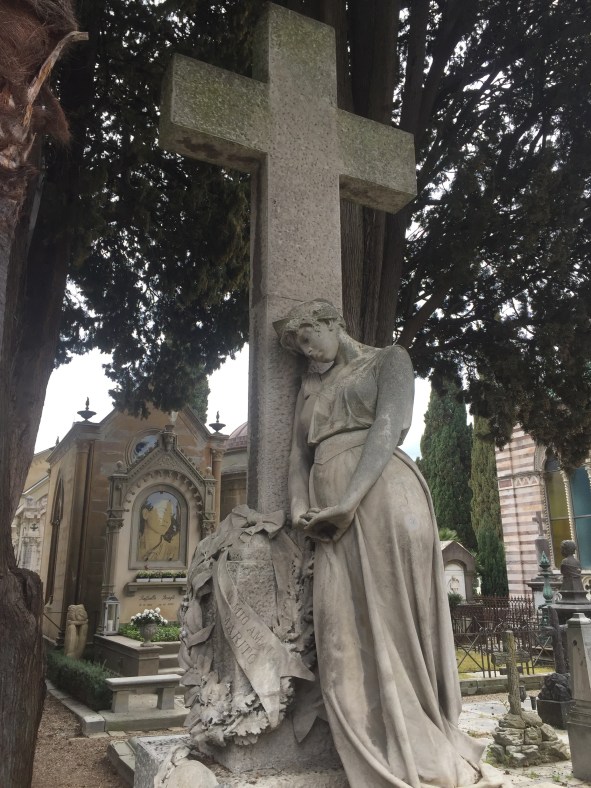
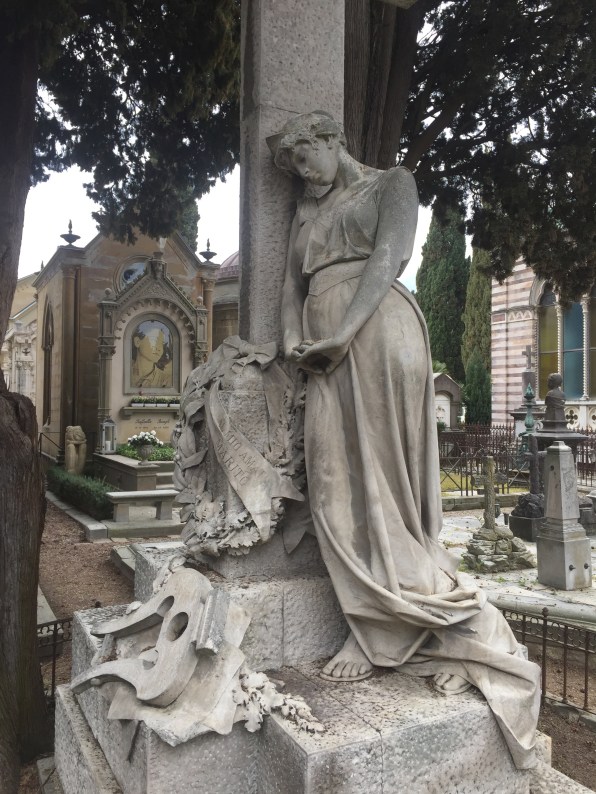
The cemetery behind San Miniato, Florence
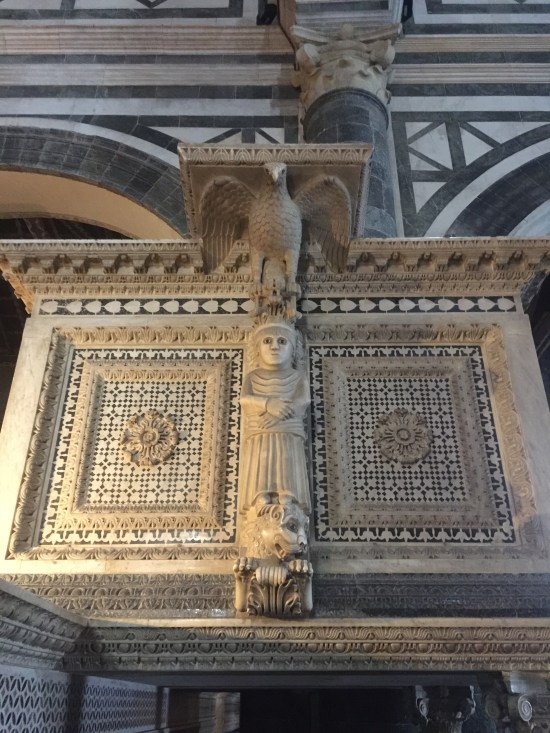
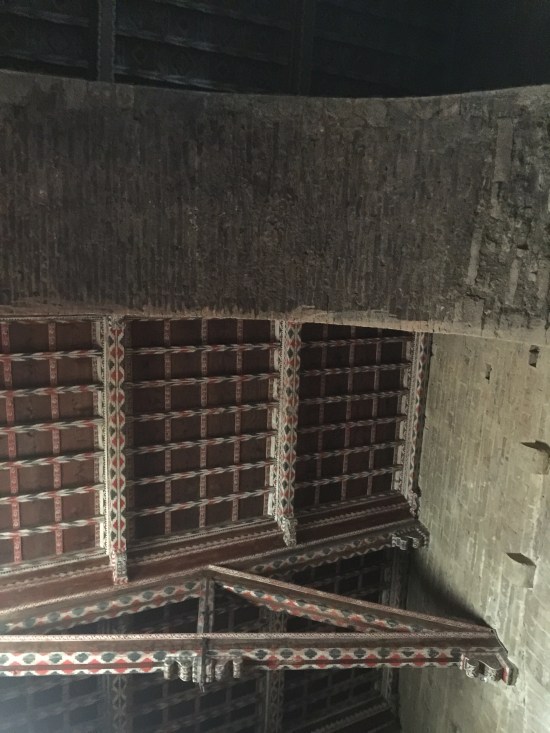
These few photos are from the interior of San Miniato.

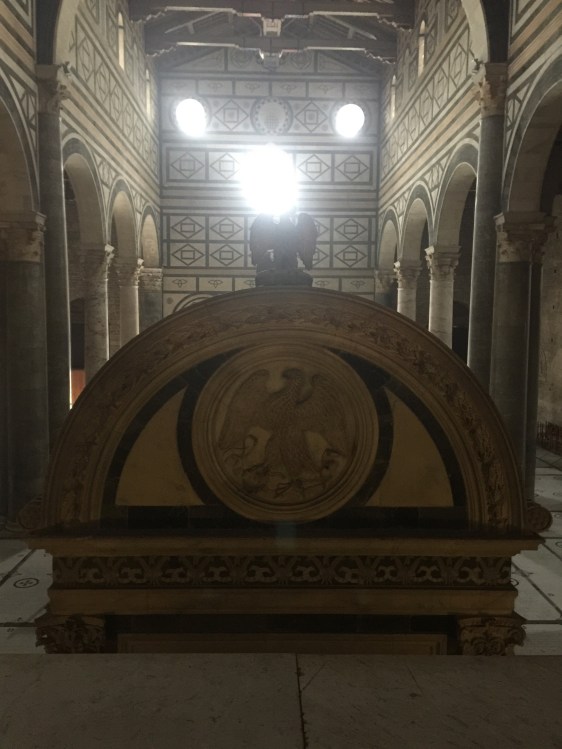
The following images are from the cemetery behind the church:

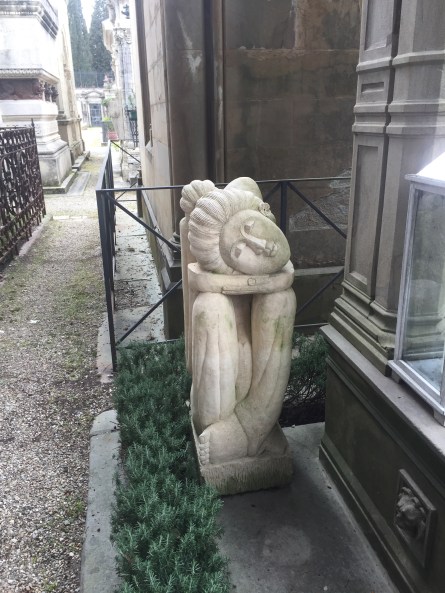
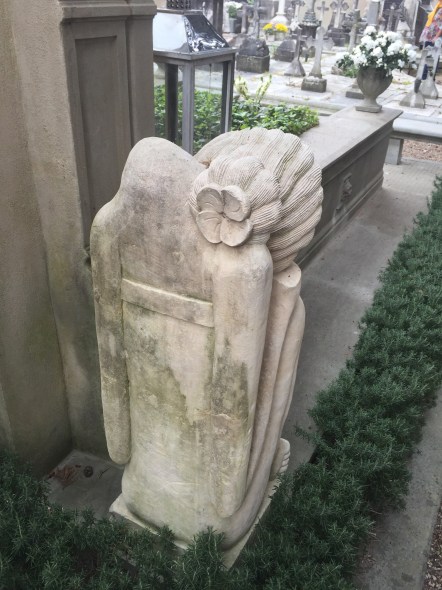
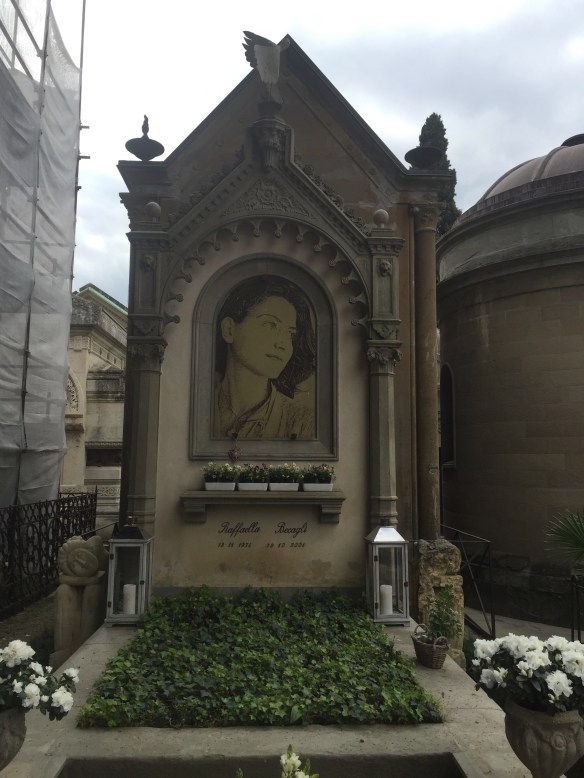
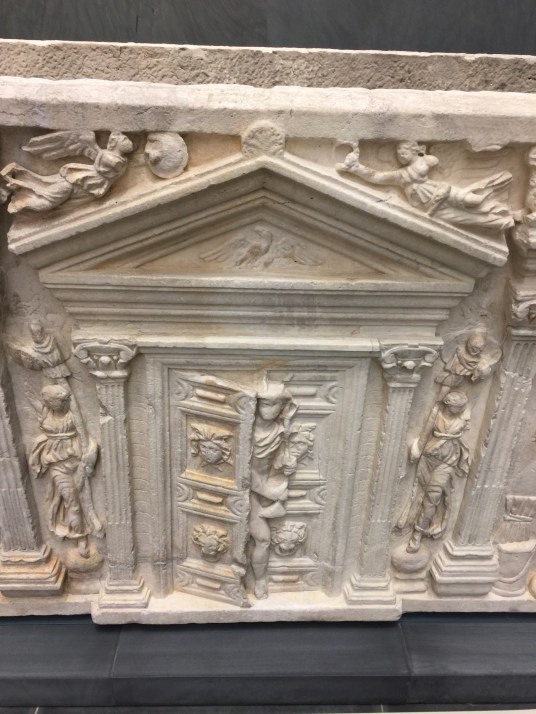
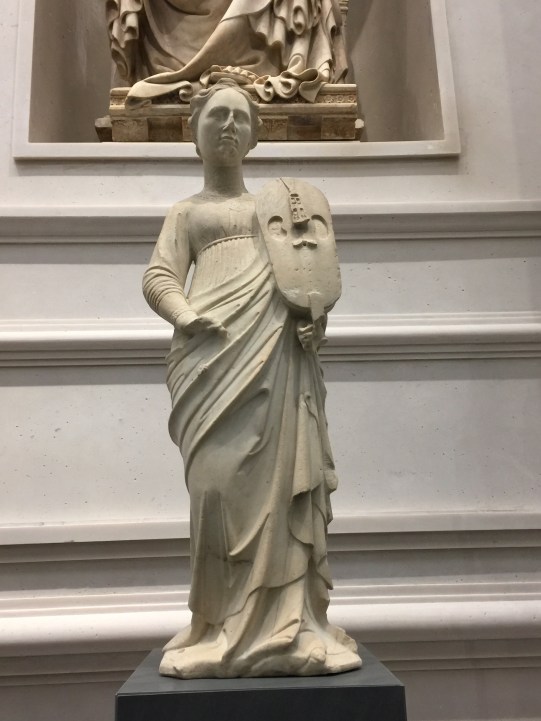
Museo dell’ Opera del Duomo, Florence
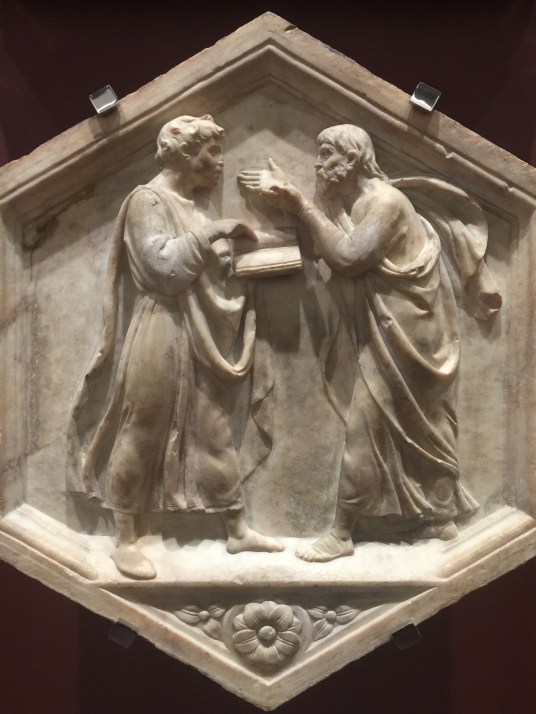
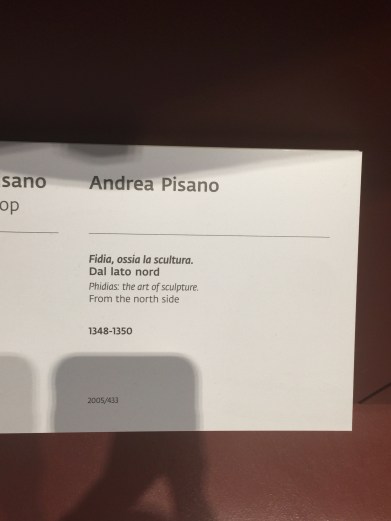
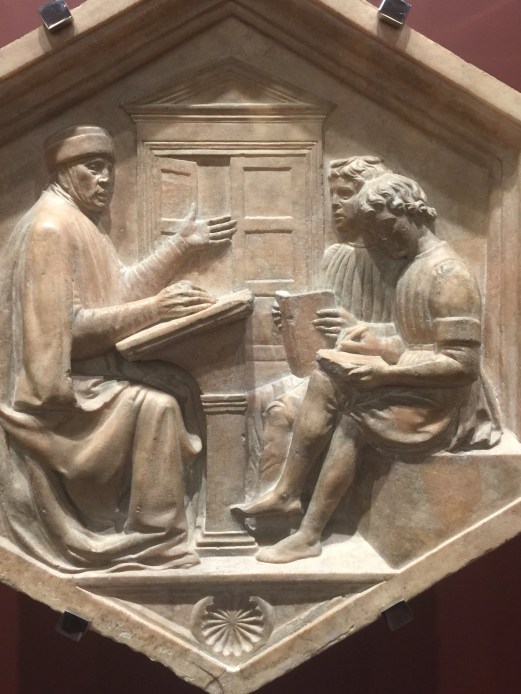
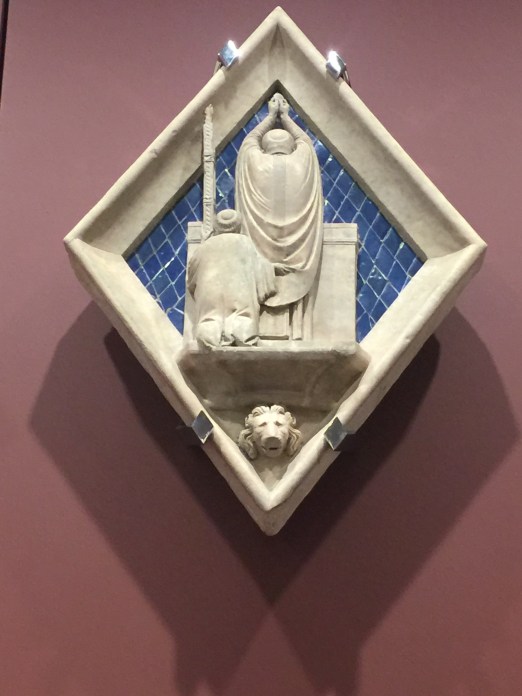
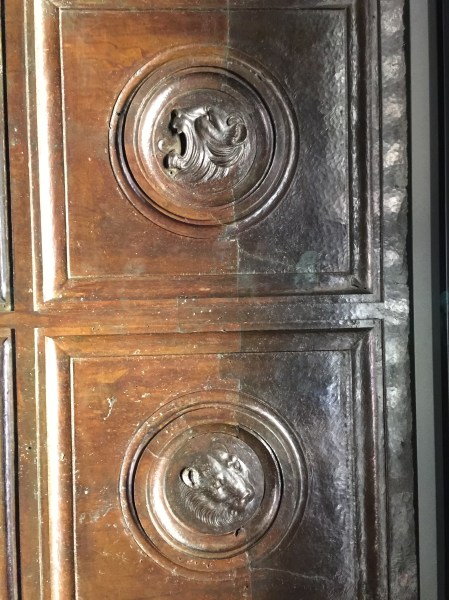
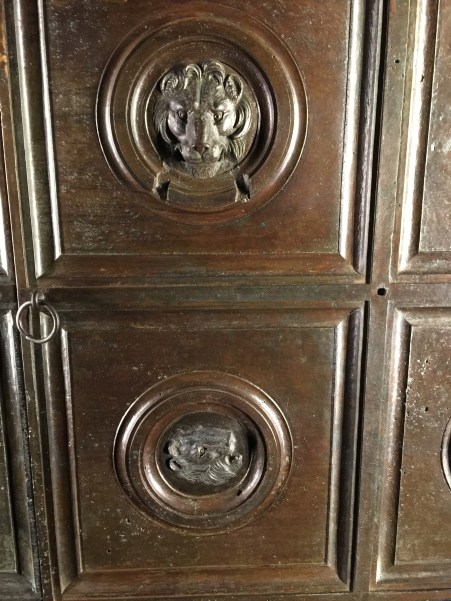
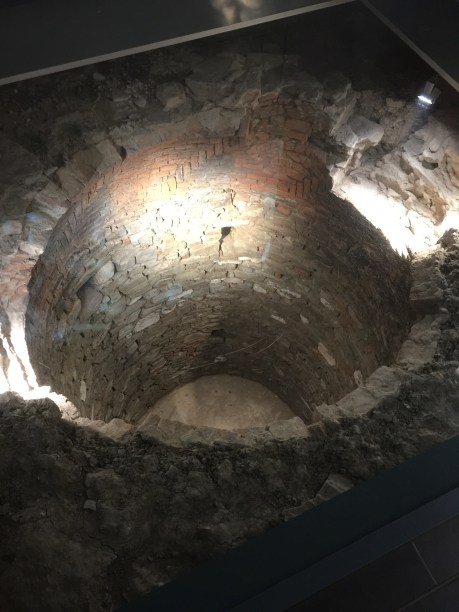
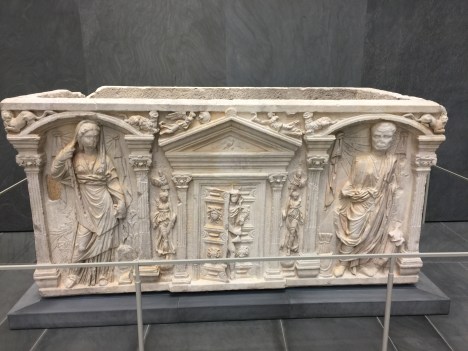
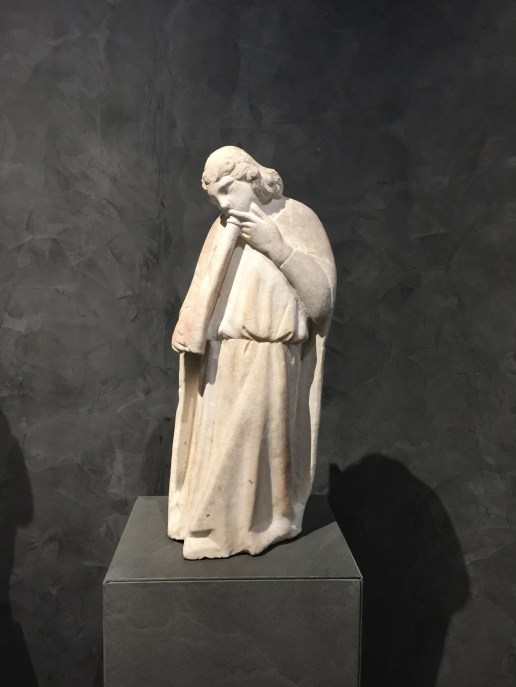
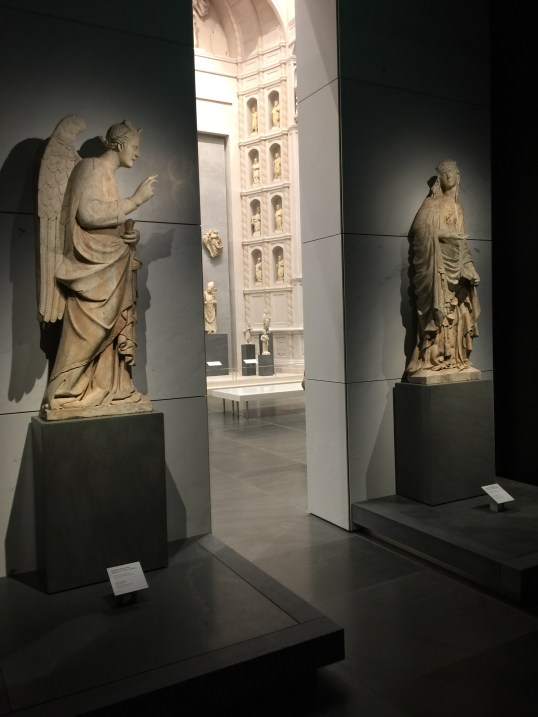
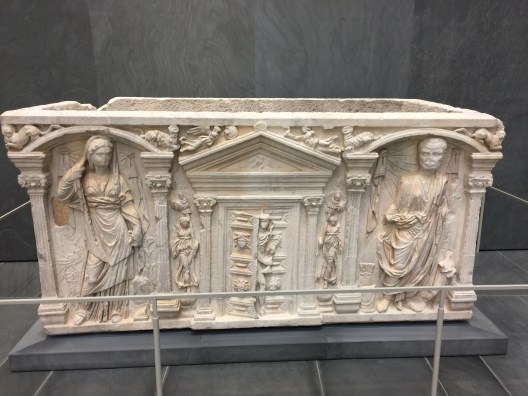
When I first started visiting Florence in the late 1970s, the museum connected to the duomo was housed in a very old, smallish palazzo behind the duomo. About 4 years ago, the museum reopened after extensive renovations and it is one of the best museum spaces I’ve ever seen. It is state of the art and a must-see for anyone who values Renaissance art.
These are just a few samples.






 get back, lauretta!
You must be logged in to post a comment.