Santa Trinita, Florence; masterworks by Ghirlandaio and Lorenzo Monaco

Screen Shot 2019-11-02 at 11.20.00

I walk by this glorious church in Florence at least weekly and, if it happens to be open, I always wander through the interior, without really knowing why.  It draws me like a magnet, but I’ve never really taken the time to really register what it holds, until yesterday when I had time to really savor the interior.

To really understand the church I start, as I always do, by reading. I discovered that this site was once just outside the ancient walls of Florence and the home of an original Carolingian oratory. Imagine, this very central locale at the heart of contemporary Florence was once outside the city walls.

That building was superseded in 1092 by a slightly larger complex of the Benedictine order of the monks; this order was created by a Florentine nobleman, Giovanni Gualberto.

Sidebar: The Story of Giovanni Gualberto: One Good Friday Giovanni Gualberto left home with his gang of roughs, fully intending to avenge the recent murder of his brother. Upon finding the murderer, who pleaded for his life and, because it was the very day Jesus was crucified, Gualberto decided to spare him. Gualberto went up to San Miniato, where a crucifix was said to have bowed its head to him in honor of his mercy. Gualberto later became a Benedictine monk and founded the Vallombrosan order. He died in 1073. This story is the source of Edward Burne-Jones's early painting The Merciful Knight, which shows Christ
 kissing Gualberto. The Crucifix of Saint Giovanni Gualberto, 
now kept in this church, is said to be the miraculous crucifix, but  it isn't that old - the story is around 200 years older than this    crucifix. A cult flourished in the late-14th and 15th centuries which ascribed to it miraculous powers).


When the Vallombrosan monks rebuilt the church, it was done in a simple Romanesque style that reflected the austerity of the order. By this time, new walls had been built (1172-75) to ring the growing city. Parish church status was granted to the church in 1178.

It was again rebuilt and expanded after 1250 in the Gothic style by Niccolò Pisano. Damage from the historic Florentine flood of 1333 resulted in more work on the church, possibly under the direction of Neri di Fioravante. This building period transformed the church into Gothic interior we see today. The inside is a large, dark space, even on bright days.

The understated and harmonious Mannerist façade of Santa Trinita was designed around 1593 by Bernardo Buontalenti, one of the main Mannerist artists in Tuscany, with sculpture by Giovanni Caccini. Buontalenti’s desire for a looming vertical effect led him to omit portions of the actual façade, leaving the odd bit to the sides.

Screen Shot 2019-11-02 at 15.16.57

Screen Shot 2019-11-02 at 14.14.43

Despite all the rebuildings, we are fortunate that we can still see a bit of the Romanesque medieval building. It is visible inside as you look at the “counter-facade” or back wall of the church’s original front.

A controversial ‘restoration to its original form’ in the 1890s led to the loss of many Mannerist elements, including a staircase in front of the high altar by Buontalenti of 1574 which is now in Santo Stefano al Ponte.

Sidebar: Buontalenti is said to have been inspired by shells and the wings of bats in designing this staircase. It was admired by Francesco Bocchi, writing in 1591, especially for it's bringing the clergy closer to the congregation. He also said that the church responds to the eye with considerable grace despite being planned at"a very uncouth time."


As stated above, the interior of the church is very much a 14th-century Gothic work, and is laid out in the form of an Egyptian cross. It is divided into three aisles separated by pilasters that rise up to gothic archways and a cross-vaulted ceiling.

Screen Shot 2019-11-03 at 15.02.11

During the restoration carried out following the 1966 flood the ’embellishments’ added in the early 1900s were stripped away, returning the frescos of the chapels to their original splendor.

The bas-relief over the central door of the Trinity was sculpted by Pietro Bernini and Giovanni Battista Caccini.

The 17th-century wooden doors have carved panels depicting Saints of the Vallumbrosan order.

The Column of Justice (Colonna di Giustizia) in the piazza, originates from the Baths of Caracalla in Rome, and was a gift to Cosimo I de’ Medici by Pope Pius IV. It was erected in 1565 to commemorate the Battle of Montemurlo in which Florence defeated Siena.

Screen Shot 2019-11-03 at 09.35.35

The Church of Santa Trinita belonged to the Strozzi family and later passed to the Medici family. The church was patronized over the centuries by many of Florence’s wealthiest families; as a result its many rebuildings allow it to serve as the text for a course on Italian art history.

Even though the Italian word for trinity is trinità, with an accent  indicating stress on the last vowel, the Florentine pronunciation    puts the stress on the first vowel, and the name is therefore writtenwithout an accent; sometimes, it is accented as trìnita to
indicate the unusual pronunciation.

In this post, I’ll only discuss the art works that seem most important to me.  A full accounting of the chapels would need a book.

The sacristy:

The sacristy entrance is to the left of the side door in the right transept. The entrance doorway (by Lorenzo Ghiberti), can be opened on request by the attendant. Originally the sacristy was the Strozzi Chapel, and thus it contains the tomb of Onofrio Strozzi, commissioned by his son Palla, designed by Lorenzo Ghiberti and Filippo Brunelleschi.

On the altar used to stand the Adoration of the Magi by Gentile da Fabriano, now in the Uffizi Gallery and discussed below under the category of “lost works.” Onofrio Strozzi wanted a monument to commemorate Saint Onofrio and Saint Nicholas, which was made by Michelozzo.

Screen Shot 2019-11-03 at 15.20.34

Speaking of the Strozzi family, we should keep in mind that Palla Strozzi was banished after the revolt in 1434 against Cosimo il Vecchio. Palla was among the 500 who were banished and he died in Padua. Onofrio Strozzi’s tomb is decorated with flowers painted by Gentile da Fabriano.

To enter the sacristy, to the right, is to step back in time.  Alhough Abbot Baldini had the entire church whitewashed “to display his love for it” in 1685, a number of early 14th-century frescoes survived, and were moved here during the restoration following the 1966 flood, including a Noli me Tangere (Jesus saying “Don’t hinder me” to the Magdalen as he leaves the tomb, generally mistranslated as “Don’t touch me”) by Puccio Capanna and a Crucifixion clearly based upon Giotto’s. The chapel also houses also a Pietà by Barbieri.


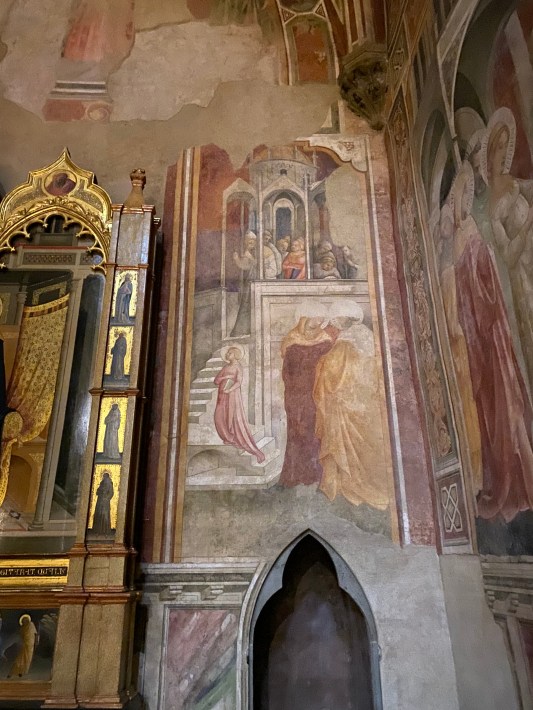
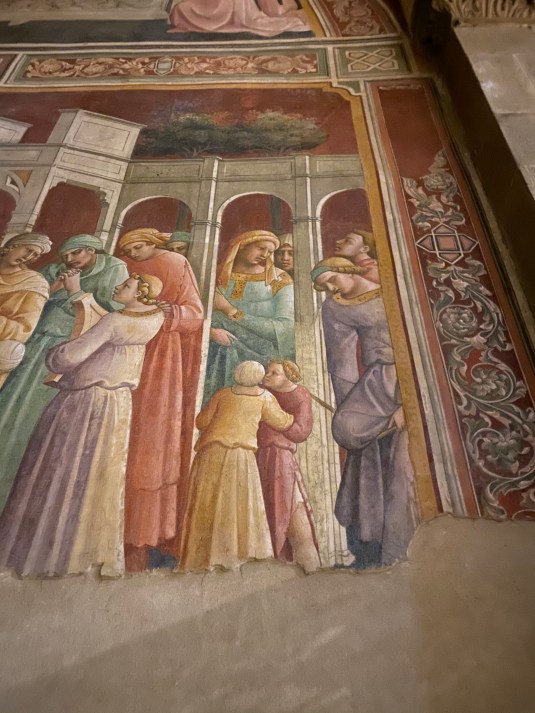
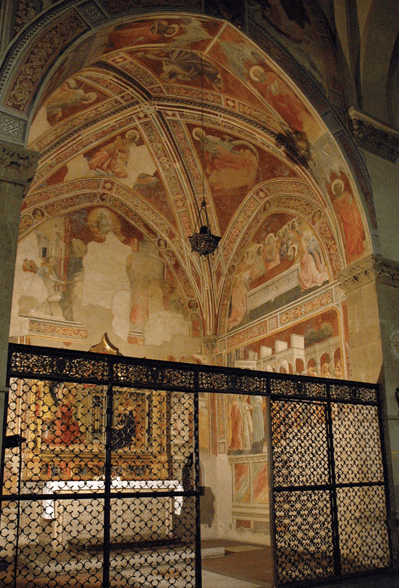
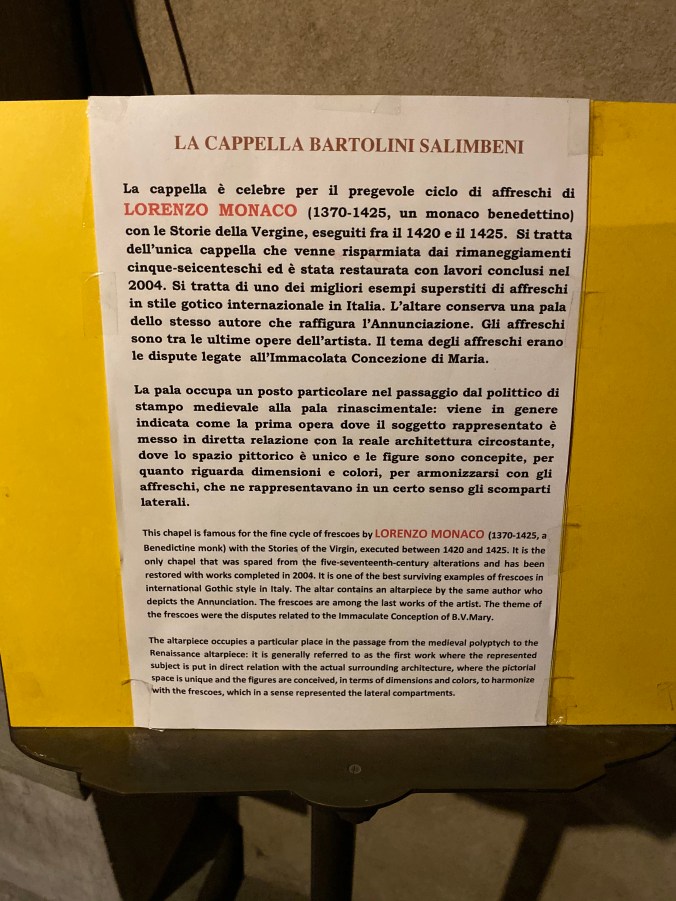
The Bartolini Salimbeni Chapel, with frescoes of The Life of the Virgin by Lorenzo Monaco, painted between 1420-25. These are his only known work in fresco and therefore very special. I love looking at the people on the right wall and the architecture on the left. The frescoes are one of the few surviving examples of International Gothic style frescoes in Italy.
Screen Shot 2019-11-02 at 11.06.18

The frescoes were commissioned by the Bartolini family. They covered the earlier fresco cycle by Spinello Aretino believed to have been commissioned by Bartolomeo Salimbeni in 1390.

The chapel, created during the Gothic renovation and enlargement of the church in the mid-13th century, was owned by the rich merchant family of the Bartolini-Salimbeni from at least 1363. Their residence, the Palazzo Bartolini Salimbeni, was located in the same square of the church.

Lorenzo Monaco’s frescoes date to 1420s, when a re-decoration program was carried on in the whole church, as testified also by fragments of Giovanni Toscani’s frescoes in the annexed Ardinghelli Chapel.

 

Screen Shot 2019-11-02 at 15.14.14

img_1597

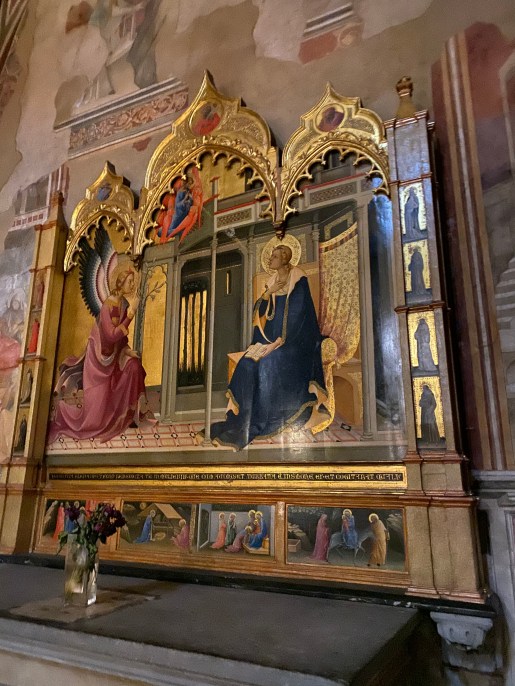
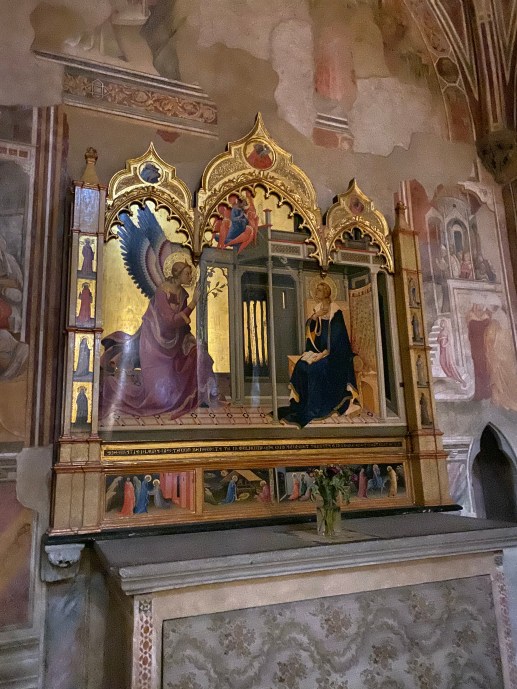
The Annunciation altarpiece is also by Lorenzo Monaco. This beautiful painting on wood is signed by the artist. He did great work at the convent of Santa Maria degli Angeli, but it is in this chapel where you can see his best work in an original context. The floor features poppies, the family emblem, and Per non dormire, their motto, which translates as ‘For those who don’t sleep.’

The frescoes, fragments of which are now lost, occupy the chapel’s walls, vault, arch and lunette. Lorenzo Monaco was mostly a miniaturist, and his (or his assistants’, since he was aged at the time and perhaps at his death in 1424 the work was unfinished) lack of confidence with the fresco technique is possibly shown by the presence of figures completed in different days, or the use of dry painting in some places.

Lorenzo Monaco’s was inspired by numerous contemporary examples of “Histories of the Virgin” cycles, such as the Baroncelli Chapel by Taddeo Gaddi; the Rinuccini Chapel by Giovanni da Milano and others; in the church of Santa Croce; Orcagna’s frescoes in Santa Maria Novella, the Holy Cingulum Chapel by Agnolo Gaddi in the Cathedral of Prato and the stained glasses of Orsanmichele, with which perhaps Lorenzo Monaco had collaborated.

The theme of the frescoes are connected to the contemporary dispute about the “Immaculate Conception of Mary;” i.e. the question of if she had been born without original sin. This was a major philosophical argument at the time and found the Franciscans and the Benedictines (including the Vallumbrosan Order holding the church at the time) against the Dominicans. Lorenzo Monaco’s frescoes were inspired by the apocryphal Gospel of James, dealing with Mary’s infancy and supporting the Vallumbrosan’s view that she had been not naturally born by her father.

The images in the chapel all depict scenes from the life of the Virgin Mary that specifically support the belief that Mary was not born by a human father, but immaculately. Instead of delving into doctrine, just know that at this time a feud was raging between the Dominican and Franciscan orders, and Mary’s Immaculate Conception was just one point of contention. The Vallumbrosians were Team Franciscan and Team Immaculate Conception. The chapel was thus supportive to the Franciscan brothers and unsupportive to the point of view of the Dominicans.

The cycle begins in the lunette on the left wall, portraying the Espulsion of Joachim from the Temple and the Annunciation to Joachim. Below are the Meeting of Joachim and Anne at the Golden Gate, set in a fancifully imagined Jerusalem with high tower, belfries and other edifices painted in pink.

The water of a stream where several youths are drinking is a symbol of Mary as the source of life, while the sea is a hint to her attribute as Stella Maris (“Star of the Sea”) and the islet a symbol of virginity. The stories continue in the middle part of the end wall, with the Nativity of the Virgin, following the same scheme of Pietro Lorenzetti’s Nativity of the Virgin, with Jesus bathing, and the Presentation of the Virgin at the Temple. The latter scene contains several numerology hints in the steps (three and seven, the number of the Theologic Virtues and all the Virtues respectively) and in the arches of Solomon’s Temple (three like the Holy Trinity).

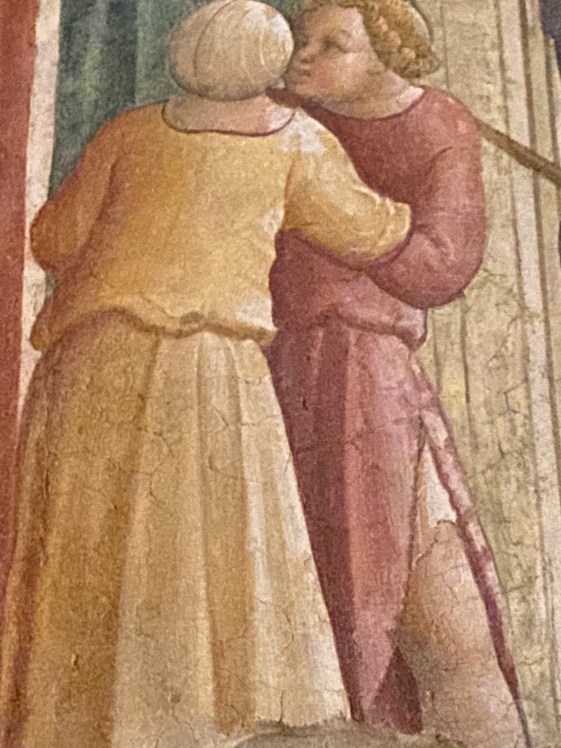
The scene on the mid-left wall, perhaps the sole executed by Lorenzo Monaco alone, depicts the Marriage of the Virgin. The rejected suitors walk from the right to left; one of them (that in the background, behind the arcade) is a possible self-portrait of Lorenzo Monaco, although his age does not correspond to the artist’s one at the time. The next scene is that of the Annunciation, whose predella has scenes of the Visitation, Nativity and Annunciation to the Shepherds, Adoration of the Magi and the Flight into Egypt.

The next episodes in the frescoes include some miracles connected to Mary: the Dormitio, the Assumption, and the Miracle of the Snow. In the cross vault are portrayals of Prophets David, Isaiah, Malachi and Micah.

The frescoes were covered with white plaster in 1740, and were only rediscovered in 1885-1887 by Augusto Burchi. In 1944, the German invasion forces blew up the nearby Ponte Santa Trinita, causing damages also to the frescoes. They were restored in 1961 and again in 2004.

Above all, this chapel is interesting because Lorenzo mixes styles with a surprisingly result. The Annunciation at the altar is done in the High Gothic style, with stylized figures rather convincingly rendered, set against an equally stylized background. The frescoes on the walls, however, reveal that Lorenzo was well aware of the new developments in painting introduced by Masaccio: he displays a firm grasp of the newly emerging Renaissance style, painting natural looking people who are solidly anchored to their backgrounds.
img_1600


img_1598


img_1599


img_1602


img_1601


img_1603


The Compagni Family Chapel, was dedicated to Saint John Gualberto. We will remember that John Gualberto was the Florentine who founded the Vallumbrosan order, for whom this church served.  The chapel’s walls were once frescoed with scenes from the life of this saint. The remaining scenes are high up on the outer arches and show The Murder of St. John Gualberto’s Brother and St. John Gualberto Forgiving the Assassin. Some sources say they are by Neri di Bicci and his father, Bicci di Lorenzo, but they have recently been attributed to Bonaiuto di Giovanni, an associate of Bicci di Lorenzo.

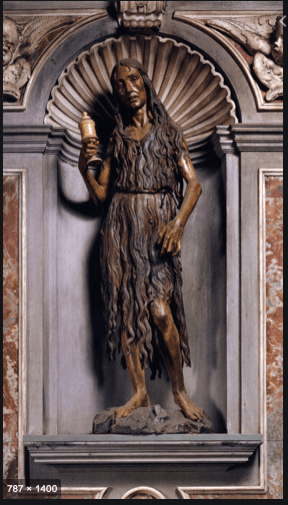
The Spini Chapel is notable for the wooden statue of the Penitent Magdalene, dressed in hair cloth, begun by Desiderio da Settignano and finished by Benedetto da Maiano, in about 1464.  It is almost impossible not to compare this work with Donatello’s Mary Magdalene in the Opera del Duomo in Florence. Most likely, Desiderio was inspired by the master.
Screen Shot 2019-11-03 at 15.28.44


The Saint John Gualberto Chapel commemorates the founder of the Vallombrosan Order whose relics are preserved here. It was built as a gift to the church by the monks, and it was designed and created to look like a real yet small casket. Frescoes were painted by Passignano at the end of the 1500s.

The Scali Chapel houses a monument to Berozzo Federighi by Luca della Robbia. Federighi was the Bishop of Fiesole who died in 1450; the monument was created by Luca della Robbia in 1454. The monument’s frame is made of majolica using the opus sectile technique: every oval is made of small tiles that create a mosaic (it’s one of the first examples of the use of majolica for funerary monuments).

The monument was moved here from the deconsecrated church of San Pancrazio in 1896.

Screen Shot 2019-11-02 at 11.09.50


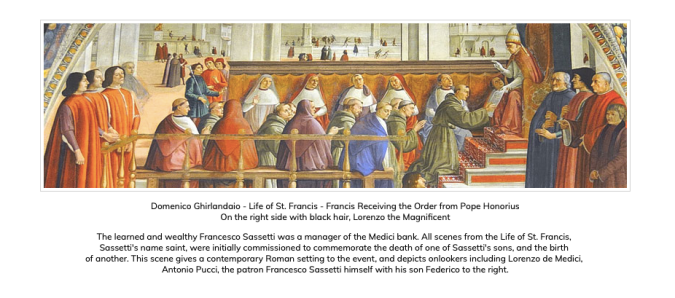
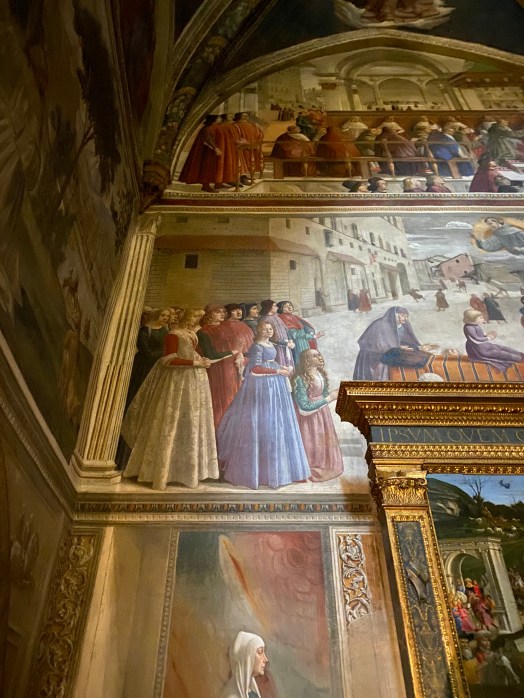
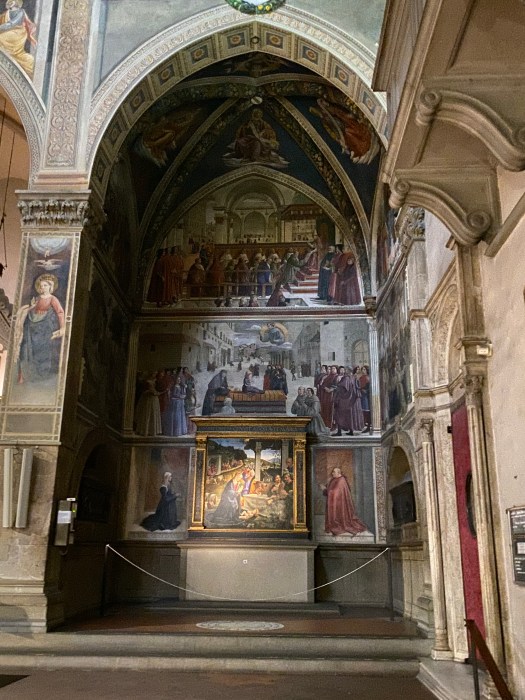
The Sassetti Chapel is the most famous part of the entire church, filled with a gorgeous cycle of frescoes by Domenico Ghirlandaio’s, depicting scenes from the Life of St Francis.
img_1595

The Sassetti Chapel is the crown jewel of Santa Trinità and often considered to be Domenico Ghirlandaio’s capolavoro.

Aside from its beauty, the chapel tells us so much about life in Renaissance Florence. Francesco Sassetti, a banker for the Medici, obviously had a lot of money. Like any wealthy family of the time, he used his wealth to acquire and decorate a family chapel around the year 1483.

Initially he planned to build his chapel in Santa Maria Novella, but the Dominicans turned him down when they discovered that Sassetti planned to include scenes from the life of the Dominican’s nemesis, St. Francis, decorating the walls. The Vallumbrosians of Santa Trinita, on the other hand, gladly welcomed Sassetti’s petition, thrilled to have the hand of the most prominent artist in Florence at the time, Dominicao Ghirlandaio, decorating their church.

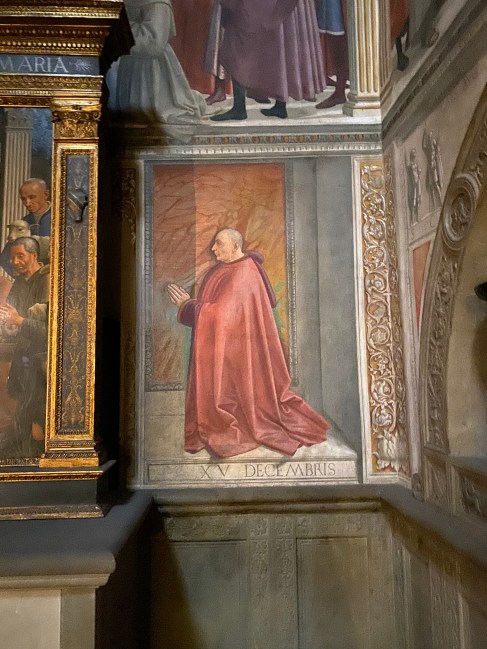
The chapel’s primary function is the burial place for Francesco and his wife Nora Orsi (the two are seen kneeling on either side of the altarpiece). The chapel also became a sort of family photo album as all of the Sassetti children are depicted in the frescoes. Additionally, the chapel served as a humanist who’s who, as it features images of Lorenzo de’ Medici, Poliziano, Costanzo, and even Ghirlandaio himself.

Ghirlandaio also used the chapel to reinforce the emerging Renaissance trend that Florence was the new Rome. He depicts events we know occurred in Rome and sets them in Florence, and in almost every scene we spy notable Florentine landmarks, such as the Duomo and the Palazzo Vecchio.

The Sassetti chapel alone makes a visit to Santa Trinita more than worthwhile and is a celebration of both Saint Francis and of Renaissance art Florence in general. This cycle of frescoes is a high-water mark for painting in 15th century Florence.

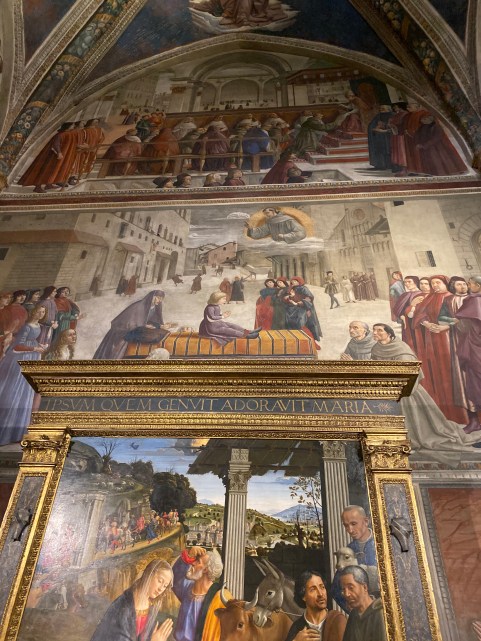
In the center is an altarpiece depicting The Adoration by the Shepherds. It dates to 1585 and is signed by Ghirlandaio, as are all of the frescoes in the chapel. This altarpiece is often cited as the work most obviously inspired by the Portinari Altarpiece, especially the shepherds. Ghirlandaio depicted himself as the shepherd pointing to the Baby and the carved garland (ghirlanda) on a sarcophagus. The unusual presence of this antique sarcophagus in a nativity has been explained as it’s thereby making a group of three with the actual tombs of the donors flanking the altarpiece in the side walls.

The altarpiece is quite important, not the least because Ghirlandaio included classical elements, such as the sarcophagus manger and the Corinthian columns holding up the roof of the shack (one is dated 1485), and based the poses of the shepherds on those of the Flemish master Van der Goes’s triptych (now in the Uffizi). This reveals the presence of the newly awakened interest in the Classical world that was one of the characteristics of the High Renaissance, and also get an idea of the impact the Flemish style had upon the great masters.

It’s always so interesting to me to see the clothing; through it, we get to view the way Florentines dressed at the time.

In another scene, we can see contemporary Florence: you can make out Piazza Signoria and the Loggia dei Lanzi. There are no statues in the loggia, however, for those were added later. In this scene Lorenzo il Magnifico and his sons, Piero, Giovanni, and Giuliano climb the steps with their tutors, led by humanist scholar Agnolo Poliziano.

Everyone’s favorite scene is in the fresco panel just above the altarpiece. In the center, we see a young boy sitting at prayer on a bed. According to the story, the poor boy had fallen from the top of the Palazzo Spini, which is just across the piazza from this church (and home to the Ferragamo empire now).  This was an actual event that had happened in Florence and had horrified the local population. Luckily, St. Francis–who himself had already died–was able to perform a (posthumous) miracle by bringing the boy back to life. (It is also said to allude to the death of Sassetti’s first son Teodoro and the birth of his second, given the same name as a sort of resurrection.)
img_1586

According to the literature, this popular scene was a late replacement by Ghirlandaio for a depiction of the Apparition at Arles, which he had originally planned for this space.

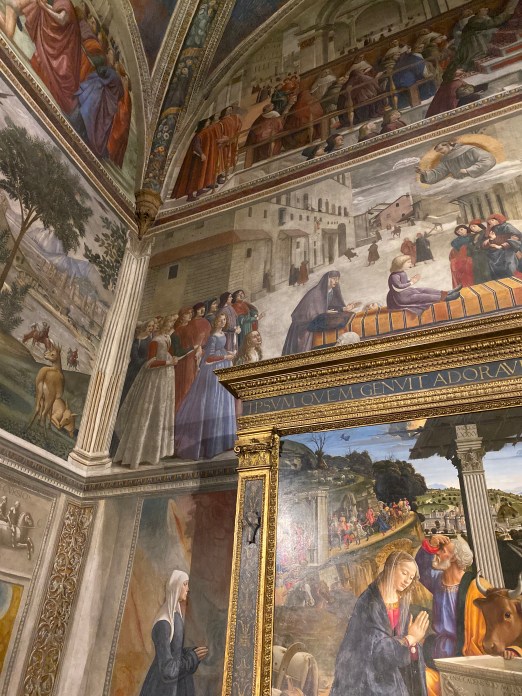
The women clustering to the left said to be Sassetti’s daughters. It is said that the whole cycle contains about 60 of the Sassetti family and friends. The figure far right, with his hand on his hip, is said to be Ghirlandaio.
img_1587

This was supposed to be one of St. Francis' posthumous miracles.Don'tyou love the Catholic Church and its understanding of the passage of time and the supernatural feats of its chosen few? You have got to   admire the ingenuity, if nothing else! Never let the death of a sain stop him from performing miracles.

Because this event happened in Piazza Santa Trinita, Ghirlandaio shows us how the square appeared at that time, including the very church in which we are standing, Santa Trinita, as it appeared before the later addition of Buontalenti’s façade.  Sassetti’s children fall to their knees (on the left); note the old Romanesque façade and Ponte Santa Trinita as it was before the great flood of 1557.

The Confirmation of the Rule scene above features portraits of Lorenzo de’ Medici with his sons and their tutor, Angelo Poliziano, against the backdrop of the Piazza della Signoria. (Despite the Florentine setting, this event in fact took place in Rome.)

The four Sibyls in the vaults (including one said to have been modeled on Sassetti’s daughter, Sibilla) are also by Ghirlandaio, as is the David and the Tiburtine Sybil telling Augustus of the birth of the Redeemer (Vision of Augustus) on the wall above the chapel entrance.

img_1591


Screen Shot 2019-11-02 at 15.09.27


We should remember that Francesco Sassetti was a Medici banker and it was he who was blamed for the declining fortunes of the Medici, just prior to his death from a stroke in 1490. He and his wife, Nera Corsi, kneel on either side of the equally gorgeous altarpiece. I love the inscription under the donor portraits: December 25, 1480.

img_1589


img_1588

Screen Shot 2019-11-02 at 10.56.16


img_1583


img_1590


Screen Shot 2019-11-02 at 11.08.09

On the left wall, Saint Francis dons his habit, and on the right, in a fresco attributed to Domenico’s brother Davide, he undergoes a trial by fire before the Sultan (Francis went on a crusade and returned horrified by what he’d seen).

The next level down, to the left he receives the Stigmata before a realistic representation of the Santuario della Verna, an abbey in the wild mountains between Florence and Arezzo.The Saint’s death is to the right. Francesco Sassetti and his wife, Nera Corsi, are in the tombs, and are also shown kneeling facing the altar.

While a visit to Santa Trinita will repay you a thousand fold with art, now we turn to the works created for this magnificent church but have been removed from it.

The Cimabue Maestà della Madonna, painted around 1280 for the high altar here, is now in the Uffizi Gallery. It was replaced with a Trinity by Alesso Baldovinetti  in 1471 and moved into a side chapel and, later, to the monastery infirmary. It’s been in the Uffizi since 1919, where it’s now part of the spectacular Cimabue/Giotto/Duccio trio on display in room 2.

An altarpiece signed and dated May 1423 by Gentile da Fabriano, was commissioned by Palla Strozzi around 1421 for the family chapel here in the sacristy. The gilt and gorgeous central panel, The Adoration of the Magi, and two panels of the predella, The Nativity and The Flight into Egypt, are in the original frame in the Uffizi (since 1919). Another panel from the predella, the impressively architectural and very finely-wrought Presentation at the Temple, is in the Louvre (since 1812), with a copy taking its place in the Uffizi.

There is conjecture that the Presentation panel may feature a building based on the long-lost Strozzi palazzo which stood opposite this church. The main panel is said to contain a portrait of Palla Strozzi in the train of the magi, holding a hawk.

Also commissioned by Palla Strozzi for the same chapel here was A Deposition by Fra Angelico now in the Museo di San Marco. The altarpiece was begun by Lorenzo Monaco; its pinnacles are by him, as are what are thought to be the predella panels of scenes from the lives of Saints Onofrio and Nicholas, now in the Accademia.

The altarpiece had been begun by Lorenzo, but upon his death in 1424 it was completed by Angelico and installed on 26th July 1432. Palla Strozzi is depicted on the right holding the crown of thorns and the nails, his son Lorenzo kneels in the right foreground nearby. A highly finished drawing of The Dead Christ from the altarpiece is in the Fitzwilliam in Cambridge.

Bicci di Lorenzo’s altarpiece of 1434, painted for the Compagni chapel here (see reconstruction above, from Bicci di Lorenzo’s altarpiece for the Compagni family chapel by Dillian Gordon, Burlington Magazine Feb 2019 ) has its main-tier panels now in Westminster Abbey in London. The central panels show the Virgin Enthroned with Saints John Gualberto, Anthony, John the Baptist and Catherine. The predella panels have in recent years been identified as the central Nativity and Saint John Gualberto and the Destruction of the Abbey of Moscheta in private collections, and the Baptism of Christ in the York Art Gallery.

The missing panels are also thought to be scenes from the lives of the saints above them, Anthony and Catherine. The reasons for the altarpiece’s removal, by 1845, are unknown.

Bicci’s son Neri di Bicci painted an altarpiece of The Assumption in 1455/6 for the Spini chapel here. It is now in the National Gallery of Canada in Ottowa.

The striking Trinity with Saints Benedict and Giovanni Gualberto by Alesso Baldovinetti of 1469-71, originally from the Gianfigliazzi chapel here, is now in the Accademia too.

Albertinelli and Franciabigio’s impressive Virgin and Child between Saints Jerome and Zenobius painted for the Zenobi del Maestro chapel here, is now in the Louvre, having been looted by Napoleon.

Bronzino’s early major work, The Dead Christ with the Virgin and Mary Magdalene of c. 1528-29, formerly in the convent here, has been in the Uffizi since 1925.

 

img_1592

img_1593img_1594


Screen Shot 2019-11-02 at 11.08.09


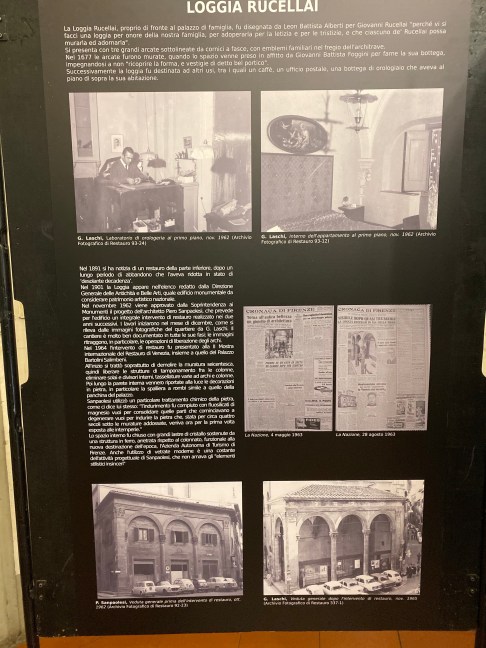
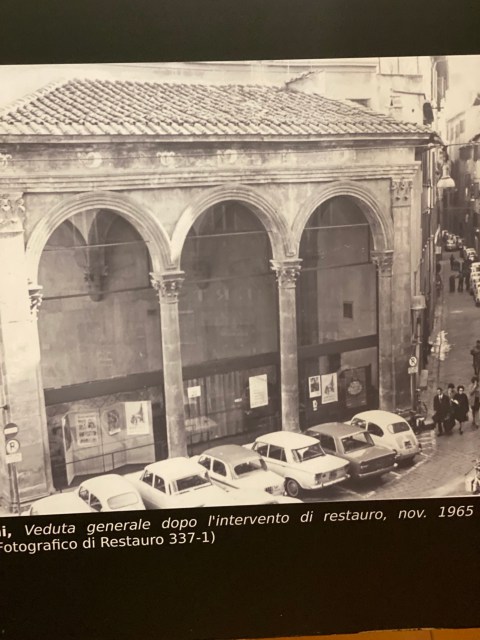
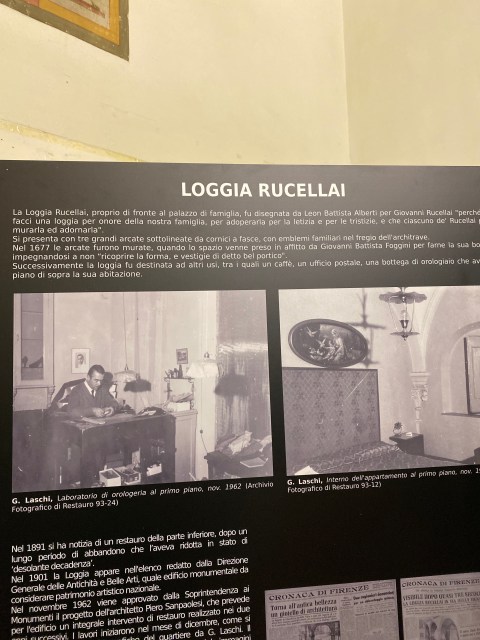
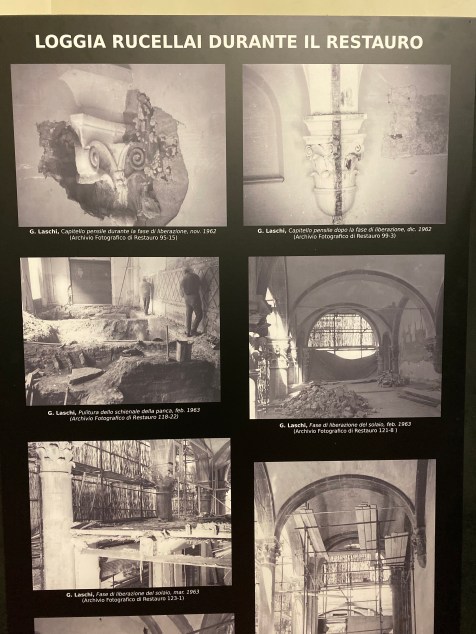
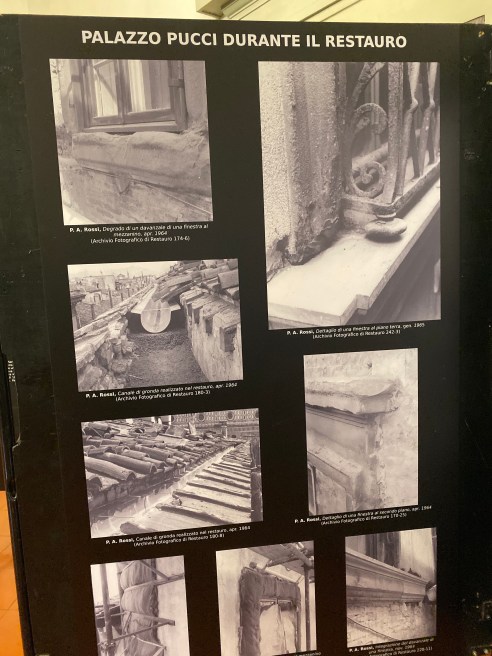
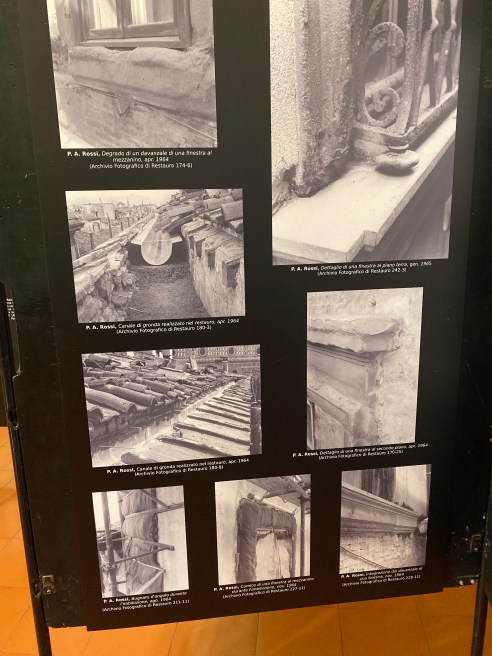
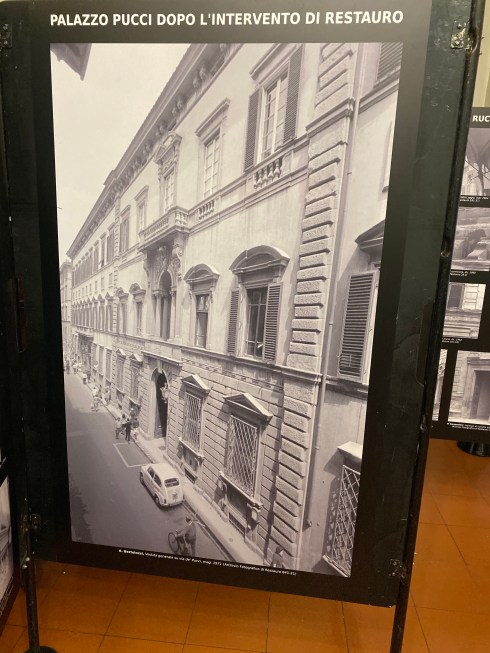
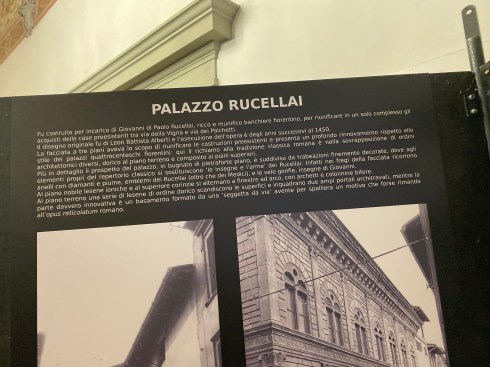
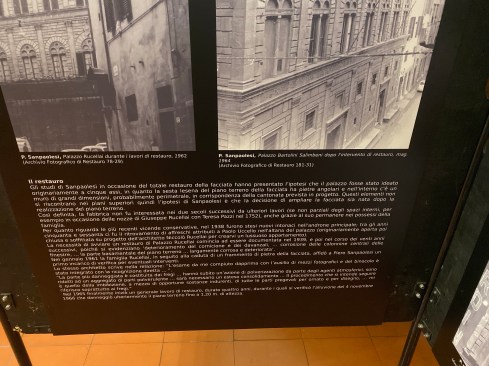
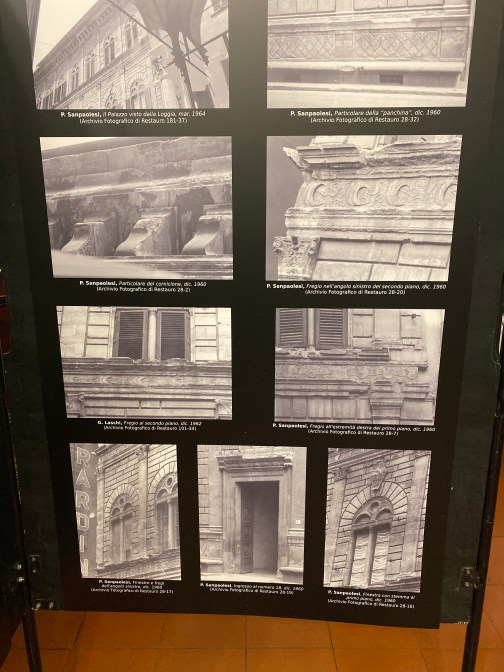
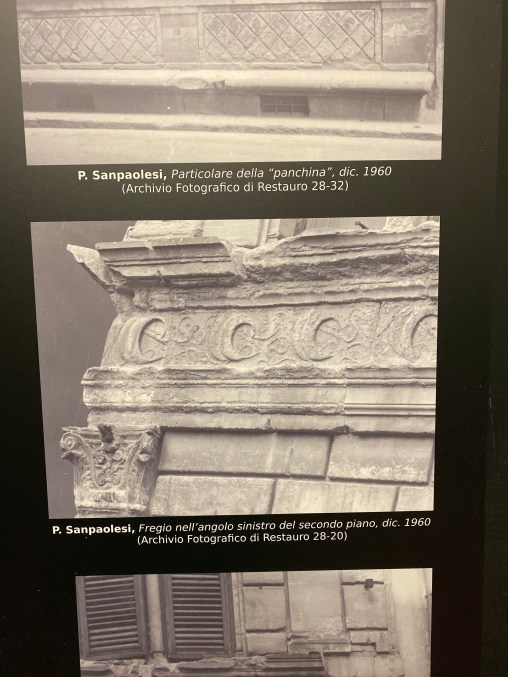
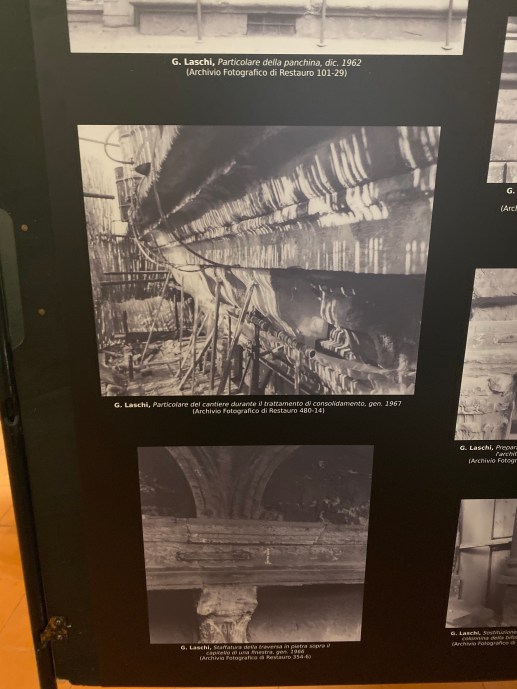
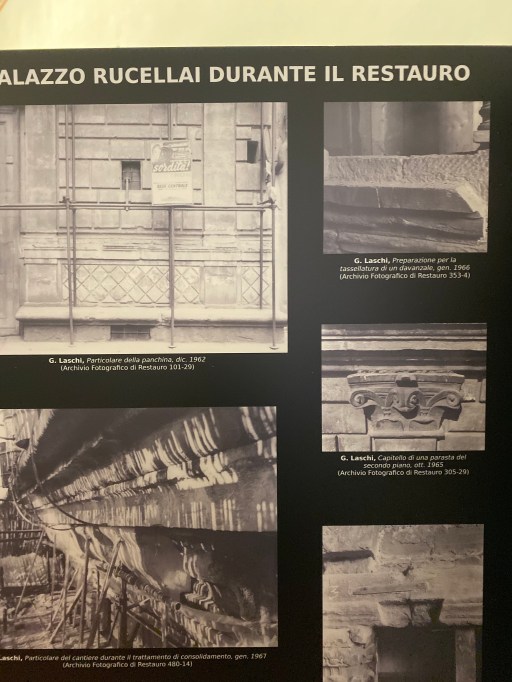
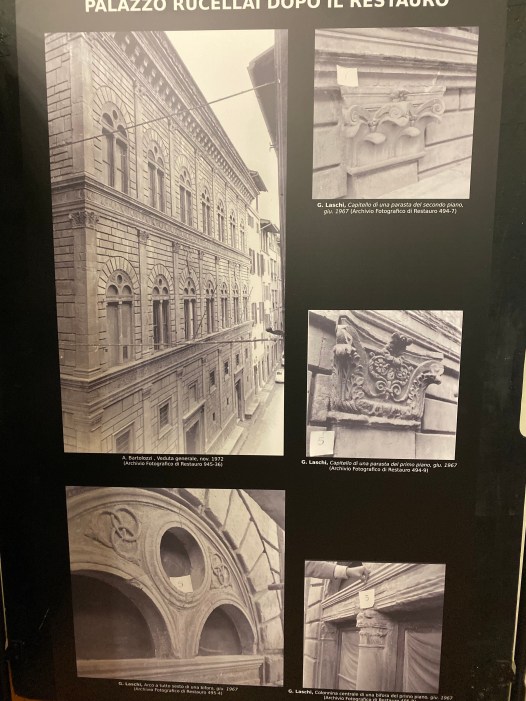
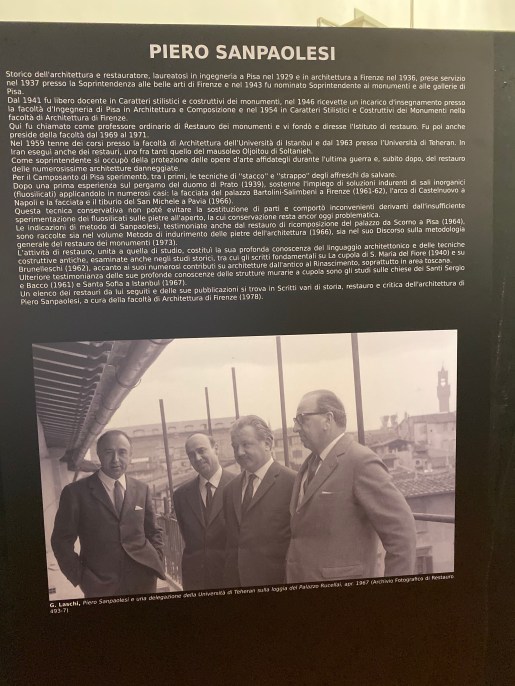
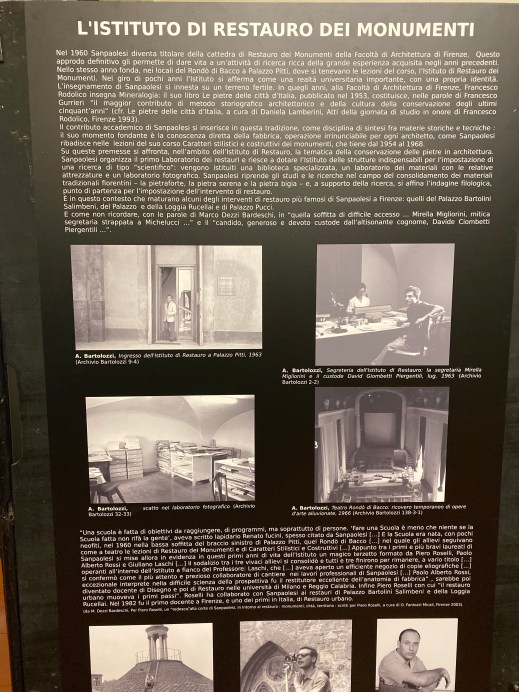
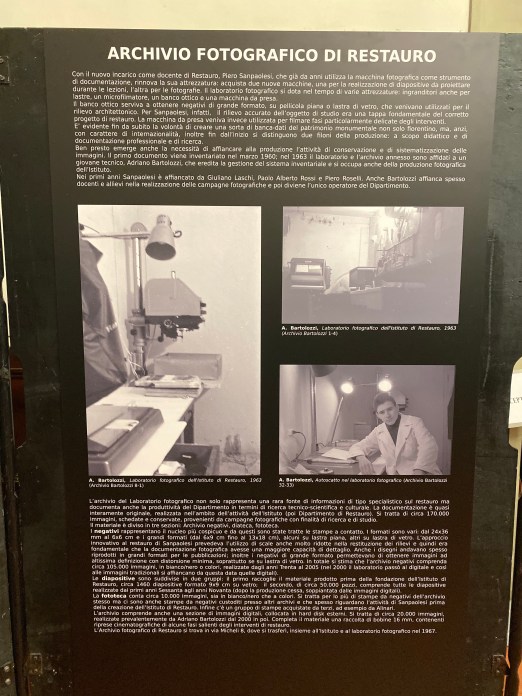
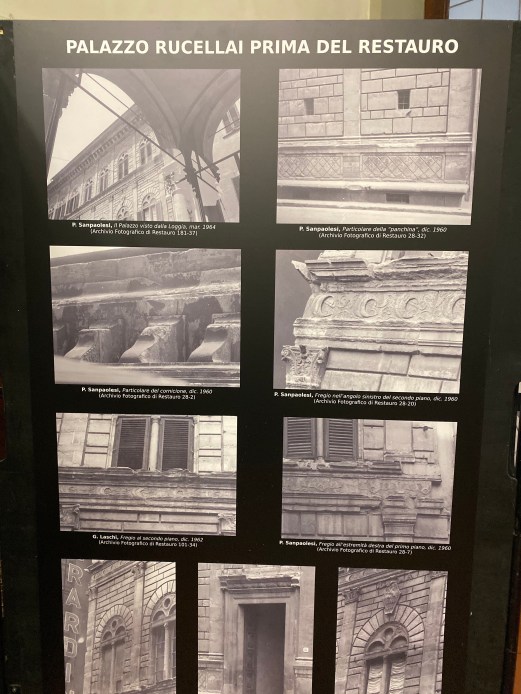
The restoration of some famous Florentine palazzi

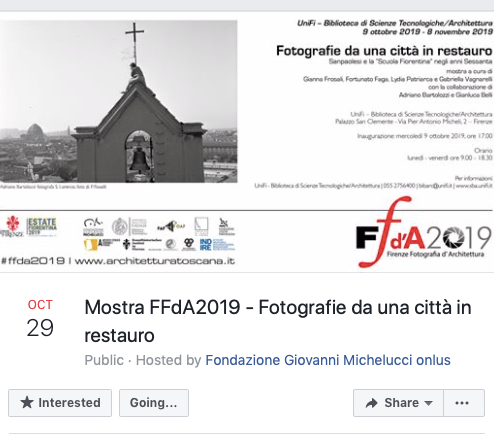
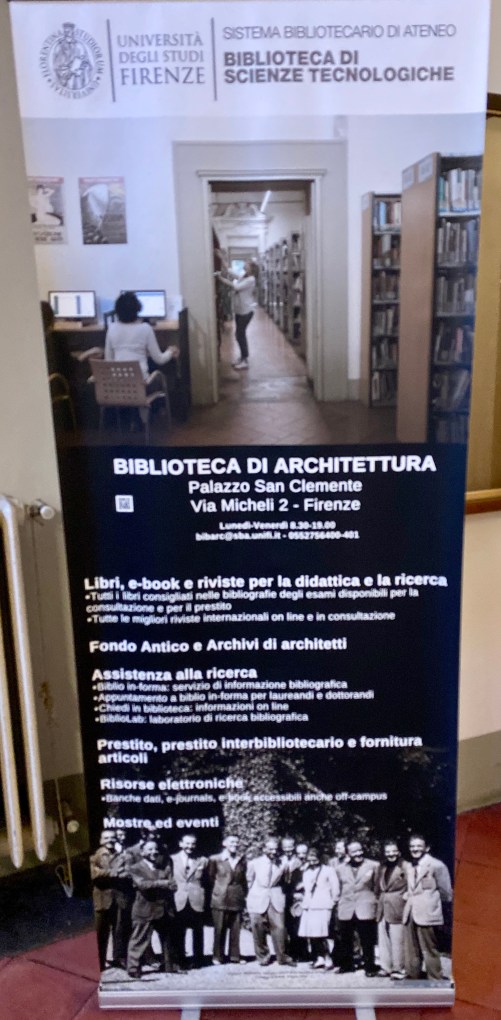
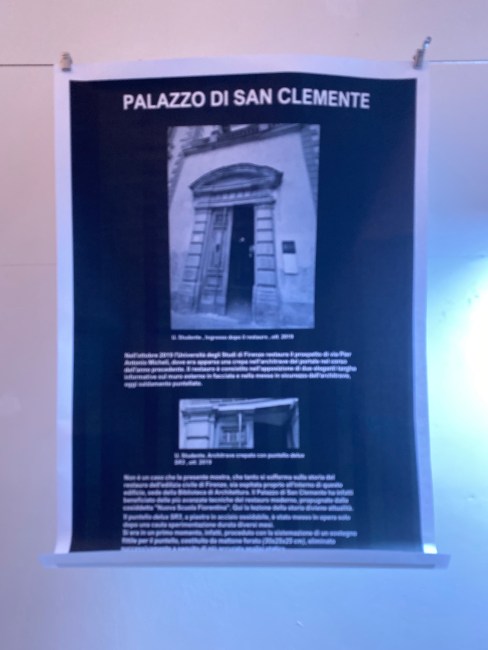
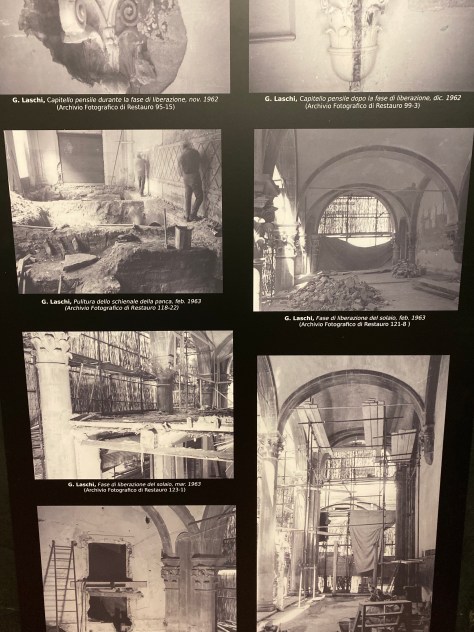
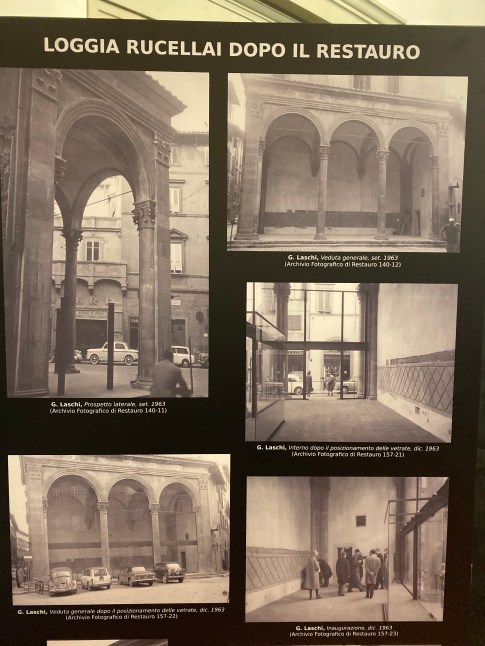
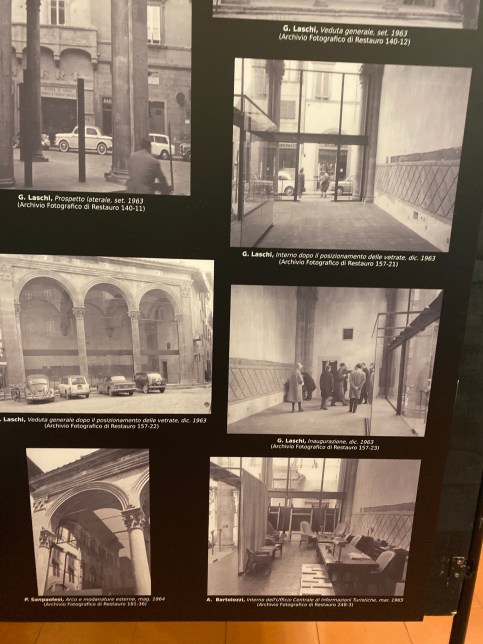
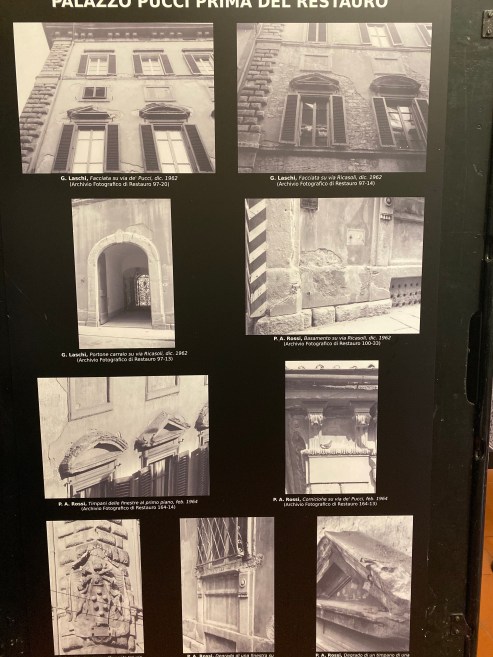
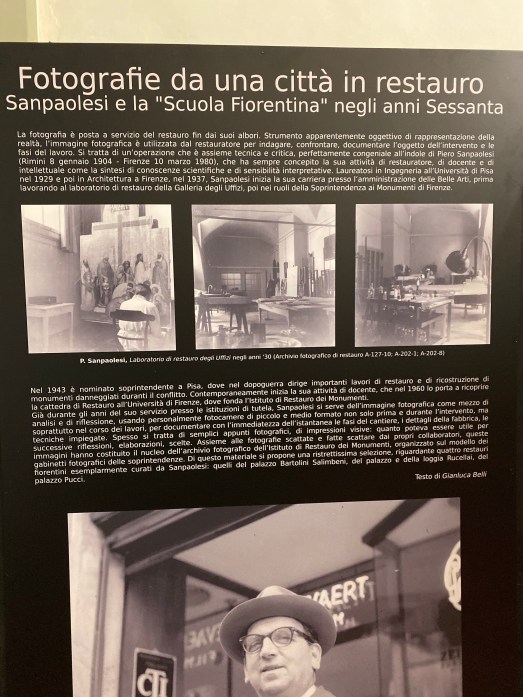
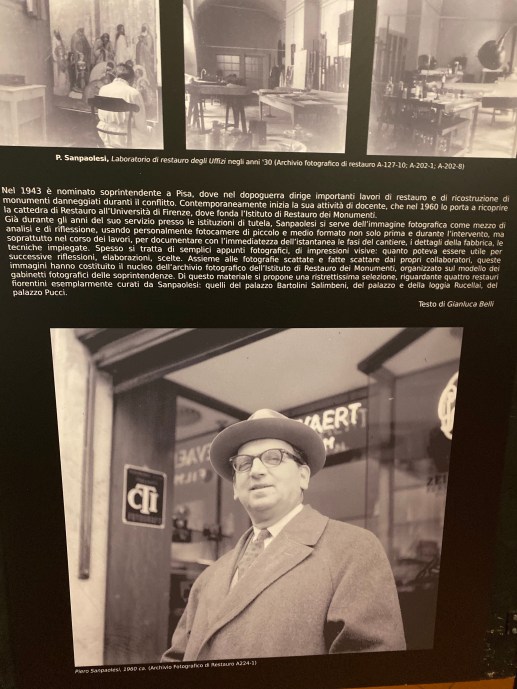
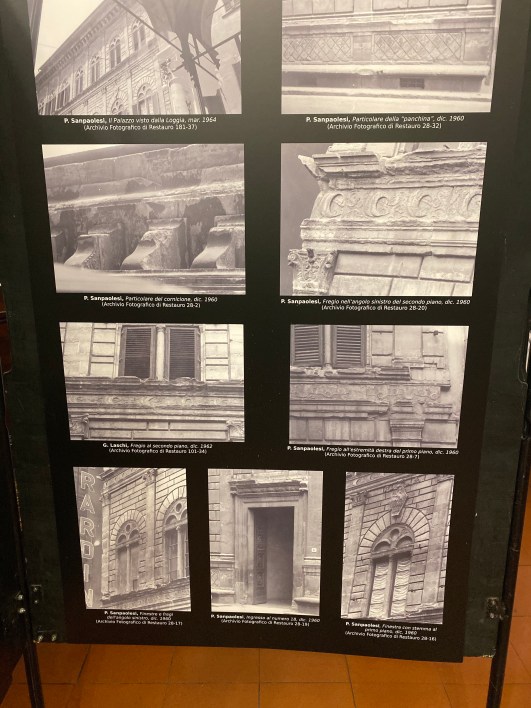
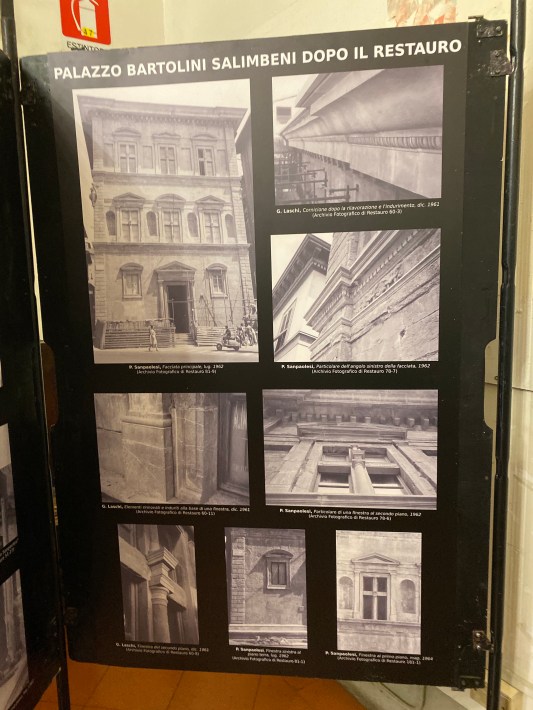
There’s an interesting exhibition of vintage photography documenting the restoration of some famous Florentine palazzi on view currently at Library of Science/Technology Architecture.
Screen Shot 2019-10-29 at 08.09.54


Screen Shot 2019-10-29 at 08.07.59

It’s a small show and in a rather dark room, so my photographs below are not great. However, they show some great pictures of before and after shots of some of the wonderful Florentine palazzi.  This library would be a great source for any scholar working in the fields connected to the city of Florence.
 

fullsizeoutput_1e51


xyeQ68rAQ120Ovv+tWavGg


TwneLwGYQtGwhOjgCgX+SA


tGbTiBeRTWyj2PRFO2OwzQ


5iBBIZf5S1WbQpJZlDVsSw


HK%+uB0LTkywQUkYXgg


2x4oBfZORMWzLp7tZFCS0g


rlsP7h7xTdSVeVOshWswWg


beJfxQJHQUmXAA1GZqMILg


h5wxnVr+TQCojfYwlhITvg


xn2biPJpQ3mFnIPdrRO5eg


+ZjsHtUXS5CEQUT72CIbtA


%HBnZ9icRe6s6Fykie3FbA


VJU6u3ZNTqGdetgYH+WaqA


6TTjRXF9T1WbU2xfuC5jbg


dUVuERScTnacvbXIzOZfew


onJ7q%2wSuWcdzdkjocljw


ACqm9dAHQWqzTronV9LTLg


itXKRezrQJmRGChDugG%qA


0oq5QeVOQYOIJ+475xTXjg


ucajiztARBGZaSqa3SvI1A


CQ%ayJ3OTn6INJUiio8Spg


7m6xiMlMTcqSdw+BICAR9A


pN5cBxd1R5aTs9UGRWMwwQ


K4YxCcHPQLmozO+G%NLgRQ


mAoIi6U7QrKTO8R6RsIe5w


iHxIisV6RLS4g5HNgA6OVg


WPbgjYSjR5qYfPgp+6QLlA


roizNSoesB68uNSQ


WAVRTf5DQqmzRV8NelmyYg


ZvuletfkTu2gCba8RHAljw

0oq5QeVOQYOIJ+475xTXjg


ucajiztARBGZaSqa3SvI1A


AvNSmvJ6Q3Gm28BrqyJ7ZA


G5t1o50rTZy%yB1kP3PfRw


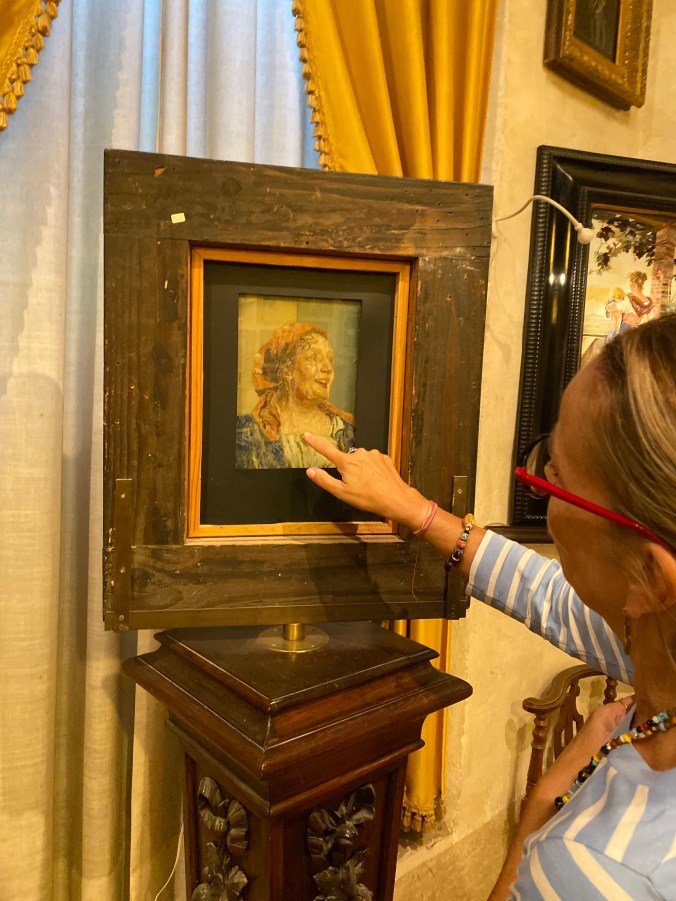
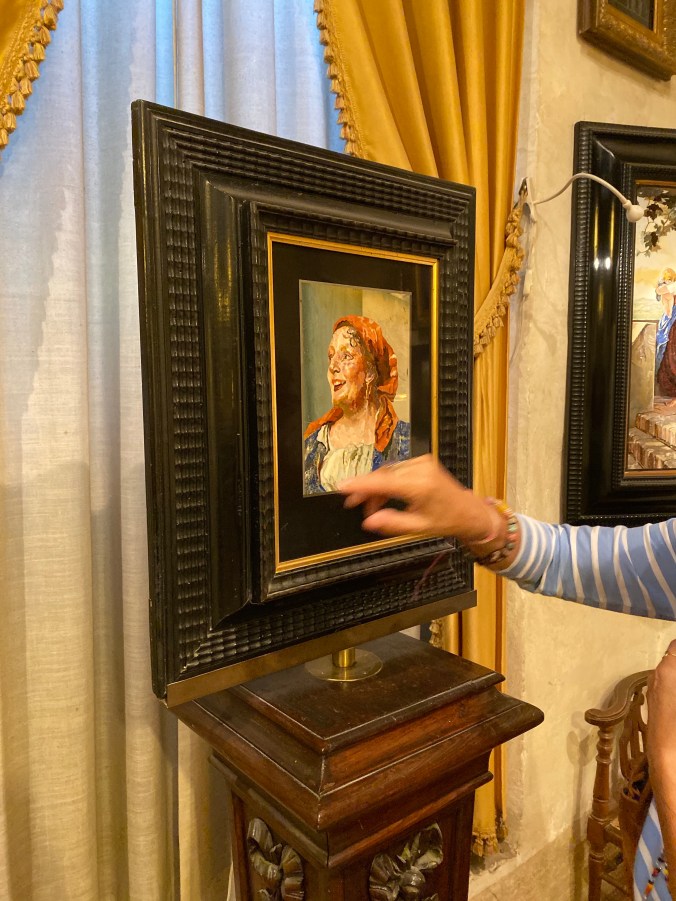
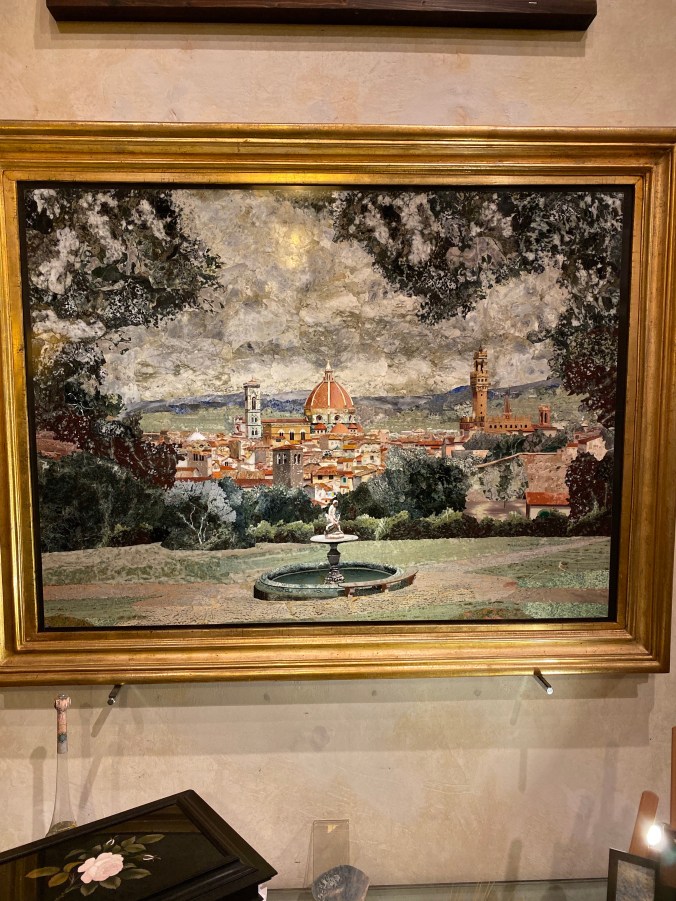
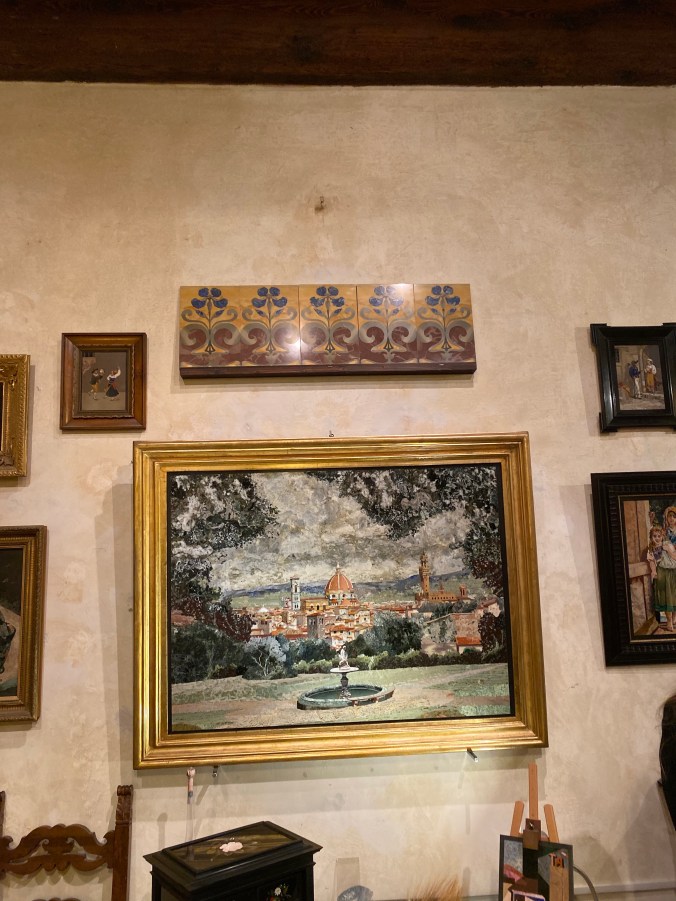
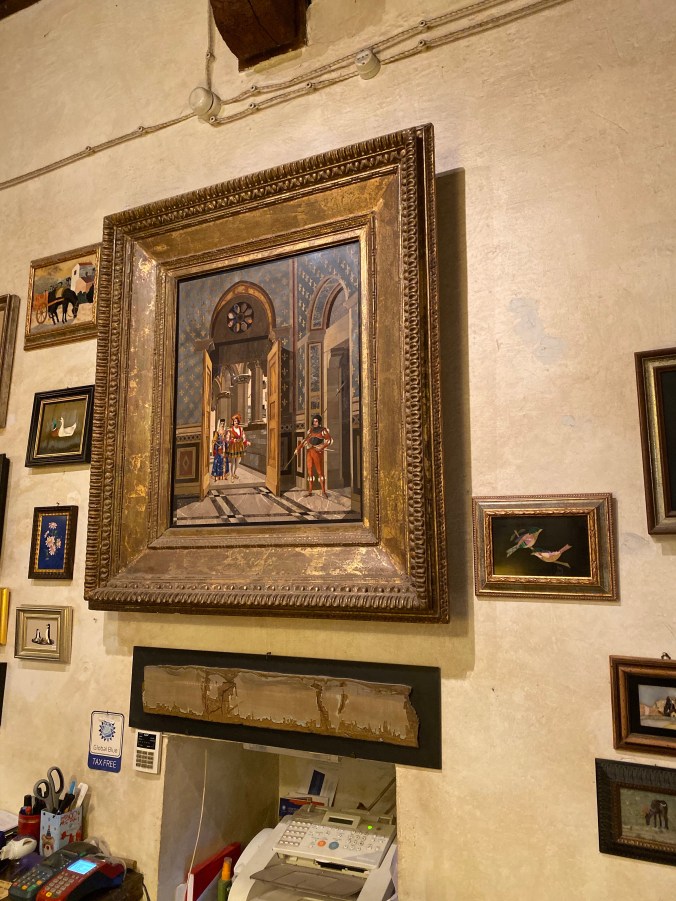
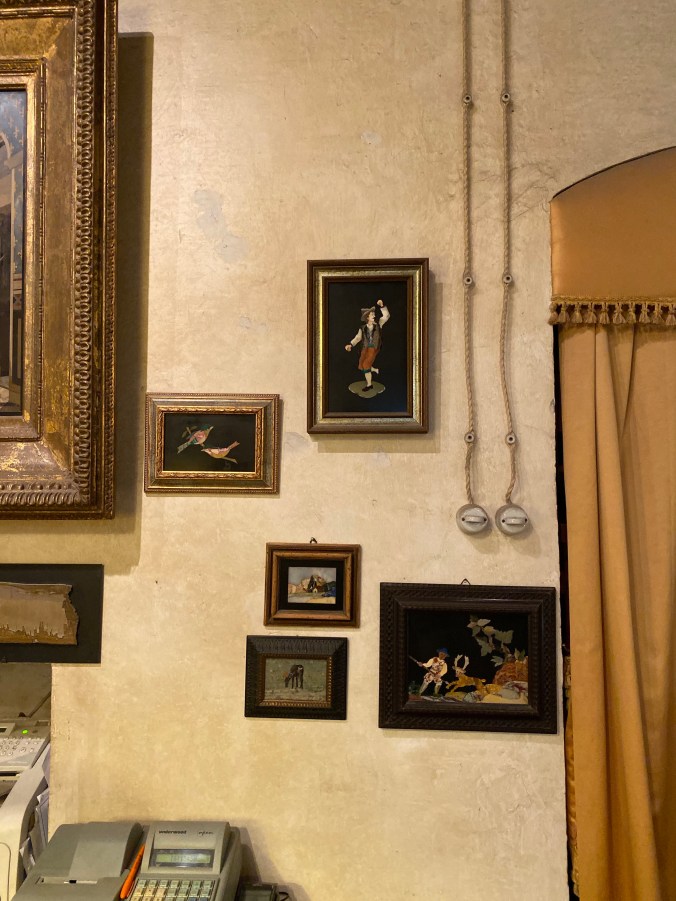
Bottega d’arte Lastrucci and the fine art of commesso Fiorentina (pictorial stone inlay)

83%9Mz2wRLufV5icquVmwA

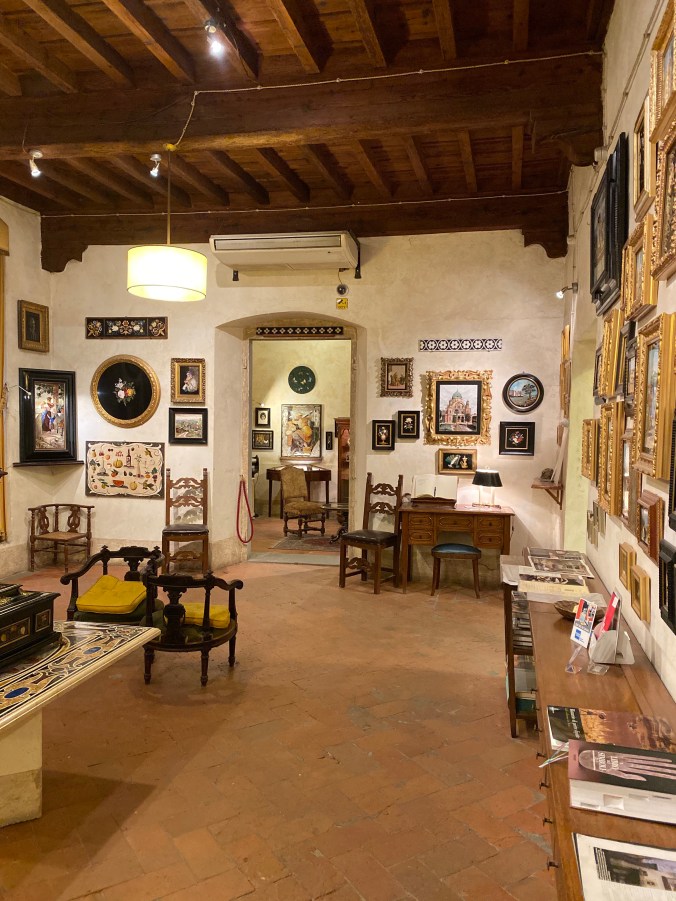
I just discovered an artisanal workshop last week in Florence.  The shop is old and has an excellent pedigree.  I’ve never had a big interest in the art of mosaics or pietre dure, so I’ve never sought out the shops.

But, I’ve always remembered that no less an expert than Giorgio Vasari described the finished works as “eternal paintings.”

And, I found out that the art form is more appealing to me than I had earlier realized.  Just check out, in particular, this great studio and their artworks.

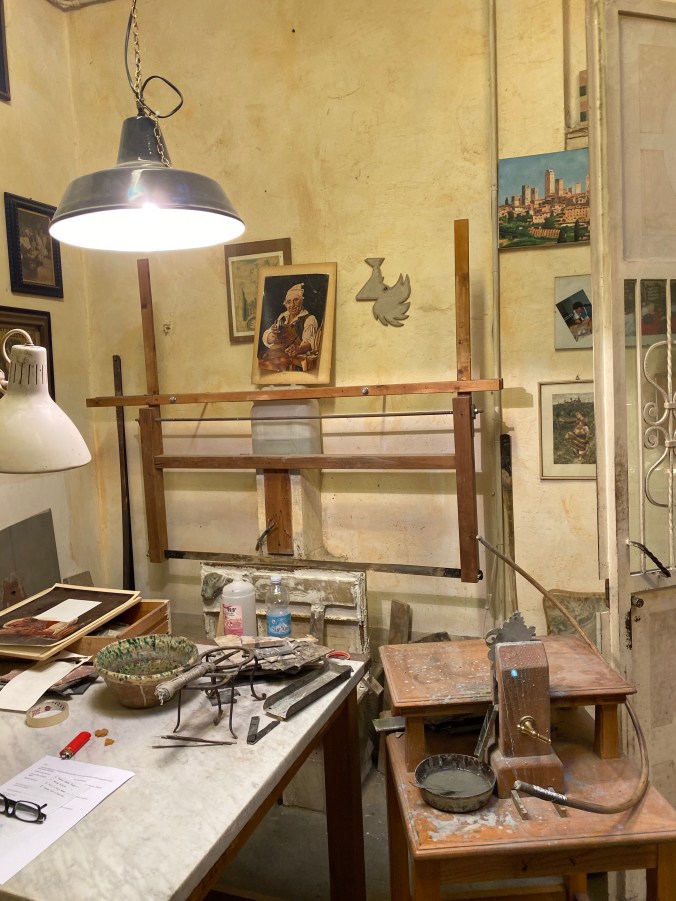
First, the location: the studio is housed within this important old palazzo, which is reason enough to pay them a visit. It is housed within:

qRk2QvjnRW6of8vtoEGn3A

From the Lastrucci website:

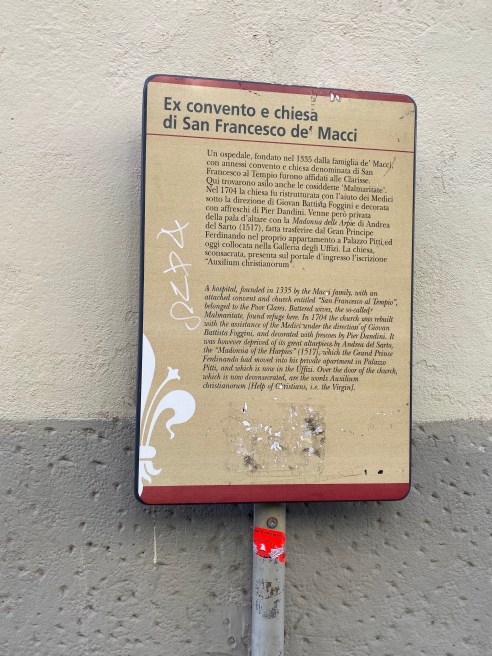
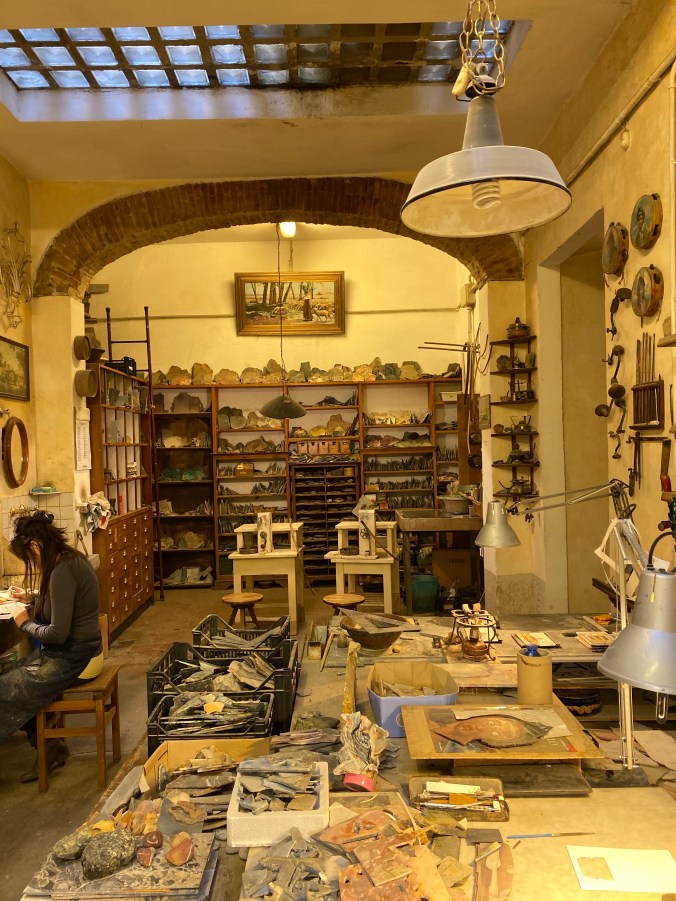
The artistic studio of the Masters Jacopo and Bruno Lastrucci is situated in the ancient Spedale di San Francesco de’ Macci in Florence, in the street of the same name, just a few steps from the celebrated Basilica di Santa Croce.

The medieval building dates back to 1335 and for several centuries housed the famous “Madonna of Harpies,” a painting by Andrea del Sarto now in the collection of the Uffizi Gallery.

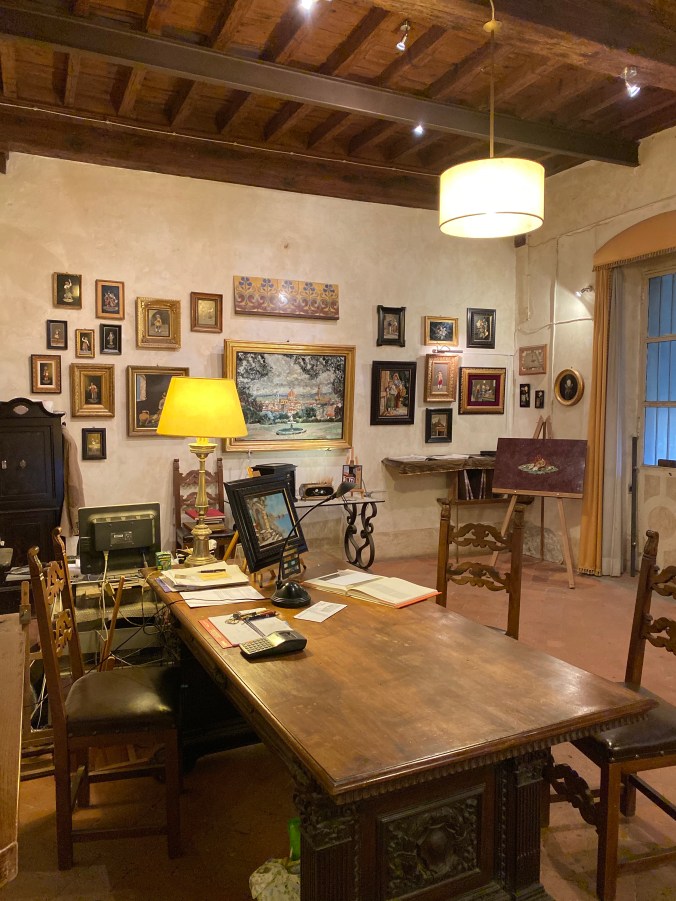
A visit to these historical rooms, which today form the headquarters of the Studio Musivo Lastrucci, is certainly an unforgettable experience.

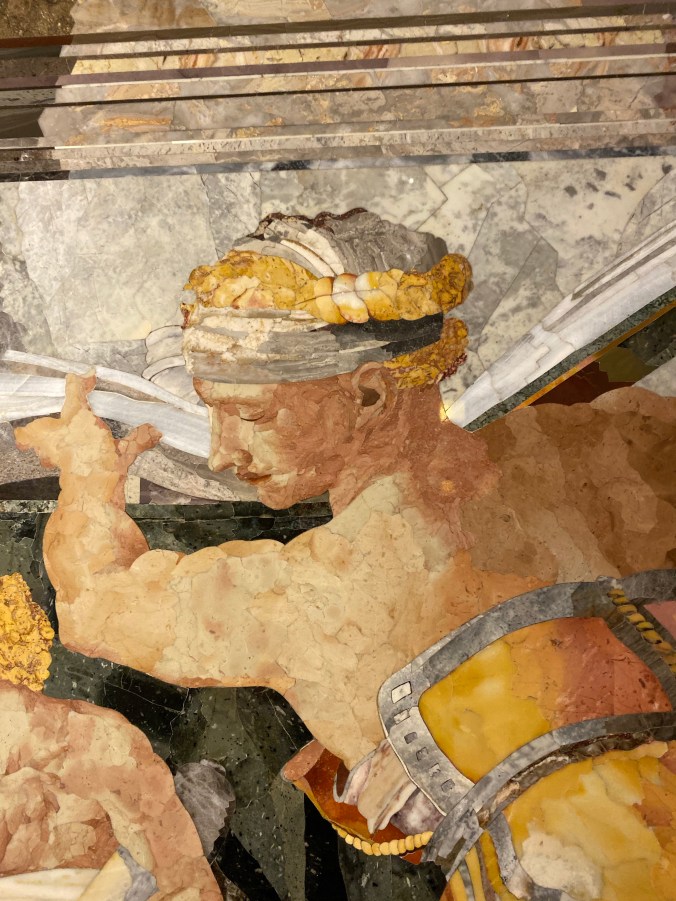
All of the mosaics are entirely produced in the according to the original techniques dating back to the 16th century, which highlight the natural color of every stone.

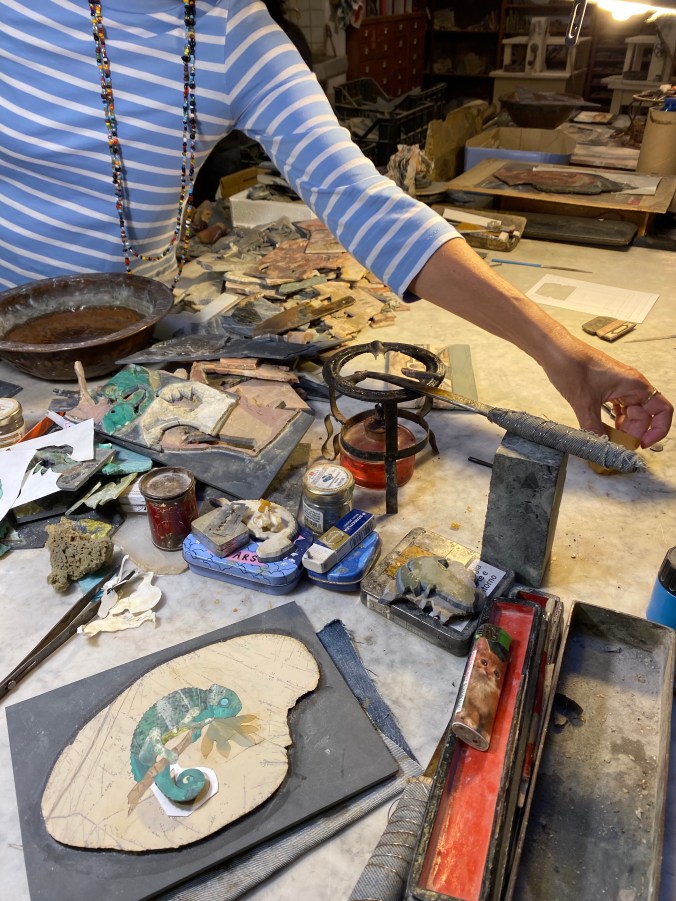
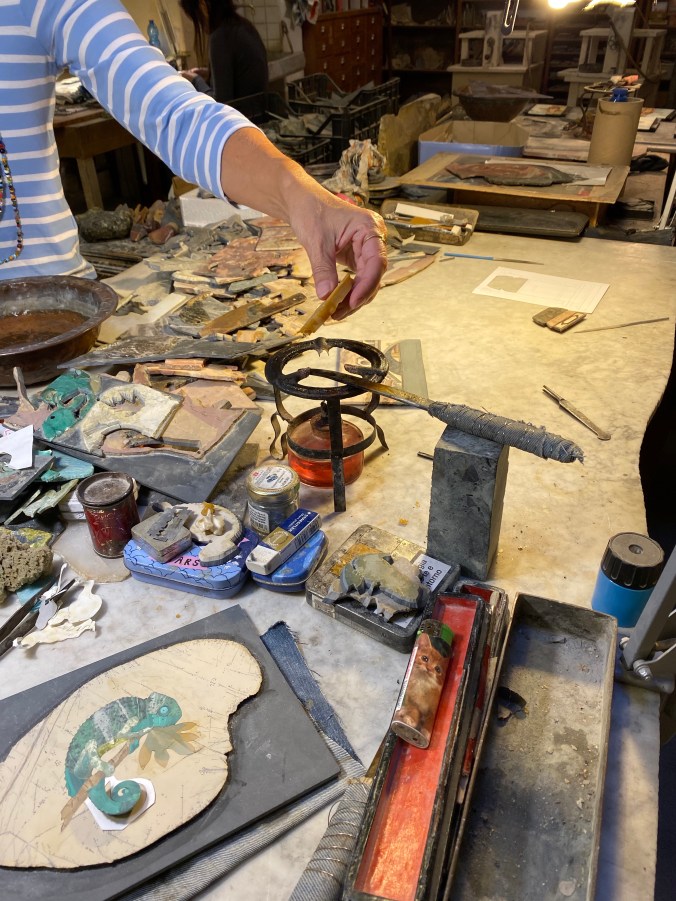
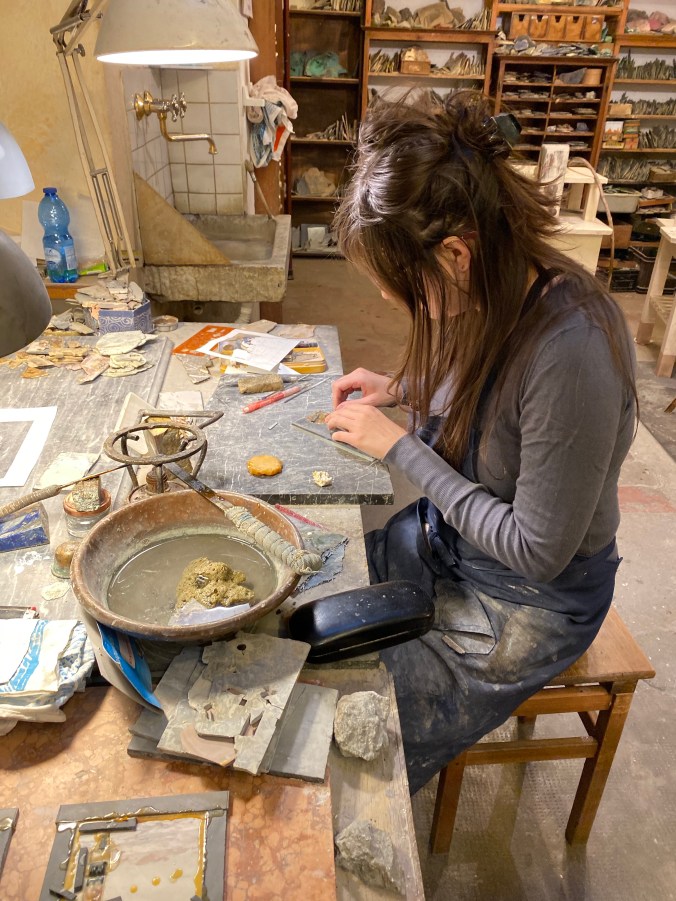
As in the 16th century, every piece is cut with a simple saw made of a tree branch bent in the form of a bow with an iron wire stretched from end to end and covered with water and emery powder; the pieces are then glued together with a mixture of virgin wax and pine resin.

The tools used are of ancient origin; progress and technology have not been able to create suitable substitutes for them, because the original tools were crafted for recreating a sense of beauty that modern technology is unable to reproduce.

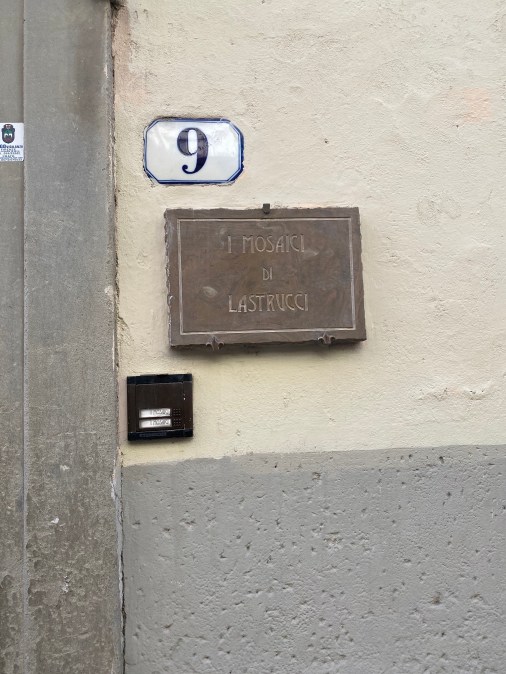
The artists personally follow the whole creative process and all mosaics are entirely produced in the studio of the Masters Iacopo and Bruno Lastrucci, situated in Via de’ Macci 9 and annexed to the Galleria Musiva, selling Florentine mosaics of their own production.


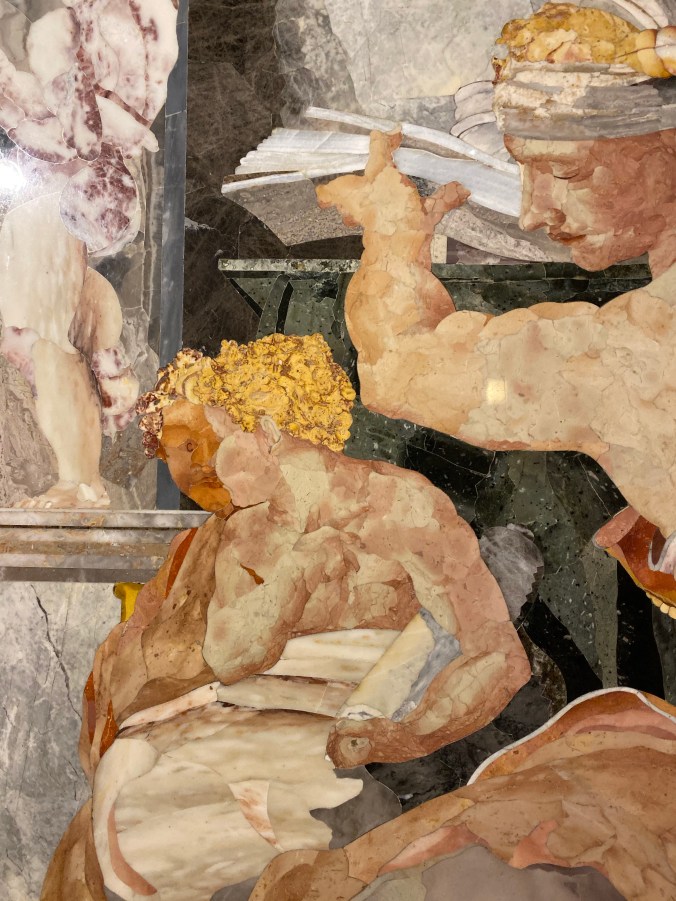
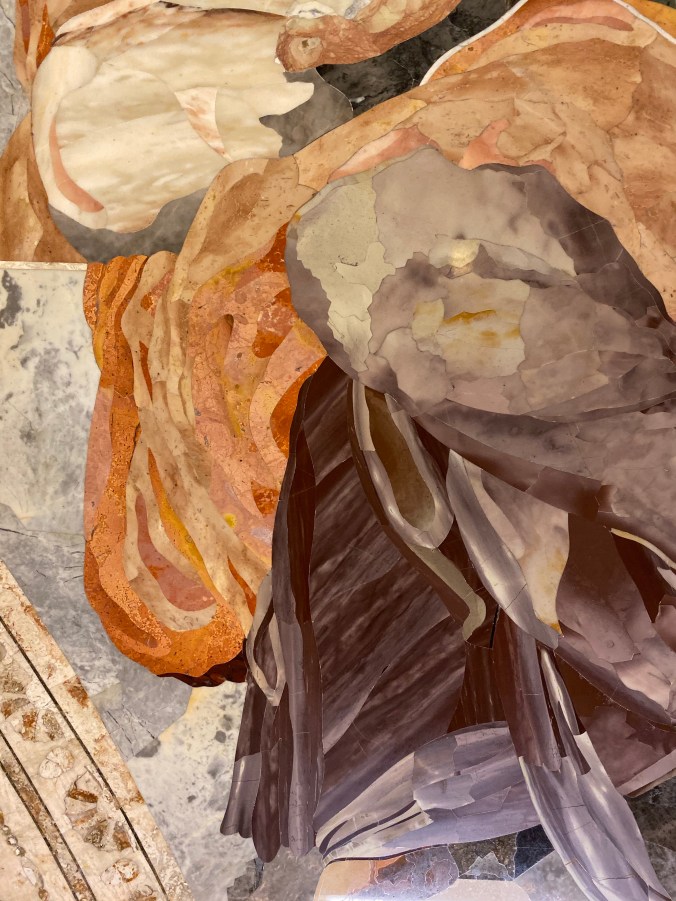
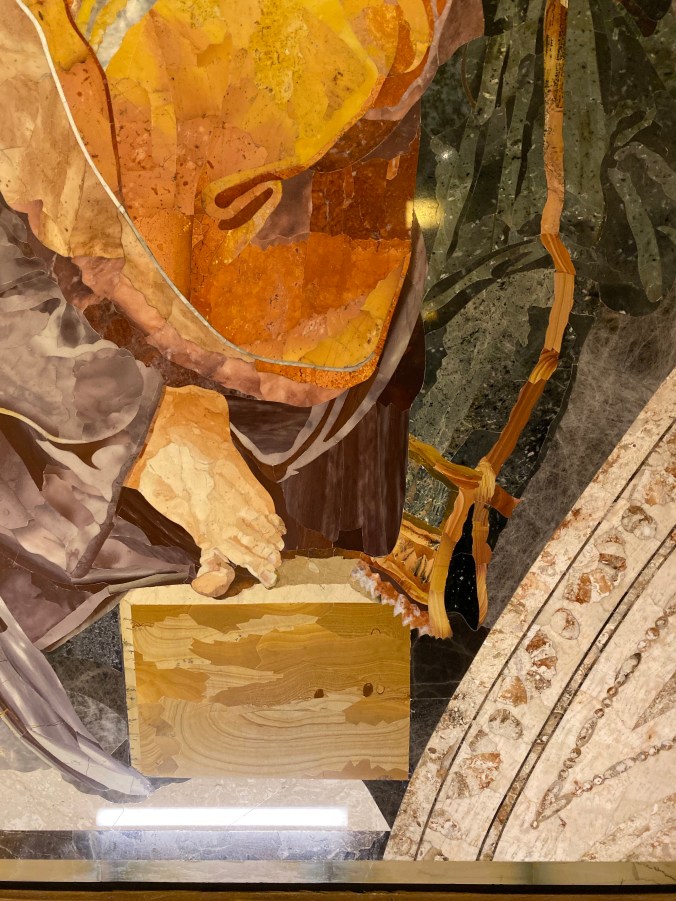
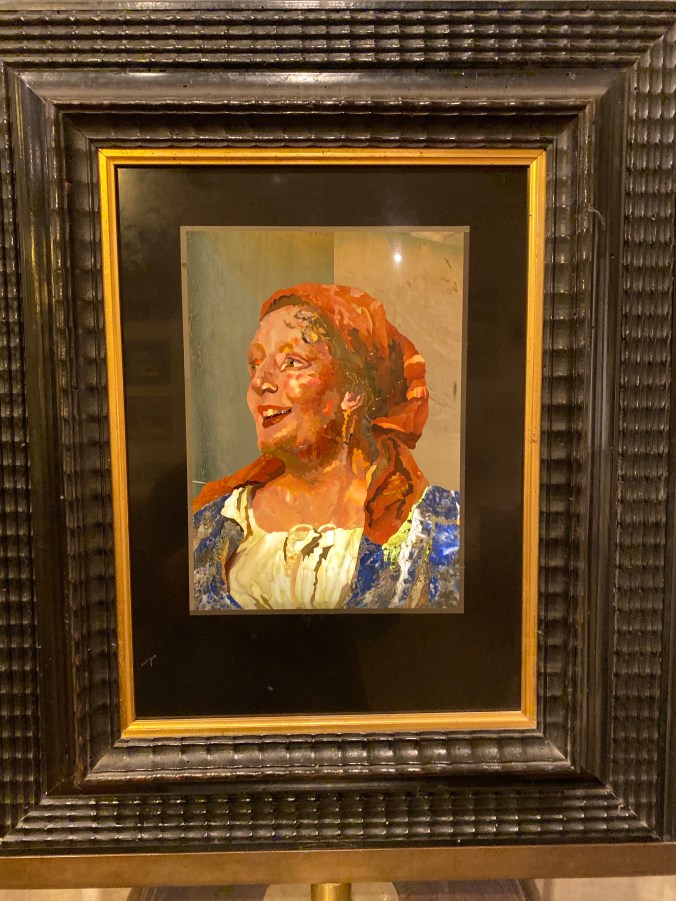
Something I want to clear up in case you, like me, were/are confused about the art form known as commesso Fiorentina.   I thought the name commesso Fiorentina referred to some sort of Florentine commission, or office, or something official promoting the artisanal artworks of Florence.  In fact, it is the (kind of inexact, if you ask me) name given to the fine art of making pictures with stone inlay.  Put another way, this ain’t your grandma’s mosaic.

I was happy to read online that in appreciating commesso Fiorentina,  I’m not the only one who confused it with regular mosaics. I always thought a mosaic is a mosaic is a mosaic.  Ho hum.  But commesso Fiorentina is in fact is a very separate (and elevated) technique, that just happened to have been created and developed in Tuscany.

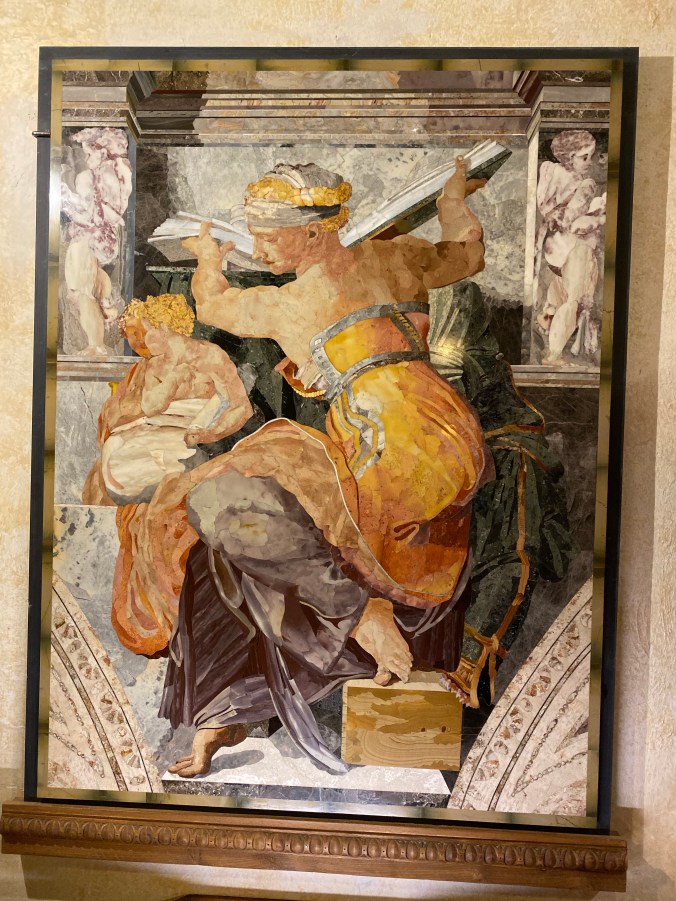
Here’s an example:

CZWYWKTiT3Ofn%Qgssmo3w

Perhaps you won’t be surprised to learn that the Medici family was the first to recognize qualities of this technique and they played a big role in promoting it. Cosimo I  had a strong interest in ancient precious marbles, and his interest extended to a new experimentation with precious stones.

Francesco I lured stone artists to Florence and Ferdinando I started the construction of the family mausoleum in San Lorenzo, adopting this artistic technique.

Here are the stages of a production in stone:

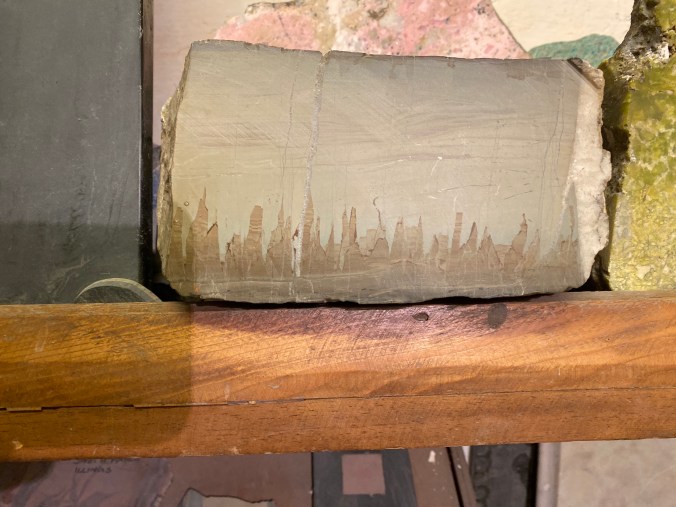
The idea comes to life in a preparatory drawing and then continues with the choice of the stones that will be used in the execution of the work – porphyry, lapis lazuli, granite or other precious stones.

Then the stones are cut, but they are not cut geometrically like mosaics.  This, in fact, is one of the enormous differences as compared to mosaic.  There is a particular and age-old way of cutting the stones in commesso Fiorentina. The stone cutting and the impeccable finishing and polishing work that follows, are part of what makes this technique exceptional.

QeSw2HLSSJ6dZGgo+ZzBOQ

The Studio Lastrucci was awarded the 2010 special Prize of Bottega Artigiana Fiorentina (under the patronage of UNESCO).

After working for years as artistic director of the most famous Florentine mosaic studio and workshop, in 2011, master Bruno, along with his son, decided to work exclusively on his own creations in the art studio in Via de ‘ Macci 9.

Bruno began his studies in this ancient art at the tender age of eight. Once he finished primary school, he spent all of his time in the mosaic workshop of Montici, owned by an American artist, Richard Almond Blow. The Montici school produced collaborations with some international contemporary painters.

Bruno Lastrucci is a craftsman and visionary artist engaged in the technique of commesso fiorentina and he uses only the traditional tools and techniques. He focuses mainly on portraiture; his celebrated portrait of Joseph Lancaster is in the collection of the Lizzadro Lapidary Art Museum, and other important works of art are in prestigious private collections.

His passion and dedication was transmitted to son Iacopo, who was also apprenticed in the art.

3mFW3ukBRaeP0oqUTLkn8w


G2sR6vUrR2iP6OTXvI4IGw


fN7b6HZKRfaLfekMaExBiQ


The masters Jacopo and Bruno Lastrucci perform the artisan work of the Florentine technique known as Commesso Fiorentino. This technique entails the use of hot glues (beeswax primarily) and uses only natural colored stones. The technique dates back to the Medici period, and the Medici family was  a great patron of it.  The technique, of course, dates back to the classic mosaic artistry of the Roman era, using the artistic inlay of stones, with the creation of very realistic pictures, similar to paintings.

Although the working of hard stones has ancient origins, it was thanks to the support of the Medici that the work was perfected, to the point to that a specifically established entity, the Opificio delle Pietre Dure, still exists today.

tAuEmpZOTe2WSwpYtv1irw


s+av1JD5SPKB4NLywPZMvw

The largest number of works made to order are kept at the Opificio delle Pietre Dure, a renowned institute in the field of restoration.

The ancient factory was founded by Ferdinando I, who needed to train the workers needed to carry out the ambitious project of the Chapel of the Princes in San Lorenzo.

This first reality merged then, at the beginning of the 20th century, with the birth of the first modern restoration laboratory in Italy.

On the occasion of the tragic flood of 1966, the factory was confirmed as the excellence that it had already demonstrated to be, bringing back to light some extraordinary masterpieces that could have disappeared forever.

Examples of committed works can be found right inside the Chapel of the Princes.
Given the funeral tone of the work, more muted and dark colors were chosen with porphyry and granite for the upper part of the structure; in the wainscot instead, the colors become more vivid, to reproduce the coats of arms of the families loyal to the Medici . In the niches the statues of the Grand Dukes should have entered, also these in the order, the work turned out however too ambitious and only two were realized.
The salesman is a small jewel belonging to the city of Florence , still made today and a great treasure to be preserved, preserved and admired.


JKf56TlES82MRNc0K62pRg


G1cgbudqREOQx2H7DAXOBw


Wzf0Zs4bQyeS7QVTR3SArw


CZWYWKTiT3Ofn%Qgssmo3w


nE%vkdZcS+e7sRBPVj+Rlw


QeSw2HLSSJ6dZGgo+ZzBOQ


PfZ86ORMTpqjlP2hmvmRpw


l3Cwur2yQtCEuqx2Ho7eXA


SwYK7TOzSV2p5ojL1PZi3A


NU3f69IEQdGFlnJ%yEi7hg


tj+LjaD5Semy+BzOY+xbeg


qQkbcnJrSv2IRKml1PjcCw


K%+35SGASymQ047VVx+XvQ


EBO8g6swQkavUUMQQai0Ug


WYdF+yBCTha2RbHn3hm1PQ


xsYwsVlLRiumdOPJj%g8og

http://www.imosaicidilastrucci.it/index.php?i-mosaici-di-lastrucci-firenze


https://translate.google.com/translate?hl=en&sl=it&u=https://www.lastampa.it/casa-design/2015/04/03/news/commesso-fiorentino-la-pietra-che-decora-br-1.35269029&prev=search

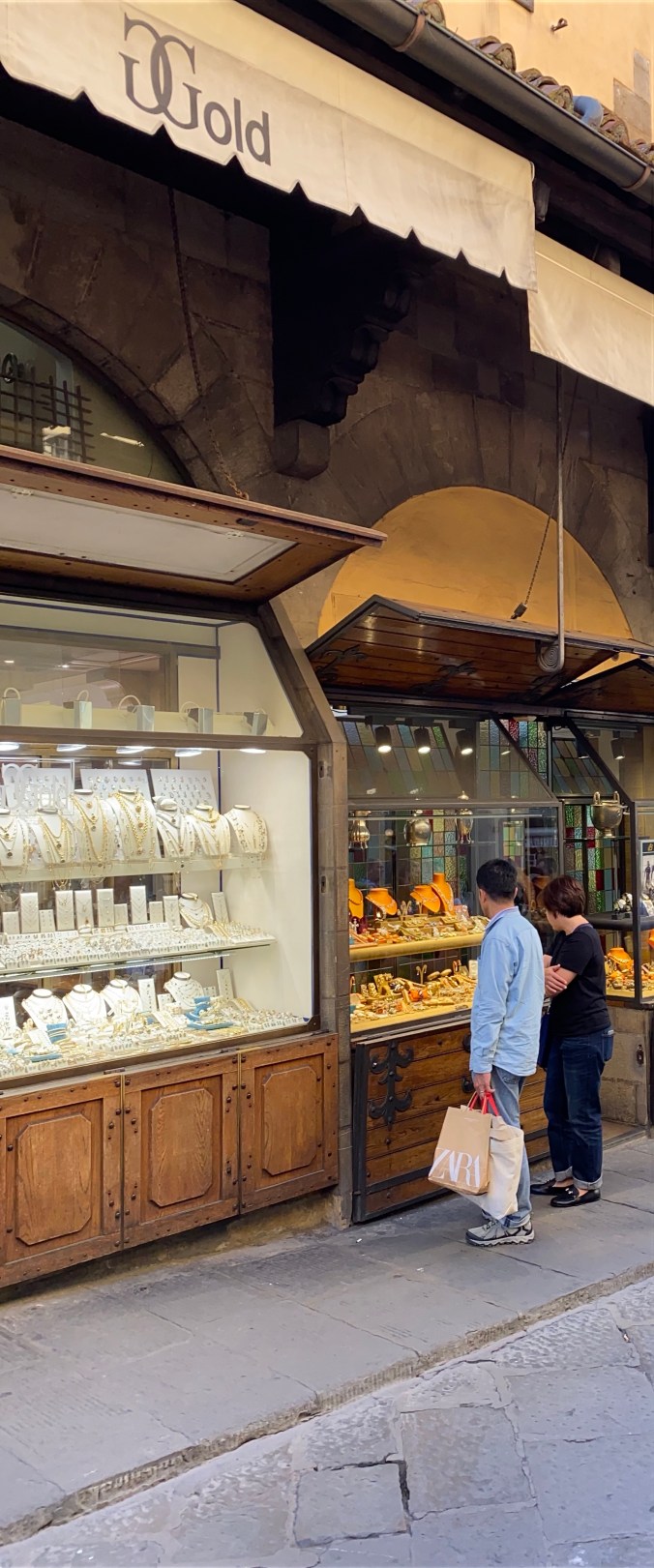
Shopping on the Ponte Vecchio

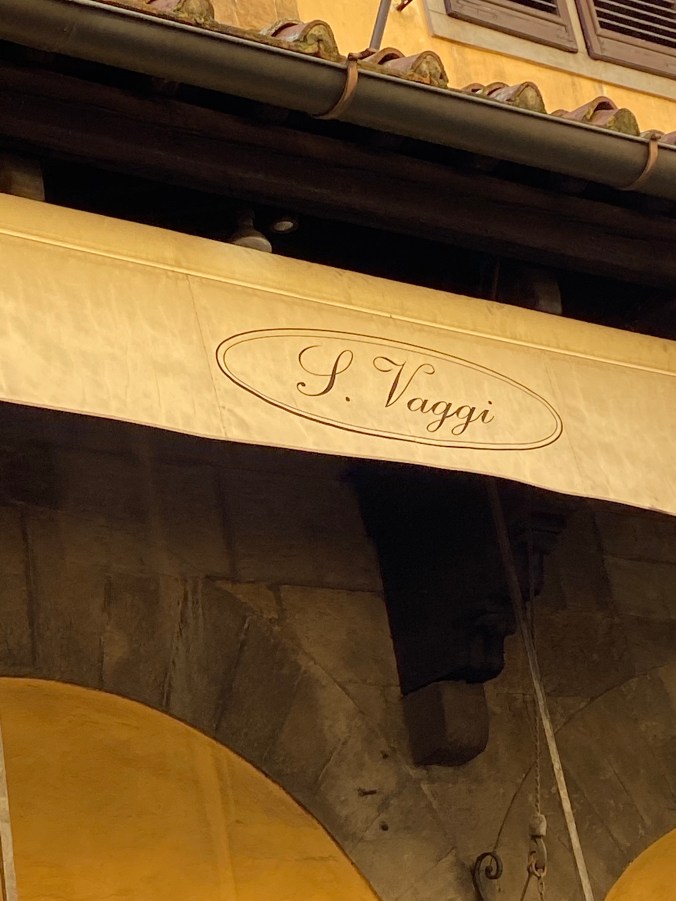
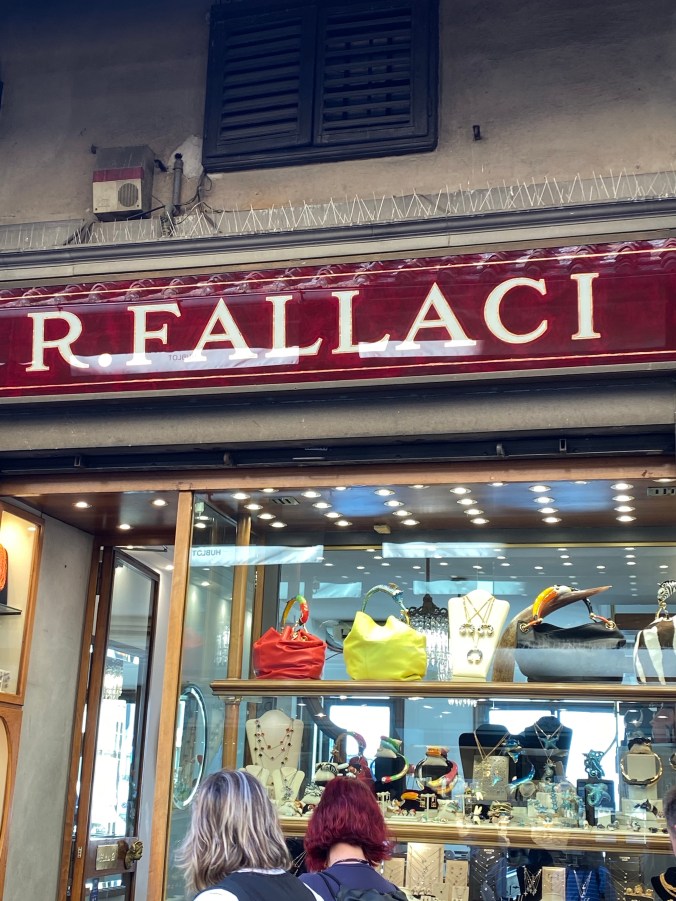
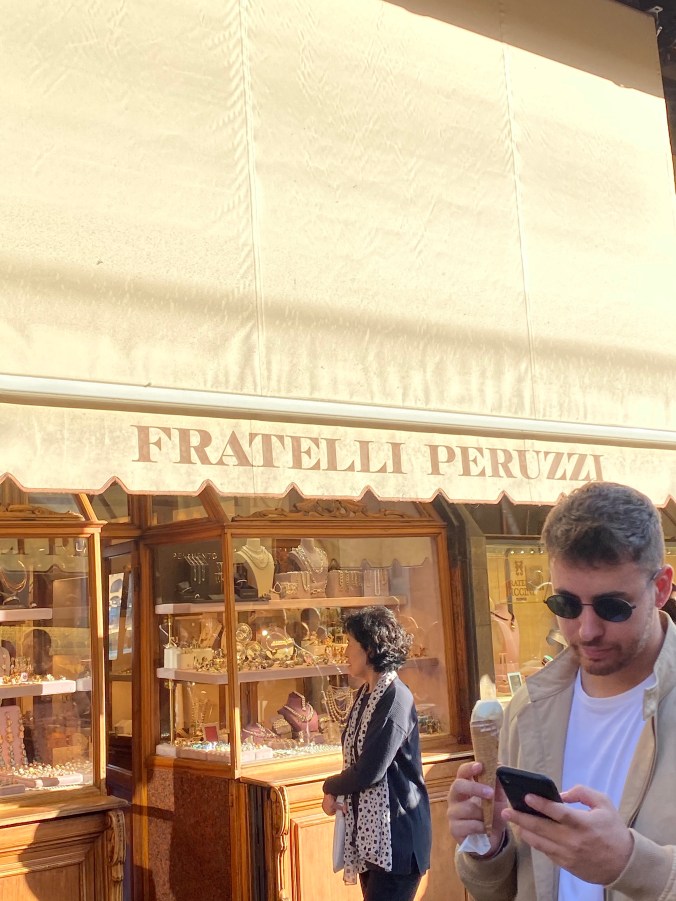
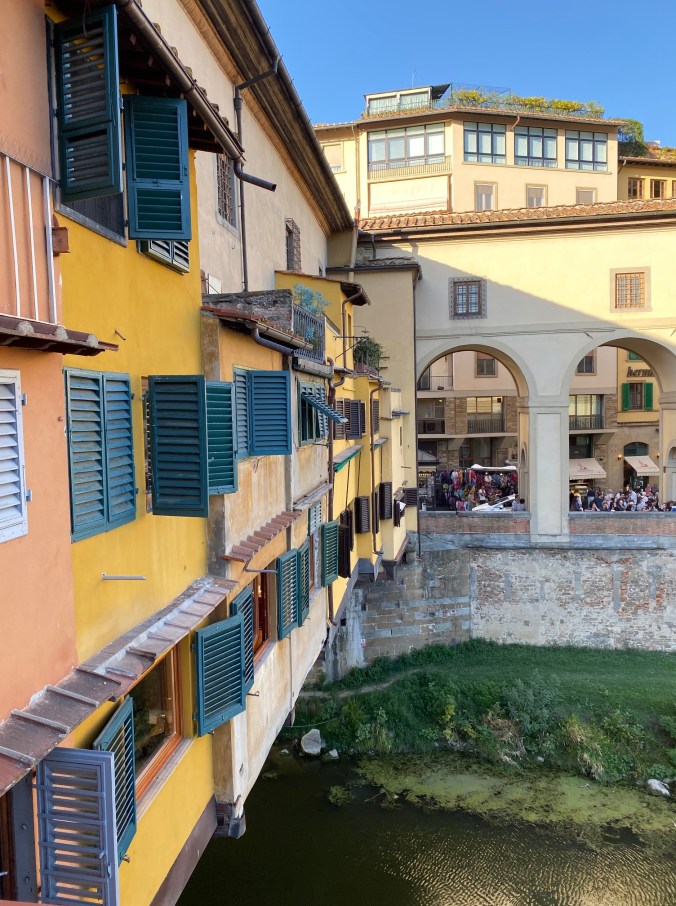
I’ve been going to and from the Ponte Vecchio for decades.  I’ve watched some of the shops change over the years (as indeed Florence has changed).  I am no expert on the jewelry shops that line the famous bridge, but I am informed by knowledgeable persons that these shops pictured below are some of the oldest and have the finest reputations.  Just my public service to my reader. :-))


haRdxPb7RLGu7l6xmQfSCQ


AgXFXY97QbqbWDvAQSThIg


WW3LhtIeT7WPiiJiCAxZqg


wJq9ooDNSwOGQ9YSuaX%PQ

The view from an elegant Ponte Vecchio jewelry shop

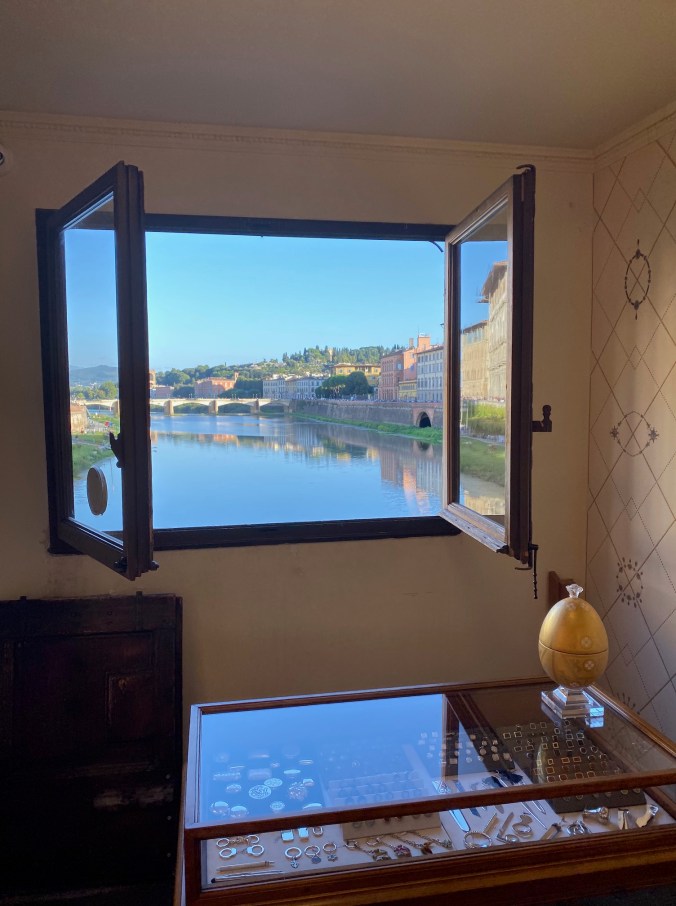
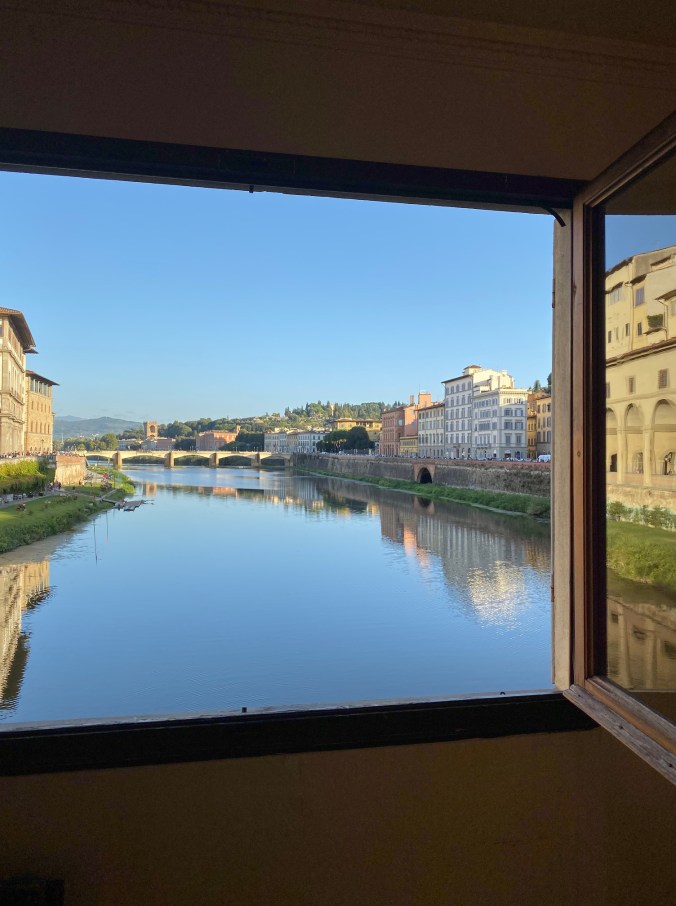
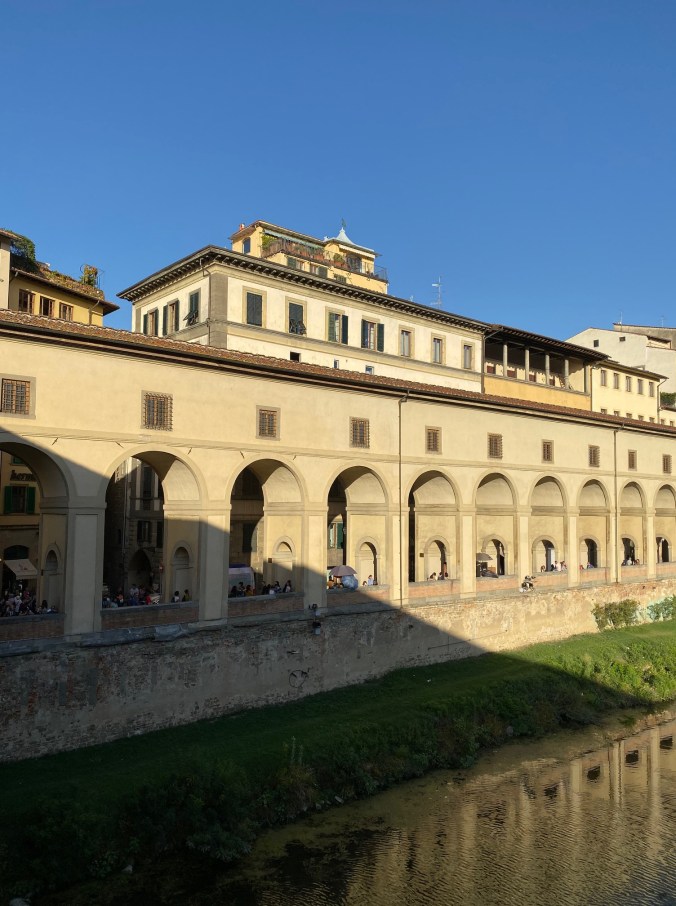
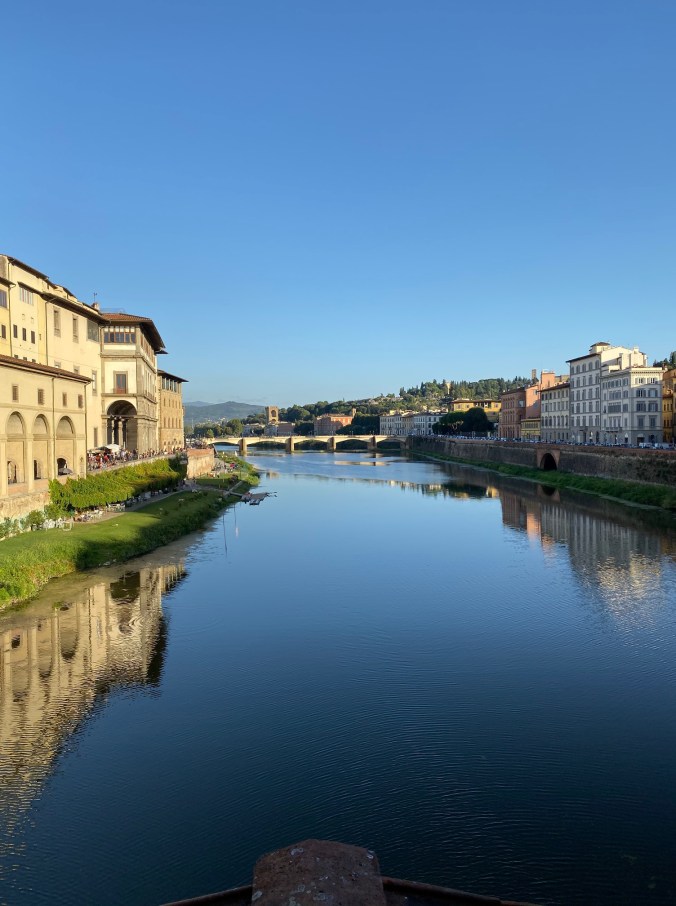
Last week I did something very unusual for me. I shopped in a jewelry store on the famed Ponte Vecchio. Looking at the photos I took from that shop on that beautiful autumn day makes me wonder if I purchased because I was entranced by the view. Maybe or maybe not. I must say, I do love what I bought.

But, check it out! I think you’ll understand!

IMG_0889


IMG_0890


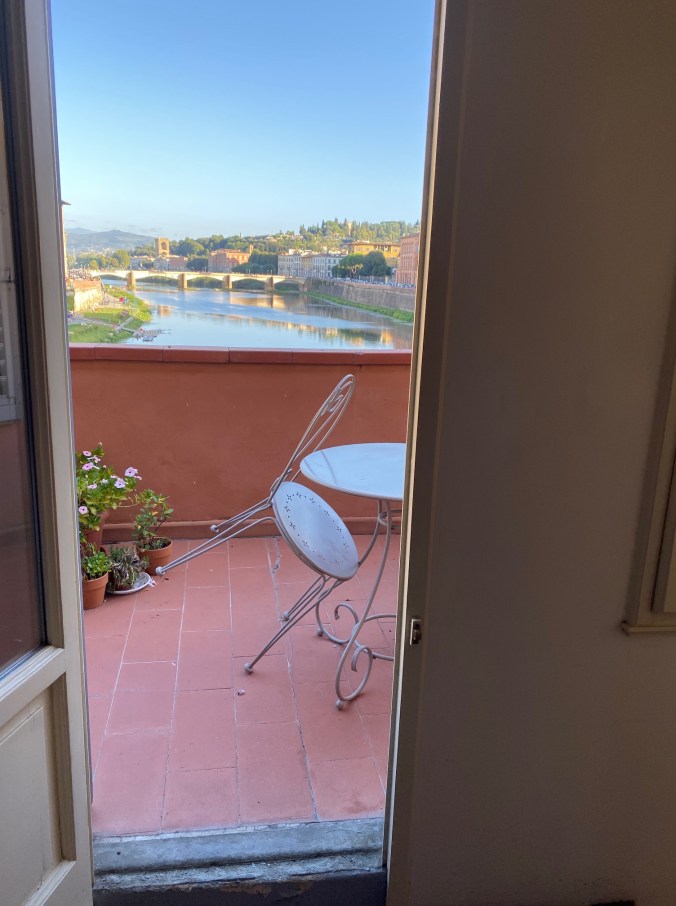
I was invited to go upstairs in the tiny Ponte Vecchio shop to take in the view from the terrace above.  Amazing.

IMG_0877


IMG_0879


IMG_0880


IMG_0881


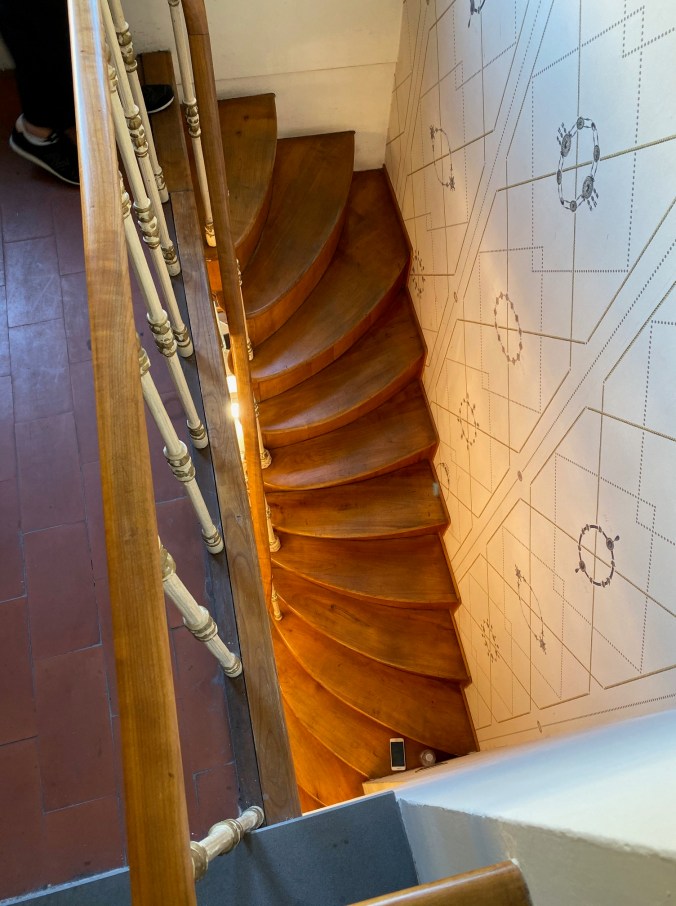
The tiny wooden stairway that led to the upper level was a work of art.  The photo below does not do it justice. It was taken from above, looking down.


IMG_0888

I was very surprised to see how spacious the upper level was.  I didn’t see it, but I am told that from the bathroom up here, you can see into the Vasari Corridor.


WzvBGro2Tnudh9Htguwipg

Looking at these 2 large rooms in this supremely situated space, I had to wonder about creating an apartment to live here.  A nice pipe dream.

kePFYeIoR+msffu21XVFUQ


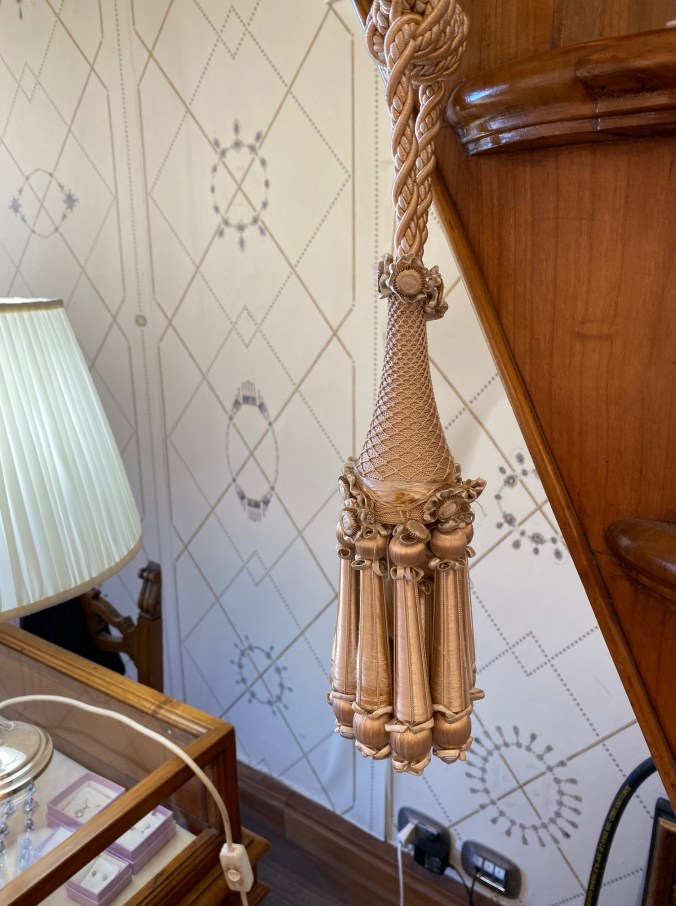
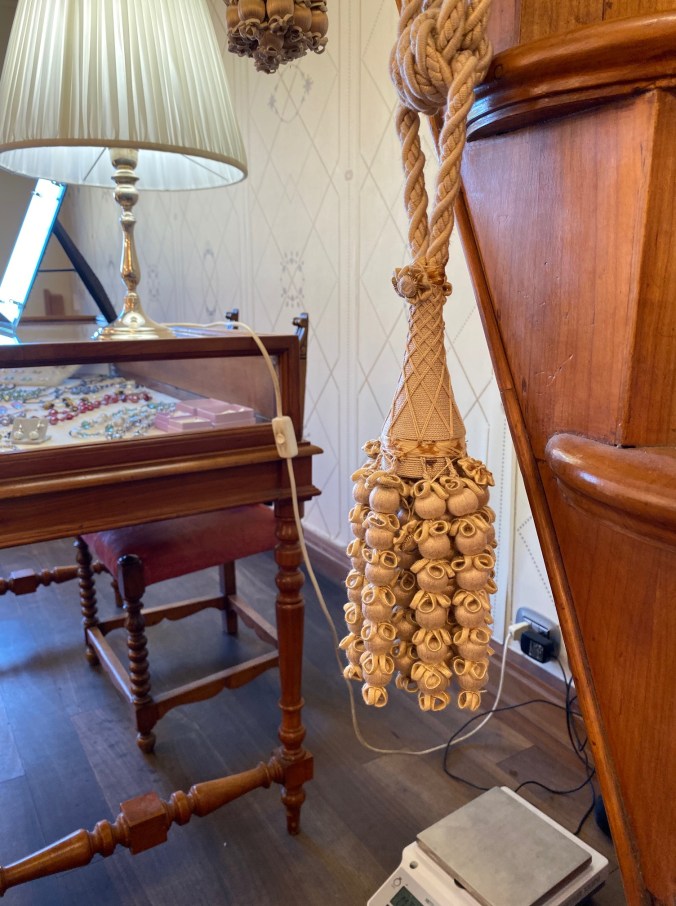
And last, but not least, I am always fascinated by the textile trim work to be found in this beautiful country!


IMG_0891


IMG_0892

6uMAQAZPSeam1CMU4S646Q

The fall sale at the Giardino dell’ Orticultura, Florence

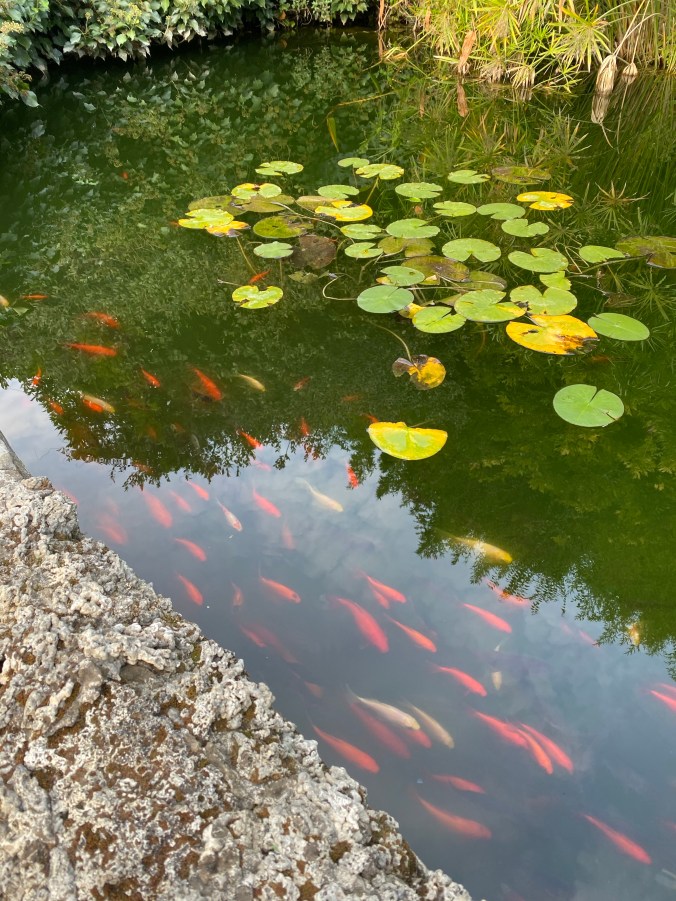
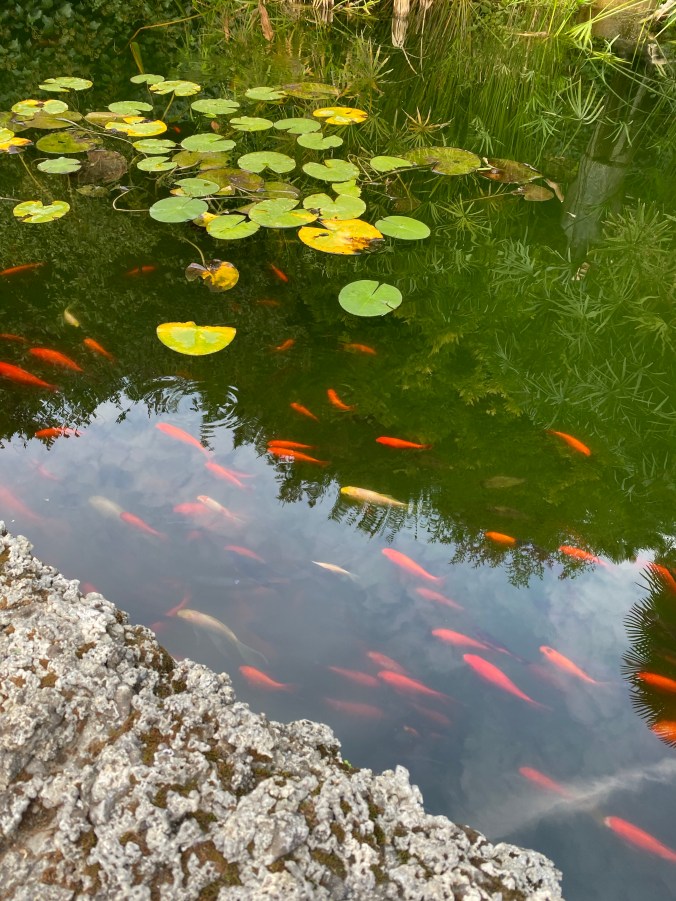
On an early October weekend in Florence, once of the city’s best semi-annual events take place, right in my neighborhood.  Florence’s Horticulture Garden (Giardino dell’Orticultura), located at Via Vittorio Emanuele II, 4,  is a great place to witness fall’s bounty in the shape of plants and flowers at the Mostra dei Fiori, or the flower fair.

True Florentines are well-acquainted with these fairs which are held every fall and spring. They have been organized almost every year since 1855, and are always attended  with great enthusiasm.

You may read all about the place here: www.societatoscanaorticultura.it.

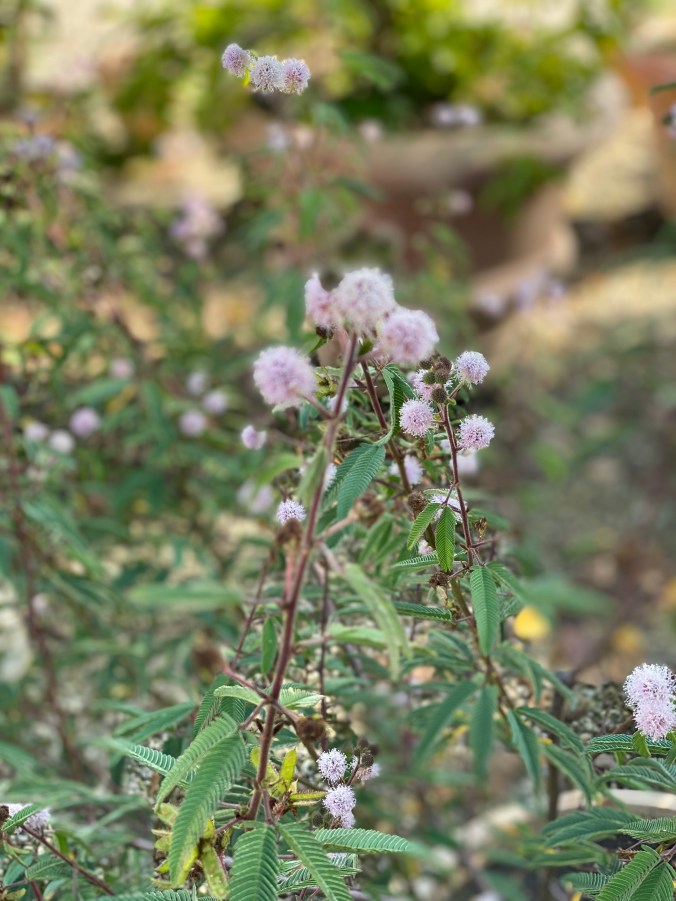
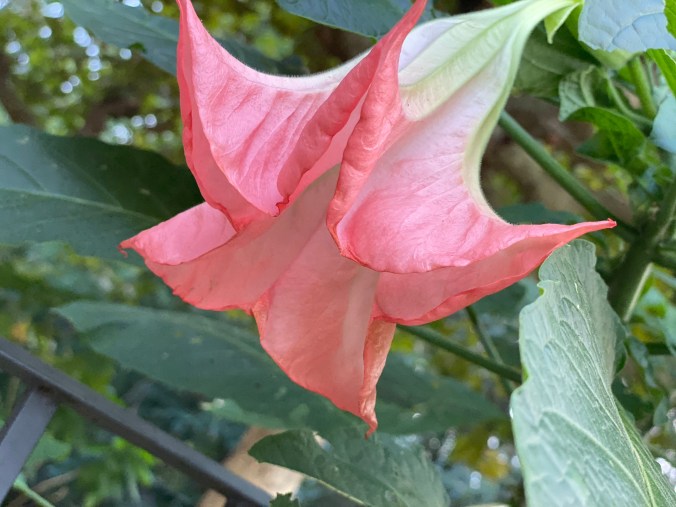
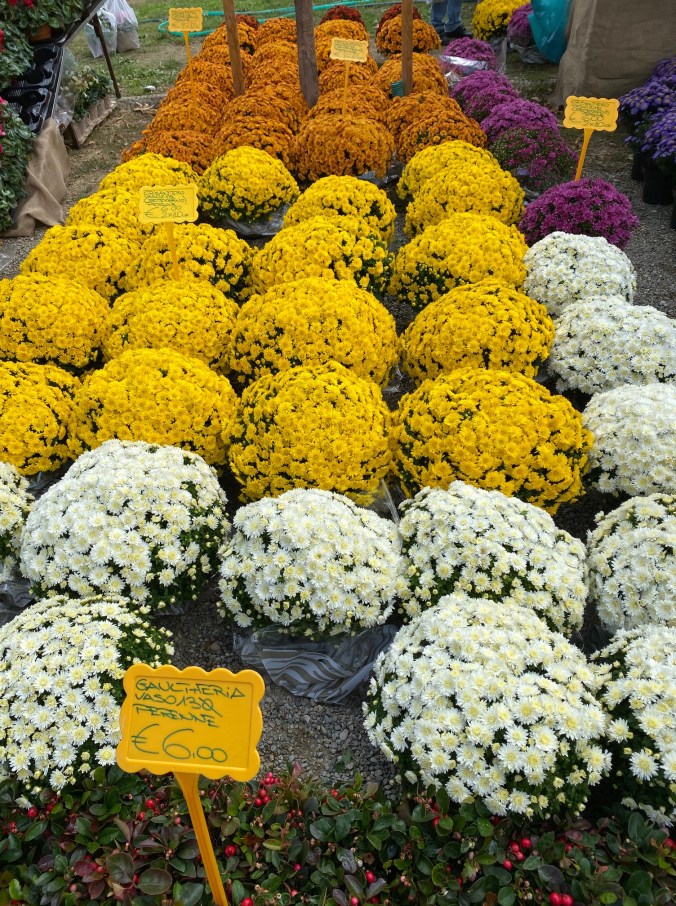
I eagerly await the fall and spring sales and this year was no exception.  I was greeted by this beautiful blooming plant, and couldn’t resist taking a picture of it and also a close-up. Wow!  What a specimen!

fullsizeoutput_1a0c


fullsizeoutput_1a0d


Next up were the glorious displays of chysanthemum (crisantemo in Italian) and cyclamen:

fullsizeoutput_1a0a

IMG_0789


This year one of the exhibitors had a fabulous showing of Italian lemons in their many forms:

fullsizeoutput_1a0e


fullsizeoutput_1a0f


fullsizeoutput_1a10


fullsizeoutput_1a11


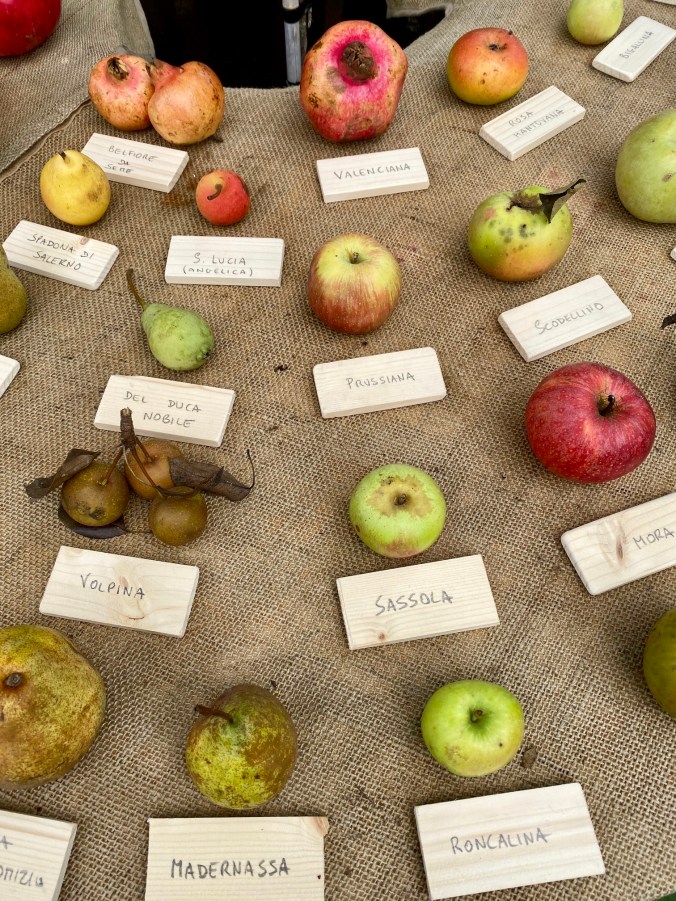
Another exhibitor did the same with grapes,  apples and nuts!  What a display!

fullsizeoutput_1a12


IMG_0798


fullsizeoutput_1a14


fullsizeoutput_1a15


fullsizeoutput_1a16


fullsizeoutput_1a17


fullsizeoutput_1a18


fullsizeoutput_1a19


fullsizeoutput_1a1a


fullsizeoutput_1a1b


fullsizeoutput_1a1c


fullsizeoutput_1a1d


I took home a smallish fig tree to grow inside my home, and a couple of perennials to add color to my fall terrace garden! I eagerly await the spring sale!

All of this botanical splendor serves to remind me that, at heart, I am simply a farmer’s daughter.


The following is for die-hards:

Taken from Italian Wikipedia, with my own translation. You’ve been warned!


Nel 1852, constatato il diffondersi della pratica per l’arte del giardinaggio, l’Accademia dei Georgofili nominò una commissione con l’incarico di formare in Toscana una società d’orticoltura: la Società Toscana di Orticoltura. Da qui nasce l’esigenza dell’attivazione di un orto o giardino sperimentale, che si concretizzò nel 1859, anno in cui alla Società, venne concesso in enfiteusi un terreno posto fuori porta San Gallo all’inizio di via Bolognese di proprietà del marchese Ludovico Ginori Lisci e della marchesa Marianna Venturi.

Dopo tre anni di lavoro la Società aveva realizzato un piantatoio, una vigna ed un pomerio ed aveva impiantato nella parte bassa, verso la città, eccentriche e rare piante ornamentali.

Un radicale riordinamento del giardino si ebbe a partire dal 1876 con lo scopo principale di poter ospitare future esposizioni nazionali e mostre prestigiose. Nel 1880 la Federazione orticola italiana organizzò a Firenze la prima esposizione nazionale e proprio per onorare degnamente l’incarico, la Società toscana decise di completare il proprio giardino con la costruzione di un tepidario (serra in ferro e vetro) di grandi dimensioni che non aveva precedenti in Italia. Fu promossa una sottoscrizione fra i soci al fine di trovare i fondi necessari alla nuova costruzione. L’incarico di redigere il progetto fu affidato all’ingegnere e architetto Giacomo Roster e realizzato dalle Officine Michelucci di Pistoia, con le colonnine in ghisa della fonderia Lorenzetti, sempre di Pistoia. Il tepidarium è a base rettangolare e misura 38,50×17 metri, con una superficie coperta che tocca il 650 m2. L’interno, che era riscaldato da stufe, è abbellito da due vasche con nicchie decorate da rocce spugnose, un omaggio all’architettura manierista, opera dell’intagliatore fiorentino Francesco Marini. In totale vennero assemblati ben 9.700 pezzi, con otto tonnellate di ferro cilindrato che sostengono la struttura. Dopo l’inaugurazione del 19 maggio 1880, il cronista de La Nazione lo definì “palazzo di cristallo.”

L’attività promotrice della Società s’intensificò ulteriormente con l’esposizione organizzata nel 1887, in questa occasione il giardino venne arricchito dalla presenza di un caffè restaurant e da una seconda serra, proveniente dal giardino Demidoff di San Donato.

Nel 1911, il giardino fu nuovamente teatro di una grande mostra internazionale di floricoltura per le celebrazioni promosse dal comune di Firenze nell’ambito del cinquantenario dell’Unità d’Italia. In tale occasione furono operate delle considerevoli modifiche alcune delle quali si conservano tutt’oggi, il cavalcavia sulla ferrovia, l’ingrandimento del viale d’accesso, la decorazione del cancello con stendardi e la costruzione della Loggetta Bondi da parte della Manifattura di Signa. Con nuovi padiglioni addossati al muro si poterono accogliere le esposizioni di libri, ceramiche, attrezzi da giardino e fotografie dell’epoca. alcuni padiglioni erano dedicati alle piante ad alto fusto ed uno unicamente alle rose. Oltre ai numerosi ospiti stranieri, per la prima volta a Firenze, fecero la parte del leone gli esemplari provenienti dalle collezioni dei fiorentini Carlo Ridolfi e Carlo Torrigiani.

Con la prima guerra mondiale cominciò un lento ma inesorabile declino dell’attività della Società toscana d’orticoltura: perciò, nel 1930 il giardino venne acquistato dal Comune, che lo destinò a giardino pubblico. Il grande tepidario del Roster denunciava un grave stato di abbandono, tanto che il Comune stanziò, fra il 1933 e il 1936, dei fondi speciali per il restauro di questo. Il tepidario subì di nuovo alcuni danni, specialmente durante la seconda guerra mondiale; recentemente, nel 2000, è stato restaurato, tornando all’antico splendore.

Attraverso un passaggio pedonale oltre la ferrovia si accede al cosiddetto “giardino degli orti del Parnaso”, una piccola area verde posta su un dislivello panoramico, dove spicca una fontana a forma di serpente o drago, che si snoda fantasiosamente sulla scalinata. Questo giardino, in particolare la zona vicino all’ingresso da via Trento, è uno dei migliori punti della città per vedere “I Fochi di San Giovanni”, lo spettacolo pirotecnico che si tiene ogni anno il 24 giugno per la festa di San Giovanni, patrono di Firenze. In questo giardino ha sede il Giardino dei Giusti sulla falsariga di quello esistente a Gerusalemme.

La serra oggi è utilizzata per eventi, aperitivi, party ed attività culturali, come per esempio l’iniziativa Un tè con le farfalle.

Mentre il Giardino ospita anche la Biblioteca comunale dell’Orticoltura.

Nel giardino sono state girate alcune scene dei film Amici miei – Atto IIº (1982) di Mario Monicelli e Sotto una buona stella (2014) di Carlo Verdone.


In 1852, the l’Accademia dei Georgofili established a committee to consider establishing a society for horticulture in Tuscany: la Società Toscana di Orticoltura.  From that origin, came the formation of an experimental garden was established in 1859, the year in which the committee was given lease on land outside of the Porta San Gallo at the beginning of Via Bolognese, [the land] owned by the landowner of the Marquis Ludovico Ginori Lisci and of the Marquise Marianna Venturi.

After 3 years work the Societa had built a garden with a vineyard and a tomato house and had planted rare ornamental plants in the lower part [of the plot], towards the city.

From 1876 the garden was radically reorganized in order to become a suitable place to host future national expositions and prestigious exhibits. In 1880 the Italian Horticulture Federation organized in Florence the first national exposition and, in honor of that,  the Tuscan Societa decided to complete its garden by construction a large tepidarium (greenhouse in iron and glass), which was without precedent in Italy.

A subscription was formed to finance the work of the new construction. The project was drawn up by the engineer and architect Giacomo Roster and carried out by the Offices of Michelucci of Pistoia, with the cast iron columns from the Lorenzetti foundry, also from Pistoia.  The tepidarium has a rectangle base and measures 38.50 x 17 meters, with a covered area that is 650 square meters.

The interior was heated by 2 stoves, is adorned with niches decorate with red spongy stone, a tribute to Mannerist architecture, the work of the master Florentine stone cutter, Franscesco Marini.  The entire building is made up of more than 9,700 pieces with 8 tons of cylindrical cast iron supporting the structure.  After the inauguration on 19 May 1880, the reporter of La Nazione called it a “Palace of Crystal.”

The Society’s promotion of its work intensified with the exhibition organized in 1887, on this occasion the garden was outfitted with a caffe restaurant and a second greenhouse, supplied by the Demidoff garden of San Donato.

In 1911, the garden was once again the site of a great international floriculture exhibition for the celebrations promoted by the municipality of Florence to commemorate the 50th anniversary of the Italian Unification. On this occasion,  modifications, some of which are still preserved today, the railway overpass, the enlargement of the driveway, the decoration of gate, and the construction of the Bondi Loggia by the Signa Manufacture.

With new pavilions inside the wall,  exhibitions of books, ceramics, garden tools and period photography, could be accommodated. Some pavilions were dedicated to tall trees and one dedicated to roses. In addition to the numerous foreign guests, for the first time in Florence, the lion’s share of specimens  came from the Florentine collections of Carlo Ridolfi and Carlo Torrigiani.

With the beginning of WWI the Society’s activities slowed and declined; therefore, in 1930 the garden was purchased by the Municipality, which turned it into a public garden.  The large tepidarium of the Roster denounced he grave state of disrepair, so that the Commune allocated, between 1933 and 1936, special funds for its restoration. The tepidarium again suffered damage, especially during the WWII; recently, in 2000, it was restored and returned to its former glory.

A pedestrian walkway leads to the so-called “garden of the Parnassus” a small green area on a leveled panoramic site, where a snake or dragon-shaped fountain plays, winding imaginatively up the stairs. This garden, in particular the zone near the entrance of Via Trento, is one of the best spots in the city to see the Fireworks of St. John, the fireworks display held every year on 24 June for the holiday of San Giovanni, patron of Florence. In this garden is the “Garden of the Righteous” along the lines of the one in Jerusalem.

Today the greenhouse is used for events, aperitifs, parties and cultural activities, such as the initiative “A tea with butterflies.”

The Garden also houses the municipal Horticultural Library.

In the garden some scenes of the films Amici miei – Atto IIº (1982) by Mario Monicelli and “Under a good star” Sotto una buon stella (2014) by Carlo Verdone were shot.


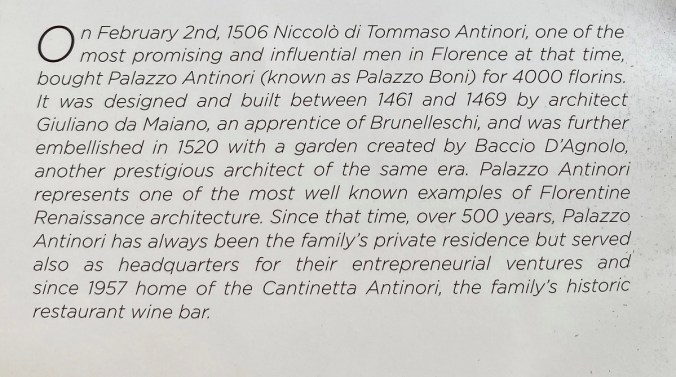
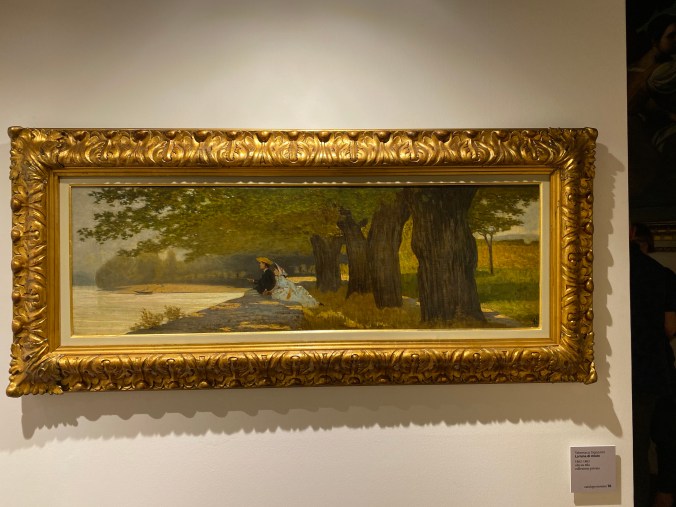
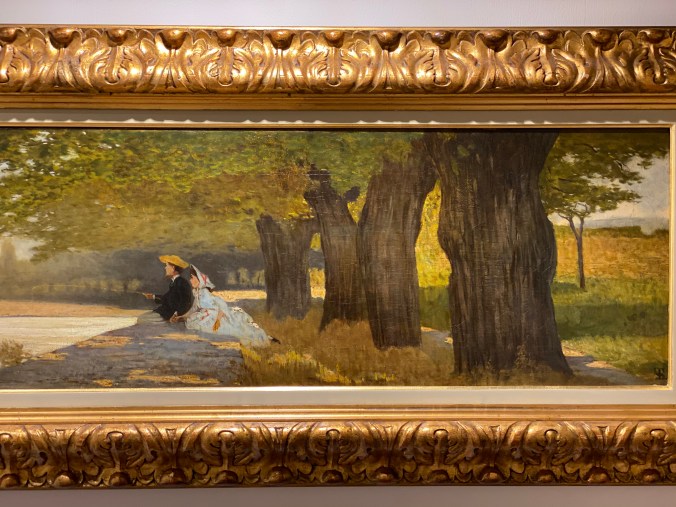
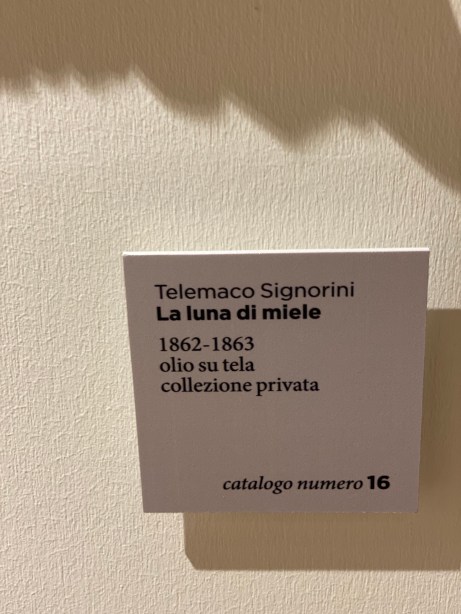
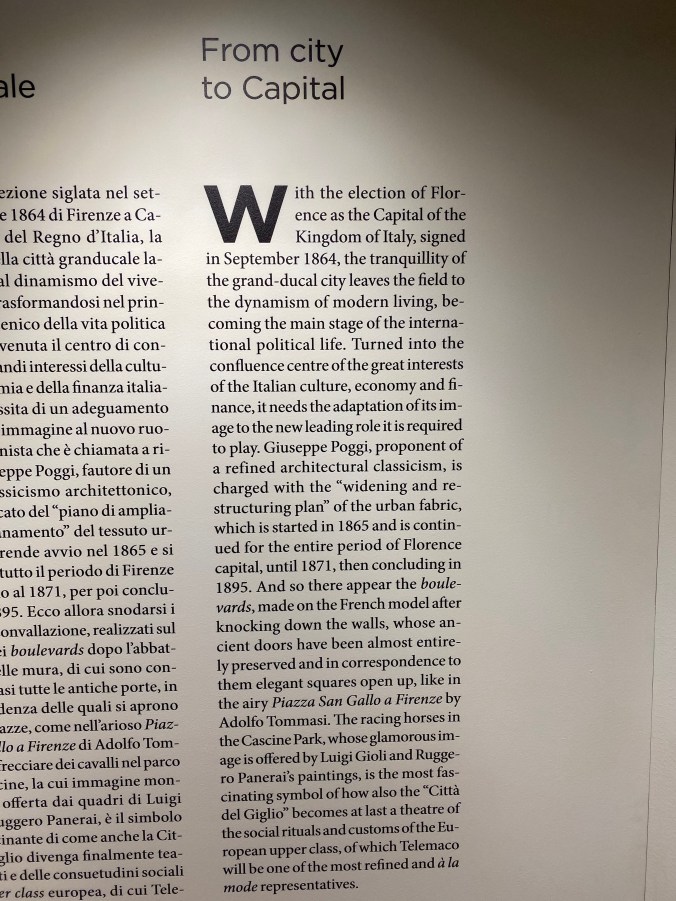
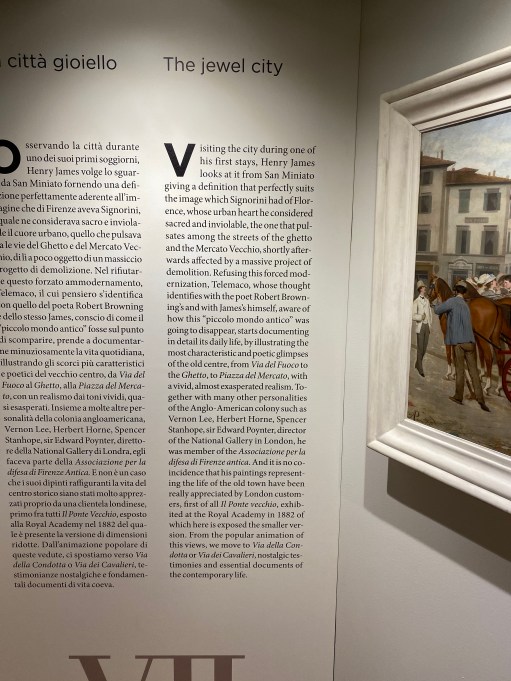
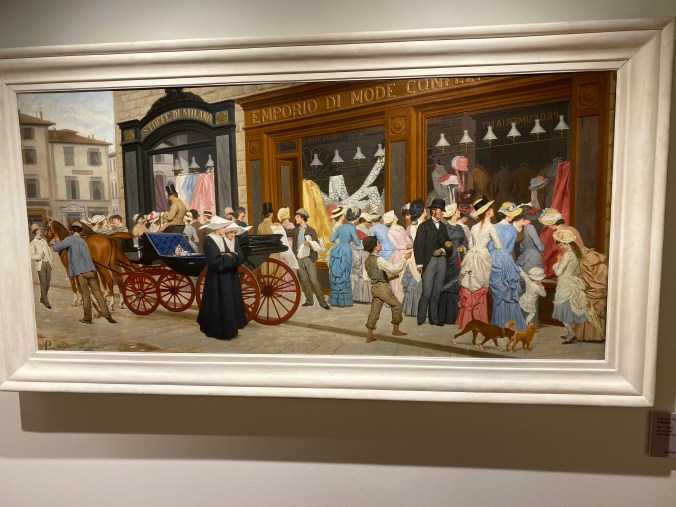
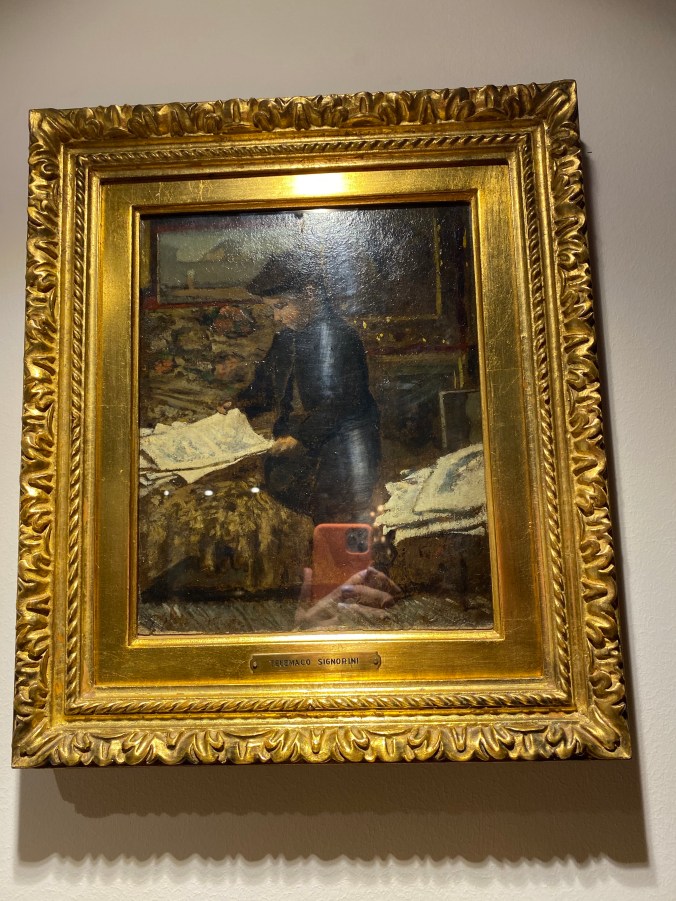
The Florence of Telemaco Signorini; exhibition at Palazzo Antinori

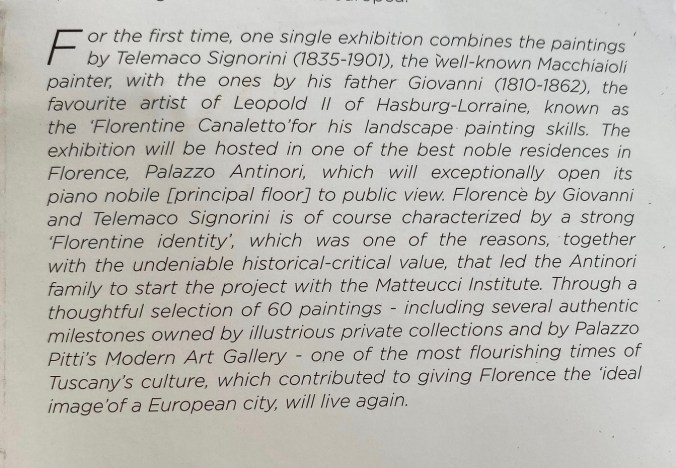
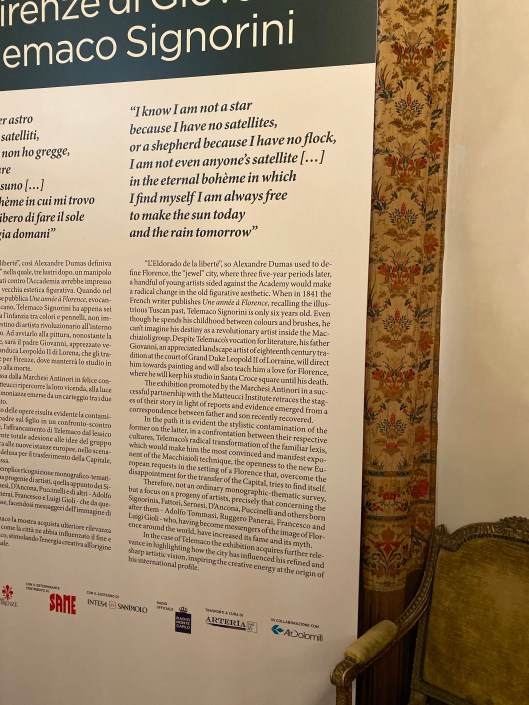
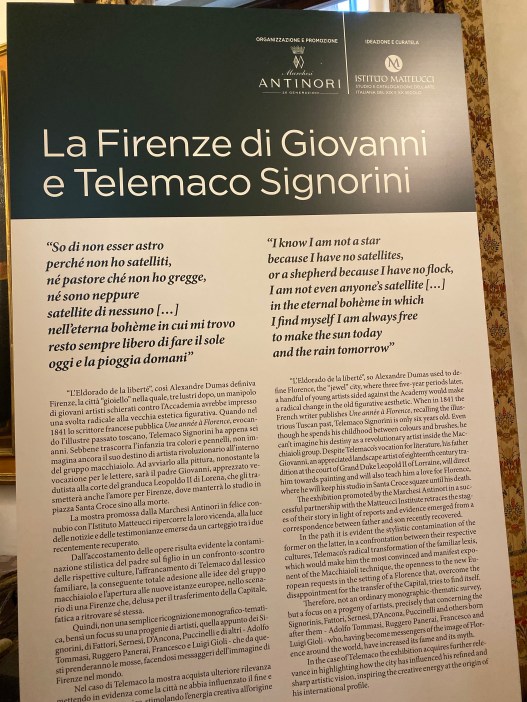
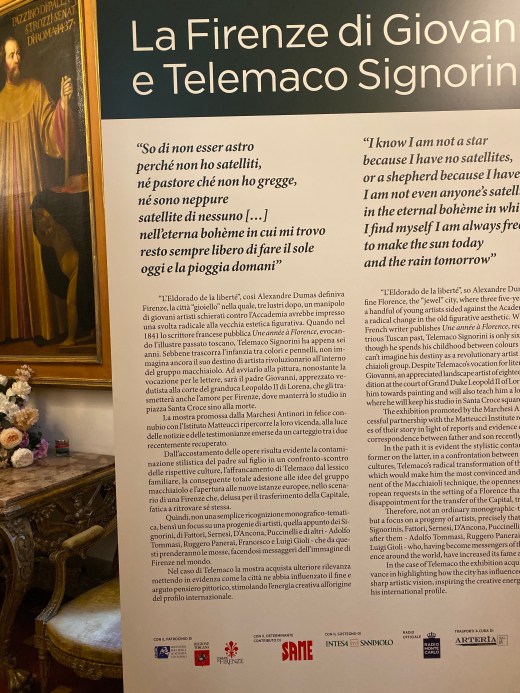
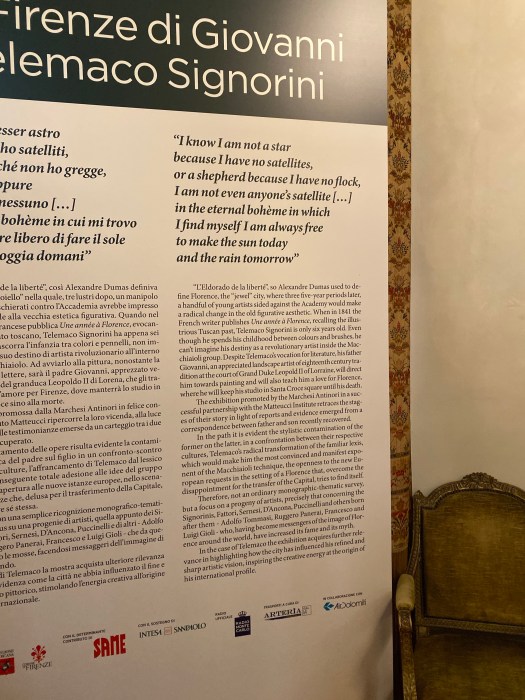
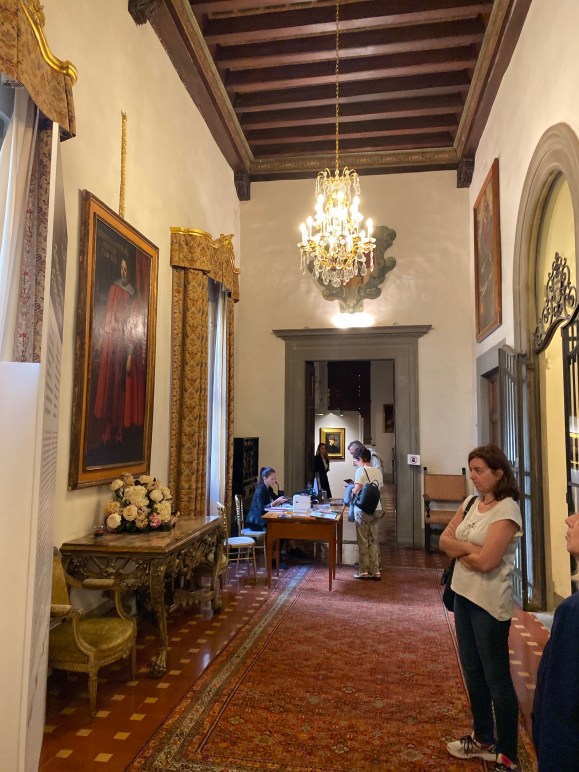
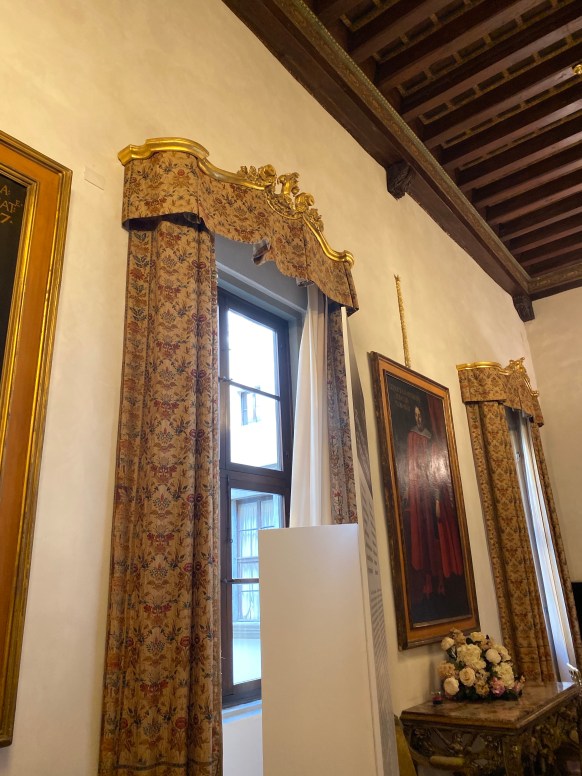
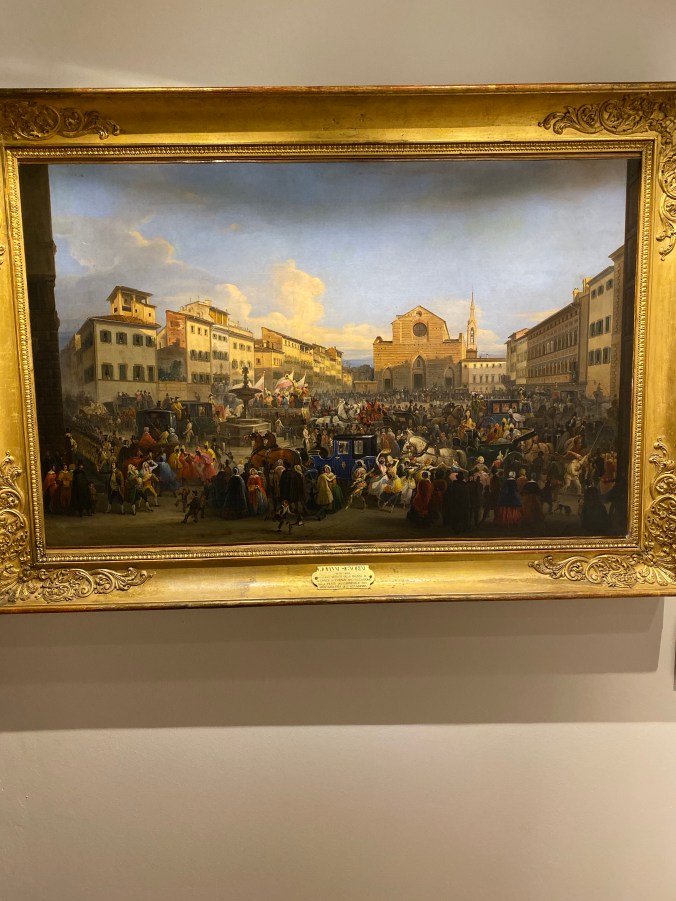
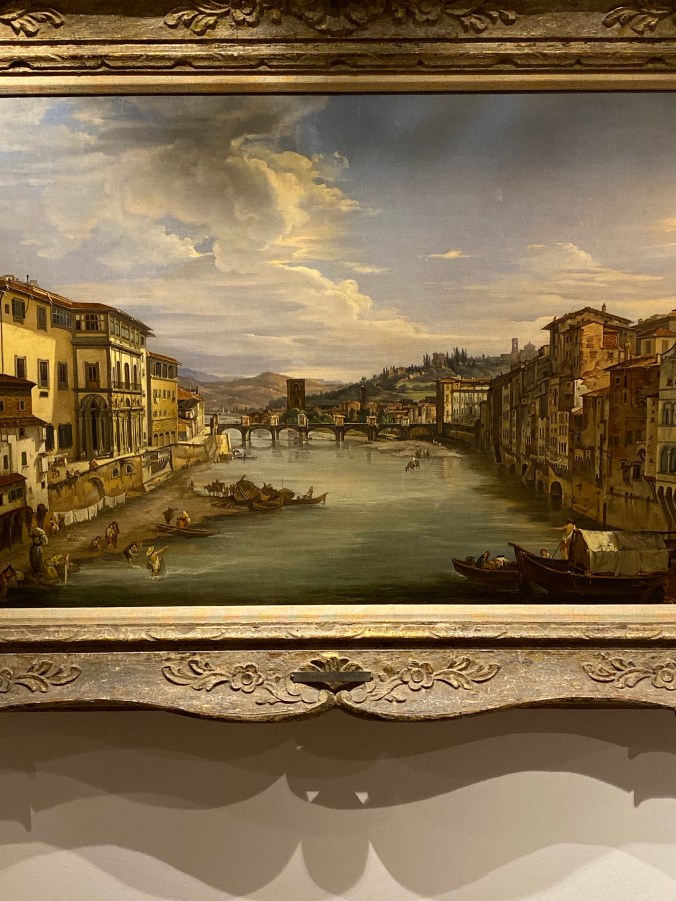
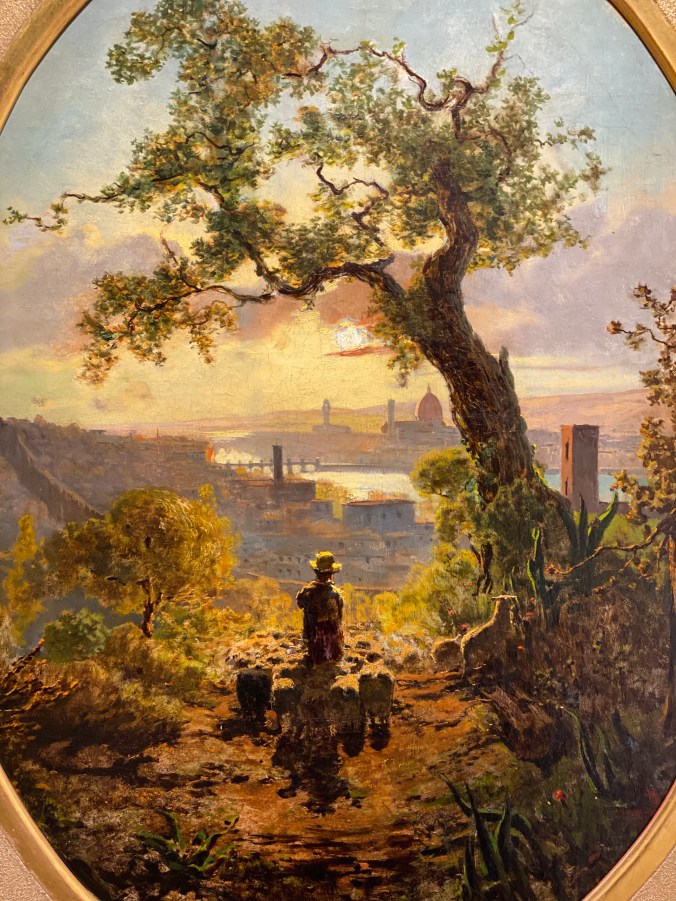
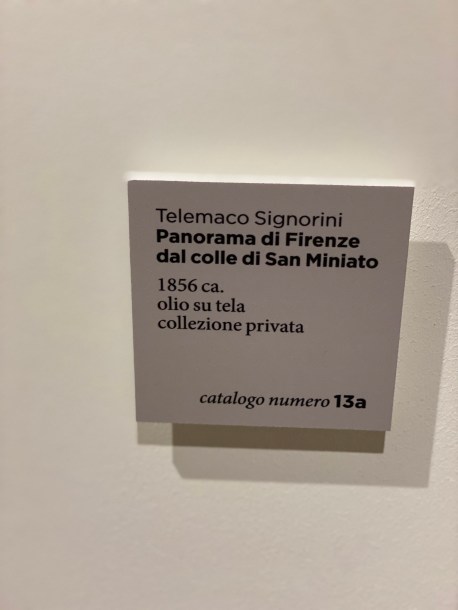
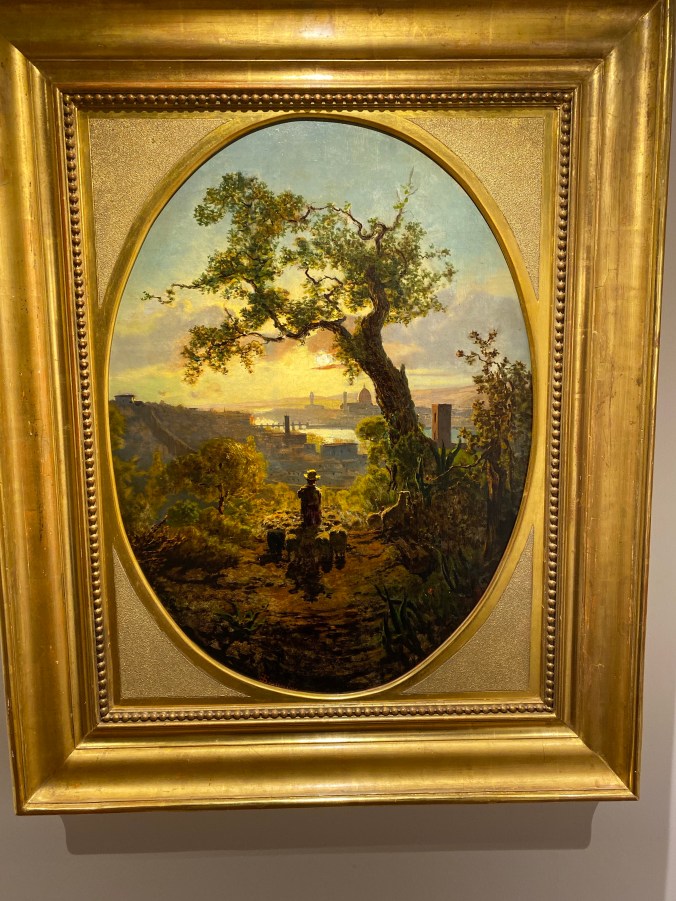
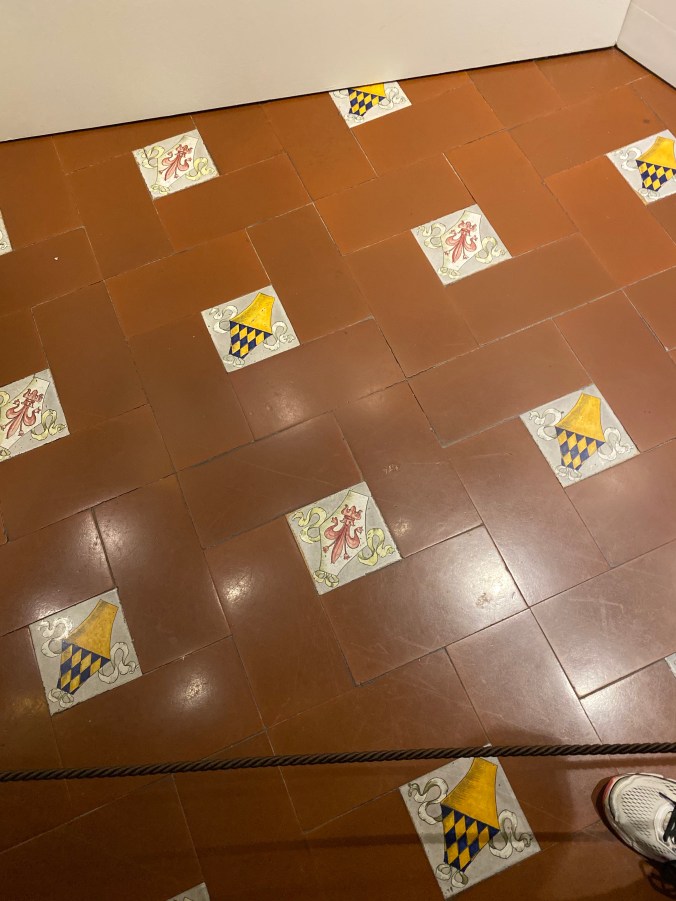
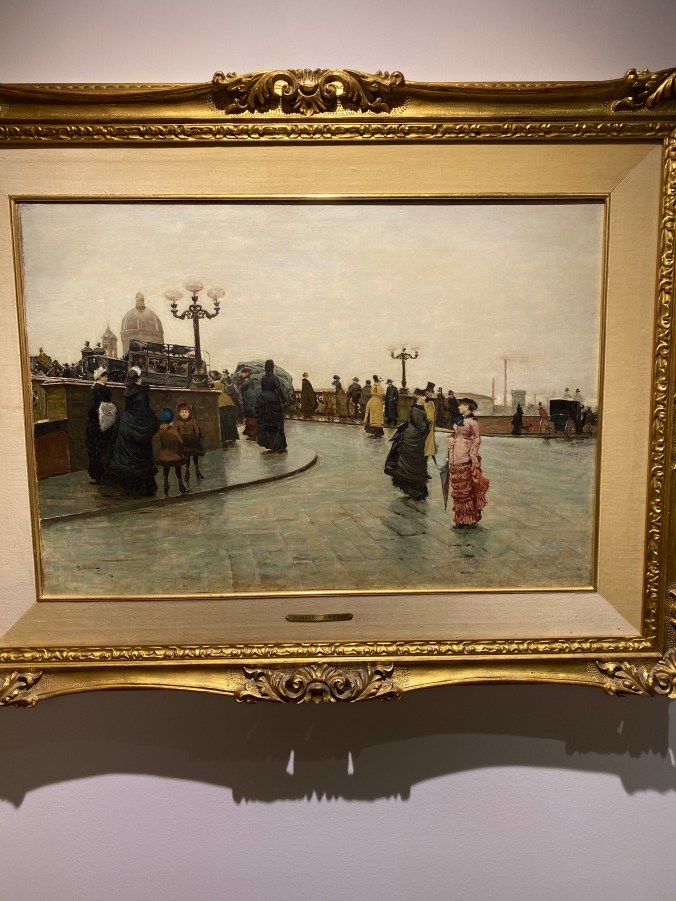
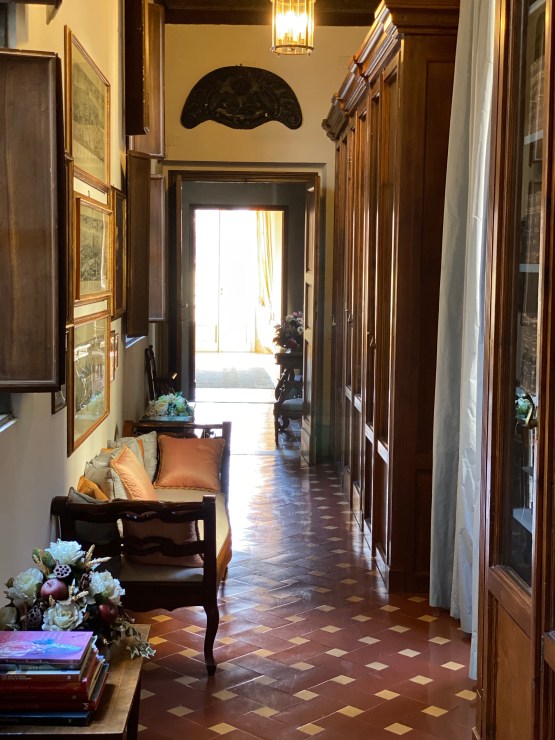
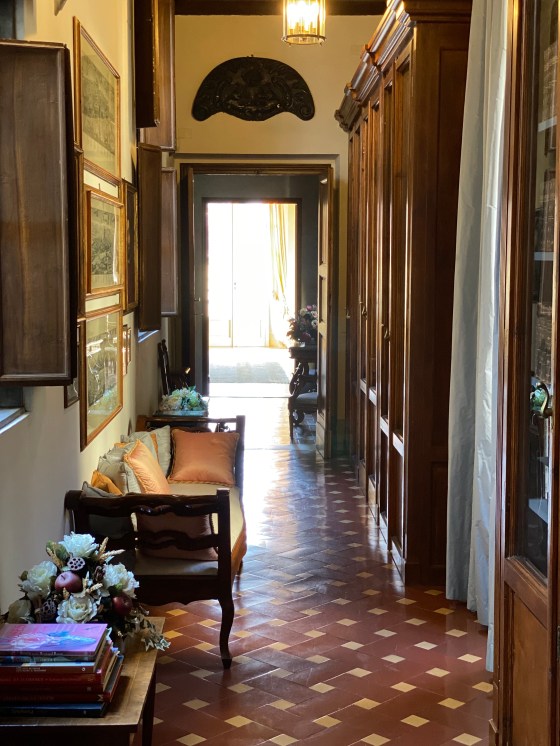
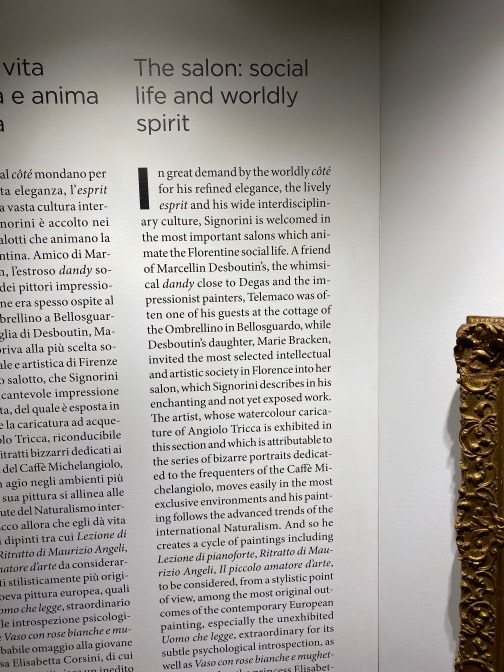
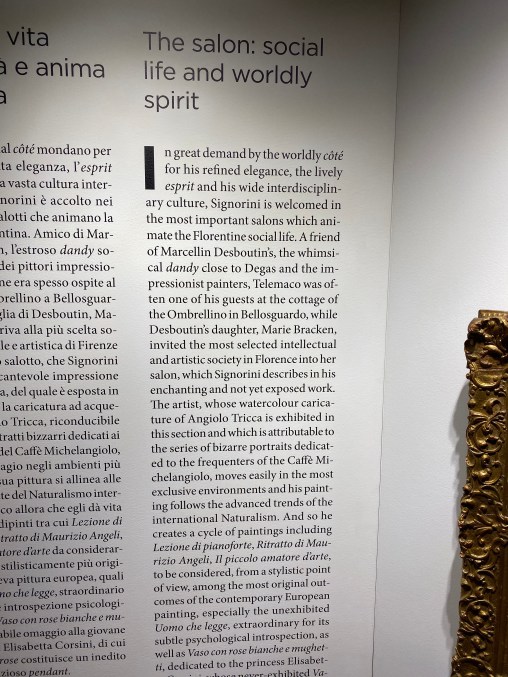
Lovers of the ottocento and of old Florence will love the current exhibition at the Palazzo Antinori.  Entitled “The Florence of Giovanni and Telemaco Signorini” (father and son), the show runs through 10 November 2019.  For people like me, it is a delightful experience to not only see the show, but to also have a look at the piano nobile of the Antinori Palace.

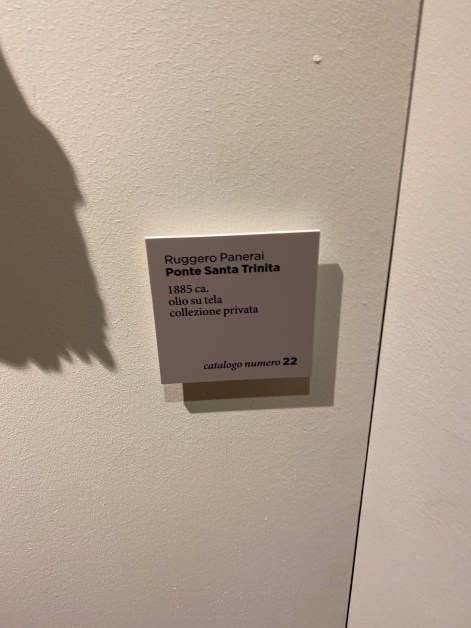
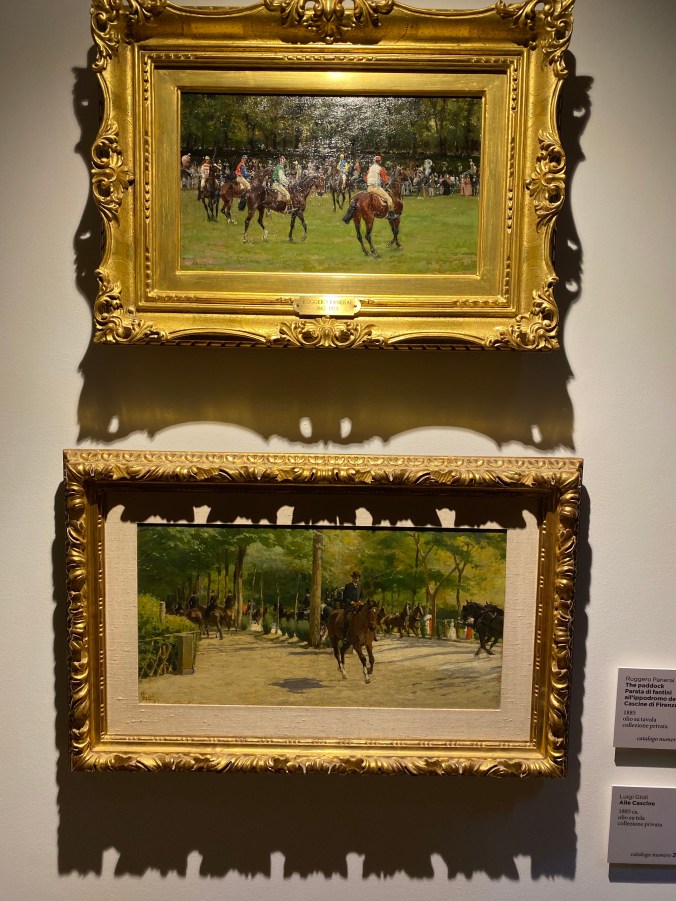
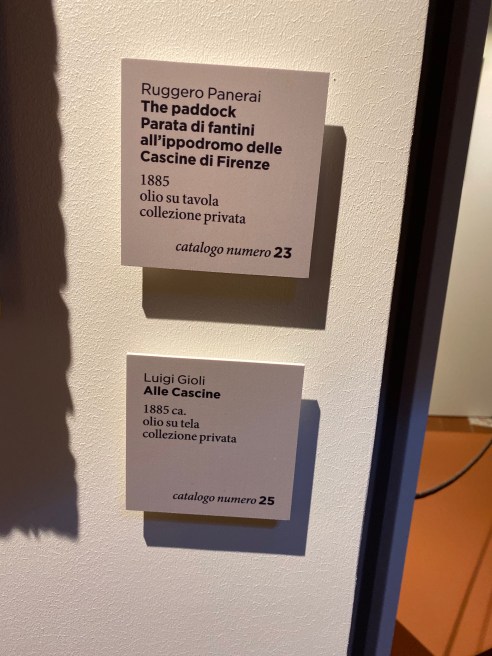
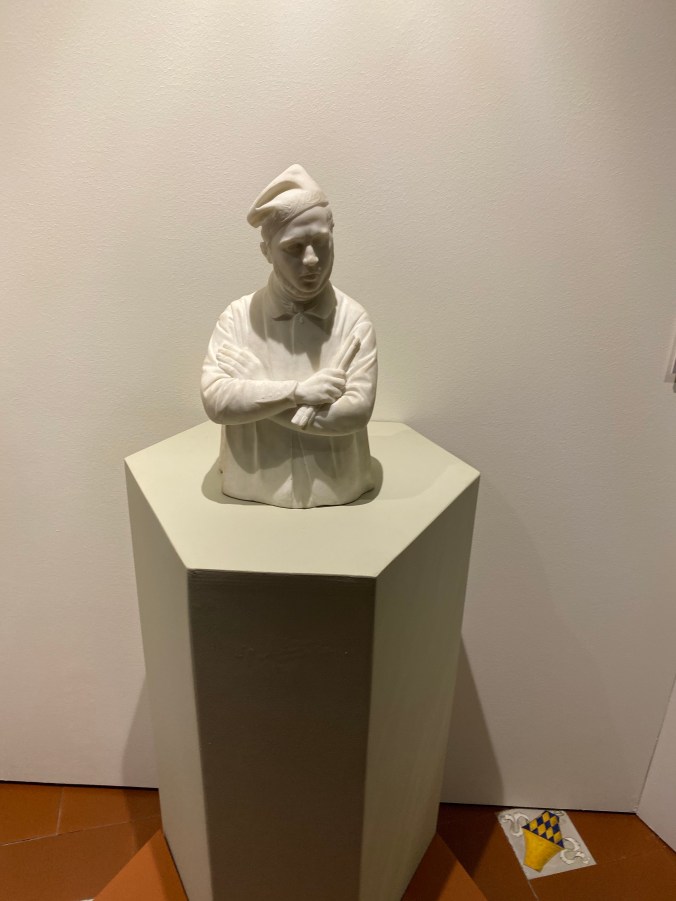
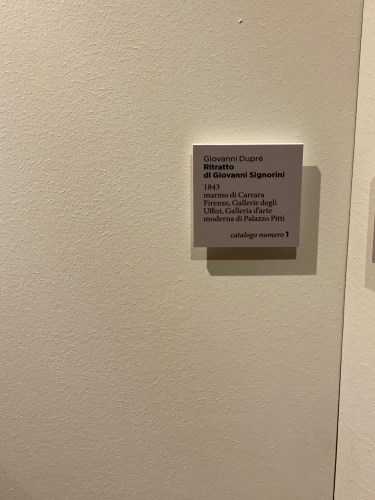
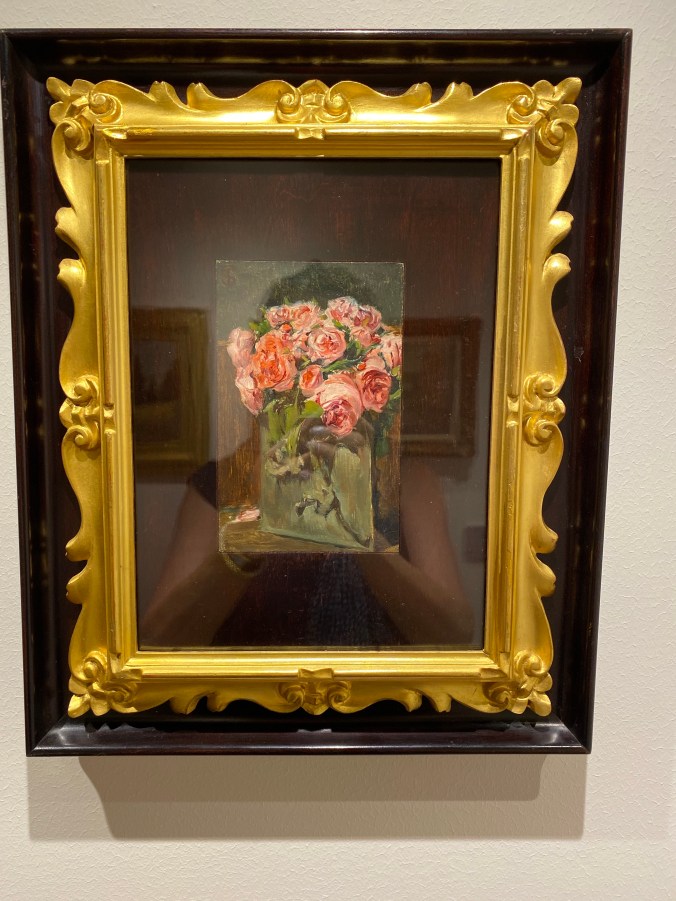
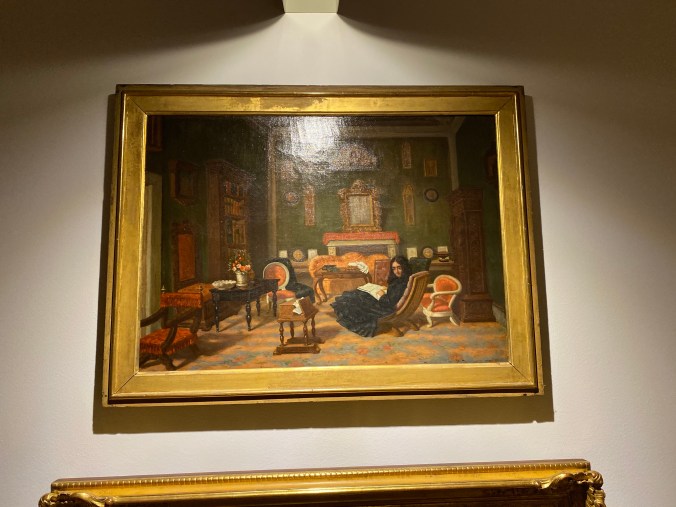
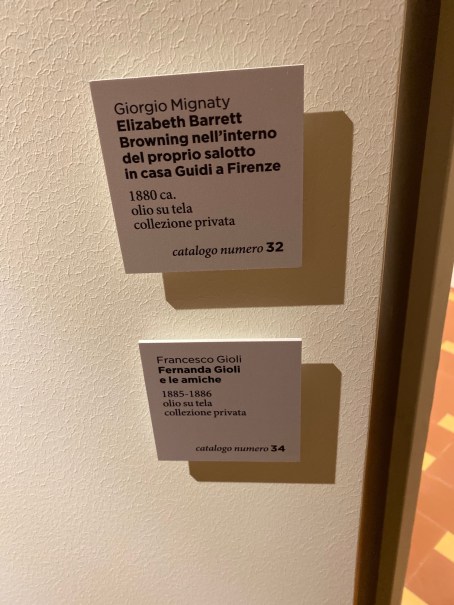
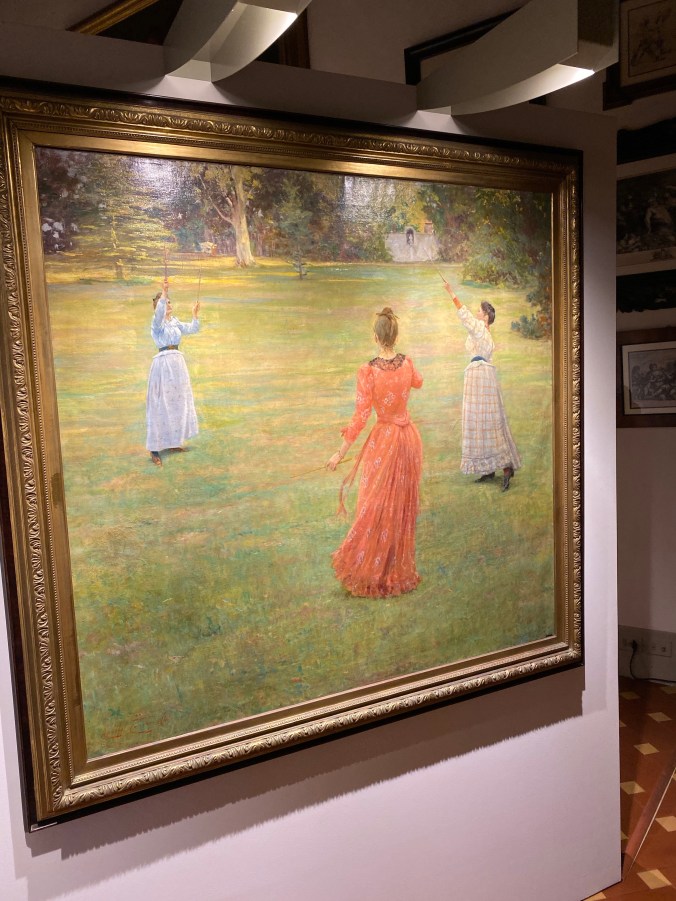
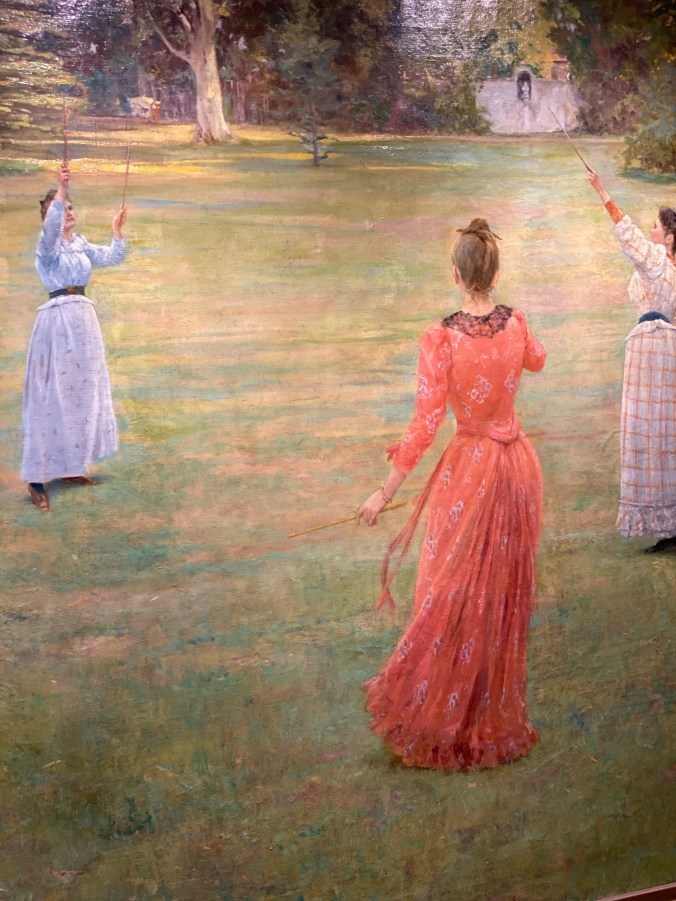
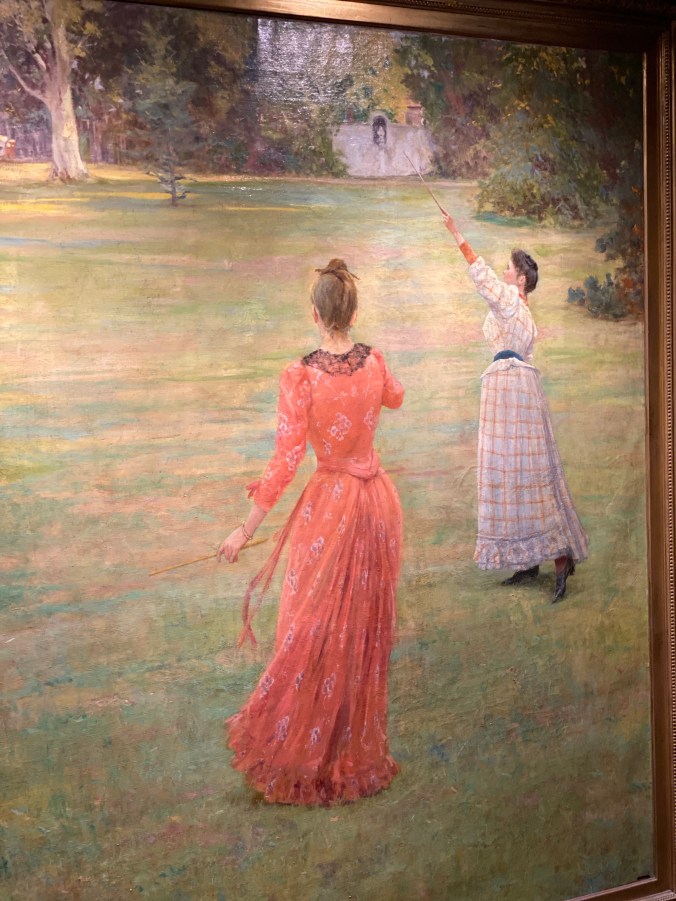
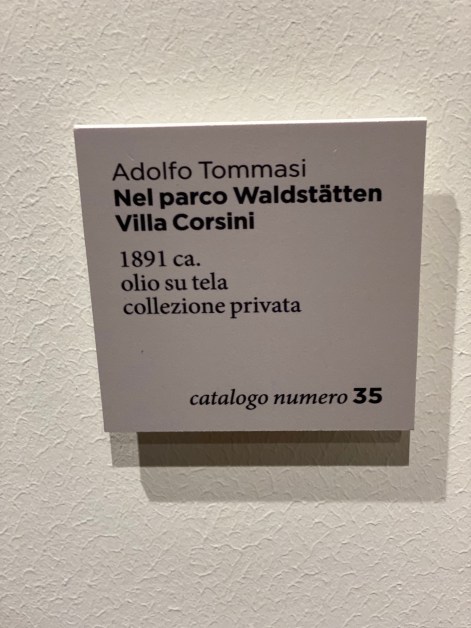
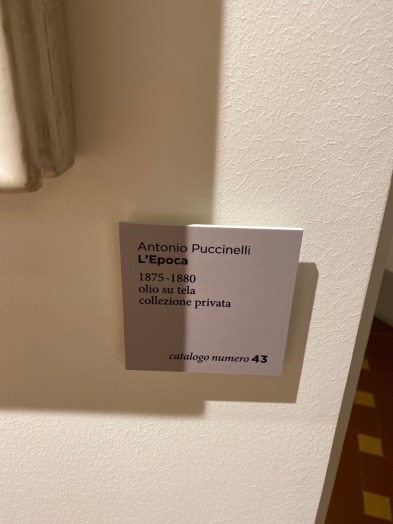
The exhibition also includes a few paintings by contemporaries of the Signorini father/son painters. It includes: Ruggero Panerai, Luigi Gioli, Francesco Gioli, Giorgio Mignaty, Adolfo Tommasi, and Antonio Puccinelli.  There is also a sculpted bust of Telemaco Signorini by Giovanni Dupre.

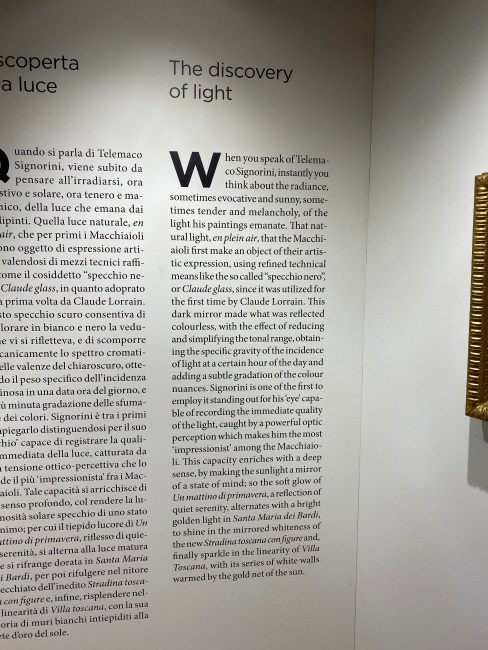
Here’s what the brochure announces about this exhibition:

fullsizeoutput_19b4

4%sliWHQSvuJmsnshdxzwQ


6Ktlh9BpTzOPgXrPa9moTg


YTO4Qf1gSzSCDLycbBejAw


1S9YklEeR6y3B1AsRq0+Bg


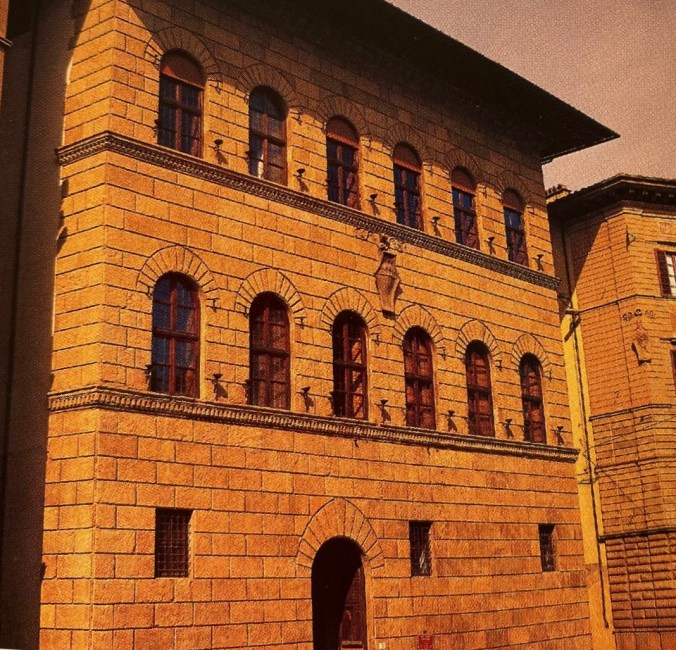
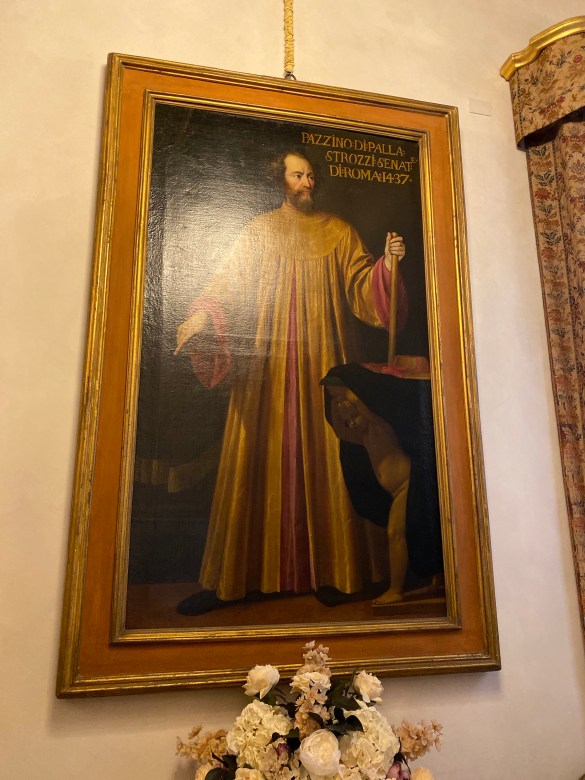
Regarding the beautiful palazzo itself:

fullsizeoutput_19b6

fullsizeoutput_19b3


sjAY6LAUQ%SXs93s4m76Bw


LbXfNj72T2i%lAP66Nd5eg


tBwsnz67QYSsFcntPlHEoA


or83e2n%SmOJSo2lIDMfzQ


LOszmgz7TJShWAFjVwZbzg


tIZiHUIxSMykLxNycJaQOw


7wfQMsIZQo+DTtQSfQZqfw


88VLN3hmTo2D+OPwpFryjA


dwUWKDW8RPCiInqYe2ZnOA


x%Wo32eRRm+%unbXh6YRaQ


q2fTf3I5SiWB%wotMJEODA


fullsizeoutput_18bb


fullsizeoutput_18c3


Allora, now that I am done being a voyeur for the palazzo itself, let us look at some of the paintings in the exhibition: First up, a few paintings by Giovanni Signorini

hecyG4VGRLSuf4jOqq6Ayg653Bb6LBSxCK5xAf6llWxAp5AqO0rQSQ6hvu%KHgnqlw


tny4FpzHSyKtnemqBgZzUQ

iaEu6WsTTxeuwUDA4uKMNA


srBtOjeVTYu5TvugmBlzFQ

fullsizeoutput_19b5

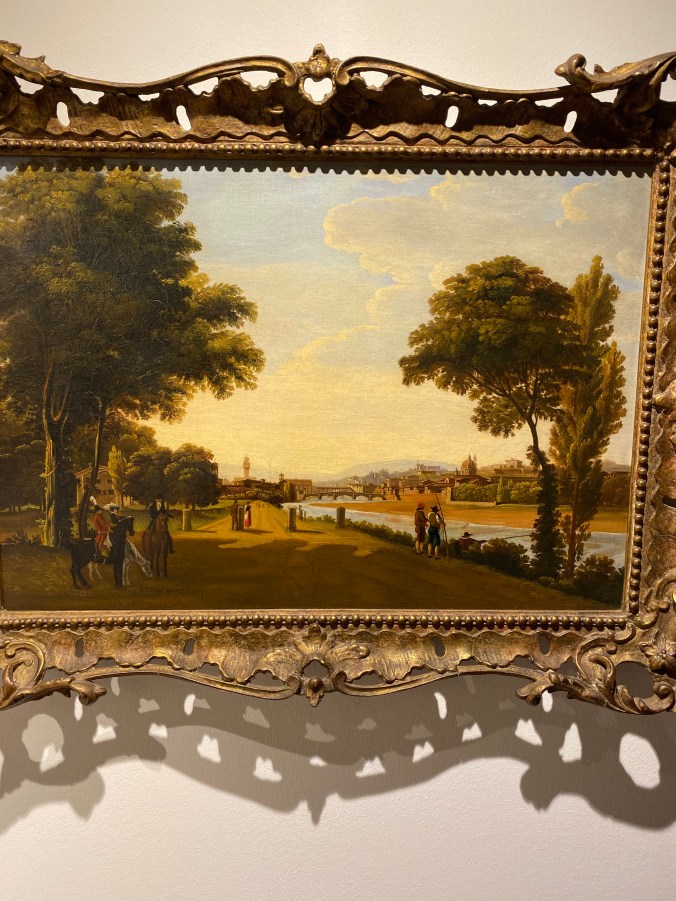
Above, Giovanni Signorini, Veduta dell’ Arno da Ponte alla Carraia, 1846


And now, for some paintings by Telemaco Signorini


fullsizeoutput_18b6

fullsizeoutput_18b1


4%PQGk4RSSy6isxiLaDoBw

fullsizeoutput_19b8

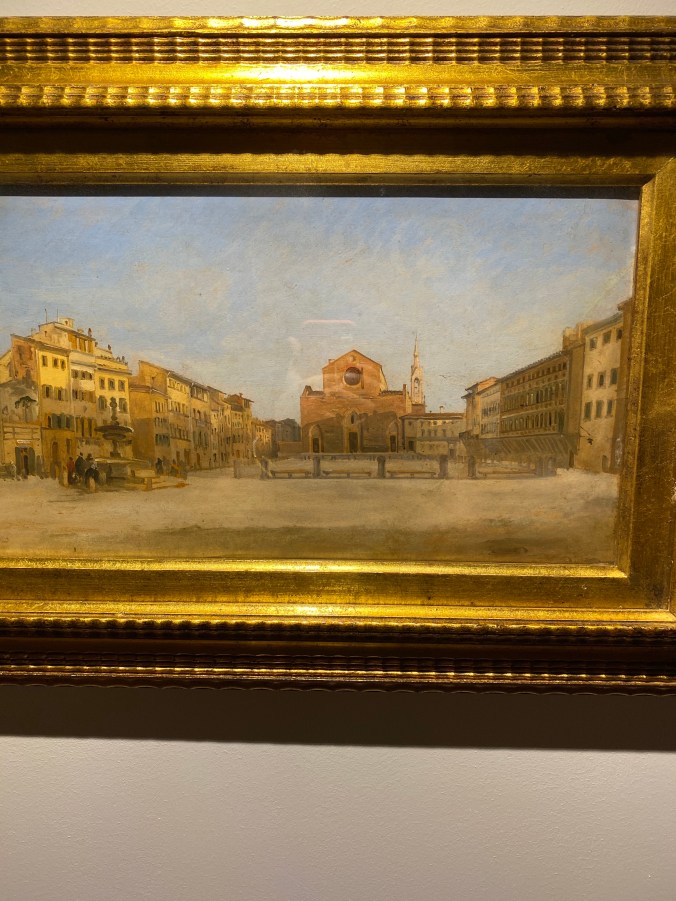
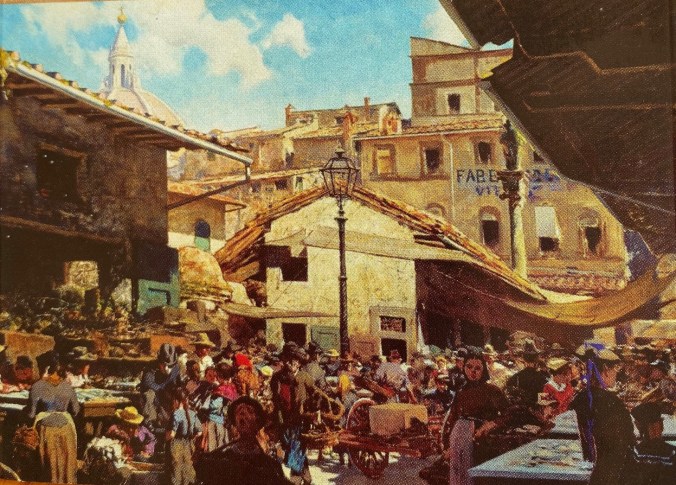
Above: Telemaco Signorini, Mercato Vecchio, 1882-83


fullsizeoutput_19b7

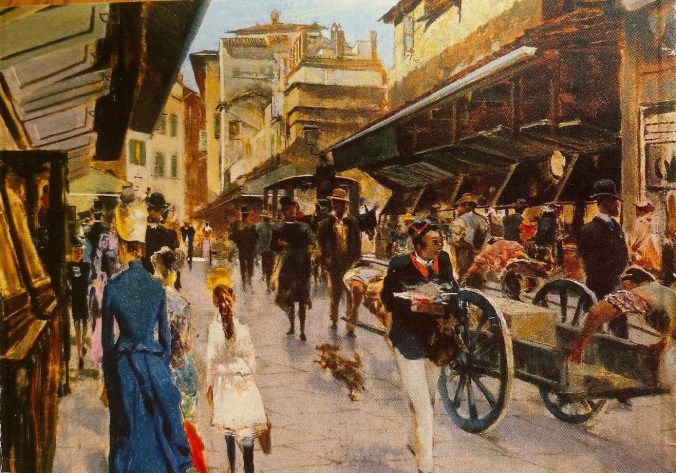
Above: Telemaco Signorini, Il ponte Vecchio a Firenze, 1880


79o3MIOzT5eKHW1r4ofYcw


fullsizeoutput_18a1


PySsE2+uS5uE31%7lJ5Myg


bbZfVoiXSZy9XQo1sG6++g


rMHg7iSISA+D2P24JXWXaA


s20KHTTsSTqvQi4VKG2Abg

jU7wB8eHSD+QRy9D2oGodw


ZE6pwL6MSjKvzjxYu4oKQA


+vJax8zxSMmG2DIxA6hqFA


oGxQ0s0BS9+jiZyFrUy+jwzjl3kfR9TQyNmq3pC5xenQ


fdTNYG9UTf2P%8+%paLr2w


L+MVcZIdQaG9oegO7mU7UA


fullsizeoutput_189e


r%kEfPMNSSCHleuVfWTd5w


6hjOgXpJSsGMAXBI4J7b+g


+7qNwh47TsCyGkeRd2Bv+QepnwyiL0RaaEMrD5BMdYUg


7aqC7YvdRqWwuOPzENI4NA


IqsuHAXbT1e6ZP+ZE6Z+5g


5YONsKoURy+VK+munkHjIA


MrA6oqs9TVWS0U321SUaSw


kawq9UeTSe6No8+z9Cy%qw


MeIeCHLgTv+rRfM5EK5qOw


FfZ8J2zESe6Om3nSQmPkEw


4roiu2LMRxWBUUpDQ7xdPw


kKilq2PkThy0X1PsWl8DZwJpDZI2TUSJWO3rVufVSpPw


n3Q5DhFoRo61GrOlSbiToQ