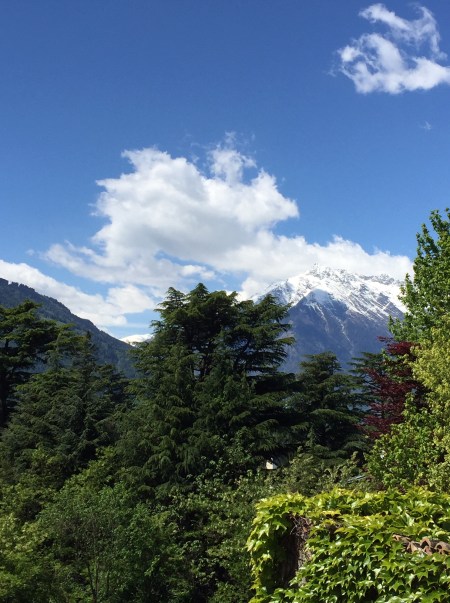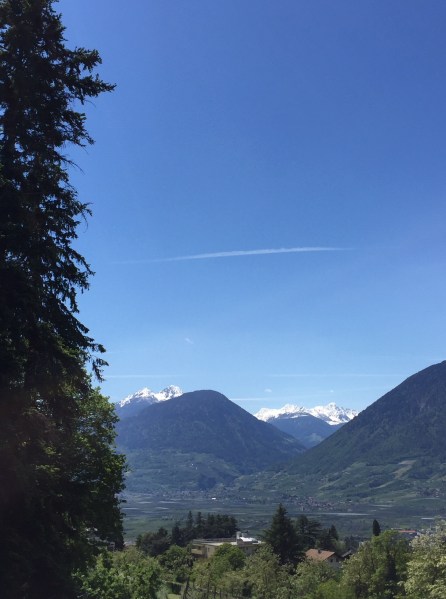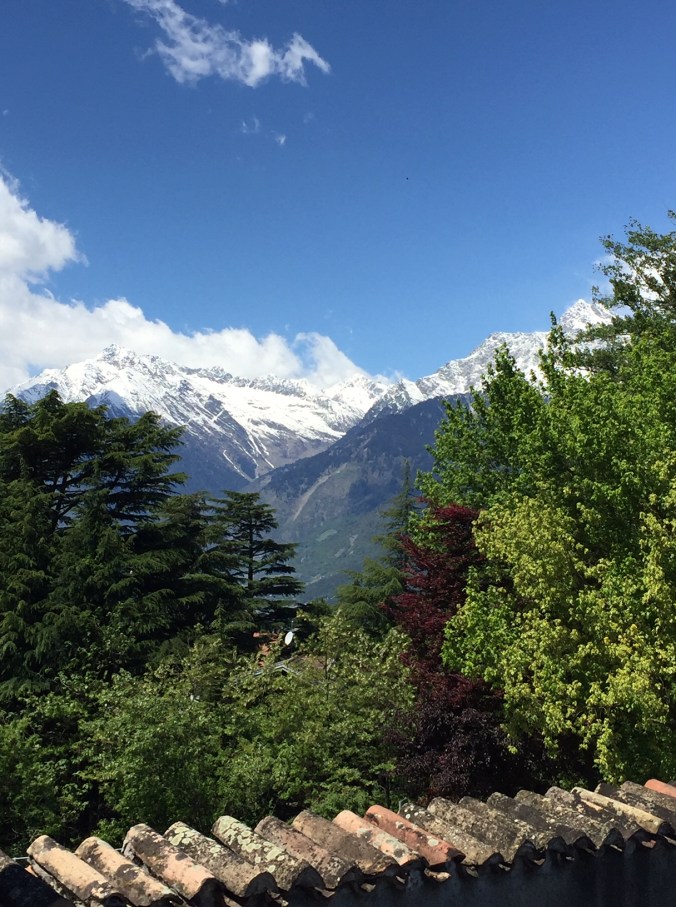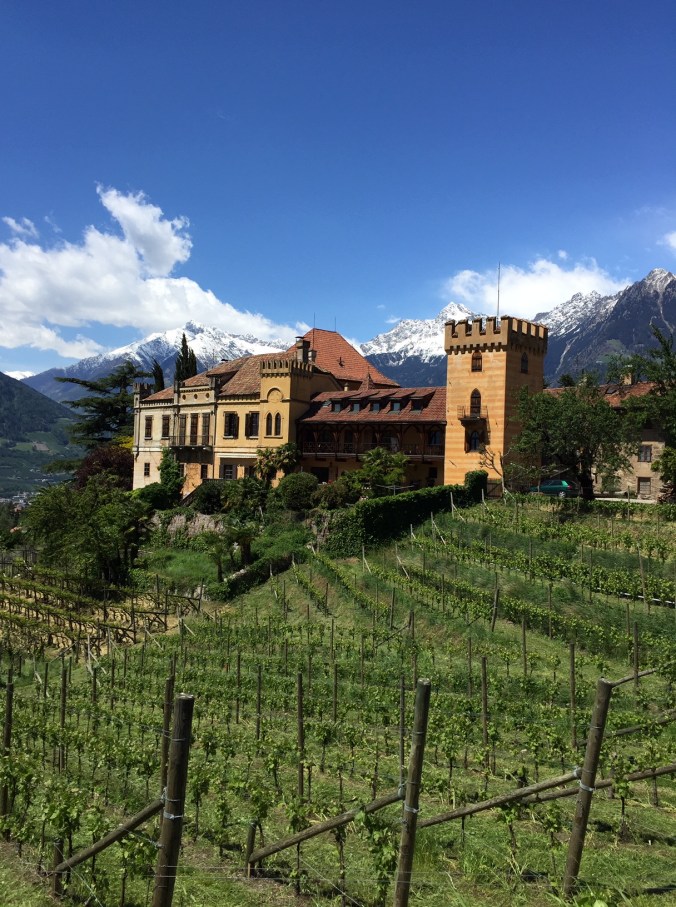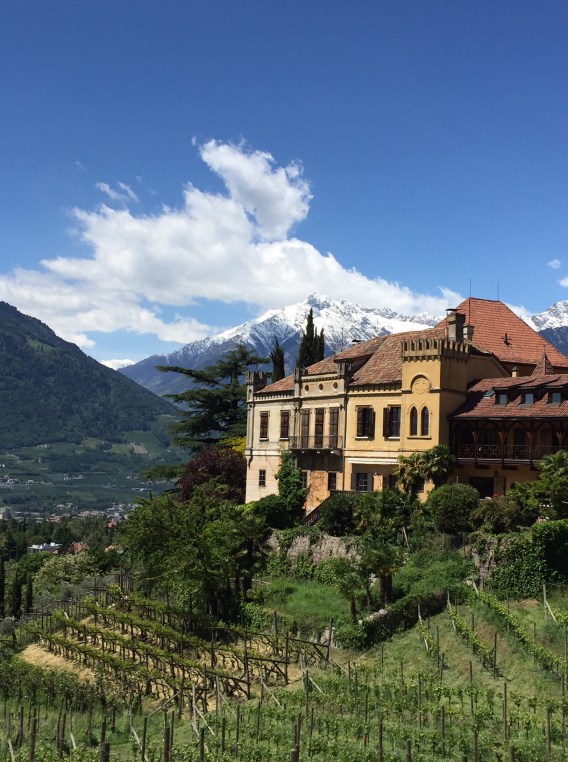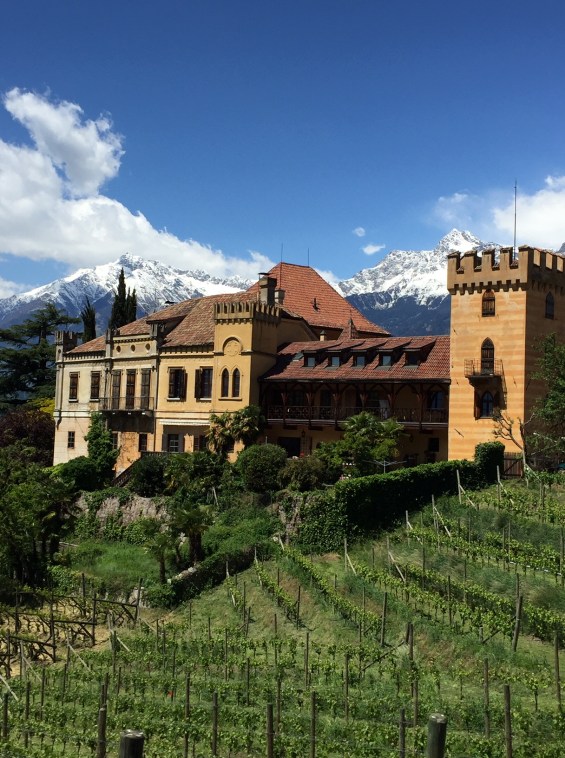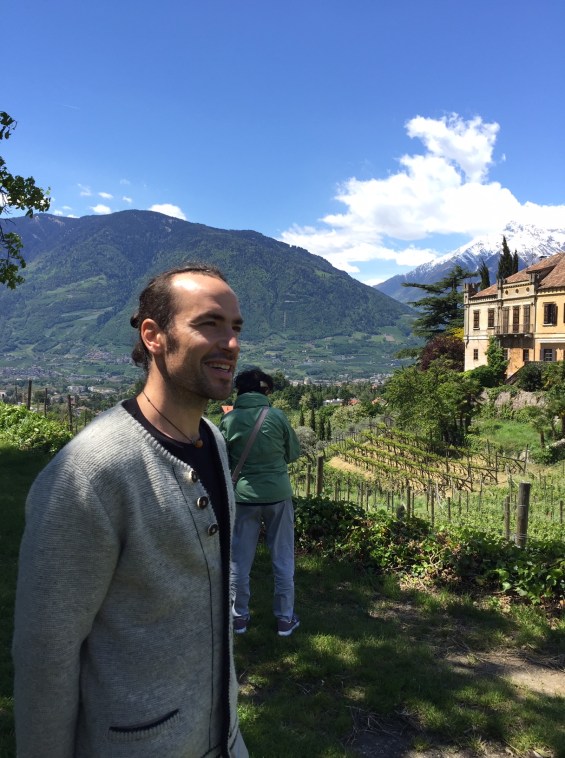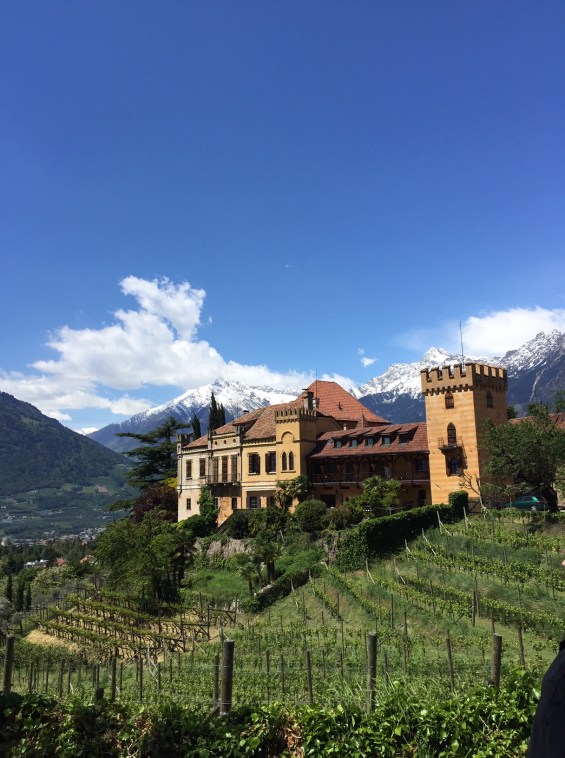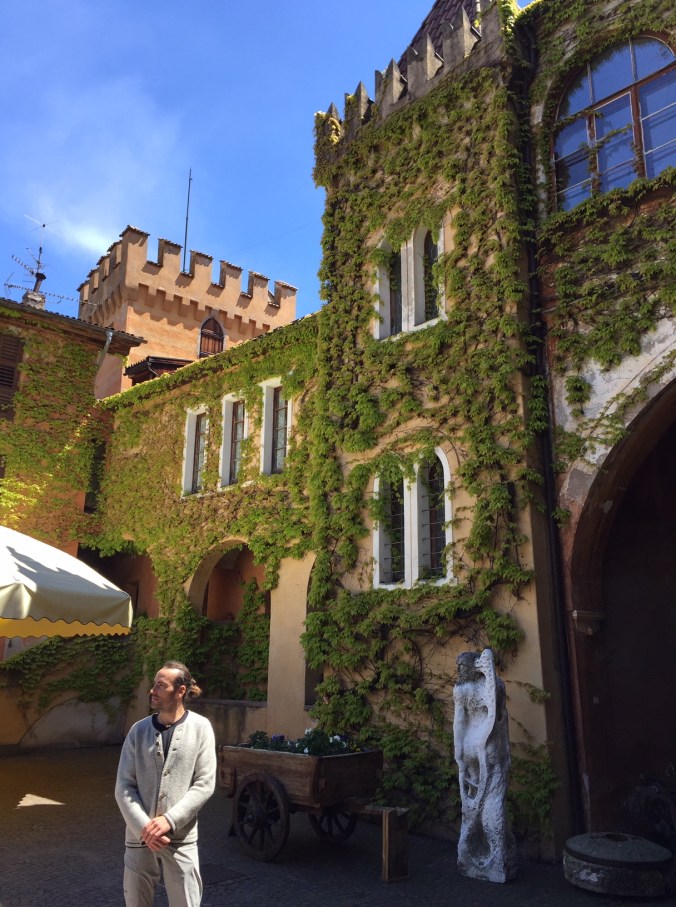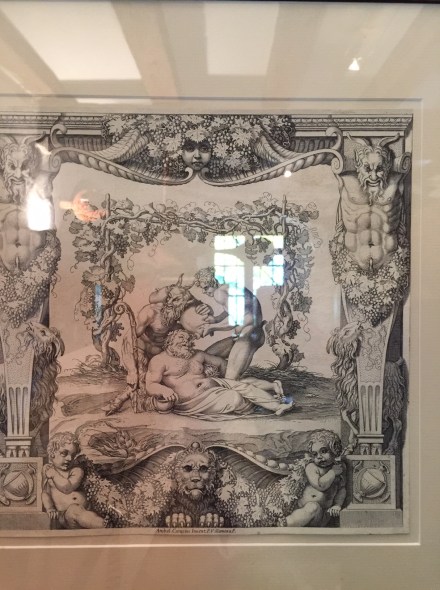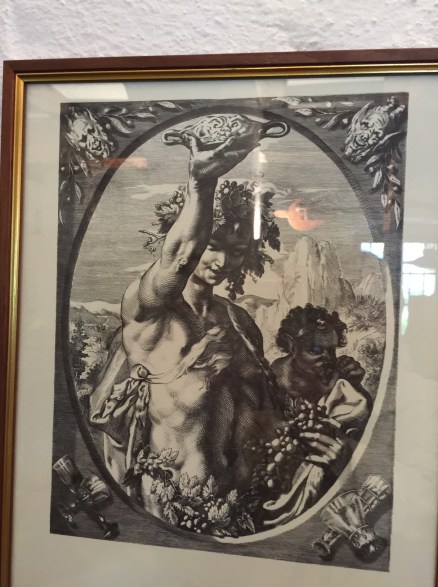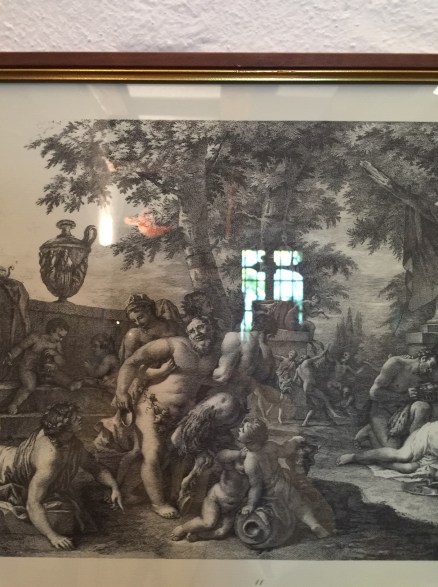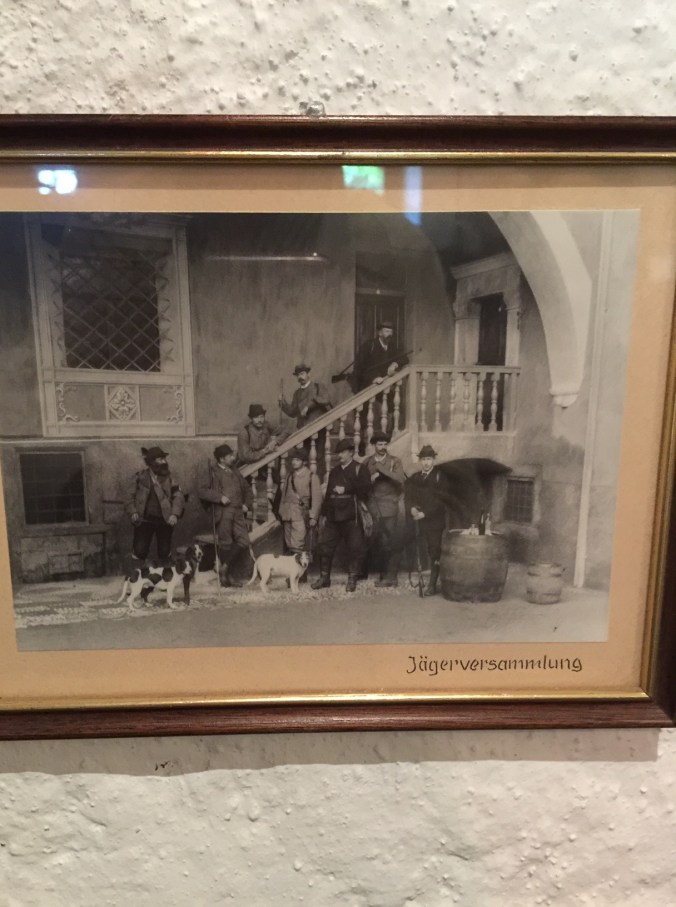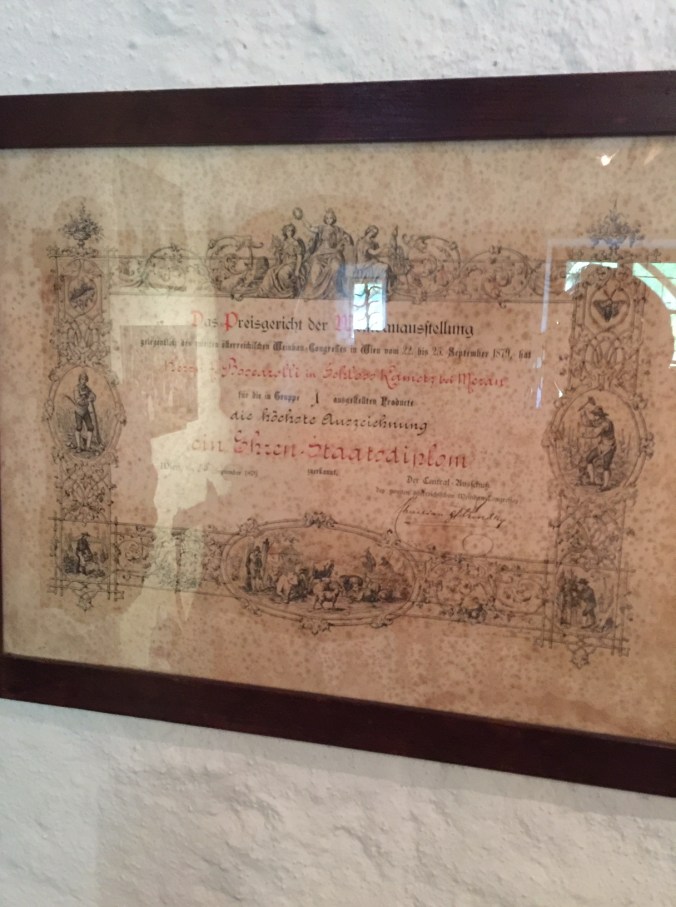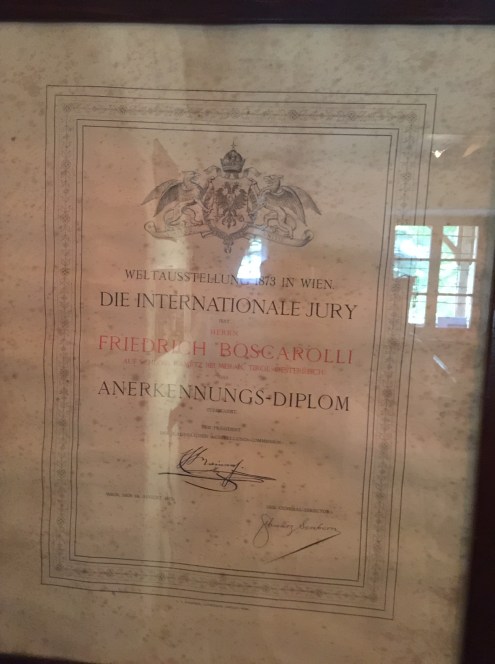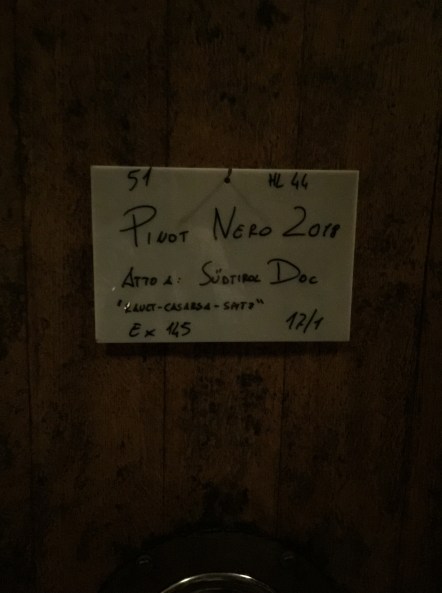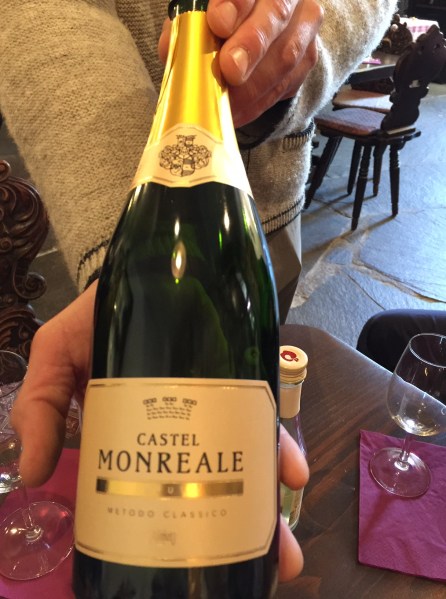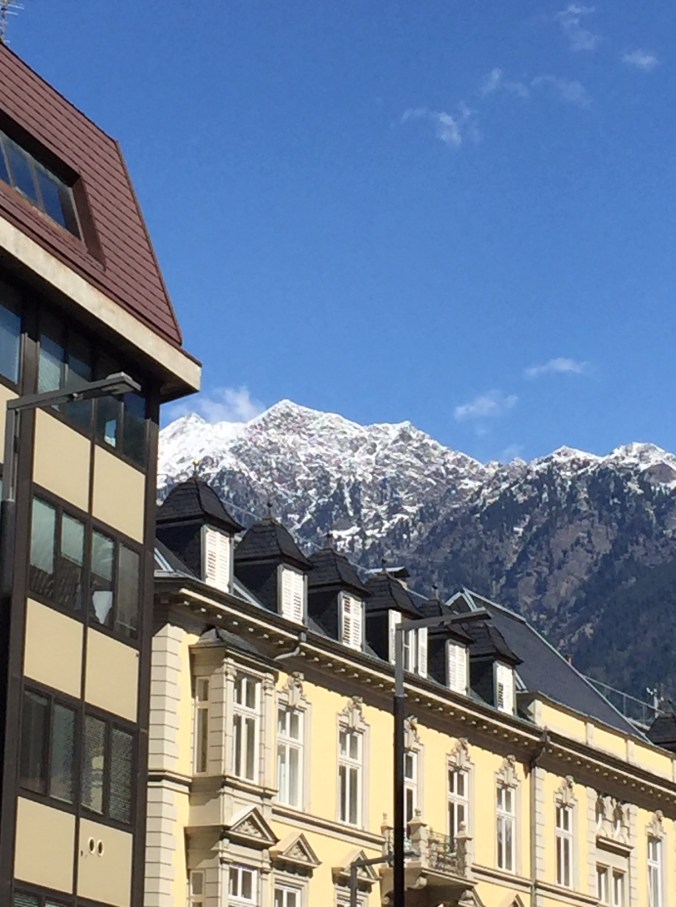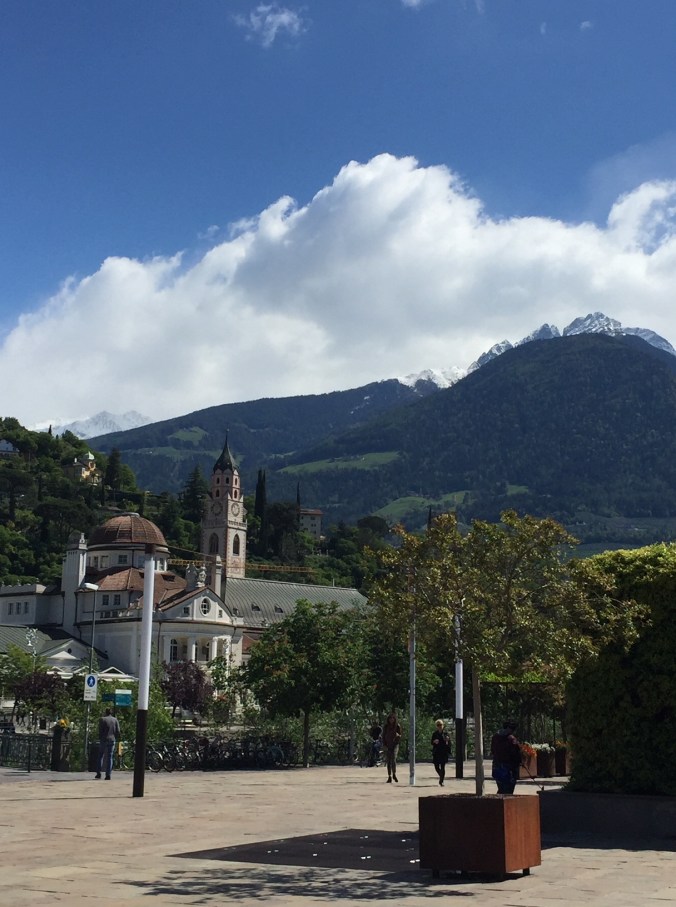
A special vineyard in the Italian Dolomites: Castel Monreale

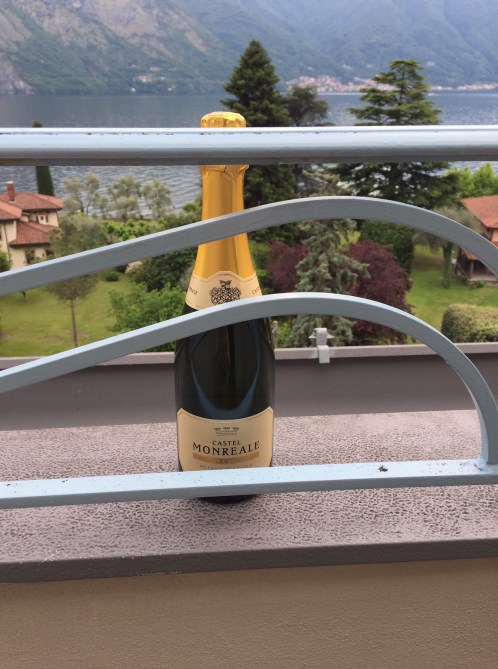
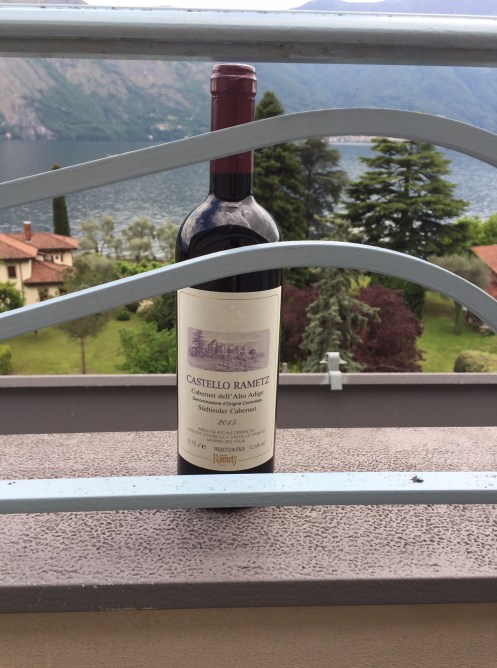
Not far from Merano, Italy stands a very interesting vineyard: Castel Monreale.  Here’s a bottle of their great red, a picture I took later with the backdrop of Lake Como.

IMG_7608IMG_7609

IMG_7610

https://www.lavinium.it/vino_nel_bicchiere/spumante-castel-monreale-brut-metodo-classico-castello-rametz/

http://www.rametz.com/italiano/cabernet-aa-doc-castello-2015-125-46915.html


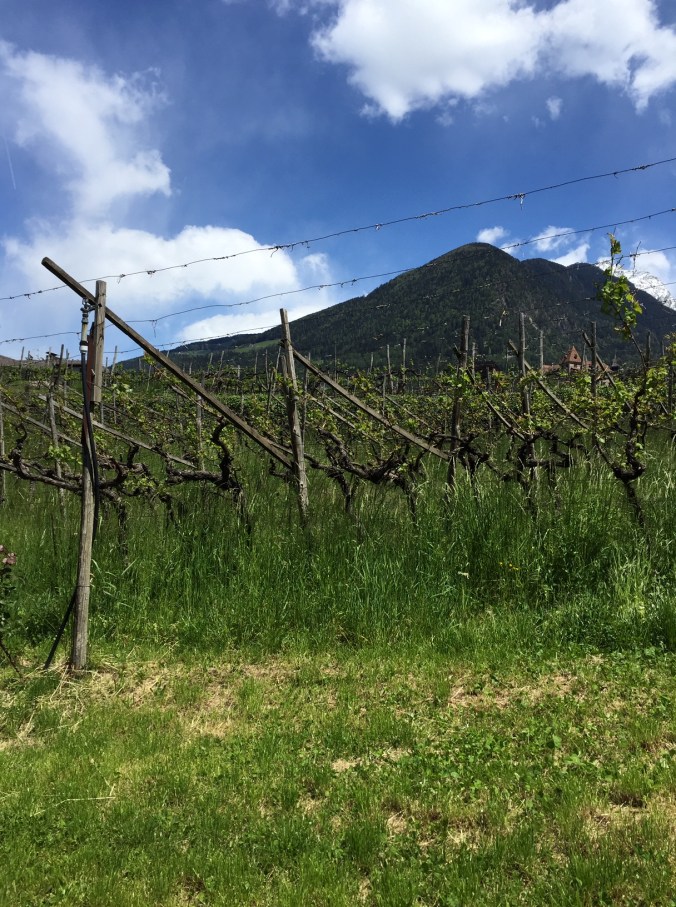
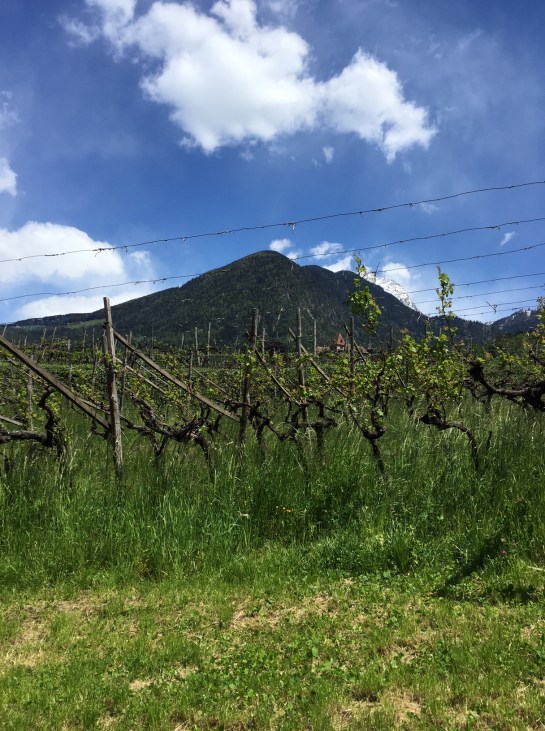
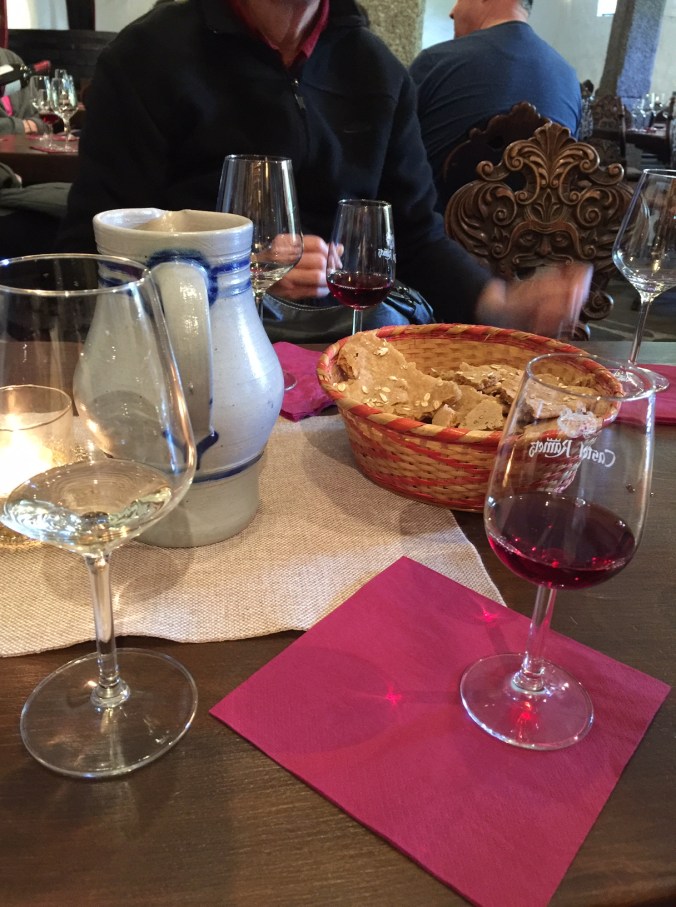
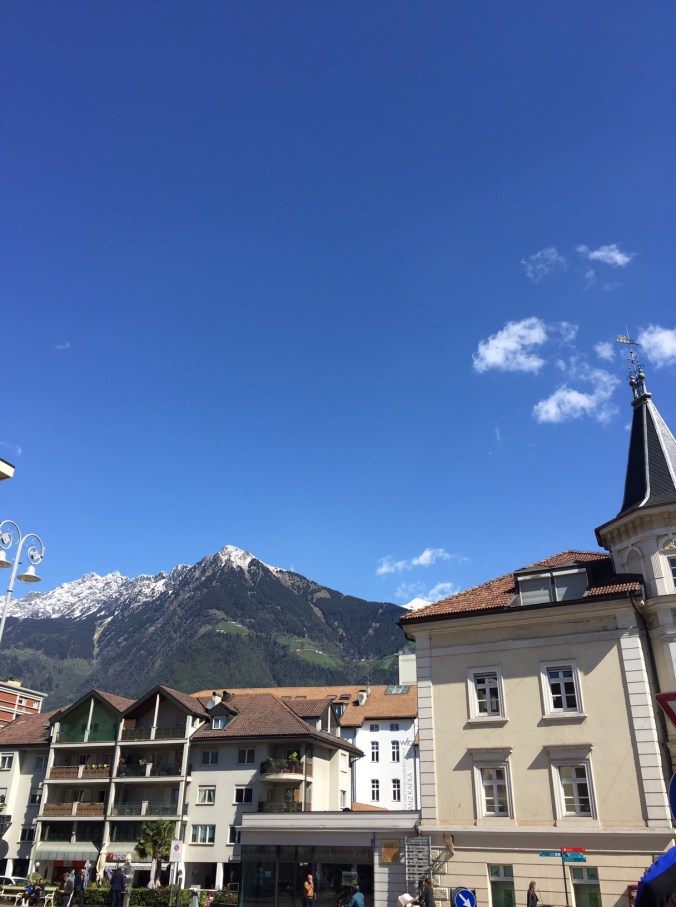
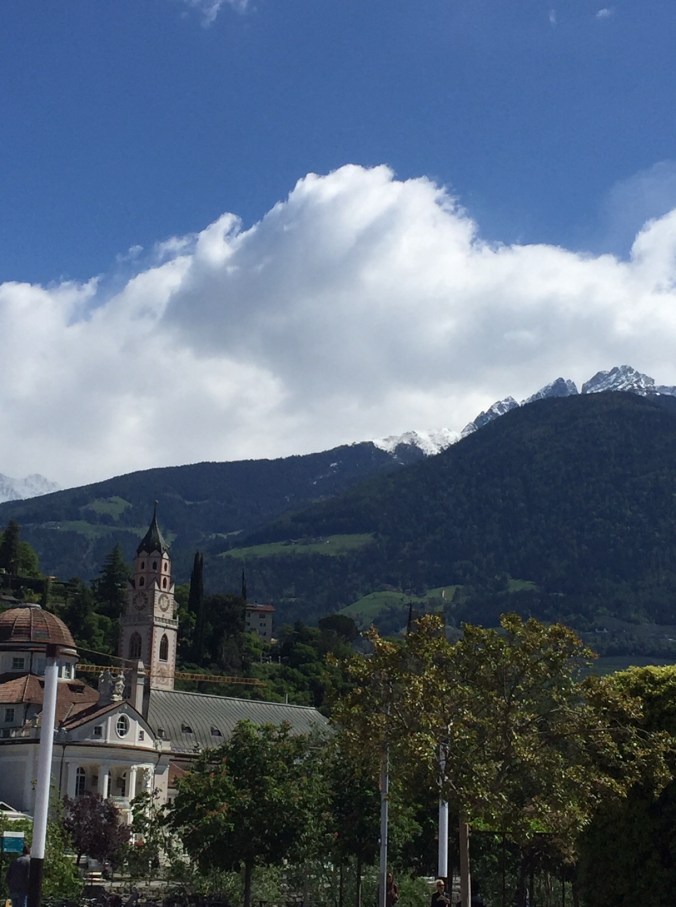
So, here’s the locale: not bad, eh?

IMG_7334IMG_7335IMG_7336IMG_7337IMG_7338IMG_7340IMG_7341IMG_7342IMG_7343


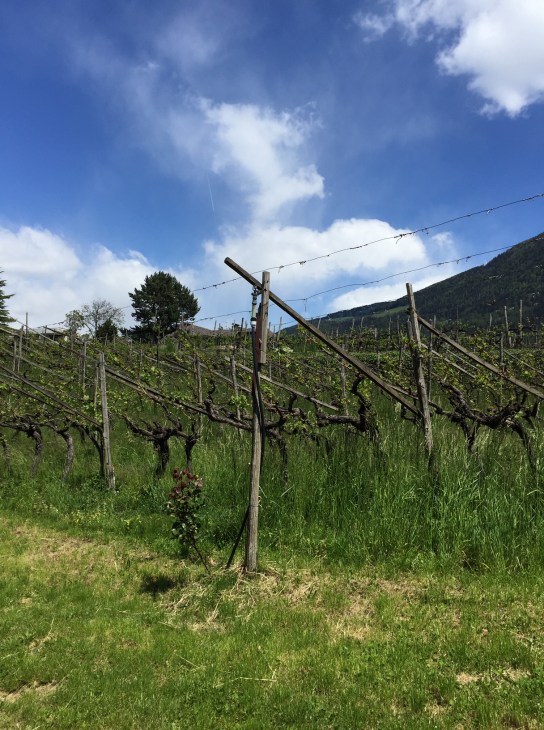
The grape plants shown in the next 3 pictures are about 75 years old and planted in the old style, which is very labor intensive because no mechanization can be used.

IMG_7344IMG_7345IMG_7346


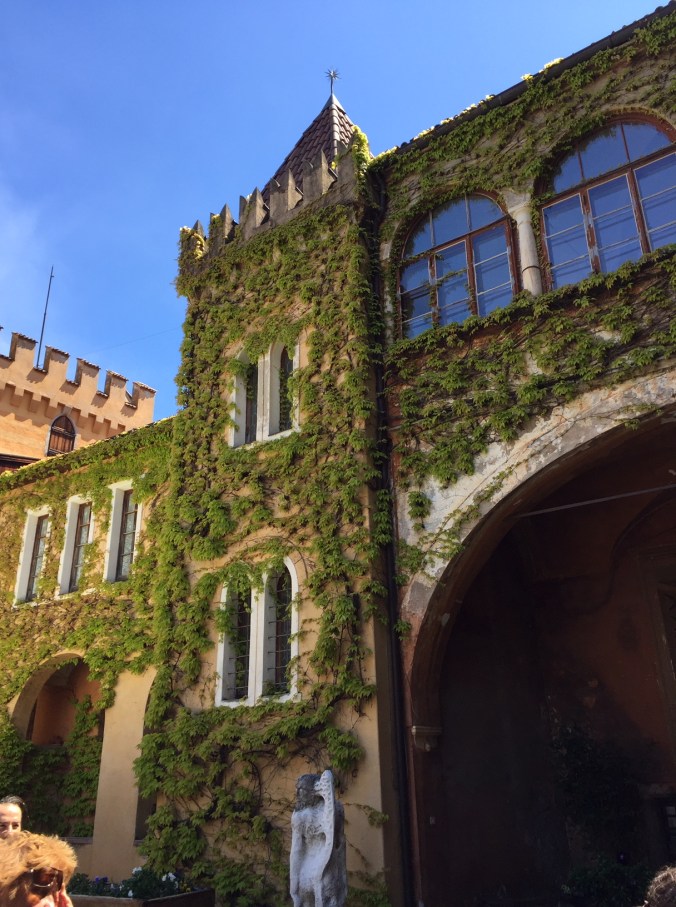
The cortile of the castle:

IMG_7350IMG_7351

IMG_7352IMG_7353IMG_7354IMG_7355IMG_7356IMG_7357IMG_7358IMG_7359IMG_7360IMG_7361IMG_7376IMG_7380IMG_7381IMG_7382

Genova in general: fabulous

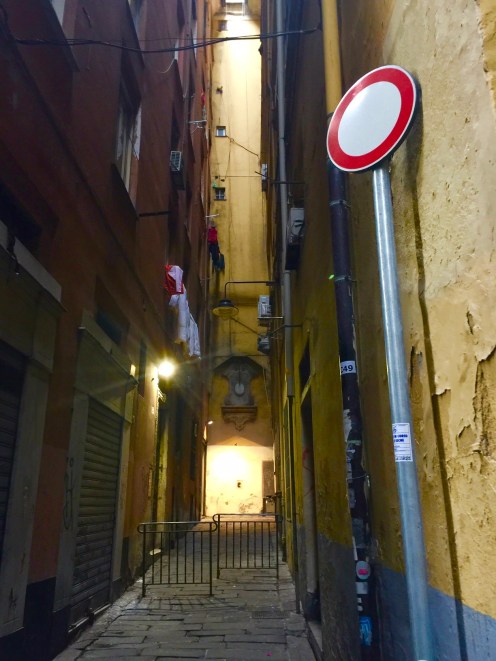
I had the good fortune to travel to Genova (Genoa in English) for a very long weekend.  I timed my visit with a semi-annual Genovese event known as “Rolli Days,”  which is a 2 day occasion during which many (31) of the 100 UNESCO listed palaces are open for viewing.  I’ll be posting about Rolli Days soon.

I’d never really been to Genova before and didn’t know what to expect.  It was a fascinating visit and I am so happy I went!  Below are miscellaneous pictures from my weekend.  I am looking forward to returning!

IMG_6950IMG_6951IMG_6952

fullsizeoutput_ed9fullsizeoutput_edcfullsizeoutput_eddfullsizeoutput_edbfullsizeoutput_ee0fullsizeoutput_edeIMG_6960IMG_6961IMG_6962IMG_6963fullsizeoutput_ee1fullsizeoutput_ee2

IMG_6967IMG_6968IMG_6969fullsizeoutput_ee8fullsizeoutput_ee7fullsizeoutput_ee3IMG_6973fullsizeoutput_ee4fullsizeoutput_eeafullsizeoutput_ee5

fullsizeoutput_eeefullsizeoutput_ef2fullsizeoutput_eed

fullsizeoutput_ee9

fullsizeoutput_ee6fullsizeoutput_eebfullsizeoutput_eecfullsizeoutput_eedfullsizeoutput_ef2fullsizeoutput_eeefullsizeoutput_f10fullsizeoutput_f11fullsizeoutput_eeffullsizeoutput_ef1fullsizeoutput_ef0fullsizeoutput_f09

IMG_7056

My amazing lunch!

IMG_7057


My lunch deconstructed.  It was as delicious as it looks!

IMG_7058

My amazing dessert!

IMG_7059IMG_7060

IMG_7061IMG_7062IMG_7063IMG_7064IMG_7065

IMG_7092IMG_7093IMG_7094IMG_7095

IMG_7136IMG_7137IMG_7138IMG_7139IMG_7141IMG_7142

IMG_7147IMG_7148IMG_7149

IMG_7152IMG_7151

IMG_7150

IMG_7171

Amarena Fabbri

Amarena-Fabbri


0074639_vaso-vuoto-amarena-fabbri-12kg-porcell_550
The Fabbri Company of Bologna has been making uniquely delicious “Amarena” cherries in syrup for over a century. Only the best wild Amarena cherries are carefully selected and candied in syrup according to Gennaro Fabbri’s original recipe, created in 1905 in the small Emilia Romagna town of Portomaggiore.
s-l300

The story of the Fabbri Company begins in that year when Ferrara-native Gennaro Fabbri and his wife Rachele took over an old general store in Portomaggiore, which was in close proximity to a wild black cherry orchard. One day, Rachele picked the cherries and slowly cooked them and semi-candied them in copper pots. She transformed the cherries into a wonderfully delicious treat that soon became known as the Amarena Fabbri.

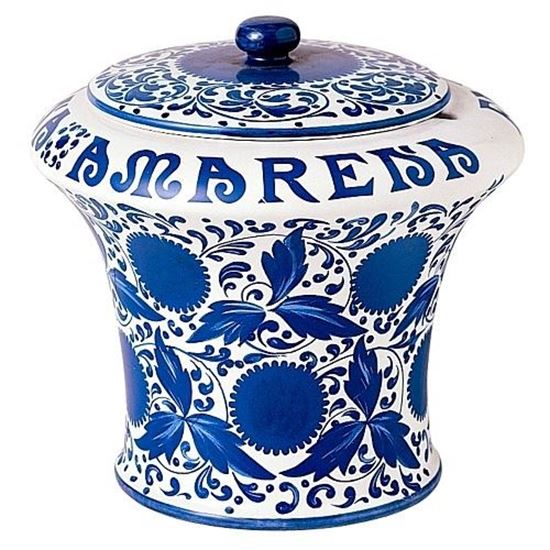
To thank his wife, Gennaro purchased a ceramic jar from Riccardo Gatti, an artist from Faenza. The unmistakable white and blue ceramic jar has become a trademark of Amarena Fabbri ever since.

The company grew in the 1930s, a decade that marked the arrival of cherries in liqueur and the expansion of the product range to include preserves. Gennaro’s sons, Romeo and Aldo, became increasingly active in the business.

During the post-war years and ensuing economic recovery, the launch of a new product gave Fabbri yet another resounding success: cremolato. The compound pastes in classic and fruit flavors were used to make gelato by simply adding water or milk. The product formed a market niche for Fabbri in which the company remains the undisputed leader.

Fabbri continued producing liqueurs into the 1970s, as well as the other traditional products such as Amarena and fruit syrups. With the increasing popularity of the brand, Fabbri continued efforts to diversify production, adding products for restaurants, cafés and bars to its compounds for gelato, amarena cherries and syrups. In 1999, the company changed its name to “Fabbri 1905 SpA,” commemorating the year in which it was founded.

Today, Fabbri 1905 is run by the fourth generation of the Fabbri family, leading a company of 250 employees that boasts some 17 product lines, 23 packaging lines and distributes products in 110 countries worldwide.

Amarena Fabbri cherries are perfect for topping desserts, yet are equally delicious in savory dishes.

Decadent, delicious and flavorful, Amarena Fabbri cherries are still produced from wild black cherries and are crafted today using the same family recipe developed more than 100 years ago. Amarena Fabbri cherries are enjoyed as a delicious topping for gelato, ice cream, cheesecake and desserts, as well as in a multitude of savory dishes and preparations. They are ideal for mixologists to use in innovative cocktails, especially the famous sparkling Amarena Amore Mio, made with Prosecco.

Whether you are creating a new recipe or simply enjoying them out of their beautiful ceramic vase, Amarena Fabbri cherries will make any dessert or dish a memorable, authentically Italian experience.
 

An Italian kiss

baci-e1549277815101.jpg.pagespeed.ce.uZ4gzufFvM
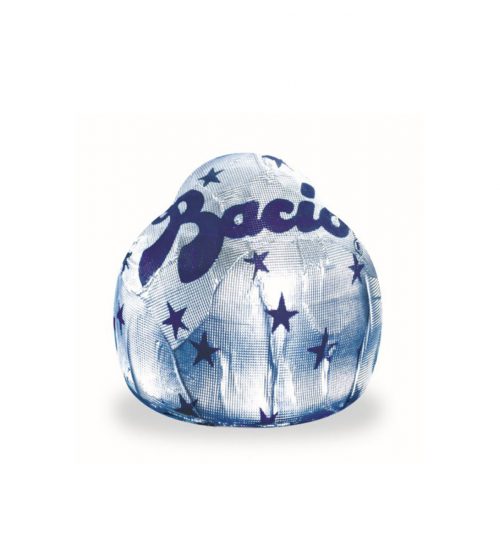
When Perugia-born clothing designer Luisa Spagnoli first invented the hazelnut-centred chocolate in 1922, she called it a cazzotto because it resembled a fist. The name didn’t ring right to Giovanni Buitoni, managing director of the Perugina chocolate factory and Spagnoli’s younger lover—Buitoni was 14 years her junior.

The idea of asking a shop assistant for a “punch” just didn’t resonate with the entrepreneur, who was also on the board of directors of the famous pasta brand. Buitoni commissioned futurist artist Federico Seneca to design the packaging and concept, hence the silver wrapping and the tiny slip of paper printed with a quotation about love we still unfurl today.

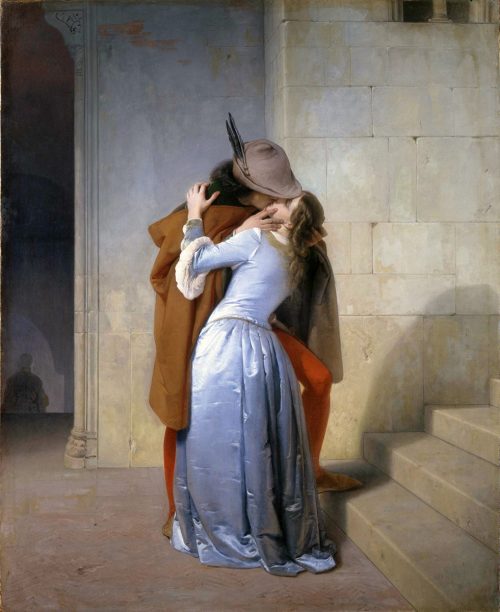
The box depicting two lovers locked in an embrace was inspired by Venetian Francesco Hayez’s The Kiss (1859), on display in Milan’s Pinacoteca di Brera. All these factors proved a winning recipe; a 1927 advertisement claimed, “In only five years, Perugina has sold 100 million Baci”.

Francesco_Hayez_008-e1549277470808.jpg.pagespeed.ce.J401yMnqz0

Francesco Hayez’s “The Kiss” (1859)
For Spagnoli and Buitoni, business was never solely about making money (he was also the mayor of Perugia between 1930 and 1934). The pair looked after their employees in a time when corporate social responsibility was practically inexistent: terraced housing and a swimming pool were built near the workplace; dances, football matches and social occasions were regular occurrences; and a nursery was opened at the Fontiveggi factory during the First World War, so that female employees could bring their children to work while the men were away at war.

In 1939, the chocolates set sail to the States, opening a shop to rave reviews in New York’s Fifth Avenue. Luisa Spagnoli did not live to see the overseas success of her chocolates. In 1935, at age 58, the businesswoman passed away in Paris with throat cancer, Buitoni steadfastly by her side.
The enterprise continues to go from strength to strength. In 2018, Baci Perugina were rebranded. Gone are the entwined lovers, replaced with a scattering of gold and white stars topped with a contemporary logo. Limited Edition, Extra Dark 70% and Milk are minor variations on the original dark chocolate recipe. Looking down from the firmament, Luisa Spagnoli and Giovanni Buitoni, who went on marry the opera singer Letizia Cairone two years after Luisa’s death, surely would be proud to see the product of their love sweetly primed for the future.

This article is from: http://www.theflorentine.net/lifestyle/2019/02/the-backstory-on-baci-chocolates/?mc_cid=1f26260e4d&mc_eid=2a398b6f2f


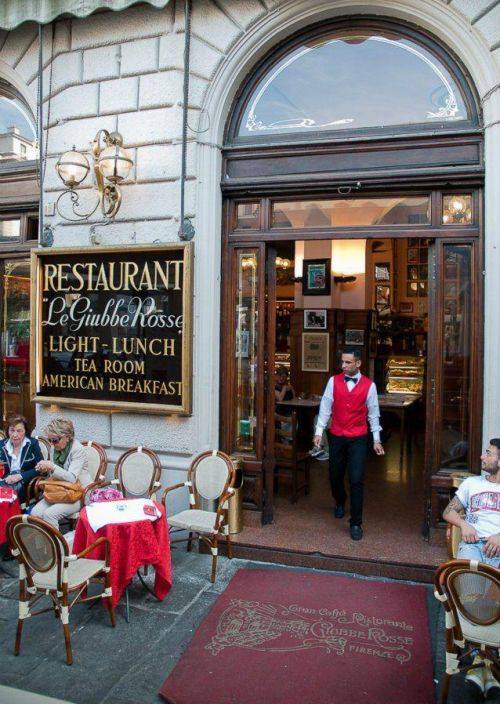
The end of the Caffè Giubbe Rosse in Florence


48381221_2098440303554001_9154871088054796288_n

The end of 2018 in Florence also sees the end of its most famous historic café. The company that owns the café has been declared bankrupt, owing around 3.5 million euros.

Contributing to this debt has been the colossal land rent in the centre of Florence of 25,000 euros per month plus very significant charges for the occupation of public land the large, invasive and very expensive outdoor terrace built on unfortunate directives of the Municipality and of the Superintendency for architectural and environmental heritage).
Caffè Giubbe Rosse is a café in Piazza della Repubblica. When opened in 1896, the cafè was actually called “Fratelli Reininghaus”. It was named “Giubbe Rosse” (Red jackets or coats) in 1910, after the jackets which waiters wear to this very day.
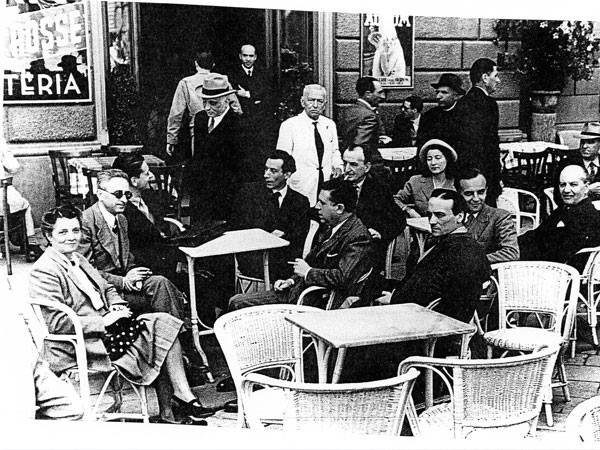
The café has a long-standing reputation as the resort of literati and intellectuals. Alberto Viviani defined the Giubbe Rosse as fucina di sogni e di passioni (“a forge of dreams and passions”).

The Giubbe Rosse was the place where the Futurist movement blossomed, struggled and expanded; it played a very important role in the history of Italian culture as a workshop of ideas, projects, and passions.
Poets such as Ardengo Soffici, Giovanni Papini, Eugenio Montale, Filippo Tommaso Marinetti, Giuseppe Prezzolini and many others met and wrote in this literary café, an important venue of Italian literature in the beginning of the 20th century.

48411840_2098440556887309_5064402037014265856_n
Important magazines such as Solaria and Lacerba originated here from the writers who frequented the café.
Giubbe Rosse was founded by two Germans, the Reininghaus brothers, in 1896.
Let’s hope someone will step in to rescue this historic part of old Florence!

This article was written on Facebook by Freya’s Florence Tours – Freya Middleton
Source: https://www.lanazione.it/…/c…/giubbe-rosse-fallite-1.4357170
http://www.firenzetoday.it/…/giubbe-rosse-firenze-falliment…
https://en.wikipedia.org/wiki/Caffè_Giubbe_Rosse

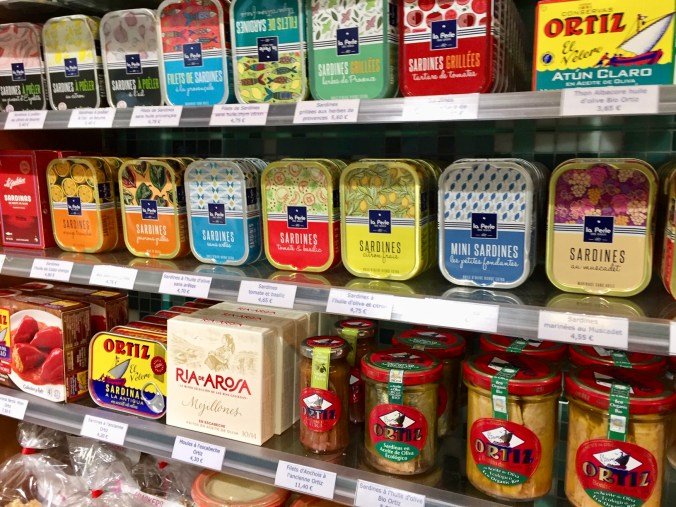
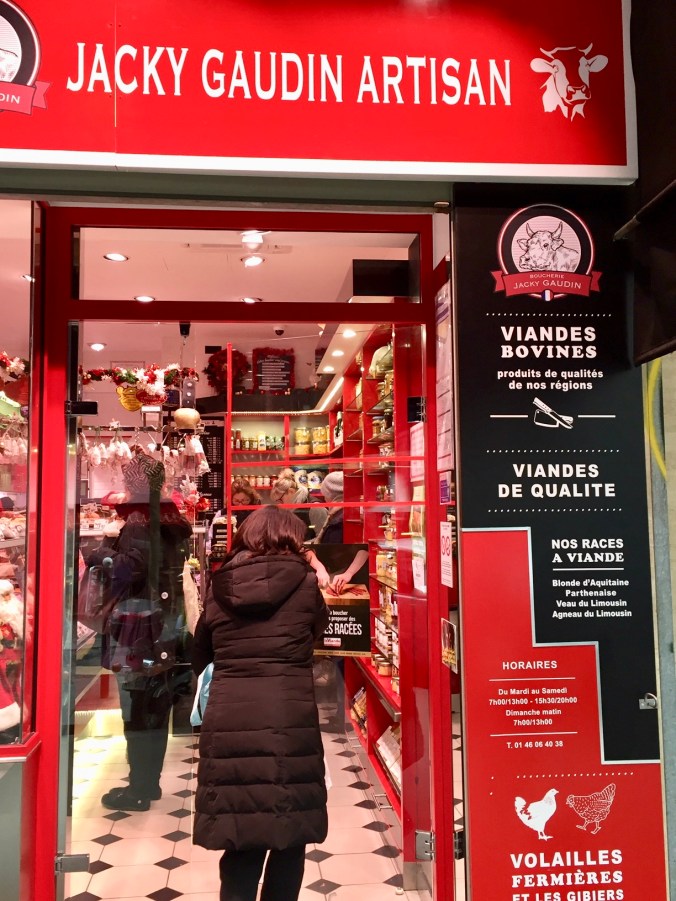
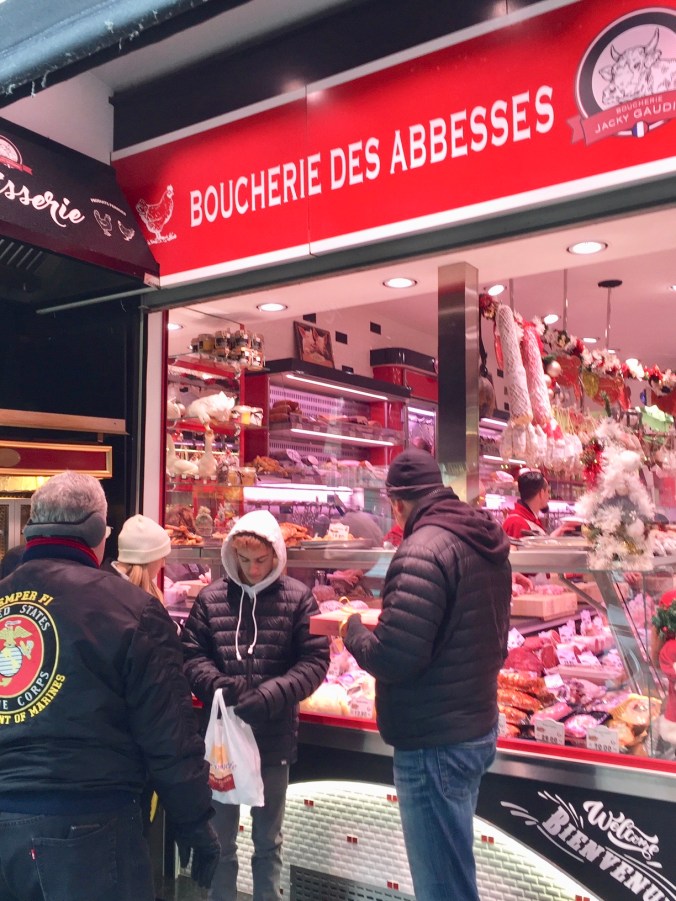
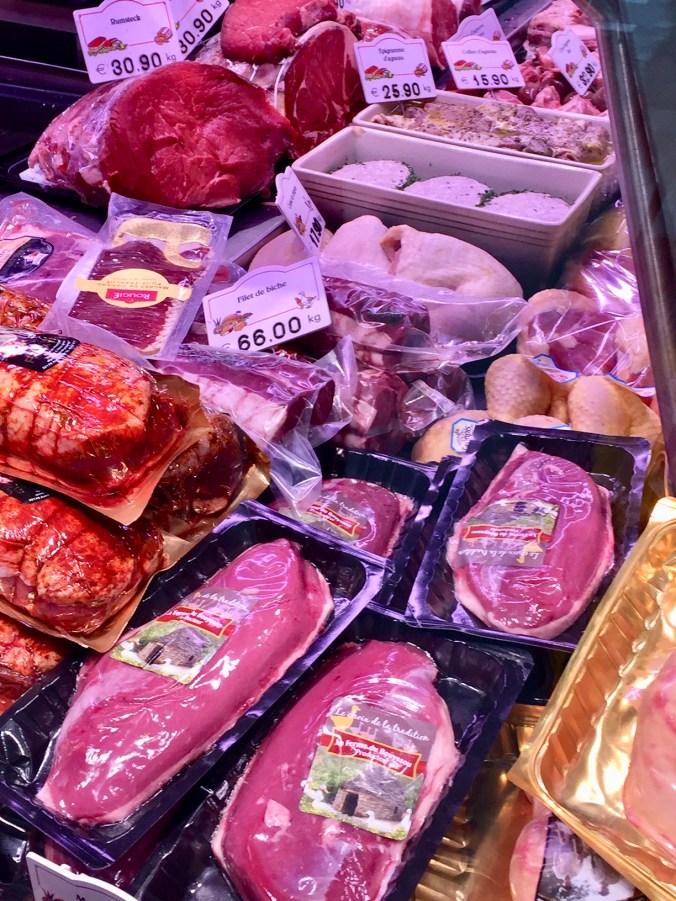
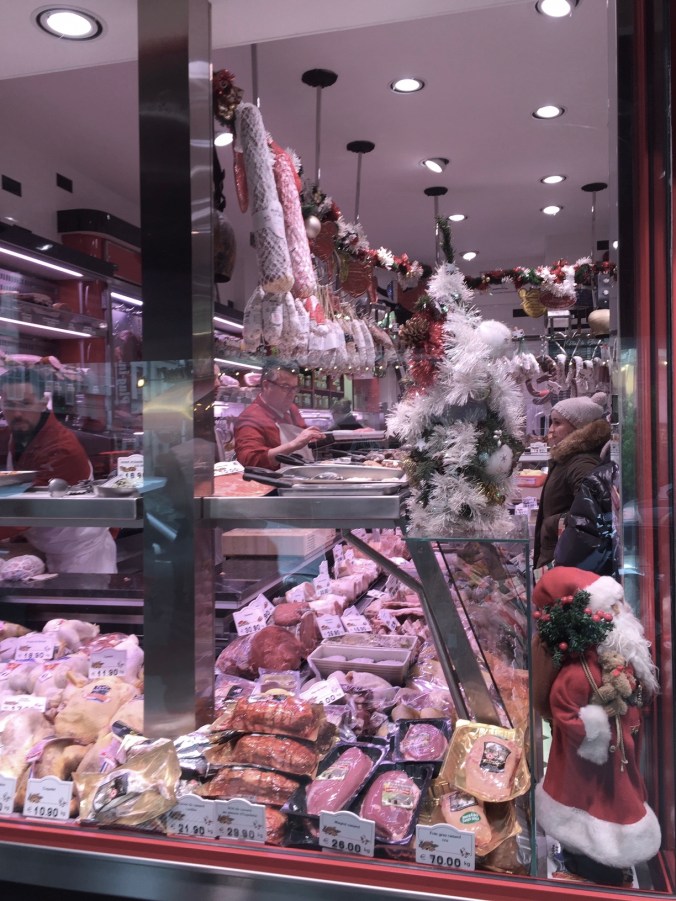
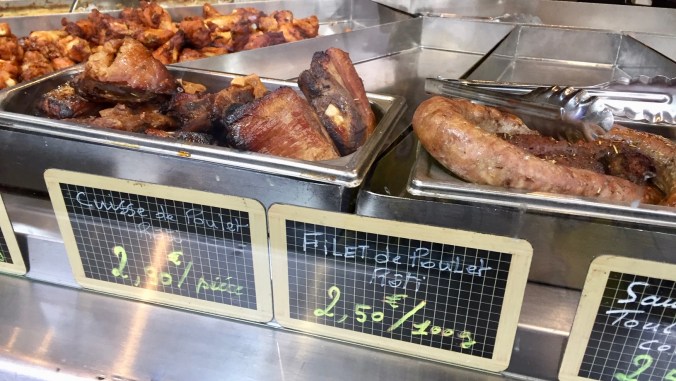
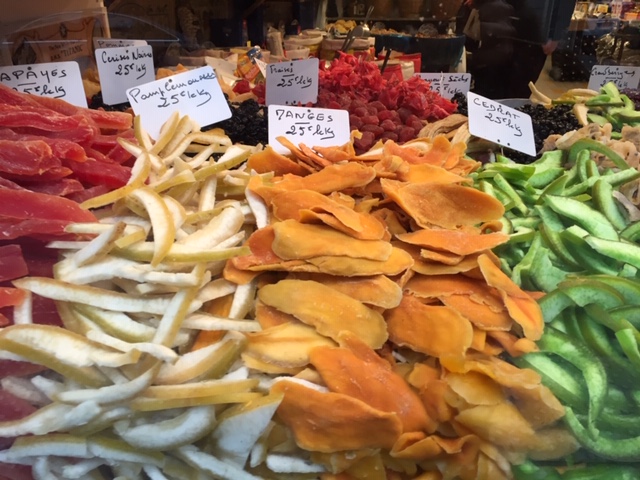
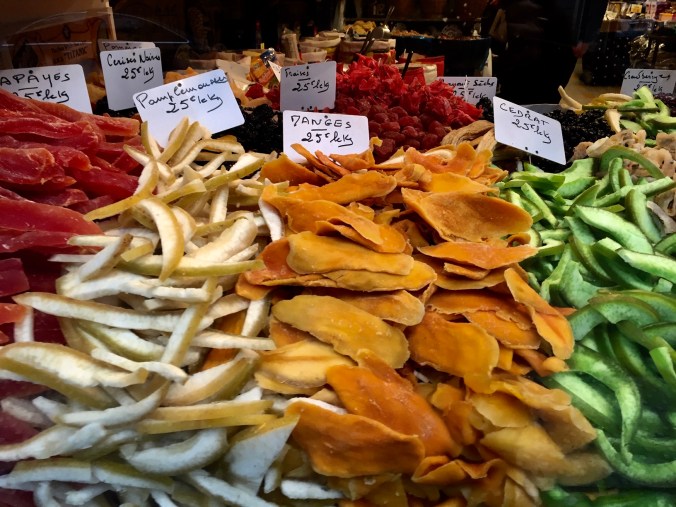
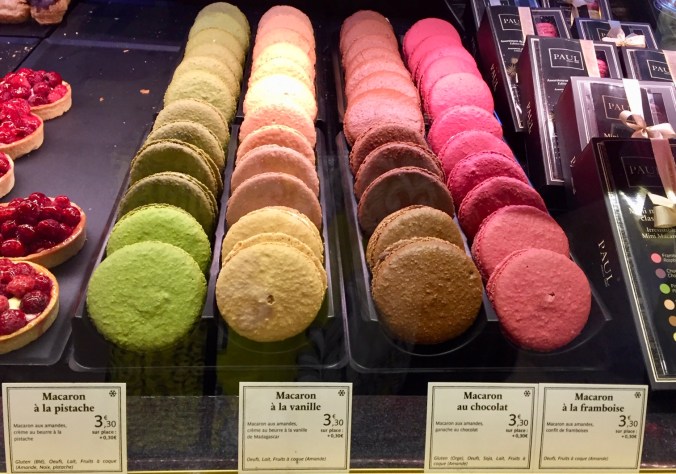
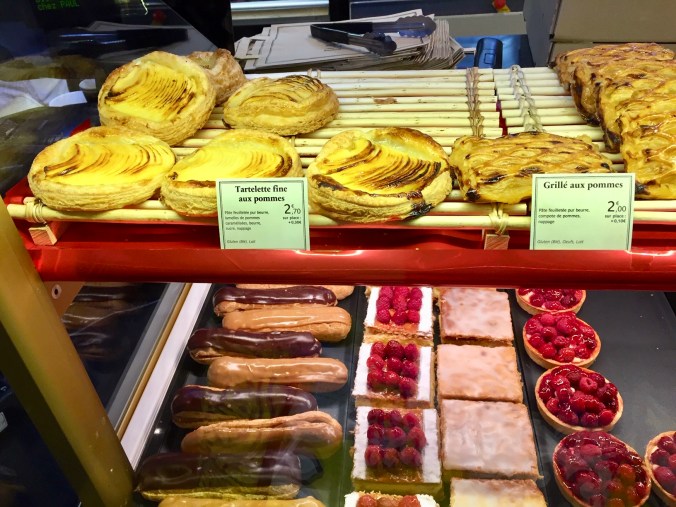
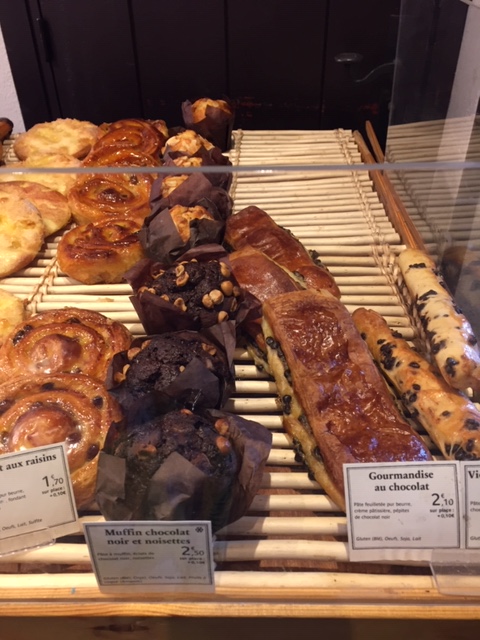
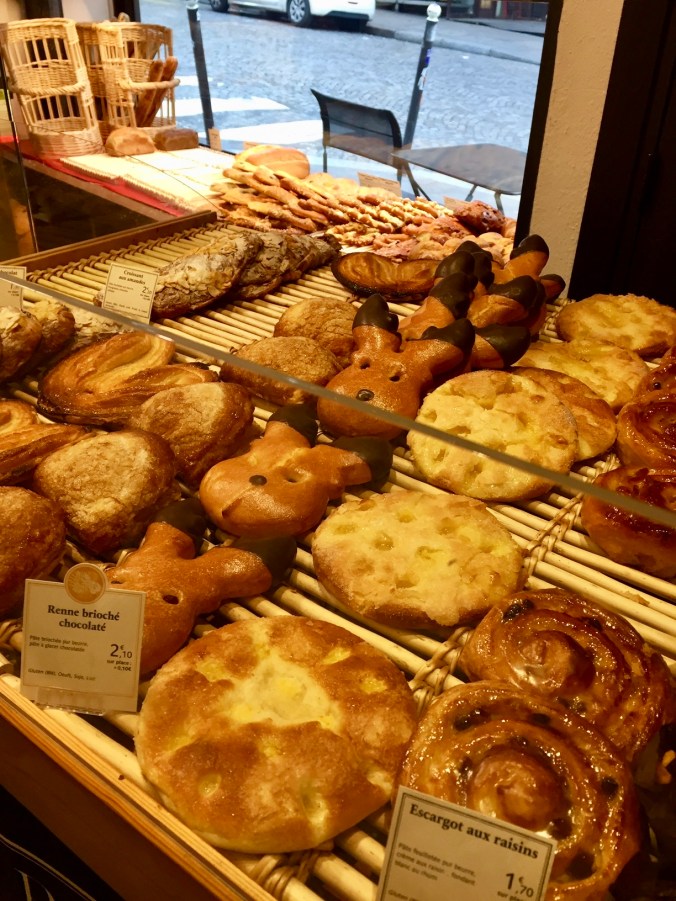
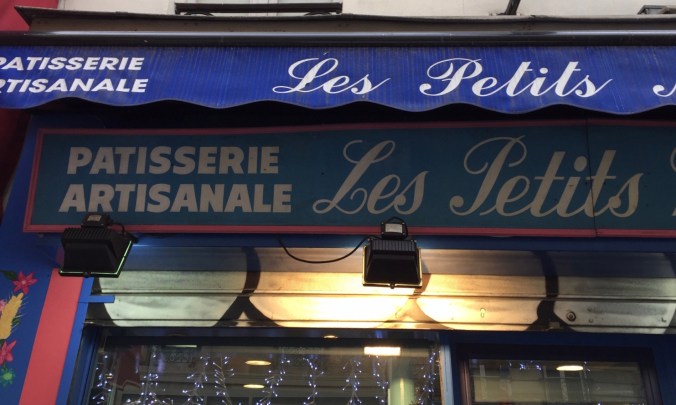
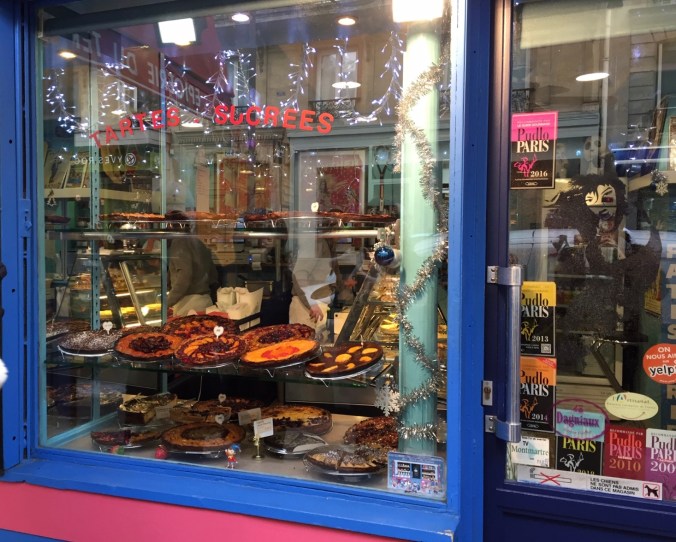
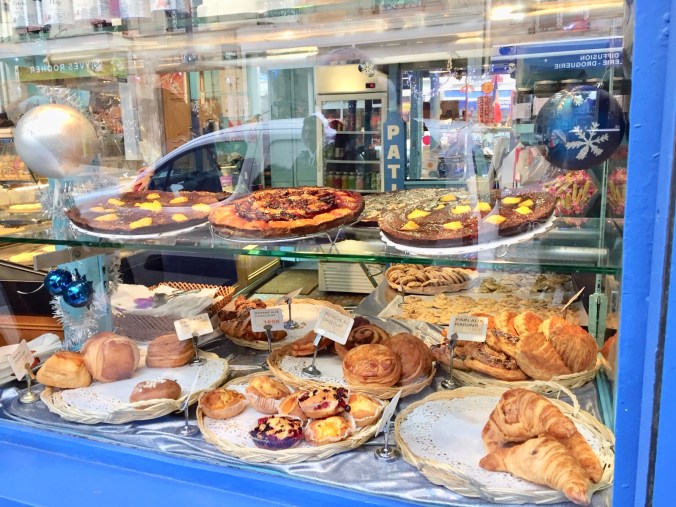
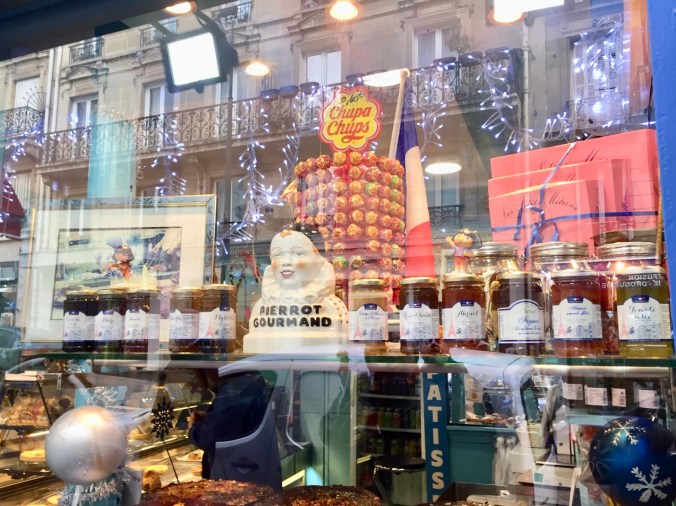
Foods in Paris

So, I was lucky enough to take a guided tour through the old market streets of Montmartre. OMG.  Hang on!

First stop: an artisan boulangerie:

fullsizeoutput_b35


fullsizeoutput_b36


fullsizeoutput_b37


img_4560


fullsizeoutput_b38


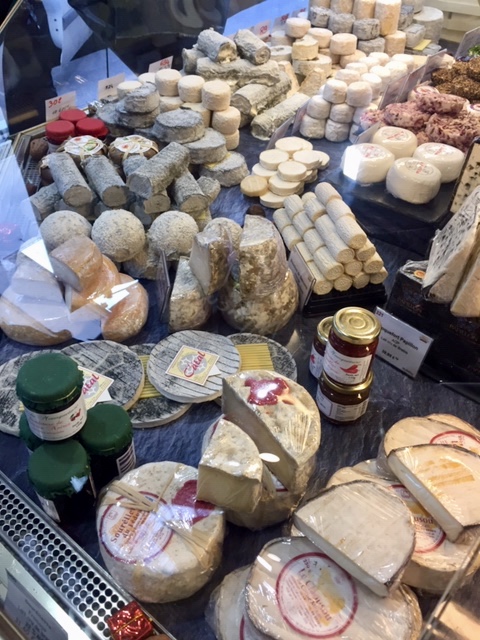
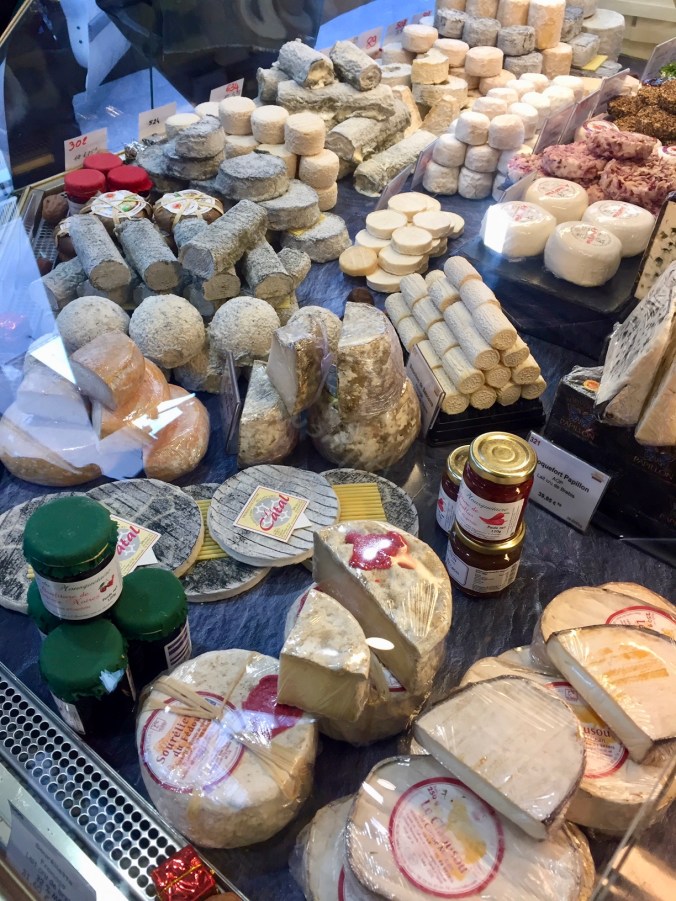
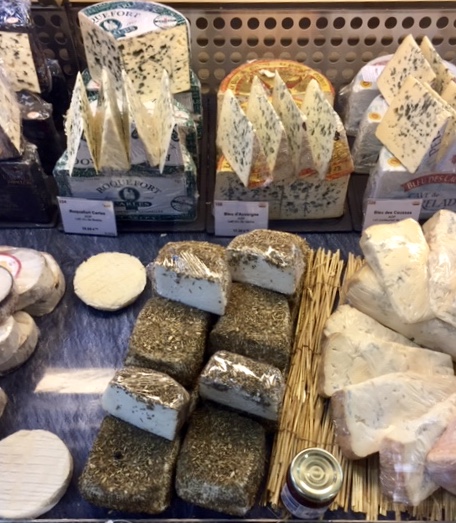
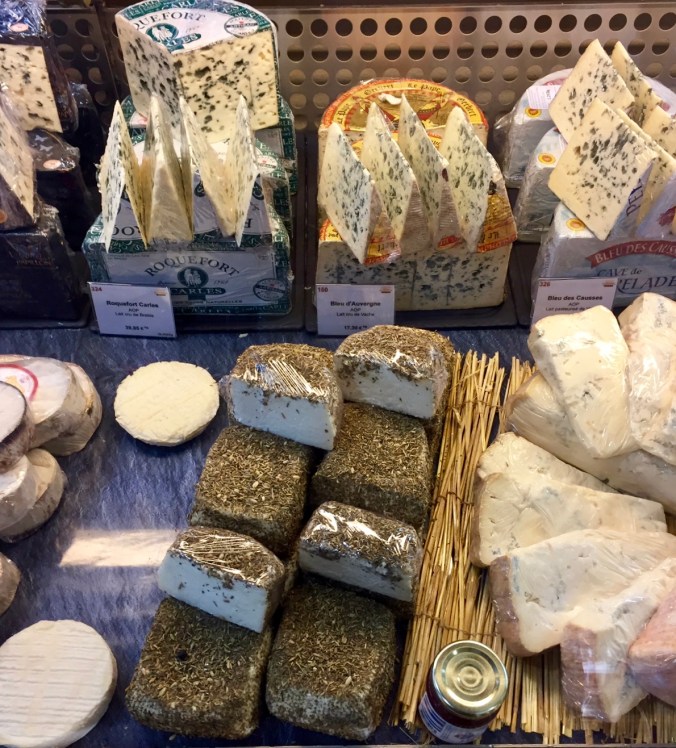
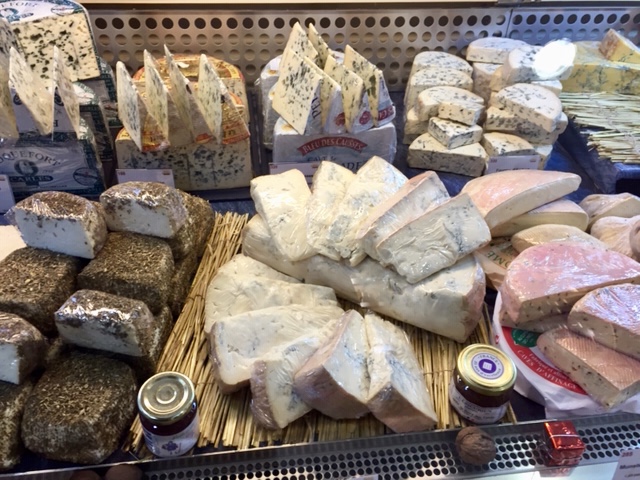
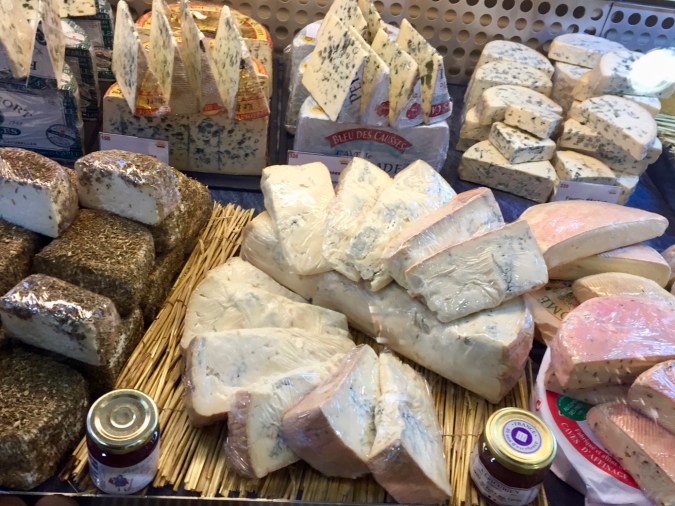
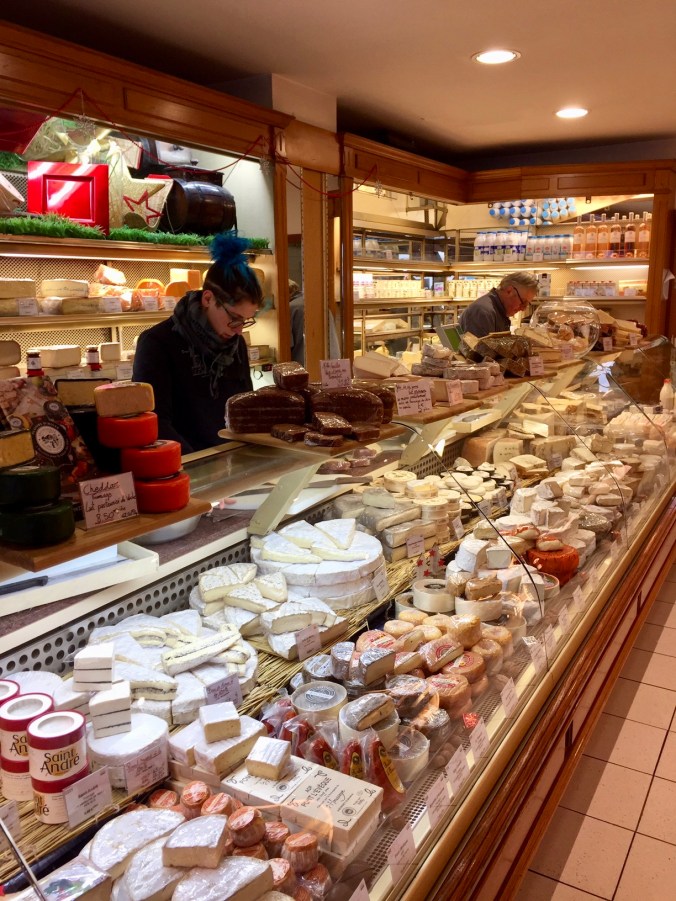
Next stop, a cheese shop:

fullsizeoutput_b3a


fullsizeoutput_b39


fullsizeoutput_b3d


fullsizeoutput_b3c


fullsizeoutput_b3f


fullsizeoutput_b3e


fullsizeoutput_b40


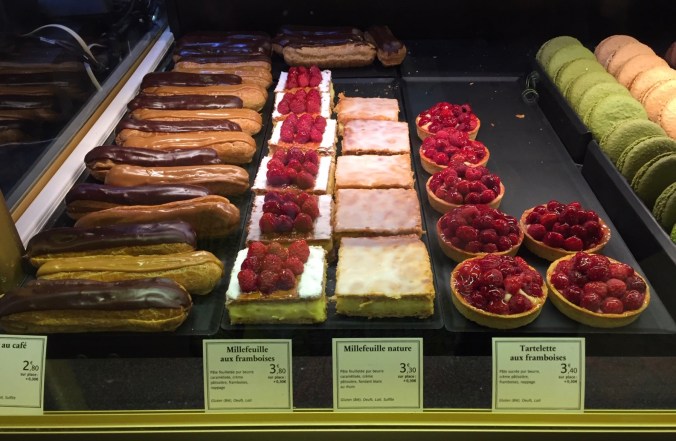
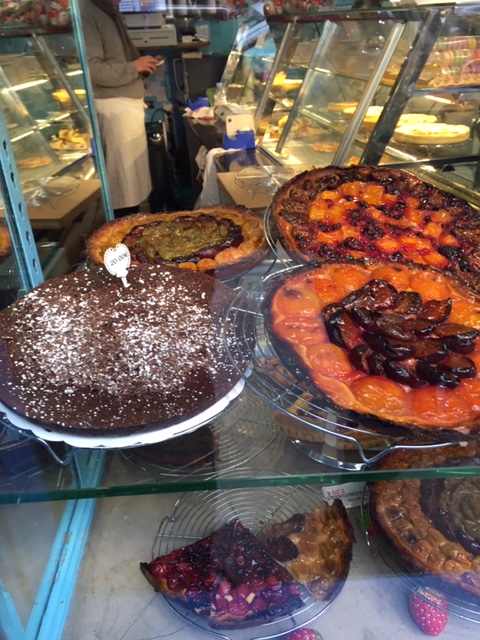
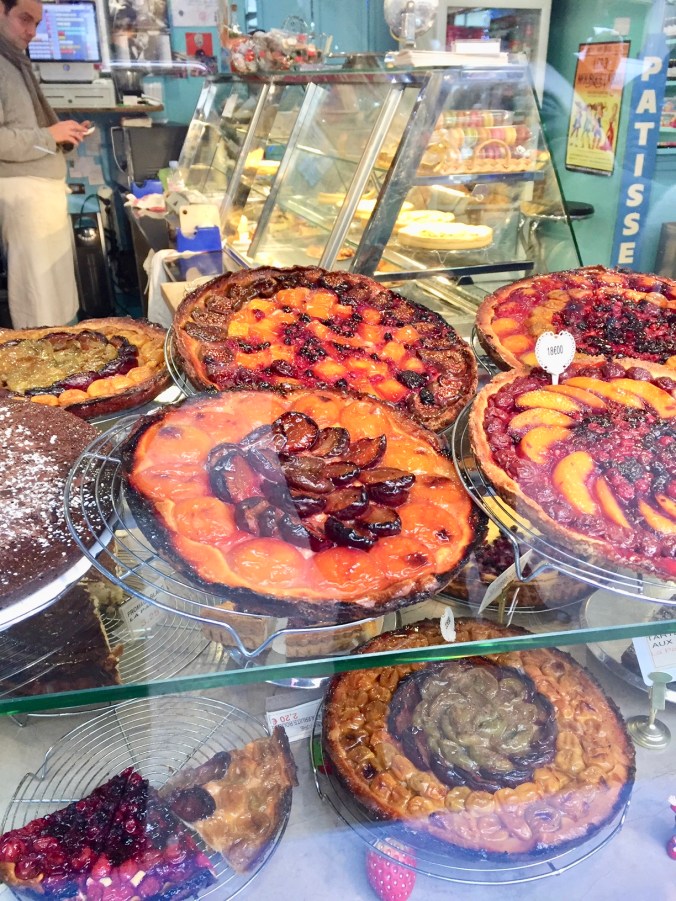
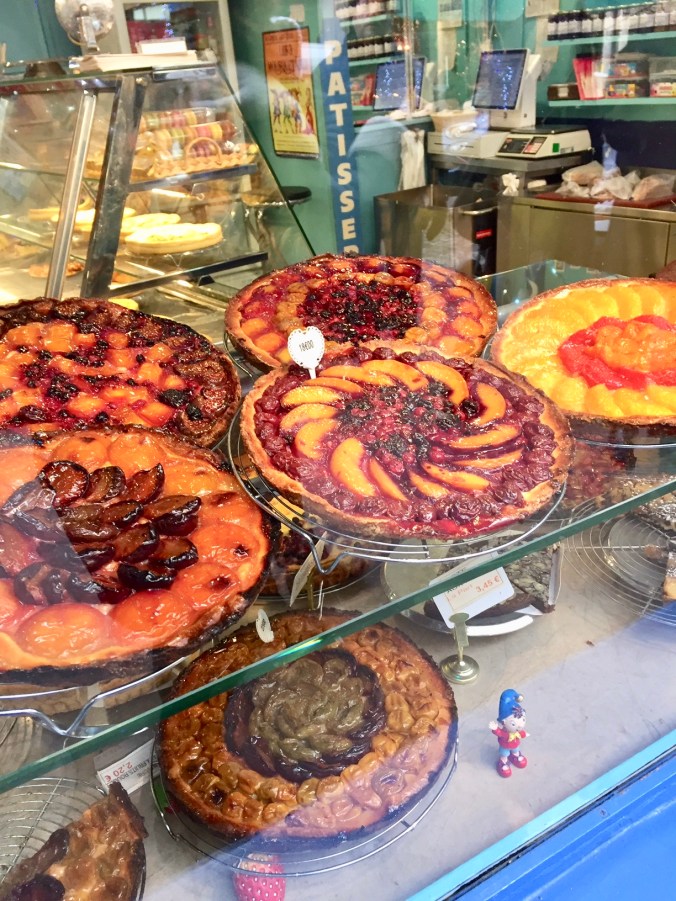
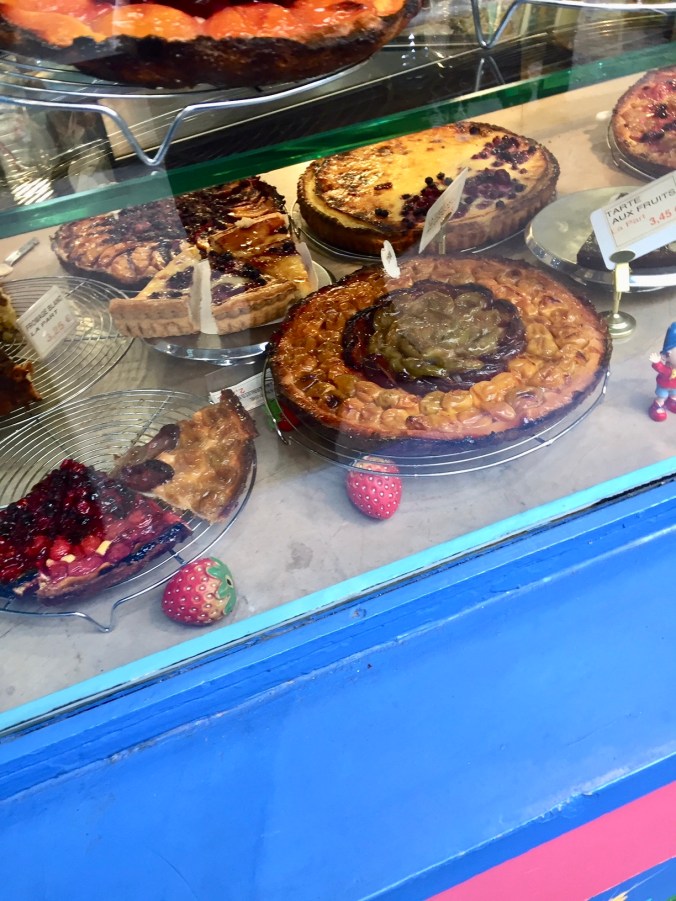
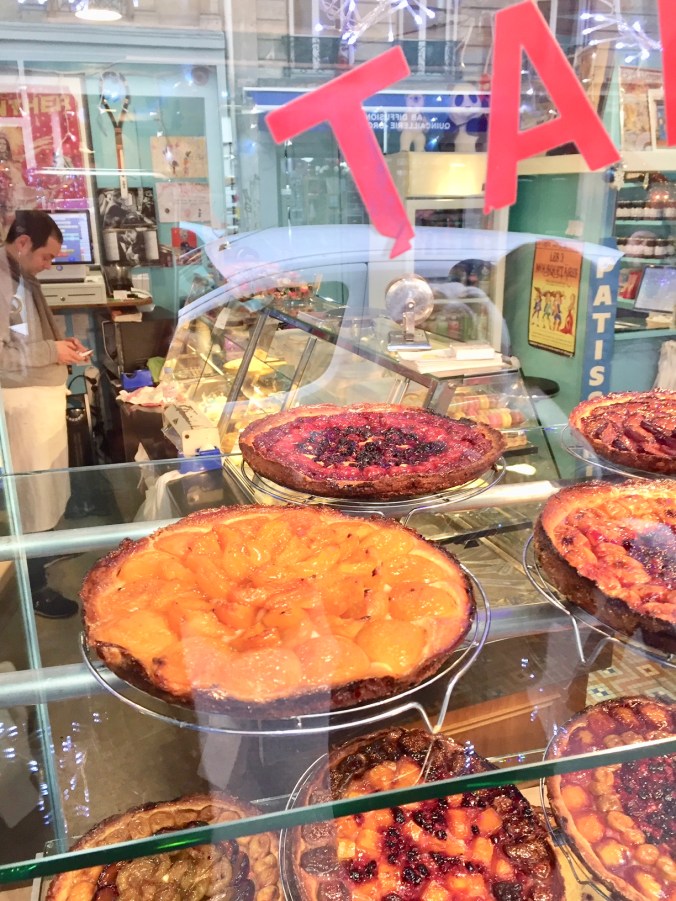
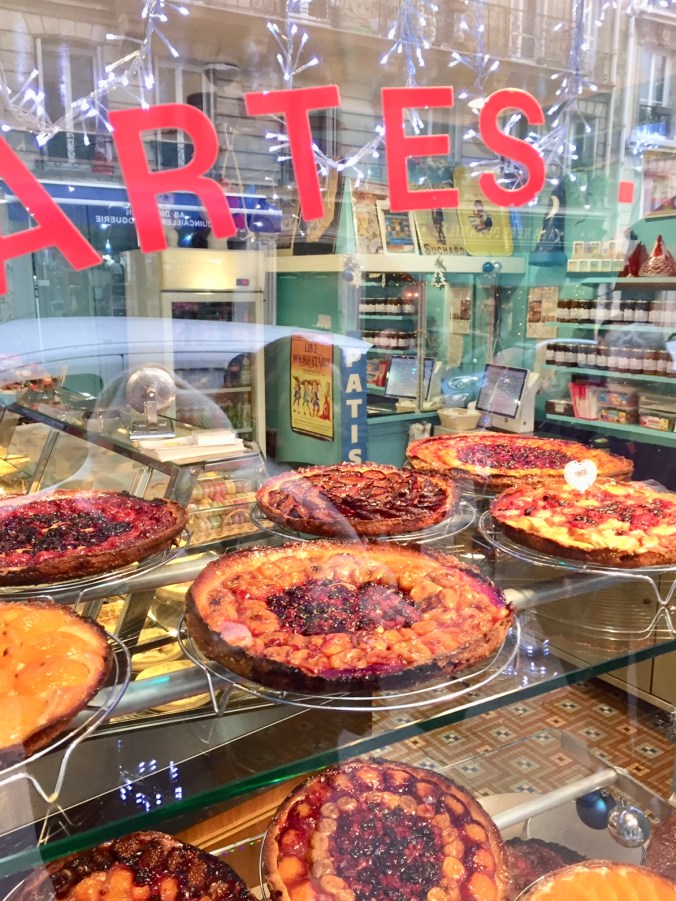
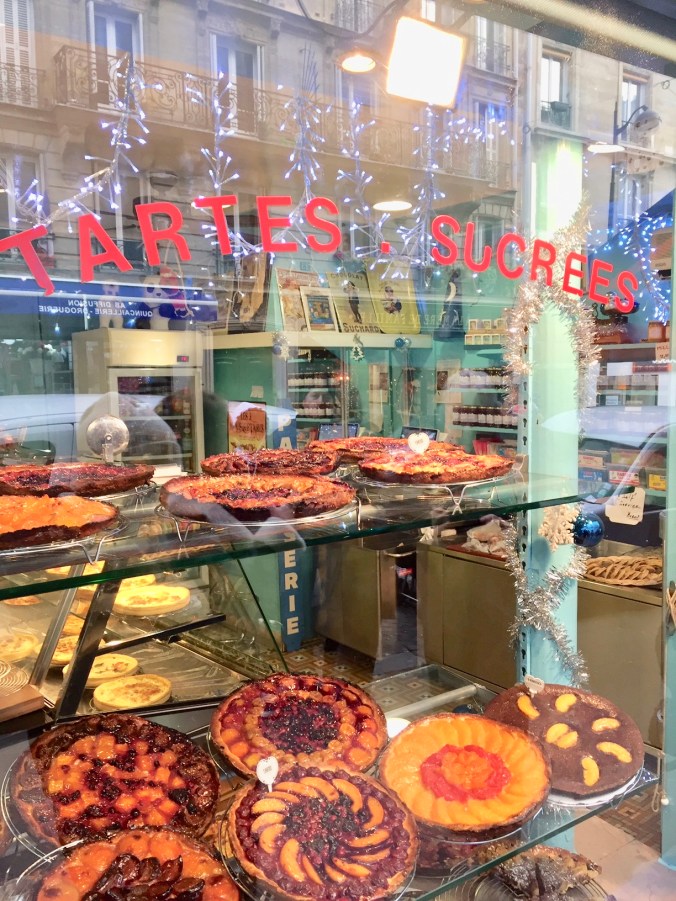
Then we chose a shop for dessert, a fruit tart:

fullsizeoutput_b5cfullsizeoutput_b5d


fullsizeoutput_b5e


fullsizeoutput_b5f


fullsizeoutput_b60


img_4606


fullsizeoutput_b62


fullsizeoutput_b63


fullsizeoutput_b64


fullsizeoutput_b65


fullsizeoutput_b66


fullsizeoutput_b67

There’s more to come, but we need to pace ourselves!