From China to Italy and back again.

The circle of life.


China:

Porcelain, commonly known in English as “china,” was first produced around 2000 years ago in China.  It was coveted in Europe after its introduction there by the time of the Ming Dynasty (1368–1644 AD).  The Ming Dynasty controlled much of the porcelain trade via the Silk Road. In 1517, Portuguese merchants began direct trade by sea with the Ming Dynasty, and in 1598, Dutch merchants followed.


Italy:

The Doccia porcelain manufactory, at Doccia near Florence, was founded in 1735 by marchese Carlo Ginori near his villa. Now known as Richard-Ginori, (following its merger with Società Richard of Milan), as of February, 2013 it was acquired by Gucci.


Back to China:

Gucci plans  improve the factory in Florence, concentrate on high-end products, and sell products under its name in luxury markets such as China.

Florence’s Iris Garden


img01


Attenzione! 
2017---The 59th International Iris Show
59° CONCORSO INTERNAZIONALE DELL'IRIS
8 - 13 Maggio 2017

The Iris Garden at Piazzale Michelangelo was begun in
1954. Florence has always had an association with 
the iris; the city's banner has a red iris on a white 
field (and not a lily, as is erroneously believed).

images

The City of Florence, in collaboration with the Italian 
Iris Society,holds an annual International Iris
Competition, since 1954 (high bearded and border). 
To date, 150 new varieties of iris have
been introduced.

The rhizomes of each iii variety are sent to Florence 
from breeders around the world in the June-September
period and are grown at the Iris Garden of
Piazzale Michelangelo for three years before being
judged by an International Jury.
It is a 'anonymous contest,' with each registered
plant marked by a code so that the jury learns
the name of the variety and the breeder only after
the judging.

A special prize is offered each year by the city to
the red variety that is closest to that of the Iris 
represented on the City's banner.


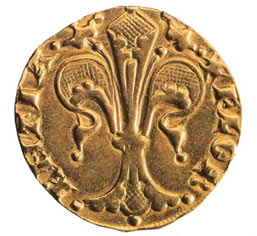
fiorino

P1060192_2-2
 Don't miss it!  I'll see you there!

Lovely Calabrian bergamot: the scent of a spring morning in Italy

After enjoying the beautiful sight of potted lemon trees all over Villa Gambreia yesterday, as here:

IMG_2102IMG_2103


I started musing about one of my favorite subjects: citrus in Italy in general.  These ramblings always bring me quickly to thoughts of bergamot, the scent of which I adore.  In fact, I wear it everyday in this form:

nd.7826

I adore the fragrance of bergamot! It has been described as “the scent of a spring morning in Italy, of mountain narcissus and citrus blossom after rain.”

I’ve still to see the actual fruit, but I’m going to eventually.  Even if it kills me.  Which I don’t think it will.  I think it just means a (much wanted) 2nd trip (for me, in this lifetime) to Calabria.

Citrus_bergamia_-_Köhler–s_Medizinal-Pflanzen-184                           images

Let’s consult an expert on bergamot:

“Wherever citrus trees are gathered together, whether in open ground or the shelter of a limonaia, they cross-pollinate and over time varieties develop that are peculiar to their setting.

“The first of Calabria’s unique and valuable fruits is bergamot (Citrus bergamia), the product of a natural cross-pollination between a lemon tree and a sour orange that occurred in Calabria in the mid-seventeenth century.

“Essential oil can be extracted from the bergamot’s fruit, and although its extremely high value has inspired many attempts to grow it elsewhere, bergamot is like an animal in its chosen territory: it thrives and fruits successfully only on a thin strip of coastline that runs for seventy-five kilometres from Villa San Giovanni on the Tyrrhenian coast to Brancaleone on the shores of the Ionian Sea.

“Here the tree grows tall and strong, and bears such heavy crops that its brittle branches often snap under the weight of oily fruit. Take it away from its home ground and you make it a perpetual invalid, incapable of tolerating the cold or weathering strong winds.

“Only one thing is certain: its first appearance anywhere in the world was in the mid-seventeenth century in Calabria.

“Drive south from Reggio Calabria towards Bova Marina and you can see bergamot trees on the narrow plain between the foothills of the Aspromonte mountains and the sea. They grow in glistening, dark green swathes between dramatic plugs of volcanic rock and on narrow terraces cut from a sheer cliff face.

“The trees have large glossy leaves similar to a lemon’s and bitter fruit that ripens from green to yellow and is the size and shape of an orange. Anything goes in a bergamot grove. Trees are pruned very lightly only once a year and some of them grow to over four metres high. They are carefree, liberated, untidy and entirely organic, the hippies of the citrus world. It is the essential oil stored in the pores just beneath the surface of the skin that makes bergamot so valuable.

“Ever since the beginning of the eighteenth century the principal and most lucrative use of this oil has been as a fixing agent in the perfume industry. The addition of bergamot oil makes a perfume last longer and brings all its other elements into harmony, rather like the conductor of an orchestra.

“Any essential oil extracted from fruit produced outside Calabria’s bergamot belt is of inferior quality.

“When bergamot first appeared in Calabria it was immediately appreciated for its blossom, which has a stronger scent than any other zagara. The bitter fruit was not considered edible, but bergamots were planted as ornamental trees in the gardens of villas in its homeland near the regional capital, Reggio Calabria.”

Citrus_bergamia_-_Köhler–s_Medizinal-Pflanzen-184


Attlee, Helena (2015-01-05). The Land Where Lemons Grow: The Story of Italy and Its Citrus Fruit (Kindle Locations 2280-2286). Countryman Press. Kindle Edition.

The Tuscan stripe, Pistoia and beyond

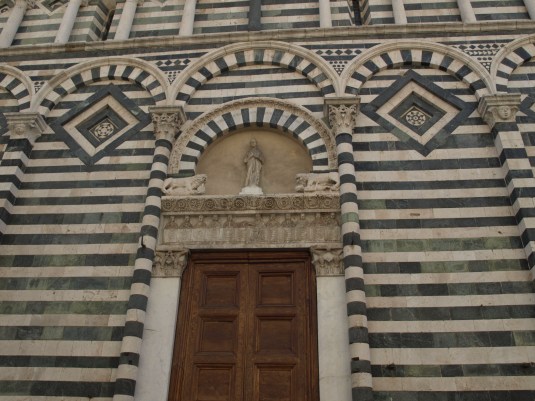
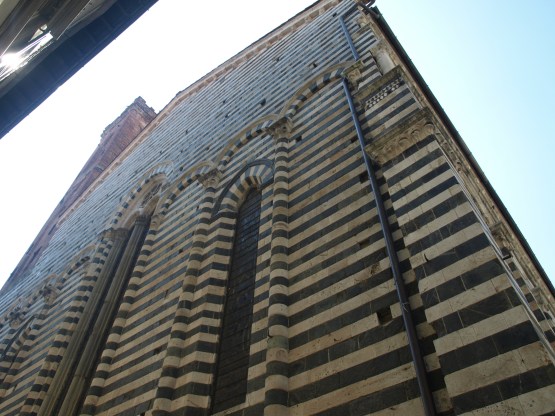
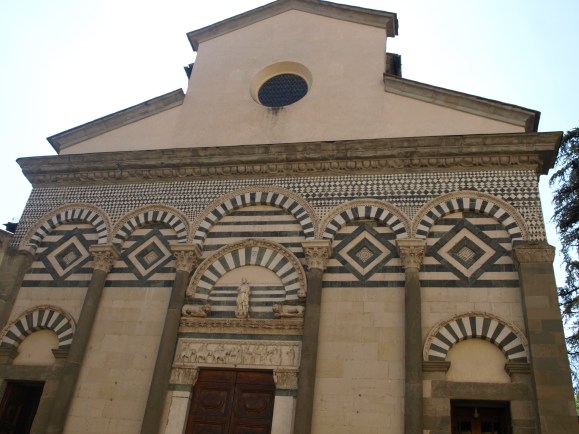
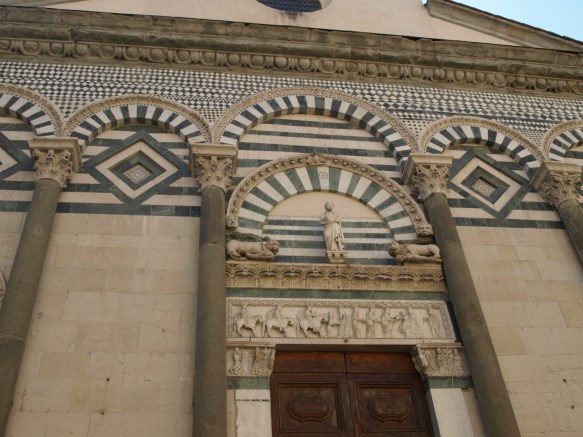
I love the dark green and cream colored striped churches found throughout Tuscany!

This past weekend I went to Pistoia for the first time and look what I saw!

OLYMPUS DIGITAL CAMERA

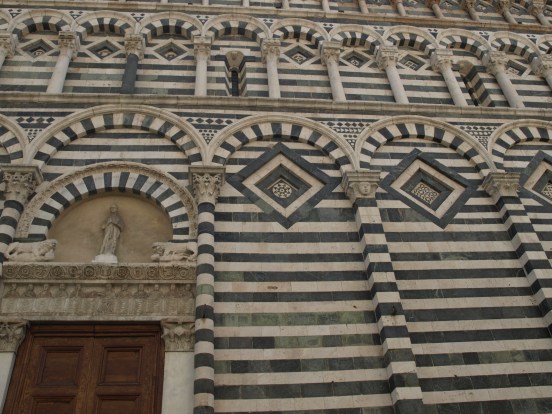
San Giovanni Fuoricivitas

Above and below, the Romanesque church of San Giovanni Fuoricivitas, (12th–14th century)

OLYMPUS DIGITAL CAMERAOLYMPUS DIGITAL CAMERA


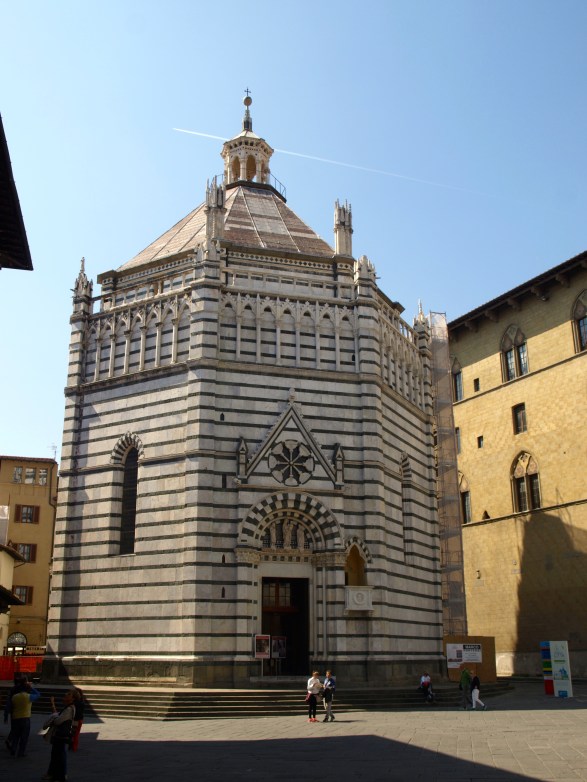
Then there is the Duomo and the beautiful 14th century Baptistry in the Piazza.

OLYMPUS DIGITAL CAMERA

Baptistry, Pistoia


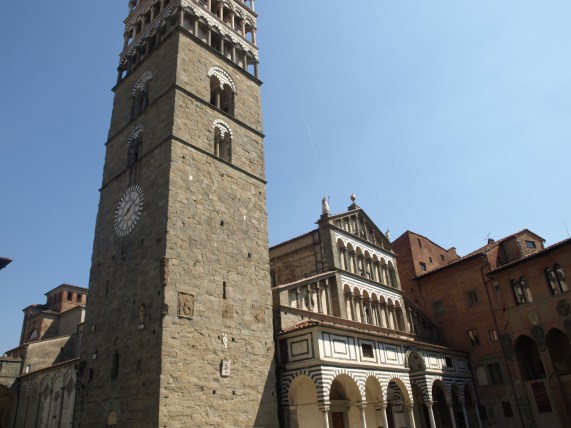
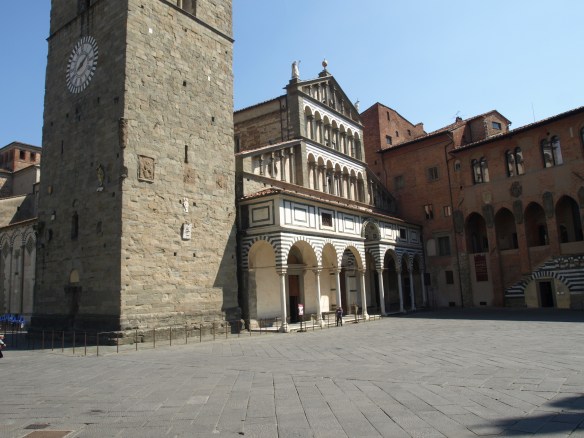
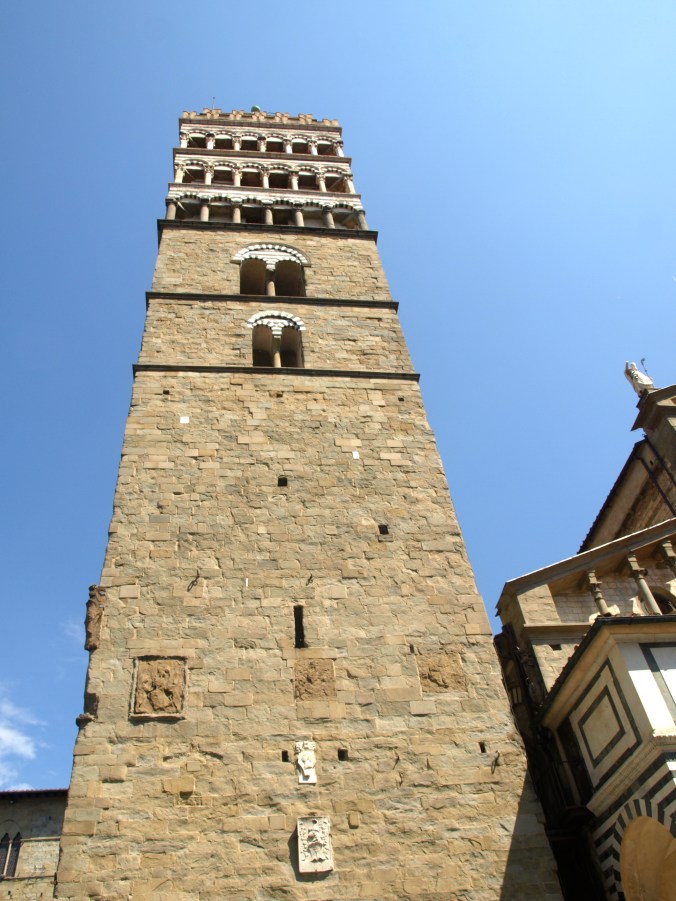
Across the Piazza del Duomo sits Il Duomo with its beautiful campanile.

OLYMPUS DIGITAL CAMERAOLYMPUS DIGITAL CAMERAOLYMPUS DIGITAL CAMERA

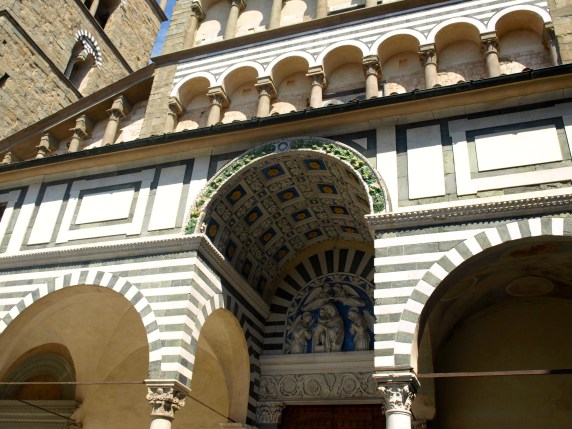
The Cathedral of San Zeno was started in the 5th century, but the building we see today took shape in the 12th century.  While the facade is Romanesque, the duomo’s interior is all Baroque.

The iconic Romanesque campanile, standing at some 67 metres (220 ft), was erected over an ancient Lombard tower.

OLYMPUS DIGITAL CAMERA

Andrea della Robbia designed the beautiful and prominent glazed ceramic sculptures over the central doorway.

OLYMPUS DIGITAL CAMERAOLYMPUS DIGITAL CAMERAOLYMPUS DIGITAL CAMERAOLYMPUS DIGITAL CAMERA

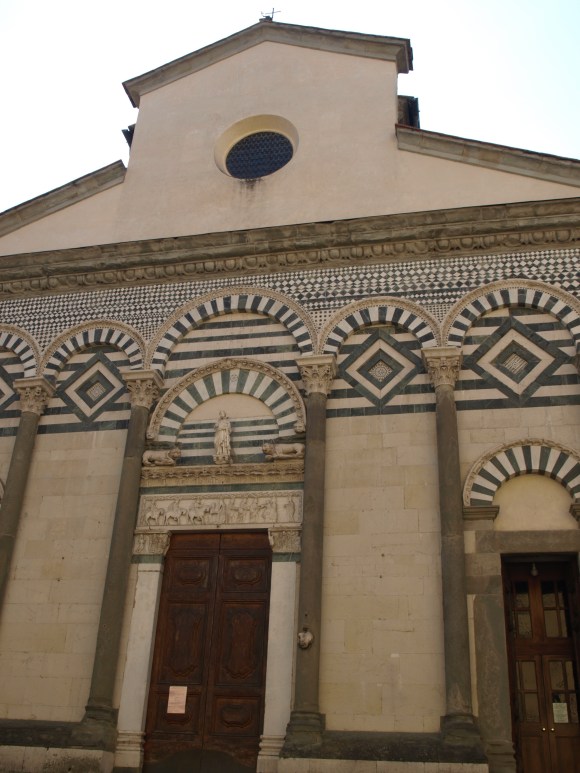
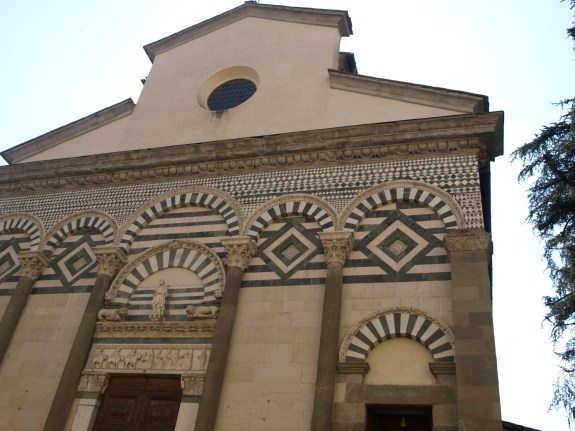
As you walk through the lovely, medieval city center, you run across several typical Tuscan Gothic/Romanesque churches.  The one above is Sant’ Andrea.  I’ll be writing more about it soon.


Hans Christian Andersen sees Italy for the first time: “here is Paradise!”


hans

images-2

Hans Christian Andersen, the Danish author and poet best known for his fairytales, visited Italy in 1833, and when he saw citrus groves for the first time he responded with the mixture of rapture and envy that Italy can still provoke among visitors from colder and less romantic countries.  He wrote to a friend:

“Just imagine the beautiful ocean and entire forests

with oranges and lemons,

the ground was covered with them; mignonettes and gillyflowers

grew like weeds.

My God, my God!

How unfairly we are

treated in the north; here, here is Paradise.”

Attlee, Helena (2015-01-05). The Land Where Lemons Grow: The Story of Italy and Its Citrus Fruit (Kindle Locations 47-48). Countryman Press. Kindle Edition.


Prato and Michelozzo and Donatello, oh my! And don’t forget Fra Filippo Lippi either!

I had the great pleasure of visiting Prato for the first time yesterday.  I am so sorry I waited so long to go!  It is a hop, skip and a jump from Florence by train, for the high cost of 2.50 Euro! Best of all, it is a city full of great art!  Va se può!  

Yes, there is a large Chinatown in Prato and that development gets all of the attention for this fine, large city that is a neighbor of Florence.  I’m here to talk about the art, come sempre!
IMG_1649

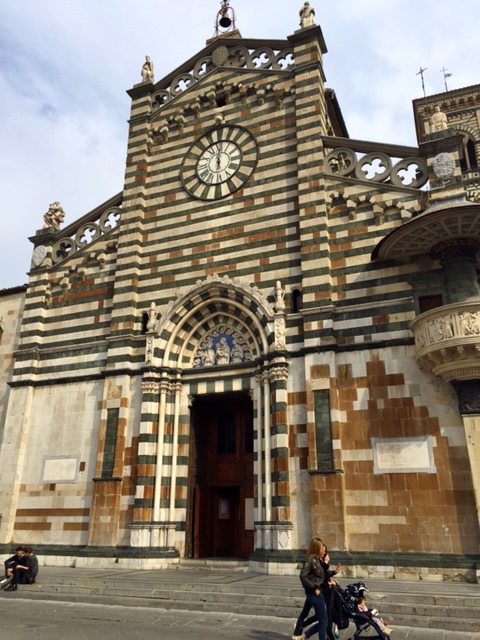
The duomo, or Cattedrale di San Stefano, is a lyrical design in the Gothic/Romanesque Tuscan vein.  I found it beautiful!  I am a huge aficionado of the striped marble facing many Tuscan churches.

IMG_1649

The façade has a single central portal, surmounted by a lunette in glazed terra-cotta sculpture by Andrea della Robbia, depicting the Madonna with Saints Stephen and John.
 

IMG_1650

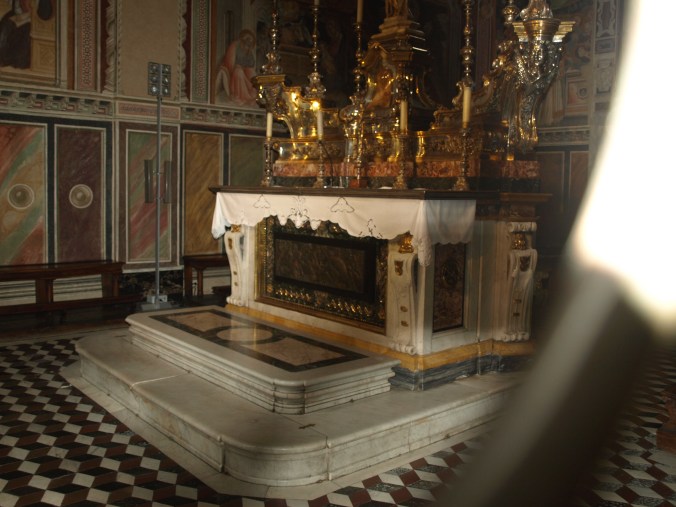
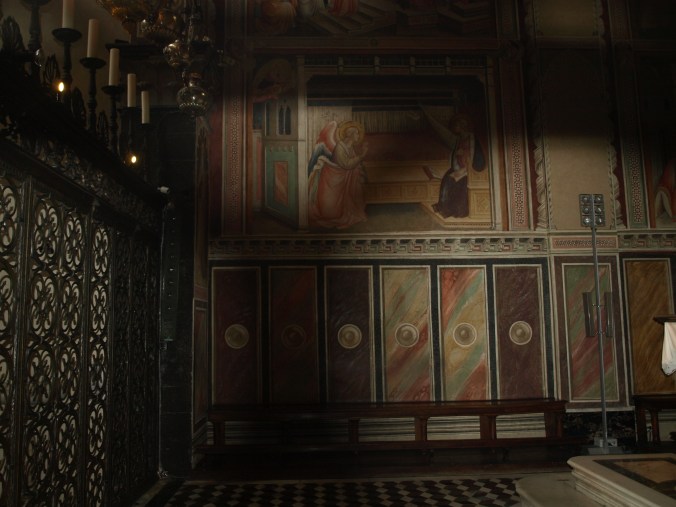
San Stefano has a very important relic, the Sacra Cintola or belt of the Virgin Mary, acquired during the 14th century. To house such an important relic, the church added a transept attributed to Giovanni Pisano, but probably the work of a pupil of Giovanni’s father, Nicola Pisano. The lavish interior Capella Cintola was also built at this time to house the relic.

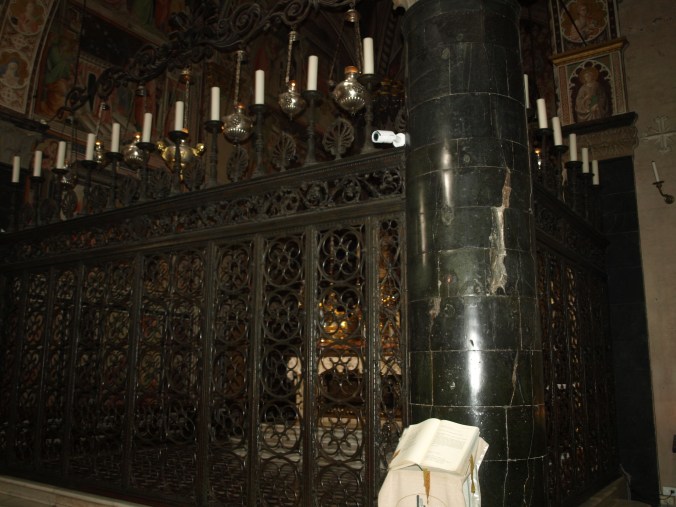
The picture below does no justice to this grand Capella.  You notice it the second you walk into the lovely church.
OLYMPUS DIGITAL CAMERA

The picture below is of the interior of the Capella.  Still no justice is done!  The chapel was designed by Lorenzo di Filippo between 1386 and 1390.

The Sacra Cintola is a knotted textile cord meant to be used as a belt.  According to a medieval legend, the belt was dropped by the the Virgin Mary as she lifted into heaven.  She wanted Thomas the Apostle to have the belt, to prove to him (doubting Thomas) as proof of her assumption.

 The Sacra Cintola or Sacro Cingolo is an 87-centimeter-long strip of fine material made from goat’s hair dyed green and embroidered with gold thread.  It is encased in a glass and gold reliquary, and the reliquary is kept inside a silver casket within the altar of the special chapel.

(For more on the miraculous belt, see https://en.wikipedia.org/wiki/Girdle_of_Thomas).

The legend of the belt dropping by Mary was frequently depicted in the art of Florence and indeed, all of Tuscany,  and the keeping and display of the relic at Prato generated commissions for several important artists of the early Italian Renaissance.
OLYMPUS DIGITAL CAMERA

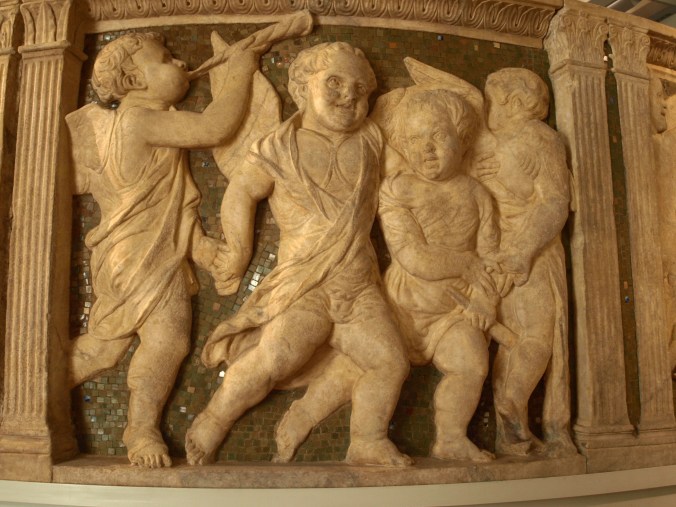
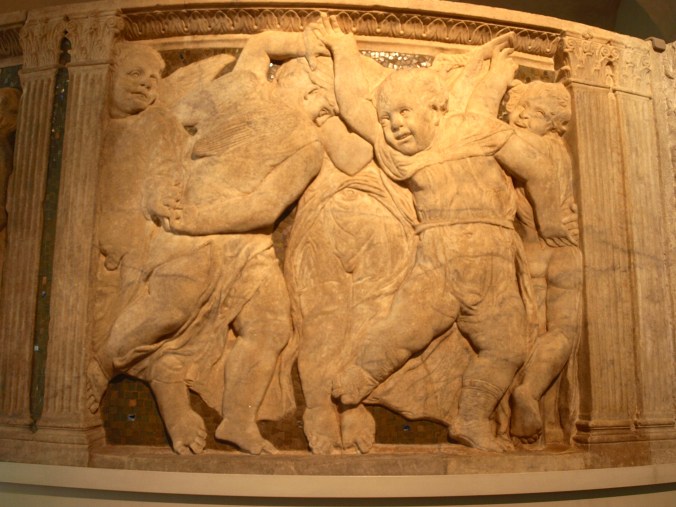
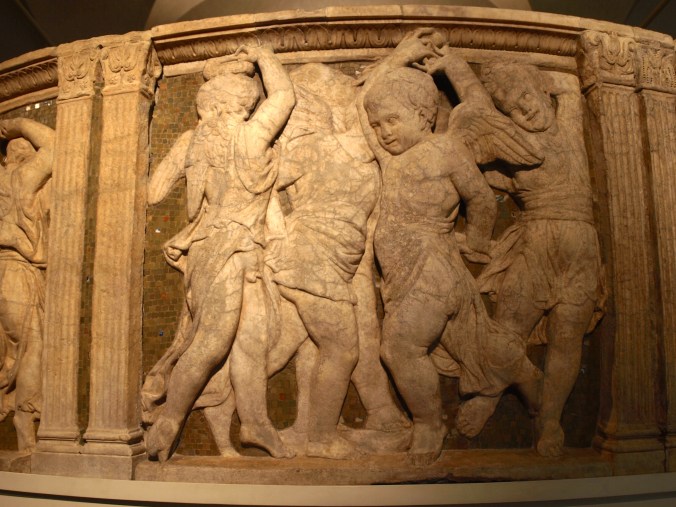
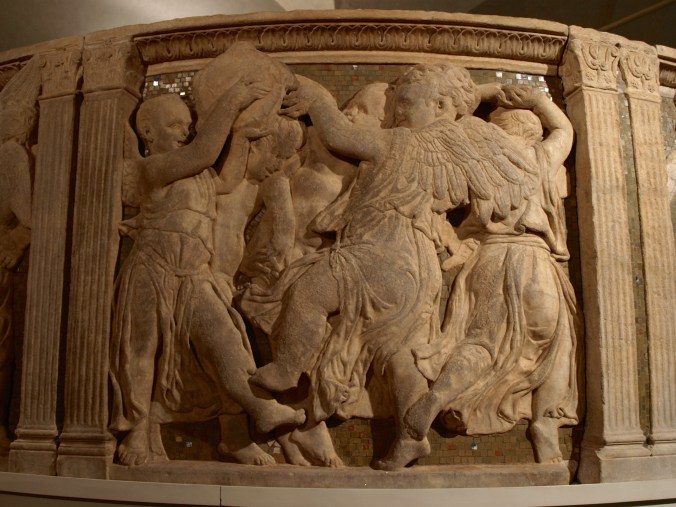
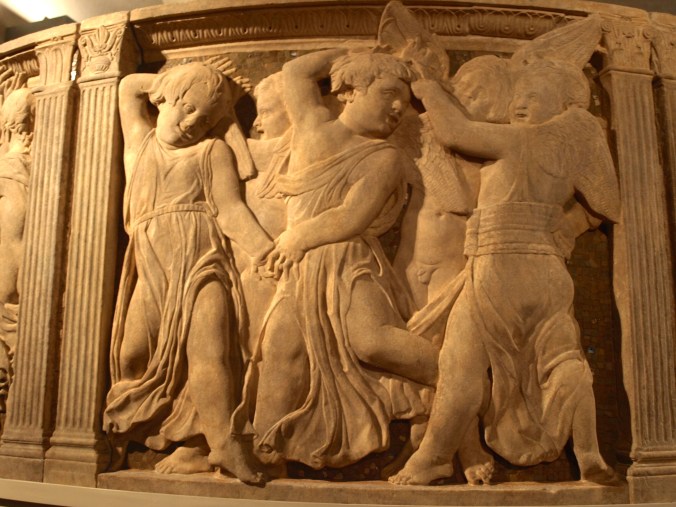
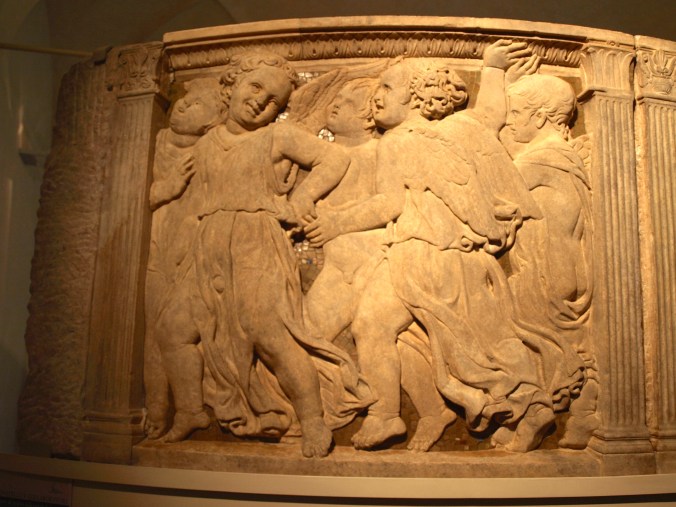
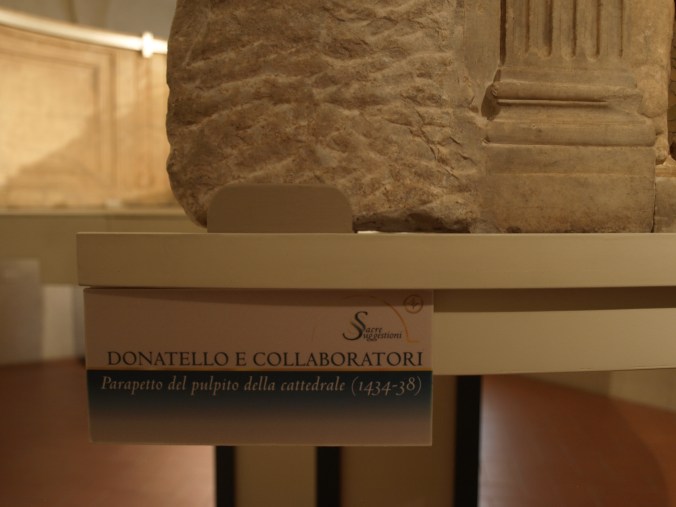
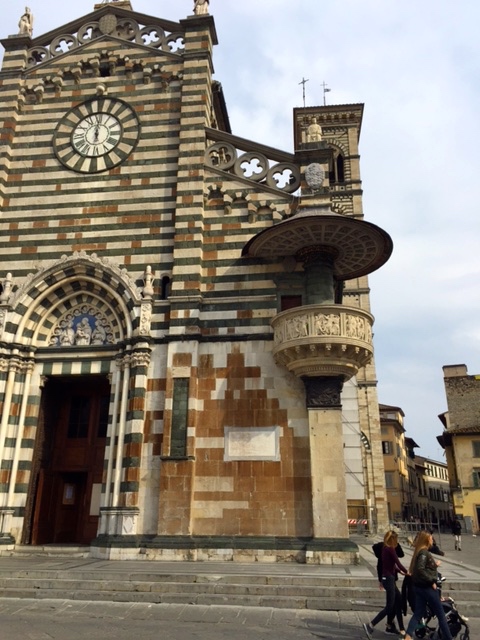
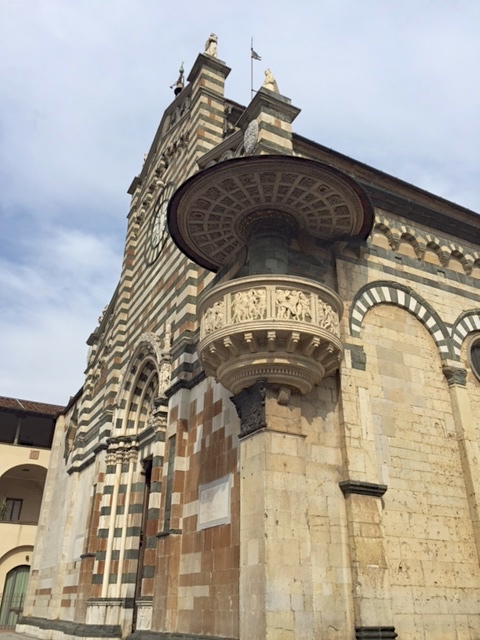
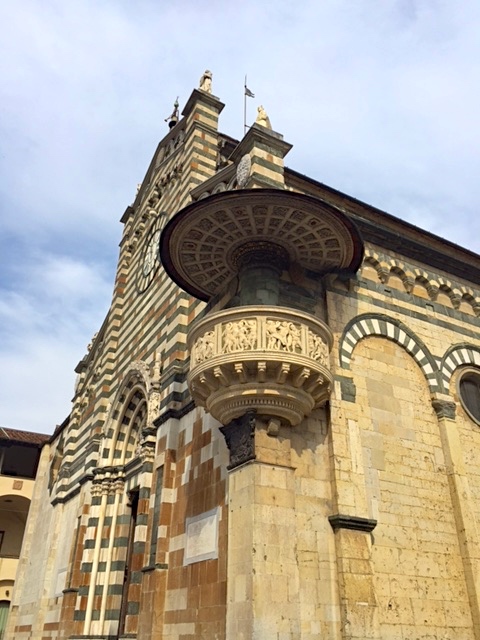
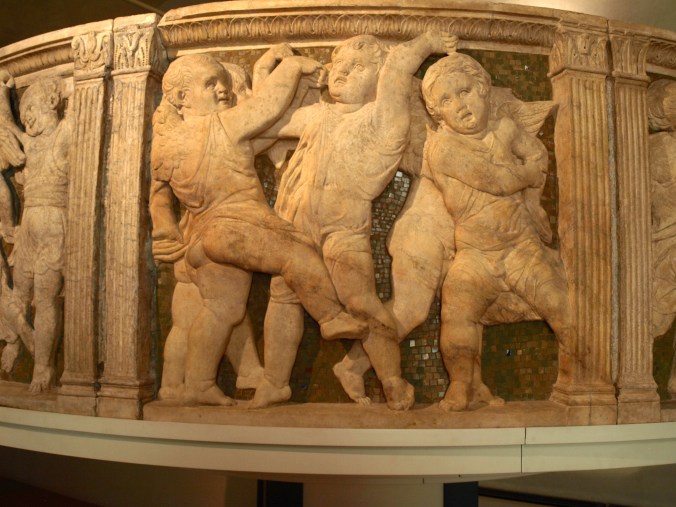
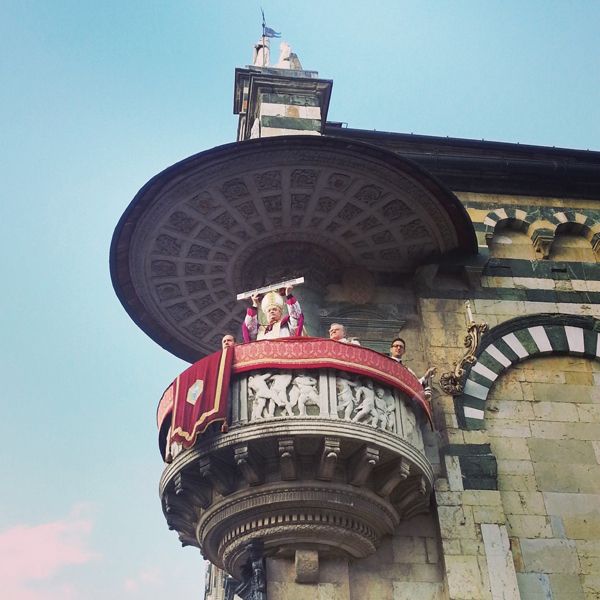
One of the most interesting aspects of the the duomo is the exterior pulpit on the facade.  I have never seen such a feature on any other church.  It was designed by Michelozzo and decorated by Donatello with seven relief sculptures between 1428 and 1438.
IMG_1650


IMG_1647


IMG_1648

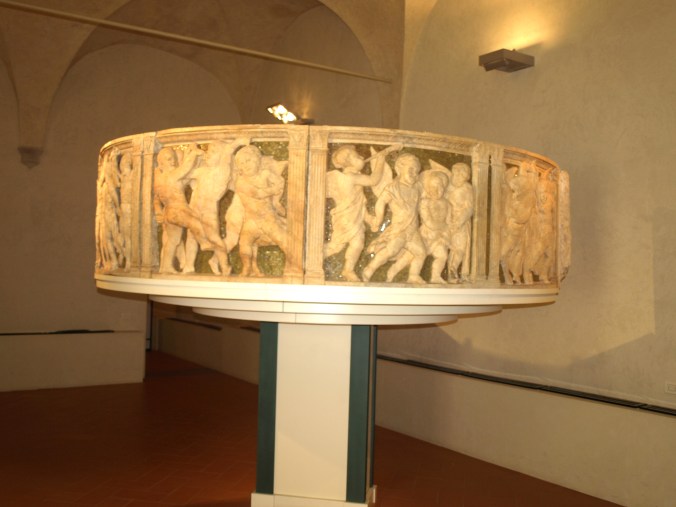
The seven original reliefs of the parapet were removed from the pulpit in 1967 and can be seen today in cathedral museum.  This is a rather fortunate development for students of art history, because we can get up close and personal with the stunning sculptures by Donatello.  It is possible to study the forms so closely you can sometimes see where the chisel landed on the marble.
OLYMPUS DIGITAL CAMERA


The subtle inlay of mosaic behind the shallow relief sculptures adds life to the forms.
OLYMPUS DIGITAL CAMERA


OLYMPUS DIGITAL CAMERA


OLYMPUS DIGITAL CAMERA


OLYMPUS DIGITAL CAMERA


OLYMPUS DIGITAL CAMERA


OLYMPUS DIGITAL CAMERA


OLYMPUS DIGITAL CAMERA


OLYMPUS DIGITAL CAMERA

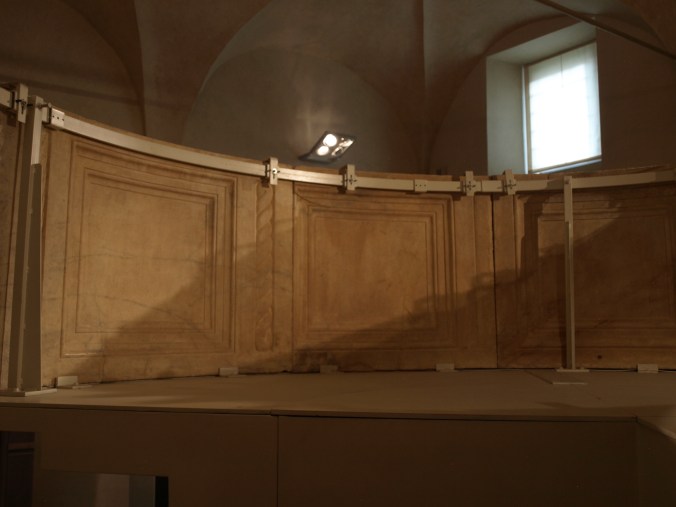
Another nice aspect about having the pulpit on display at eye level in the museum is the fact that one can see the interior of the pulpit as well, as below.
OLYMPUS DIGITAL CAMERA

In the Middle Ages, few items of clothing were more symbolic than the belt from which important objects were hung, including a sword and keys. As the story of Mary’s belt in Prato spread, from about 1270 onwards, it prompted some of the most extraordinary iconography in the history of Renaissance art.

One such painting is Filippo Lippi’s Madonna of the Sacred Belt, in the collection of the Prato Civic Museum. Likewise, over the centuries, many illustrious pilgrims have visited Prato’s shrine, including Saint Francis of Assisi, Maria de’ Medici and several popes, including the late Pope John Paul II in 1986.

 Each December 25, people flock to Prato to see the ceremony, which is repeated on four other occasions during the year as part of the Roman Catholic calendar:

Easter;

May 1, marking the month dedicated to the Virgin;

August 15, in celebration of Mary’s assumption;

and September 8, the day devoted to her nativity.

Following a procession through the city streets led by musicians and other people dressed in Renaissance costumes, a solemn mass is held in the cathedral, during which the archbishop of Prato will retrieve the Sacra Cintola from the casket using three keys (one key is always in his possession while the other two are kept in the mayor’s custody).

After passing an incense-burning censor over the relic, the prelate will then display it three times from Ghirlandaio’s loggia to the faithful seated inside the basilica before moving outside to the beautiful external pulpit decorated by Donatello. Here, he will hold it up high for the public in the piazza below to see, exhibiting it three times in three different directions.
x2013-051.jpg.pagespeed.ic.Rrgjnk7YSk

Finally, before the relic is returned to its vault, worshippers are invited to line up and kiss the reliquary. 


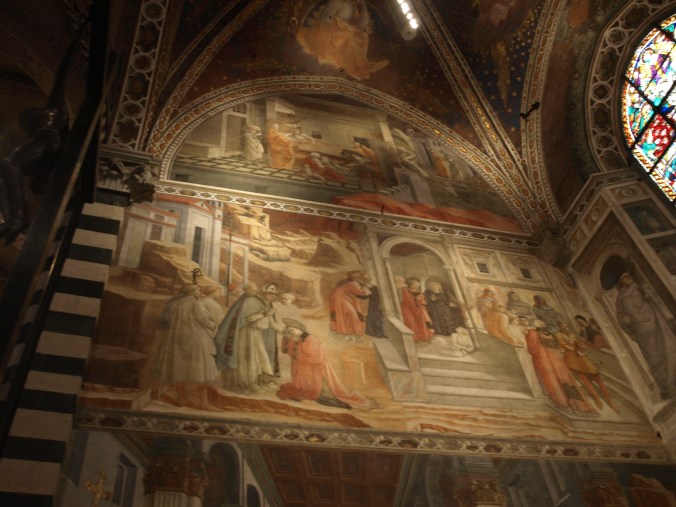
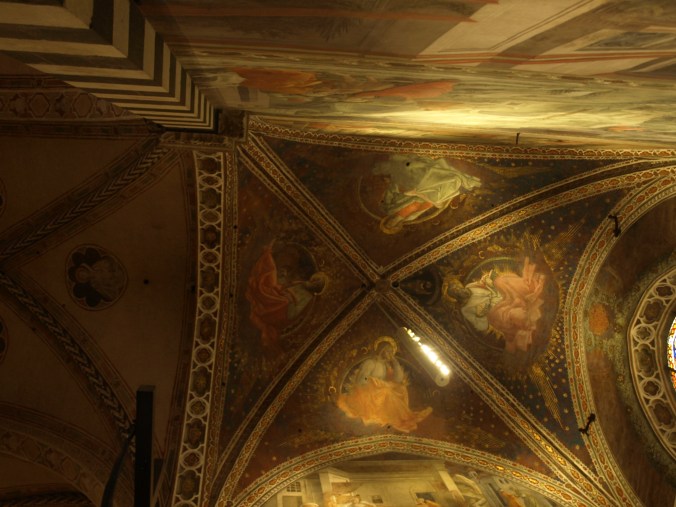
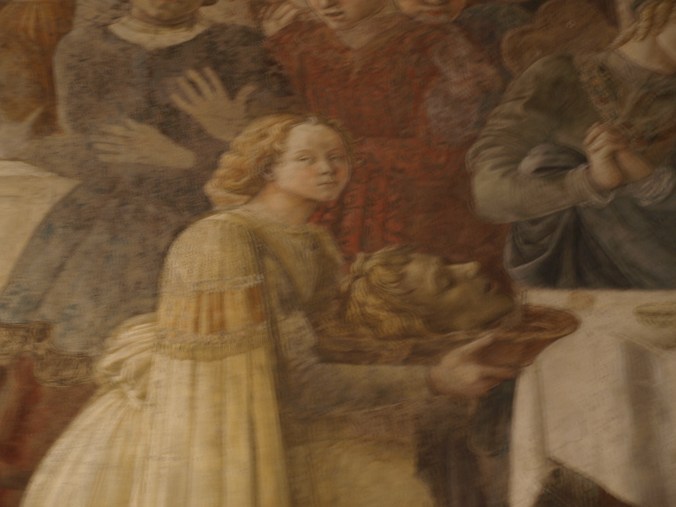
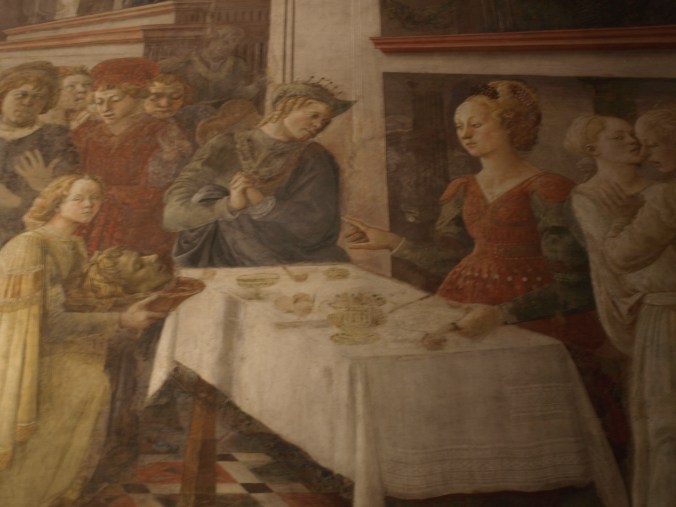
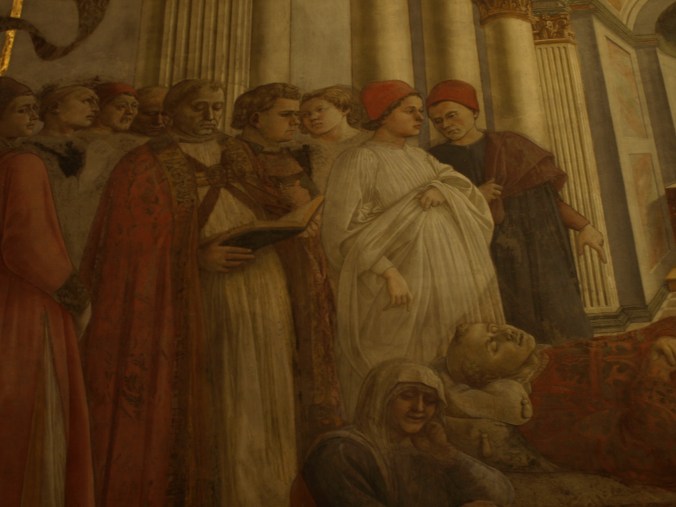
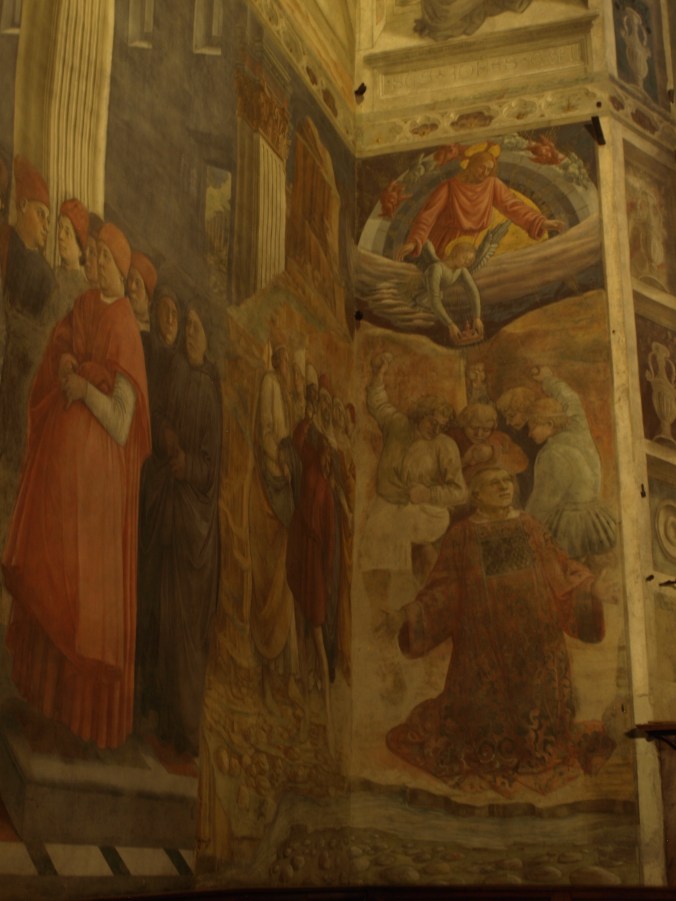
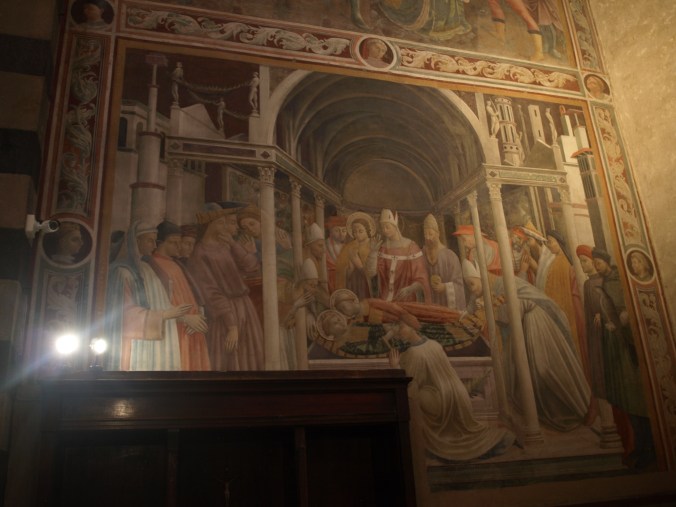
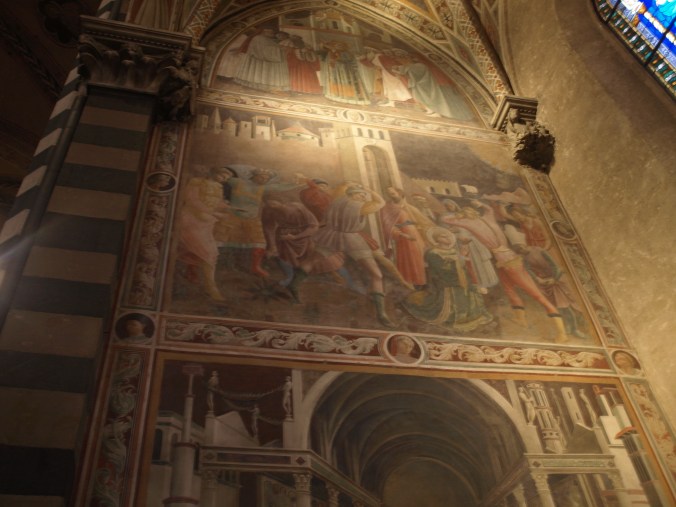
The Duomo houses yet another important treasure: a glorious fresco cycle depicting the stories of San Stefno and Saint John the Baptist by Filippo Lippi and his workshop from 1452 to 1465. The magnificent frescoes, which flank the main altar area, were restored in 2008.
OLYMPUS DIGITAL CAMERAOLYMPUS DIGITAL CAMERA

OLYMPUS DIGITAL CAMERAOLYMPUS DIGITAL CAMERA

OLYMPUS DIGITAL CAMERAOLYMPUS DIGITAL CAMERAOLYMPUS DIGITAL CAMERAOLYMPUS DIGITAL CAMERA


Scenes from the Madonna’s life and the story of the relic cover the chapel’s walls, frescoes done by Agnolo Gaddi in 1392-1395. Behind the additional protection of magnificent bronze gates created by Maso di Bartolomeo, Giovanni Pisano’s statue of the Madonna with Child looks down from the chapel’s altar.
OLYMPUS DIGITAL CAMERA

Florence is one with Syria’s antiquities

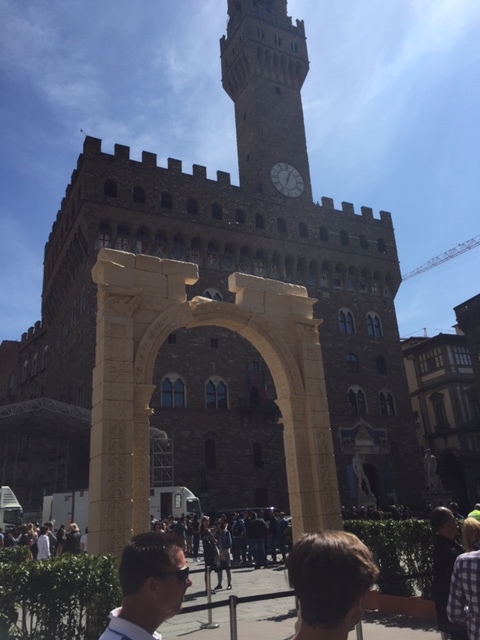
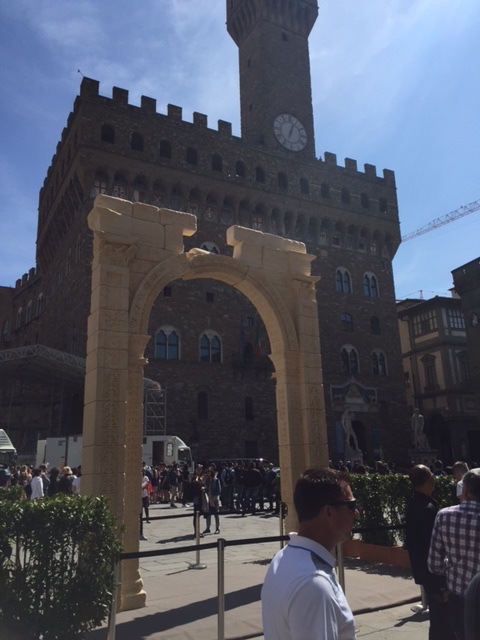
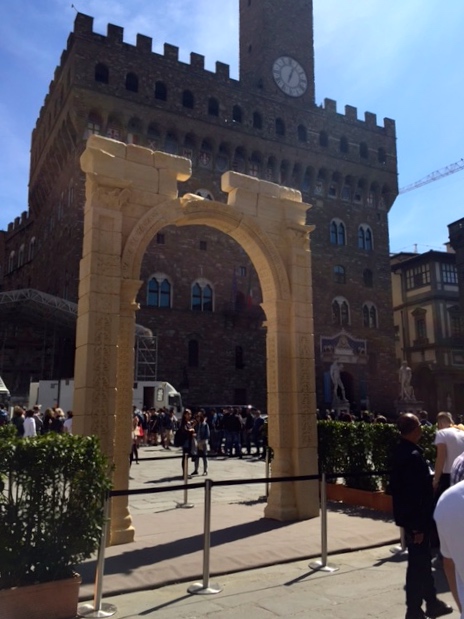
A replica of the Palmyra Arch is currently on display in the Piazza della Signoria, bringing awareness to the senseless destruction of the original in Syria in 2015 by militants.  It is an austere and chilling juxtaposition, this lost arch and Florence, which is lavished with attention.

IMG_1619IMG_1620IMG_1621


For more information, see the following sources:

http://www.florencedailynews.com/2017/03/14/replica-palmyras-arch-unveiled-g7-florence/

http://www.theflorentine.net/news/2017/03/arch-palmyra-installed-g7-off/