


Italian customs
Not your usual Italy story
The fragrance of history in Florence

Florence is home to several historical perfumeries that make essences out of top quality, completely natural ingredients.
The best-known of these is undoubtedly Officina Profumo Farmaceutica di Santa Maria Novella (via della Scala, 16). Its extensive products includes perfumes, soaps, cosmetics, historical pharmaceutical preparations, home fragrances, and syrups, including in its renowned Alkermes, found in many traditional Tuscan sweets. Open on Sundays, a visit will dazzle you with the wonderful scents you breathe when you step over its threshold and the endless charm of its interiors and variety of all natural products.

Since the 1980s, Lorenzo Villoresi (via de Bardi,14), has been designing custom fragrances for the home and perfumes designed to fit the personality of the person wearing it, like a tailor-made garment.

The Antica Officina del Farmacista Dottor Vranjes (via della Spada 9/R) has a great variety of home fragrances, all-natural and based on spices, flower and fruit. In addition to home fragrances, it has perfumes and body care products based on pure vitamins and minerals to treat yourself in spa style at home.

Antica Profumeria Inglese (via de’ Ginori 2/R) has been setting itself apart since 1843 for the quality and refinement of its products. It was here that Henry Roberts invented a something that made its way around the world: talcum powder.


Sileno Cheloni’s olfactory creativity spawned a new line of limited edition fragrances, called Teatro Fragranze Uniche (via Maragliano, 56), founded on the inspiration and dedication of three women with the support of profumiers.

Farmacia Santa Annunziata. In 1561, the chemist Domenico di Vincenzo di Domenico Brunetti was the 1st manager of the Santissima Annunziata Pharmacy. Since that time the Farmacia has always maintained a special tradition in preparing prescriptions and products for the beauty of the skin. Using ancient processes completely handmade, with pestle and mortar, to special quality controlled preparations made with modern and safe machinery, special attention is paid both with traditional and new raw products. Our ancient tradition has been mantained and the standards of our products have become better and safer.


Acqua dell’ Elba

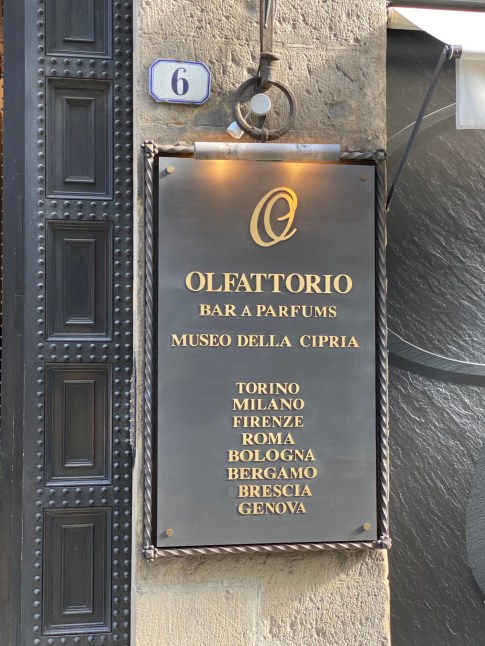
Olfattorio Bar a Parfums The experience continues outside the boutique with the olfactory glasses designed by Giovanni Gaidano.
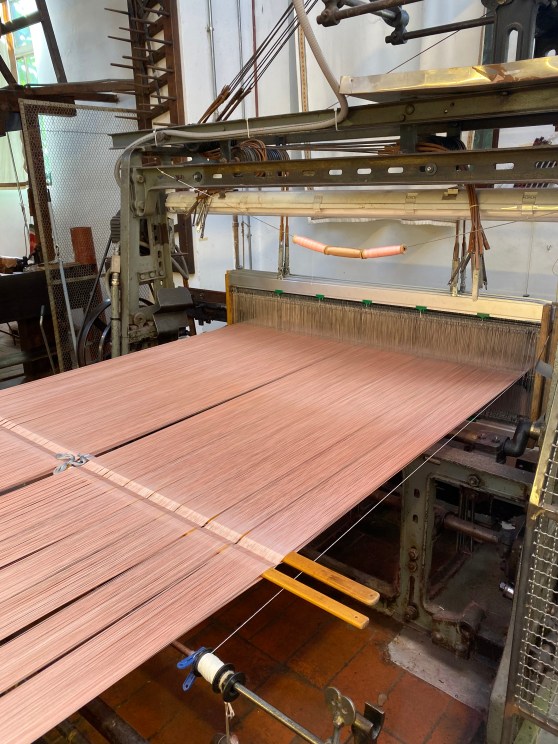
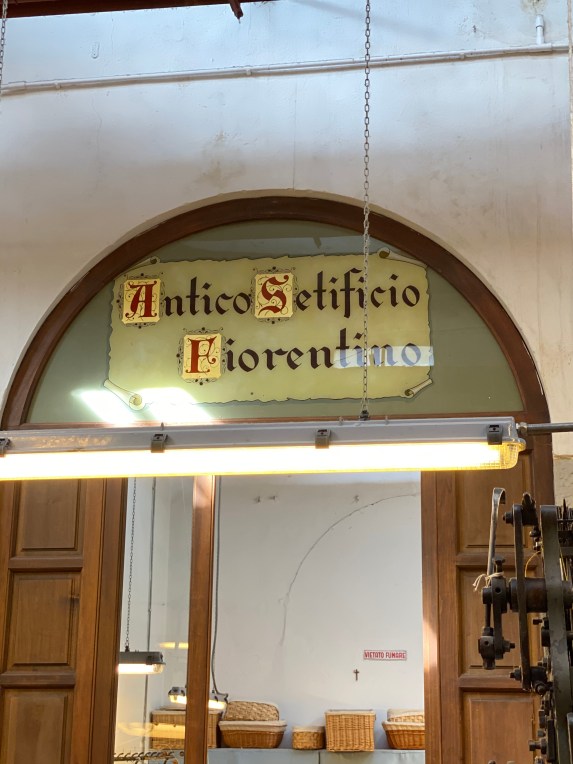
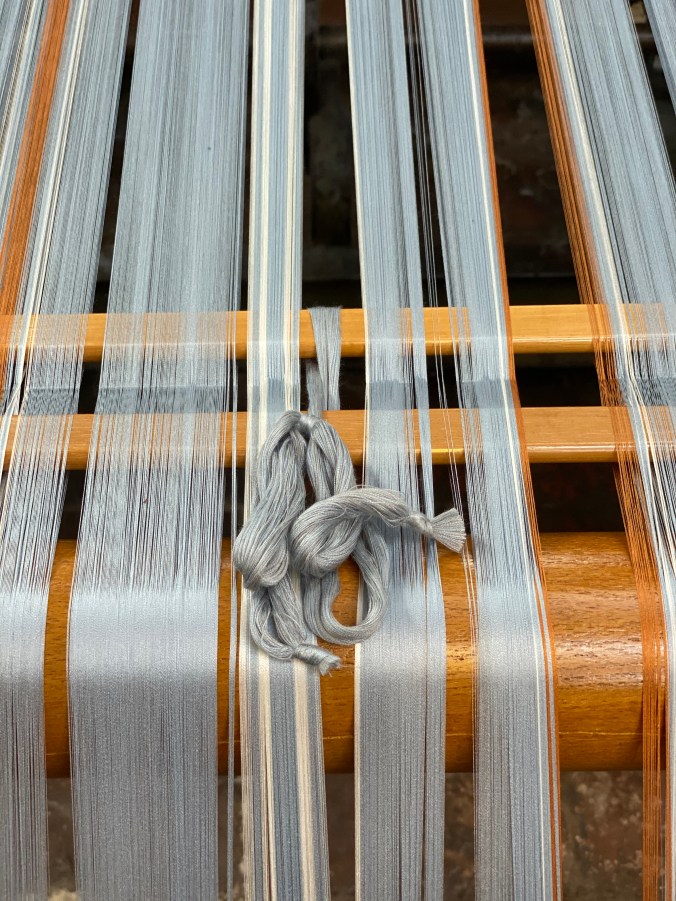
Antico Setificio Fiorentino
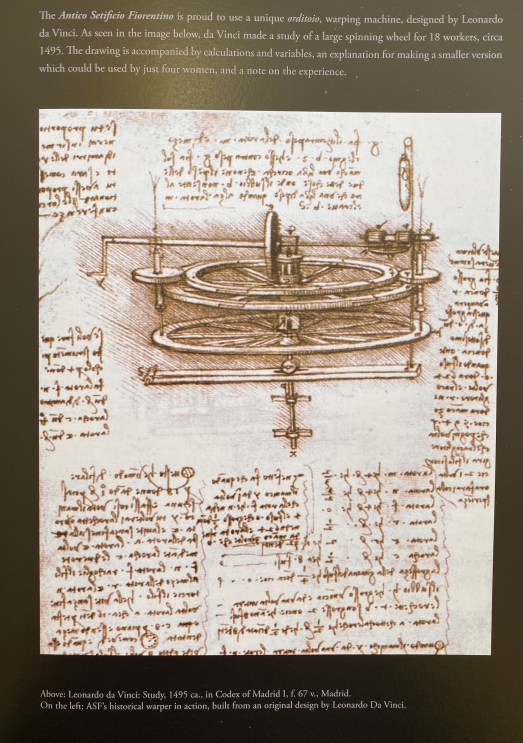
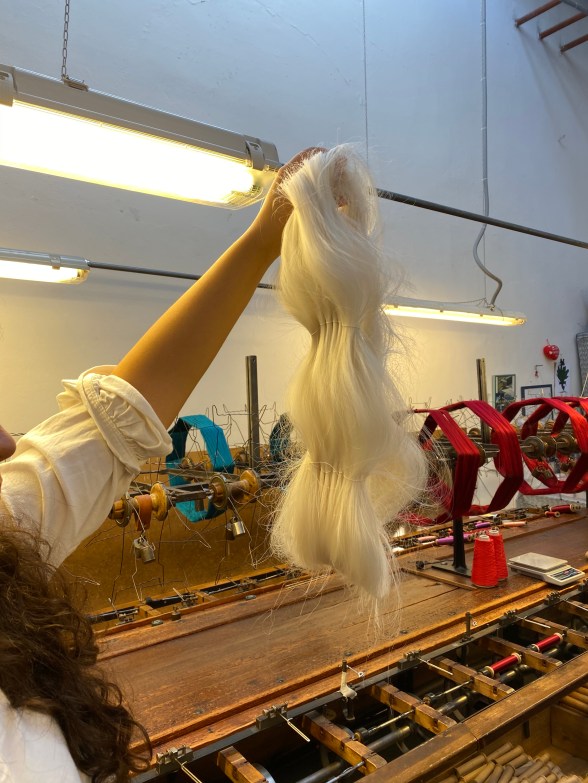
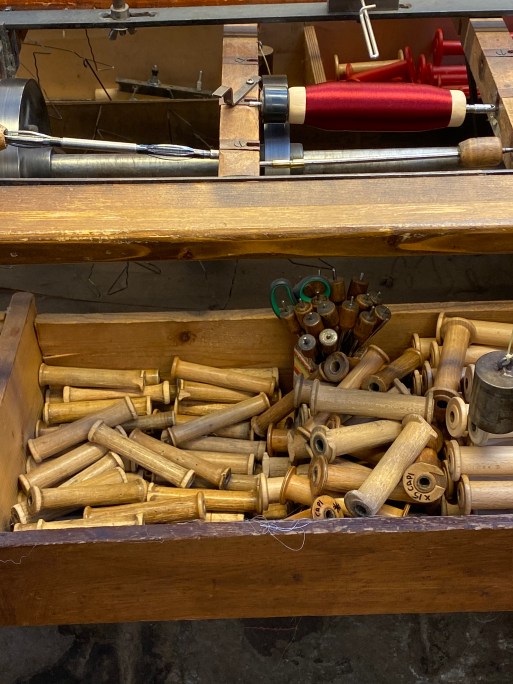
A visit to this amazing workshop in Florence has been on my list of things to do for several years. I finally made it recently and it was above and beyond my expectations.


Situated in the Oltrarno, not far from the extant medieval walls of the city, the factory is open to visitors by appointment. I went with a group from Florence and we had an excellent tour, ending in the showroom where we were surrounded by their beautiful fabrics on rolls and treated to tea and pastries. A lovely experience in every sense.
















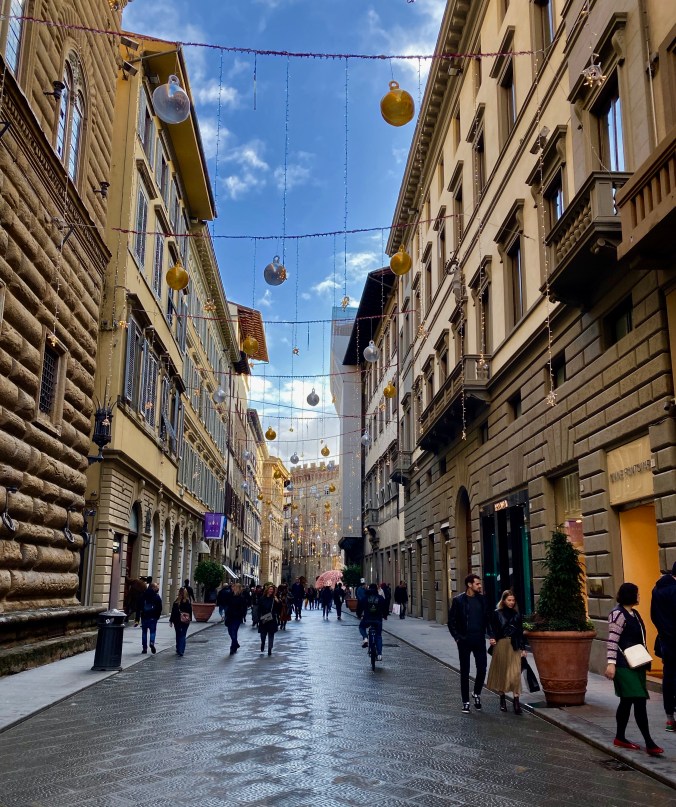
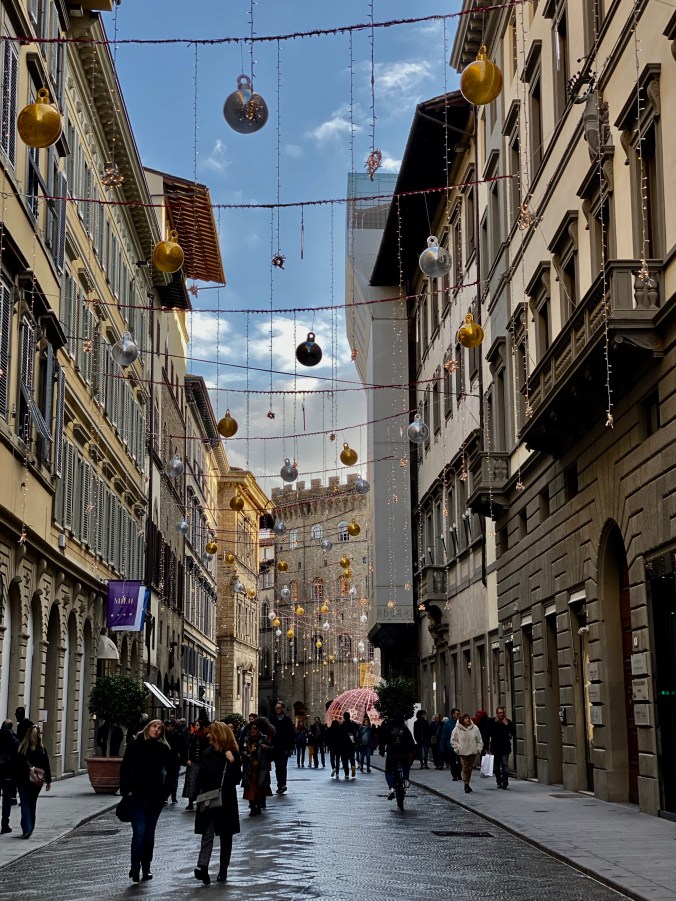
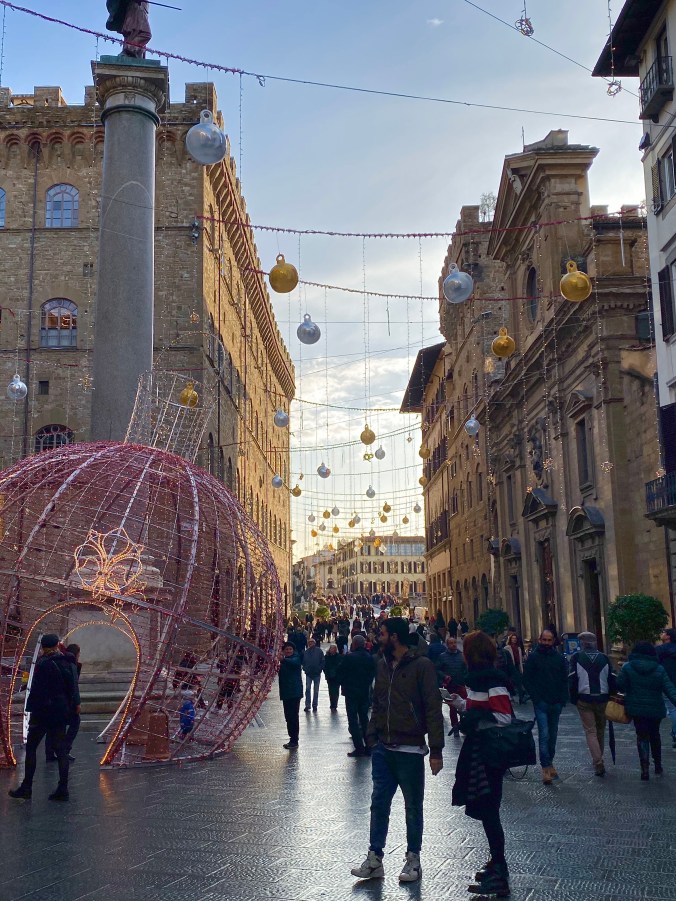
The Christmas lights on Via Tornabuoni, Florence
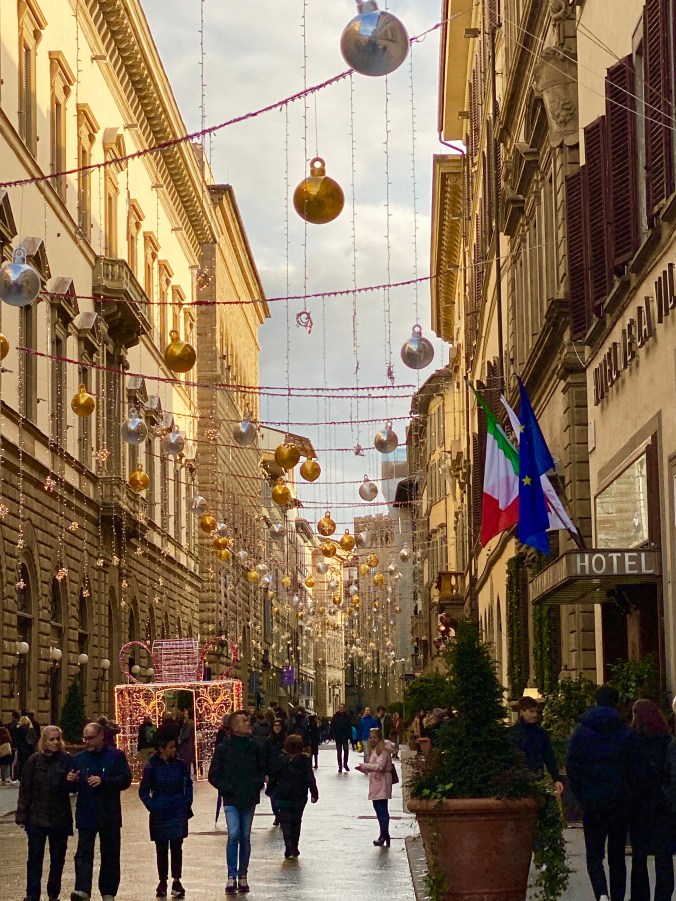
Via Tornabuoni is the Tony street at the center of Florence that goes from Piazza Antinori to the Ponte Santa Trinita. This street is loaded with the major fashion and jewelry boutiques.
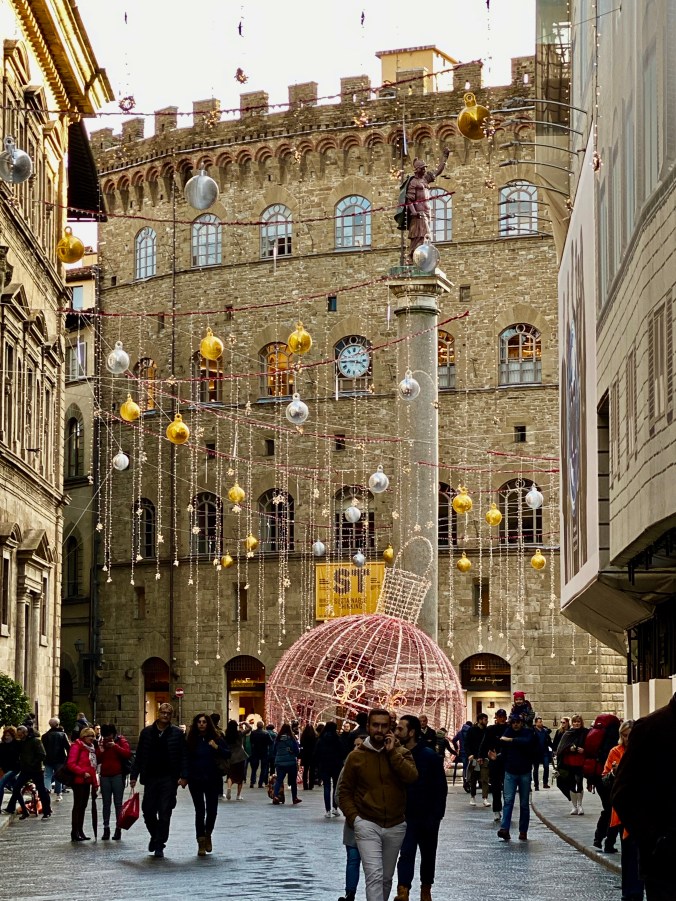
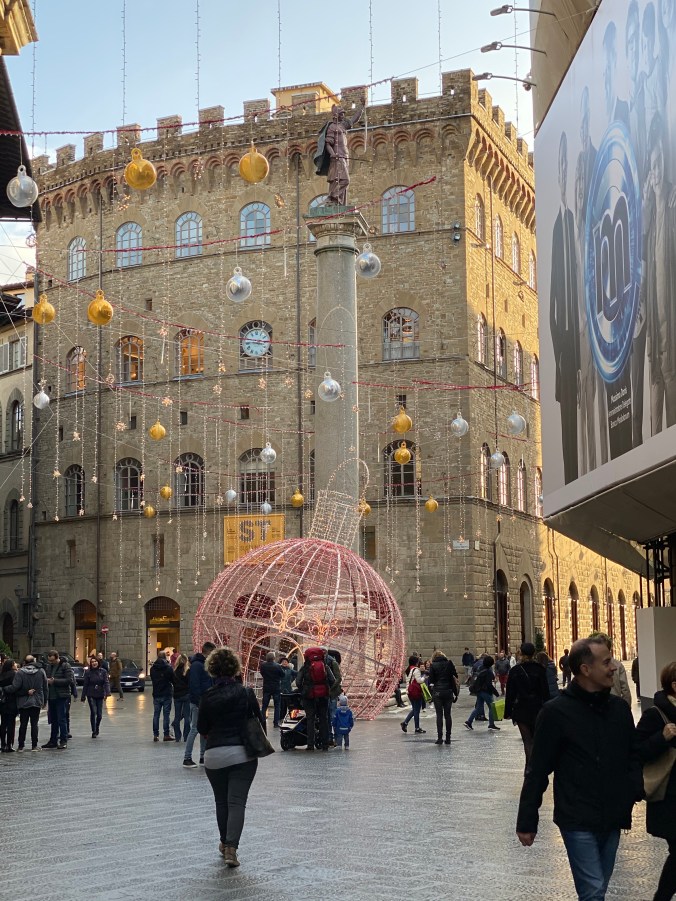
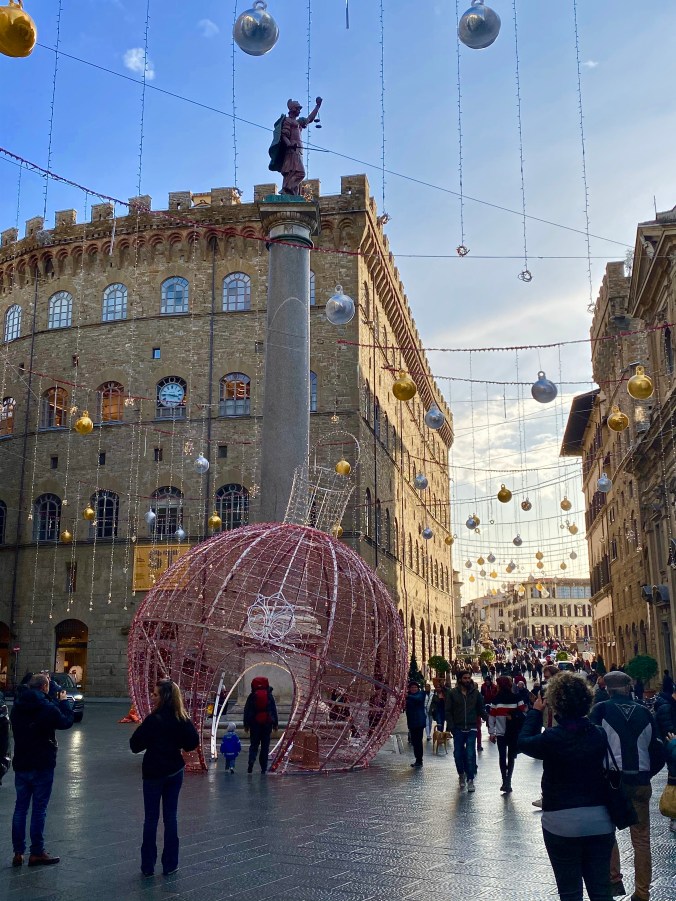
Perhaps it is not surprising that this little stretch of roadway would be the first decked out in holiday splendor. I took these photos on the afternoon of 17 November, and, as you can see, Christmas has seemingly already arrived!
It is interesting to note that none of the other pedestrian thoroughfares in the city have their familiar white lights up yet. Fashion comes first!
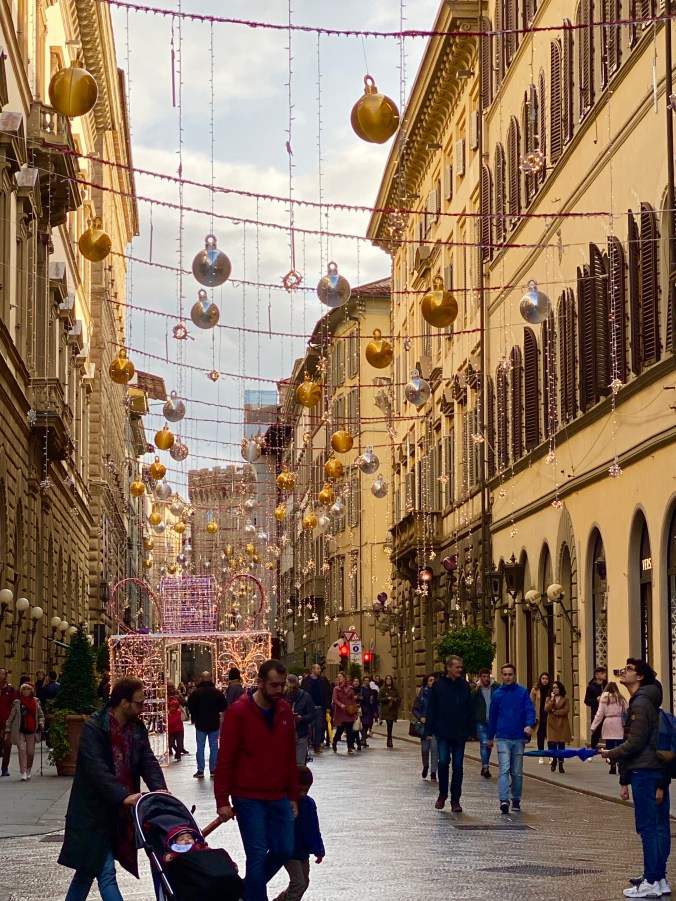
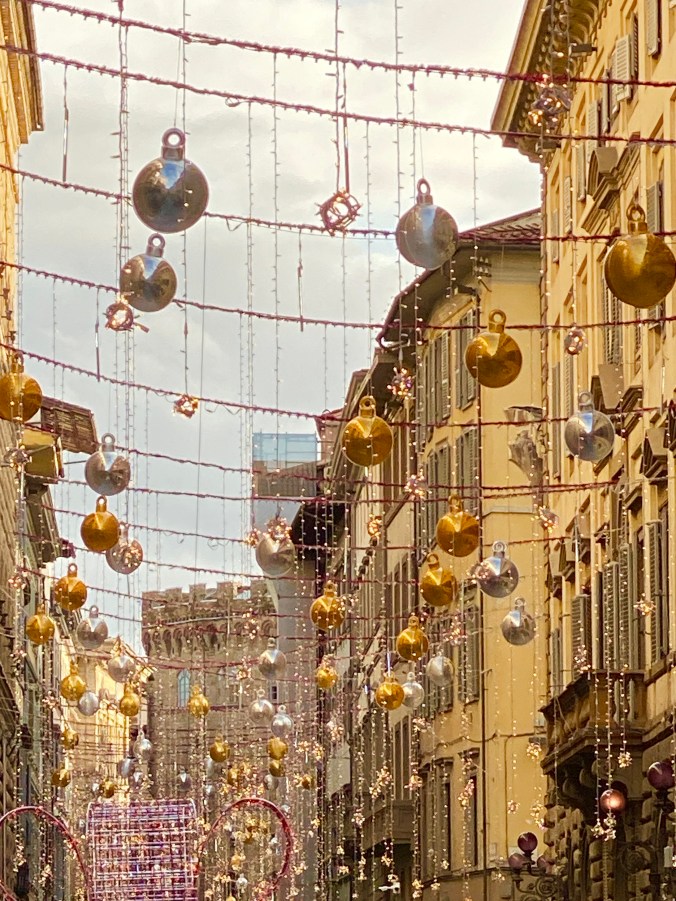
The giant red Christmas bulb sitting on the street is a new addition to the street this year.

The church of Santi Michele e Gaetano, Florence
So many churches, so little time. You really have to manage your real life if you want to find time to see everything!
At least, that is my excuse as to why, before now, I have never before been in this famous Florentine church. Plus the fact that when I pass it, I am usually in a hurry to go somewhere else nearby. Like, for example, lunch or a glass of wine at the Cantinetta Antinori, one of my favorite places in this amazing city.
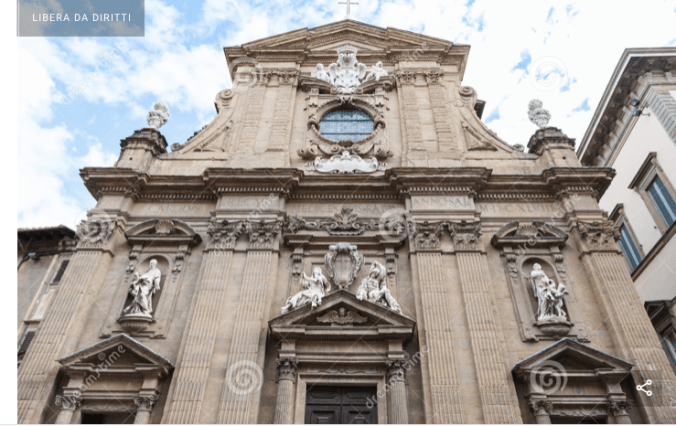

But, I did stop in and have a gander at the church recently and wow, I was blown away. First of all, it was twilight in beautiful Florence at that moment, and the streets nearby were filled with shoppers and tourists and the whole atmosphere was electric. The city felt alive.
Usually, when I happen to be in front of this church, it is closed. Just bad timing, because of course the church is open everyday, but at specific hours.
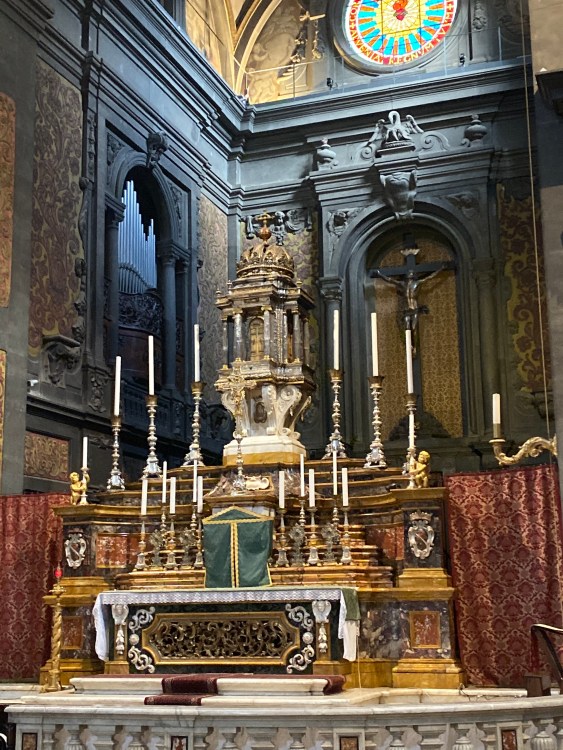
Because it was open and I had time, I entered. I felt the richness of the interior immediately. And I was sorry it took me so long to visit.
Unlike so many Italian churches, this interior was well lit and the contrast of the dark building materials with the colored marbles and gold highlights lit the place up like a Christmas tree. The effect was quite something.
The church was also full of people, unlike so many Italian churches. The church interior felt alive and it was kind of a magical moment to me. I thought of how happy the founders would have been to know that in 2019, their church was an active part of the city’s life. What more could an architect or patron hope for?
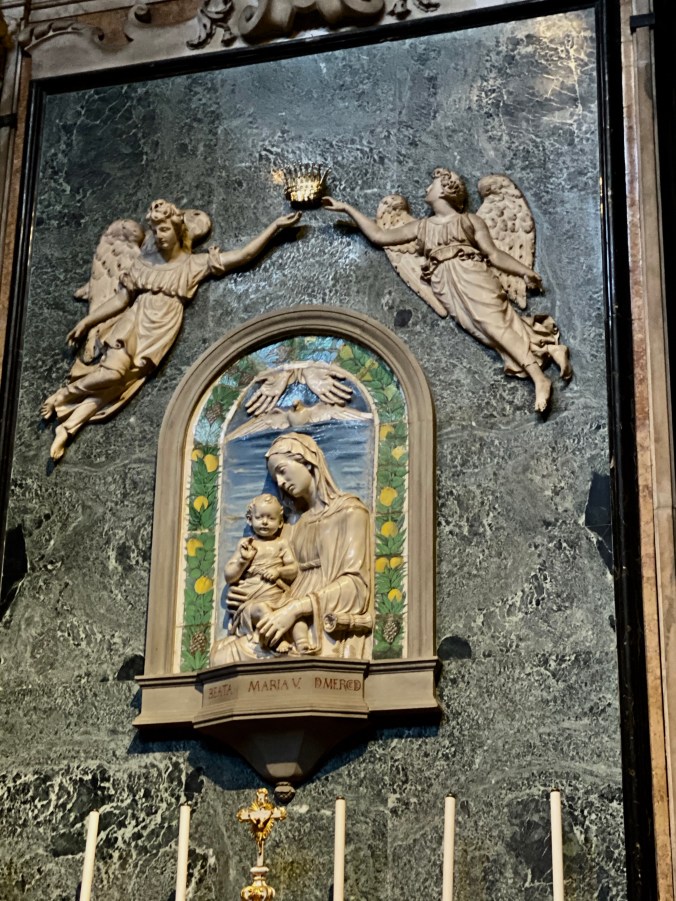

I wonder why it is that I am always, always most attracted to sculptures holding up the vases of holy water in these churches?
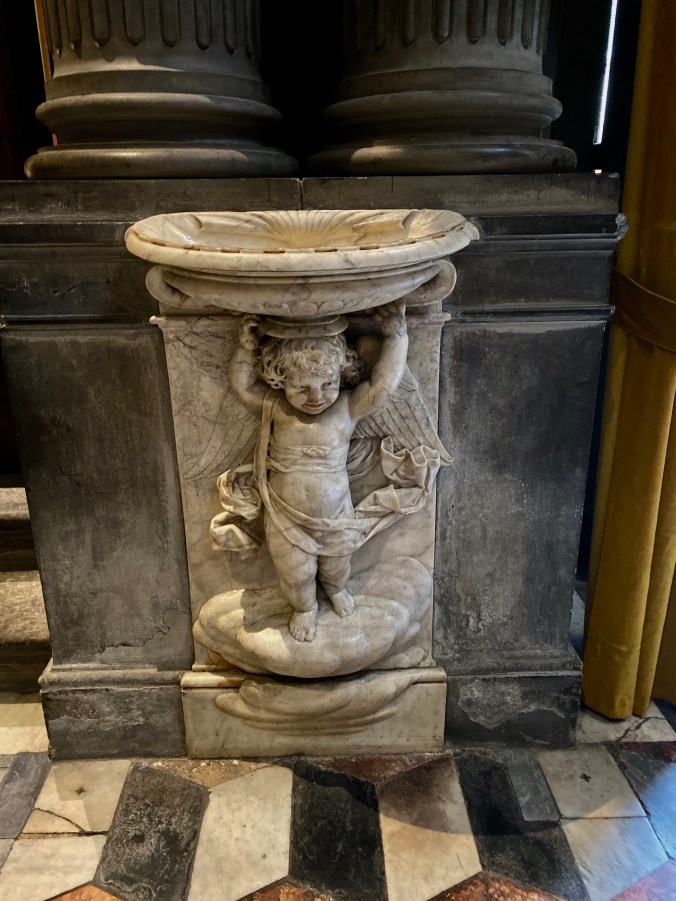
The two matching marble holy water fonts at the entrance were sculpted in the form of shells supported by angels by Domenico Pieratti.
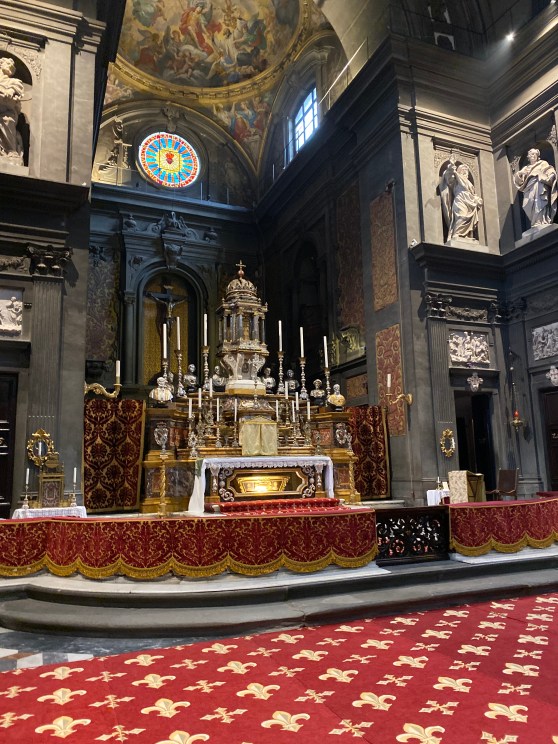

The pictures below aren’t great, but smack dab in the middle of the ceiling over the transept, was the Medici shield. Never subtle, always evident. I love the Medici family!

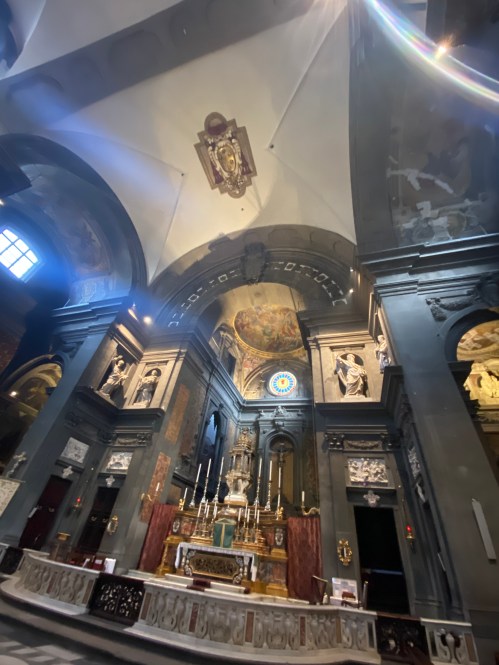

Let’s have a quick look at what Wikipedia tells us about the church:
San Gaetano, also known as Santi Michele e Gaetano, is a Baroque church in Florence, located on the Piazza Antinori.
A Romanesque church, dedicated solely to Saint Michael the Archangel, had been located at the site for centuries prior to its Baroque reconstruction. Patronized by the Theatine order, the new church was dedicated to Saint Cajetan, one of the founders of the order, though the church could not formally be named after him until his canonisation in 1671.
Funding for this reconstruction was obtained from the noble families in Florence, including the Medicis. Cardinal Carlo de’ Medici was particularly concerned with the work, and his name is inscribed on the façade.
Building took place between 1604 and 1648. The original designs were by Bernardo Buontalenti but a number of architects had a hand in building it, each of whom changed the design. The most important architects were Matteo Nigetti and Gherardo Silvani.
In 2008, the church was entrusted to the Institute of Christ the King Sovereign Priest, a traditional institute of clerical life which exclusively offers Mass in Latin according to the pre-Vatican II Roman Rite.
The façade has three portals: the center portal has a triangular tympanum surmounted by reclining marble statues representing Faith and Charity, sculpted by the Flemish artist, Baldassarre Delmosel. In the center above the door is the heraldic shield of the Theatine order; higher above is the shield of Cardinal Giovanni Carlo de Medici, a prominent patron. Above the side doors are a statue of St Cajetan (right, by the same Delmosel) and St Andrew Avellino (left, by Francesco Andreozzi).
The interior is richly decorated as is customary in Baroque churches (uh, hello…the interior is like a jewel box!)
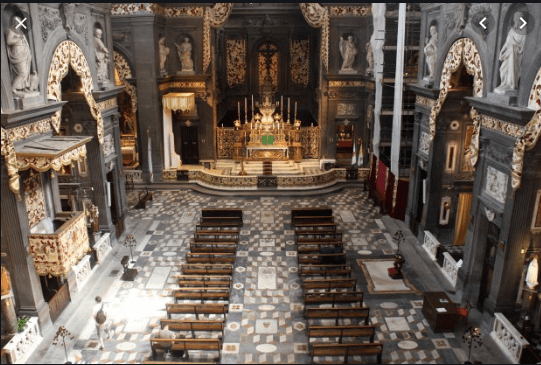
Along the cornice are 14 statues depicting apostles and evangelist, sculpted by Novelli, Caccini, Baratta, Foggini, Piamontini, Pettirossi, Fortini, and Cateni. With each of these statues is a bas-relief depicting an event in the life of each saints.
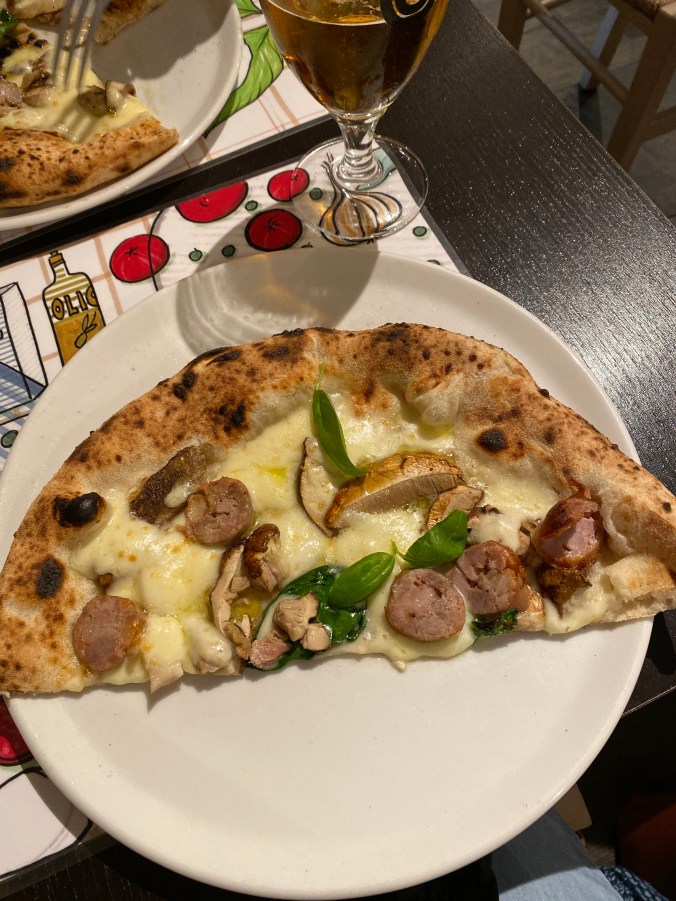
Best pizza in Florence, hands down


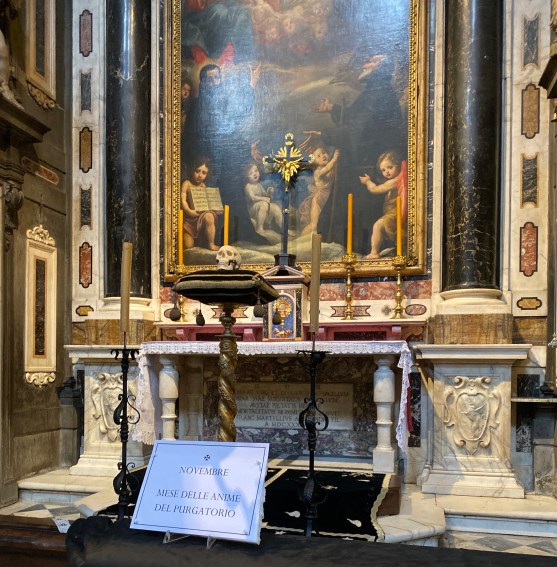
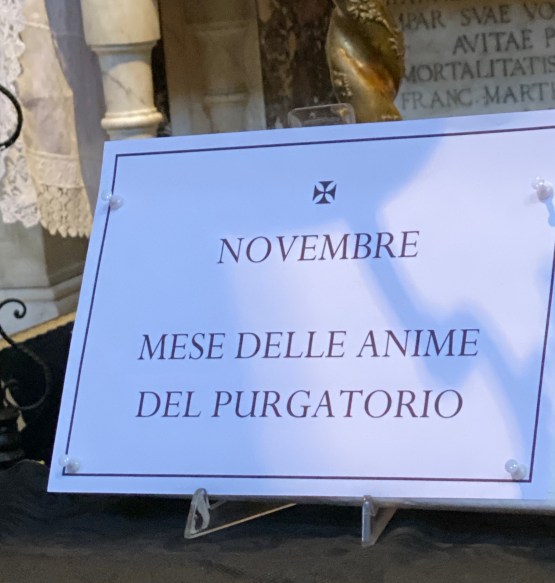
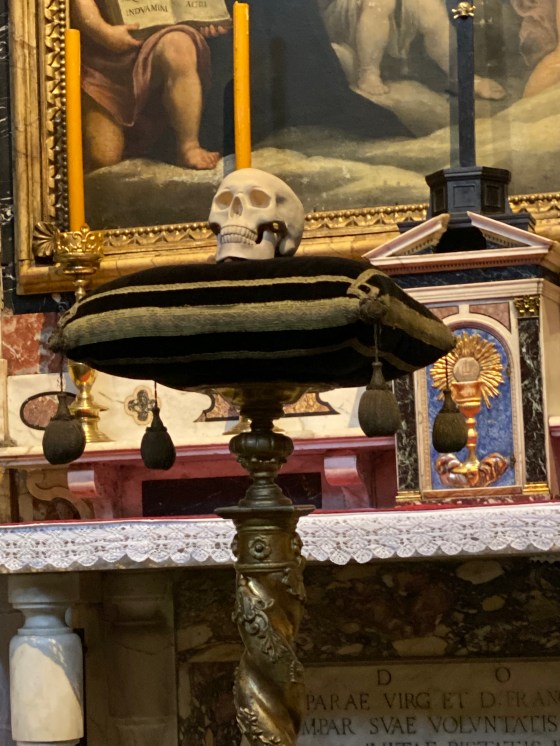
November, the month commemorating the souls in Purgatory
In the grand and stately Florentine church, the Chiesa dei Santi Michele e Gaetano, worshippers are invited to honor the month commemorating the souls in Purgatory. These customs fascinate me.


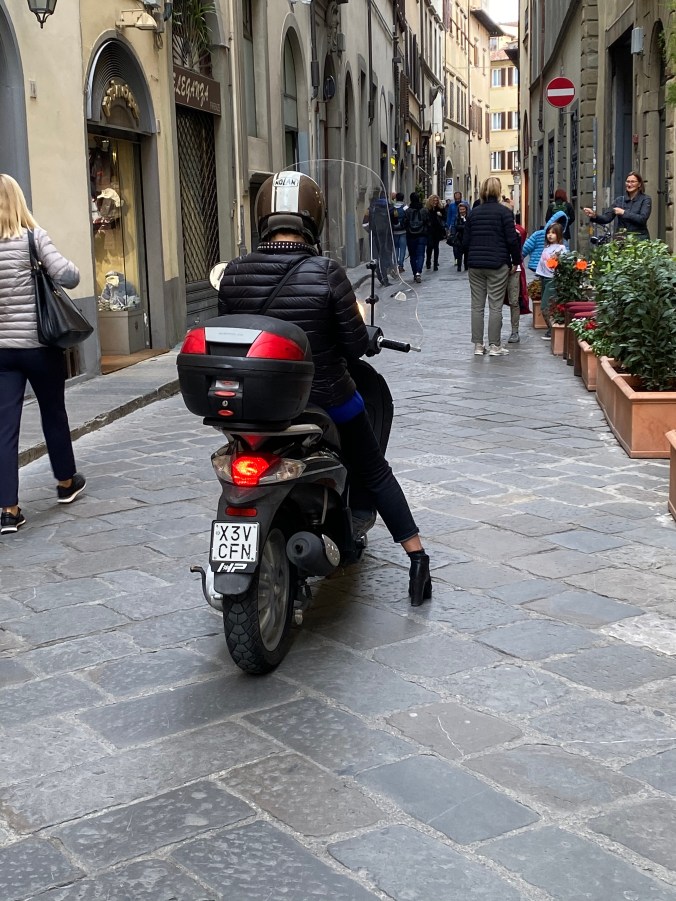
The fine art of balancing your motorcycle…
… while wearing your chic boots. Very talented!

The Graduate
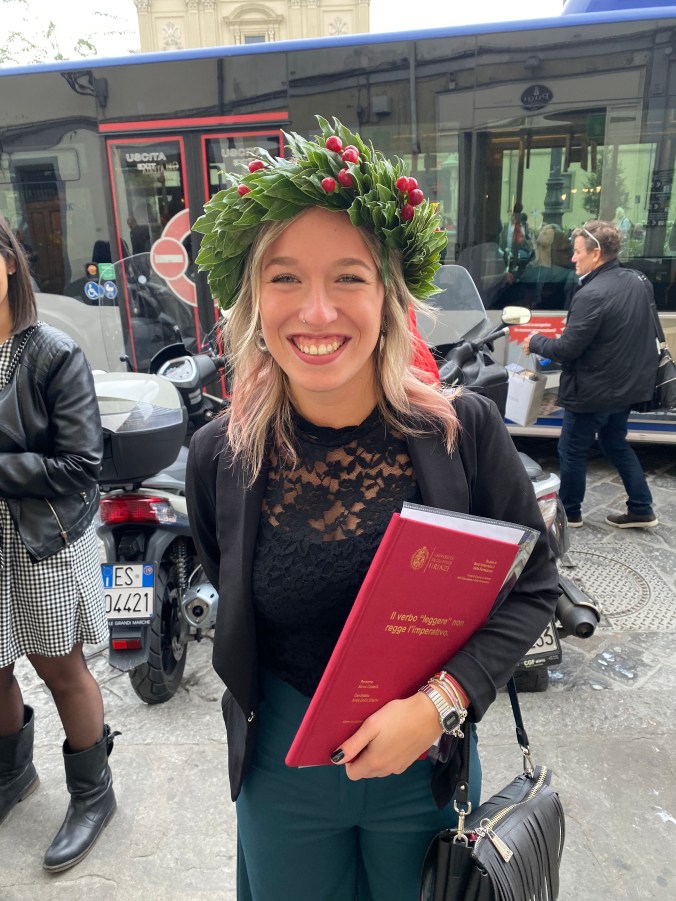
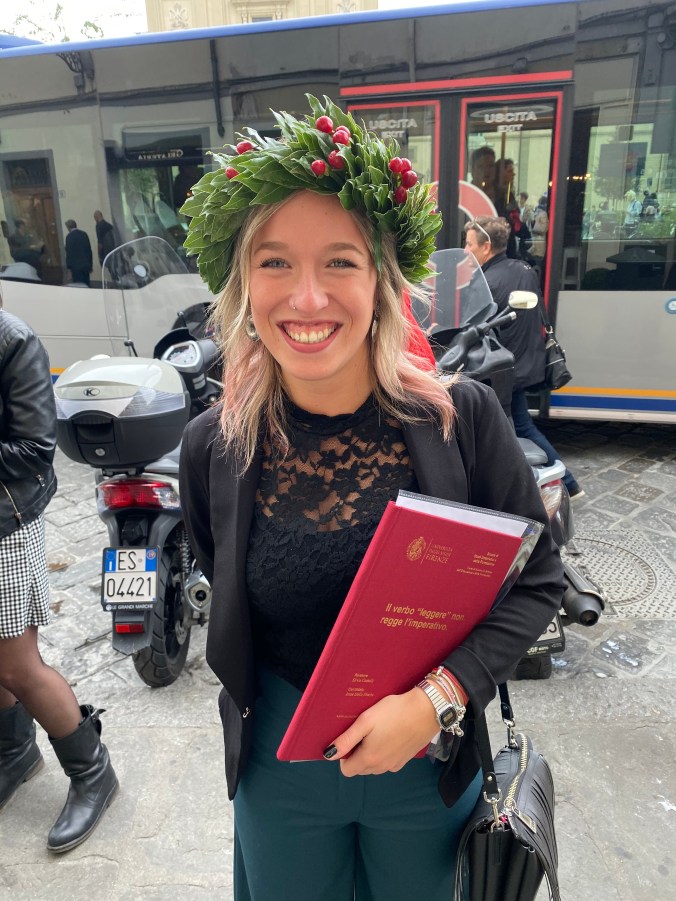
Among the most charming of all customs in Italy is that of the newly minted graduate wearing a laurel wreath, called a corona. You may see these graduates at any time of year; I cannot figure out a rhyme or reason for the miscellaneous dates they appear in the city.
But, they are always happy and it is always a treat to see them!
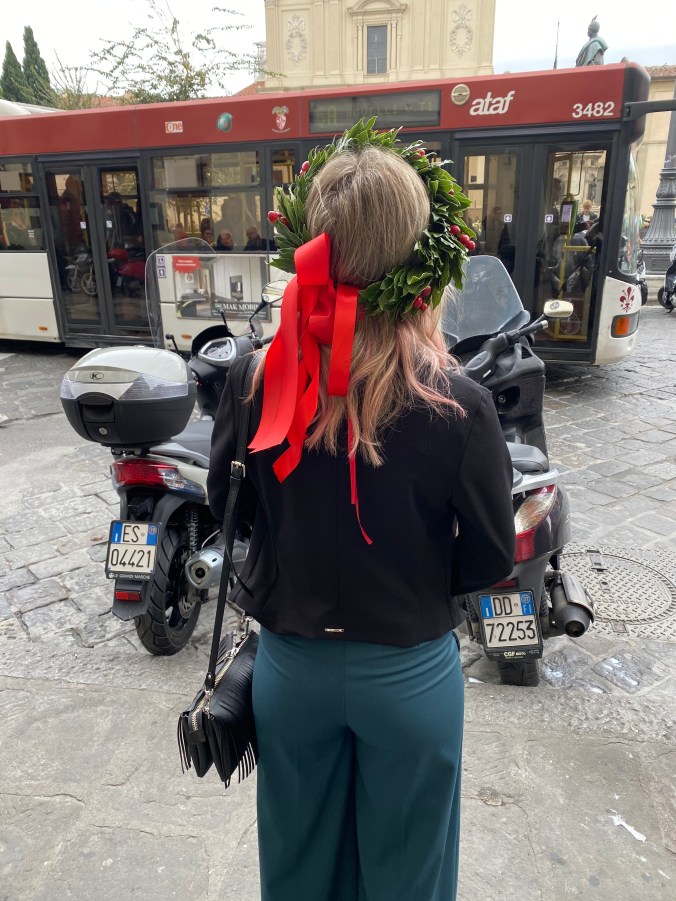
When I was in Padova a month or so ago, I discovered there is a special custom there for graduates as well. It involves costumes and short street performances. I prefer the corone!
 get back, lauretta!
You must be logged in to post a comment.