Uffizi, the Leonardo da Vinci gallery

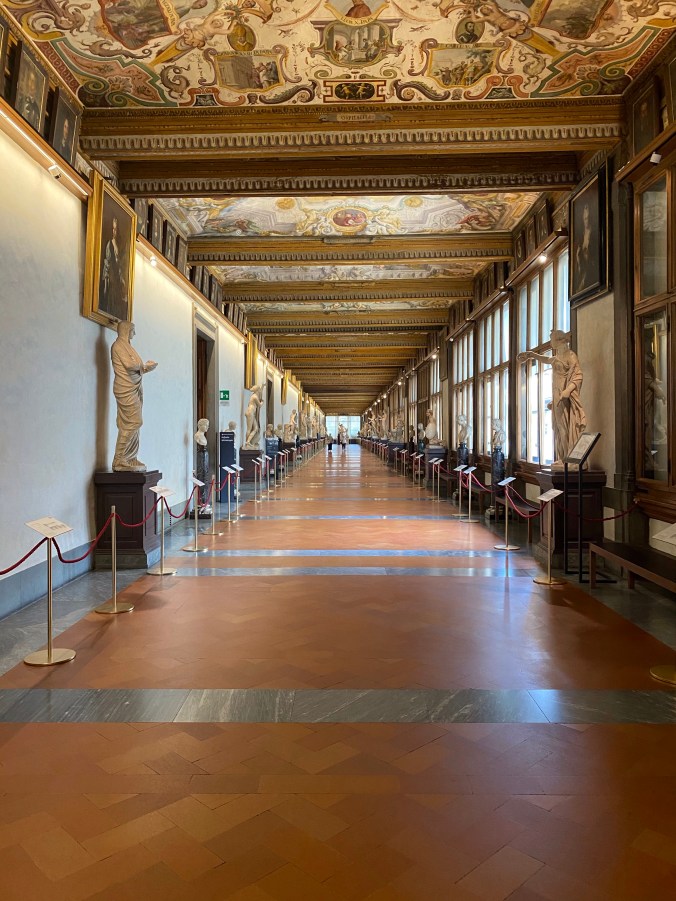
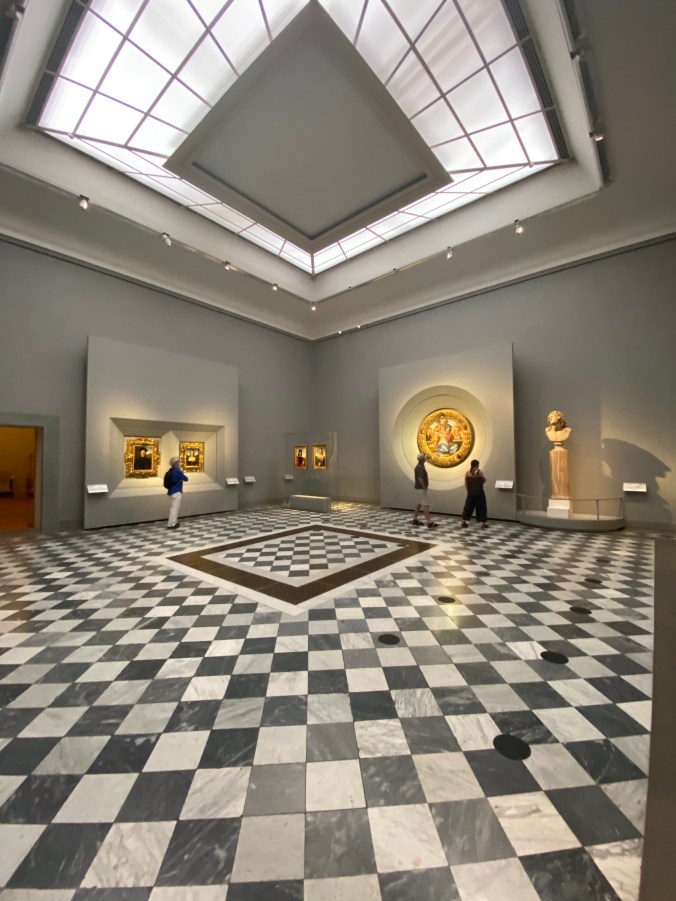
My recent first trip back to the Uffizi allowed me to enjoy the famed museum without the usual crowds.  This is my idea of heaven.  Just look:


img_6815


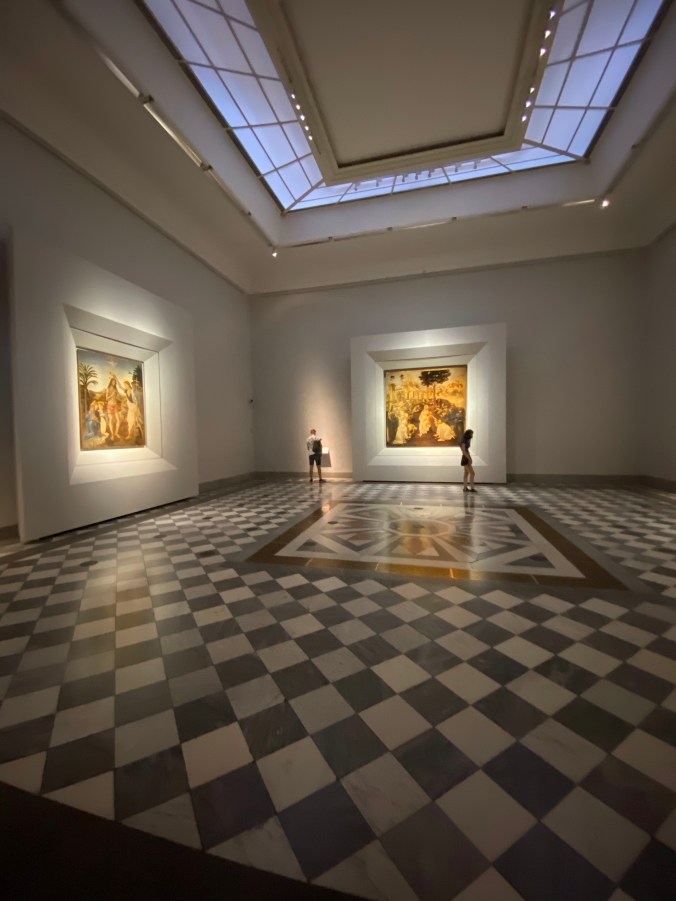
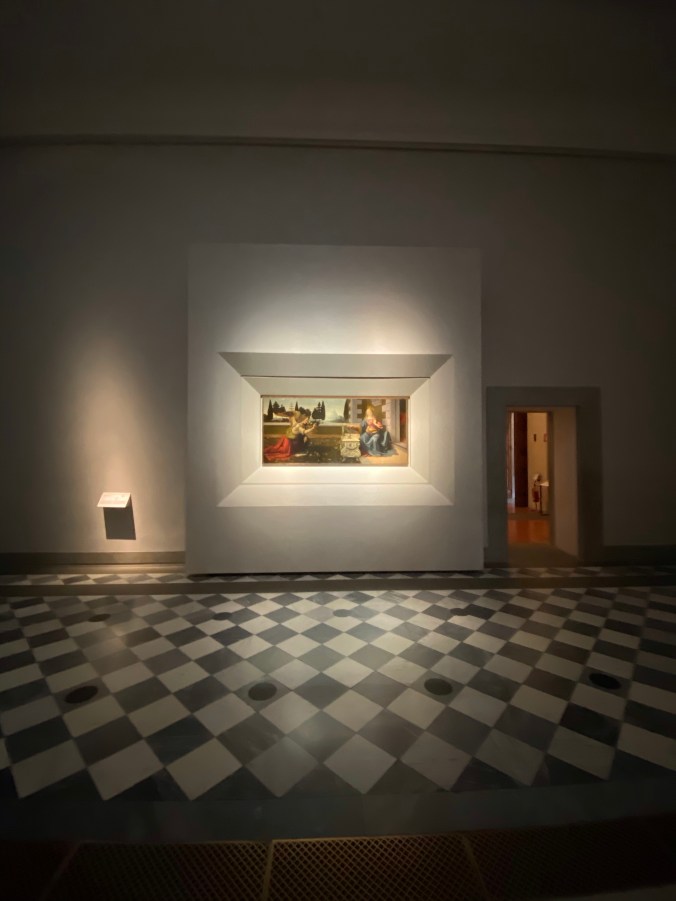
Come with me into the new Leonardo da Vinci and Andrea del Verrochio gallery. Look at the blissful moment capture below, during which I had the gallery almost to myself.

img_6792


img_6793


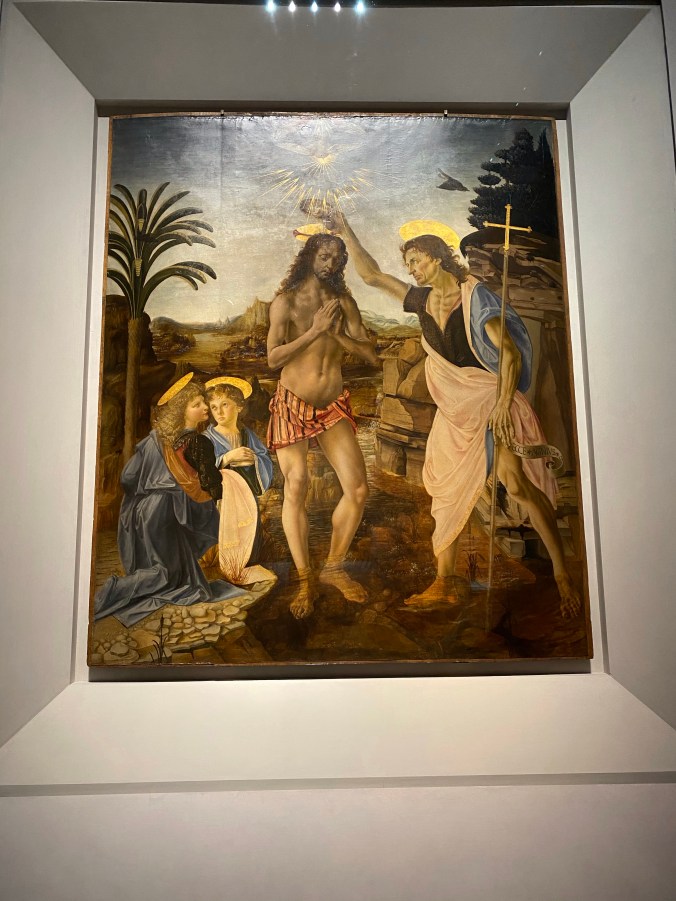
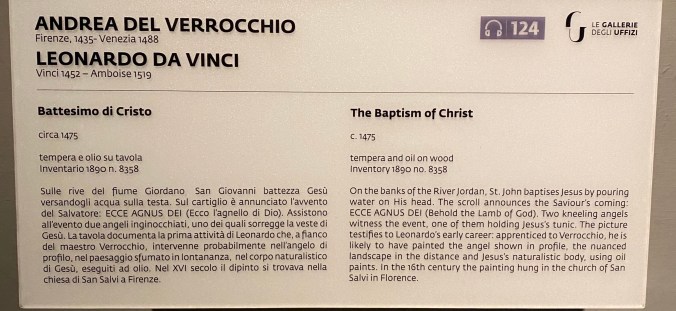
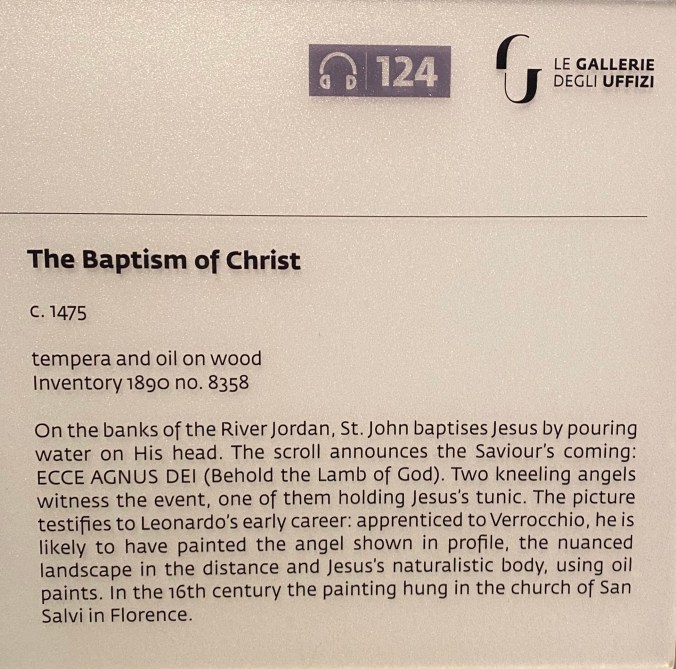
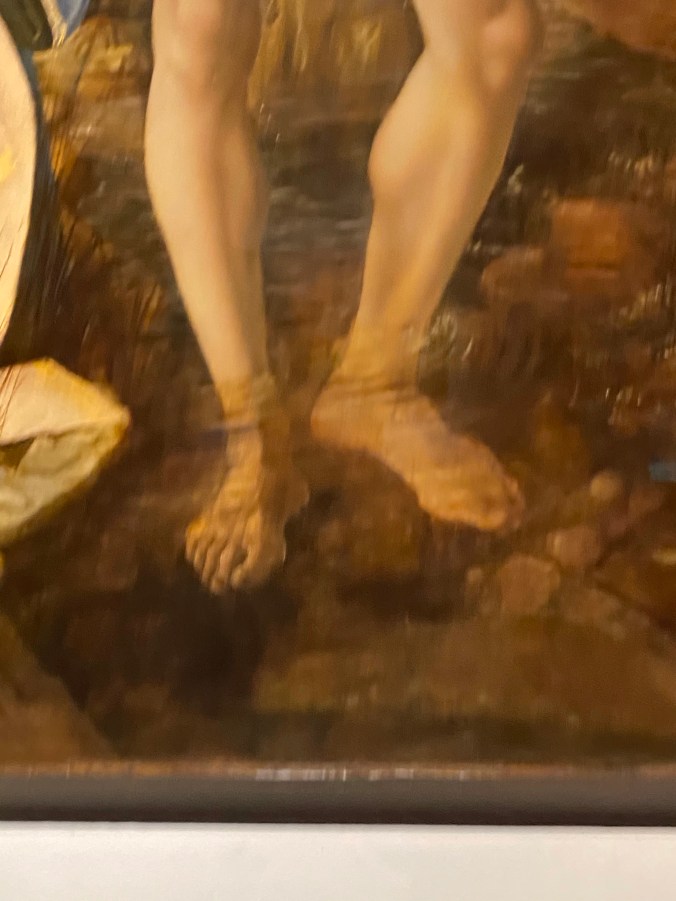
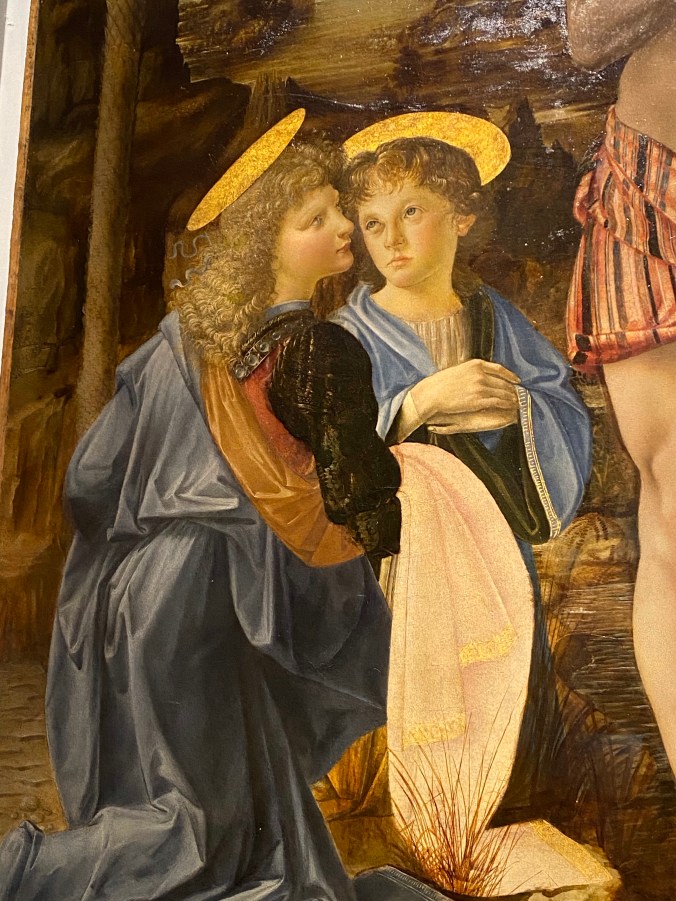
Andrea del Verrochio’s painting of the Baptism of Christ.  Verrochio’s student, Leonardo da Vinci, assisted in painting. Most notably, the far left angel.

img_6796

img_6794


img_6795


img_6797


img_6798


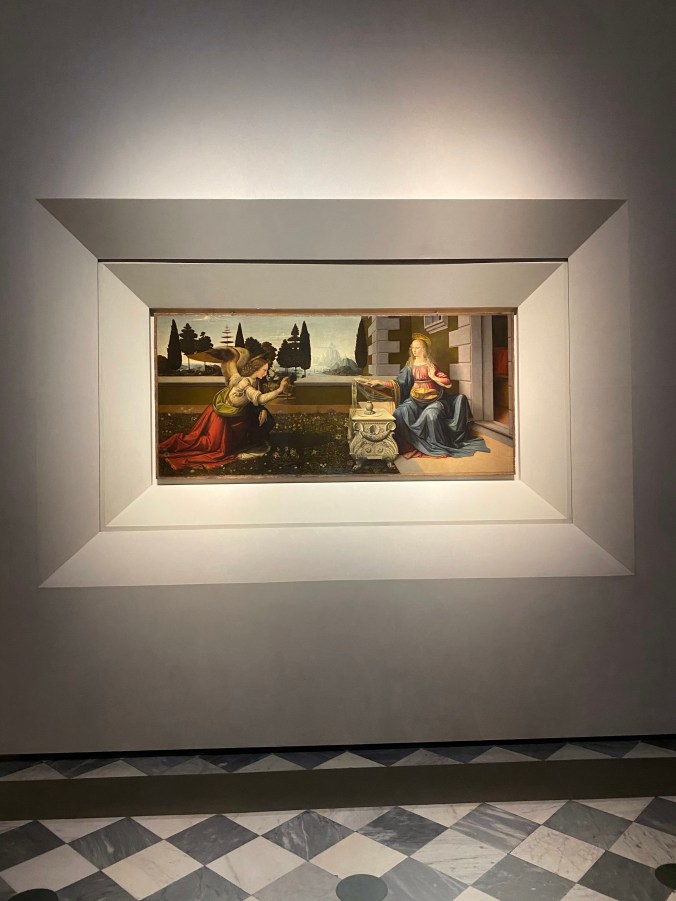
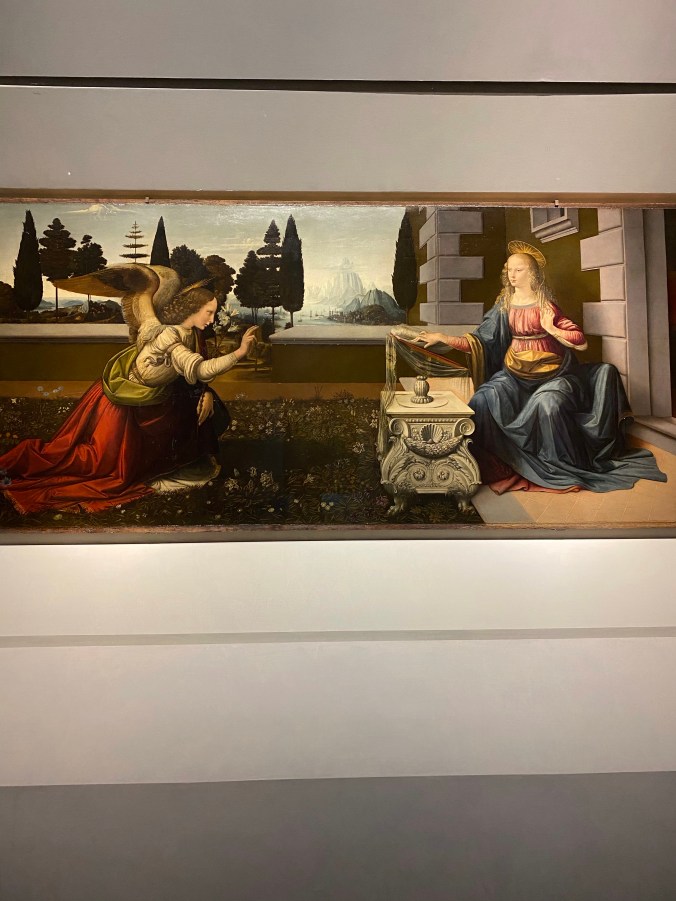
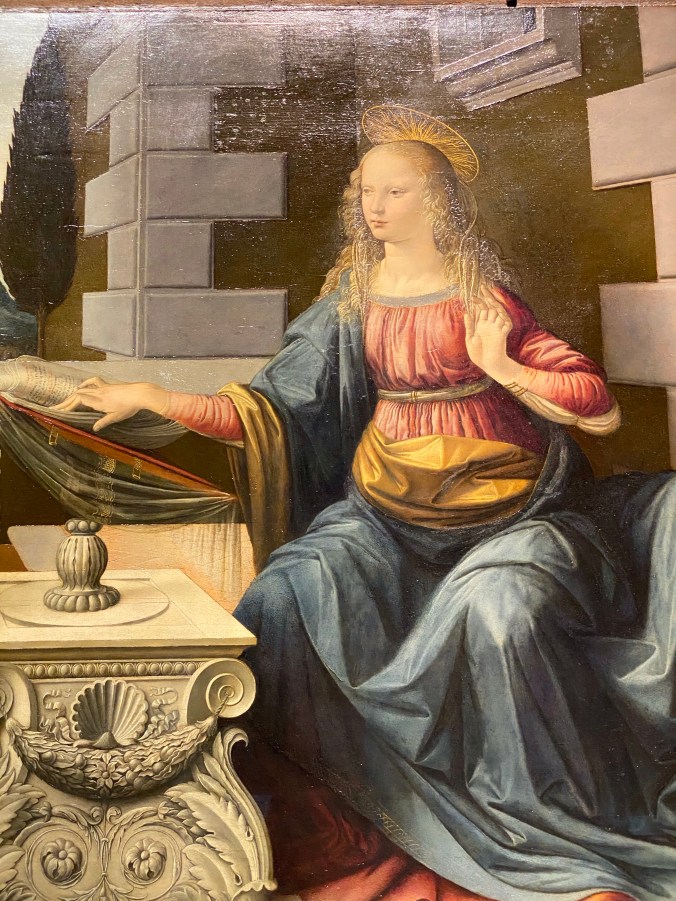
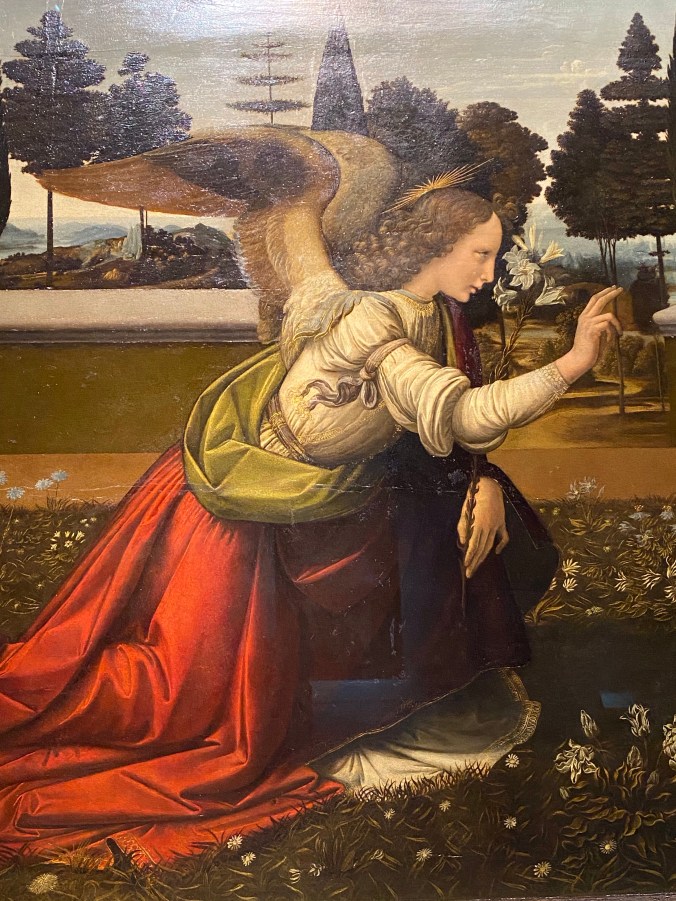
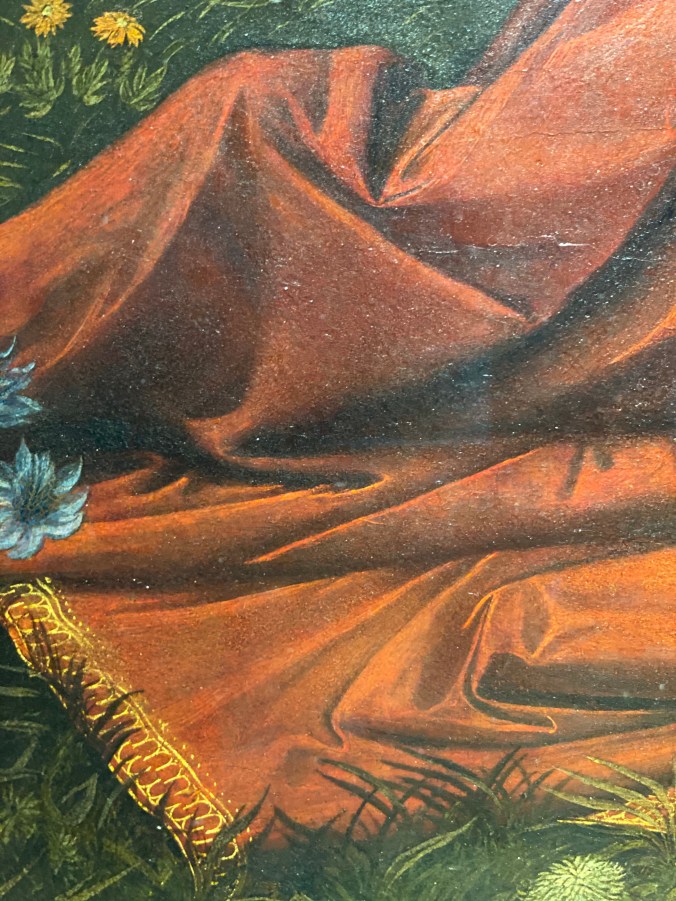
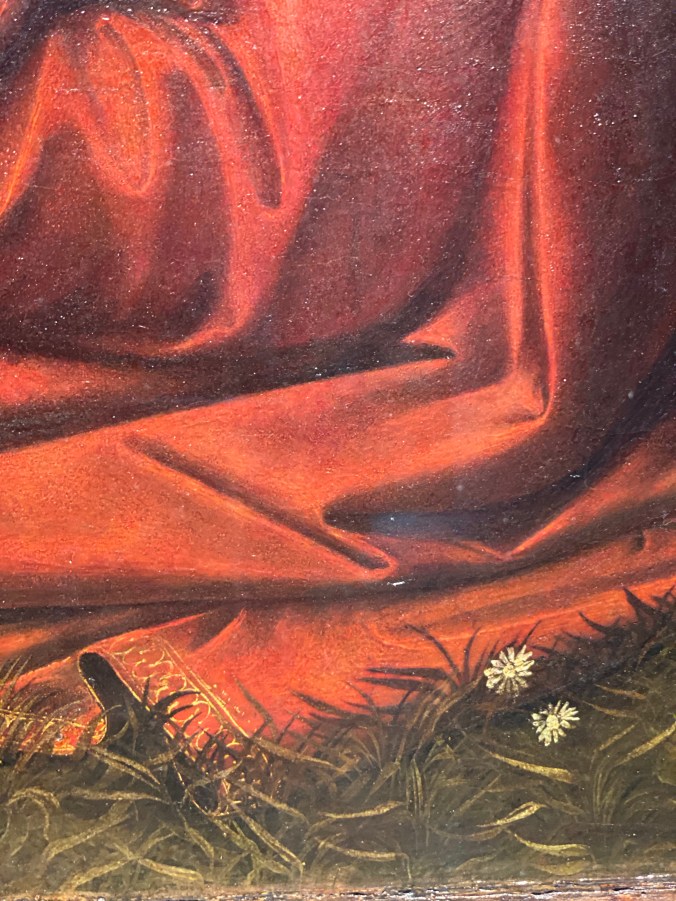
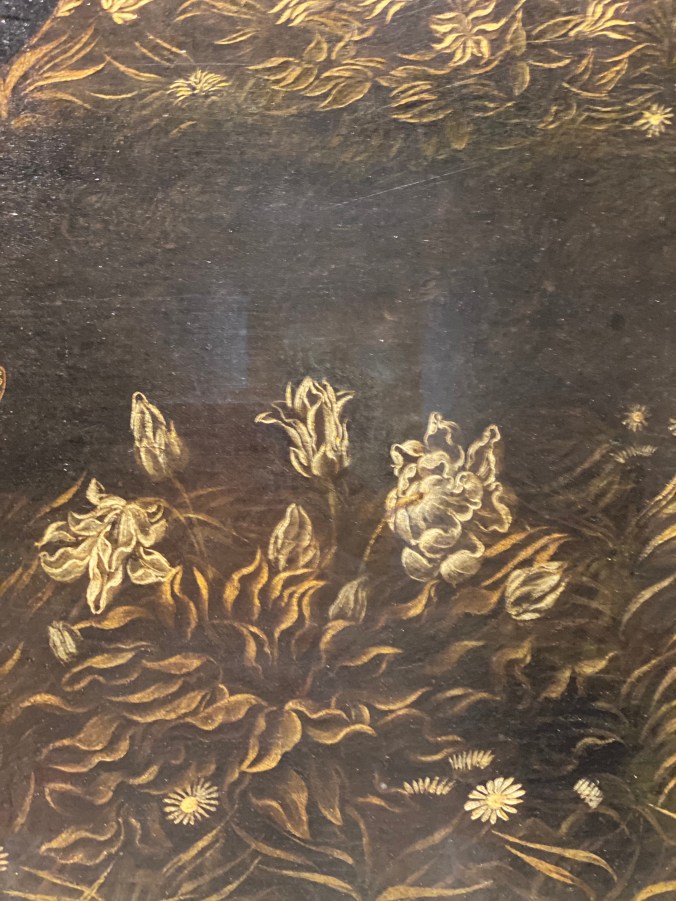
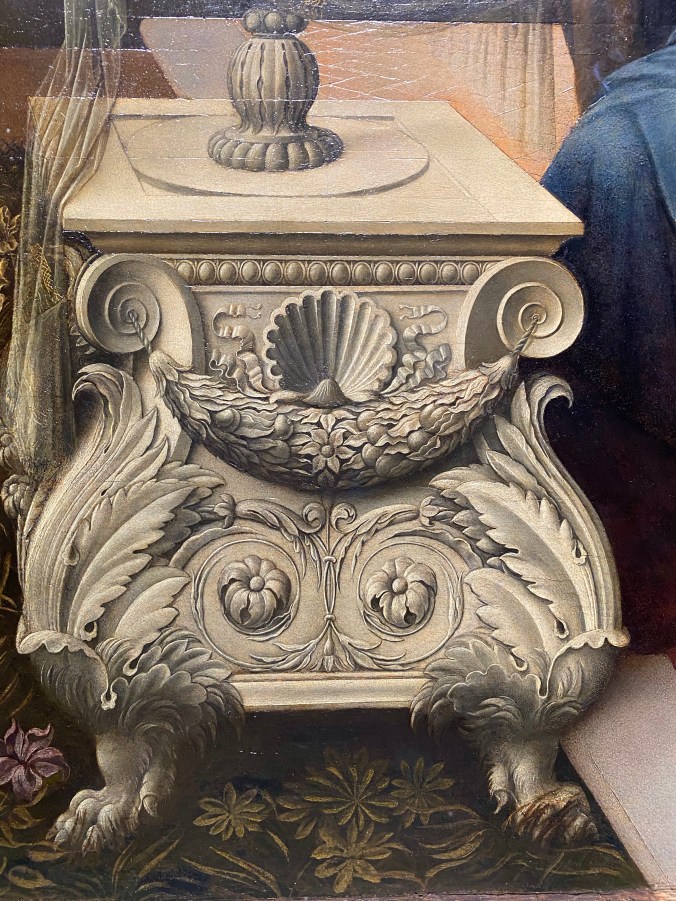
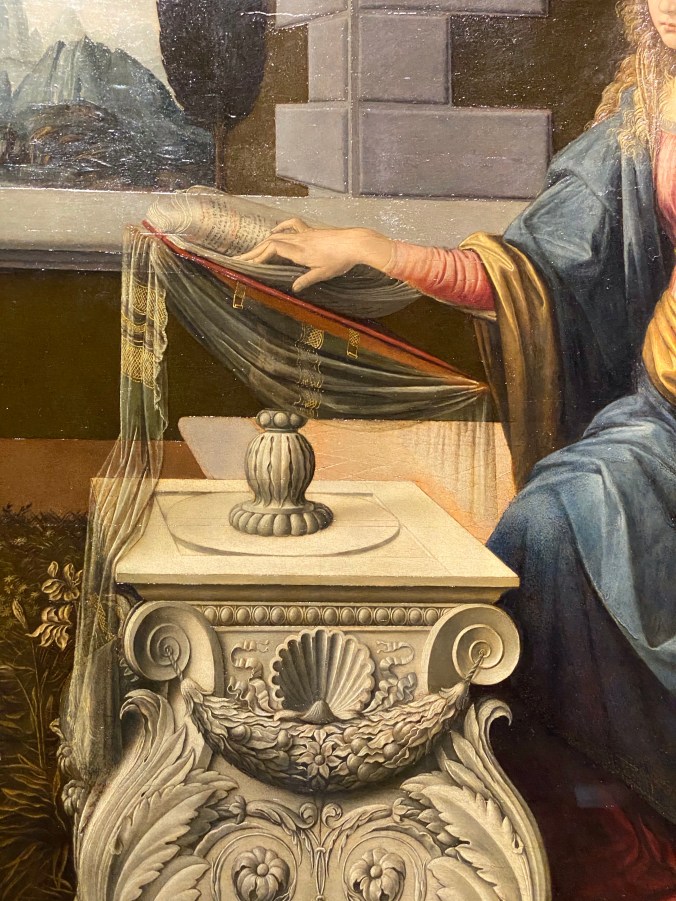
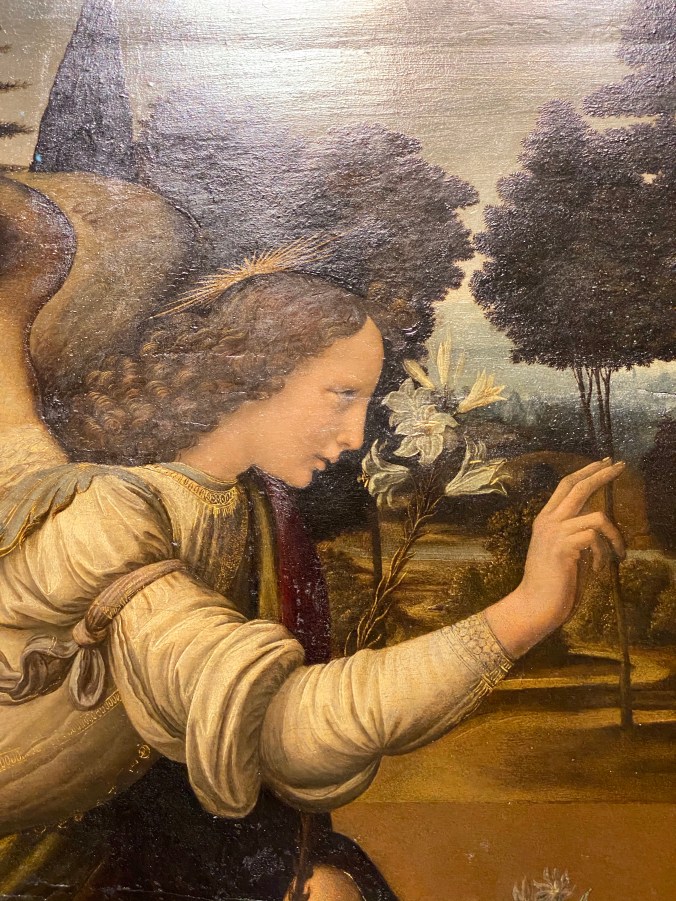
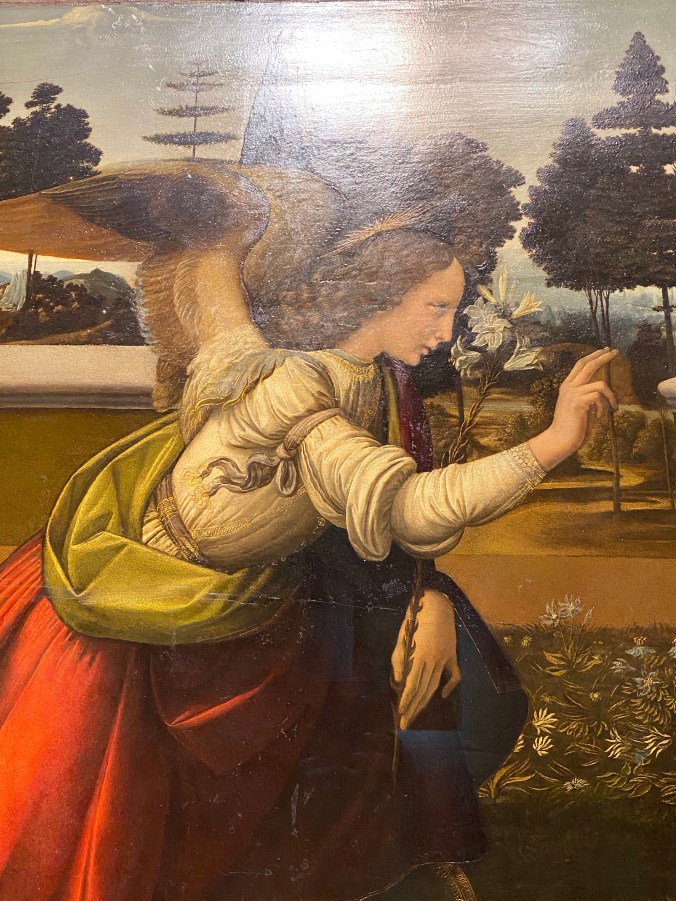
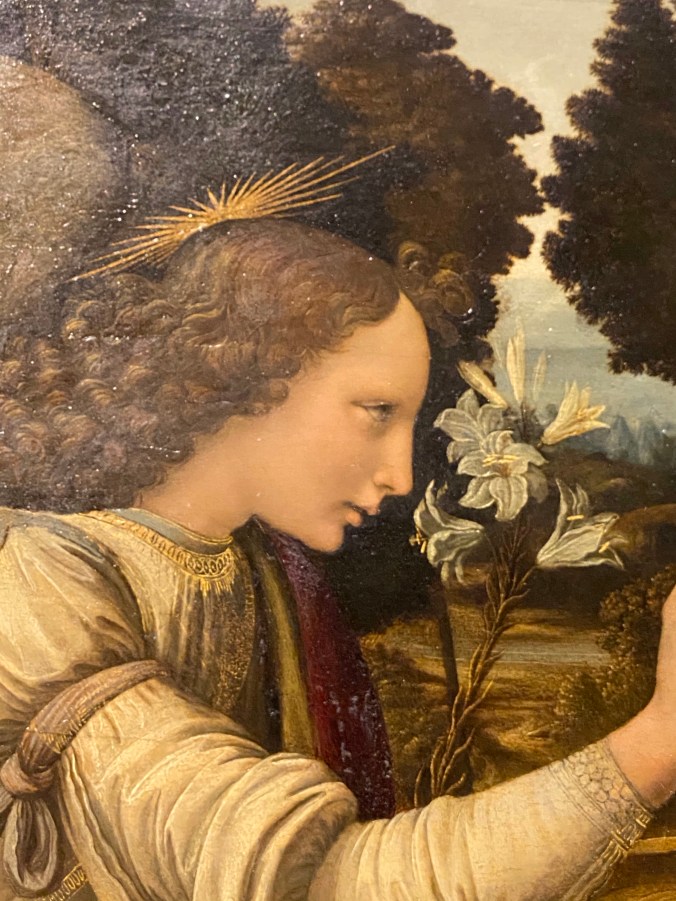
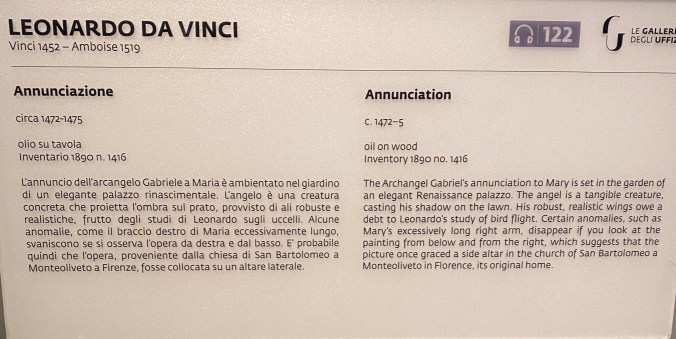
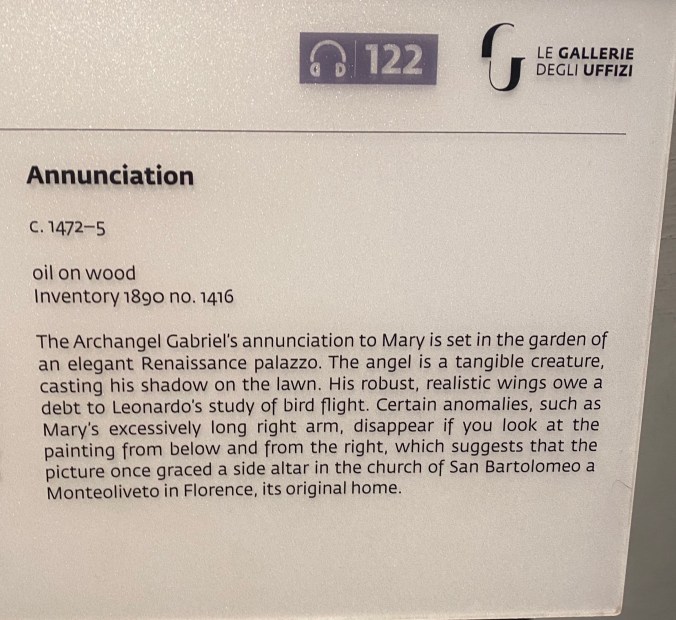
Leonardo’s Annunciation in a virtually empty gallery. My idea of heaven.

img_6799


img_6800


img_6801


img_6802


img_6803


img_6804


img_6805


img_6806


img_6807


img_6808


img_6809


img_6810


img_6811


img_6812


img_6813


img_6814


More to come from my June 25, 2020 visit.

Back to the Uffizi! Part 1, June 2020

What a joy to return to this wonderful museum.  Despite the fact that Americans still can’t travel to Italy because of the Covid 19, I was surprised by the line outside the Uffizi.  Once inside, however, the crowds thinned out after the first few galleries.

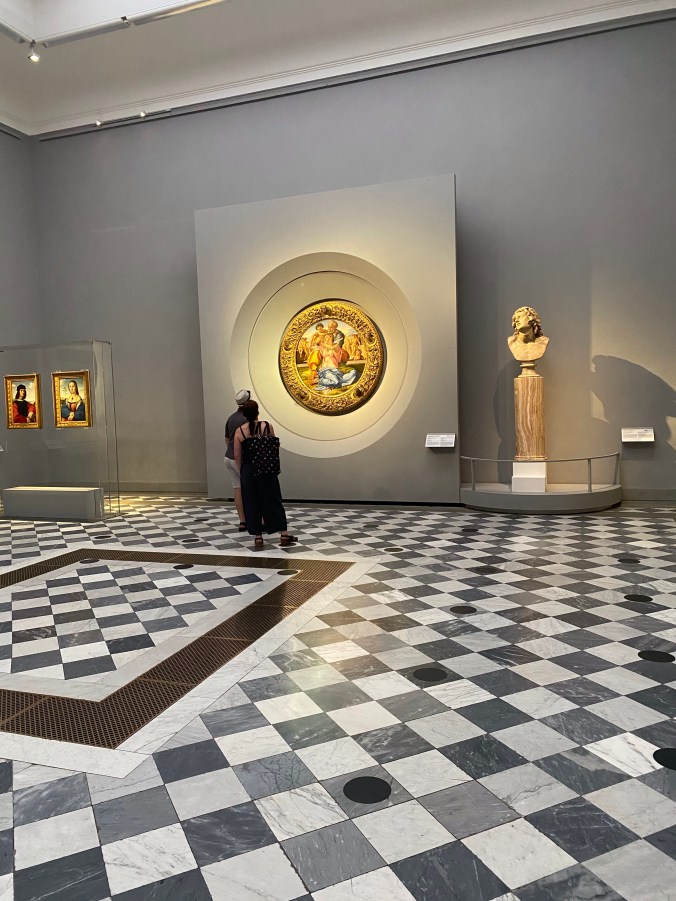
I had the new Michelangelo and Raphael gallery virtually to myself.  Speaking of joy.  It was so meaningful to me to be able to get up close and personal again with these amazing works of art.

img_6776


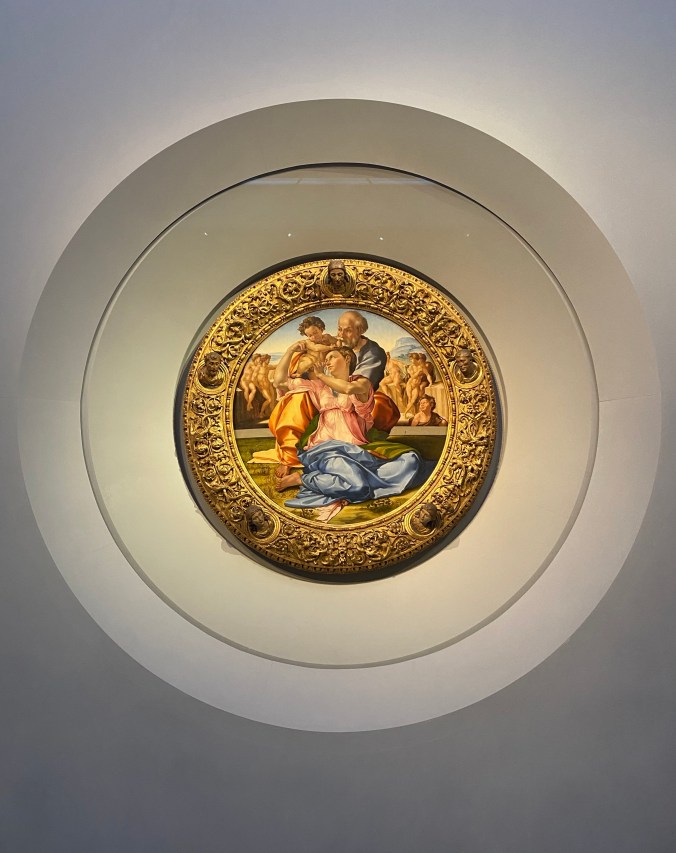
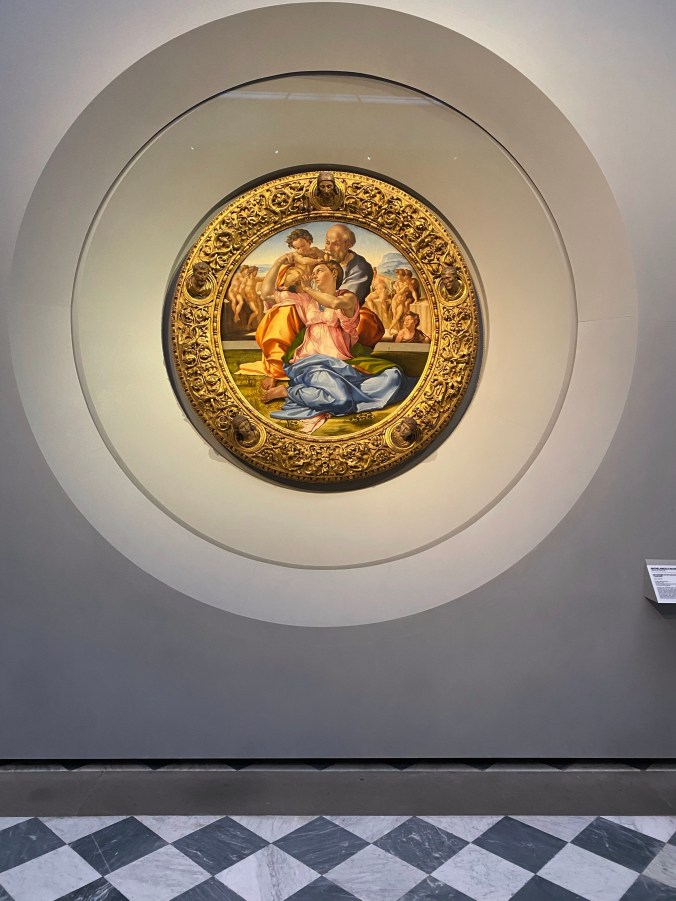
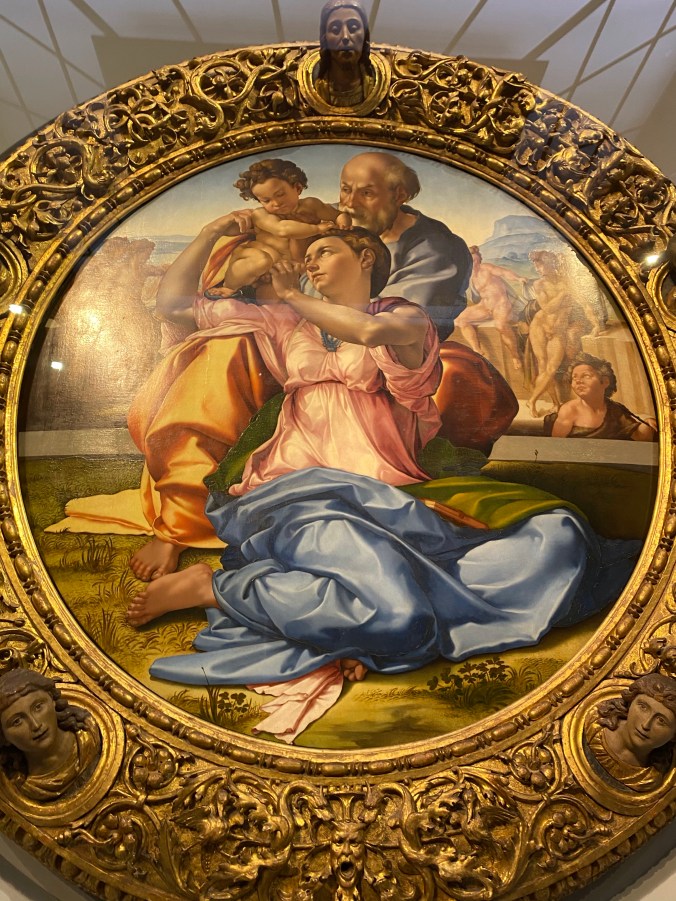
Michelangelo’s Doni Tondo:

img_6769


img_6791


img_6770


img_6771

The Uffizi says of this painting:
This painting dates to when Michelangelo returned to Florence after his first stay in Rome, the same period when the great artist sculpted the famous David.

The work (c. 1506-1508) is the only painting by Michelangelo in Florence and is one of the masterpieces of the 16th century Italian art.

During the Renaissance, the “tondo” was a typical work for private clients. This tondo was commissioned by the wealthy banker Agnolo Doni, probably at the time of his marriage to Maddalena, member of the very important Strozzi family.

The figures of Mary, Joseph and the Child, are grouped in a single volume in which the rotation of the Madonna gives the composition a spiral movement that will later be used by many artists. In the background a group of young nudes brings to mind a classic theme, symbolizing the pagan humanity still ignorant of Christian doctrine. It is also interesting to notice the beautiful carved wooden frame, designed by Michelangelo himself.

From the artistic point of view, the Tondo Doni laid the foundations of the so-called Mannerism, the style of painting that preferred bizarre, unnatural poses and iridescent colors to the composed painting of the XV century.

The Tondo Doni is therefore a very important work of art because it is one of the few examples of Michelangelo’s painting, together with the magnificent frescoes in the Vatican’s Sistine Chapel.


img_6775


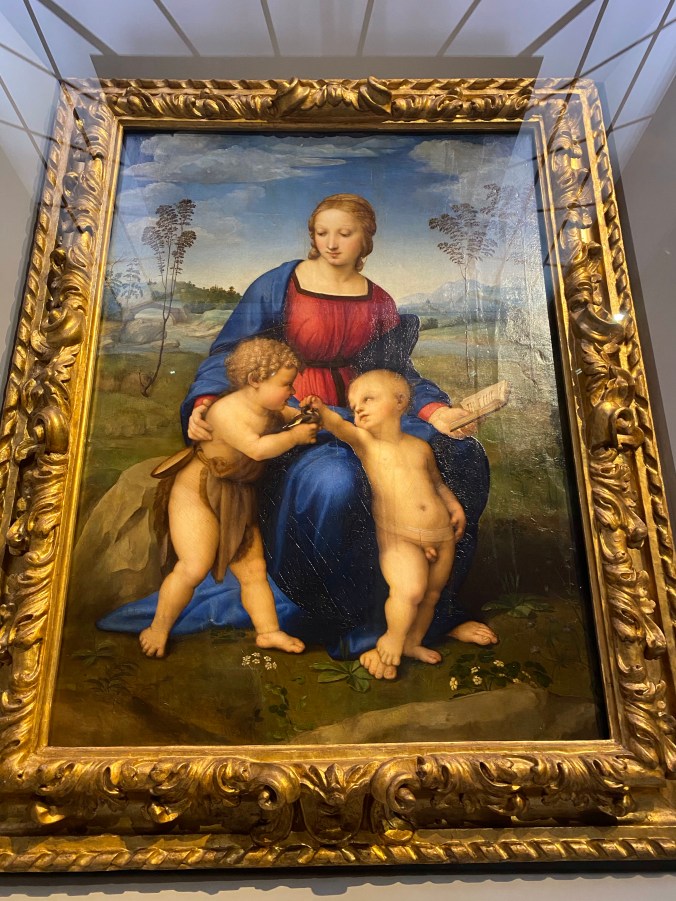
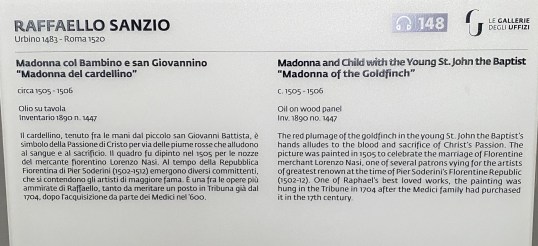
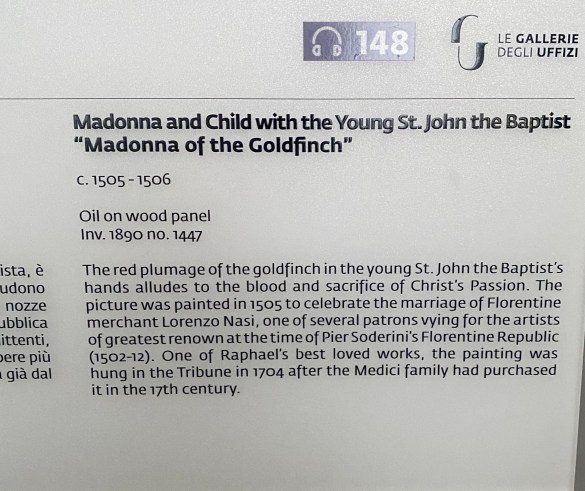
Raphael’s Madonna of the Goldfinch:


img_6772


img_6774

img_6773


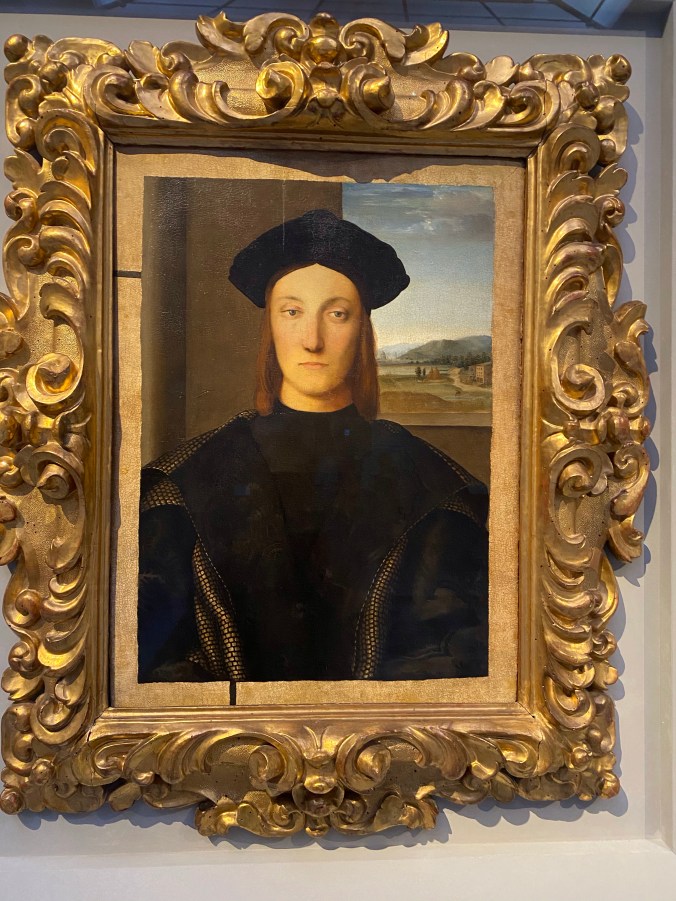
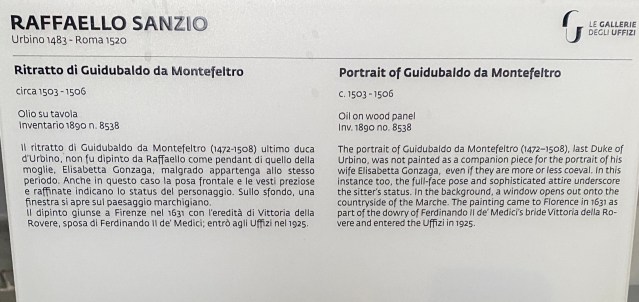
Raphael’s portrait of Guidobaldo da Montefeltro, 1503-06:

img_6781


img_6780


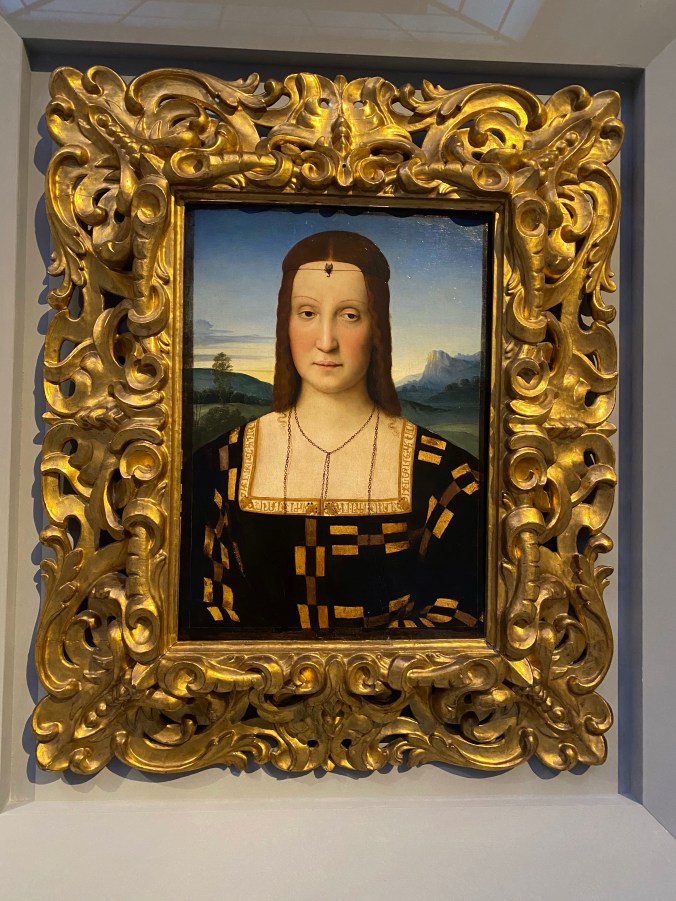
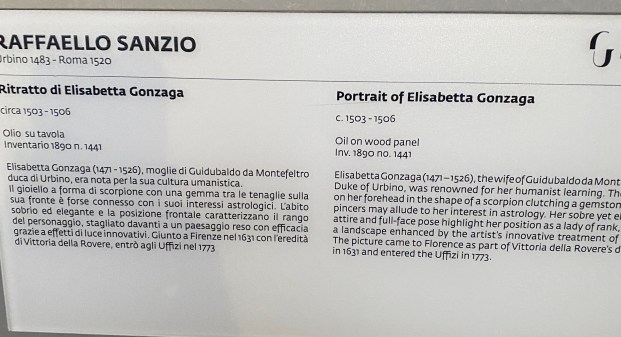
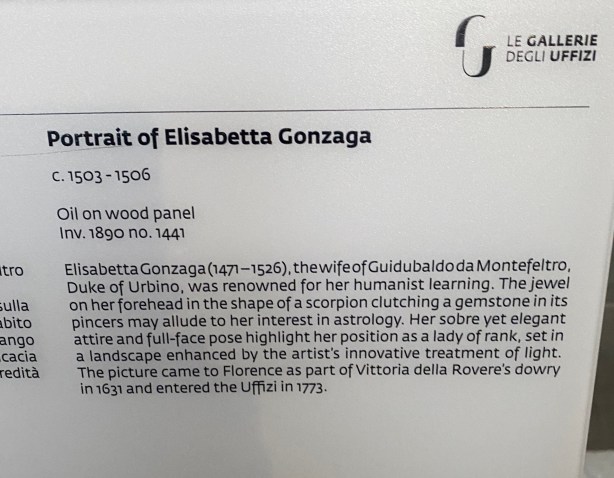
Raphael: Portrait of Elisabetta Gonzaga, 1503-06.

img_6782


img_6783


img_6784


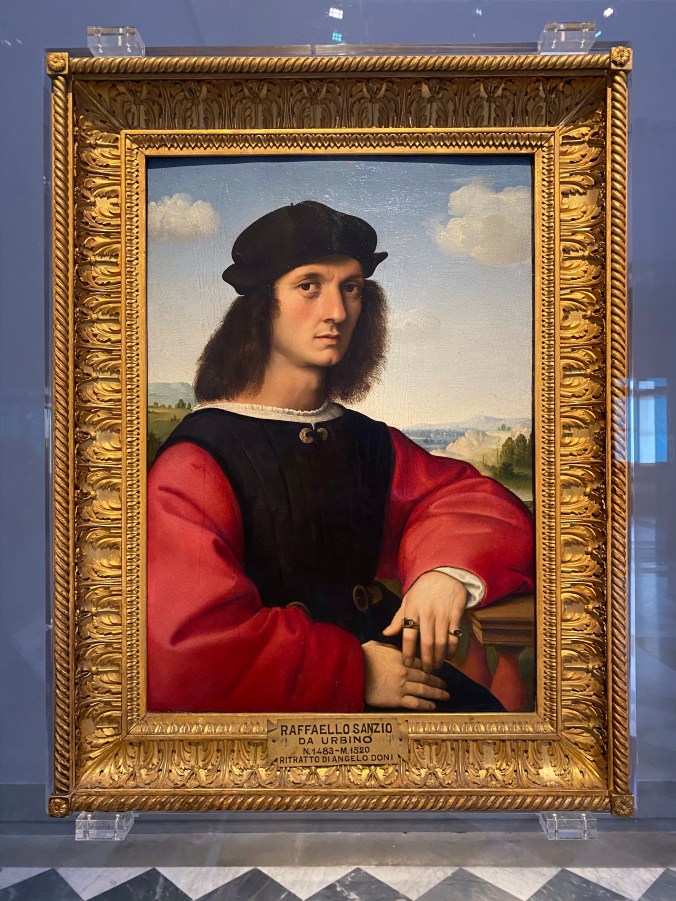
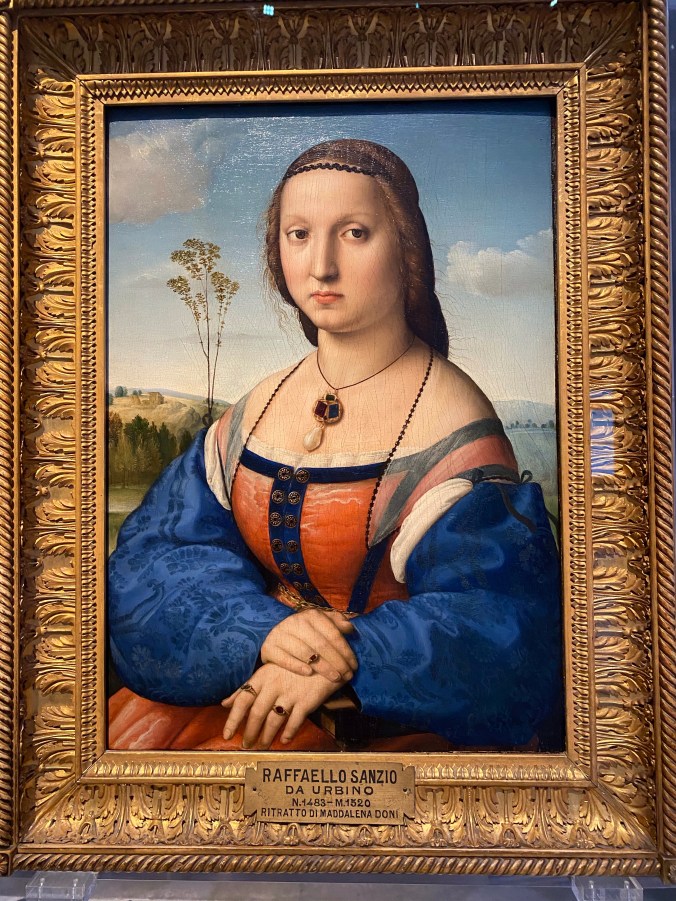
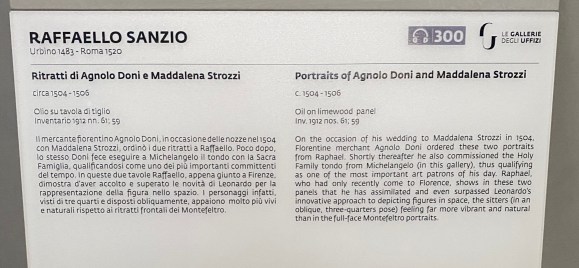
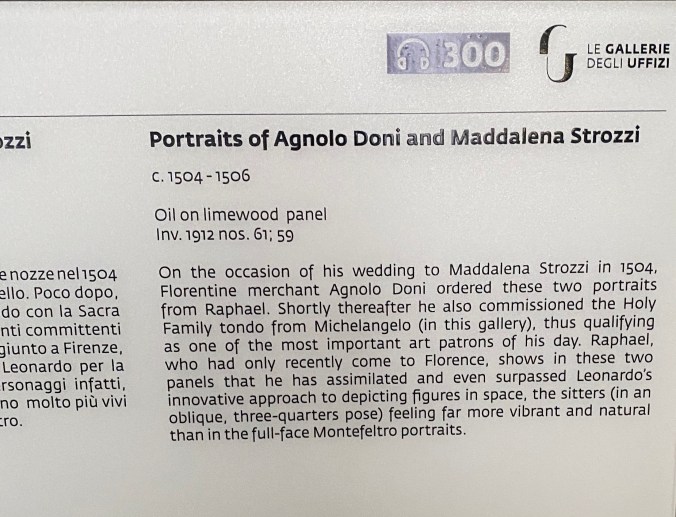
Raphael: Portraits of Agnolo Doni and Maddalena Strozzi, 1504-06/

img_6785


img_6786


img_6787


img_6788


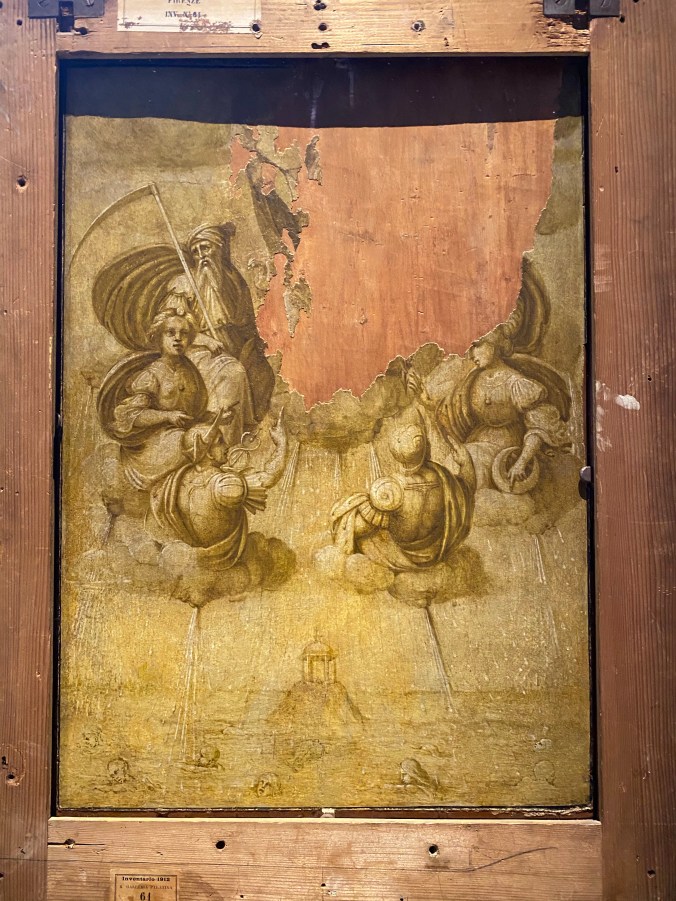
The Uffizi has hung the Doni portraits in a manner allowing us to see the very interesting backs of the paintings:

img_6789


img_6790


Today (June 25, 2020) was a great day in Florence!


On the Michelangelo trail in Rome

I’m in Rome!  Woo hoo!  All roads lead here and I couldn’t wait to follow one of them and to enjoy the city without the usual summer hordes of tourists.

I spent the lockdown refreshing my study of Michelangelo and I’m on his trail here in Rome.  I started my visit today by admiring the beautiful Porta Pia.

fullsizeoutput_39a9

The elaborate Porta Pia is a gate in the Aurelian Walls of Rome, designed by Michelangelo for Pope Pius IV.  Construction began in 1561 and ended in 1565, after the artist’s death. A 1561 bronze commemorative medal by Gianfederico Bonzagna shows an early plan by Michelangelo, very different from his final design. 


baN0BnvQR1qAsNHiWVeLnA

A new gate was needed because by the mid 16th century,  the newly developing urban area outside the walls couldn’t gain access through the nearby ancient Porta Nomentana from the Via Nomentana. It was decided to add a new gate to the walls, and, according to Vasari, Michelangelo presented three different designs to the Pope, which were beautiful but too extravagant, and the Pope chose the least expensive of the three. Unfortunately, the drawings are not extant and it is not known if  the work was actually carried out to Michelangelo’s original plan.

The gate was, however, Michelangelo’s last architectural work.  He died shortly before the structure was completed. The work was carried out by Giacomo Del Duca, who also built Porta San Giovanni, seen below.

Brána_sv._Jana,_Řím


fullsizeoutput_39ab

The Porta Pia is one of the 18 gates inserted in the defensive Aurelian Walls.


fullsizeoutput_39ad

PIVS IV PONT MAXPORTAM PIAMSVBLATA NOMENTANA EXTRVXITVIAM PIAM AEQVATA ALTA SEMITA DVXIT


lV0GT+OPTSqme+eSet%5Lg


lV0GT+OPTSqme+eSet%5Lg

Interestingly, the opposite side of the Porta Pia is also quite interesting. It was constructed in 1869 in the Neo-Classic design by Virginio Vespignani.

UdeHSzI+ThmqaL4l3NarTA


The Aurelian wall was breached during the Risorgimento.  This fabulous vintage photograph, dating to after 1870, shows the breach to the right of the gate.

1024px-BrecciaPortaPia

It was through an artillery-opened breach – known as the “Porta Pia breach” – that on September 20, 1870 Bersaglieri soldiers entered Rome to complete the unification of Italy. A marble and bronze monument is to be found at the exact point of the breach.

This painting by Carlo Ademollo, 1880, shows the Kingdom of Italy troops breaching the Aurelian Walls at Porta Pia during the Capture of Rome.

Here also, on September 11, 1926, the antifascist activist Gino Lucetti threw a bomb against the car transporting Benito Mussolini.  It was without effect.


Donatello, Verrochio and Michelangelo at the Palazzo Vecchio; 3 master Florentine sculptors

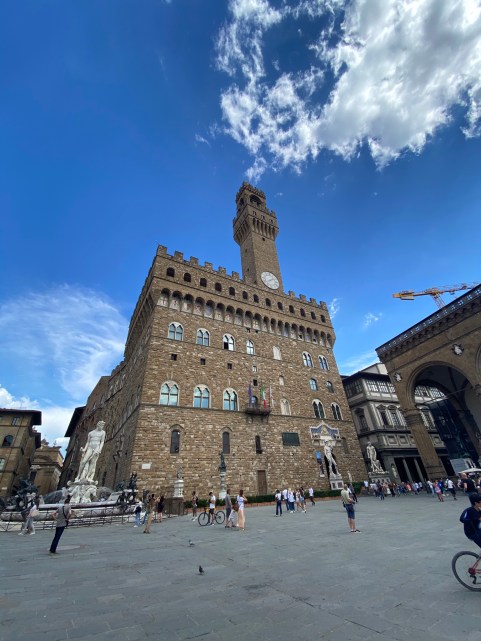
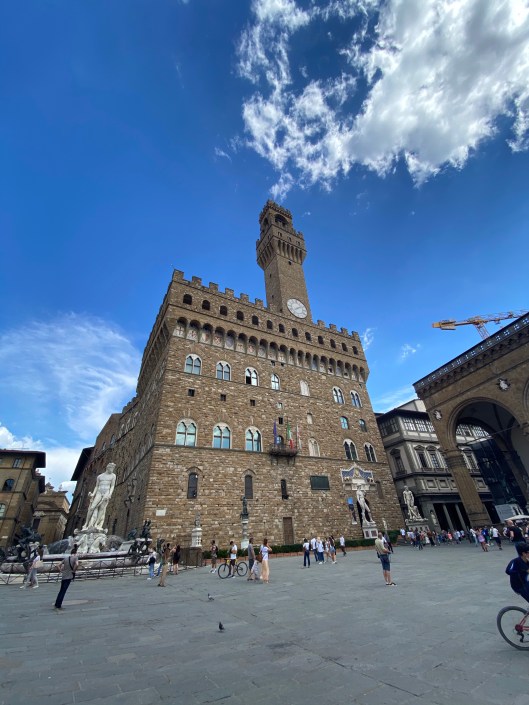
In this imposing, Medieval Florentine city hall,

img_6760


Reside 3 works by master sculptors of the Italian Renaissance:

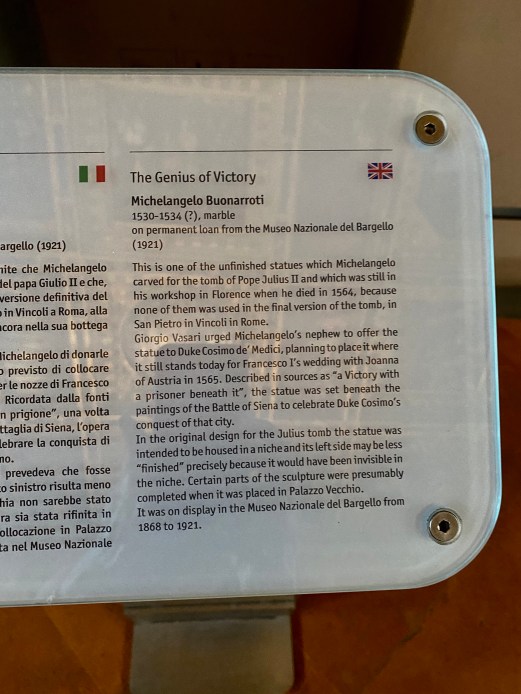
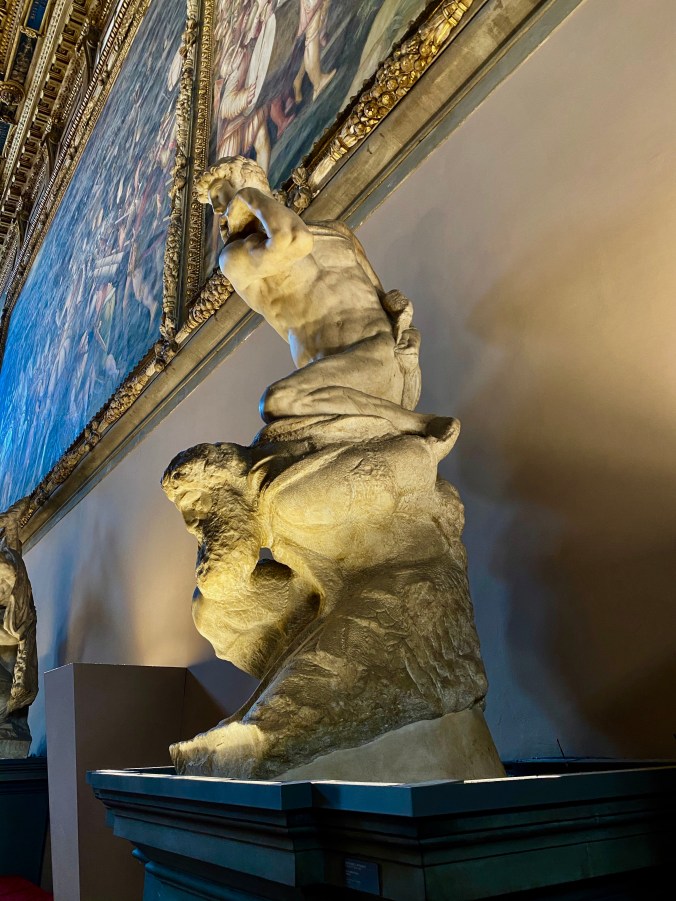
First, The Genius of Victory by Michelangelo

img_6615


img_6616


img_6617


img_6618


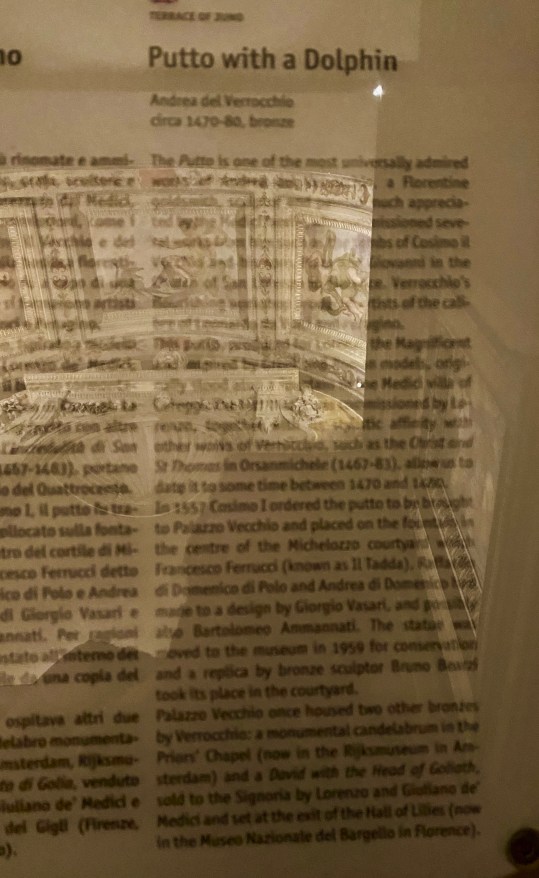
Andrea Verrochio is up next, with his wonderful Putto with a Dolphin:

img_6639


img_6641


img_6642


img_6644


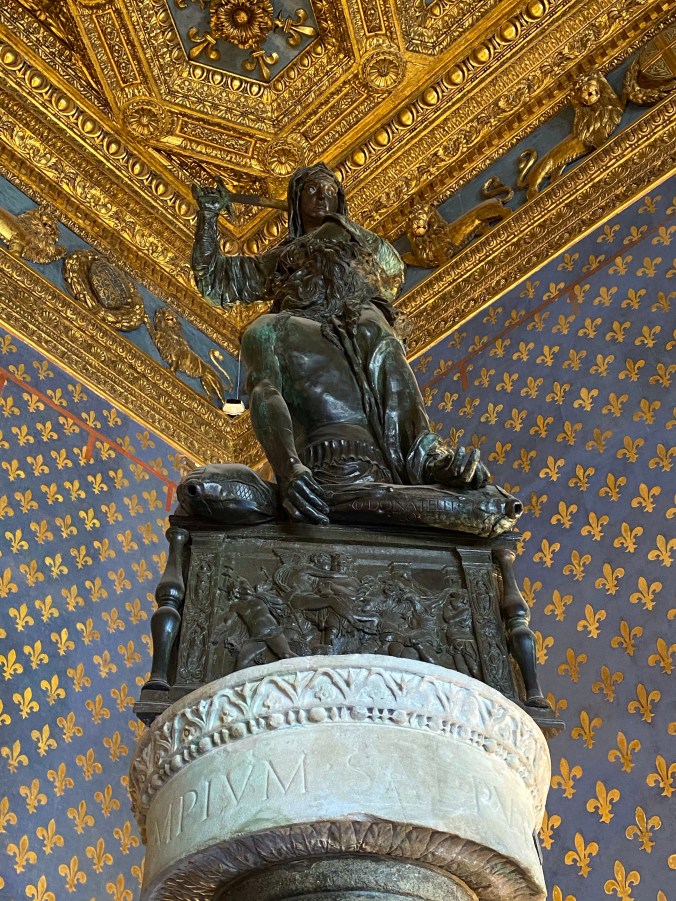
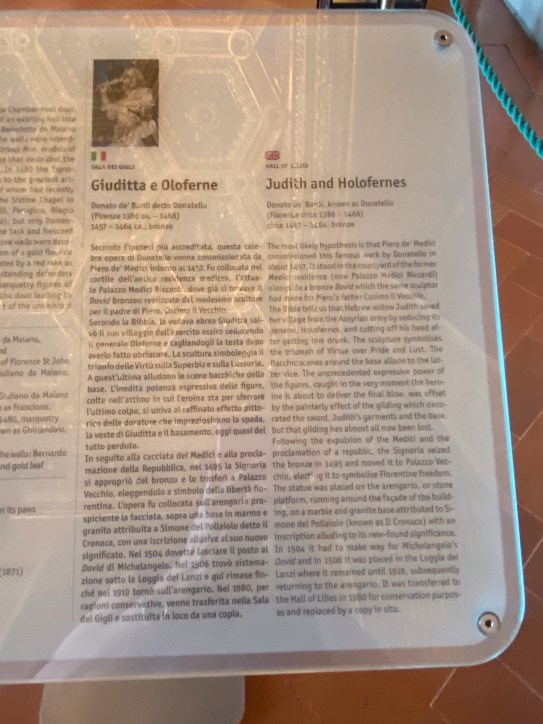
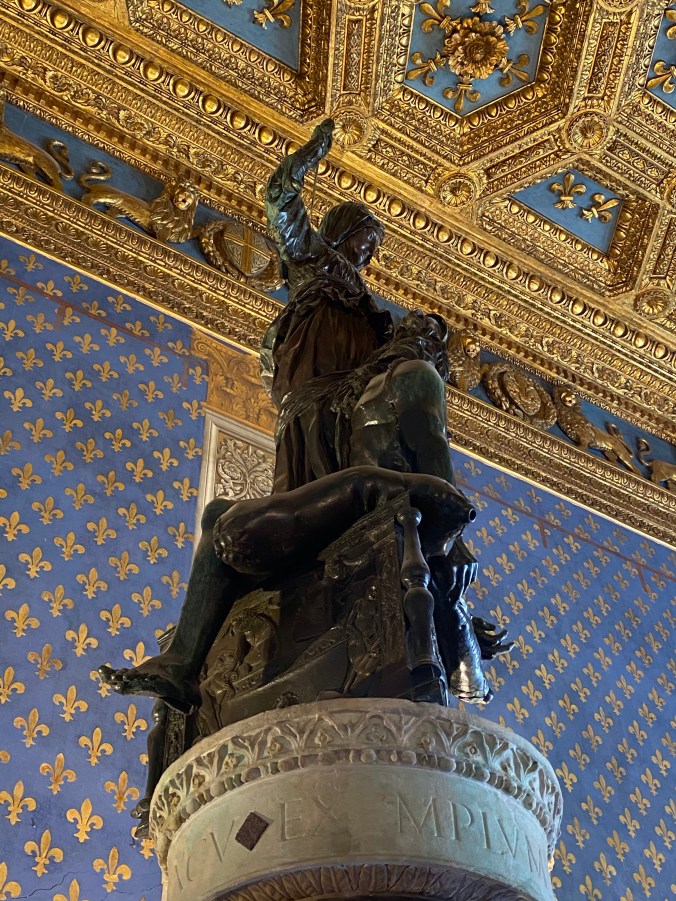
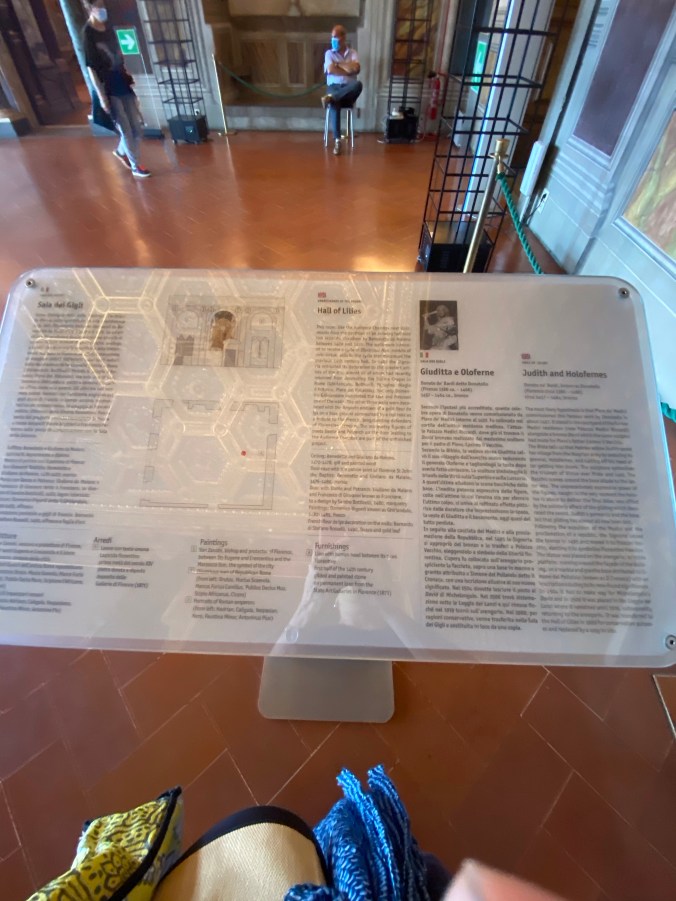
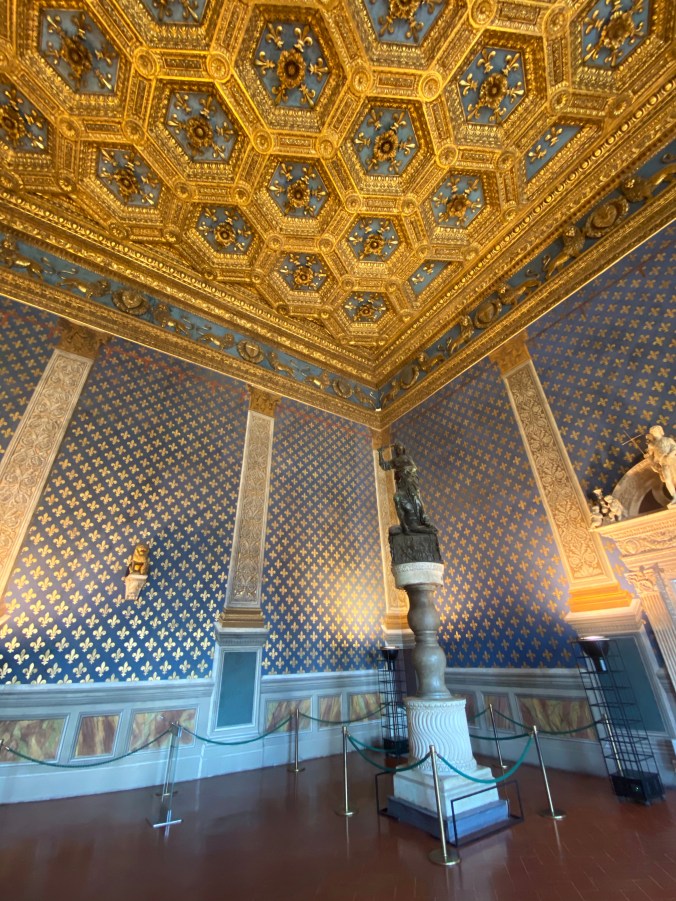
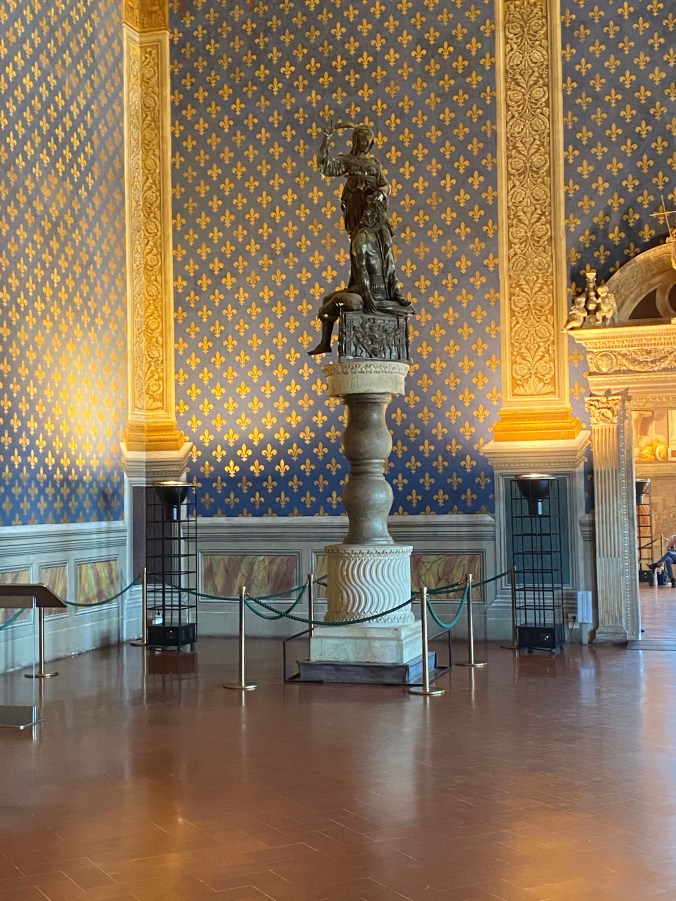
And, thirdly, Donatello.  He is one of all-time favorite artists and this sculpture, Judith and Holofernes, is one of his masterpieces. It resides in this gorgeous room.  You can see it on its pedestal to the right.


img_6710


img_6711


img_6712


img_6714


img_6713


img_6715


img_6720


img_6721


img_6741


img_6742

Palazzo Vecchio (June 2020) Part 2

Here’s the next part of my recent visit to the re-opened Palazzo Vecchio:

img_6677

I love the view of the rustic stone through the glass.


img_6678


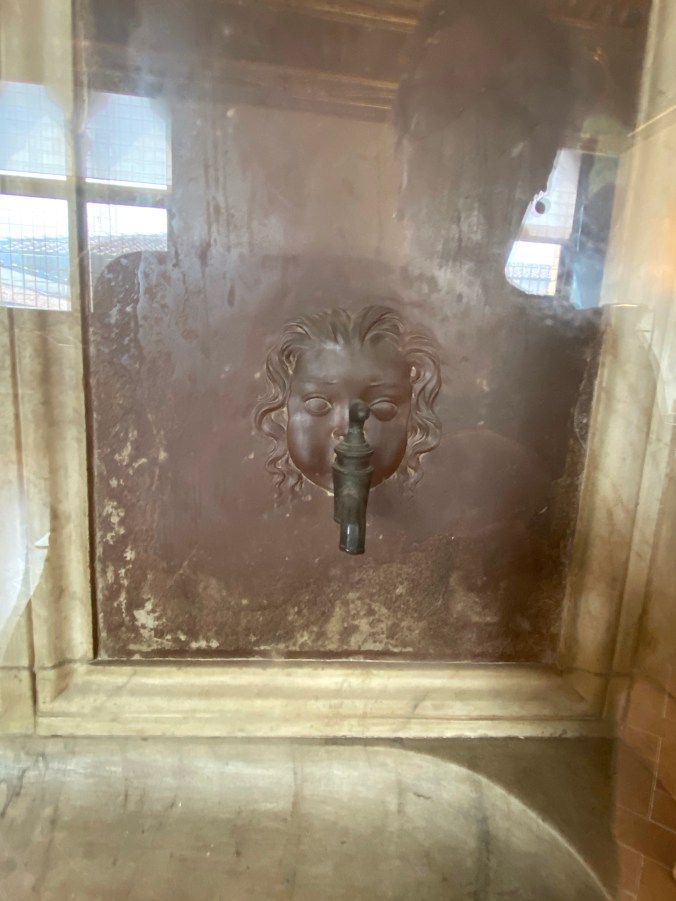
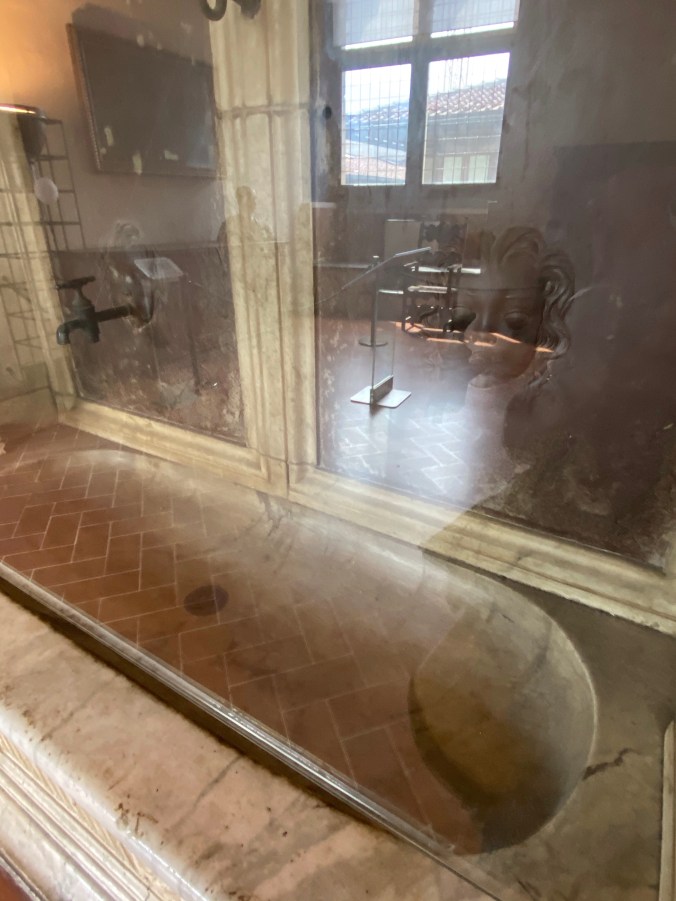
What a wonderful sink below!  Two spigots that look like fountains:

img_6680

The sink is in this elaborate niche:

img_6679

Below, you can see the shape of the sink itself:

img_6681


img_6682


img_6683


img_6684


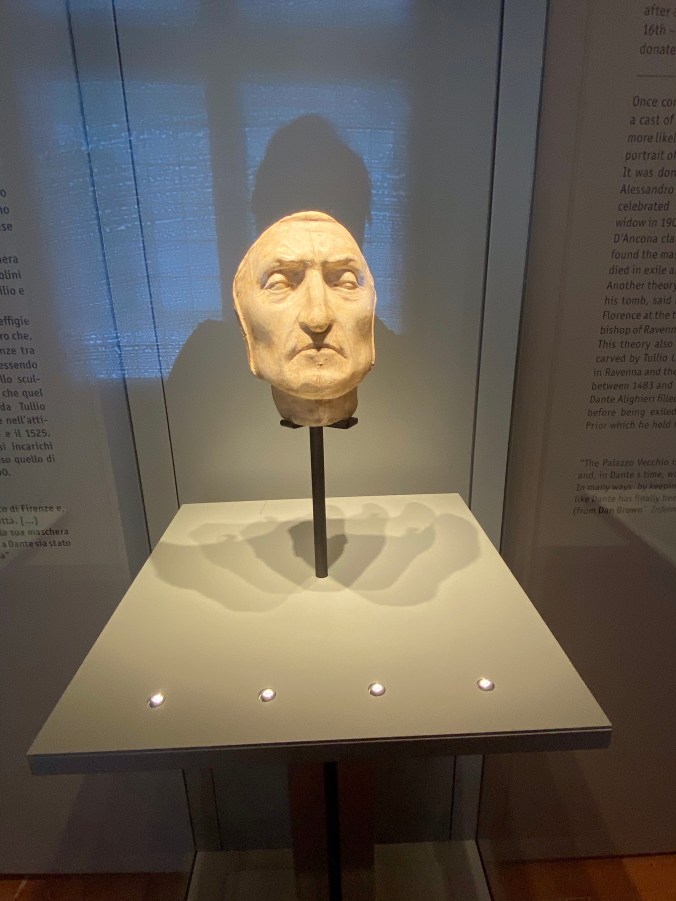
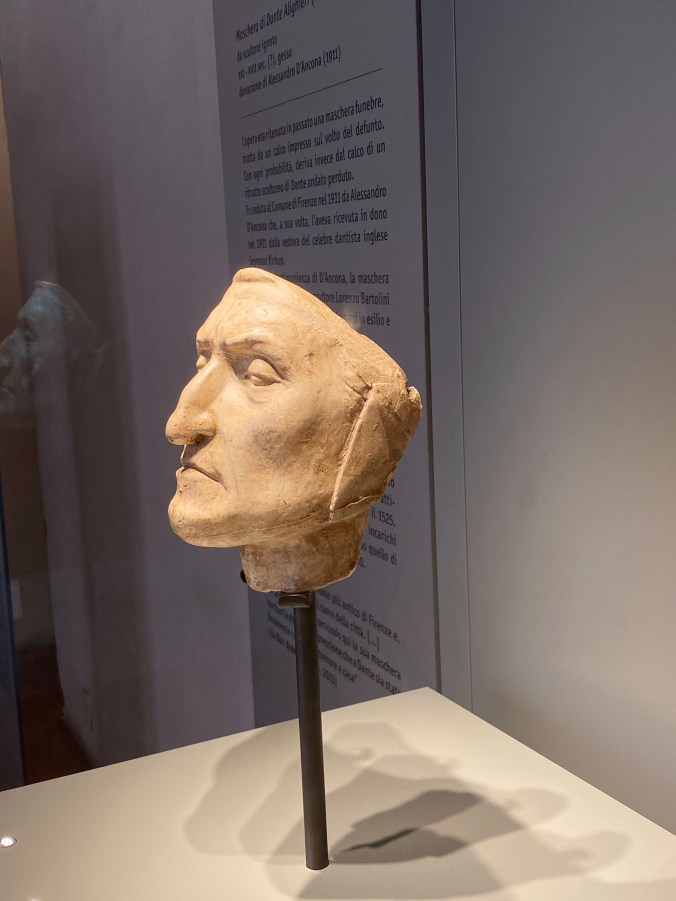
Below: the death mask of Dante:

img_6685

img_6686

img_6687


img_6688

img_6689

img_6690

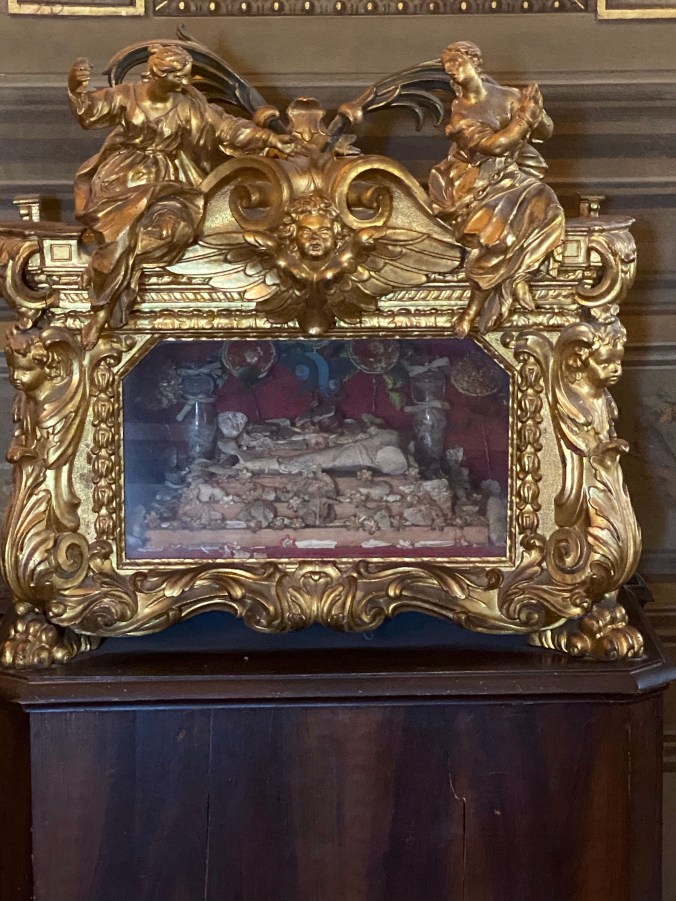
An amazingly elaborate reliquary:

img_6691

img_6692


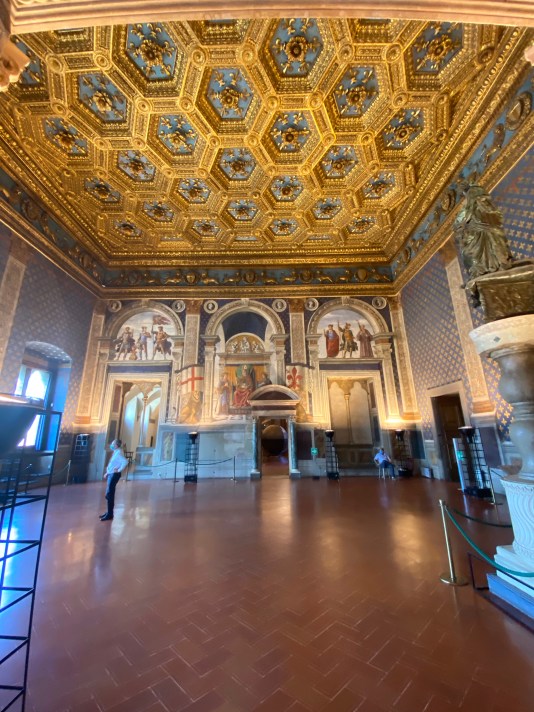
Next up, the elaborate Audience Chamber:

img_6693


Here’s the ceiling:

img_6694


img_6695


img_6696


img_6697


img_6698


img_6699


img_6701


img_6700


img_6702


img_6703


img_6704


img_6705


img_6706


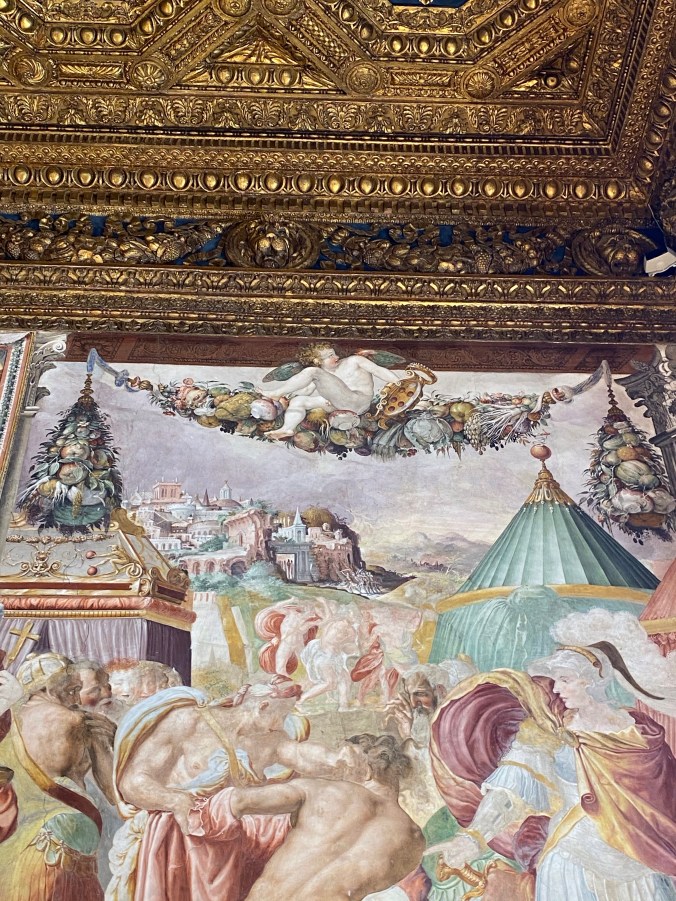
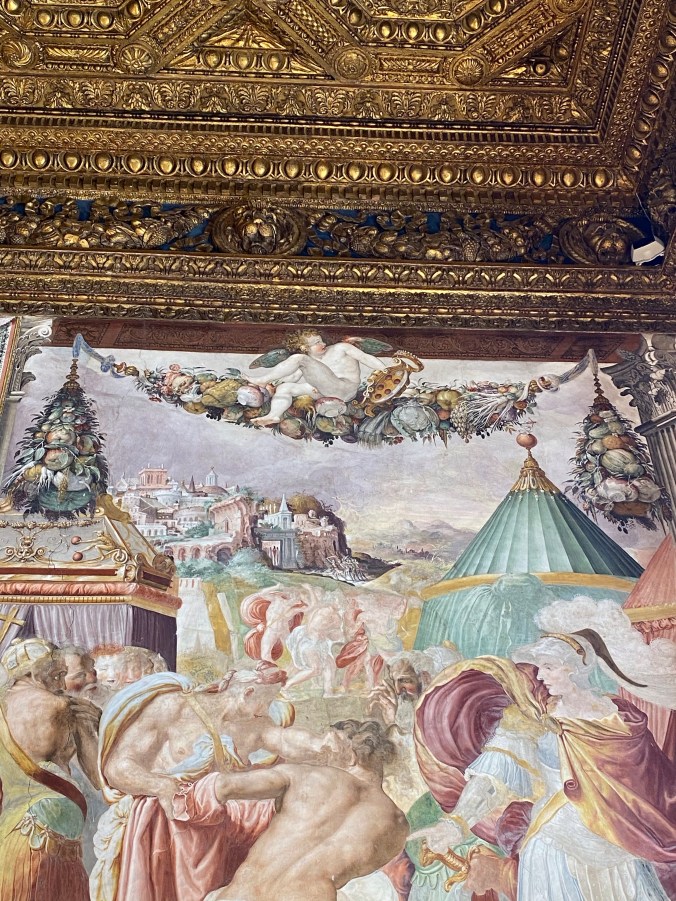
These frescoes “idealize” even war.  I like the colorful tents that housed the troops.  I doubt they were this lovely in real life.

img_6707


img_6708


img_6709


img_6710


Donatello’s Judith and Holofernes:

img_6711


img_6712


img_6714


img_6713


img_6715


img_6716


img_6717


img_6718


img_6719


img_6720


img_6721


img_6722


img_6741


img_6742


img_6727


img_6723

Palazzo Vecchio, Florence (June 2020) Part 1

One by one, the landmarks of Florence have been re-opening.  With new rules and regulations, one can pay a visit to these famous sites.  I recently enjoyed seeing the Palazzo Vecchio for the first time since the lock down. Very enjoyable to see old friends.


img_6760


Il Salone dei Cinquecento:


img_6652


img_6653


img_6654


img_6608


The Salone dei Cinquecento (‘Hall of the Five Hundred’) is the most imposing chamber in the Palazzo Vecchio, with a length of 170 ft and width of 75 ft. It was built in 1494 by Simone del Pollaiolo, on commission of Savonarola who, replacing the Medici after their exile as the spiritual leader of the Republic, wanted it as a seat of the Grand Council (Consiglio Maggiore) consisting of 500 members.

Later the hall was enlarged by Giorgio Vasari so that Grand Duke Cosimo I could hold his court in this chamber. During this transformation, famous (but unfinished) works were lost, including the Battle of Cascina by Michelangelo, and the Battle of Anghiari by Leonardo da Vinci. Leonardo was commissioned in 1503 to paint one long wall with a battle scene celebrating a famous Florentine victory. He was always trying new methods and materials and decided to mix wax into his pigments. Da Vinci had finished painting part of the wall, but it was not drying fast enough, so he brought in braziers stoked with hot coals to try to hurry the process. As others watched in horror, the wax in the fresco melted under the intense heat and the colors ran down the walls to puddle on the floor. A legend exists that Giorgio Vasari, wanting to preserve Da Vinci’s work, had a false wall built over the top of The Battle of Anghiari before painting his fresco. Attempts made to find Da Vinci’s original work behind the Vasari fresco have so far been inconclusive.

Michelangelo never proceeded beyond the preparatory drawings for the fresco he was commissioned to paint on the opposite wall. Pope Julius II called him to Rome to paint the Sistine Chapel, and the master’s sketches were destroyed by eager young artists who came to study them and took away scraps. The surviving decorations in this hall were made between 1555 and 1572 by Giorgio Vasari and his helpers, among them Livio Agresti from Forlì. They mark the culmination of mannerism and make this hall the showpiece of the palace.


Here are some miscellaneous objets that caught my eye on this day.  All of them are in the Salone dei Cinquecento, unless otherwise noted:

img_6609


img_6610


img_6611


I see the coat of arts of the Medici family all over Florence, but this one is beyond extravagant:

img_6612


img_6613


img_6614


A sculpture by Michelangelo takes a place of honor in this large hall:

img_6615


img_6616


img_6617


img_6618


OK, we have departed the Salone.  All of the following pictures are from subsequent rooms.

img_6619

img_6620

img_6621


img_6622


img_6623


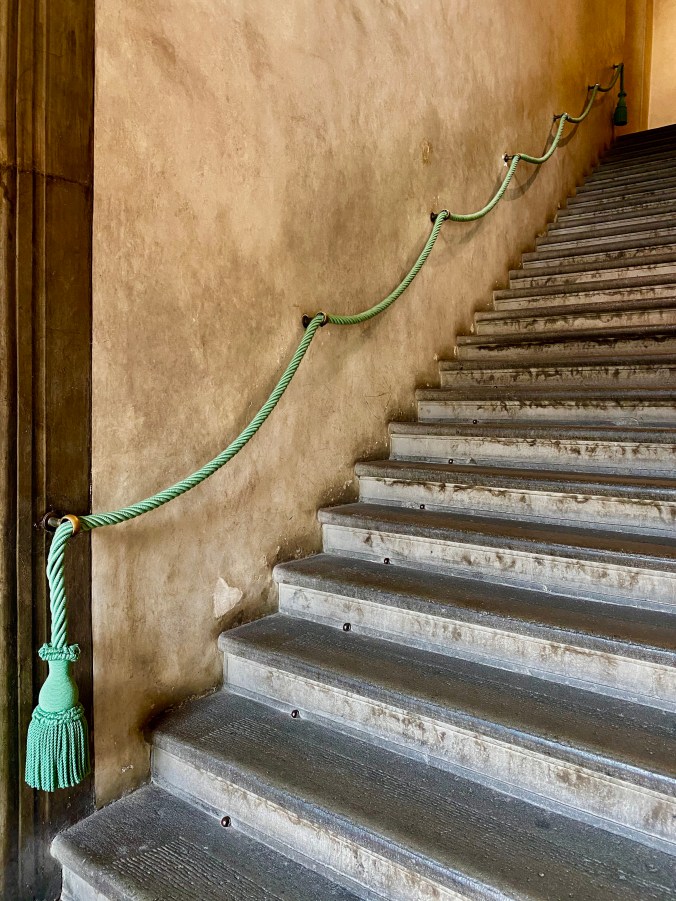
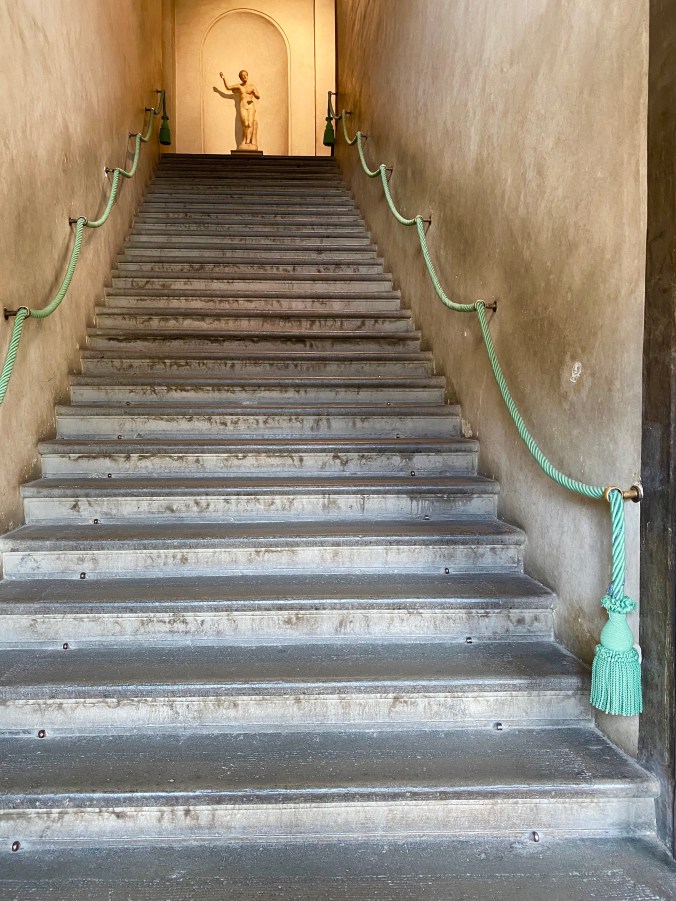
One of the things I like about many Italian stairways is the use of these heavy cords.  I like the way they look and the way they draw on Italian textile traditions.

img_6625


img_6626


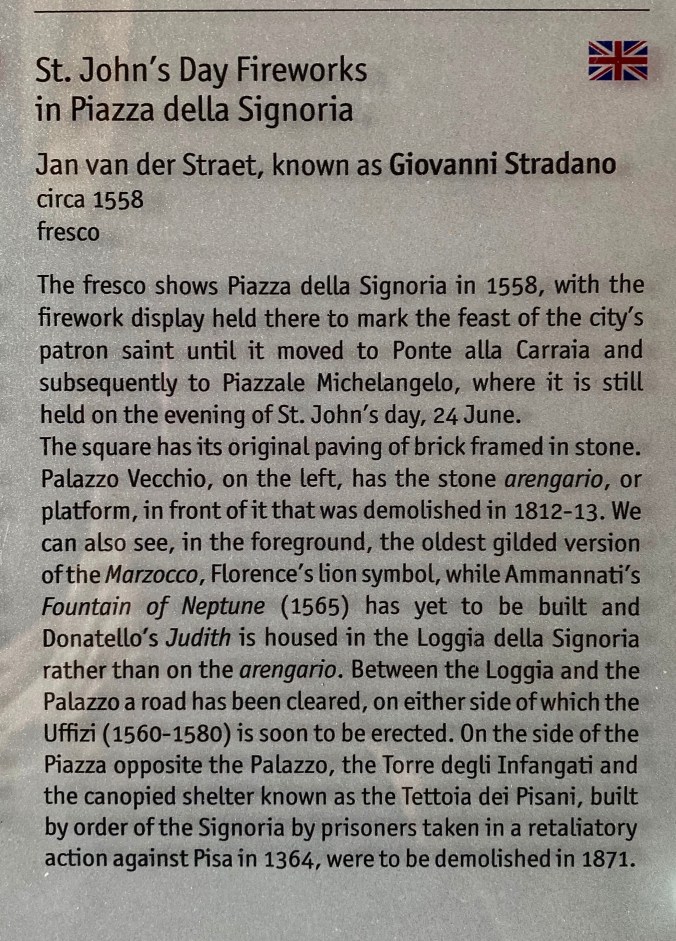
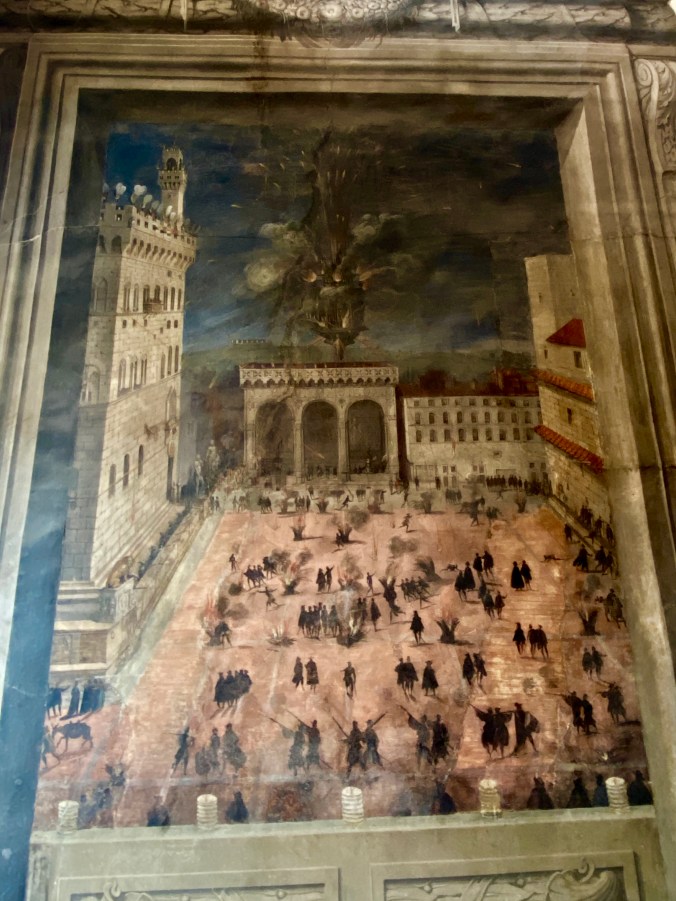
The St. John’s Day Fireworks have been an ongoing Florentine tradition for centuries.  It was fun to see this painting depict it from the 16th century.

img_6627


img_6628


img_6629


img_6630


Here’s another fanciful coat of arts for the Medici family, this one in fresco:

img_6631


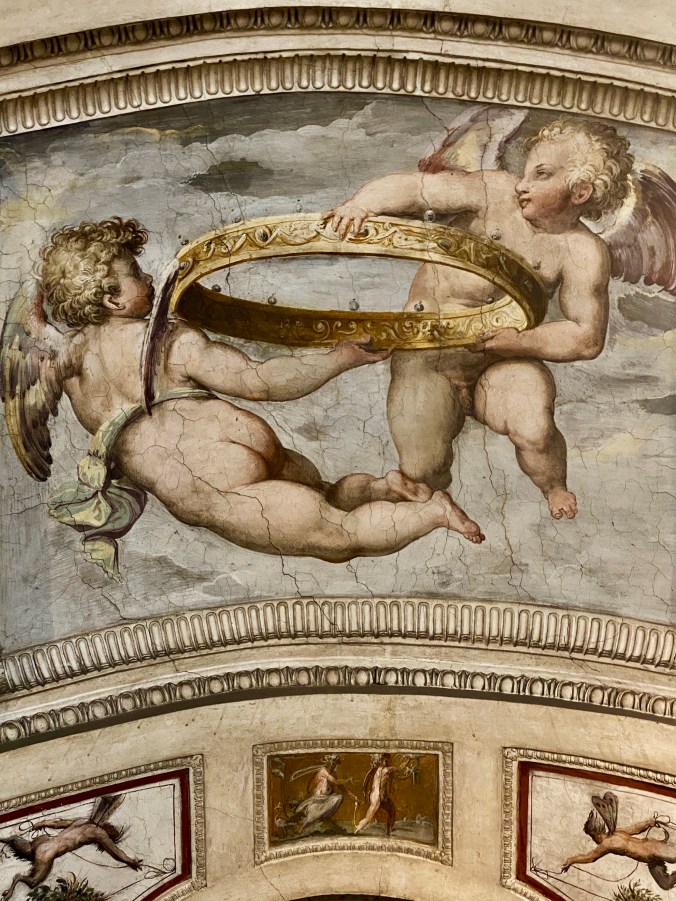
And putti carry the crown that will sit on Medici heads:

img_6632


img_6633


img_6634


img_6635


img_6636


img_6637


img_6638


img_6639


img_6640


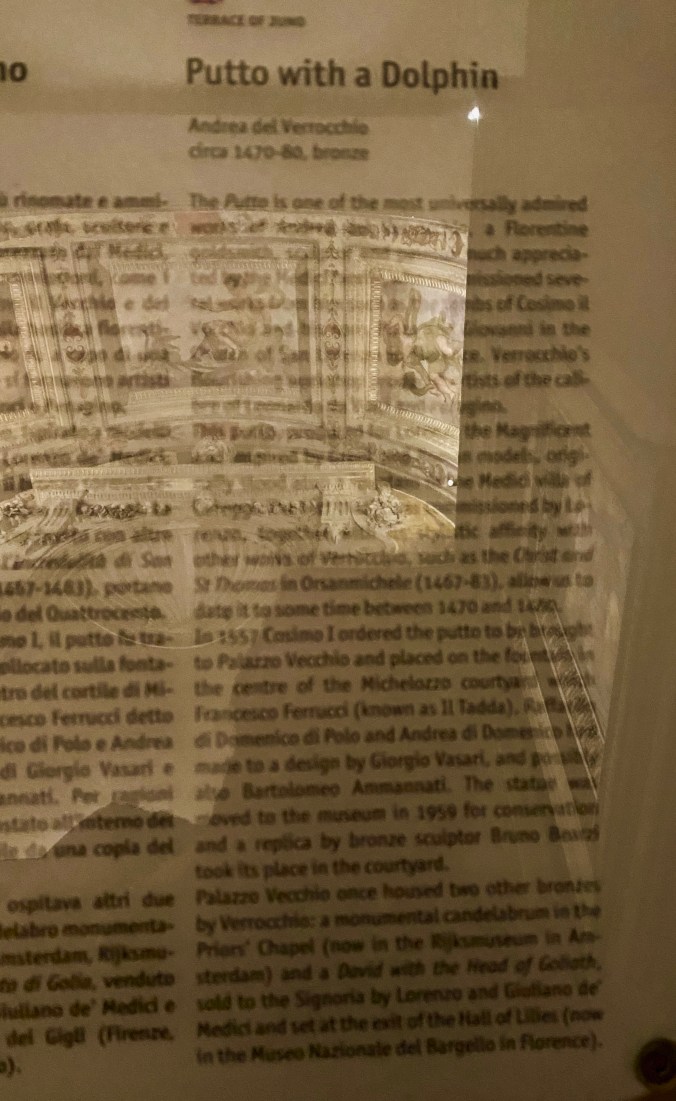
Here is the original Verrocchio statue.  A copy sits in its original place in an open courtyard on the ground floor.

img_6641


img_6642


img_6644

img_6645


img_6646img_6647


img_6643


img_6648img_6649img_6650

img_6651


img_6655


img_6656


img_6657


img_6658


img_6659


img_6660


img_6661


img_6662


img_6663


img_6664


img_6676

img_6665


Eleonora’s private chapel is a gorgeously painted small room:

img_6668


img_6666


img_6667


img_6669


img_6670


img_6672


img_6671


img_6673


img_6674


img_6675


Pienza, the ideal city

Let’s say you are the Pope.  You’re from a small, Medieval village in Tuscany that really isn’t on the map and you want to do something really great for your hometown.  In fact, you want to make it an important rest stop on a famous road that leads from Rome to Bologna and points north, or to Rome and Naples and points south.  What would you do?

Would you create an “ideal city” and make sure it gets notoriety?

That’s exactly what Pope Pius II did.

Born Enea Silvio Bartolomeo Piccolomini, (18 October 1405 – 14 August 1464), he became the head of the Catholic Church and ruler of the Papal States from 19 August 1458 until his death. During his 6 year reign, he transformed his hometown into a marvelous Renaissance borgo.

You enter the city through this gate:

img_6509


img_6510


img_6511

The picture above tells us that Pienza was destroyed on 15 June 1944 and restored by October 1955. If walls could talk.


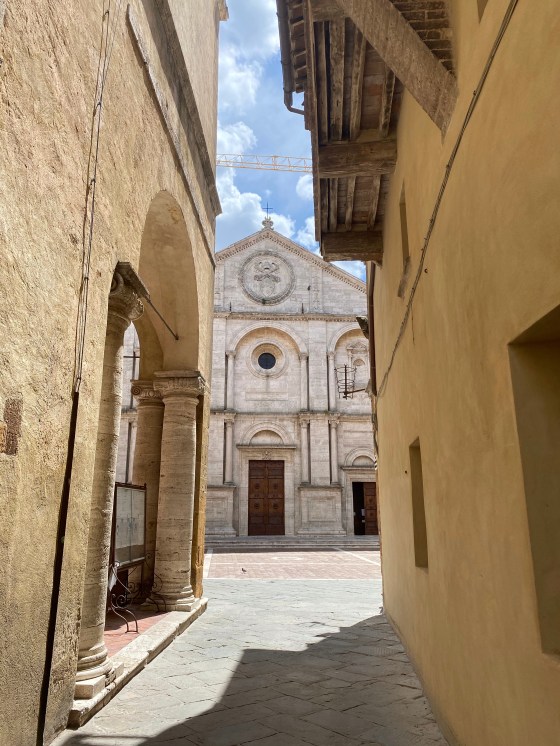
Here is the cathedral Pope Pius II built.

img_6506


img_6498


img_6497


img_6496


img_6492


img_6491


img_6493


img_6494


img_6453


img_6454


img_6455


img_6456


img_6459


img_6460


img_6461


img_6463


img_6464


img_6466


img_6467


img_6468


img_6469


img_6470


img_6471


img_6472


img_6473


img_6474


img_6475


img_6476


img_6482


img_6483


img_6486


img_6491


img_6492


img_6494


img_6495


img_6497


img_6498


img_6499


img_6500


img_6501


img_6503


img_6504


img_6505


img_6507


img_6508


img_6512


img_6513


img_6514


img_6515


img_6516


img_6517


img_6518


img_6519


img_6520


img_6521


img_6522


img_6523


img_6525


img_6526


img_6527


img_6528


img_6529


The Abbey of Monte Oliveto Maggiore

A visit on a gorgeous day to the Abbazia di Monte Oliveto Maggiore in Tuscany is about as good a day trip as I can think of. Leaving Florence on a soft, summer morning, it is a pleasure to drive through beautiful countryside. And once you reach the historic abbey itself, you’ve reached a little piece of heaven.
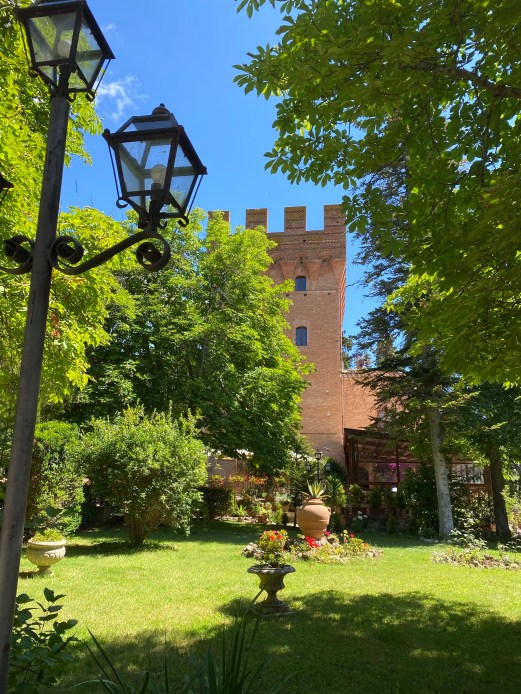


This large Benedictine monastery is constructed mostly of red brick, making it stand out against the grey clayey and sandy soil of the the Crete senesi, which give this area of Tuscany its name.

The territorial abbey’s abbot functions as the bishop of the land within the abbey’s possession, even though he is not consecrated as a bishop. It is also the mother-house of the Olivetans and the monastery later took the name of Monte Oliveto Maggiore (“the greater”) to distinguish it from successive monasteries at Florence, San Gimignano, Naples and elsewhere.

It was founded in 1313 by Bernardo Tolomei, a jurist from a prominent aristocratic family of Siena. By 1320, it was approved by Bishop Guido Tarlati as Monte Oliveto, with reference to the Mount of Olives and in honor of Christ’s Passion. The monastery was begun in 1320, the new congregation being approved by Pope Clement VI in 1344.

The abbey was for centuries one of the main land possessors in the Siena region.  On January 18, 1765, the monastery was made the seat of the Territorial Abbacy of Monte Oliveto Maggiore.
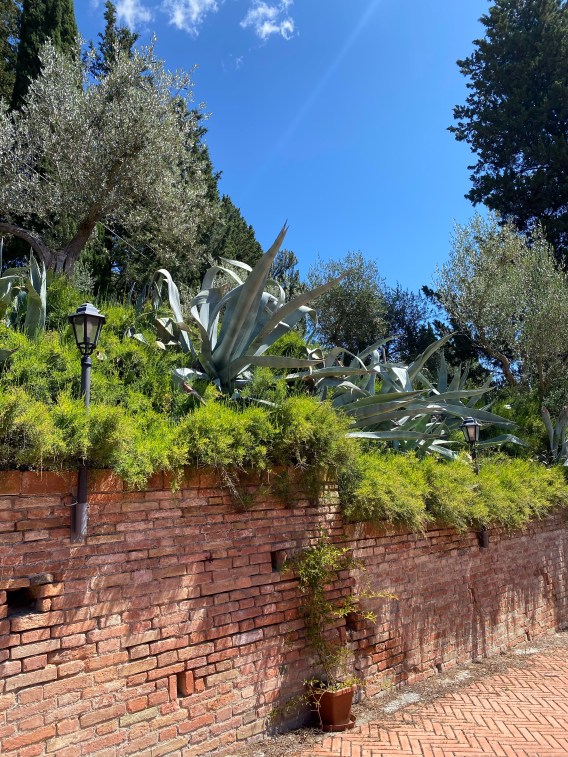
 

The monastery consists of a medieval palace in red brickwork, surmounted by a massive quadrangular tower with barbicans and merlons. Begun in 1393 as the fortified gate of the complex, it was completed in 1526 and restored in the 19th century. The church’s atrium is on the site of a previous church (1319). The Latin cross formed church was renovated in the Baroque style in 1772 by Giovanni Antinori.

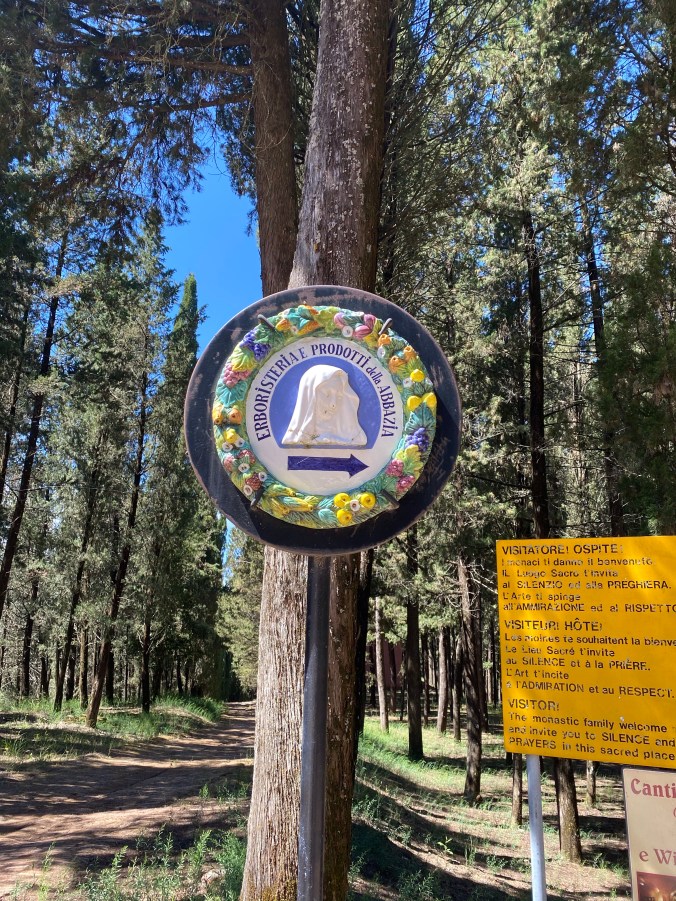
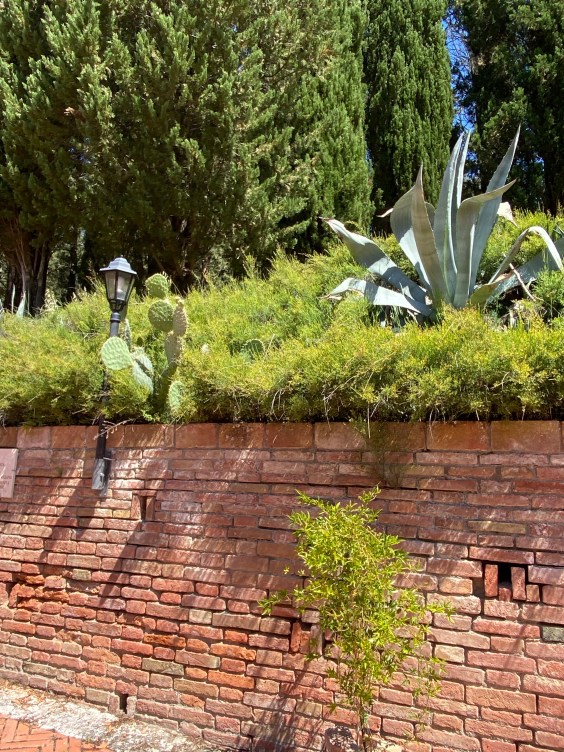
A long alley with cypresses, sided by the botanical garden of the old pharmacy (destroyed in 1896), with a cistern from 1533. At the alley’s end is the bell tower, in Romanesque-Gothic style, and the apse of the church, which has a Gothic façade.
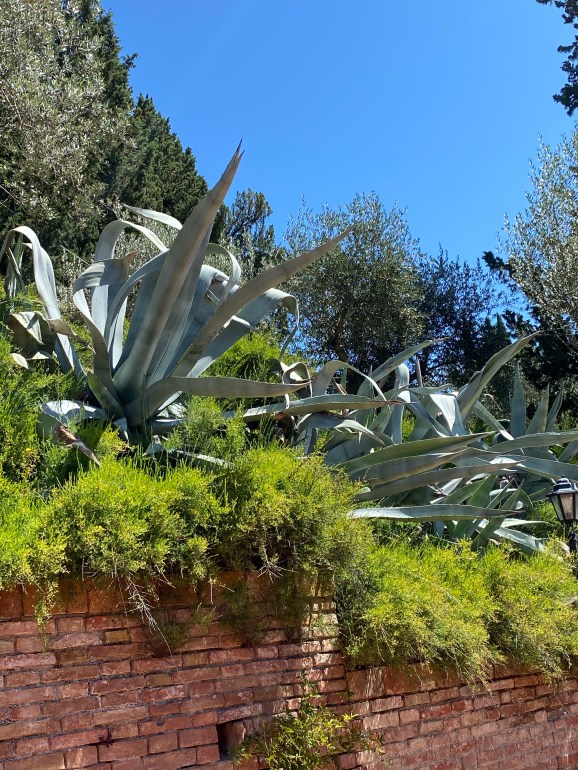
 

The abbey’s monastic library, housing some 40,000 volumes and incunabula, gives way to  the pharmacy, which houses medicinal herbs in a collection of 17th century vases.


For me, the rectangular Chiostro Grande was the highlight of the visit. The fresco cycle that adorns the walls of the lovely cortile was painted by Luca Signorelli (he created 8 lunettes between 1497-98) and Sodoma, who completed the cycle after 1505.  Sodoma painted 26 of the lunettes.
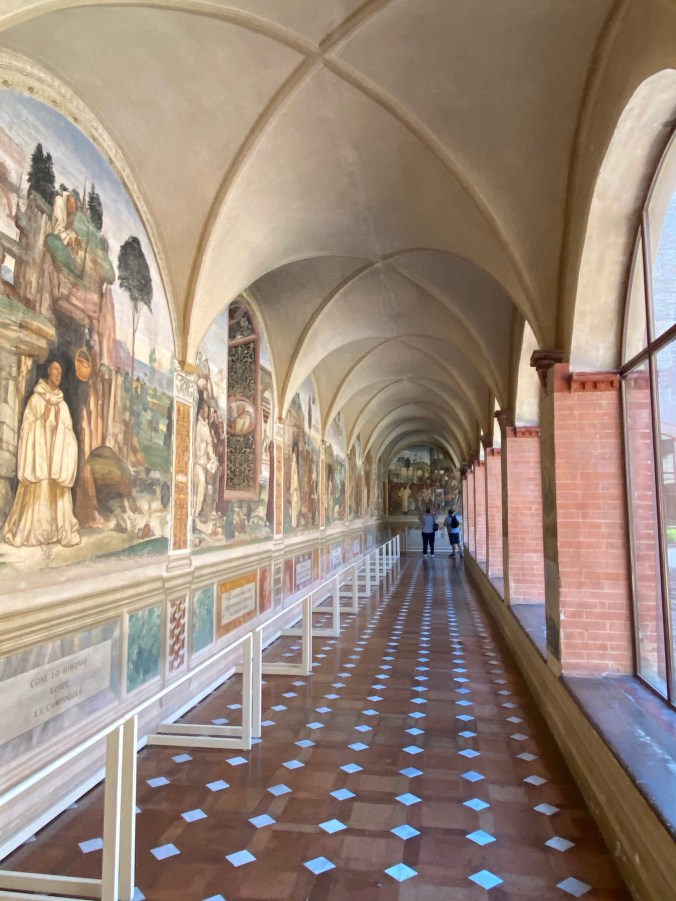
The cloister was constructed between 1426 and 1443.  The notable fresco cycle of the Life of St. Benedict was painted between 1497 and 1510 by Luca Signorelli and il Sodoma.

Wikipedia has an excellent article on these frescoes, telling you the entire program of the frescoes and which artist painted which scenes.

https://it.wikipedia.org/wiki/Storie_di_san_Benedetto_di_Monte_Oliveto_Maggiore

Luca Signorelli (c. 1445-1523) was an Italian Renaissance painter who was noted in particular for his draftsmanship and his deft handling of foreshortening. His massive frescoes of the Last Judgment (1499–1503) in Orvieto Cathedral are considered his masterpiece. Considered to be part of the Tuscan school, Signorelli also worked extensively in Umbria and Rome.

In the Monastery of Monte Oliveto Maggiore Signorelli painted eight frescoes, forming part of a vast series depicting the life of St. Benedict; they are not in great condition.

Luca_signorelli,_storie_di_san_benedetto_a_monteoliveto,_san_benedetto_rimprovera_due_monaci_che_hanno_violato_la_Regola,_dett_02

Luca Signorelli, dettaglio di San Benedetto rimprovera due monaci che hanno violato la Regola

Il Sodoma (1477 – 1549) was the strange nickname given to the Italian Renaissance painter Giovanni Antonio Bazzi. Il Sodoma painted in a manner that superimposed the High Renaissance style of early 16th-century Rome onto the traditions of the provincial Sienese school; he spent the bulk of his professional life in Siena, with two periods in Rome.

Sodoma was one of the first to paint in the style of the High Renaissance in Siena. His first important works were these frescoes in the Benedictine monastery of Monte Oliveto Maggiore, on the road from Siena to Rome. The frescoes illustrate the life of St Benedict in continuation of the series that Luca Signorelli had begun in 1498. Gaining fluency in the prevailing popular style of Pinturicchio, Sodoma completed the set in 1502 and included a self-portrait with badgers and ravens.
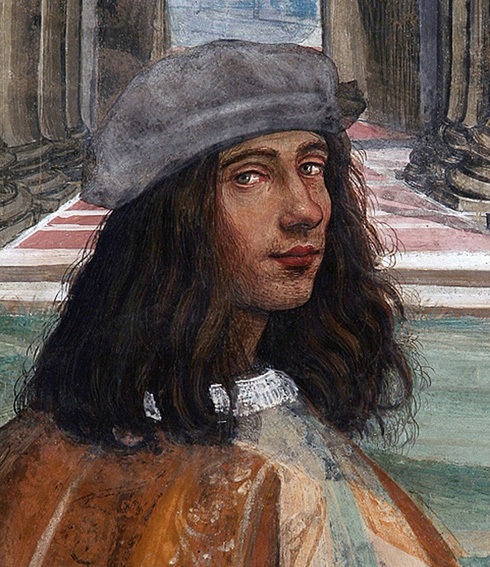
Sodoma_selfportrait

Autoritratto del Sodoma in un dettaglio da uno degli affreschi delle Storie di san Benedetto di Monte Oliveto Maggiore
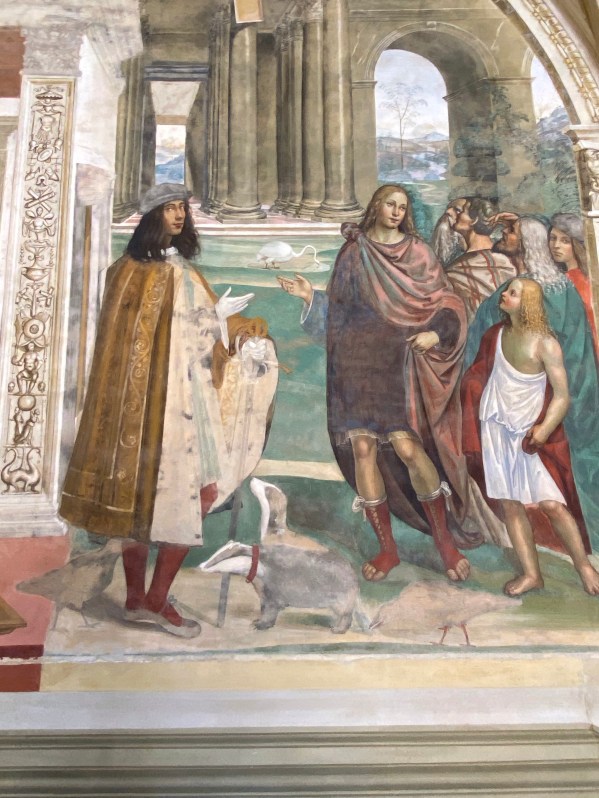
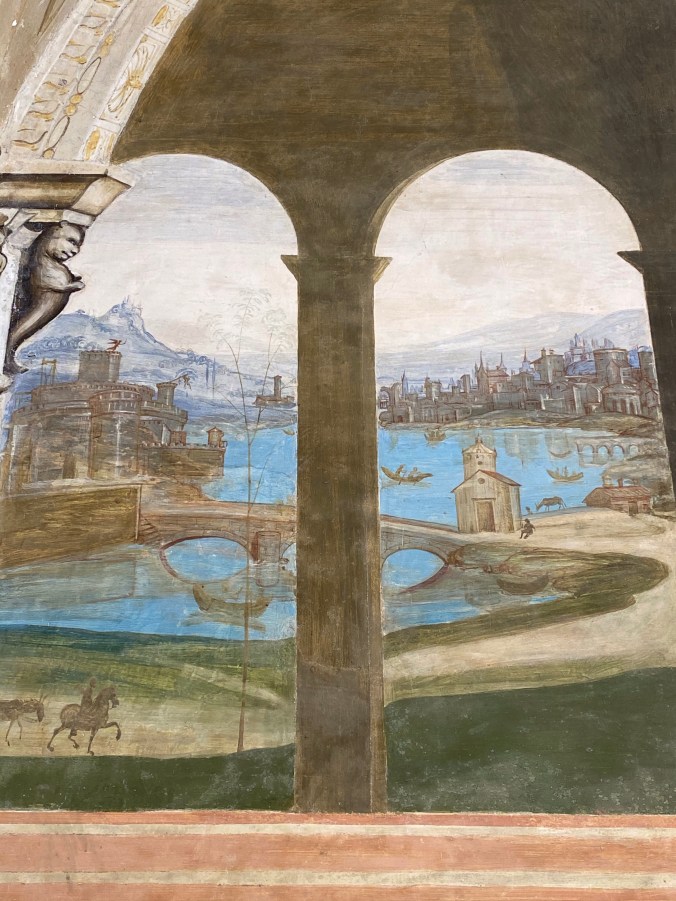


The fresco above is by Sodoma, showing Benedict leaving the Roman school.
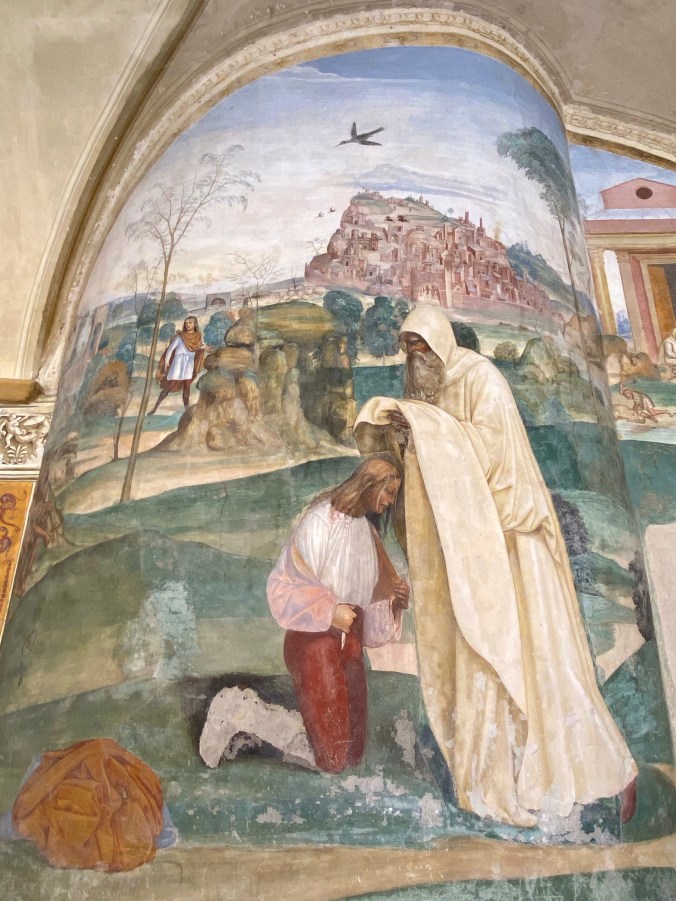


The fresco above is by Sodoma.  It shows a Roman monk giving the hermit habit to Benedict.
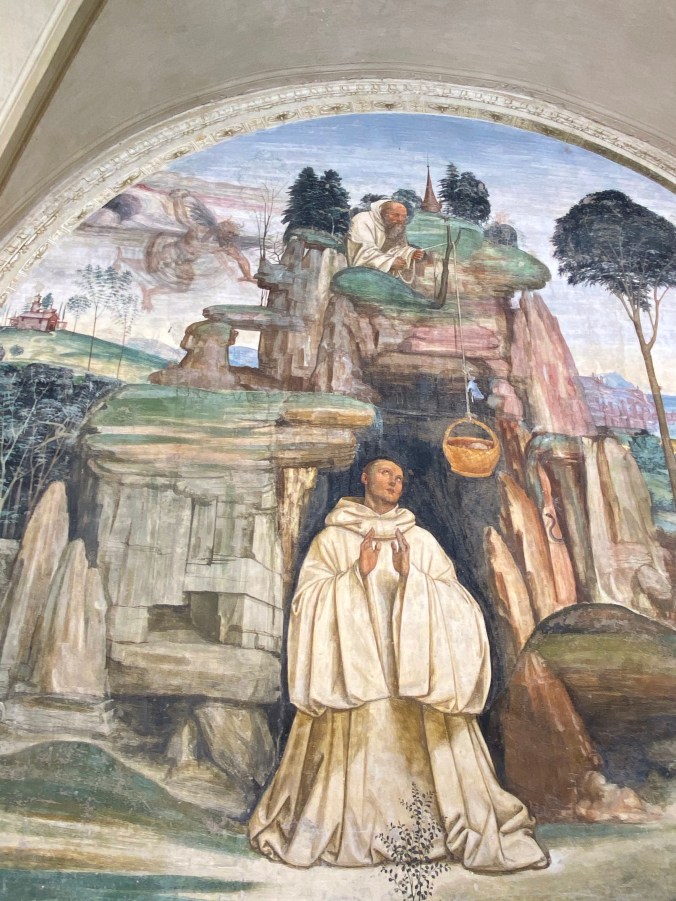
 

The fresco above, by Sodoma, shows the devil breaking the bell.
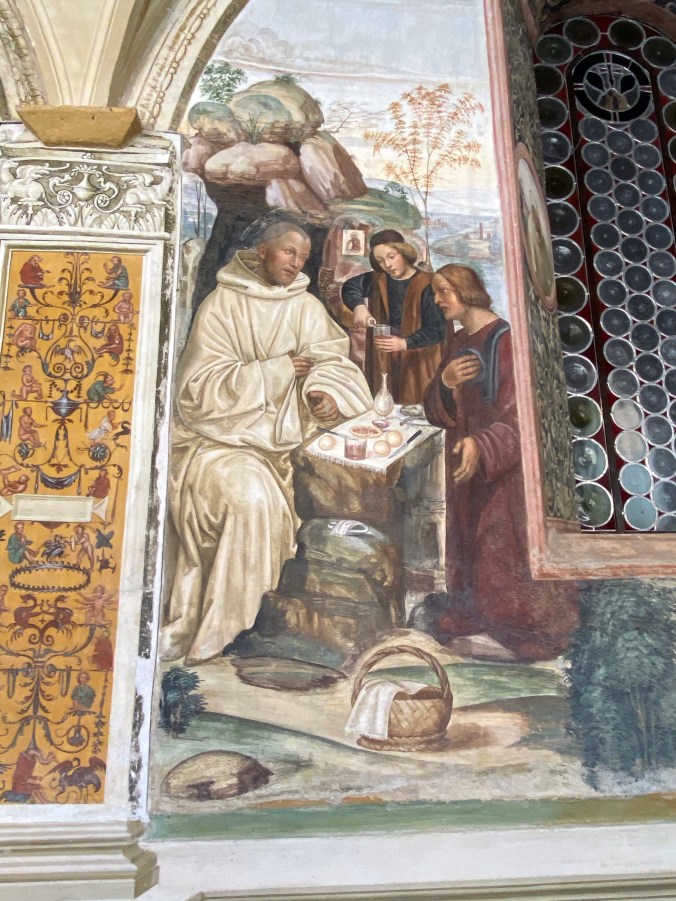
 

Above, by Sodoma, shows Benedict as a god-inspired priest bringing food to blessed on Easter.


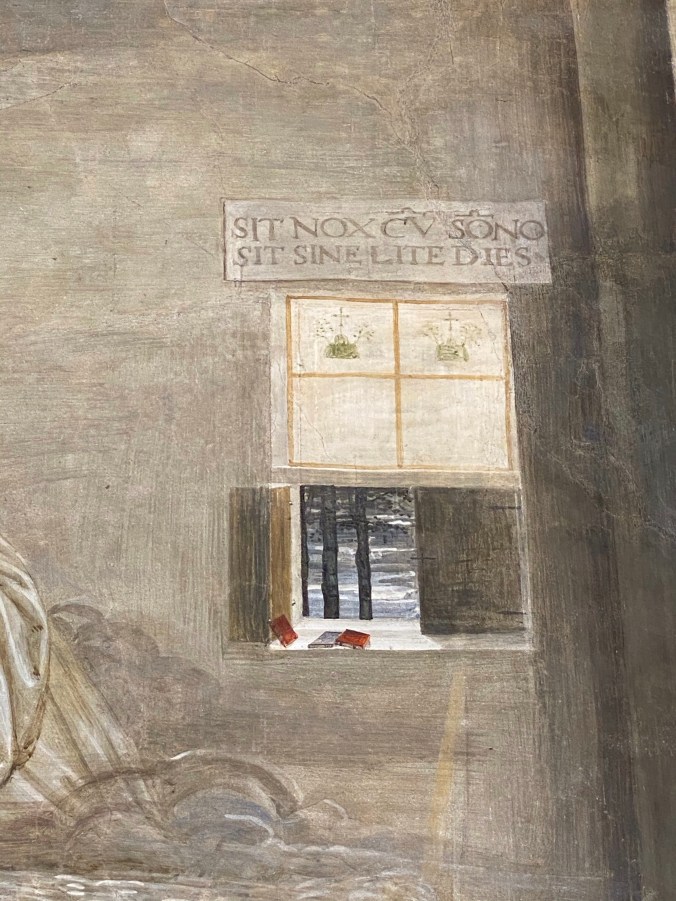
Love the window in this lunette.
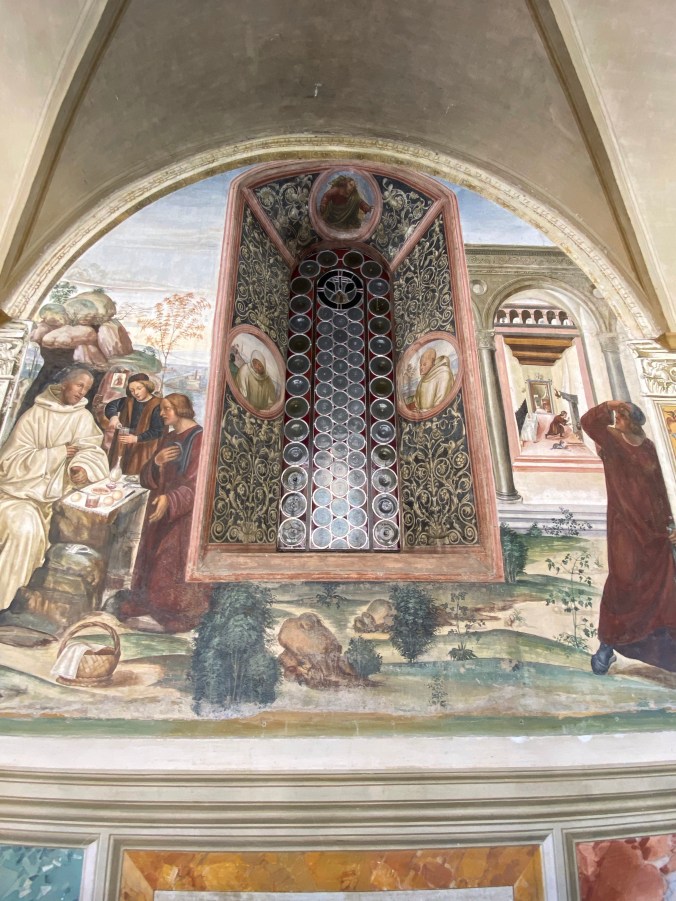


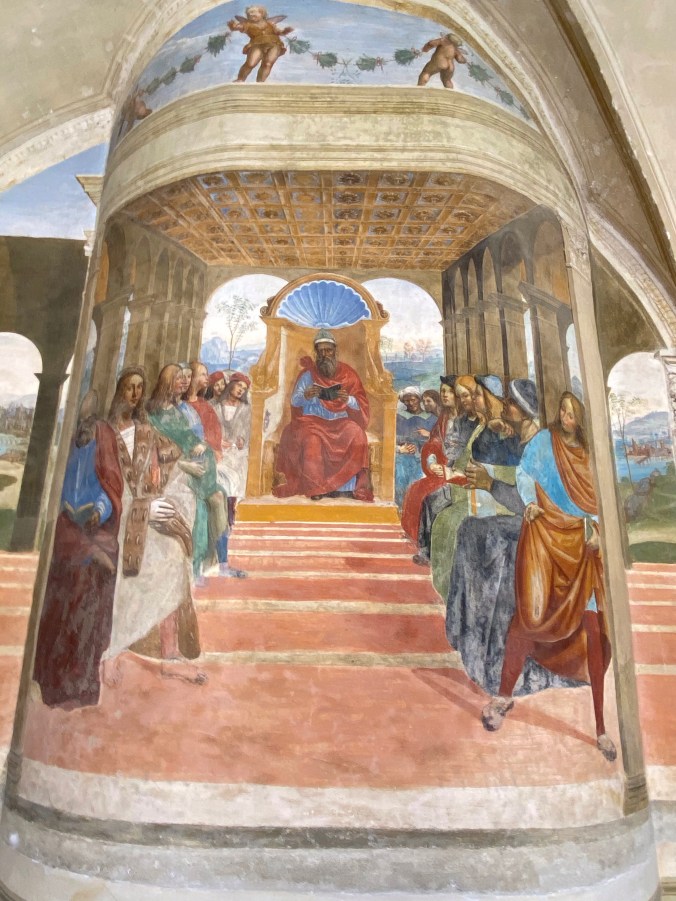
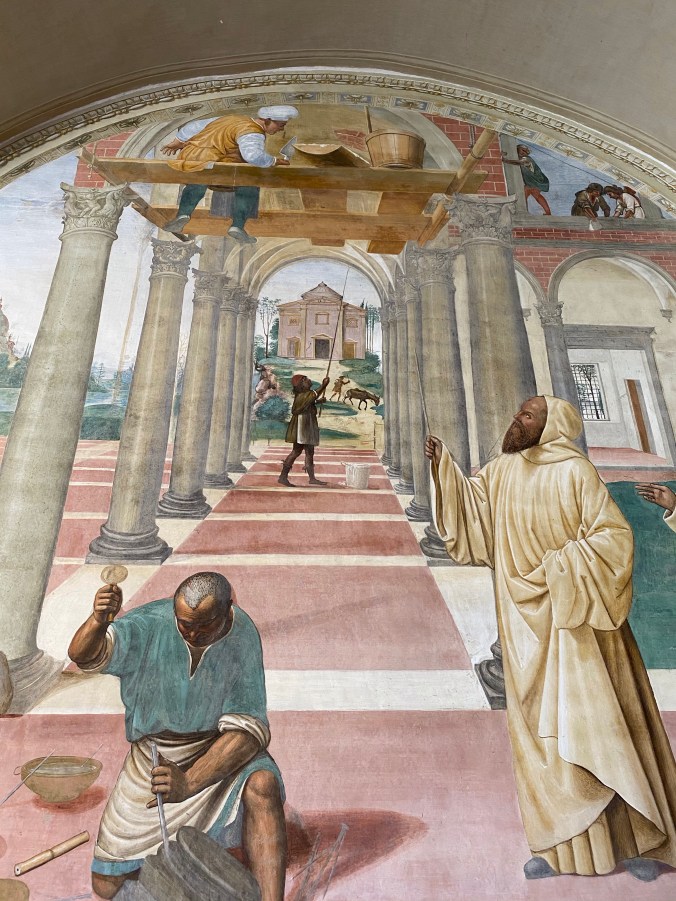
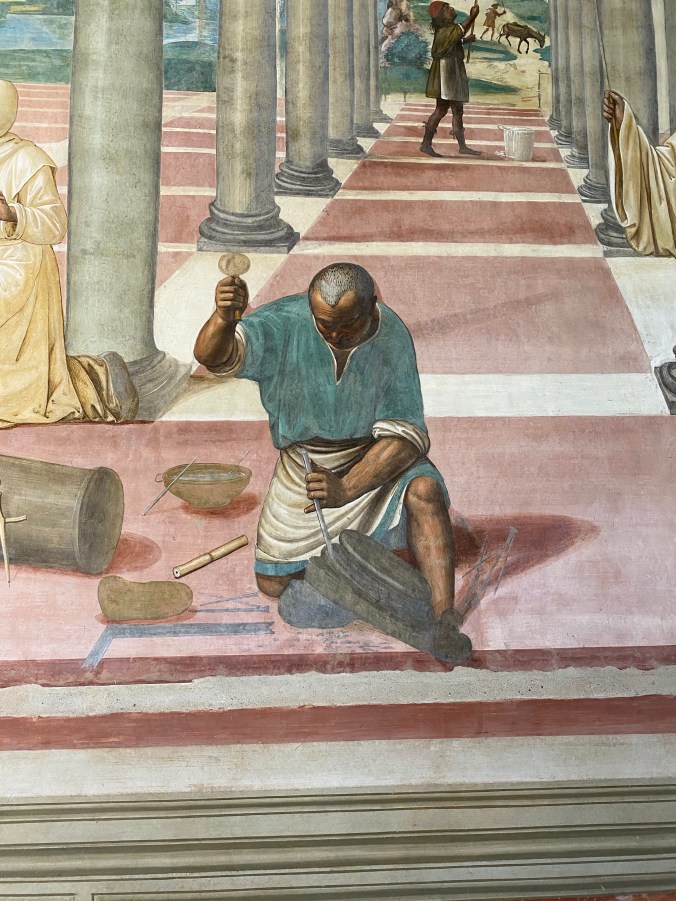
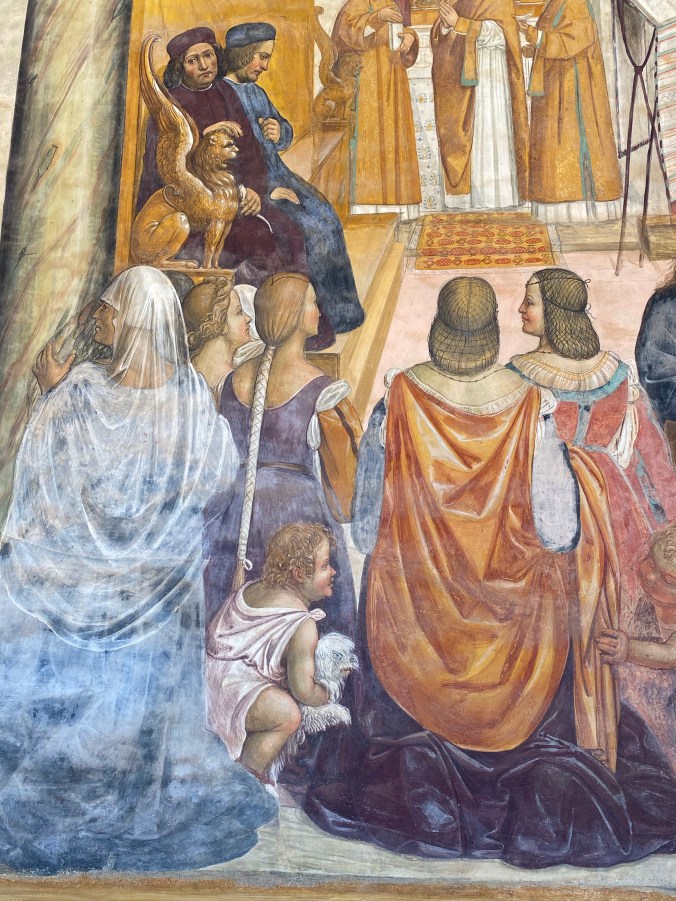
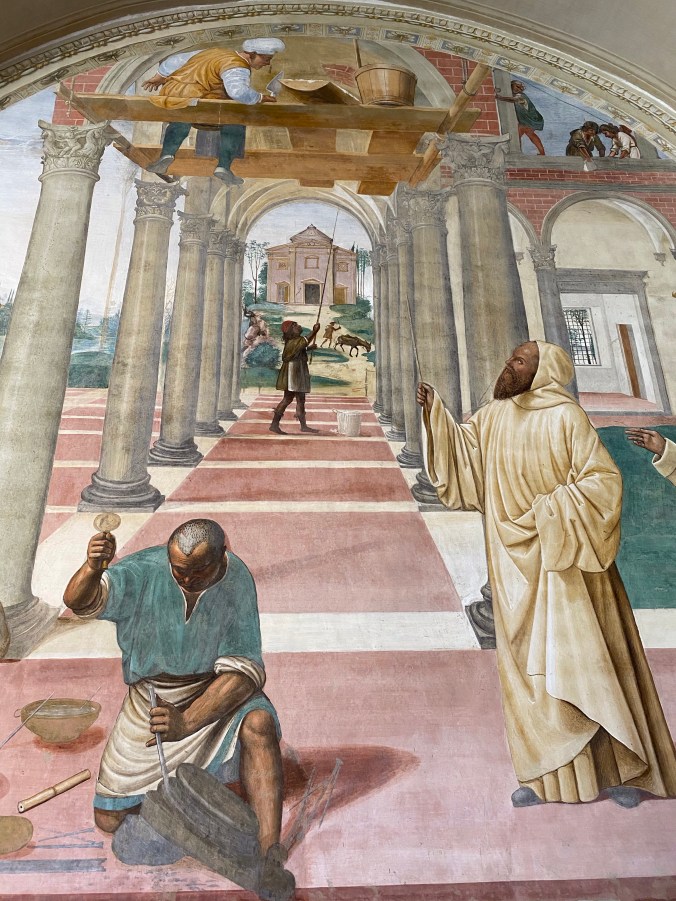
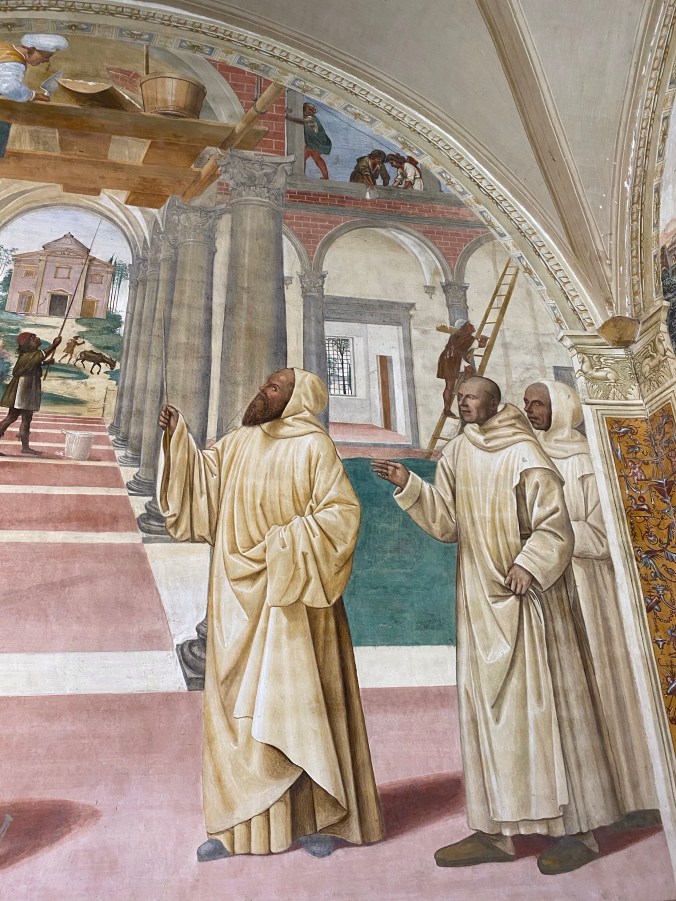
In this lunette, above and below, painted by Sodoma, shows How he blessed the building of twelve monasteries.


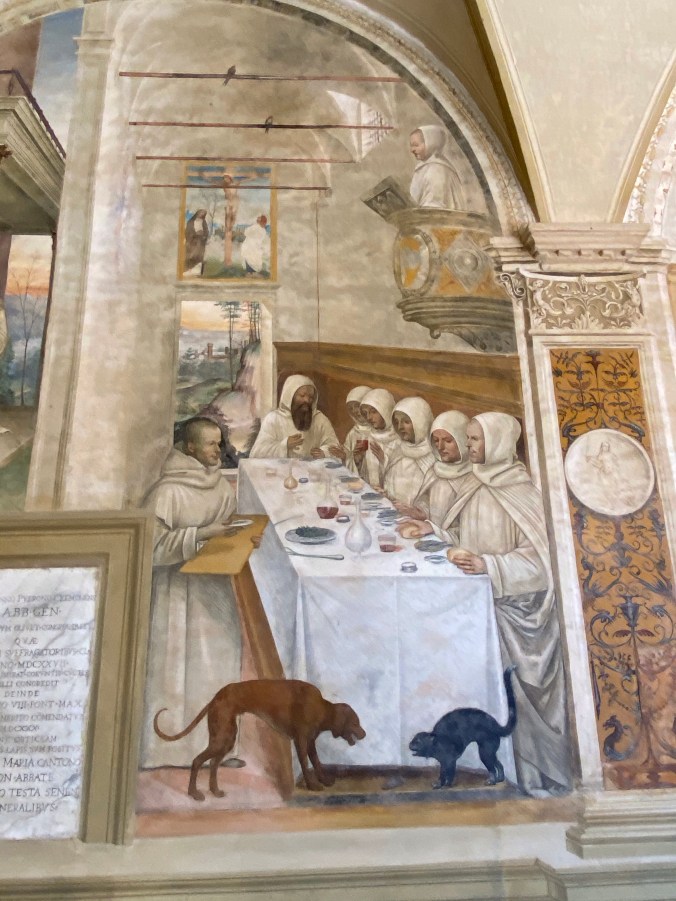
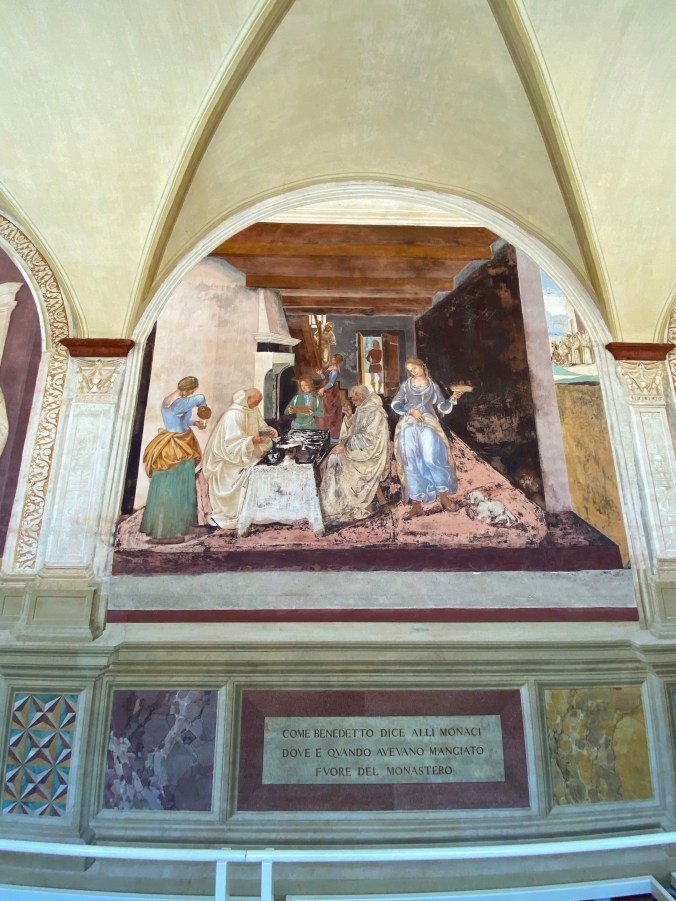
The painting below is by Signorelli and depicts Benedict talking to the monks after they had eaten outside the monastery
 

Luca_signorelli,_storie_di_san_benedetto_a_monteoliveto,_san_benedetto_rimprovera_due_monaci_che_hanno_violato_la_Regola,_dett_02


Below: How Benedict discovers Totila’s fiction. In the scene Riggo is seen, disguised as Totila to deceive Benedetto, who arrived in front of the figure of the saint who invites him to take off his clothes; the crowd around composed of monks and warriors expresses his amazement; in the background Riggo tells the story to Totila. It is a crowded scene and set to a theatrical taste [2].
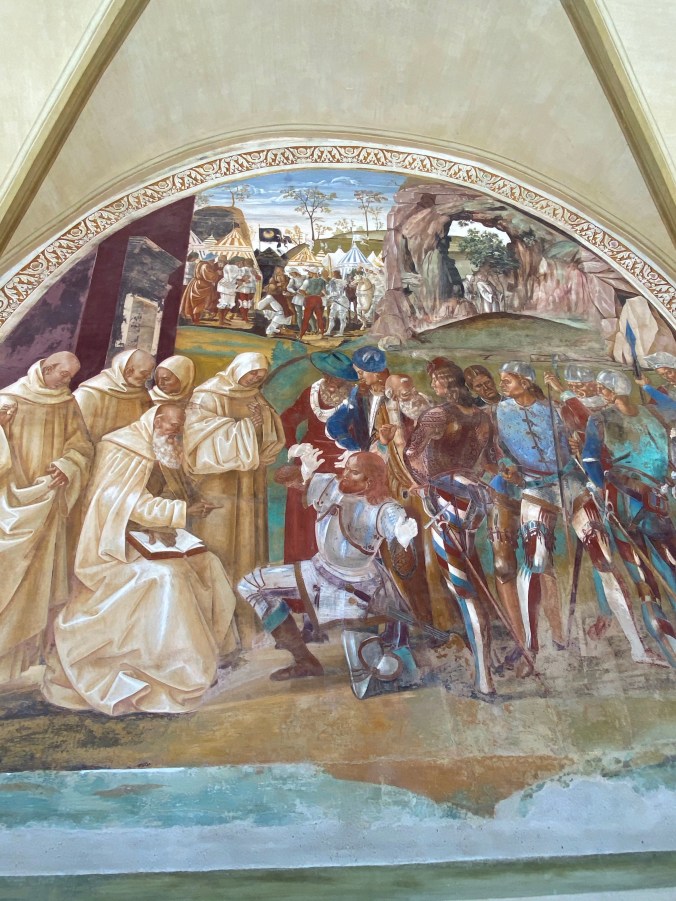
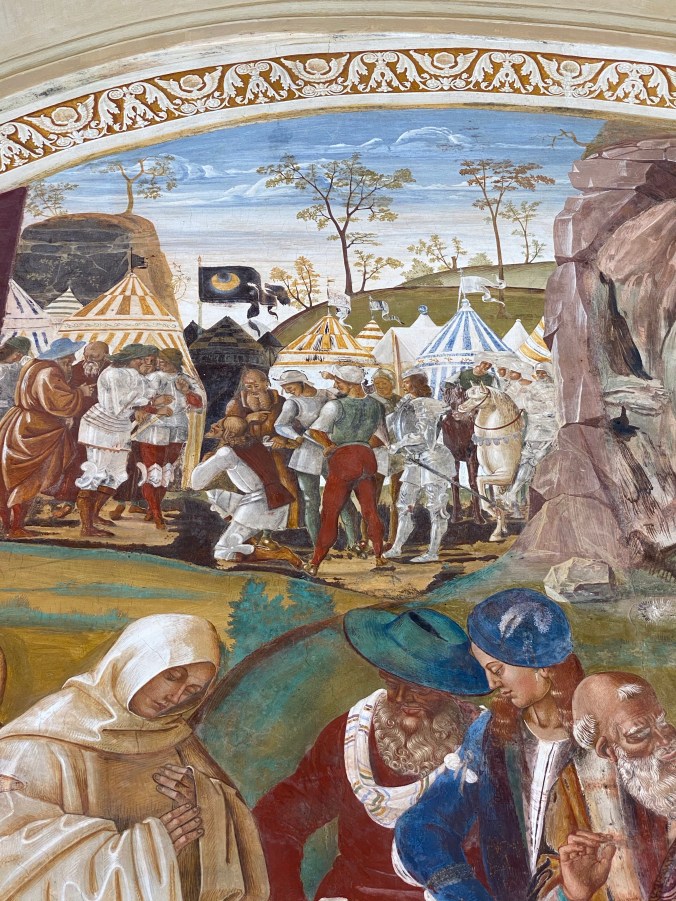
 

In the scene Riggo is seen, disguised as Totila to deceive Benedetto, who arrived in front of the figure of the saint who invites him to take off his clothes; the crowd around composed of monks and warriors expresses his amazement; in the background Riggo tells the story to Totila. It is a crowded scene and set to a theatrical taste [2].
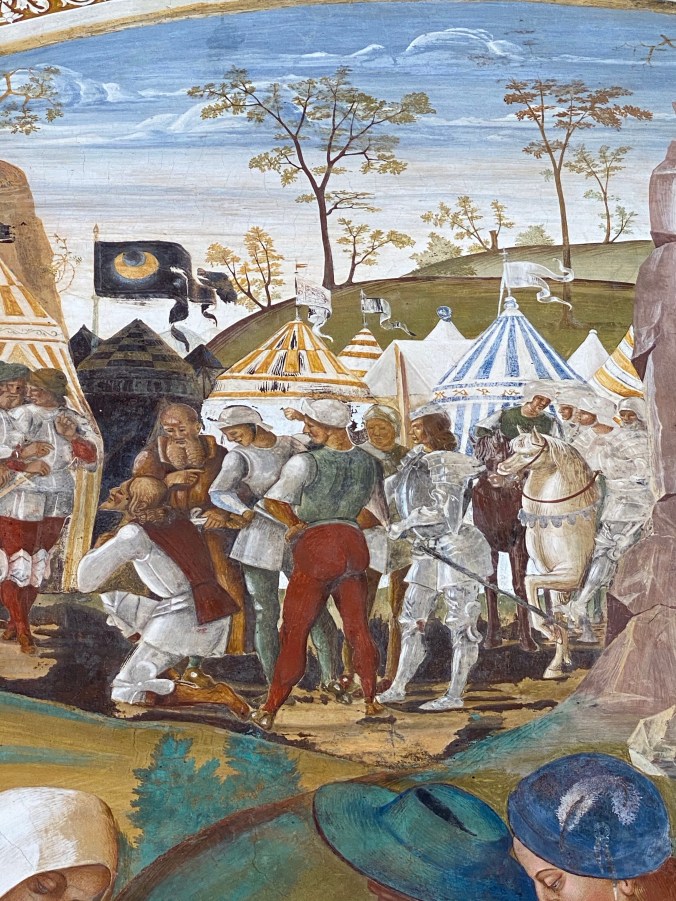
 

How Benedict recognizes and welcomes Totila


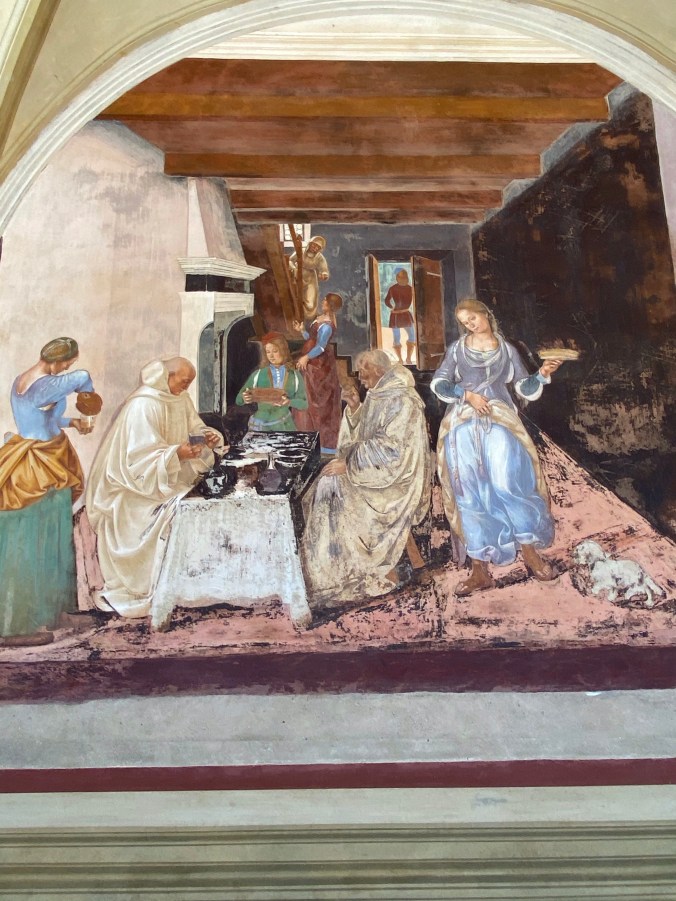
How Benedict gets plenty of flour and restores the monks


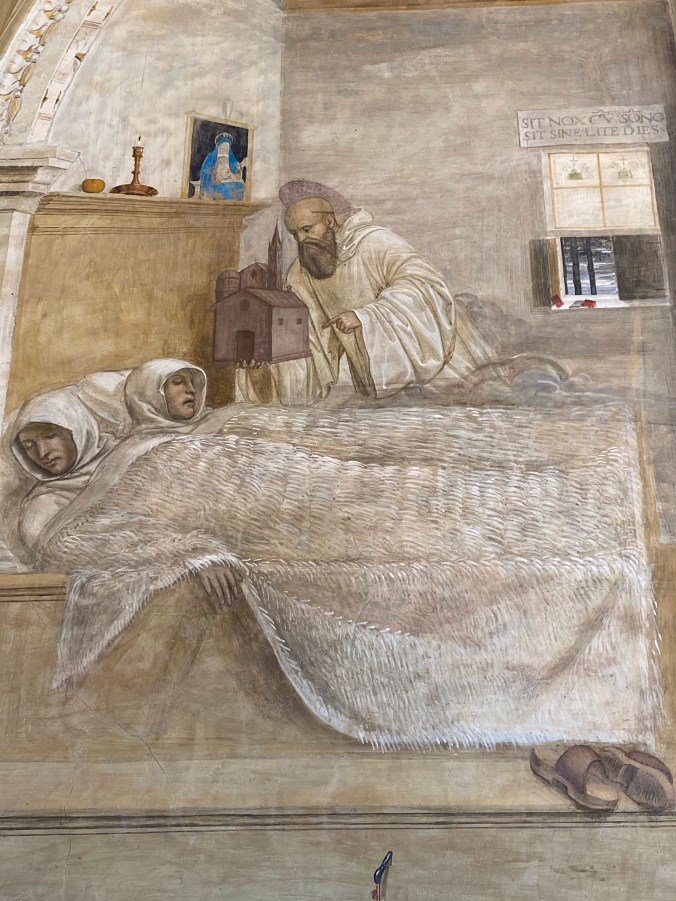
How Benedict appears to two distant monks and he designs the construction of a monastery.
The scene takes place in two stages. On the left the saint appears to one of the two sleeping monks while on the right the work is accomplished



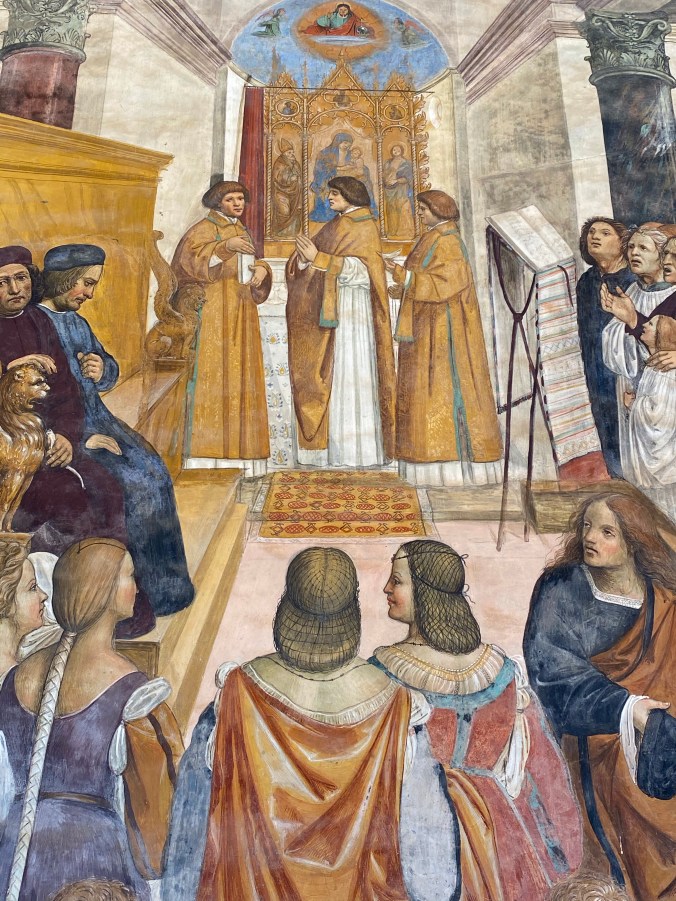
Like Benedict, he excommunicates two nuns and then acquits them that they were dead
Inside a church during the celebration of a mass; to the deacon’s words: If anyone is excommunicated, go out, a woman sees two nuns excommunicated by Saint Benedict come out of the tomb. On the right, in small, the saint reconciles the nuns


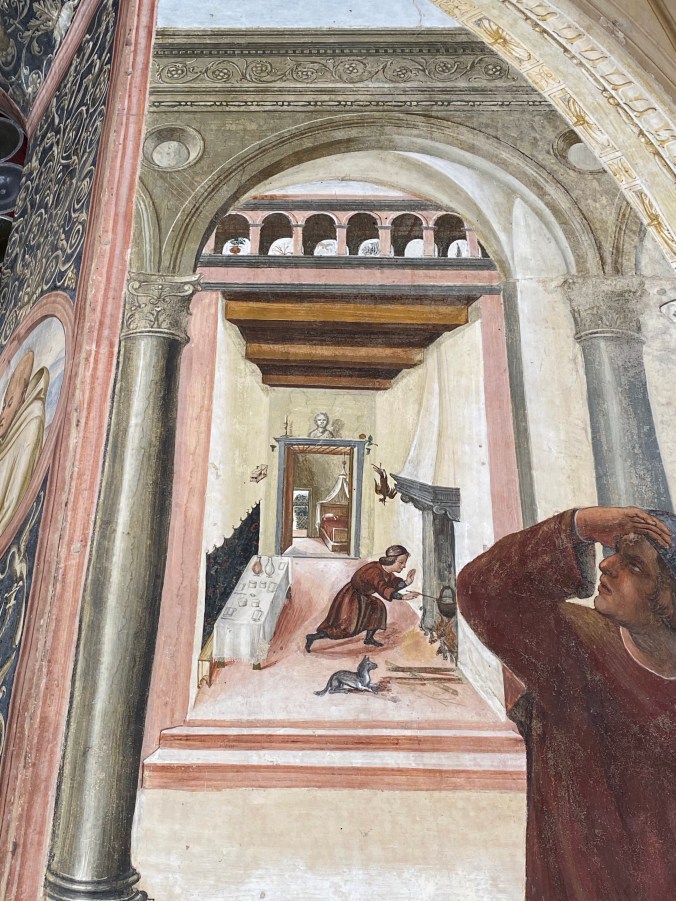
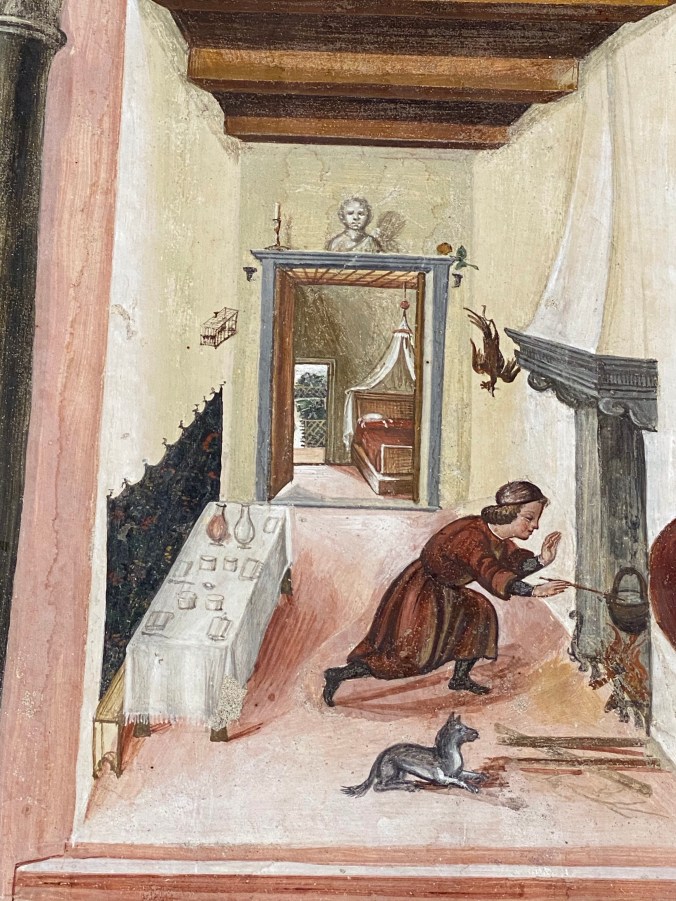
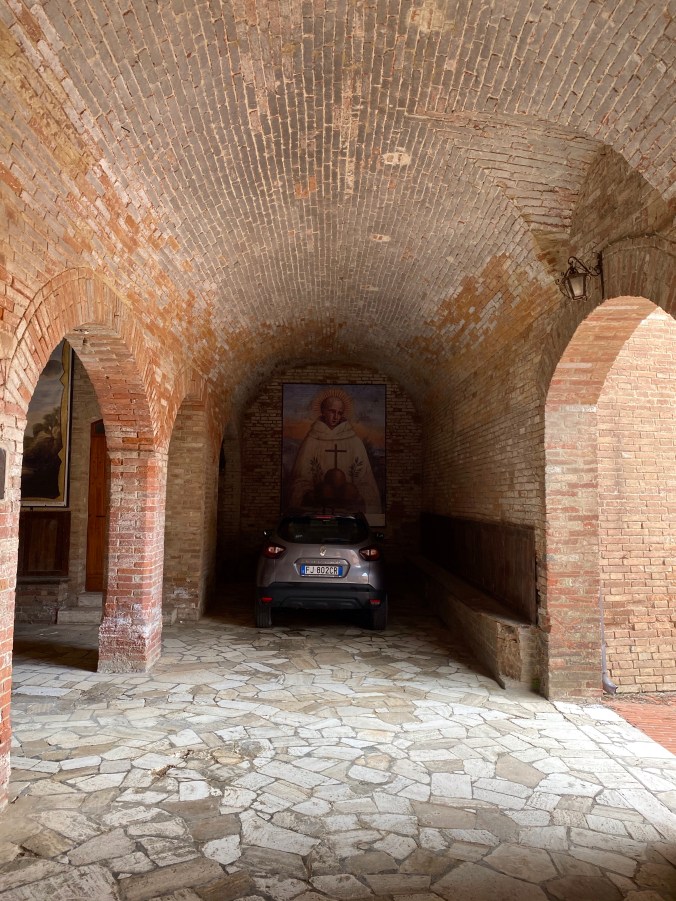
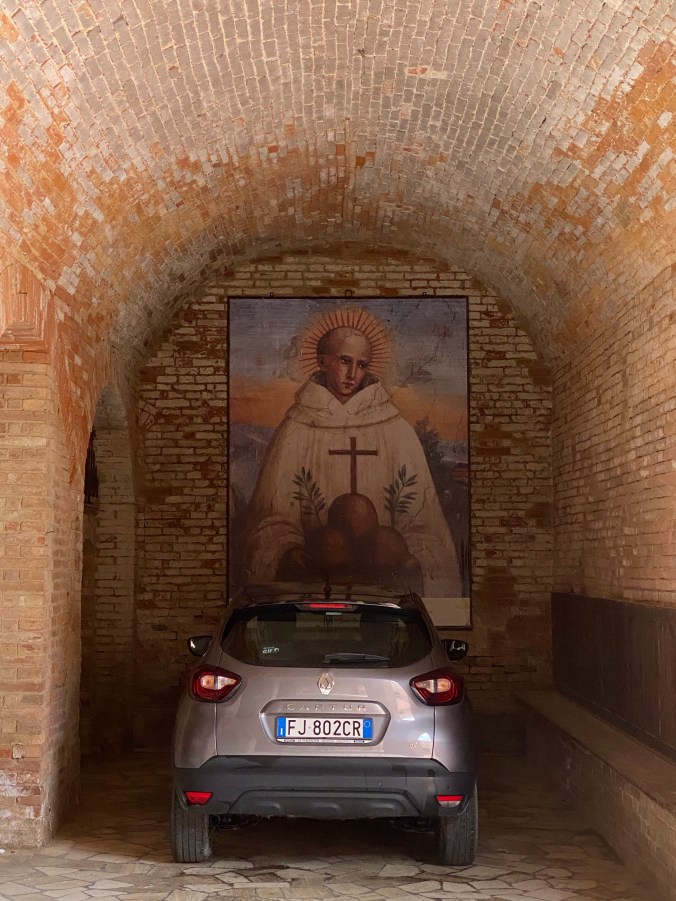
And, last, but not least, the modern incursion into the abbey.  A garage where there used to be a stable. Complete with frescoes.