Paintings
Brenta Canal, Part 3
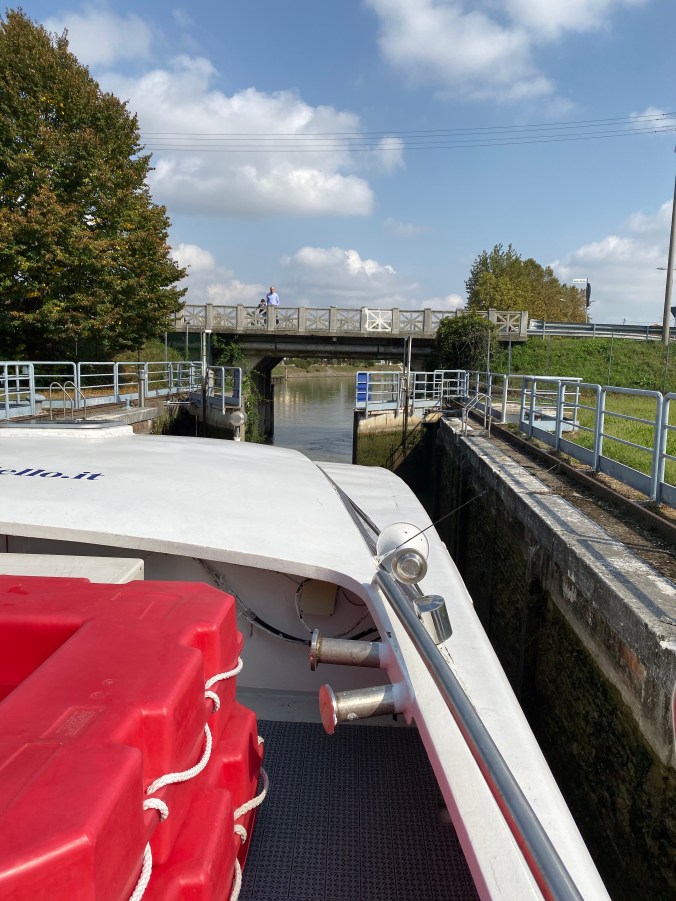
Back onboard the Burchiello, my cruise continued toward Venice from Stra. First we had to sail through the Dolo Locks.
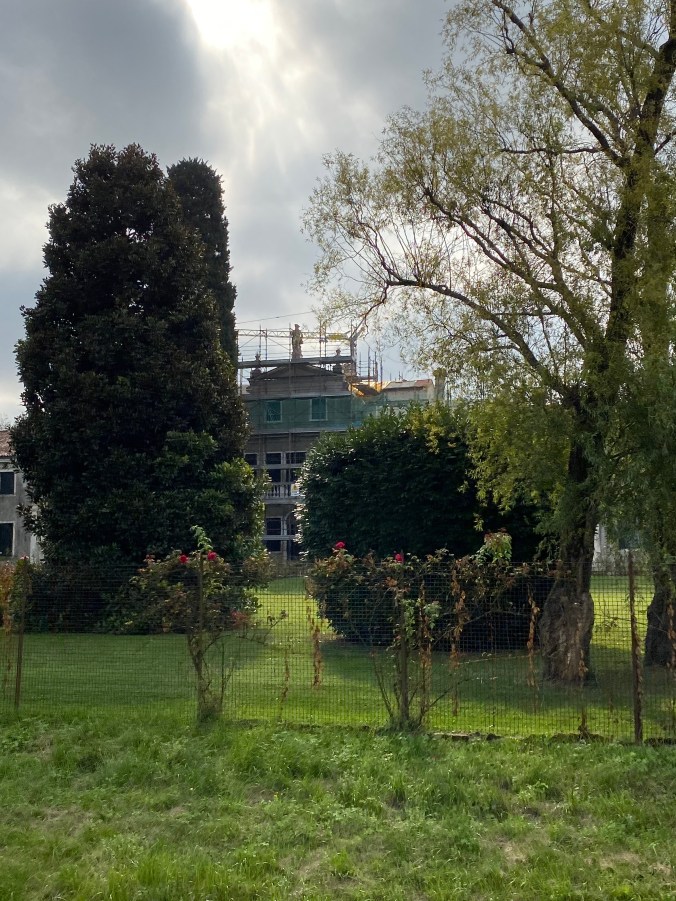
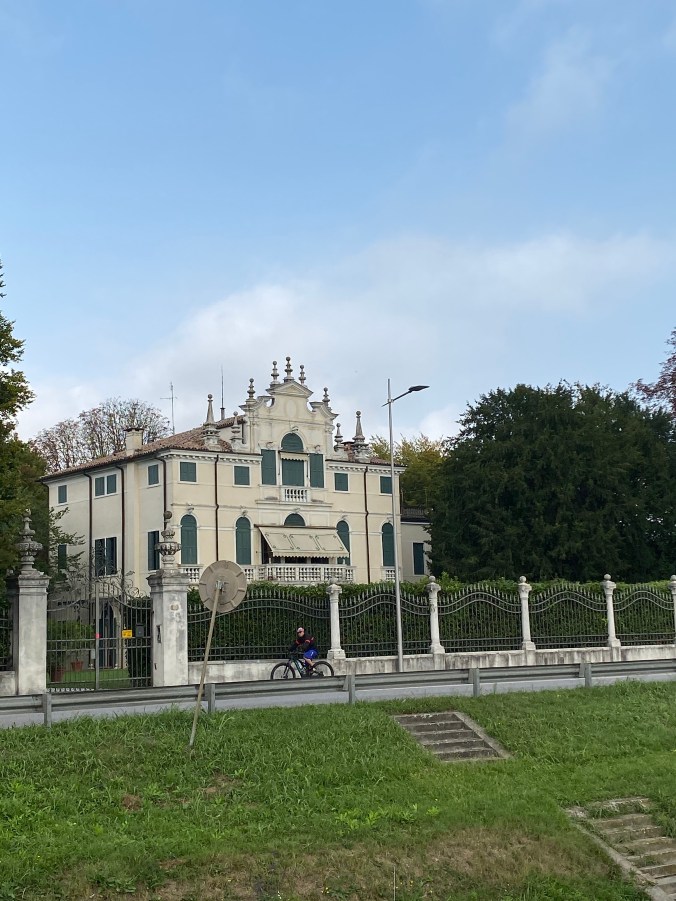
Soon we were passing many amazing ville, visible on the left and right banks of the canal. This area is around Mira, and has a high percentage of villas per square mile! We also passed very beautiful sections of the canals, with willow trees skimming the water and many fisherman catching their Sunday lunch.
It was smooth sailing and I had one of the best seats on the boat.





Next we passed through the Mira Locks.


We stopped at Villa Widmann, said to be a typical 18th century residence (that is if you were a part of the aristocracy!). It houses luscious frescoes and has lovely gardens.


To be continued.
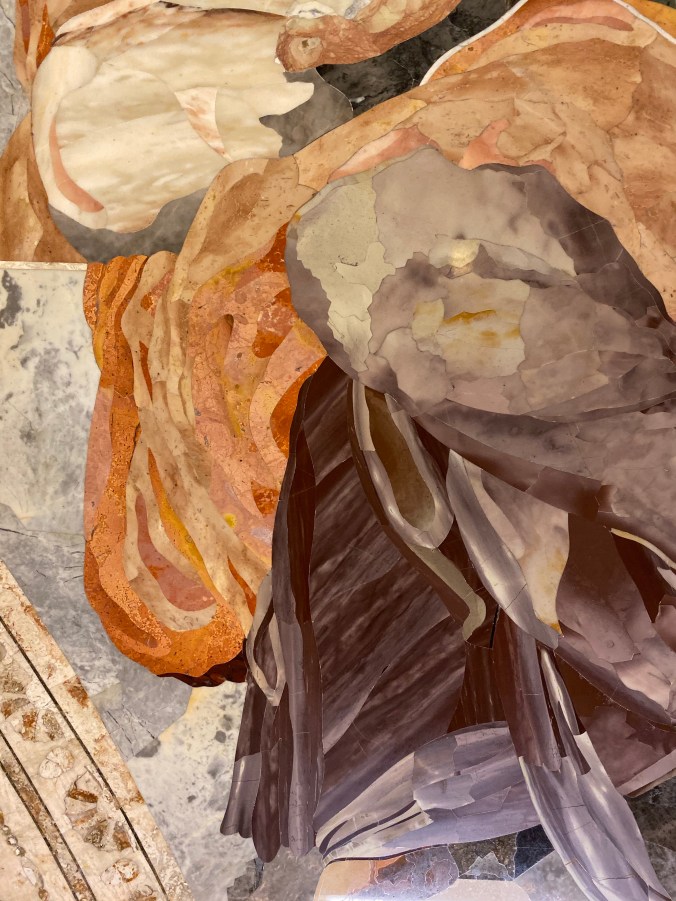
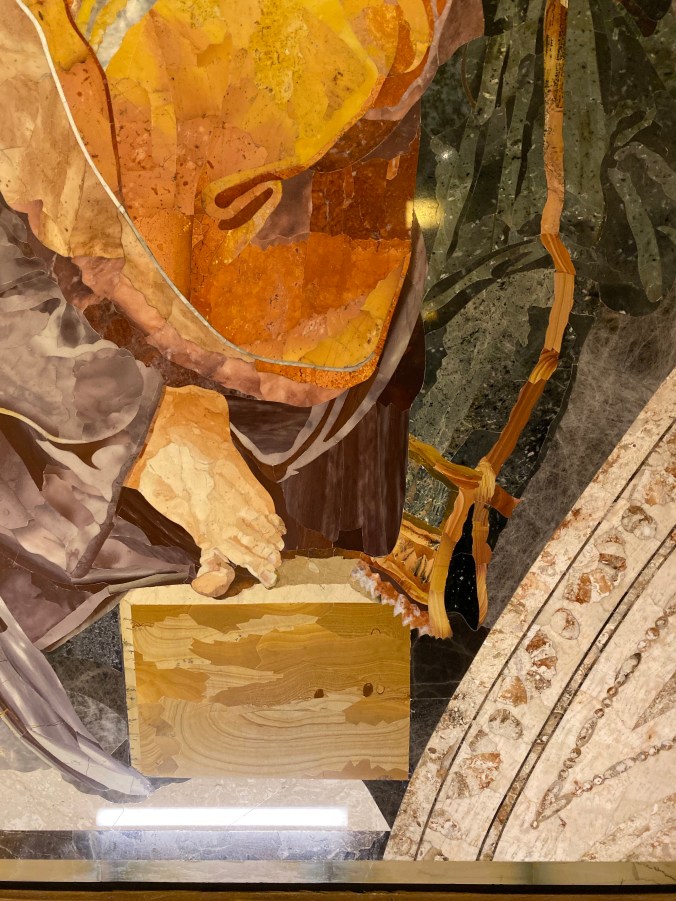
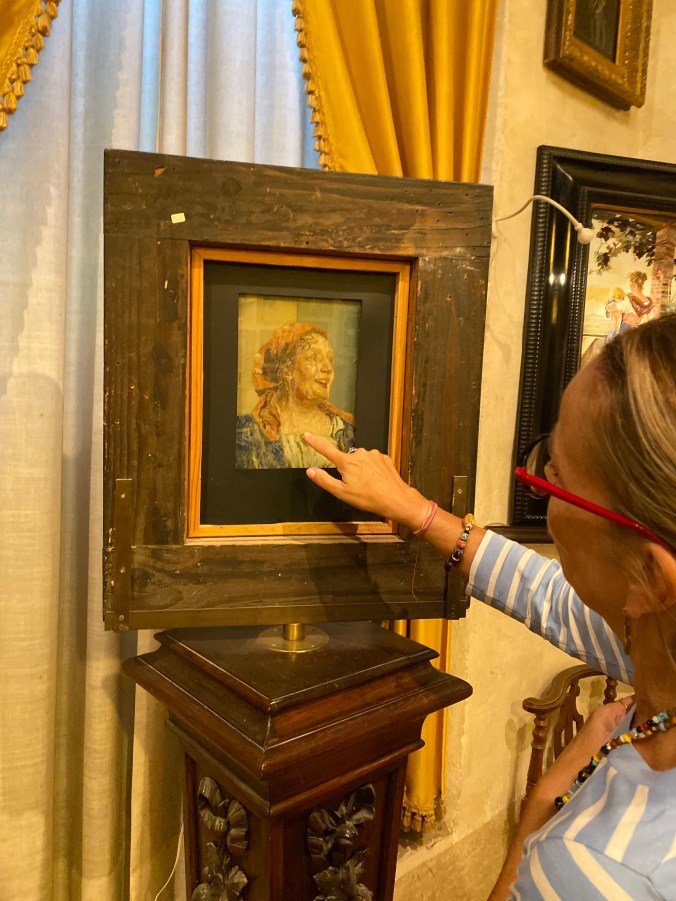
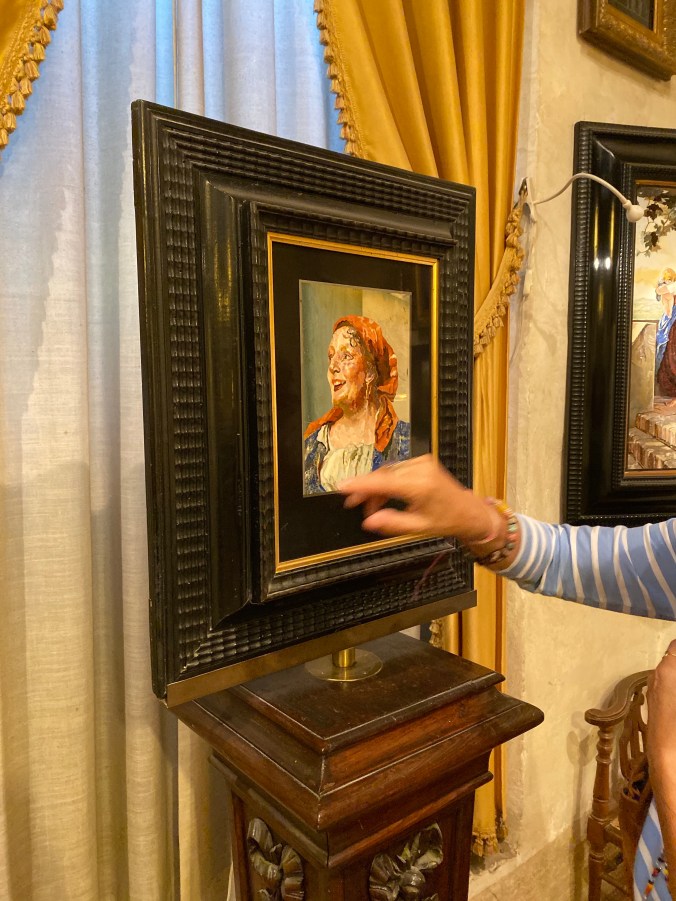
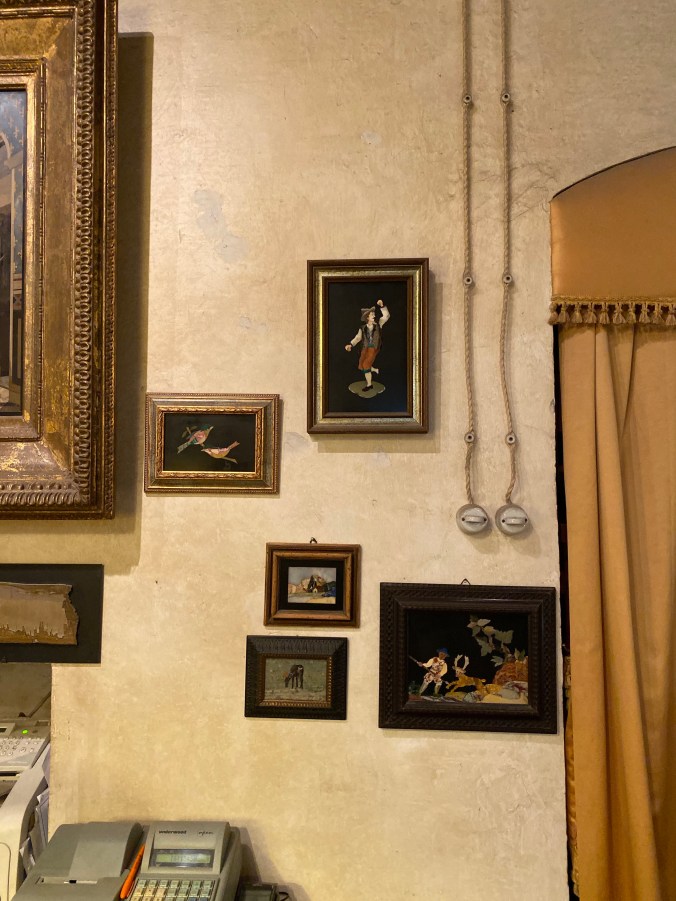
Bottega d’arte Lastrucci and the fine art of commesso Fiorentina (pictorial stone inlay)
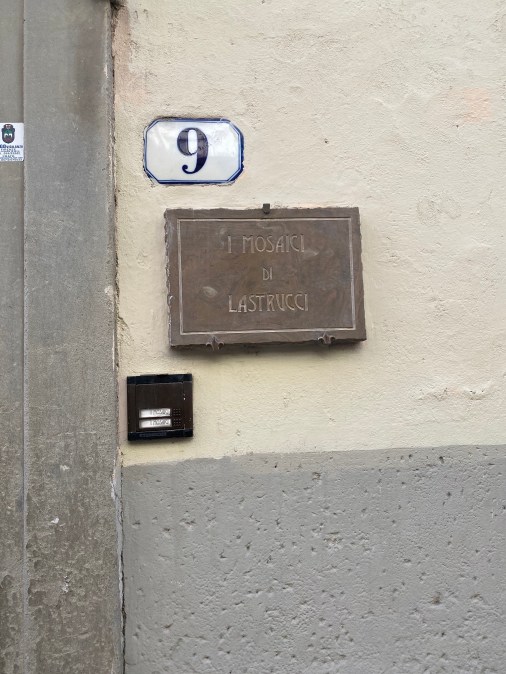
I just discovered an artisanal workshop last week in Florence. The shop is old and has an excellent pedigree. I’ve never had a big interest in the art of mosaics or pietre dure, so I’ve never sought out the shops.
But, I’ve always remembered that no less an expert than Giorgio Vasari described the finished works as “eternal paintings.”
And, I found out that the art form is more appealing to me than I had earlier realized. Just check out, in particular, this great studio and their artworks.
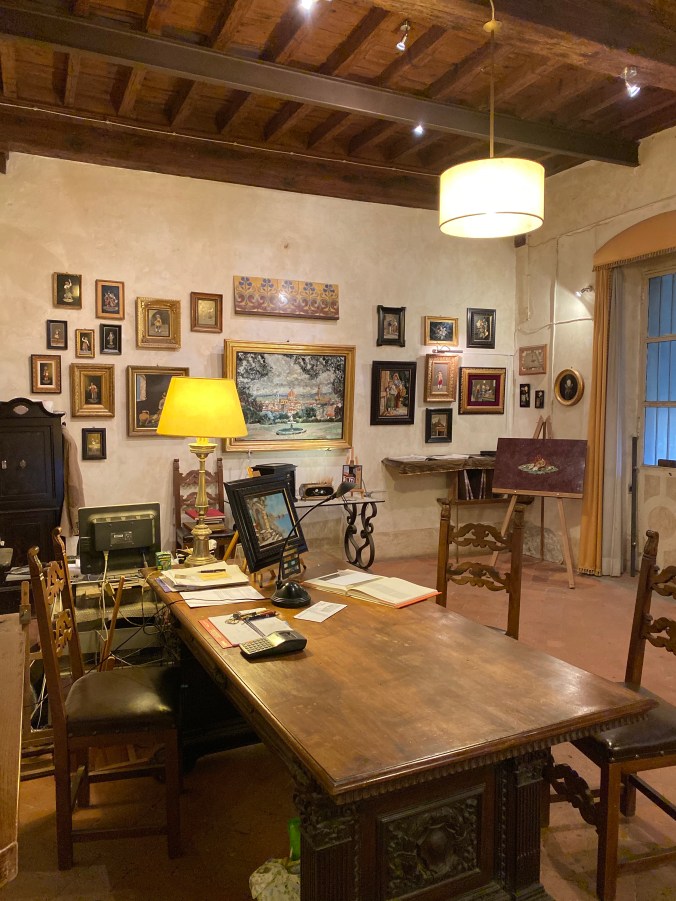
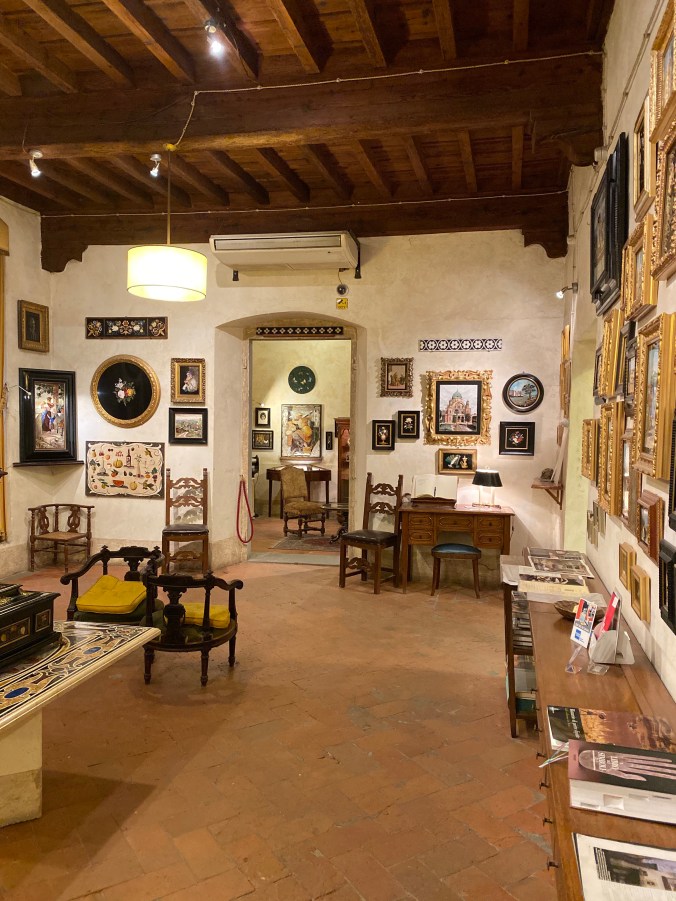
First, the location: the studio is housed within this important old palazzo, which is reason enough to pay them a visit. It is housed within:
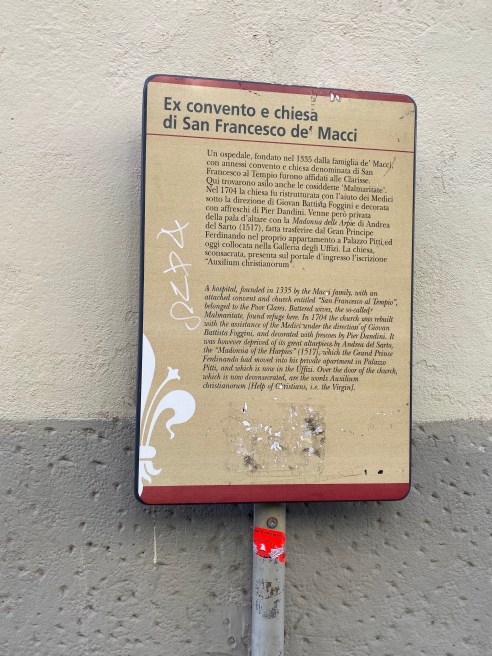
From the Lastrucci website:
The artistic studio of the Masters Jacopo and Bruno Lastrucci is situated in the ancient Spedale di San Francesco de’ Macci in Florence, in the street of the same name, just a few steps from the celebrated Basilica di Santa Croce.
The medieval building dates back to 1335 and for several centuries housed the famous “Madonna of Harpies,” a painting by Andrea del Sarto now in the collection of the Uffizi Gallery.
A visit to these historical rooms, which today form the headquarters of the Studio Musivo Lastrucci, is certainly an unforgettable experience.
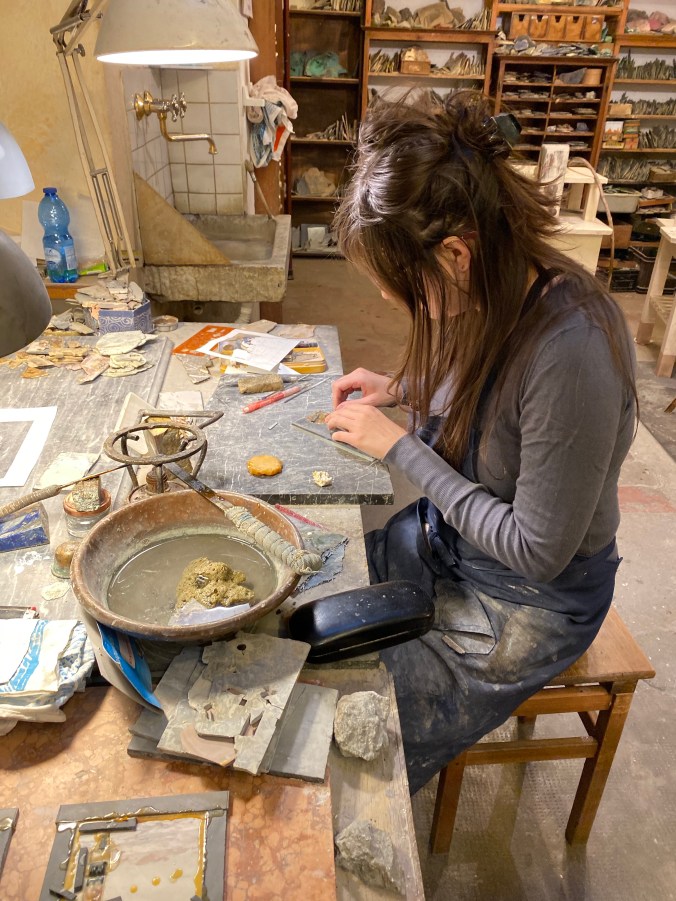
All of the mosaics are entirely produced in the according to the original techniques dating back to the 16th century, which highlight the natural color of every stone.
As in the 16th century, every piece is cut with a simple saw made of a tree branch bent in the form of a bow with an iron wire stretched from end to end and covered with water and emery powder; the pieces are then glued together with a mixture of virgin wax and pine resin.
The tools used are of ancient origin; progress and technology have not been able to create suitable substitutes for them, because the original tools were crafted for recreating a sense of beauty that modern technology is unable to reproduce.
The artists personally follow the whole creative process and all mosaics are entirely produced in the studio of the Masters Iacopo and Bruno Lastrucci, situated in Via de’ Macci 9 and annexed to the Galleria Musiva, selling Florentine mosaics of their own production.
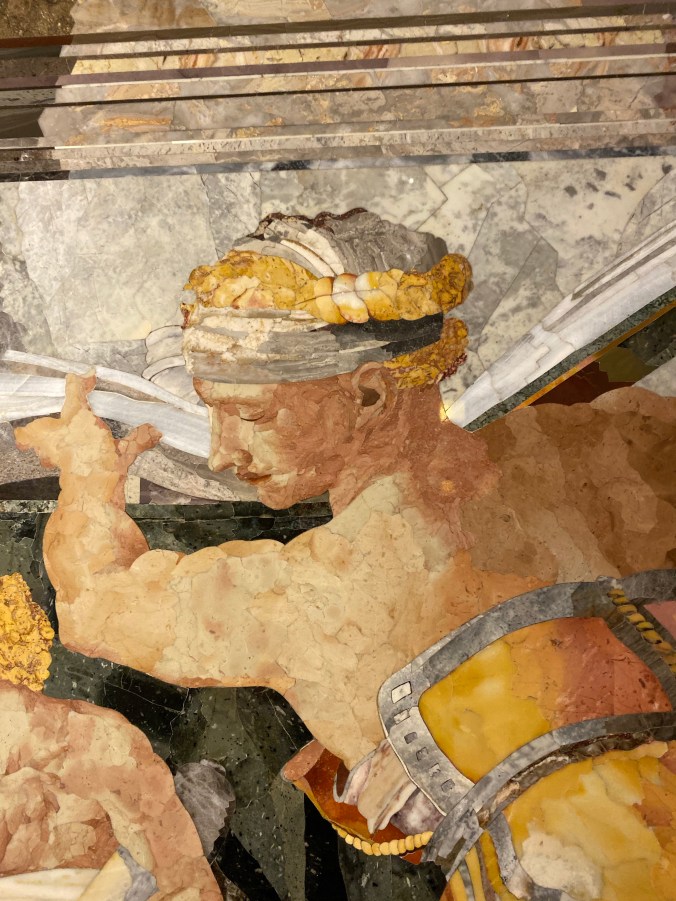
Something I want to clear up in case you, like me, were/are confused about the art form known as commesso Fiorentina. I thought the name commesso Fiorentina referred to some sort of Florentine commission, or office, or something official promoting the artisanal artworks of Florence. In fact, it is the (kind of inexact, if you ask me) name given to the fine art of making pictures with stone inlay. Put another way, this ain’t your grandma’s mosaic.
I was happy to read online that in appreciating commesso Fiorentina, I’m not the only one who confused it with regular mosaics. I always thought a mosaic is a mosaic is a mosaic. Ho hum. But commesso Fiorentina is in fact is a very separate (and elevated) technique, that just happened to have been created and developed in Tuscany.
Here’s an example:
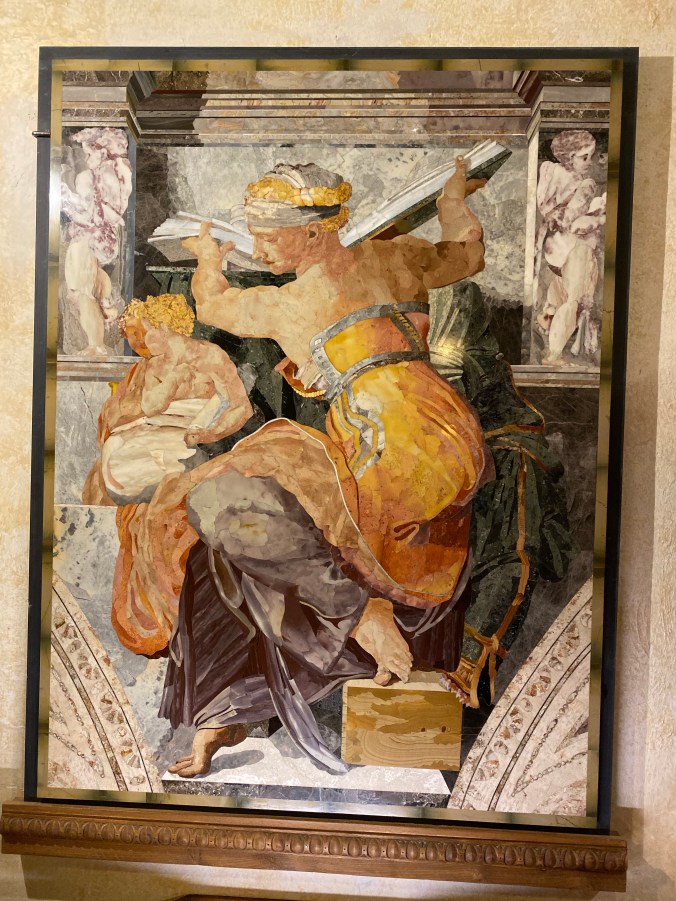
Perhaps you won’t be surprised to learn that the Medici family was the first to recognize qualities of this technique and they played a big role in promoting it. Cosimo I had a strong interest in ancient precious marbles, and his interest extended to a new experimentation with precious stones.
Francesco I lured stone artists to Florence and Ferdinando I started the construction of the family mausoleum in San Lorenzo, adopting this artistic technique.
Here are the stages of a production in stone:
The idea comes to life in a preparatory drawing and then continues with the choice of the stones that will be used in the execution of the work – porphyry, lapis lazuli, granite or other precious stones.
Then the stones are cut, but they are not cut geometrically like mosaics. This, in fact, is one of the enormous differences as compared to mosaic. There is a particular and age-old way of cutting the stones in commesso Fiorentina. The stone cutting and the impeccable finishing and polishing work that follows, are part of what makes this technique exceptional.
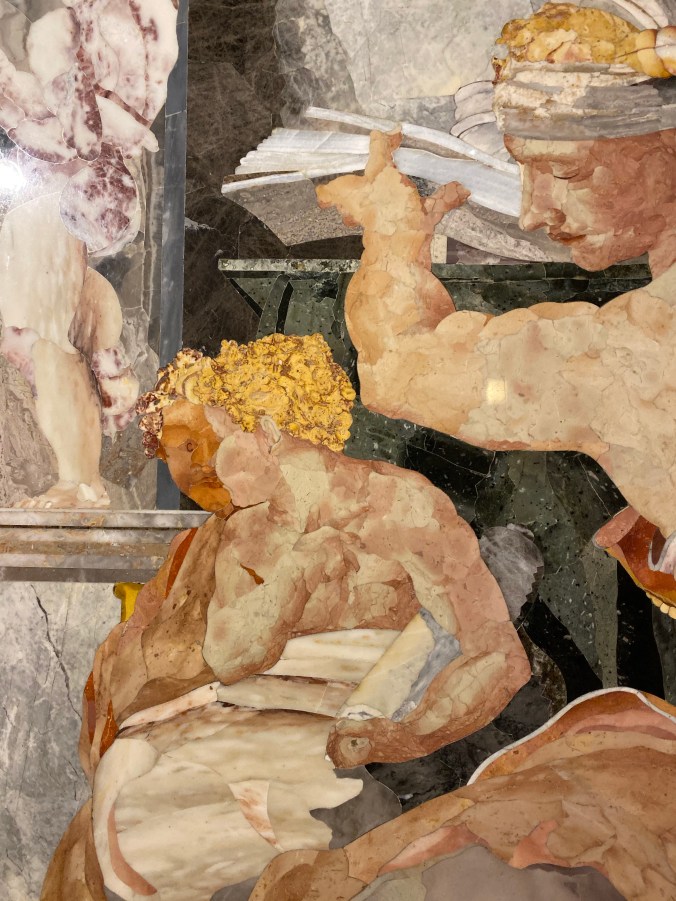
The Studio Lastrucci was awarded the 2010 special Prize of Bottega Artigiana Fiorentina (under the patronage of UNESCO).
After working for years as artistic director of the most famous Florentine mosaic studio and workshop, in 2011, master Bruno, along with his son, decided to work exclusively on his own creations in the art studio in Via de ‘ Macci 9.
Bruno began his studies in this ancient art at the tender age of eight. Once he finished primary school, he spent all of his time in the mosaic workshop of Montici, owned by an American artist, Richard Almond Blow. The Montici school produced collaborations with some international contemporary painters.
Bruno Lastrucci is a craftsman and visionary artist engaged in the technique of commesso fiorentina and he uses only the traditional tools and techniques. He focuses mainly on portraiture; his celebrated portrait of Joseph Lancaster is in the collection of the Lizzadro Lapidary Art Museum, and other important works of art are in prestigious private collections.
His passion and dedication was transmitted to son Iacopo, who was also apprenticed in the art.
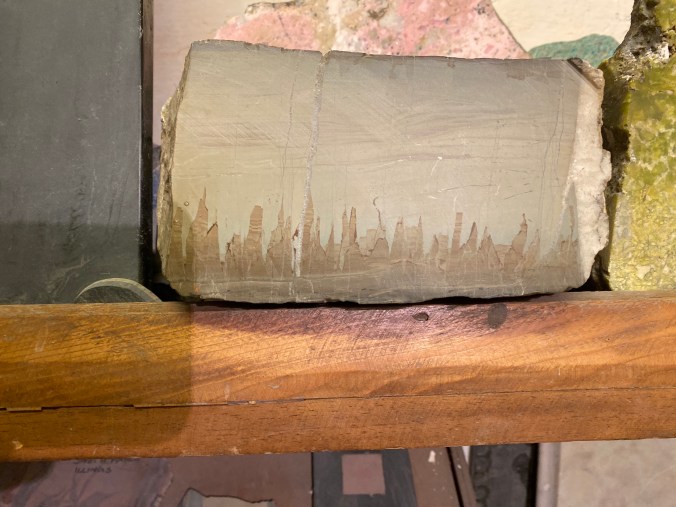
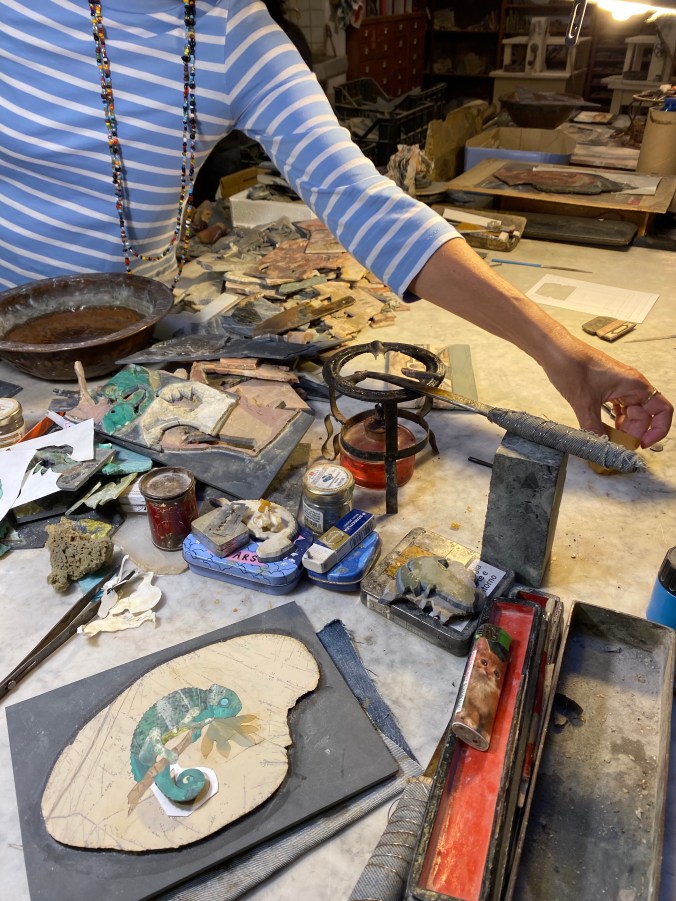
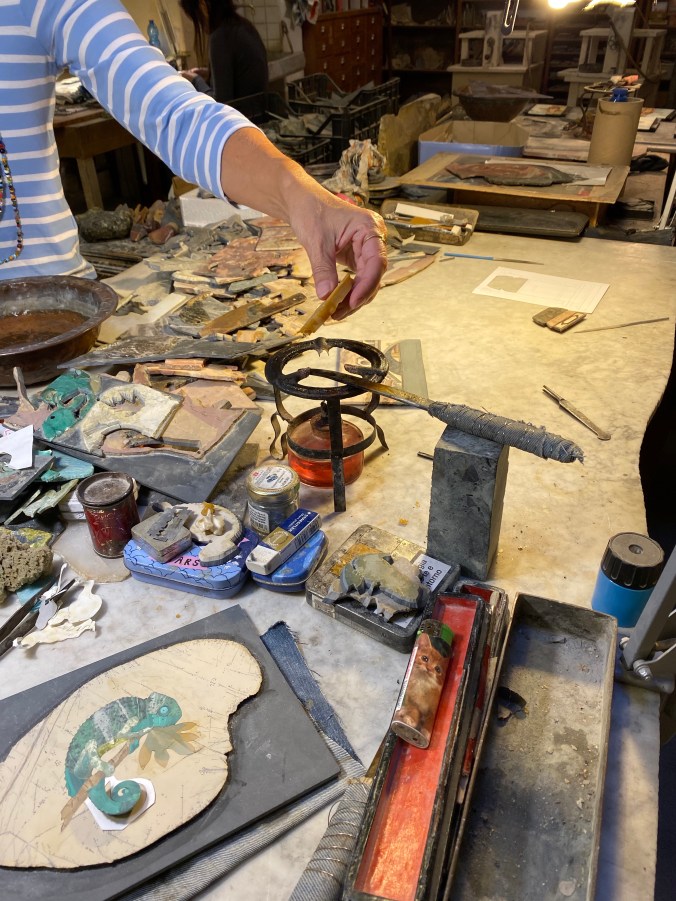
The masters Jacopo and Bruno Lastrucci perform the artisan work of the Florentine technique known as Commesso Fiorentino. This technique entails the use of hot glues (beeswax primarily) and uses only natural colored stones. The technique dates back to the Medici period, and the Medici family was a great patron of it. The technique, of course, dates back to the classic mosaic artistry of the Roman era, using the artistic inlay of stones, with the creation of very realistic pictures, similar to paintings.
Although the working of hard stones has ancient origins, it was thanks to the support of the Medici that the work was perfected, to the point to that a specifically established entity, the Opificio delle Pietre Dure, still exists today.
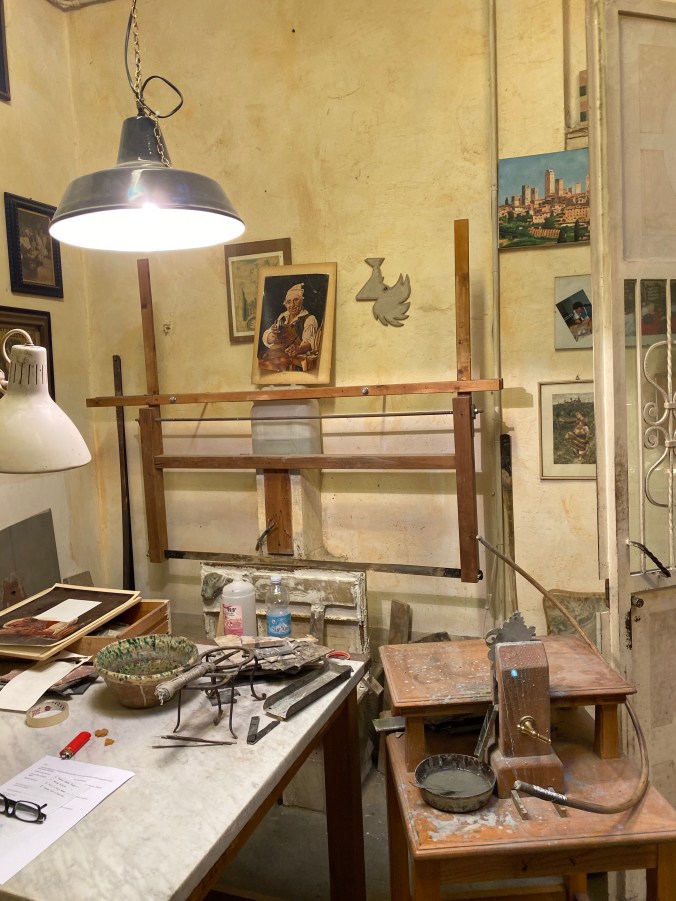
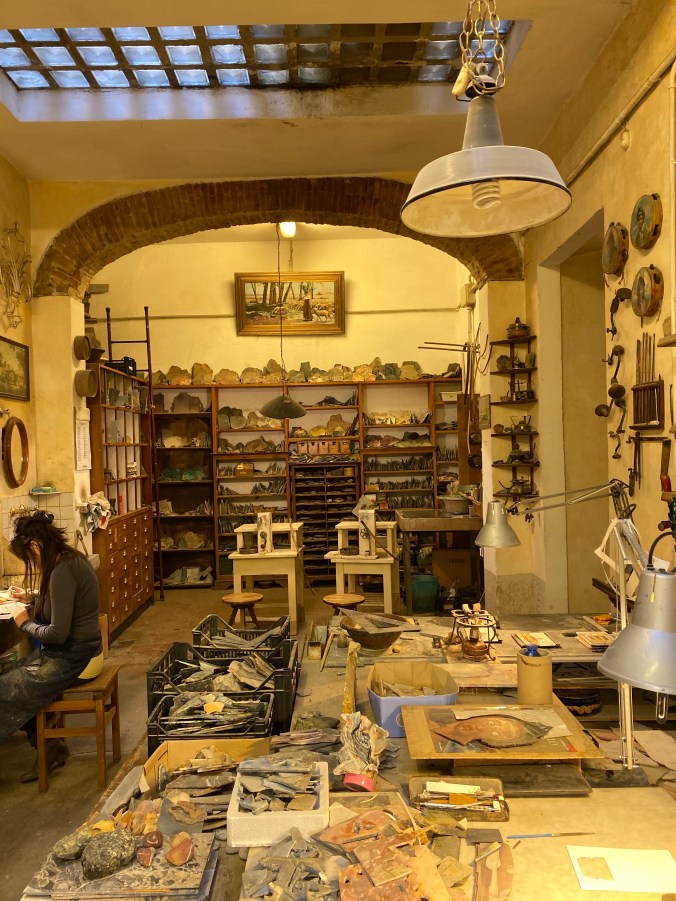
The largest number of works made to order are kept at the Opificio delle Pietre Dure, a renowned institute in the field of restoration.
The ancient factory was founded by Ferdinando I, who needed to train the workers needed to carry out the ambitious project of the Chapel of the Princes in San Lorenzo.
This first reality merged then, at the beginning of the 20th century, with the birth of the first modern restoration laboratory in Italy.
On the occasion of the tragic flood of 1966, the factory was confirmed as the excellence that it had already demonstrated to be, bringing back to light some extraordinary masterpieces that could have disappeared forever.
Examples of committed works can be found right inside the Chapel of the Princes.
Given the funeral tone of the work, more muted and dark colors were chosen with porphyry and granite for the upper part of the structure; in the wainscot instead, the colors become more vivid, to reproduce the coats of arms of the families loyal to the Medici . In the niches the statues of the Grand Dukes should have entered, also these in the order, the work turned out however too ambitious and only two were realized.
The salesman is a small jewel belonging to the city of Florence , still made today and a great treasure to be preserved, preserved and admired.
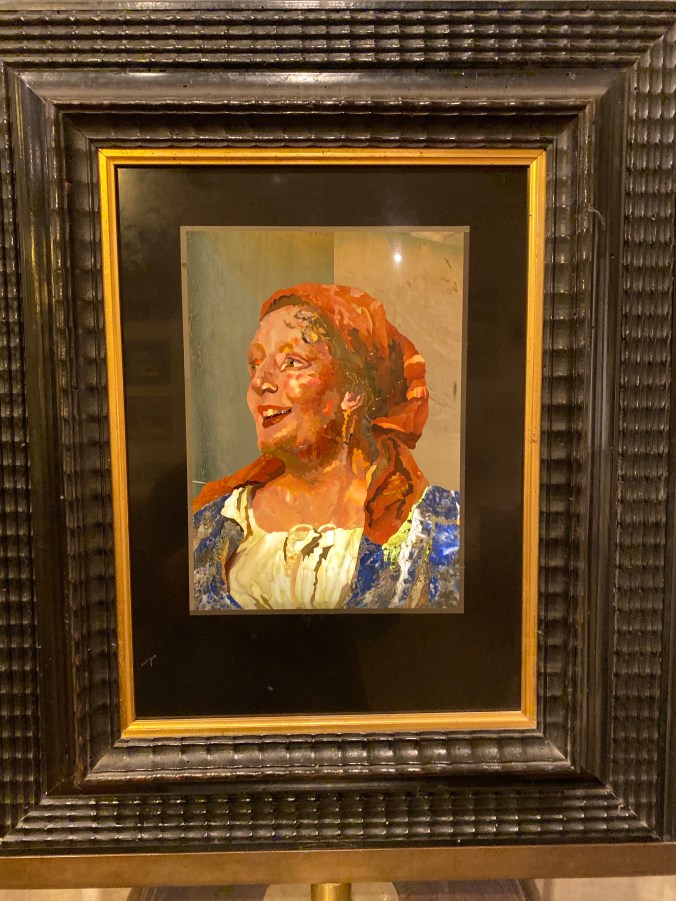
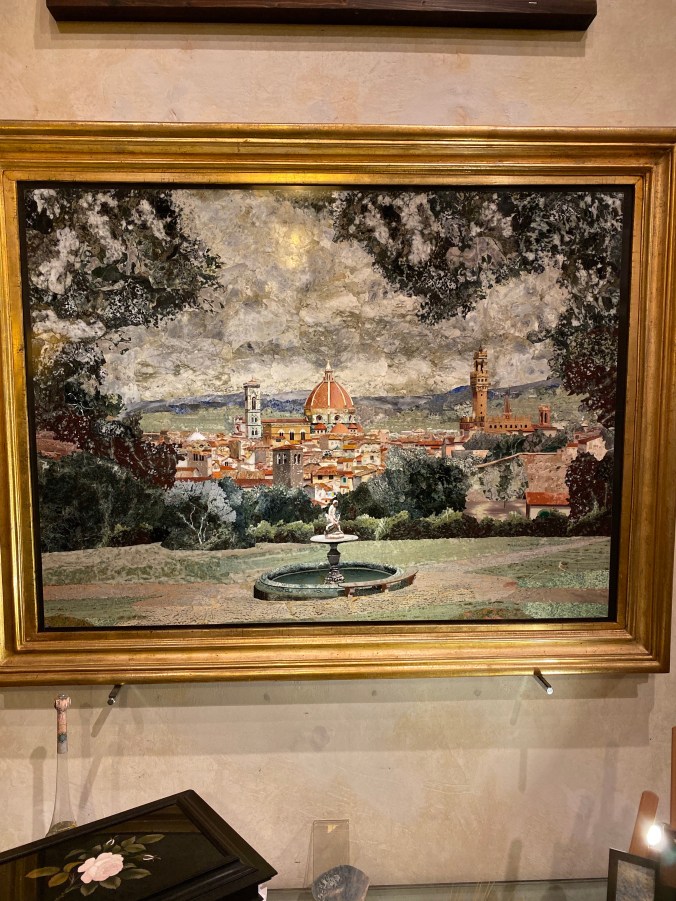
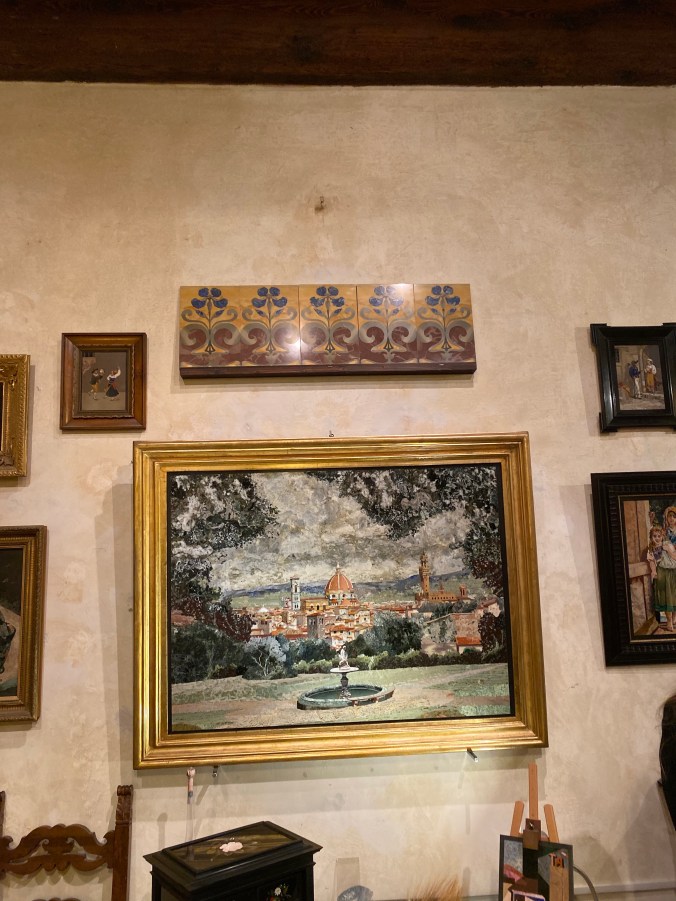
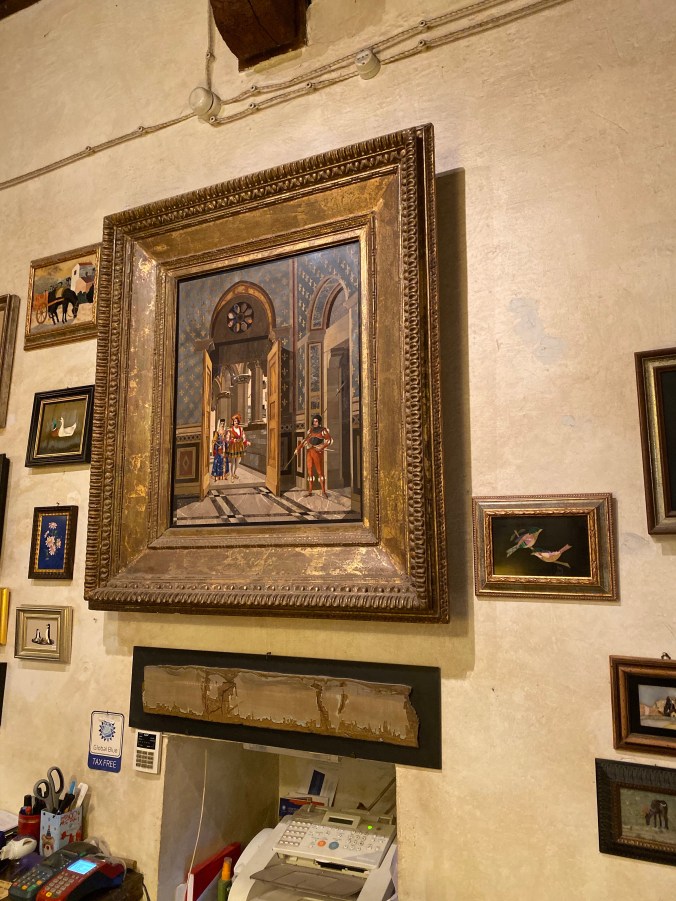

http://www.imosaicidilastrucci.it/index.php?i-mosaici-di-lastrucci-firenze
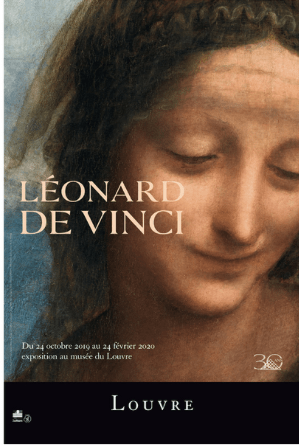
The Louvre’s exhibition of paintings by Leonardo da Vinci
Villa Pisani: Cruising the Brenta Canal from Padua to Venice, part 2
I recently posted about this day-long cruise here (here, here and here) and now I pick up where I left off. Our first stop on the cruise after leaving Padua was in Stra at Villa Pisani. This incredible villa is now a state museum and very much work a visit. It was built by a very popular Venetian Doge.

The facade of the Villa is decorated with enormous statues and the interior was painted by some of the greatest artists of the 18th century.

Villa Pisani at Stra refers is a monumental, late-Baroque rural palace located along the Brenta Canal (Riviera del Brenta) at Via Doge Pisani 7 near the town of Stra, on the mainland of the Veneto, northern Italy. This villa is one of the largest examples of Villa Veneta located in the Riviera del Brenta, the canal linking Venice to Padua. It is to be noted that the patrician Pisani family of Venice commissioned a number of villas, also known as Villa Pisani across the Venetian mainland. The villa and gardens now operate as a national museum, and the site sponsors art exhibitions.
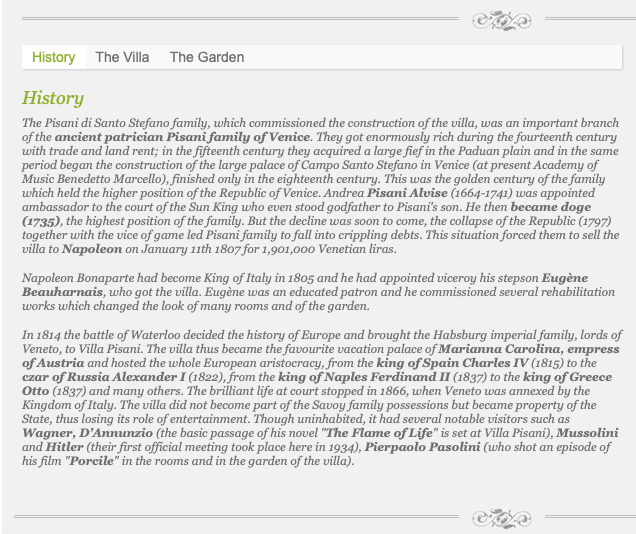

Construction of this palace began in the early 18th century for Alvise Pisani, the most prominent member of the Pisani family, who was appointed doge in 1735.
The initial models of the palace by Paduan architect Girolamo Frigimelica still exist, but the design of the main building was ultimately completed by Francesco Maria Preti. When it was completed, the building had 114 rooms, in honor of its owner, the 114th Doge of Venice Alvise Pisani.
In 1807 it was bought by Napoleon from the Pisani Family, now in poverty due to great losses in gambling. In 1814 the building became the property of the House of Habsburg who transformed the villa into a place of vacation for the European aristocracy of that period. In 1934 it was partially restored to host the first meeting of Adolf Hitler and Benito Mussolini, after the riots in Austria.


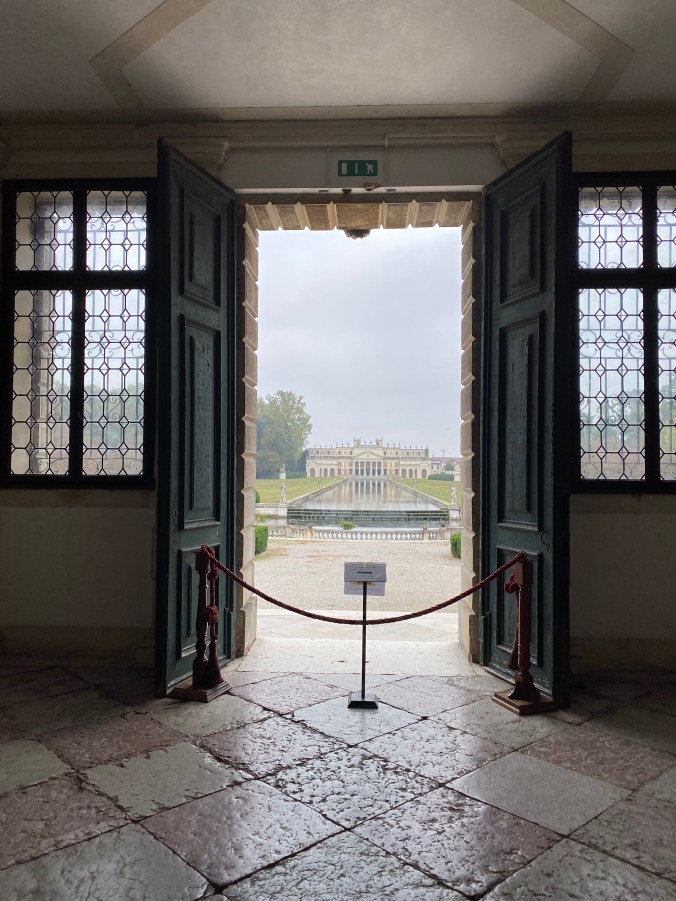
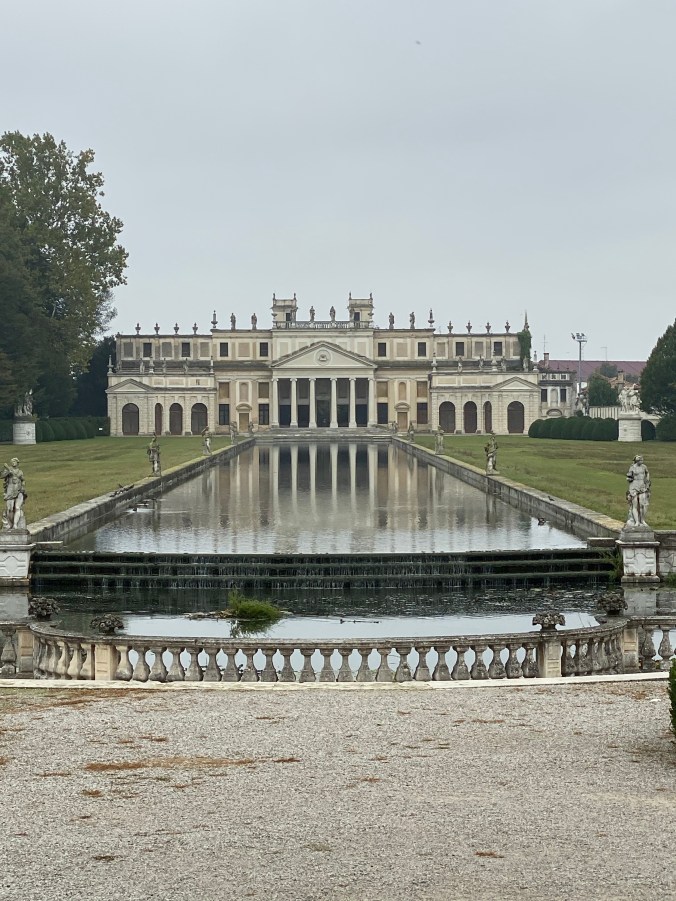
From the outside, the facade of the oversized palace appears to command the site, facing the Brenta River some 30 kilometers from Venice. The villa is of many villas along the canal, which the Venetian noble families and merchants started to build as early as the 15th century. The broad façade is topped with statuary, and presents an exuberantly decorated center entrance with monumental columns shouldered by caryatids. It shelters a large complex with two inner courts and acres of gardens, stables, and a garden maze.
The largest room is the ballroom, where the 18th-century painter Giovanni Battista Tiepolo frescoed the two-story ceiling with a massive allegorical depiction of the Apotheosis or Glory of the Pisani family (painted 1760–1762).[2] Tiepolo’s son Gian Domenico Tiepolo, Crostato, Jacopo Guarana, Jacopo Amigoni, P.A. Novelli, and Gaspare Diziani also completed frescoes for various rooms in the villa. Another room of importance in the villa is now known as the “Napoleon Room” (after his occupant), furnished with pieces from the Napoleonic and Habsburg periods and others from when the house was lived by the Pisani.
The most riotously splendid Tiepolo ceiling would influence his later depiction of the Glory of Spain for the throne room of the Royal Palace of Madrid; however, the grandeur and bombastic ambitions of the ceiling echo now contrast with the mainly uninhabited shell of a palace. The remainder of its nearly 100 rooms are now empty. The Venetian playwright Carlo Goldoni described the palace in its day as a place of great fun, served meals, dance and shows.


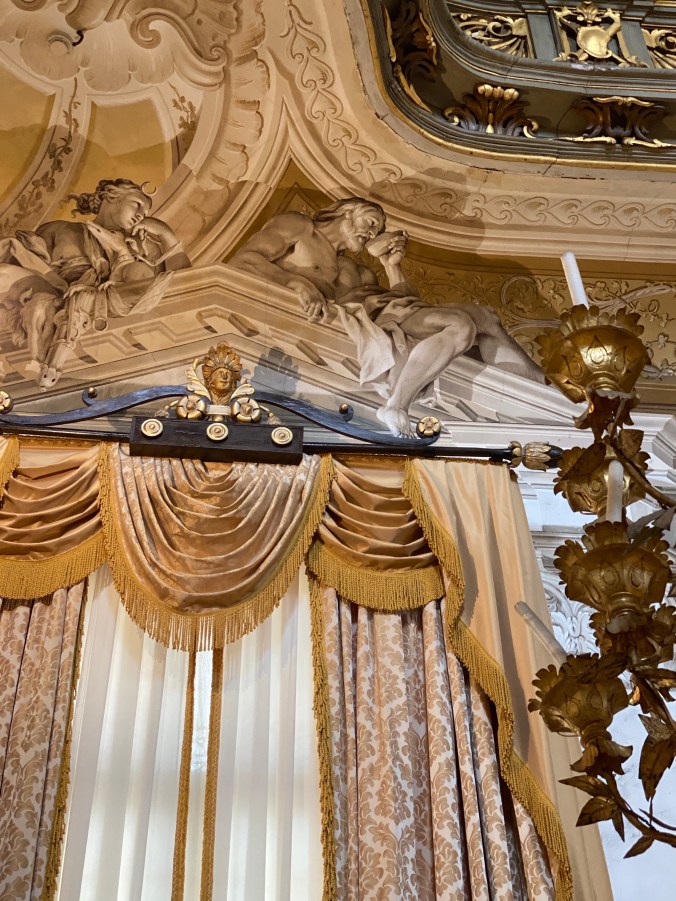
Check out this sunken bathtub below:


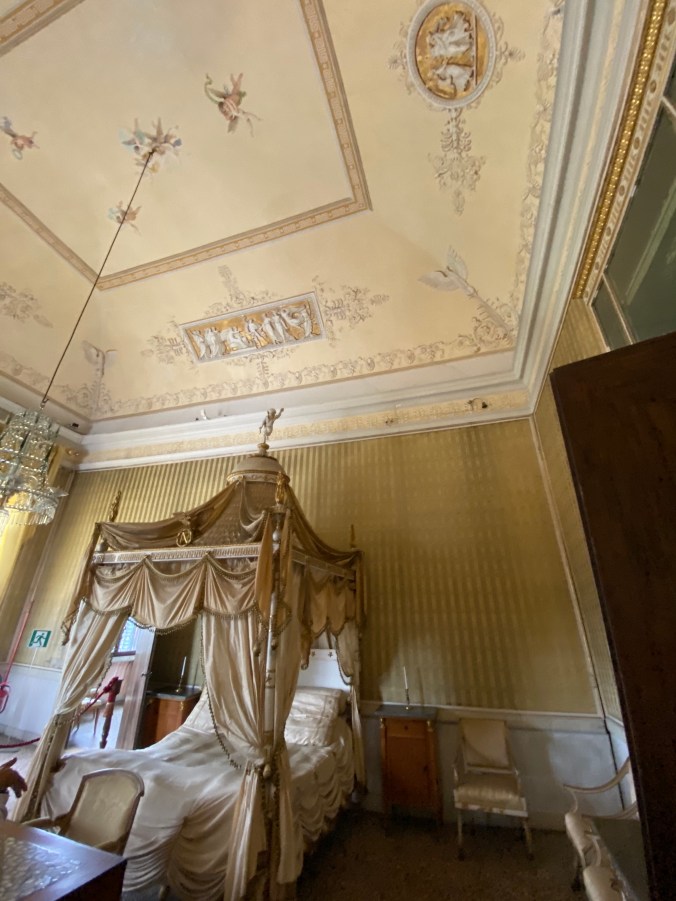
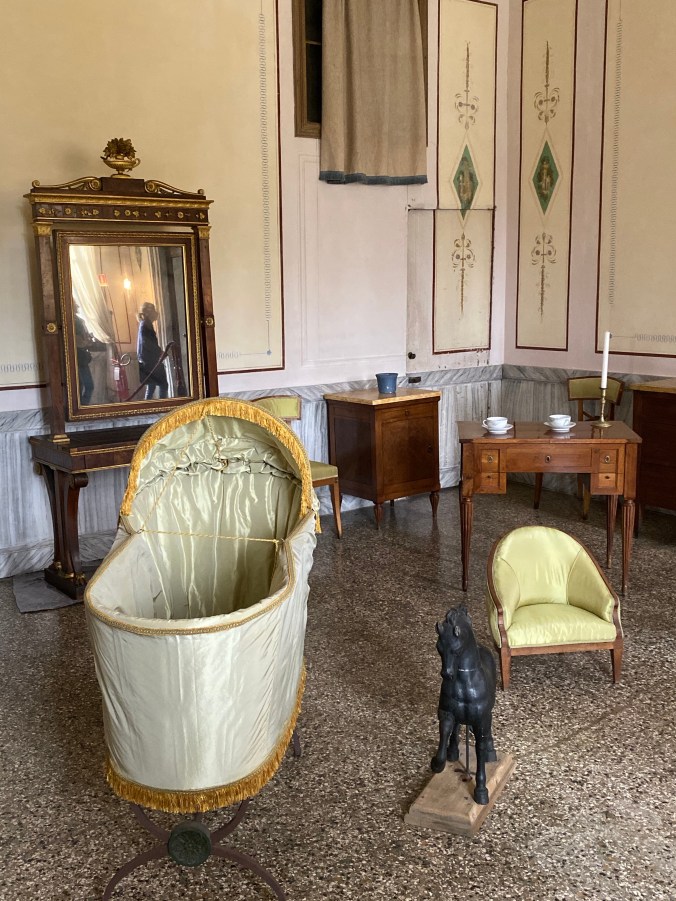


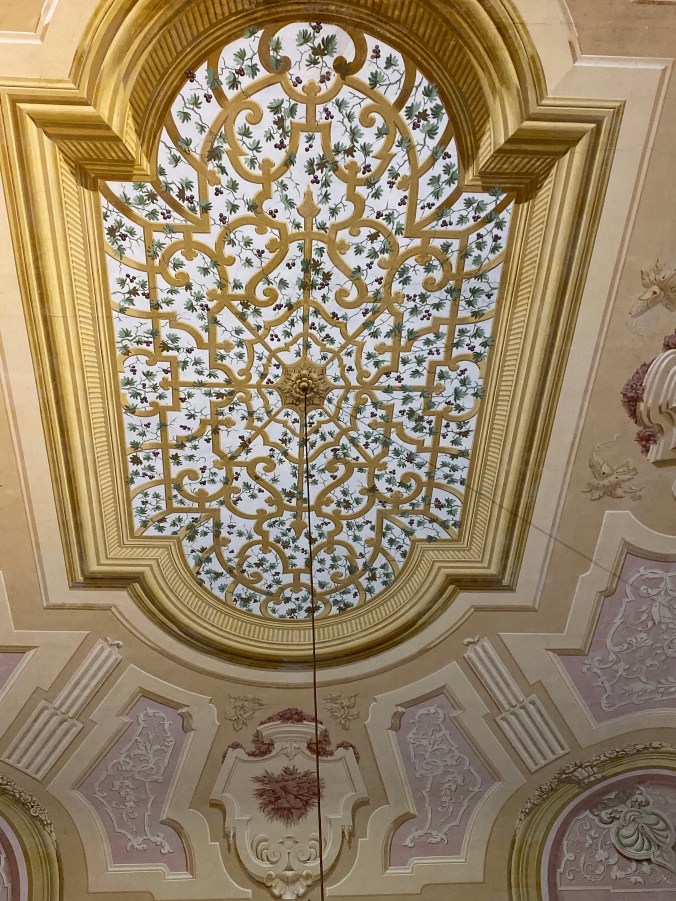


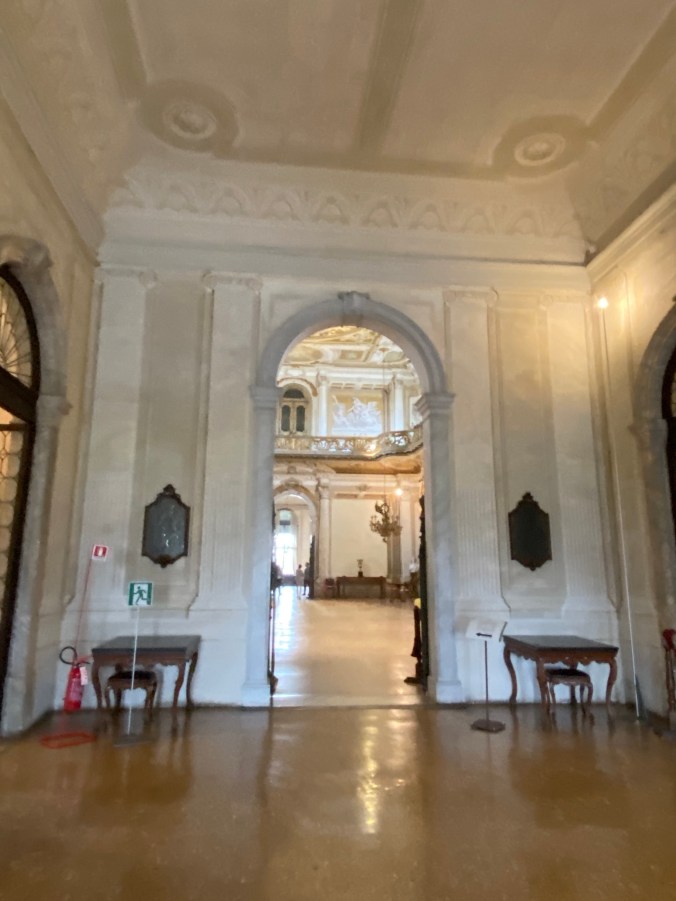




Bear with me: in the next few photos I am trying out all of the fancy settings on my new camera:


To be continued.
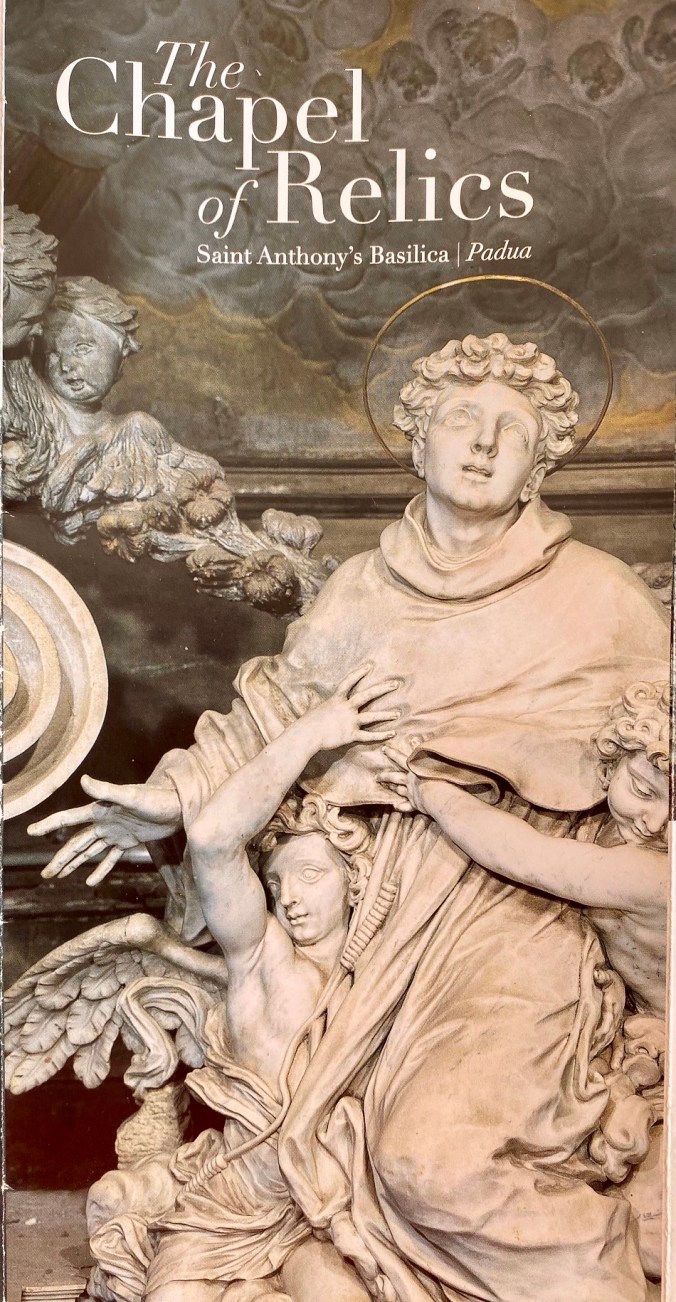
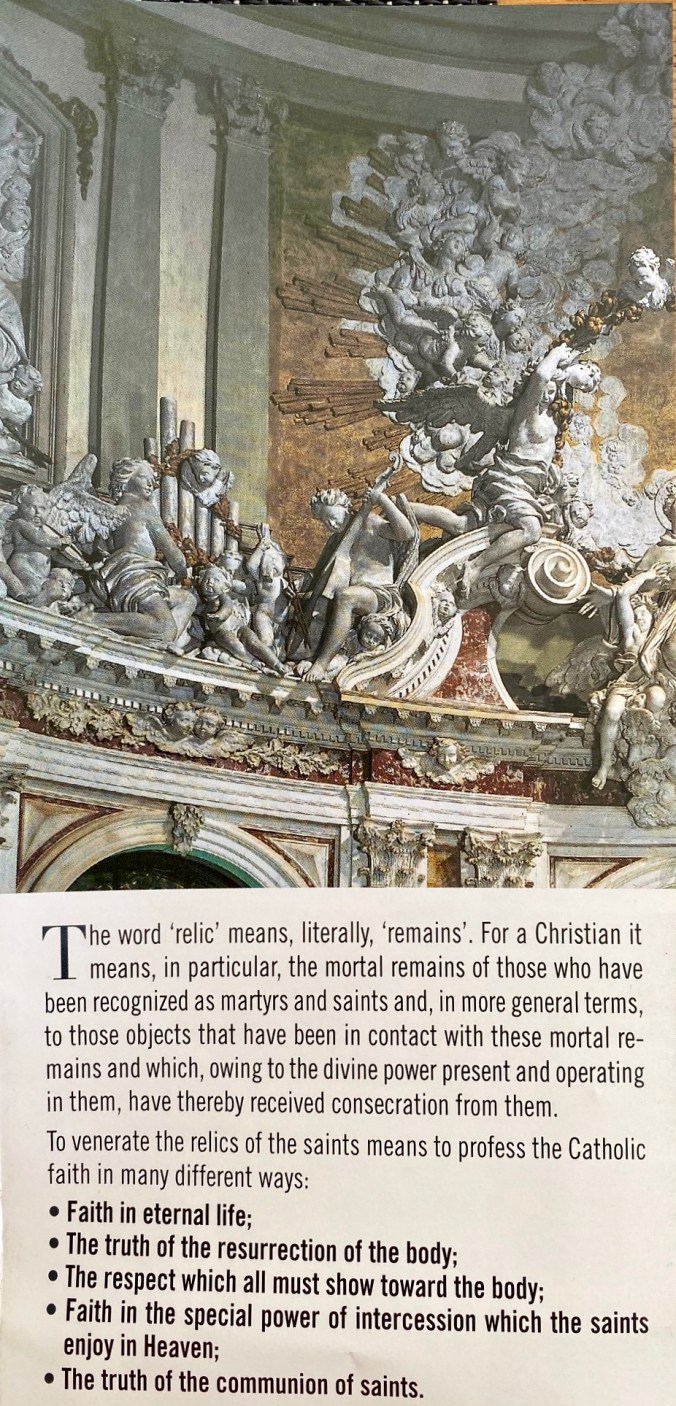
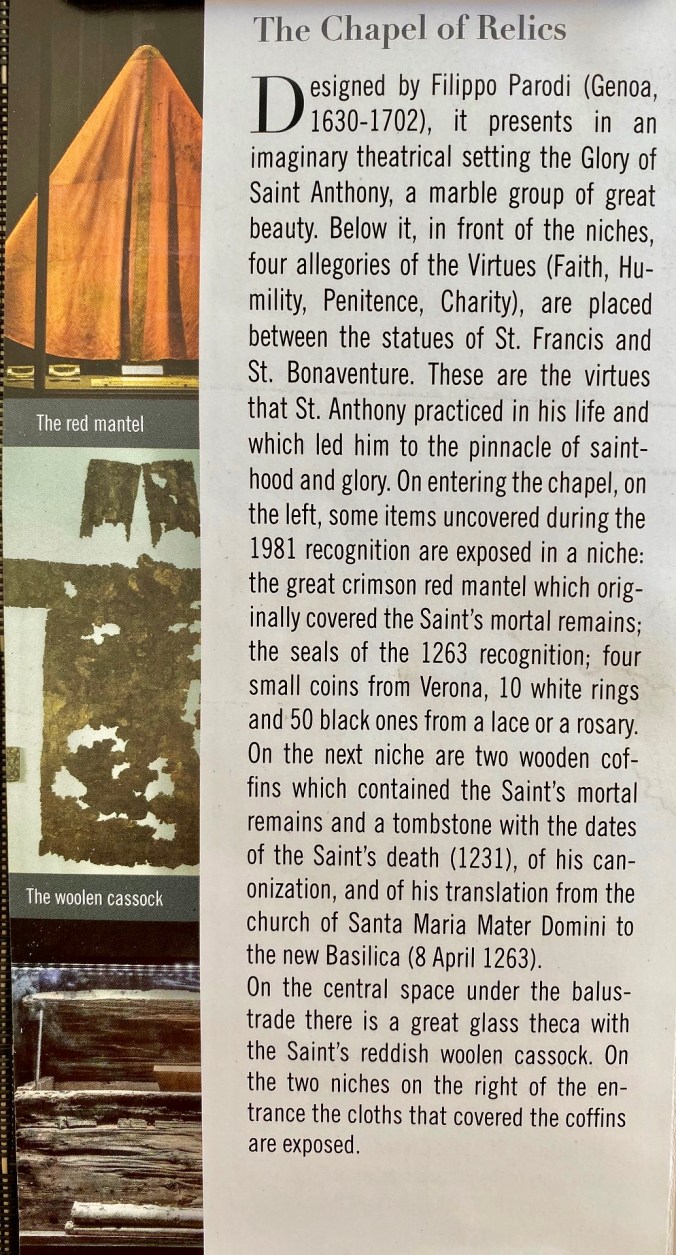
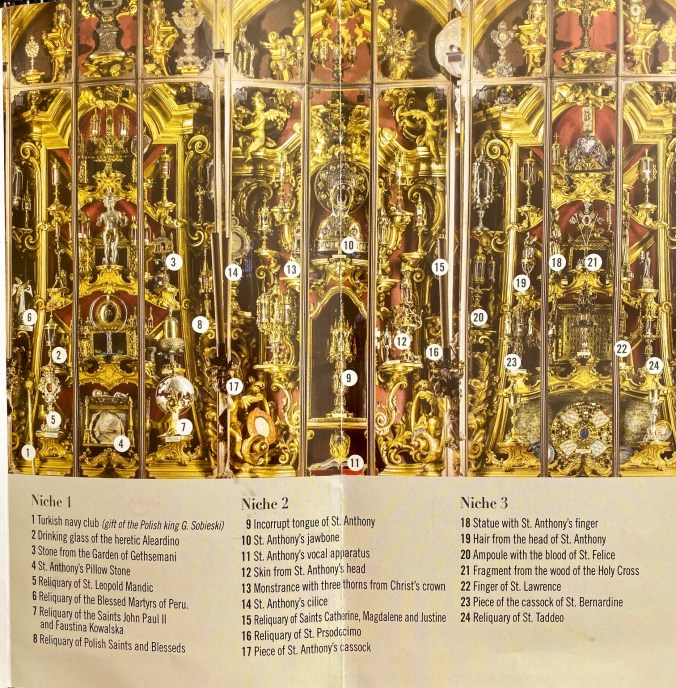
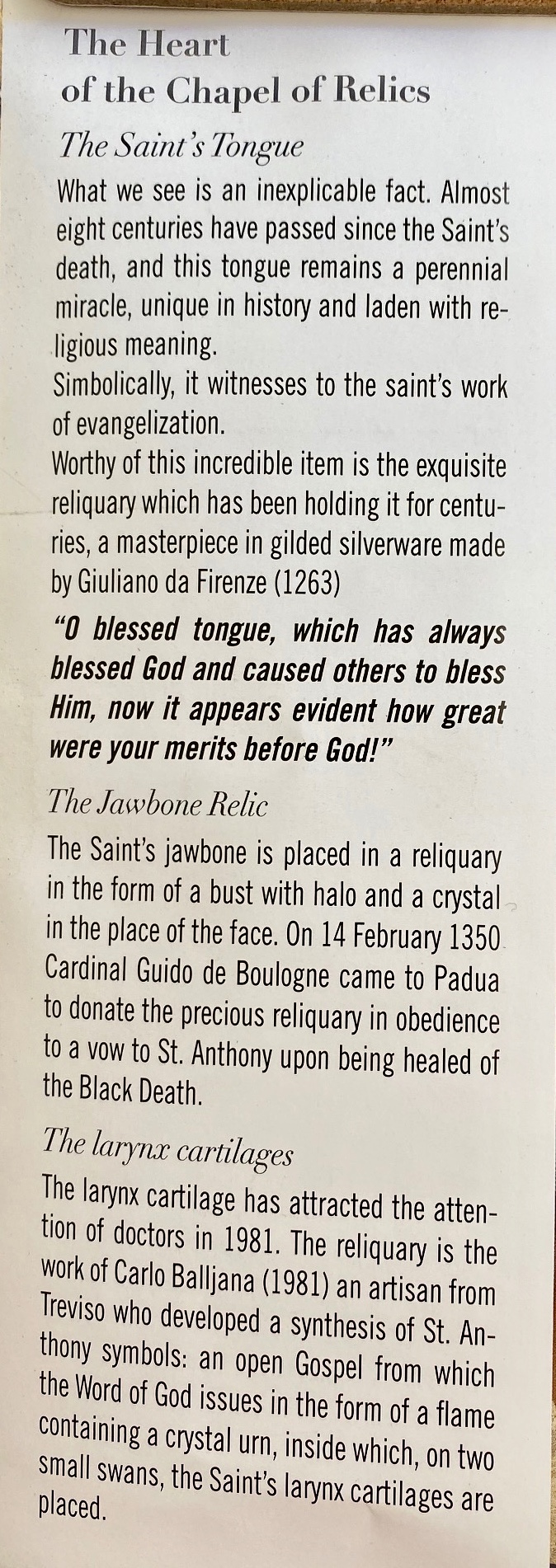
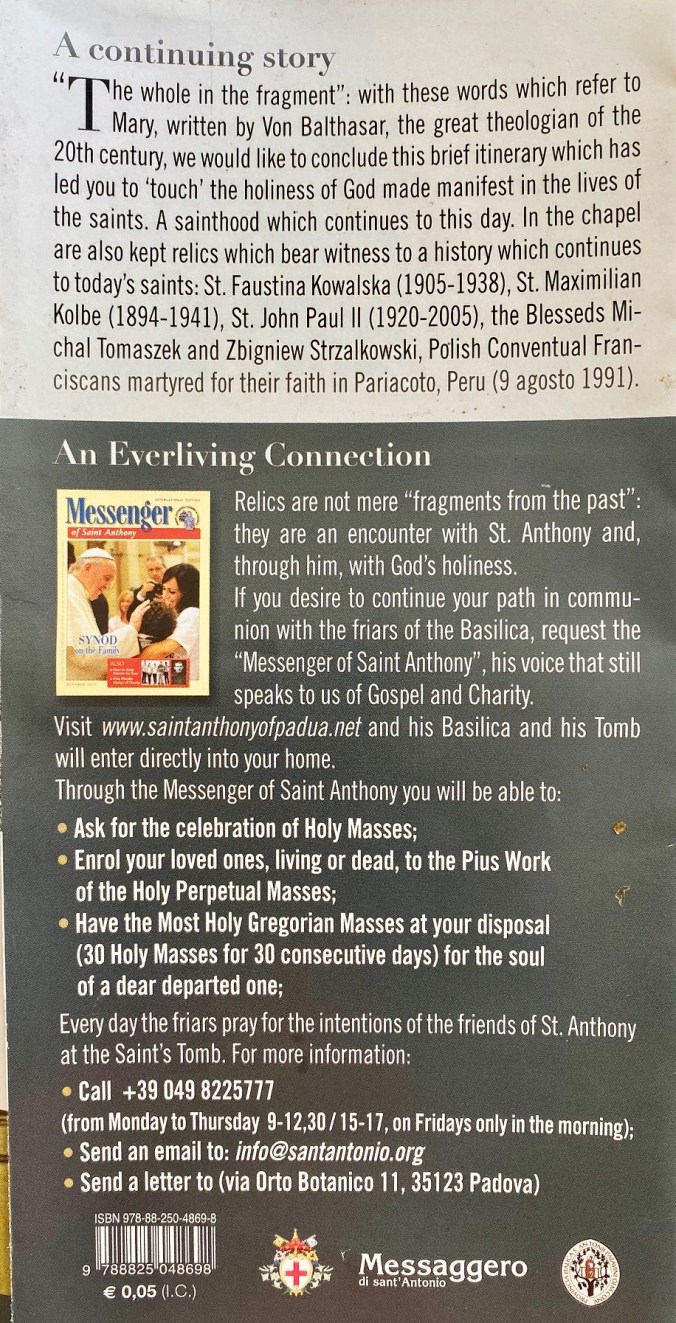
The Chapel of Relics, Saint Anthony’s Basilica, Padua
The brochure tells the story. I couldn’t make this stuff up!
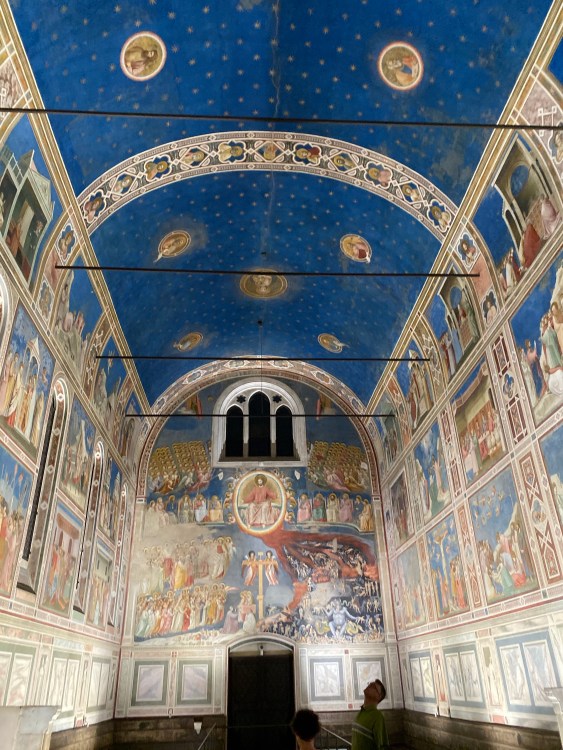
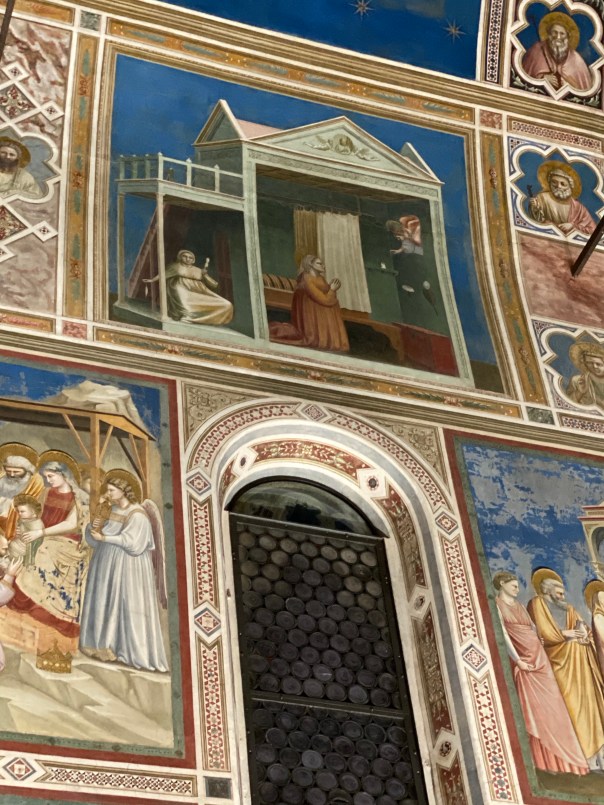
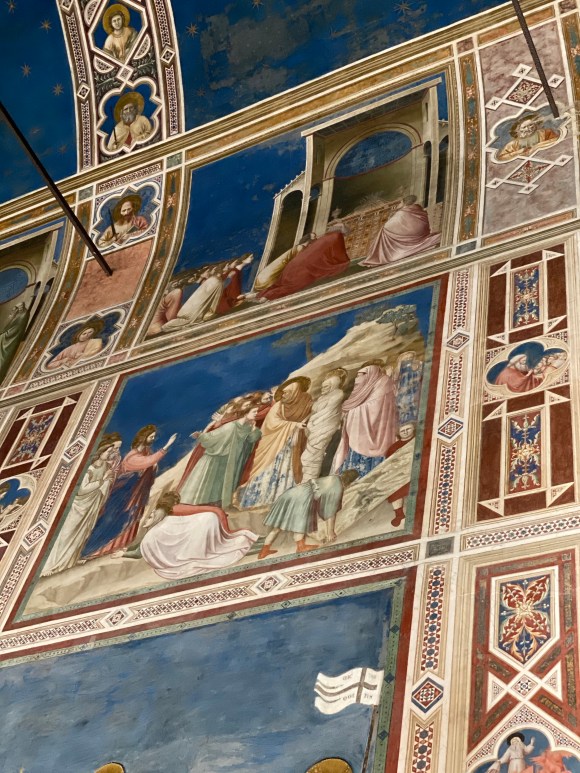
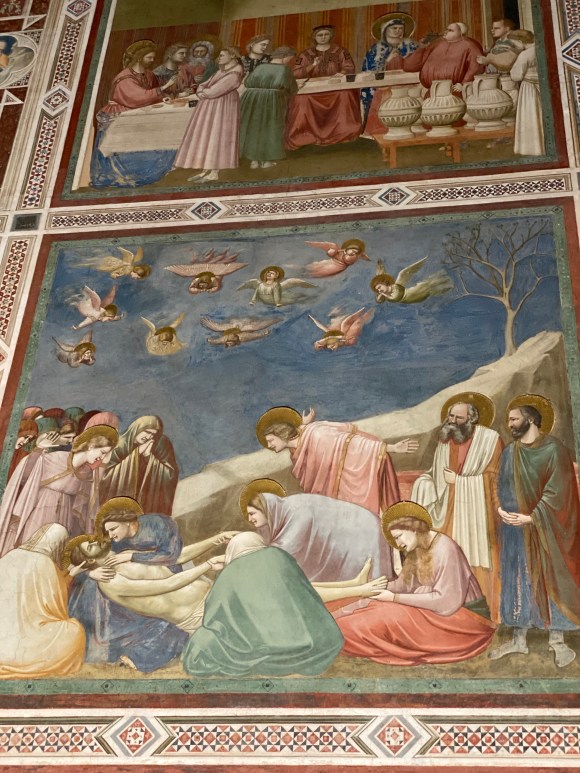
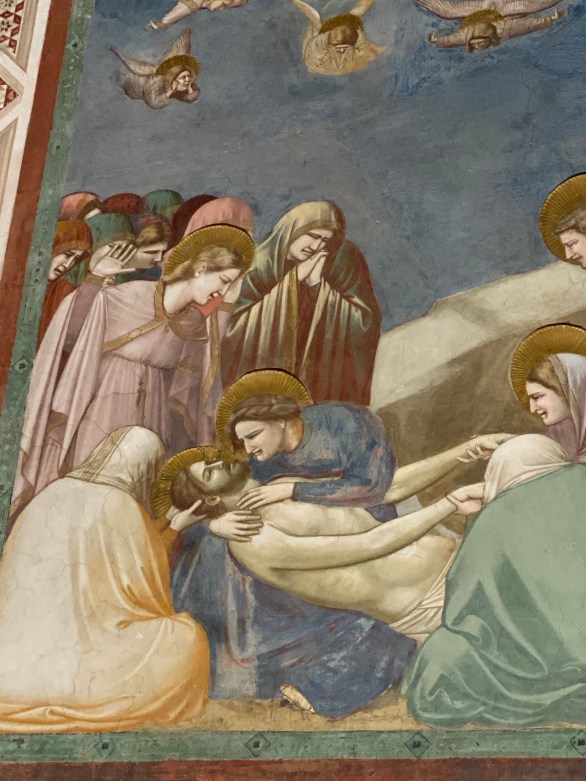
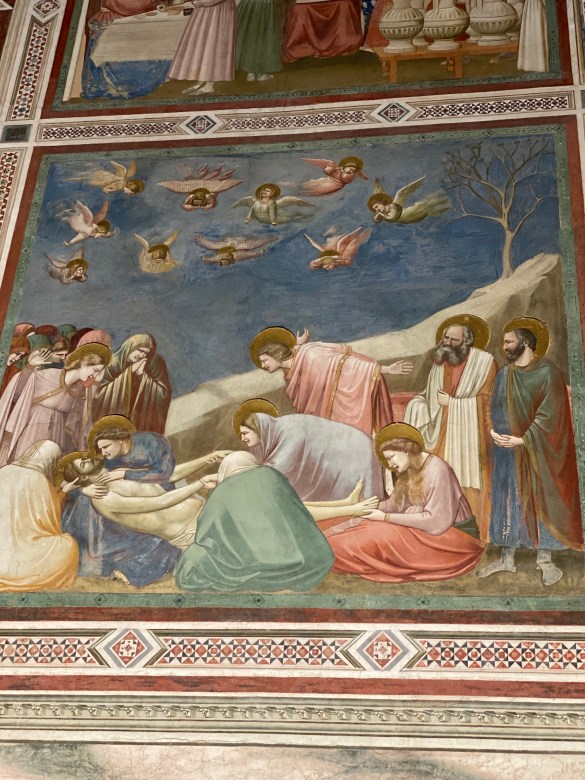
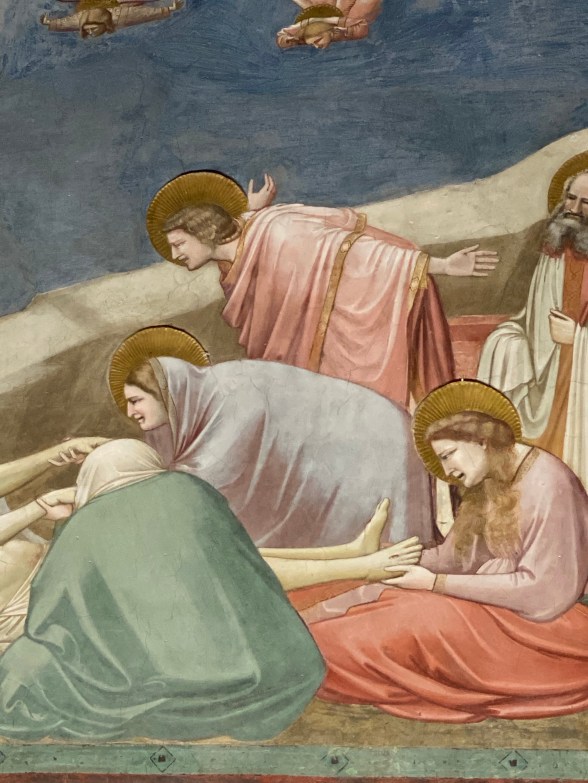
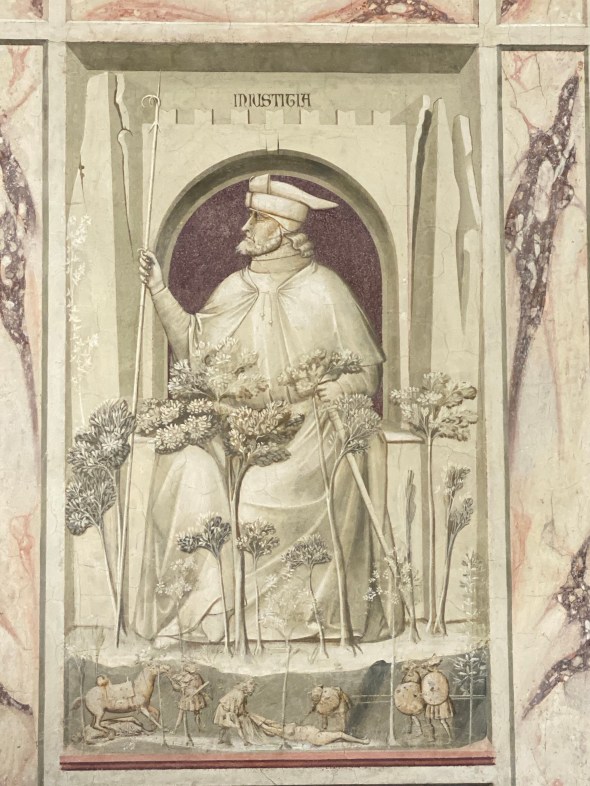
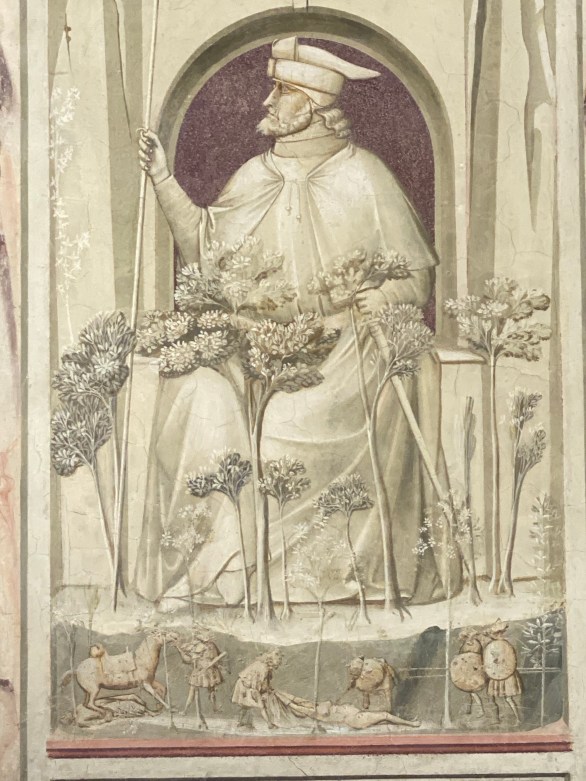
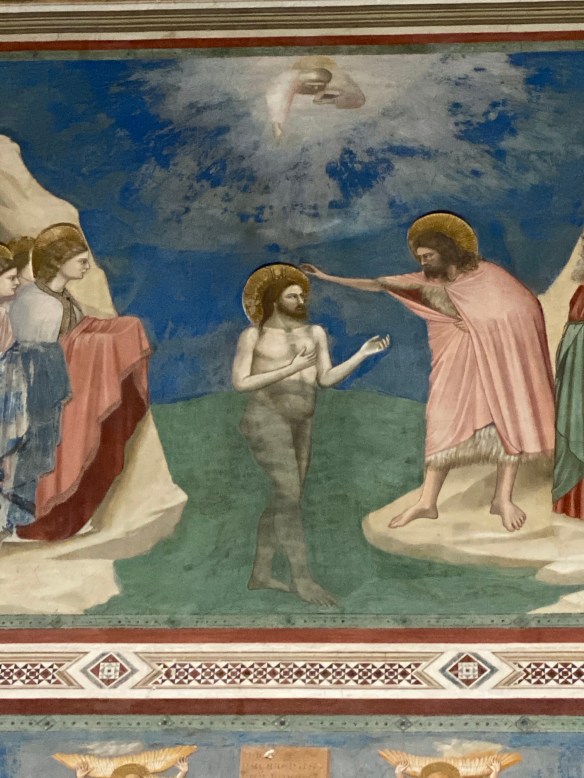
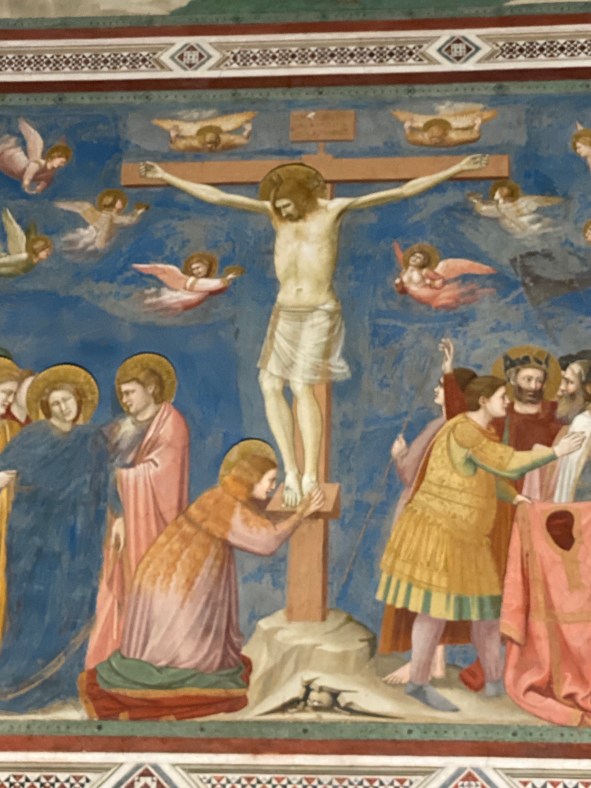
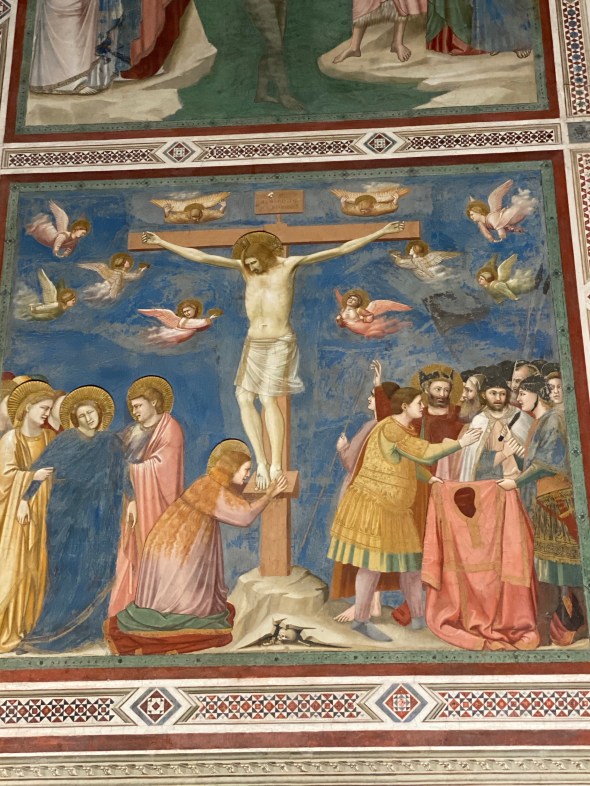
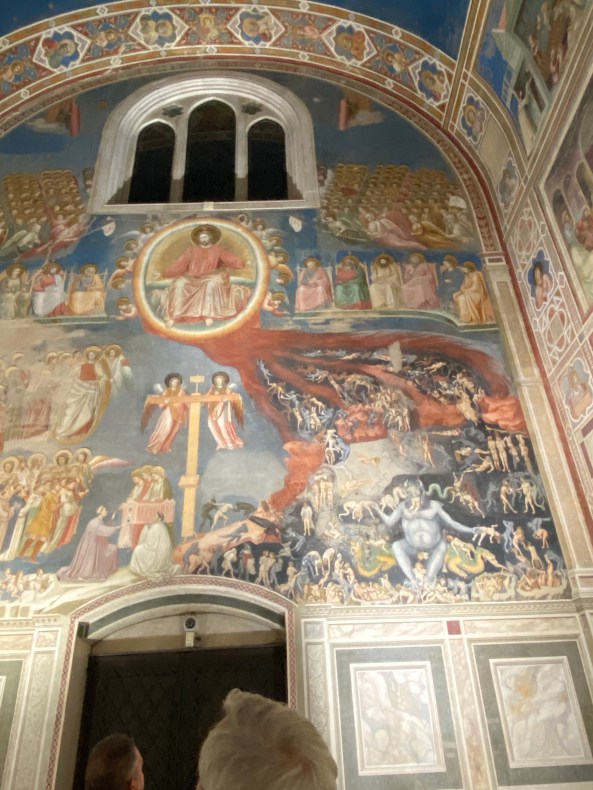
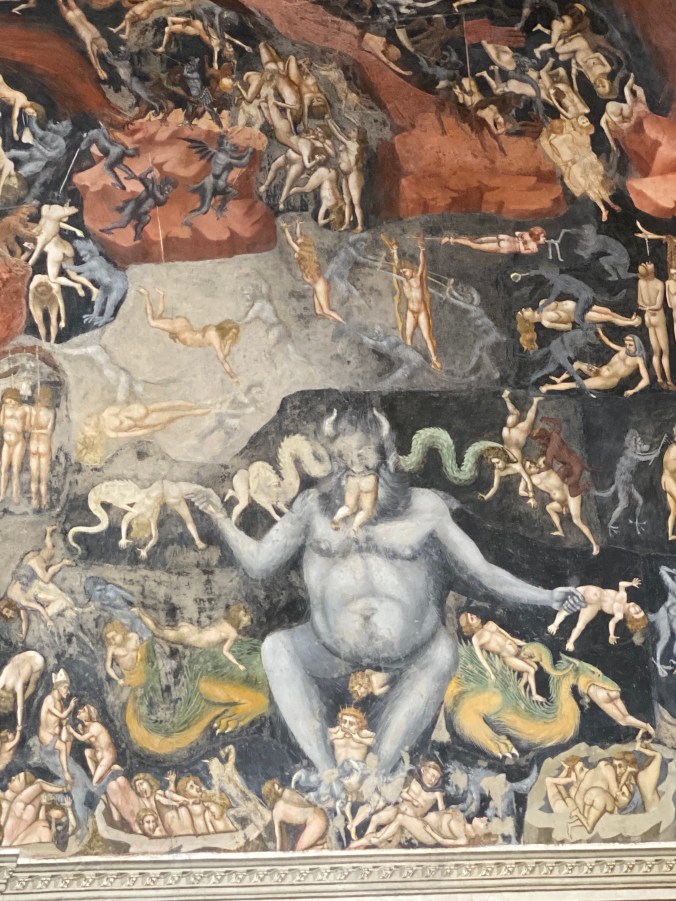
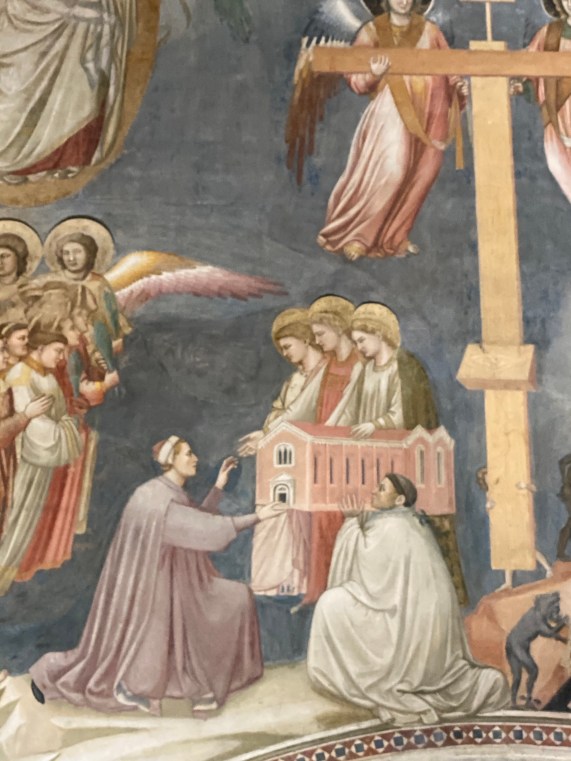
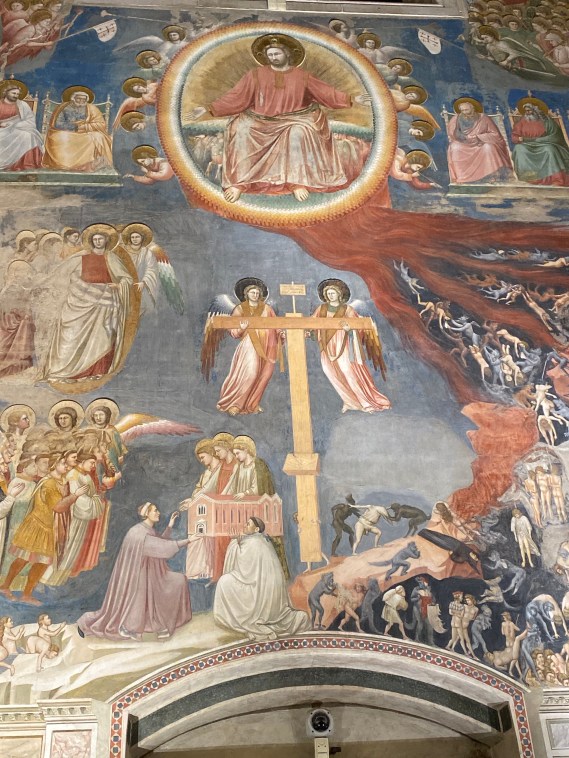
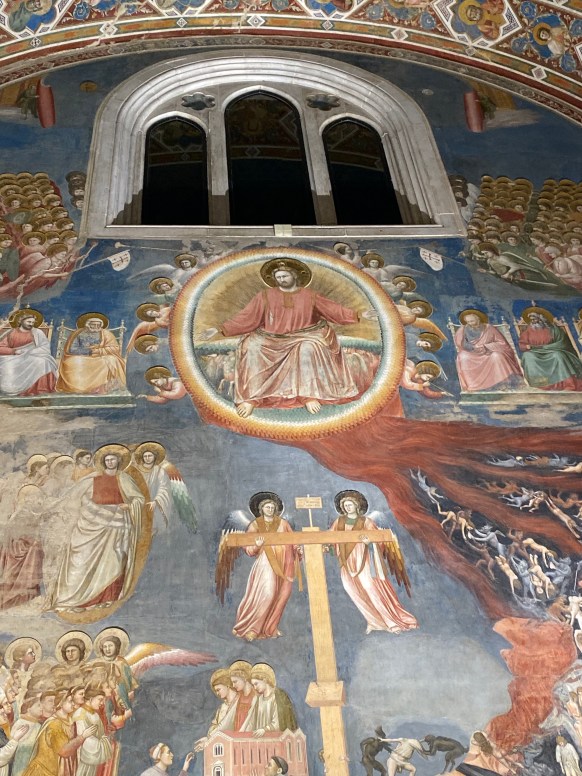
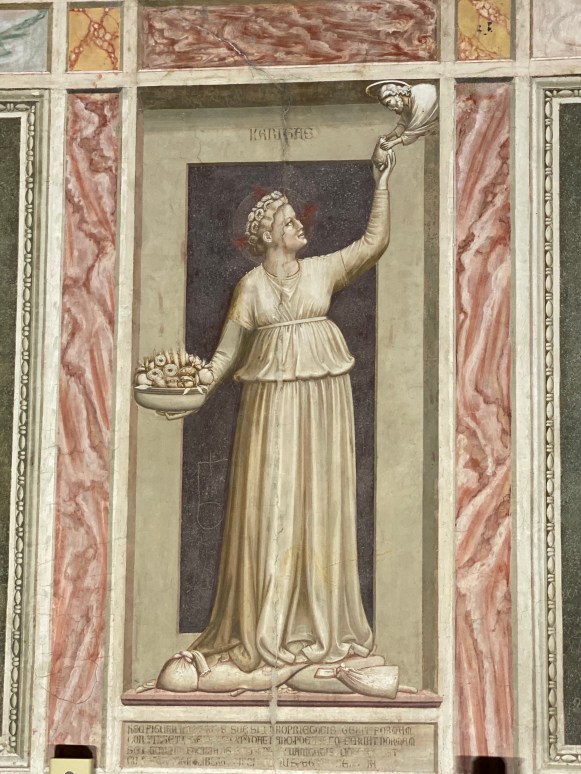
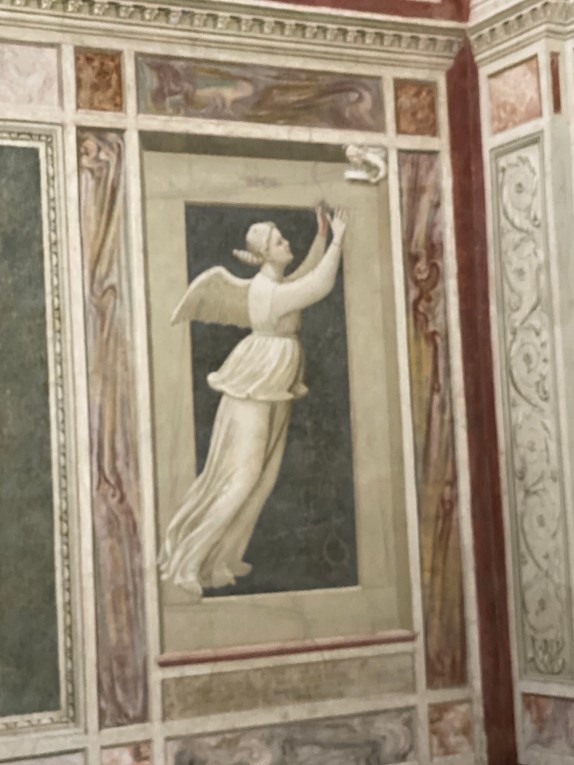
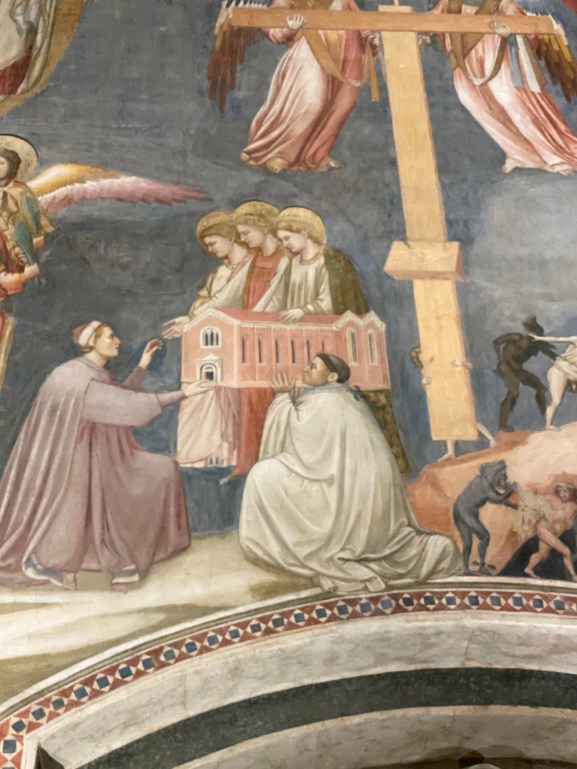
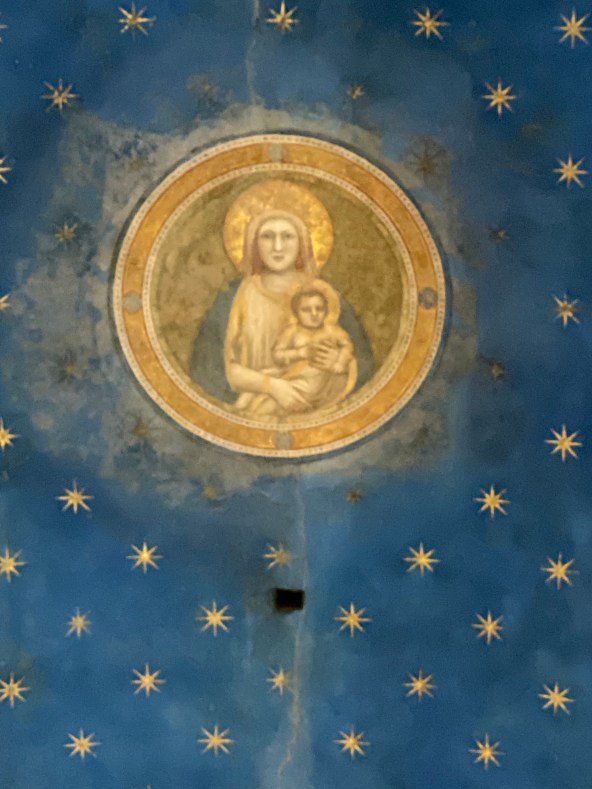
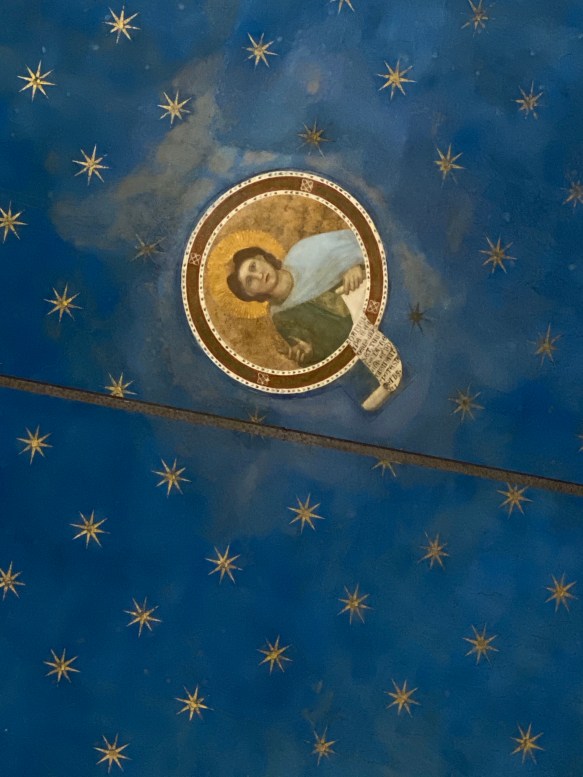
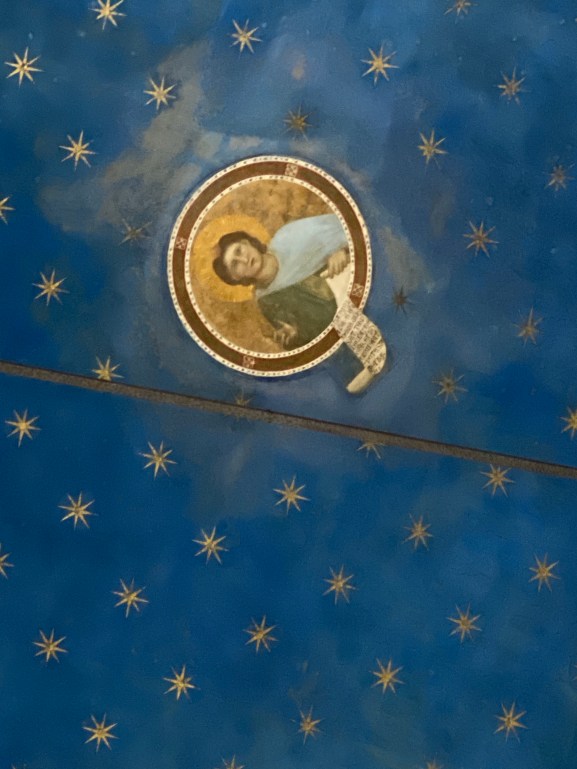
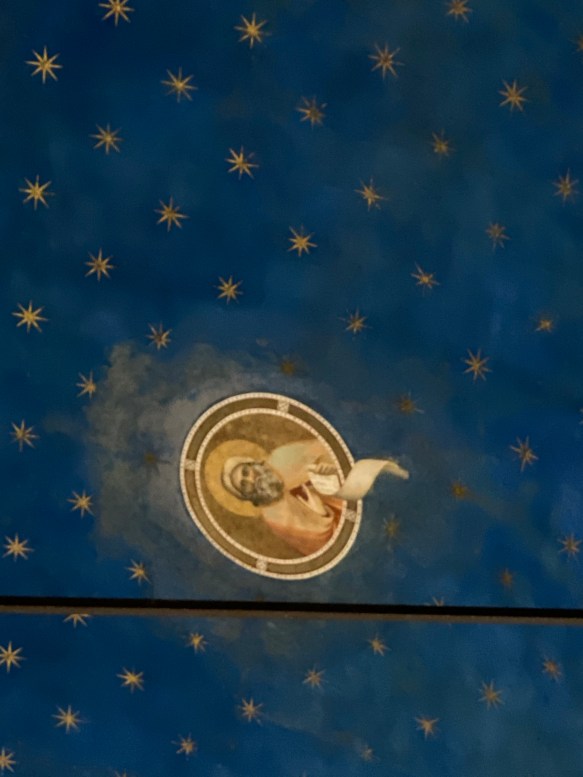
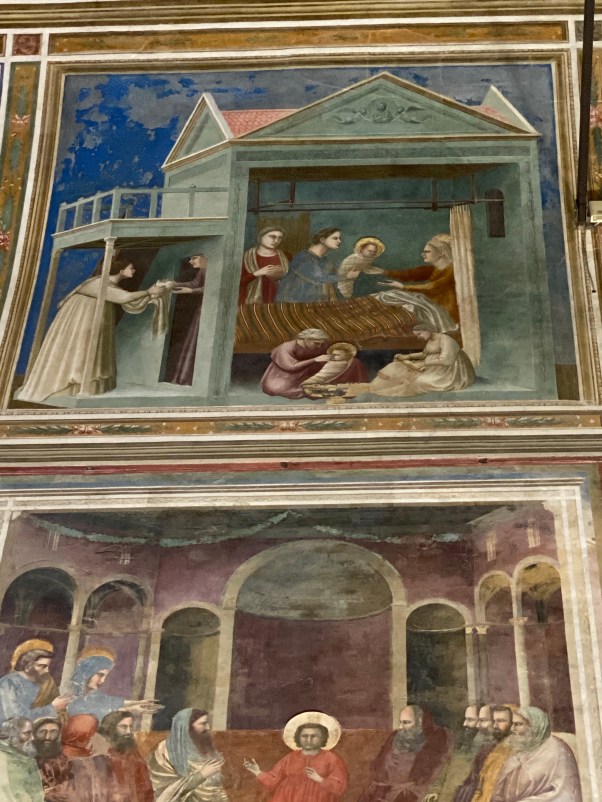
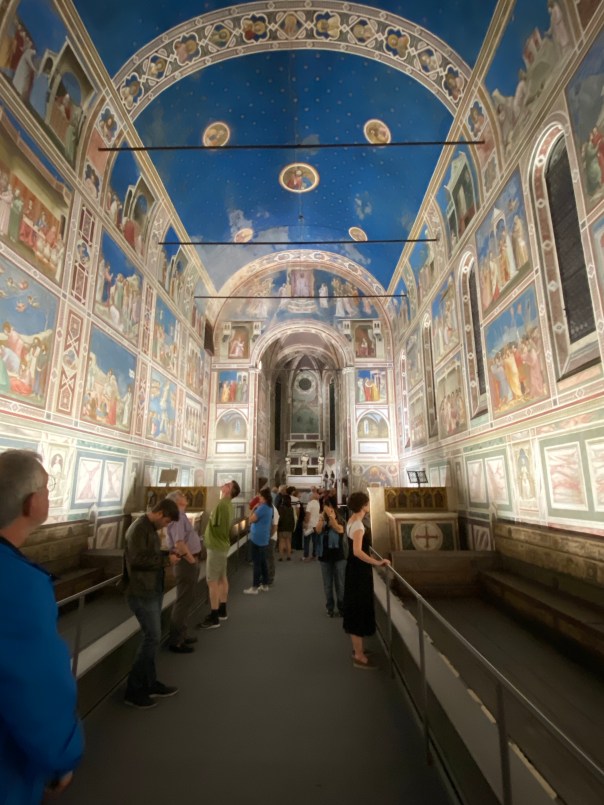
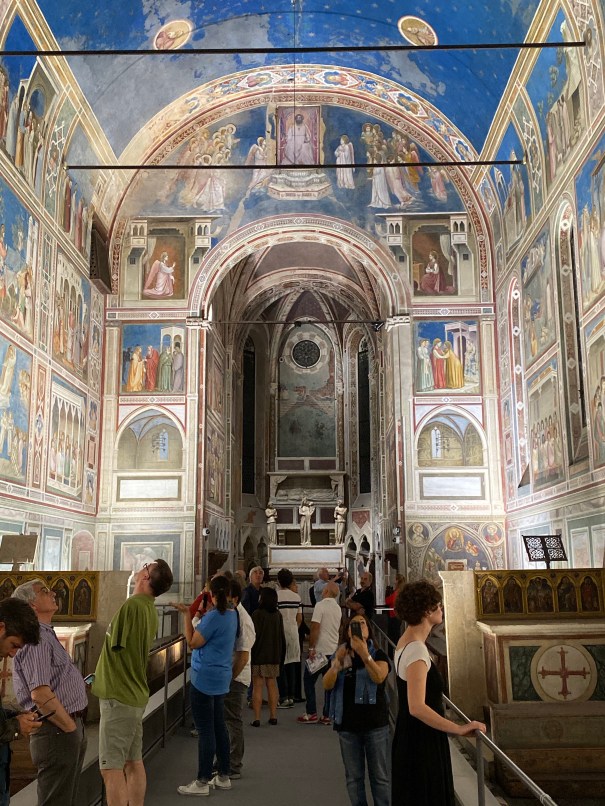
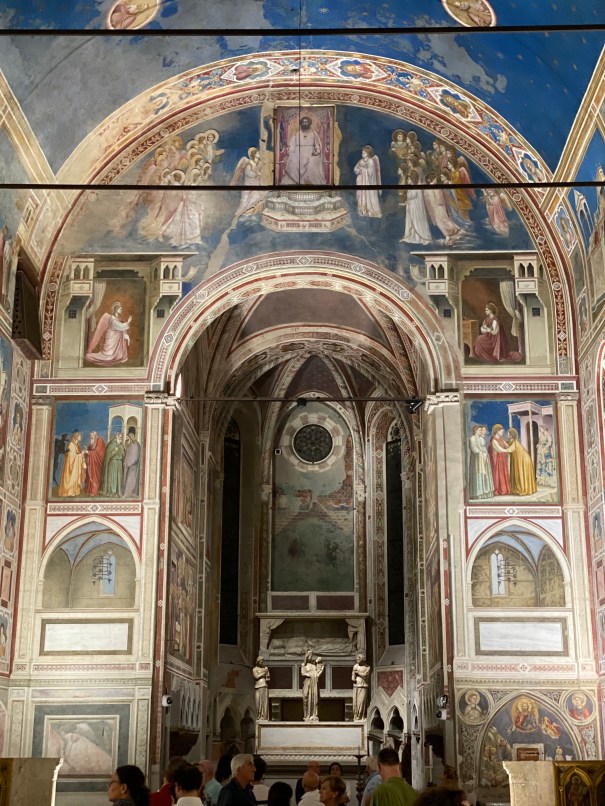
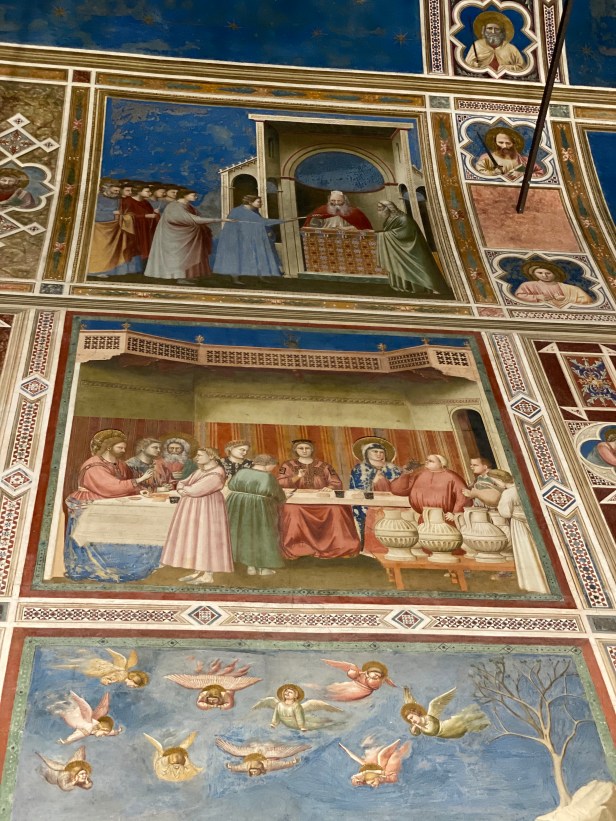
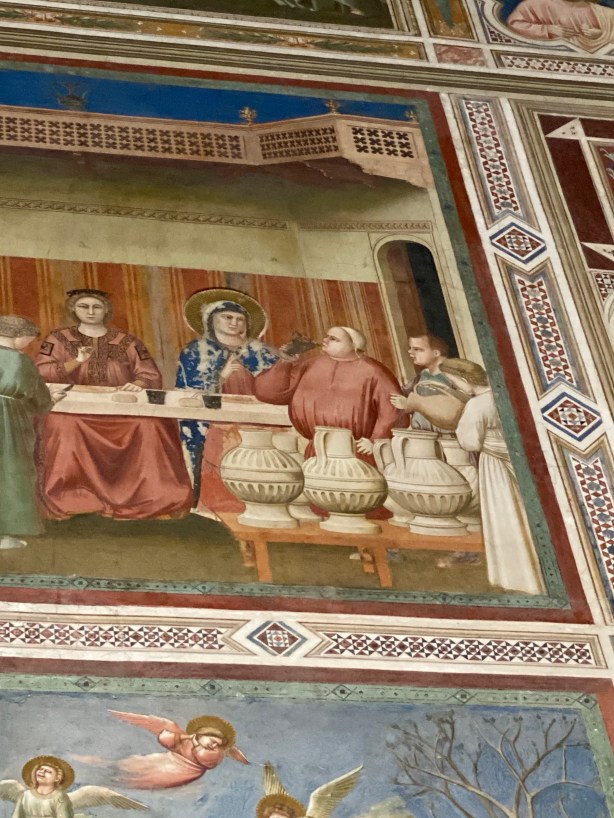
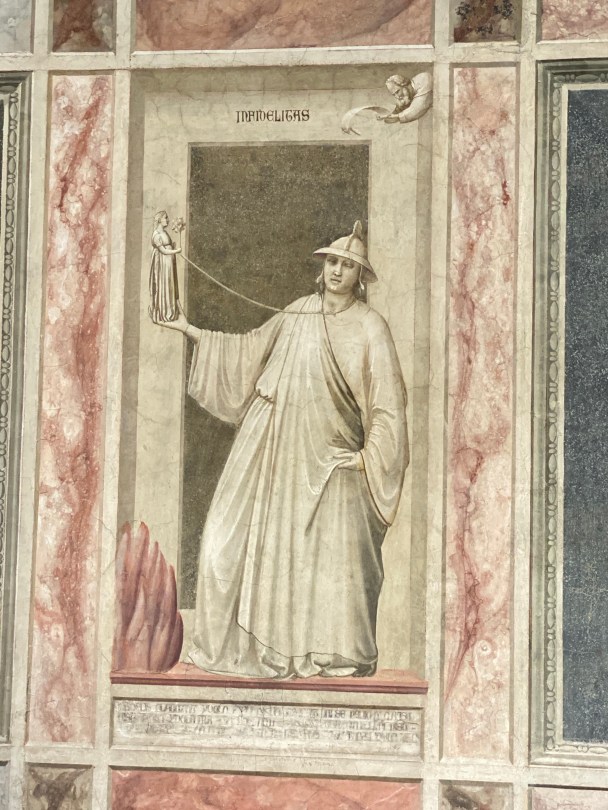
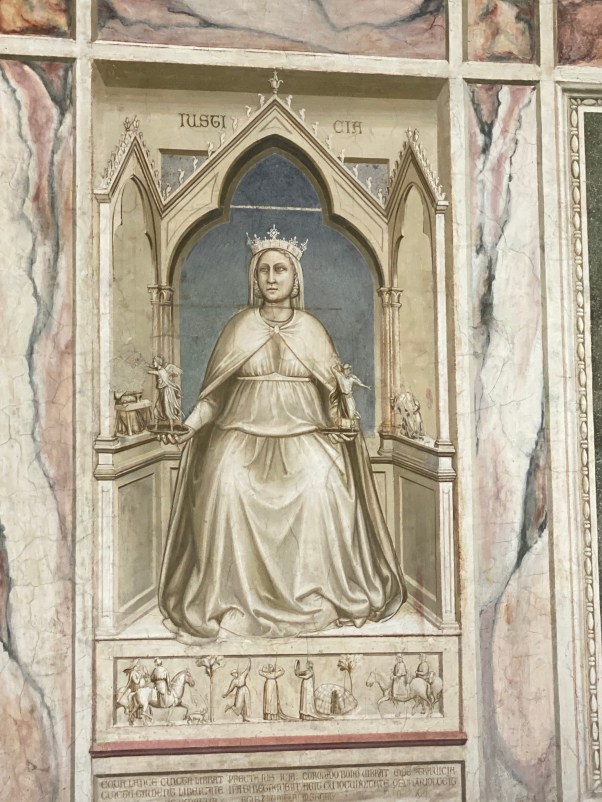
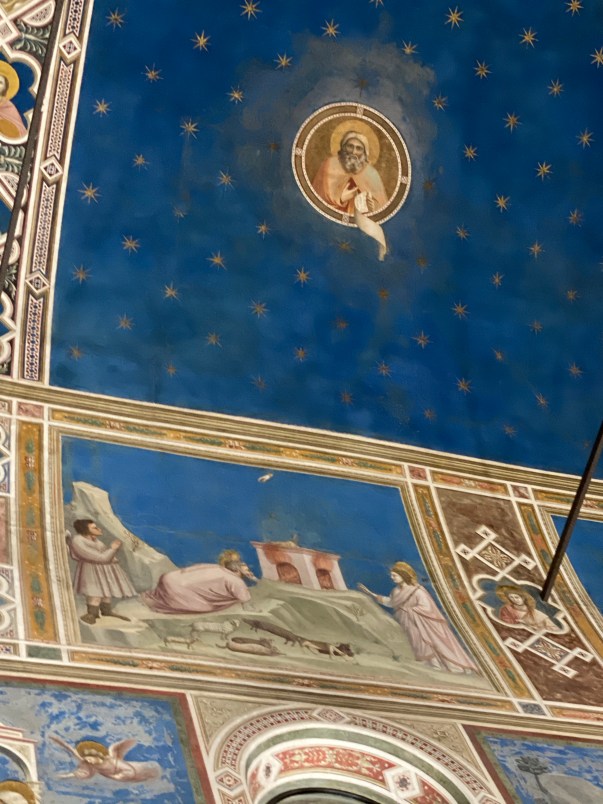
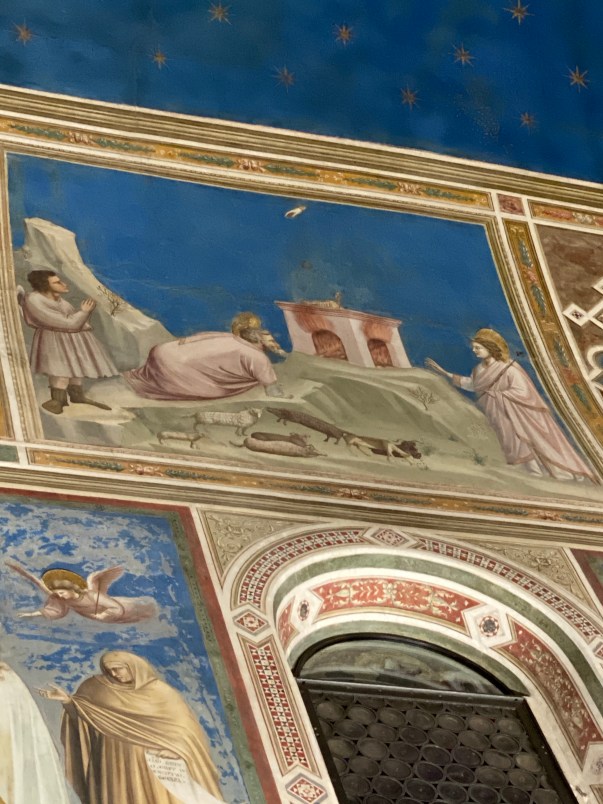
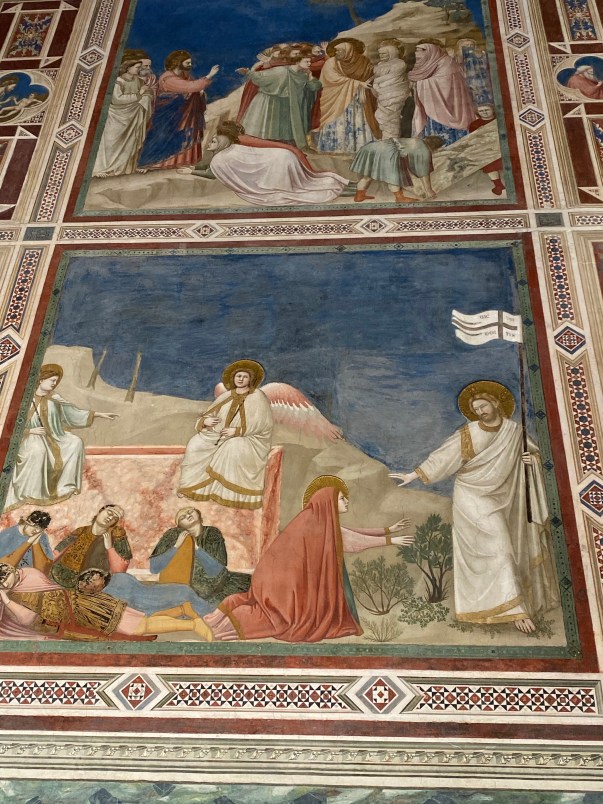
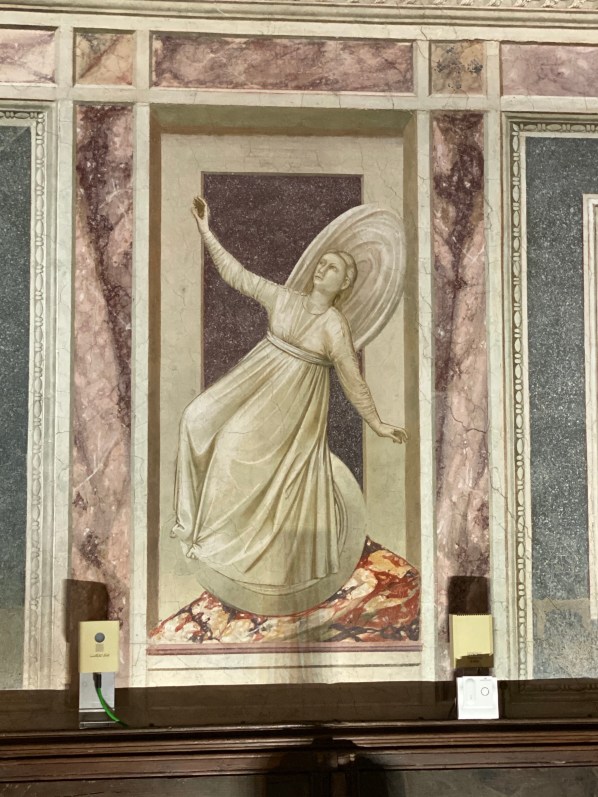
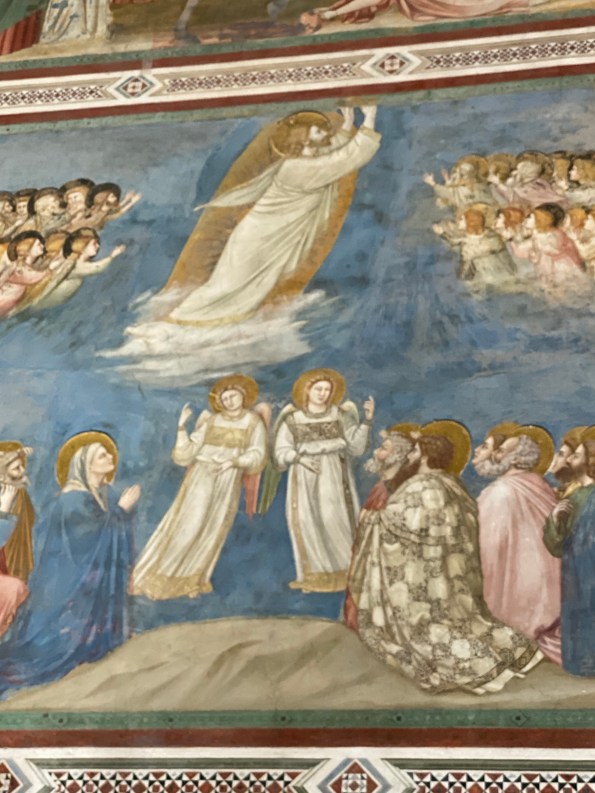
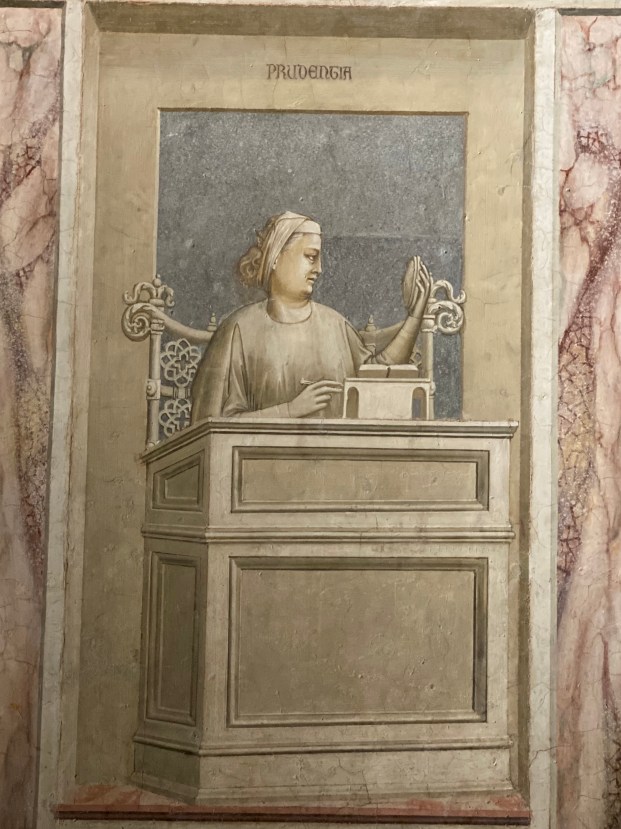
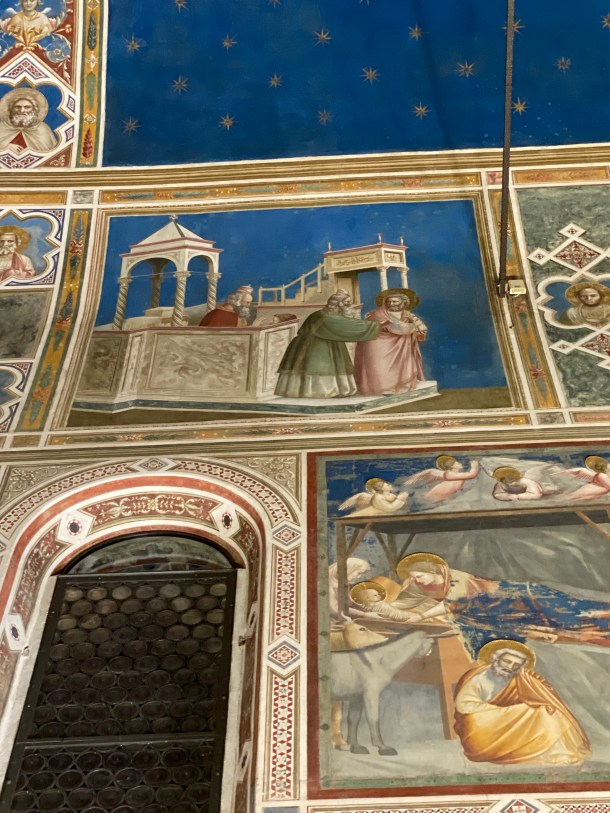
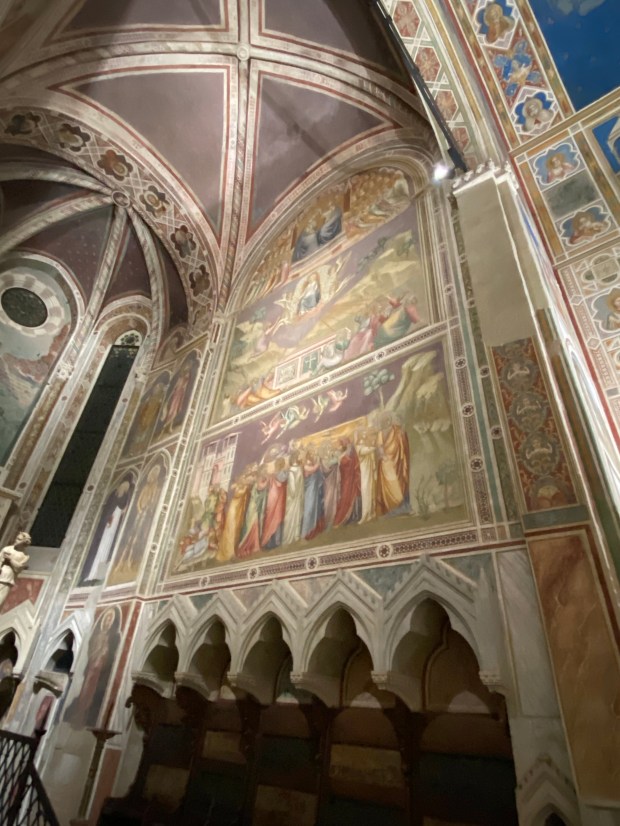
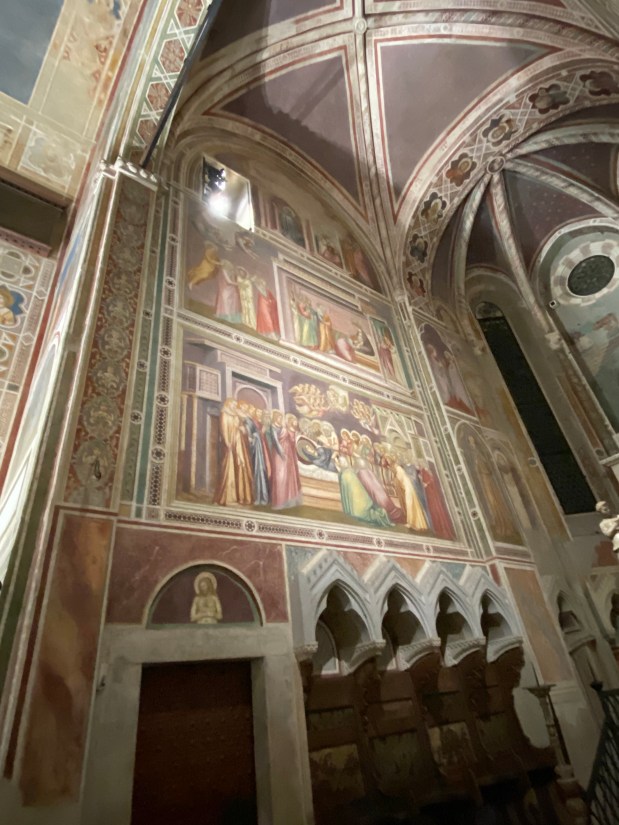
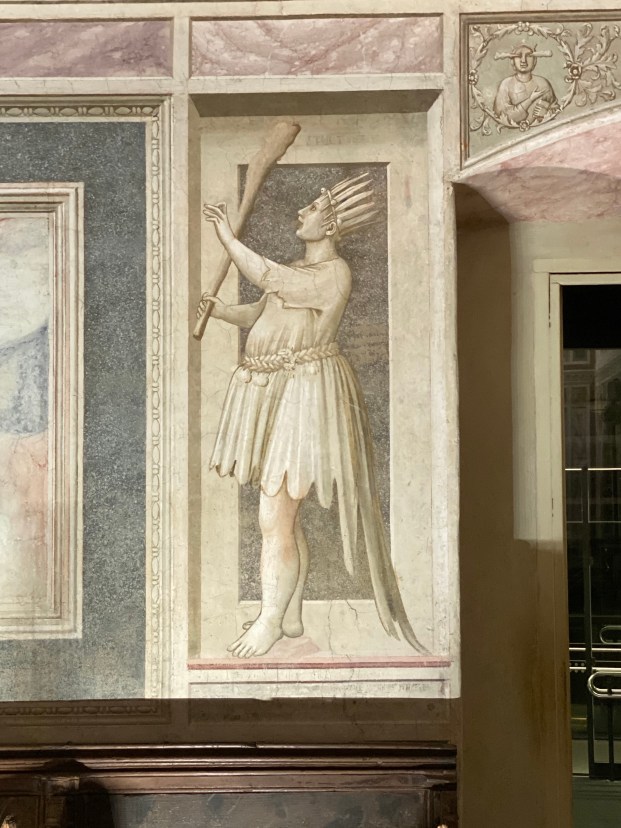
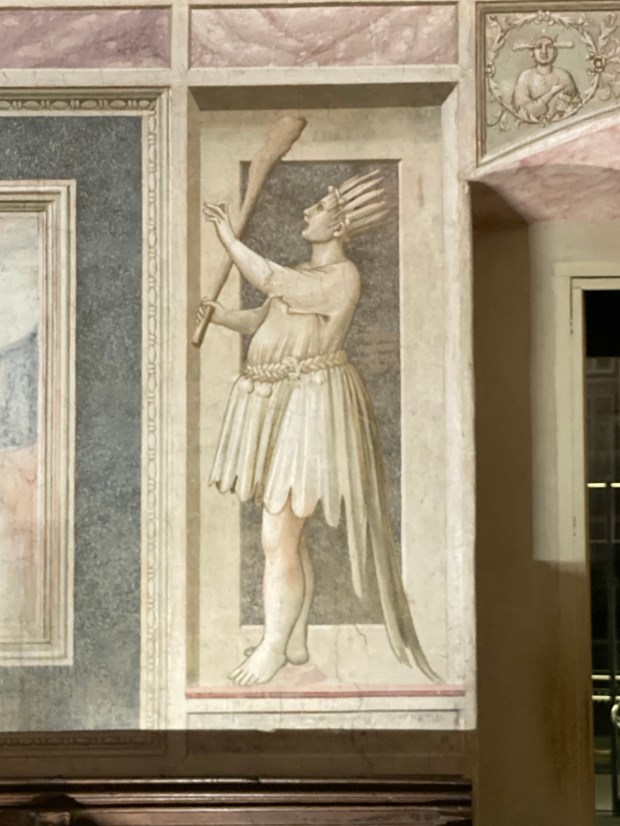
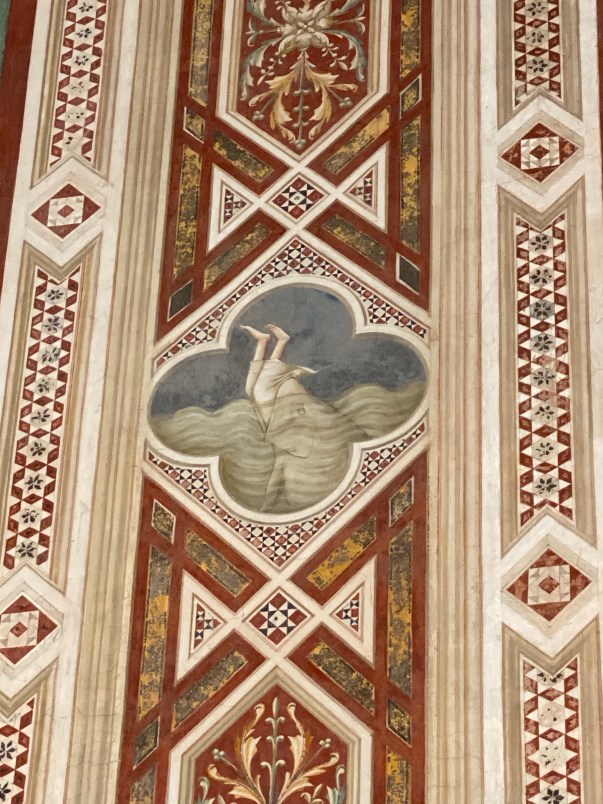
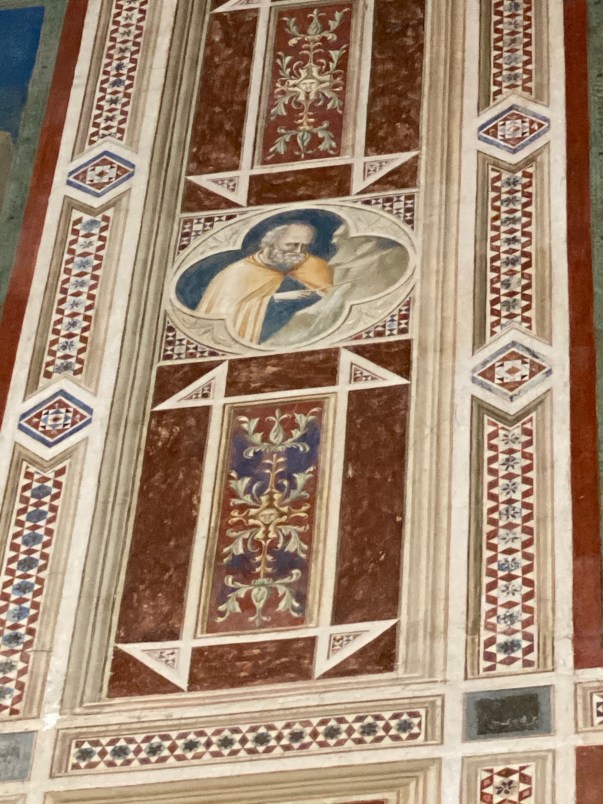
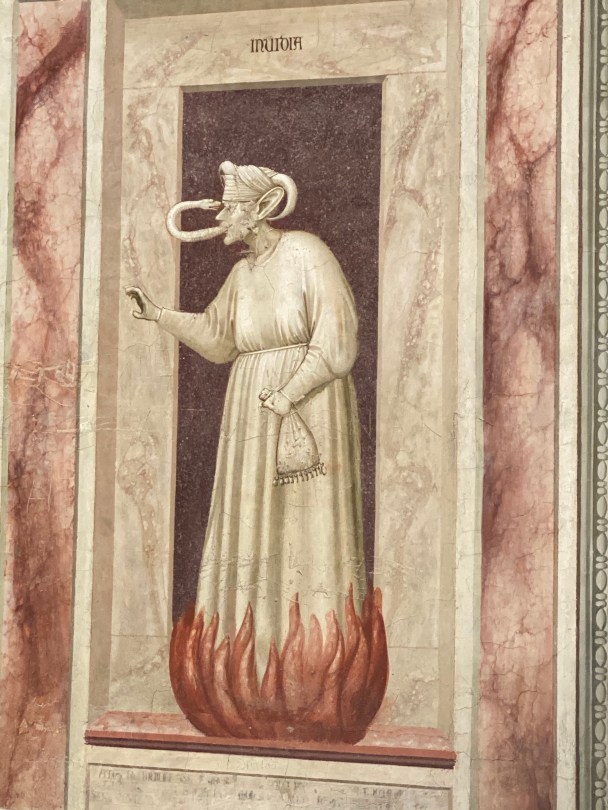
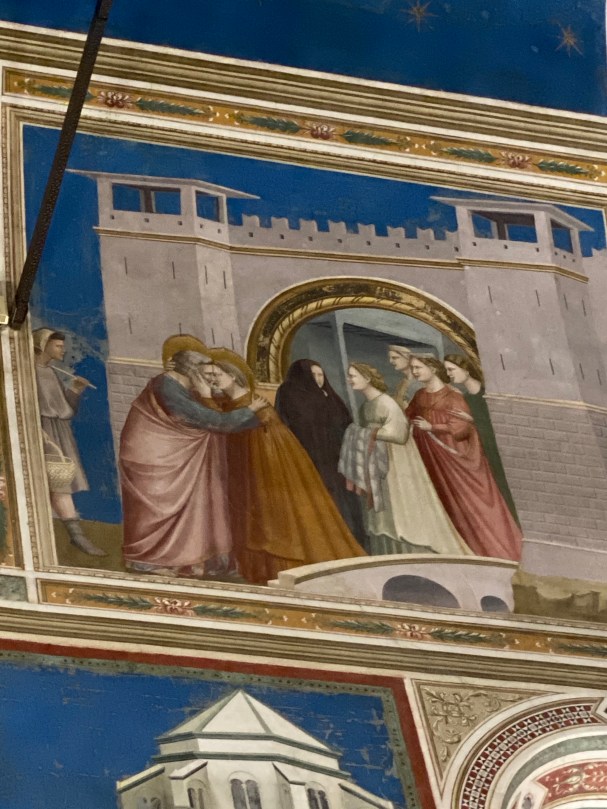
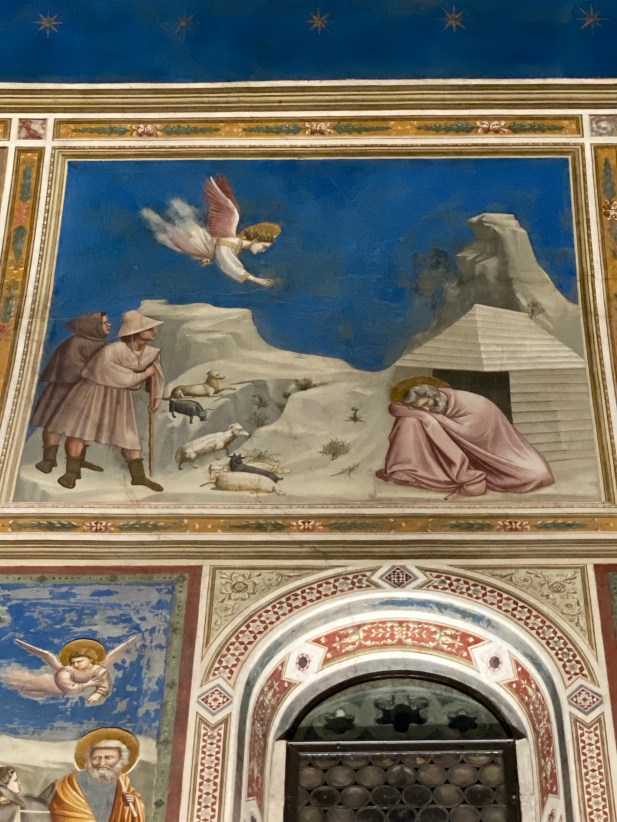
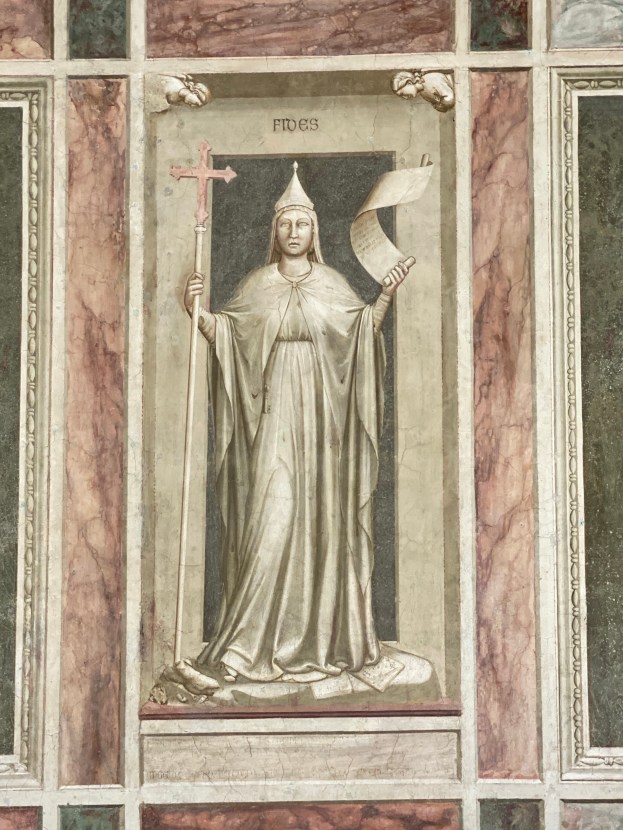
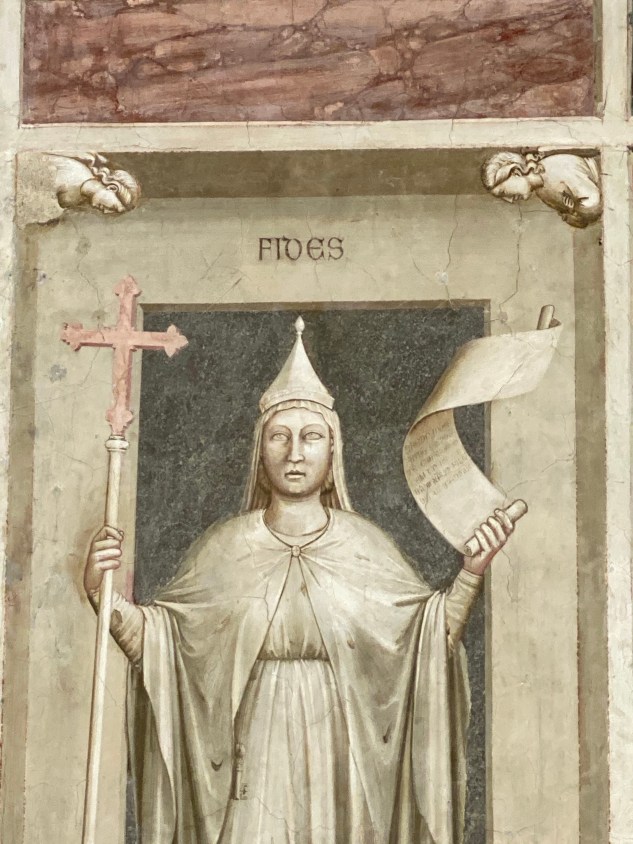
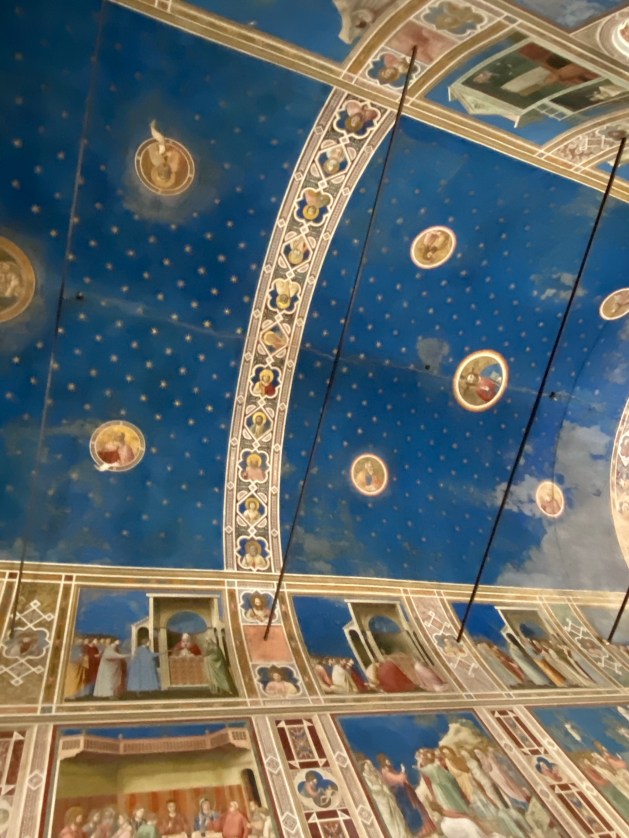
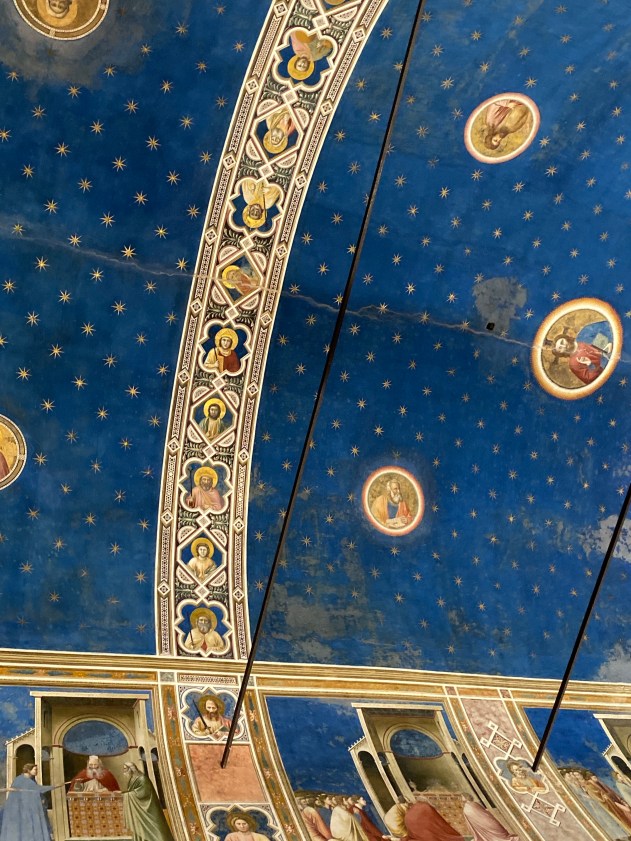
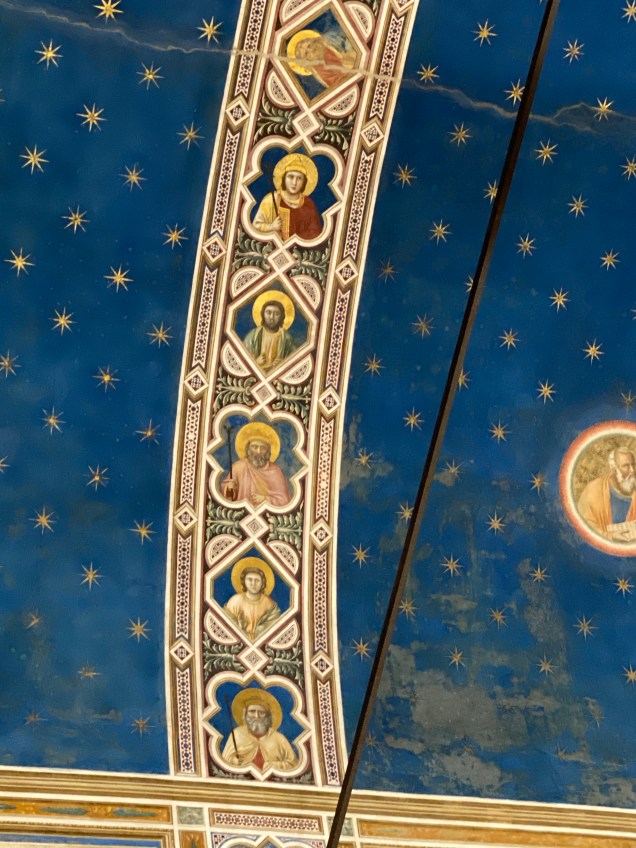
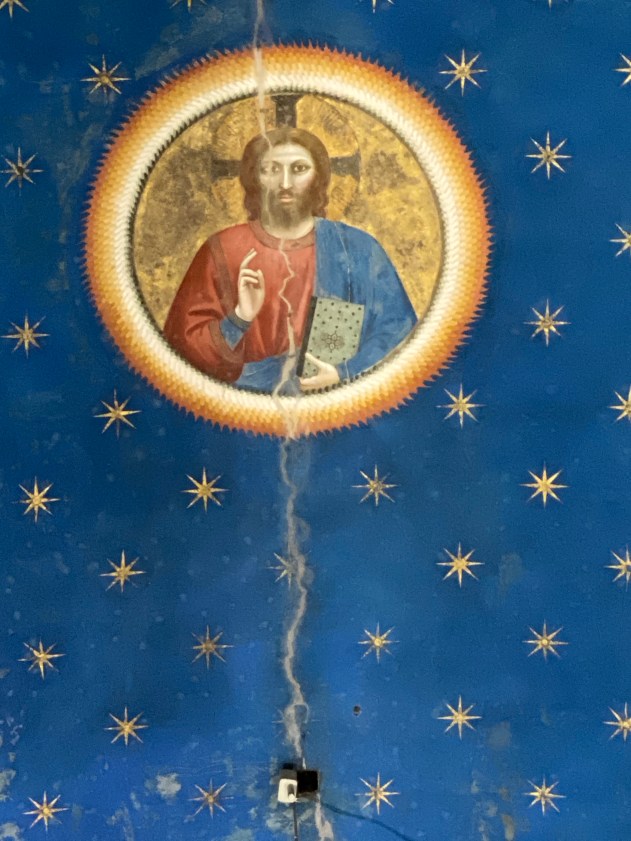
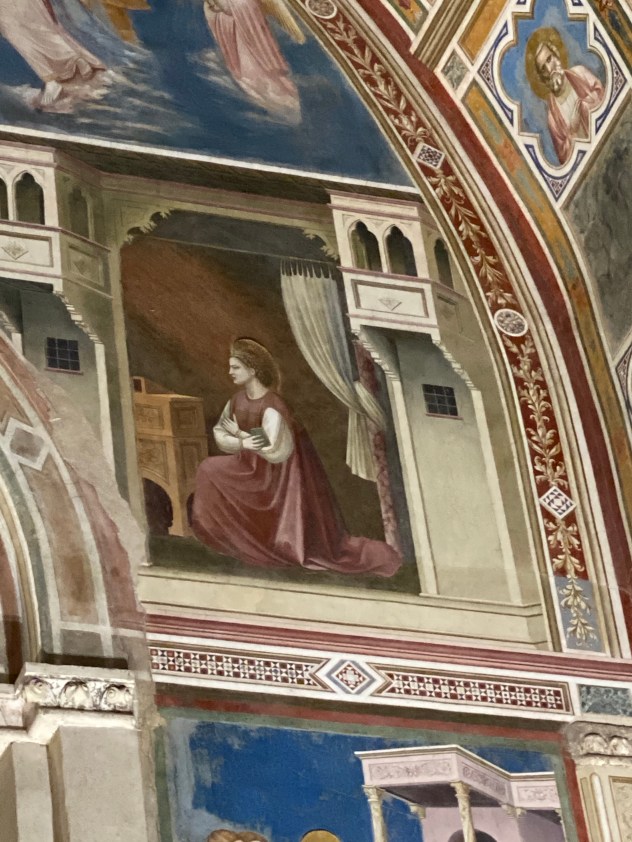
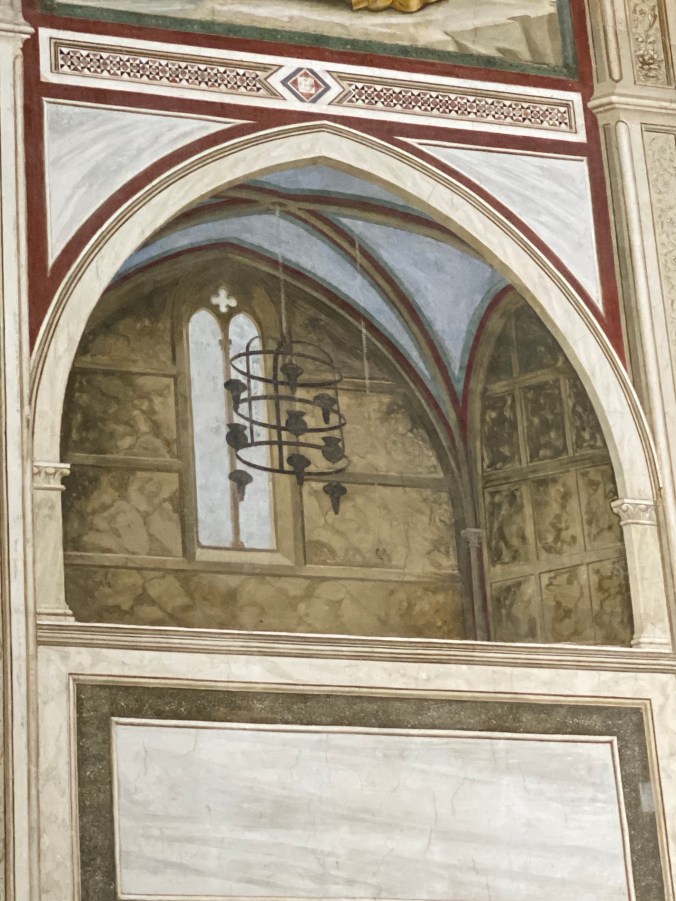
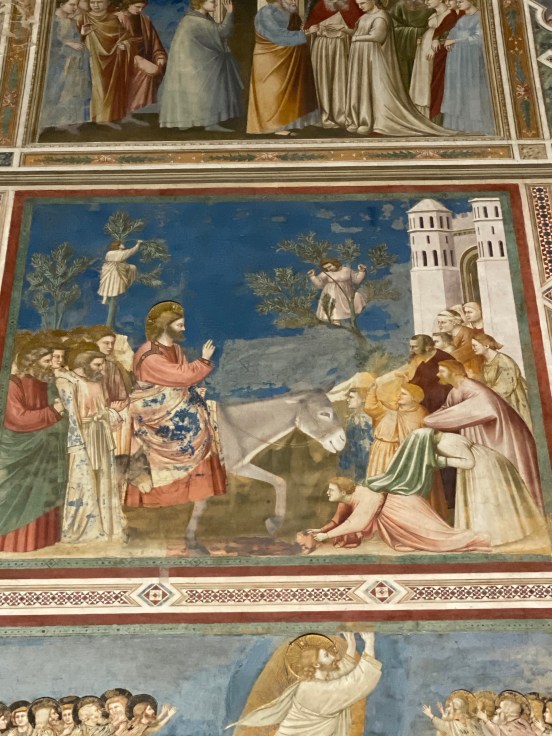
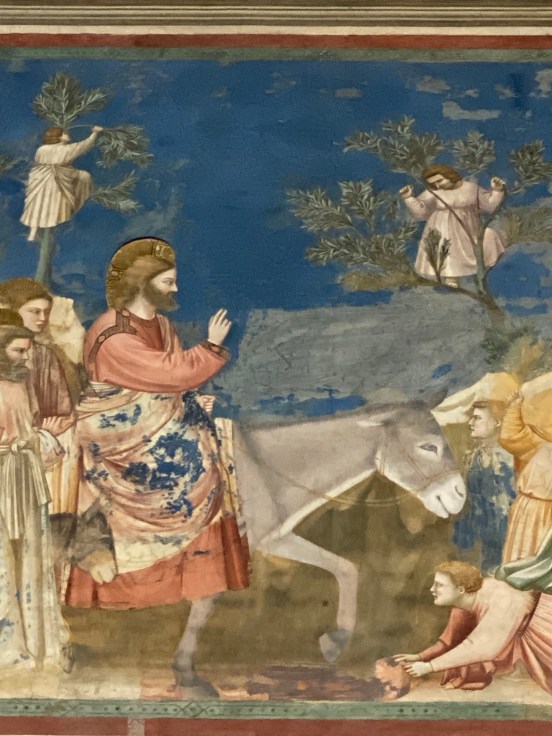
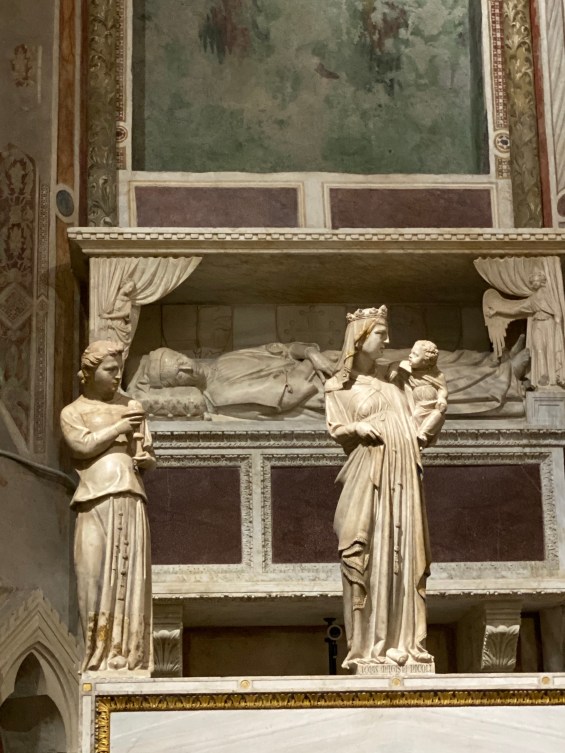
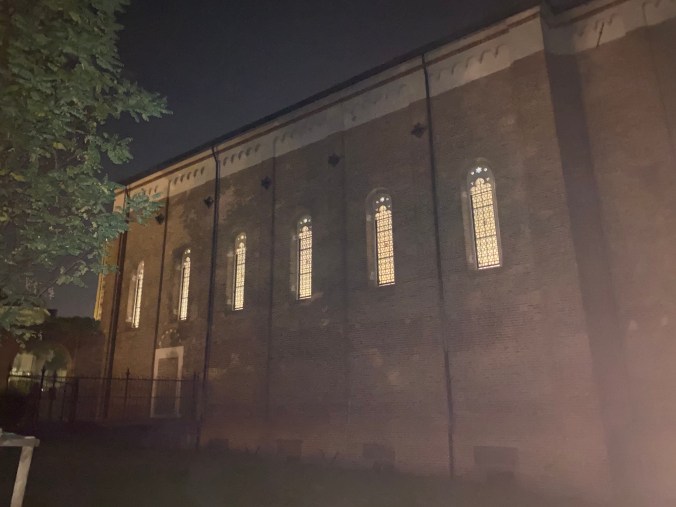
Giotto, Scrovegni Chapel, Padua; once is never enough
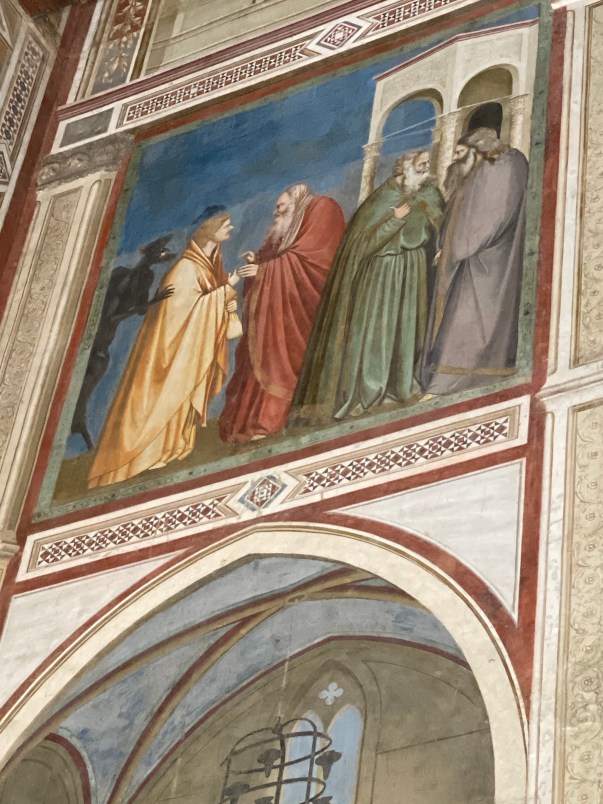
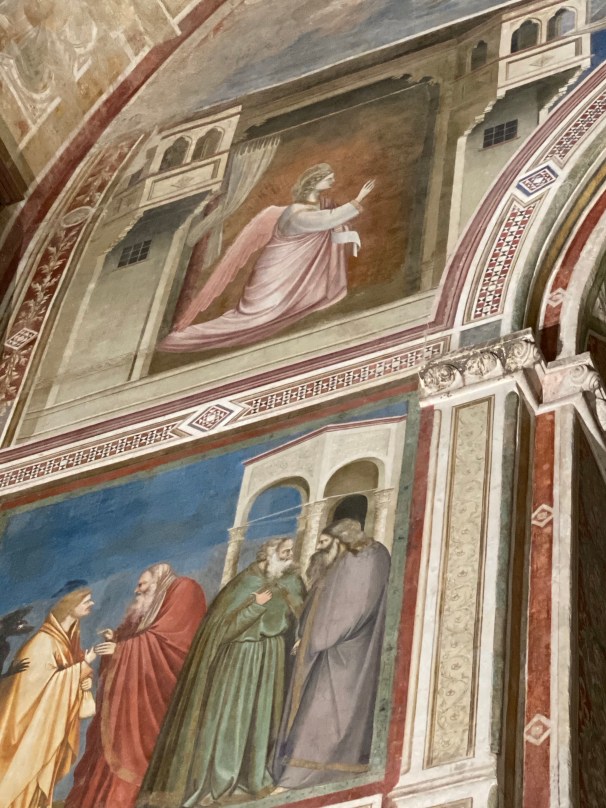
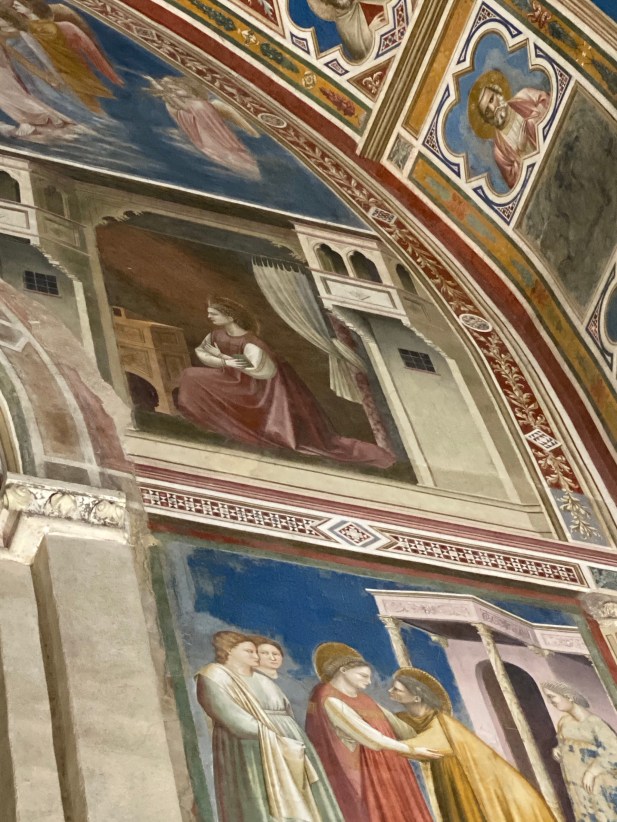
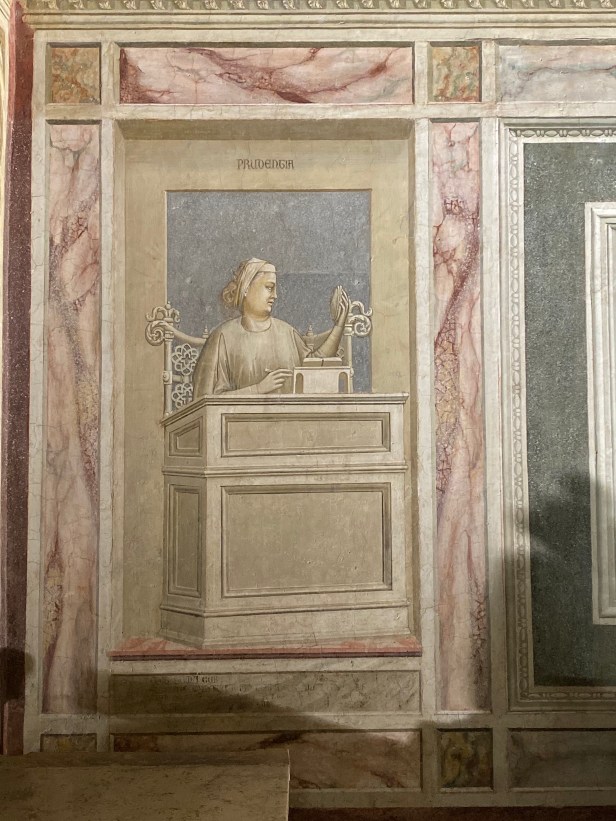
I had to go back to Padua to see the masterpiece of Medieval fresco painting and I’m so happy I did. One, two, even three times in a lifetime is not enough. I’m now at 4 times and counting.
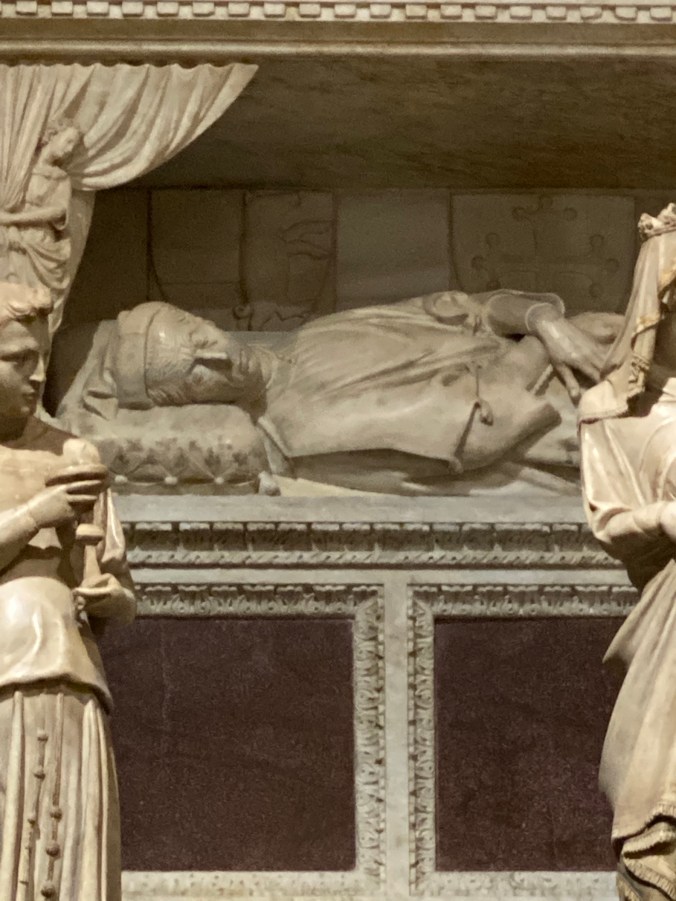
Tuscan sculptor, Giovanni Pisano, is also well-represented in the chapel.
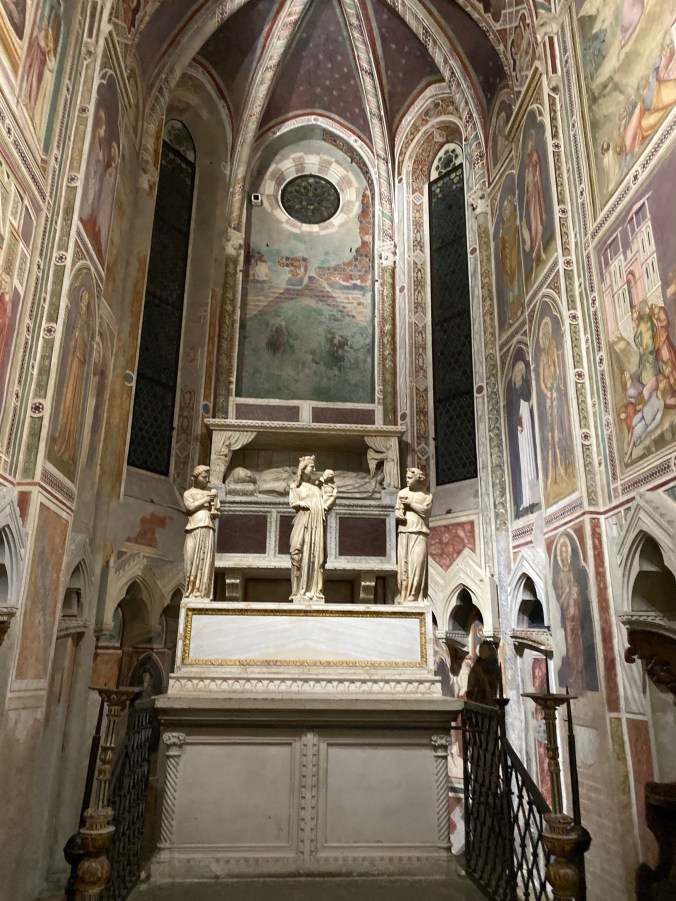

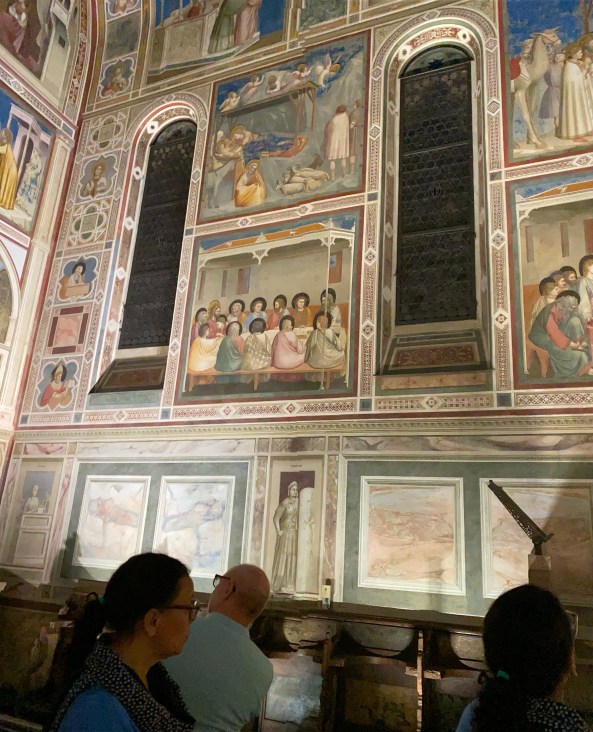
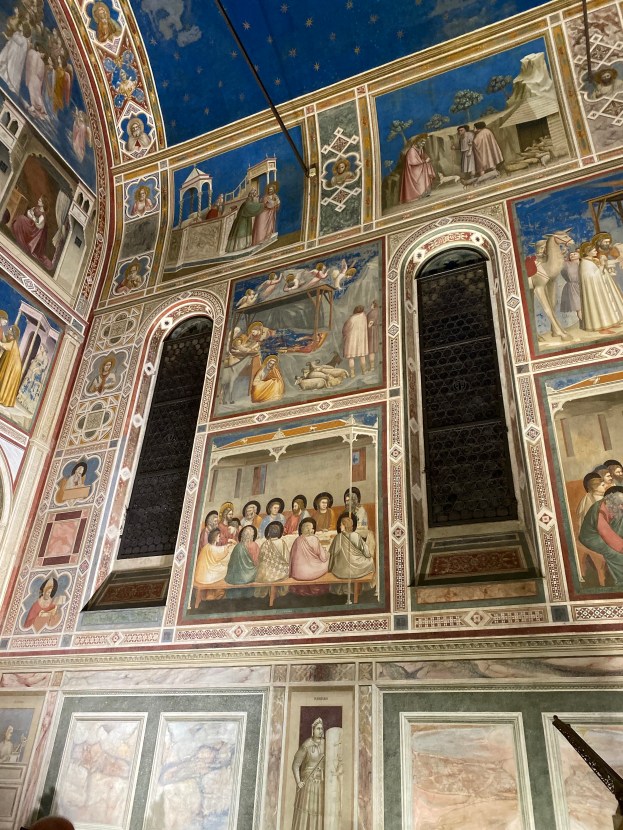
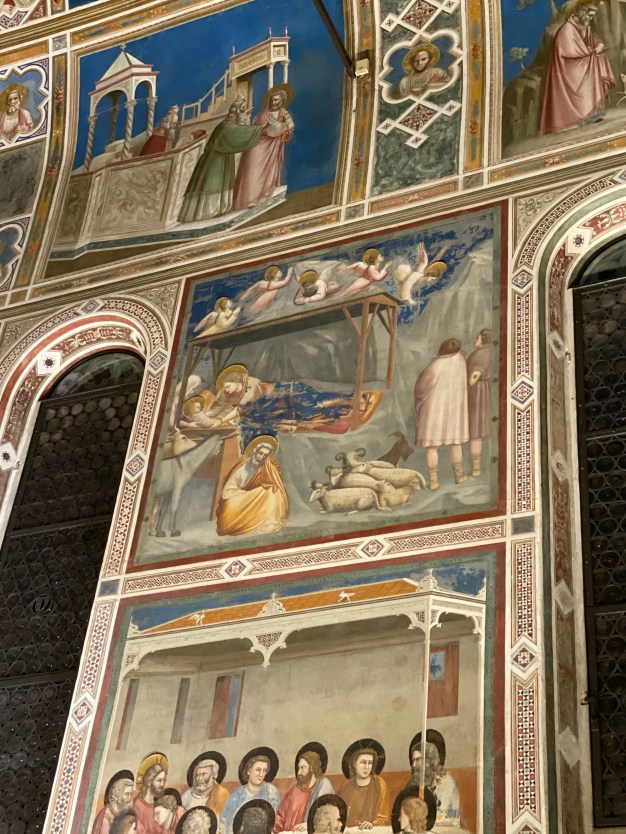
The brochure for the Chapel tells us this about the Scrovegni Chapel: “In 1300, the rich nobleman Enrico Scrovegni acquired the area of the Roman Arena [in Padova], on which he intended to build a fine town house. Next to it, he had a chapel built and dedicated to the Holy Virgin, for the soul of his father Reginaldo, the usurer mentioned in the 17th canto of Dante’s ‘Inferno.’ Scrovegni commissioned Giotto to decorate the chapel with frescoes which, according to most reliable information, was done between 1303-05. The frescoes cover the interior walls and ceiling of the building completely. The lower part of the blue star-spangled vaulted ceiling depicts the prophets and the important episodes in the lives of the Holy Virgin and Jesus Christ. Above the main door is ‘The Last Judgment:’ Christ, as judge, is surrounded by the angels and the apostles; below him, to the right, are the Blessed; to the left, the Damned are depicted as suffering eternal punishment, according to medieval tradition.”
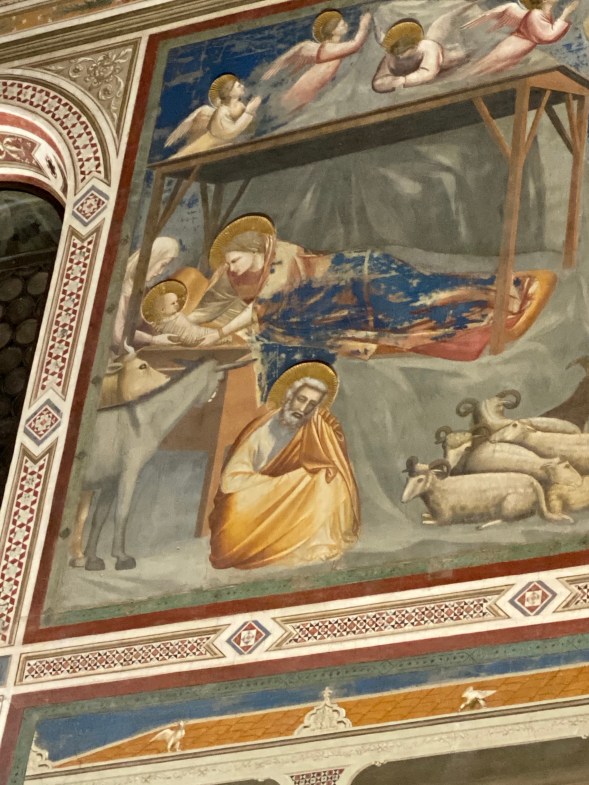
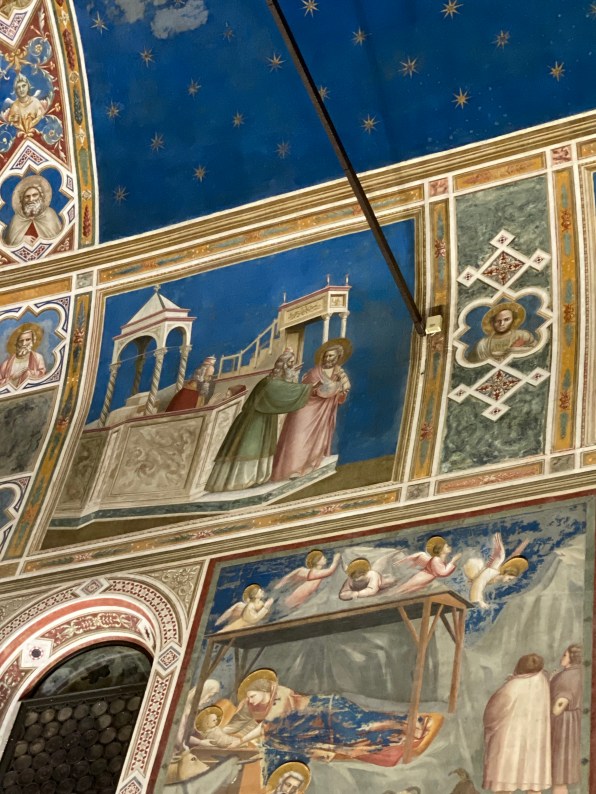
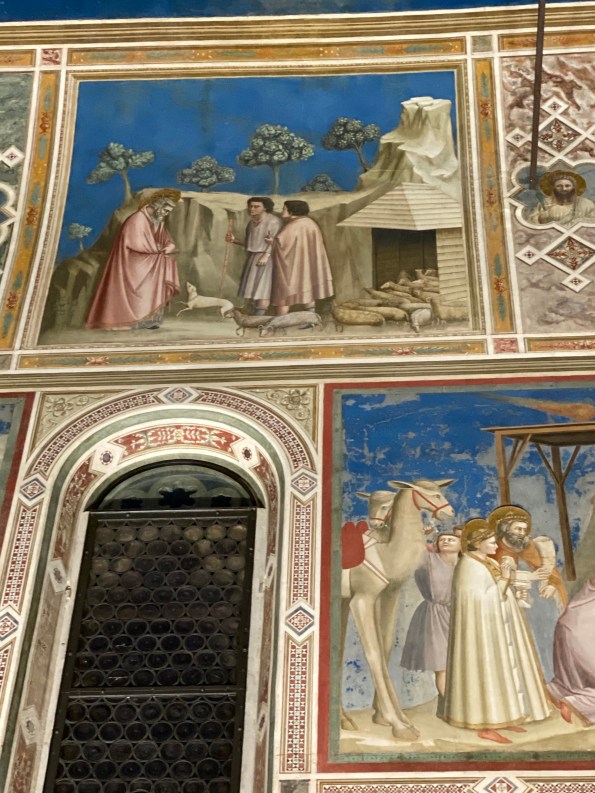
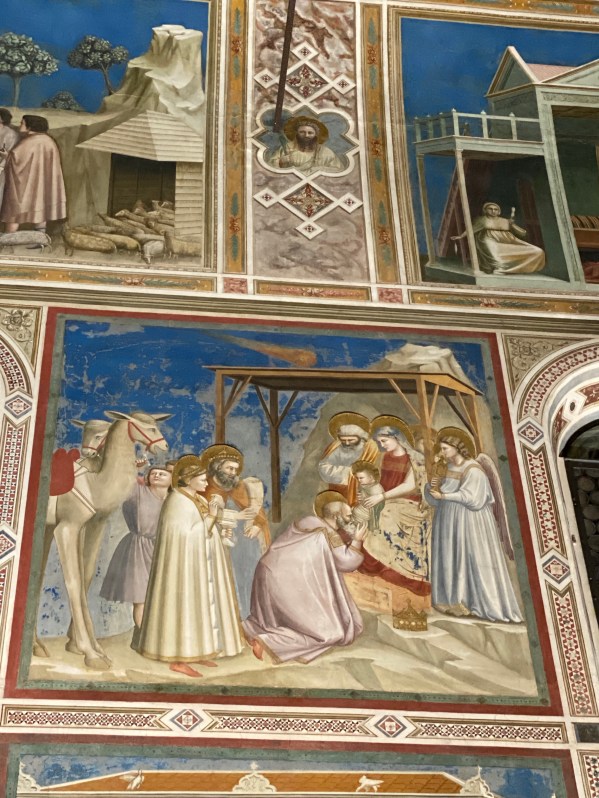

‘


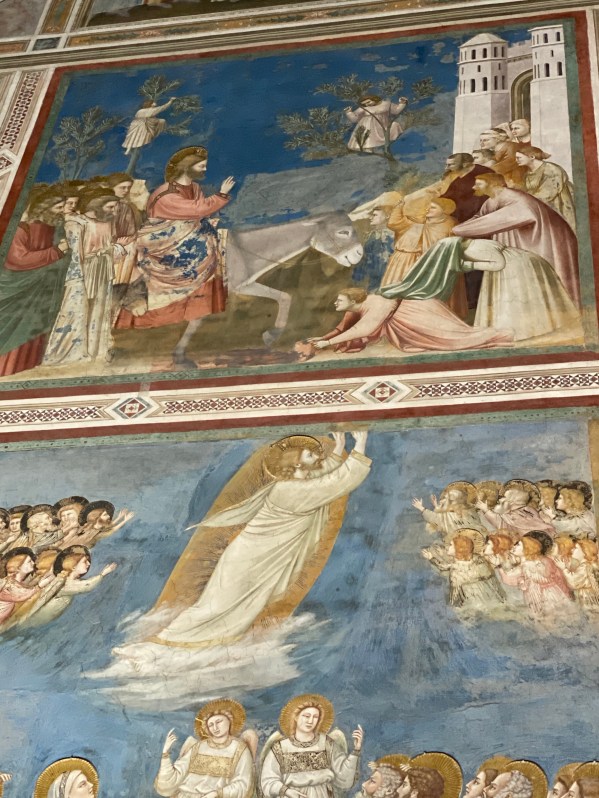
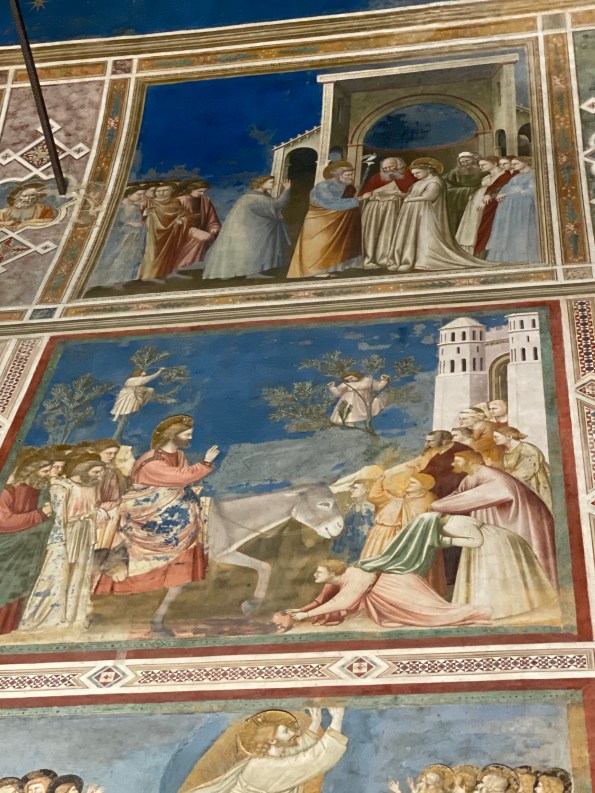
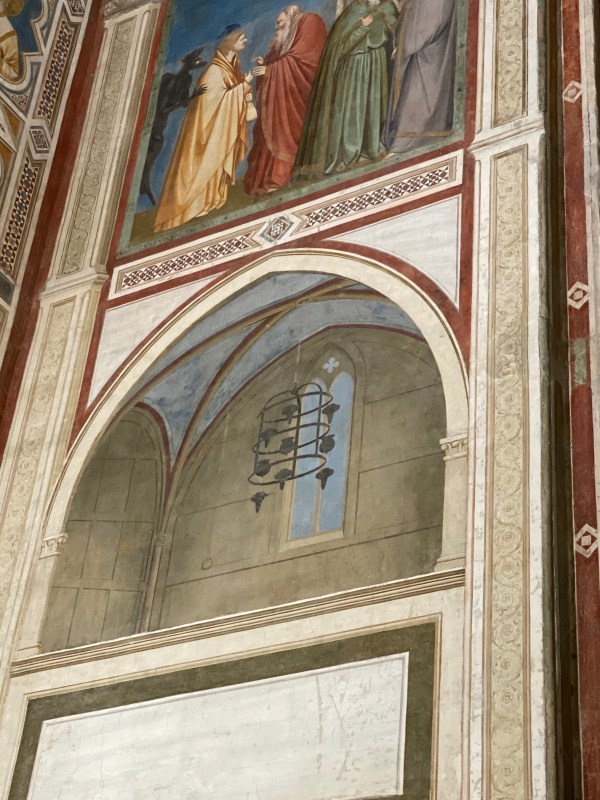
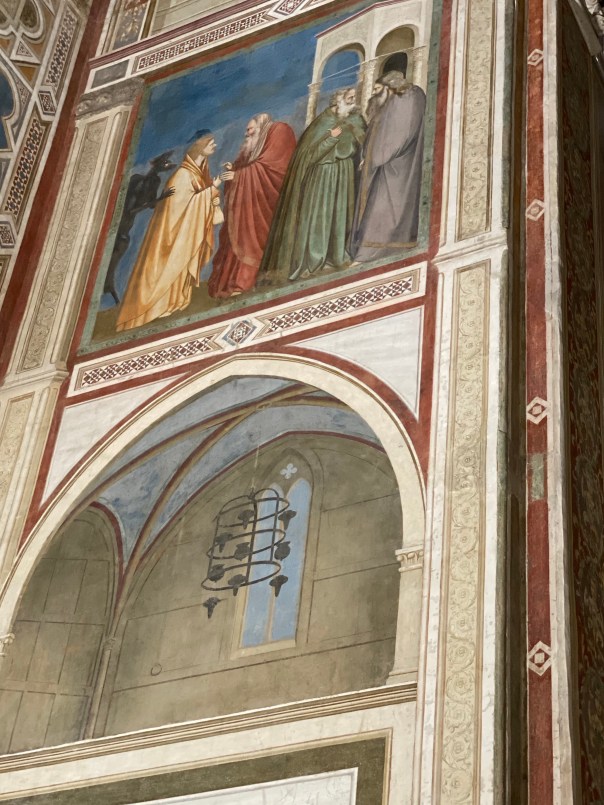


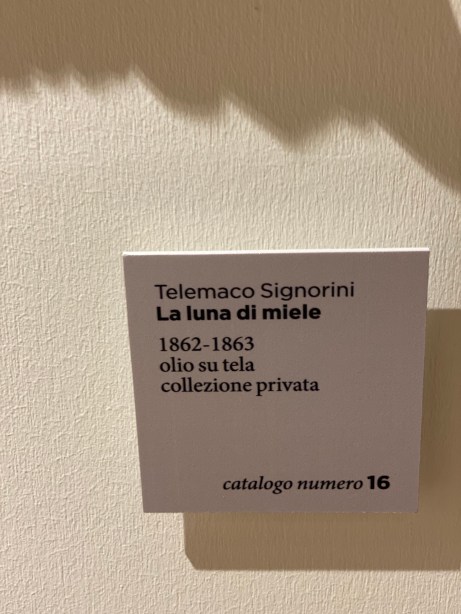
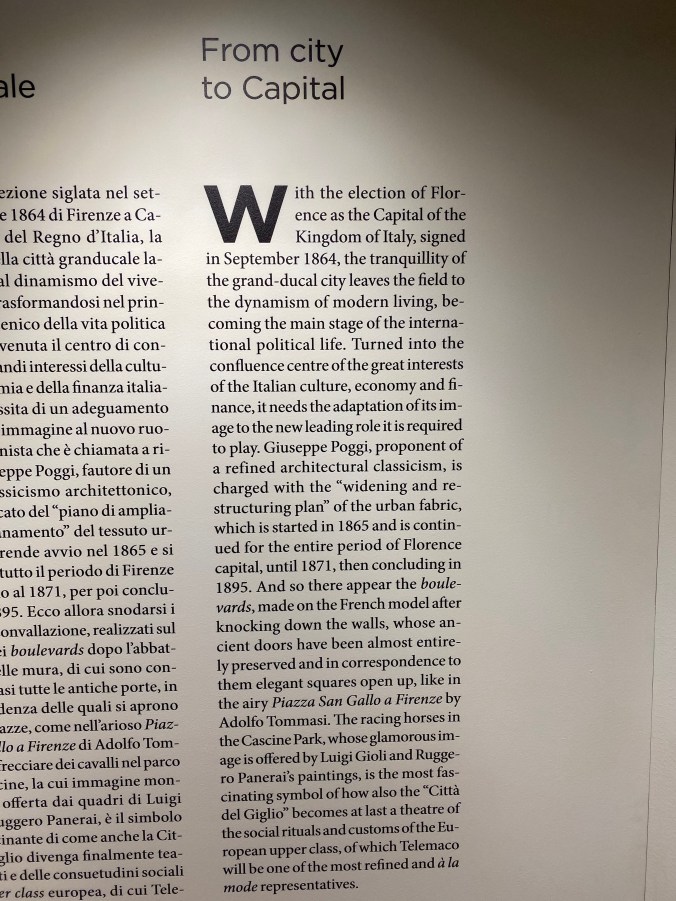
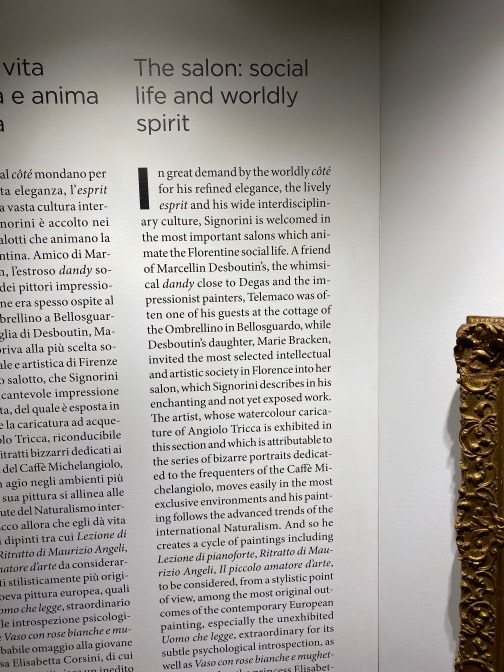
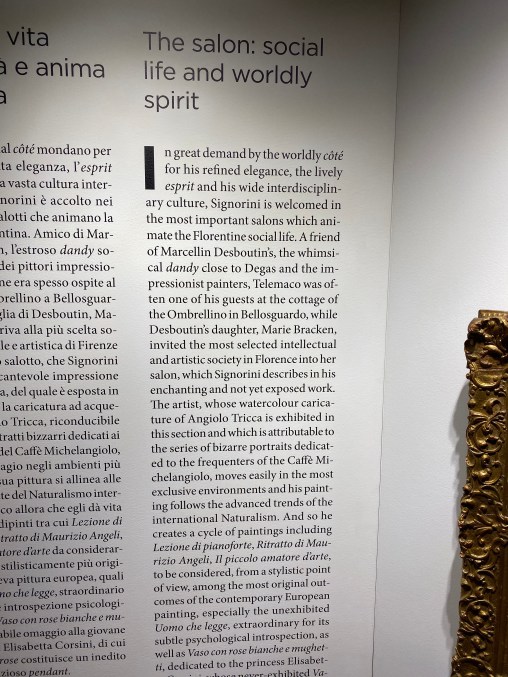
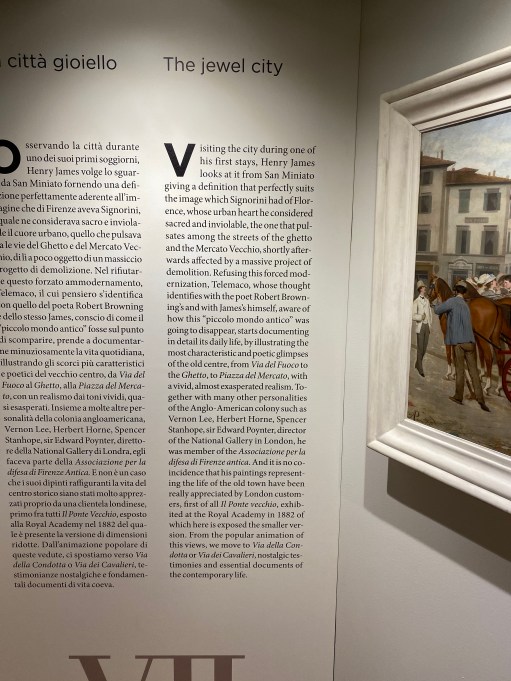
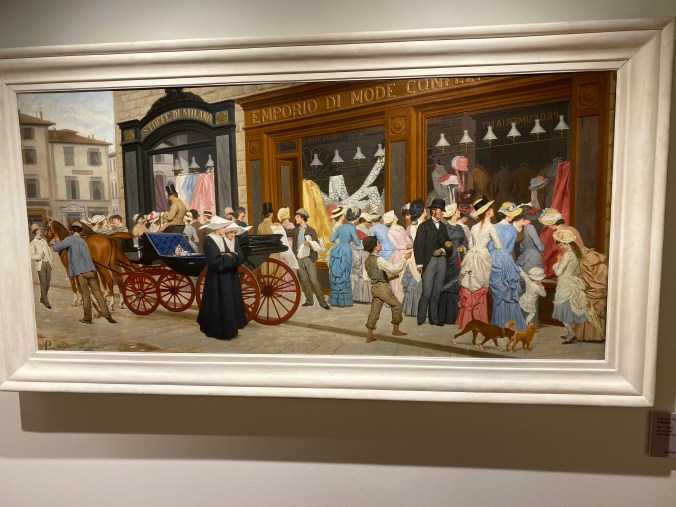
The Florence of Telemaco Signorini; exhibition at Palazzo Antinori
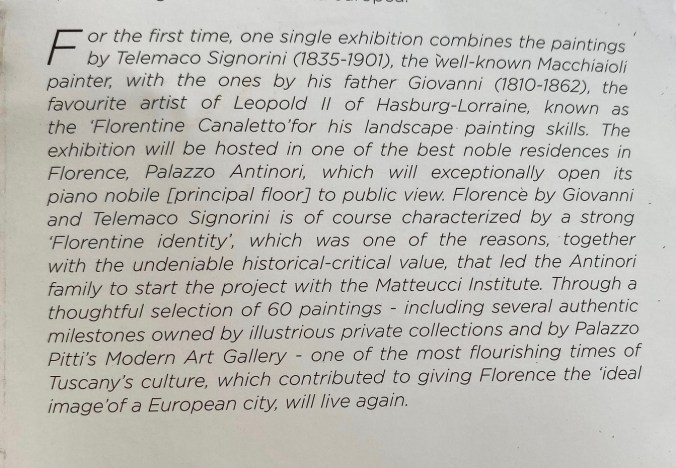
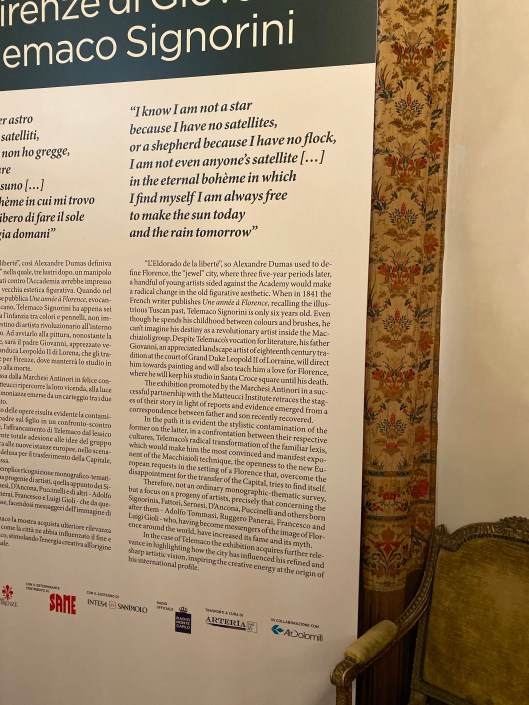
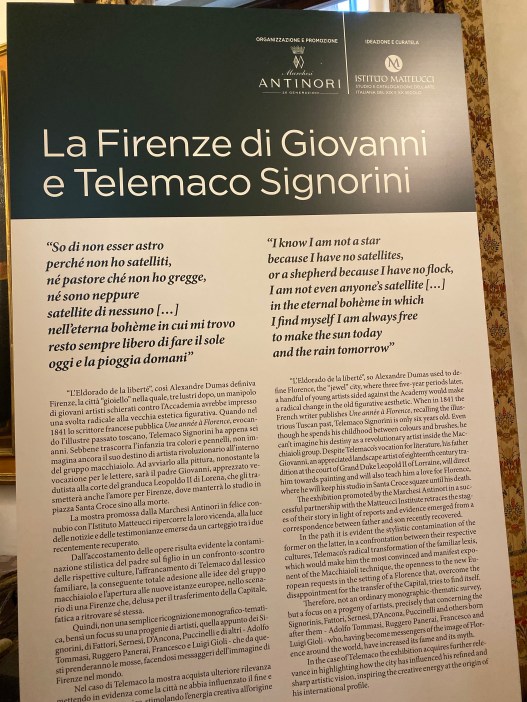
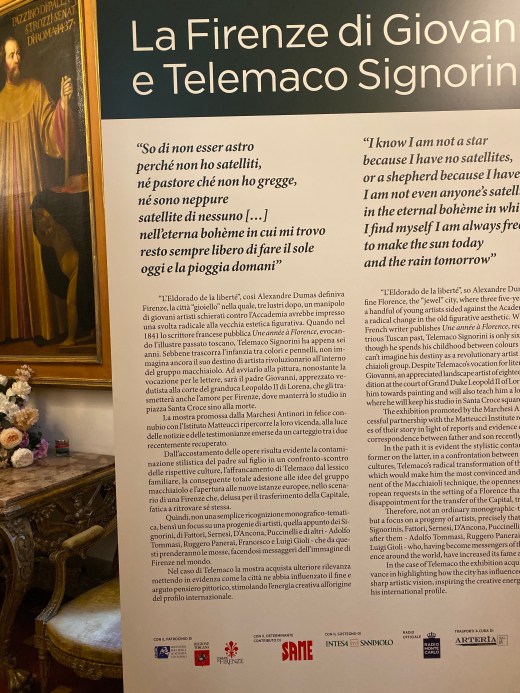
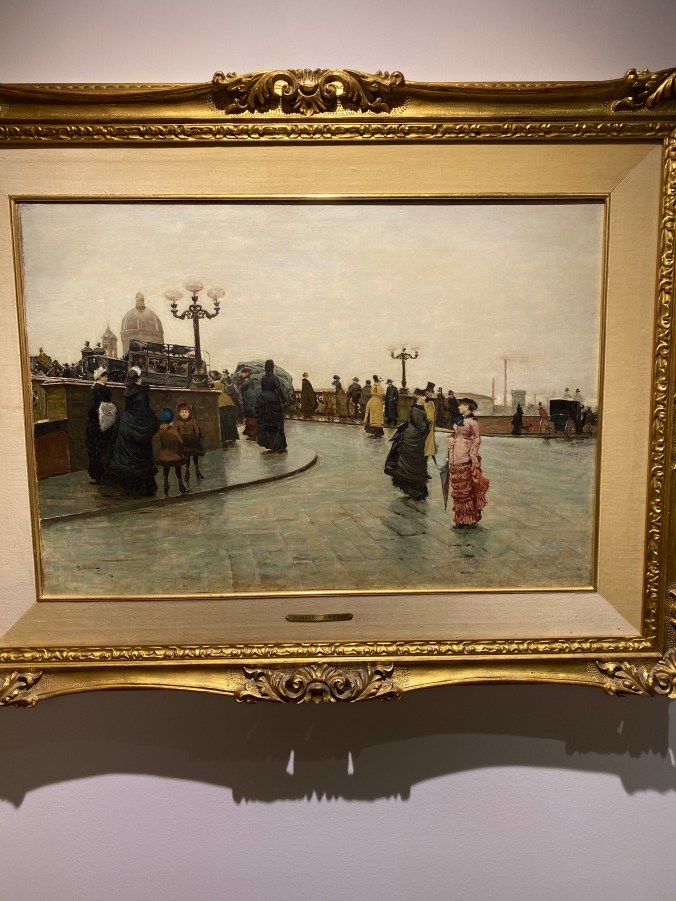
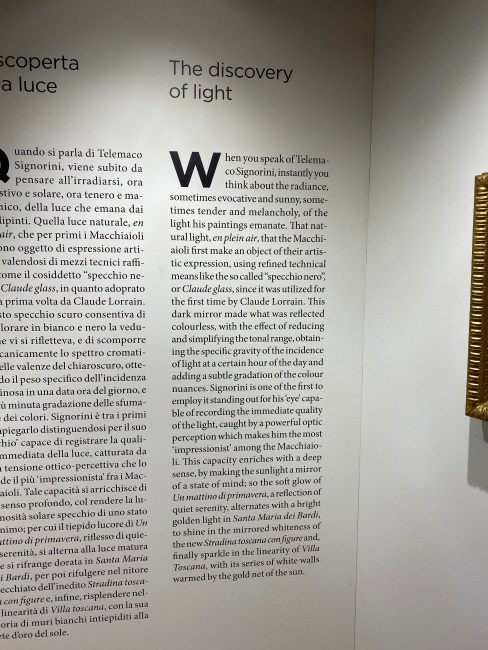
Lovers of the ottocento and of old Florence will love the current exhibition at the Palazzo Antinori. Entitled “The Florence of Giovanni and Telemaco Signorini” (father and son), the show runs through 10 November 2019. For people like me, it is a delightful experience to not only see the show, but to also have a look at the piano nobile of the Antinori Palace.
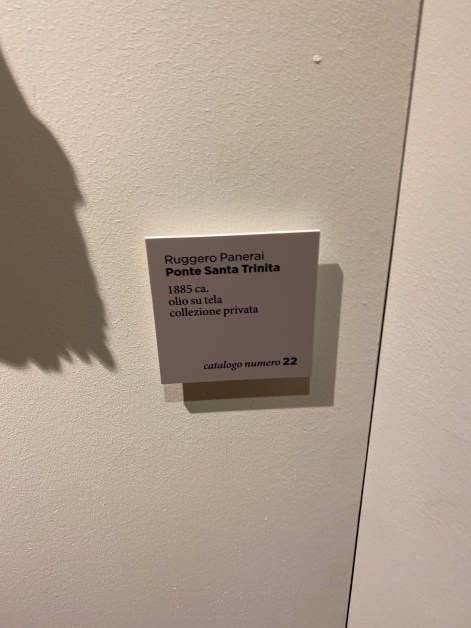
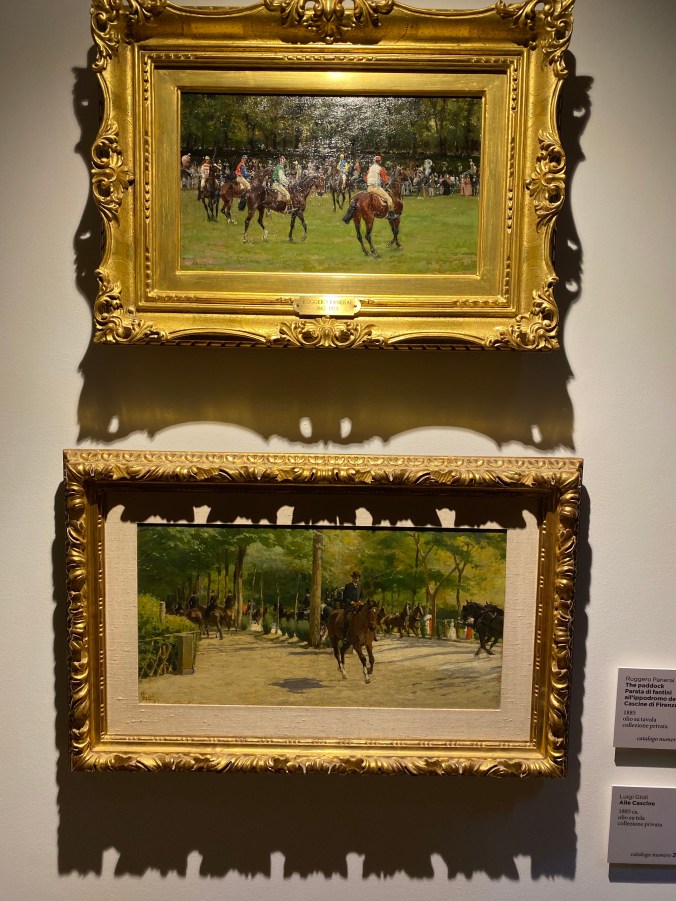
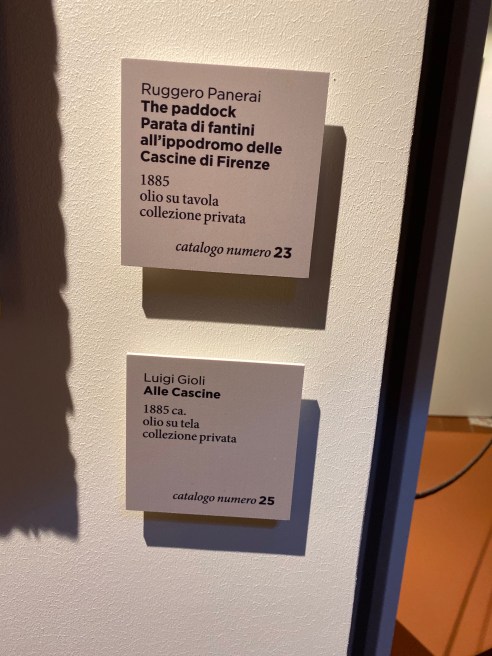
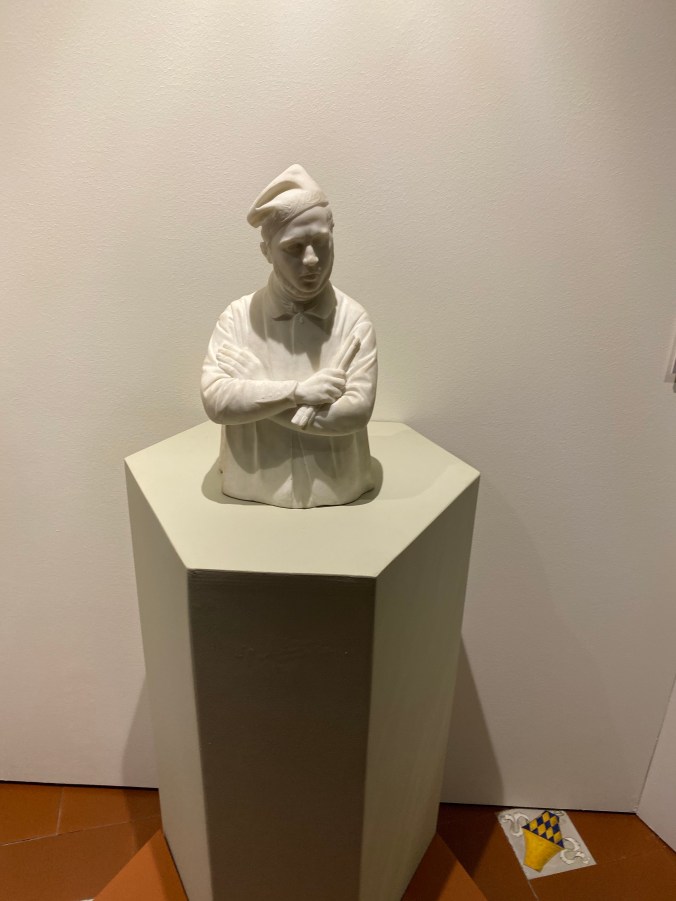
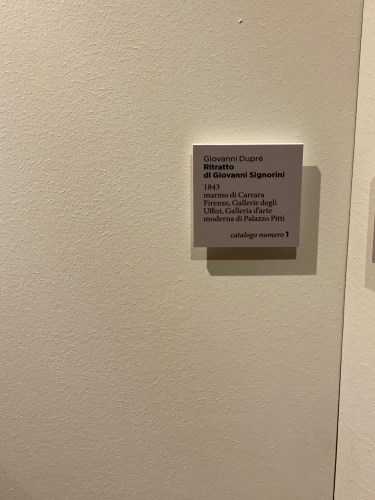
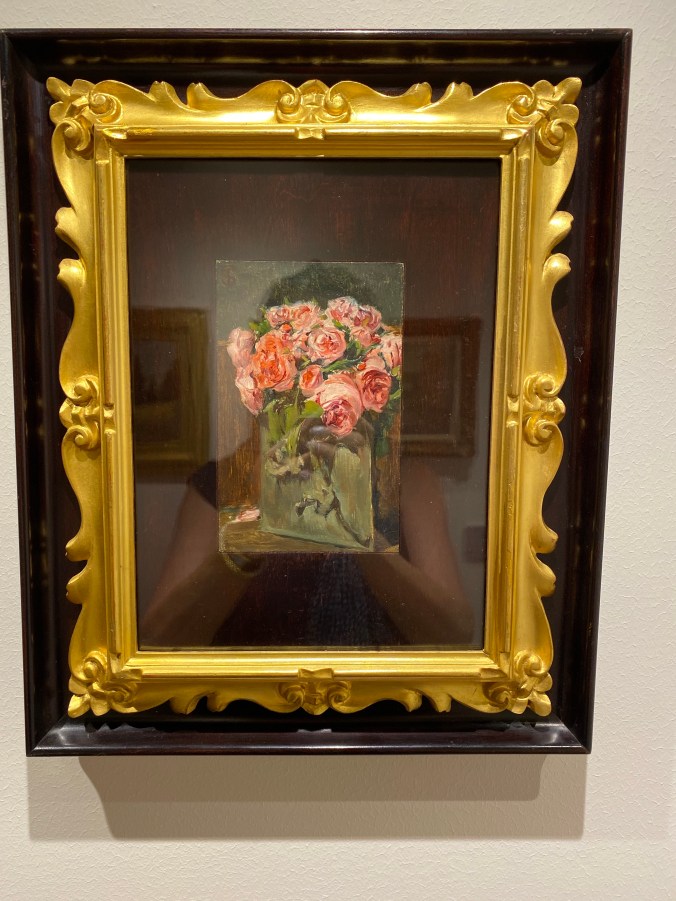
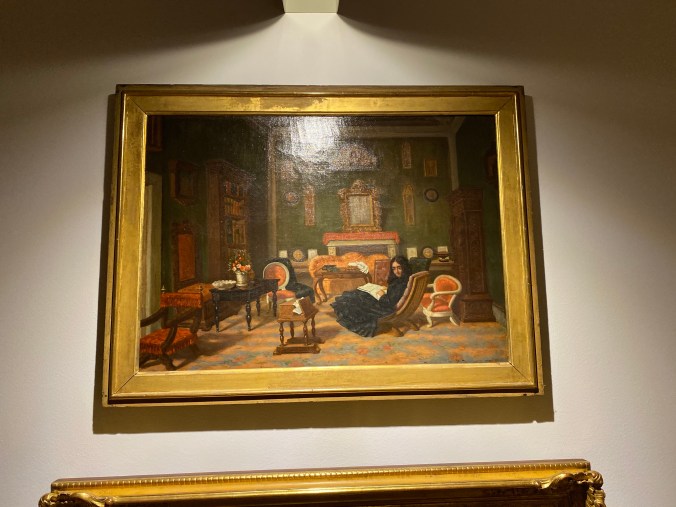
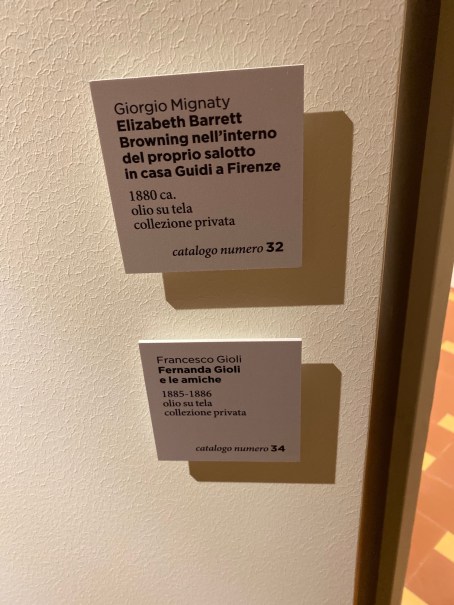
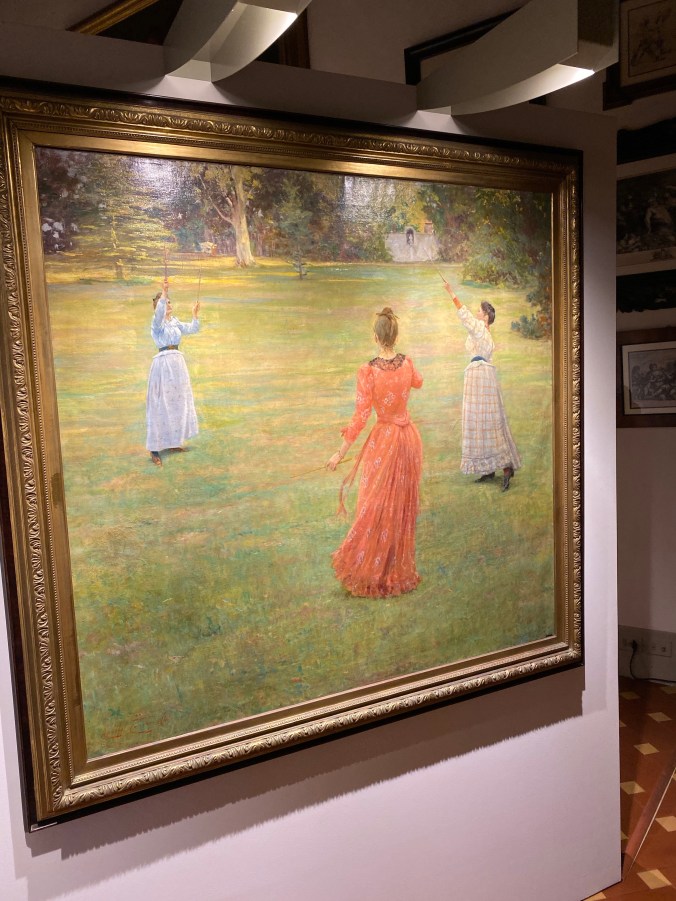
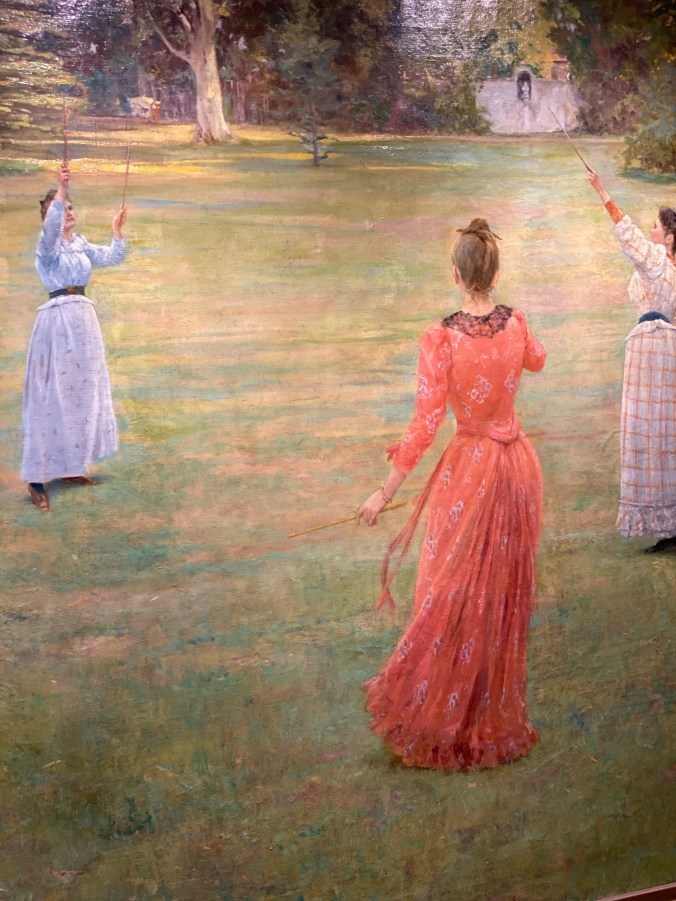
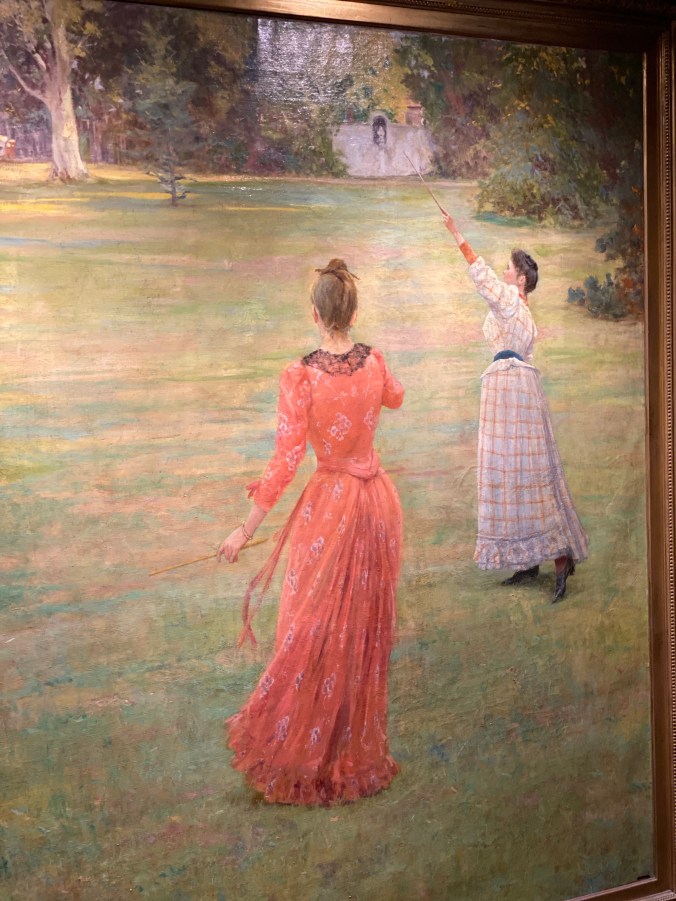
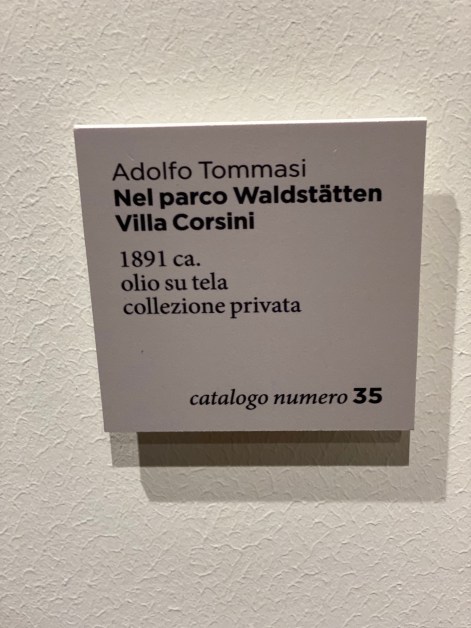
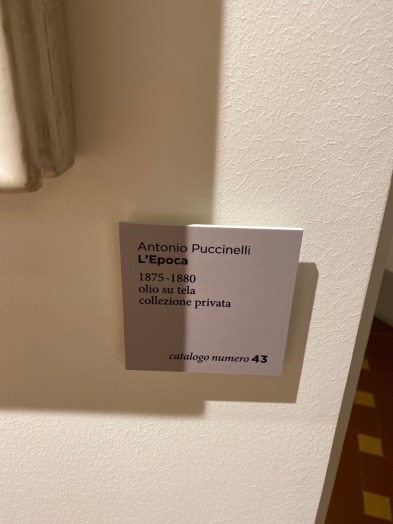
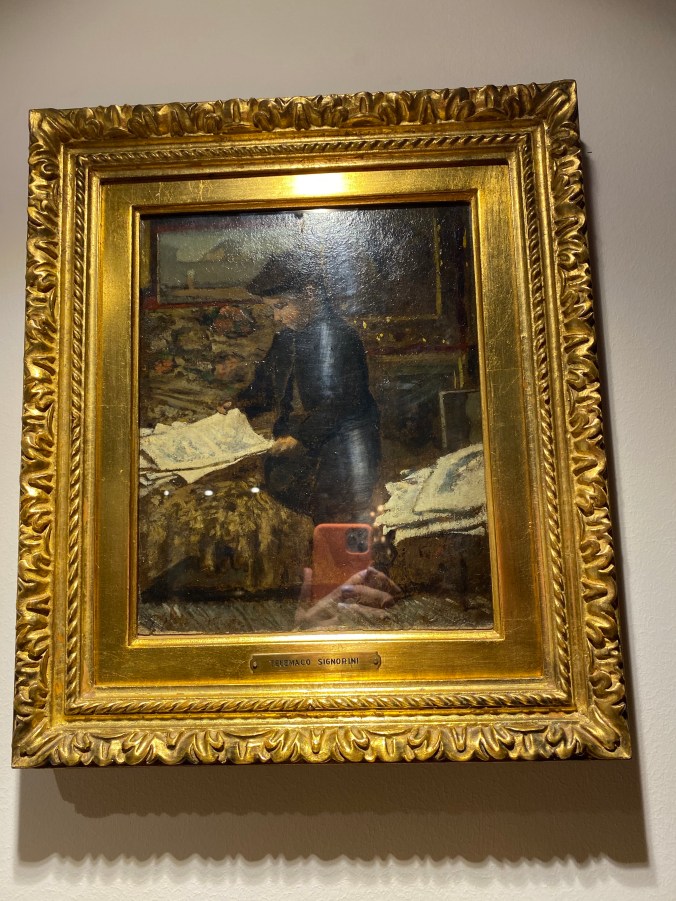
The exhibition also includes a few paintings by contemporaries of the Signorini father/son painters. It includes: Ruggero Panerai, Luigi Gioli, Francesco Gioli, Giorgio Mignaty, Adolfo Tommasi, and Antonio Puccinelli. There is also a sculpted bust of Telemaco Signorini by Giovanni Dupre.
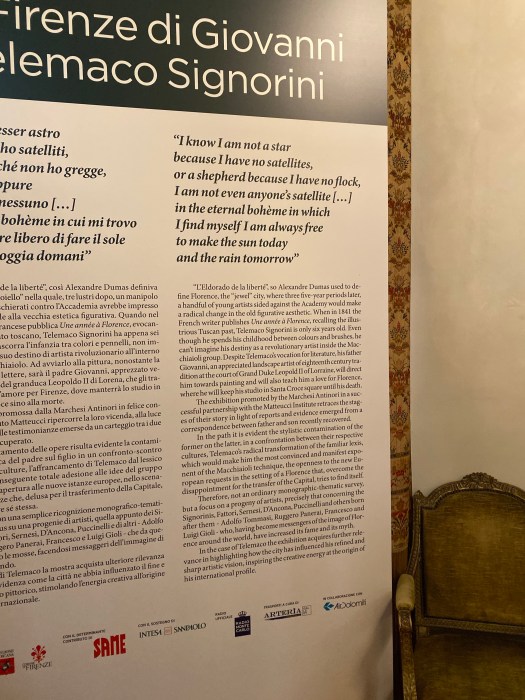
Here’s what the brochure announces about this exhibition:
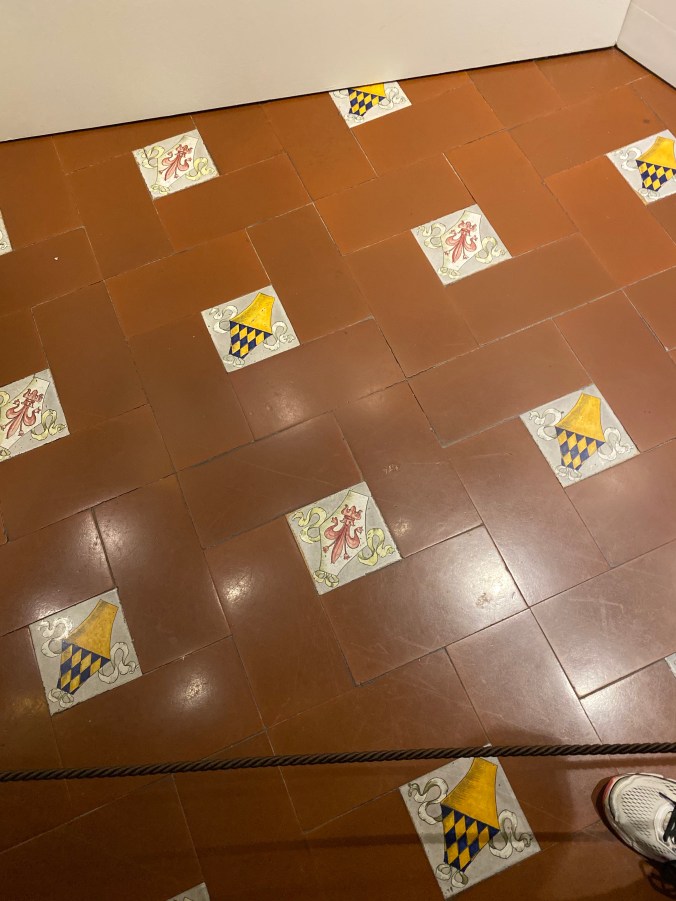
Regarding the beautiful palazzo itself:
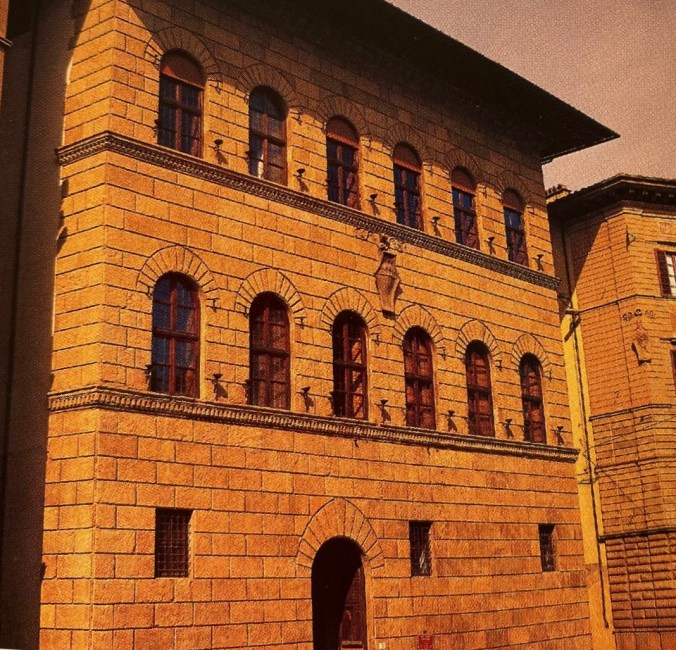
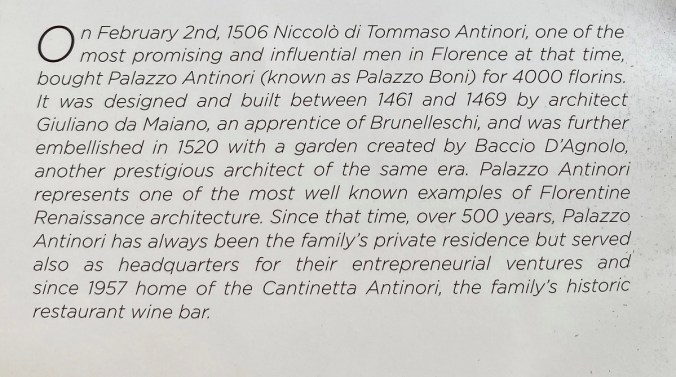
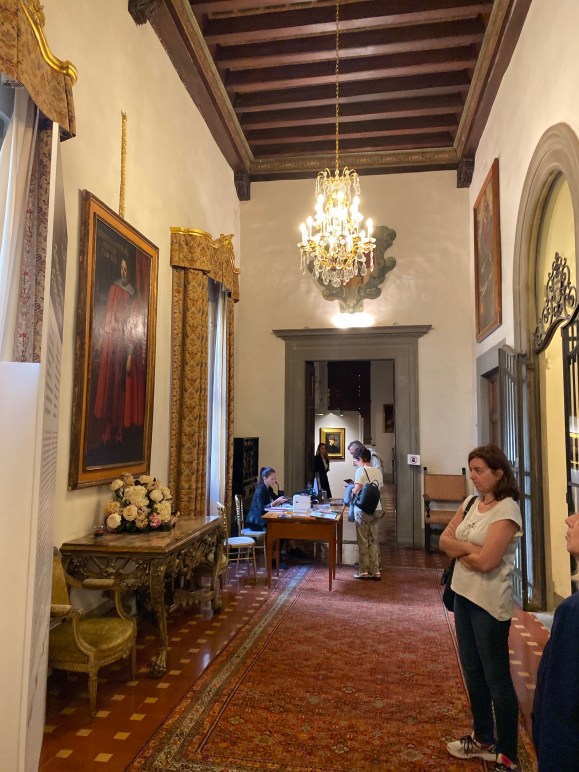
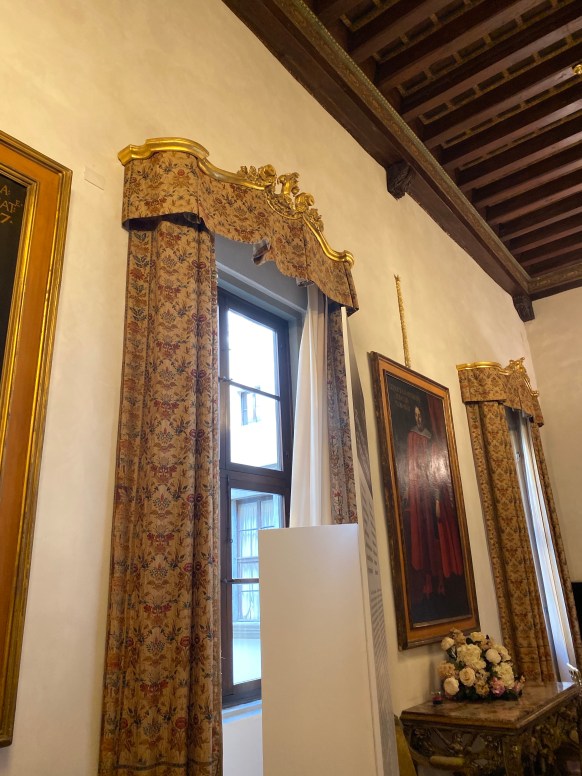
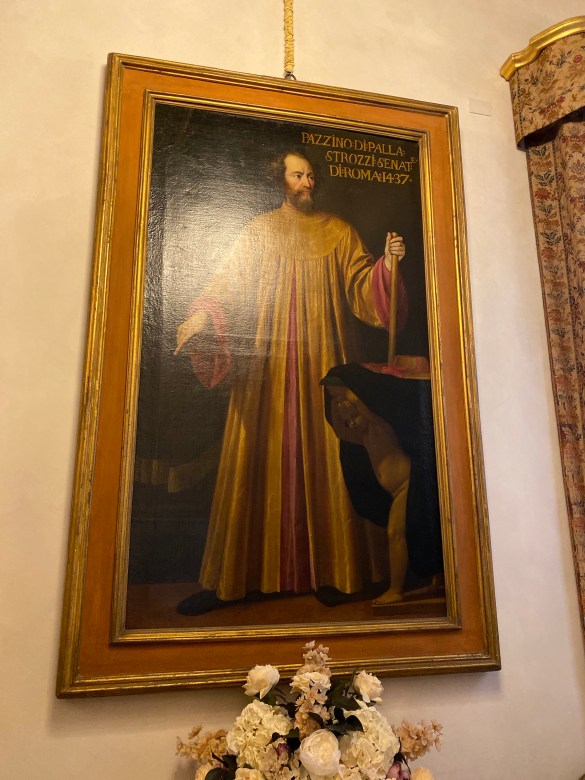
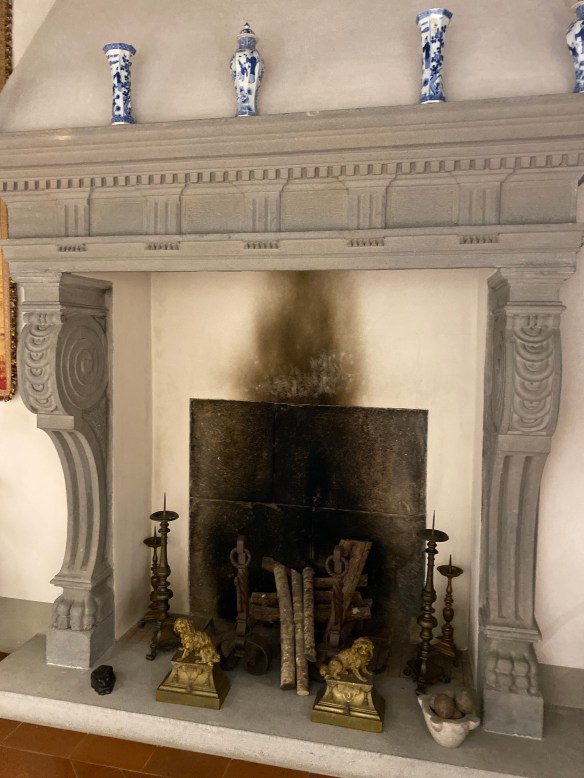
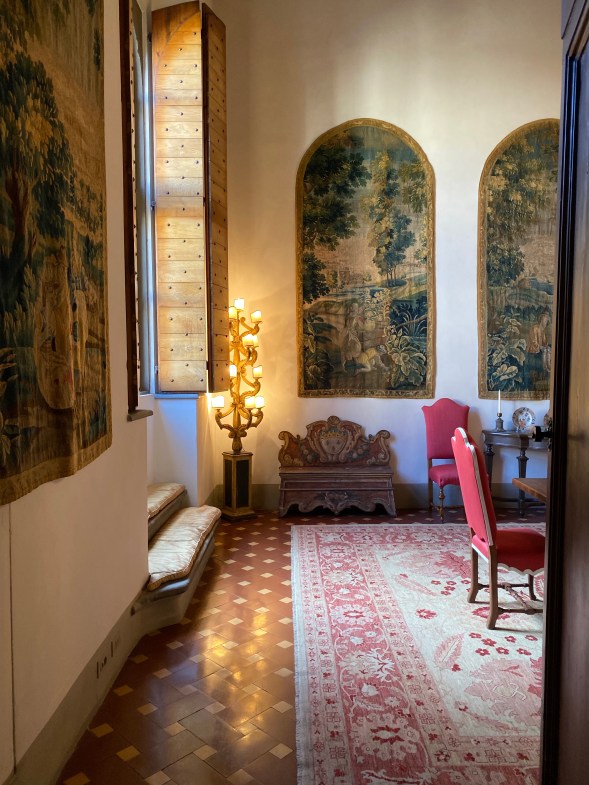
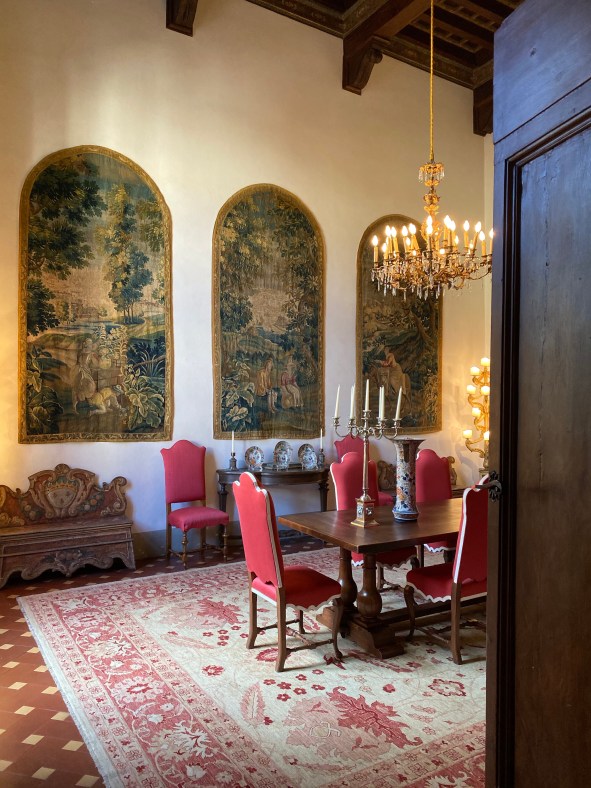
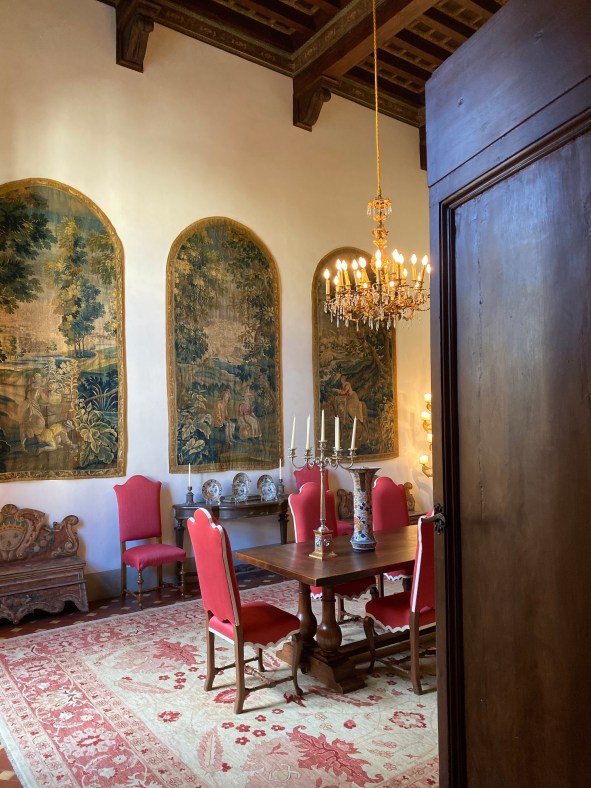
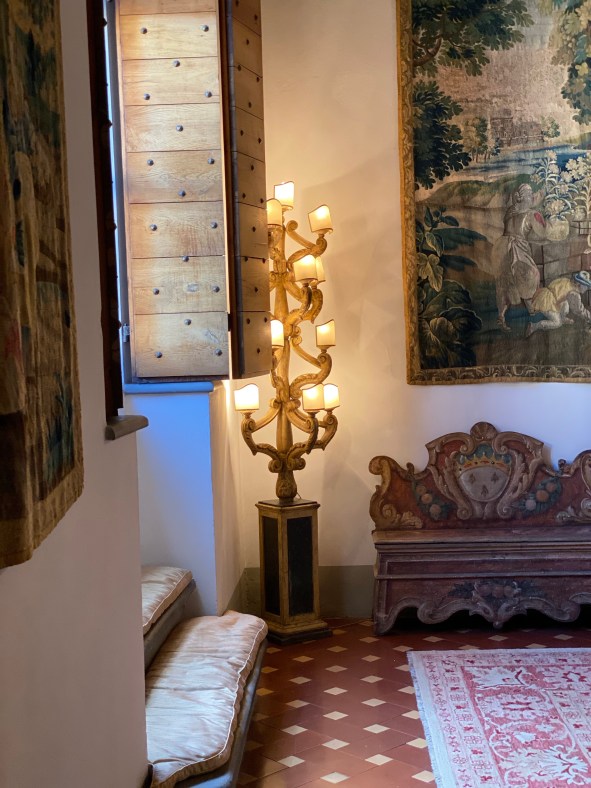
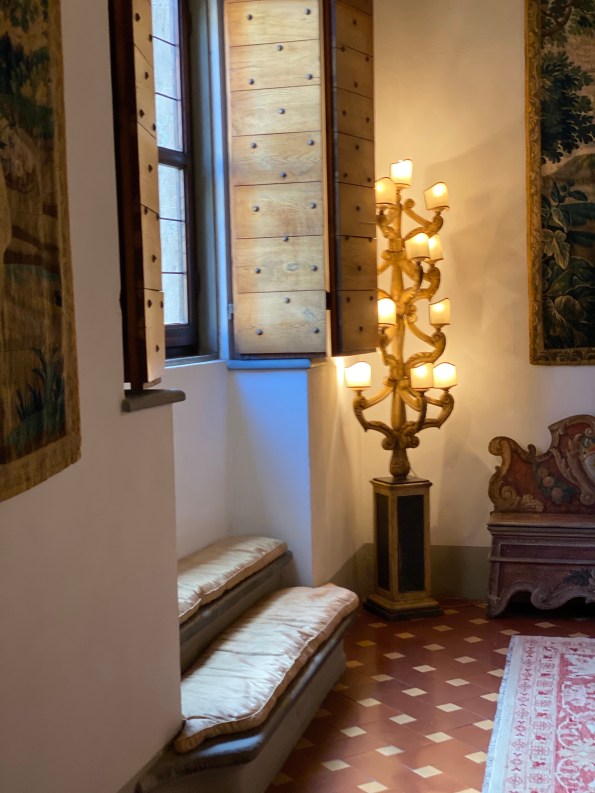
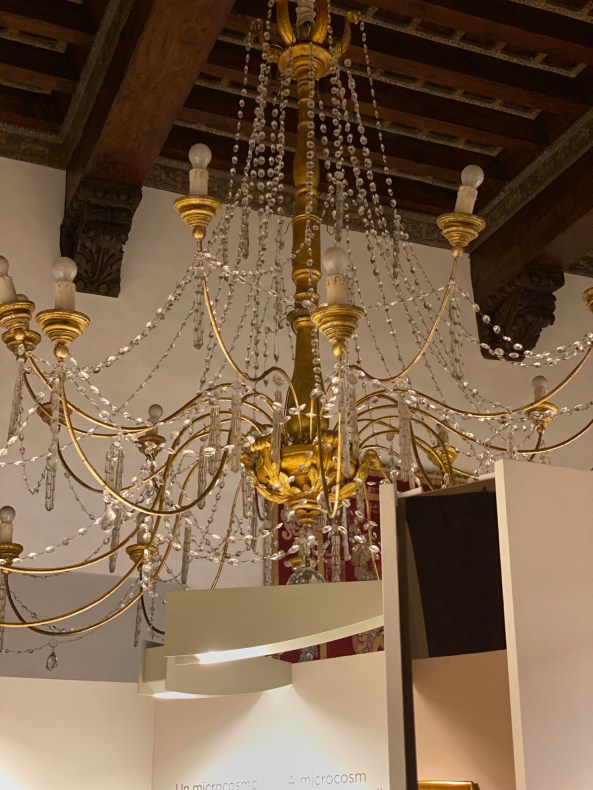
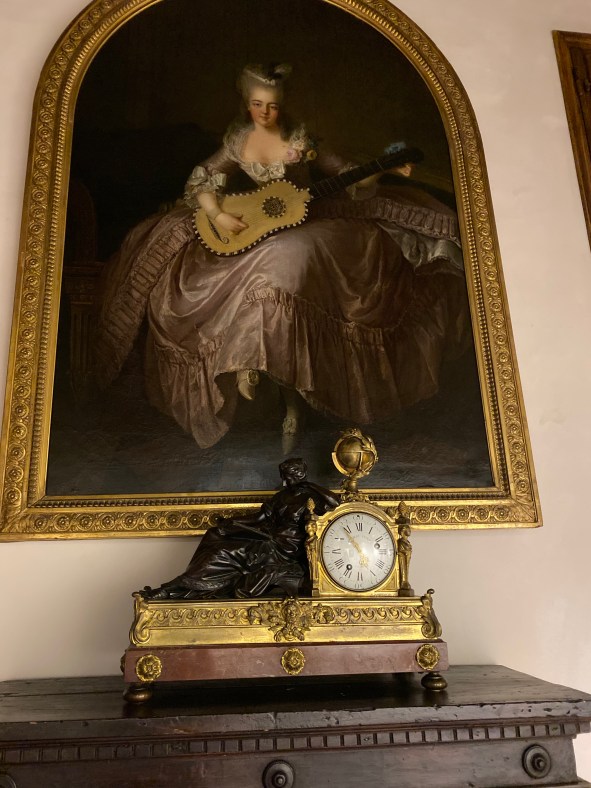
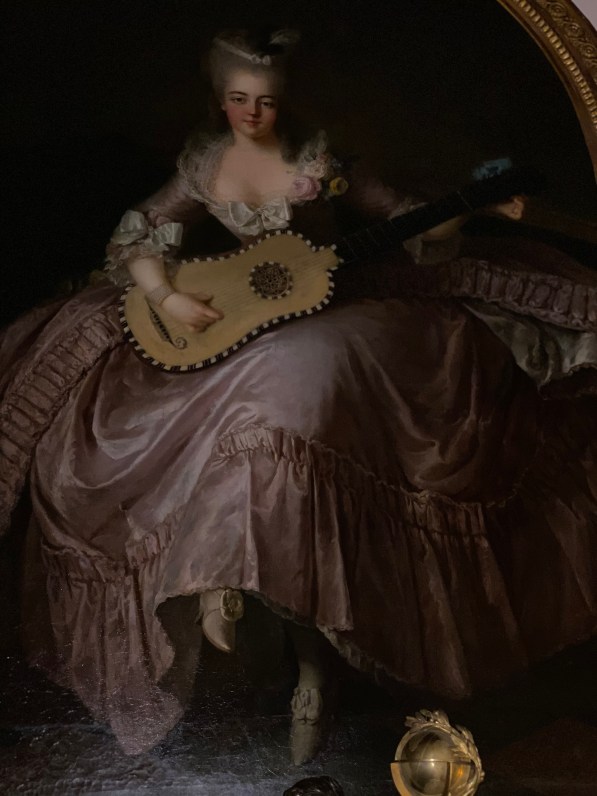
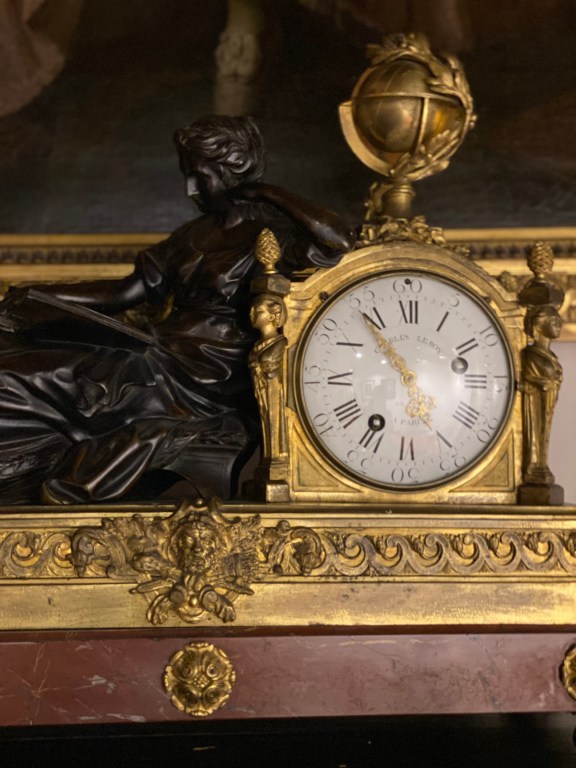
Allora, now that I am done being a voyeur for the palazzo itself, let us look at some of the paintings in the exhibition: First up, a few paintings by Giovanni Signorini
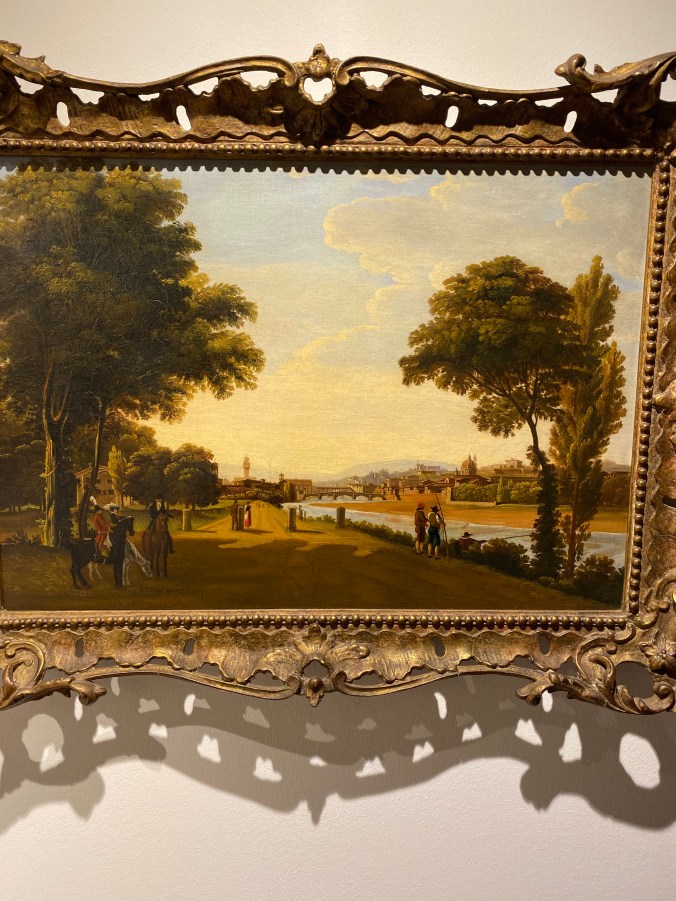
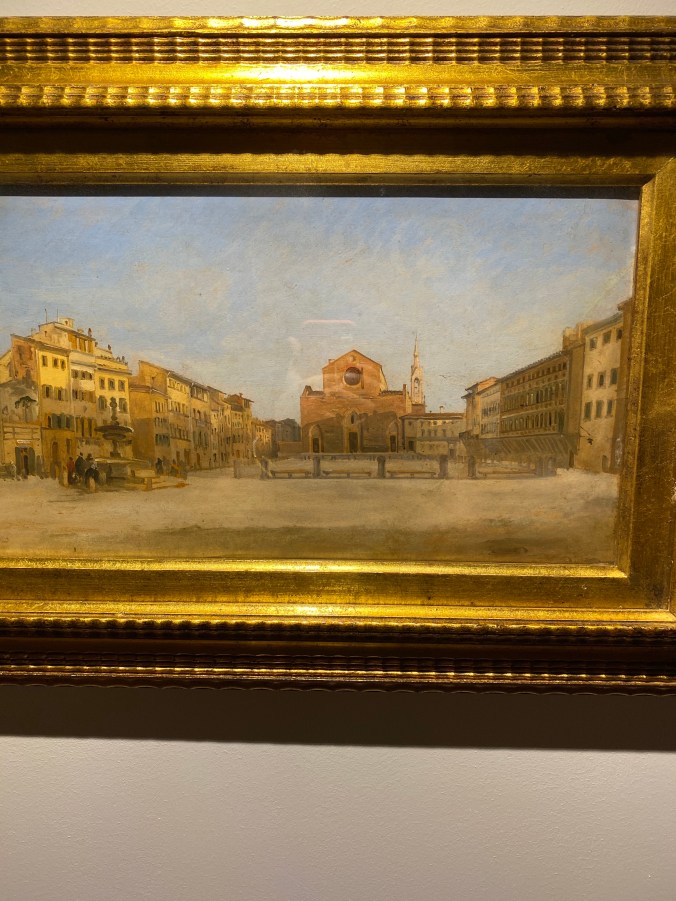

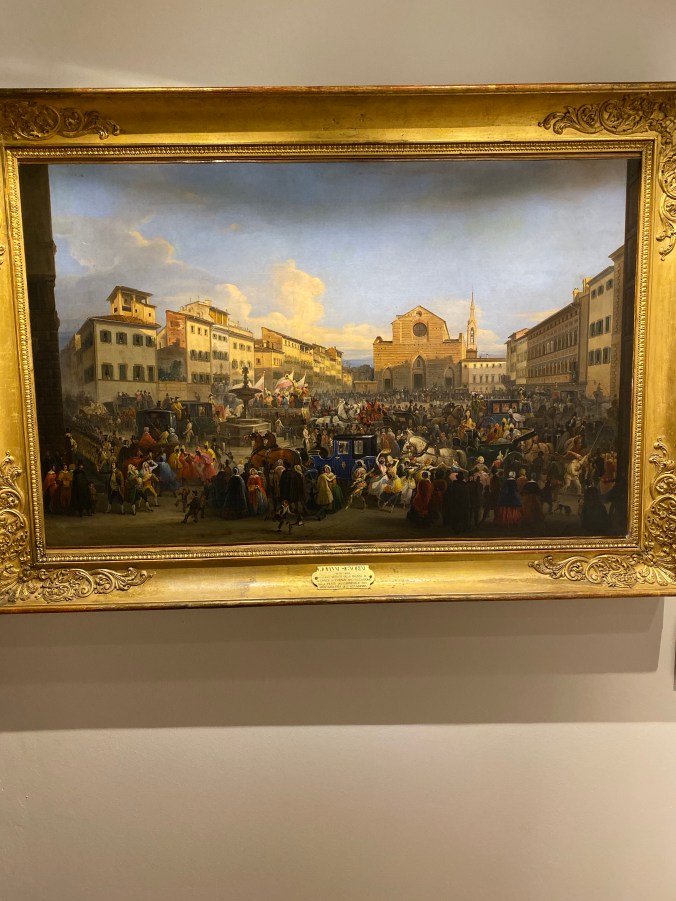
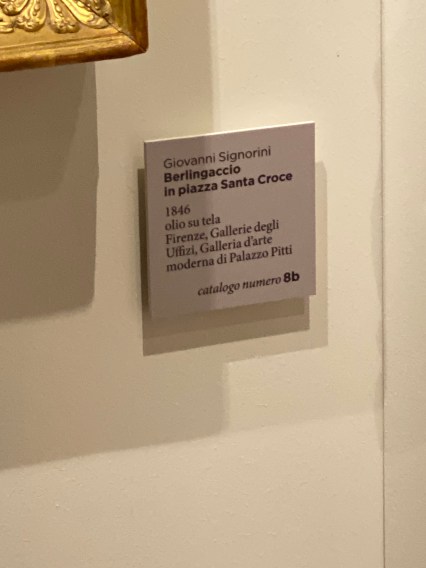
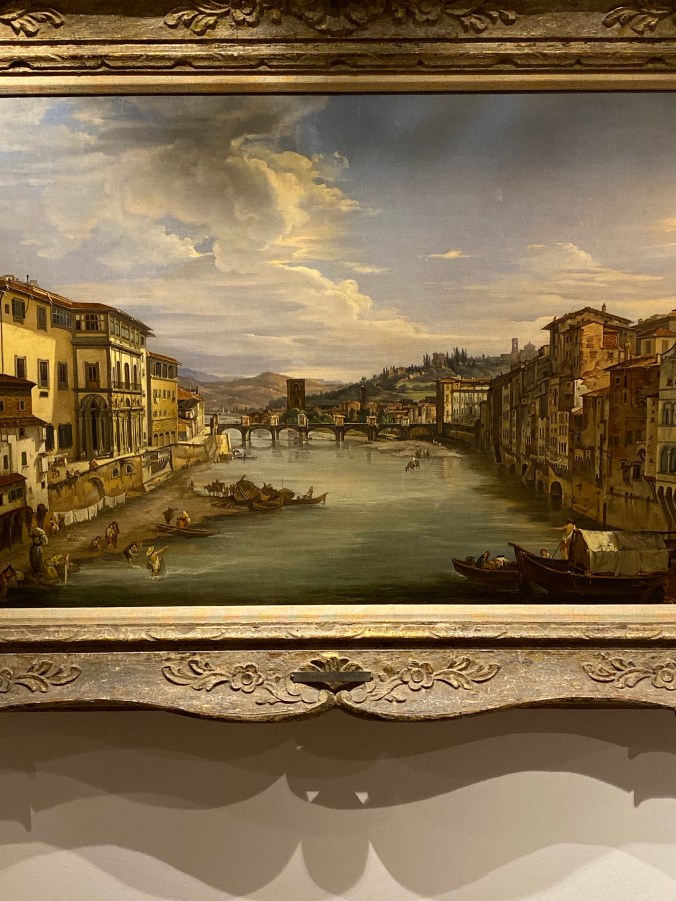

Above, Giovanni Signorini, Veduta dell’ Arno da Ponte alla Carraia, 1846
And now, for some paintings by Telemaco Signorini
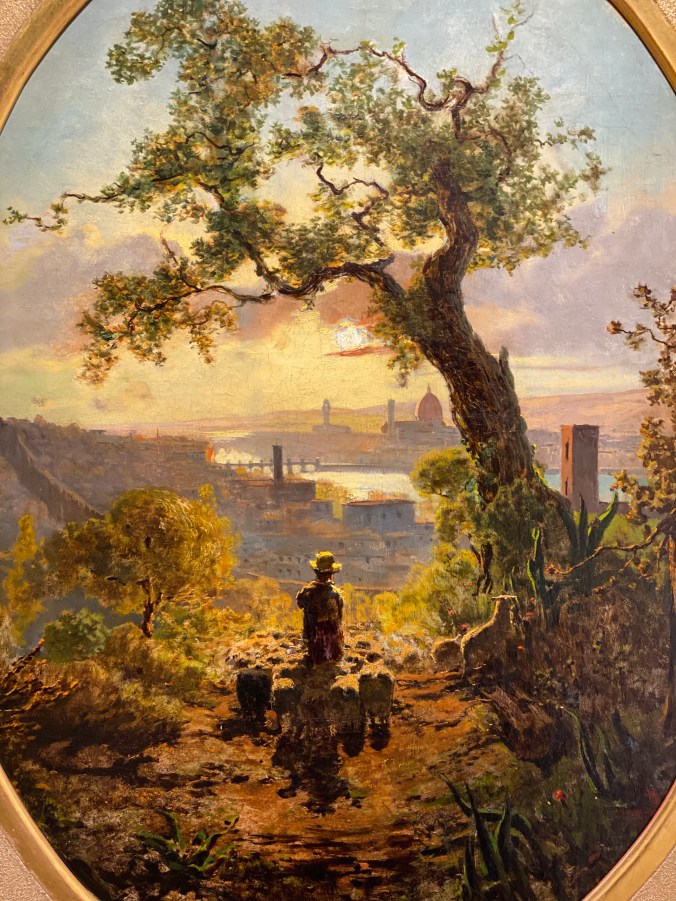
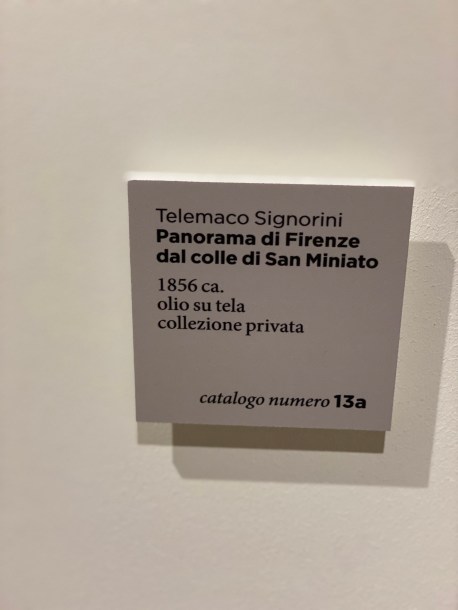
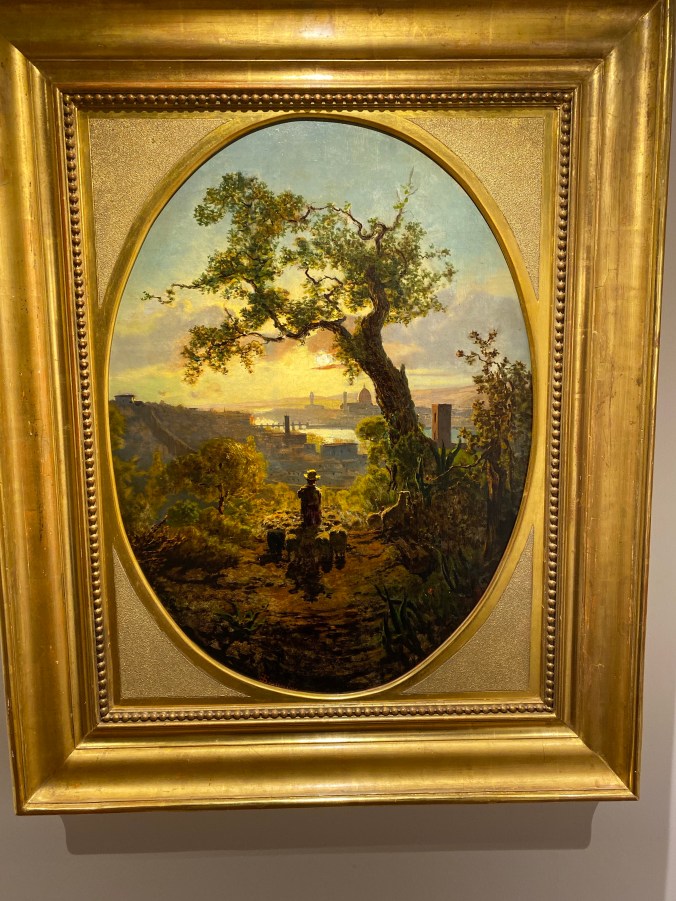
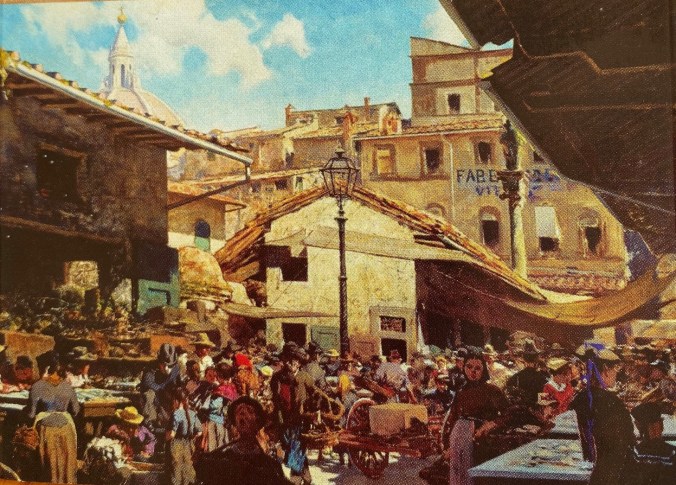
Above: Telemaco Signorini, Mercato Vecchio, 1882-83
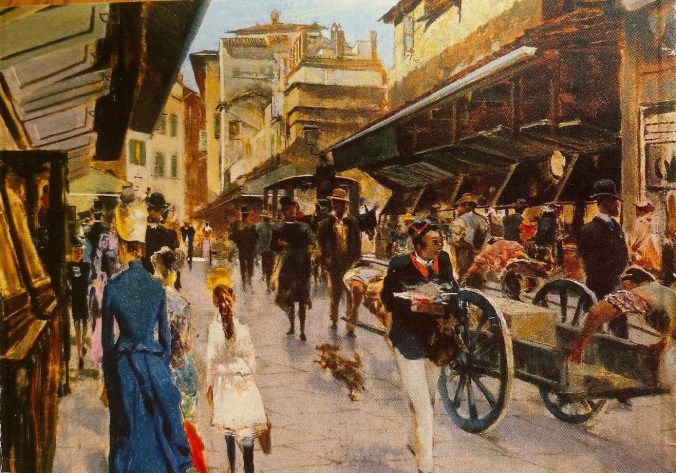
Above: Telemaco Signorini, Il ponte Vecchio a Firenze, 1880
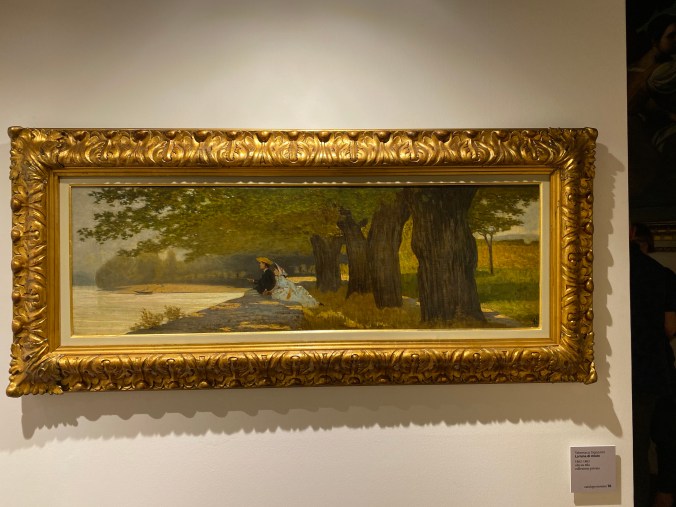
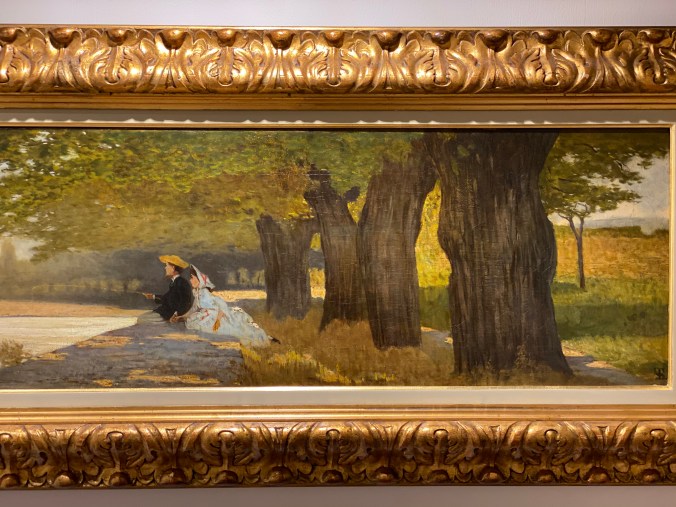

Claude Monet’s lunch
Have you seen this series of videos? I just discovered them through the one on Monet and I loved it!
L’orangerie, Paris. It’s not just Monet’s waterlily paintings (though that would be enough)
I’ve already written once about my visit to L’orangerie in Paris, but that hardly did justice to this great Parisian museum. So, today I add more.
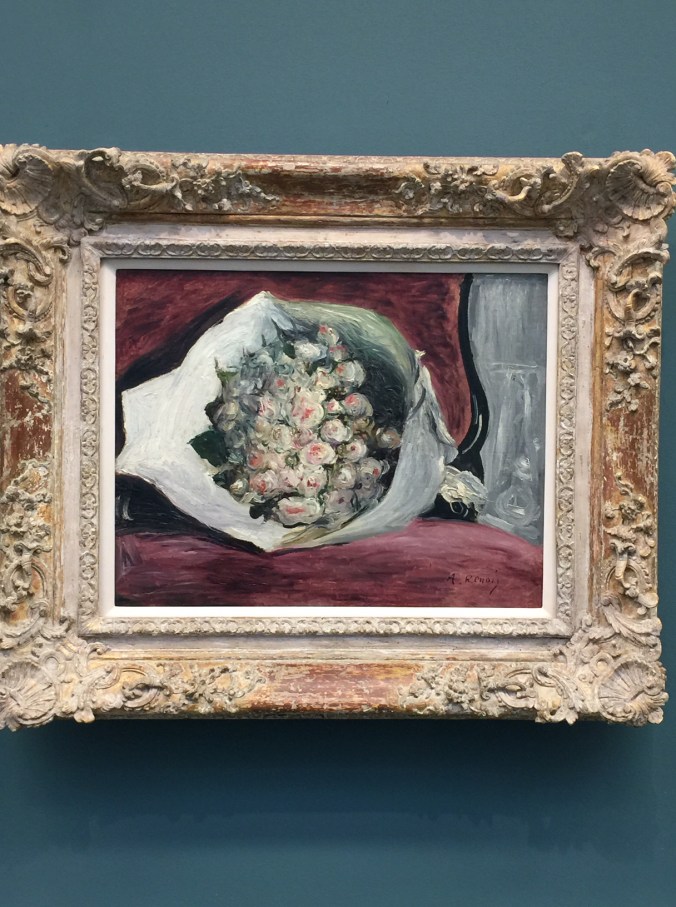
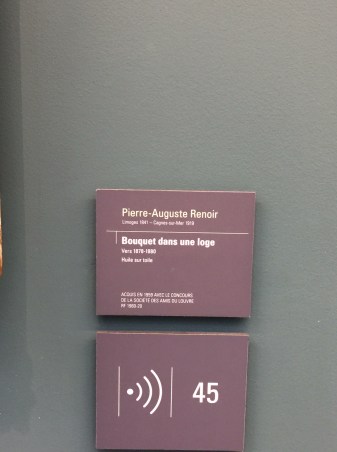
There’s Renoir:

There’s Cezanne:


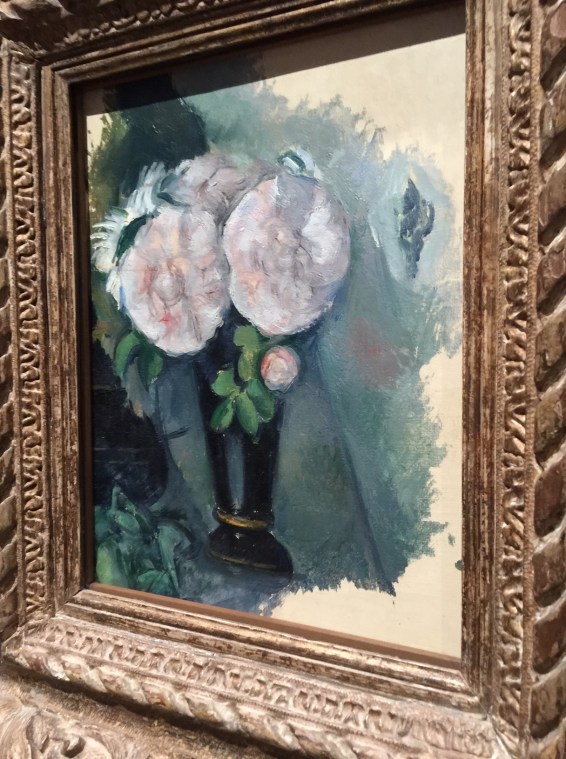
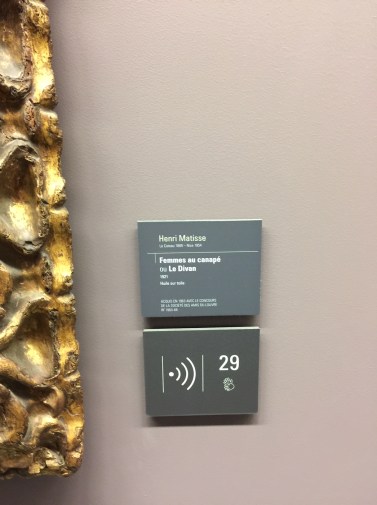
There’s Matisse:
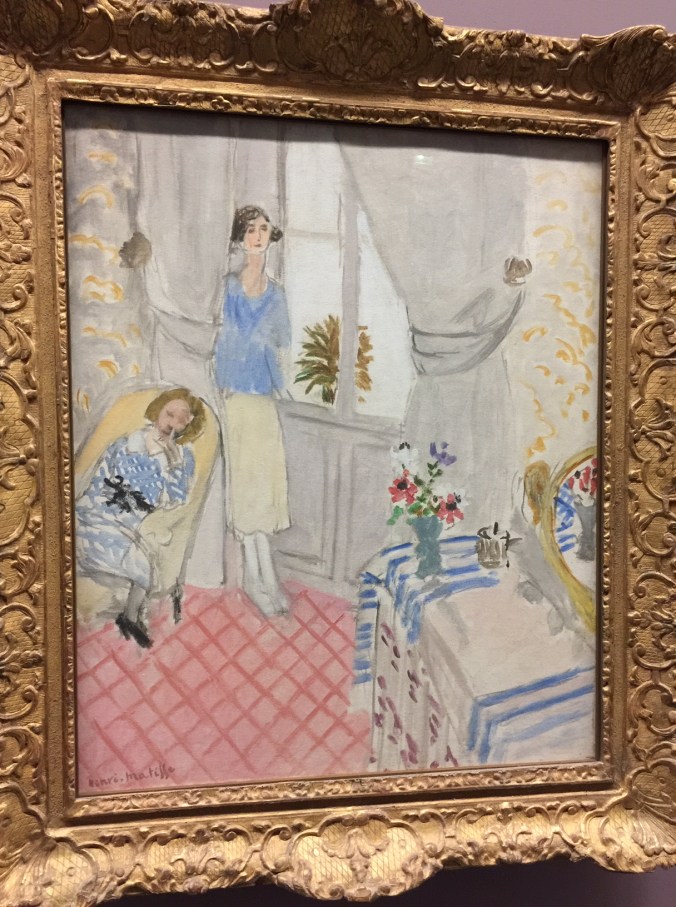
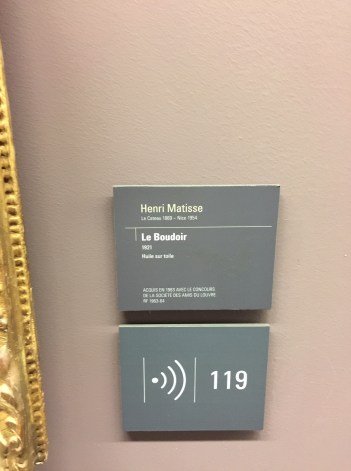
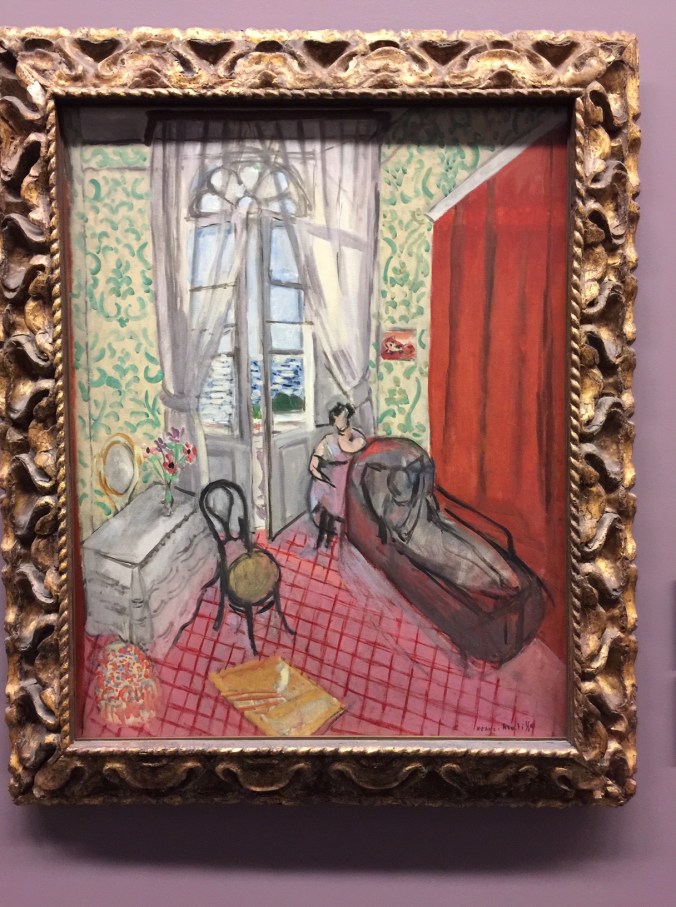
 get back, lauretta!
You must be logged in to post a comment.