On the Michelangelo trail in Rome

I’m in Rome!  Woo hoo!  All roads lead here and I couldn’t wait to follow one of them and to enjoy the city without the usual summer hordes of tourists.

I spent the lockdown refreshing my study of Michelangelo and I’m on his trail here in Rome.  I started my visit today by admiring the beautiful Porta Pia.

fullsizeoutput_39a9

The elaborate Porta Pia is a gate in the Aurelian Walls of Rome, designed by Michelangelo for Pope Pius IV.  Construction began in 1561 and ended in 1565, after the artist’s death. A 1561 bronze commemorative medal by Gianfederico Bonzagna shows an early plan by Michelangelo, very different from his final design. 


baN0BnvQR1qAsNHiWVeLnA

A new gate was needed because by the mid 16th century,  the newly developing urban area outside the walls couldn’t gain access through the nearby ancient Porta Nomentana from the Via Nomentana. It was decided to add a new gate to the walls, and, according to Vasari, Michelangelo presented three different designs to the Pope, which were beautiful but too extravagant, and the Pope chose the least expensive of the three. Unfortunately, the drawings are not extant and it is not known if  the work was actually carried out to Michelangelo’s original plan.

The gate was, however, Michelangelo’s last architectural work.  He died shortly before the structure was completed. The work was carried out by Giacomo Del Duca, who also built Porta San Giovanni, seen below.

Brána_sv._Jana,_Řím


fullsizeoutput_39ab

The Porta Pia is one of the 18 gates inserted in the defensive Aurelian Walls.


fullsizeoutput_39ad

PIVS IV PONT MAXPORTAM PIAMSVBLATA NOMENTANA EXTRVXITVIAM PIAM AEQVATA ALTA SEMITA DVXIT


lV0GT+OPTSqme+eSet%5Lg


lV0GT+OPTSqme+eSet%5Lg

Interestingly, the opposite side of the Porta Pia is also quite interesting. It was constructed in 1869 in the Neo-Classic design by Virginio Vespignani.

UdeHSzI+ThmqaL4l3NarTA


The Aurelian wall was breached during the Risorgimento.  This fabulous vintage photograph, dating to after 1870, shows the breach to the right of the gate.

1024px-BrecciaPortaPia

It was through an artillery-opened breach – known as the “Porta Pia breach” – that on September 20, 1870 Bersaglieri soldiers entered Rome to complete the unification of Italy. A marble and bronze monument is to be found at the exact point of the breach.

This painting by Carlo Ademollo, 1880, shows the Kingdom of Italy troops breaching the Aurelian Walls at Porta Pia during the Capture of Rome.

Here also, on September 11, 1926, the antifascist activist Gino Lucetti threw a bomb against the car transporting Benito Mussolini.  It was without effect.


Trevi Fountain news

ROME – Most of the tourists who have tossed coins over their shoulder into Rome’s Trevi Fountain over the past 20 years probably did not know that they were helping the city’s poor. But the Rome city government has said no more.

d4e3ef1d53388c824939a483601a84eb_XL

Beginning April 1, the city said, the coins will no longer be delivered to the Rome diocesan Caritas for funding homeless shelters, soup kitchens and parish-based services to families in difficulty.

Instead, the city plans to use the money to help with the upkeep of monuments and to fund grants to “social projects,” which are yet to be defined. It also will hire workers to sort and count the coins, something that Caritas volunteers did for free.

In 2018, the international collection of coins added up to about 1.5 million euros or about $1.7 million.

Interviewed Jan. 12 by Vatican News, Father Benoni Ambarus, director of Caritas Rome, said, “The first thing I want to say is thank you to the millions of tourists who created a sea of solidarity with their coins.”

The priest was still hoping something would change before the change dried up in April. After all, the city council voted in October 2017 to start keeping the money in city coffers, but after a public outcry, the agreement with Caritas was extended to April 2018 and again to Dec. 31, 2018.


https://www.catholicregister.org/home/international/item/28763-rome-government-makes-a-wish-trevi-fountain-coins-will-no-longer-go-to-the-poor?fbclid=IwAR3yHYw2uL8vsnOFKSewOl3XMPQZNVIRNKfQx-DwNbbxo1X6AYrNZjk3g0Q

A Roman Christmas tree update

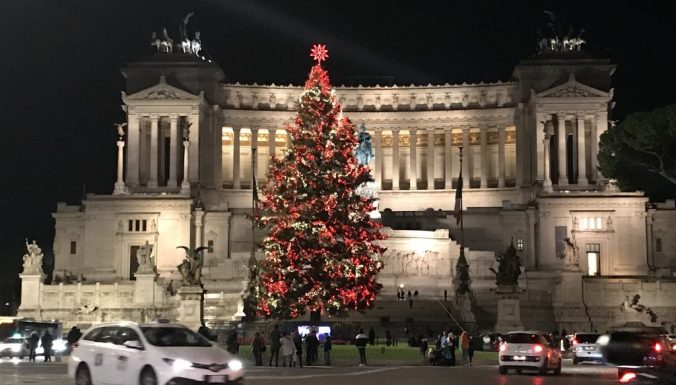
I know this is old news, but it is new news to me.  I just read that Netflix paid for Rome’s main Christmas tree in 2018.

Here’s the tree:

rome-netflix-christmas-tree-1024x584

Sponsoring this tree was a huge expense: 370,000 Euro (about $400,000.00).


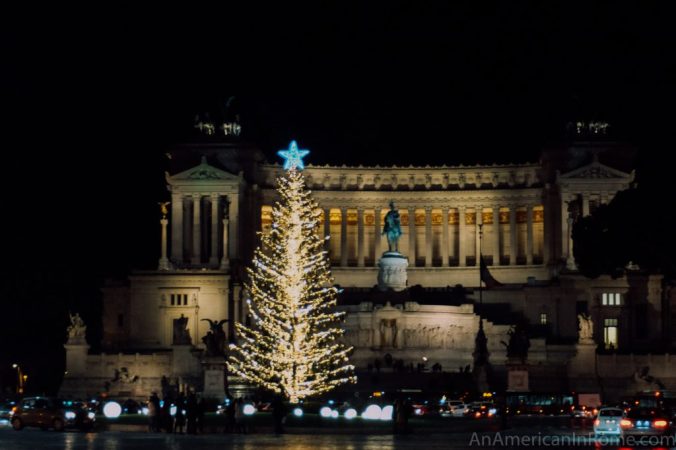
You may have heard about the 2017 Christmas tree that was a big fiasco: it lost all its needles and was a tree skeleton!

christmas-rome-4-1024x683

I had just never heard of an American company sponsoring a Roman (or any) Christmas tree before!  It makes sense, private companies sponsor all kinds of public good works throughout the country.


Bernini, the film

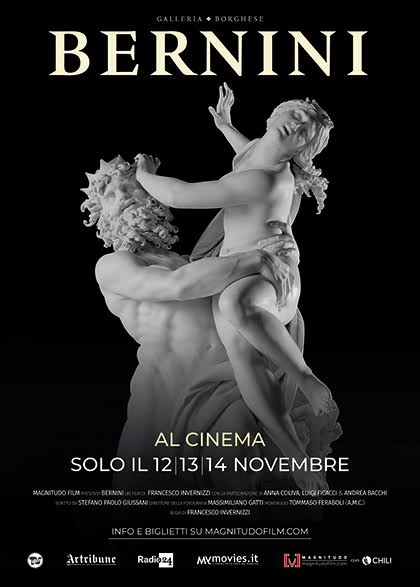
I was fortunate enough to see the newly-released film, Bernini, in the Odeon Theatre in Florence this week.  OMG, it is fantastic.

images
The director of this beautiful guided tour through the Villa Borghese in Rome was directed by Francesco Invernizzi; Anna Coliva, Luigi Ficacci, and Andrea Bacchi are key presenters. Titolo originale: Bernini. Genere Documentario – Italia, 2018.

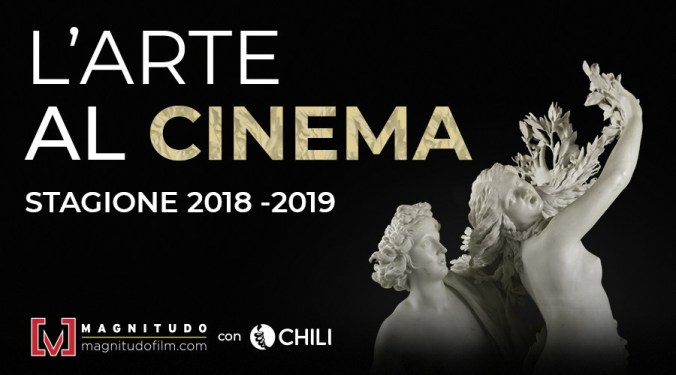
stagione_900x500

From the movie release, we are informed: La selezione di oltre 60 capolavori in esposizione alla Villa Borghese di Roma è stata definita dagli esperti di arte come il ritorno a casa di Bernini. A cinque secoli dalla nascita dei maestosi gruppi scultorei dell’artista, attraverso riprese inedite ed esclusive, i protagonisti di questa grande Mostra raccontano ed analizzano i dettagli delle opere giunte dai più prestigiosi musei del mondo per questa straordinaria occasione.

The selection of more than 60 masterworks on exhibition at the Villa Borghese in Rome has been defined by experts as a return to the home of Bernini. Five centuries after his  birth, we appreciate the majestic sculptural groups Bernini created, through the unprecedented and exclusive shots. Experts of this great exhibition recount and analyze the infinite details of the sculpture, with Bernini works borrowed from the most prestigious museums in the world for this extraordinary event.

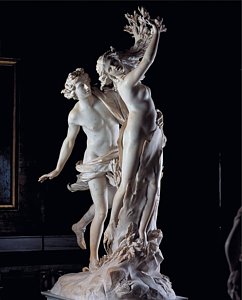
bernini-gian-lorenzo-apollo-everett
“No artist defined 17th-century Rome more than Gian Lorenzo Bernini did, working under nine popes and leaving an indelible mark on the Eternal City. And there is probably no better place to appreciate his talent and genius than the Borghese Gallery in Rome, the villa — now a museum — built by his first patron, Cardinal Scipione Borghese, where Bernini revealed his talent for capturing tension and drama in stone. But during the remarkable exhibition titled “Bernini,” visiting may be a once-in-a-lifetime experience.” The New York Times