In the midst of winter…


Inside this famous lower church in Assisi lies the tomb of Saint Francis.

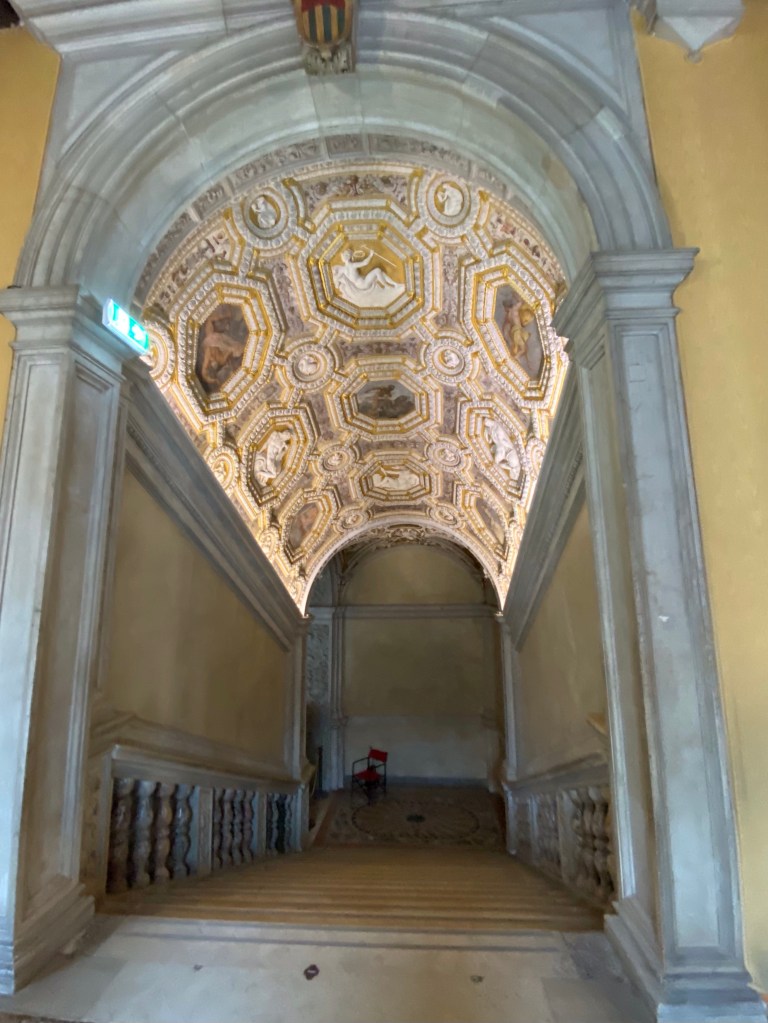
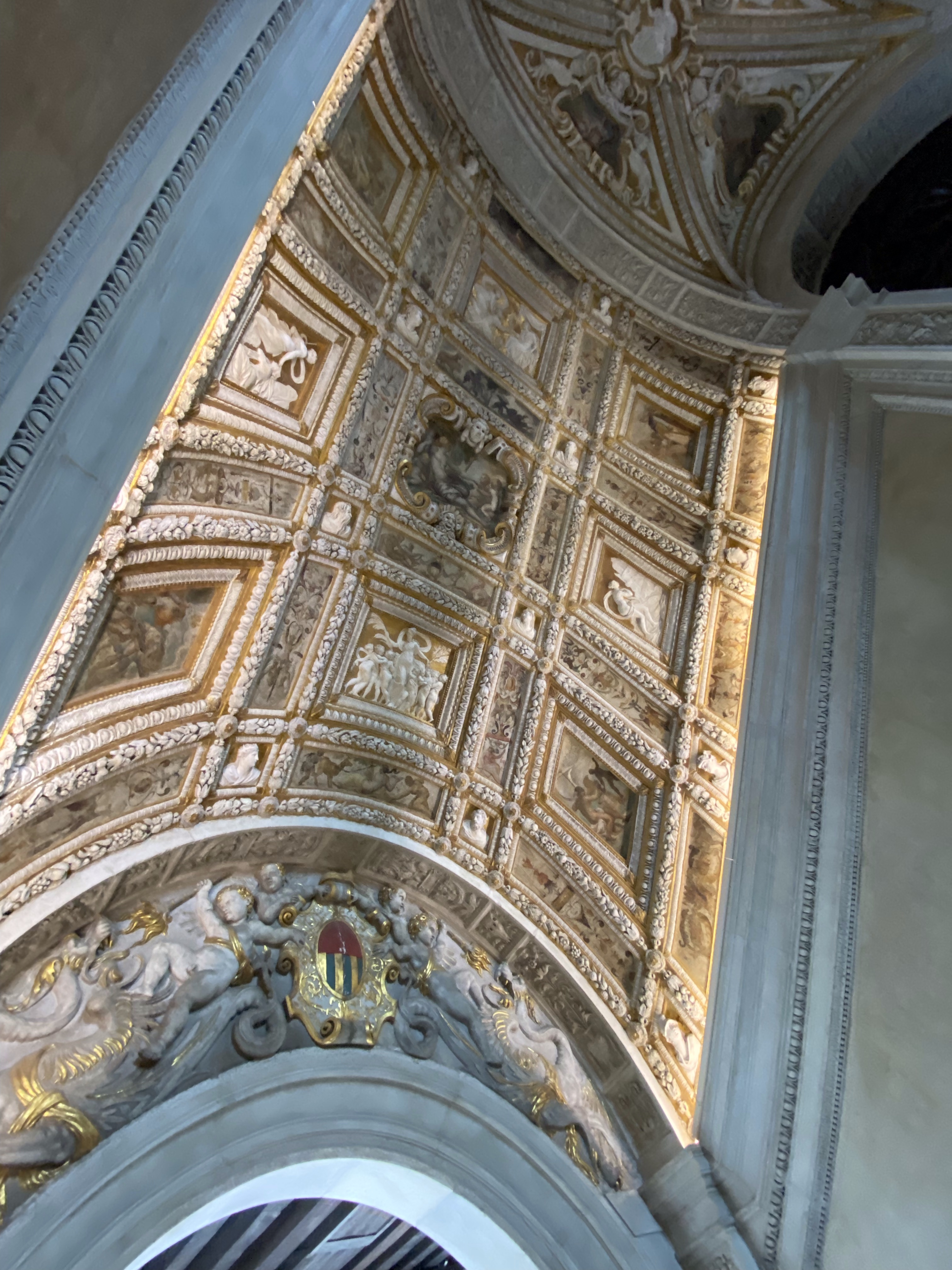
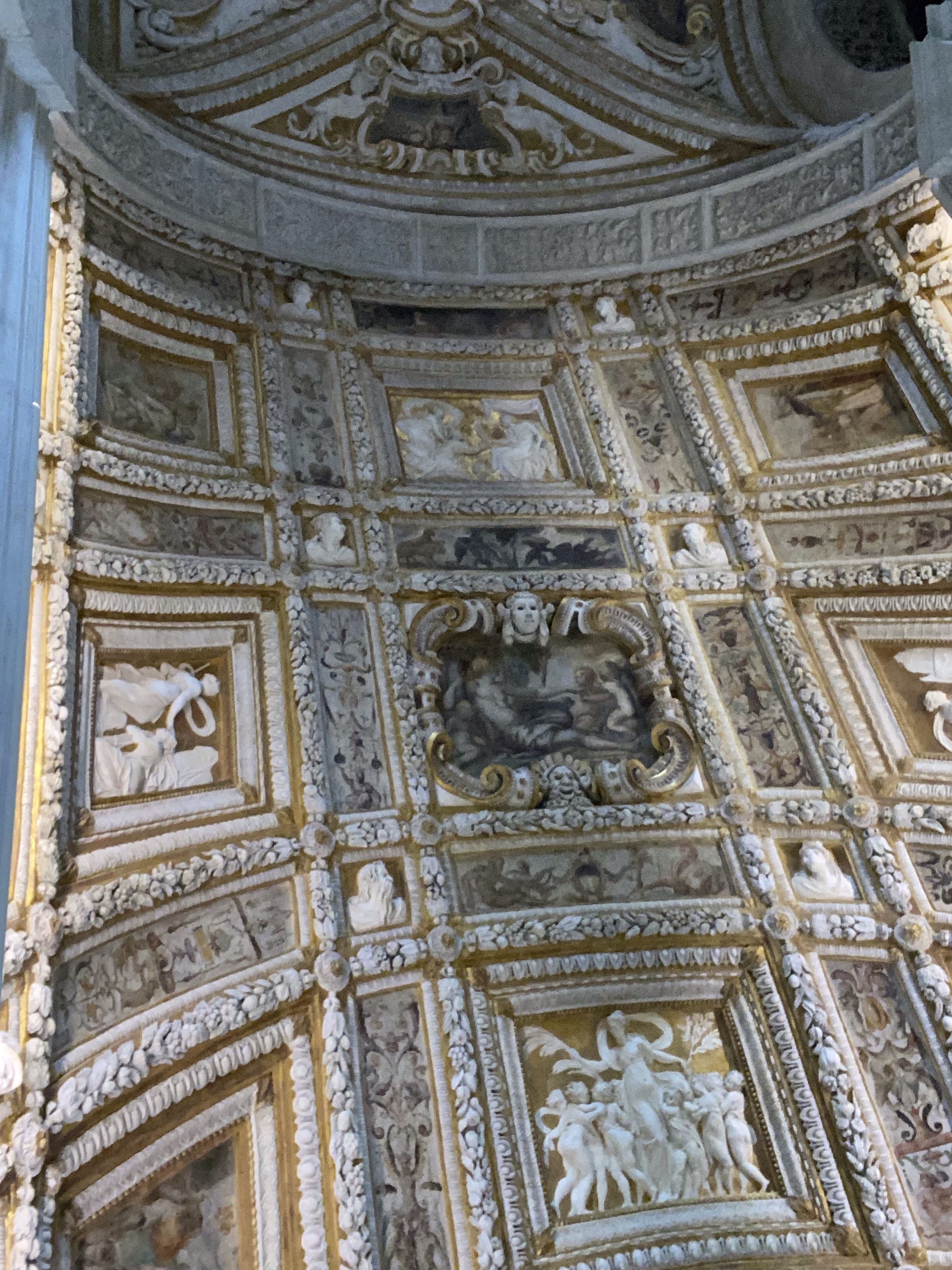
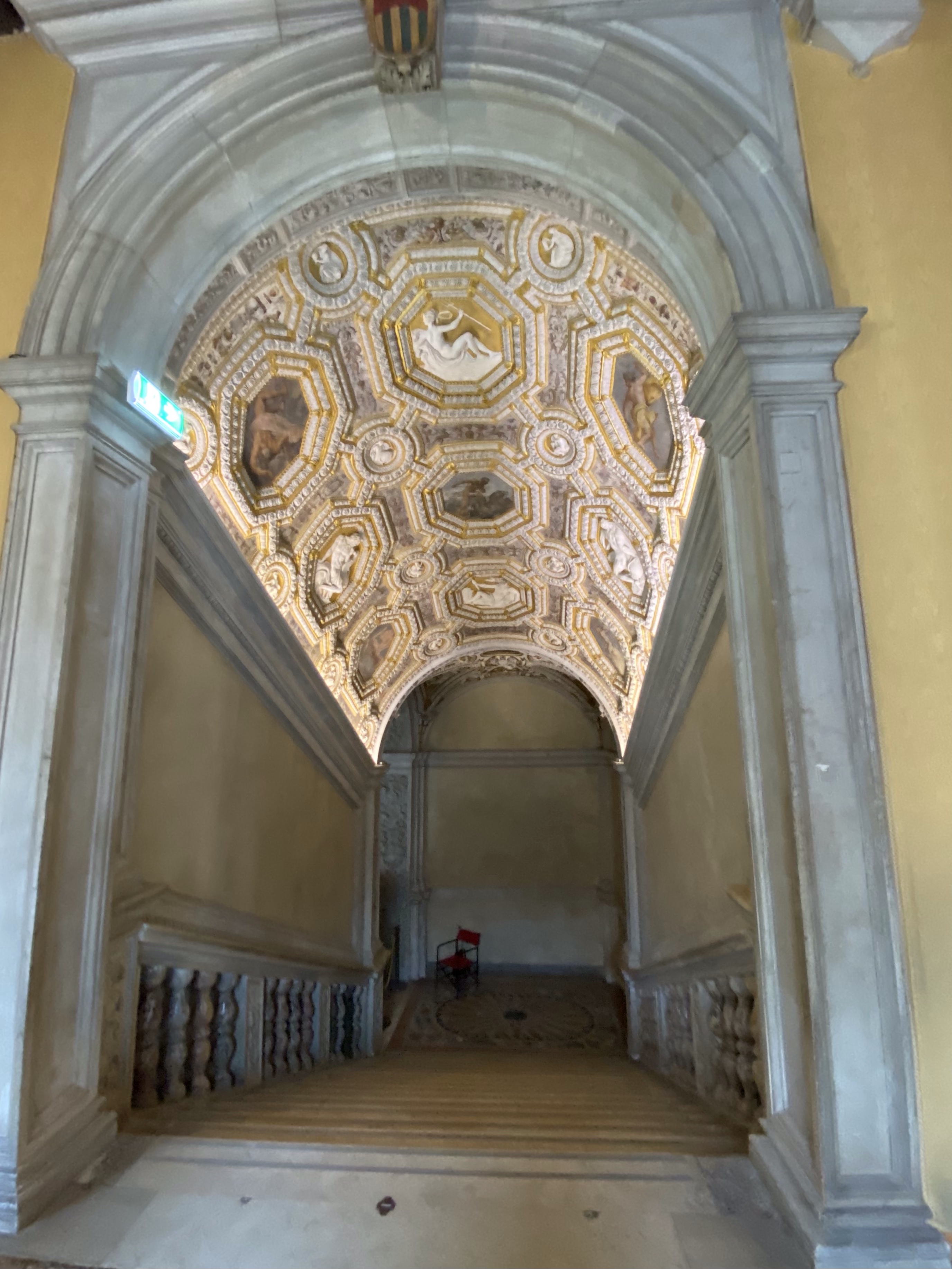
You walk through the lower church and on the left side of the nave is this staircase to the crypt:

You can stop and light a candle for any loved ones you may wish:

You go down the stairs and see the tomb from afar:

You walk closer:


You have arrived. The tomb is decorated for Christmas.
RIP Saint Francis.
The story surrounding his tomb is quite interesting: the source: https://www.churchpop.com/2016/10/04/the-mystery-of-the-hidden-tomb-of-st-francis-of-assisi/
St. Francis of Assisi is one of the most beloved and venerated saints in the history of the Church. So then how did his body get lost for hundreds of years – only to be rediscovered surrounded by a strange assortment of objects?
The holy founder of the Order of Friars Minor passed away in October of 1226, and less than two years later, Pope Gregory IX declared him a saint. The next day the same pope laid the foundation stone for the Basilica of Saint Francis of Assisi, still standing today.
This is where things start to get a bit hazy about his body. Some sources say that a friar in charge of the basilica’s construction secretly sealed his body into a part of the church to protect it from possible Saracen invaders. Other sources say that Francis’ body wasn’t sealed away until the 15th century, in order to protect it from in-fighting among Italian families.
Either way, by the 19th century, no one was quite sure where the saint’s body was – and no one had known for centuries.
In the early 1800s, Pope Pius VII gave local Catholics permission to search for the body. Fairly confident the body was somewhere in the basilica, the team removed part of the floor in the main church and found a series of iron bars, similar to what was common for protecting tombs in the 13th century. After the whole area was excavated, under a large amount of rock and through a tunnel they found the undisturbed remains of St. Francis.
The saint, however, wasn’t alone. With his body were a few objects: 12 silver coins, 29 beads, a ring, a piece of iron, and a stone on which Francis’ head was resting.
It’s not clear what these objects meant. One source says the coins were there to help date the tomb. Others take a more sinister interpretation, claiming that the friar who sealed Francis’ tomb was an alchemist and that the objects were a part of some sort of ancient pagan ritual. The fact that some of these objects seem to have since disappeared encourages conspiratorial interpretations.
Either way, St. Francis’ body was moved to a public tomb within the basilica and is now open to pilgrims for veneration.
I travel a lot by train in Italy and I love visiting new (to me) and old towns. No station that I have seen comes close to the picturesque nature of the one in Assisi! I adore it!


The plaque above states (roughly): The itineraries of the great Jubilee of 2000 led to Assisi, the center of Christian faith and spirituality. For this occasion the state railways have restored the old dignity of the station which, in the presence of the Honorable Enrico Micheli, Undersecretary to the President of the Council, handed over to the citizens of Assisi and to the visitors of the Franciscan places.


I am always highly entertained when I see priests and nuns on the streets of Italy. They are not as common as you would think. Here a group of nuns is waiting for a bus. They travel just like the rest of us!
This last set of pictures is not of the station, but was spotted on an old street in Assisi.


At night, in the fog. Very romantic! These photos were taken in late December, 2021.


One of the most amazing Roman Empire remains is in the heart of Assisi. The former temple to Minerva was subsumed by Christianity and made into a church dedicated to St. Mary.

Wikipedia tells us: The Temple of Minerva is an ancient Roman building in Assisi, currently housing a church, Santa Maria sopra Minerva, built in 1539 and renovated in Baroque style in the 17th century.
The temple was built in the 1st century BC by will of Gnaeus Caesius and Titus Caesius Priscus, who were two of the city’s quattuorviri and also financed the construction. The attribution to the goddess Minerva derives from the finding of a female statue, although a dedication stone to Hercules has been found, and the temple was likely dedicated to this male demi-god.
In the Middle Ages the temple housed a tribunal with an annexed jail, as testified by one of Giotto’s frescoes in the St. Francis Basilica, which portrays the church windows with bars.
Of the ancient temple, the façade has been preserved, with six Corinthian columns supporting the architrave and a small pediment. The columns were originally covered by a very strong plaster, which was perhaps colored. The cella was completely demolished during the church’s construction, in the 16th century, while a small section of the temple was found in the 20th century near the altar.
The temple was visited and described by the German poet Goethe during his travels in Italy, as the first ancient structure in good condition seen during his life (1786).


Once inside the building, however, you know you are in Baroque Italy again!


Just before New Year’s I had a chance to slip away to Assisi. I’m so glad I did! Here are various scenes of this charming hilltop town in Umbria:


Colorful meringues were for sale in this lovely old gelateria/pasticceria. It may be an Assisi speciality, for I don’t see these in other towns in Italy at Christmas.


Below, Piazza del Commune in the center of the little town.


At this small Florentine park not far from my house, “the wheel” is set up to take riders high up and around, and an ice skating rink is set up below to take them low and around. It’s up until 16 January, so hurry if you want to join in! It was about 50 degrees here today, rain tomorrow.


The Basilica of Saint Francis of Assisi is the mother church of the Roman Catholic Order of Friars Minor Conventual in Assisi, a town in the Umbria region in central Italy, where Saint Francis was born and died. It is a Papal minor basilica and one of the most important places of Christian pilgrimage in Italy. With its accompanying friary, Sacro Convento, the basilica is a distinctive landmark to those approaching Assisi. It has been a UNESCO World Heritage Site since 2000.

The basilica, which was begun in 1228, is built into the side of a hill and comprises two churches (known as the Upper Church and the Lower Church) and a crypt, where the remains of Saint Francis are interred. The Upper and Lower Churches are decorated with frescoes by numerous late medieval painters from the Roman and Tuscan schools, and include works by Cimabue, Giotto, Simone Martini, Pietro Lorenzetti and possibly Pietro Cavallini. The range and quality of the works give the basilica a unique importance in demonstrating the outstanding development of Italian art of this period, especially if compared with the rest of Christian Europe.

The Franciscan friary (Sacro Convento) and the Lower and Upper Basilicas (Italian: Basilica inferiore e superiore) of Francis of Assisi were begun in honor of this local saint, immediately after his canonization in 1228. Simone di Pucciarello donated the land for the church, a hill at the west side of Assisi, known as “Hill of Hell” (Italian: Colle d’Inferno) where previously criminals were put to death. Today, this hill is called “Hill of Paradise”.


In 1818, the remains of Saint Francis were rediscovered beneath the floor of the Lower Basilica. In the reign of Pope Pius VII the crypt was built so that the faithful might visit the burial place of the saint.
On 27 October 1986 and January 2002, Pope John Paul II gathered in Assisi with more than 120 representatives of different religions and Christian denominations for a World Day of Prayer for Peace.

For more information on the frescoes, please see
https://en.wikipedia.org/wiki/Basilica_of_Saint_Francis_of_Assisi


You must be logged in to post a comment.