I’ve already written once about my visit to L’orangerie in Paris, but that hardly did justice to this great Parisian museum. So, today I add more.
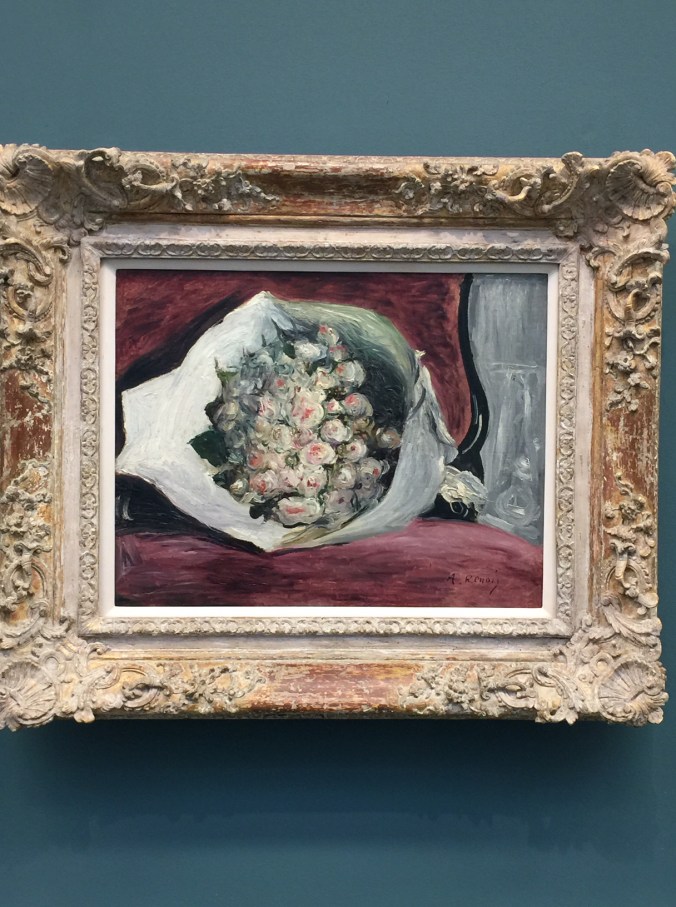
There’s Renoir:

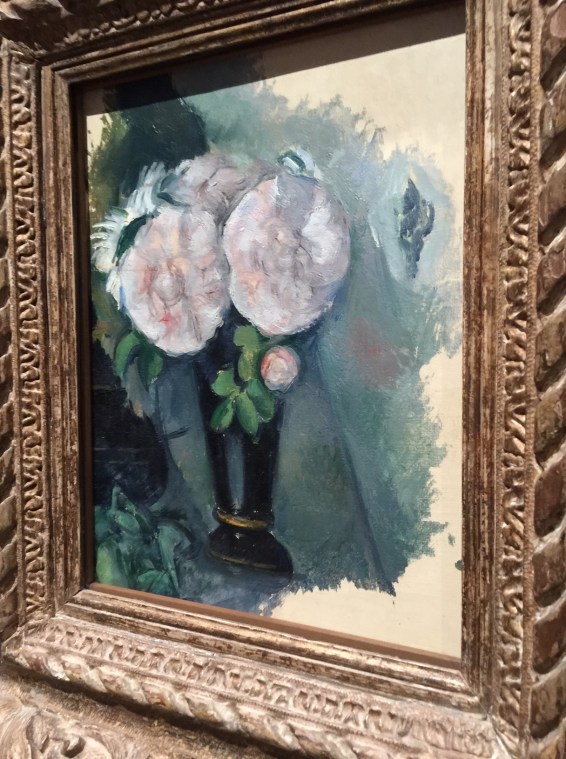
There’s Cezanne:


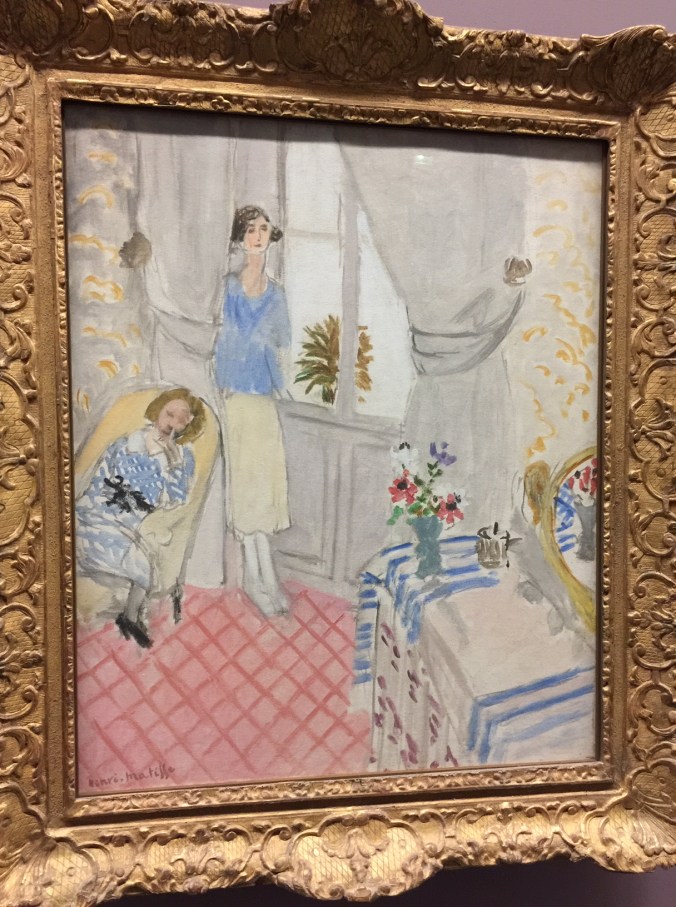
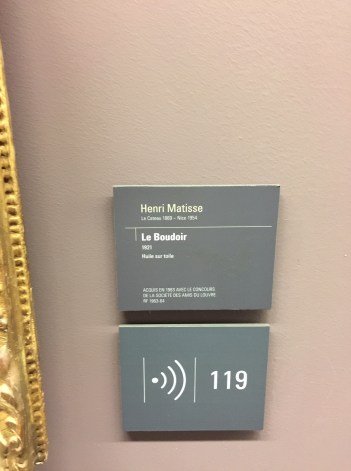
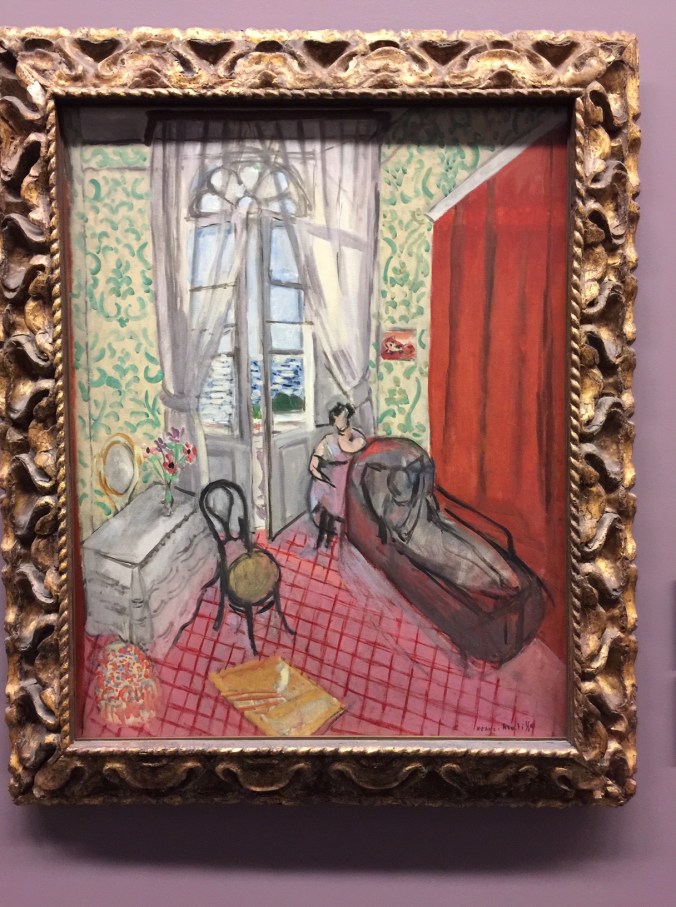
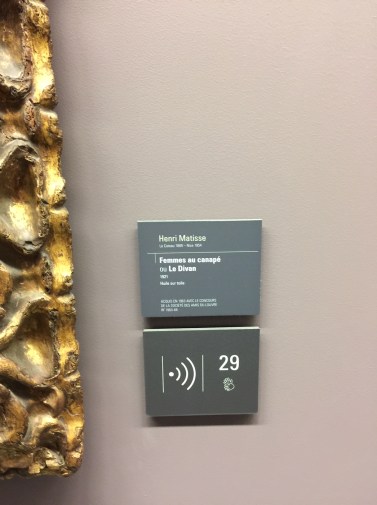
There’s Matisse:
I’ve already written once about my visit to L’orangerie in Paris, but that hardly did justice to this great Parisian museum. So, today I add more.
There’s Renoir:
There’s Cezanne:
There’s Matisse:
Poor Giorgio Vasari! I just don’t know what to make of the tiny little “piazza” that was named in Florence in his honor. For the father of the history of art, I think he deserves something a little grander, don’t you?
Honestly, the piazza is such a throw away space that I can’t even make a screenshot of a Google Maps image to add to this post. The location isn’t even marked, other than being a pinpoint on a short street called “Piazza Giorgio Vasari.”
So, because I am an intrepid searcher when it comes to arcane facts, here are the 3 things you should know about this unloved piazza on the north east side of Florence.
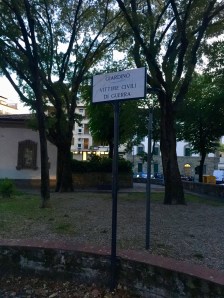
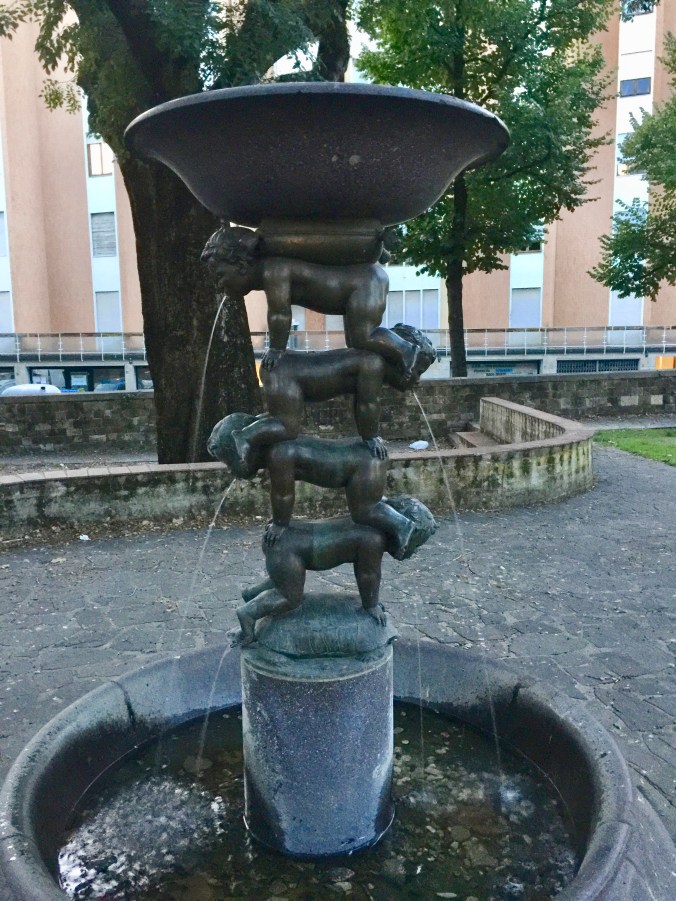
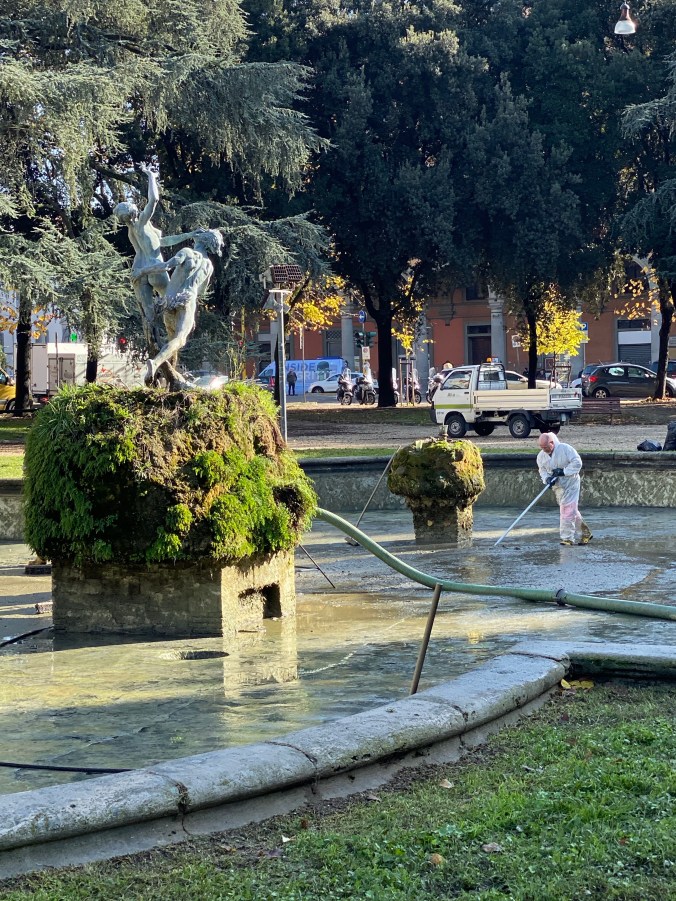
3. It has, at it’s center, a strange bronze sculpture of stacked toddlers
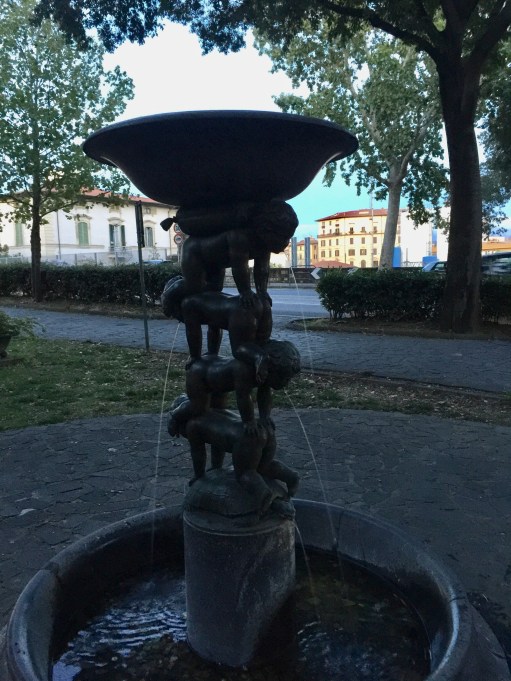

The next time I walk through the piazza, I will take a note on the foundry and artist markings on the fountain. It was too dark this time.
Strange, but true, the fountain of stacked bambini marking the Piazza Giorgio Vasari!

Titian, La Sultana Rossa c. 1500. Image via Wikimedia Commons.
Through her coquetry and mastery of palace intrigue, Roxelana (meaning “the maiden from Ruthenia,” a region in what is today Belarus and Ukraine) rose from sex slavery as a concubine in Sultan Suleiman the Magnificent’s harem, eventually becoming his first (or most preferred) wife. In the harem, Roxelana learned Turkish, the principles of Islam, and the art of seduction, and she earned a new name, Hürrem—“the joyful one.” Roxelana so enchanted the sultan that he broke with tradition and had multiple children with her. A few years later, he married her—an act that granted Roxelana her freedom.
At the side of one of the most powerful rulers in Ottoman history, Roxelana wielded extraordinary influence over the empire through her philanthropy and prominent public building projects. Her Haseki complex in Constantinople featured a mosque, school, hospital, and soup kitchen. When a fire partially destroyed Suleiman’s harem, Roxelana used the opportunity to move in with her husband at the Topkapi Palace—an unprecedented move among sultanic wives that ushered in an era called “the Reign of Women.” Instead of rebuilding the harem, she encouraged Suleiman to construct a mosque.

The Mosque of Suleiman the Magnificent still stands as a landmark in Istanbul today. In The Women Who Built the Ottoman World (2017), Muzaffer Özgüles suggests that Roxelana “reshaped the patronage of all Ottoman women builders who came after her.”
Si! Certo! There is even some contemporary art.
Generally speaking, your best bet for seeing modern era artworks would be to pay a visit to the Museo di Novecento in Florence. You can read about it and see some works here.
For a rundown on the modern sculpture that appears here and there throughout the city, see:
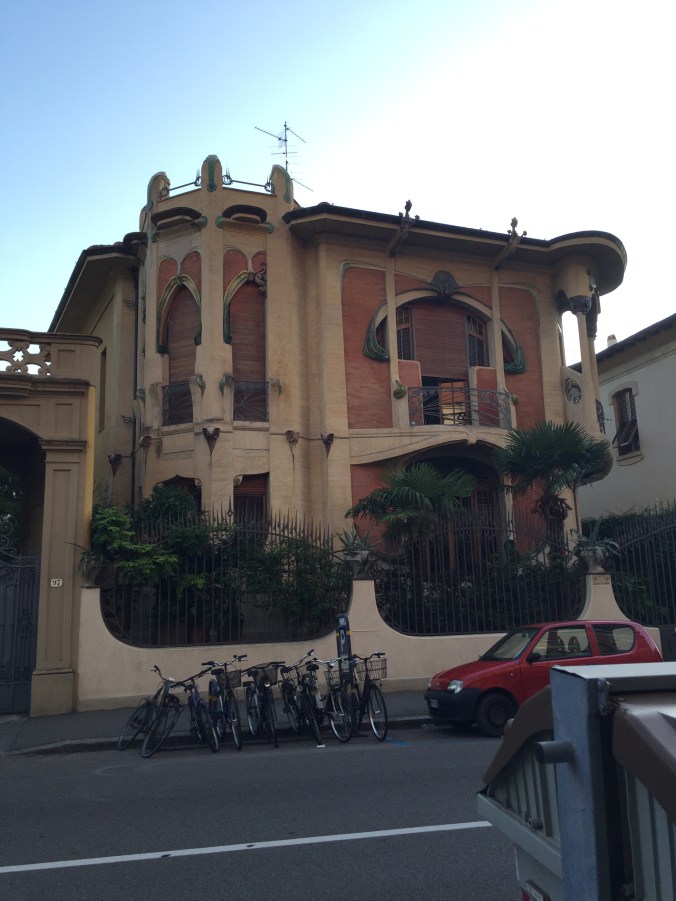
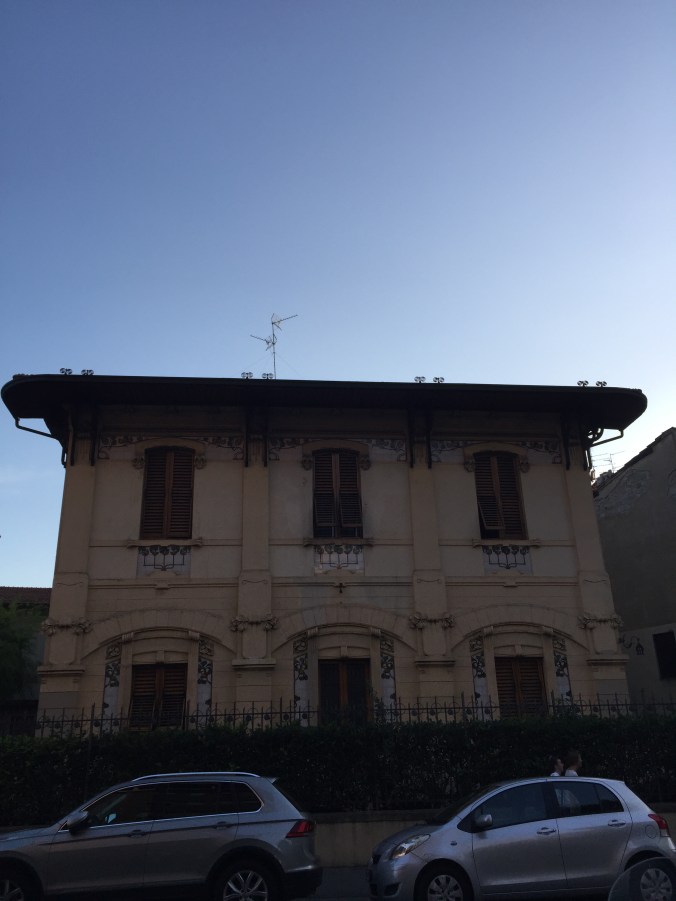
There’s some modern era architecture around the city too, see here and here.
One of my favorite sculptures around town is an Art Deco treatment of the Madonna and Child; its on a building near the Palazzo Vecchio.
Andrea Mantegna (1431–1506) is one of my favorite Renaissance painters. I recently posted on his early frescoes in the church of Sant’Agostino degli Eremitani in Padua.
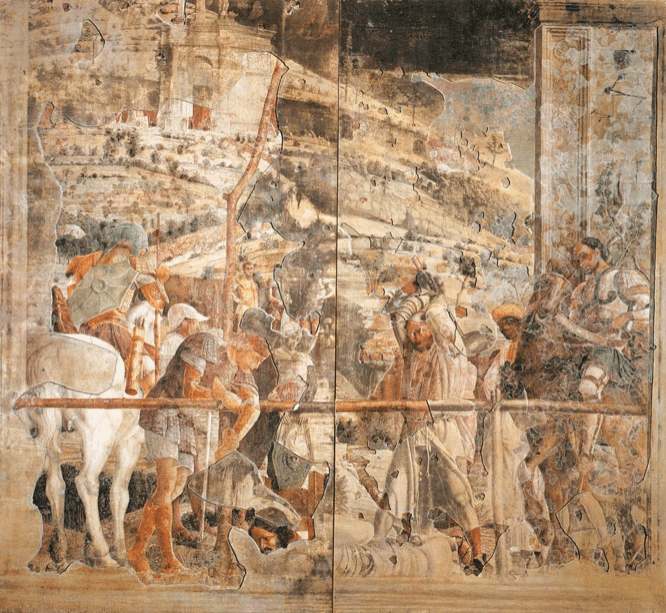
Among the other early Mantegna frescoes are the two saints over the entrance porch of the church of Sant’Antonio in Padua, 1452 (Photos coming: )
As the young artist progressed in his work, he came under the influence of Jacopo Bellini, father of the celebrated painters Giovanni Bellini and Gentile Bellini, and met his daughter, Nicolosia, whom he married in 1453.
Successful and admired though he was in Padova, Mantegna left his native city at an early age, and never returned there; the hostility of Squarcione has been cited as the cause. He spent the rest of his life in Verona, Mantua and Rome; it has not been confirmed that he also stayed in Venice and Florence.
By the late 1450s, the Marquis Ludovico III Gonzaga of Mantua pressured Mantegna to come paint for him; in 1460, Mantegna finally agreed and was appointed court artist. He resided at first from time to time at Goito, but, from December 1466 onwards, he moved with his family to Mantua. His engagement was for a salary of 75 lire a month, a sum so large for that period as to mark conspicuously the high regard in which his art was held. He was the first painter of any eminence to be based in Mantua.
His Mantuan masterpiece was painted for the royal court of Mantua, in the apartment of the castle of the city.
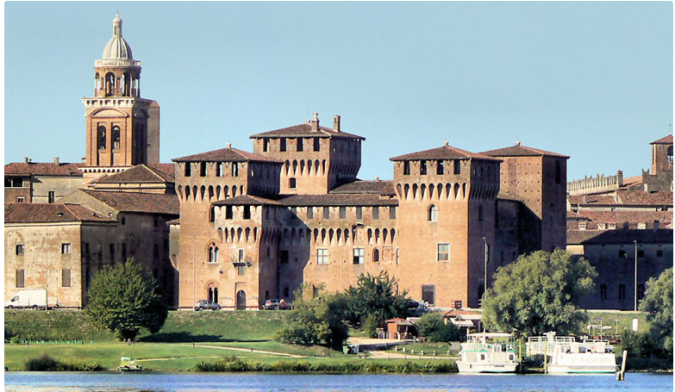
The fresco cycle that he painted in a room in that castle, today known as Camera degli Sposi (Wedding Chamber) of Palazzo Ducale is a masterpiece by any reckoning. I wrote about it here. It includes portraits of key figures of the Gonzaga family and some genii and others. We believe that the Chamber’s decoration was finished in 1474.
Here’s a great video on the paintings:
The ten years that followed were not happy ones for Mantegna and Mantua: his son Bernardino died, as did his patron, the Marchese Ludovico. The art commissions stopped flowing. Only with the election of Francesco II of the House of Gonzaga did artistic commissions in Mantua recommence.
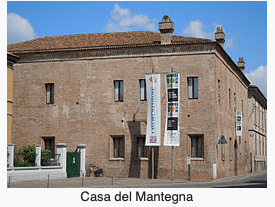
Mantegna, was dubbed a knight and built a stately home for his family in the area of the church of San Sebastiano. He adorned it with many paintings. The house can still be seen today, although the pictures no longer survive.
In this period, he began to collect some ancient Roman busts (which were given to Lorenzo de Medici when the Florentine leader visited Mantua in 1483), painted some architectonic and decorative fragments, and finished the intense St. Sebastian now in the Louvre.
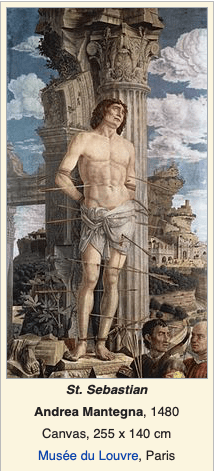
In 1488, Mantegna was called by Pope Innocent VIII to paint frescoes in a chapel Belvedere in the Vatican. Unfortunately, this series of frescoes, including a noted Baptism of Christ, was later destroyed by Pius VI in 1780. Pope Innocent treated Mantegna with less liberality than he had been used to at the Mantuan court; but all things considered their connection, which ceased in 1500, was not unsatisfactory to either party.
In Rome, Mantegna also met the famous Turkish hostage Jem and carefully studied Rome’s ancient monuments, but his impression of the city was a disappointing one overall. He returned to Mantua in 1490, he embraced again his more literary vision of antiquity, and entered in strong connection with the new Marchesa, the cultured and intelligent Isabella d’Este.
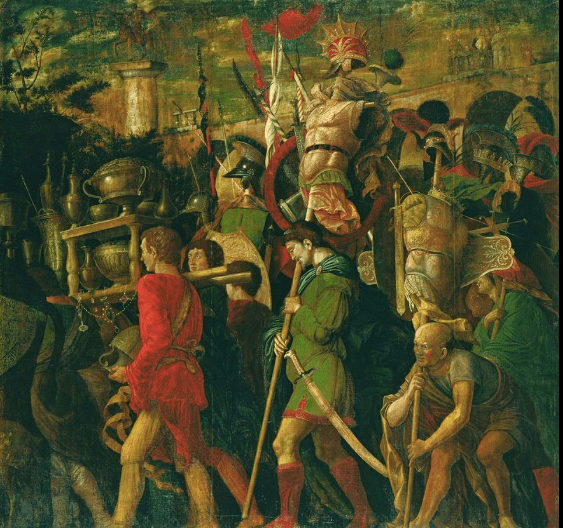
In what was now his adopted city, he went on with the nine tempera pictures of the Triumphs of Caesar, which he had probably begun before his leaving for Rome, and finished around 1492. These superbly invented and designed compositions are gorgeous with the splendor of their subject matter, and with the classical learning and enthusiasm of one of the masters of the age. They depict a triumphal military parade celebrating the victory of Julius Caesar in the Gallic Wars.
They remain the most complete pictorial representation of a Roman triumph ever attempted and together they form the world’s largest metric area of Italian Renaissance paintings outside Italy. Considered Mantegna’s finest work, they were sold in 1628 along with the bulk of the Mantuan art treasures to King Charles I of England. They now form part of the Royal Collection at Hampton Court Palace near London, where they occupy a special gallery, with a new continuous frame intended to capture their original setting, mounted into panelling. Here is just one of the paintings:
Despite his declining health, Mantegna continued to paint. Other works of this period include the Madonna of the Caves and the famous Lamentation over the Dead Christ, probably painted for his personal funerary chapel. It now hangs in the
Pinacoteca di Brera, Milan.

Another work of Mantegna’s later years was what is known as the Madonna della Vittoria, now in the Louvre.
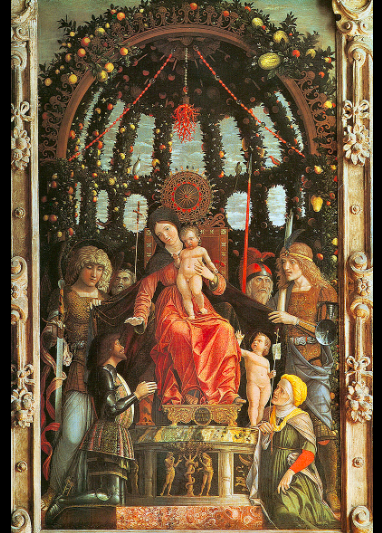
Painted in tempera about 1495, in commemoration of the Battle of Fornovo, whose questionable outcome Francesco Gonzaga was eager to show as an Italian League victory; the Mantuan church which originally housed the picture was built from Mantegna’s own design.
The Madonna is here depicted with various saints, the archangel Michael and St. Maurice holding her mantle, which is extended over the kneeling Francesco Gonzaga, amid a profusion of rich festooning and other accessories. This painting counts among the most obviously beautiful of Mantegna’s works in which the qualities of beauty is less marked than those other excellences more germane to his severe genius, tense energy passing into haggard passion.
After 1497 Mantegna was commissioned by Isabella d’Este to translate the mythological themes written by the court poet Paride Ceresara into paintings for her private apartment (studiolo) in the Palazzo Ducale.

Le Parnasse by Mantegna
These paintings were dispersed in the following years: one of them, the Legend of the God Comus, was left unfinished by Mantegna and completed by his successor as court painter in Mantua, Lorenzo Costa. The other painters commissioned by Isabella for her studiolo were Perugino and Correggio.
After the death of his wife, Mantegna fathered an illegitimate son, Giovanni Andrea; and, finally, although he continued embarking on various expenses and schemes, he had serious tribulations, such as the banishment from Mantua of his son Francesco, who had incurred the displeasure of the Marchese. The difficult situation of the aged master and connoisseur required the hard necessity of parting with a beloved antique bust of Faustina.
Very soon after this transaction he died in Mantua, on September 13, 1506. In 1516, a handsome monument was set up to him by his sons in the church of Sant’Andrea, where he had painted the altarpiece of the mortuary chapel. The dome is decorated by Correggio.
Giorgio Vasari eulogizes Mantegna, although pointing out his litigious character. He had been fond of his fellow pupils in Padua: and with two of them, Dario da Trevigi and Marco Zoppo, he retained steady friendships. Mantegna developed expensive habits, fell at times into financial difficulties, and had to press his valid claims for payment upon the attention of the Marchese.
In terms of Classical taste, Mantegna distanced all contemporary competition. Though substantially related to the 15th century, his influence on the style and trends of his age was very marked over Italian art generally. Giovanni Bellini, in his earlier works, obviously followed the lead of his brother-in-law, Mantegna. Albrecht Dürer was influenced by his style during his two trips in Italy, reproducing several of his engravings. Leonardo da Vinci took from Mantegna the use of decorations with festoons and fruit.
Mantegna’s main legacy in considered the introduction of spatial illusionism, both in frescoes and in sacra conversazione paintings: his tradition of ceiling decoration was followed for almost three centuries. Starting from the faint cupola of the Camera degli Sposi, Correggio built on the research of his master and collaborator into perspective constructions, producing eventually a masterwork like the dome of Cathedral of Parma.
https://www.wga.hu/html_m/m/mantegna/02/index.html
Decoration of the chapel in Castello di San Giorgio, Mantua (1460-64)
by Andrea MANTEGNA
Mantegna’s first important commission from Ludovico Gonzaga was the decoration of the chapel in Castello di San Giorgio, executed in the first half of the 1460s.
It is unfortunately impossible to reconstruct the whole of Mantegna’s original intentions there with any confidence, although some panels almost certainly traceable to the chapel still survive. They include three paintings in the Uffizi: The Ascension of Christ, The Circumcision and The Adoration of the Magi. Today they are mounted as a triptych in the Uffizi with The Adoration of the Magi in the centre. They were given this format in 1827, but the inconsistencies in both composition and iconography indicate that these are individual works rather than parts of a uniformly planned altarpiece. Nevertheless, they were created for the same chapel.
https://www.wga.hu/html_m/m/mantegna/05/index.html
My post on the Mantegna camera di Sposi:
One of the many visitors to the Paris exposition was twenty-five-year-old François Spoturno (known to history as the more gentrified François Coty), a native of Corsica who had come to Paris to make his fortune. A born charmer, he already had proved his skills as a salesman in Marseilles. Now, using a connection he had cultivated during his military service, he found a position as attaché to the senator and playwright Emmanuel Arène. It was a tremendous coup.
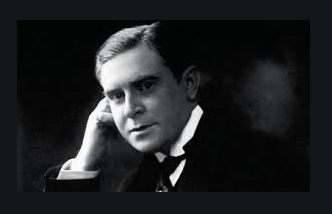
Spoturno was born on 3 May 1874 in Ajaccio, Corsica. He was a descendant of Isabelle Bonaparte, an aunt of Napoleon Bonaparte. His parents were Jean-Baptiste Spoturno and Marie-Adolphine-Françoise Coti, both descendants of Genoese settlers who founded Ajaccio in the 15th century. His parents died when he was a child and the young François was raised by his great-grandmother, Marie Josephe Spoturno, and. after her death, by his grandmother, Anna Maria Belone Spoturno. Grandmother and grandson lived in Marseille.

Coty and his wife.
Young Spoturno may not have had money, but he now had access to the glittering upper reaches of 1900 Paris, with its salons, clubs, and fashionable gatherings. As he quickly realized, it was a world in which women played a key role, from the most elegant aristocrats to the grandest courtesans—a fact of great importance, as it turned out, since women would soon make Spoturno’s fortune.
Spoturno’s interest was not in clothing but in perfume. At the opening of the new century, the perfect perfume was as essential to the well-dressed Parisian woman as was the latest fashion in dresses, and the French perfume industry was booming, with nearly three hundred manufacturers, twenty thousand employees, and a profitable domestic as well as export business.4 Naturally, perfume makers took the opportunity to display their wares at the 1900 Paris exposition, and Spoturno took the time to wander among their displays, including those of leading names such as Houbigant and Guerlain.
Spoturno was not yet sufficiently knowledgeable to judge a perfume’s quality, but he did note that the bottles containing these perfumes were old-fashioned and uninspired. It would not be long before it would occur to him that perhaps their contents were also a trifle outdated.
But first he had to find his way into the perfume business. After getting a job as a fashion accessories salesman and marrying a sophisticated young Parisian, Spoturno became acquainted with a pharmacist who, like other chemists at the time, made his own eau de cologne, which he sold in plain glass bottles. He also met Raymond Goery, a pharmacist who made and sold perfume at his Paris shop. Coty began to learn about perfumery from Goery and created his first fragrance, Cologne Coty.
One memorable evening, Spoturno sniffed a sample of his friend’s wares and turned up his nose. The friend then dared him to make something better, and Spoturno went to work.
He hadn’t the slightest idea of how to proceed, but in the end he managed so well that his friend had to admit that he was gifted. Yet natural gifts were not enough in the perfume business, and soon Spoturno decided to go to Grasse, the center of France’s perfume industry, to learn perfume-making from the experts. Along the way he would change his name to his mother’s maiden name. Only he would spell it “Coty.”
The brand’s first fragrance, La Rose Jacqueminot, was launched the same year and was packaged in a bottle designed by Baccarat.
L’Origan was launched in 1905; according to The Week, the perfume “started a sweeping trend throughout Paris” and was the first example of “a fine but affordable fragrance that would appeal both to the upper classes and to the less affluent, changing the way scents were sold forever.”
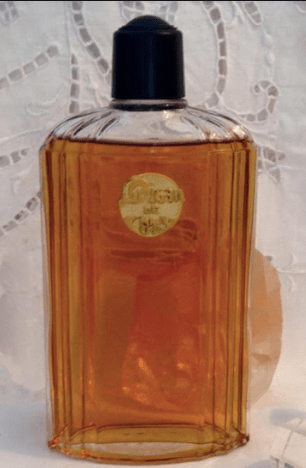
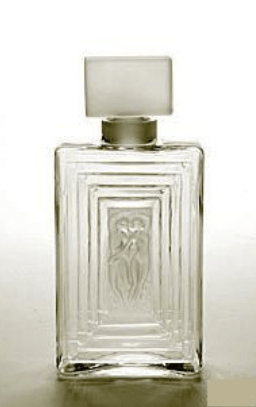
Following its early successes, Coty was able to open its first store in 1908 in Paris’ Place Vendôme. Soon after, Coty began collaborating with French glass designer René Lalique to create custom fragrance bottles, labels, and other packaging materials, launching a new trend in mass-produced fragrance packaging.
Coty also established a “Perfume City” in the suburbs of Paris during the early 1910s to handle administration and fragrance production; the site was an early business supporter of female employees and offered benefits including child care.
The year was 1904, and François Coty was about to engage in his own act of rebellion. Or was it simply a superb marketing tactic? We do not know. What we do know is that on one fateful day, on the ground floor of the Louvre department store, Coty smashed a bottle of perfume on the counter—with momentous results. Following his decision to learn more about the perfume business, Coty had indeed gone to Grasse, which was the long-established center for cultivating the flowers essential for making perfume. It was also the research center for the entire perfume industry. There, he applied for training at the esteemed Chiris company, which represented the cutting edge of current perfume technology. Fortunately, the head of the firm, now a senator, was a friend of Coty’s patron, Senator Arène, which eased Coty’s way. Coty then worked diligently for a year to learn all that he could, from flower cultivation to essential oils, spending much of his time in the laboratory. He analyzed, he synthesized, and he learned how to blend. During his apprenticeship, Coty learned about two new tools that the established perfumers had for the most part neglected in favor of more traditional methods. The first of these was the discovery of extraction by volatile solvents, a technique that made extraction of large quantities of fragrance possible and could even be used with nonfloral substances such as leaves, mosses, and resins. Shortly before the turn of the century, Louis Chiris secured a patent on this technique and set up the first workshop based on solvent extraction. Coty was an early student of this pioneering work.
The second and even more revolutionary discovery was that of synthetic fragrances. Earlier in the nineteenth century, French and German scientists had discovered synthetic fragrance molecules in organic compounds such as coal and petroleum that allowed perfumers to approximate scents that could not otherwise be easily extracted. It was an amazing breakthrough, and a few perfumers experimented briefly with the artificial scents of sweet grass, vanilla (from conifer sap), violet, heliotrope, and musk. A few also explored the possibilities of the first aldehydes, which gave perfumes a far greater strength than ever before. Yet with only a few exceptions, established perfumers in the early 1900s avoided these synthetic molecules. In studying the successful perfumes of the day, Coty
concluded that most were limited in range and old-fashioned, pandering to conservative tastes with heavy, overly complex floral scents that were almost interchangeable. He had educated his nose and learned his trade, and although he never would become a perfumer per se, he had an extraordinary imagination and a gift for using it to explore new realms. It was with this gift, newly honed, that he returned to Paris, and with ten thousand borrowed francs set up a makeshift laboratory in the small apartment where he and his wife lived. He was willing—even eager—to break with convention, aiming to create a perfume that combined subtlety with simplicity. Even at the beginning, his formulas were simple but brilliant, using synthetics to enhance natural scents. Coty also revolutionized the
bottles containing his perfumes. Remembering the beauty of the antique perfume bottles at the 1900 Paris exposition, which made the virtually standardized perfume bottles of the day look boring, Coty unhesitatingly went to the top and hired Baccarat to produce the lovely, slim bottle for La Rose Jacqueminot, his first perfume. As he later remarked, “A perfume needs to attract the eye as much as the nose.”16 Coty’s wife sewed and embroidered the silk pouches with velvet ribbons and satin trim that contained the bottles, and Coty now drew on his sales skills—this time selling his own rather than someone else’s product. Much to his dismay, it proved almost impossible to break through the established perfumers’ stranglehold on the market. Coty went from rejection to rejection, until one day he lost his composure. He was on the
ground floor of the Louvre department store trying to sell La Rose Jacqueminot, and the buyer was about to show him the door. In anger—or in what perhaps was a supreme act of showmanship—Coty smashed one of the beautiful Baccarat bottles on the counter, and a revolution began. According to legend, women shoppers smelled the perfume and flocked to the source, buying up Coty’s entire supply. The buyer took note, became suddenly cooperative, and Coty was on his way. After the fact, some groused that Coty had staged the entire stunt, including hiring actresses to play the part of shoppers entranced by his perfume. Yet by this time it didn’t matter. Coty had made his first publicity coup, whether or not it was intentional, and he and his perfumes were launched.
François Coty was also doing well in new quarters, which he had shrewdly taken in an affluent part of town, just north of the Champs-Elysées. Space there was limited, but the address (on Rue La Boétie) was a good one and worth the effort to cram showroom, shop, laboratory, and packaging department under one small roof. Much as Coty expected and desired, his perfume business continued to surge. The year 1905 was a big one for him, during which he presented two new hits: Ambre Antique and, especially, L’Origan, which according to perfume aficionados was an exceptionally daring blend, suitable for those daring Fauvist times. It was while Coty was launching his seductive new perfumes that an ambitious young woman by the name of Helena Rubinstein was studying dermatology
McAuliffe PhD, Mary. Twilight of the Belle Epoque . Rowman & Littlefield Publishers. Kindle Edition.
McAuliffe PhD, Mary. Twilight of the Belle Epoque . Rowman & Littlefield Publishers. Kindle Edition.
McAuliffe PhD, Mary. Twilight of the Belle Epoque . Rowman & Littlefield Publishers. Kindle Edition.
McAuliffe PhD, Mary. Twilight of the Belle Epoque . Rowman & Littlefield Publishers. Kindle Edition.
McAuliffe PhD, Mary. Twilight of the Belle Epoque . Rowman & Littlefield Publishers. Kindle Edition.
McAuliffe PhD, Mary. Twilight of the Belle Epoque . Rowman & Littlefield Publishers. Kindle Edition.
McAuliffe PhD, Mary. Twilight of the Belle Epoque. Rowman & Littlefield Publishers. Kindle Edition.


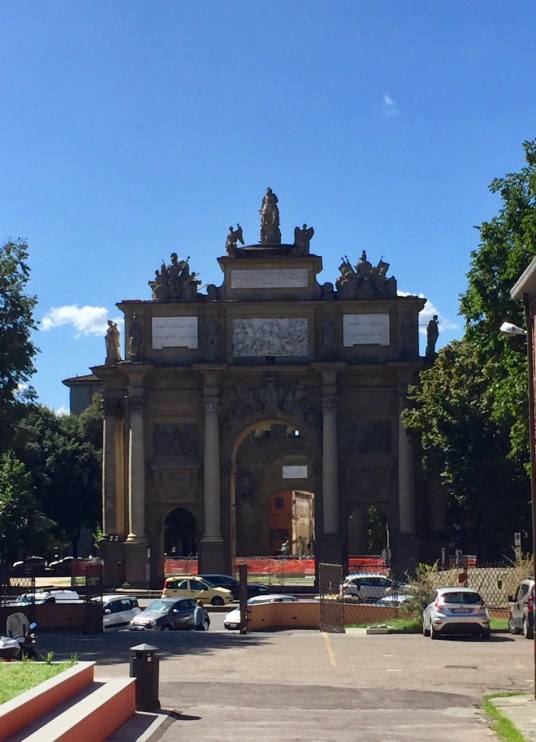
The triumphal arch of the Lorraine, a gateway to and from power in Piazza della Libertà
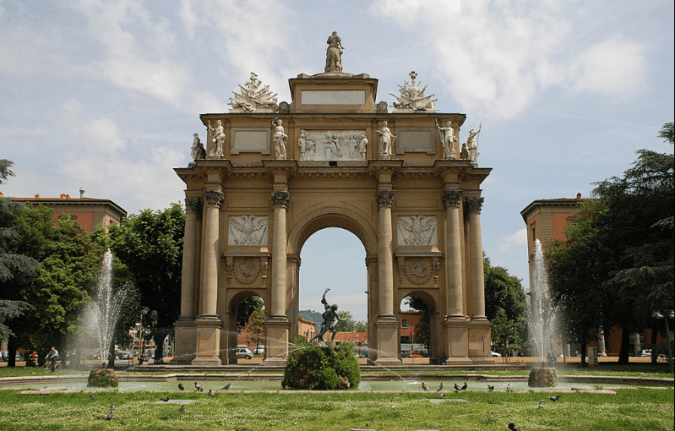
There is a grandiose and quite ornate — at least by Tuscan standards — neoclassical arch standing in my neighborhood. It sits not quite in the middle of Piazza della Libertà.
Based on the model of Roman triumphal arches, the arch in Florence was built for the entry of Francesco Stefano, the First Grand Duke of the House of Lorraine, a dynasty imposed on Tuscany following the death in 1737 of the last of the Medici grand dukes, Gian Gastone.

Ironically, in 1859, the same arch saw the exit of the last of Tuscany’s Lorraine rulers, Grand Duke Leopoldo II, after he was ousted in a bloodless revolution.
In a kind of territorial “musical chairs,” the French, Austrians and dukes of Lorraine agreed under the peace treaty that ended the war of Polish succession (1733–37) that the duchy of Lorraine be given to Stanisław I, the former king of Poland and father-in-law of France’s King Louis XV. As compensation, the dukes of Lorraine were designated the duchy of Tuscany.
Thoroughly mystified by these geopolitical machinations, the Tuscans did not relish the idea of foreign occupation. Witness to this, French writer and future president of Burgundy Charles de Brosses commented that they would have willingly given “two-thirds of their property to have the Medicis back, and the other third to get rid of the Lorrainers….They hate them.”


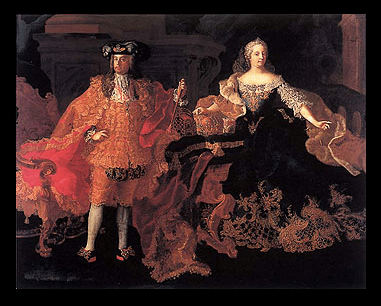
Nonetheless, to welcome the new sovereign, his young bride, Maria Theresa of Austria (the daughter and heir of the Holy Roman Emperor, Charles VI), on their first –and only–visit to Florence in January 1739, Senator Carlo Ginori, founder of a porcelain factory, proposed the construction of an arch near the ancient Porta di San Gallo gate, which was and is the main northern entrance to the city.
Here’s a double portrait of the newlyweds:
The arch was designed by Jean-Nicolas Jador, an architect from Lorraine. Work began on December 16, 1738, but, despite more than 400 men working day and night, it was impossible to complete the complicated edifice on schedule for the couple’s arrival.
The three main arches, a large one in the centre with two smaller ones each side, were finished, but painted wood and canvas decorated with temporary statuary covered the section above them.
As the sound of cannons boomed out from Forte Belvedere and fireworks exploded into the sky, it is likely the grand duke could barely see these improvisations as night had almost fallen by the time he reached Florence on that cold winter’s day.
Work on the arch continued for another 20 years, with many artists and artisans involved before it was completed in 1759.
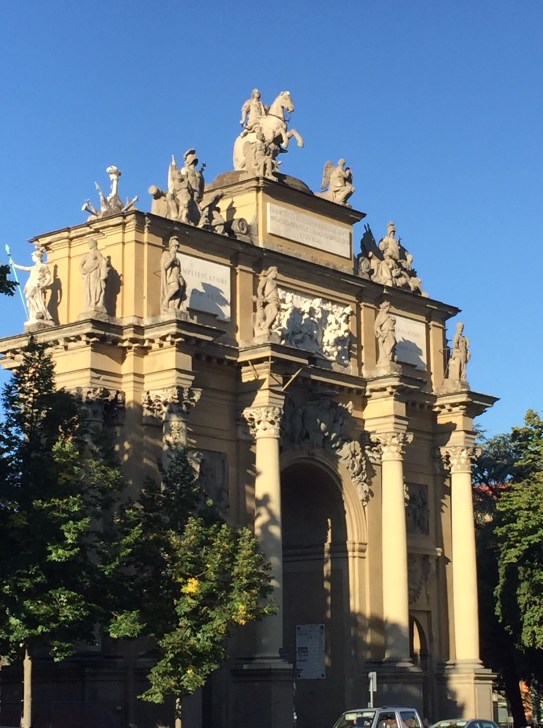
Supported by 10 Corinthian columns, the monument features 15 allegorical statues, heraldic decorations, four adornments of flags and arms, and six bas-reliefs of episodes from the life of Francesco Stefano, including his coronation.

On the southern façade, two double-headed eagles symbolize the Habsburg dynasty.

The monument is topped by an equestrian statue of Francesco Stefano by Florentine Baroque sculptor Vincenzo Foggini, known for his masterpiece Samson and the Philistines, now in the Victoria and Albert Museum in London. The statue faces away from the city, intended to welcome the grand duke and his entourage on his approach to the city from via Bolognese.
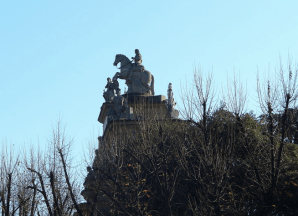
On that first visit, after celebrating mass at the Duomo, the royal couple took up residence in the Pitti Palace and spent their days sightseeing. During the carnival season, they held three lavish masked balls at the Palazzo Vecchio and even managed to attend a game of football in costume.
In describing Francesco Stefano in his Letters from Italy, John Boyle, the fifth earl of Cork and Orrery, wrote that he was “of a cheerful aspect, and of a most princely personage, yet something sinister and obscure may be perceived in his countenance … He is a Lorrainese, the shadow, not the substance of a sovereign.”
Here he is in a portrait:
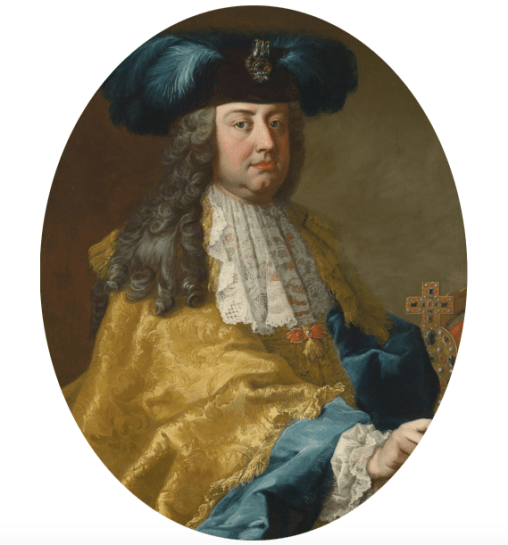
And it was the shadow of Francesco Stefano that would, in fact, reign over his subjects because his stay, albeit it a pleasant one, lasted only three months, and he would never set foot in the city again. After the death of Charles VI in 1740, Maria Theresa succeeded her father and named her husband co-regent of the Holy Roman Empire.
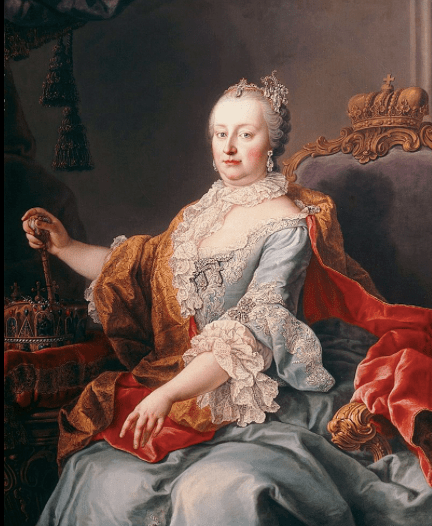
For the next 27 years, Tuscany was governed in his name by a regency, first by Count Emmanuel de Richecourt and then by General Antonio Botta-Adorno.
In effect, Florence and the region simply became a convenient cash cow to be heavily taxed and plundered of its art or of whatever else could be of use to the court in Vienna for supporting its economy and the Austrian army.
http://www.theflorentine.net/art-culture/2016/05/triumphal-arch-lorraine/
How’s my goal of living in Italy working out? Pretty well. It hasn’t been easy or fast, but it has been steady.
I came to Florence at the end of November in 2016. I arrived with a student Visa, which let me live in Italy beyond the 90 days any American can stay in Europe as a tourist. I stayed in Florence for 11 months and successfully obtained the all important Permesso di Soggiorno with that Visa. The Permesso expired after 8 months, regardless of the fact that I had already paid for Italian language school for 12 months. Lesson 1: there is no logic.
I returned to the states in October of 2017, going from Florence to Chicago where it was necessary for me to go to the Italian Consulate to apply for an elective residency Visa. Such a Visa allows Americans like me, if we are fortunate enough to receive the Visa, to live in Italy under certain circumstances. Chicago was necessary for me because my home is in Denver and that’s the way that cookie is divided. I filed the myriad documents needed to show my eligibility for the elective residency Visa, and then went to Denver to wait its hoped-for arrival.
Fortunately, I received the Visa. But, it has certain conditions. I won’t enumerate them all, but one of the most important ones is that I am not allowed to have gainful employment in Italy. I cannot receive any payment from anyone in Italy. Doing so could result not only in my Visa being revoked, but the Italian government could prohibit me from ever setting foot in Italy again. It’s a powerful rule.
I returned to Florence in December of 2017, armed with my new elective residency Visa. The first step, then, once within the country, is that within 8 days, one must apply for the Permesso di Soggiorno. I applied for this before Christmas in 2017 and then began to wait for its arrival.
Some people will receive their Permesso within a month, or so they say. Others, like me, are not so lucky. I waited for 8 months to receive word that my new Permesso was ready for me to pick up at the police station, or the dreaded Questura.
In July of 2018, I received a text message telling me to appear at the Questura on a certain date in early August, at a certain time. I did as I was asked. I turned in my old, expired, student-based Permesso, and received my new one. Unfortunately, my new Permesso was already expired when I received it. You read that right. Welcome to Italy.
The true impact of this situation on my daily life was nil. As long as one re-applies for a new Permesso within a short period, and keeps the receipt of that application with them at all times, typically no problems will result. Fortunately, I have never been stopped by the police in Italy and asked to show my documents. Theoretically, even if the police did stop me and ask for my documents, the receipt of the new Permesso application would suffice.
I filed my new application for a new Permesso in late September of 2018. Of course I kept a copy of the receipt for fees paid for that application with me at all times.
And then I began the wait for my new Permesso.
So, what is the importance of this waiting period on my life? Again, on a daily basis it is unnoticeable. However, there are other steps that one needs to do to truly function in present day Italy after one receives the Permesso.
For example, I tried to open a bank account in Italy in the winter of 2017, while I had my student Visa and my related Permesso. With the assistance of an Italian friend, we could not find a bank that was willing to open an account for me. I suppose I was considered to be too transient to bother with.
At that time, I was warned about opening an Italian bank account in any case. Still not having one, I cannot tell you exactly why people recommended I NOT open an account, should I ever find a bank that was willing to let me. Why? As I understand it, bank accounts here are very different from what I’m used to in the USA. For starters, it is quite costly to maintain an account here. In any case, no bank would open an account for me if I didn’t have a current Permesso di Soggiorno. Although I never tried to open an account with just my receipt, perhaps I could have done so. It just didn’t seem worthwhile to try, so I didn’t. For months I expected to receive my new Permesso and then I would try. That was my plan
Once I received my elective residency Visa and had an actual, unexpired Permesso di Soggiorno, I could follow other steps. First among these is applying for a Certificato di Residenza. I still don’t understand why this is important to have, but it is. There are certain things I just accept here and just accept that it makes no sense to me. The Serenity Prayer comes in handy.
After obtaining the Certificato di Residenza, one can apply for the Carta d’ Identita, which is necessary to have before applying for an Italian health care card which would allow me to seek medical treatment in Italy should the need arise. Up until such time, it is incumbent upon me to maintain a private traveler’s health insurance policy to cover unforseen events. As a matter of fact, proof of such a policy is a necessary document needed to apply for both the elective residency Visa and also for the Permesso di Soggiorno.
So, I’ve been waiting since last September (2018), for my new Permesso di Soggiorno. Six months went by, 7 months, 8 months, 9 months, 10 months and then, finally, I received a text message telling me my new Permesso would be ready for me to pick up at the Questura last week. I went with baited breath, wondering if it would already be expired again.
This time, I got lucky. True, I had to wait 11.5 months for the thing, but at least I got one that does not expire for 12 months! I’m suddenly completely legal, not needing any receipts for anything, at least for a year! Then I get to do the whole thing over again.
So, how did I celebrate? I did so by immediately (the next week) applying for my Certificato di Residenza. I was informed by knowledgeable people and blogs that this would arrive 45 days after I applied for it. Then I could apply for the Carta d’ Identita.
Imagine my surprise, after going to the correct government office in Florence, when the clerk told me she could produce and give it to me that same day! She asked me if I wanted to apply for the Carta d’ Identita and I mostly certainly did. She gave me the forms to sign and submitted them. She said I should receive it within a week (I’ll expect it within a month, if I’m lucky).
Once I have that in hand, I intend to apply for the Italian health care card which, if I understand things correctly, will allow me to seek medical assistance if the need were to arise, which I obviously hope it will not!
And, bonus, in the meantime I met an Italian who works with a lot of English speakers, and she told me that she thought I could apply for a “bank account” with the Italian postal system. Say what?
It turned out, she was correct. I went into the Post Office in Florence last week and opened an account that seems to be something like a bank account…even if it is with the postal system. I have a new debit card and the ability to wire money into this account from the US. For the first time since I arrived in Italy in November of 2016, I will be able to pay my rent to my landlord’s bank account. Up until now, I’ve had to take cash out of the ATM over the period of a few days to get enough money together to pay my rent.
All of a sudden, I feel like I’m living in the 21st century again. However, I’ve been in Italy long enough to know that any number of things could and may still go wrong. I’ll check in again once money has successfully been wired from the states to my post office bank account and I’ve paid my rent. Fingers crossed.
And, next week, I’ll apply for a health insurance card. Step by slow step, my life in Italy is becoming complete.
Arrividerla, L
One of the hundreds of interesting things you see when walking around the city of Florence are these small windows, measuring about 12 inches wide by 15 inches tall, cut into the masonry of some major palazzi. There are hundreds of them in Florence.
The buchette del vino (“small holes [for] wine”) were added to the buildings by entrepreneurial families who produced wine on their country estates and thought to themselves, “why not sell some in Florence on a glass by glass, or a refilled bottle by bottle, basis?”

Together, these windows form a collection of Renaissance-era vestiges of a once-popular and admirably no-fuss form of wine sales.
Without exception, I have never seen one of these windows open. They are usually boarded up, sometimes in quite decorative ways.

But now, an organization is working to preserve—and help reopen—the city’s “wine windows.”
“These small architectural features are a very special commercial and social phenomenon unique to Florence and Tuscany,” Matteo Faglia, a founding member of the Associazione Culturale Buchette del Vino, told Unfiltered via email. “Although they are a minor cultural patrimony, nevertheless, they are an integral part of the richest area of the world in terms of works of art and monuments—Tuscany.”
The buchette first came into vogue in the 16th century, when wealthy Florentines began to expand into landowning—notably, owning vineyards—in the Tuscan countryside. The aristocrats’ new zeal for selling wine was matched only by that for avoiding paying taxes on selling wine, so they devised the simplest model for wine retail they could: on-demand, to-go, literally hand-sold through a hole in the wall of their residences.
It was convenient for drinkers, too: Knock on the window with your empty bottle, and the server, a cantiniere, would answer; upon receiving the bottle and payment, he would return with a full bottle of wine. Buchette eventually became popular enough that nearly every Florentine family with vineyards and a palace in Florence had a wine window, and soon the trend spread to nearby Tuscan towns like Siena and Pisa.
The windows stayed open for the next three centuries, but by the beginning of the 20th century, more social wine tavernas had spread throughout the city, with better-quality wine, better company and equally easy access to a flask.
By 2015, most Florentines had lost track of their wine windows, if not vandalized them. That year, the Associazione was founded, with a mission to identify, map and preserve the buchette—nearly 300 catalogued so far.
And this summer provided a new boost to their work: One restaurant has cracked open its buchetta anew for business. Babae is the first restaurant to re-embrace the old tradition, filling glasses for passersby through their buchetta for a few hours each evening.
It’s a welcome development to the lovers of wine windows. “Although the ways of selling wine have obviously changed since the wine windows were fully active … this small gesture, which highlights a niche of Florentine history, is very welcome,” said Faglia, “to help to keep alive this antique and unique way of selling one of Tuscany’s most important agricultural and commercial products: its wine.”
This new association even has a Facebook page: https://www.facebook.com/buchettedelvino/


You must be logged in to post a comment.