


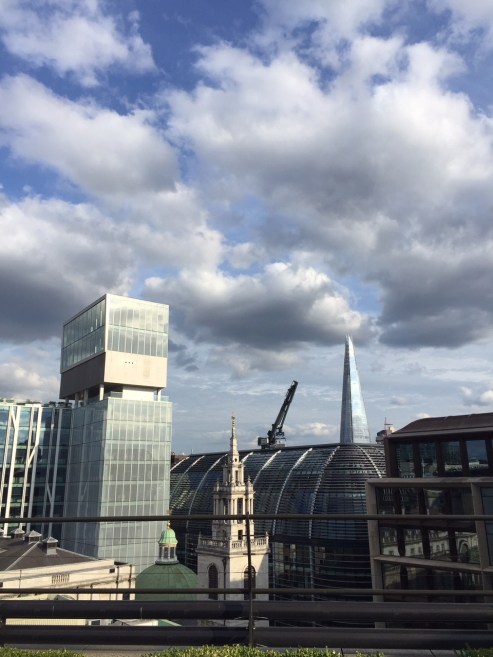
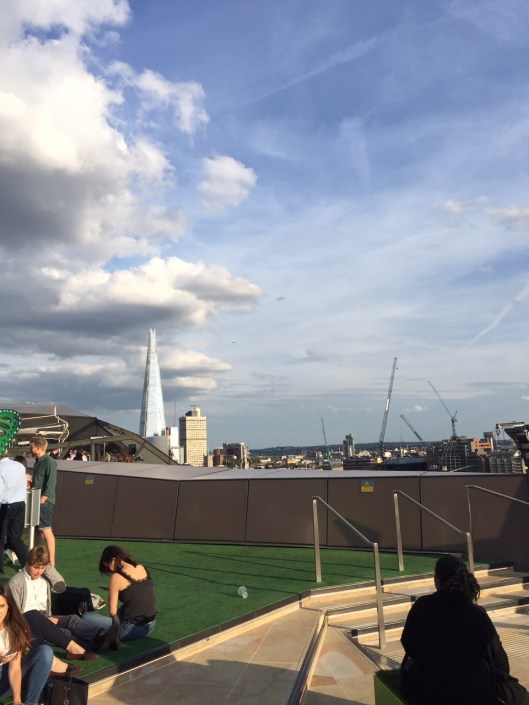
Shortly after arriving in London last week, I visited terraces on top of 2 skyscrapers in the city center to see the city from above.

The first stop (see above and the video below) was atop 1 Poultry Street. There’s a well-known French restaurant up there, but the real draw are the panoramic views of London.

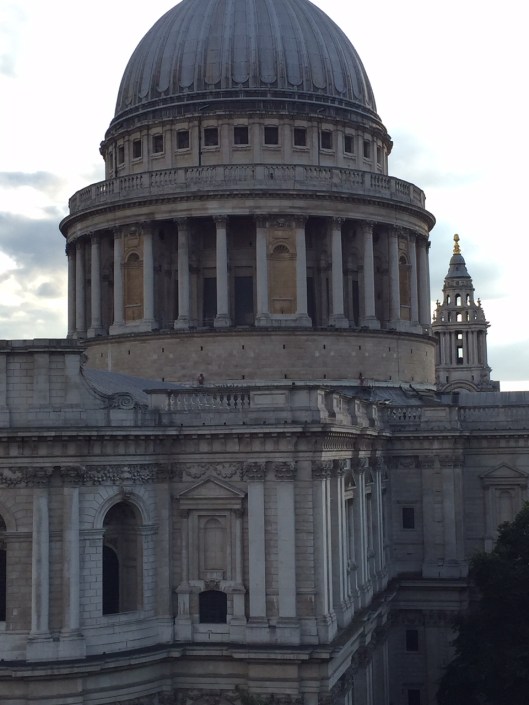
The second stop was on the rooftop terrace at One New Change Street. Located opposite St. Paul’s Cathedral, this terrance offers a unique perspective of the London skyline, as you can see in the picture above and this video:
Here are my pictures.








Mention The Monument to a Londoner and, as generic as that title might seem to the average person, a Londoner knows that you mean The Monument to the Great Fire, London. The horrible conflagration swept through the central parts of London from Sunday, 2 September to Thursday, 6 September 1666.
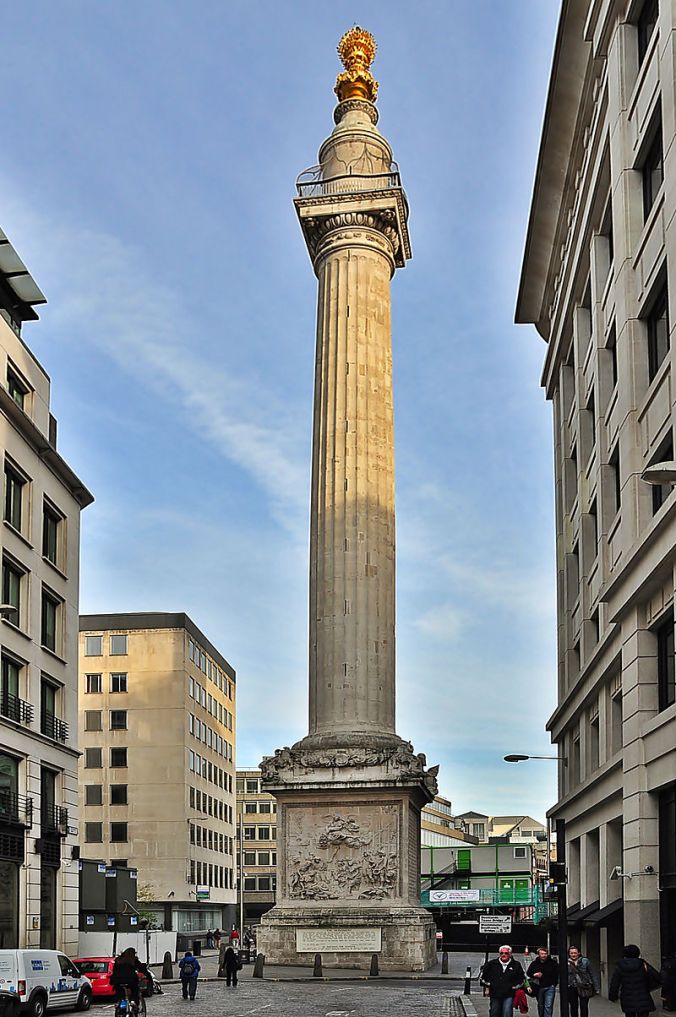
Modern-day view of The Monument, designed by Sir Christopher Wren.
The Monument to the Great Fire of London takes the form of a Doric column in Portland stone, situated near the northern end of the London Bridge. Atop the column is a gilded urn of fire. Commemorating the Great Fire of London, the monument stands at the junction of Monument Street and Fish Street Hill, 202 feet in height and 202 feet west of the spot in Pudding Lane where the Great Fire started on 2 September 1666. It was designed by Christopher Wren and Robert Hooke. Its height marks its distance from the site of the shop of Thomas Farriner (or Farynor), the king’s baker, where the blaze began.
Constructed between 1671 and 1677, the monument was built on the site of St. Margaret’s, Fish Street, the first church to be destroyed by the Great Fire. Another monument, the Golden Boy of Pye Corner, marks the point near Smithfield where the fire was finally stopped.
The viewing platform near the top of the Monument is reached by a narrow winding staircase of 311 steps. A mesh cage was added in the mid-19th century to prevent people jumping to the ground, after six people had committed suicide there between 1788 and 1842.
Three sides of the base carry inscriptions in Latin. The one on the south side describes actions taken by King Charles II following the fire.
The inscription on the east side describes how the Monument was started and brought to perfection, and under which mayors.
Inscriptions on the north side describe how the fire started, how much damage it caused, and how it was eventually extinguished.
The Latin words Sed Furor Papisticus Qui Tamdiu Patravit Nondum Restingvitur (“but Popish frenzy, which wrought such horrors, is not yet quenched”) were added to the end of the inscription on the orders of the Court of Aldermen in 1681 during the foment of the Popish Plot.
The inscription on the east side originally falsely blamed Roman Catholics for the fire (“burning of this protestant city, begun and carried on by the treachery and malice of the popish faction”), which prompted Alexander Pope (himself a Catholic) to say (in
Moral Essays, Epistle iii. line 339 (1733–1734) of the area:
Where London’s column, pointing at the skies,
Like a tall bully, lifts the head, and lies.
The words blaming Catholics were chiselled out with Catholic Emancipation in 1830.
The west side of the base displays a sculpture, by Caius Gabriel Cibber, in bas and alto relief, of the destruction of the City; with Charles II and his brother, James, the Duke of York (later King James II), surrounded by liberty, architecture, and science, giving directions for its restoration.


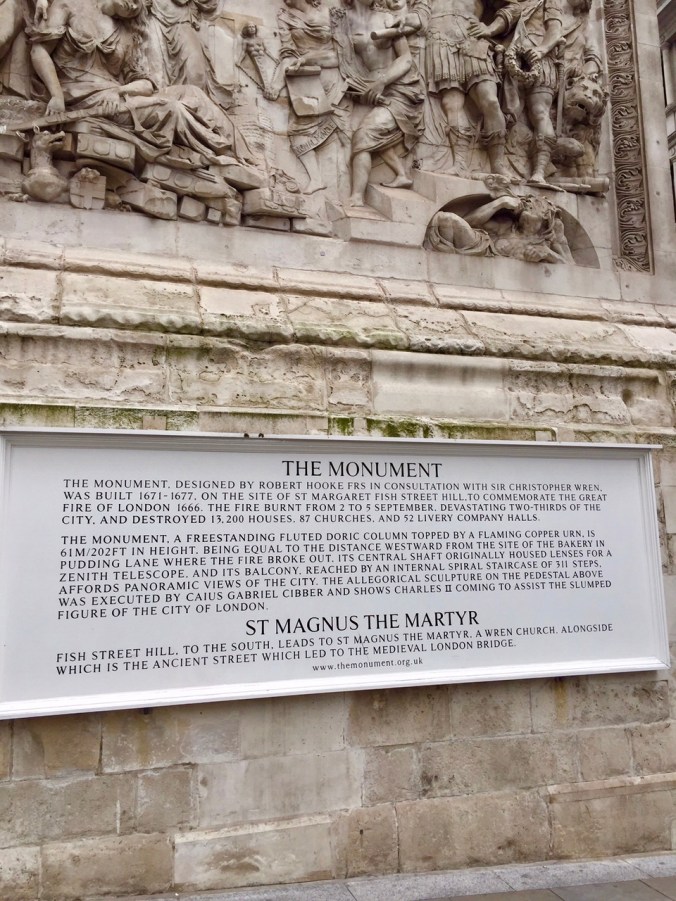


The fire gutted the medieval City of London inside the old Roman city wall. It threatened but did not reach the aristocratic district of Westminster, Charles II’s Palace of Whitehall, or most of the suburban slums.
The fire consumed 13,200 houses, 87 parish churches, St Paul’s Cathedral, and most of the buildings of the City authorities. It is estimated to have destroyed the homes of 70,000 of the city’s 80,000 inhabitants.
The death toll is unknown but was traditionally thought to have been small, as only six verified deaths were recorded. This reasoning has recently been challenged on the grounds that the deaths of poor and middle-class people were not recorded; moreover, the heat of the fire may have cremated many victims, leaving no recognisable remains. A melted piece of pottery on display at the Museum of London found by archaeologists in Pudding Lane, where the fire started, shows that the temperature reached 1,250 °C (2,280 °F; 1,520 K).
The first Rebuilding Act, passed in 1669, stipulated that “the better to preserve the memory of this dreadful visitation,” a column of either brass or stone should be set up on Fish Street Hill, on or near the site of Farynor’s bakery, where the fire began.
Christopher Wren, as surveyor-general of the King’s Works, was asked to submit a design. Wren worked with Robert Hooke on the design. It is impossible to disentangle the collaboration between Hooke and Wren, but Hooke’s drawings of possible designs for the column still exist, with Wren’s signature on them indicating his approval of the drawings rather than their authorship.

The Monument depicted in a picture by Sutton Nicholls, c. 1753.
It was not until 1671 that the City Council approved the design, and it took six years to complete the 202 ft column. It was two more years before the inscription (which had been left to Wren — or to Wren’s choice — to decide upon) was set in place. “Commemorating — with a brazen disregard for the truth — the fact that ‘London rises again…three short years complete that which was considered the work of ages.'”
The Edinburgh-born writer James Boswell visited the Monument in 1763 to climb the 311 steps to what was then the highest viewpoint in London. Halfway up, he suffered a panic attack, but persevered and made it to the top, where he found it “horrid to be so monstrous a way up in the air, so far above London and all its spires.”

Views published in The Graphic, 1891.
[edit]
During the 2007–2009 refurbishment, a 360-degree panoramic camera was installed on top of the Monument. Updated every minute and running 24 hours a day, it provides a record of weather, building and ground activity in the City.

Panorama of London taken from the top of the Monument
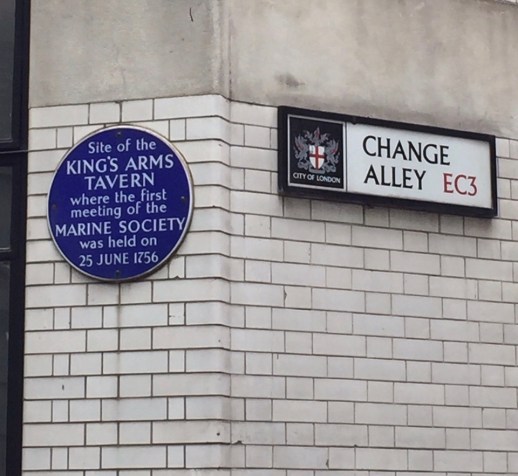
In my random travels, hither and yon, through this British capitol city, I am constantly stopping to read all of these interesting signs. Oh, the stories they would tell. My mind is boggled. I love it when that happens!



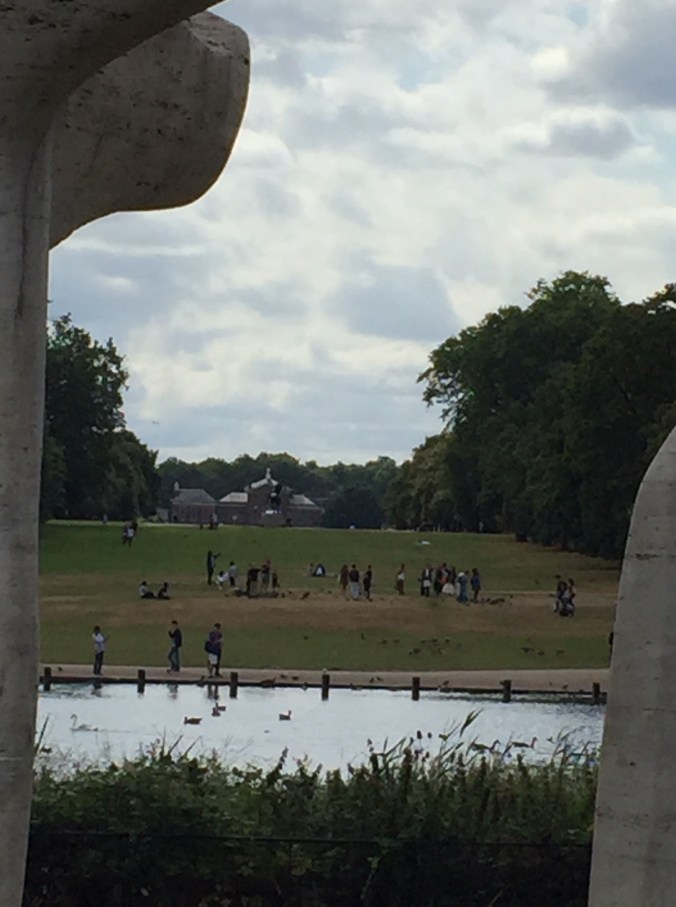
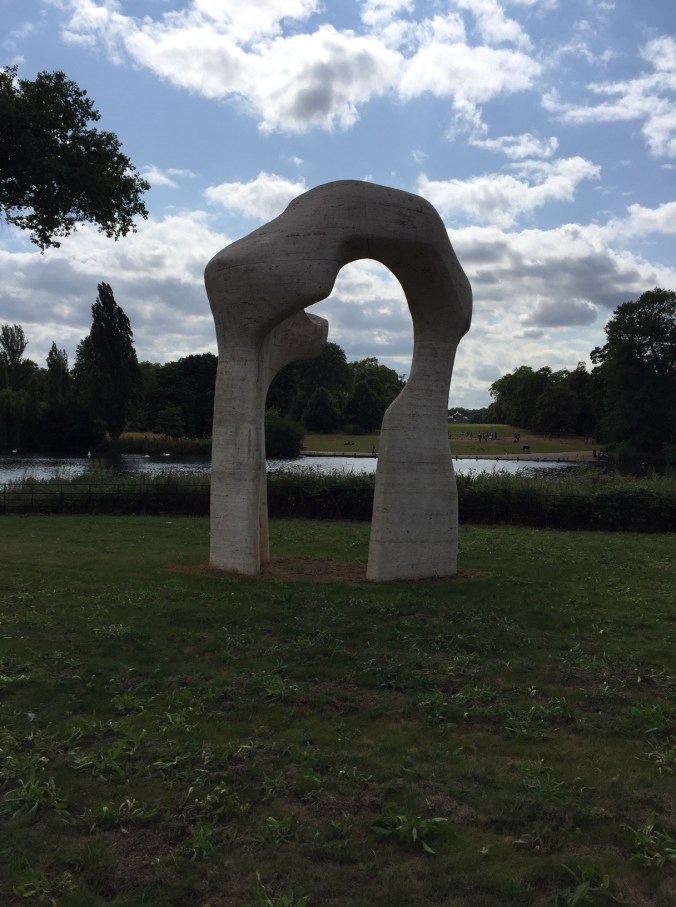
Moore’s “The Arch” stands proudly in the Gardens and, from a certain angle, perfectly frames the Kensington Palace.
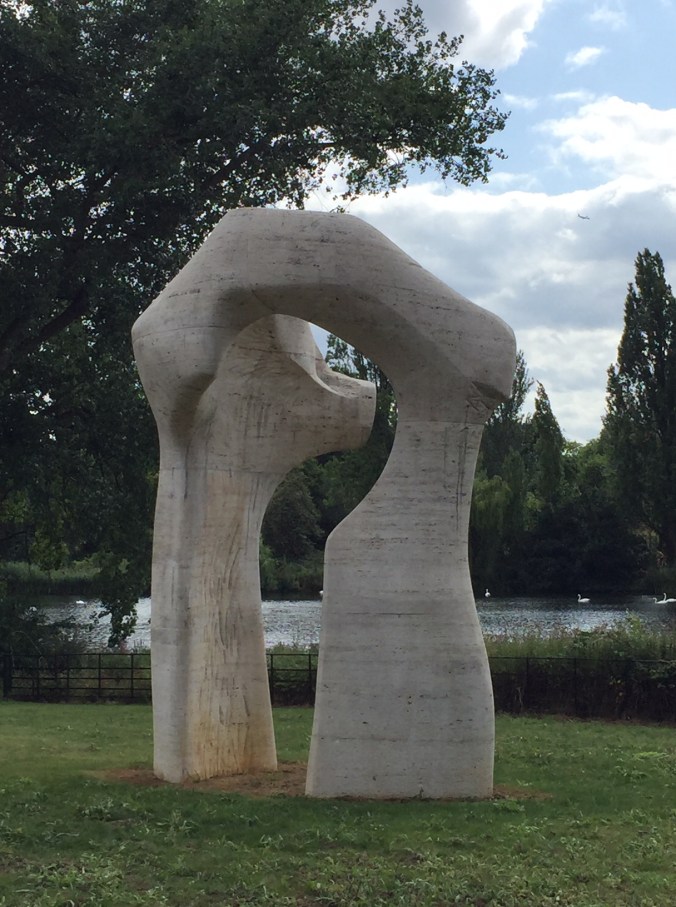
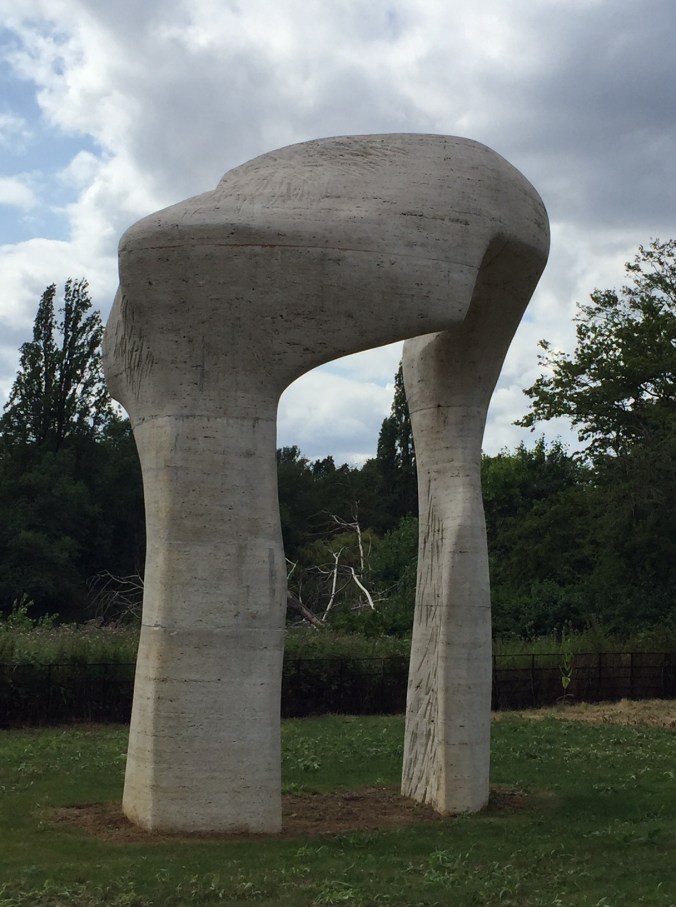
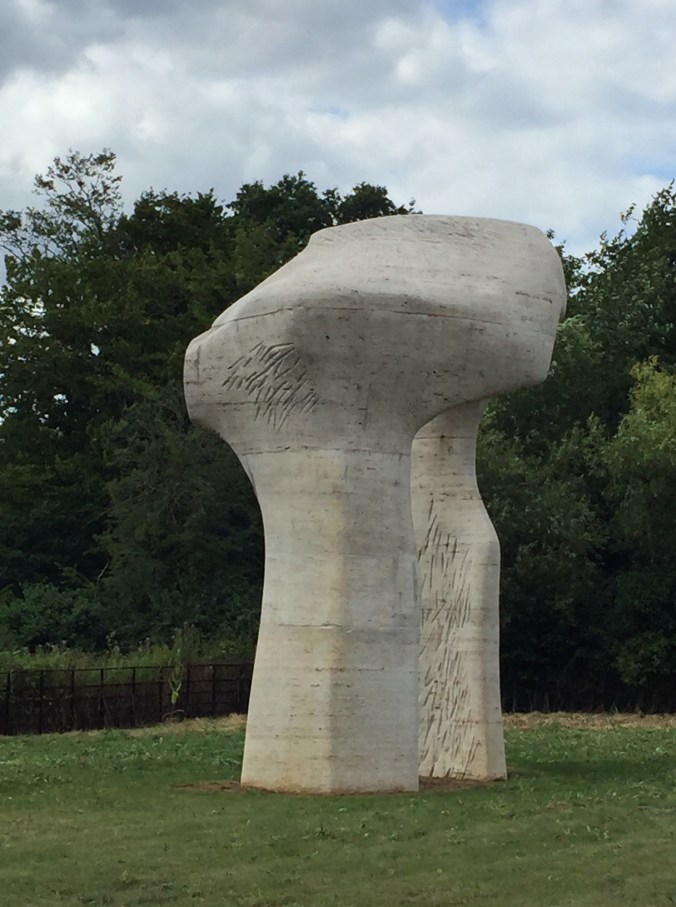
I saw this yesterday in St. Paul’s Cathedral. It is beautiful.
RIP Igor Gurney.


You might know that almost the first place I would go once I got to London would be the “Italian Gardens!” Ma, certo! Like a bee to honey.
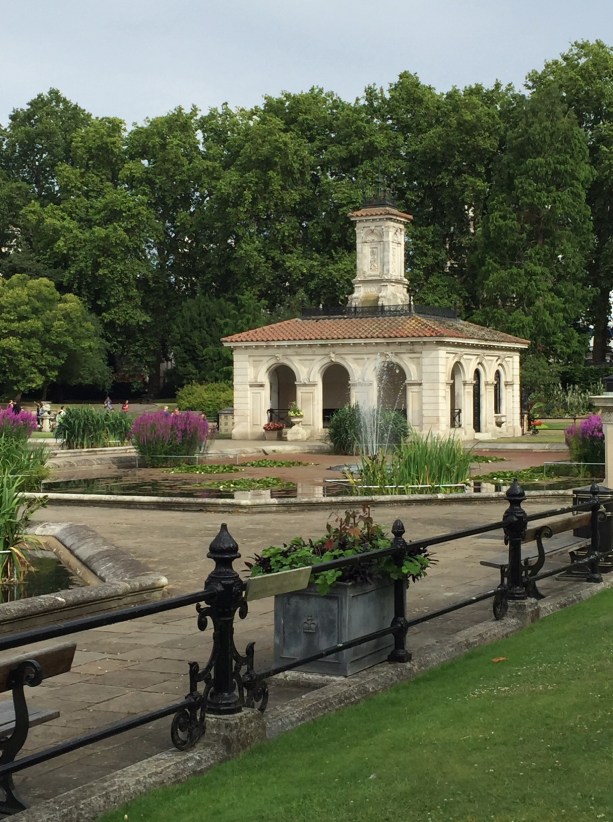
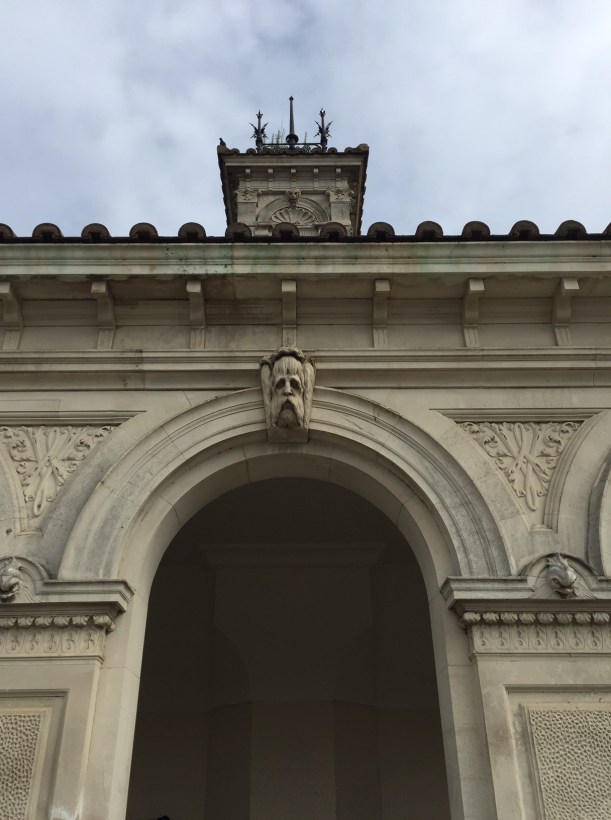
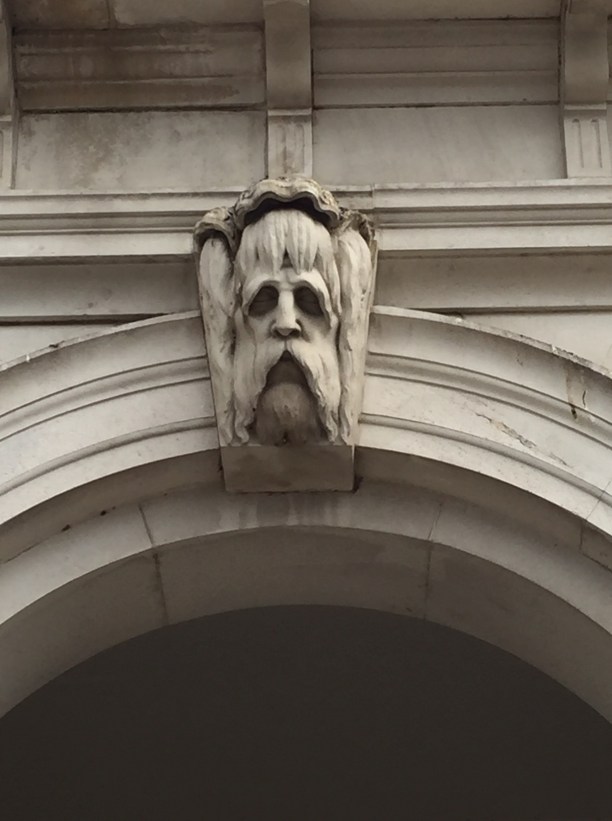
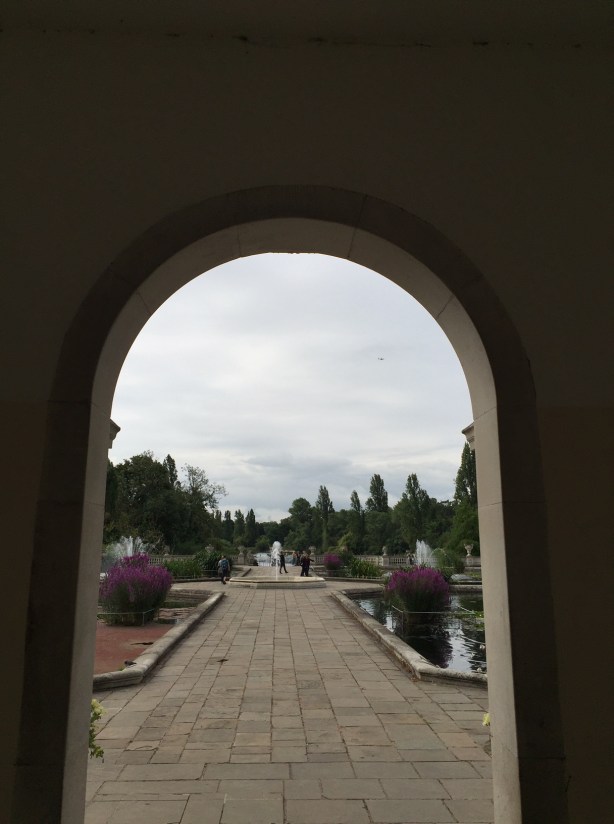

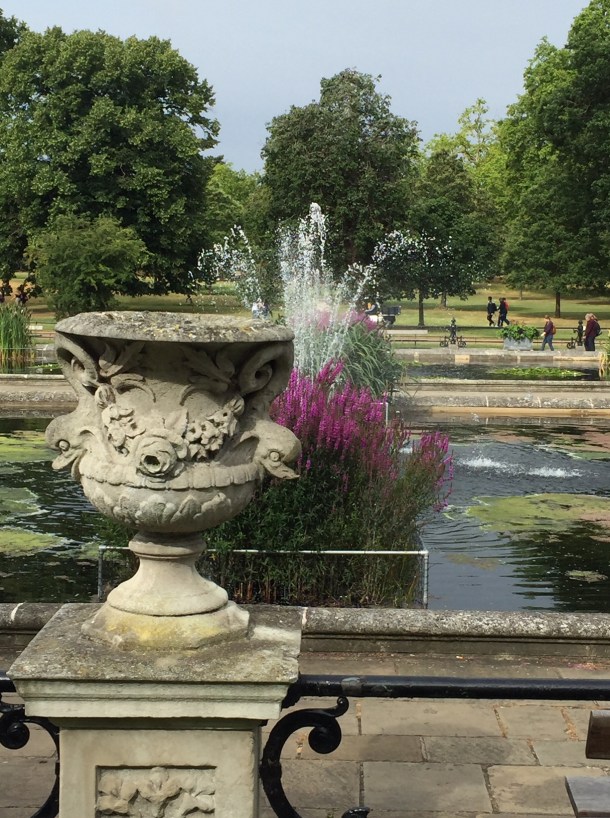
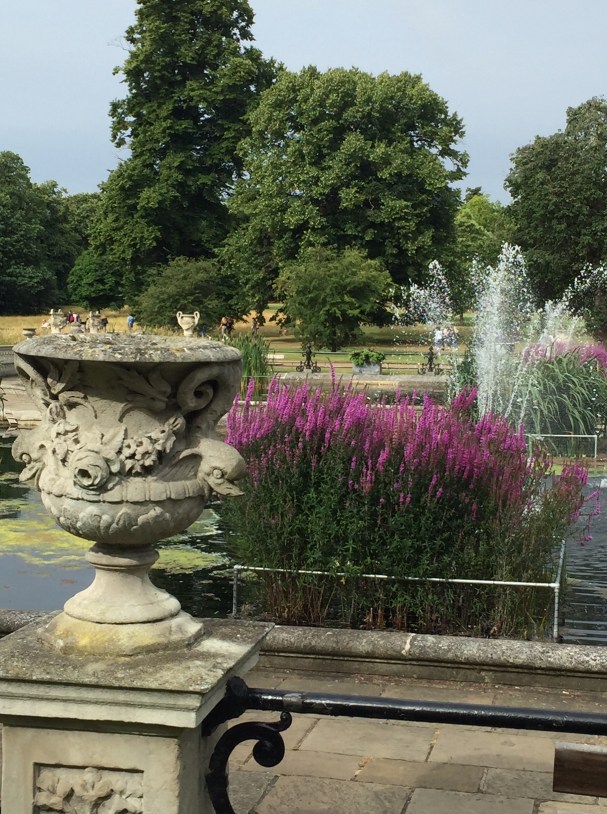
This lovely, smallish ornamental water garden was created in the 1860s and is to be found on the north side of park, near Lancaster Gate. It is believed the garden was a gift from Prince Albert (he died 1861) to his beloved wife, Queen Victoria. Regardless of the why, they are now recognized as a site of particular importance and are listed Grade II by Historic England.
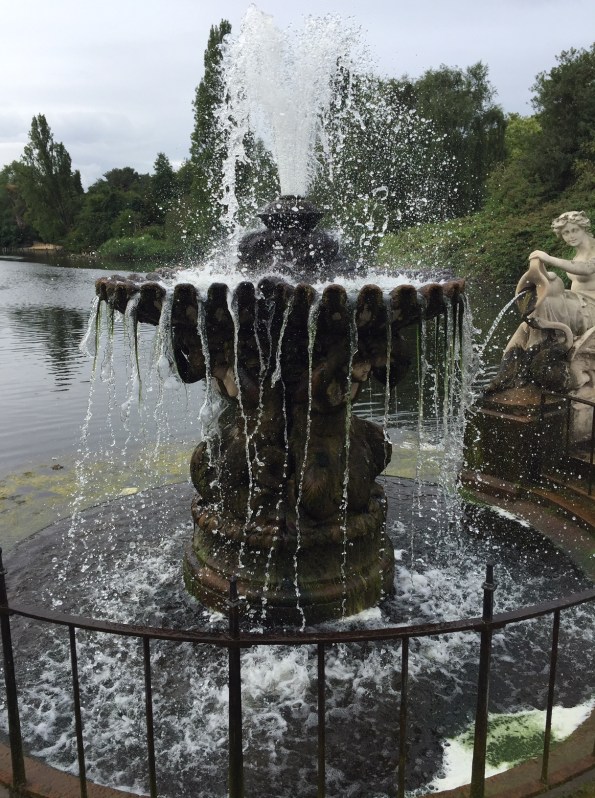
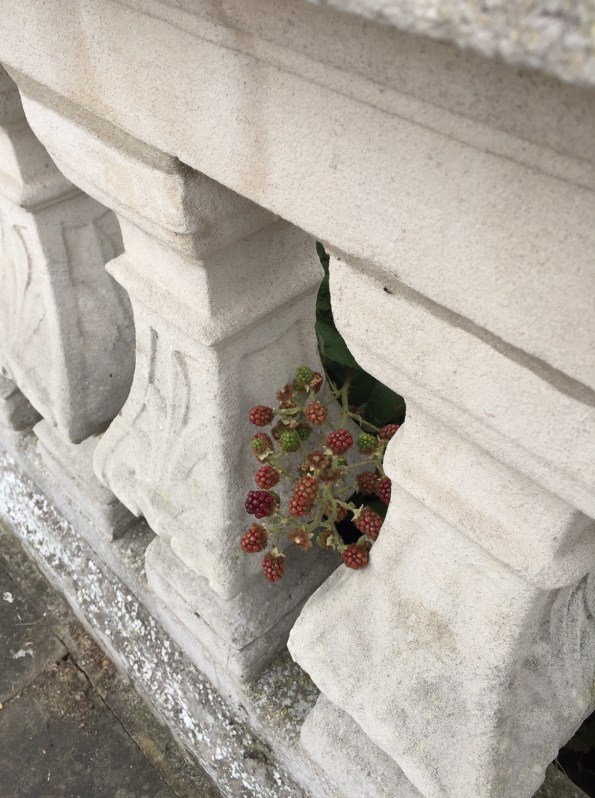
Portraits of Victoria and Albert flank the 2 sides of the balustrades overlooking the lake.
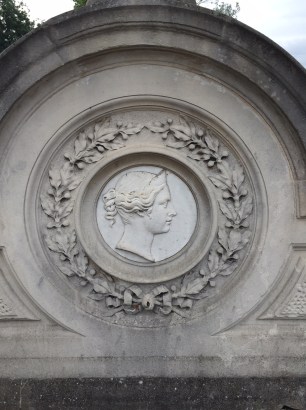
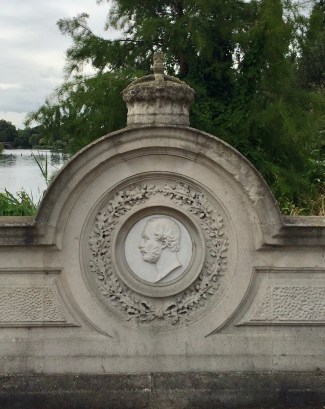
BTW, about once every six months while I am living in Italy I will see something in some work of art that causes me to say: “that’s a new one–I’ve never seen that before.” I love it when that happens.
But, today, at the Italian Gardens, I had one of those moments, caused by the bas-relief below:
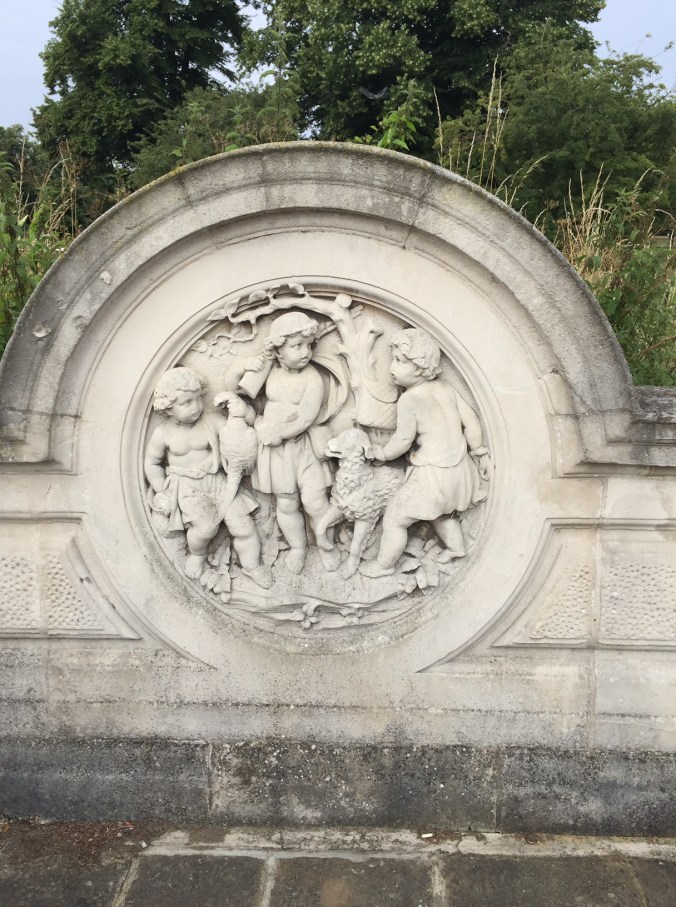
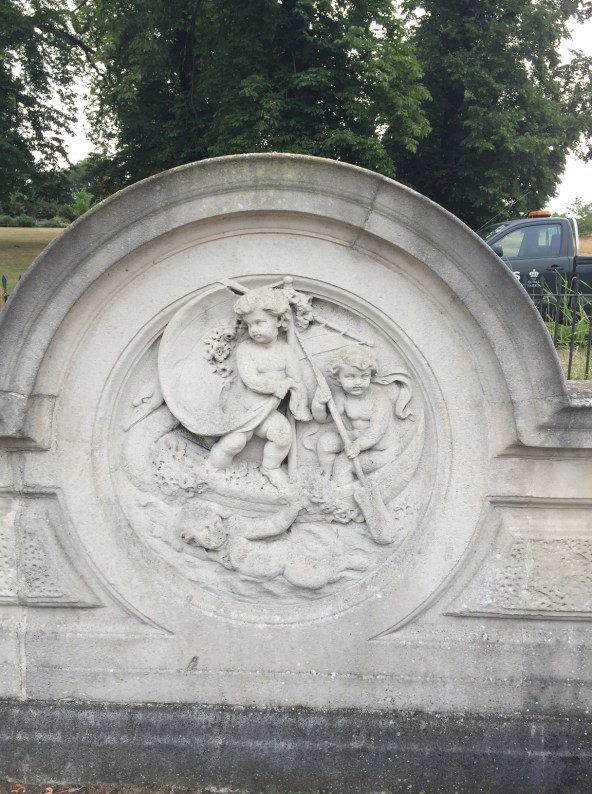
I’ve seen a lot of weird images captured in marble sculpture, especially in the form of putti of various stripes, but I have never seen a rifle in a Neo-classical sculpture before today! A detail of it is below:


The Italian Gardens are found within the grounds of Kensington Gardens; you can locate them at the top of the Serpentine River in the map below:

The Italian Gardens are an elaborate mix of four main basins. They feature central rosettes carved in Carrara marble, the Portland stone and white marble Tazza Fountain, and a collection of stone statues and urns. It’s fun to see if you can spot the five main urn designs – a swan’s breast, woman’s head, ram’s head, dolphin and oval.

Strengthening the supposition that this decorative complex was commissioned by Prince Albert is the fact that the layout of the Italian Gardens is very similar to that of Osborne House on The Isle of Wight, where the royal family spent holidays. Prince Albert was a keen gardener and took charge of the gardens at Osborne House, where he introduced an Italian garden with large raised terraces, fountains, urns and geometric flower beds.

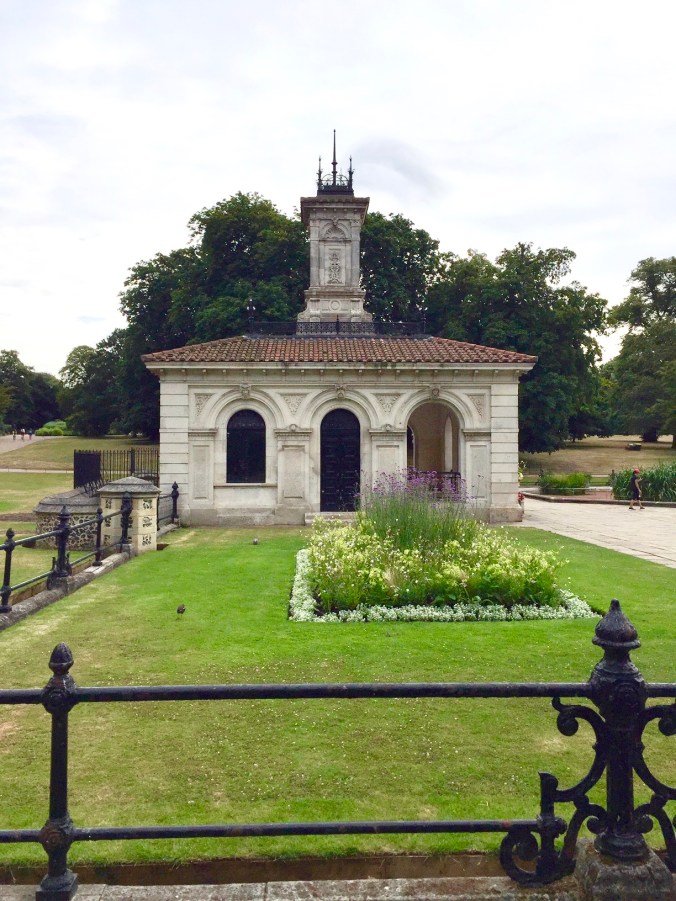
It’s thought that in 1860 he brought the idea to Kensington Gardens. The design by James Pennethorne includes many features of the Osborne garden.
The initials of Queen Victoria and Prince Albert can be found on one of the walls of the Pump House, at the north of the gardens.
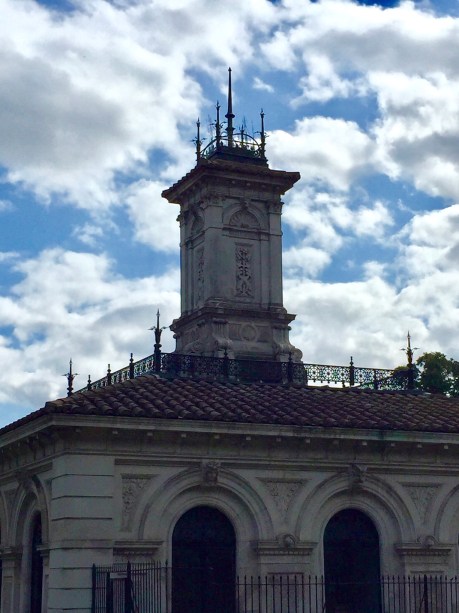
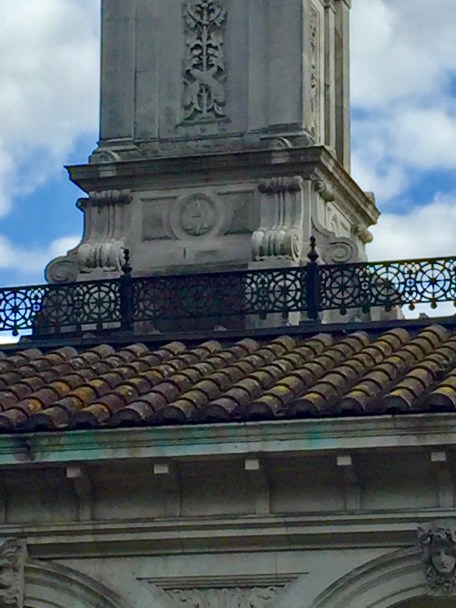 You can see the V & A monogram in this photo.
This building once contained a steam engine which operated the fountains – the pillar on the roof is a cleverly-disguised chimney. A stoker kept the engine running on Saturday nights to pump water into the Round Pond, so on Sundays there was enough water pressure to run the fountains.
In 2011, the gardens were restored to their original splendour. The project involved:
The restoration was funded by The Tiffany and Co. Foundation as part of a project to restore ornamental and drinking fountains across the eight Royal Parks, and known as Tiffany – Across the Water.
Also, just for fun, the Italian Gardens have provided a star location in several films.


You must be logged in to post a comment.