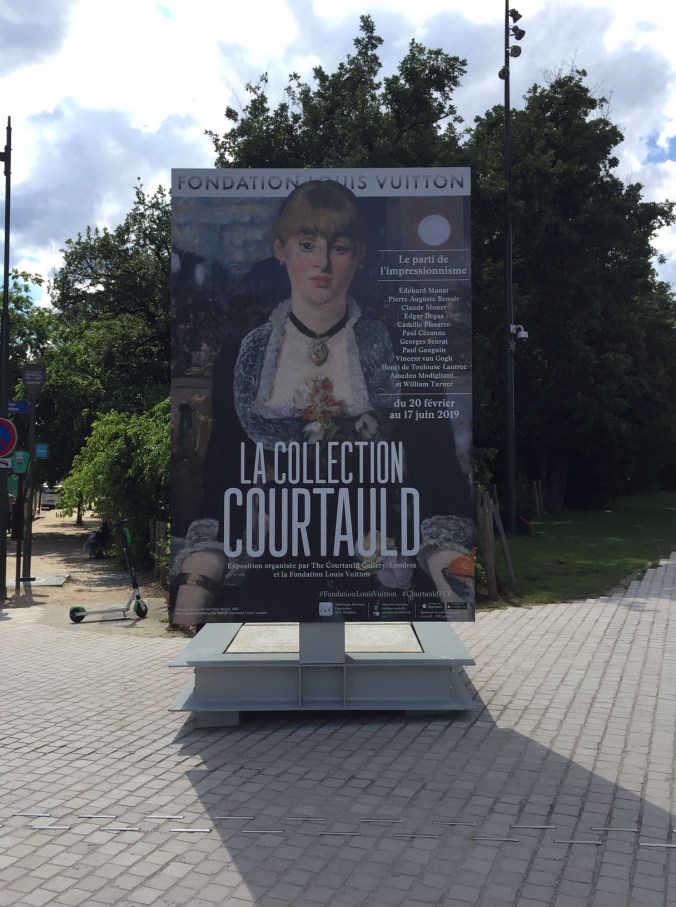
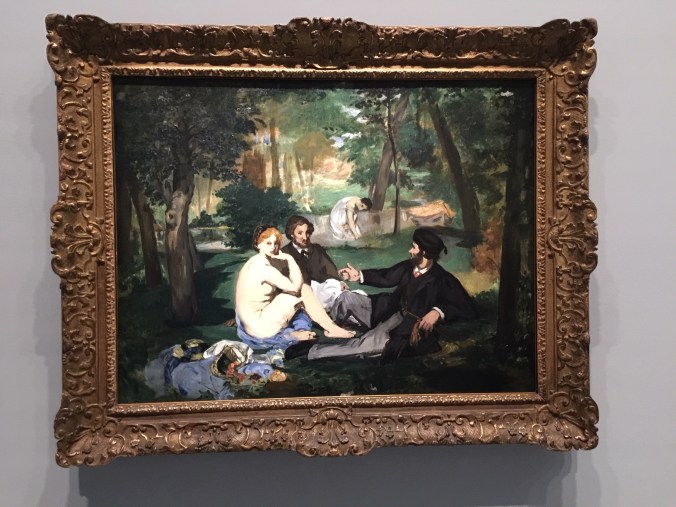
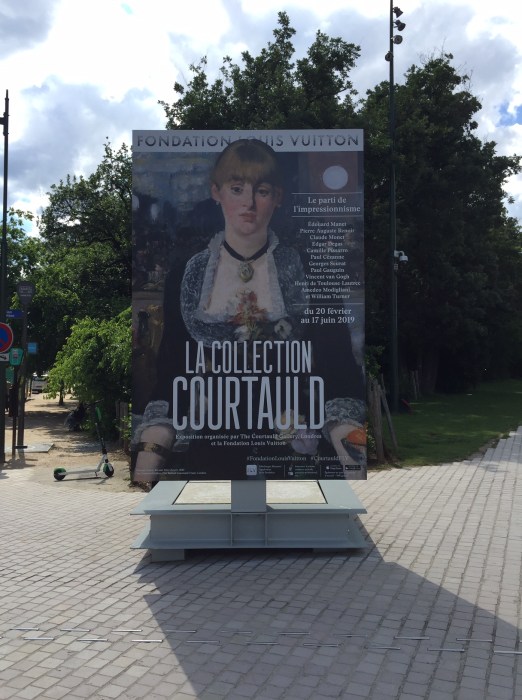
I was so fortunate when I visited the Fondation Louis Vuitton recently that an excellent exhibition from London was on view. I couldn’t help myself: it was so refreshing to see “modern art” in Paris after non stop Renaissance art in Florence all of the time. Ha! Never thought I’d live to say those words!
Oops! I fell way behind on posting my Paris adventures! Let me start again now!
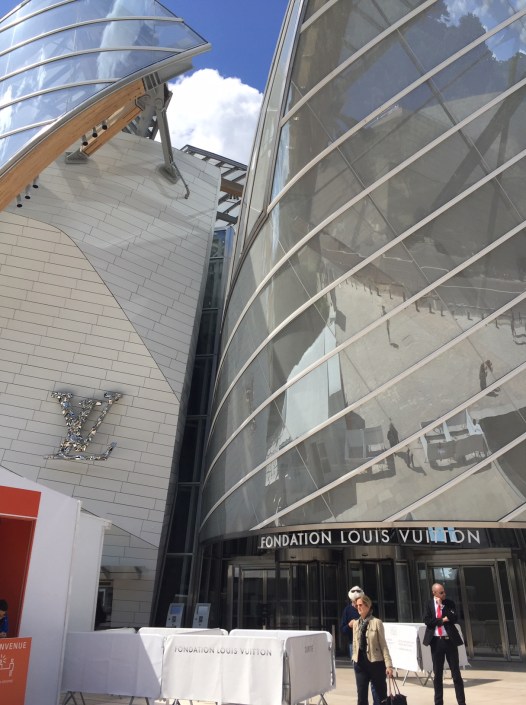
The Louis Vuitton Foundation, in French: La Fondation Louis Vuitton, has its home in a spectacular building in the 16th arrondissement, Paris, France. This building serves as an art museum and cultural center, sponsored by the group LVMH and its subsidiaries. It is run as a legally separate, nonprofit entity as part of LVMH’s promotion of art and culture. And isn’t the world lucky for all of that!
In 2001, Bernard Arnault, the Chairman of LVMH, met world-renowned architect, Frank Gehry, and told him of plans for a new building for the Louis Vuitton Foundation for Creation on the edge of the Bois de Boulogne. Suzanne Pagé, then director of the Musée d’Art Moderne de la Ville de Paris, was named the foundation’s artistic director in charge of developing the museum’s program.
Not everything went according to plan.
The city of Paris, which owns the park, granted a building permit in 2007. In 2011, an association for the safeguard of the Bois de Boulogne won a court battle, as the judge ruled the centre had been built too close to a tiny asphalt road deemed a public right of way.
Opponents to the site had also complained that a new building would disrupt the verdant peace of the historic park.
The city appealed the court decision and eventually a special law was passed by the Assemblée Nationale that the Fondation was in the national interest and “a major work of art for the whole world,” which allowed it to proceed.
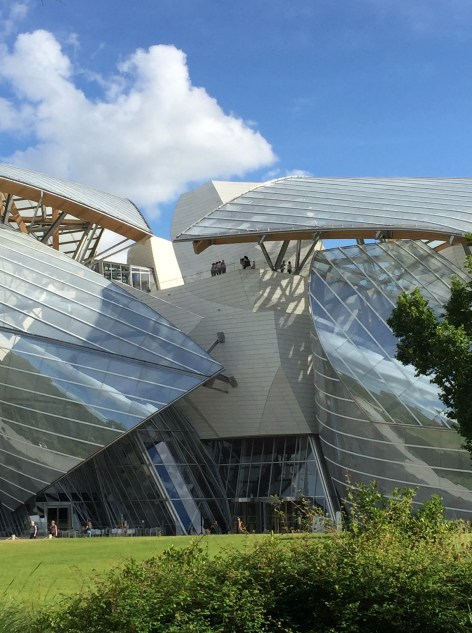
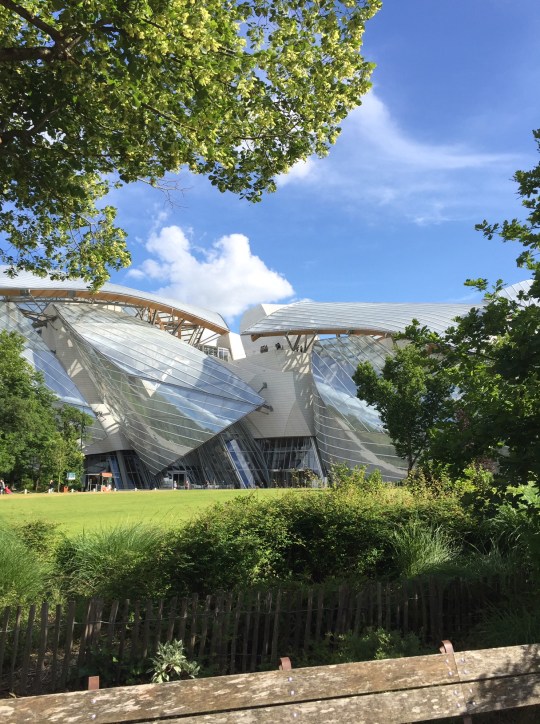
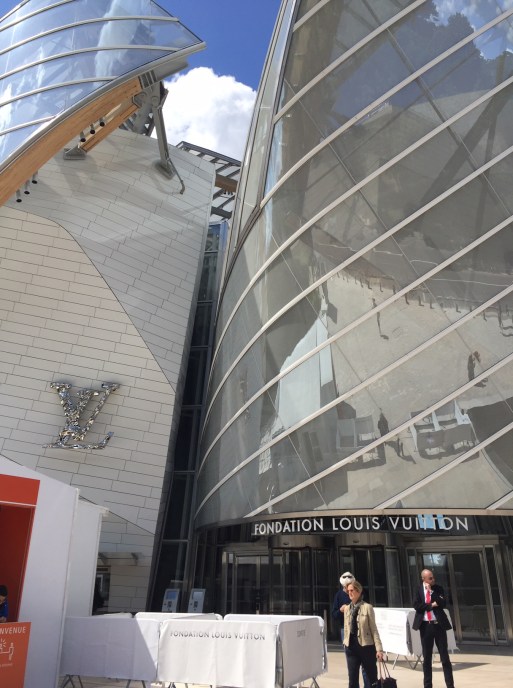
I believe I was very fortunate to visit La Fondation on a clear, sunny day (because, believe me…some of the days were cold and cloudy during my visit), and because I was able to see the exhibit from London’s Courtauld Institute. I’ll post about the exhibit itself another day. My focus today is on the incredible building itself.
The Fondation Louis Vuitton is located on prime property in Paris, next to the Jardin d’Acclimatation in the Bois de Boulogne, the famous park on the west side of the Capitol city. Napoleon III and the Empress Eugénie opened the Jardin d’Acclimatation in October 1860. They thus provided the Paris they were intent on rebuilding with a landscaped park designed in accordance with the model of English gardens that they so admired.
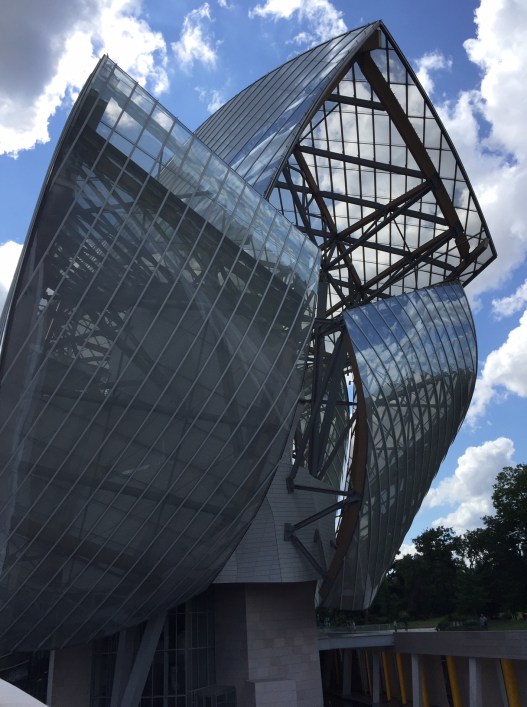
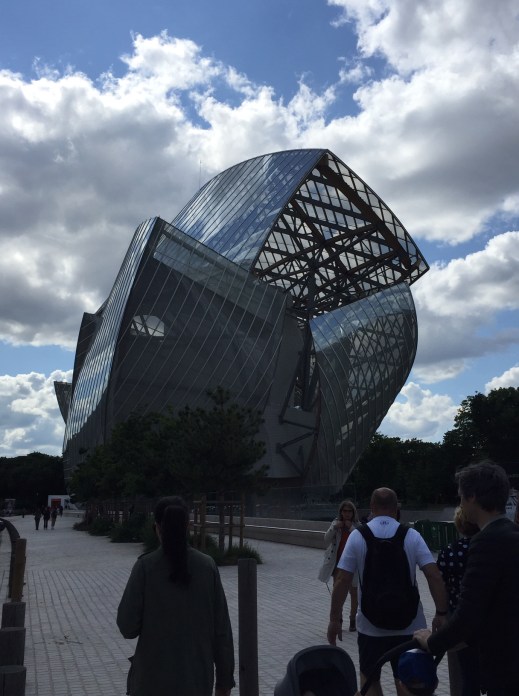
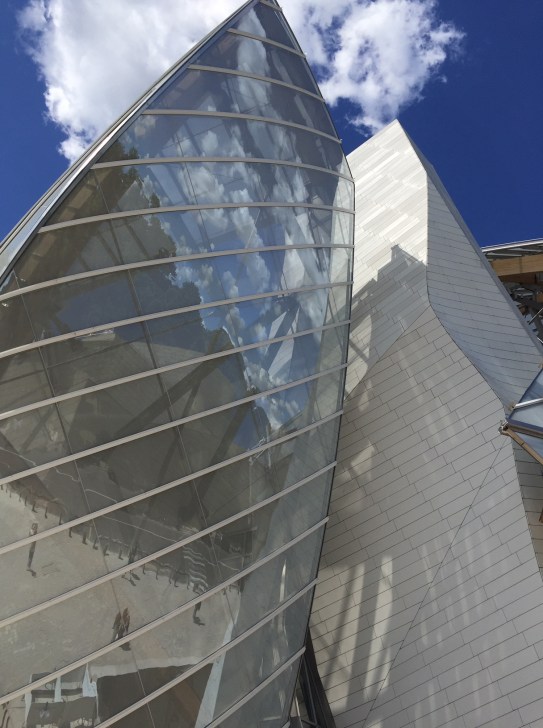
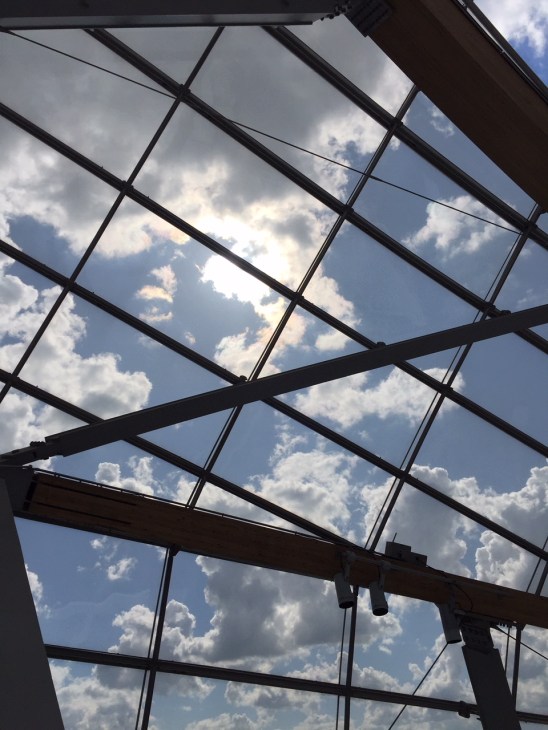
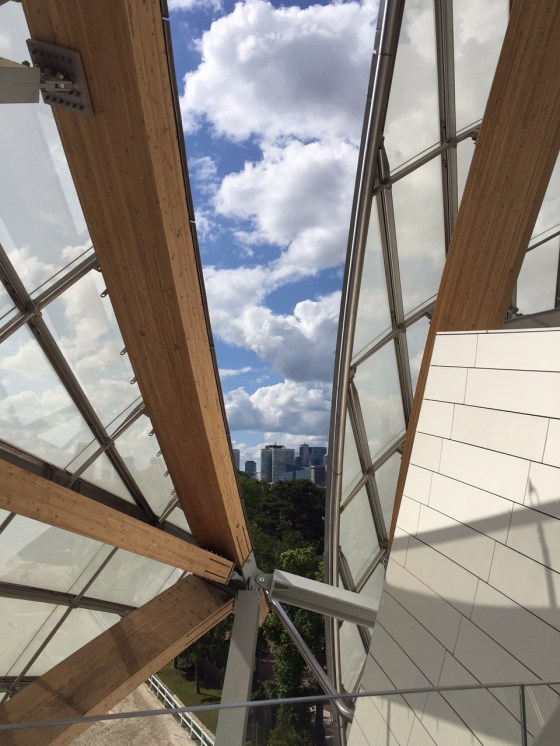
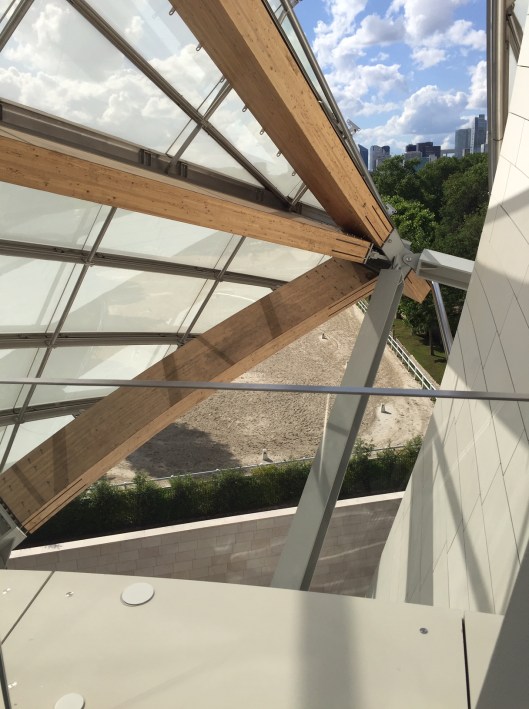
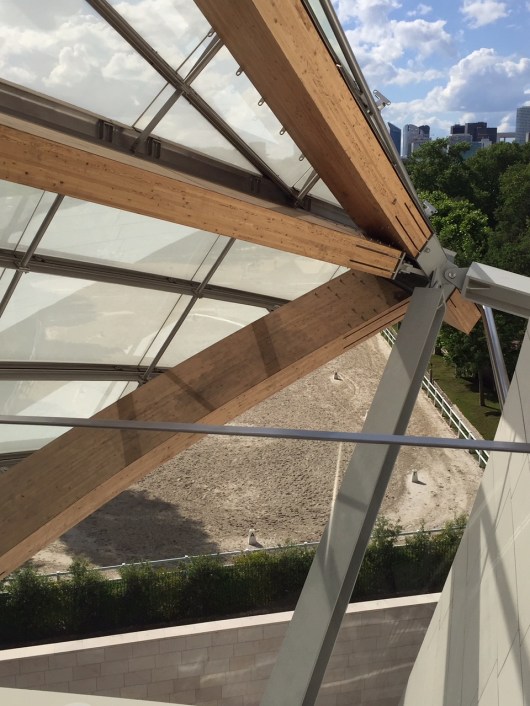
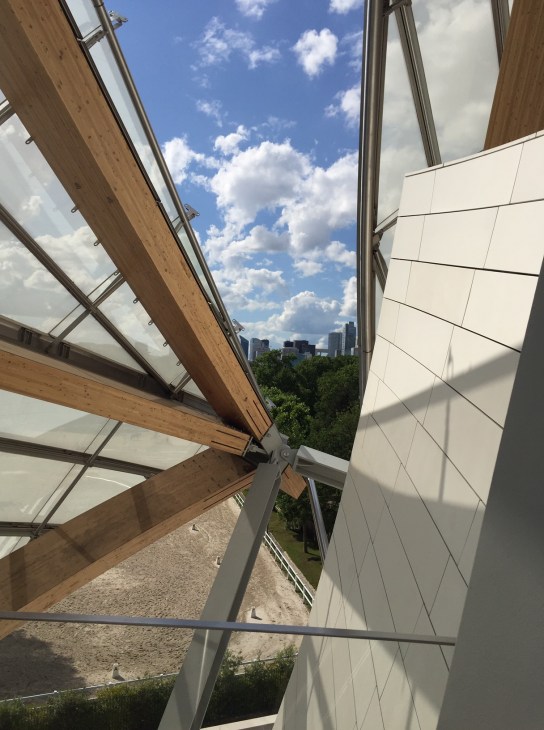
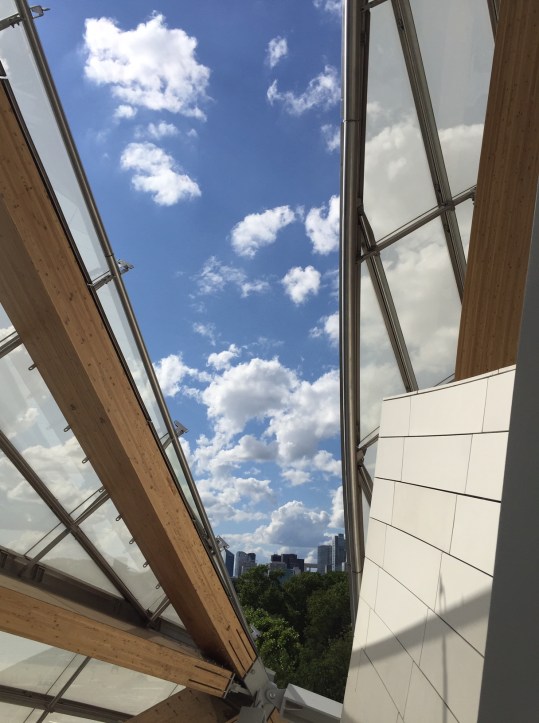
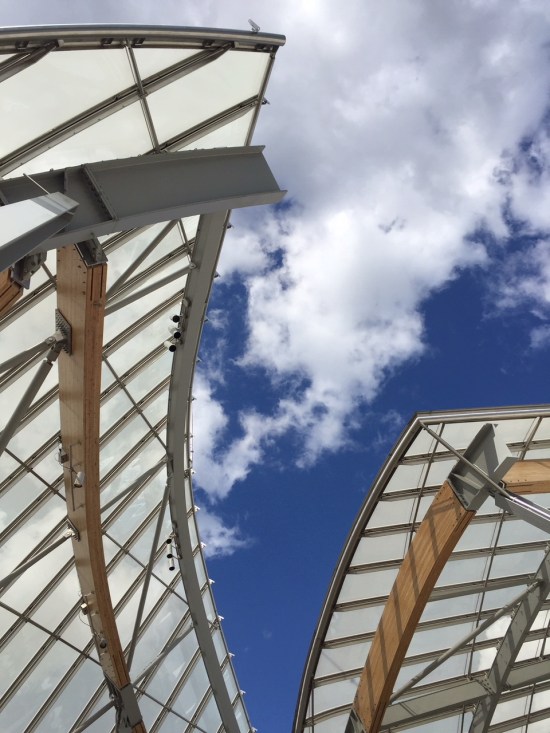
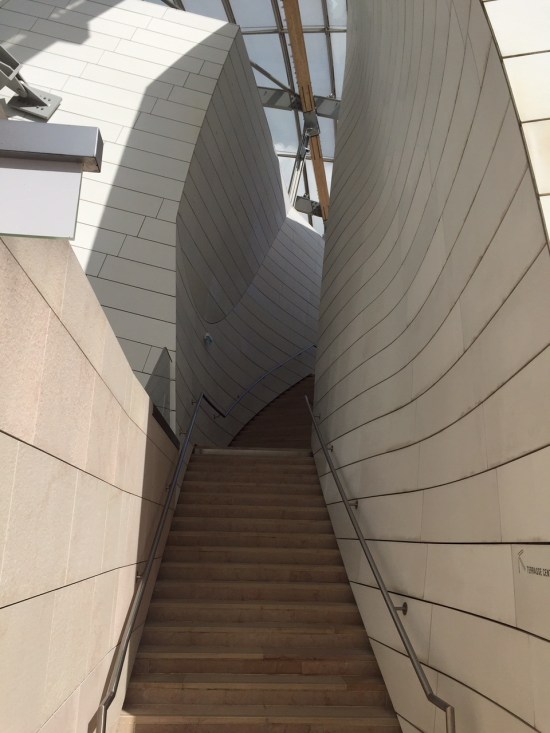
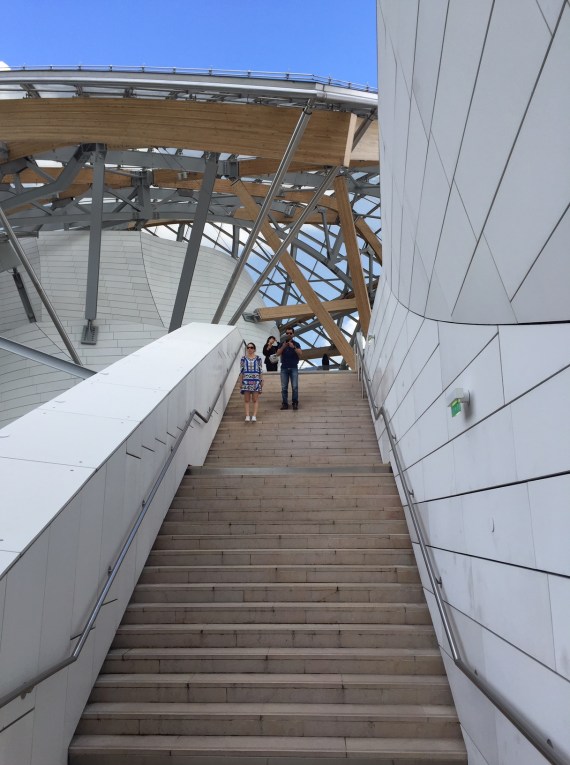
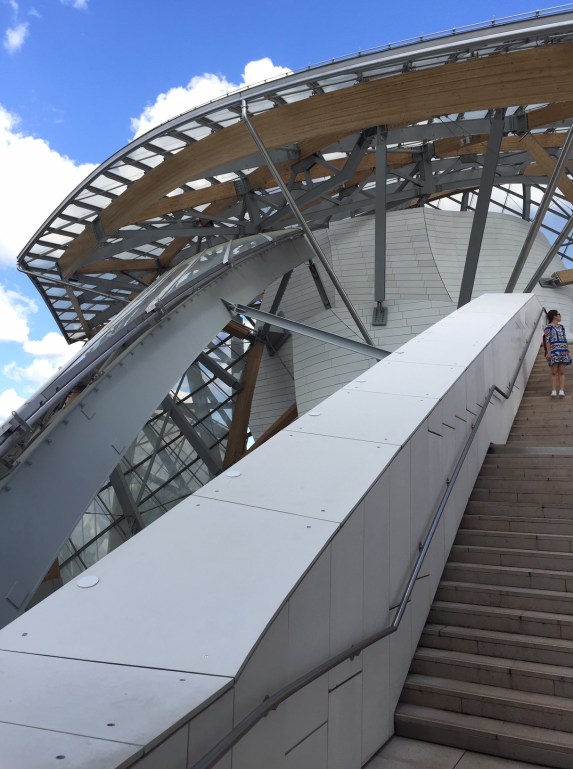
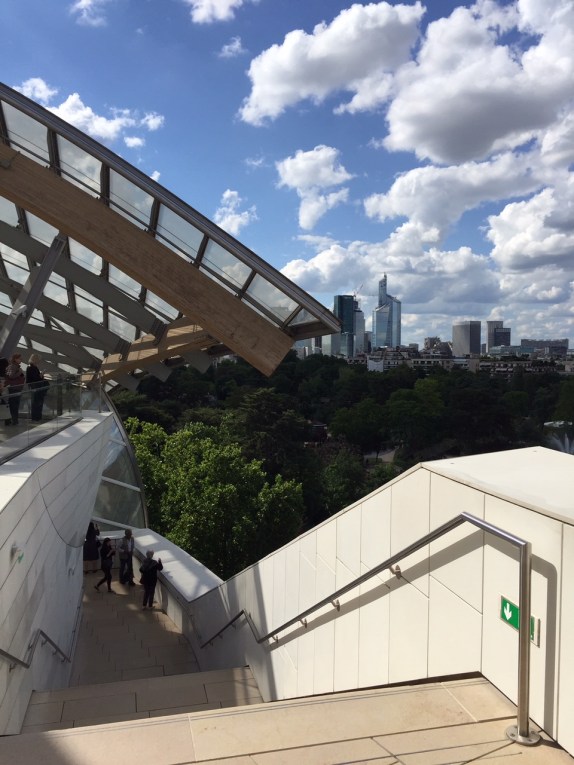
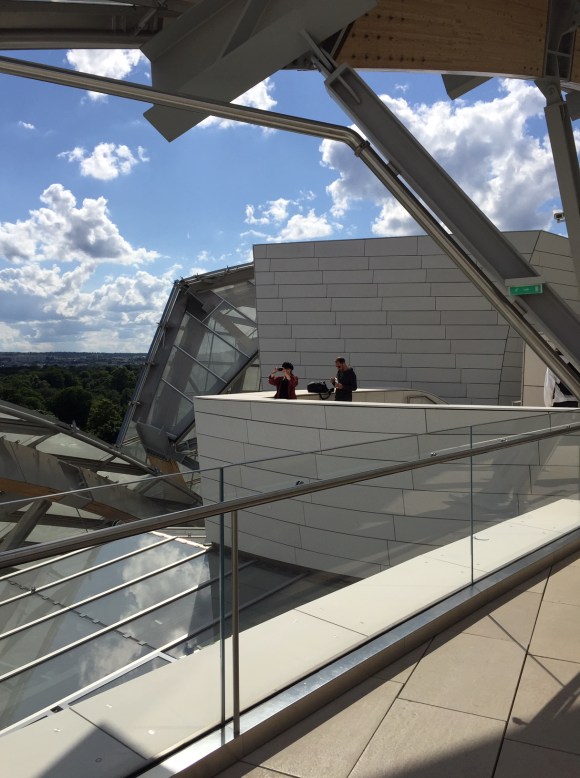
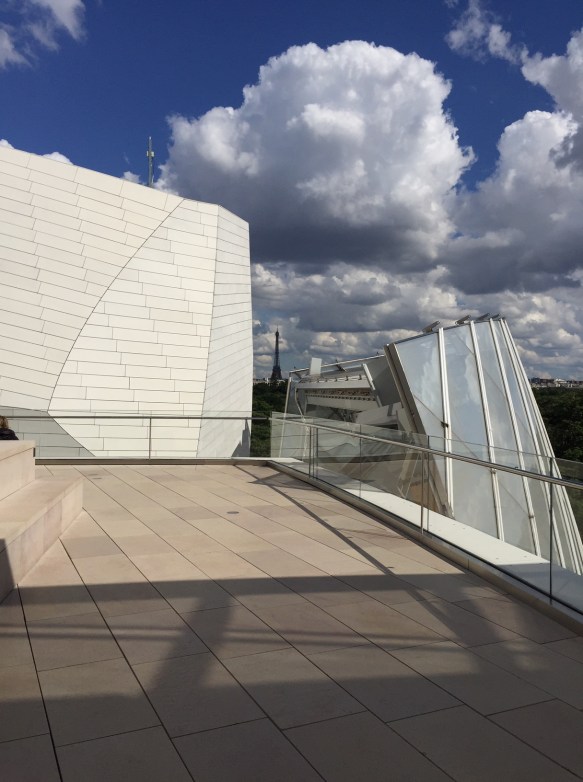
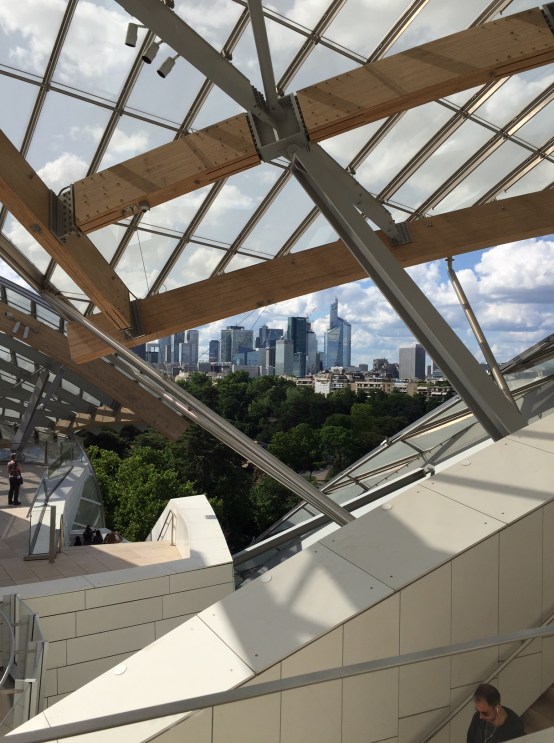
The building soars!
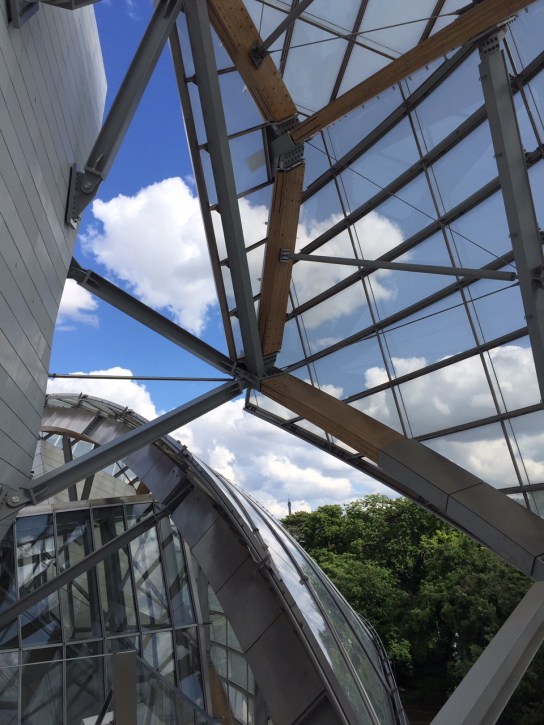
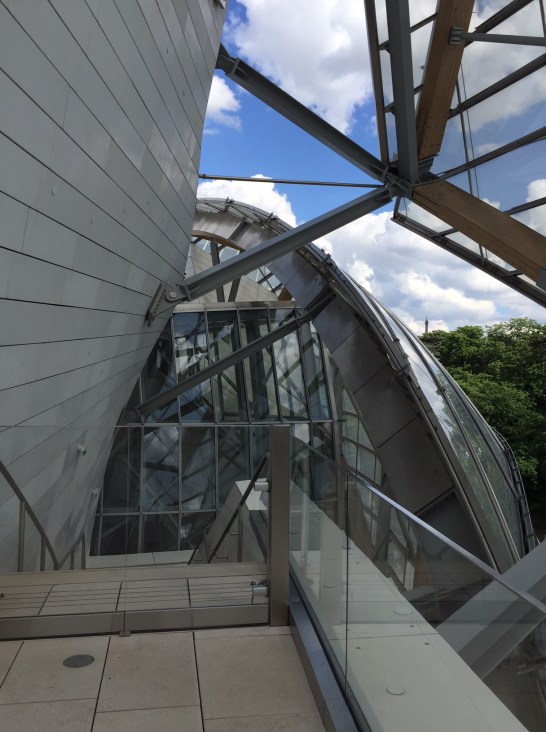
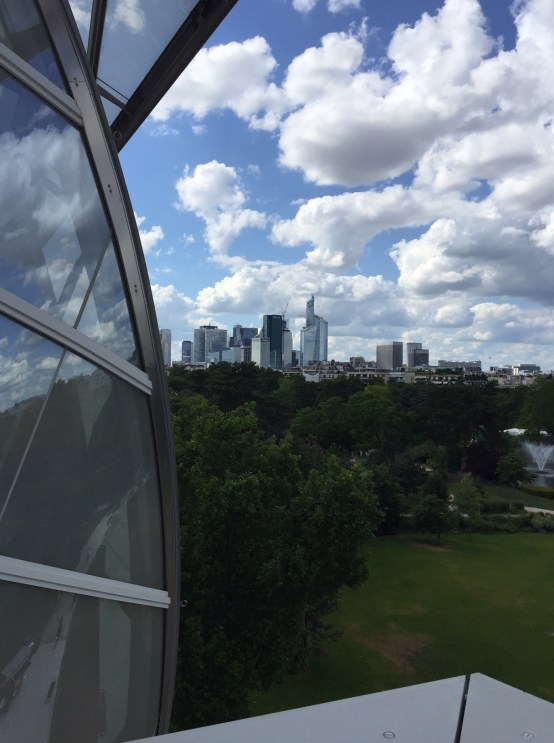
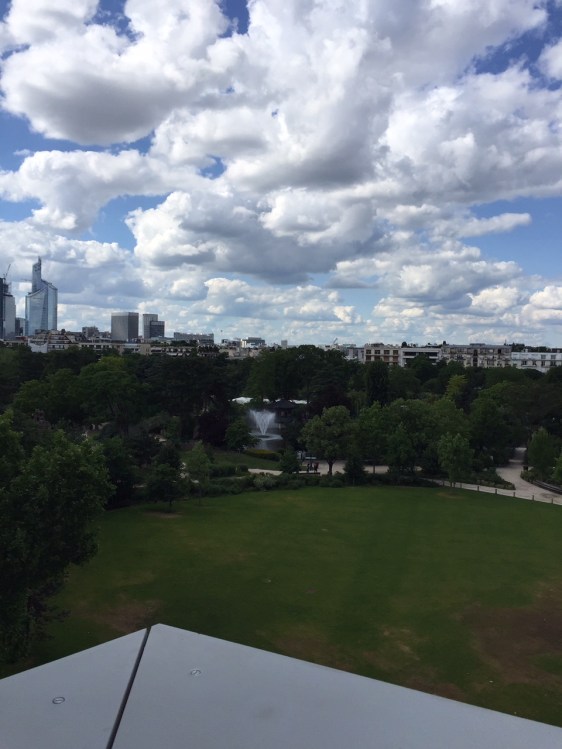
And it frames the sky and the park and city beyond it:
The following paragraphs are taken from the Fondation’s website:
“From an initial sketch drawn on a blank page in a notebook, to the transparent cloud sitting at the edge of the Jardin d’Acclimatation in the Bois de Boulogne, Frank Gehry constantly sought to “design, in Paris, a magnificent vessel symbolising the cultural calling of France.”
:A creator of dreams, he has designed a unique, emblematic and bold building.
Respectful of a history rooted in French culture of the 19th century, Frank Gehry dared to use technological achievements of the 21st century, opening the way for pioneering innovation.”
“Frank Gehry retained from the 19th century the transparent lightness of glass walls and the taste for walks punctuated by surprises.
“His architecture combines a traditional “art de vivre”, visionary daring and the innovation offered by modern technology.
“From the invention of glass curved to the nearest millimetre for the 3,600 panels that form the Fondation’s twelve sails to the 19,000 panels of Ductal (fibre-reinforced concrete), each one unique, that give the iceberg its immaculate whiteness, and not forgetting a totally new design process, each stage of construction pushed back the boundaries of conventional architecture to create a unique building that is the realisation of a dream.”
“This great architectural exploit has already taken its place among the iconic works of 21st-century architecture. Frank Gehry’s building, which reveals forms never previously imagined until today, is the reflection of the unique, creative and innovative project that is the Fondation Louis Vuitton.
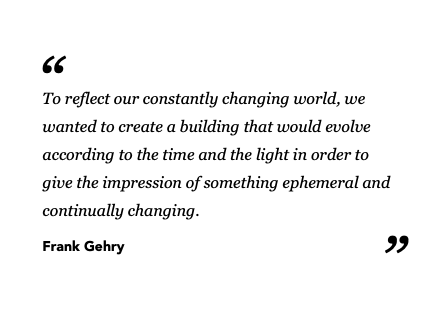
“To produce his first sketches, Frank Gehry took his inspiration from the lightness of late 19th-century glass and garden architecture. The architect then produced numerous models in wood, plastic and aluminium, playing with the lines and shapes, investing his future building with a certain sense of movement. The choice of materials became self-evident: an envelope of glass would cover the body of the building, an assembly of blocks referred to as the “iceberg”, and would give it its volume and its vitality.
“Placed in a basin specially created for the purpose, the building fits easily into the natural environment, between woods and garden, while at the same time playing with light and mirror effects. The final model was then scanned to provide the digital model for the project.”
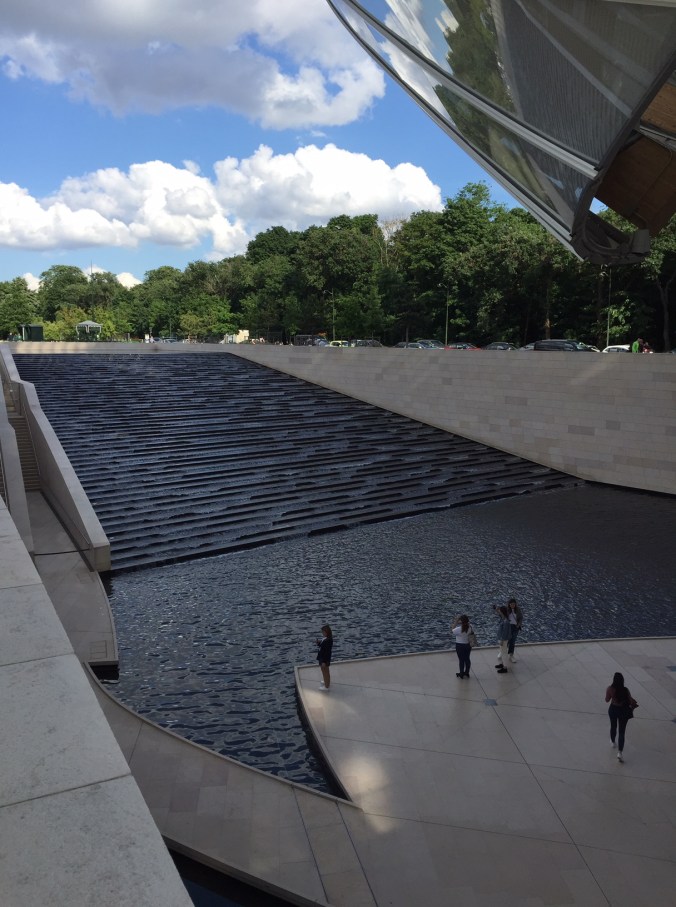
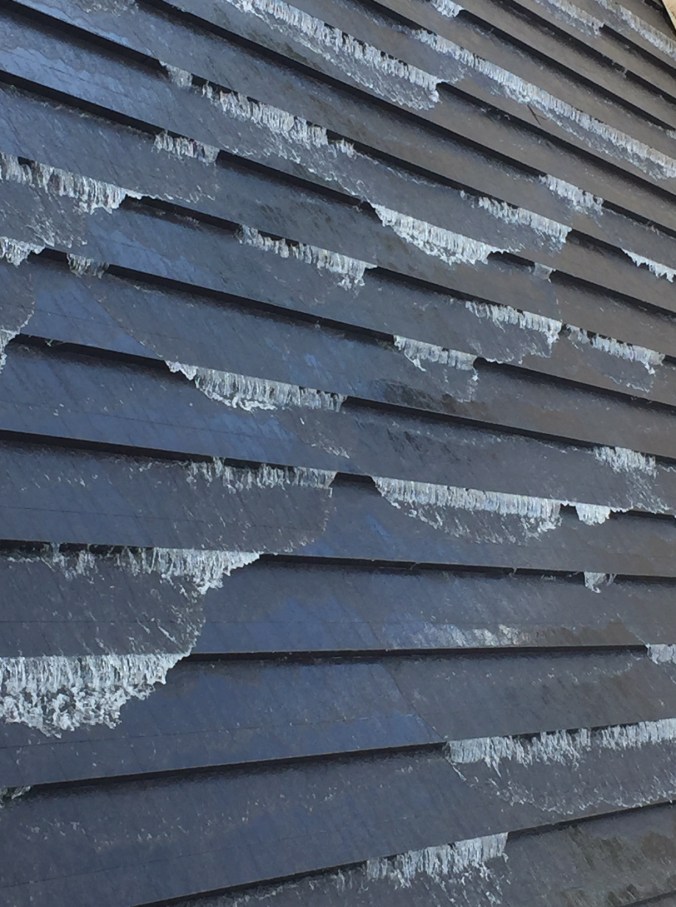
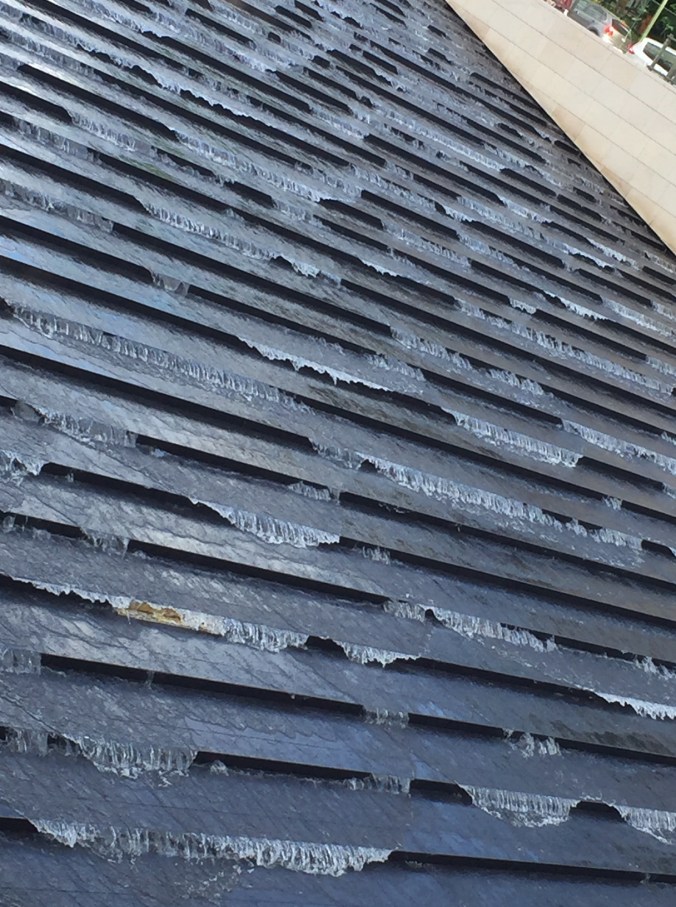
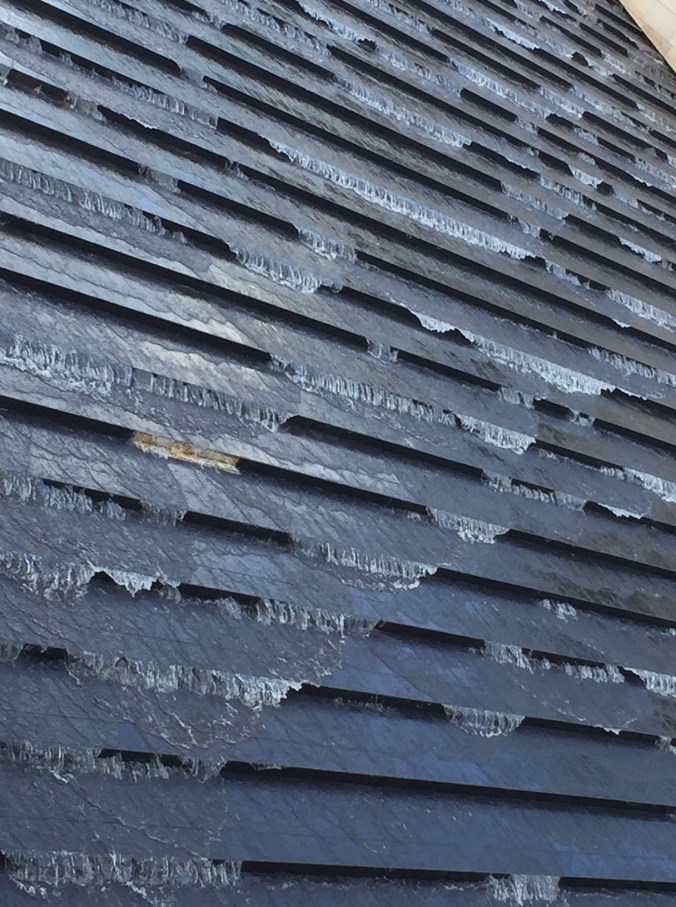
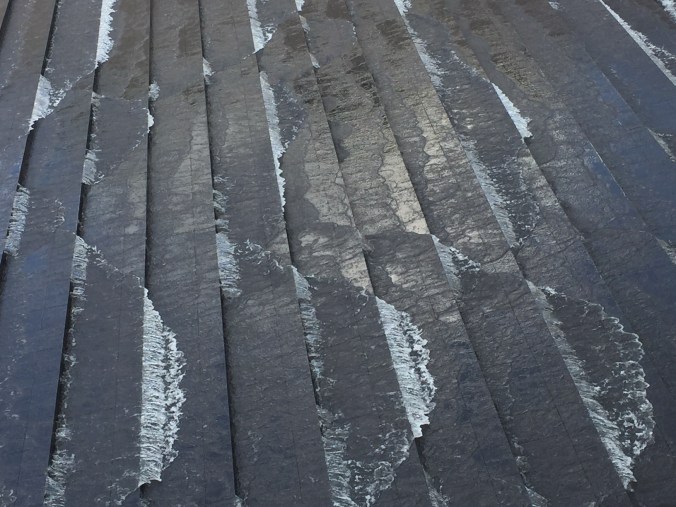
One of the many delights of Paris is the Fondation Louis-Vuitton pour la création with its exhibition spaces and fountain. I’ll be posting soon about the building itself, by Frank Gehry. But for now, I want to focus only on the water.
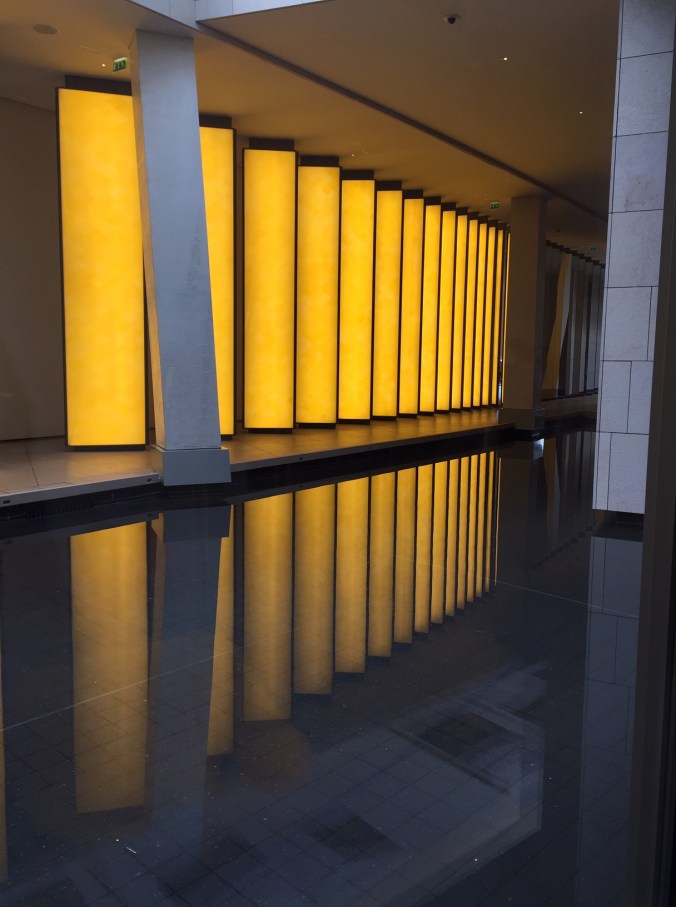
The water is also inside the building, sort of. The sound of the water from inside the building reminds me of Frank Lloyd Wright’s house in Pennsylvania: Falling Water.
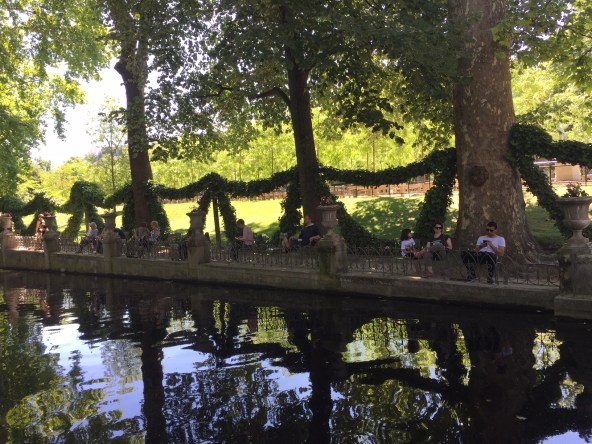
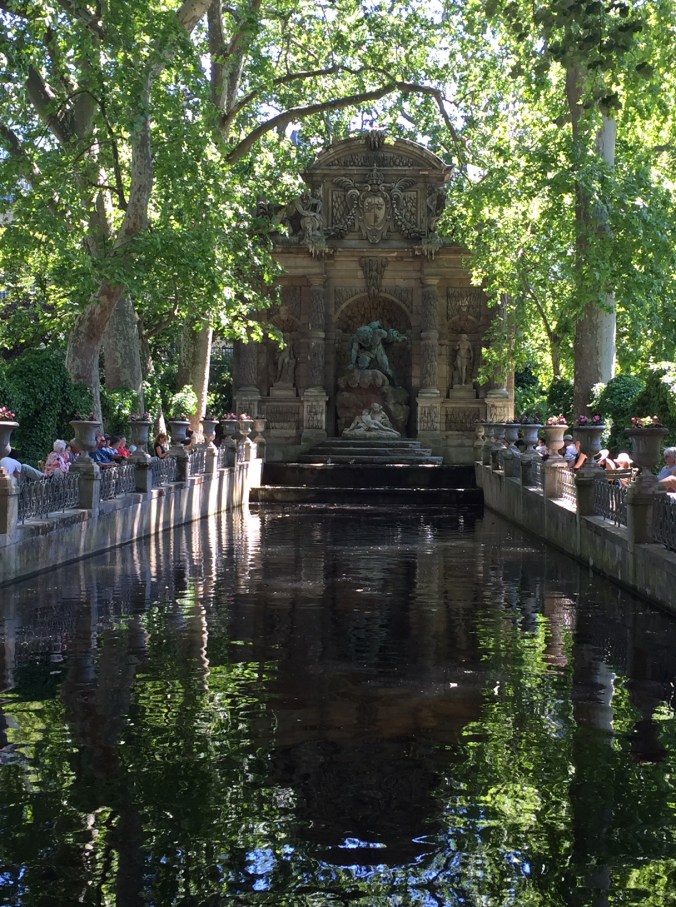
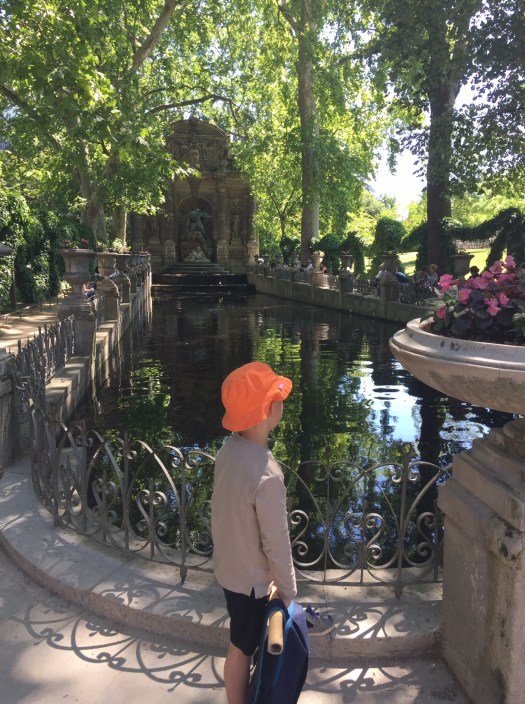
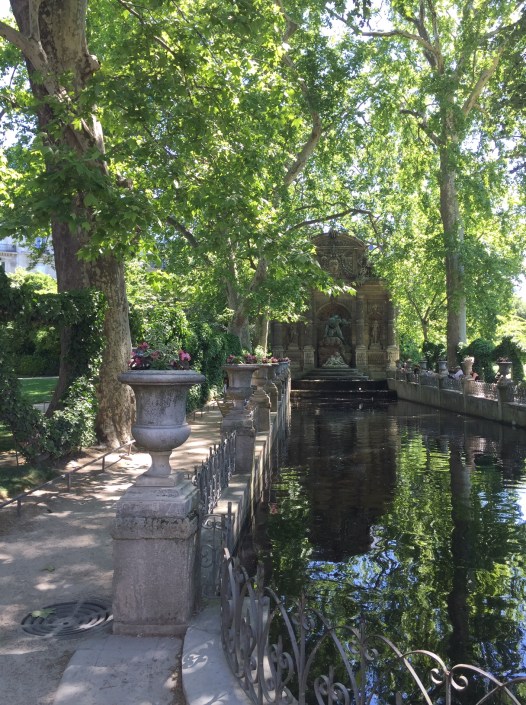
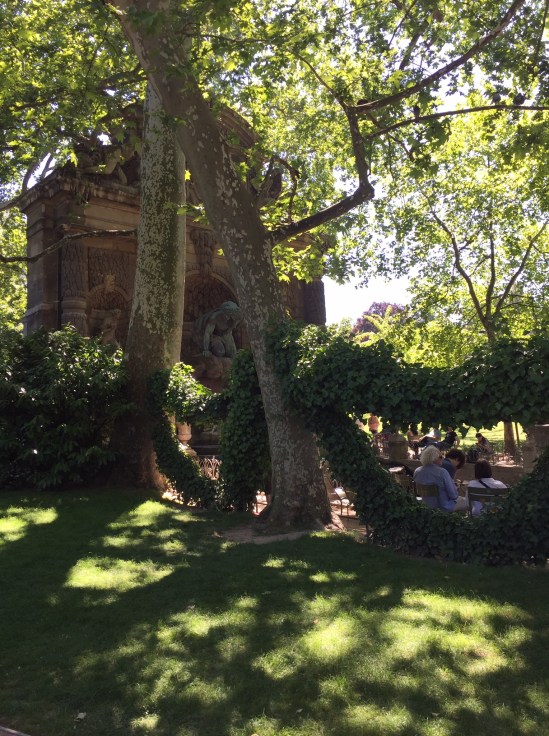
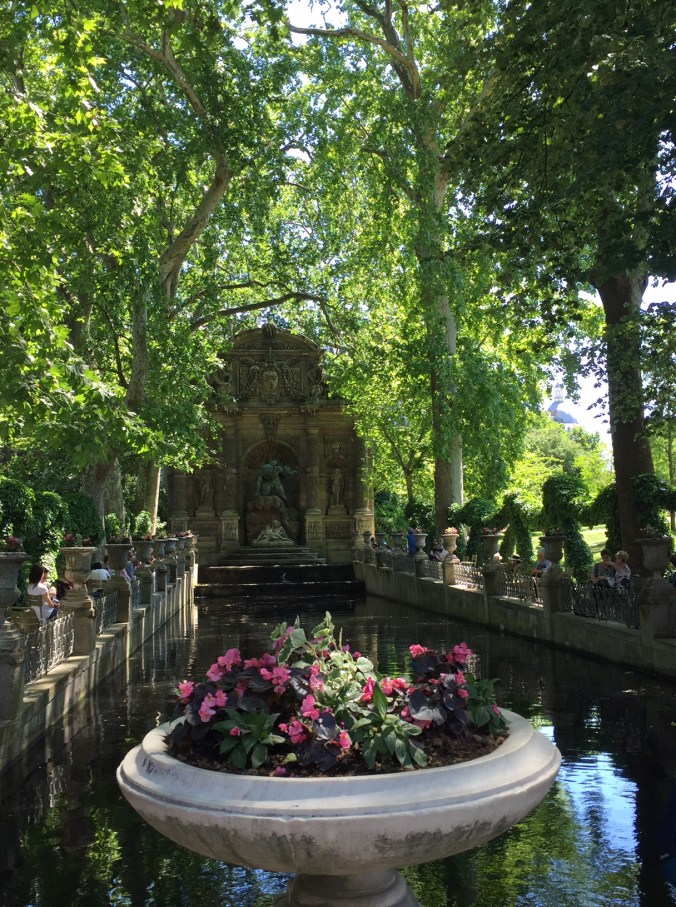
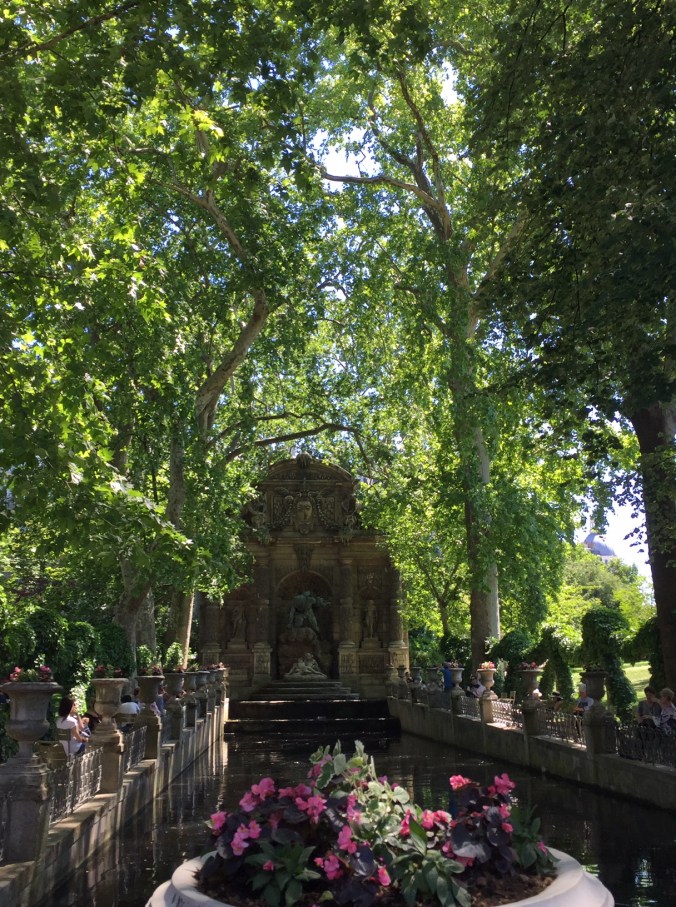
The artistic interchanges between Italy and France form a fascinating story. No where are they better expressed, at least to my mind, than in the Medici Fountain, commissioned by Marie de’ Medici at in the Luxembourg Garden in 1630. The fountain has a 3-part history: 1. its original construction; 2. its restoration by Napoleon; and 3. the relocation and additions of sculpture in 1866.
Marie de’ Medici was the widow of France’s King Henry IV and the regent of King Louis XIII of France.
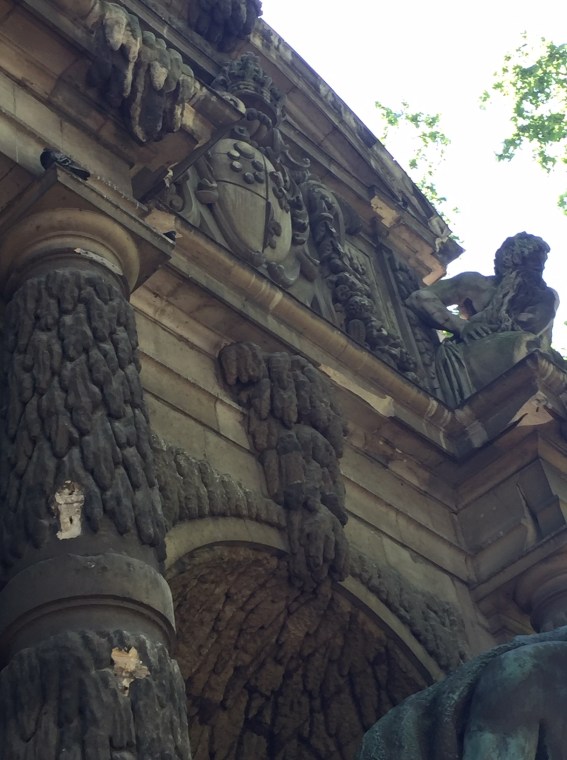
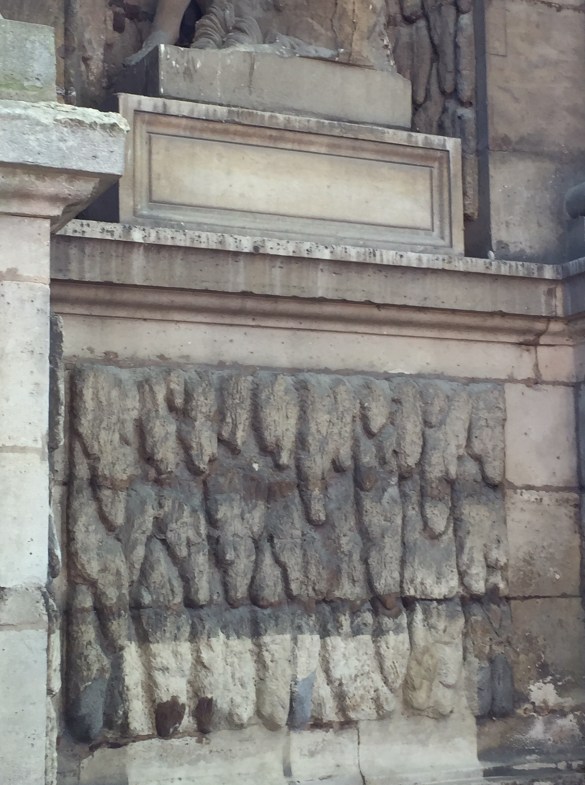
The fountain in the Luxembourg garden was designed by Tommaso Francini, a Florentine fountain maker and hydraulic engineer who was brought from Florence to France by King Henry IV. The fabulous fountain was constructed in the form of a grotto, a popular feature of the Italian Renaissance garden.
The French queen was born as Maria at the Palazzo Pitti in Florence, Italy. She was the sixth daughter of Francesco I de’ Medici, Grand Duke of Tuscany, and Archduchess Joanna of Austria. Marie was not a male-line descendant of Lorenzo the Magnificent but from Lorenzo the Elder, a branch of the Medici family sometimes referred to as the ‘cadet’ branch. She did descend from Lorenzo in the female-line however, through his daughter Lucrezia de’ Medici. She was also a Habsburg through her mother, who was a direct descendant of Joanna of Castile and Philip I of Castile.
Although Marie was one of seven children, only she and her sister Eleonora survived to adulthood.
She married Henry IV of France in October 1600 following the annulment of his marriage to Margaret of Valois. The wedding ceremony was held in Florence, and was celebrated by four thousand guests with lavish entertainment, including examples of the newly invented musical genre of opera, such as Jacopo Peri’s Euridice. Henry did not attend the ceremony, and the two were therefore married by proxy. Marie brought as part of her dowry 600,000 crowns. Her eldest son, the future King Louis XIII, was born at Fontainebleau the following year.
Her husband was almost 47 at the time of the marriage and had a long succession of mistresses. Dynastic considerations required him to take a second wife, his first spouse Margaret of Valois never having produced children by Henry or by her lovers. Henry chose Marie de’ Medici because Henry owed the bride’s father, Francesco de’ Medici, Grand Duke of Tuscany, who had helped support his war effort, a whopping 1,174,000 écus and this was the only means Henry could find to pay back the debt.
The marriage was successful in producing children, but it was not a happy one. The queen feuded with Henry’s mistresses in language that shocked French courtiers. She quarreled mostly with her husband’s leading mistress, Catherine Henriette de Balzac d’Entragues, whom he had promised he would marry following the death of his former “official mistress”, Gabrielle d’Estrées. When he failed to do so, and instead married Marie, the result was constant bickering and political intrigues behind the scenes.
Catherine referred to Maria as “the fat banker’s daughter”; Henry used Maria for breeding purposes exactly as Henry II had treated Catherine de’ Medici. Although the king could have easily banished his mistress, supporting his queen, he never did so. She, in turn, showed great sympathy and support to her husband’s banished ex-wife Marguerite de Valois, prompting Henry to allow her back into the realm.
Marie was crowned Queen of France on 13 May 1610, a day before her husband’s death. Hours after Henry’s assassination, she was confirmed as regent by the Parliament of Paris. She immediately banished his mistress, Catherine Henriette de Balzac, from the court.
The construction and furnishing of the Palais du Luxembourg, which she referred to as her “Palais Médicis”, formed her major artistic project during her regency. The site was purchased in 1612 and construction began in 1615, to designs of Salomon de Brosse.
It was well known that Henry of Navarre (her husband) was not wealthy. She brought her own fortune from Florence to finance various construction projects in France. But more importantly, she contributed to the financing of several expeditions including Samuel de Champlain’s to North America, which saw France lay claim to Canada.
In 1612 Marie de’ Medici had 2,000 elm trees planted, and directed a series of gardeners, most notably Tommaso Francini, to build a park in the style she had known as a child in Florence.
Francini planned two terraces with balustrades and parterres laid out along the axis of the chateau, aligned around a circular basin. He also built the Medici Fountain to the east of the palace as a nympheum, an artificial grotto and fountain, without its present pond and statuary.
The Medici Fountain fell into ruins during the 18th century, but in 1811, at the command of Napoleon Bonaparte, the fountain was restored by Jean Chalgrin, the architect of the Arc de Triomphe.
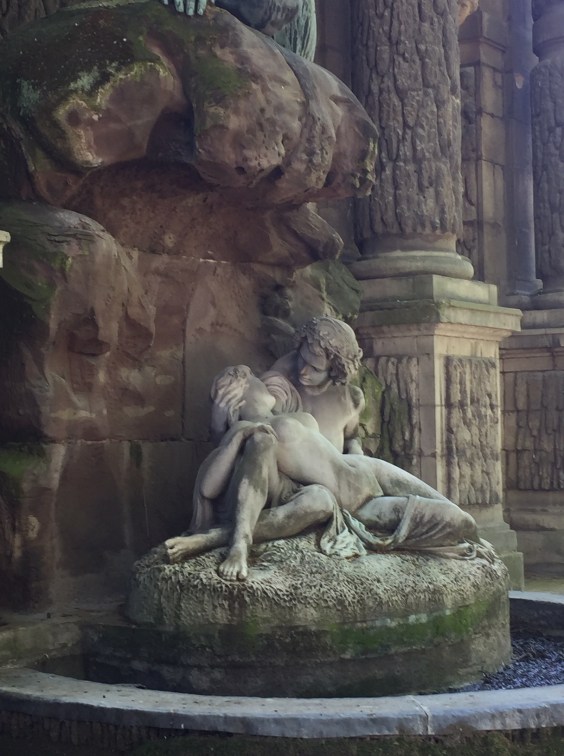
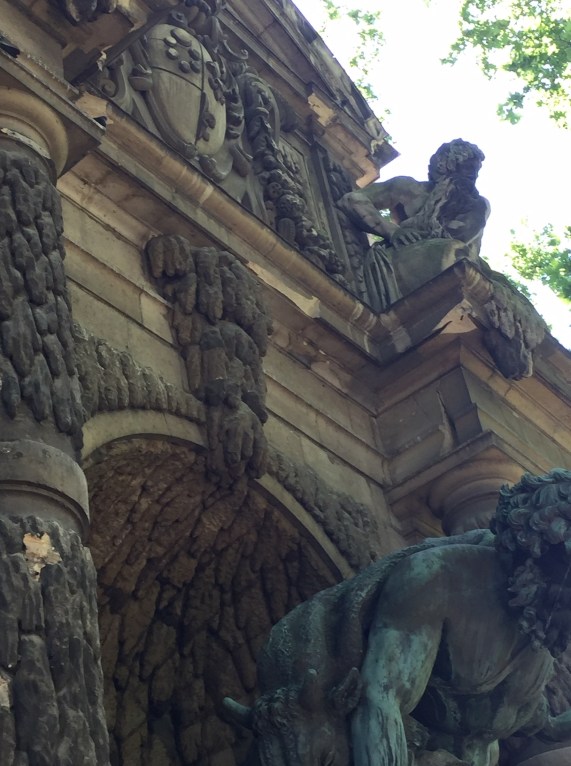
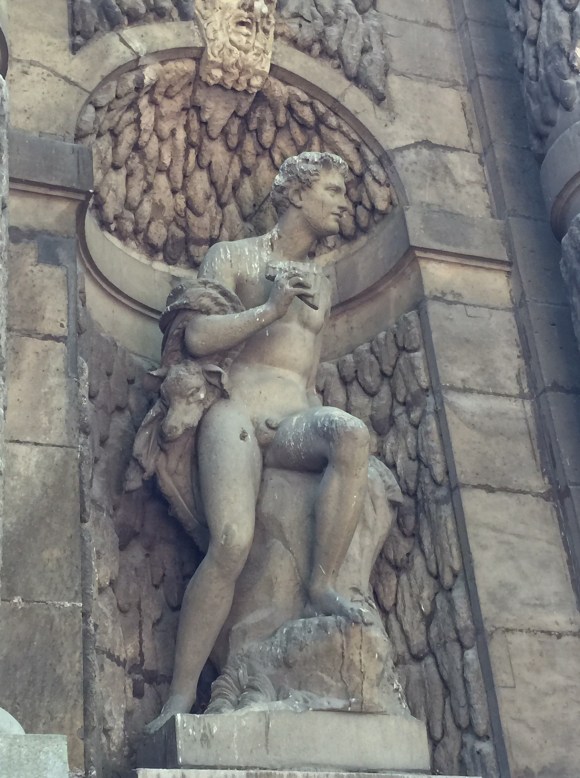
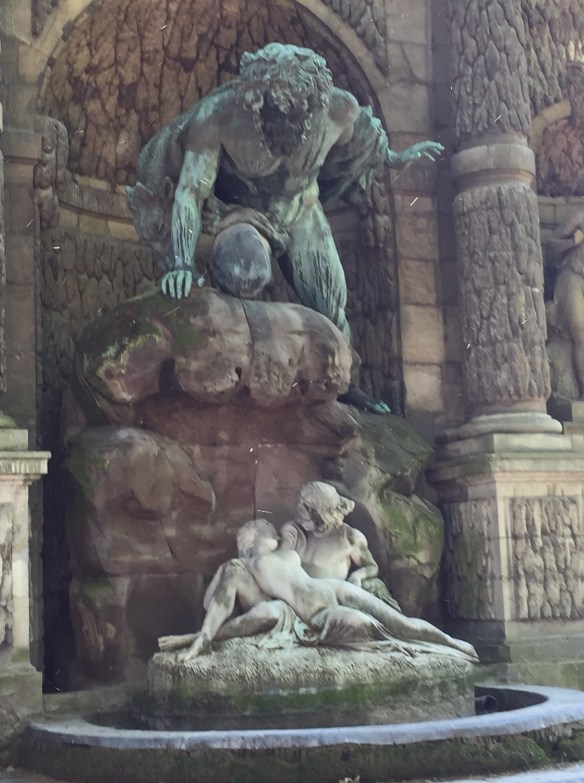
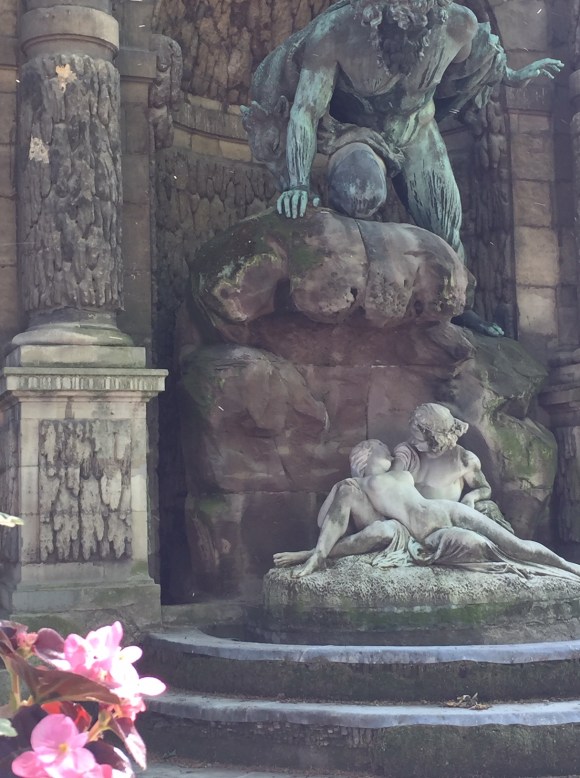
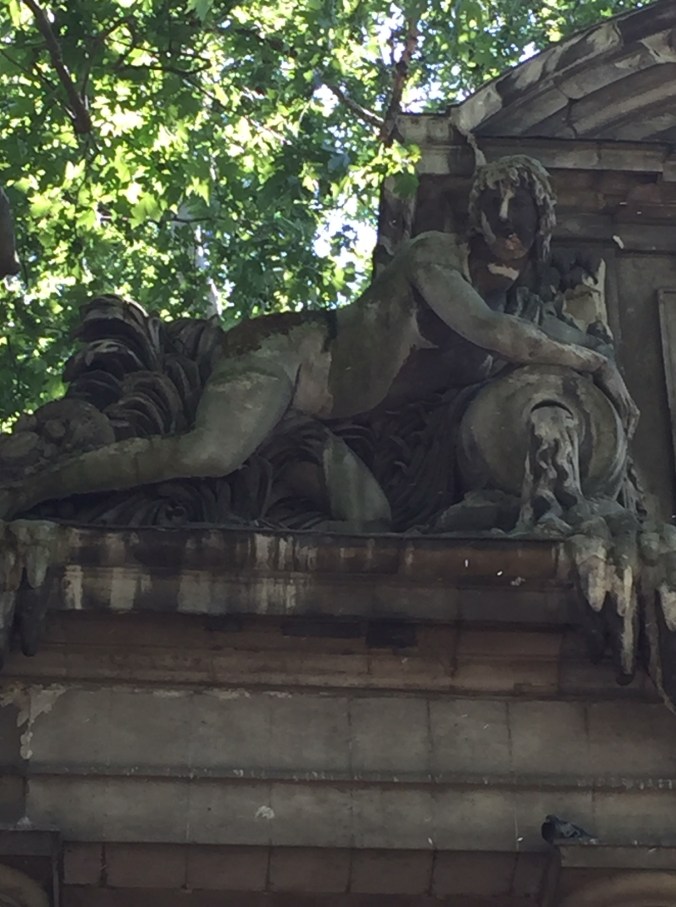
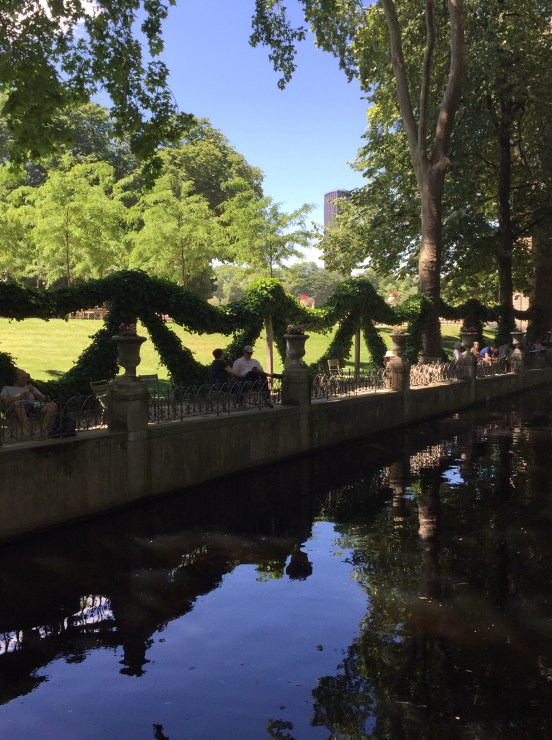
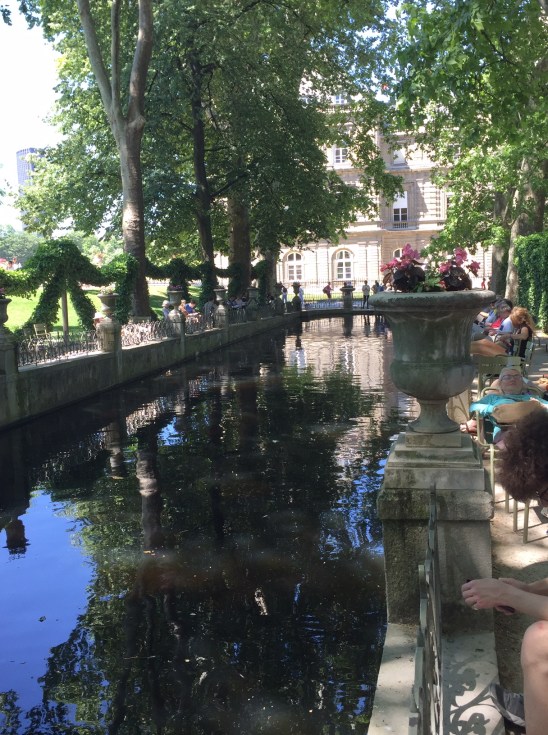
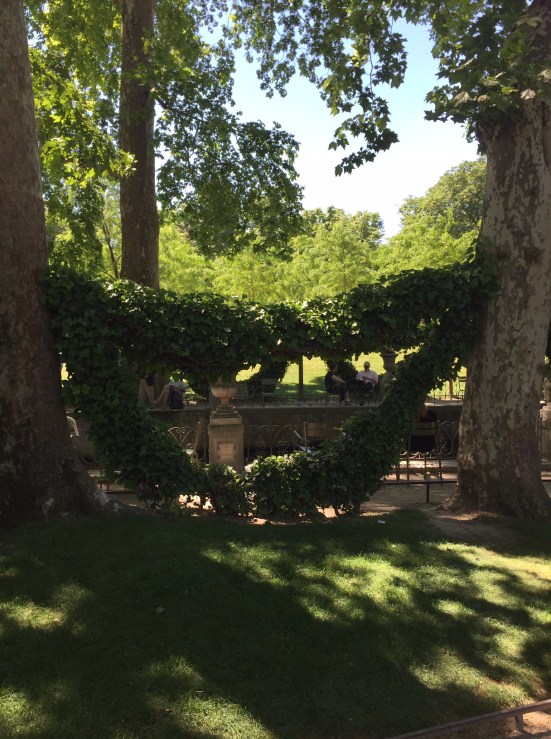
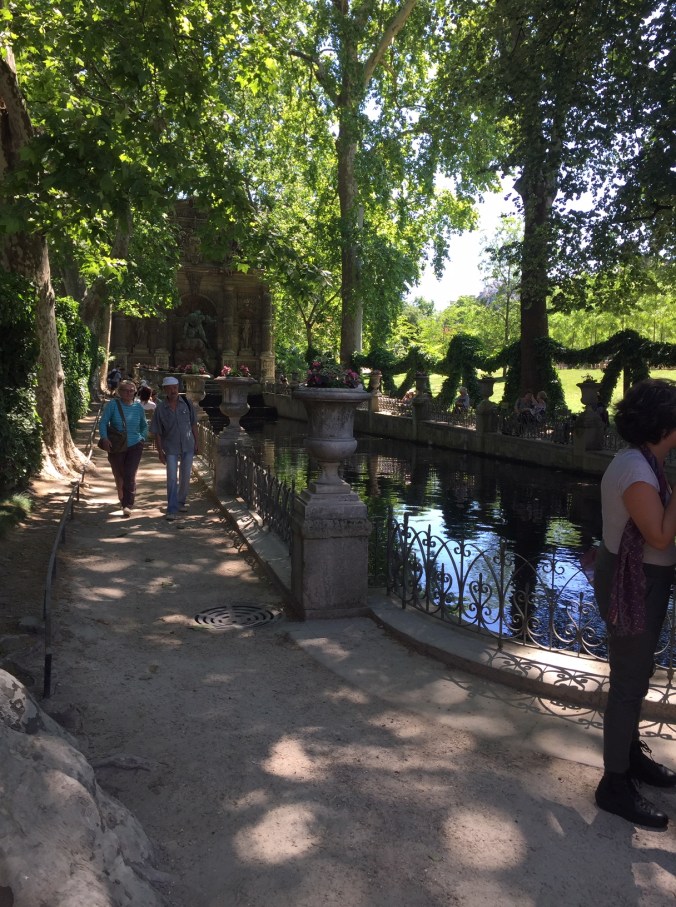
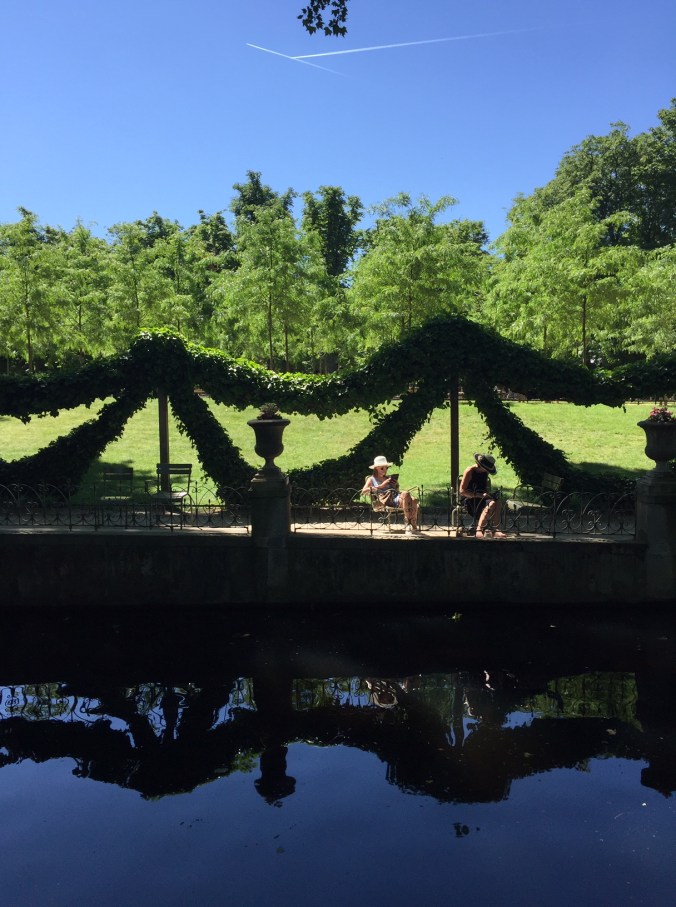
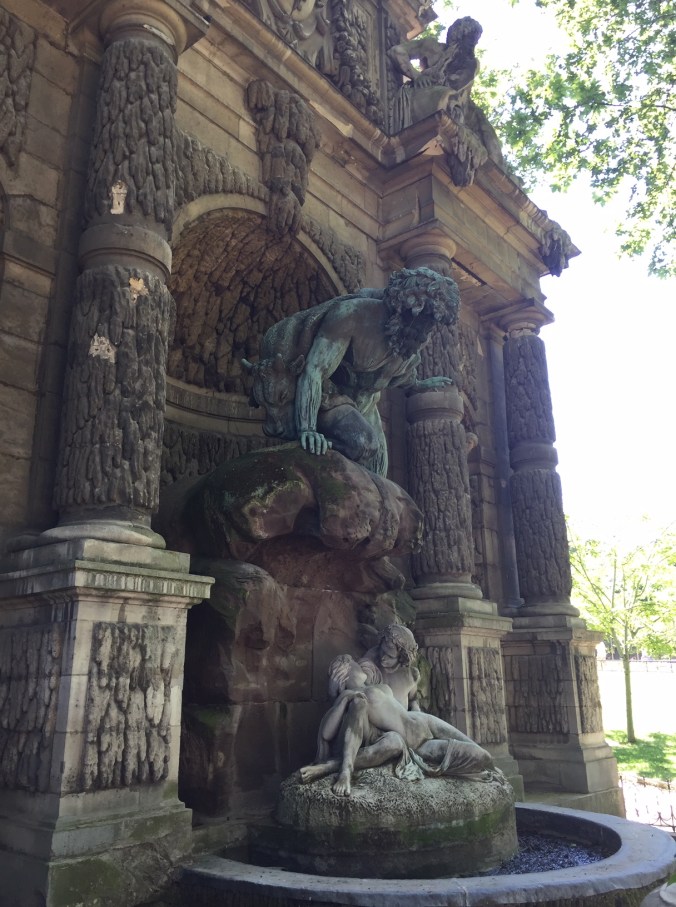
In 1864-66, the fountain was moved to its present location, centered on the east front of the Palais du Luxembourg. The long basin of water was built and flanked by plane trees, and the sculptures of the giant Polyphemus surprising the lovers Acis and Galatea, by French classical sculptor Auguste Ottin, were added to the grotto’s rockwork.
I took the afternoon to walk around with no precise goal, or flâneuseing (the female equivalent of loitering and looking in the urban space from the verb flâneur) as they say in French, in beautiful Paris and here’s what I saw:
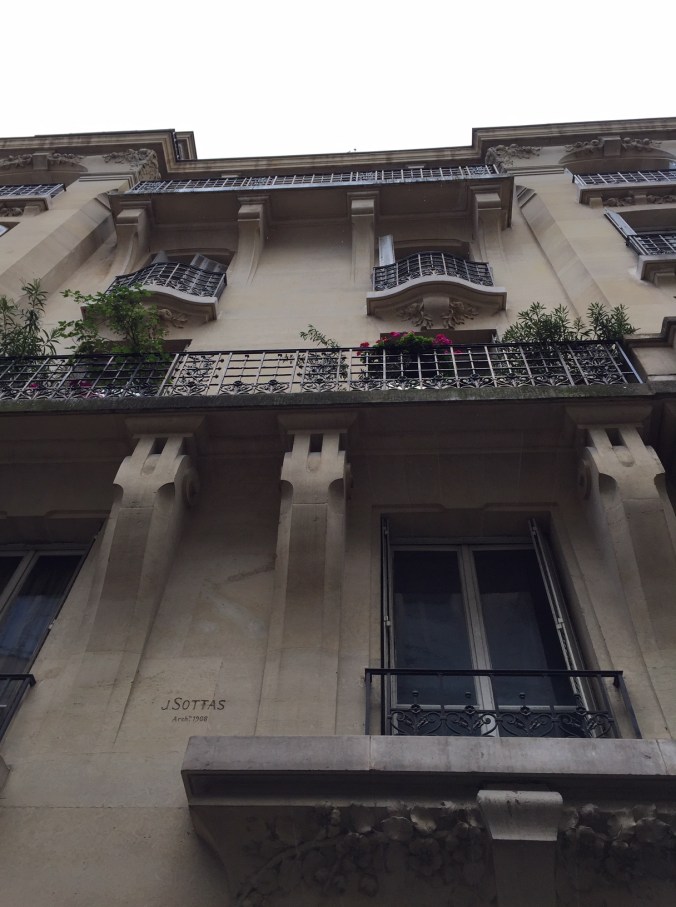
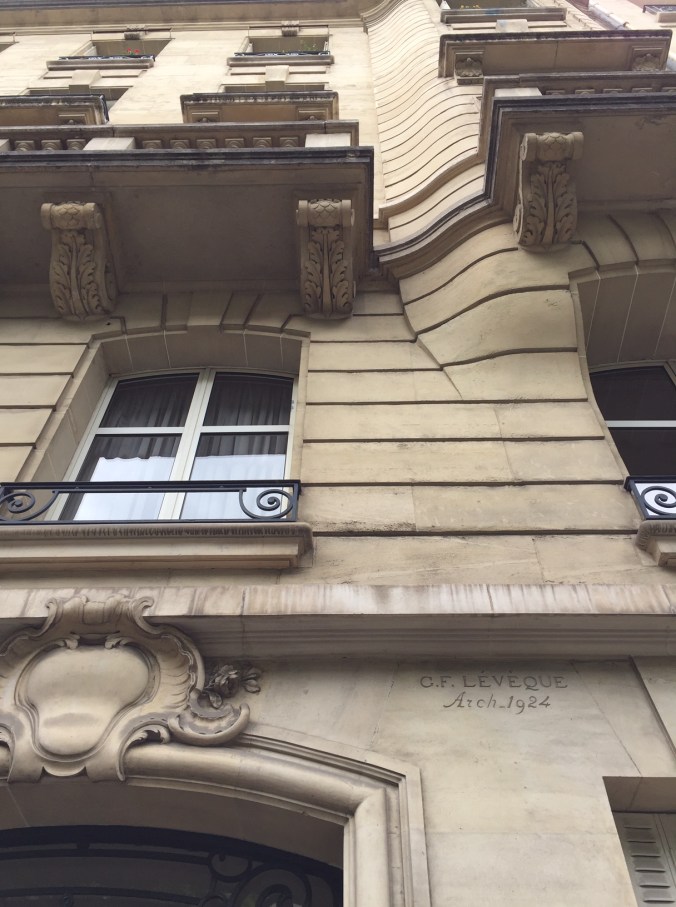
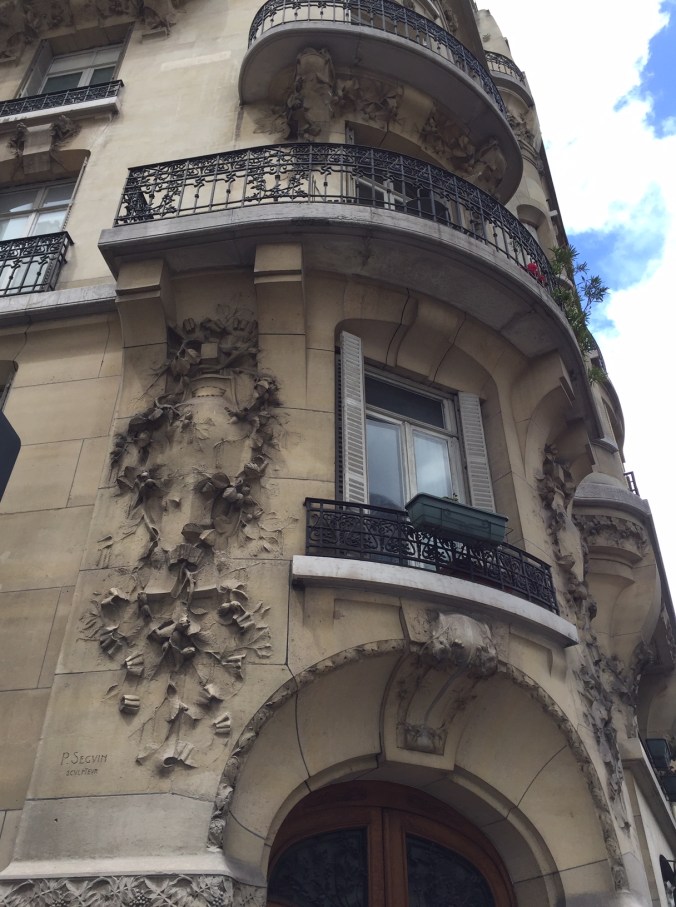
I love how Paris has a tradition of giving the architect’s name and date of construction on beautiful old buildings. J. Sottsas, 1908 for the building below:
Here’s another one from 1924:
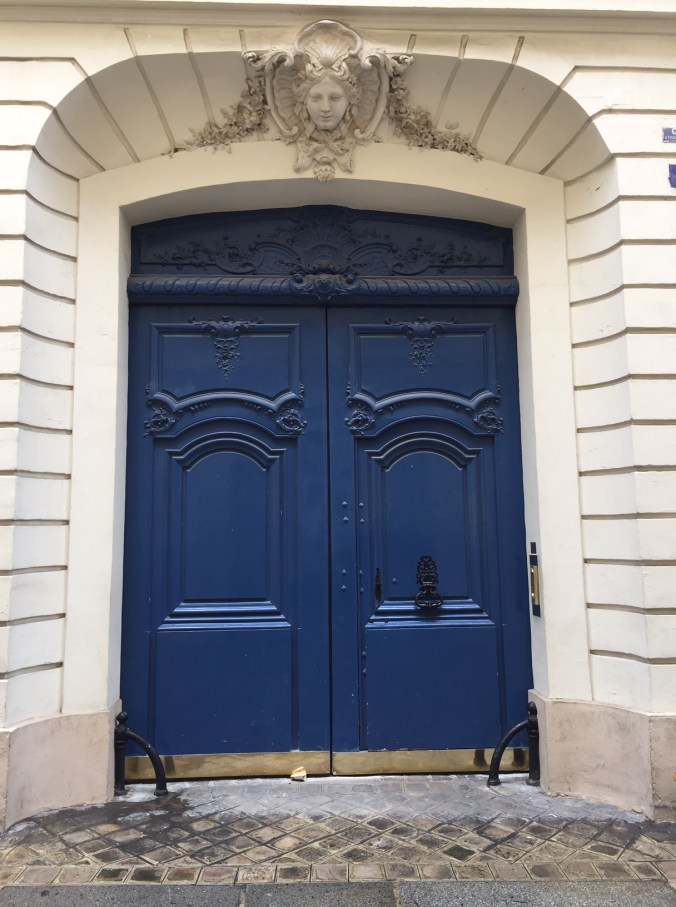
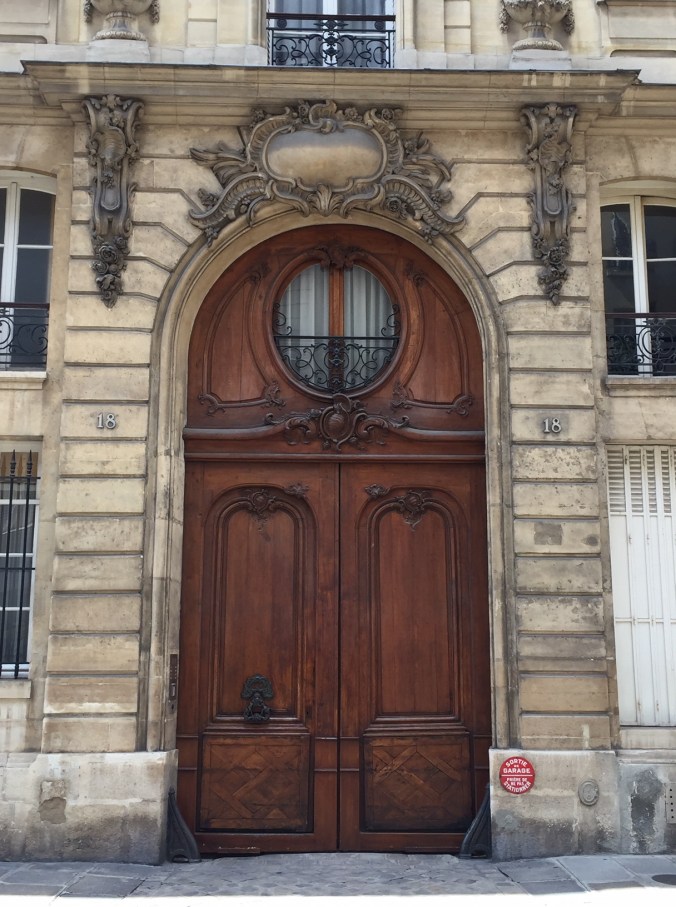
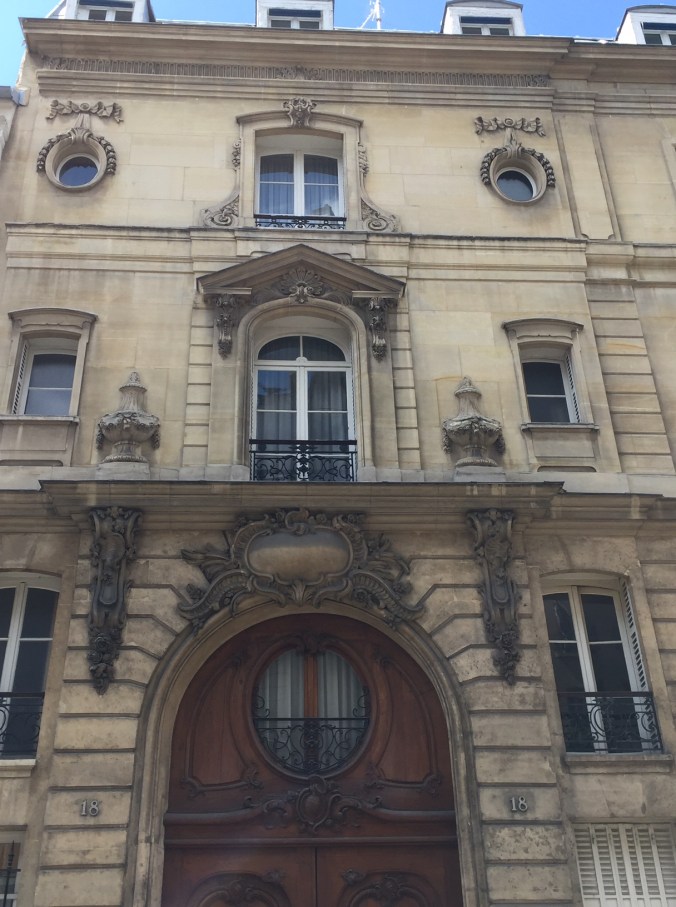
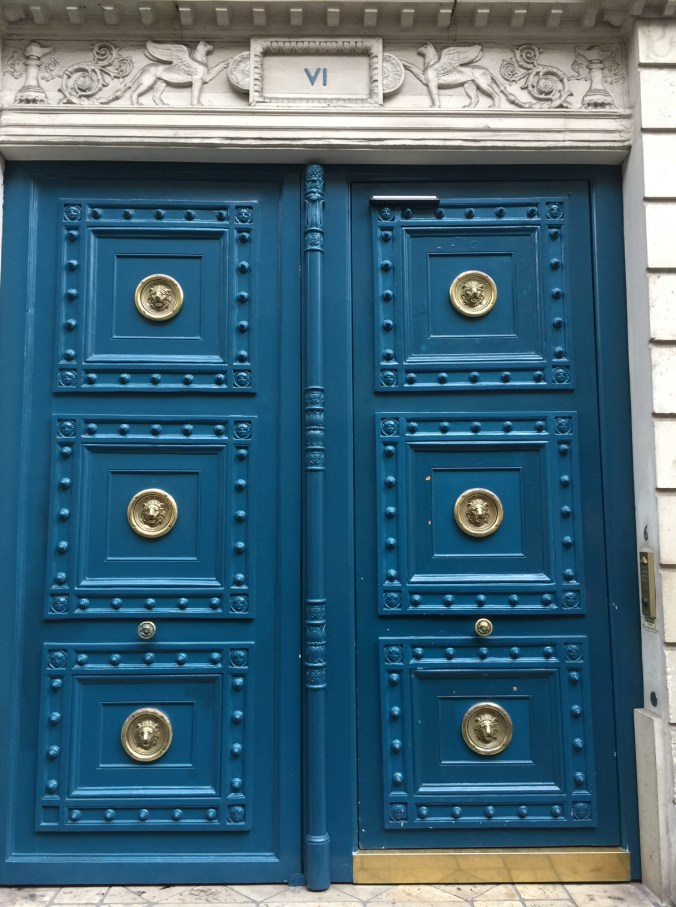
Parisian doorways. What can I say? Nothing, just look:
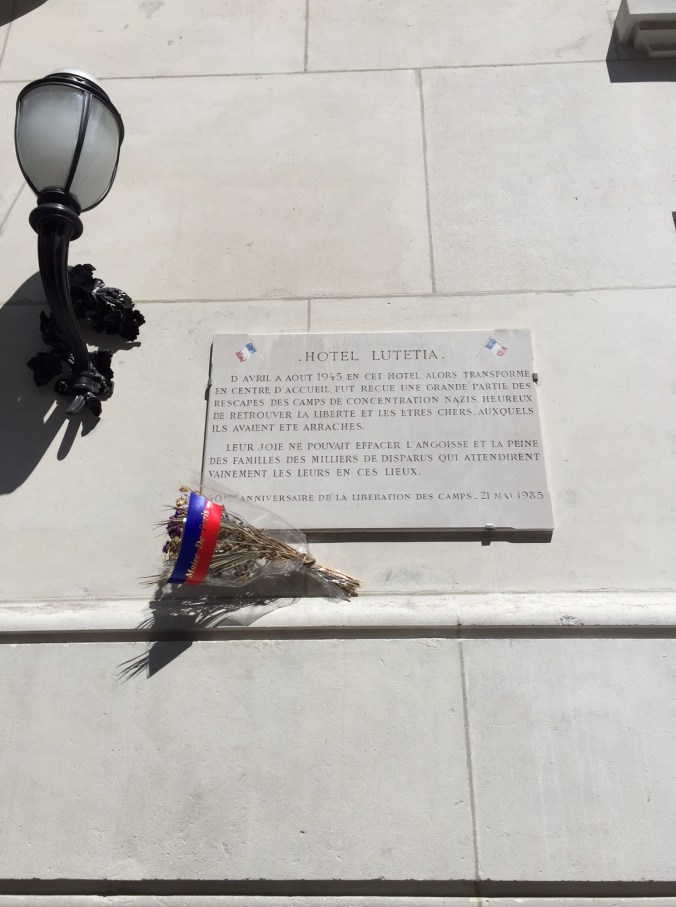
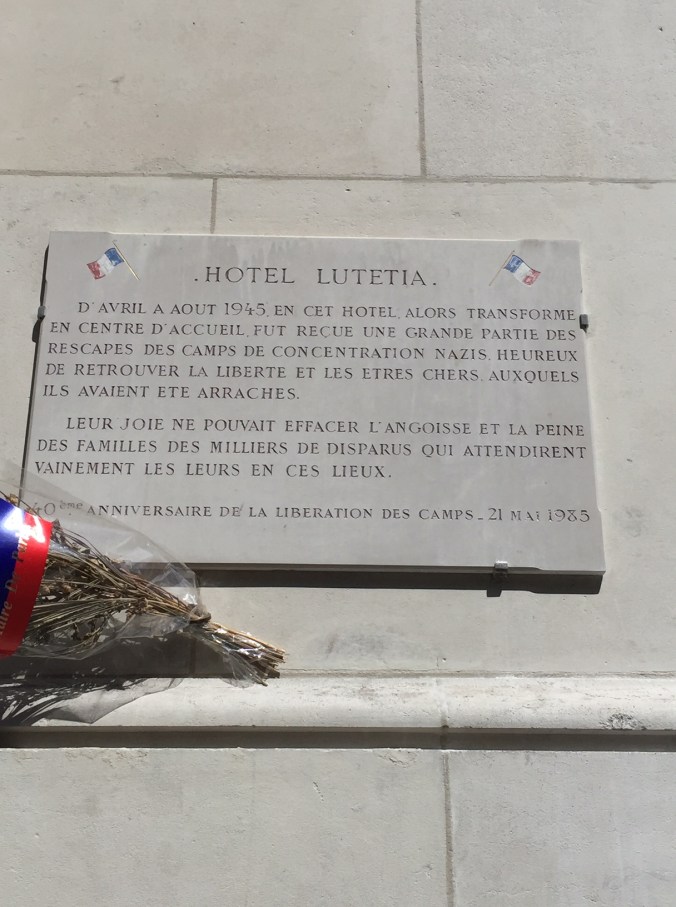
Also, I love the plaques, set in the stones, giving the history of these places. The one below marks the liberation of the death camps from the Nazis. It is so sad that almost no one notices, let alone reads these signs. But they are there, silent remembrance.
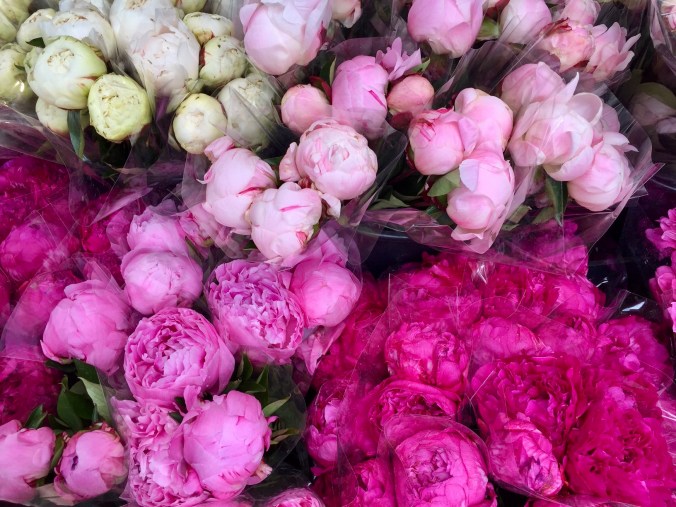
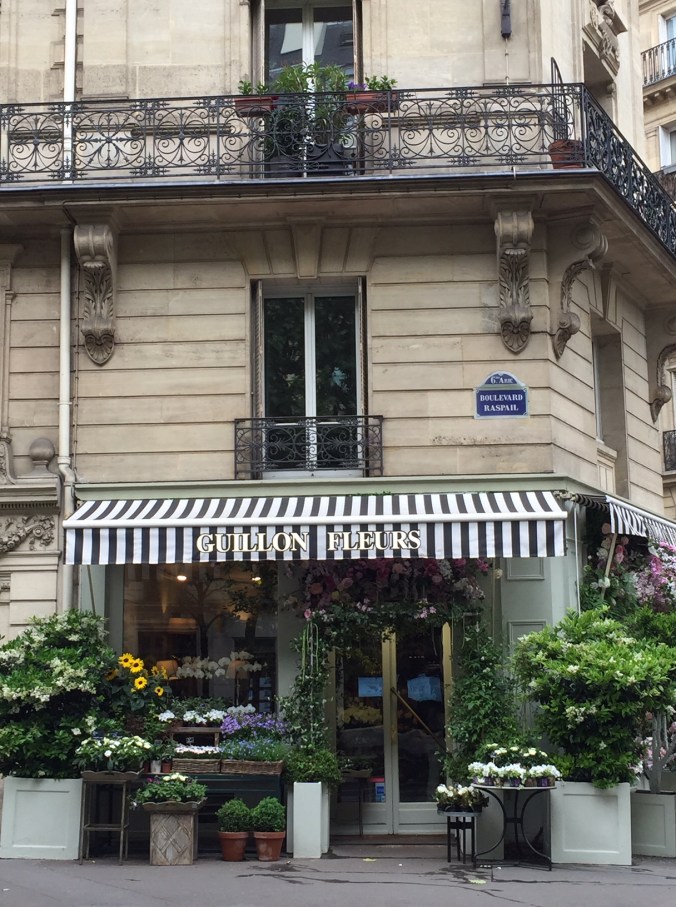
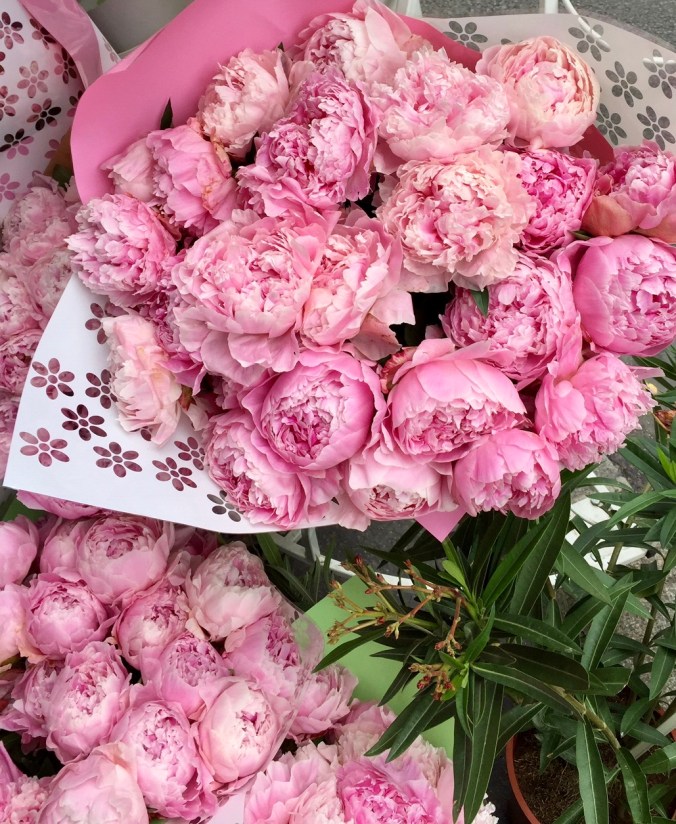
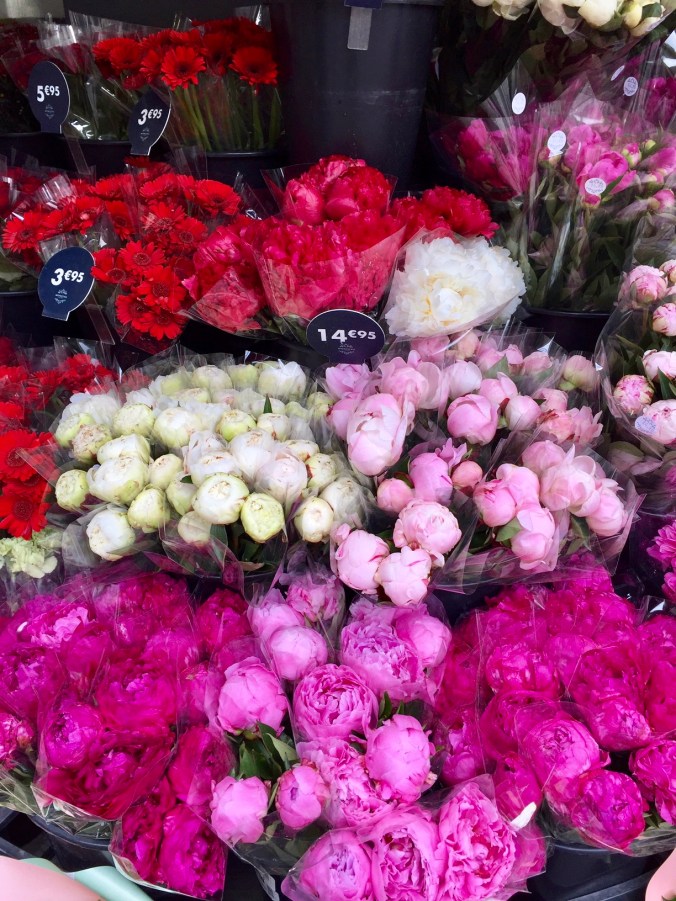
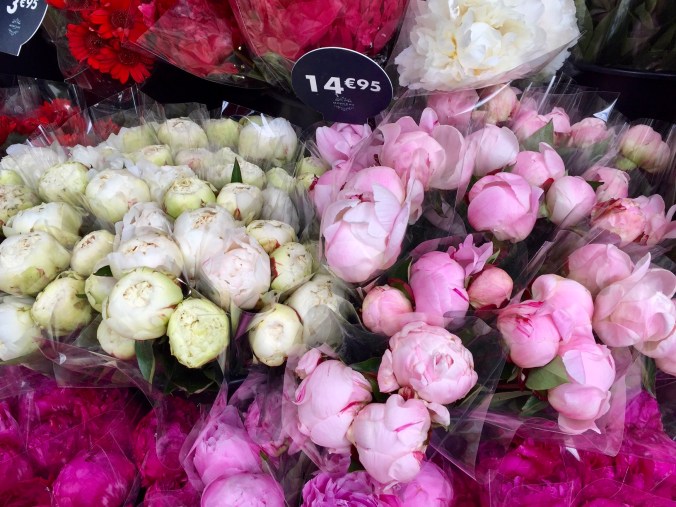
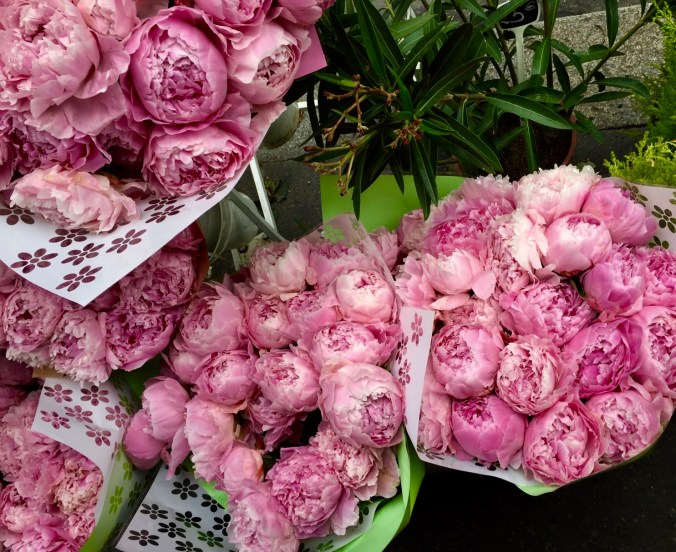
Of course I love all Parisian flower shops:
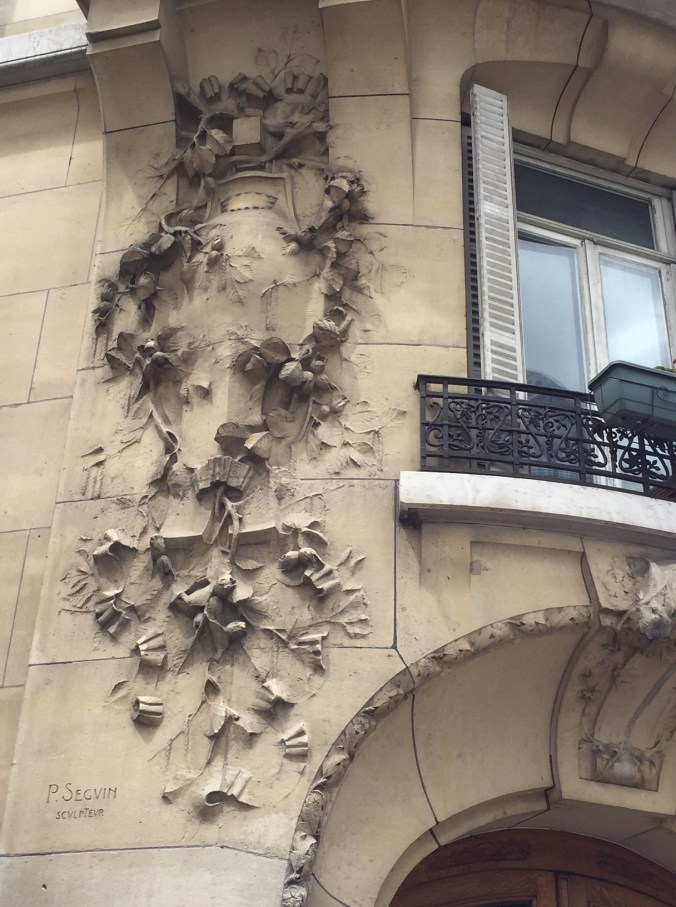
And I love the fact that often, when there is striking sculpture on the exterior of an hotel, the sculptor will sign his name, just like the architects show above.
I like to see how the modern has been made to blend in with the old Parisian style of home building:
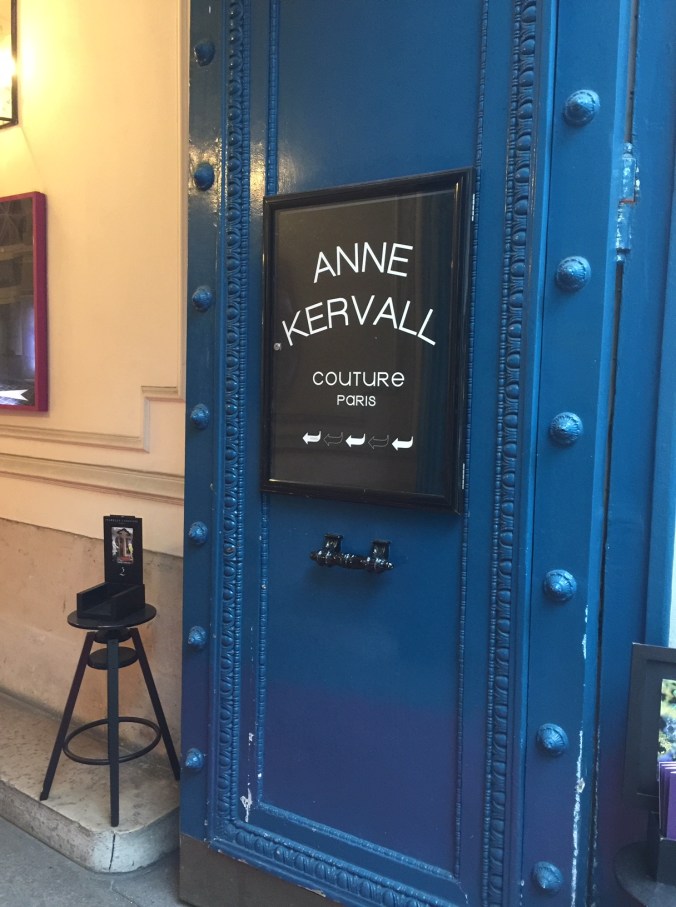
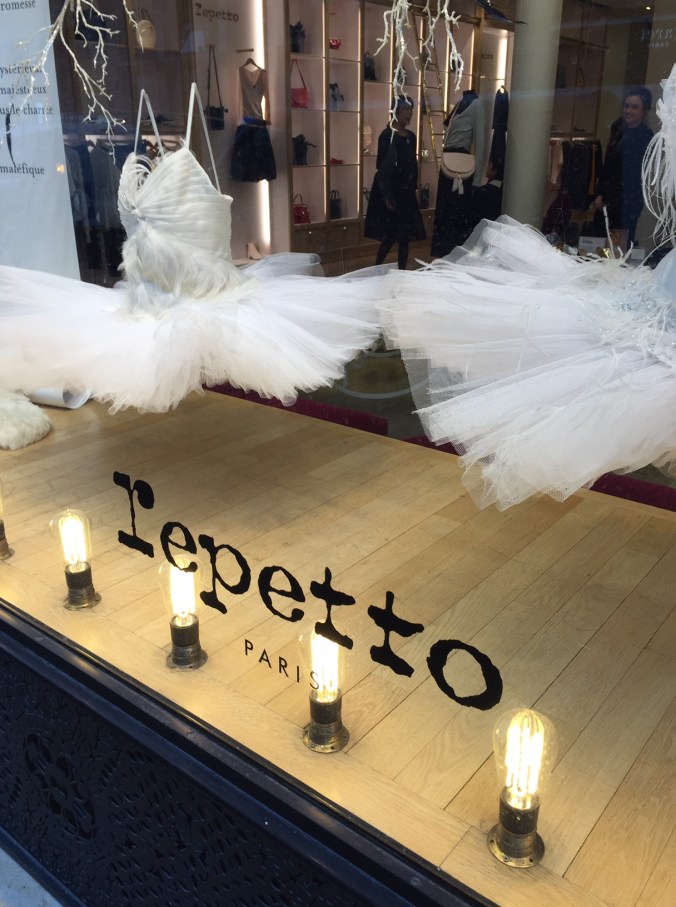
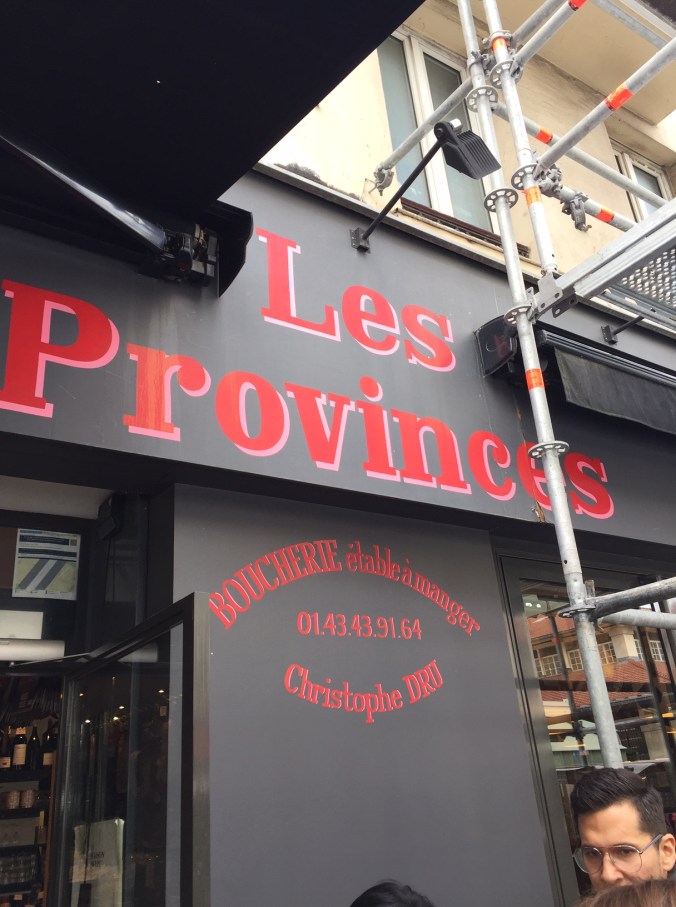
And I like walking by shops:
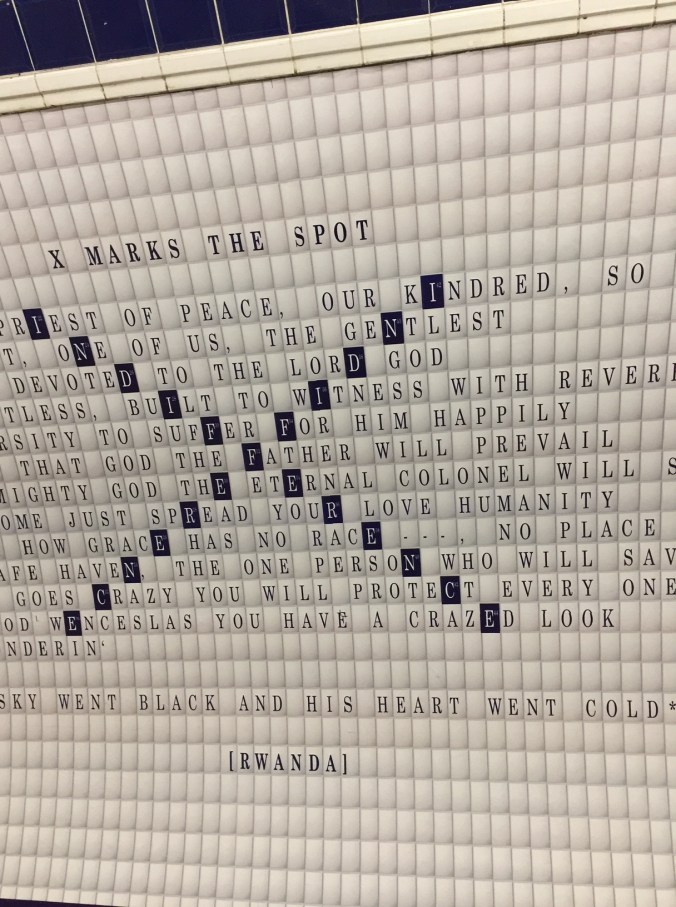
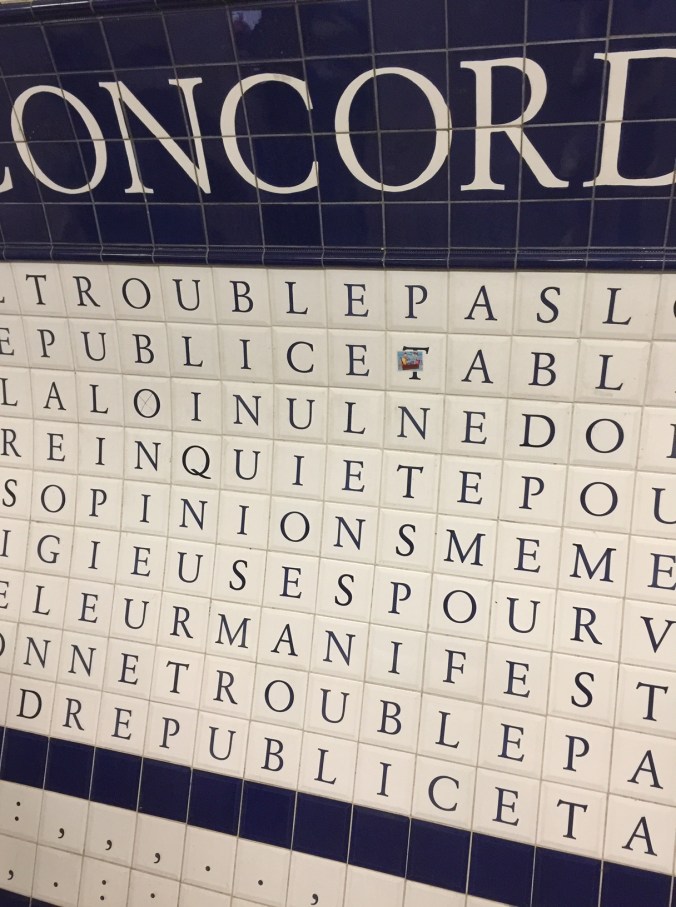
I like how some of the subway stops in Paris are incredibly artistic and thought provoking:
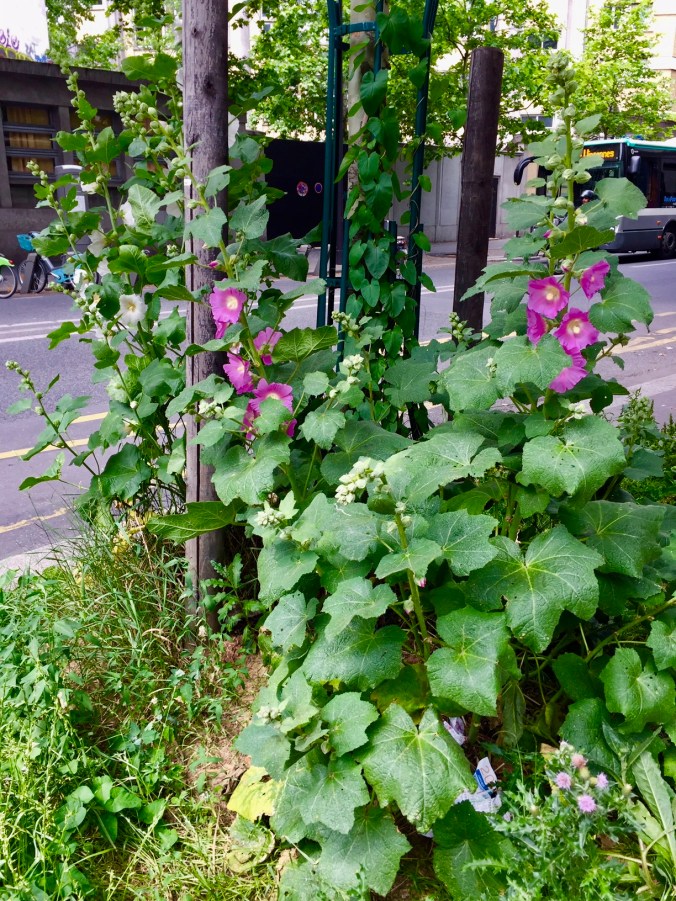
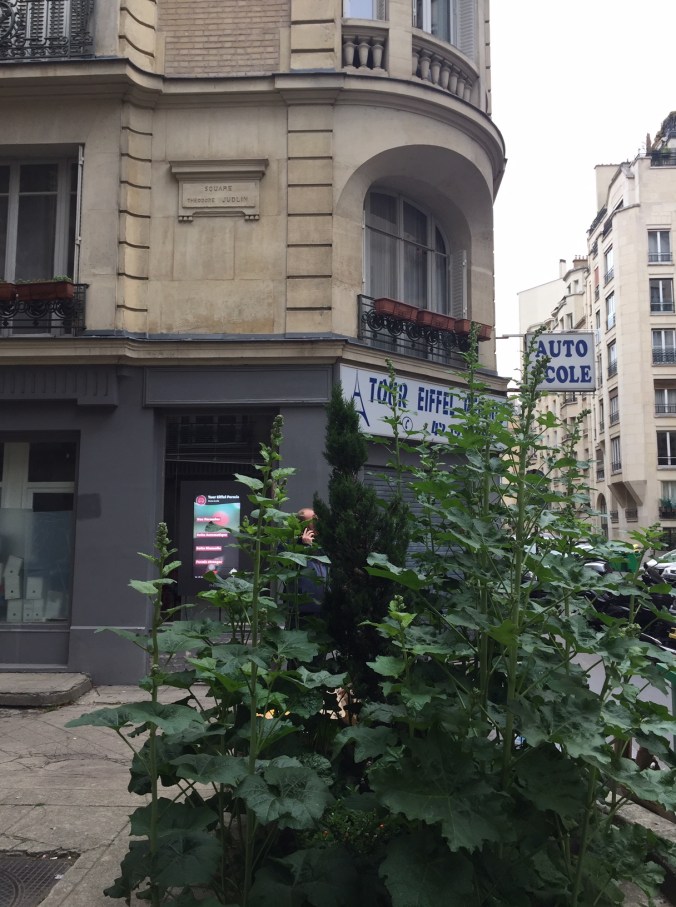
I like to find unexpected flowers growing out of forgotten places along the boulevards, especially the hollyhock, to which I am devoted.
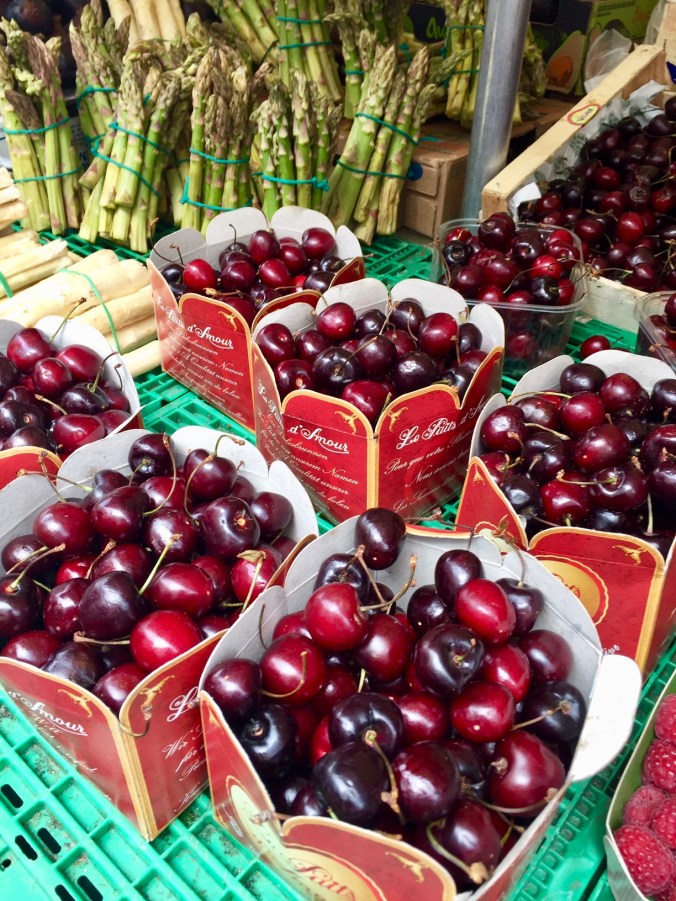
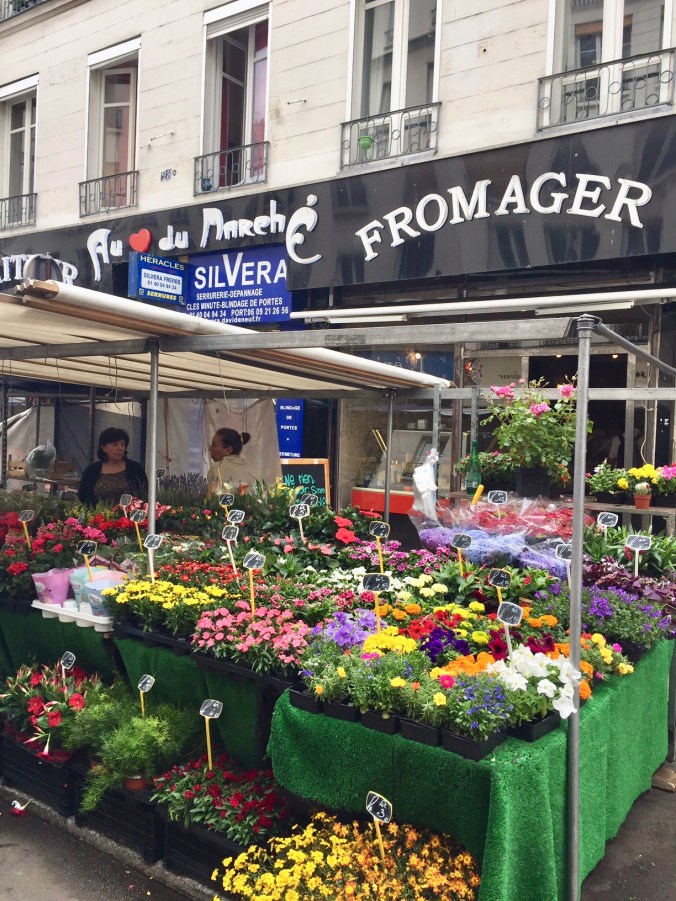
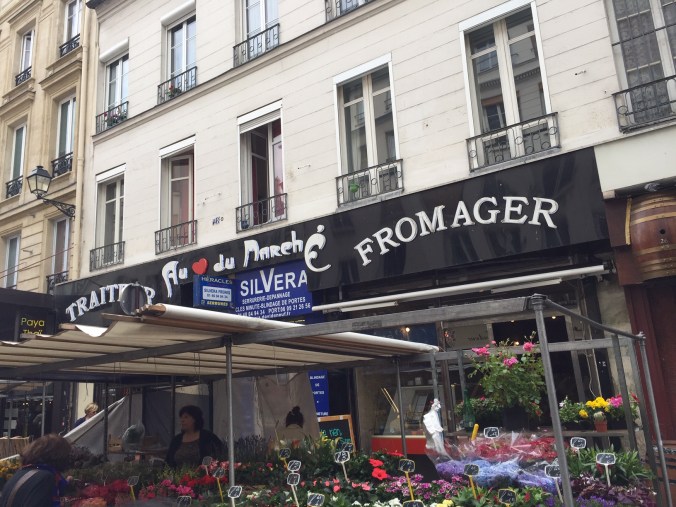
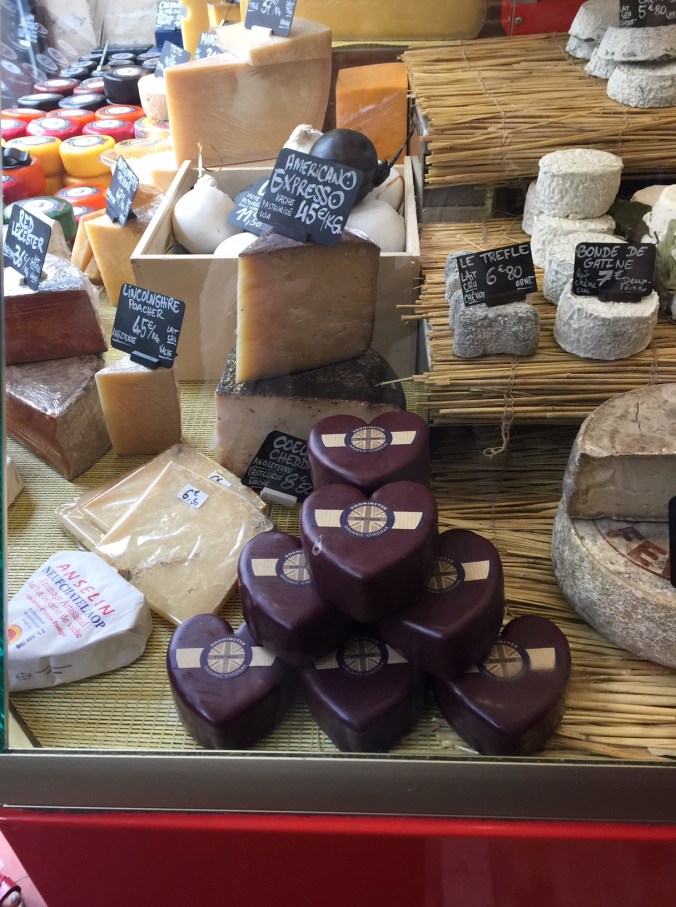
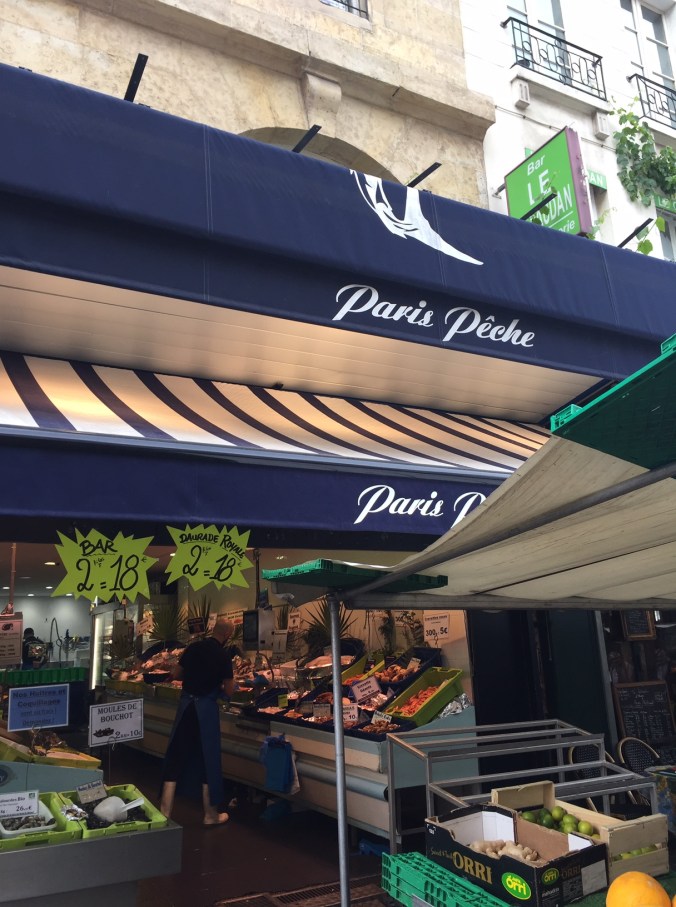
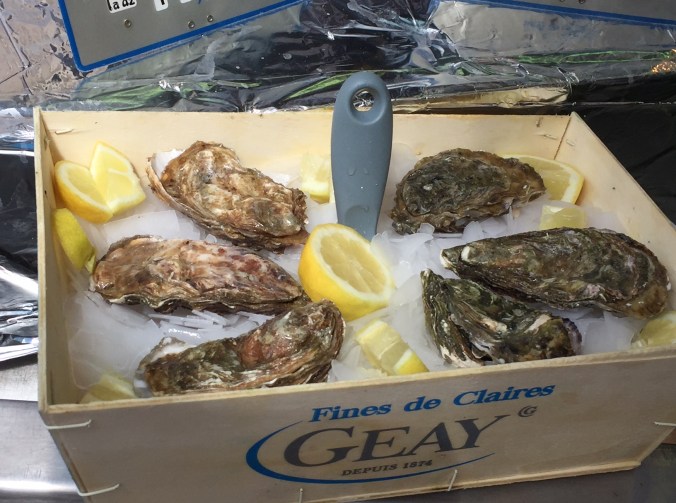
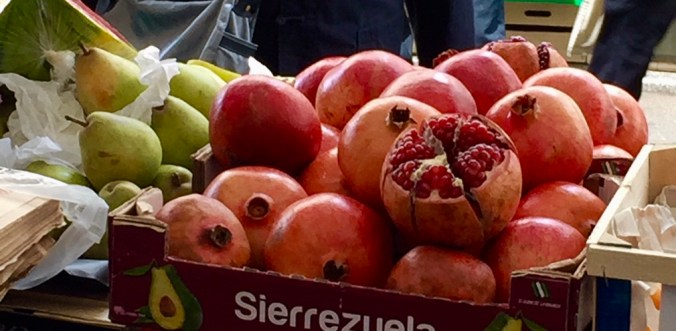
I like everything about the French markets:
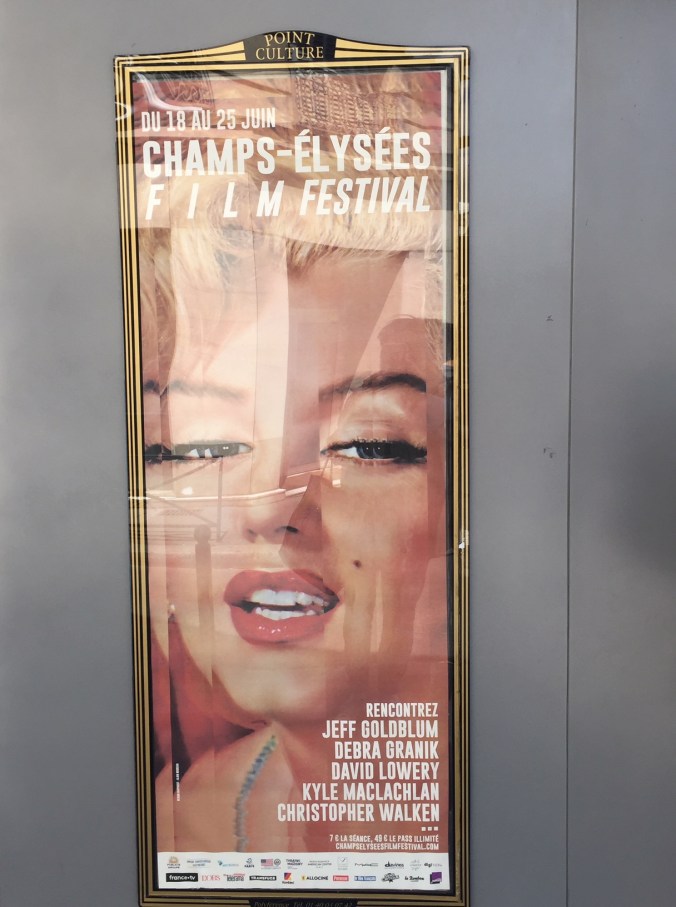
I like knowing that Marilyn Monroe will never really die as long as the world keeps her front of mind:
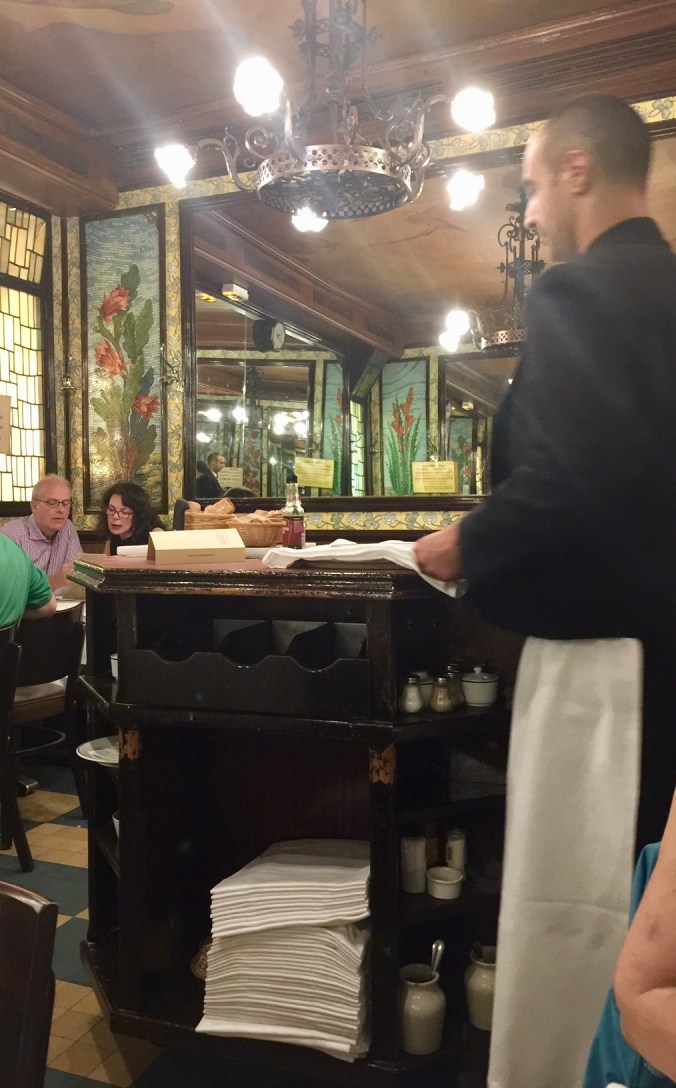
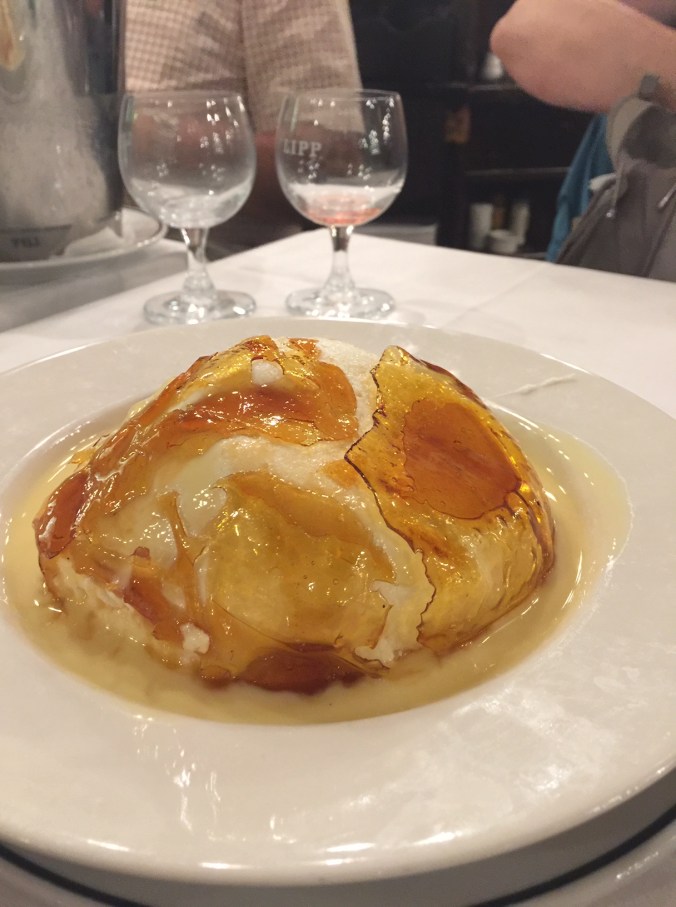
I like dining out (once in a while) at famous old Brasseries (The Lipp), and eating a “floating island” which resembled islands less than a hemisphere:
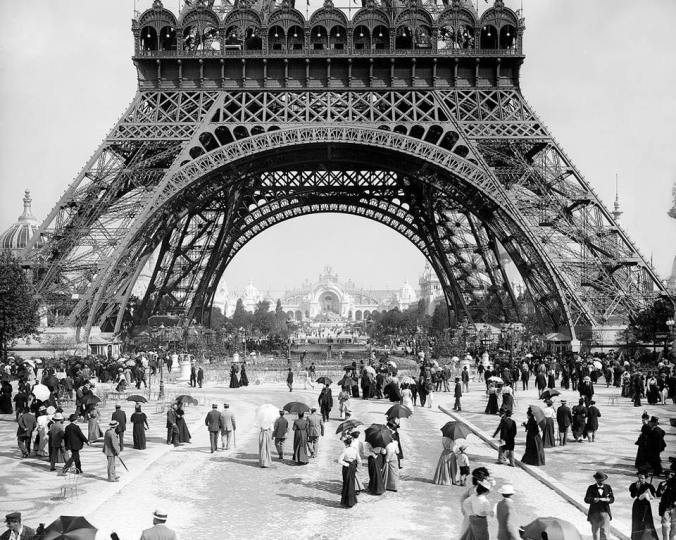
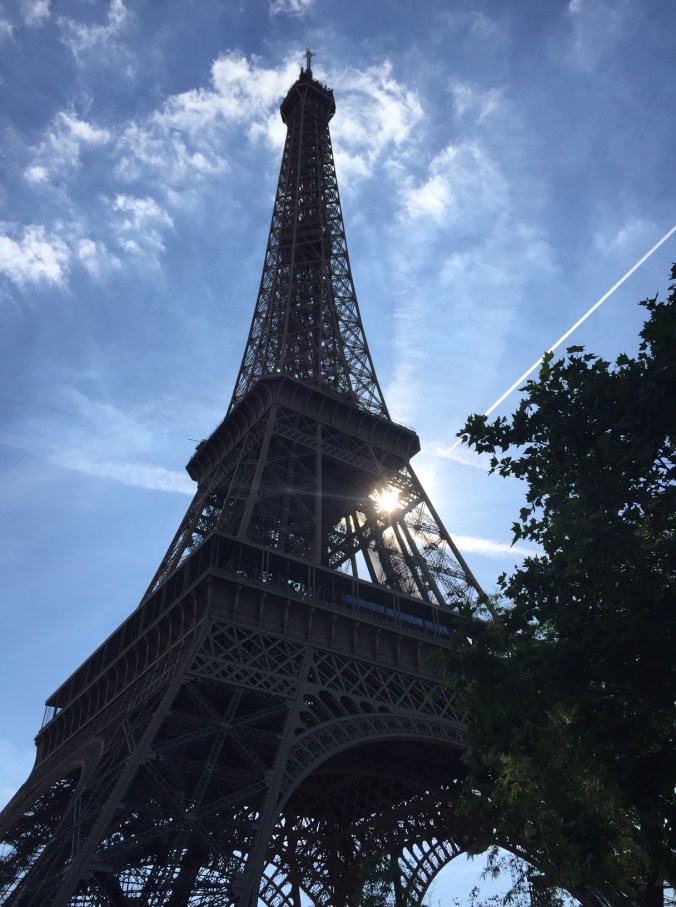
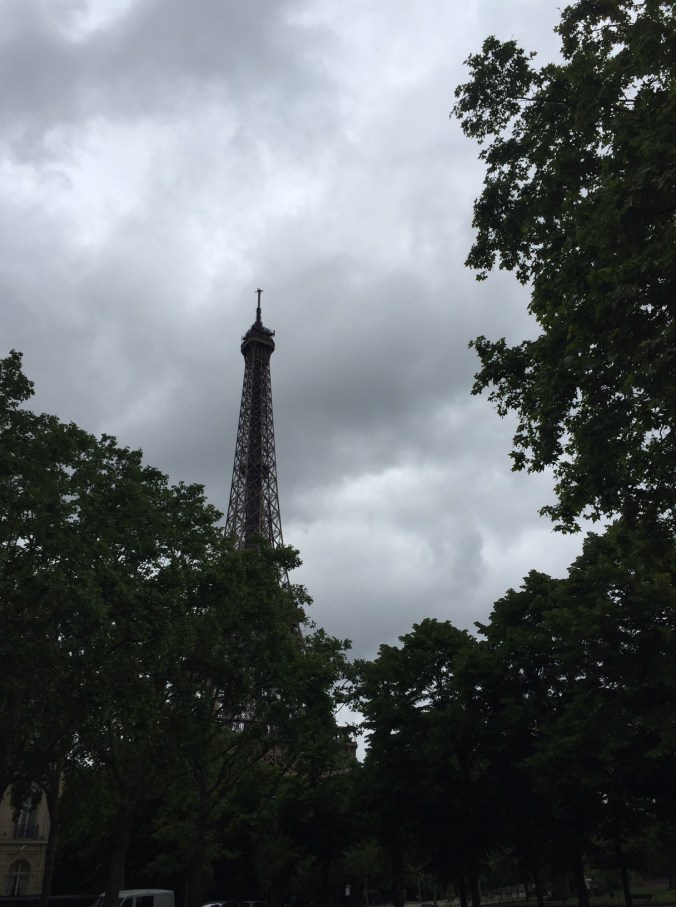
I like glancing up, now and then, at this old thing, no matter the weather:
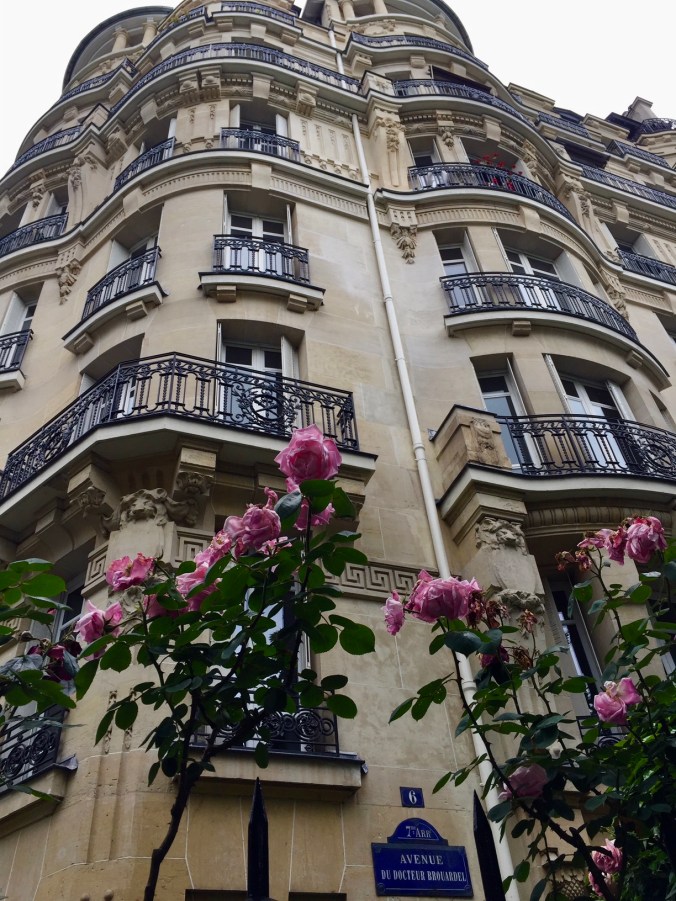
And I like the curves on the buildings, and the roses through which you view them:
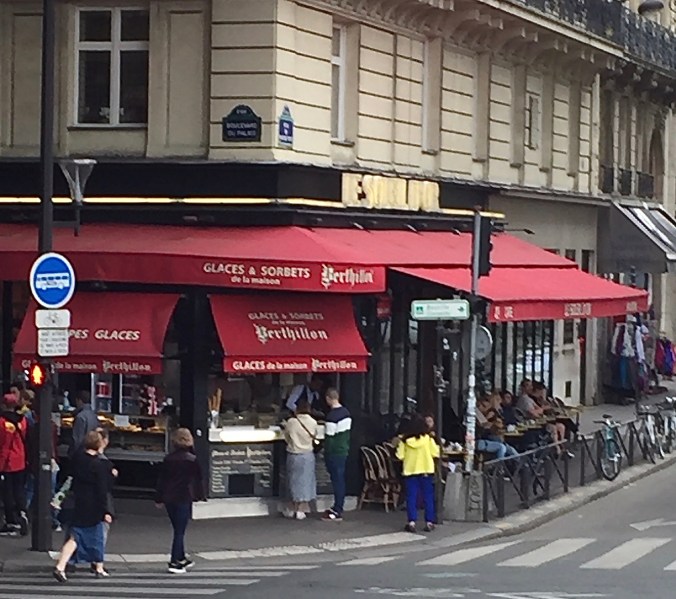
I like to get glaces at Berthillon:
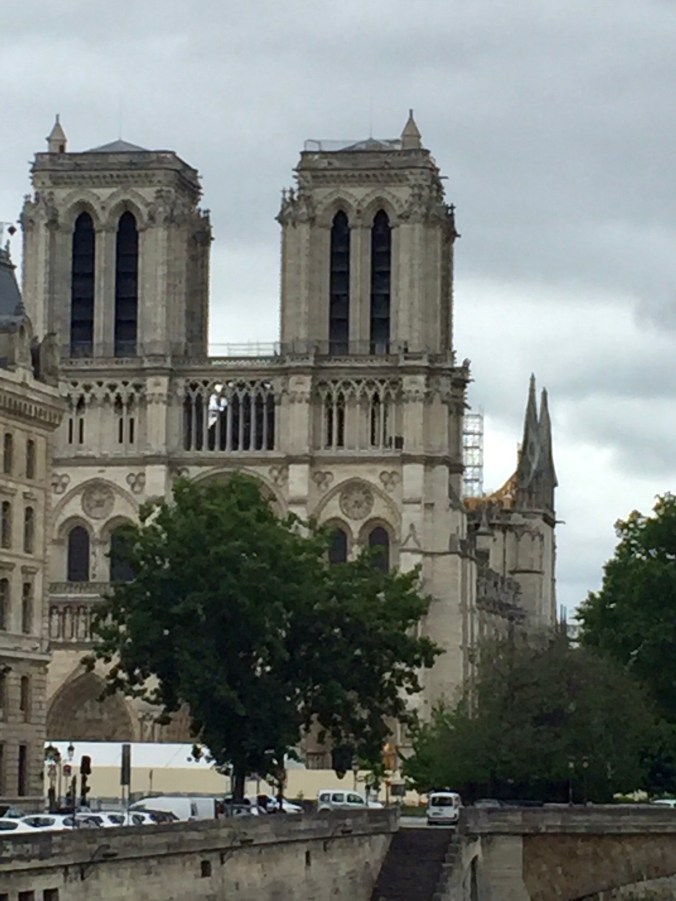
And I like to greet old friends. Sorry about your recent fire, N-D, but thank god you survived.
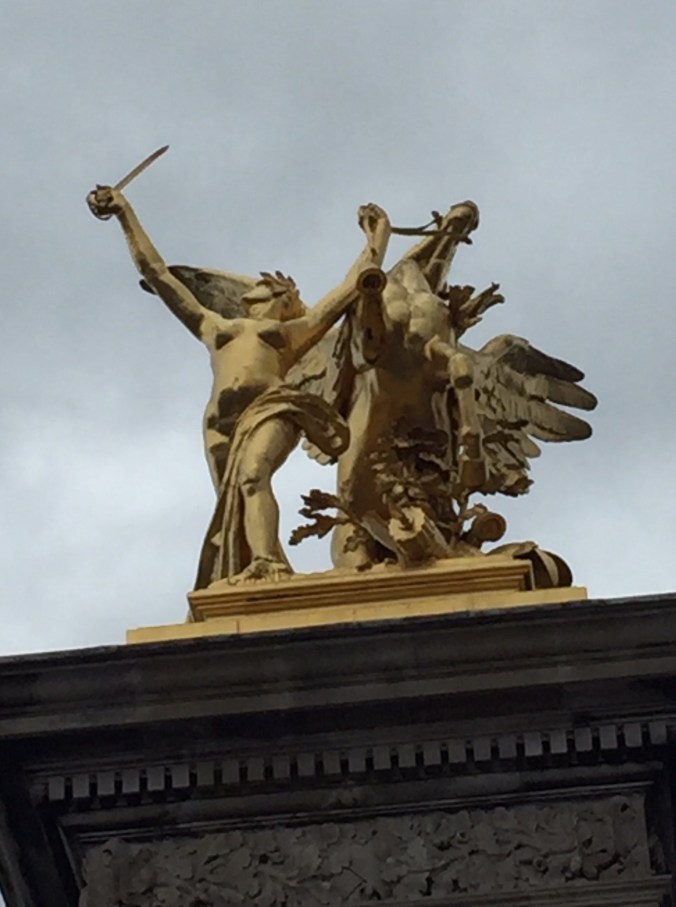
I love Paris’s sculptures; I feel I can hear them:
I like seeing random shots of neon colors in amongst the stone buildings:
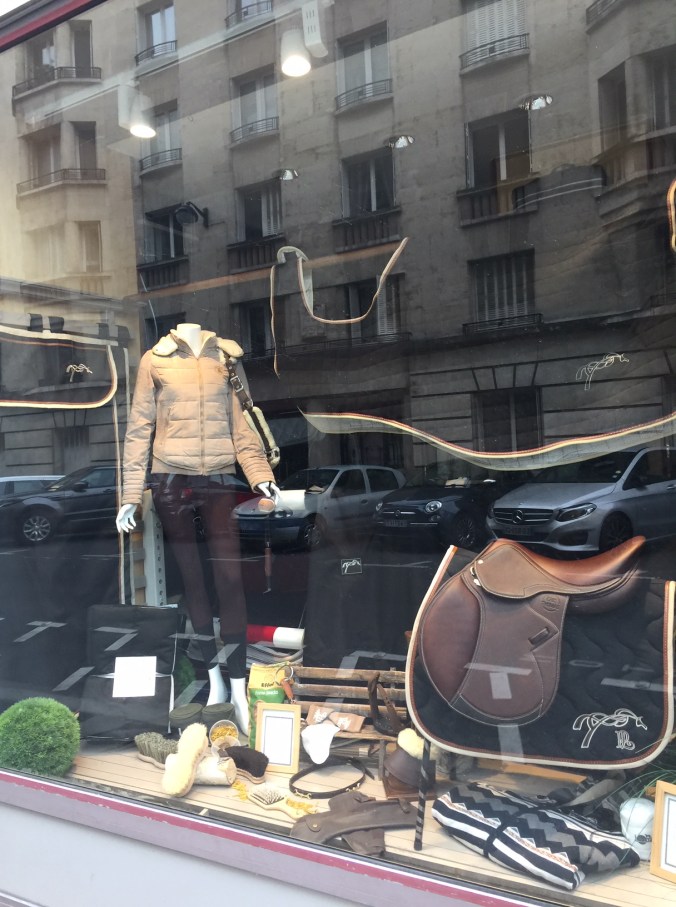
And I always think of my dad whenever I see anything having to do with horses. I like it when that happens.
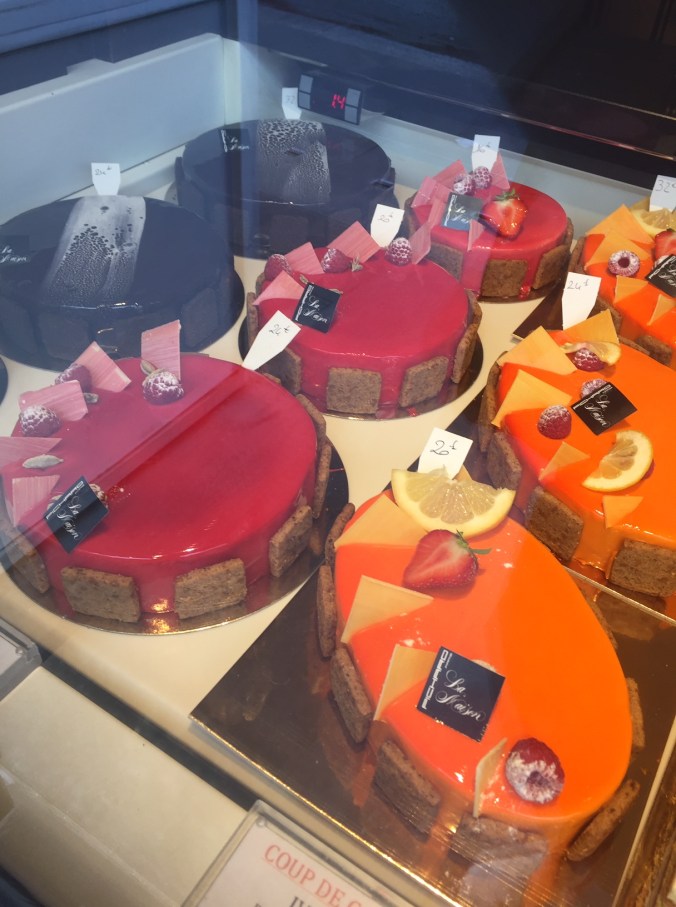
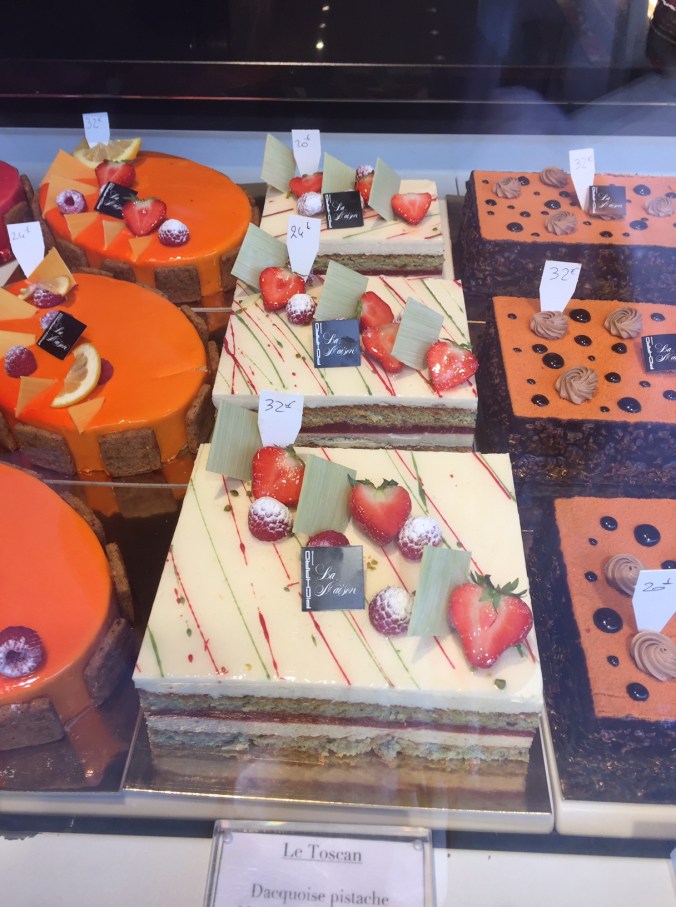
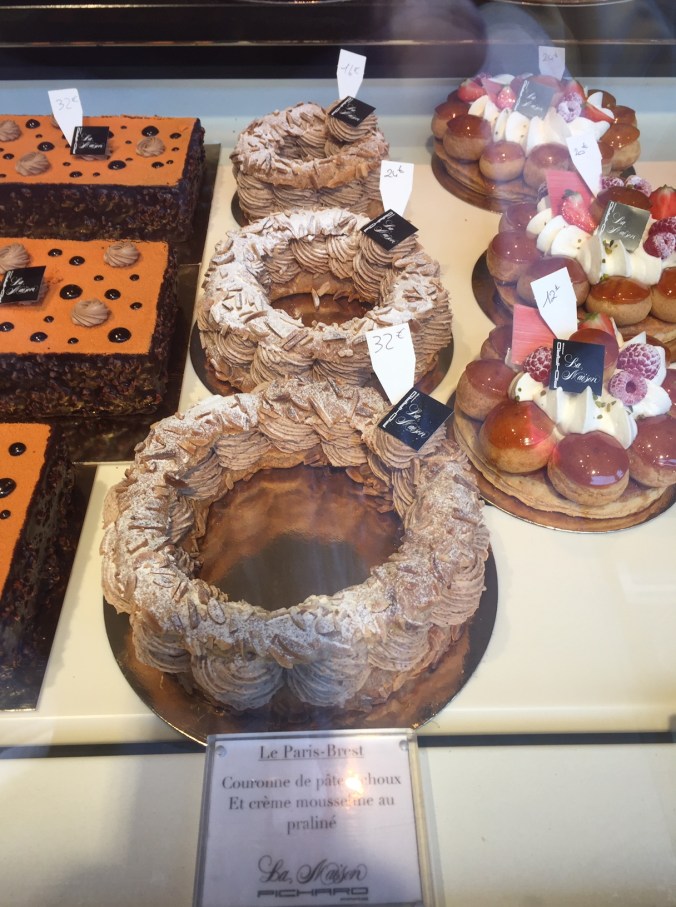
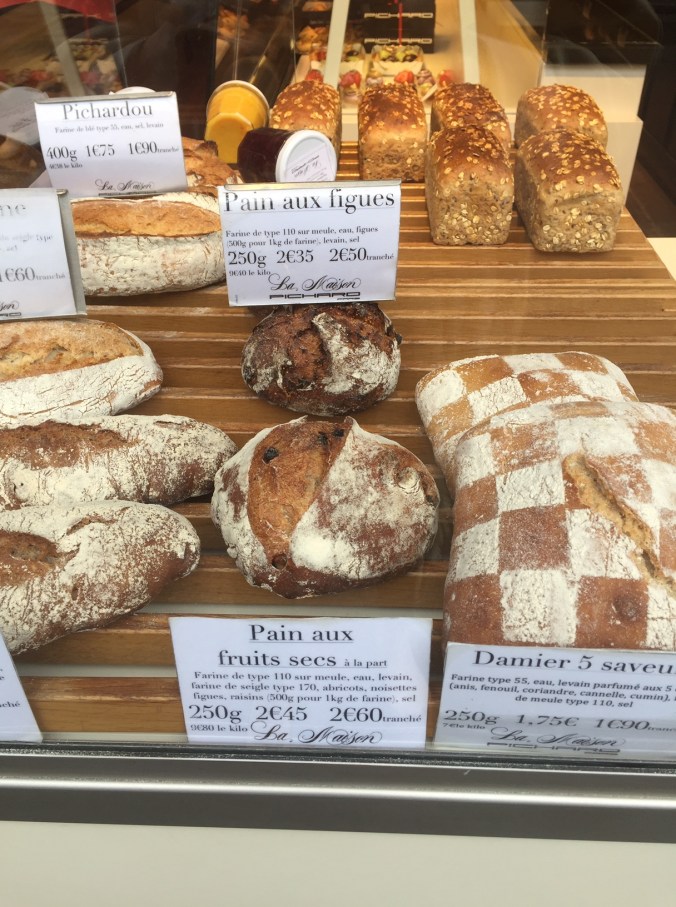
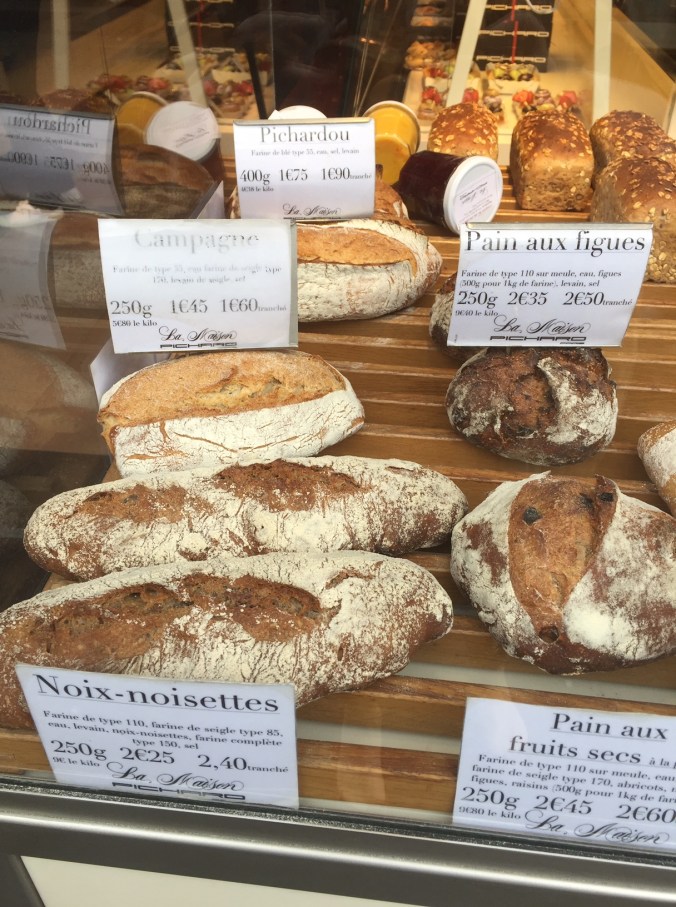
And who doesn’t like the pastry shops and boulangers? You’d have to be dead not to appreciate them!
And, in my wanderings, I like seeing old traditions, surviving into the present.
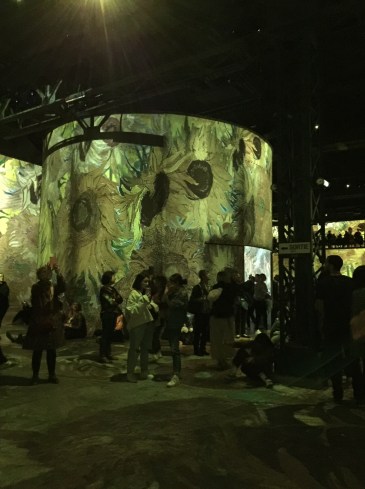
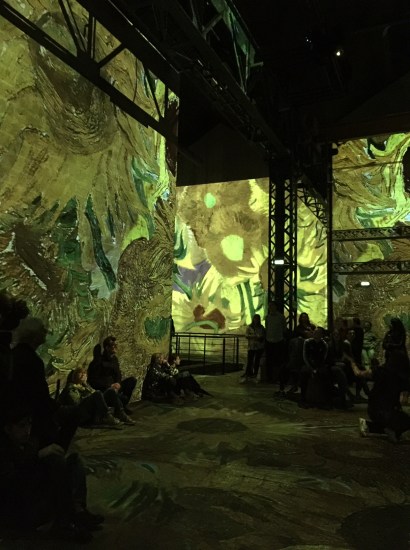
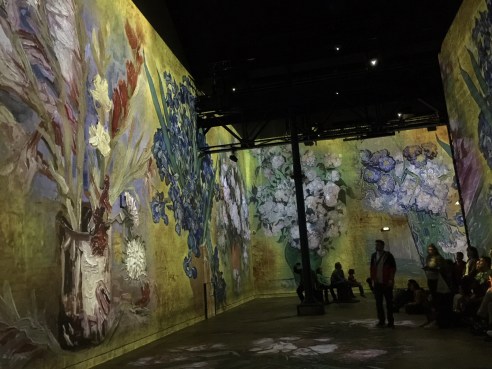
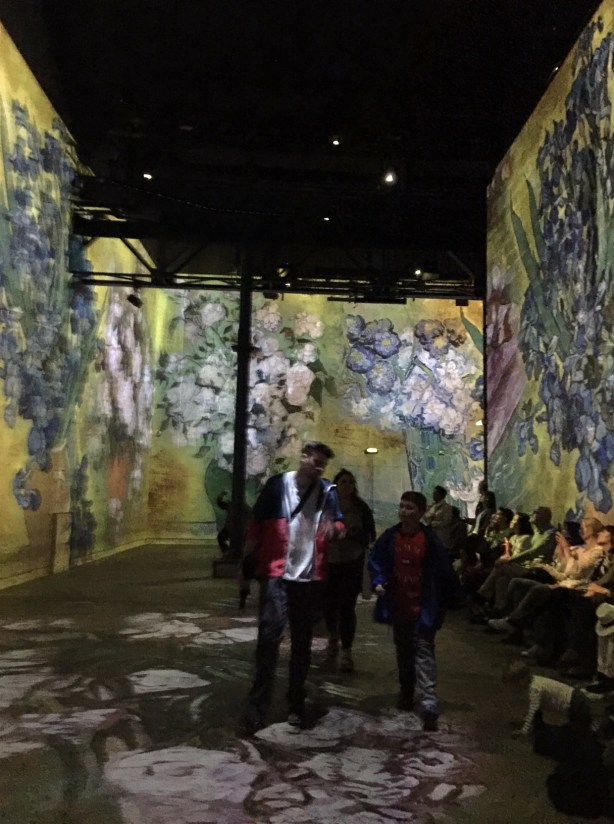
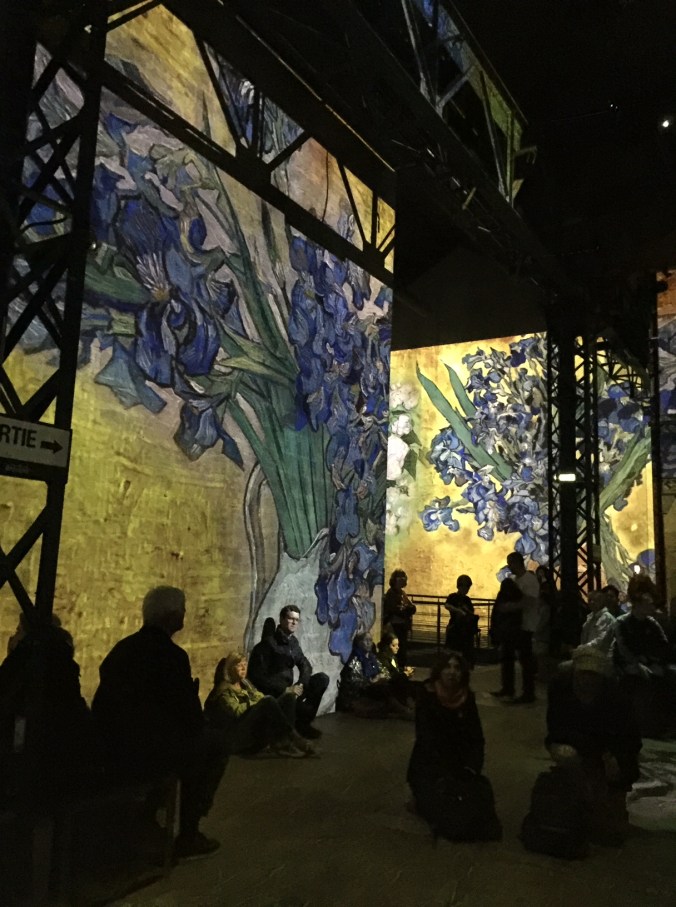
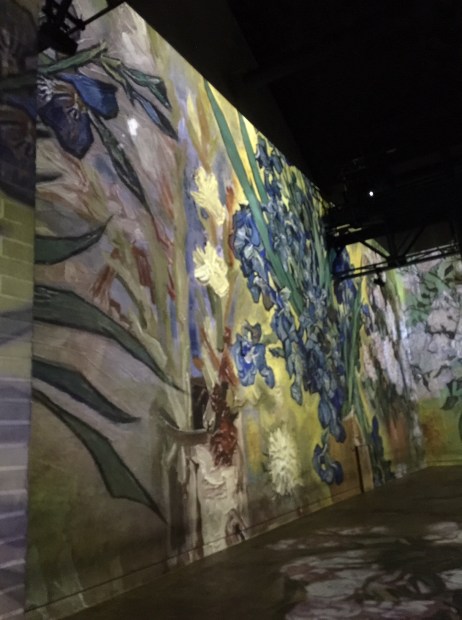
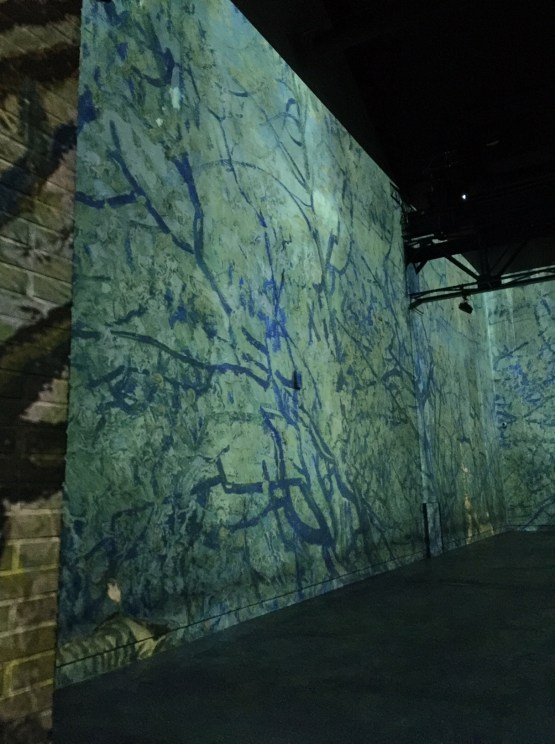
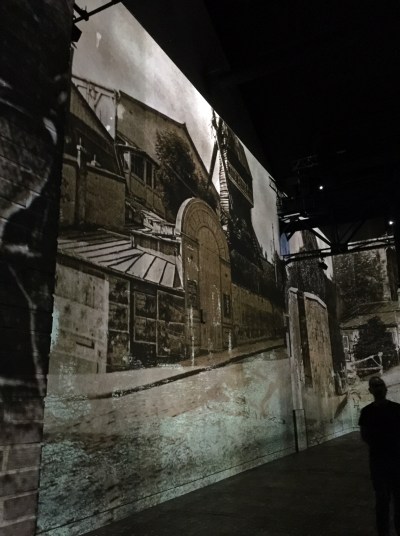
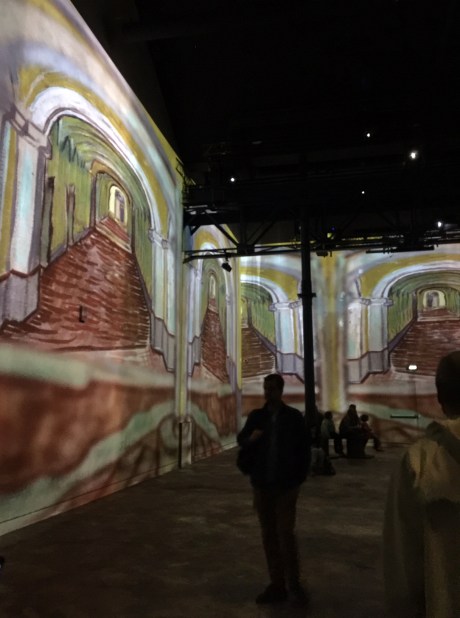
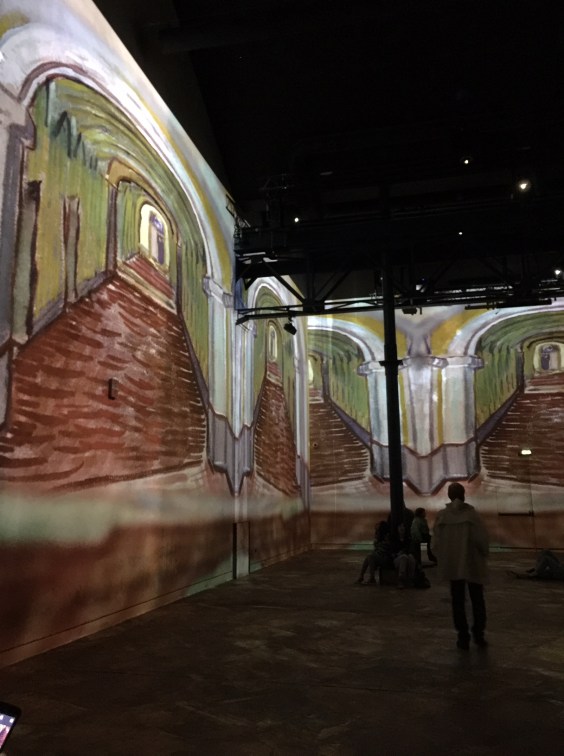
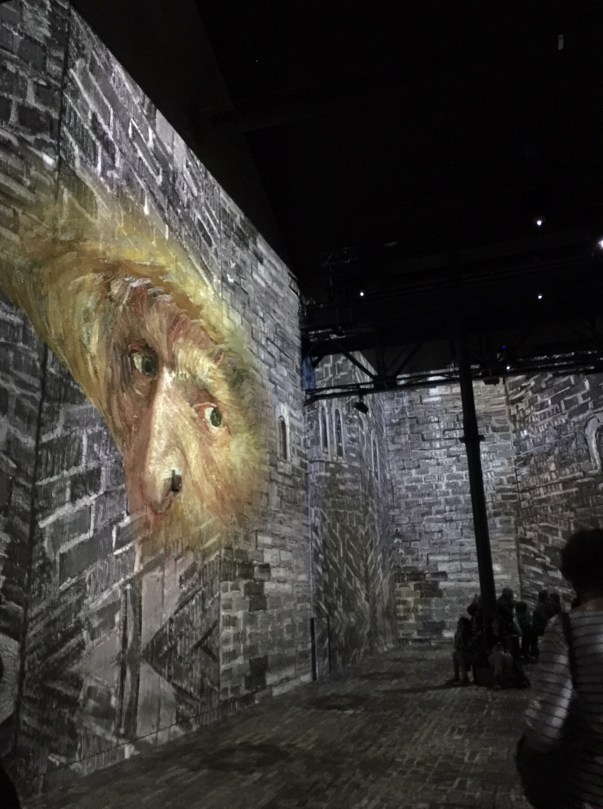
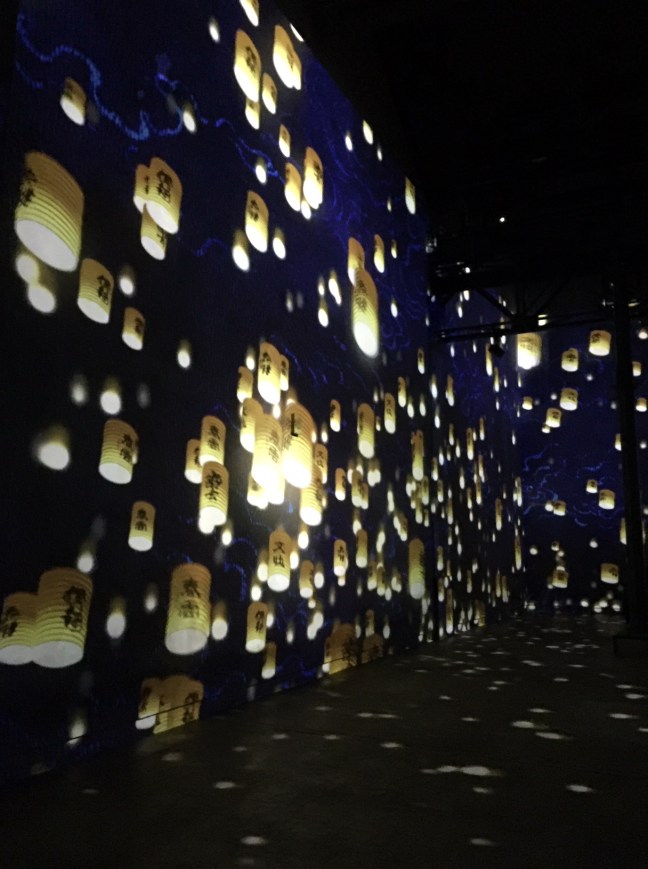
Paris has been coming at me so fast and furiously for the past 10 days or so that I am struggling to stay on top of my thousands of photos and stories as I engage with this incredible city. Yesterday I attended a showing at the Atleliers des Luminieres, Fonderie du Chemin-Vert. Wow. Pretty cool!
So, have you heard about these immersive art and music extravaganzas? The one in Paris uses the same format already devised and shown in the Carrières de Lumières at the old quarries in Les Baux de Provence. (In 2011, the town of Les Baux-de-Provence entrusted Culturespaces with the management of its famous quarry as part of a public services contract. Named “Carrières de Lumières,” it is a fantastic laboratory of creativity: Culturespaces has developed the innovative concept known as AMIEX® [Art & Music Immersive Experience]). There are similar shows done in an old church in Florence, Italy as well.
The digital exhibitions are made up of thousands of images of digitized works of art, broadcast in very high resolution via fiber optics, and set in motion to the rhythm of music. It takes 140 projectors and a careful orchestration of sound to create an exhibition.
Not everyone in the art world has welcomed this sort of “millennial” approach to the arts; but Culturespaces argue that the target audience for these immersive exhibitions is not connoisseurs of the art world, but rather families and young people who are not used to visiting museums. The Atelier’s first year statistics seem to show the exhibitions are reaching their target: in first year of operation, the Atelier des Lumières welcomed more than one million visitors, 12% of whom were under 25 years of age.

























You must be logged in to post a comment.