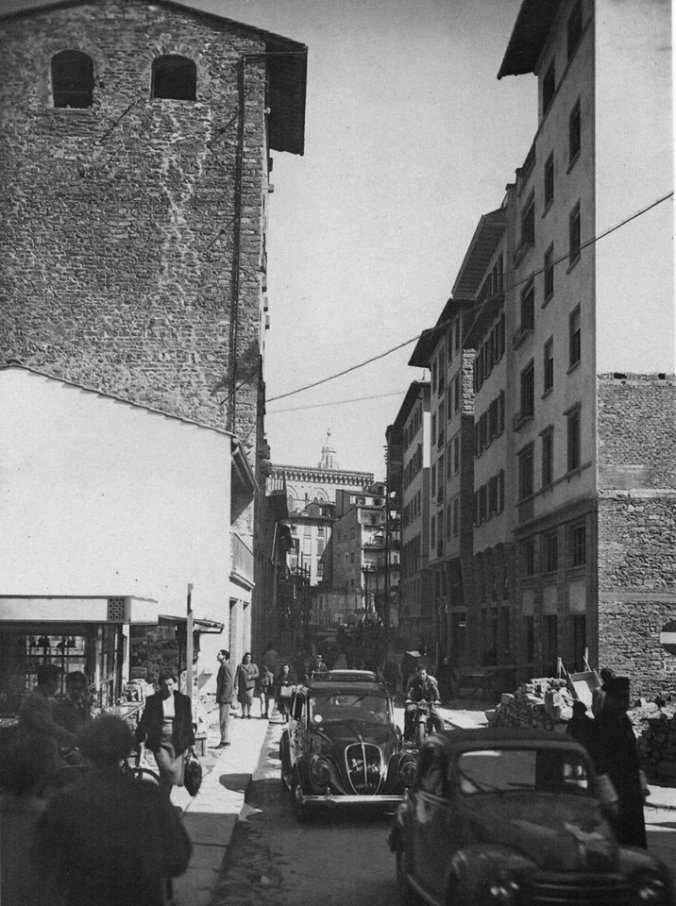
Via Ricasoli, Firenze (aka watermelon street)

In the historic center of Florence, a street is never, ever, merely a street.  Here a street carries history, a record of events, and was, more than likely, also the home to some important person(s) from the past.

streets-of-florence-walking

The Via Ricasoli in Florence is short, and runs between the Piazza del Duomo to Piazza San Marco. It’s a short street, but a critical one, connecting, as it does, two very important religious centers.  It’s prime property, no matter how you describe it. As we say in the USA, “location, location, location.”

 Plan of the city of Florence in 1847, here it is called via del Cocomero

The via is one of a series of streets that were laid out by Arnolfo di Cambio (c. 1240 – 1310) in the early 14th century, when Firenze was encircled with a new set of walls, to encompass its ever expanding urban development.  This series of streets run more or less perpendicular to the Arno River, which was always a “north star” (more correctly it was a south star)  for the city’s planners.  Via Cavour, Via dei Servi, and others were among the contributions by the city planners.

The via takes its present name from the Ricasoli family.  They owned the most important palazzo on the street, in Piazza Goldini.  The palazzo of Ricasoli sits here.  Bettino Ricasoli was an important 19th-century Florentine politician.

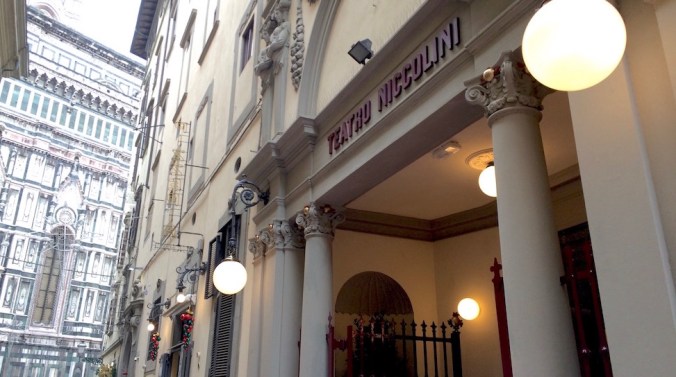
But, at least until 1847, the street was called Via del Cocomero (street of the watermelon; I can only guess there was once a mercato here).  And, the ancient Teatro Niccolini, located at the beginning of the street headed to the Piazza del Duomo, was originally called il Teatro del Cocomero.

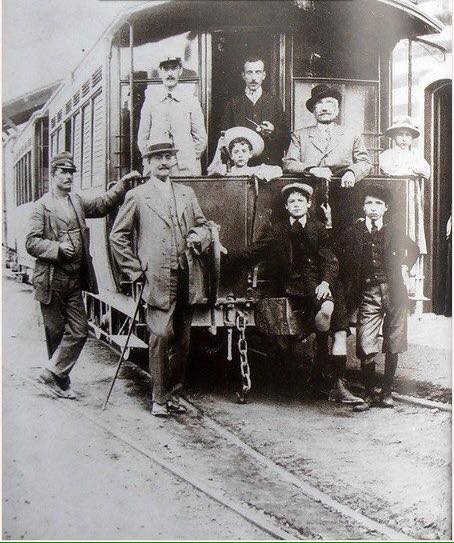
At the intersection of Via Ricasoli and the Via dei Pucci is the Tabernacle of the Five Lamps, one of the most showy architectural features of its kind in Florence (for great info on Florence’s tabernacles, see http://www.theflorentine.net/art-culture/2006/10/unforgettable-places-and-special-works-of-art-2/). At Via Ricasoli 30, a plaque commemorates the architect Pasquale Puccianti, who died here in 1858.  Another signs recalls the residence here of a railway engineer and senator, Giovanni Morandini.

Further north on Via Ricasoli stands the rear of the modern Teatro della Compagnia.  At Via Ricasoli 40-42 stands the Palazzo Gerini, which fused two earlier noble palaces, one by Bernardo Buontalenti and the other by Gherardo Silvani.

Palazzo_gerini_01  Palazzo Gerini

At the intersection of Via Ricasoli with Via degli Alfani, a sort of small square (piazza) is formed, on which the Luigi Cherubini Conservatory stands today.  Further north of the intersection is a spot which always seems to be swarmed with visitors.  That’s because the entrance to the Accademia Gallery is located here, in a building that was formerly the hospital of San Matteo.

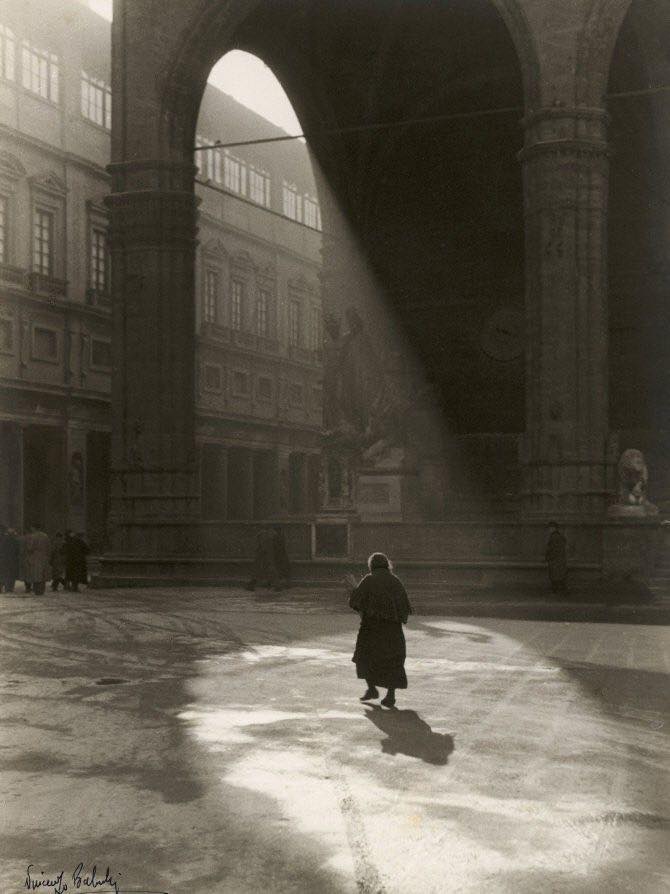
37094608_257290411745787_2554328896174555136_n

The hazy photo above was taken on Via Ricasoli around 1935.  It looks just about the same today, except for the clothing worn. The stylish donna is headed south on Via Ricasoli, towards il Duomo.

Oh, the history this street has seen. Difficult, but intriguing, to imagine.


addendum: just ran into some further info on this street of watermelon:

In the Darkest Ages of Florence, fruit orchards stretched out behind the city walls and over via Ricasoli. In medieval days this thoroughfare was called via del Cocomero, the “Street of the Watermelon.”

It was also the address of the thirteenth-century painter Cimabue and his apprentice Giotto, who took over his master’s house and studio when he died in 1302.

As Florence changed from a provincial river town into a medieval urban commercial center, this street and those around it were plowed up and transformed into artisans’ workshops.

The streets closest to the Duomo resounded with the sounds of hammering and tapping and hissing of forges and bellows. Via Ricasoli was also the casket-making center of the town. A block north of here, at the intersection with via de’ Pucci, were the workrooms of the tinkers and coppersmiths.

Holler, Anne. Florencewalks: Four Intimate Walking Tours of Florence’s Most Historic and Enchanting Neighborhoods (Kindle Locations 1075-1080). Henry Holt and Co.. Kindle Edition.


The village of Vinci in Tuscany

Travel can be good for your health.  Recently a good friend and I, at the end of a week that for both of us was filled with stress and problems, decided to get the heck out of Dodge for a day.

We left home for a day to wander in the wider, wondrous world of the outer sections of the province of Firenze.

We landed in Vinci, to see the village near the farmhouse where Leonardo was born.

For us, it was just what the doctor ordered.

Vinci is a very, very charming borgo:

IMG_0590IMG_0592

IMG_0576

IMG_0593IMG_0603

IMG_0607

IMG_0579


Of course the town is famous because the legendary genius Leonardo da Vinci was born in a nearby farmhouse. Every inch of this little village proclaims “Leonardo!”

The main attraction in the village is the Museo Leonardino, housed inside the building that was formerly the Castello dei Conti Guidi, originally built in the 12th century.

castello_vinci11


The castle is located high atop the town’s highest hill. Inside the museo, you encounter a hologram of Leonardo:


The museum takes up 3 floors of the castle, showcasing a collection of the original designs found in Leonardo’s notebooks as well as 40 different models of various machines that were he designed.

Most interesting of all of these, to me, was the wooden paraglider that Leonardo created.


Museo_leonardiano_di_vinci,_04


Vinci is surrounded by the Tuscan hills and there are various vineyards and olive groves around the town which have remained the same since ancient times.

The town is spread over an area of 54 sq km and the population is close to 14,000. The economy of Vinci is based on agriculture, production of wine and olive oil, pottery and items like paper, clothes and furniture.


IMG_0633IMG_0628IMG_0629IMG_0632


After seeing the main exhibition space, you can also climb up to the top of the castle and view the surrounding countryside.

Before you are afforded the spectacular views, however, you must climb an endless set of stairs leading up, up and up.

IMG_0641

Trust me, the view above does not begin to capture the length and height of this stairway.  Several stops are needed on the way up to catch your breath.

The views from the top terrazzo of the Museo di Leonardo are as vast as they are gorgeous.  What a perfectly farmed section of Tuscany, filled with groves and groves of olives and grapes.  The groves are in perfectly formed lines, such as you never see anywhere else.  Wonder how that happened?


IMG_0633IMG_0635IMG_0636IMG_0637IMG_0638

IMG_0588IMG_0638


Leonardo Da Vinci was born in a small farmhouse which is located just 3 km from the center of the town. You could walk it, if you have a lot of stamina.  On a day of 30 C., I didn’t.  We drove.

IMG_0685

Leonardo da Vinci's birthplace (3)(1)

vinci-1-di-1-6-e1421140875746

IMG_0682IMG_0684


A good source of info on Vinci is this:

https://www.tripadvisor.com/ShowUserReviews-g187903-d8686322-r440453756-Castello_Dei_Conti_Guidi-Vinci_Tuscany.html#