Spring equal camellias

Are you a fan of camellias? I am.

Discover the Gardens in Italy where you can admire them!
OLYMPUS DIGITAL CAMERA

OLYMPUS DIGITAL CAMERA

OLYMPUS DIGITAL CAMERA

OLYMPUS DIGITAL CAMERA

OLYMPUS DIGITAL CAMERA
OLYMPUS DIGITAL CAMERA

OLYMPUS DIGITAL CAMERA

OLYMPUS DIGITAL CAMERA

OLYMPUS DIGITAL CAMERA

OLYMPUS DIGITAL CAMERA

OLYMPUS DIGITAL CAMERA

OLYMPUS DIGITAL CAMERA

OLYMPUS DIGITAL CAMERA

OLYMPUS DIGITAL CAMERA

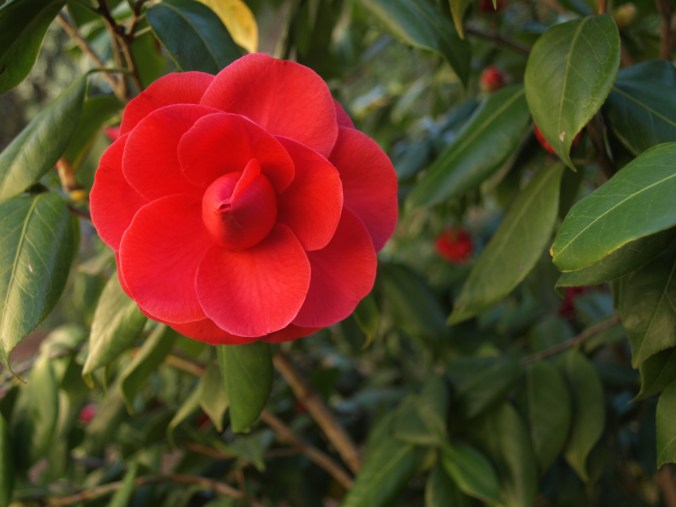
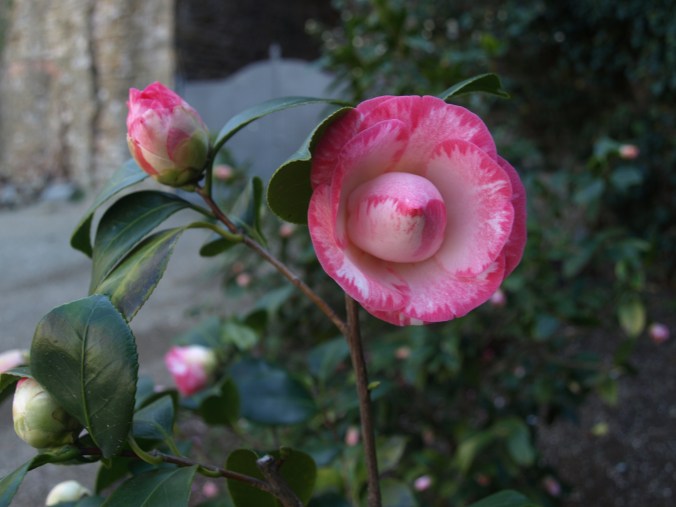
Today, beautiful specimens of Camellias can be admired in many gardens. Between Italy and the Canton of Ticino, from the first weeks of March and throughout April, it is possible to get lost among the colors and the scents of the Camellias in bloom. In Switzerland, in Locarno, a few miles from Lugano, is the Parco delle Camelie, inaugurated in 2005, to fascinate you with its 850 varieties of camellias cataloged, to which are added 70 still unidentified camellias , planted at the southern end of public paths, and 130 double camellias, which form a dividing hedge and are used primarily to provide cut flowers for the annual show held in spring.
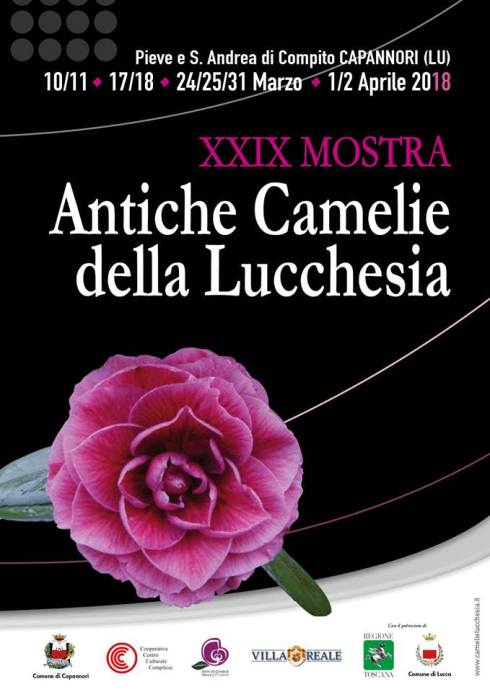
In Tuscany the wonderful Viale delle Camelie of the Giardino della Villa Reale di Malia (Capannori, LU) is waiting to give you an unforgettable walk, while in Florence in spring the flowering of the camellia grove of the Giardino Bardini , placed behind the wonderful belvedere on the city.
27336333_10156132894363588_2775332094118318956_n

You can find more info here:  http://www.grandigiardini.it/lang_EN/articoli-scheda.php?id=77
Giardino Bardini

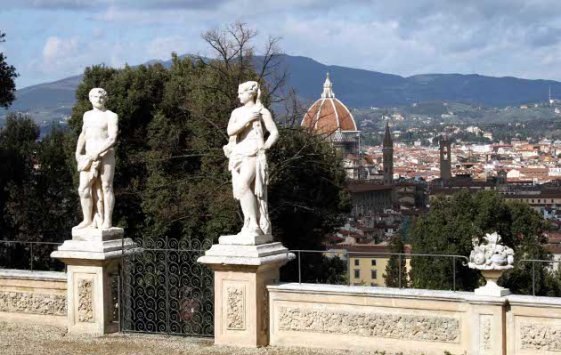
Giardino Bardini offers wonderful views of Florence from its 4 hectares of parkland between the left bank of the Arno River, Montecuccoli Hill and the medieval wall.
panorama-di-firenze

Originally it was an arrangement of walled orchards near Mozzi Palace covering the whole of the hill behind it.

giardino-bardini.ok-da-sito-1

In the 18th century Giulio Mozzi, who loved gardens, enriched the property with a long fountain wall with a multi-material mosaic at the bottom. In the mid-19th century the baroque garden was enlarged through the purchase of the adjoining Anglo-Chinese garden of Villa Manadora, created by Luigi Le Blanc at the beginning of the nineteenth century.

In the second half of the 19th century the Carolath Benten princes acquired the whole property and enriched the garden with Victorian details.

In 1913 the antiquarian Stefano Bardini purchased the complex consisting of Mozzi Palace, the baroque garden and the Anglo-Chinese garden with a remaining agricultural portion and Manadora Villa.

Bardini acted unscrupulously, constructing an avenue to travel by car from the Arno to the villa, destroying the walled gardens of medieval origin, and joining the two existing buildings on Costa San Giorgio.

The death of his son Ugo in 1965 gave rise to a long episode concerning inheritance.
This ended in 1996 thanks to the then minister Paolucci who arranged for the conditions set by the deceased person to be met.

In 2000 the Ente Cassa di Risparmio di Firenze (Florence Savings Corporation), acting through the Fondazione Parchi Monumentali Bardini e Peyron (Bardini and Peyron Monumental Parks Foundation), began the restoration of the complex. It took almost five years to restore the garden’s identity and wealth in terms of composition and plants.

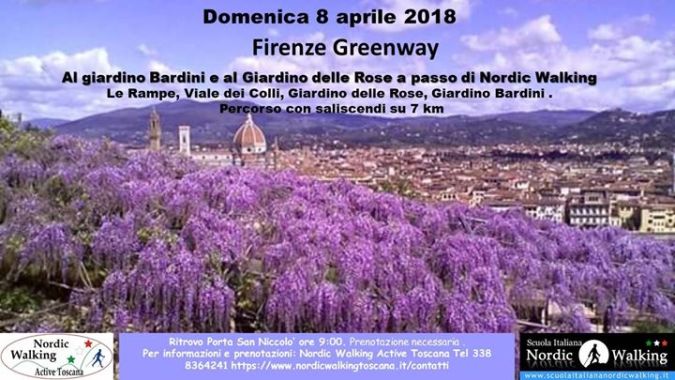
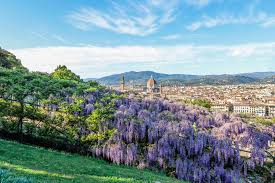
In the agricultural park, in which fruit trees in the Tuscan tradition have been planted, there is a circular viewpoint from which one enters a tunnel of wisteria and comes upon no less than 60 varieties of hydrangea.

b2402b8202

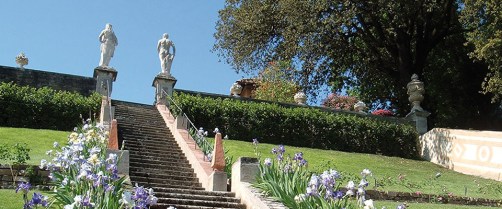
The baroque flight of steps is the most picturesque part of the garden, with its viewpoint over the city and the six fountains with their multi-material mosaic bottoms.

images-2

Bourbon roses and remontant irises have been planted along the flight of steps. In the lowest part there is a garden with herbaceous and graminaceous borders and the grassy theatre that makes use of a cavity in the garden.

In the English-style wood, which formed part of the Anglo-Chinese garden, there is a lawn with azeleas where one can also see ferns, vibernums, camellias, and a collection of citrus fruits. From Via de’ Bardi the route winds up towards the villa, offering views of both the garden and the monuments of Florence.

On reaching Villa Bardini you go out into Costa San Giorgio and in a few minutes you reach the Boboli Garden, from which you can descend back towards the city, covering 7 kilometres altogether amid greenery. It’s possibile to book a personal service at a special price, with a shuttle from 7, 16 or 28 seats, which connects the two Great Italian Gardens of Villa Bardini and Villa Peyron.

How art history became an academic (& my favorite) field of study

Before Charles Eliot Norton had become Harvard’s first professor of that discipline, art history had, in general, been considered, not a field of study, but a matter of craft and technique to be taught by painters to other painters.

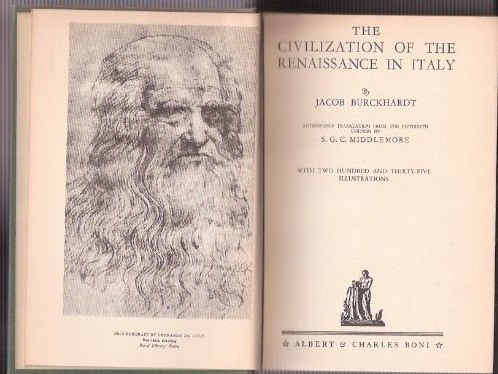
Scholarship about art, and especially about Italian art, entered a new era as the German universities began developing large-scale historical studies like those of Swiss scholar Jacob Burckhardt, whose Civilization of the Renaissance in Italy was published in English in 1878.

Die_Kultur_der_Renaissance_in_Italien

In Great Britain, tastes were influenced by the work of Norton’s close friend Ruskin in books like The Stones of Venice (1851–1853) and The Seven Lamps of Architecture (1849).

The_Seven_Lamps_of_Architecture_-_titlepage

Following Ruskin, Norton loved best in Italy the powerful moral uplift of Dante and of Italy’s medieval Gothic architecture. In Norton’s art history courses, the Renaissance was the unhappy termination of the Middle Ages, which had been the last great era of spiritual unity and well-being.

There was a joke current among Harvard undergraduates that Norton had died and was just being admitted to Heaven, but at his first glimpse staggered backward exclaiming, “Oh! Oh! Oh! So Overdone! So garish! So Renaissance!”

“Norton,” Bernard Berenson commented drily years later, had done what he could at Harvard to restrain “all efforts toward art itself.”

Rachel,Cohen. Bernard Berenson (Jewish Lives) (p. 45). Yale University Press. Kindle Edition.


British Houses of Parliament are physically rotting away

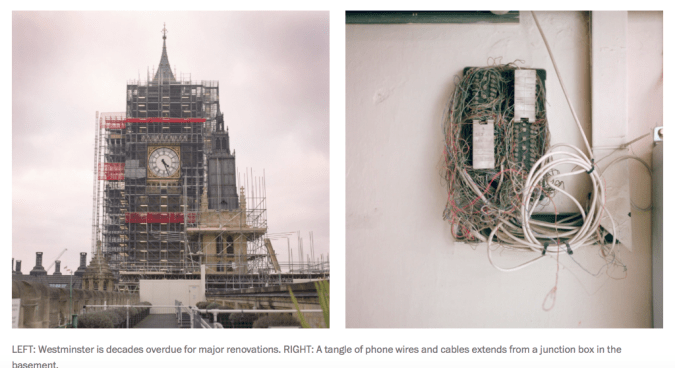
The Palace of Westminster, with its cinematic Big Ben clock, set beside the River Thames, is a survivor — of epic fire, German bombs, sulfuric smog and bad plumbing.Screen Shot 2018-04-30 at 11.06.50 AM

An eccentric masterwork of Victorian genius, its dual chambers for lords and commoners are the living, breathing heart of constitutional monarchy, the home of Parliament, and one of the most photographed buildings in the world.

But Westminster is a wreck, its caretakers say.

The palace is not falling down. Not at all. Its bones, the superstructure, are solid enough, and carrying on, in British fashion, even if its dermis of Yorkshire limestone is spotty.


https://www.washingtonpost.com/news/world/wp/2018/04/25/feature/westminster-home-of-british-democracy-is-rotting-from-within/?utm_term=.0964197cc0fb

Italy’s beauty and complications recognized even in wartime


683410main_iss032e020159_1600_800-600


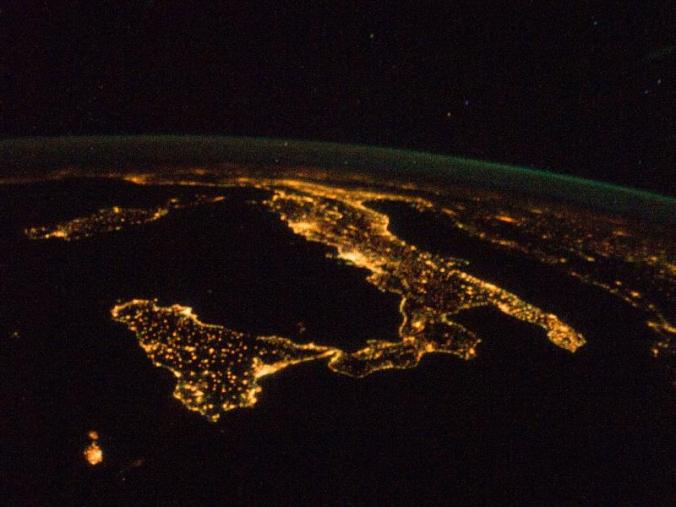
“Trapani! Trapani, don’t you see?” [British] Capt. Edward Croft-Murray exclaimed as the skyline of the Sicilian coastal town first appeared through the porthole of the Allied aircraft. [The Brit] Sitting next to him, Maj. Lionel Fielden, who had been drifting off into daydream for much of the flight from Tunis, opened his eyes to the landscape below. “And there, below us,” Fielden later wrote, “swam through the sea a crescent of sunwashed white houses, lavender hillsides and rust red roofs, and a high campanile whose bells, soft across the water, stole to the mental ear. No country in the world has, for me, the breathtaking beauty of Italy.”

…As soon as the first Monuments Officers reached Sicily, the implications of such a mandate [to preserves as many cultural works as possible] proved as difficult as its scope was vast. The Italian campaign, predicted to be swift by Allied commanders, turned into a 22-month slog. The whole of Italy became a battlefield. In the path of the Allied armies, as troops slowly made their ascent from Sicily to the Alps, lay many beautiful cities, ancient little towns and innumerable masterpieces. As General Mark Clark declared with frustration, fighting in Italy amounted to conducting war “in a goddamn museum.”

 
Read more: https://www.smithsonianmag.com/history/how-monuments-men-saved-italys-treasures-180948005/#W8OkkTPqF2Ar2s8S.99


Allied forces in Florence

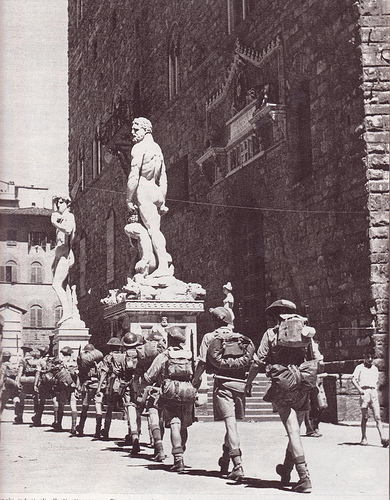
From the safe distance of 2018, it is interesting to think back to the situation in Florence during WWII, especially after the Allied Forces liberated the Renaissance citta’.

D378_44_137_0004_600

The leaders and troops of the Allied Forces are my heroes. There are many to name.  General Dwight D. Eisenhower is foremost among them.  I recently wrote a post on his directive, which saved many cultural monuments in Italian. Here is a picture of Ike in Italy:

Screen Shot 2018-04-29 at 12.30.35 PM


As the Allies liberated region after region in Italy, starting from the southern tip and working their way north, thanks to the farsighted leaders, as many cultural works as were possible were saved.

99686daed1bb4cc176004ca149b1c1d8


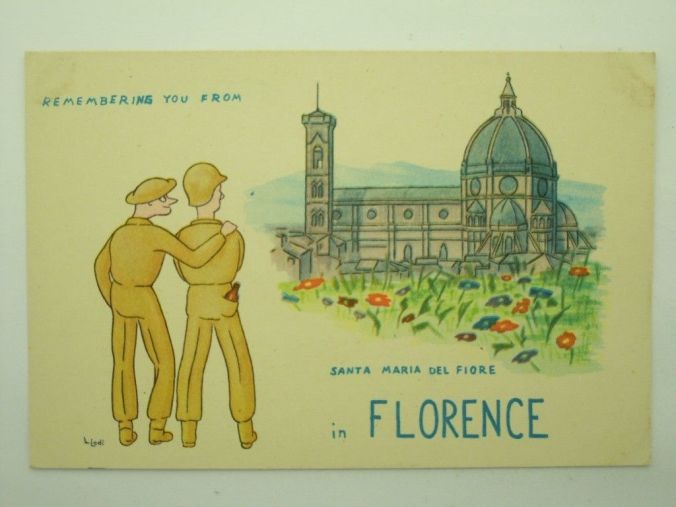
These wonderful postcards, with their simple illustrations of the Florentine architectural masterpieces, tell a poignant story.

s-l225

s-l1600