Emilio Pucci, part 1

The work of Emilio Pucci (1914-92), Florentine fashion designer and Marchese di Barsento, has been on my radar all of my life. I absolutely love it.
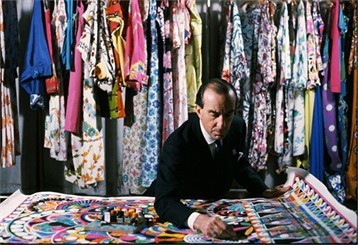
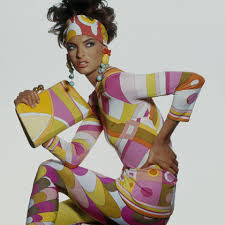
 

pucci_0x245

images-20


I mean, what’s not to love?

Pucci was born in 1914 to one of Florence’s oldest aristocratic families, and he both lived and worked at his family’s Palazzo Pucci, which is a stone’s throw from the Duomo in Florence, for much of his life. Check out his Palazzo here.


Pucci had an amazingly wide variety of interests and was an avid sportsman, who swam, skied, fenced, played tennis and raced cars. He attended the University of Milan for two years and then studied agriculture, of all things, in the United States at the University of Georgia. In 1935 he started school at Reed College in Oregon, where he eventually received a Master’s degree in social science. Pucci was on the ski team at Reed and his first real fashion design was created for this team.
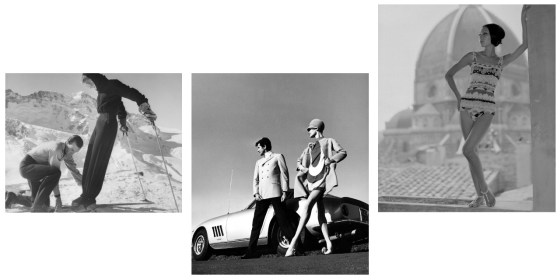
Pucci10

That same year he was awarded a (an honorary degree one has to suppose ) laurea in poli science from the University of Florence.   Always invested in Italian politics, even at Reed College he was known as a staunch defender of the Fascist regime in Italy.

When Pucci returned home he joined the Italian air force, rising to the rank of captain.  He became entwined in the lives of Benito Mussolini’s oldest daughter, Edda and her husband, which led to Pucci being arrested and tortured by the Gestapo.  He lived in Switzerland until the war ended.

Pucci’s first recognition for his design was in the 1948 issue of Harper’s Bazaar. He had designed some ski wear for a friend, utilizing the new stretch fabrics, and his sleek new designs caused a sensation.
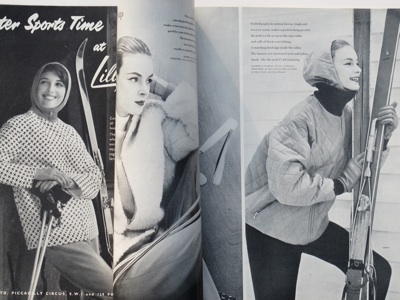
Pucci11

Several American manufacturers offered to produce this glamorous new ski wear, but Pucci instead set up his own atelier in the fashionable resort of Canzone del Mare on Capri, which was a brilliant strategy, for Capri was a destination for the world’s new international jet set.

Pucci’s business thrived almost immediately.  He experimented with the stretch fabrics to create a swimwear line in 1949, but found his voice in designing brightly-colored patterned silk scarves. Neiman Marcus, the high end American retailer, noticed Pucci’s scarves and suggested Pucci create blouses and then a popular line of wrinkle-free printed silk dresses.  He seemed to be made of gold, for his designs caught on immediately.  He opened a boutique in Rome.  Pucci was a hot designer commodity by the mid 1950s.

Marilyn Monroe discovered Pucci in the early 1960s and enhanced the designer by wearing his creations in some of her last photo shoots.  Many celebrities wore Pucci, including Sophia Loren and Jacqueline Kennedy.

In 1959, Pucci decided to create a line of lingerie.  Since he’d had some textile related issues in Italy in the 1940s, he deiced to give his lingerie contract to Formfit-Rogers mills in Chicago. It was a successful venture. In 1959, Pucci met Cristina Nannini, a Roman baroness, whom he married.

During the go-go 1960s, Braniff International Airways engaged Pucci to update the airline’s image by designing new clothing for the flight attendants (or stewardesses–as the almost exclusively female crew were then known).
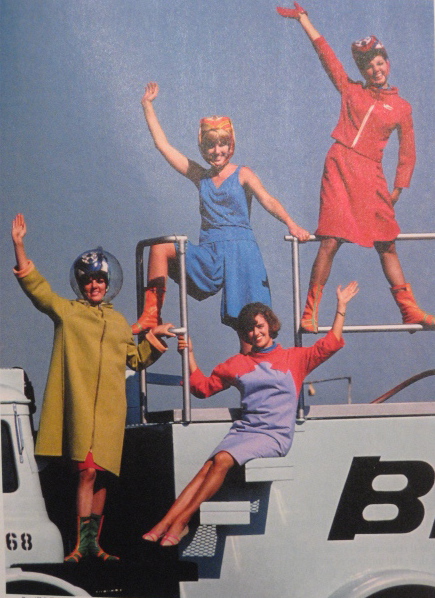
BraniffAd

Pucci  designed six complete collections for Braniff hostesses, pilots and ground crew between 1965 and 1974. The 1968 garments were copied for the very popular Barbie doll.


Among the more unusual aspects of Pucci’s Braniff designs was the so-called “bubble helmet” – a clear plastic hood worn by flight attendants between terminal building and aircraft to protect their hairdos from rain and the blast of jet engines.


Pucci’s influence even extended all the way to the Moon! He suggested the three bird motif for the Apollo 15 mission patch.

Apollo 15-insignia.png

 https://www.youtube.com/watch?v=rOUgbkilOb0


Best aperitivo in Firenze?

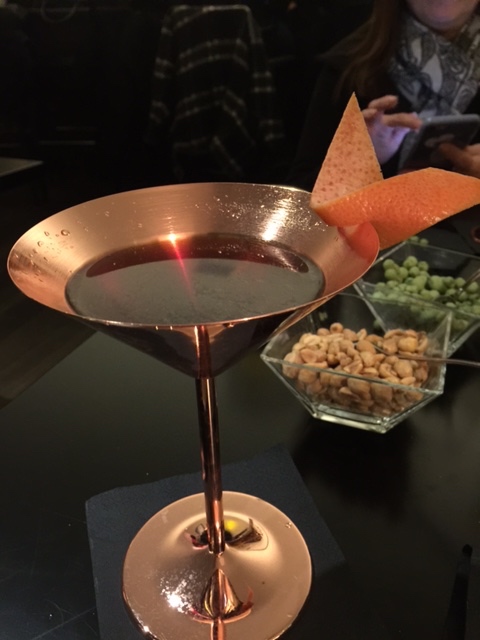
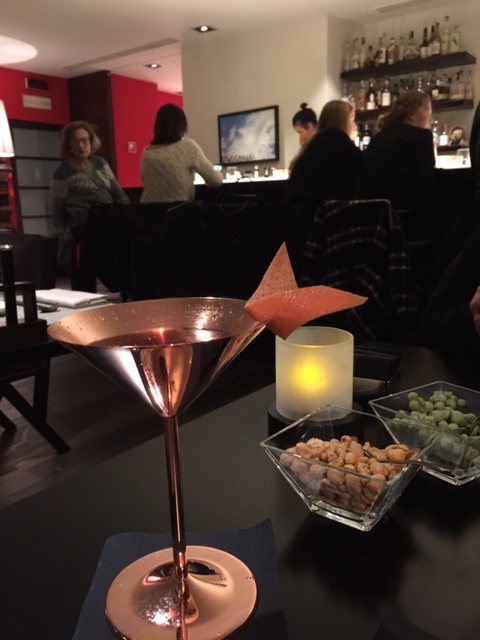
I’m not a huge drinker by any means, but so far the best aperitivo I’ve enjoyed in Florence is at the Fusion Bar at the Gallery Hotel Art.

img_8932

Their craft cocktail menu will amaze you.  I had a “Medley” which is made with bourbon and other spirits.  It was very nice.


img_8935

Of course nice nibbles (as above) are appreciated, but when they brought out the tapas as part of the happy hour, I was gobsmacked.  Great food!  Unfortunately, I didn’t get any pictures.  You’ll just have to take my word for it!

img_8936

My companion ordered a smoked cocktail, and it really was smoked!

img_8937

As you might expect, the art installations at the Gallery Hotel Art Hotel are typically pretty amazing as well.  Currently they have an installation of giant pin wheels gracing the exterior of the hotel.

img_8505img_8506img_8507img_8511

img_8504


And the very best part of the whole thing, for me, is that I live right across the Viccolo from the bar!

Epiphany part 2.

Who needs words when you have good pictures?  So, andiamo!

OLYMPUS DIGITAL CAMERA

OLYMPUS DIGITAL CAMERA

OLYMPUS DIGITAL CAMERA

OLYMPUS DIGITAL CAMERA

OLYMPUS DIGITAL CAMERA

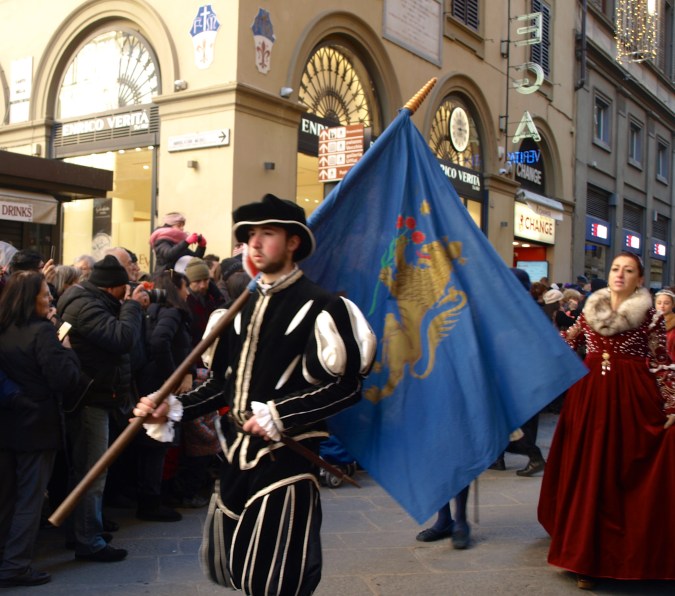
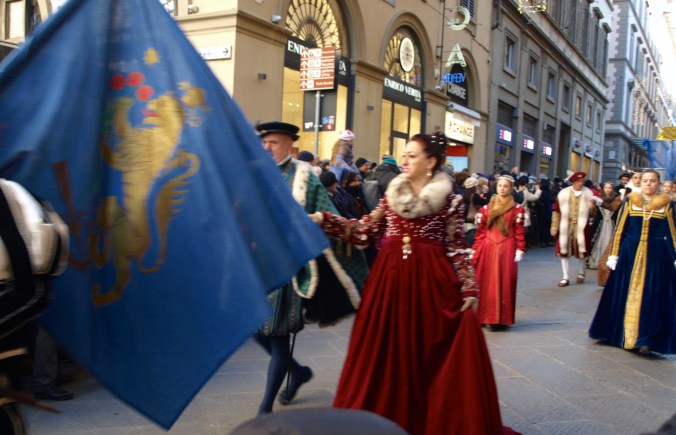
The Lords & Ladies arrayed in velvets, laces and furs.

OLYMPUS DIGITAL CAMERA

No detail overlooked.  Even the hair is dressed!

OLYMPUS DIGITAL CAMERA

OLYMPUS DIGITAL CAMERA

OLYMPUS DIGITAL CAMERA

OLYMPUS DIGITAL CAMERA

OLYMPUS DIGITAL CAMERA

This Lady stole my heart.  I adore her costume and hair dressing.

OLYMPUS DIGITAL CAMERA

OLYMPUS DIGITAL CAMERA

OLYMPUS DIGITAL CAMERA

OLYMPUS DIGITAL CAMERA


cropped-p1017378.jpg

The procession as it passes the Uffizi.


cropped-p1017376.jpg


cropped-p1017243.jpg


OLYMPUS DIGITAL CAMERA

OLYMPUS DIGITAL CAMERA


OLYMPUS DIGITAL CAMERA

OLYMPUS DIGITAL CAMERA


OLYMPUS DIGITAL CAMERA

OLYMPUS DIGITAL CAMERA


OLYMPUS DIGITAL CAMERA

OLYMPUS DIGITAL CAMERA


OLYMPUS DIGITAL CAMERA

OLYMPUS DIGITAL CAMERA


OLYMPUS DIGITAL CAMERA

OLYMPUS DIGITAL CAMERA


OLYMPUS DIGITAL CAMERA

There was a harlequin adding levity to the proceedings.


OLYMPUS DIGITAL CAMERA

OLYMPUS DIGITAL CAMERA

OLYMPUS DIGITAL CAMERA

OLYMPUS DIGITAL CAMERA


OLYMPUS DIGITAL CAMERA

OLYMPUS DIGITAL CAMERA


OLYMPUS DIGITAL CAMERA

OLYMPUS DIGITAL CAMERA


OLYMPUS DIGITAL CAMERA

OLYMPUS DIGITAL CAMERA


OLYMPUS DIGITAL CAMERA

OLYMPUS DIGITAL CAMERA


OLYMPUS DIGITAL CAMERA

Religious figures were included.


OLYMPUS DIGITAL CAMERA

OLYMPUS DIGITAL CAMERA


OLYMPUS DIGITAL CAMERA

OLYMPUS DIGITAL CAMERA


OLYMPUS DIGITAL CAMERA

OLYMPUS DIGITAL CAMERA


OLYMPUS DIGITAL CAMERA

This Lady carried her falcon.


OLYMPUS DIGITAL CAMERA

OLYMPUS DIGITAL CAMERA


OLYMPUS DIGITAL CAMERA

OLYMPUS DIGITAL CAMERA


OLYMPUS DIGITAL CAMERA

OLYMPUS DIGITAL CAMERA


OLYMPUS DIGITAL CAMERA

OLYMPUS DIGITAL CAMERA


OLYMPUS DIGITAL CAMERA


OLYMPUS DIGITAL CAMERA

OLYMPUS DIGITAL CAMERA


OLYMPUS DIGITAL CAMERA

OLYMPUS DIGITAL CAMERA


OLYMPUS DIGITAL CAMERA

OLYMPUS DIGITAL CAMERA


OLYMPUS DIGITAL CAMERA

OLYMPUS DIGITAL CAMERA


OLYMPUS DIGITAL CAMERA

OLYMPUS DIGITAL CAMERA


OLYMPUS DIGITAL CAMERA

OLYMPUS DIGITAL CAMERA


OLYMPUS DIGITAL CAMERA

OLYMPUS DIGITAL CAMERA


OLYMPUS DIGITAL CAMERA

OLYMPUS DIGITAL CAMERA

Epiphany in Florence!

That headline could mean many different things!

But, today I use it to refer to the national holiday in Italy, which happens every 6 January.  The holiday commemorates both the day the three pagan kings found the infant Jesus and presented him with gold, frankincense and myrrh and, in Florence, the modern holiday also pays homage to the Medici family and their tradition of reenacting the visit of the Magi.

Epiphany is, of course, the Christian feast day celebrating the revelation of God in his Son as human in Jesus Christ. In Western Christianity, the feast commemorates principally (but not solely) the visit of the Magi to the Christ child, and thus the physical manifestation of Jesus to the Gentiles.

Interestingly enough, when we in American refer to the “12 days of Christmas” and start from December 1st, we’ve got it all wrong.  The first day of Christmas is actually 25 December and the 12th day is 5 January.  Just one of many changes we have made!  In other words: the evening of 5 January is 12th night.

In Florence, 6 January is a holiday (as it is throughout Italy).  We didn’t even have school!  Yippee!  Since the 6th fell on a Friday, this weekend is a long one for most Italians.  Benissimo!

OK, since I’m in Florence, let’s start with Florence.  Everything I’m discussing can be found in these references:

https://www.visitflorence.com/florence-events/cavalcade-

magi.htmlhttp://www.theflorentine.net/lifestyle/2014/12/cavalcata-dei-magi/

http://www.duomofirenze.it/feste/epifania_eng.htm
Although it isn’t known precisely when the parade known as “The Cavalcade of the Magi” first began in Florence, documents show it existed by 1390. Every three years (after 1447, every five years), the wealthy powerful lay confraternity of the Magi organized a lavish pageant on Epiphany, which also celebrated the day as the time that John the Baptist, patron saint of the city of Florence, baptised Christ in the Jordan River.

Everything is so complicated.

Back in the Renaissance period, the confraternity met regularly at San Marco, a Medici church.  High-ranking members of that ruling family participated in the pageant, for the Medici’s in particular esteemed the Biblical Magi. The pageant also included influential community leaders and distinguished men of letters.

After 1417, the Cavalcade was financed by the Signoria of the Florentine Republic through a tax it imposed on the Jews; they had obviously never heard of political correctness.

The original procession took a different route than what is done today: three separate groups of participants converged from three different areas of town, meeting in front of the Baptistery (and then, from 1429, in the Piazza della Signoria) and then they all went together to San Marco church.

However, in 1478, the procession was suspended, probably because of the Pazzi conspiracy, and it would seem that Lorenzo the Magnificent, who survived the attack, had no intention of providing other occasions for potentially angry crowds to mill around the city. The procession resumed a decade later. However, when the Medicis were banished from the city in 1494, Savonarola, despite having taken part in the procession in the past, suppressed it, now considering it a perverse “Medici thing.”

One of my favorite Renaissance frescos is in the Chapel in the Medici Palace in Florence. Cosimo de’Medici had  this luxurious fresco painted in 1459 in the chapel of the family mansion in Via Larga by the artist Benozzo Gozzoli. In these frescoes, numerous Medici family members are depicted, including Giuliano and probably also Lorenzo the Magnificent. When Cosimo would withdraw for brief periods to share the friars’ life at San Marco, he was housed in a cell frescoed by Fra Angelico with The Magi Presenting their Gifts to the Christ Child. Some years later, in 1482, Marsilio Ficino, a philosopher and Cathedral Canon closely linked to the Medici, composed a treatise entitled “The Star of the Magi” (De stella Magorum).  There can be no question that the Medici family held a special place in their hearts for the moment from the Scriptures in which the Magi brought gifts to the Christ Child.

Although Savonarola was able to stop the parade in 1494, the celebration was resurrected in 1997 during celebrations of the Seventh Centennial of the Florence Cathedral. Grazie a dio!

Thus, as already stated, every year since 1997, on 6 January or the Feast of the Epiphany, the Cavalcade of the Magi again takes place. It starts at the Pitti Palace, wends its way through Piazza della Signoria and arrives finally in Piazza del Duomo, in the area between the Cathedral and the Baptistery formerly known as ‘Paradise’.
The three Magi on horseback, wearing Renaissance costumes inspired by those in Benozzo Gozzoli’s frescoes, are accompanied by a cortège of hundreds of other costumed personages, among whom the members of Florence’s Historical Football Association and representatives of towns in the Province of Florence, along with horsemen, footmen and standard bearers. The pageant includes Ladies and Lords, Knights, country folk, soldiers, religious figures and more: drummers and the sbandieratori (flag-throwing company of the Uffizi) enchants the public with their skills in throwing and waving their flags along the way and in Piazza della Signoria.
Once the cavalcade reaches il Duomo, the solemn proclamation of the Epiphany passage from the Gospel of Saint Matthew is given by the Archbishop. Then the actors of the Magi, accompanied by the many children whose parents bring them to see the Cavalcade, present their symbolic gifts of gold, frankincense and myrrh to the Christ Child, who is the main ‘actor’ in a real-life crèche erected in the Piazza, with an ox, donkey, and many other farm creatures brought in from the Tuscan countryside.


OK, OK, va bene, enough talk! Let’s look at my pictures!  I’ve got so many, I’ll post them in several posts over the next week or so.

OLYMPUS DIGITAL CAMERA

The Cavalcade begins at Palazzo Pitti.  Here are the Three Wise Men, mounted up and ready to rumble.


OLYMPUS DIGITAL CAMERA

The modern costumes are based upon the gorgeous Benozzo Gozzoil frescoes.


OLYMPUS DIGITAL CAMERA

Many attendants attend the Magi.


OLYMPUS DIGITAL CAMERA

Che bella!


OLYMPUS DIGITAL CAMERA

Distinguished attendant with pheasant feather in his cap


OLYMPUS DIGITAL CAMERA

Mounted attendants (here’s thinking of you dad!)


OLYMPUS DIGITAL CAMERA

More


OLYMPUS DIGITAL CAMERA

This attendant is happy to make his fabulous equine perform


OLYMPUS DIGITAL CAMERA

Fantastico!


OLYMPUS DIGITAL CAMERA

The Magi are preceded by the pages bearing their gifts


OLYMPUS DIGITAL CAMERA

Caskets full of gold, frankincense and myrrh for the new-born king!


OLYMPUS DIGITAL CAMERA

The pages are modern boys and they occasionally act like that!  It’s very cute!


OLYMPUS DIGITAL CAMERA

Men with lances


OLYMPUS DIGITAL CAMERA

Many attendants in fabulous dress


OLYMPUS DIGITAL CAMERA

OLYMPUS DIGITAL CAMERA


OLYMPUS DIGITAL CAMERA

Drummer boys (and girls)


OLYMPUS DIGITAL CAMERA

Drummers


OLYMPUS DIGITAL CAMERA

Let the procession begin, following the Kings


OLYMPUS DIGITAL CAMERA

She carries holly and greens


OLYMPUS DIGITAL CAMERA

Attractive couples of various ages follow