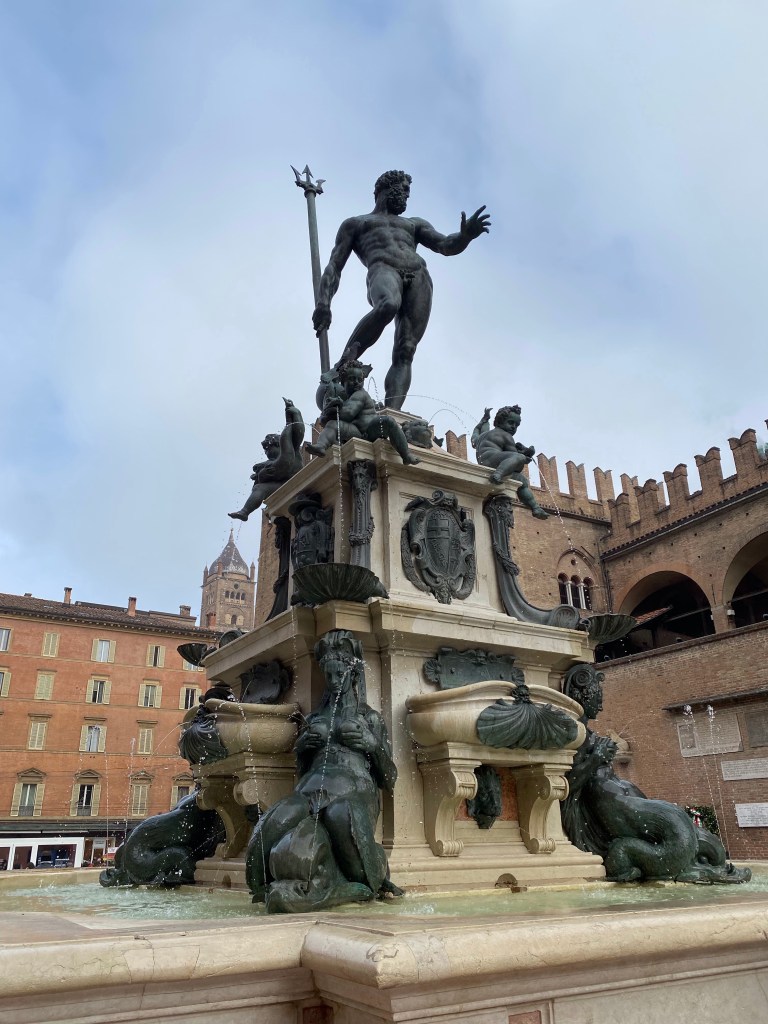
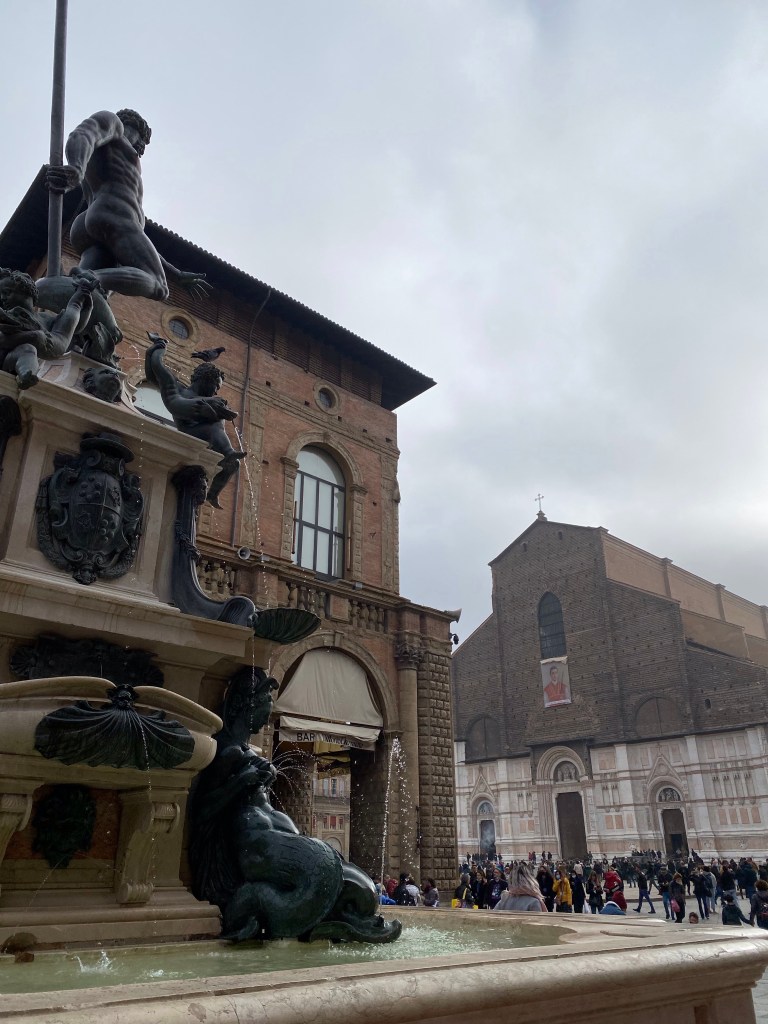
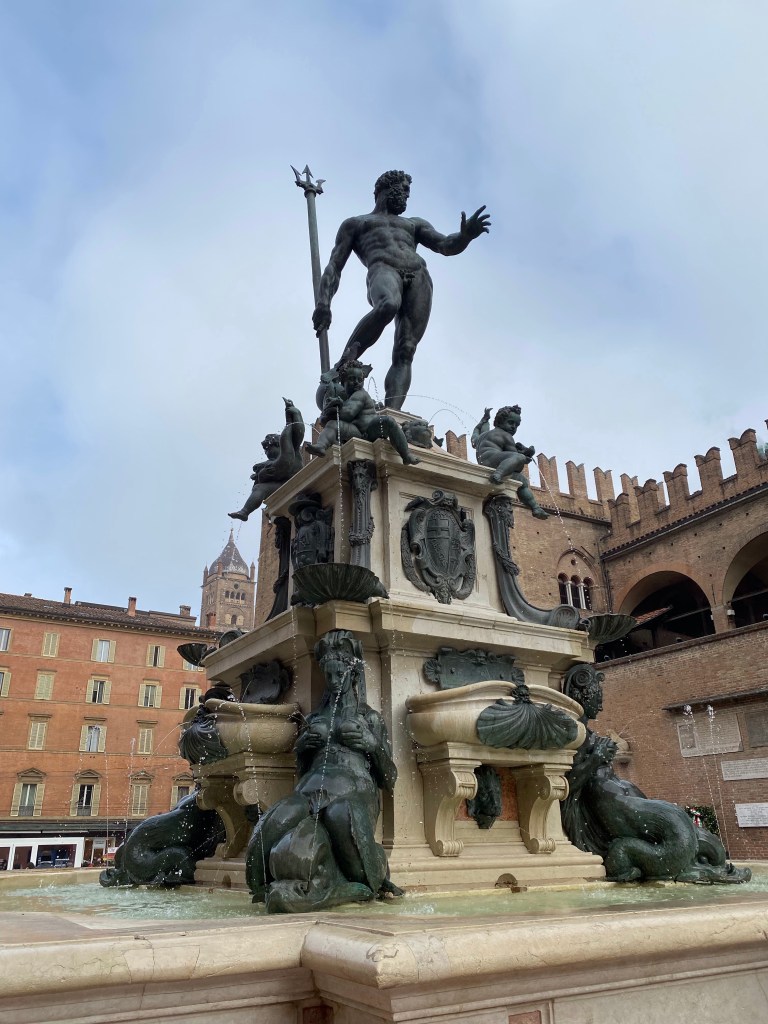
The Fountain of Neptune is a monumental civic fountain located in Piazza del Nettuno, next to Piazza Maggiore, in Bologna. The fountain is a model example of Mannerist taste of the Italian courtly elite in the mid-sixteenth century.
The construction of the fountain was commissioned by the Cardinal Legate Charles Borromeo, to symbolize the fortunate recent election of Borromeo’s uncle as Pope Pius IV. To clear space for the fountain, an entire edifice had to be demolished.
The design and assembly of the fountain was completed by the Palermitan architect Tommaso Laureti in 1563. The fountain was completed in 1565.
The over-life-size bronze figure of the god Neptune was completed and fixed in place around 1566. The statue was an early design by Giambologna, who had submitted a model for the Fountain of Neptune in Florence, but had lost the commission to Baccio Bandinelli.
The Neptune Fountain has its base on three steps, on which it is situated a tank made of local stone and covered by marble from Verona. In the center of the tank, there is a base where there are four Nereids who holding their breasts, from which jets of water emerge. The base is decorated with pontifical emblems, ornaments that – connected to four cherubs – hold dolphins (which are allegorical representation of major rivers from the then-known corners of the world: the Ganges, the Nile, the Amazon River, and the Danube.) In the center of this base raises the majestic figure of the Neptune sculpted by Giambologna; the statue is a typical expressions of the manneristic theatricality.
The Neptune stretches his left hand in a lordly gesture, appearing to be aiming to placate the waves; this posture is interpreted as symbolic exaltation of the new power of the Pope Pius IV: just as Neptune was the master of the seas, the Pope was the master of Bologna and of the world.
Inscriptions
On the four sides of the marble tank there are four inscriptions in Latin provide the background to the fountain’s construction:
Fori Ornamento (to decorate the square);
Aere Publico (built thanks to public money);
Populi Commodo (built for the people);
MDLXIIII (built in 1564; the date is wrong though, since the fountain was officially finished in 1566).
The four main sources of political power for Bologna then are also inscribed on the base:
Pius IIII Pont. Max (Pope Pius IV)
Petrus Donatus Caesius Gubernator;
Carolus Borromaeus Cardinalis; (Cardinal Carlo Borromeo)
S.P.Q.B. (Senatus Populusque Bonononiensis) (Senate and the People of Bologna)
The trident of the Neptune’s statue inspired and it was used by Maserati brothers as the emblem for their first car, the Maserati Tipo 26. The logo was created in 1920 by one of the brothers, Mario Maserati, at the suggestion of a family friend, Marquis Diego de Sterlich. This is still today the logo of the Maserati car company.
The fountain and its sculpture are one of the most iconic symbols of the city and references to them can be found in many symbols, commercials and logos. This includes the historical students’ fraternity (Goliardia) “Excelsa Neptuni Balla”, on whose emblem figure two tridents.
The trident logo of the Maserati car company was considered particularly appropriate for the sports car company due to the fact that Neptune represents strength and vigour; additionally the statue is a characteristic symbol of the company’s original home city.


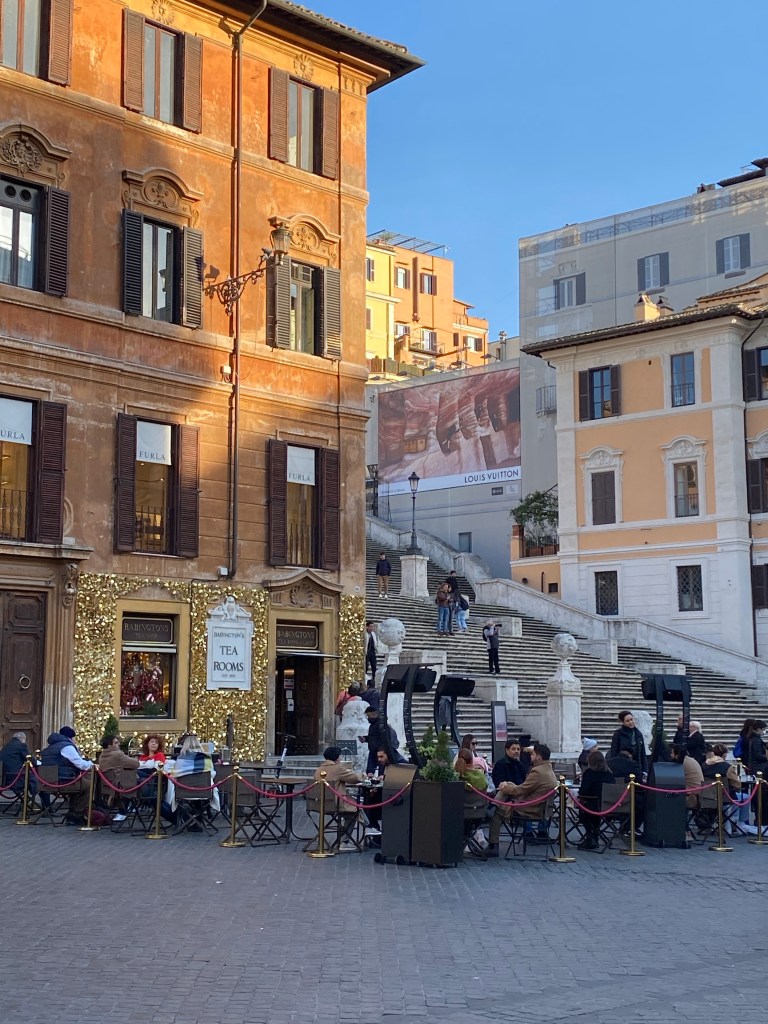
Before the season is completely finished, I must share these views from Rome! You might expect Rome to go all out for Christmas, and it does!
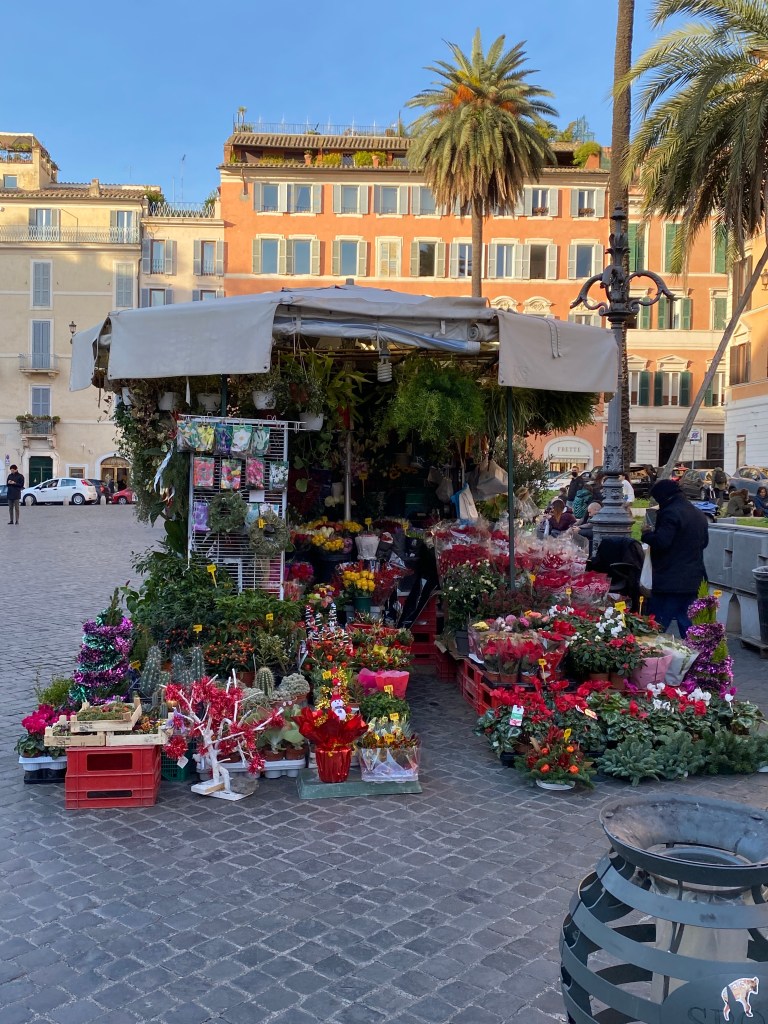
You wouldn’t be disappointed!
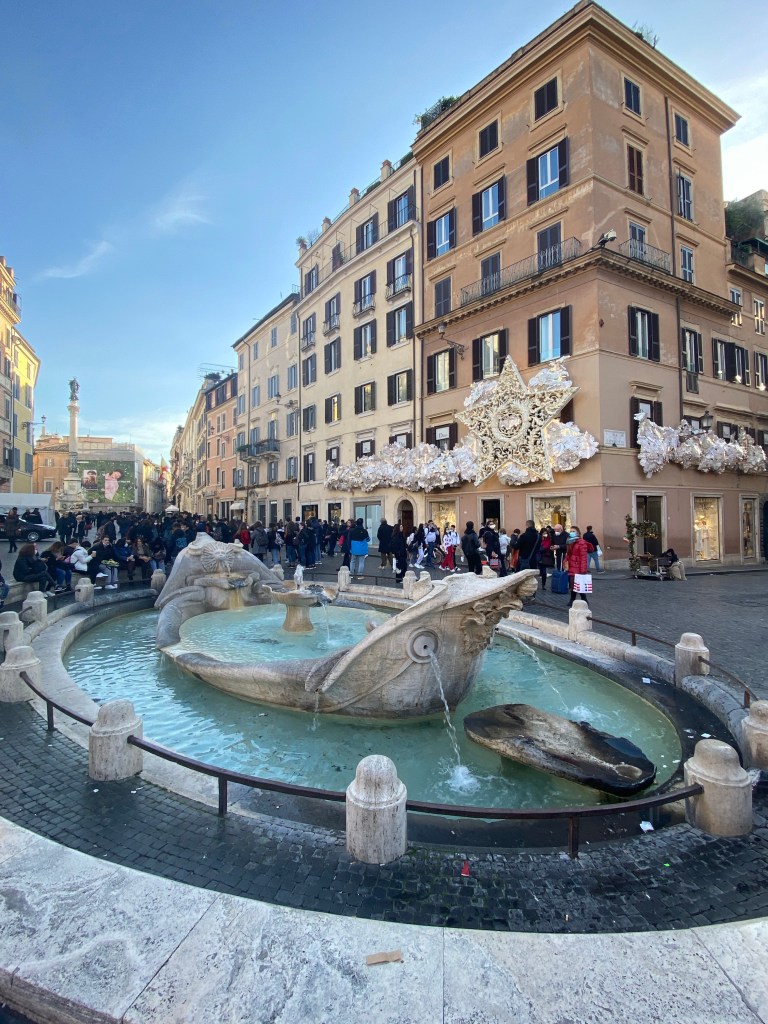
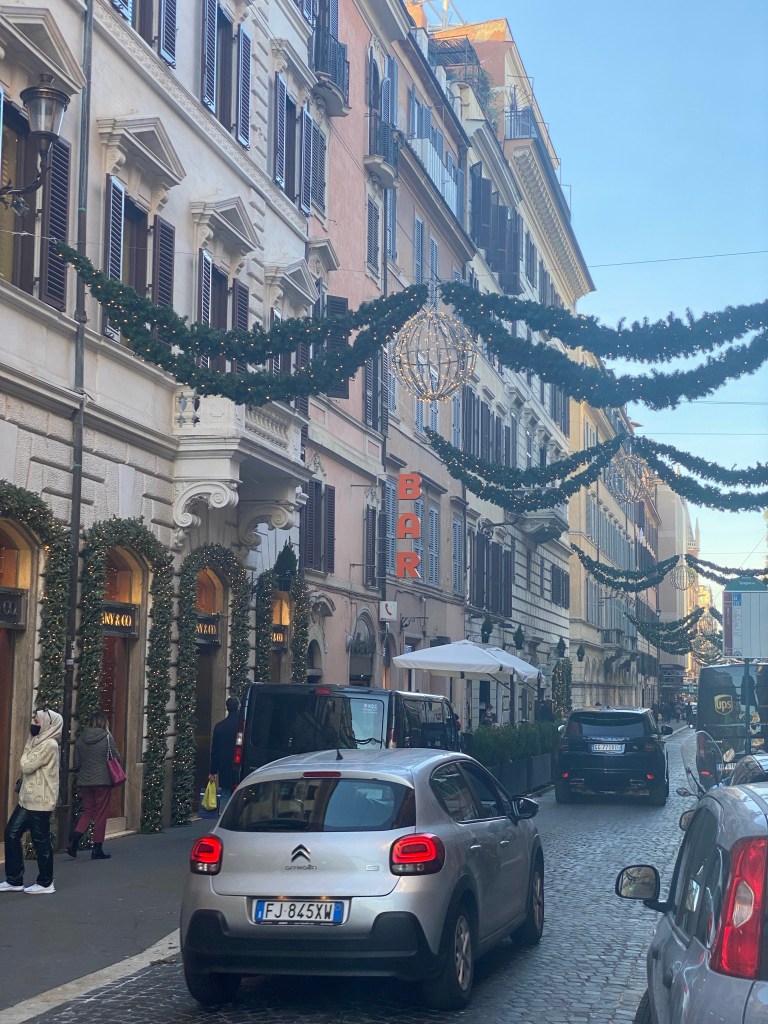
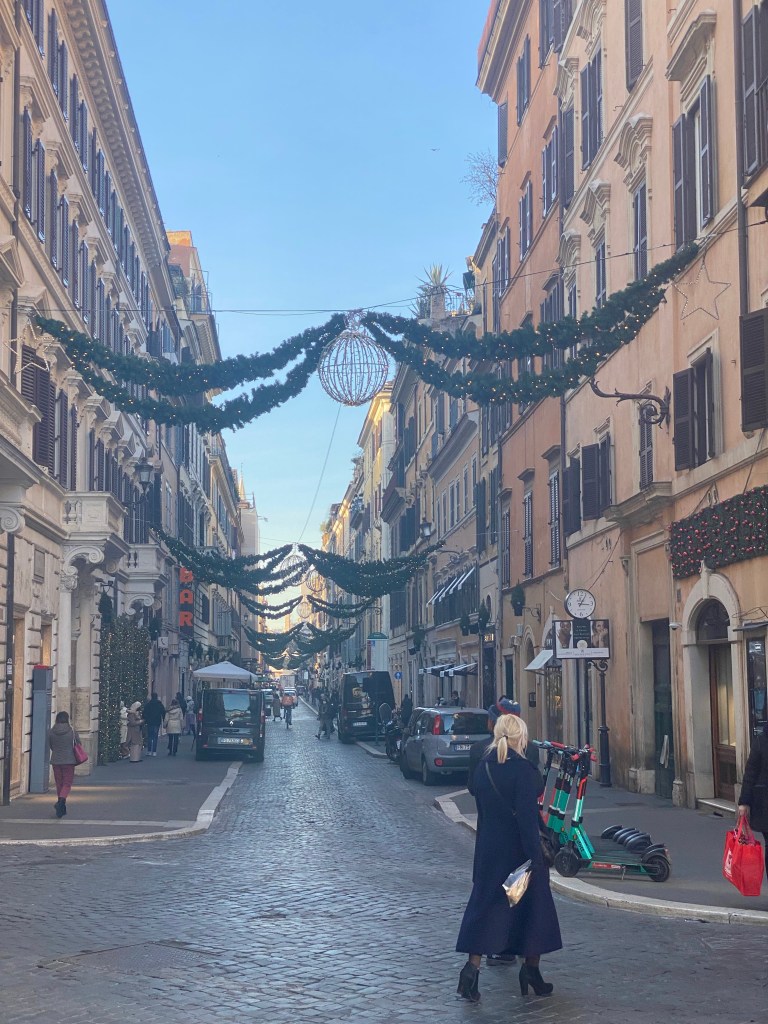
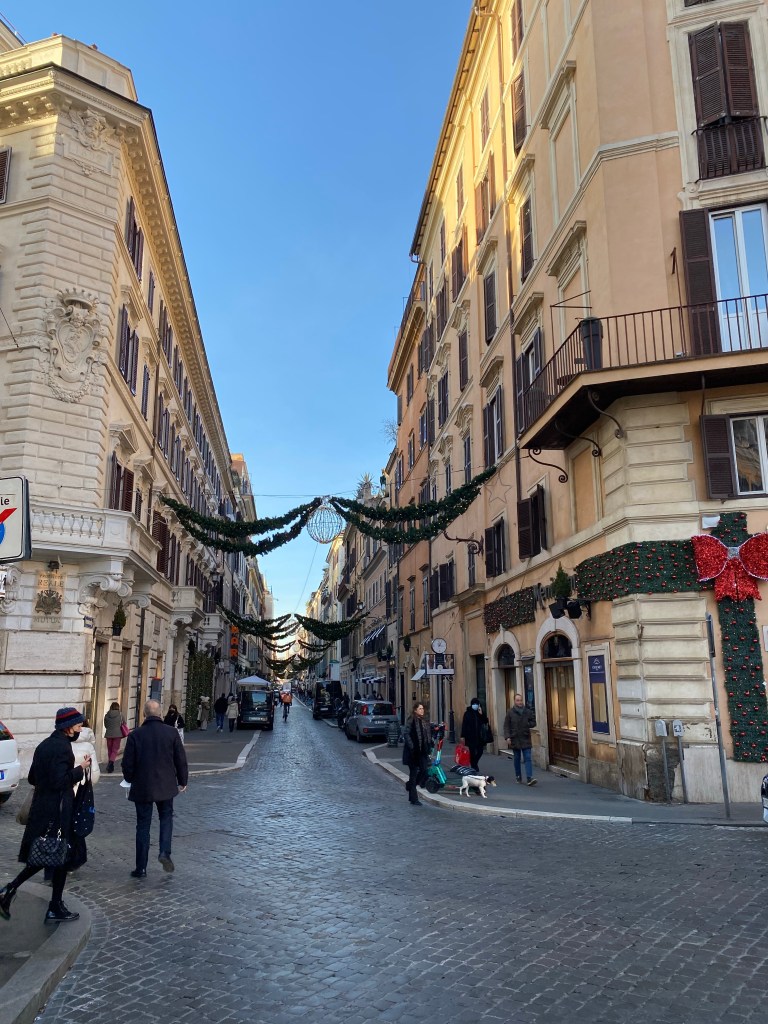
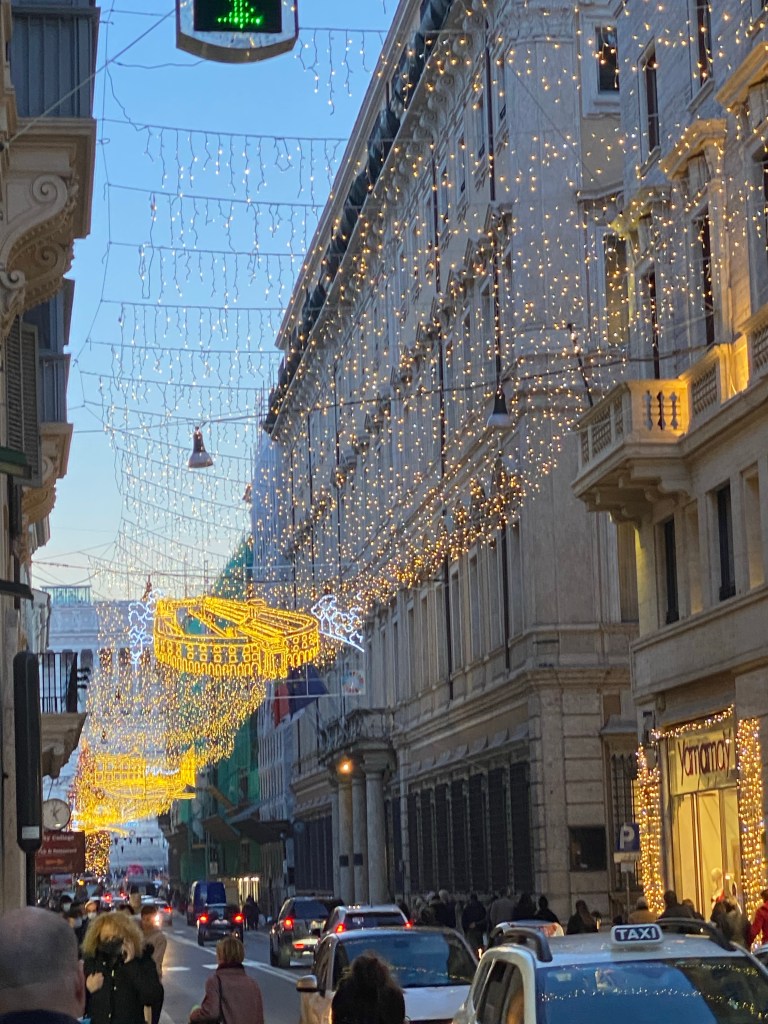
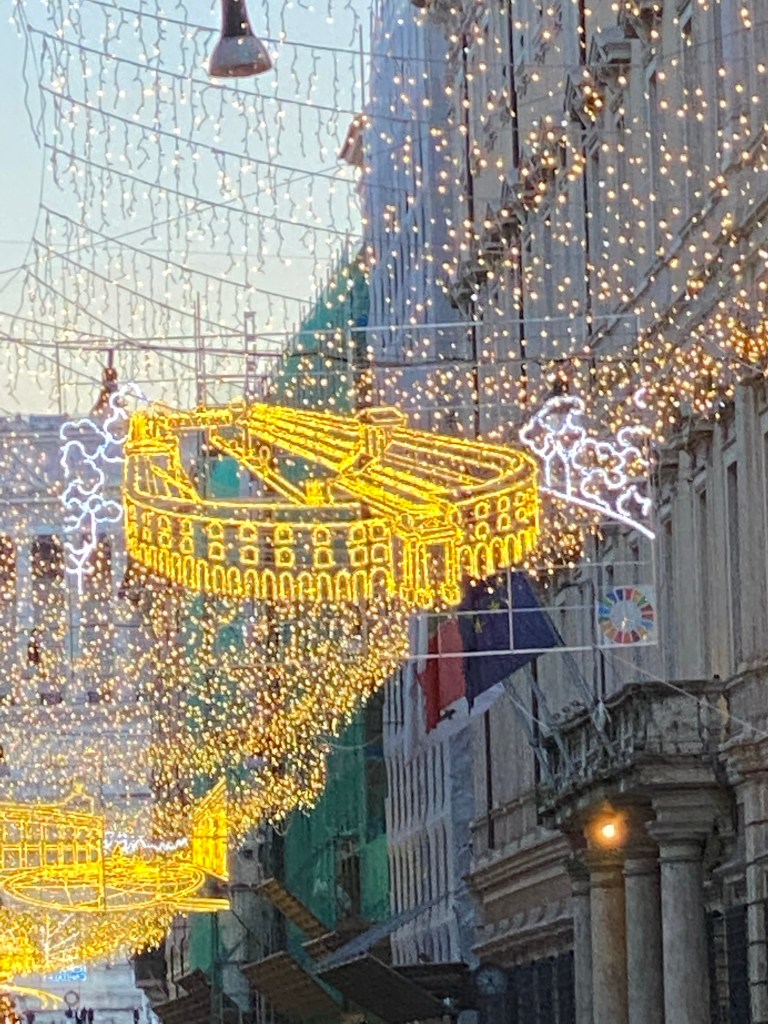
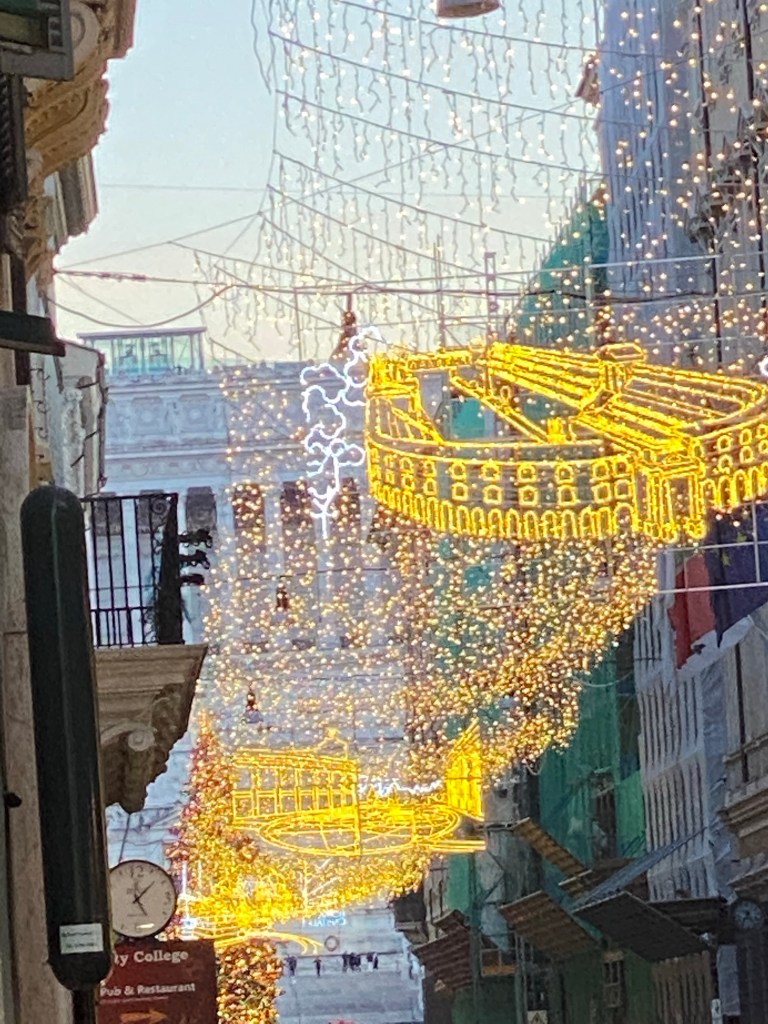
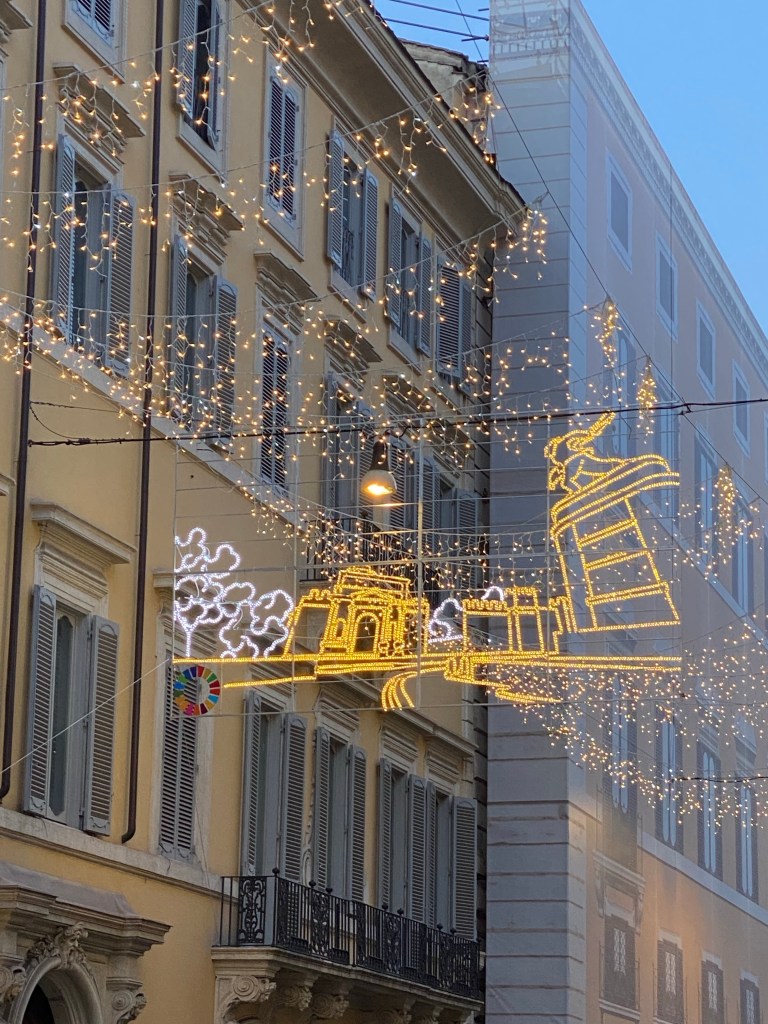
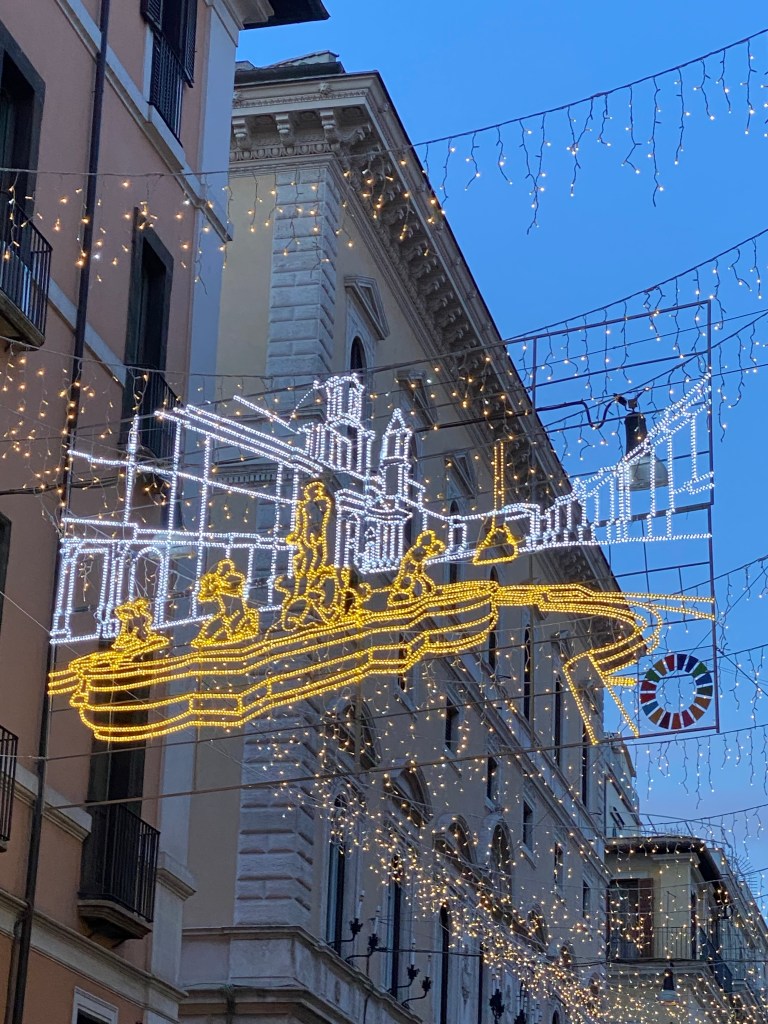
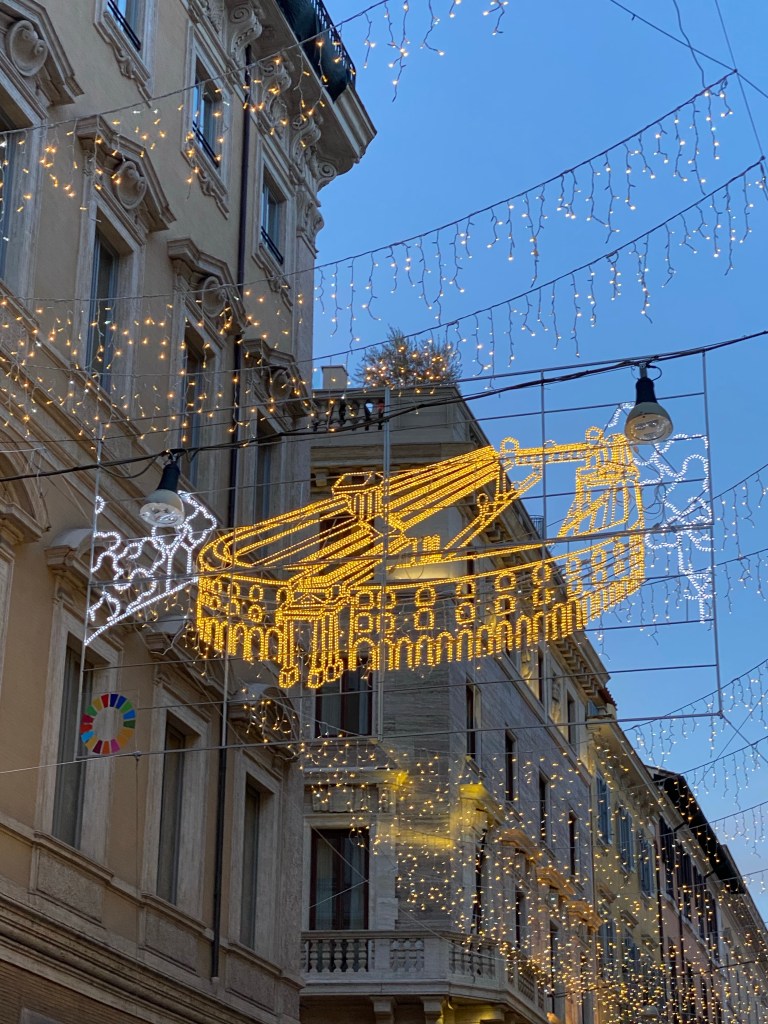
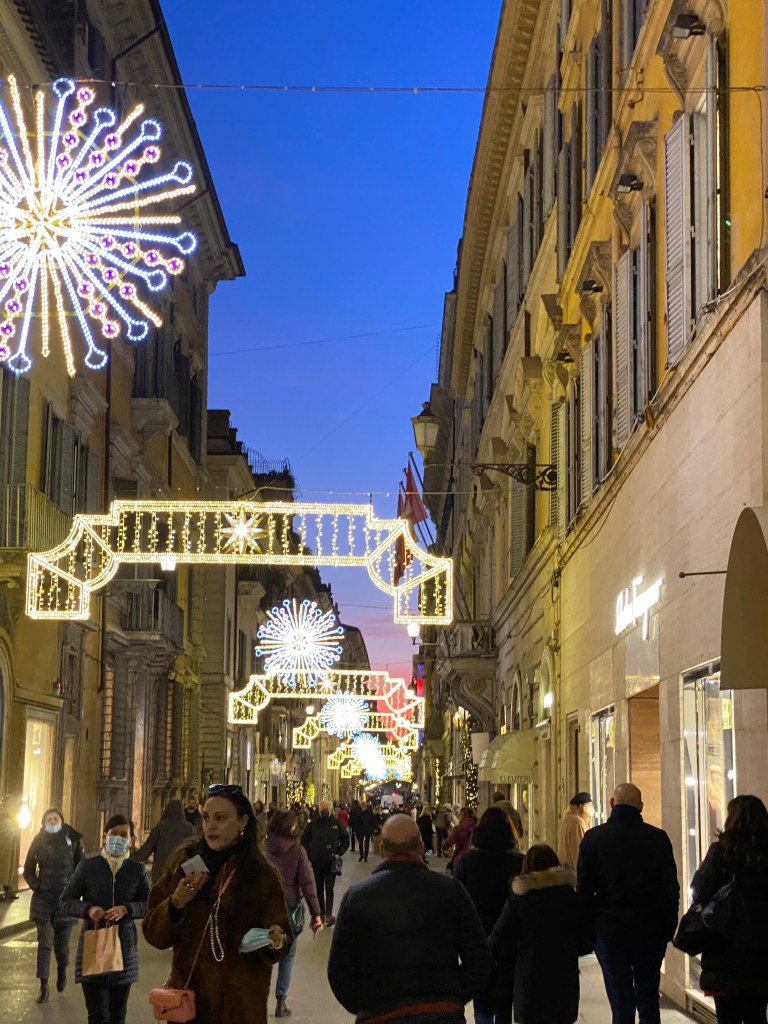
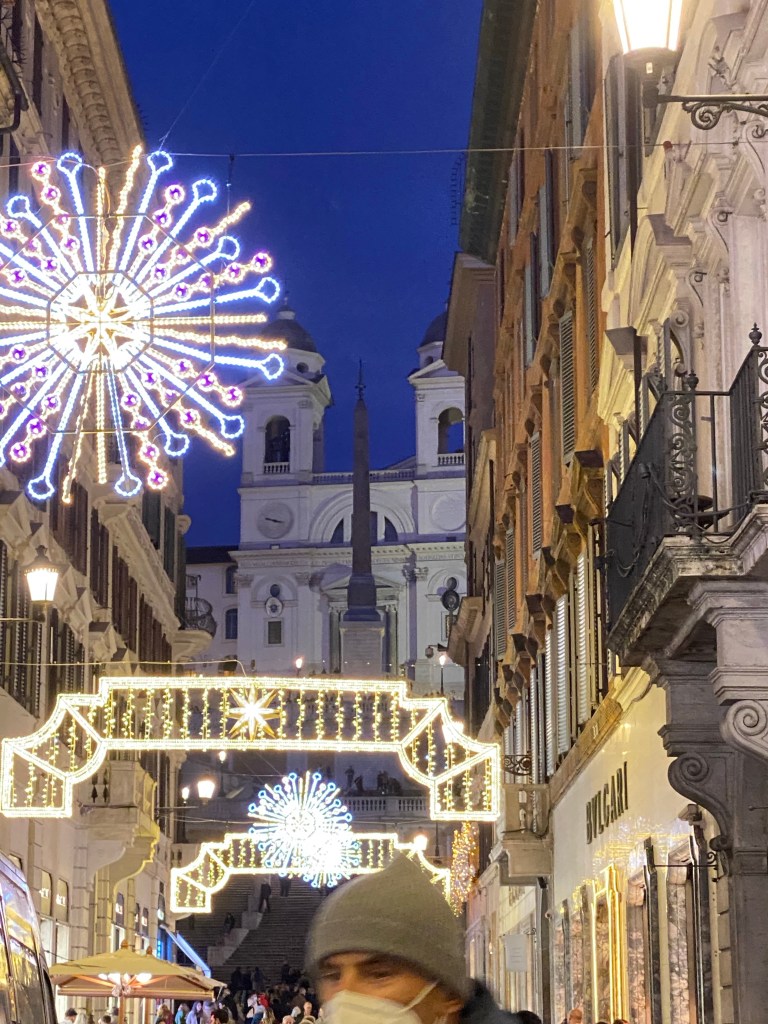
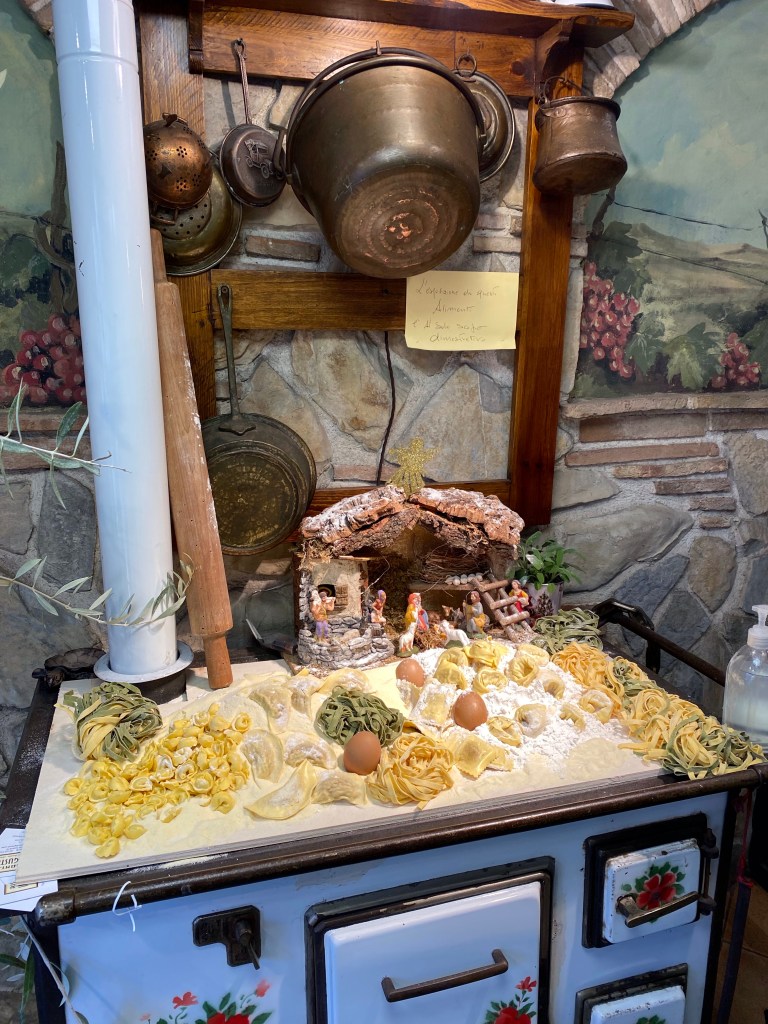
The crèche in a field of homemade pasta. My field of dreams! NB: the crib is always empty until midnight in the 25th. Then the child appears on his birth day.
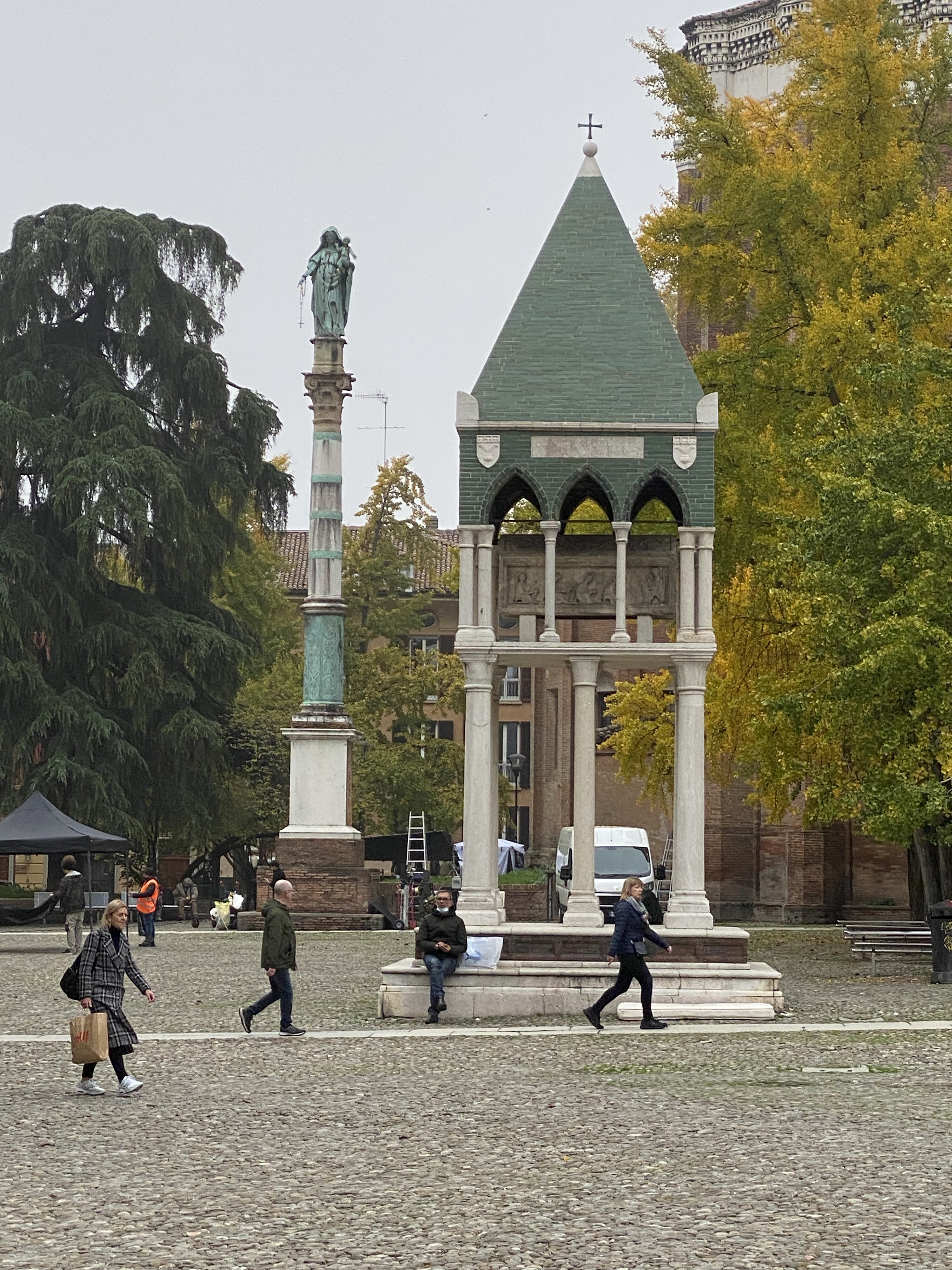
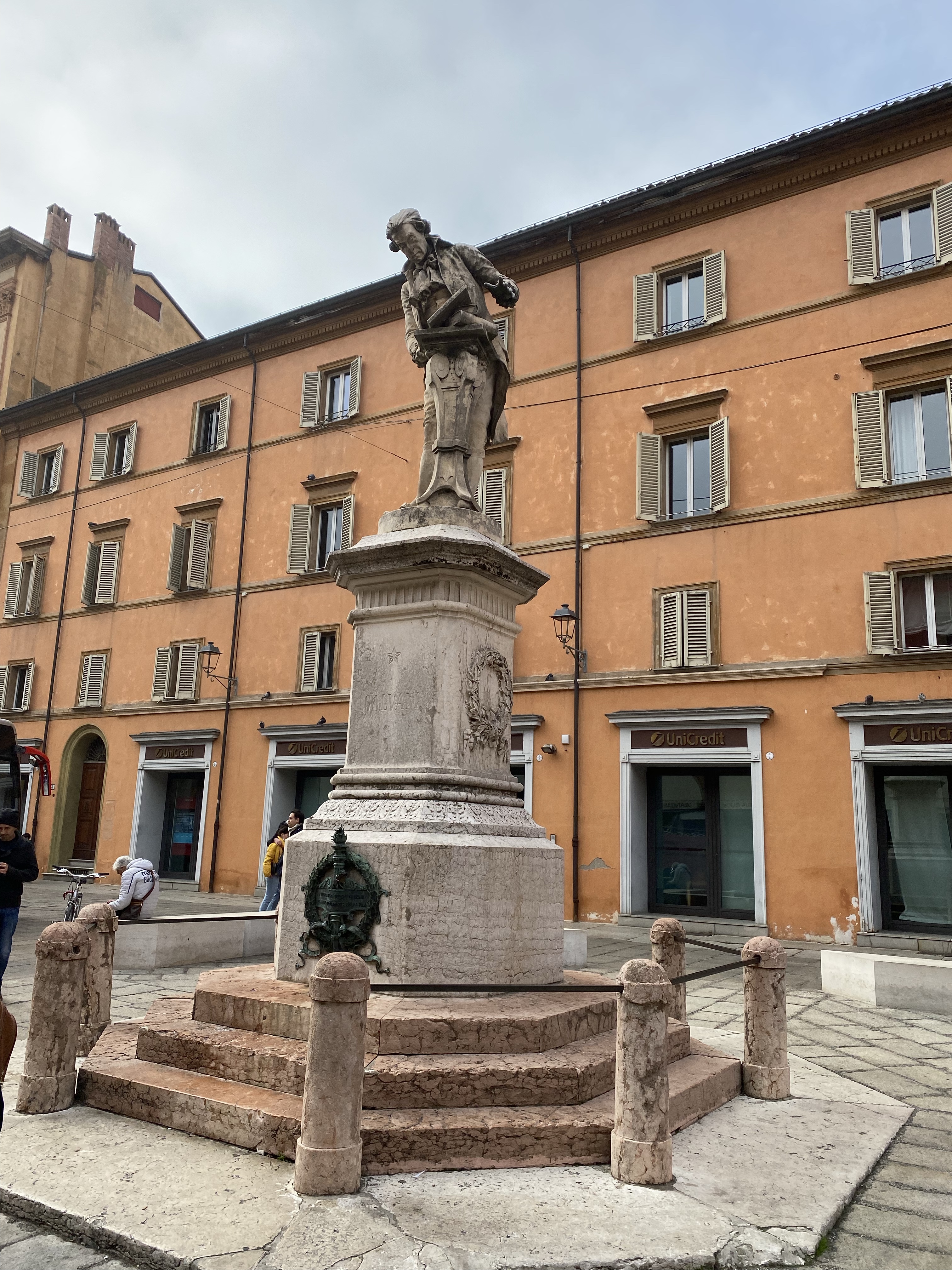
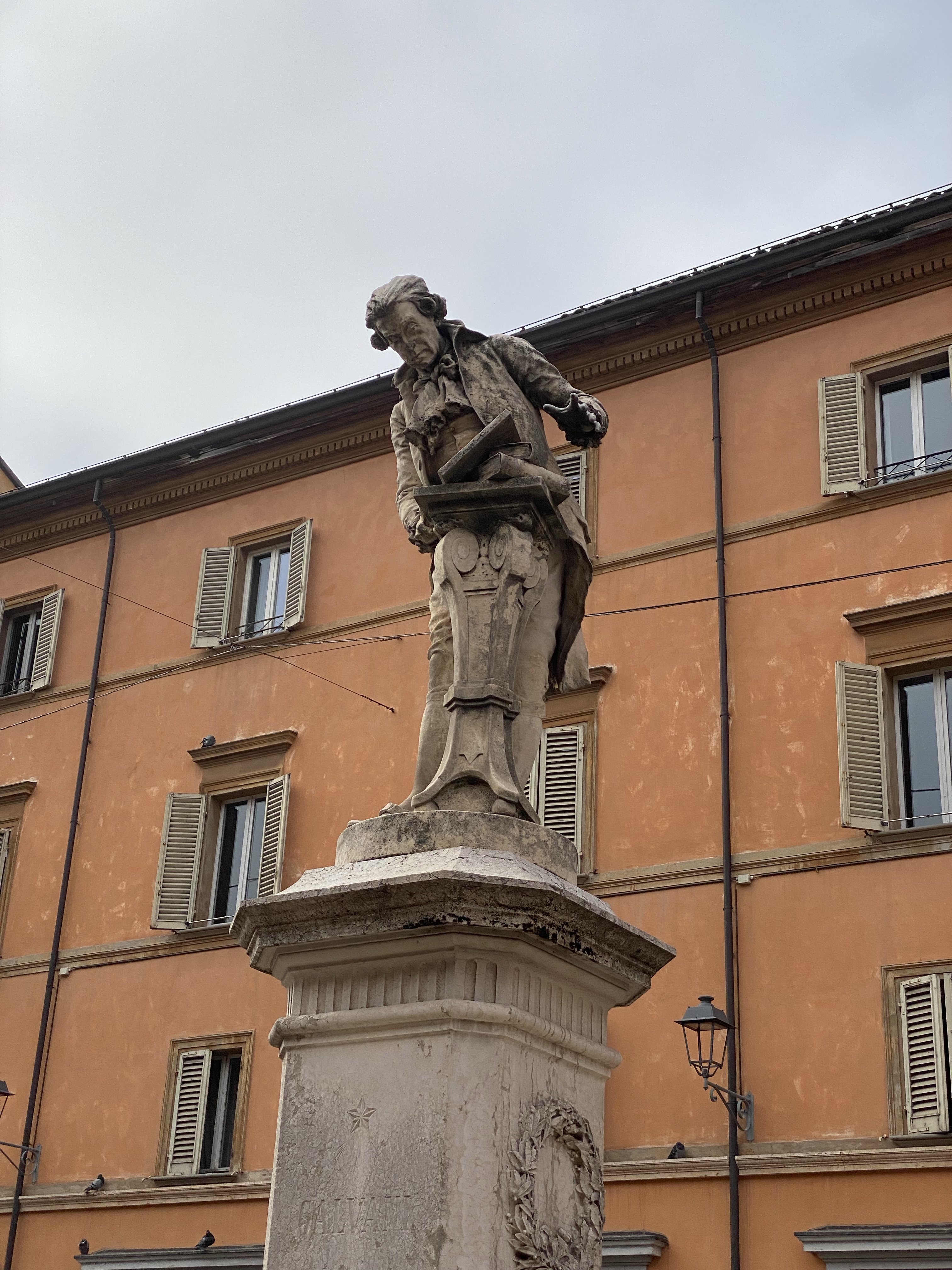
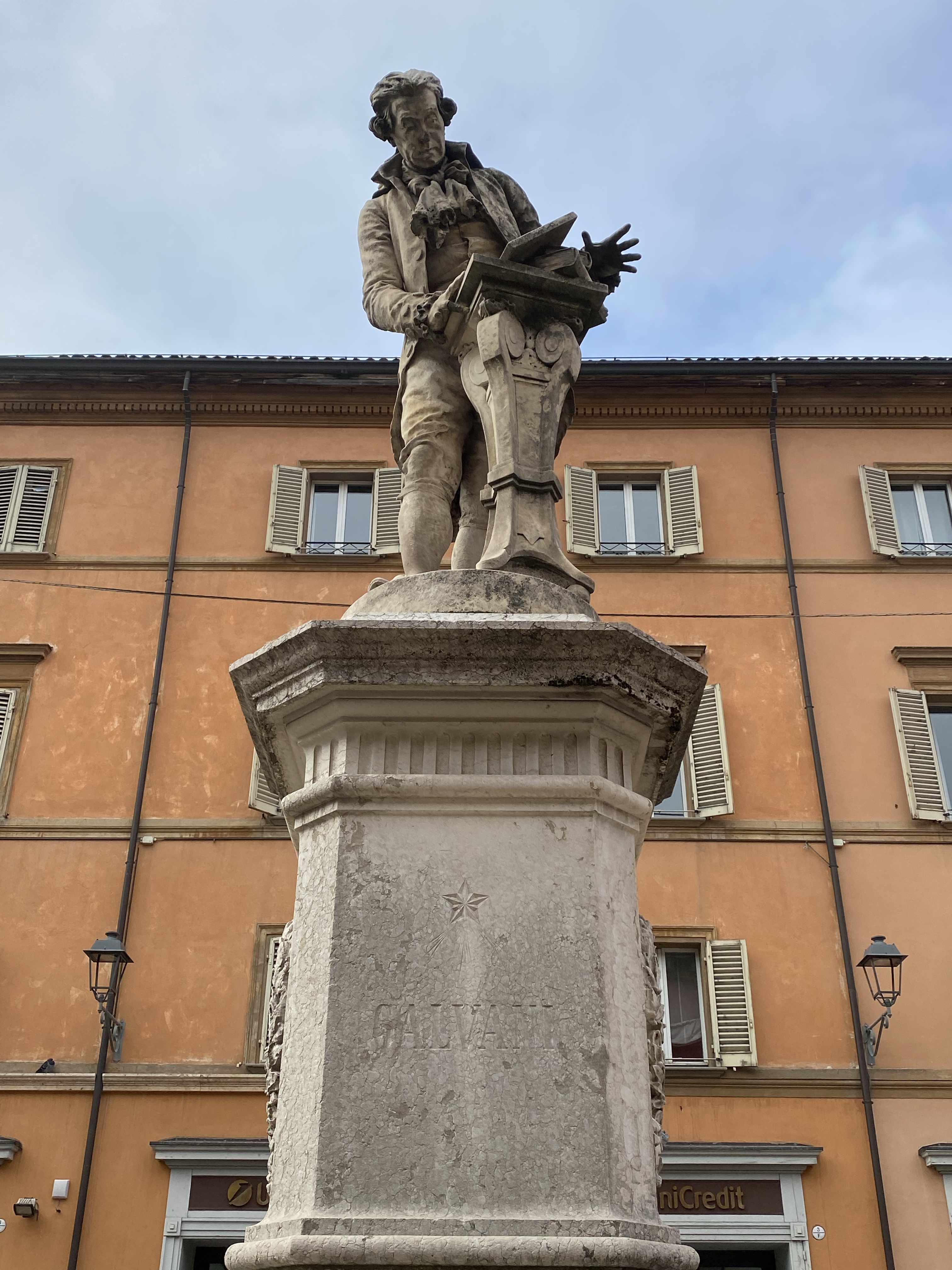
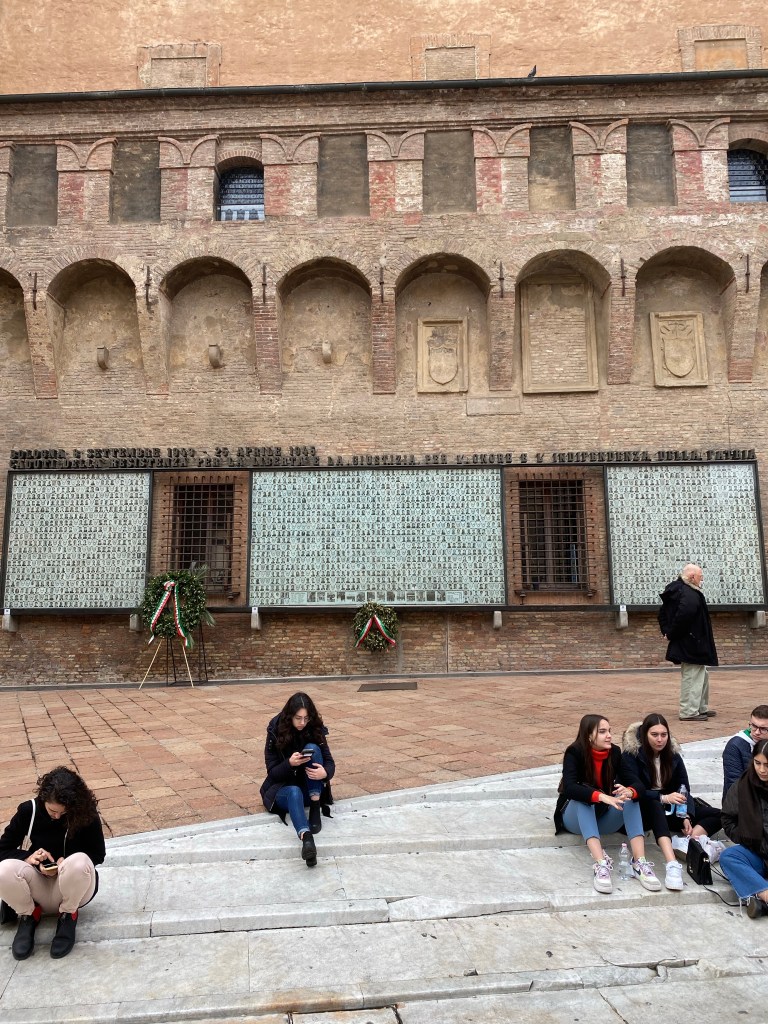

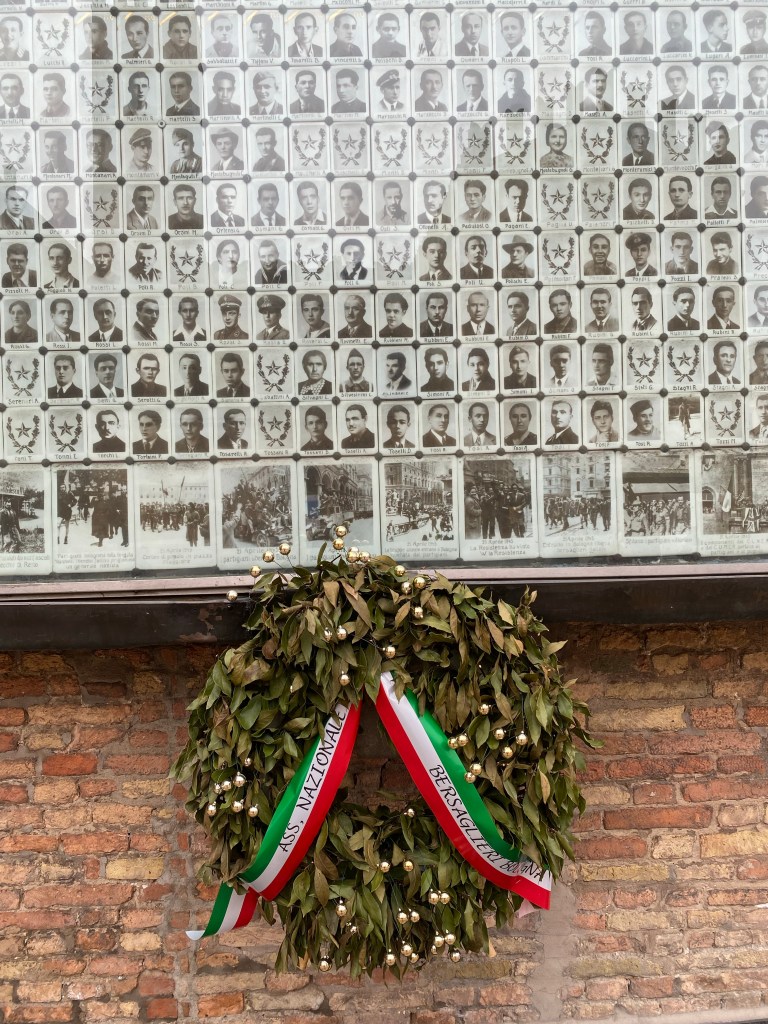
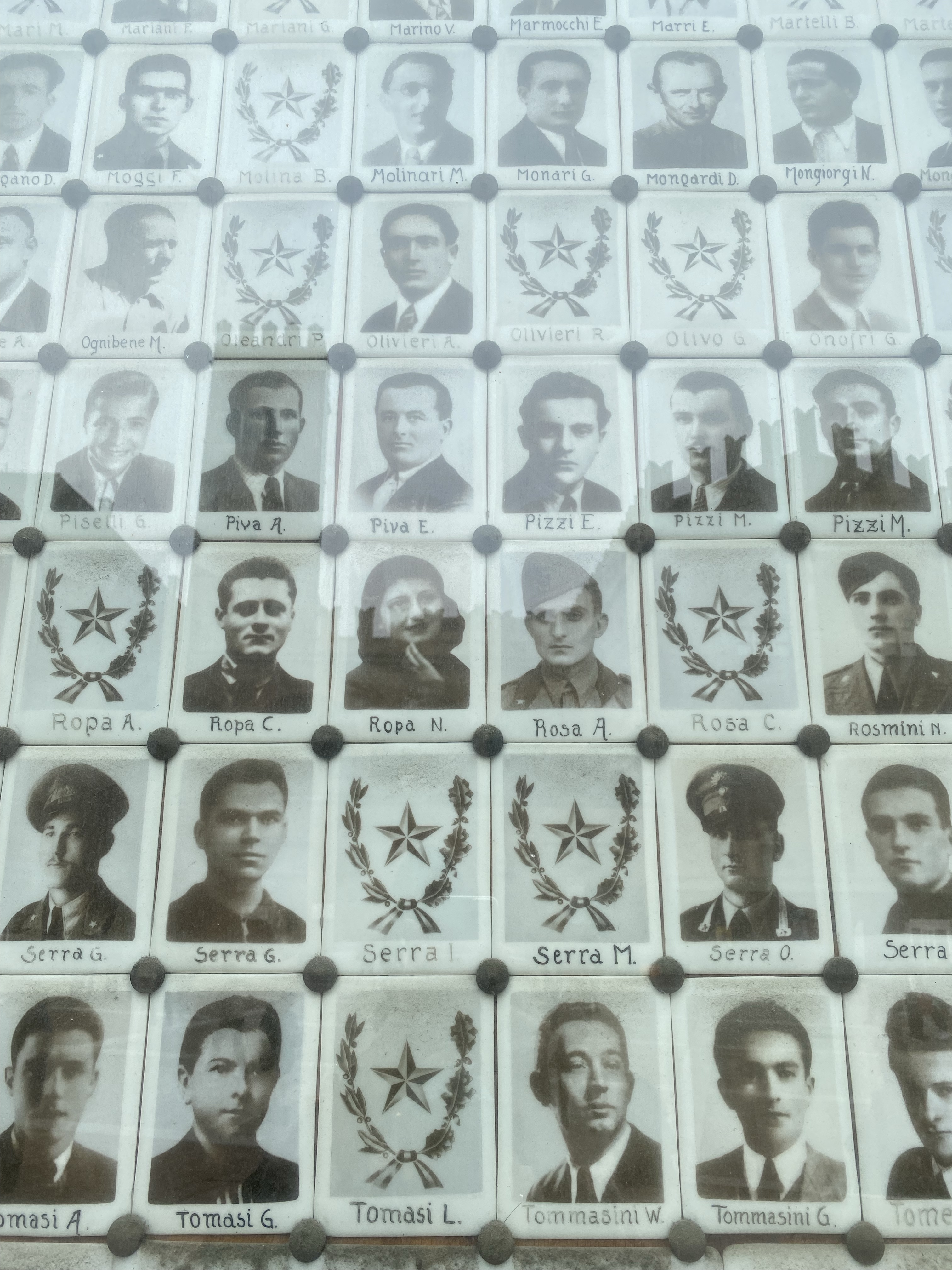
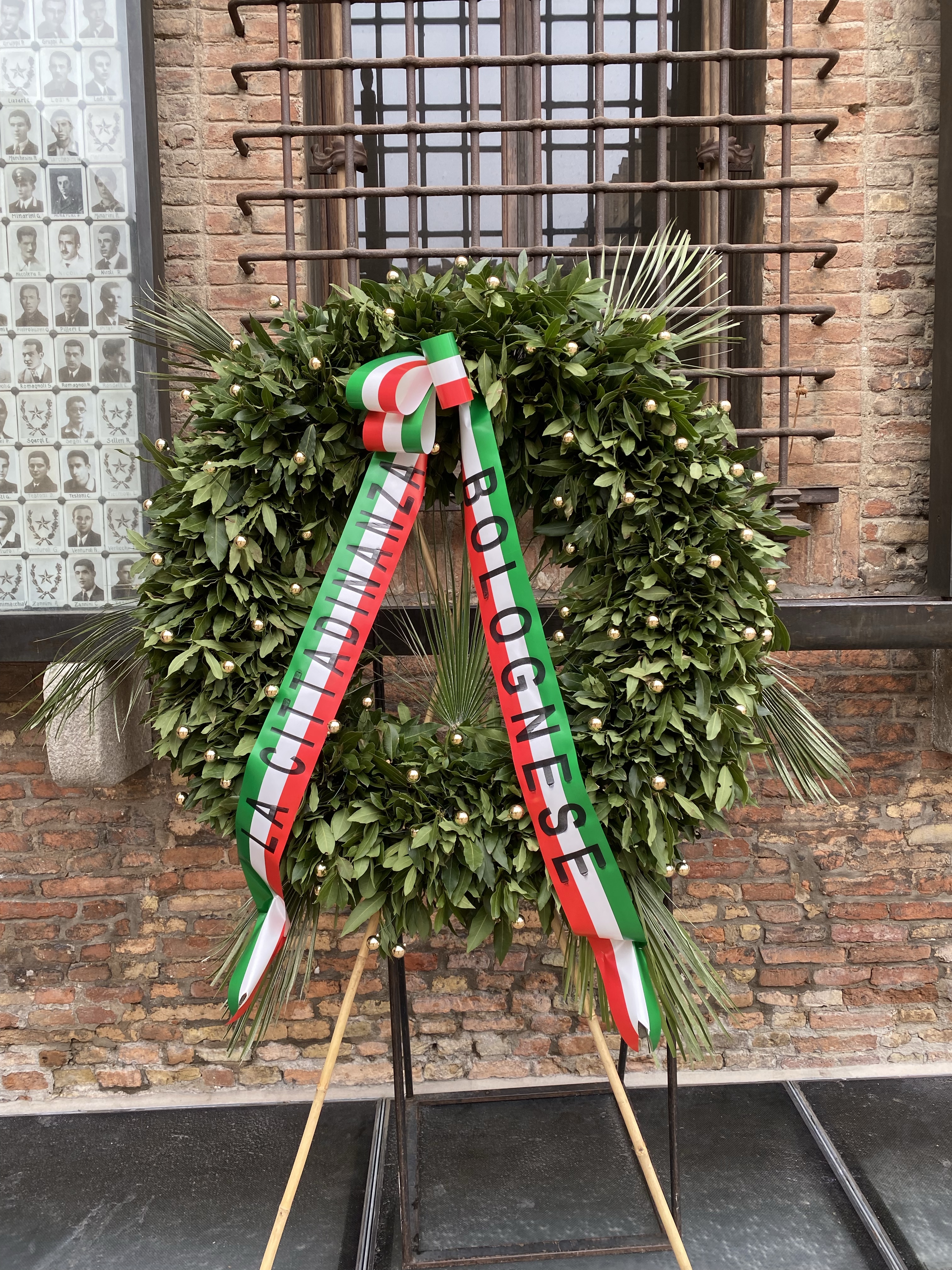
Somewhere near the main piazza of any Italian town, no matter now small, will be il monumento ai caduti (literally, “the monument to the falllen”). These pay tribute to those townspeople who died in World Wars I and II.
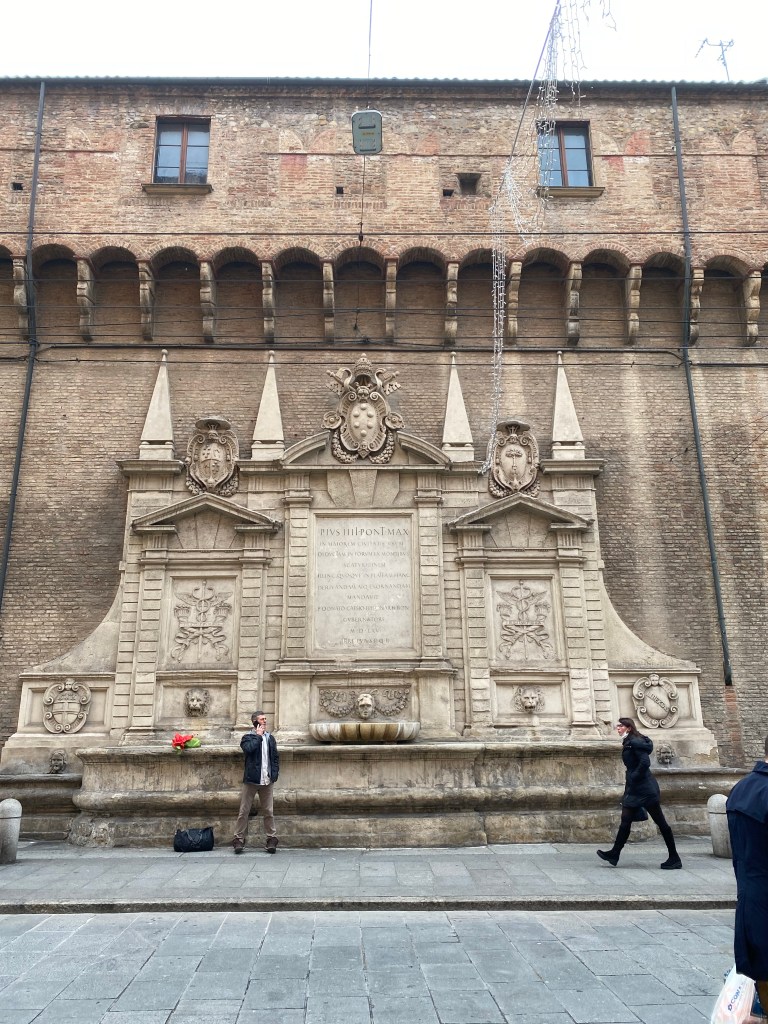
Above: La Fontana Vecchia (The Old Fountain) is built into the side of one of the walls of the Palazzo d’Accursio on Via Ugo Bassi. This is no simple fountain, though. In fact, it’s incredibly grand and impressive in its own rights, even though it was built originally more for the lower/working classes so that they wouldn’t befoul the water in the nearby Neptune Fountain while doing their washing.
Cardinal Carlo Borromeo commissioned La Fontana Vecchia in 1563, with Tommaso Palermo Laureti chosen to create the fountain. A Sicilian painter, architect, and sculptor, Laureti worked and studied extensively in Bologna. However, having spent some time in Rome, the influence of Michelangelo worked its way into his artwork. As well as designing the Fontana Vecchia, Laureti’s drawings served as the foundation for the base and its figures of the Neptune Fountain, though the rest of the fountain was created by Giambologna.
Plaques and bas-relief sculptures cover the fountain, including family coats of arms and the Papal crown and keys in the center in honor of Pope Pius IV. A member of the Medici, his coat of arms is displayed beneath the crown and keys. There are also other symbols displayed on the fountain, such as the word “Libertas,” which represents the city of Bologna. You’ll see the word in a variety of locations throughout the city.
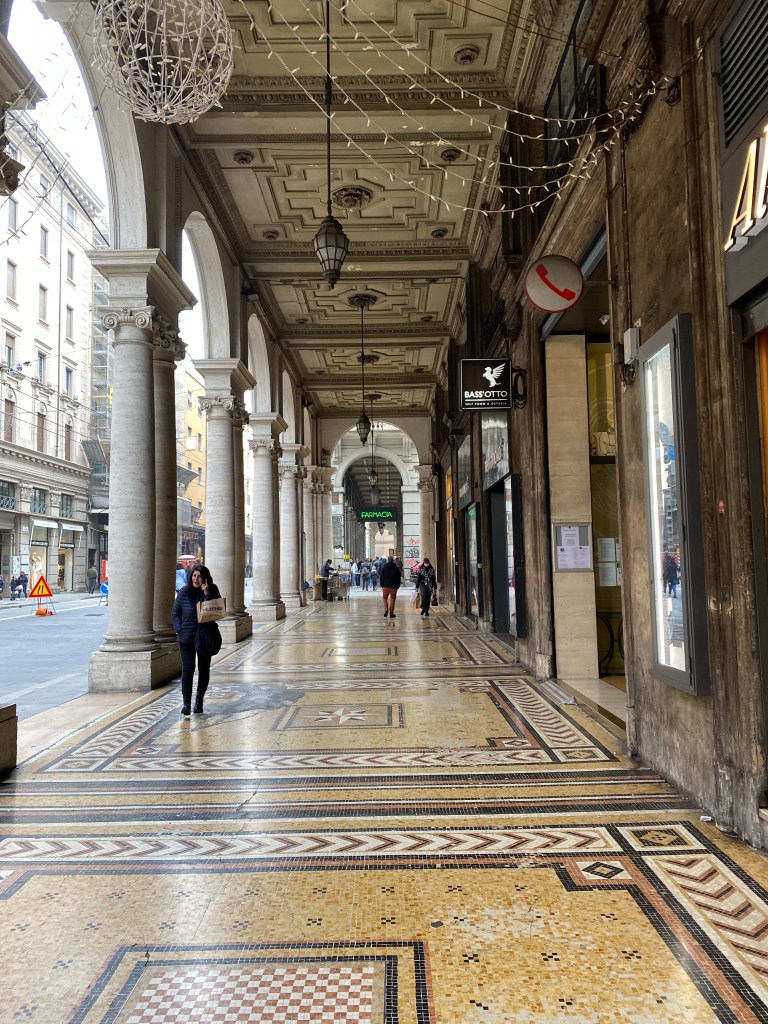
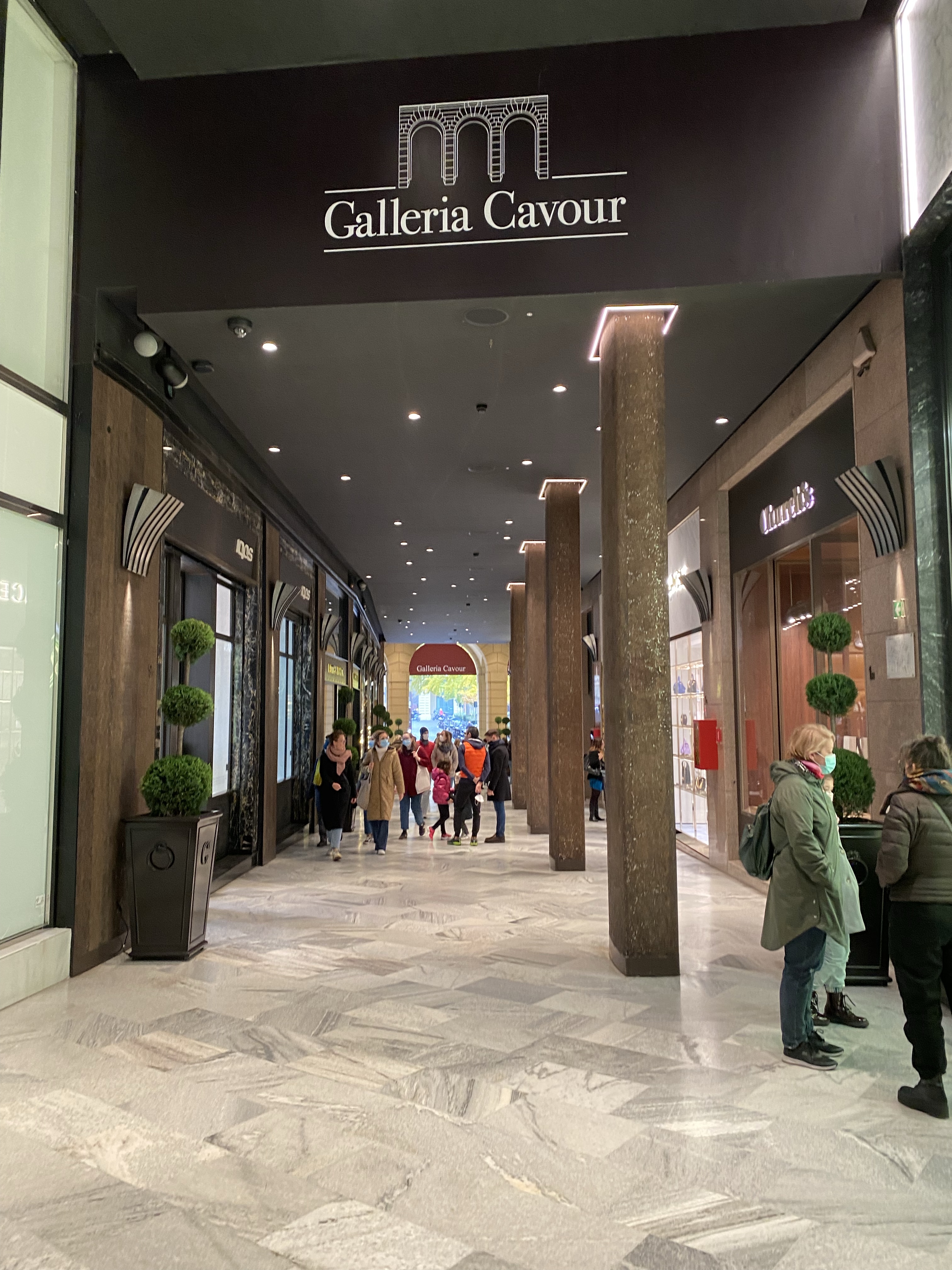
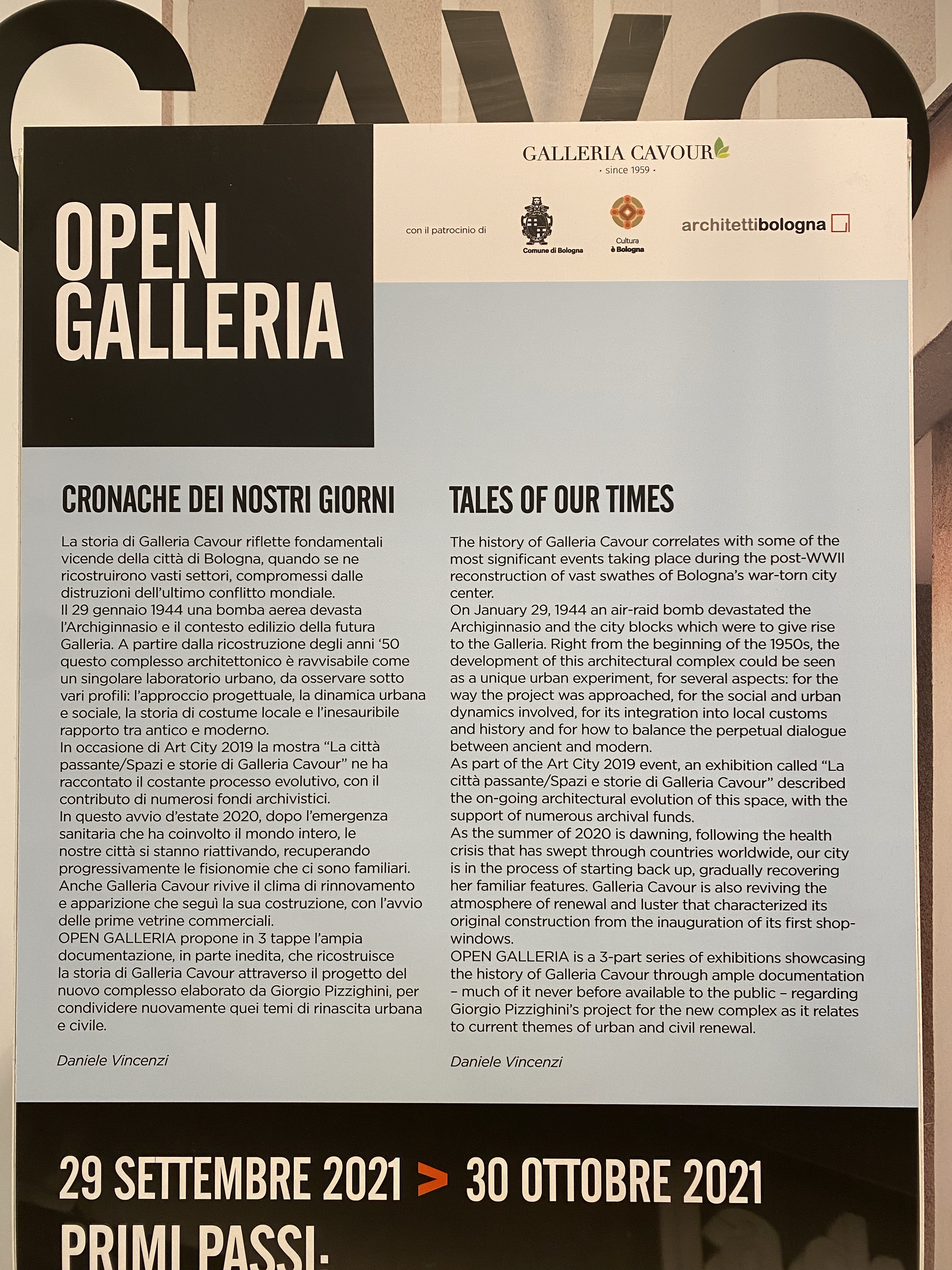
The elegant and upscale Galleria Cavour. Located in the Palazzo VASSÉ which was from 1550 an important patrician residence/ Partially destroyed in WWII, since 1959 this location has been the prestigious venue of the Cavour Gallery. The Cavour Gallery is inside one of the oldest and most important buildings in Bologna. Built in the 1500s, bombed during the war and now restored, it contains important art jewels all to be discovered.
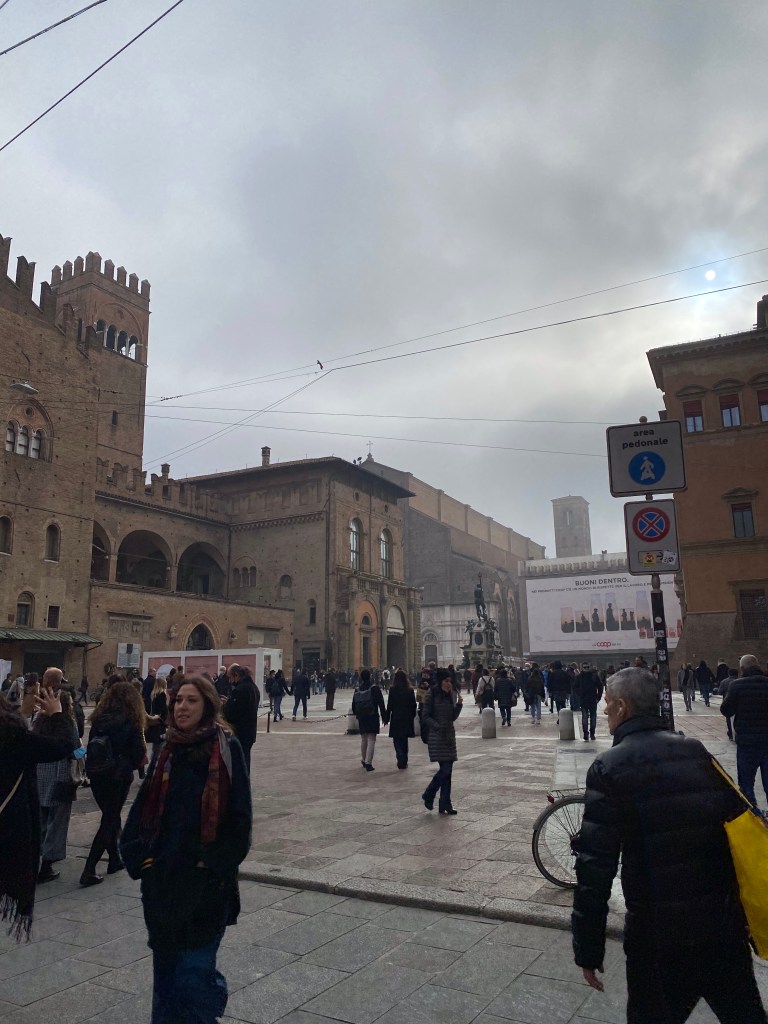
Above, looking through Piazza Nettuno, with Giambologna’s fountain masterpiece, looking further towards Piazza Maggiore with the Basilica of San Petronius.
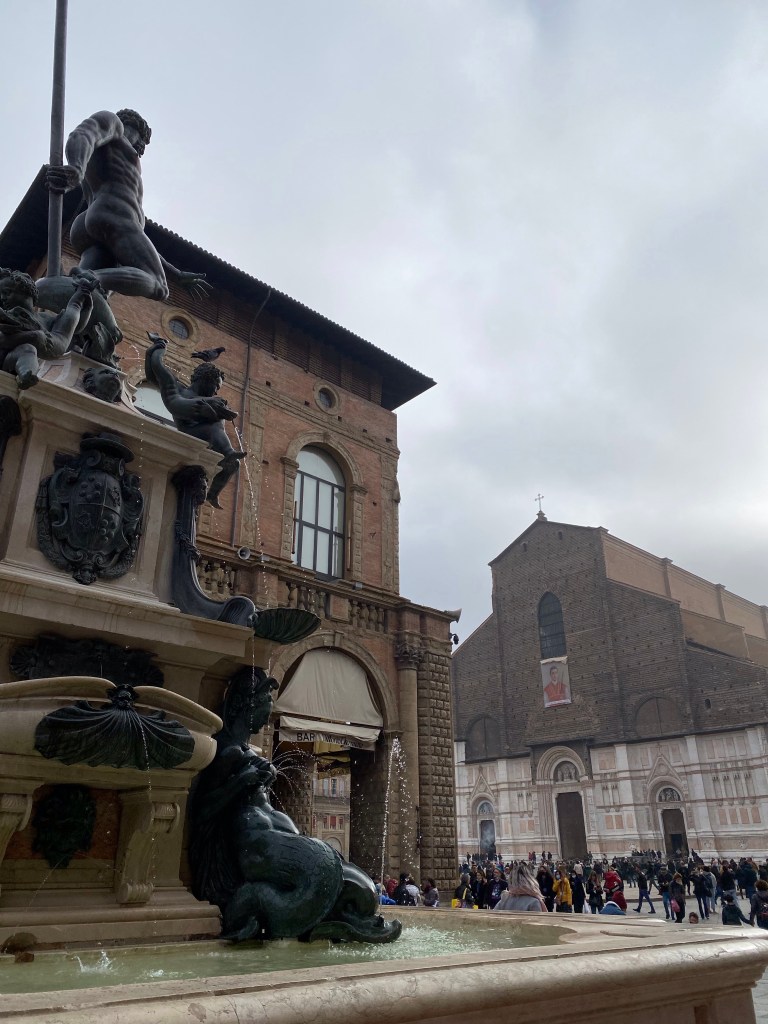
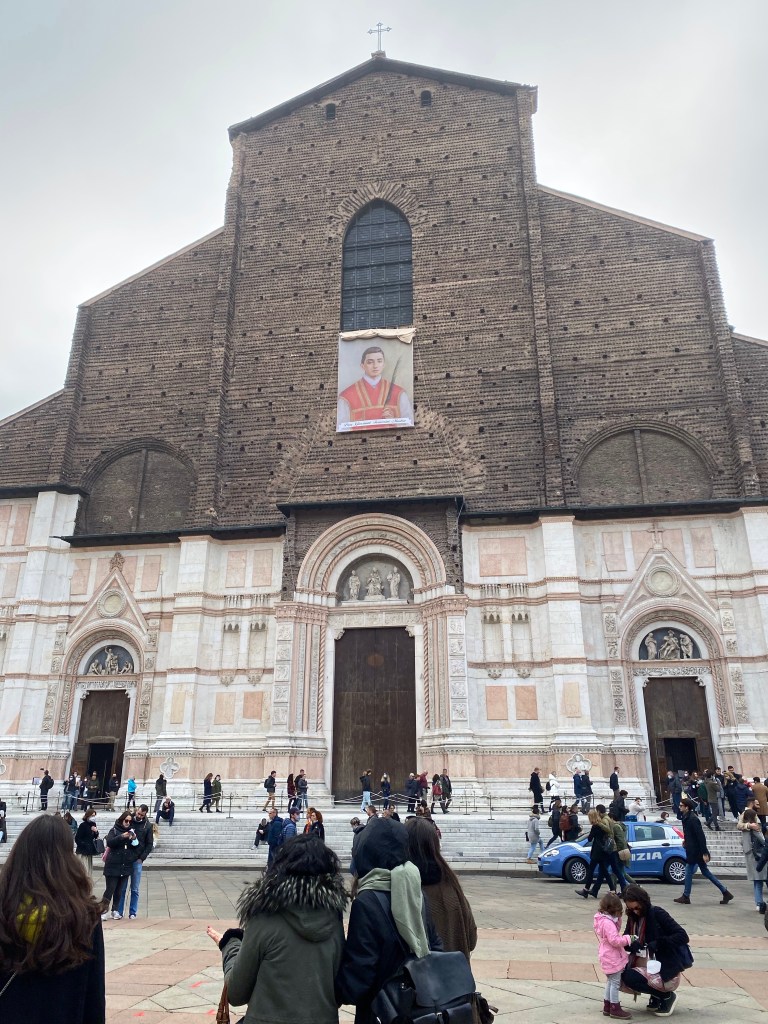
Below, the Basilica. I’ll be discussing this church in a couple of separate posts.
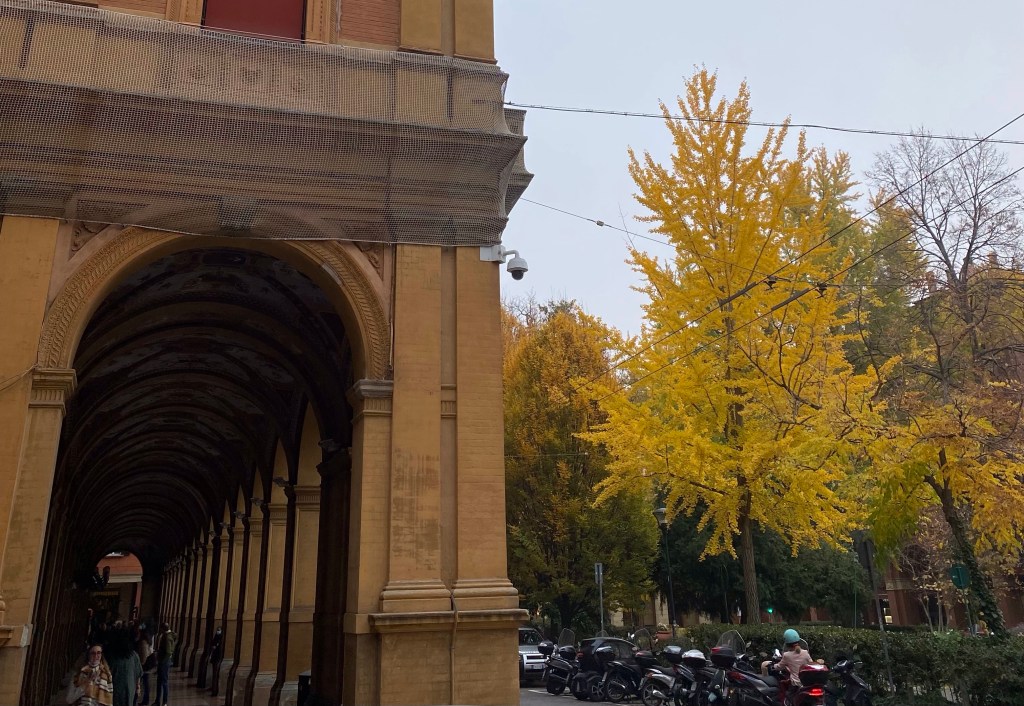
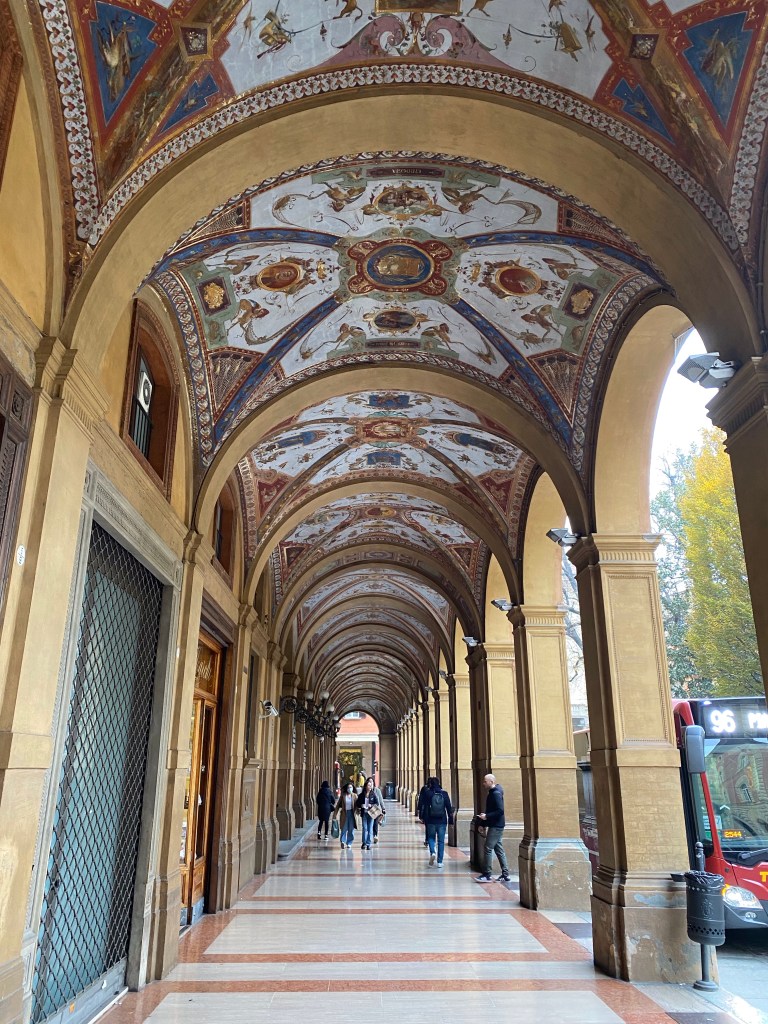
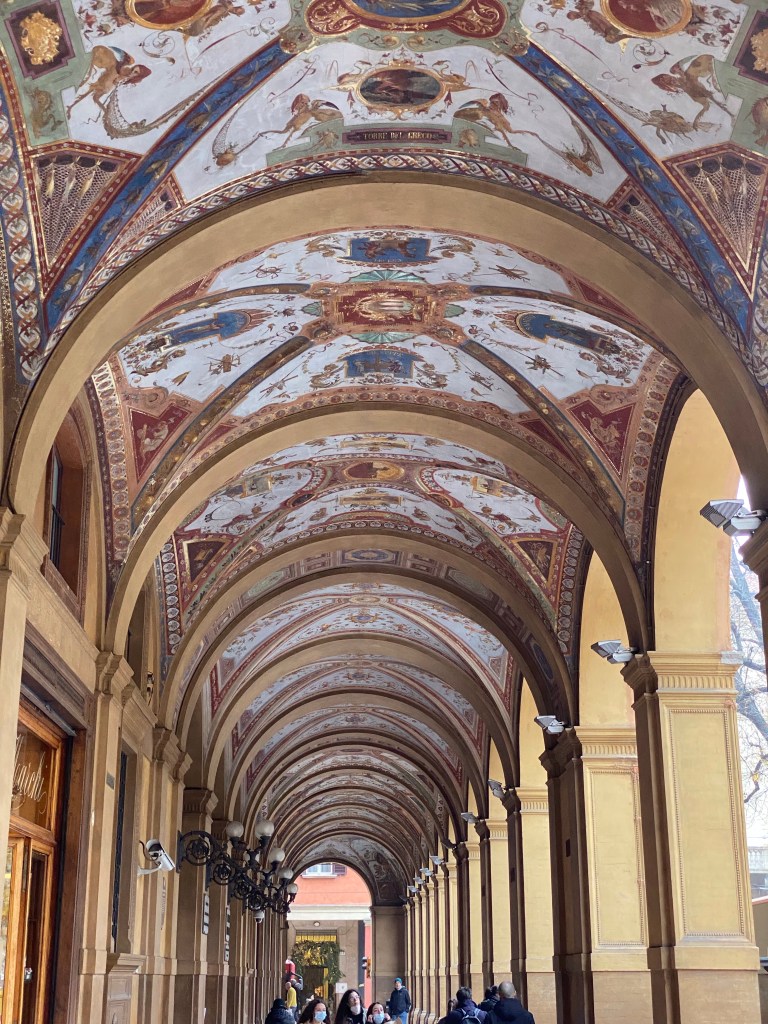
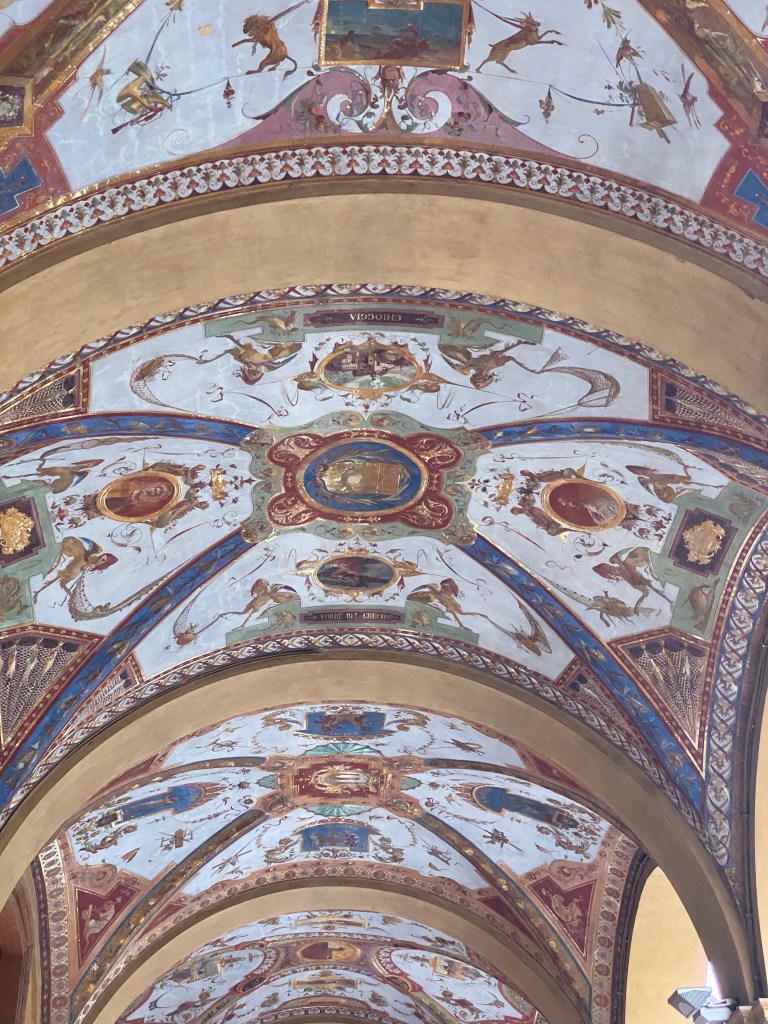
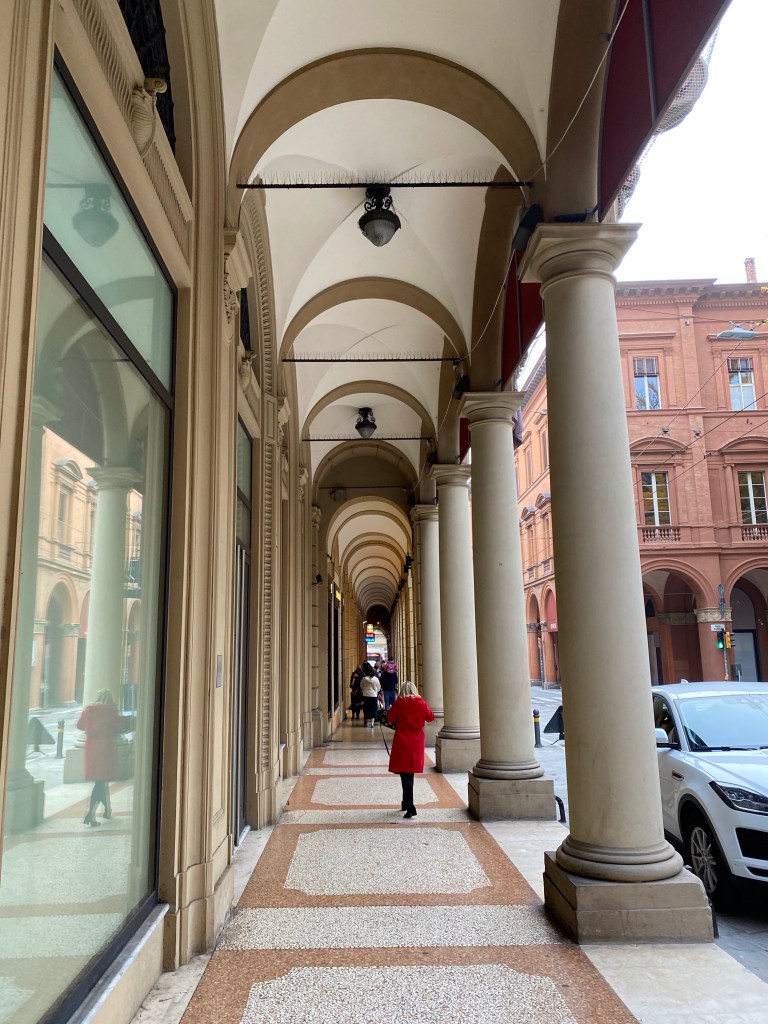
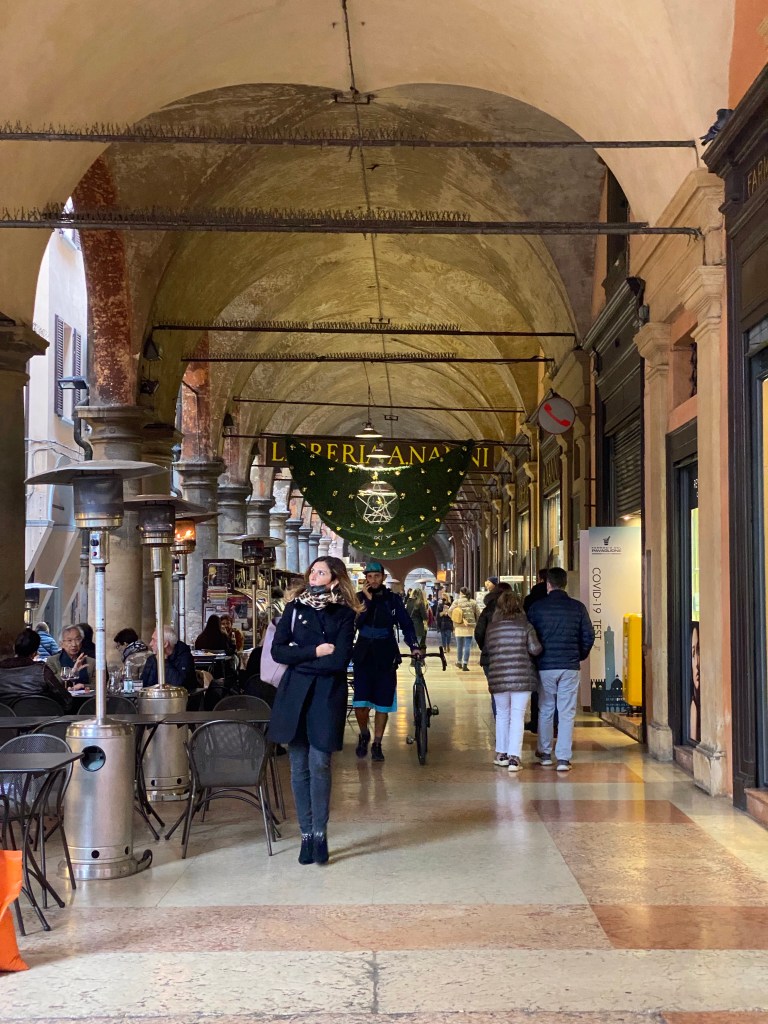
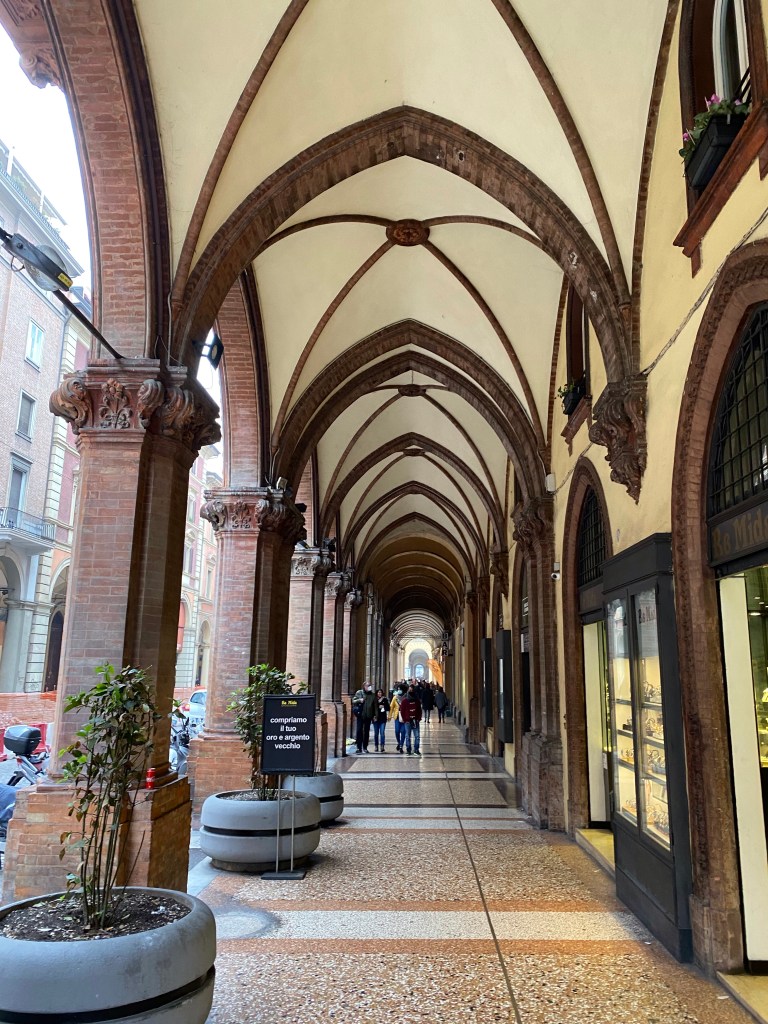
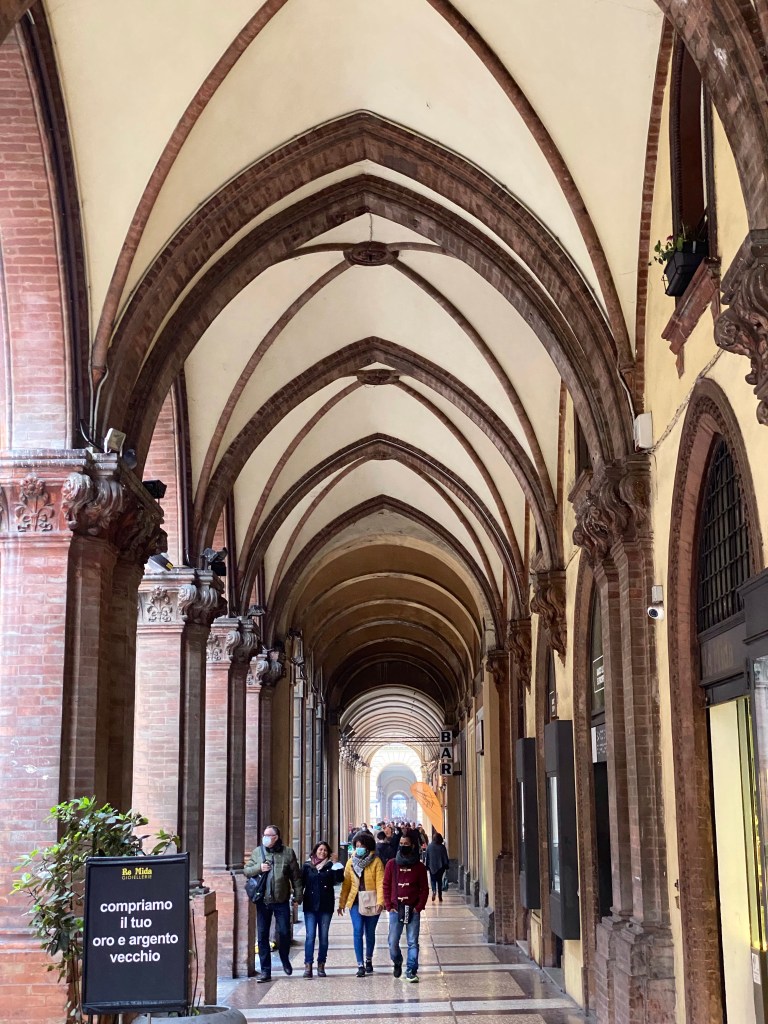
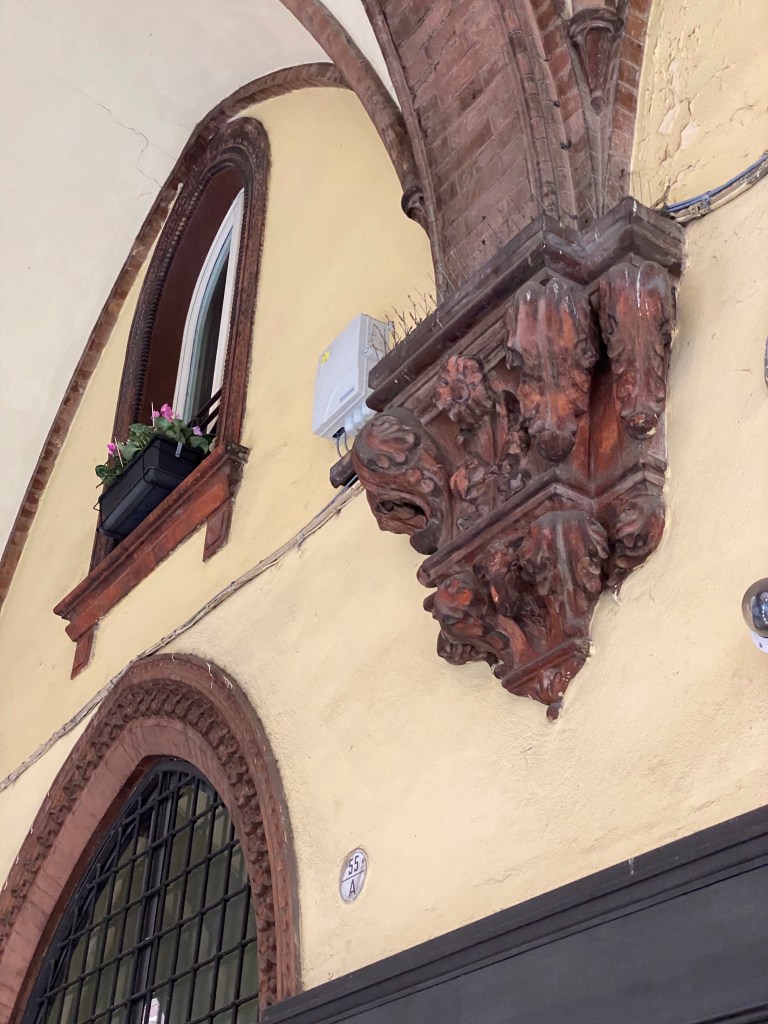
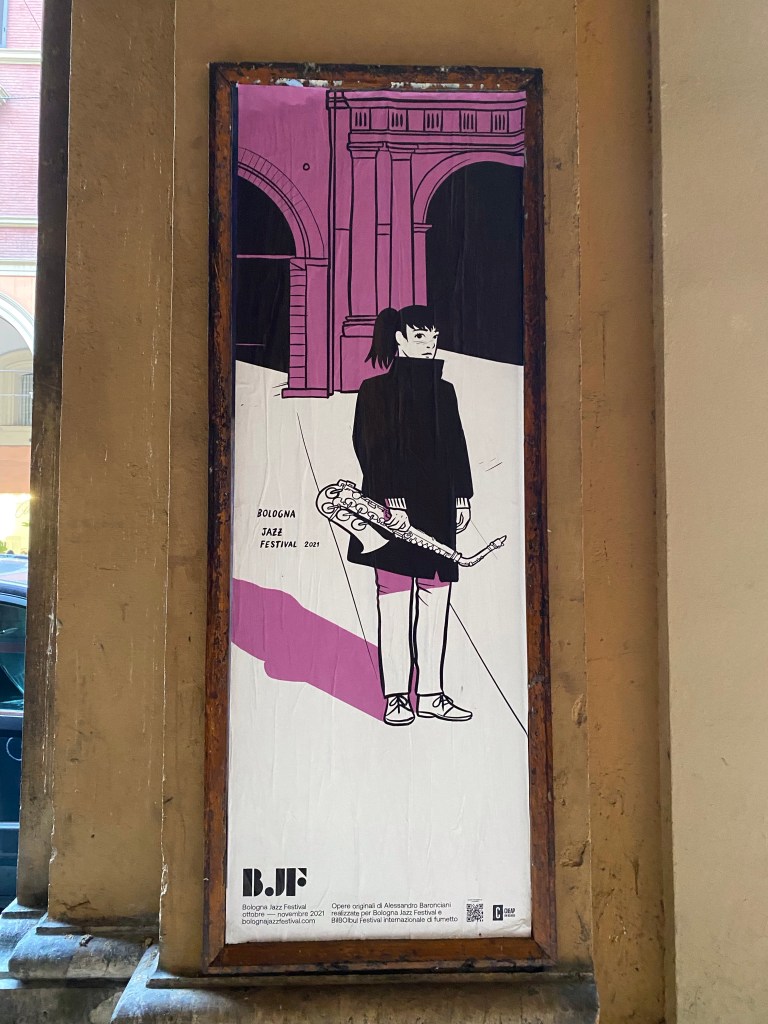
General ambience of the city and the arcades:
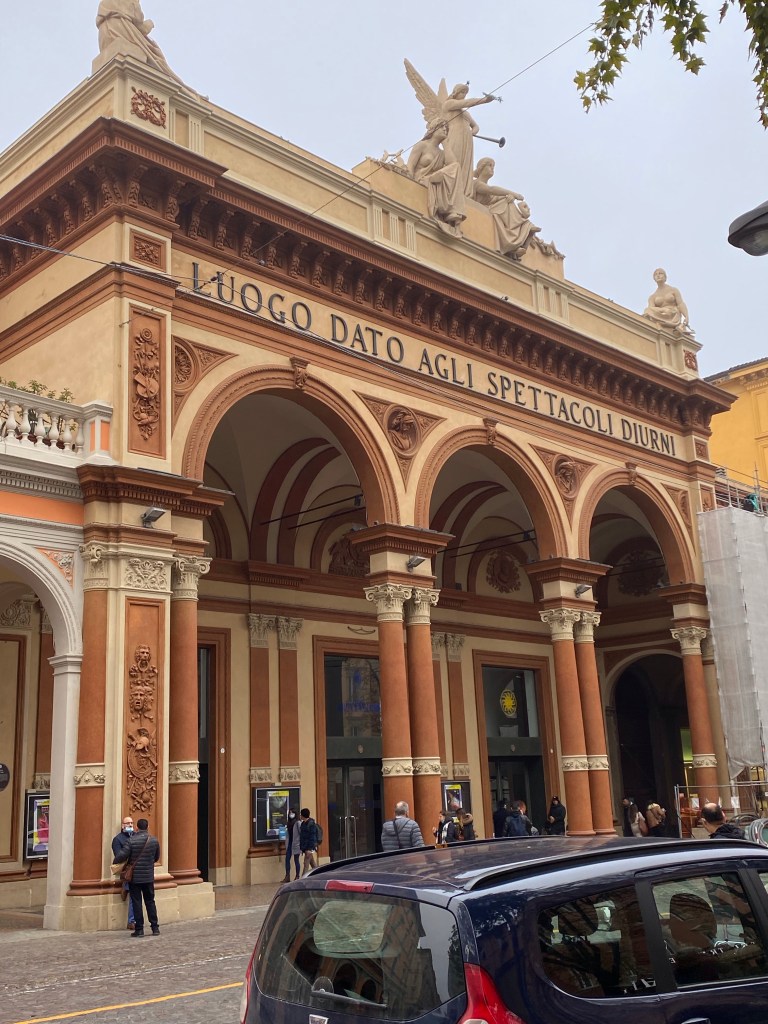
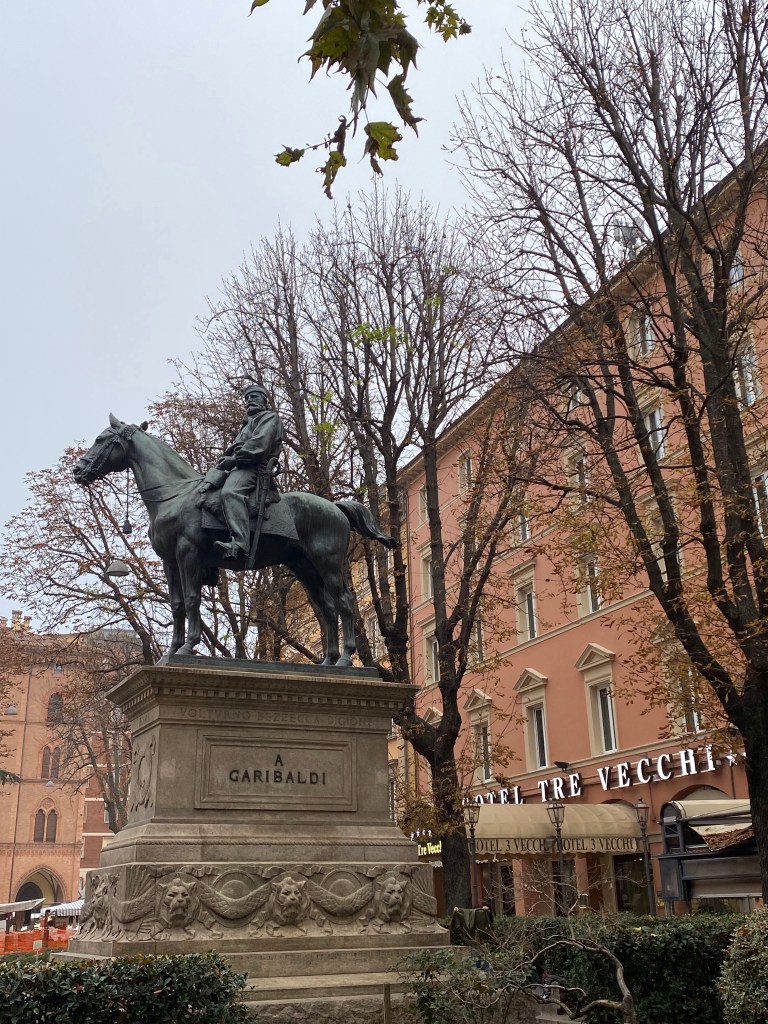
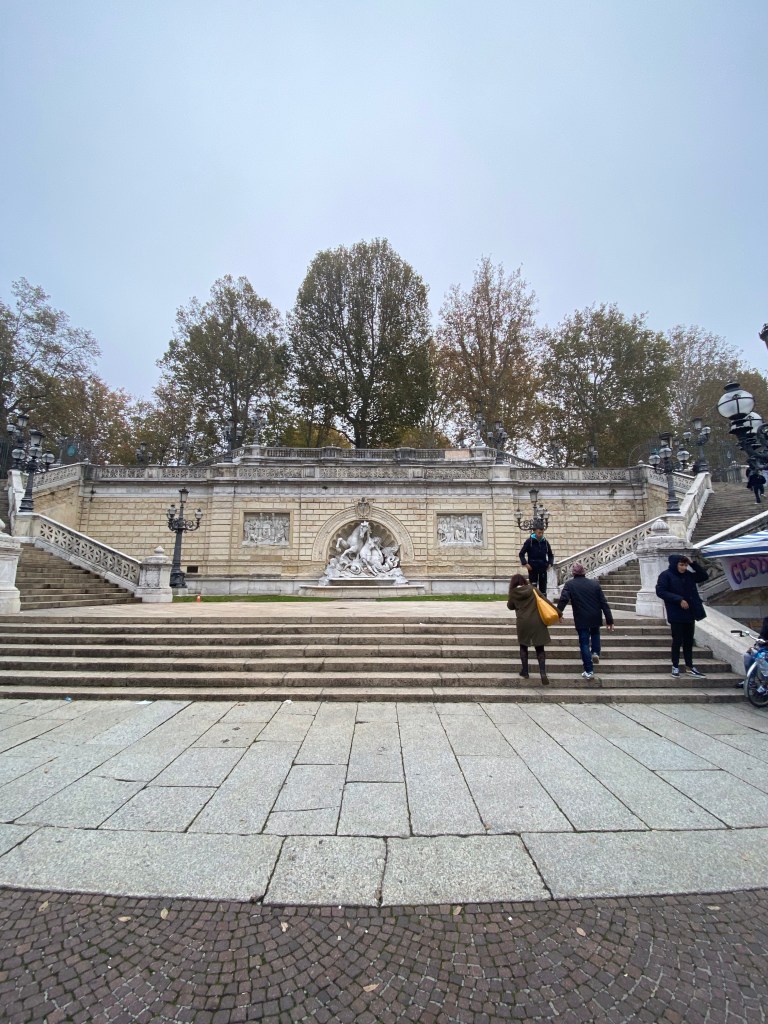
Above and below: The fountain of Pincio in Bologna, Italy, is at the entry of the Park of Montagnola, the oldest park in Bologna, opened to the public since 1664.
Im 1896, King Umberto I and Queen Margherita inaugurated this impressive stairway leading to the Montagnola Gardens. It was designed by Tito Azzolini (1837-1907) and Attilio Muggia (1850-1936).
Begun in 1893 by the mayor Dallolio, the works continued for three years without interruption, employing an average of 100-150 workers per day. The excavated earth served to fill the pits of the walls, between Porta S. Isaia and Porta Lame.
As a whole, the work consists of three parts: the stairs, the portico on via Indipendenza and the portico along the walls. The central body is made up of two overlapping fronts, with a panoramic terrace at the top accessible by side stairs.
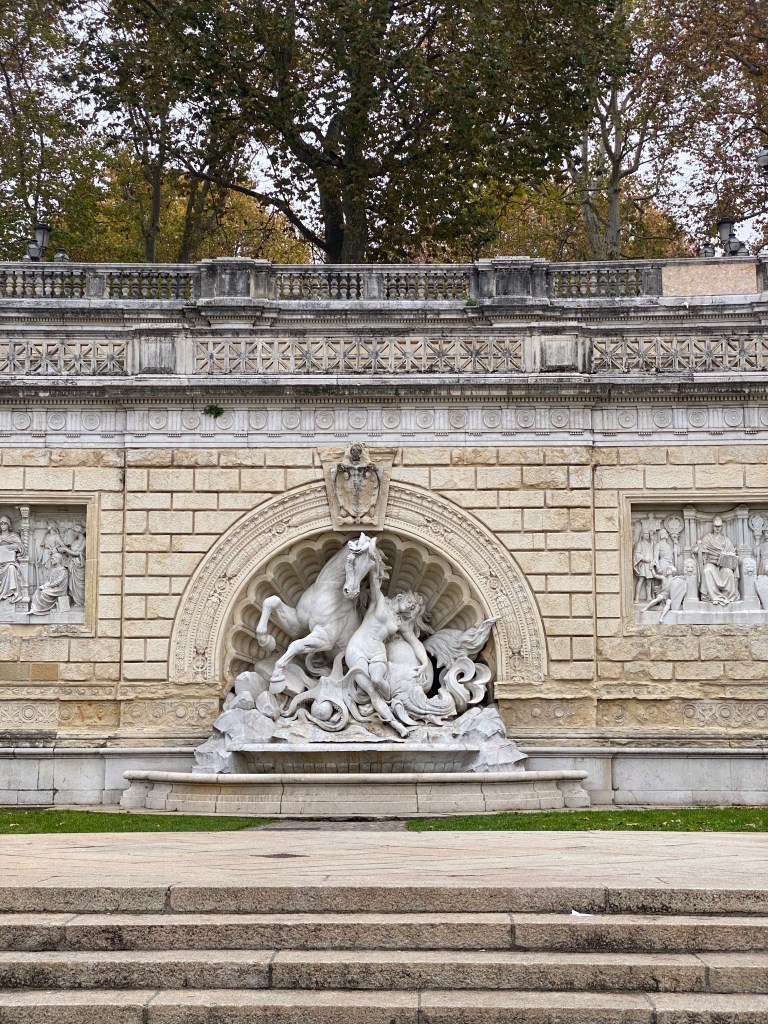
The main front is decorated with two bas-reliefs: Bologna docet by Arturo Colombarini and Bologna Libertas by Ettore Sabbioni. In the center, a fountain, made by Diego Sarti (1859-1914) and Pietro Veronesi, based on a design by Muggia and Azzolini, represents a nymph attacked by an octopus. She will be commonly called “the wife of the Giant,” that is of Neptune, and Giosue Carducci will dedicate a famous sonnet to her.
On the second front, which supports the garden, there are three other bas-reliefs, with historical themes linked to the place: The return from the victory of the Fossalta by Pietro Veronesi, The expulsion of the Austrians by Tullo Golfarelli (1852-1928) – with the “saint rogue” , who “rushes against the guns leveled by the invaders of the Fatherland” (Pascoli) – and The destruction of the fortress of Galliera by Arturo Orsoni.
At the end of the passage on via Galliera, the Maccaferri building, home of the café chantant Eden, will be built three years later. The staircase is equipped with 72 cast iron candelabra with six or four lamp posts. The steps are joined to the parapets by marble edges, which will often be used by children as slides (sblisgàn).
The Montagnola garden is transformed in a more aristocratic sense. In the center is the large fountain, complete with five groups of statues with animals and mermaids, already used for the Emilian Exposition of 1888.
In the reconstruction of 1896 the original design by Diego Sarti is partly distorted: the tub is no longer in the shape of an ellipse, but round and the edge is no longer raised and wavy.
The sculptural groups are moved away from the perimeter of the basin and disconnected from each other. The turtles, originally climbing on the edge, are gathered around the central water jet.
Roman ruins near the Pincio.
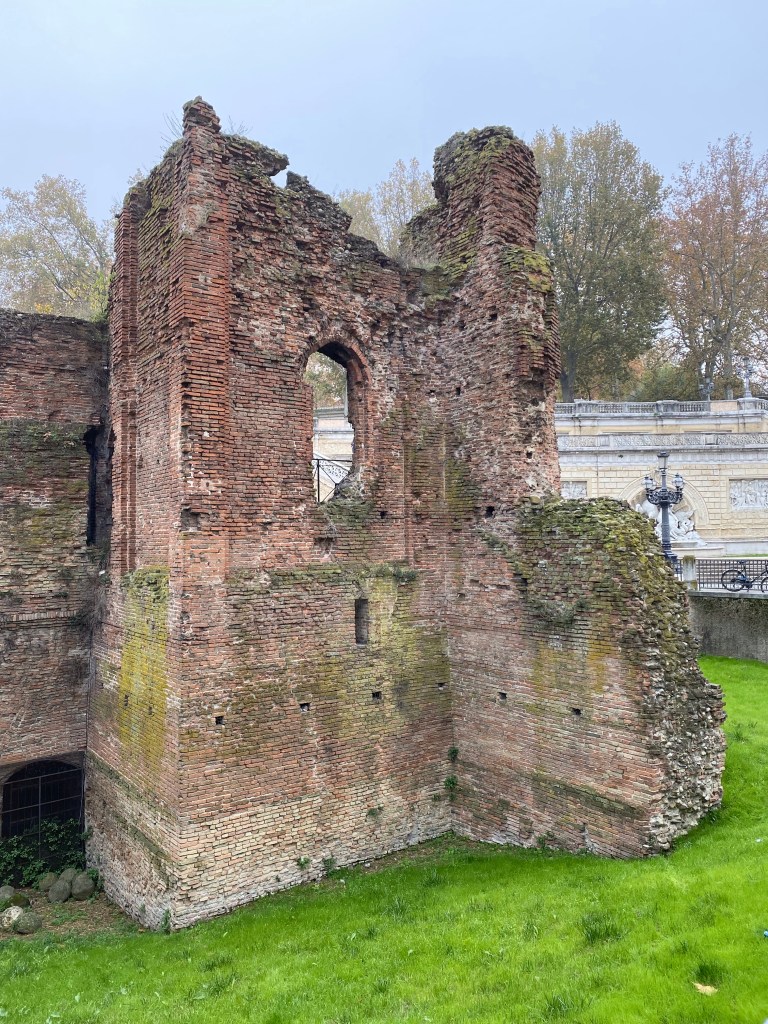
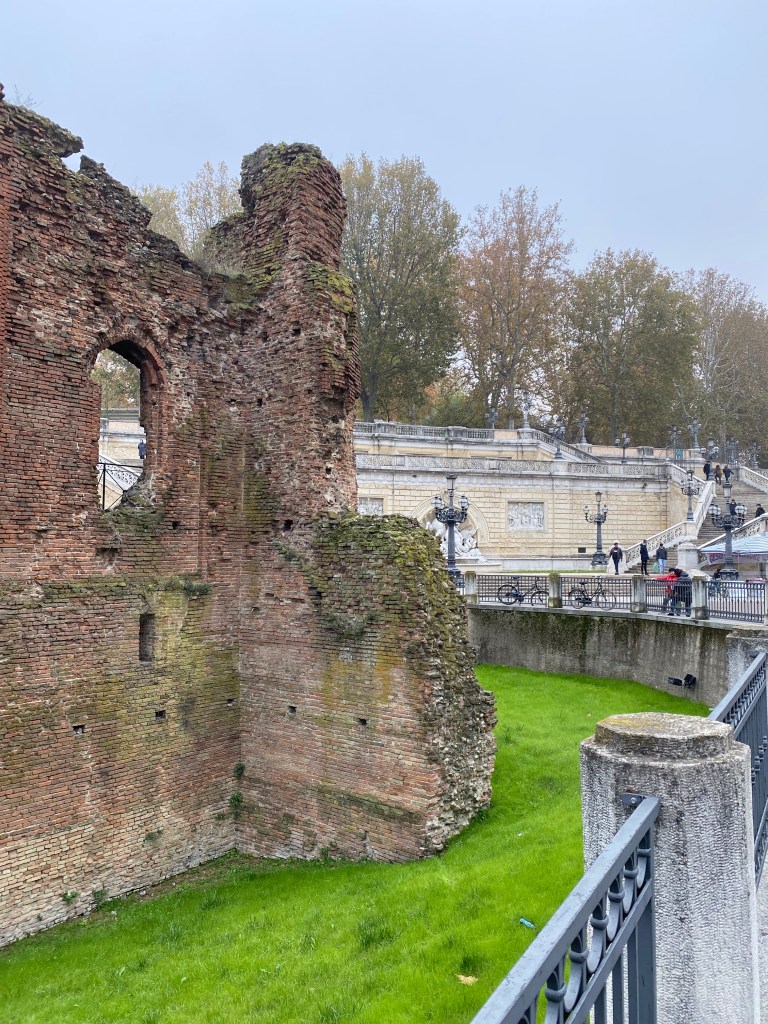
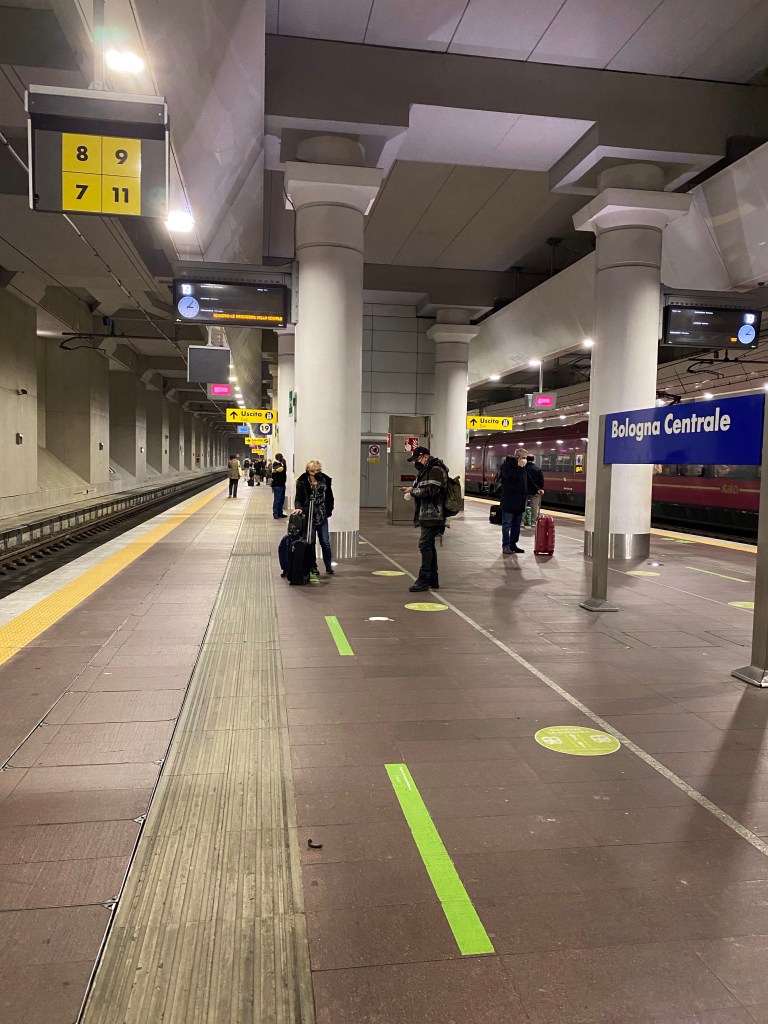
And finally, the Bologna train station. Can someone please explain to me why there are no seats to rest upon in places in Italy where one really needs them??!!

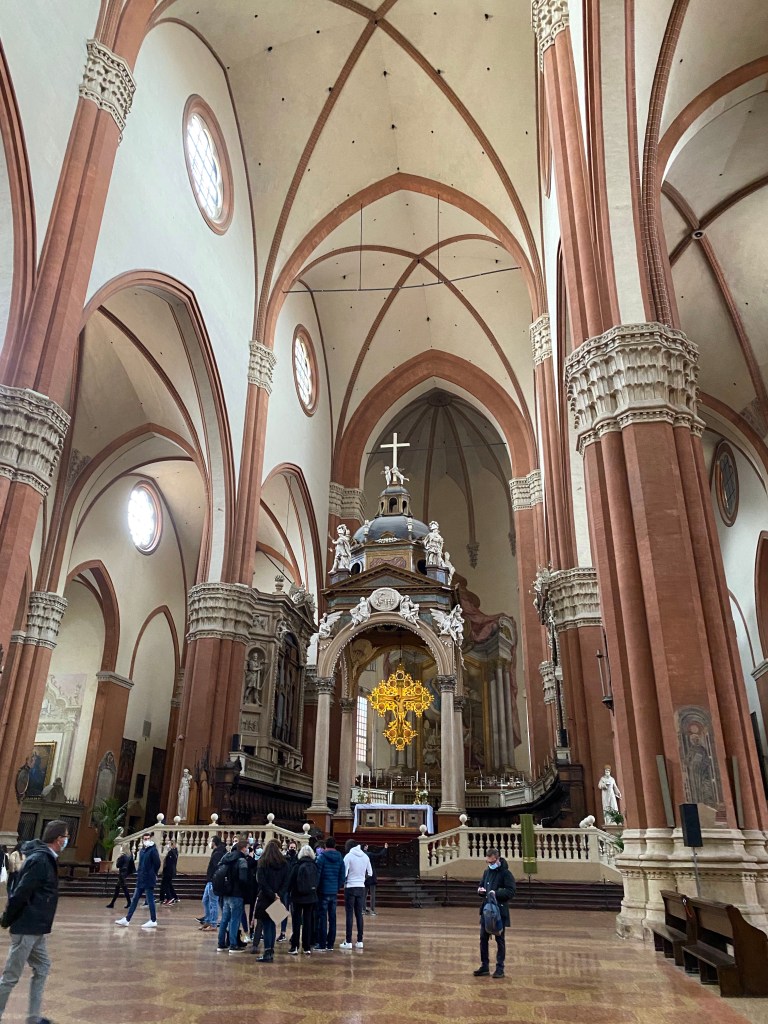
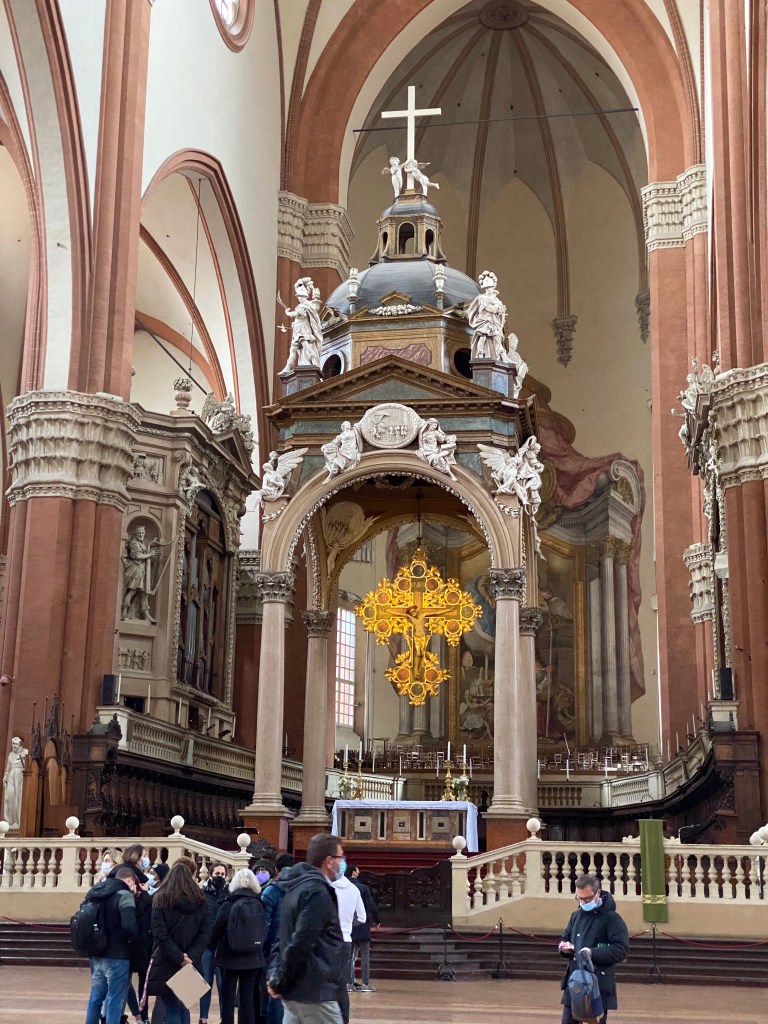
Dominating the major square of Piazza Maggiore in Bologna is this important basilica. For me, the relief sculptures on the facade are the reason to visit, but there are many other reasons as well.
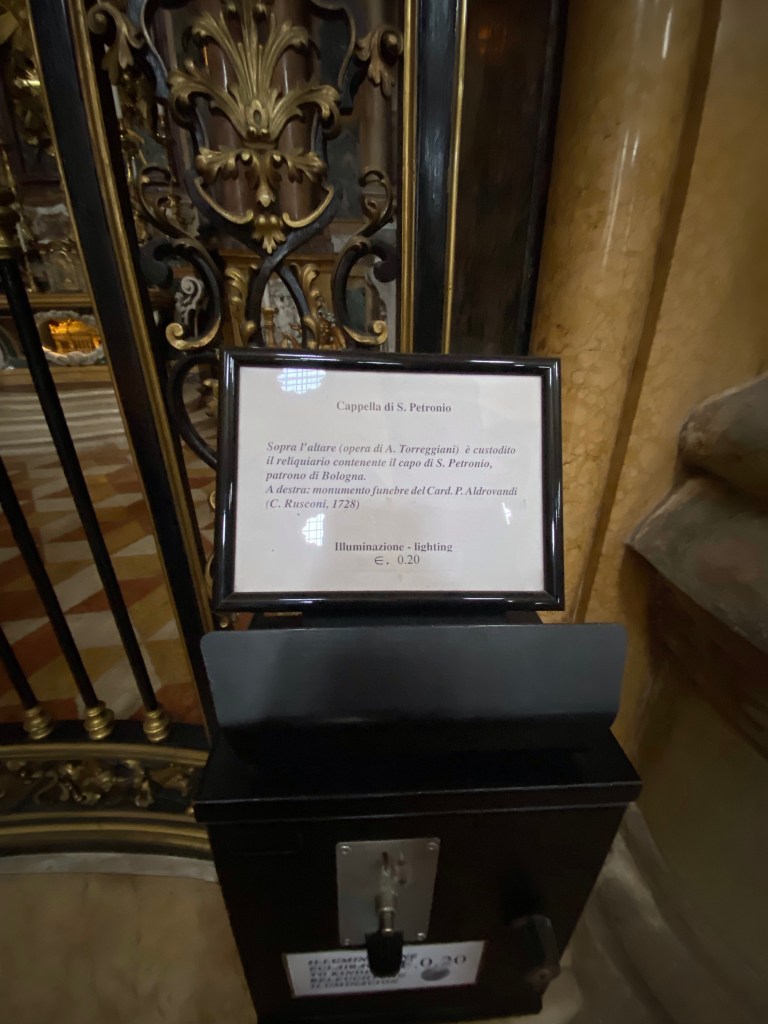
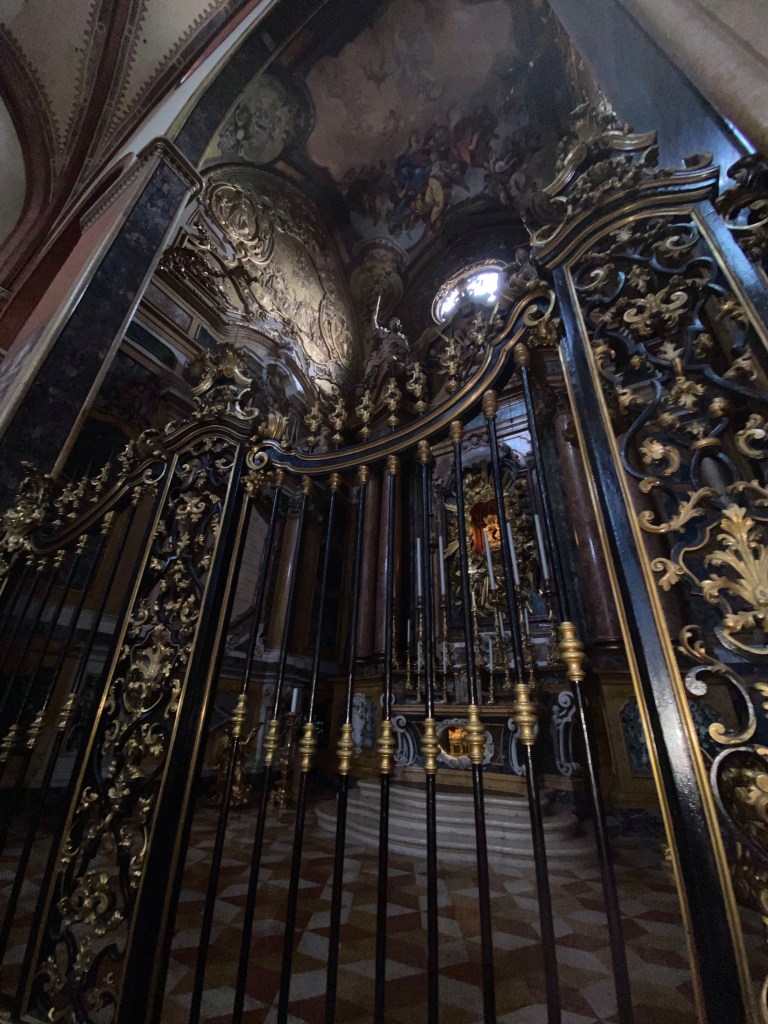
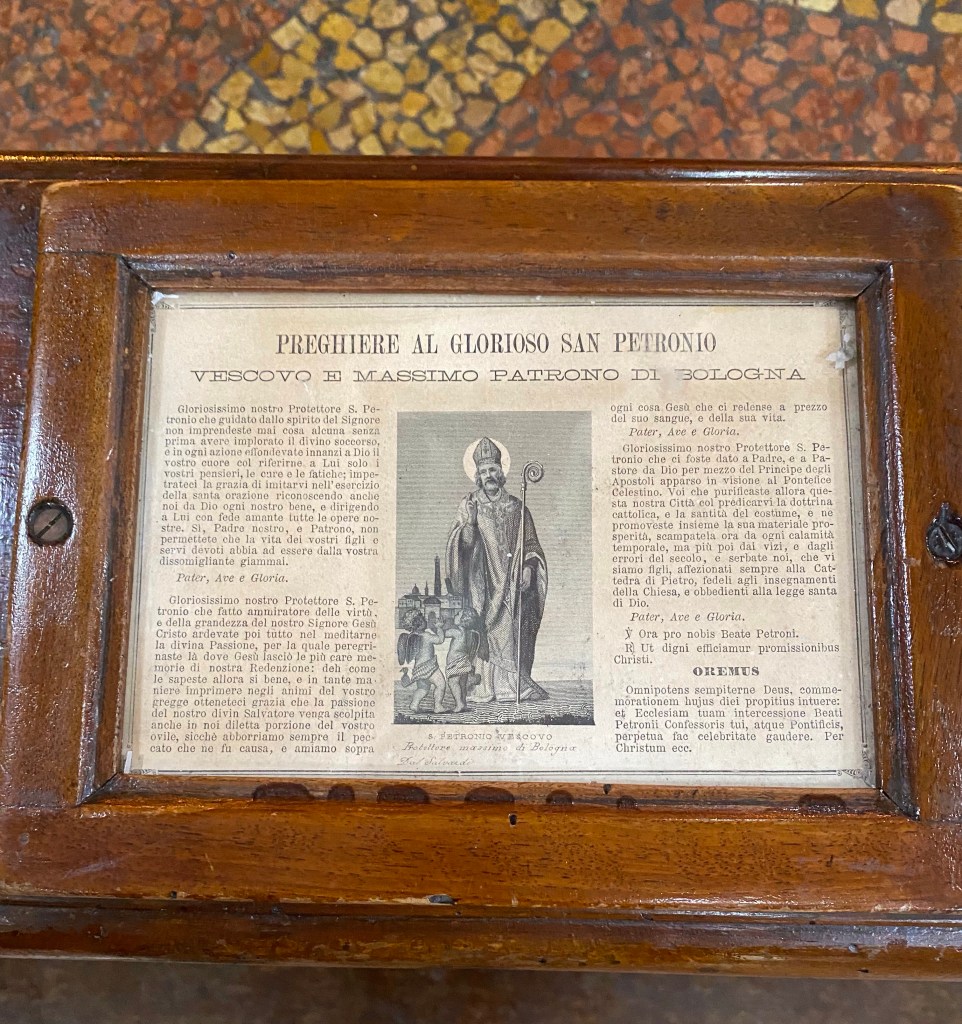
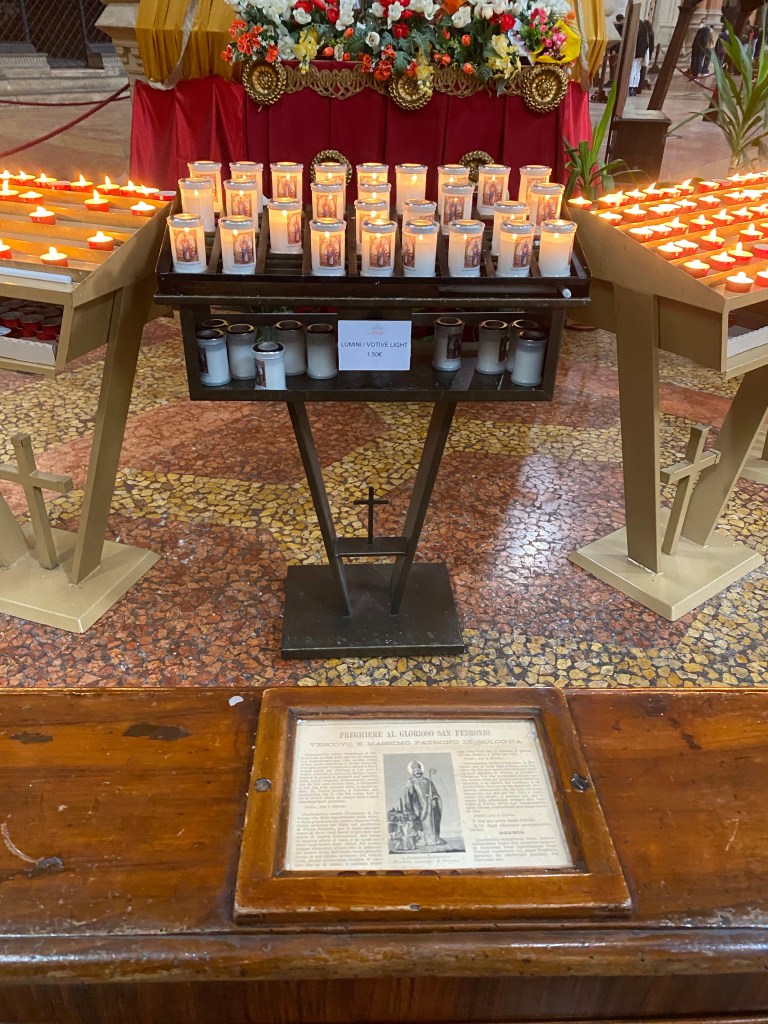
The basilica is dedicated to the patron saint of the city, Saint Petronius, who was the bishop of Bologna in the 5th century. Construction began in 1390 and its main facade has never been finished. Interestingly, the basilica was only consecrated in 1954! It has held the relics of Bologna’s patron saint only since 2000; until then they were preserved in the Santo Stefano.
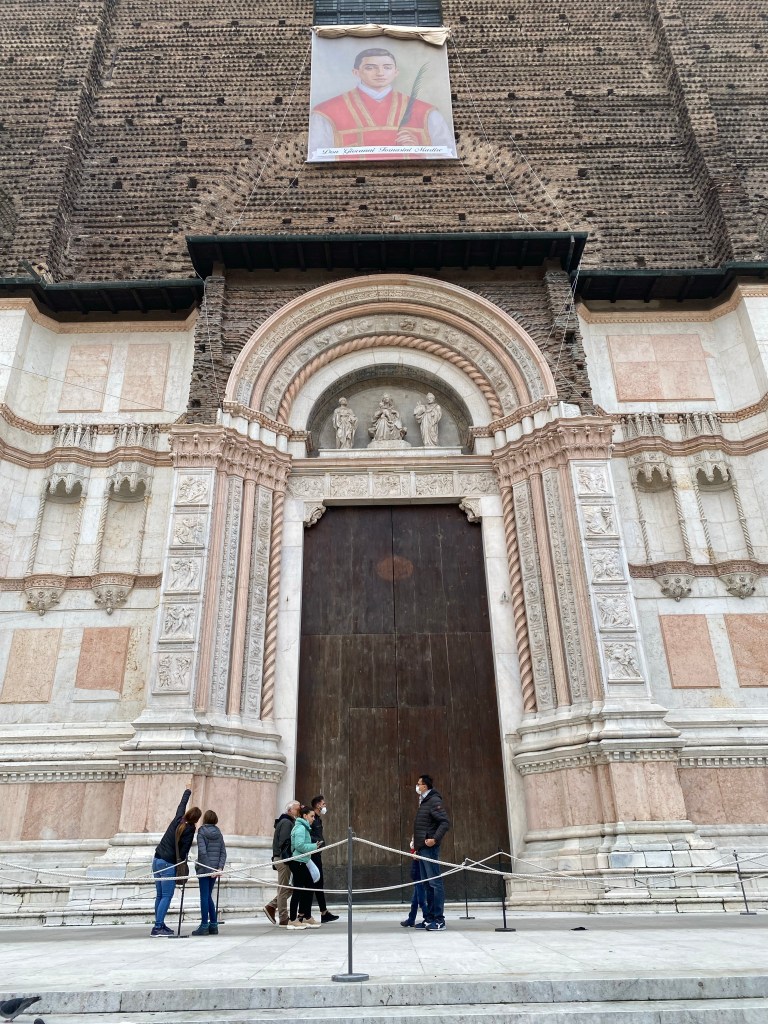
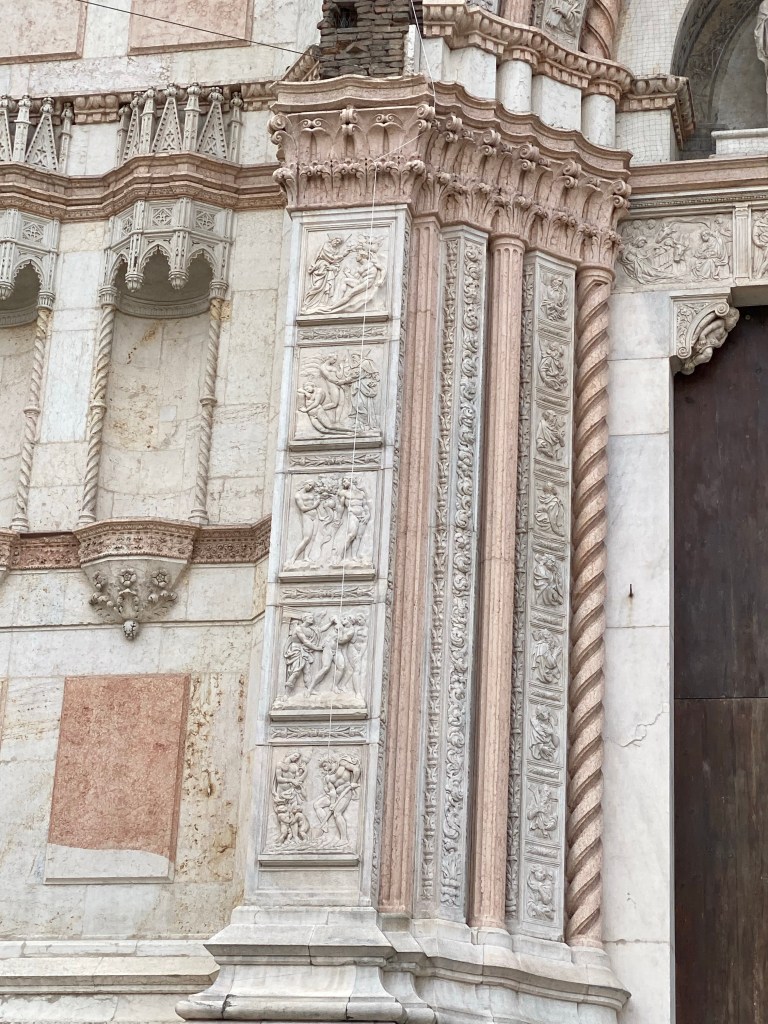
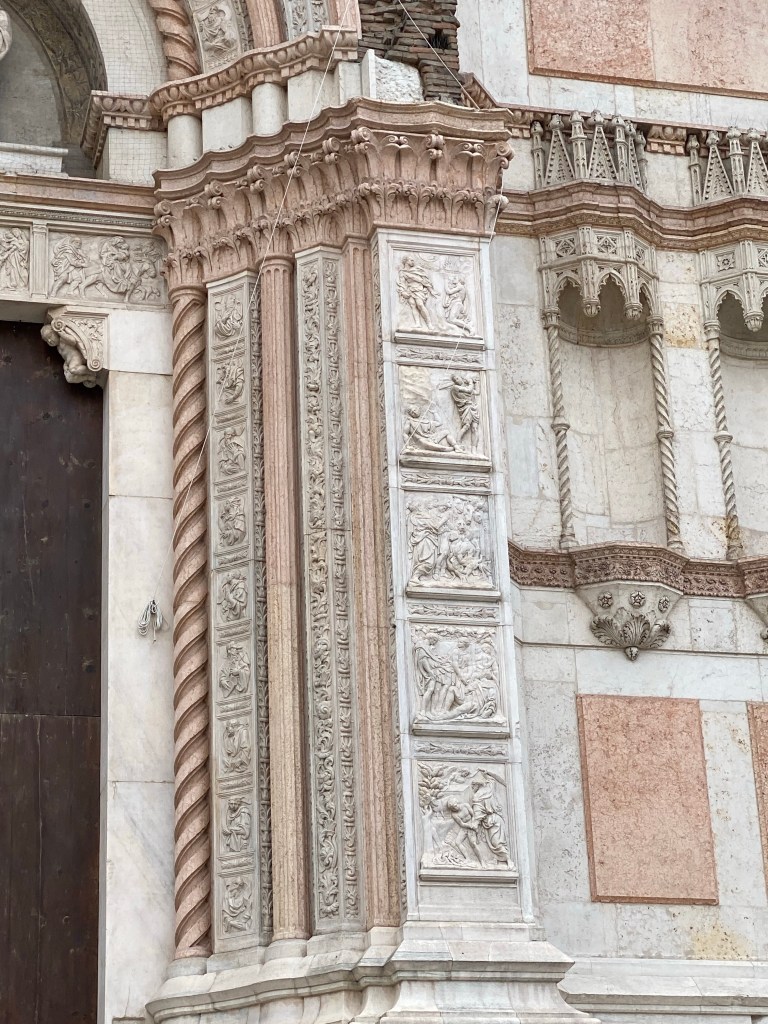
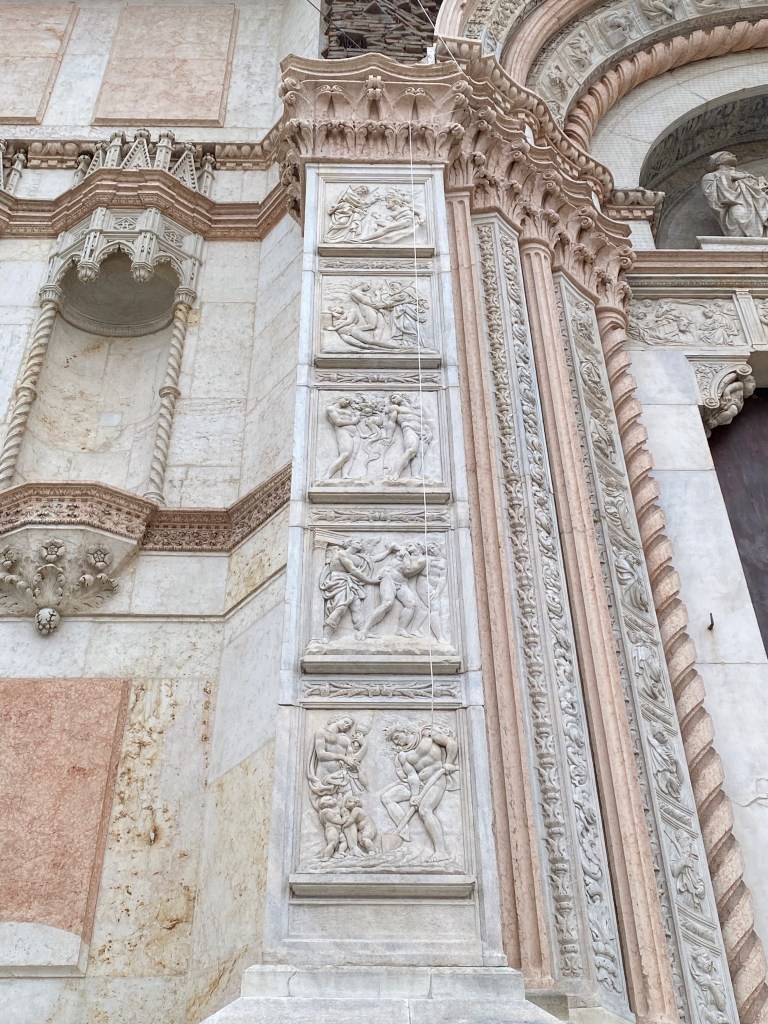
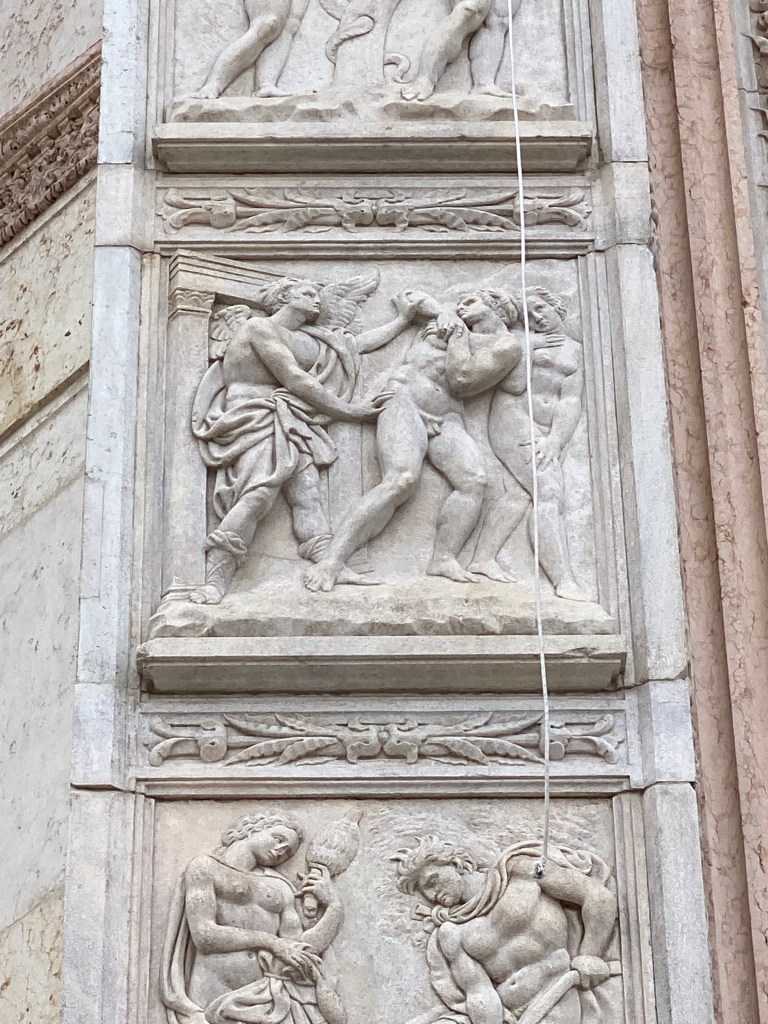
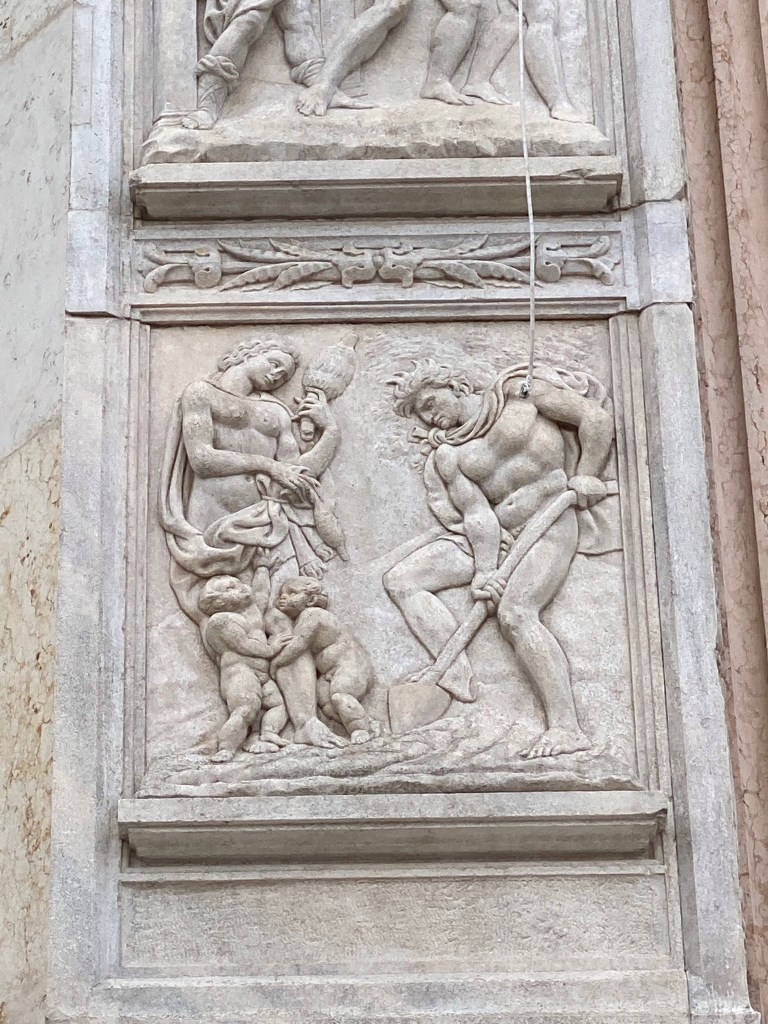
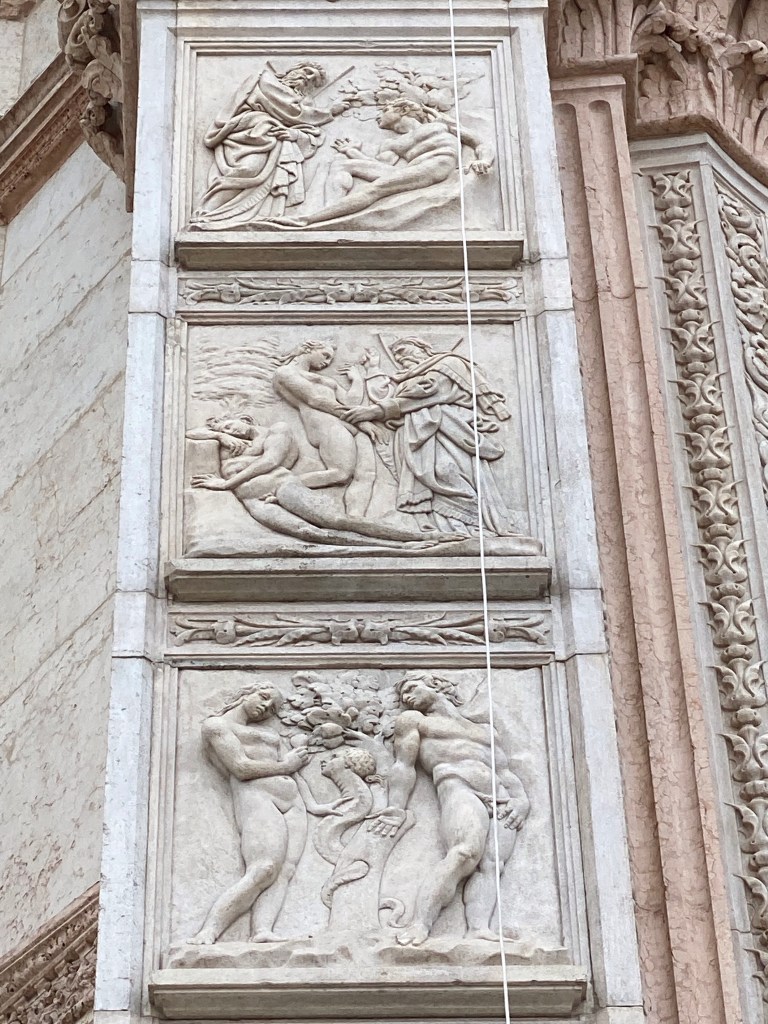
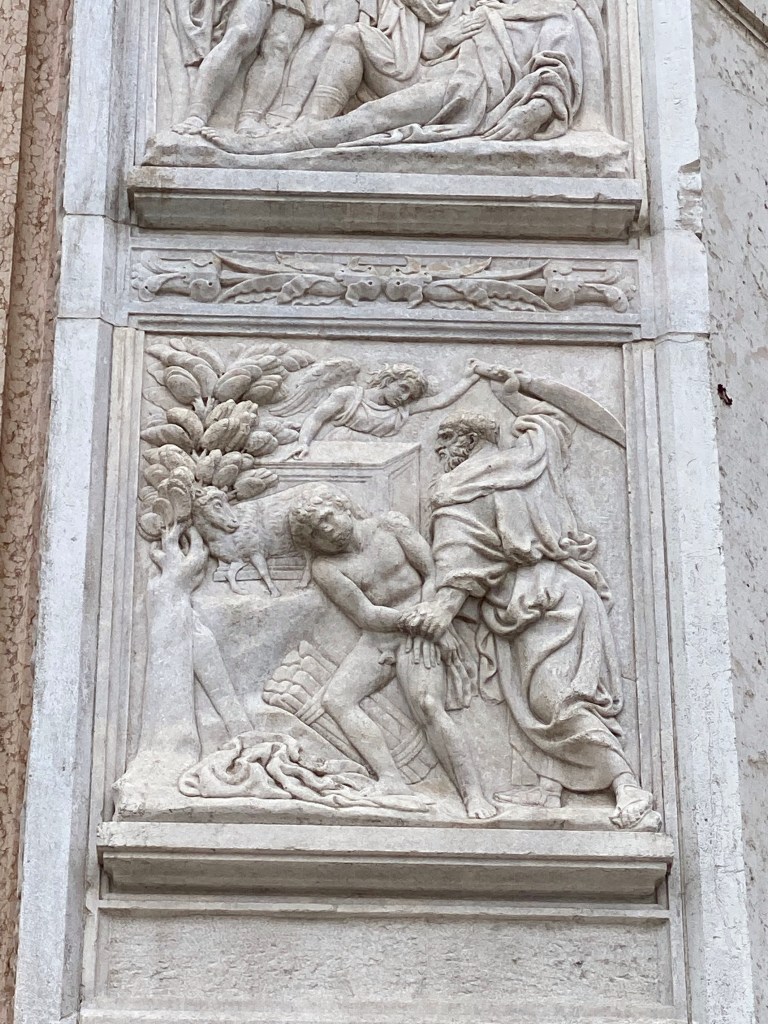
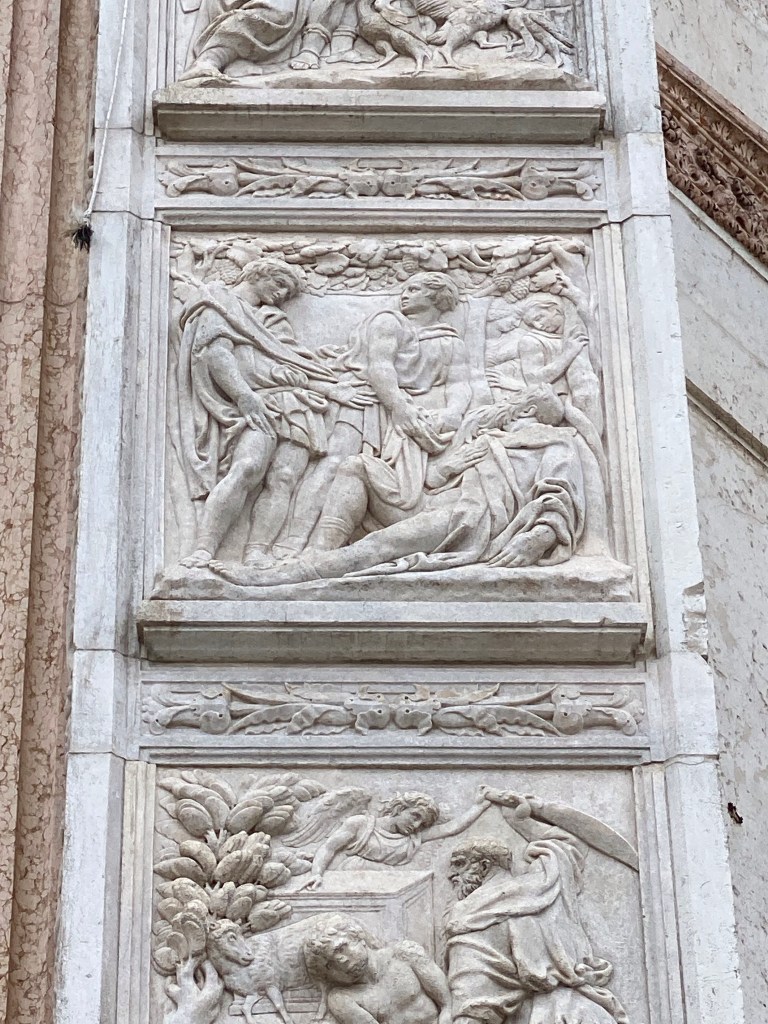
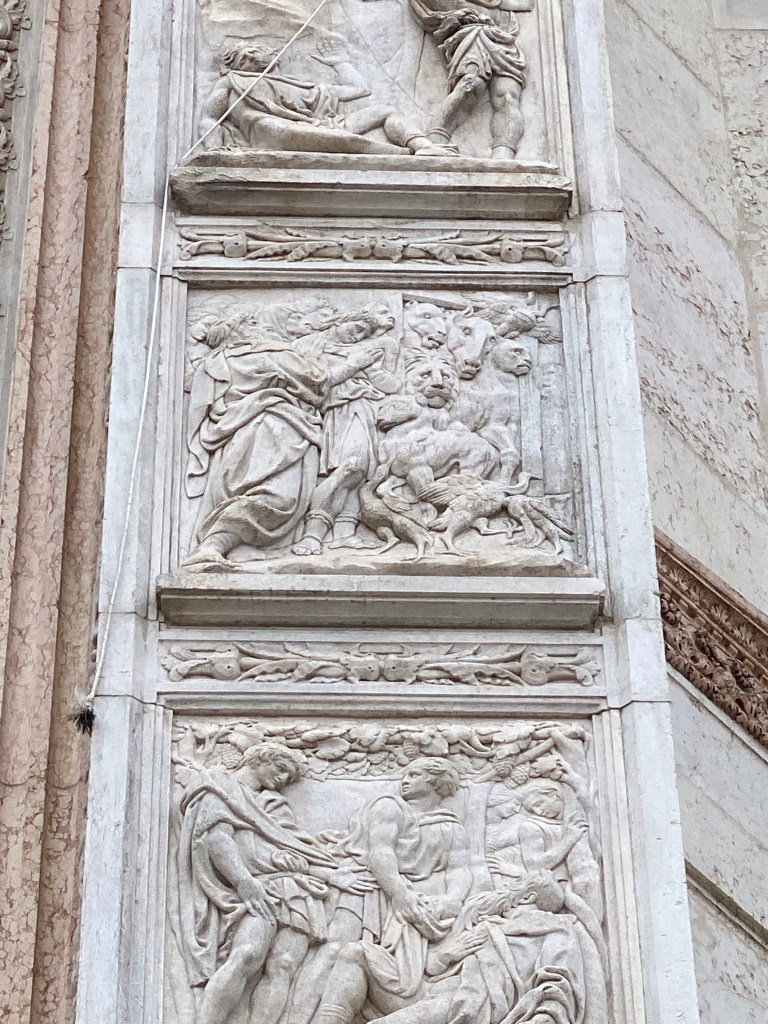
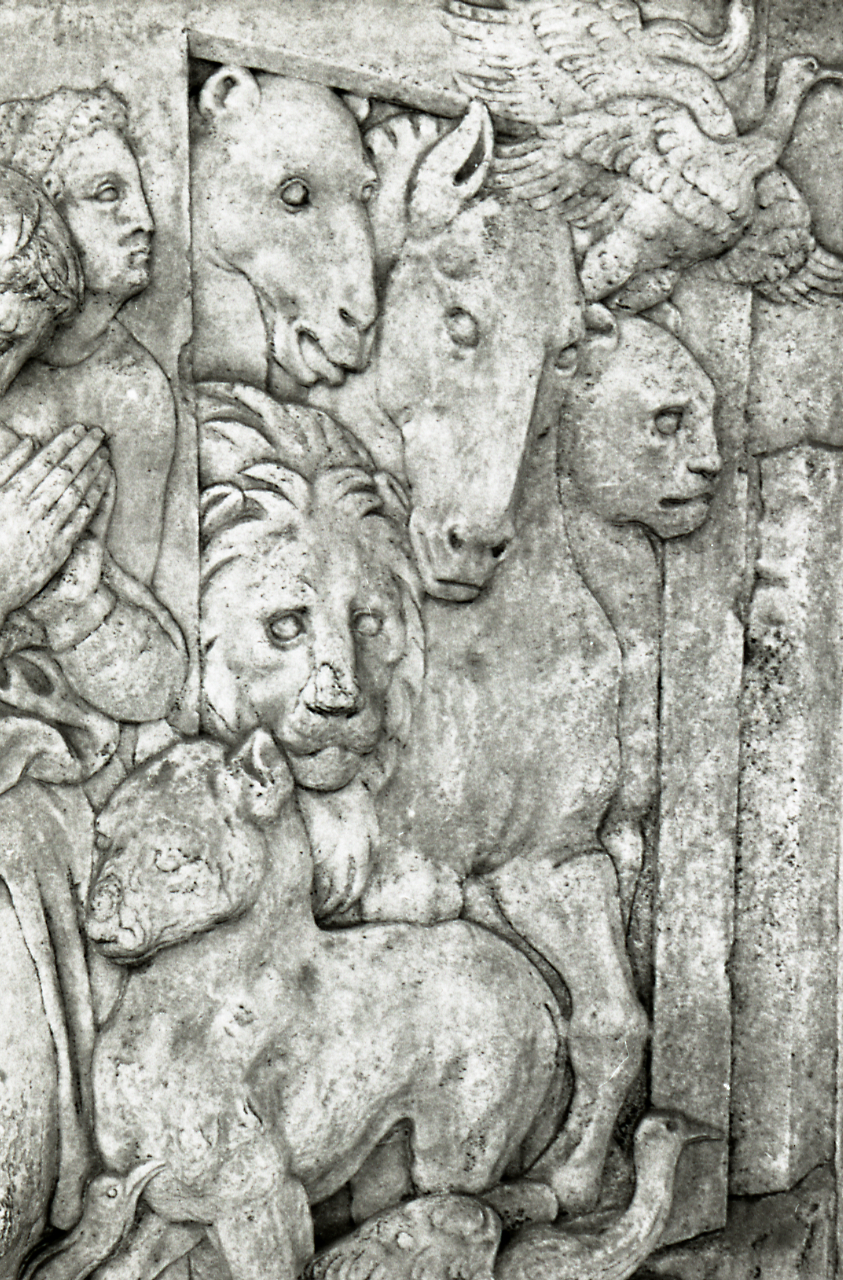
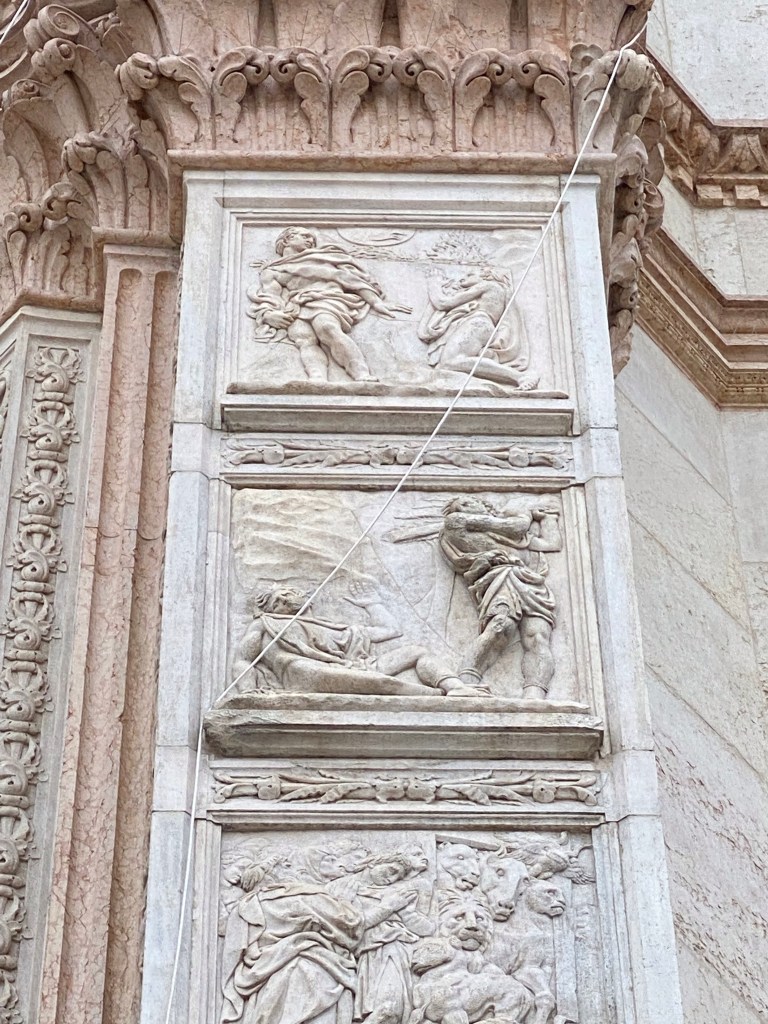
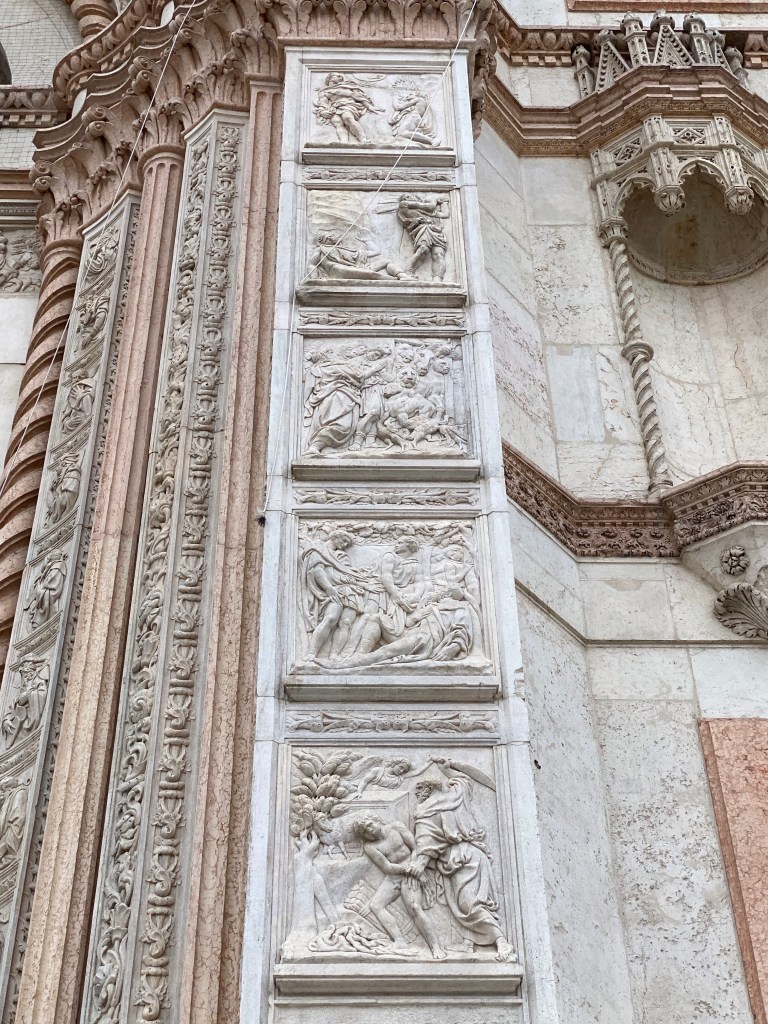
The main doorway (Porta Magna) was decorated by Jacopo della Quercia of Siena with scenes from the Old Testament on the pillars, eighteen prophets on the archivolt, scenes from the New Testament on the architrave, and a Madonna and Child, Saint Ambrose and Saint Petronius on the tympanum.
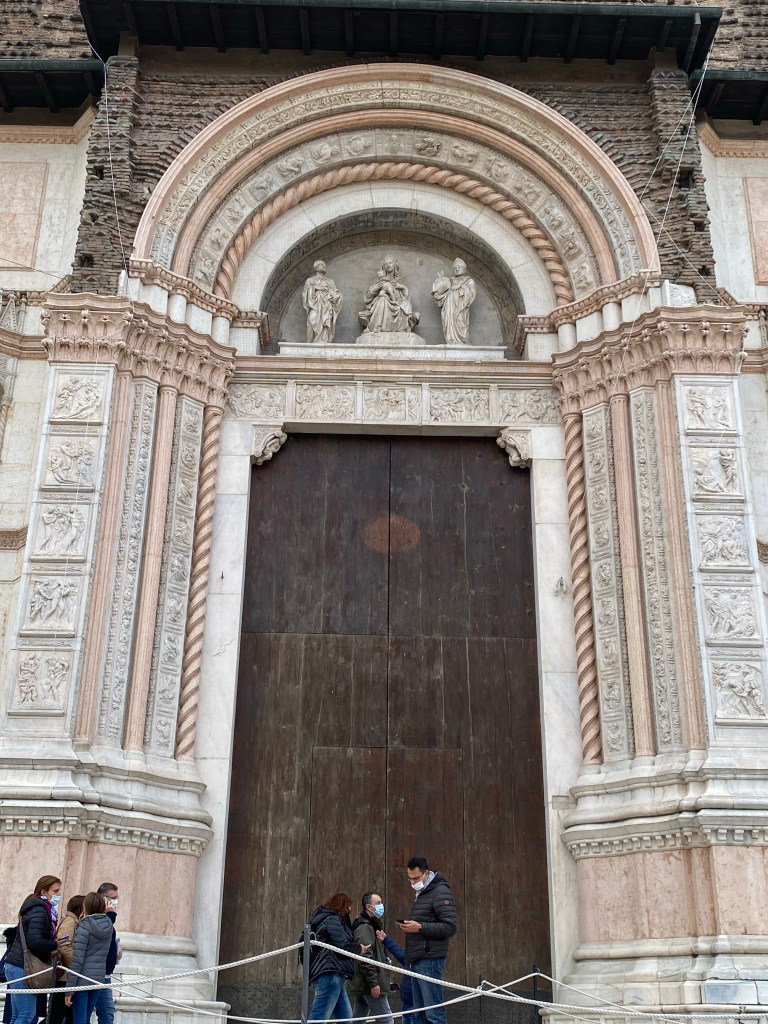
Two side doors flank the central one with della Quercia’s reliefs. Alfonso Lombardi’s Resurrection sequence is on the left and Amico Aspertini’s Deposition in on the right.
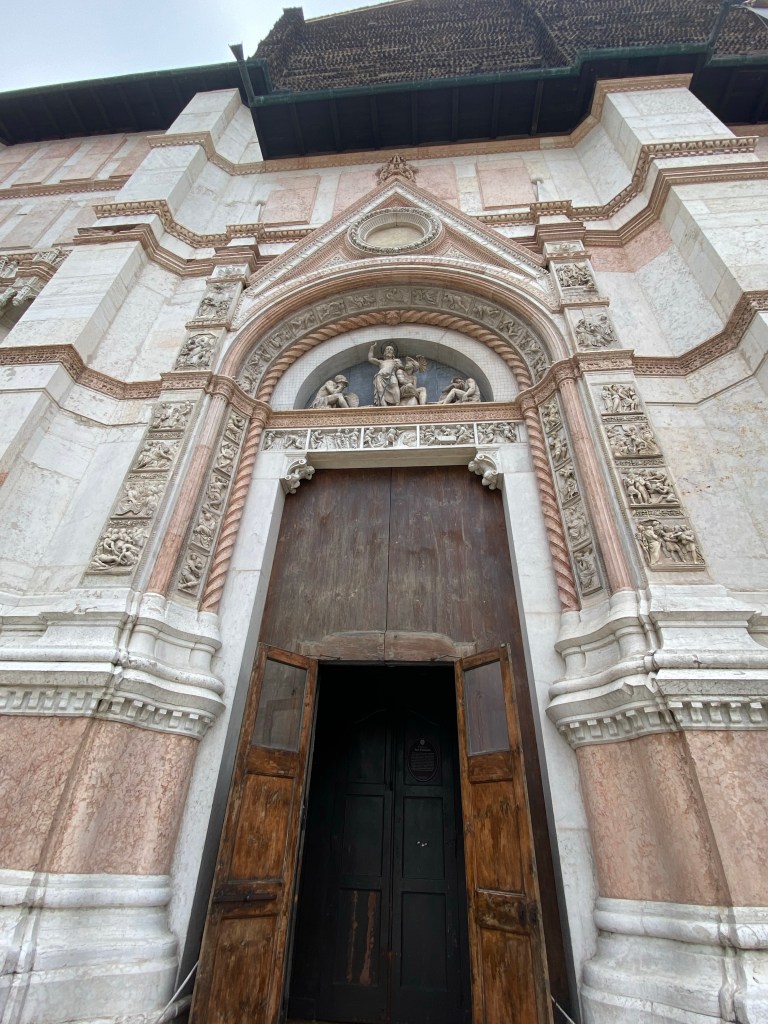
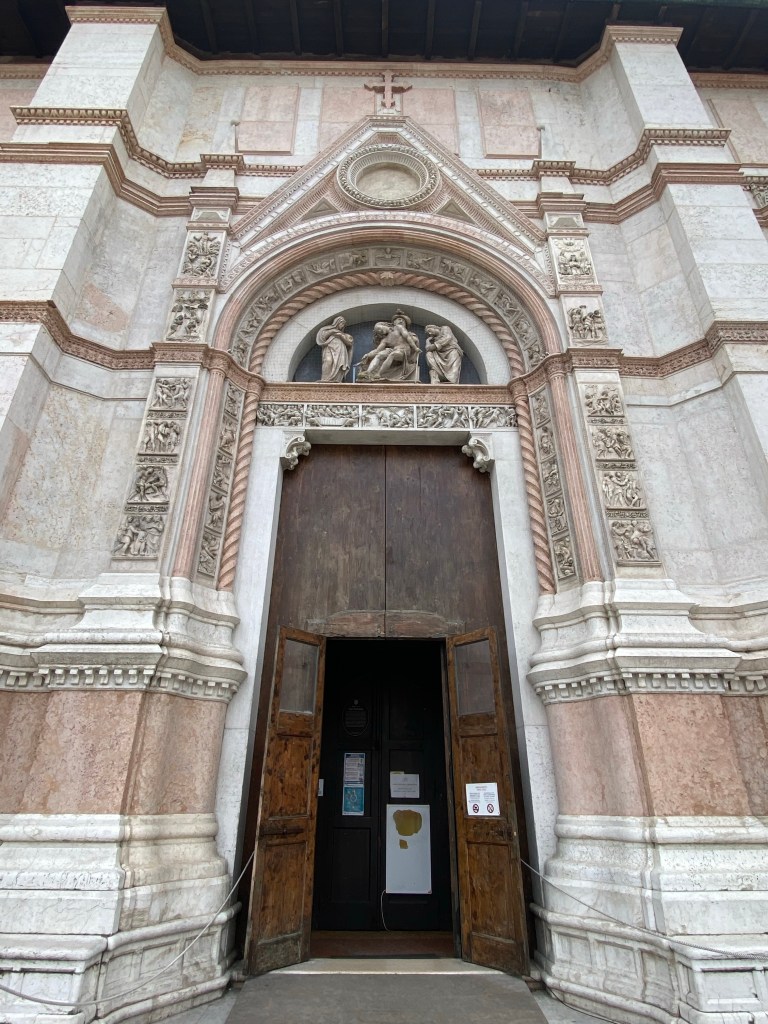
But I’m only concerned in this post with the sculpture by Jacopo della Quercia (c. 1374-1438). He was also known as Jacopo di Pietro d’Agnolo di Guarnieri. He was a major sculptor of the Renaissance, a contemporary of Brunelleschi, Ghiberti and Donatello. He is considered to be a precursor of Michelangelo.
Here is a portrait of the artist:


A



Below: a detail of the archivolt sculptures of the Prophets

In 1425 della Quercia accepted a major commission: the design of the round-arched Porta Magna of the San Petronio church in Bologna. It would keep him busy for a good deal of the last thirteen years of his life and it is considered his masterwork. Each side of the door is flanked, first by a colonette with a spirally wound decoration, then nine busts of prophets and at the end five scenes from the Old Testament, carved into somewhat lower relief.
In the Creation of Adam, he uses the same arrangement as in the Fonte Gaia (in Siena), but in reverse order.
Michelangelo, who had visited Bologna in 1494, conceded that his Genesis on the Sistine Chapel ceiling was based on these reliefs.
The architrave above the door contains five reliefs with representations from the New Testament.
The lunette contains three free-standing statues : Virgin and Child, Saint Petronius (with a model of Bologna in his right hand) and Saint Ambrose (carved by another sculptor Domenico Aimo in 1510). Originally this third statue had to represent the papal legate Cardinal Alemmano, but this intention was quickly abandoned after the cardinal had been evicted from Bologna. He relied heavily on the artists of his Bolognese workshop, such as Cino di Bartolo, for assistance in this project.
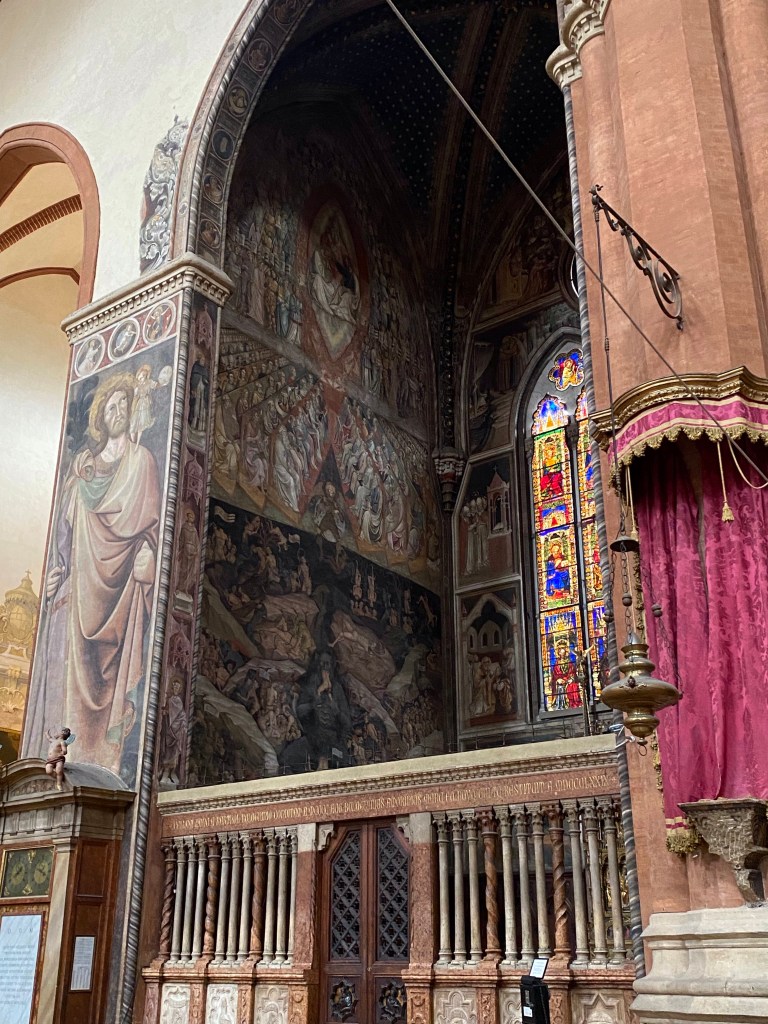
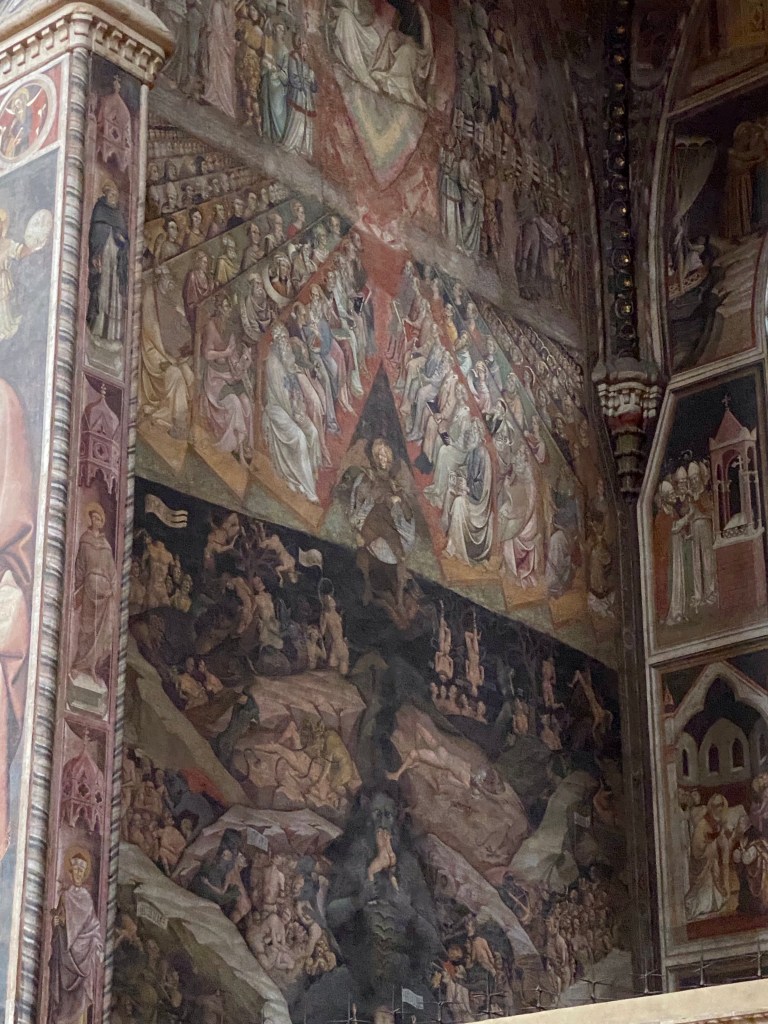
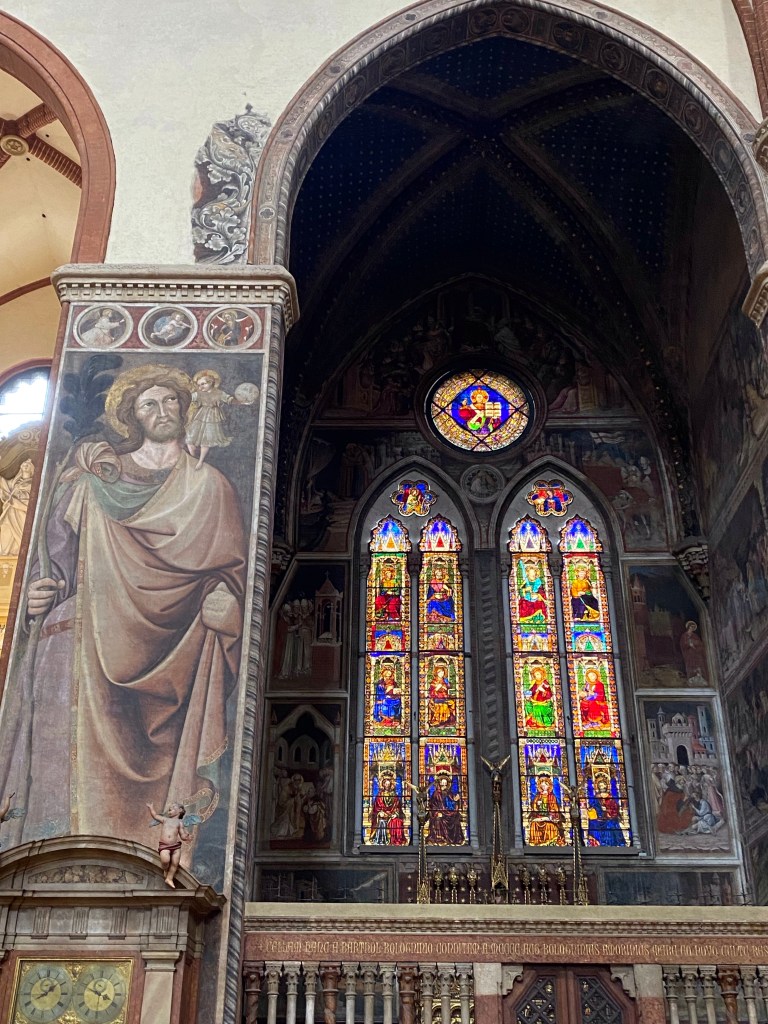
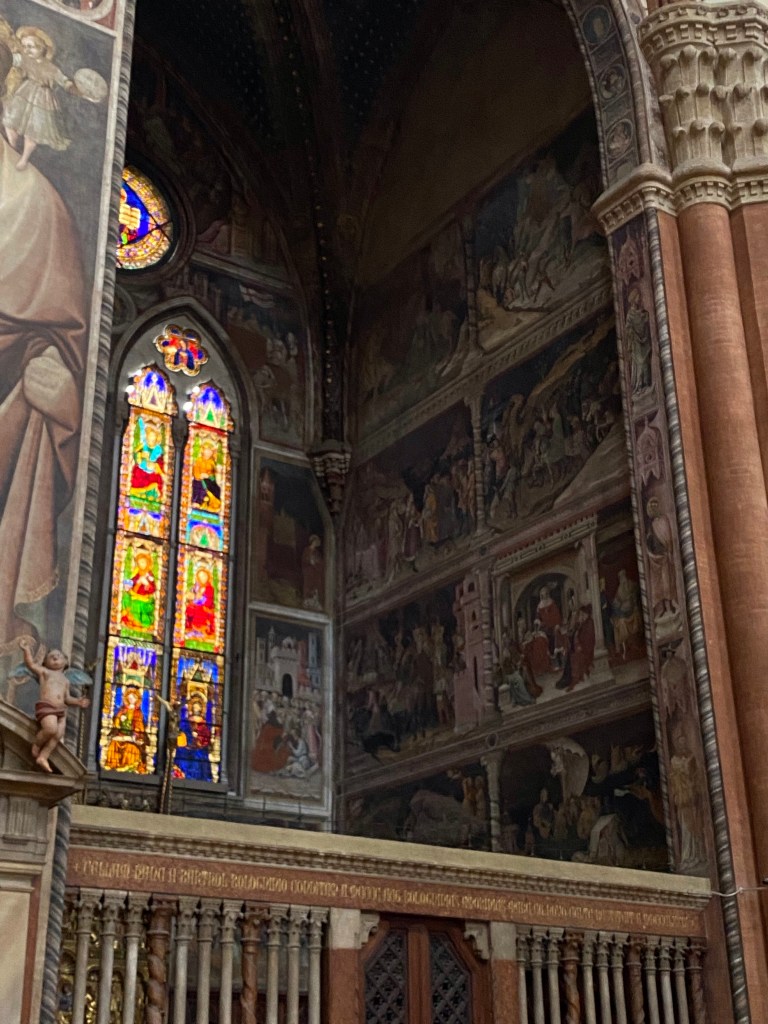
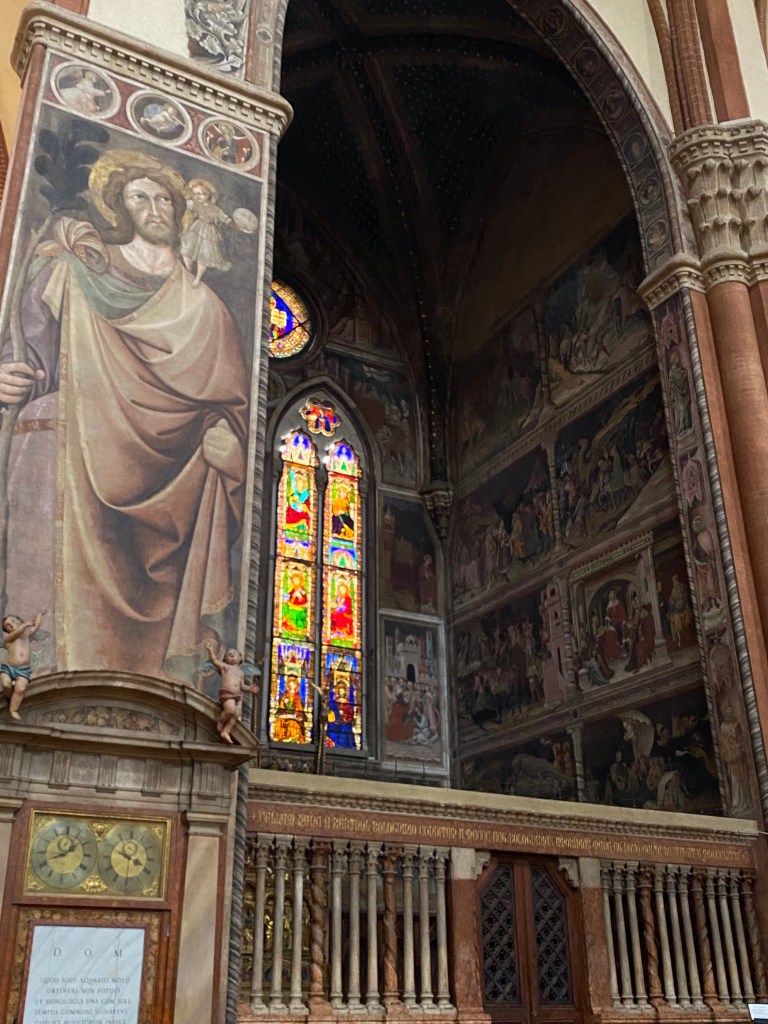
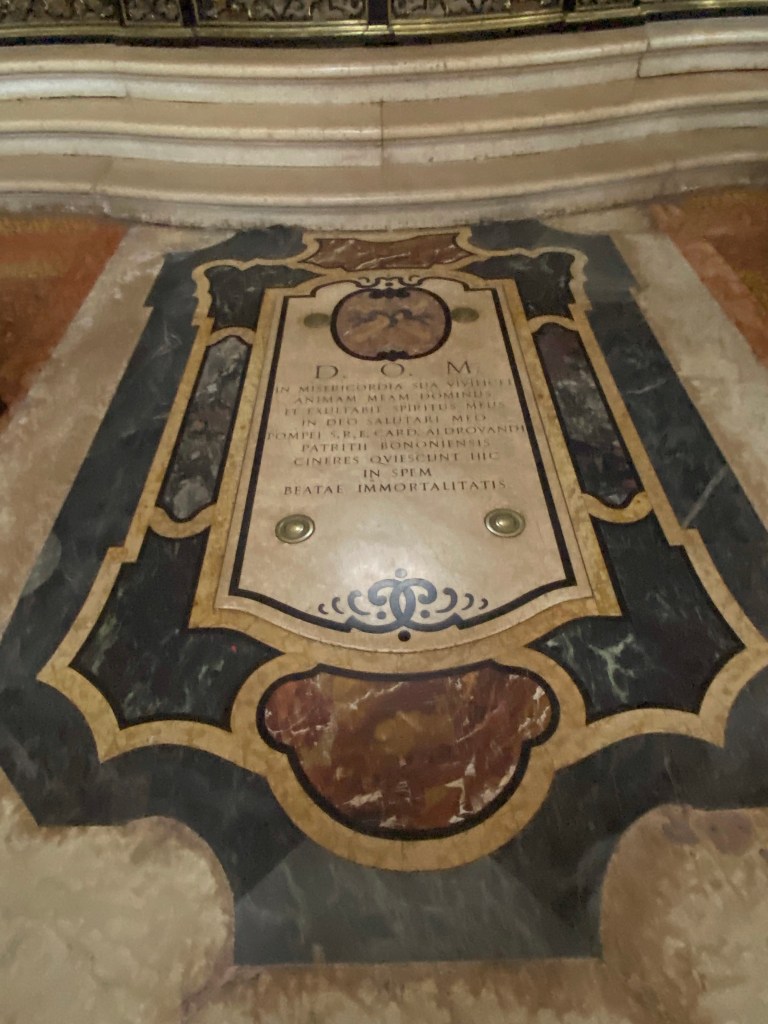
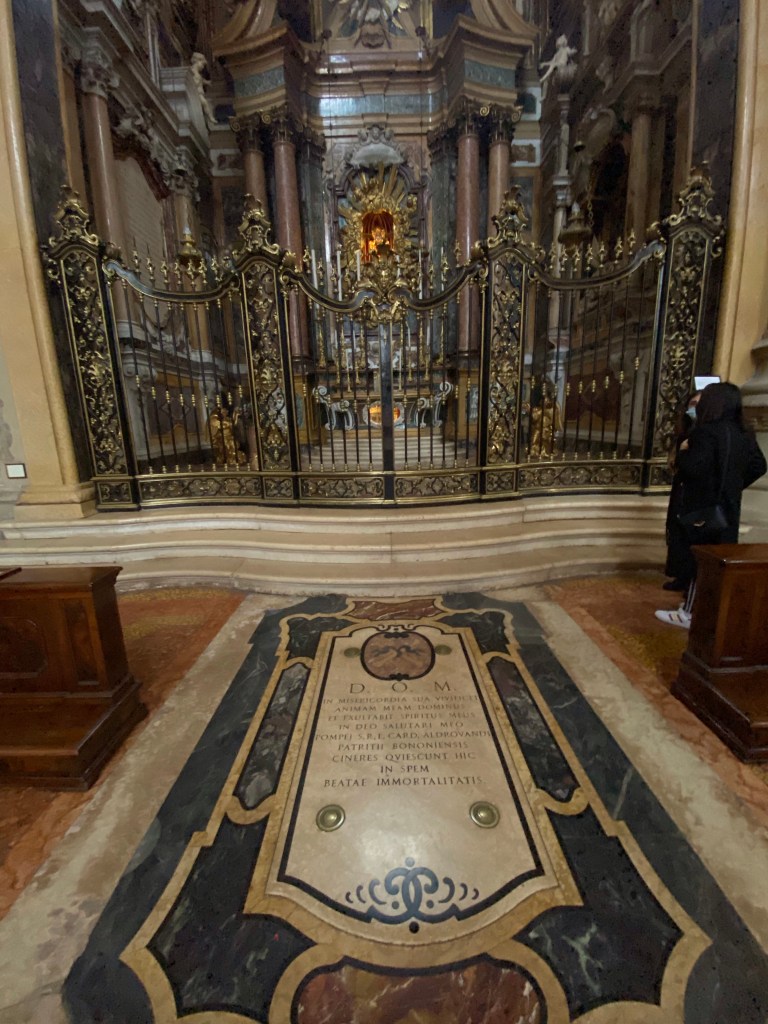
Mm
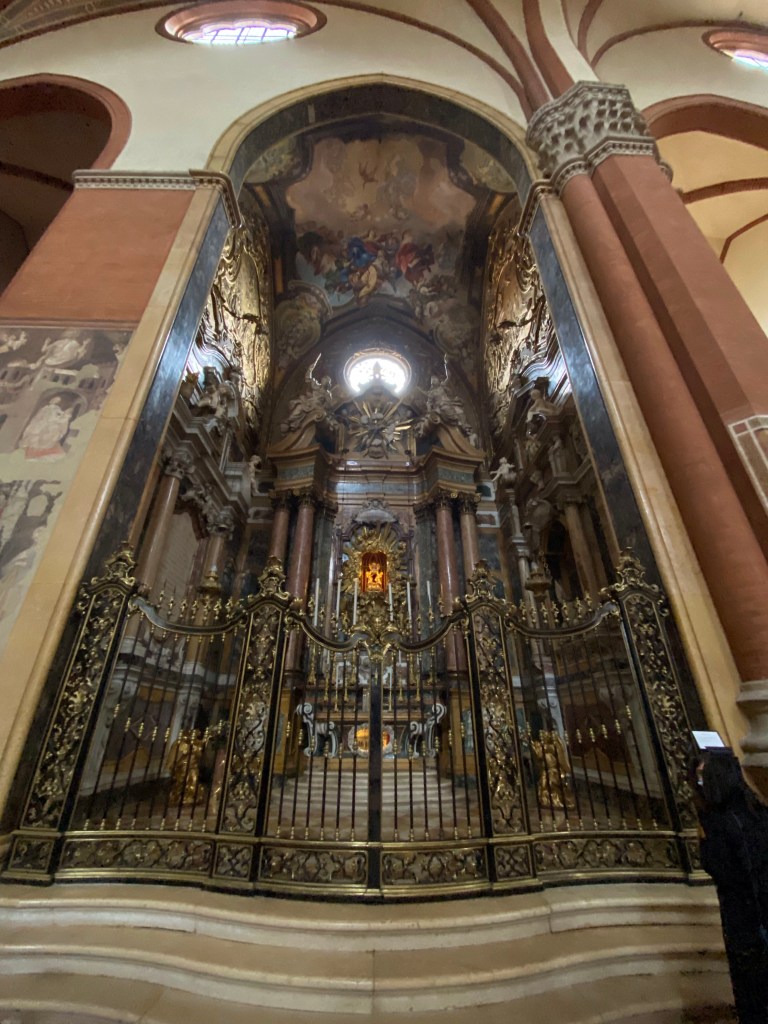
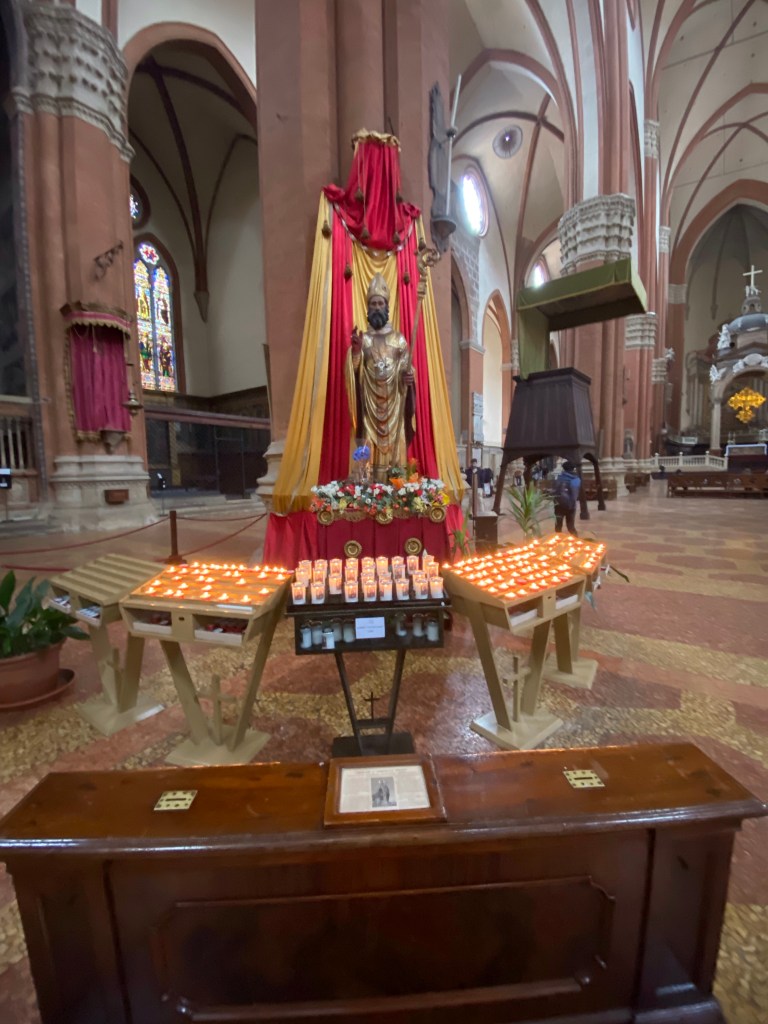
The church has a meridian line inlaid in 1655 the paving of the left aisle; it was calculated and designed by the astronomer Giovanni Domenico Cassini, who was teaching astronomy at the University.
A meridian line does not indicate the time: instead, with its length of 66.8 metres (219 ft) it is one of the largest astronomical instruments in the world, allowing measurements that were for the time uniquely precise.
The sunlight, entering through a 27.07 mm (1.066 in) hole placed at a 27.07 m (88.8 ft) height in the church wall, projects an elliptical image of the sun, which at local noon falls exactly on the meridian line and every day is different as to position and size. The position of the projected image along the line allows to determine accurately the daily altitude of the sun at noon, from which Cassini was able to calculate with unprecedented precision astronomical parameters such as the obliquity of the ecliptic, the duration of the tropical year and the timing of equinoxes and solstices. On the other hand, the size of the projected sun’s image, and in particular its rate of variation during the year, allowed Cassini the first experimental verification of Kepler’s laws of planetary motion.

 get back, lauretta!
You must be logged in to post a comment.