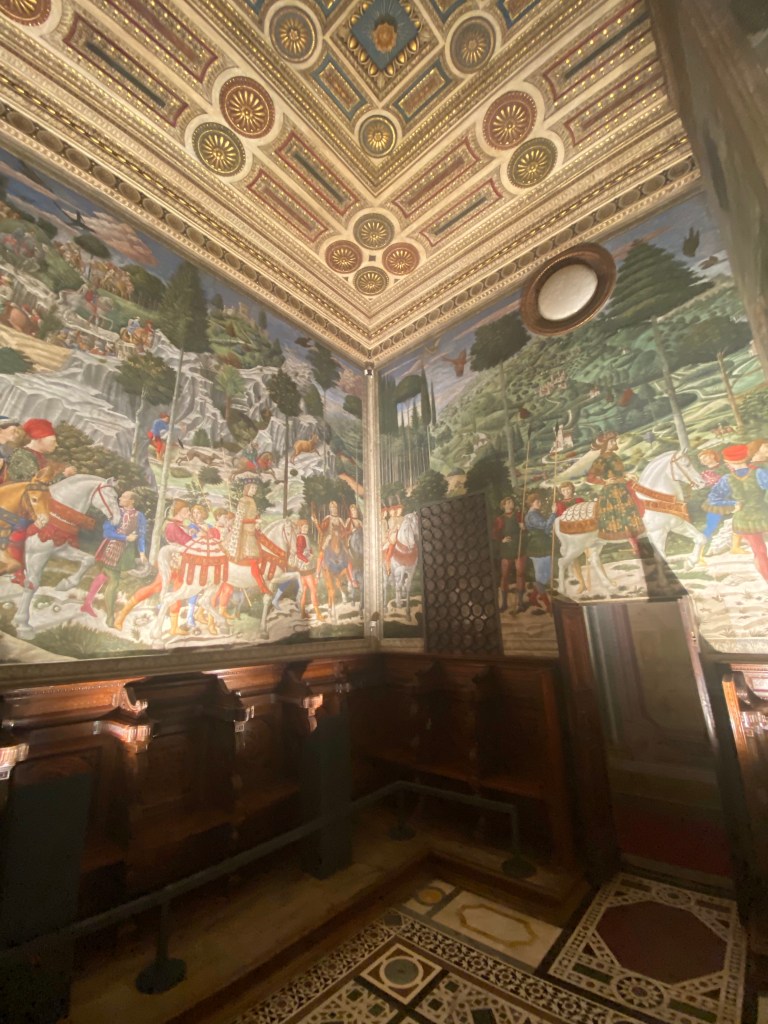
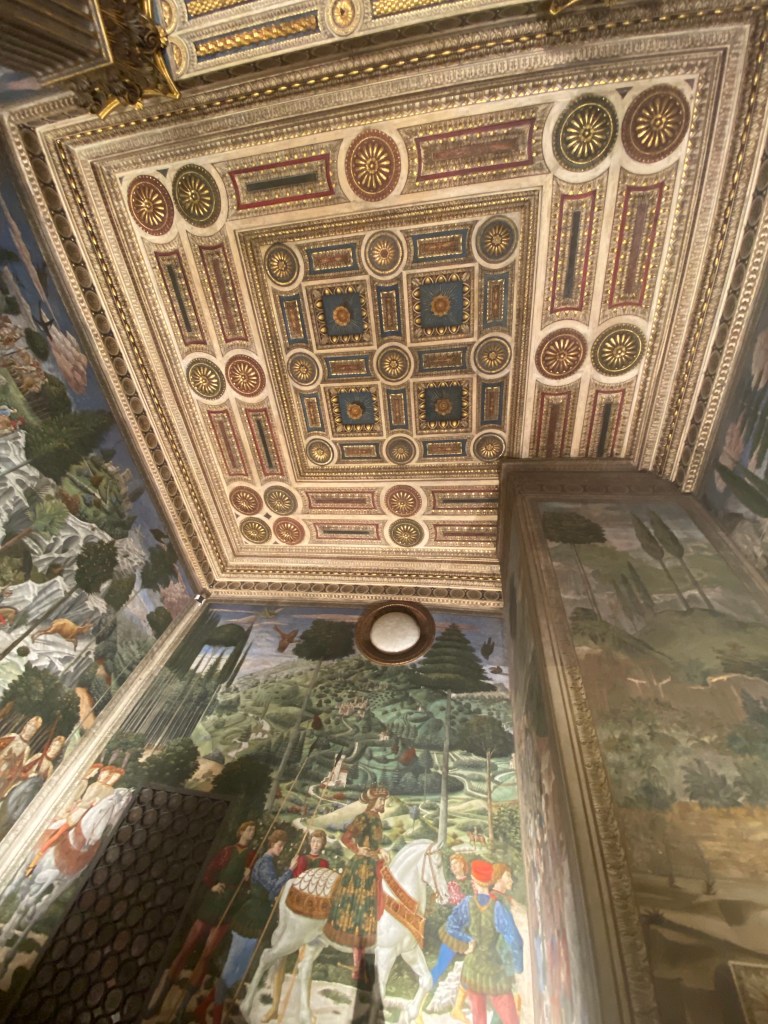
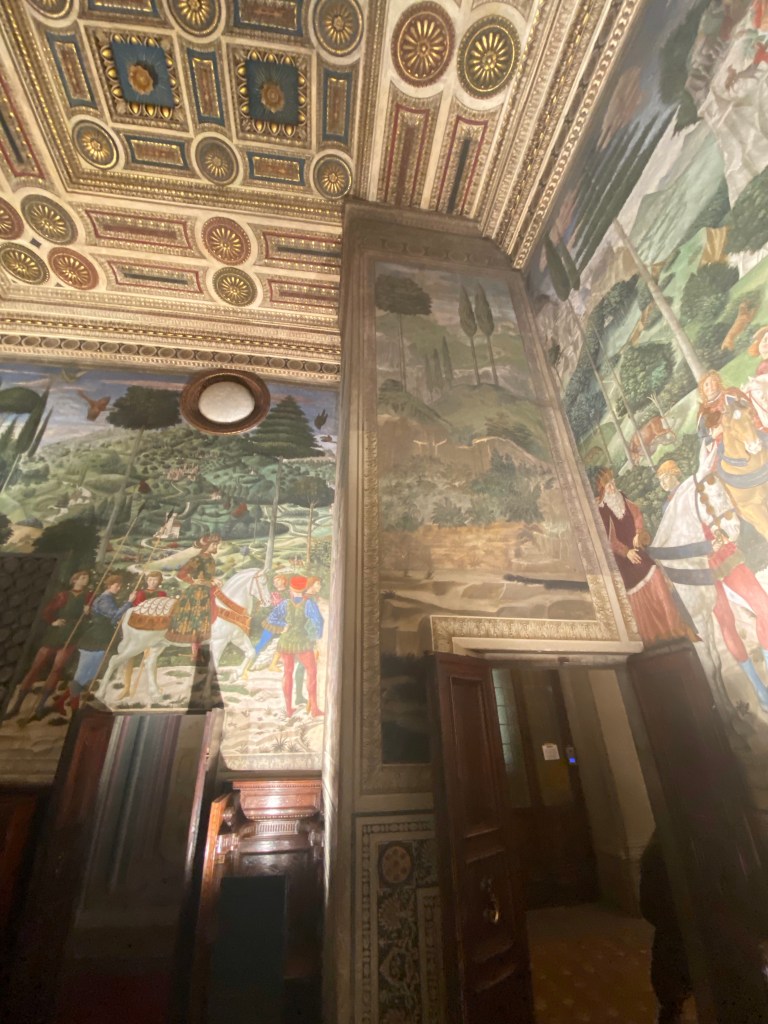
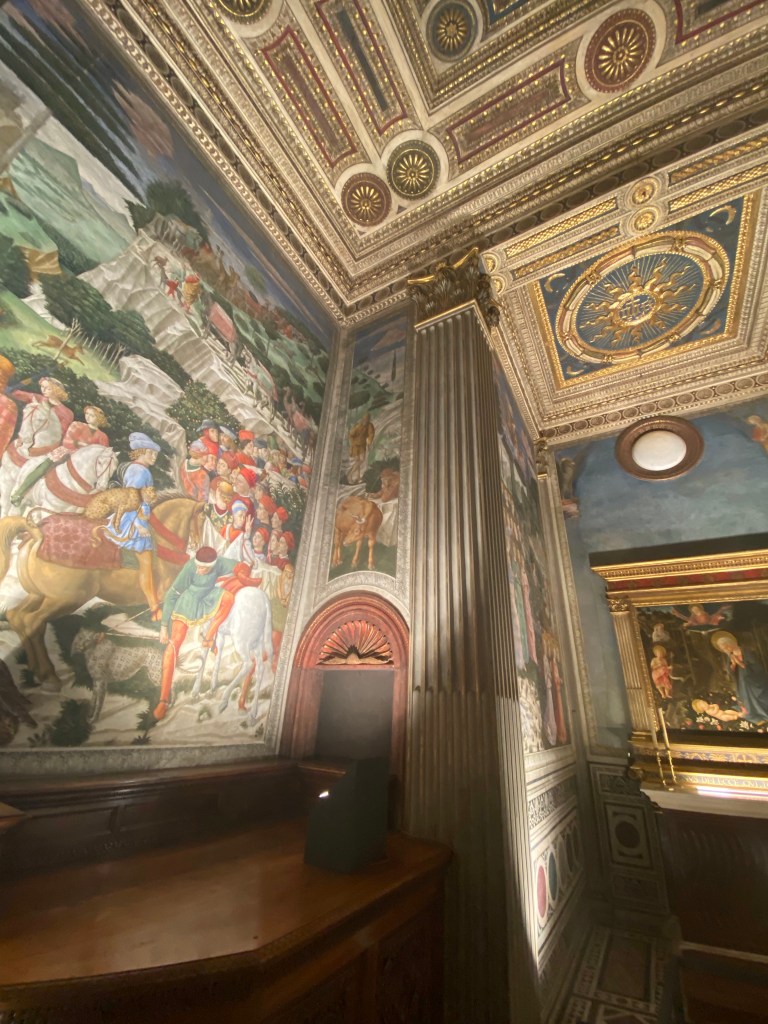
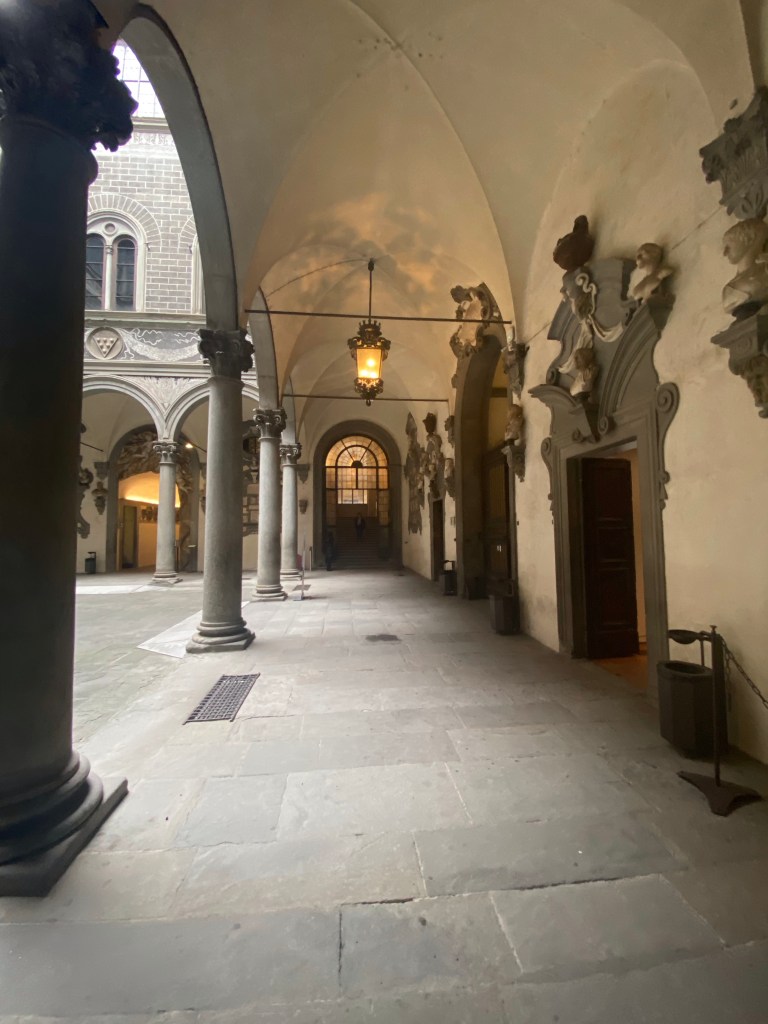
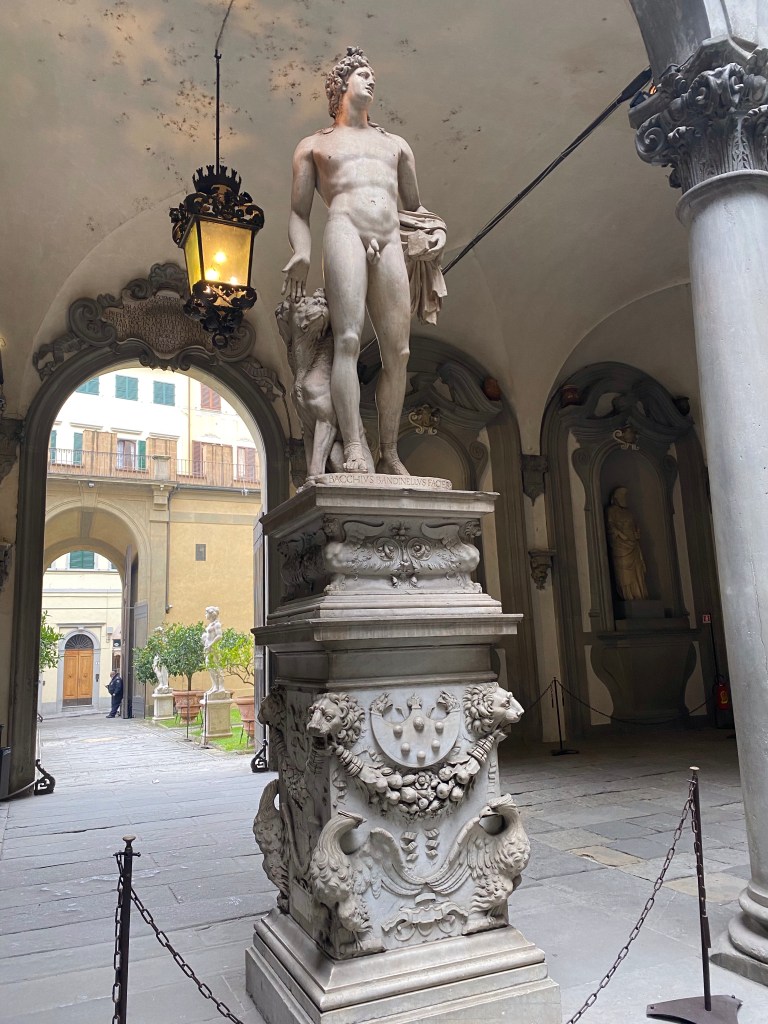
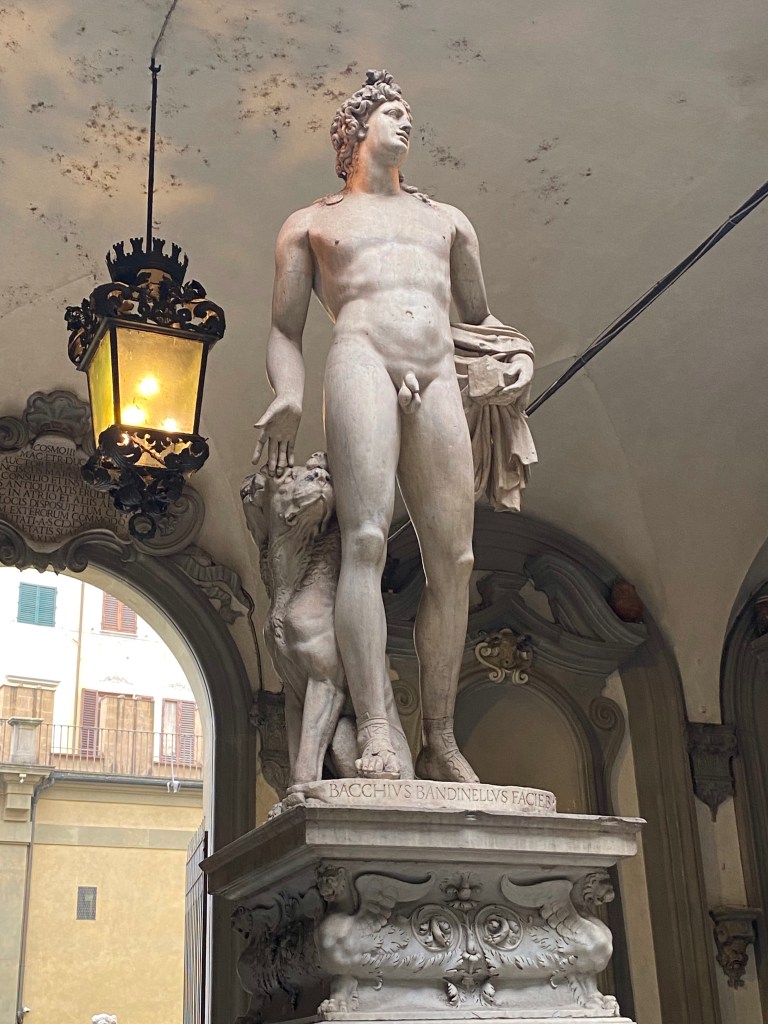
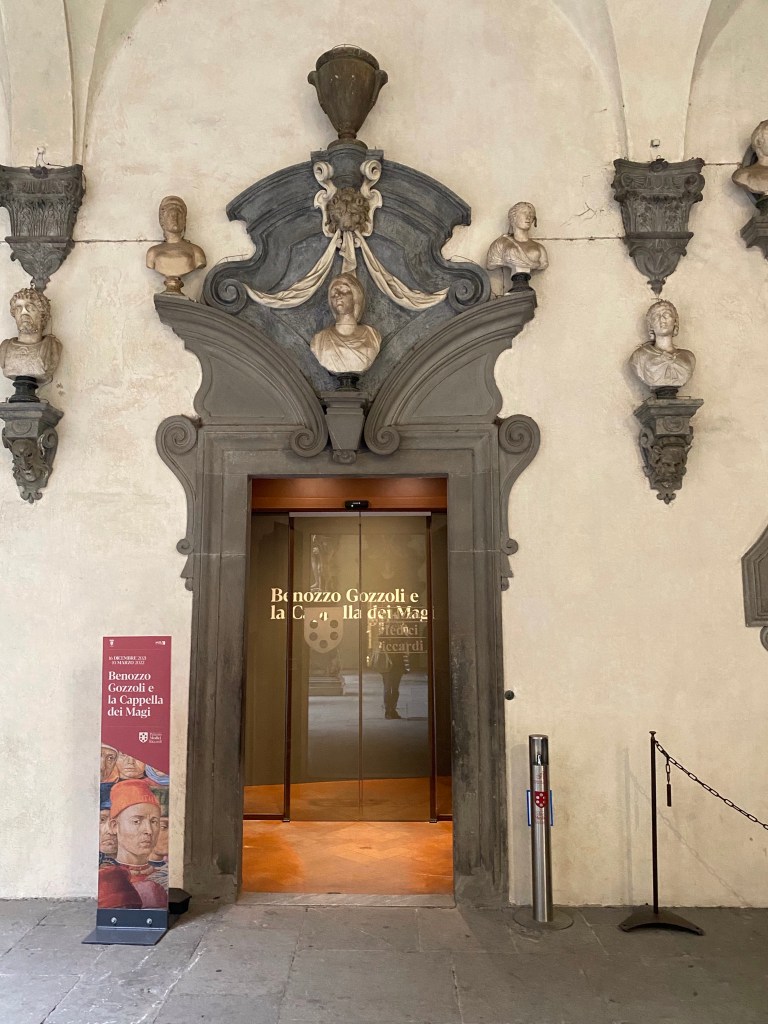
The Laurentian library, Florence, Part 1: the stairway and entry by Michelangelo

Waiting outside to be let into this hallowed space. Temperature checks, green pass checks, masks in place. Andiamo!

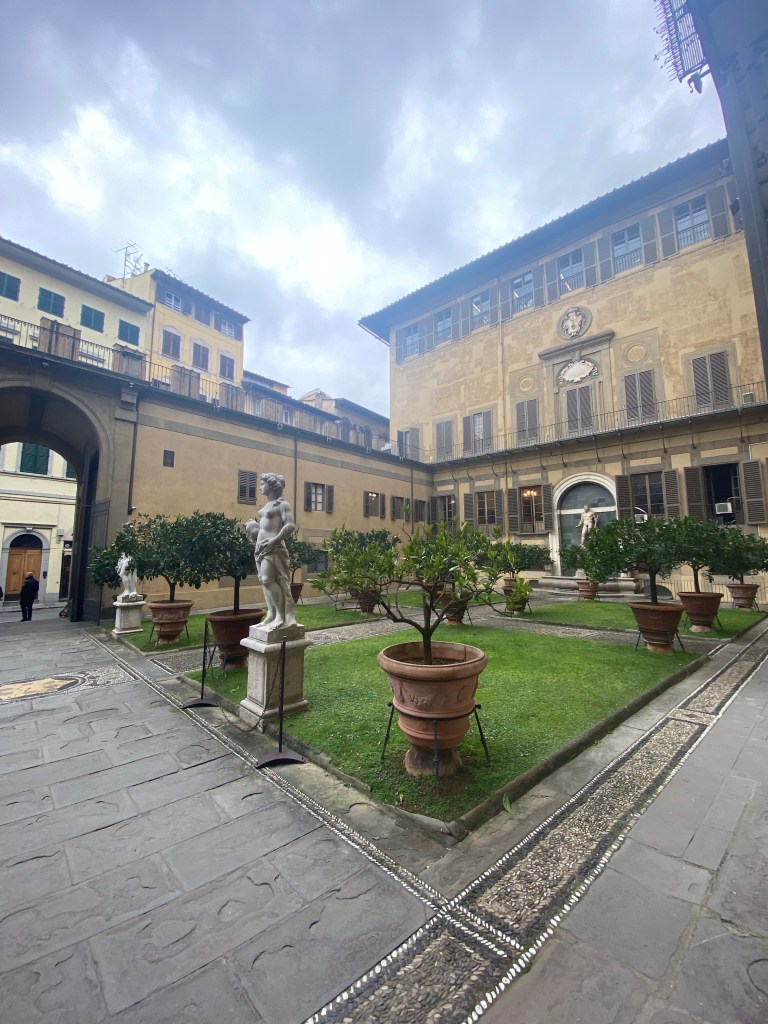
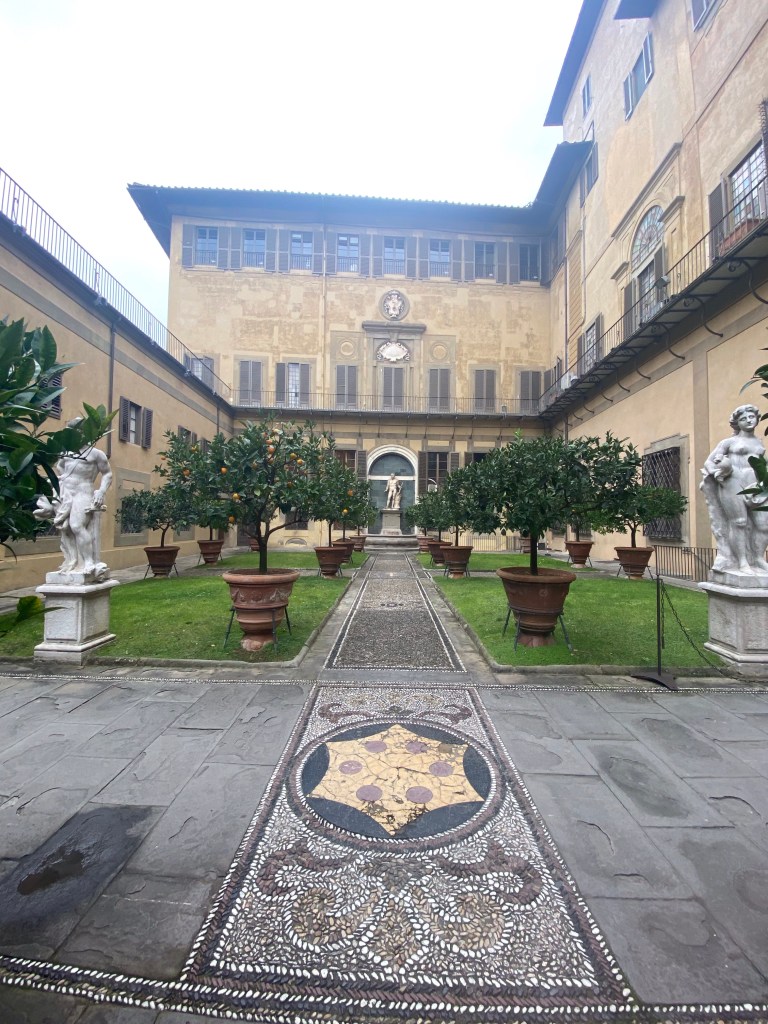
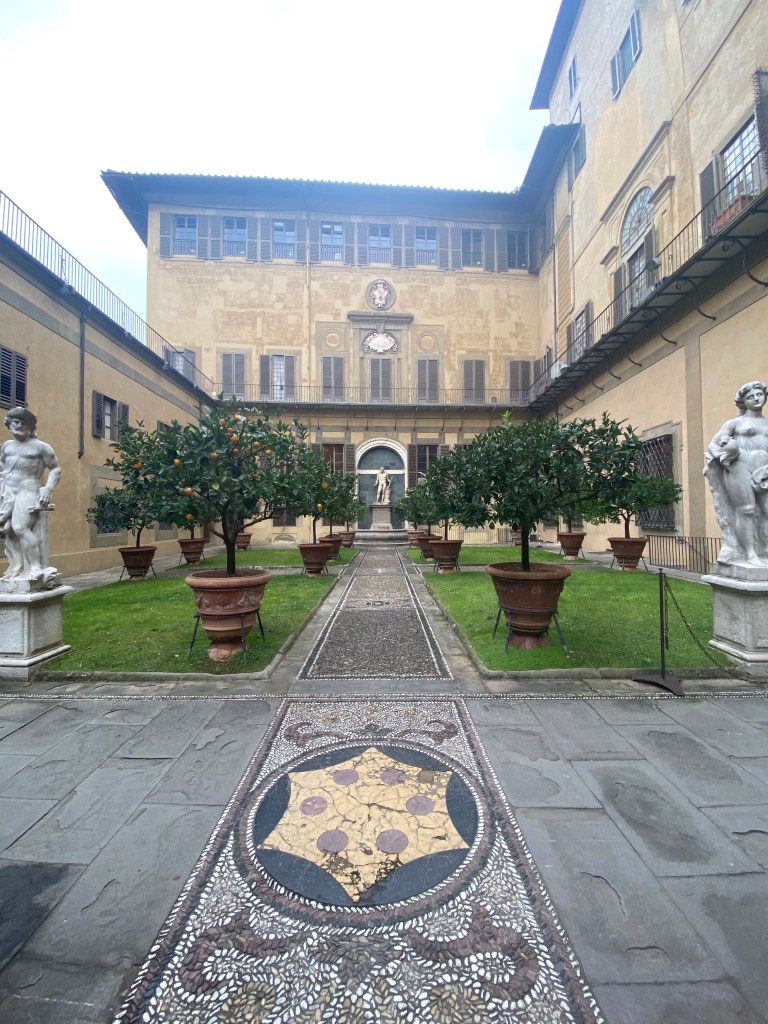
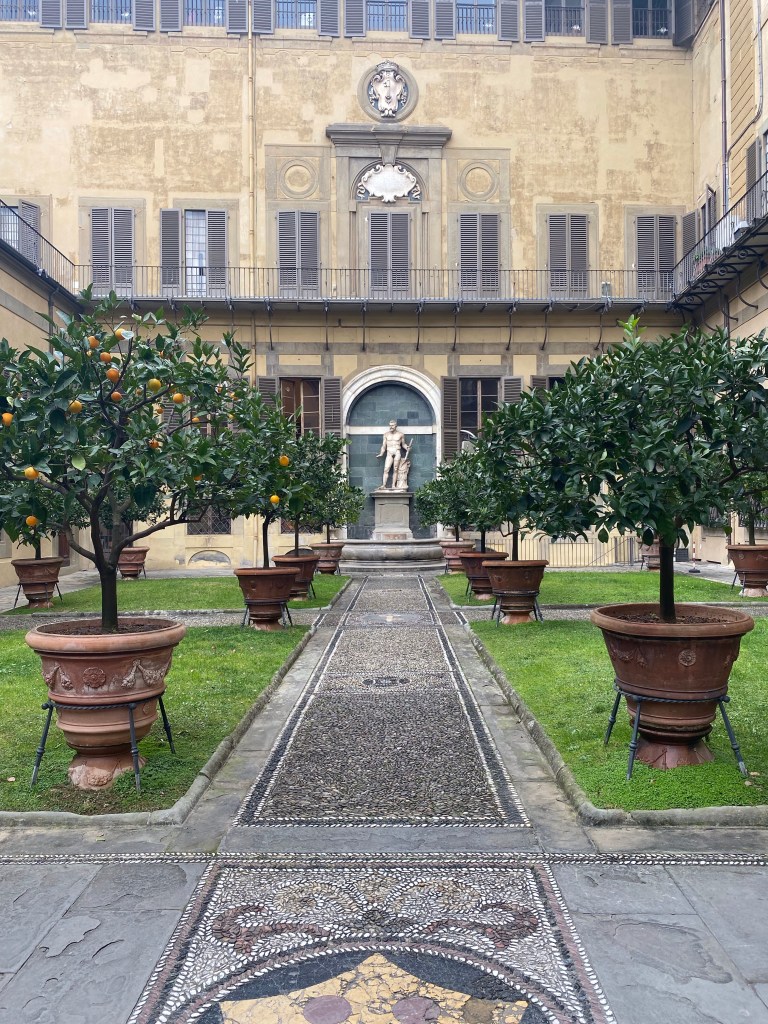
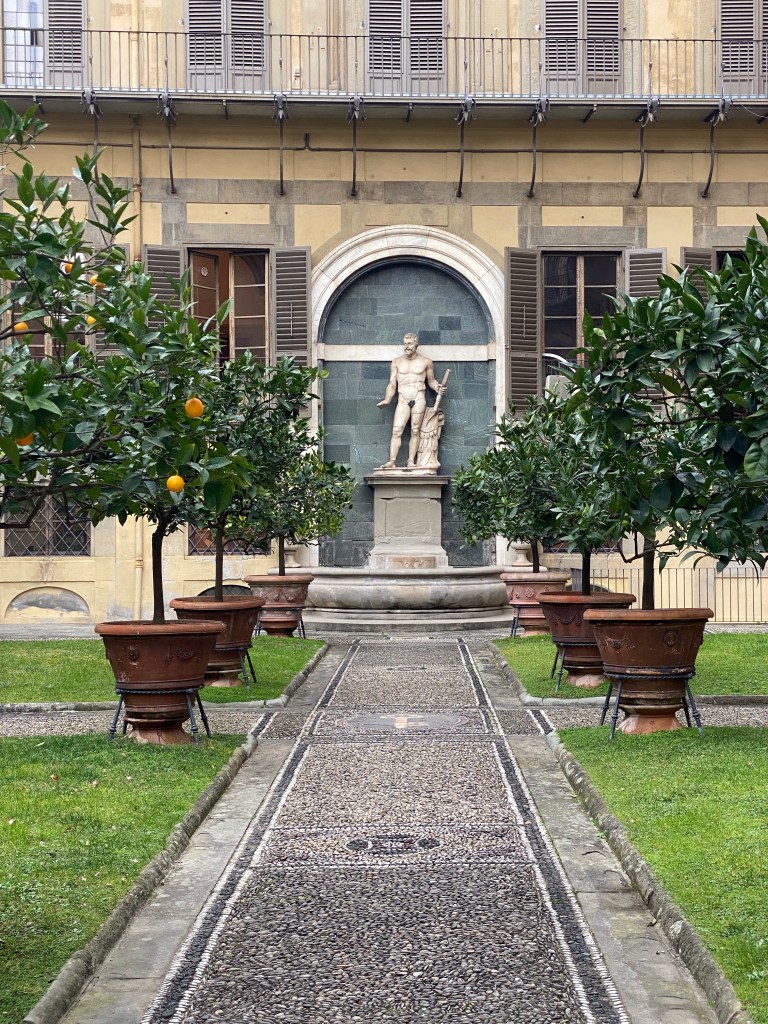
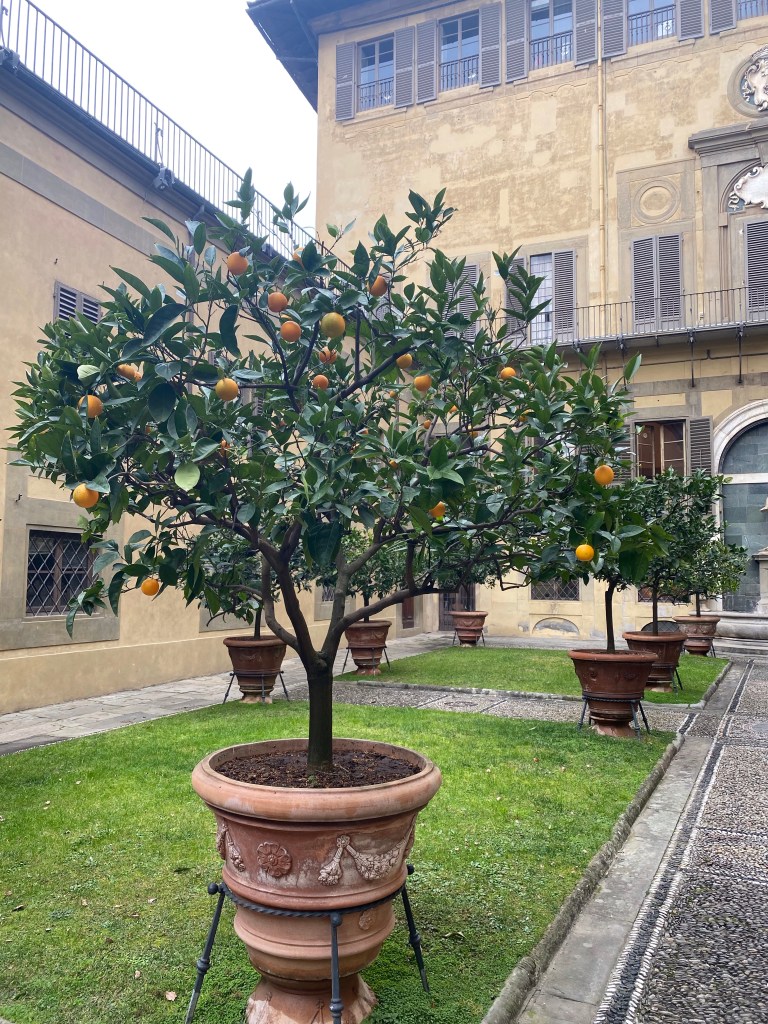
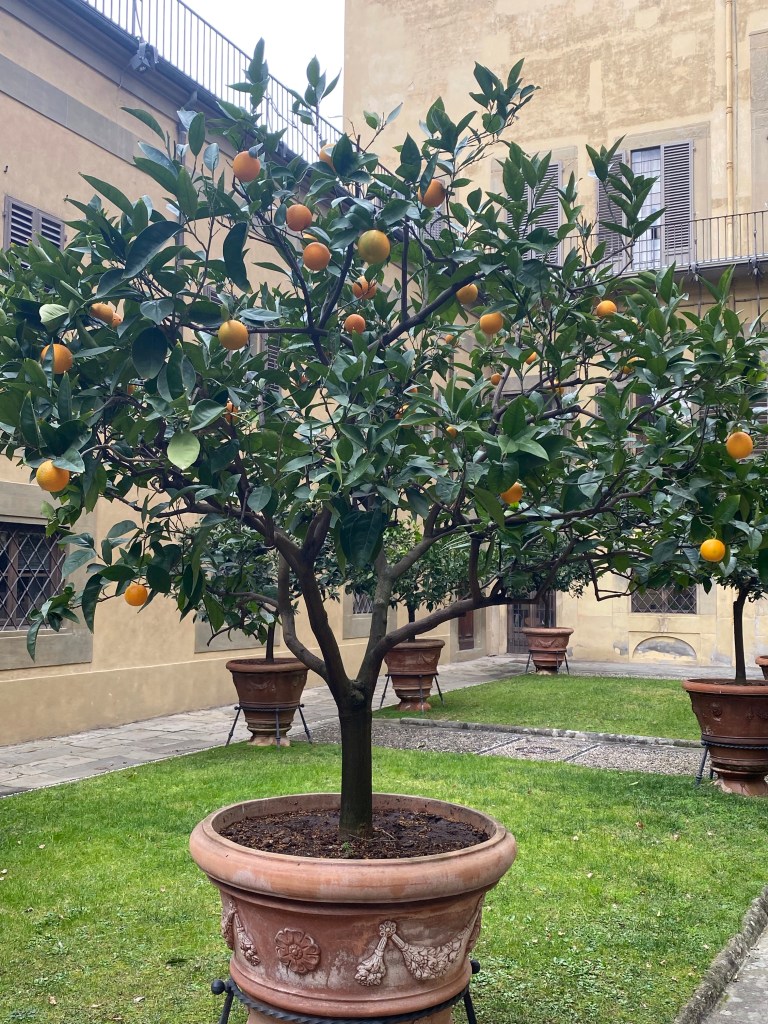
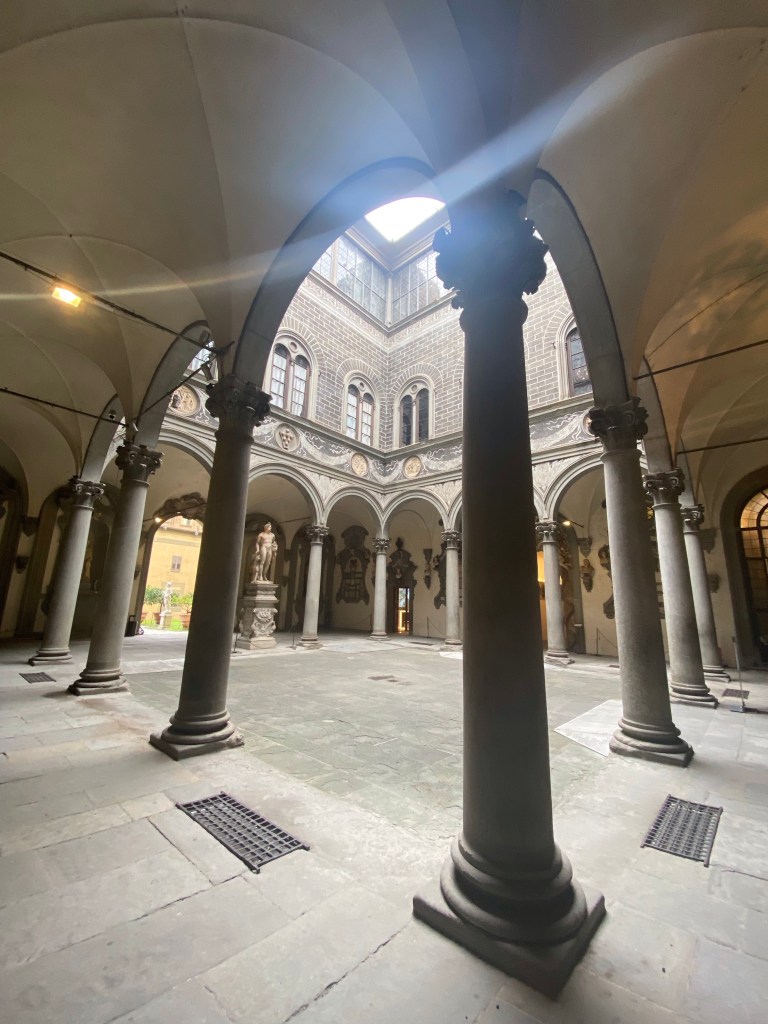
Above and below are views of the beautiful cortile garden.

From above the cortile, an amazing view of the duomo and Giotto’s campanile. It is arresting to realize how close San Lorenzo and the Medici enclave headquarters were to the duomo.

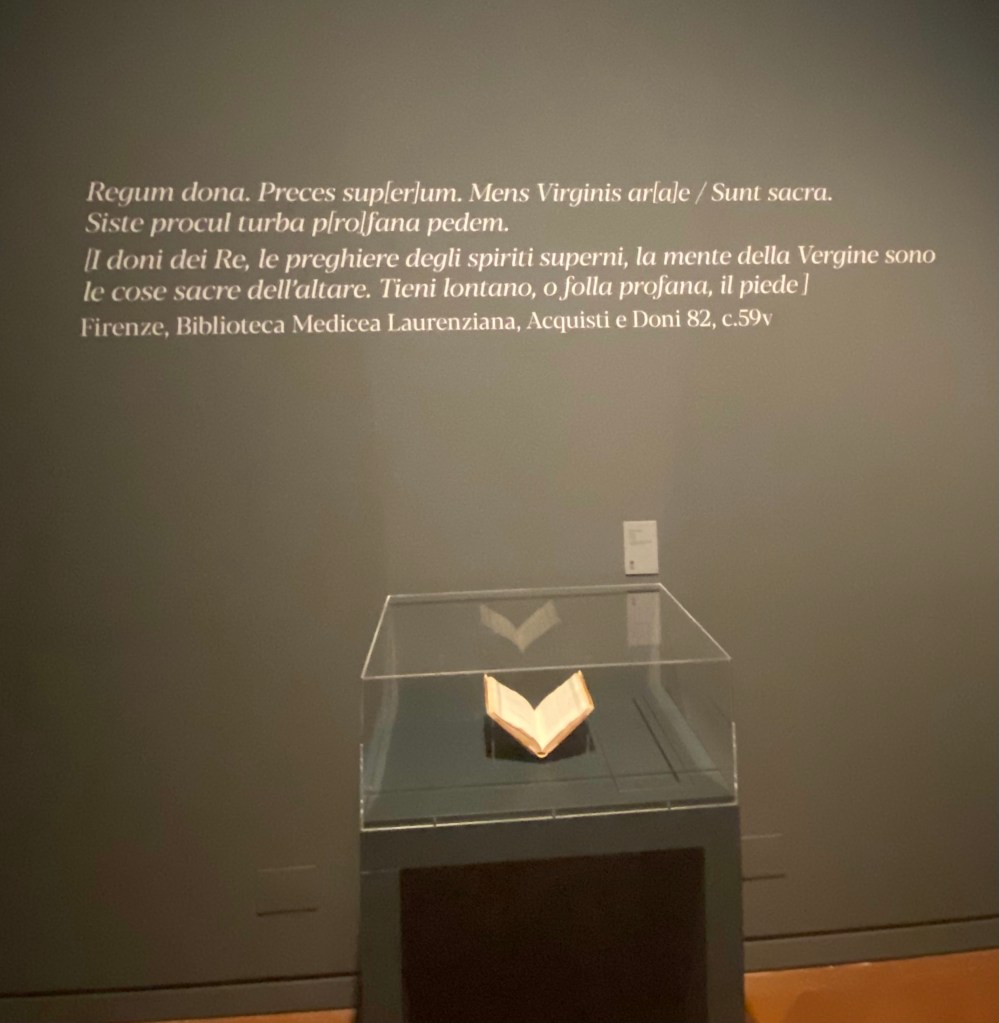
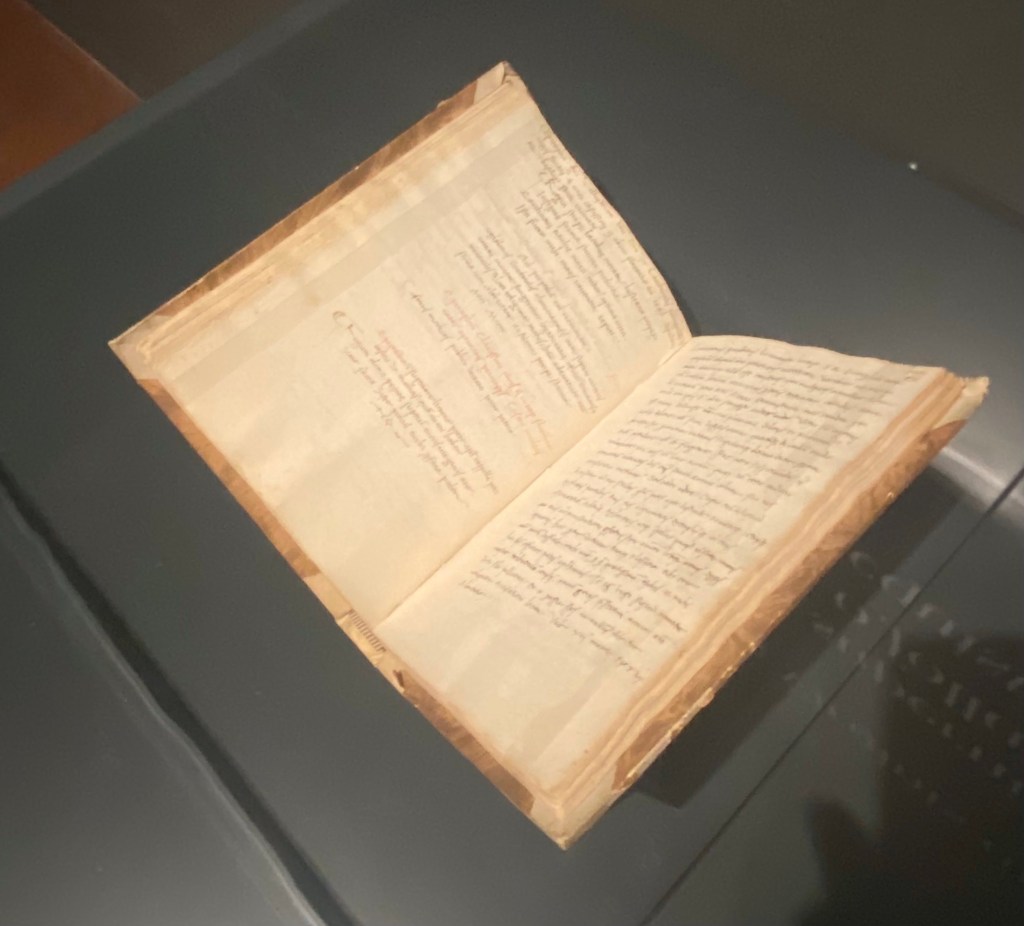
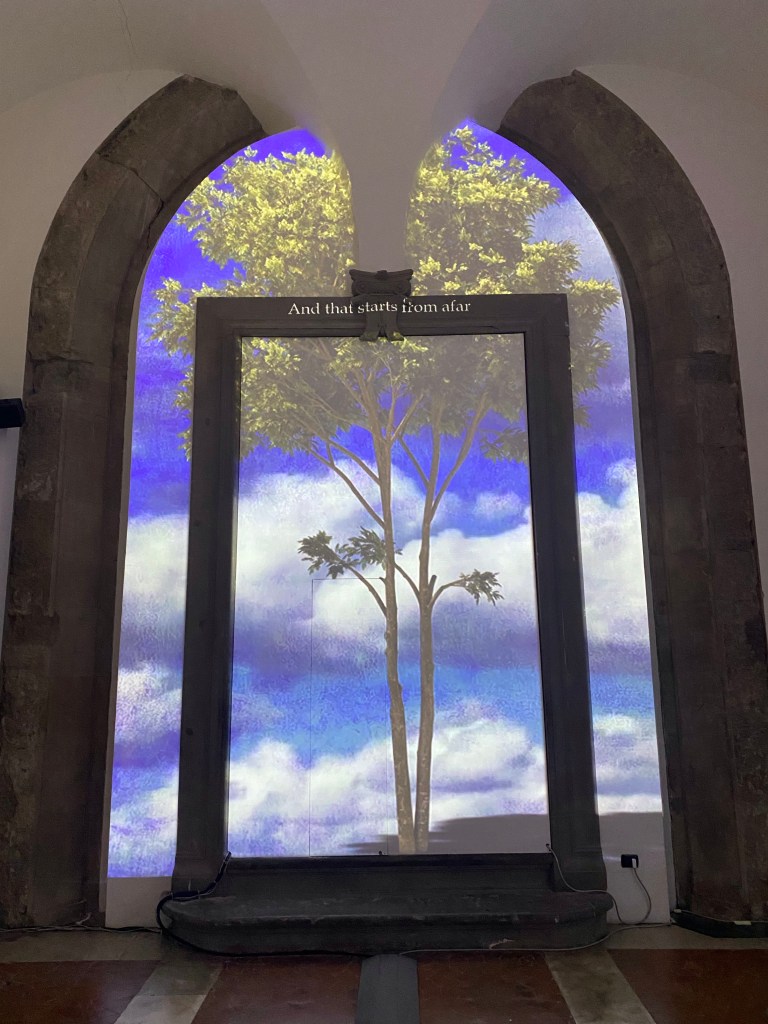
And here it is, in all it’s Michelangelesque glory! Behold! The entrance to the magnificent library that he designed for the Medici family.

Elizabeth Barrett and Robert Browning, and the Landmark Trust

If you are a fan of Elizabeth Barrett or Robert Browning, you will know they spent many years living in Florence. Their former home, which Elizabeth called Casa Guidi is preserved in the city, a stone’s throw from the Palazzo Pitti. I have been meaning to visit this august location for years, and finally made it there last month.

Elizabeth and Robert lived in Casa Guidi from 1847 to 1861. Their apartments were inside the 15th century Palazzo Guidi, at the south end of Via Maggio. The palazzo was originally constructed for the prominent Florentine family, the Ridolfi di Piazza, whose coat of arms adorns the facade.

In the 1840s, the Palazzo Guidi was divided into apartments and in July of 1847 the Browings rented one of the two furnished apartments. They lived in these graceful rooms on the piano mobile for 3 months. A year later, they rented the same rooms, unfurnished, at 25 guineas per year. They purchased their own furniture, had draperies made, and created their home. Their only child, Pen, was born in 1849 and grew up here. He learned to play the piano which was located in the dining room, and kept rabbits on the terrace outside.

Although the Brownings traveled, visiting Siena, Rome, Paris and England, they considered Florence as home.

When Elizabeth died in 1861, Robert commissioned this painting of the drawing room, as the literary sanctum in which she wrote. The painter was George Lignaty.

Below are some details of the lovely frescoed ceiling:

The sculpture and plaque above are on the wall of the entry to the palazzo.

It was Pen Browning’s greatest wish that Casa Guidi should be recreated and maintained in his parents’ memory, but that did not happen until 1971, when most of the apartment was purchased by the Browning Institute of New York.

The Browning Institute began the restoration process, opening the apartments to visitors and hosting lectures and exhibitions. The Institute restored both the green drawing room and bedroom decoration.

In 1990, the Landmark Trust, a charity which reduces historic buildings and makes them available for holiday rental, became involved with preserving Casa Guidi. The Browning Institute was in the process of transferring ownership of the Casa to Eton College, which is a public school in the town of Eton, near Windsor in Berkshire, England. Eton College approached the Landmark Trust to help with the restoration of the Casa, and to make it available to a wider public.

The transfer to Eton was completed in January 1992 and the Casa rooms were furnished as closely as possible to the Mighty painting. Family letters and the 1913 sale of Pen Browning’s possessions were consulted to make the restoration as authentic as possible.

The furnishings include Pen Browning’s desk, chest of drawers and 2 chairs, busts of Elizabeth and Robert, the sofa Elizabeth used in London, copies of the Mighty painting, the painting of St. Jerome and the portrait of Pen. Other items include the original drawing room mirror, and a copy of a bronze plaque featuring the head of Aeschilus. The brocade curtains match as nearly as possible those described in Elizabeth’s letters and other Browning possessions.

Now operated as a part of the Landmark Trust, the apartment can be leased for holidays throughout the year. Up to 6 people can be accommodated. I had a sneak peak of the accommodations, which include a number of stairs

The principal rooms are open to visitors on Monday, Wednesday and Friday afternoons between 3 and 6 p.m. from April to November.

The Landmark Trust

The Trust maintains 198 historic, interesting and unusual buildings that can be leased for self-catering holidays. They include castles, forts, follies, banqueting houses, a lighthouse, a railway station, a former prison and a stone pineapple. Most of the properties are in Great Britain but 7 are in Italy; 5 in the USA; one in Waterloo, Belgium and 3 in France.

The Trust’s address is:

Shottesbrooke, Maidenhead, Berkshire SL6 3SW, UK

Telephone: +44 (0) 1628 825925

Website: http://www.landmarktrust.org.uk

Email: bookings@landmarkturst.org.uk

2 stops in Mantua: Rotondo di San Lorenzo and the Basilica of Sant’Andrea

I had the pleasure of spending a few days in Mantua in October of 2021. I can’t believe it has taken me over a year to post this! Here are some of my first sightings from that travel.

In October 2021, we in Italy were still able to travel freely after the end of the first lockdown. Alas, as I write this, those days are gone again, thanks to COVID.

This ancient church is the Rotondo di San Lorenzo:

The Rotonda di San Lorenzo is the oldest church in Mantova. It is now sunk below the level of the Piazza della Erbe. It probably stands on the site of a Roman temple that was dedicated to the goddess Venus.

It was built at the end of the 11th century or beginning of the 12th century, perhaps at the behest of Matilde di Canossa.
Inspired by the church of the Holy Sepulcher in Jerusalem and dedicated to St. Lawrence (martyred in Rome in the third century), the rotunda has a central plan, with a gallery for females. An ambulatory surrounds the nave, decorated with 10 columns and a small apse.


It is built in terracotta, according to the Lombard tradition of the period, but has two marble columns from the Roman era and stone pillars from the 9th-12th centuries from other buildings.

Originally it was completely frescoed, now many fragments remain, in particular those of some vaults are legible: for the rigid scheme of the composition and decoration of the clothes and the abstract and idealized expression of the faces, it can be deduced that the author is a master from the 11th century, still linked to the Byzantine school.


In the apse a later fragment represents San Lorenzo on the grill (15th century).

In 1579 the church was closed to worship at the behest of Guglielmo Gonzaga and for over three hundred years, altered and covered by walls, it was used for houses and shops. As the dome fell, the nave was used as a courtyard. The church was
“rediscovered” in 1906, it was excavated, restored, and reopened for worship.

It is a subsidiary church of the Parish of Sant’Anselmo and has been entrusted to the Dominican community since 1926.
It is preserved, protected and open to the public by the Association for Dominican Monuments.

Deconsecrated, it was used for dwellings, shops and stores, and at the beginning of the 20th century it was covered by other structures. Later, it was restored and the external additions removed.

Not far from San Lorenzo stands the magnificent Basilica of Sant’ Andrea, with its facade by Alberti. It is one of the major works of 15th-century Renaissance architecture in Northern Italy. Commissioned by Ludovico III Gonzaga, the church was begun in 1472 according to designs by Leon Battista Alberti on a site occupied by a Benedictine monastery, of which the bell tower (1414) remains. The building, however, was only finished 328 years later. Though later changes and expansions altered Alberti’s design, the church is still considered to be one of Alberti’s most complete works. It looms over the Piazza Mantegna.


The façade, built abutting a pre-existing bell tower (1414), is based on the scheme of the ancient Arch of Trajan at Ancona. It is largely a brick structure with hardened stucco used for the surface. It is defined by a large central arch, flanked by Corinthian pilasters. There are smaller openings to the right and left of the arch. A novel aspect of the design was the integration of a lower order, comprising the fluted Corinthian columns, with a giant order, comprising the taller, unfluted pilasters. The whole is surmounted by a pediment and above that a vaulted structure, the purpose of which is not exactly known, but presumably to shade the window opening into the church behind it.

In 1597, the lateral arms were added and the crypt finished. The massive dome (1732–1782) was designed by Filippo Juvarra, and the final decorations on the interior added under Paolo Pozzo and others in the late 18th and early 19th centuries.
An important aspect of Alberti’s design was the correspondence between the façade and the interior elevations, both elaborations of the triumphal arch motif, the arcades, like the facade, having alternating high arches and much lower square topped openings.
The nave is roofed by a barrel vault, one of the first times such a form was used in such a monumental scale since antiquity, and probably modeled on the Basilica of Maxentius in Rome. Alberti possibly planned for the vault to be coffered, much like the shorter barrel vault of the entrance, but lack of funds led to the vault being constructed as a simple barrel vault with the coffers then being painted on. Originally, the building was planned without a transept, and possibly even without a dome. This phase of construction more or less ended in 1494.

Below are some painted wall decorations that caught my eye:

Relic of the Holy Blood

The purpose of the new building was to receive the pilgrims for the feast of the Ascension, when a vial, that the faithful believe contains the Blood of Christ, is brought up from the crypt below through a hole in the floor located directly under the dome. The relic, called Preziosissimo Sangue di Cristo (Most Precious Blood of Christ), which is preserved in Sacred Vessels. According to tradition the blood was brought to the city by the Roman centurion Longinus, who had scooped up the earth containing the blood at the foot of the cross.

In 804, the Holy Roman emperor Charlemagne obtained authentication of the relic from Pope Leo III for its veneration. According to many scholars, this resulted in the creation of the diocese of Mantua and the edification of the first nucleus of the Cathedral of St Andrew.  The relic was “rediscovered” (secunda inventio) ca. 1049, in the presence of Matilda of Tuscany. Pope Leo IX  recognized this relic as authentic in 1053, and it was highly venerated throughout the Renaissance. The relic is displayed on Good Friday, in a procession on the city’s streets.

Portions of the relic were extracted and taken by Charlemagne  to the St. Chapelle in Paris, and later to the Weingarten Abbey, to the Archbasilica of St. John Lateran in Rome, and to the Church of the Holy Cross in Guastalla (built on behalf of Beatrix of Canossa).

Florence today

It takes constant conservation to keep the artistic treasures of Italy in good condition. I see work going on all of the time, as well it should!

There’s a fine street sign near Rivoire in the Piazza della Signoria that points out the Roman foundations of Florence. Be sure to check it when you are around. You’ll learn a lot!

Above, one of the undeniable conveniences about living in Italy (among so many inconveniences, it’s worth noting!) are the water stations. You can get cold mineral water from these stations, for free, both natural and fizzy. I love that! The one pictured above is near my apartment.

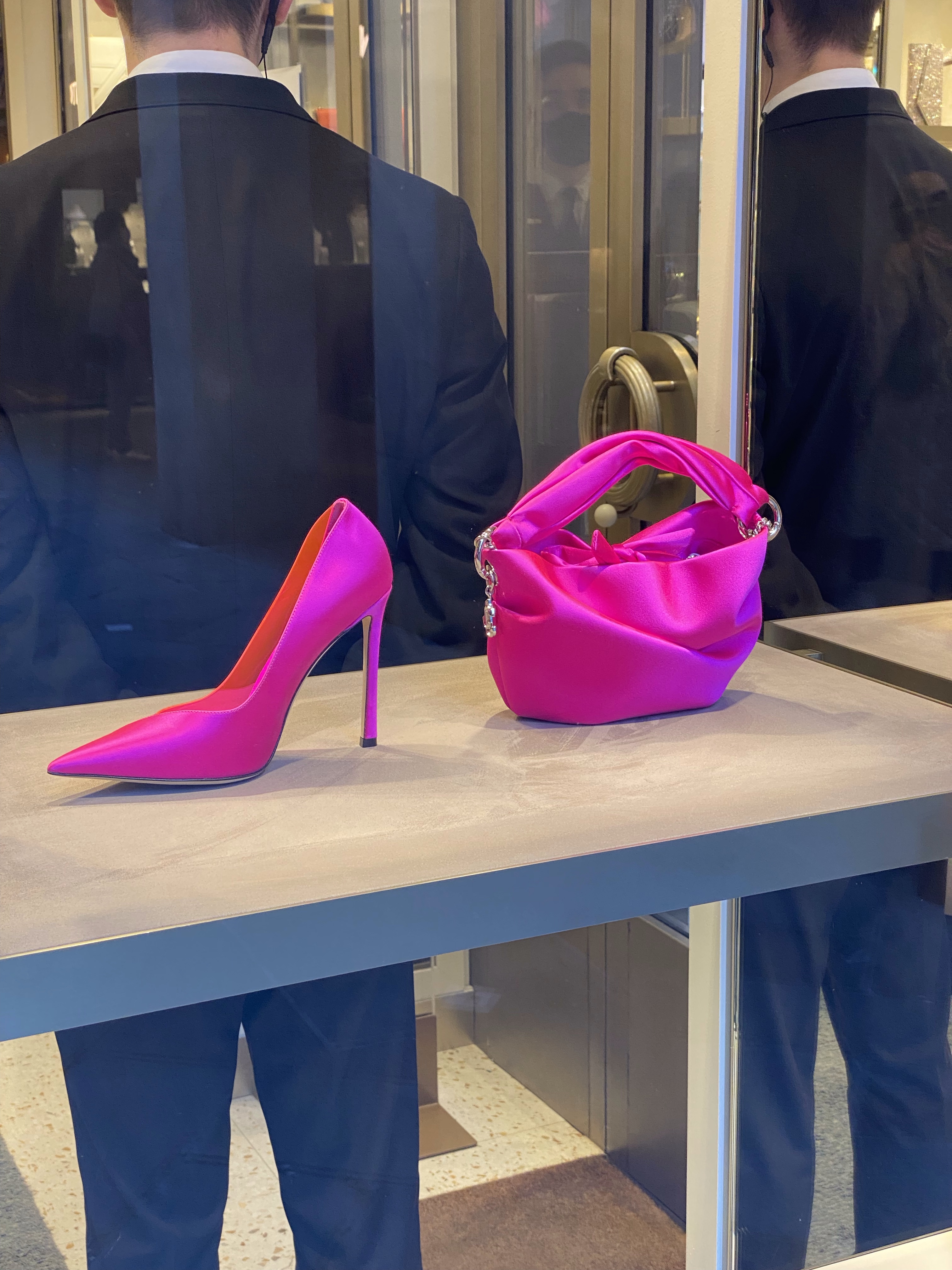
And, last but not least, be sure to check out the windows at Rivoire. They are always lovely. I’m curious about the pink selection in November. Seems more appropriate for spring, but what do I know?!

I love the reflection of the tower of the Palazzo Vecchio in the window!

My favorite view of Florence!

The fabulous period kitchen in the Palazzo d’Arco, Mantua

In this Neo Classically facaded palazzo, one can find an amazing period kitchen.

The kitchen dates to the 19th century and is a pleasant, small room where utensils and pots, pans and molds of copper, brass and pewter are displayed. The following description of the kitchen and its implements is taken from the palazzo’s website:

Near the entrance is a pasta press on which an alembic is placed. There is also a beautiful piece of furniture with a 17th-century base on which there are some coffee grinders, a bed warmer, jugs and various plates. There is a stone stove. On this is placed an ancient citrus juicer.

Above the stove a series of molds for figured cakes and puddings, some of which date back to the second half of the 17th century.

There is a spring mechanism for a rotisserie.

Another antique piece of furniture holds on a water tower, and the fireplace which, among other things, contains the springs to toast the coffee.

Running water was accessible to the kitchen by a tank located in the nearby mezzanine.

On this is the plate rack.

Moving along the north wall you will come across some mortars, a small table holding a scale with two plates, a second with a large teapot and a water tower on the wall.

Above this the classic “priest” whose warmer is at the base of the staircase to the attic.

On the steps are hand warmers. Under the staircase is a steelyard, the bottle holder and an ancient coffee grinder.

On the antique fir table, in the center, stands a Russian samovar.

A second with a large teapot and a water tower on the wall.

A shortish history of Bologna

Originally Etruscan, the city has been one of the most important urban centres for centuries, first under the Etruscans (who called it Felsina), then under the Celts as Bona, later under the Romans (Bonōnia), then again in the Middle Ages, as a free municipality and signoria, when it was among the largest European cities by population.

Famous for its towers, churches and lengthy porticoes, Bologna has a well-preserved historical centre, thanks to a careful restoration and conservation policy which began at the end of the 1970s.

Home to the oldest university in the Western world, the University of Bologna, established in AD 1088, the city has a large student population that gives it a cosmopolitan character.

In 2000 it was declared European capital of culture and in 2006, a UNESCO “City of Music” and became part of the Creative Cities Network.

In 2021 UNESCO recognized the lengthy porticoes of the city as a World Heritage Site.

Traces of human habitation in the area of Bologna go back to the 3rd millennium BCE, with significant settlements from about the 9th century BCE (Villanovan culture).

The influence of Etruscan civilization reached the area in the 7th to 6th centuries, and the Etruscan city of Felsina was founded at the site of Bologna by the end of the 6th century.

By the 4th century BCE, the site was occupied by the Gaulish Boii, and it became a Roman colony and municipium with the name of Bonōnia in 196 BCE.

After the fall of the Roman Empire, Bologna, then a frontier outpost of the Byzantine Exarchate of Ravenna, was repeatedly sacked by the Goths; it is in this period that legendary Bishop Petronius, according to ancient chronicles, rebuilt the ruined town and founded the basilica of Saint Stephen. Petronius is still revered as patron saint of Bologna.

In 727–28, the city was sacked and captured by the Lombards under King Liutprand, becoming part of that kingdom. These Germanic conquerors built an important new quarter, called “addizione longobarda” (“Longobard addition”) near the complex of St. Stephen. In the last quarter of the 8th century, Charlemagne, at the request of Pope Adrian I, invaded the Lombard Kingdom, causing its eventual demise. Occupied by Frankish troops in 774 on behalf of the papacy, Bologna remained under imperial authority and prospered as a frontier mark of the Carolingian empire.

Bologna was the center of a revived study of law, including the scholar Irnerius (c 1050 – after 1125) and his famous students, the Four Doctors of Bologna.

After the death of Matilda of Tuscany in 1115, Bologna obtained substantial concessions from Emperor Henry V. However, when Frederick Barbarossa subsequently attempted to strike down the deal, Bologna joined the Lombard League, which then defeated the imperial armies at the Battle of Legnano and established an effective autonomy at the Peace of Constance in 1183.

Subsequently, the town began to expand rapidly and became one of the main commercial trade centres of northern Italy thanks to a system of canals that allowed barges and ships to come and go. Believed to have been established in 1088, the University of Bologna is widely considered the world’s oldest university in continuous operation. The university originated as a centre for the study of medieval Roman law under major glossators, including Irnerius. It numbered Dante, Boccaccio and Petrarch among its students. The medical school was especially renowned. By 1200, Bologna was a thriving commercial and artisanal centre of about 10,000 people.

During a campaign to support the imperial cities of Modena and Cremona against Bologna, Frederick II’s son, King Enzo of Sardinia, was defeated and captured on 26 May 1249 at the Battle of Fossalta. Though the emperor demanded his release, Enzo was thenceforth kept a knightly prisoner in Bologna, in a palace that came to be named Palazzo Re Enzo after him. Every attempt to escape or to rescue him failed, and he died after more than 22 years in captivity. After the death of his half-brothers Conrad IV in 1254, Frederick of Antioch in 1256 and Manfred in 1266, as well as the execution of his nephew Conradin in 1268, he was the last of the Hohenstaufen heirs.

During the late 1200s, Bologna was affected by political instability when the most prominent families incessantly fought for the control of the town. The free commune was severely weakened by decades of infighting, allowing the Pope to impose the rule of his envoy Cardinal Bertrand du Pouget in 1327. Du Pouget was eventually ousted by a popular rebellion and Bologna became a signoria under Taddeo Pepoli in 1334. By the arrival of the Black Death in 1348, Bologna had 40,000 to 50,000 inhabitants, reduced to just 20,000 to 25,000 after the plague.

In 1350, Bologna was conquered by archbishop Giovanni Visconti, the new lord of Milan. But following a rebellion by the town’s governor, a renegade member of the Visconti family, Bologna was recuperated to the papacy in 1363 by Cardinal Gil Álvarez Carrillo de Albornoz after a long negotiation involving a huge indemnity paid to Bernabò Visconti, Giovanni’s heir, who died in 1354.

In 1376, Bologna again revolted against Papal rule and joined Florence in the unsuccessful War of the Eight Saints. However, extreme infighting inside the Holy See after the Western Schism prevented the papacy from restoring its domination over Bologna, so it remained relatively independent for some decades as an oligarchic republic.

In 1401, Giovanni I Bentivoglio took power in a coup with the support of Milan, but the Milanese, having turned his back on them and allied with Florence, marched on Bologna and had Giovanni killed the following year.

In 1442, Hannibal I Bentivoglio, Giovanni’s nephew, recovered Bologna from the Milanese, only to be assassinated in a conspiracy plotted by Pope Eugene IV three years later. But the signoria of the Bentivoglio family was then firmly established, and the power passed to his cousin Sante Bentivoglio, who ruled until 1462, followed by Giovanni II. Giovanni II managed to resist the expansionist designs of Cesare Borgia for some time, but on 7 October 1506, Pope Julius II issued a bull deposing and excommunicating Bentivoglio and placing the city under interdict. When the papal troops, along with a contingent sent by Louis XII of France, marched against Bologna, Bentivoglio and his family fled. Julius II entered the city triumphantly on 10 November.

The period of Papal rule over Bologna (1506–1796) has been generally evaluated by historians as one of severe decline. However, this was not evident in the 1500s, which were marked by some major developments in Bologna. In 1530, Emperor Charles V was crowned in Bologna, the last of the Holy Roman Emperors to be crowned by the pope.

In 1564, the Piazza del Nettuno and the Palazzo dei Banchi were built, along with the Archiginnasio, the main building of the university. The period of Papal rule saw also the construction of many churches and other religious establishments, and the restoration of older ones. At this time, Bologna had ninety-six convents, more than any other Italian city. Painters working in Bologna during this period established the Bolognese School which includes Annibale Carracci, Domenichino, Guercino and others of European fame.


It was only towards the end of the 16th century that severe signs of decline began to manifest. A series of plagues in the late 16th to early 17th century reduced the population of the city from some 72,000 in the mid-16th century to about 47,000 by 1630. During the Italian Plague of 1629–31 alone, Bologna lost up to a third of its population.

In the mid-17th century, population stabilized at roughly 60,000, slowly increasing to some 70,000 by the mid-18th century. The economy of Bologna started to show signs of severe decline as the global centres of trade shifted towards the Atlantic. The traditional silk industry was in a critical state. The university was losing students, who once came from all over Europe, because of the illiberal attitudes of the Church towards culture (especially after the trial of Galileo). Bologna continued to suffer a progressive deindustrialisation also in the 18th century.

In the mid-1700s pope Benedict XIV, a Bolognese, tried to reverse the decline of the city with a series of reforms intended to stimulate the economy and promote the arts. However, these reforms achieved only mixed results. The pope’s efforts to stimulate the decaying textile industry had little success, while he was more successful in reforming the tax system, liberalising trade and relaxing the oppressive system of censorship.

The economic and demographic decline of Bologna became even more noticeable starting from the second half of the 18th century. In 1790 the city had 72,000 inhabitants, ranking as the second largest in the Papal States; however this figure had remained unchanged for decades. The economy was stagnant because of Papal policies that distorted trade with heavy custom duties and sold concessions of monopolies to single manufacturers thus lowering competition, depressing productivity and incentivising corruption.

Napoleon entered Bologna on 19 June 1796. Napoleon briefly reinstated the ancient mode of government, giving power to the Senate, which however had to swear fealty to the short lived Cispadane Republic, created as a client state of the French Empire at the congress of Reggio (27 December 1796 – 9 January 1797) but succeeded by the Cisalpine Republic on 9 July 1797, later by the Italian Republic and finally the Kingdom of Italy.

After the fall of Napoleon, the Congress of Vienna of 1815 restored Bologna to the Papal States. Papal rule was contested in the uprisings of 1831. The insurrected provinces planned to unite as the Province Italiane Unite with Bologna as capital.

Pope Gregory XVI asked for Austrian help against the rebels. Metternich warned French king Louis Philippe I against intervention in Italian affairs, and in the spring of 1831, Austrian forces marched across the Italian peninsula, defeating the rebellion by 26 April.

By the mid 1840s, unemployment levels were very high and traditional industries continued to languish or disappear; Bologna became a city of economic disparity with the top 10 percent of the population living off rent, another 20 percent exercising professions or commerce and 70 percent working in low-paid, often insecure manual jobs. The Papal census of 1841 reported 10,000 permanent beggars and another 30,000 (out of a total population of 70,000) who lived in poverty. In the revolutions of 1848 the Austrian garrisons which controlled the city on behalf of the Pope were temporarily expelled, but eventually came back and crushed the revolutionaries.

Papal rule finally ended in the aftermath of Second War of Italian Independence, when the French and Pidemontese troops expelled the Austrians from Italian lands, on 11 and 12 March 1860, Bologna voted to join the new Kingdom of Italy. In the last decades of the 19th century, Bologna once again thrived economically and socially.

In 1863 Naples was linked to Rome by railway, and the following year Bologna to Florence. Bolognese moderate agrarian elites, that supported liberal insurgencies against the papacy and were admirers of the British political system and of free trade, envisioned a unified national state that would open a bigger market for the massive agricultural production of the Emilian plains. Indeed, Bologna gave Italy one of its first prime ministers, Marco Minghetti.

After World War I, Bologna was heavily involved in the Biennio Rosso socialist uprisings. As a consequence, the traditionally moderate elites of the city turned their back on the progressive faction and gave their support to the rising Fascist movement of Benito MussoliniDino Grandi, a high-ranking Fascist party official and Ministry of Foreign Affairs, remembered for being an Anglophile, was from Bologna. During the interwar years, Bologna developed into an important manufacturing centre for food processing, agricultural machinery and metalworking. The Fascist regime poured in massive investments, for example with the setting up of a giant tobacco manufacturing plant in 1937.

Bologna suffered extensive damage during World War II. The strategic importance of the city as an industrial and railway hub connecting northern and central Italy made it a target for the Allied forces. On 24 July 1943, a massive aerial bombardment destroyed a significant part of the historic city centre and killed about 200 people. The main railway station and adjoining areas were severely hit, and 44% of the buildings in the centre were listed as having been destroyed or severely damaged. The city was heavily bombed again on 25 September. The raids, which this time were not confined to the city centre, left 2,481 people dead and 2,000 injured. By the end of the war, 43% of all buildings in Bologna had been destroyed or damaged.

After the armistice of 1943, the city became a key centre of the Italian resistance movement. On 7 November 1944, a pitched battle around Porta Lame, waged by partisans of the 7th Brigade of the Gruppi d’Azione Patriottica against Fascist and Nazi occupation forces, did not succeed in triggering a general uprising, despite being one of the largest resistance-led urban conflicts in the European theatre. Resistance forces entered Bologna on the morning of 21 April 1945. By this time, the Germans had already largely left the city in the face of the Allied advance, spearheaded by Polish forces advancing from the east during the Battle of Bologna which had been fought since 9 April. First to arrive in the centre was the 87th Infantry Regiment of the Friuli Combat Group under general Arturo Scattini, who entered the centre from Porta Maggiore to the south. Since the soldiers were dressed in British outfits, they were initially thought to be part of the allied forces; when the local inhabitants heard the soldiers were speaking Italian, they poured out onto the streets to celebrate.

In the post-war years, Bologna became a thriving industrial centre as well as a political stronghold of the Italian Communist Party. Between 1945 and 1999, the city was helmed by an uninterrupted succession of mayors from the PCI and its successors, the Democratic Party of the Left and Democrats of the Left, the first of whom was Giuseppe Dozza. At the end of the 1960s the city authorities, worried by massive gentrification and suburbanisation, asked Japanese starchitect Kenzo Tange to sketch a master plan for a new town north of Bologna; however, the project that came out in 1970 was evaluated as too ambitious and expensive. Eventually the city council, in spite of vetoing Tange’s master plan, decided to keep his project for a new exhibition centre and business district. At the end of 1978 the construction of a tower block and several diverse buildings and structures started. In 1985 the headquarters of the regional government of Emilia-Romagna moved in the new district.

In 1977, Bologna was the scene of rioting linked to the Movement of 1977, a spontaneous political movement of the time. The police shooting of a far-left activist, Francesco Lorusso, sparked two days of street clashes. On 2 August 1980, at the height of the “years of lead,” a terrorist bomb was set off in the central railway station of Bologna killing 85 people and wounding 200, an event which is known in Italy as the Bologna massacre.

In 1995, members of the neo-fascist group Nuclei Armati Rivoluzionari were convicted for carrying out the attack, while Licio Gelli—Grand Master of the underground Freemason lodge Propaganda Due (P2)—was convicted for hampering the investigation, together with three agents of the secret military intelligence service SISMI (including Francesco Pazienza and Pietro Musumeci). Commemorations take place in Bologna on 2 August each year, culminating in a concert in the main square.

Cityscape:

Until the late 19th century, when a large-scale urban renewal project was undertaken, Bologna was one of the few remaining large walled cities in Europe; to this day and despite having suffered considerable bombing damage in 1944, Bologna’s 142 hectares (350 acres) historic centre is Europe’s second largest,  containing an immense wealth of important Medieval, Renaissance, and Baroque artistic monuments.

Bologna developed along the Via Emilia as an Etruscan and later Roman colony; the Via Emilia still runs straight through the city under the changing names of Strada Maggiore, Rizzoli, Ugo Bassi, and San Felice. Due to its Roman heritage, the central streets of Bologna, today largely pedestrianized, follow the grid pattern of the Roman settlement. The original Roman ramparts were supplanted by a high medieval system of fortifications, remains of which are still visible, and finally by a third and final set of ramparts built in the 13th century, of which numerous sections survive. No more than twenty medieval defensive towers remain out of up to 180 that were built in the 12th and 13th centuries before the arrival of unified civic government. The most famous of the towers of Bologna are the central “Due Torri” (Asinelli and Garisenda), whose iconic leaning forms provide a popular symbol of the town.

The cityscape is further enriched by its elegant and extensive porticoes, for which the city is famous. In total, there are some 38 kilometres (24 miles) of porticoes in the city’s historical centre (over 45 km [28 mi] in the city proper), which make it possible to walk for long distances sheltered from the elements.

The Portico di San Luca is possibly the world’s longest.  It connects Porta Saragozza (one of the twelve gates of the ancient walls built in the Middle Ages, which circled a 7.5 km (4.7 mi) part of the city) with the Sanctuary of the Madonna di San Luca, a church begun in 1723 on the site of an 11th-century edifice which had already been enlarged in the 14th century, prominently located on a hill (289 metres (948 feet)) overlooking the town, which is one of Bologna’s main landmarks. The windy 666 vault arcades, almost four kilometres (3,796 m or 12,454 ft) long, effectively links San Luca, as the church is commonly called, to the city centre. Its porticos provide shelter for the traditional procession which every year since 1433 has carried a Byzantine icon of the Madonna with Child attributed to Luke the Evangelist down to the Bologna Cathedral during the Feast of the Ascension.

In 2021, the porticoes were named as a UNESCO World Heritage Site.

San Petronio Basilica, built between 1388 and 1479 (but still unfinished), is the tenth-largest church in the world by volume, 132 metres long and 66 metres wide, while the vault reaches 45 metres inside and 51 metres in the facade. With its volume of 258,000 m3, it is the largest (Gothic or otherwise) church built of bricks of the world.

The Basilica of Saint Stephen and its sanctuary are among the oldest structures in Bologna, having been built starting from the 8th century, according to the tradition on the site of an ancient temple dedicated to Egyptian goddess Isis.

The Basilica of Saint Dominic is an example of Romanic architecture from the 13th century, enriched by the monumental tombs of great Bolognese glossators Rolandino de’Passeggeri and Egidio Foscherari.

Basilicas of St FrancisSanta Maria dei Servi and San Giacomo Maggiore are other magnificent examples of 14th-century architecture, the latter also featuring Renaissance artworks such as the Bentivoglio Altarpiece by Lorenzo Costa. Finally, the Church of San Michele in Bosco is a 15th-century religious complex located on a hill not far from the city’s historical center.