October, baptize me with leaves!
October, baptize me with leaves! Swaddle me in corduroy and nurse me with split pea soup. October, tuck tiny candy bars in my pockets and carve my smile into a thousand pumpkins. O autumn, O teakettle, O grace!
Rainbow Rowell
‘
Autumn, Winslow Homer
Daily life in Florence, picking up the kids from school
A typical scene of parents, grandparents, and family friends picking up elementary school children after school on an average day. Children are cherished in this beautiful country.
The fall sale at the Giardino dell’ Orticultura, Florence
On an early October weekend in Florence, once of the city’s best semi-annual events take place, right in my neighborhood. Florence’s Horticulture Garden (Giardino dell’Orticultura), located at Via Vittorio Emanuele II, 4, is a great place to witness fall’s bounty in the shape of plants and flowers at the Mostra dei Fiori, or the flower fair.
True Florentines are well-acquainted with these fairs which are held every fall and spring. They have been organized almost every year since 1855, and are always attended with great enthusiasm.
You may read all about the place here: www.societatoscanaorticultura.it.
I eagerly await the fall and spring sales and this year was no exception. I was greeted by this beautiful blooming plant, and couldn’t resist taking a picture of it and also a close-up. Wow! What a specimen!


Next up were the glorious displays of chysanthemum (crisantemo in Italian) and cyclamen:


This year one of the exhibitors had a fabulous showing of Italian lemons in their many forms:


Another exhibitor did the same with grapes, apples and nuts! What a display!


I took home a smallish fig tree to grow inside my home, and a couple of perennials to add color to my fall terrace garden! I eagerly await the spring sale!
All of this botanical splendor serves to remind me that, at heart, I am simply a farmer’s daughter.
The following is for die-hards:
Taken from Italian Wikipedia, with my own translation. You’ve been warned!
Nel 1852, constatato il diffondersi della pratica per l’arte del giardinaggio, l’Accademia dei Georgofili nominò una commissione con l’incarico di formare in Toscana una società d’orticoltura: la Società Toscana di Orticoltura. Da qui nasce l’esigenza dell’attivazione di un orto o giardino sperimentale, che si concretizzò nel 1859, anno in cui alla Società, venne concesso in enfiteusi un terreno posto fuori porta San Gallo all’inizio di via Bolognese di proprietà del marchese Ludovico Ginori Lisci e della marchesa Marianna Venturi.
Dopo tre anni di lavoro la Società aveva realizzato un piantatoio, una vigna ed un pomerio ed aveva impiantato nella parte bassa, verso la città, eccentriche e rare piante ornamentali.
Un radicale riordinamento del giardino si ebbe a partire dal 1876 con lo scopo principale di poter ospitare future esposizioni nazionali e mostre prestigiose. Nel 1880 la Federazione orticola italiana organizzò a Firenze la prima esposizione nazionale e proprio per onorare degnamente l’incarico, la Società toscana decise di completare il proprio giardino con la costruzione di un tepidario (serra in ferro e vetro) di grandi dimensioni che non aveva precedenti in Italia. Fu promossa una sottoscrizione fra i soci al fine di trovare i fondi necessari alla nuova costruzione. L’incarico di redigere il progetto fu affidato all’ingegnere e architetto Giacomo Roster e realizzato dalle Officine Michelucci di Pistoia, con le colonnine in ghisa della fonderia Lorenzetti, sempre di Pistoia. Il tepidarium è a base rettangolare e misura 38,50×17 metri, con una superficie coperta che tocca il 650 m2. L’interno, che era riscaldato da stufe, è abbellito da due vasche con nicchie decorate da rocce spugnose, un omaggio all’architettura manierista, opera dell’intagliatore fiorentino Francesco Marini. In totale vennero assemblati ben 9.700 pezzi, con otto tonnellate di ferro cilindrato che sostengono la struttura. Dopo l’inaugurazione del 19 maggio 1880, il cronista de La Nazione lo definì “palazzo di cristallo.”
L’attività promotrice della Società s’intensificò ulteriormente con l’esposizione organizzata nel 1887, in questa occasione il giardino venne arricchito dalla presenza di un caffè restaurant e da una seconda serra, proveniente dal giardino Demidoff di San Donato.
Nel 1911, il giardino fu nuovamente teatro di una grande mostra internazionale di floricoltura per le celebrazioni promosse dal comune di Firenze nell’ambito del cinquantenario dell’Unità d’Italia. In tale occasione furono operate delle considerevoli modifiche alcune delle quali si conservano tutt’oggi, il cavalcavia sulla ferrovia, l’ingrandimento del viale d’accesso, la decorazione del cancello con stendardi e la costruzione della Loggetta Bondi da parte della Manifattura di Signa. Con nuovi padiglioni addossati al muro si poterono accogliere le esposizioni di libri, ceramiche, attrezzi da giardino e fotografie dell’epoca. alcuni padiglioni erano dedicati alle piante ad alto fusto ed uno unicamente alle rose. Oltre ai numerosi ospiti stranieri, per la prima volta a Firenze, fecero la parte del leone gli esemplari provenienti dalle collezioni dei fiorentini Carlo Ridolfi e Carlo Torrigiani.
Con la prima guerra mondiale cominciò un lento ma inesorabile declino dell’attività della Società toscana d’orticoltura: perciò, nel 1930 il giardino venne acquistato dal Comune, che lo destinò a giardino pubblico. Il grande tepidario del Roster denunciava un grave stato di abbandono, tanto che il Comune stanziò, fra il 1933 e il 1936, dei fondi speciali per il restauro di questo. Il tepidario subì di nuovo alcuni danni, specialmente durante la seconda guerra mondiale; recentemente, nel 2000, è stato restaurato, tornando all’antico splendore.
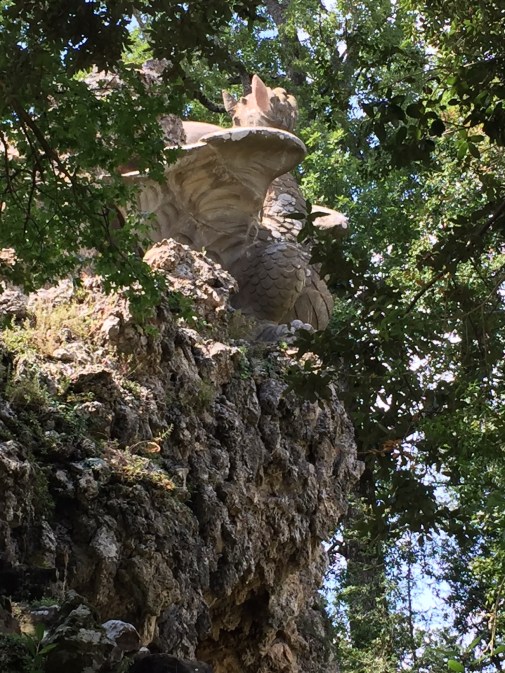
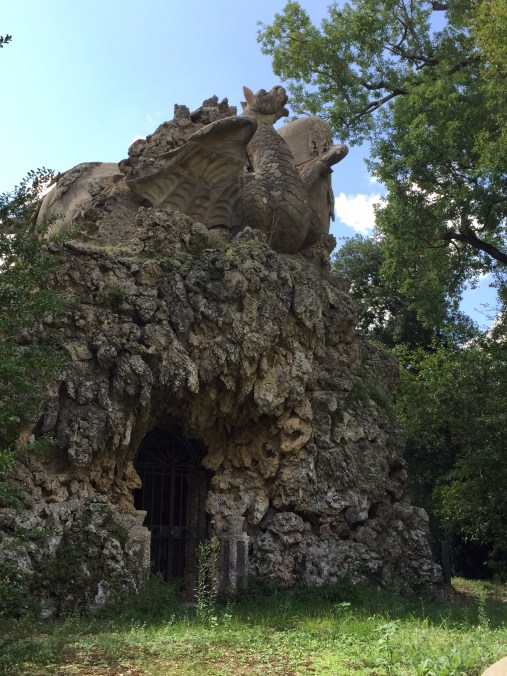
Attraverso un passaggio pedonale oltre la ferrovia si accede al cosiddetto “giardino degli orti del Parnaso”, una piccola area verde posta su un dislivello panoramico, dove spicca una fontana a forma di serpente o drago, che si snoda fantasiosamente sulla scalinata. Questo giardino, in particolare la zona vicino all’ingresso da via Trento, è uno dei migliori punti della città per vedere “I Fochi di San Giovanni”, lo spettacolo pirotecnico che si tiene ogni anno il 24 giugno per la festa di San Giovanni, patrono di Firenze. In questo giardino ha sede il Giardino dei Giusti sulla falsariga di quello esistente a Gerusalemme.
La serra oggi è utilizzata per eventi, aperitivi, party ed attività culturali, come per esempio l’iniziativa Un tè con le farfalle.
Mentre il Giardino ospita anche la Biblioteca comunale dell’Orticoltura.
Nel giardino sono state girate alcune scene dei film Amici miei – Atto IIº (1982) di Mario Monicelli e Sotto una buona stella (2014) di Carlo Verdone.
In 1852, the l’Accademia dei Georgofili established a committee to consider establishing a society for horticulture in Tuscany: la Società Toscana di Orticoltura. From that origin, came the formation of an experimental garden was established in 1859, the year in which the committee was given lease on land outside of the Porta San Gallo at the beginning of Via Bolognese, [the land] owned by the landowner of the Marquis Ludovico Ginori Lisci and of the Marquise Marianna Venturi.
After 3 years work the Societa had built a garden with a vineyard and a tomato house and had planted rare ornamental plants in the lower part [of the plot], towards the city.
From 1876 the garden was radically reorganized in order to become a suitable place to host future national expositions and prestigious exhibits. In 1880 the Italian Horticulture Federation organized in Florence the first national exposition and, in honor of that, the Tuscan Societa decided to complete its garden by construction a large tepidarium (greenhouse in iron and glass), which was without precedent in Italy.
A subscription was formed to finance the work of the new construction. The project was drawn up by the engineer and architect Giacomo Roster and carried out by the Offices of Michelucci of Pistoia, with the cast iron columns from the Lorenzetti foundry, also from Pistoia. The tepidarium has a rectangle base and measures 38.50 x 17 meters, with a covered area that is 650 square meters.
The interior was heated by 2 stoves, is adorned with niches decorate with red spongy stone, a tribute to Mannerist architecture, the work of the master Florentine stone cutter, Franscesco Marini. The entire building is made up of more than 9,700 pieces with 8 tons of cylindrical cast iron supporting the structure. After the inauguration on 19 May 1880, the reporter of La Nazione called it a “Palace of Crystal.”
The Society’s promotion of its work intensified with the exhibition organized in 1887, on this occasion the garden was outfitted with a caffe restaurant and a second greenhouse, supplied by the Demidoff garden of San Donato.
In 1911, the garden was once again the site of a great international floriculture exhibition for the celebrations promoted by the municipality of Florence to commemorate the 50th anniversary of the Italian Unification. On this occasion, modifications, some of which are still preserved today, the railway overpass, the enlargement of the driveway, the decoration of gate, and the construction of the Bondi Loggia by the Signa Manufacture.
With new pavilions inside the wall, exhibitions of books, ceramics, garden tools and period photography, could be accommodated. Some pavilions were dedicated to tall trees and one dedicated to roses. In addition to the numerous foreign guests, for the first time in Florence, the lion’s share of specimens came from the Florentine collections of Carlo Ridolfi and Carlo Torrigiani.
With the beginning of WWI the Society’s activities slowed and declined; therefore, in 1930 the garden was purchased by the Municipality, which turned it into a public garden. The large tepidarium of the Roster denounced he grave state of disrepair, so that the Commune allocated, between 1933 and 1936, special funds for its restoration. The tepidarium again suffered damage, especially during the WWII; recently, in 2000, it was restored and returned to its former glory.
A pedestrian walkway leads to the so-called “garden of the Parnassus” a small green area on a leveled panoramic site, where a snake or dragon-shaped fountain plays, winding imaginatively up the stairs. This garden, in particular the zone near the entrance of Via Trento, is one of the best spots in the city to see the Fireworks of St. John, the fireworks display held every year on 24 June for the holiday of San Giovanni, patron of Florence. In this garden is the “Garden of the Righteous” along the lines of the one in Jerusalem.
Today the greenhouse is used for events, aperitifs, parties and cultural activities, such as the initiative “A tea with butterflies.”
The Garden also houses the municipal Horticultural Library.
In the garden some scenes of the films Amici miei – Atto IIº (1982) by Mario Monicelli and “Under a good star” Sotto una buon stella (2014) by Carlo Verdone were shot.
The Louvre’s exhibition of paintings by Leonardo da Vinci
Hitler and Mussolini, meeting at Villa Pisani in Stra, and other places
Christian Dior in Venice; current photography exhibit at Villa Pisani
This lovely little exhibition, entitled Timeless Elegance, Dior in Venice in the Cameraphoto Archives, is currently on display at Villa Pisani, in Stra, on the Brenta Canal in the Veneto. I enjoyed seeing it very much.


From the website of the Villa:
1951 was a magical year for Venice. Some of the most intriguing views of the city co-starred in the campaign that publicised the creations of the couturier who was capturing all the world’s headlines at the time: Christian Dior.
On 3 September of that same year, Palazzo Labia hosted the “Ball of the Century”: the Bal Oriental, organised by Don Carlos de Beistegui y de Yturbe, attracted around a thousand glittering jetsetters from all five continents. This masked ball saw Dior, Dalí, a very young Cardin, Nina Ricci and others engaged as creators of costumes for the illustrious guests, in an event that made the splendour of eighteenth-century Venice reverberate around the world.
Silent witnesses of both of these events were the photographers of Cameraphoto, the photography agency founded in 1946 by Dino Jarach, who covered and recorded everything special that happened in Venice and beyond during those years.
We have Vittorio Pavan, the current conservator of the imposing Cameraphoto Archives (the historical section alone has more than 300,000 negatives on file) and Daniele Ferrara, Director of the Veneto Museums Hub, to thank for the project to show the photographs of those two historical events to the general public. The location chosen for them to re-emerge into the light of day is one of extraordinary significance: Villa Nazionale Pisani in Stra is the Queen of the Villas of the Veneto and it is no coincidence that it is adorned with marvellous frescoes by Giambattista Tiepolo, the same artist whose work also gazed down on the unforgettable masked ball in 1951 from the ceilings of Palazzo Labia.
For this exhibition, Pavan has chosen 40 photographs of the collection shown in Venice by Christian Dior.
In those days, every fashion show would present just under 200 models, calculated carefully to achieve the right balance between items that would be easy to wear and others that made more of a statement. Dior was the undisputed master of fashion in those post-war years. The whole world looked forward to his collections and discussed them hotly. No fewer than 25,000 people are estimated to have crossed the Atlantic every year, just to see (and to buy) his collections. Every time he changed a line (and every new season brought such a change), it was accepted with both enthusiasm and ferocious criticism: the former from his clan of admirers, the latter from those who opposed him.
In any case, no woman who aspired to keep abreast of fashion could afford to ignore the dictates issued by the couturier from his Parisian maison in Avenue Montaigne, where he already employed a staff of more than one thousand, despite having being established only five years before. Dior’s New look evolved with every passing season.
In 1950, he introduced the Vertical Line, in 1951 – as the photographs on show in Villa Pisani illustrate – no woman could avoid wearing his Oval Look: rounded shoulders and raglan sleeves, the fabrics modelled until they clung like a second skin. The essential accessory was of course the hat, for which Dior that year drew his inspiration from the kind traditionally worn by Chinese coolies.
For that autumn, though, he created the Princess line, which gave the illusion of extending below the breast.
In the breathtaking photographs from the Cameraphoto Archives, beautiful Dior-clad models perform a virtual duet with Venice, whose canals, churches and palaces are never a mere backdrop, but co-stars on a par with the great designer’s creations.
The second nucleus of this fascinating exhibition is devoted to the Grand Ball at Palazzo Labia, possibly the most glittering social event of the century.
All the bel monde flocked to Venice on that legendary 3 September. Don Carlos, popularly known as the Count of Monte Cristo, sent personal invitations to a thousand people. Dior, together with a veritable army of young tailors and accompanied by Dalí, was engaged to create the most alluring costumes, all designed to refer to the eighteenth century when Goldoni and Casanova lived here. There were costumes for men and women, but also for the greyhounds and other dogs that often accompanied their owners.
The torches that on that legendary evening illuminated the Duke and Duchess of Windsor, several Grandees of Spain, the Aga Khan, King Farouk of Egypt, Winston Churchill, many crowned heads, princes and princesses, a host of millionaires, such artists as Fabrizio Clerici and Leonor Fini, fashion designers of the calibre of Balenciaga and Elsa Schiapparelli and leading jetsetters Barbara Hutton, Lady Diana Cooper, Orson Welles, Daisy Fellowes, Cecil Beaton (whose photographs, published in Life magazine, gave the world something to dream about), the Polignacs and the Rothschilds.
Welcoming them in the midst of clouds of ballerinas and harlequins was the master of the house and host, who dominated the scene as he promenaded back and forth dressed as the Sun King on a 40 cm high platform. The heir of an immense fortune created in Mexico, Don Carlos spent some of his time living in Paris, where he owned a house designed by Le Corbusier and decorated by Salvador Dalí, and the rest at a chateau in the country. He had bought Palazzo Labia and restored it and was now offering it to his friends.
The aim of this exhibition is therefore to contribute to improving the appreciation and value of the Cameraphoto photography archives, which have been declared to be of exceptional cultural interest by the Italian Ministry of Cultural Heritage and Activities, since they constitute an inestimable legacy for the wealth and variety of images.
It was with this in mind that the curators chose this nucleus of photographs depicting the clothing designed by one of the most ingenious and iconic fashion designers in history, who in his turn, through his creations, enabled a spotlight to be focused on a tiny fragment of the more than one thousand years of history of the city of Venice, helping us reconstruct the collective memory on which our present day is based.
Curated by Vittorio Pavan and Luca Del Prete, the exhibition is organised by the Veneto Museums Hub e Munus.


Michelangelo’s Creation of Adam, Sistine Chapel frescoes; a modern take
Villa Pisani: Cruising the Brenta Canal from Padua to Venice, part 2
I recently posted about this day-long cruise here (here, here and here) and now I pick up where I left off. Our first stop on the cruise after leaving Padua was in Stra at Villa Pisani. This incredible villa is now a state museum and very much work a visit. It was built by a very popular Venetian Doge.

The facade of the Villa is decorated with enormous statues and the interior was painted by some of the greatest artists of the 18th century.

Villa Pisani at Stra refers is a monumental, late-Baroque rural palace located along the Brenta Canal (Riviera del Brenta) at Via Doge Pisani 7 near the town of Stra, on the mainland of the Veneto, northern Italy. This villa is one of the largest examples of Villa Veneta located in the Riviera del Brenta, the canal linking Venice to Padua. It is to be noted that the patrician Pisani family of Venice commissioned a number of villas, also known as Villa Pisani across the Venetian mainland. The villa and gardens now operate as a national museum, and the site sponsors art exhibitions.


Construction of this palace began in the early 18th century for Alvise Pisani, the most prominent member of the Pisani family, who was appointed doge in 1735.
The initial models of the palace by Paduan architect Girolamo Frigimelica still exist, but the design of the main building was ultimately completed by Francesco Maria Preti. When it was completed, the building had 114 rooms, in honor of its owner, the 114th Doge of Venice Alvise Pisani.
In 1807 it was bought by Napoleon from the Pisani Family, now in poverty due to great losses in gambling. In 1814 the building became the property of the House of Habsburg who transformed the villa into a place of vacation for the European aristocracy of that period. In 1934 it was partially restored to host the first meeting of Adolf Hitler and Benito Mussolini, after the riots in Austria.


From the outside, the facade of the oversized palace appears to command the site, facing the Brenta River some 30 kilometers from Venice. The villa is of many villas along the canal, which the Venetian noble families and merchants started to build as early as the 15th century. The broad façade is topped with statuary, and presents an exuberantly decorated center entrance with monumental columns shouldered by caryatids. It shelters a large complex with two inner courts and acres of gardens, stables, and a garden maze.
The largest room is the ballroom, where the 18th-century painter Giovanni Battista Tiepolo frescoed the two-story ceiling with a massive allegorical depiction of the Apotheosis or Glory of the Pisani family (painted 1760–1762).[2] Tiepolo’s son Gian Domenico Tiepolo, Crostato, Jacopo Guarana, Jacopo Amigoni, P.A. Novelli, and Gaspare Diziani also completed frescoes for various rooms in the villa. Another room of importance in the villa is now known as the “Napoleon Room” (after his occupant), furnished with pieces from the Napoleonic and Habsburg periods and others from when the house was lived by the Pisani.
The most riotously splendid Tiepolo ceiling would influence his later depiction of the Glory of Spain for the throne room of the Royal Palace of Madrid; however, the grandeur and bombastic ambitions of the ceiling echo now contrast with the mainly uninhabited shell of a palace. The remainder of its nearly 100 rooms are now empty. The Venetian playwright Carlo Goldoni described the palace in its day as a place of great fun, served meals, dance and shows.


Check out this sunken bathtub below:


Bear with me: in the next few photos I am trying out all of the fancy settings on my new camera:


To be continued.
My cruise through the Brenta Canal, Padova a Venezia; locks and villas and art, oh my!
Would you ever want to sail down a canal in Northern Italy that was built during the Renaissance? I really wanted to and I did!
The Brenta Canal stretches for many miles between Chioggia on the coast, to Padua where it turns into the Brenta River. Created in the 15th century, the canal expanded trading routes for Venice and the other major cities in Northern Italy.
I was lucky enough to cruise through the canal last week, beginning at Porta Portello in Padova and ending at San Marco, Venezia. A day to remember! It was a beautiful fall day with mild temperatures. A great day to be on the water. And, what waters! OMG.


My cruising companions and I met our boat, il Burchiello, on the stairway at Porta Portello, the ancient river port of Padua. We would cruise along the original course of the old Venetian Burchielli of the 18th century, passing in front of the beautiful Villa Giovanelli at Noventa Padovana.
Below: we are departing Padua itself, just outside the Renaissance era city walls:


Below, coming upon the first of so many villas located along the canal.


We glided through the Noventa Padovana and Stra lock systems. This system of locks on the canal were really interesting to experience and to watch from the boat. The next 2 videos show the locks closing behind the boat.
We passed under some low bridges and buildings! Watch you head!


Now, at the front of the boat, the locks are opening:
Scenes along the canal on such a peaceful September Sunday morning. A lot of fishing going on:


A sighting of the next villa:


My next post will talk about the villa seen below:


To be continued, here, here and here.


You must be logged in to post a comment.