Great British baking

Are you a fan of the tv show, The Great British Bake-off?  I am!  I learned so much about baking in general and about British desserts in particular from watching that show.

Yesterday I was in the cantina of St. Paul’s Cathedral in London, and was delighted to see Lemon Drizzle Cake, Bakewell tart, and other desserts I learned about on the show.

I tried the Bakewell tart, and it was tasty.  It needed some salt to balance all the sugar.  But, that’s just me.


IMG_0126IMG_0127

IMG_0128IMG_0129

August 4, 1944: Florence, Italy and Anne Frank in Amsterdam

As the Allied Forces entered Florence in the early hours of August 4, 1944,  the brigade Sinigaglia, the division Arno, and the brigade Lanciotto were enthusiastically welcomed into the Oltrarno district. The Allies allowed the partisans to keep their weapons; the Florentine men then started a roundup, searching for the German snipers that were firing at the unarmed populace. These snipers wanted to terrify the population and to slow the progression of the Allies, particularly in the districts of San Frediano, Conventino, and San Niccolò.

Meanwhile, the Nazis were still on the right or north side of the Arno. The military base of the partisans, the CTLN (Comitato Toscano di Liberazione Nazionale, Tuscan Comitate of National Liberation), was installed in the society Larderello, in Piazza Strozzi n. 2.

At first, the command of the third zone in via Roma n. 4, led by the Partito d’Azione, acted as the connection center. In order to follow both the Germans and Allied movements, a sentry was stationed atop the Cupola del Duomo. The personnel stationed there included a deputy commander, a political commissar, and a chief from the first commander corps.

As for the Florentines, on August 4, only a few of them attempted to leave home. But the following day, without food or water, women and boys started to queue in front of the town’s water fountains and doorways with available wells, as well as in front of the bakeries. The few peddlers selling fruit and vegetables were extremely busy.

To be continued.

Sources:

http://diariodiunfiorentino.altervista.org/liberation-florence-11-august-1944/?doing_wp_cron=1564842755.6783099174499511718750

http://diariodiunfiorentino.altervista.org/the-insurrection-of-florence/?doing_wp_cron=1564846863.0551791191101074218750


Meanwhile, in Amsterdam, a place also occupied by the Nazis, on August 4, 1944, after 25 months in hiding, Anne Frank and the seven others in their secret hiding place were discovered by the Gestapo. The German secret state police had learned about the hiding place from an anonymous tipster, who has never been definitively identified.

After their arrest, the Frank family and their fellow Jewish associates, were sent by the Gestapo to Westerbork, a holding camp in the northern Netherlands. From there, in September 1944, the group was transported by freight train to the Auschwitz-Birkenau extermination and concentration camp complex in German-occupied Poland. Anne and her sister, Margot Frank, were spared immediate death in the Auschwitz gas chambers and instead were sent to Bergen-Belsen, a concentration camp in northern Germany.

In February 1945, the Frank sisters died of typhus at Bergen-Belsen; their bodies were thrown into a mass grave.

Several weeks later, on April 15, 1945, British forces liberated the camp.

https://www.history.com/topics/world-war-ii/anne-frank-1

August 3, 1944 in Florence, Italy

August 3, 1944 was a critical day in Florence’s history.  Occupied by Nazis, Florence’s insurrectional forces were organizing to face off with the German occupiers. The Germans delivered a new strategy aimed at blocking every activity in the city. In the afternoon, this Nazi regulation was posted all over the streets of Florence:

Firenze, August 3 1944, hour 2:00 p.m.

For the security of the population we order:
1) starting from now on, it is forbidden to anyone to leave home and walk in the streets or piazzas of Florence city;
2) all the windows, even those of the cellars, and the entrances of the churches and the doorways must remain closed night and day;
3) we recommend the population to stay in the cellars, and where these are not available to go in the churches or in big buildings;
4) German patrols are instructed to shoot any people coming onto the streets or looking out the windows.

(signed) Florence City’s Commander.


Without water and electricity, the streets littered with corpses (of both Nazis and Italians), German patrols and armored cars scouted around in an apparently deserted city, shooting anyone in the streets or anyone or anything seen moving in any windows.

With the Allied troops still far from the city, the partisan’s first order of business was the attempt to save the city’s bridges, which had already been mined by the Nazis.

On the evening of August 3, two teams of brave partisans tried to cut the wires connecting the mines placed at Ponte alla Vittoria to the command center. The Germans saw them and a violent firefight resulted. A partisan leader was killed and the teams were forced to fall back.

At Ponte alla Carraia another company of partisans fought to avoid further destruction. The Germans were defending the bridge with four machine guns and some vedettes (mounted sentries positioned beyond the army’s outposts to observe the movements of the partisans).

The partisans knew that when the Germans started to fall back, it was then that they would blow up the bridge. At that moment, a platoon of partisans began attacking two of the four machine guns, but the Germans responded with fire while retreating, and they blew up the mines, destroying the bridge. After a few hours of gun fighting, the patriots suffered the loss of another partisan, and four were injured.

38421960_2170038596605516_9056544546321596416_n

On the night of August 3, the five most important and strategic bridges of the city were destroyed by German mines (Ponte San Niccolò, Ponte alle Grazie, Ponte Santa Trinita, Ponte alla Carraia, Ponte alla Vittoria). It started at 10:00 pm with horrendous explosions. Two hours later another huge explosion occurred, and then others continued until 4:00 – 5.00 a.m.,  creating columns of smoke rising from the bridges’ ruins.

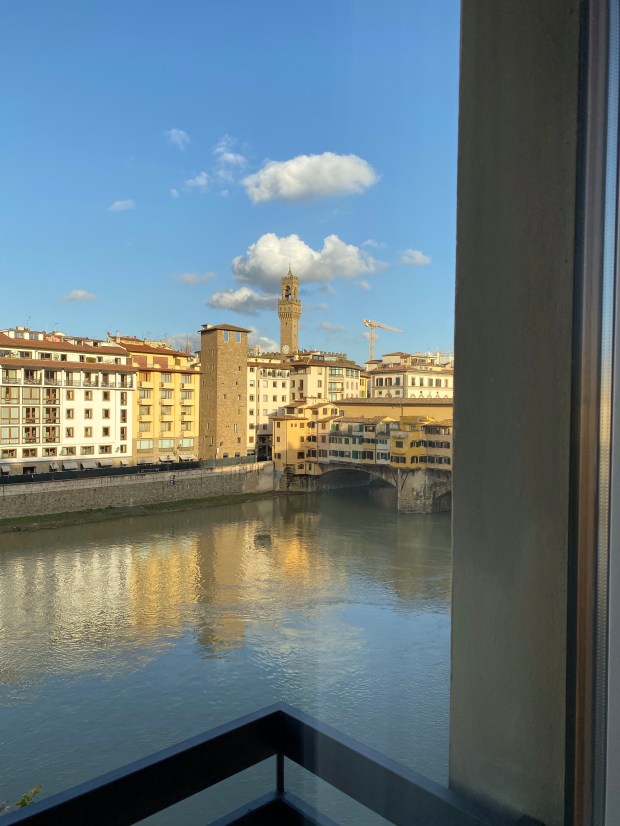
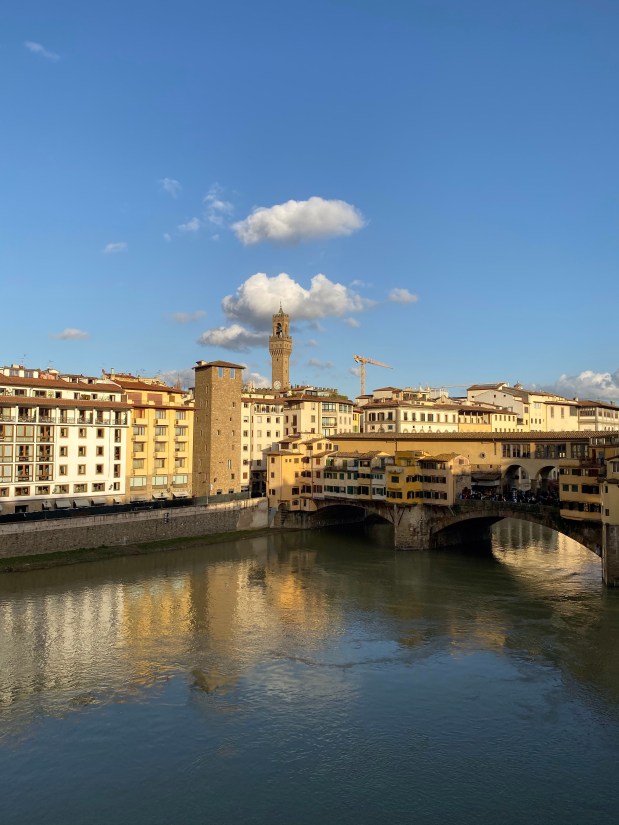
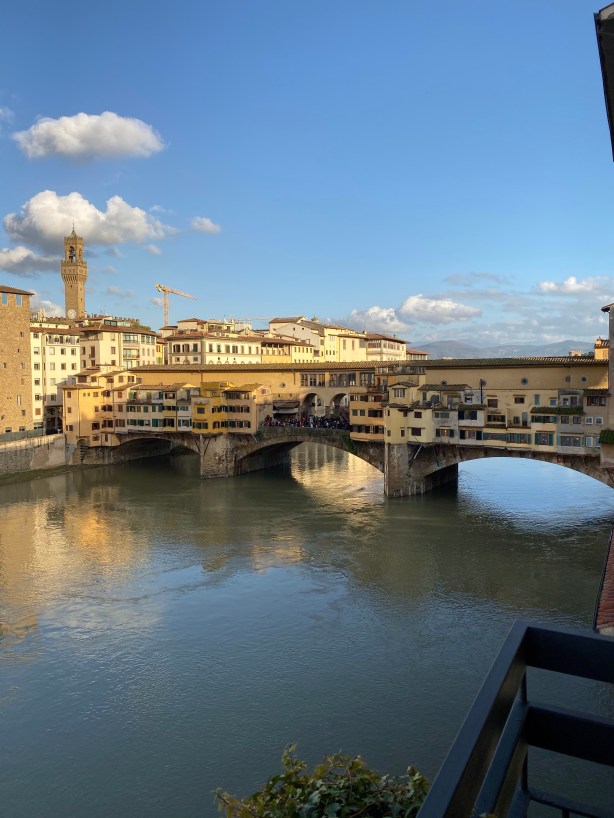
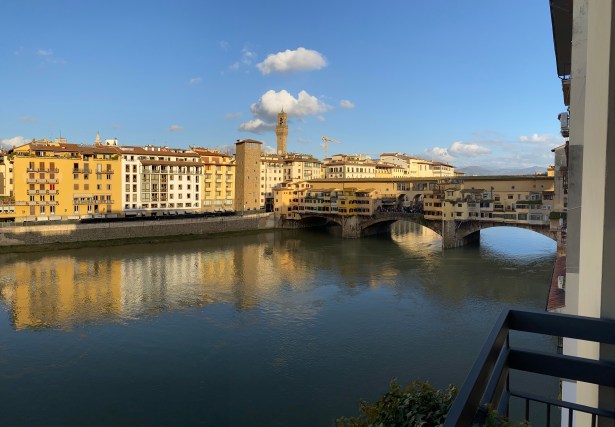
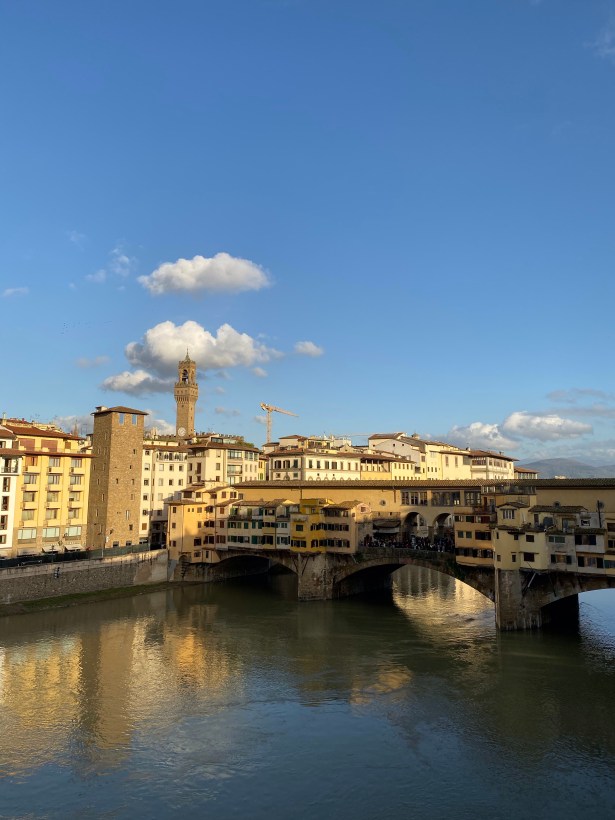
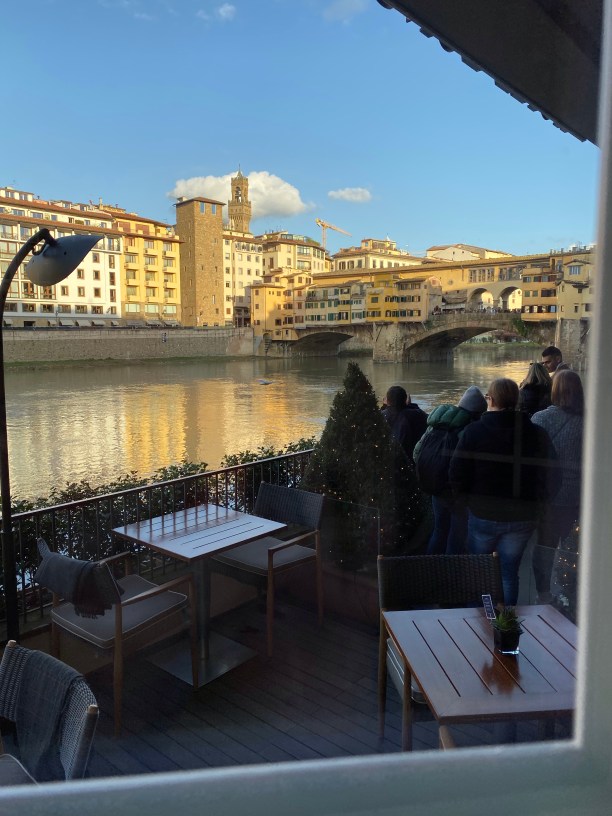
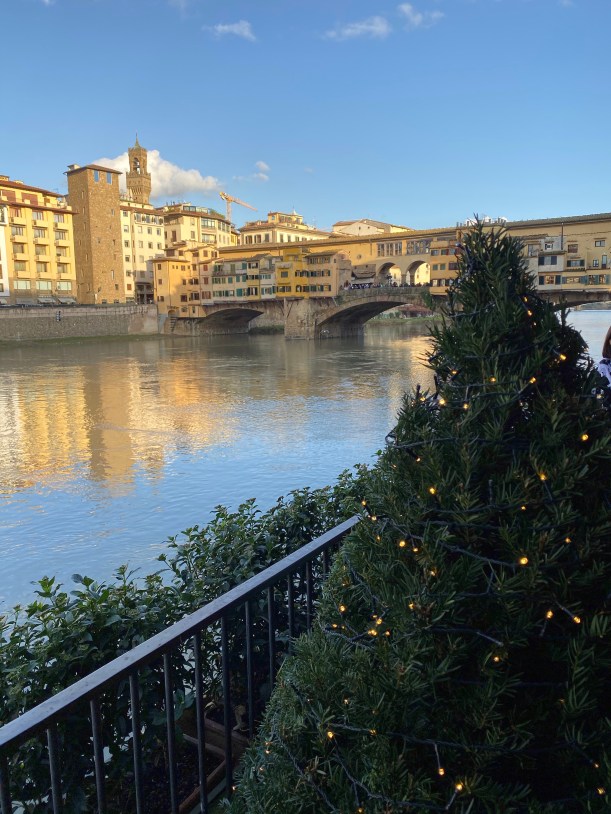
Only the Ponte Vecchio was saved. Some said that the Nazis didn’t want to sacrifice such an artwork. Others argued that the Germans knew it was useless to blow the bridge up because, even if collapsed, it would have still been possible to cross the river over the rubble it would have produced upon exploding.

Shortly after 5:00 a.m., on August 4, the first Allied patrol entered Florence through the southern city gate, the Porta Romana.  Florentines started spilling into the streets to greet the arriving Allies. Most of the troops arrived several hours later.

To be continued, tomorrow, August 4, 2019

The source of this information: http://diariodiunfiorentino.altervista.org/liberation-florence-11-august-1944/?doing_wp_cron=1564842755.6783099174499511718750


38490811_2170038646605511_6438119641280675840_n

3 agosto 1944.


I tedeschi fanno saltare i ponti di Firenze nell’ambito del piano di ripiegamento verso la linea Gotica già stabilito da tempo. L’obiettivo è quello di rallentare il più possibile l’avanzata alleata. Sarebbe stato militarmente più remunerativo un aggiramento della città. Invece gli alleati, anche per responsabilità del CTLN che vuole l’insurrezione, riusciranno a farsi coinvolgere ed imbrigliare in una lotta che li porterà a ritardare di circa un mese l’investimento della linea Gotica. Dei ponti ne resterà in piedi soltanto uno, quello meno importante, il ponte vecchio. Era più portante il ponte di Santa Trinità. Oggi una immagine di esplosioni sui pilastri di questo ponte viene presentata per raccontare la barbarie tedesca. Non ci sono foto che raccontano l’opera distruttiva dei genieri tedeschi. I cittadini di Firenze sentirono i forti boati delle esplosioni nella notte. Nessuno le fotografo’. La foto riguarda invece l’opera dei genieri alleati che vi predisposero un ponte Bailey. Rimase il ponte Vecchio, seppure minato. Si disse perché intervenne Hitler che se ne era innamorato.

Oggi sul ponte si trova una lapide in ricordo del console tedesco Wolf che si adopero’ per salvarlo dalla distribuzione. In realtà Wolf avrebbe voluto salvare Ponte Santa Trinita. Si è scoperto che invece il ponte fu salvato dai partigiani. Sul ponte vecchio passa il corridoio vasariano usato dai partigiani per attraversare il fiume e per accogliere il filo telefonico necessario a mantenere il contatto tra le due parti della città all’insaputa dei tedeschi.

3 August 1944. The Germans blew up the bridges of Florence as part of the retreat to the Gothic line already established for some time. The goal is to slow down the Allied advance as much as possible. A circumvention of the city would have been militarily more profitable. Instead the allies, also for the responsibility of the CTLN who wants the insurrection, will be able to get themselves involved and harnessed in a struggle that will lead them to delay the investment of the Gothic line by about a month. Of the bridges, only one, the less important one, the old bridge will remain standing. The Santa Trinita Bridge was more important. Today an image of explosions on the pillars of this bridge is presented to tell of the German barbarity. There are no photos that tell the destructive work of the German engineers. The citizens of Florence heard the loud roar of explosions in the night. No one photographed them. The photo, on the other hand, concerns the work of the allied engineers who set up a Bailey bridge. The old bridge remained, even if mined. We read that Hitler intervened in saving the Ponte Vecchio because he admired it. (I find that difficult to swallow.)

Today on the bridge there is a plaque in memory of the German consul Wolf who worked to save it from destruction. Actually Wolf wanted to save Ponte Santa Trinita. It turned out that instead the bridge was saved by the partisans. Over the Ponte Vecchio passes the Vasari corridor used by the partisans to cross the river and to receive the telephone wire necessary to maintain contact between the two parts of the city without the Germans knowing.

38435579_2170038689938840_3636321416774680576_n

http://firenze.repubblica.it/hermes/inbox/2016/10/26/news/l_amico_dei_gioiellieri_che_salvo_dalle_mine_il_ponte_vecchio-150653750/

Si chiamava Burgassi ma tutti, sul Ponte Vecchio, lo chiamavano Burgasso. Era storpio, claudicante: la poliomelite aveva lasciato segni pesanti sul suo corpo. Ma la mente no. La mente era lucida, limpida, come l’onestà di quest’uomo storto a cui i goiellieri avevano dato il compito di aprire e chiudere le botteghe spostando le antiche, pesanti vetrine mobili, che ora non ci sono più. Lucia Barocchi se lo ricorda benissimo, Burgasso. È stampato nella sua memoria di novantaquattrenne perché eroe. Lo chiama così. Perché cosa può essere l’uomo che salvò Ponte Vecchio dalle mine dei tedeschi, se non un eroe? La testimonianza di Barocchi, esponente di una delle più importanti e antiche famiglie di gioiellieri, è nel volume Di pietra e d’oro (Maria Cristina de Montmayor editore) dove Claudio Paolini, Cristina Acidini, Dora Liscia, Antonio Natali, Elisabetta Nardinocchi, Marco Ferri raccontano le vicende storiche e artistiche del ponte. I suoi segreti. E non è un eufemismo definire segreto la vicenda di Burgasso perché di questo si trattava: l’aveva conservato Enrichetta, una signora che aiutava Barocchi nelle faccende domestiche, e in negozio.

His name was Burgassi but everyone on the Ponte Vecchio called him Burgasso. He was crippled, limping; polio had left heavy marks on his body. But his mind was clear; clear, like the honesty of this crooked man who had been given the task of opening and closing the shops by moving the ancient, heavy mobile windows, which are no longer there. Lucia Barocchi remembers it very well, Burgasso. It is printed in his memory of 94 years as a hero. He calls it that. Why can the man who saved Ponte Vecchio from the mines of the Germans be, if not a hero? The testimony of Barocchi, exponent of one of the most important and ancient families of jewelers, is in the book Di pietra e d’oro (Maria Cristina de Montmayor, publisher) where Claudio Paolini, Cristina Acidini, Dora Liscia, Antonio Natali, Elisabetta Nardinocchi, Marco Ferri recounts the historical and artistic events of the bridge. Its secrets. And it is not a euphemism to define the Burgasso affair as secret because this was the case: Enrichetta had kept it, a lady who helped Barocchi with housework, and in the shop.

” Un giorno di qualche anno fa – racconta – venne a a trovarmi insieme al marito Luciano, che Burgasso, ormai anziano in quell’agosto del 1944, aveva preso come aiutante. Anche lui era un uomo specchiatissimo, perché Burgasso non avrebbe potuto scegliere altrimenti”. La voce della Barocchi s’incrina, come fece il giorno in cui Enrichetta le svelò ciò che aveva tenuto nascosto negli anni bui della guerra “perché lei e Luciano temevano che avrebbe potuto ritorcersi contro il Burgasso. E, se ci ripenso, provo ancora lo stupore che mi scosse davanti a quella rivelazione, seppure mi venisse confermato ciò che avevo sempre sospettato: non fu Hitler a decidere di non far esplodere Ponte Vecchio nella notte tra il 3 e il 4 agosto del 1944. È leggenda, quella. A me, a tanti fiorentini, è sempre parso strano che un barbaro come il führer prendesse una decisione così saggia, a fronte delle mine già disposte e dalla zona evacuata: io ero tra gli sfollati ospitati a Boboli, tutti attendevamo con dolore che quel pezzo di Firenze, e della nostra vita, cadesse giù. La cosa incredibile è che fu merito di Burgasso, che i tedeschi credevano non capisse niente, quindi lo lasciavano circolare liberamente. Lui aveva visto tutto. Sapeva dove erano gli allacciamenti delle mine”.
“One day a few years ago – he says – he came to see me with her husband Luciano, who Burgasso, now an old man in that August 1944, had taken as an aide. He too was a very specious man, because Burgasso could not have chosen otherwise” . The Barocchi’s voice cracks, as it did the day Enrichetta revealed to her what she had kept hidden in the dark years of the war “because she and Luciano feared that she could have turned against the Burgasso. And, if I think about it, I still try it astonishment that shook me in front of that revelation, even if it confirmed what I had always suspected: it was not Hitler who decided not to blow up the Ponte Vecchio on the night between 3 and 4 August 1944. It is legend, that. to many Florentines, it has always seemed strange that a barbarian like the führer made such a wise decision, faced with the mines already in place and the area evacuated: I was among the displaced people hosted in Boboli, we all waited with pain that that piece of Florence, and of our life, would fall down. The incredible thing is that it was due to Burgasso, that the Germans believed he didn’t understand anything, so they let him circulate freely. He had seen it all. The minds of mines “.

Nel libro, la testimonianza è raccontata in una lettera che Lucia Barocchi ha inviato a Dora Liscia. Ma la storia ha avuto ulteriori sviluppi cinque giorni fa, quando Lucia Barocchi ha ricevuto una telefonata di Luciano “che, avendo subito una grave operazione e vedendo ancora poca vita davanti a sé, mi ha scelta come depositaria di un ideale “testamento”. La vera storia del salvataggio di Ponte Vecchio. Ha ripercorso le vicende, arricchendole di particolari. E c’è una frase che Burgasso gli riferì, che mi commuove:

In the book, the testimony is told in a letter that Lucia Barocchi sent to Dora Liscia. But the story had further developments five days ago, when Lucia Barocchi received a phone call from Luciano “who, having undergone a serious operation and still seeing little life in front of him, chose me as the custodian of an ideal” testament “. The true story of the rescue of Ponte Vecchio, he retraced the events, enriching them with details, and there is a phrase that Burgasso told him, which moves me:

“Luciano, e noi non non s’ha da fare nulla per la nostra povera Firenze”? Poi, lo condusse nel punto esatto dove i fili delle mine erano stati allacciati: in via dè Ramaglianti, dietro Borgo San Jacopo. E, davanti agli occhi di Luciano, rischiando la vita, li staccò. Oggi, sono io a dire: E noi non s’ha da fare nulla per ricordare quell’eroe? E a chi dice che questa non è verità, io rispondo: la verità si riconosce. Sempre”.
“Luciano, is there nothing we can do for our poor Florence”? Then he led him to the exact spot where the wires of the mines had been connected: in via dè Ramaglianti, behind Borgo San Jacopo. And, before Luciano’s eyes, risking his life, he detached them. Today, it is I who say: And we have nothing to do to remember that hero? And to those who say that this is not truth, I answer: the truth is recognized. Always”.


“Era un rumore fortissimo, insopportabile. Dei boati tremendi. La terra tremava, tremavano le pareti di casa.. Io te lo racconto, ma te non lo puoi capire, non è una cosa che si può immaginare”.
“It was a very loud, unbearable noise. Tremendous explosions. The earth trembled, the walls of the house trembled .. I tell you, but you can’t understand it, it’s not something you can imagine”.


Nelle parole di mia mamma il ricordo indelebile: era la notte tra il 3 e il 4 Agosto 1944, saltavano in aria i ponti di Firenze.

In my mother’s words the indelible memory: it was the night between 3 and 4 August 1944, the bridges of Florence jumped into the air.

38490885_1939284786121722_4094961092910907392_n

Nella foto: le macerie del ponte alle Grazie.  In the picture: the rubble of the Ponte alle Grazie.


The Princess Diana Memorial, Hyde Park, London

During my first walk through Hyde Park and Kensington Gardens, I noticed these markers in the pavement, guiding the visitor to the Princess Diana Memorial.  I wasn’t sure I wanted to go see it.  I remember her death all too well, just like I can remember the day President Kennedy was shot.  Markers of time that I wish I could forget.

IMG_9696

In the end, I couldn’t not go.  I’m so glad I did.  It is a lovely, lighthearted place.  I think Diana would have loved it.  On the sunny Sunday afternoon I was there, families and especially children were enjoying the water as it flowed through the monument.  I loved it.  But, I couldn’t bring myself to take pictures.  It was still too raw for me.

Screen Shot 2019-07-22 at 17.27.37
The Diana, Princess of Wales Memorial Fountain is a memorial in London dedicated to Diana, Princess of Wales, who died in a car crash in 1997. It was designed to express Diana’s spirit and love of children.

The fountain was built with the best materials, talent and technology. It contains 545 pieces of Cornish granite – each shaped by the latest computer-controlled machinery and pieced together using traditional skills.

Screen Shot 2019-07-22 at 17.27.25

The design aims to reflect Diana’s life, water flows from the highest point in two directions as it cascades, swirls and bubbles before meeting in a calm pool at the bottom. The water is constantly being refreshed and is drawn from London’s water table.

Screen Shot 2019-07-22 at 17.27.51

The Memorial also symbolises Diana’s quality and openness. There are three bridges where you can cross the water and go right to the heart of the fountain.

Screen Shot 2019-07-22 at 17.21.13


The memorial was designed by American landscape architect and artist Kathryn Gustafson.


The fountain is located in the southwest corner of Hyde Park, just south of the Serpentine lake and east of the Serpentine Gallery. Its cornerstone was laid in September 2003 and it was officially opened on 6 July 2004 by Queen Elizabeth II.  Also present were Diana’s younger brother Charles Spencer, her ex-husband Prince Charles, and her sons William and Harry.

Working on the project began in 2001. The fountain was designed by Gustafson Porter.  Kathryn Gustafson, an American landscape artist said she had wanted the fountain, which was built to the south of the Serpentine, to be accessible and to reflect Diana’s “inclusive” personality. Gustafson said: “Above all I hope that it provides a fitting memorial for the princess and does credit to the amazing person that she was.”

The memorial has the form of a large, oval stream bed about 165 by 260 ft that surrounds, and is surrounded by, a lush grassy field. The granite stream bed is from 10 to 20 ft wide. It is quite shallow and is laid out on a gently sloping portion of the park, so that water pumped to the top of the oval flows down either side. One side of the stream bed descends fairly smoothly to the downhill end of the oval with gentle ripples; the other side consists of a variety of steps, rills, curves, and other shapes so that the water plays in interesting ways as it flows to the tranquil pool at the bottom. The two sides were intended to show two sides of Diana’s life: happy times, and turmoil.


https://www.archdaily.com/803509/diana-princess-of-wales-memorial-fountain-gustafson-porter-plus-bowman


Peter Pan in Kensington Gardens


320px-PeterPan_Statue_Londres

Standing to the west of the Long Water in Kensington Gardens–in the same spot as Peter lands in the story ‘The Little White Bird,’ is the bronze statue of Peter Pan, surrounded by squirrels, rabbits, mice and fairies.

The creator of Peter Pan, JM Barrie, lived near Kensington Gardens on Bayswater Road and his stories were inspired in part by the gardens. He commissioned Sir George Frampton to build the statue in 1912. It has been a popular feature of the gardens since 1912.


IMG_9743IMG_9744
The sculpture stands about 14 feet  high and has a conical form, like a tree trunk, topped by an approximately life sized eight year old boy. He blows a thin musical instrument. like a trumpet or flute. The sides of the trunk are decorated with small figures of squirrels, rabbits, mice, and fairies.

Barrie had intended the boy to be based on a photograph of Michael Llewelyn Davies wearing a Peter Pan costume, but Frampton chose another model, possibly James W. Shaw or William A. Harwood. Barrie was disappointed by the results, claiming the statue “didn’t show the Devil in Peter.”

A completed plaster model of the work was exhibited at the Royal Academy in May 1911.

Barrie had the original bronze erected in London on 30 April 1912, without fanfare and without permission. He wanted it to suddenly appear, as if fairies had put it in place overnight. He published a notice in The Times the following day, 1 May: “There is a surprise in store for the children who go to Kensington Gardens to feed the ducks in the Serpentine this morning. Down by the little bay on the south-western side of the tail of the Serpentine they will find a May-day gift by Mr J.M. Barrie, a figure of Peter Pan blowing his pipe on the stump of a tree, with fairies and mice and squirrels all around. It is the work of Sir George Frampton, and the bronze figure of the boy who would never grow up is delightfully conceived.”

Barrie donated the sculpture to the city of London, although some critics objected to him advertising his works by erecting a sculpture in a public park without permission.


IMG_9745


IMG_9746


IMG_9747


IMG_9748


IMG_9747


IMG_9748


IMG_9749


IMG_9750


IMG_9751


IMG_9752

Through the miracles of our day, you can now “bring the Peter Pan statue magically to life with your smartphone, as part of Talking Statues. Simply swipe your phone on the nearby plaque and get a personal call-back from Peter Pan.”  I didn’t try it, but it sounds like fun for children!

Six other casts of this sculpture by the original artist have been erected in other locations around the world.

The Marble Arch, London

My home away from home these days is in the Marylebone neighborhood of London.  A key feature of this burgh is The Marble Arch, a 19th-century white marble-faced triumphal arch. It sits, rather isolated, on one edge of Hyde Park.

But, once upon a time, the Marble Arch was located in a much more regal place.  This rather simple triumphal arch is neither in its intended location, nor was it completed in the intended way. Nevertheless, during their coronations, the processions of both Queen Victoria and Queen Elizabeth II passed through the arch.

Marble Arch

Marble Arch


John Nash (1752-1835) was the favoured architect of the Prince Regent, later King George IV. Under George’s auspices Nash designed and planned such landmarks as Regent’s Park, Regent Street, Carlton House Terrace, much of Buckingham Palace and Marble Arch. Marble Arch was designed to be both a grandiose gateway to an expanded Buckingham Palace and an exuberant celebration of British victories in the Napoleonic Wars – a Triumphal Arch. But the Grade I listed Arch that we see today is nowhere near as grand as Nash originally intended.

Screen Shot 2019-07-22 at 16.53.36

This model below, now in the Victoria and Albert Museum, gives an impression of how Marble Arch might have looked. Nash had it made to illustrate his intended design to George IV.

Screen Shot 2019-07-22 at 16.10.48

Bristling with sculpture, including an imposing equestrian statue of George IV crowning the structure, the overall design was approved and sculptures were commissioned in 1828.

By 1830, most of the statues and panels were complete and Nash’s work at Buckingham Palace and on the Arch was progressing. And then the King died.

Shortly after the King’s death Nash was sacked by the Prime Minister, the Duke of Wellington, for overspending on the project. The architect Edward Blore was commissioned to complete the works in a more economic and practical fashion.

Alas, had George IV lived a little longer we would certainly have a very different Marble Arch today.

Edward Blore found himself in possession of a jumbled collection of statues and panels.  Blore tried to get Nash to provide drawings to explain how the jigsaw was intended to fit together but Nash, unhappy about his dismissal, would not cooperate.

All Blore really had to go on was Nash’s model and the assortment of sculptures in his yard.

The model has a “military side,” celebrating the Duke of Wellington’s victories, including the Battle of Waterloo and a “naval side” putting Lord Nelson’s achievements center stage. Both sides were to have friezes of battle scenes and allegorical panels along with a selection of “winged victories” and other figures.

On each end of the Arch these two themes were to have been repeated. One end would bear the word “Waterloo” and the other the “Trafalgar” and under each, the names of commanders and battles.

The model was never intended to be a definitive plan, but rather to give an overall impression of how the finished arch might look. It contains at least one big mistake, the military side is topped with the portrait of Nelson and the naval side with one of Wellington.

Blore eventually decided to complete the Arch but without most of the sculpture. So, the Arch today has only four allegorical panels and a little decoration. The ends are blank except for three laurel wreaths.

The Arch was completed in 1833, although the central gates were not added until 1837, just in time for Queen Victoria’s accession to the throne.

Blore incorporated most of the battle scene friezes high up in the central courtyard of Buckingham Palace. In 1835, the rest of the sculptures were given to William Wilkins to use in the construction of the new National Gallery.

Wilkins used some of the statues, but he wanted less military symbolism so he adapted many of figures. Statues representing Asia, seated on a camel, and Europe sat upon a horse with an empty frame between them can still be seen above the main door of the National Gallery.  Above both the western and eastern doors of the gallery are some figures of “winged victories,” many shorn of their wings.  Some of the statues even had their laurel wreaths replaced; one now holds a painter’s easel and brushes.

A portrait of Wellington that was to have filled the empty frame between Europe and Asia is now inside the staff entrance to the gallery.

The other significant surviving remnant is the Equestrian Statue of George IV, by Francis Chantrey, which stands on a plinth in the north-eastern corner of Trafalgar Square.

Screen Shot 2019-07-22 at 16.20.44


Screen Shot 2019-07-22 at 16.21.49

The Marble Arch stood as a formal gateway to Buckingham Palace for seventeen years. But, it was overshadowed by Blore’s enlarged Buckingham Palace and seen as unsatisfactory.

In 1850 the decision was made to move the Arch to its current location of Cumberland Gate where it would form a grand entrance to Hyde Park in time for the Great Exhibition of 1851.

The stone by stone removal and reconstruction of the Arch was overseen by architect Thomas Cubitt who completed the entire complex process in just three months.

The relocation was a success, vast crowds of people passed through the Arch en route to the Great Exhibition in Hyde Park and Marble Arch remained a grand and direct entrance to the park for more than 50 years.

In 1908 a new road scheme cut through the park just south of the Arch, leaving it completely separated from Hyde Park. In the 1960s roads were widened still further, leaving the Arch in its current isolated position, no longer part of a Royal Park.

The whole Arch is clad in ravaccione, a grey/white type of Carrara marble from Italy. This was the first time marble had been used in this way on any British building. The eight enormous Corinthian columns were each cut from a single slab of marble.

North side of the Arch:

fullsizeoutput_13ff

The sculpted panels on this side are by Richard Westmacott, who also produced the statue of Achilles nearby at Hyde Park Corner.

Three female figures representing England (center) wearing Britannia’s helmet, Ireland (left) with her harp and Scotland (right) with the shield of St Andrew.

Screen Shot 2019-07-22 at 16.26.29

“Peace with Trophies of War” Peace stands on a heap of shields, helmets and weapons. She holds an olive branch and two cherubs hold her gown. The cherub on the right side makes me laugh; he looks like he is on a carnival ride.

Screen Shot 2019-07-22 at 16.28.16

Above each of the three arches are pairs of “Victories” with their laurel wreaths.

The central keystones of the lower arches are the heads of warriors wearing Greek helmets pushed back in the manner of statues of Athena. The central arch has a magnificent lion’s head carving as its keystone, with clawed feet protruding from under its mane.

South side of the Arch: 

IMG_9683

On this side the panels are by E.H. Baily, who is perhaps best known for the statue of Nelson in Trafalgar Square.

“Virtue and Valour” Virtue is the figure on the right holding the fasces (a bundle of rods around an axe) that symbolise strength through unity and on the left stands a soldier in Roman dress representing valour.

“Peace and Plenty” The Angel of Peace is to the left. Plenty with her cornucopia to the right. The flame in the middle represents liberty.

Screen Shot 2019-07-22 at 16.33.30

On this side, between the Victories, the keystone of all three arches is a bearded male head, possibly Neptune.

The Central Gates:
Originally planned to be cast in “mosaic gold”, the gates were actually cast in less expensive bronze. Each gate features the same three designs: a lion at the top, George IV’s cypher in the middle and St George slaying the dragon at the bottom.

Screen Shot 2019-07-22 at 16.35.02

The smaller side gates were added in 1851.

Screen Shot 2019-07-22 at 16.35.52

Above: Coronation procession of Queen Elizabeth II passes through Marble Arch, 1953 © Press Association.

The arch at night, below:

Screen Shot 2019-07-22 at 16.39.50

Today, the neighborhood around it is called Marble Arch, particularly the southern portion of Edgware Road and also to the underground station.

https://marble-arch.london/marble-arch-story/