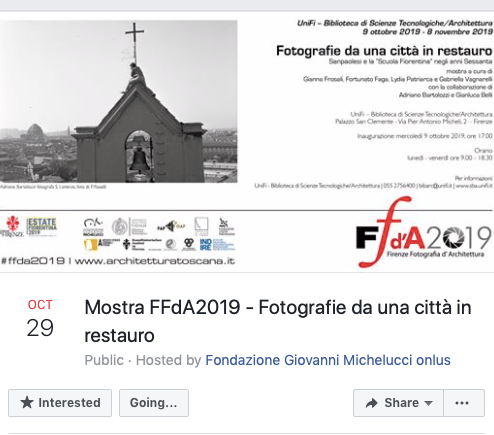
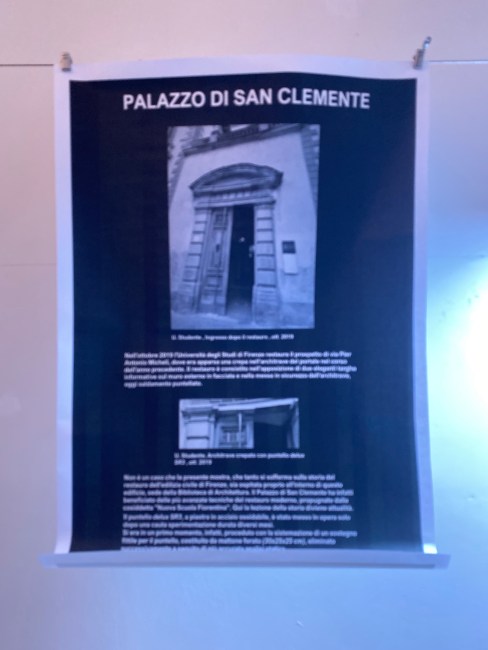
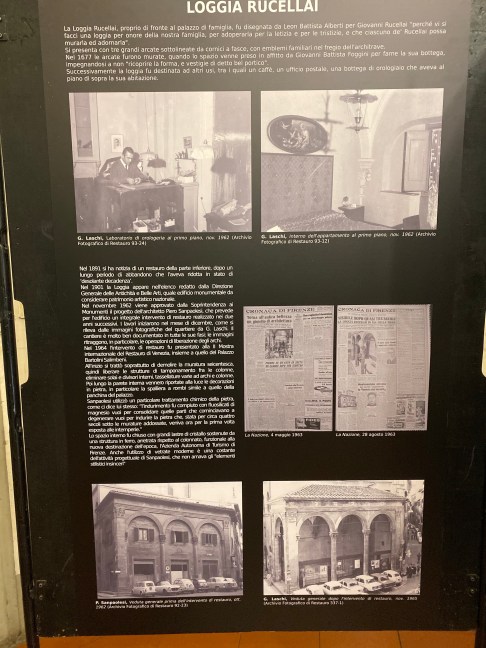
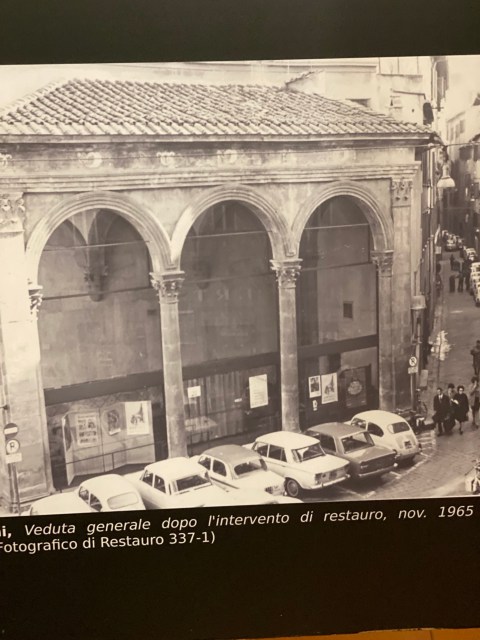
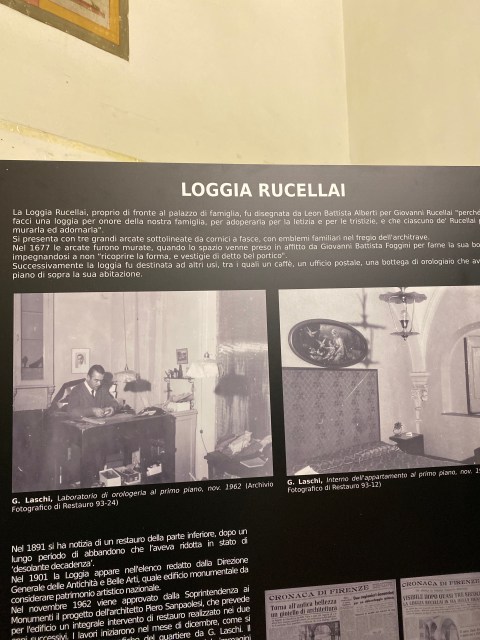
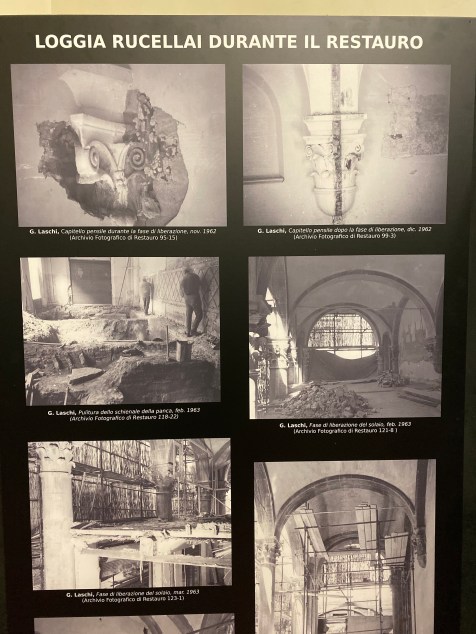
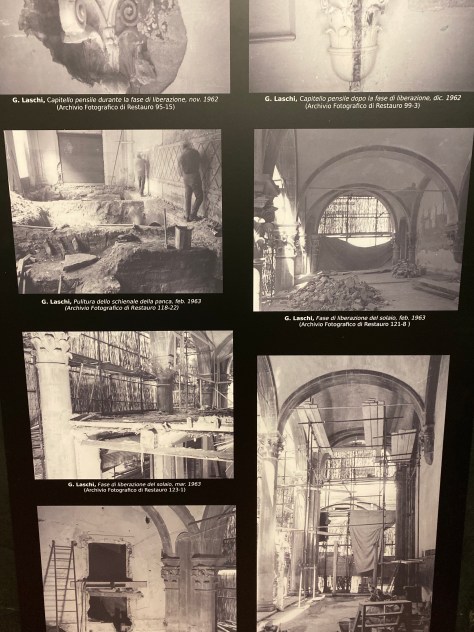
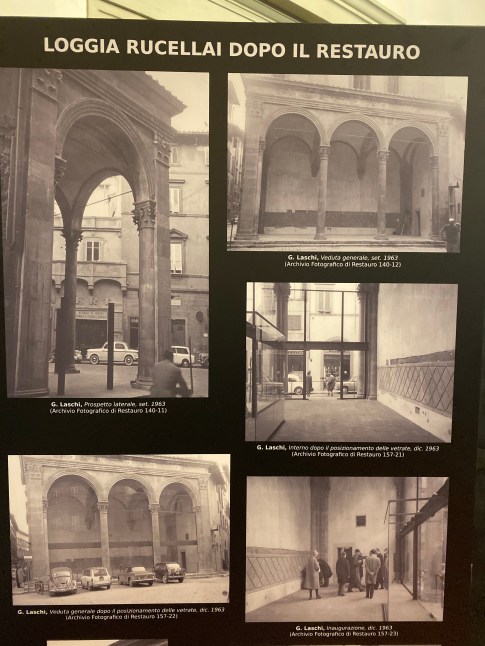
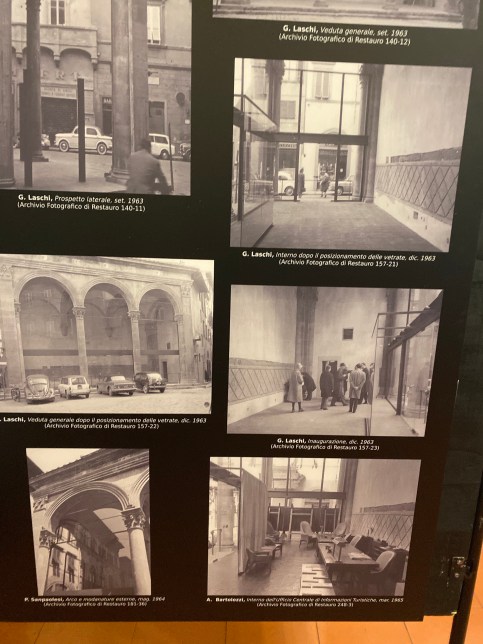
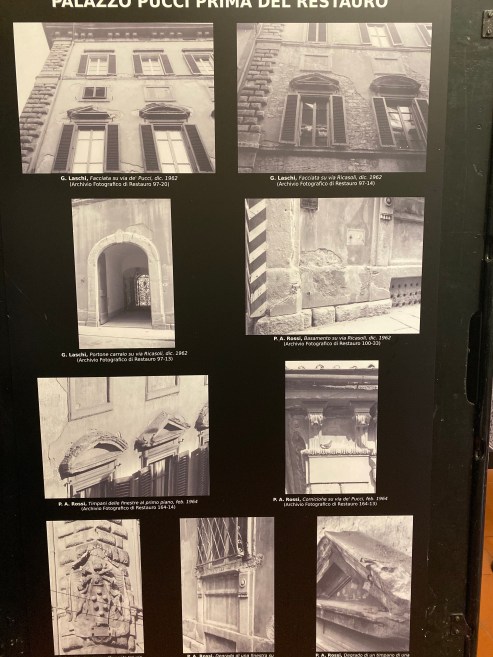
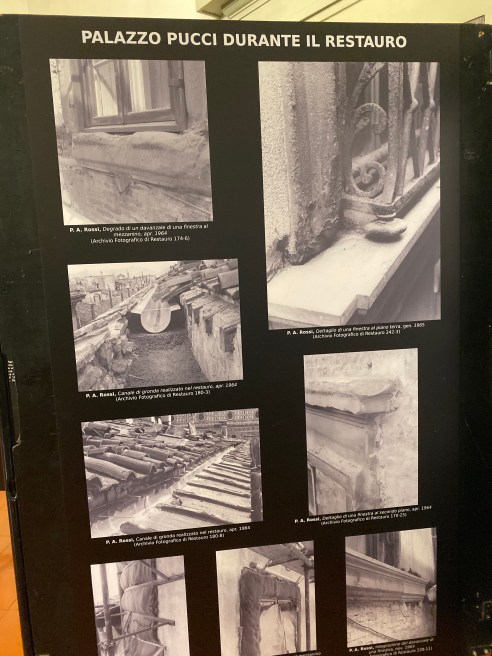
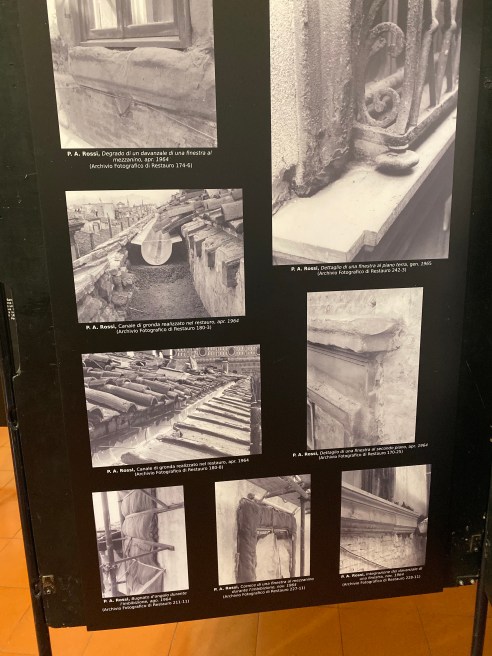
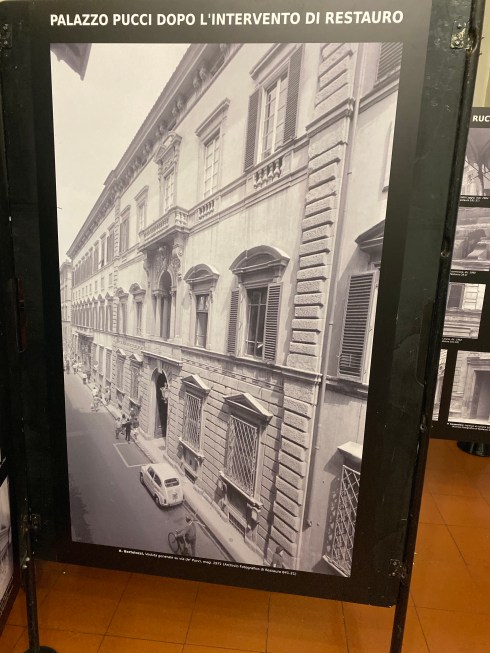
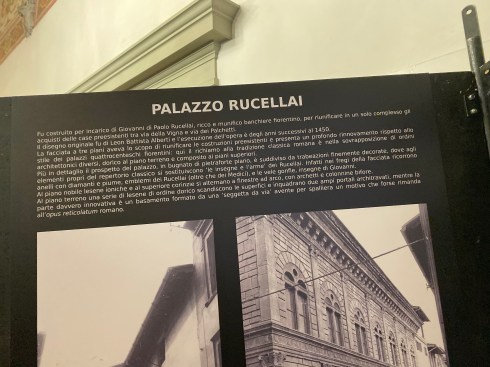
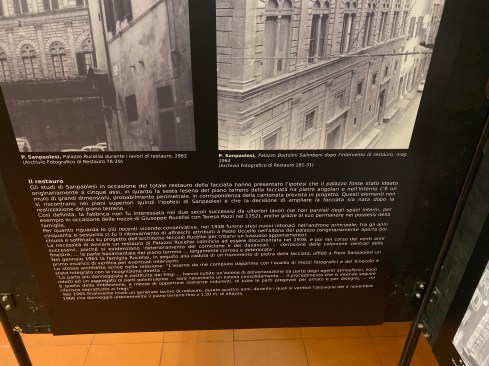
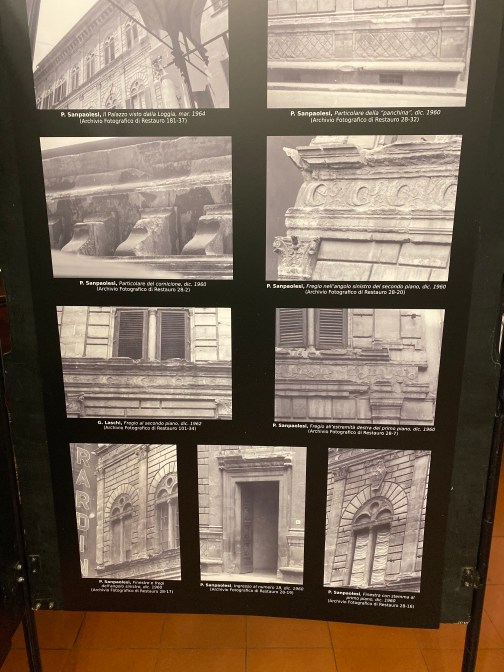
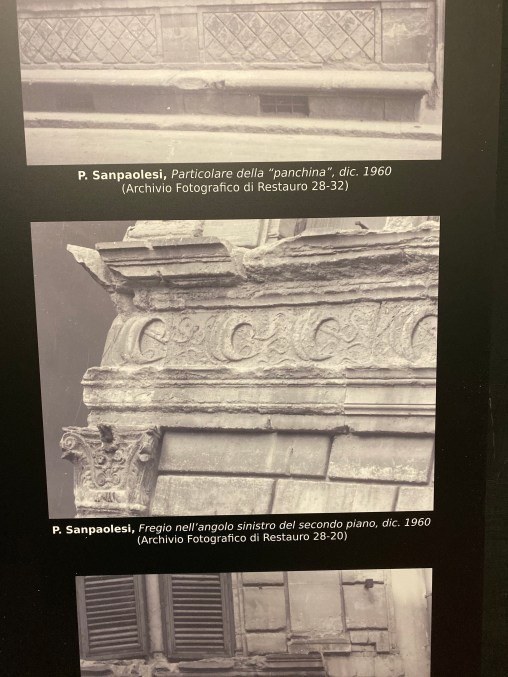
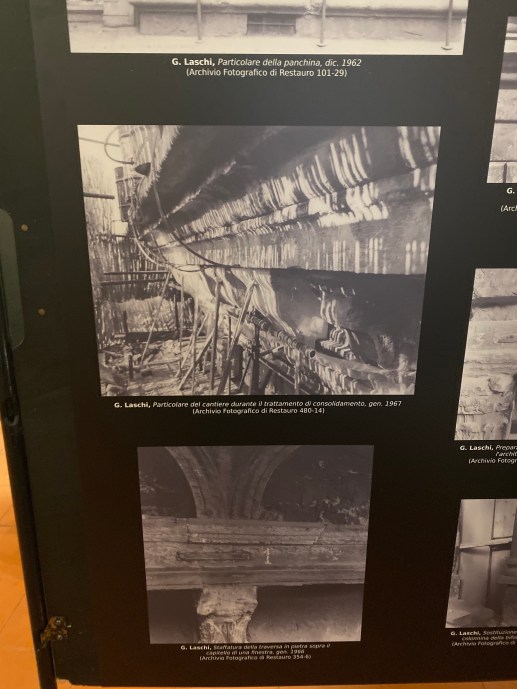
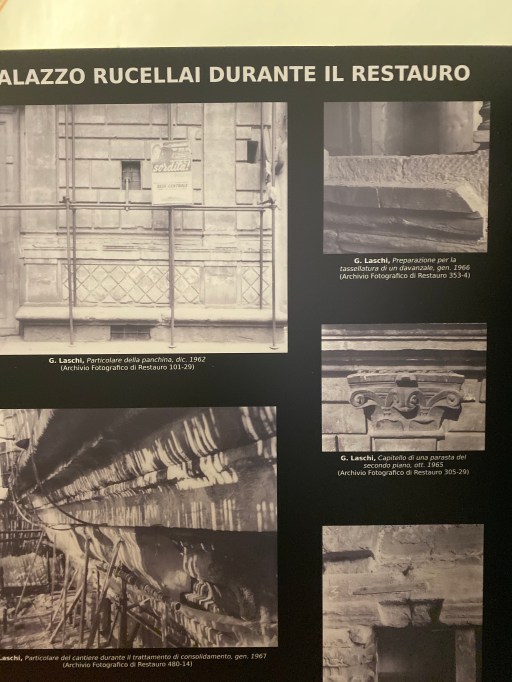
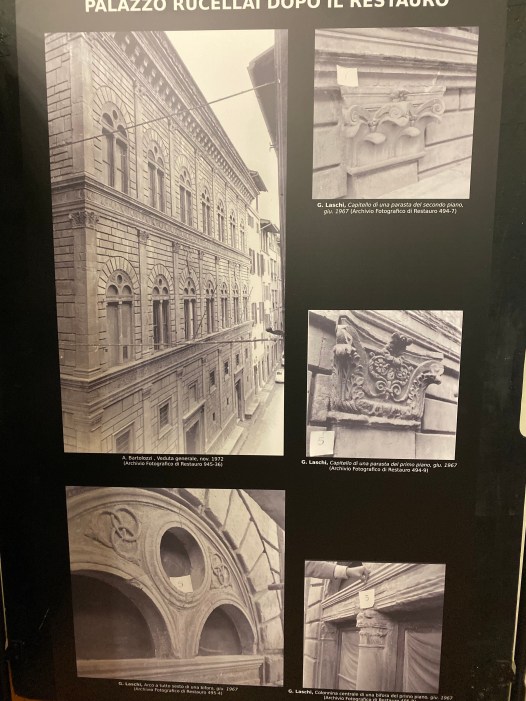
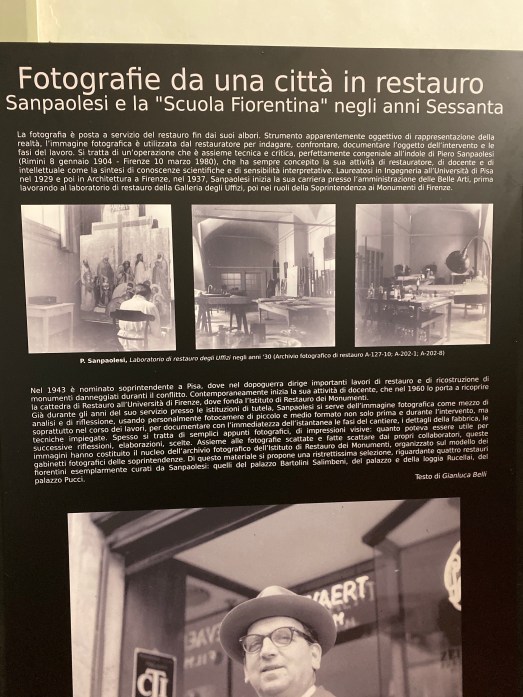
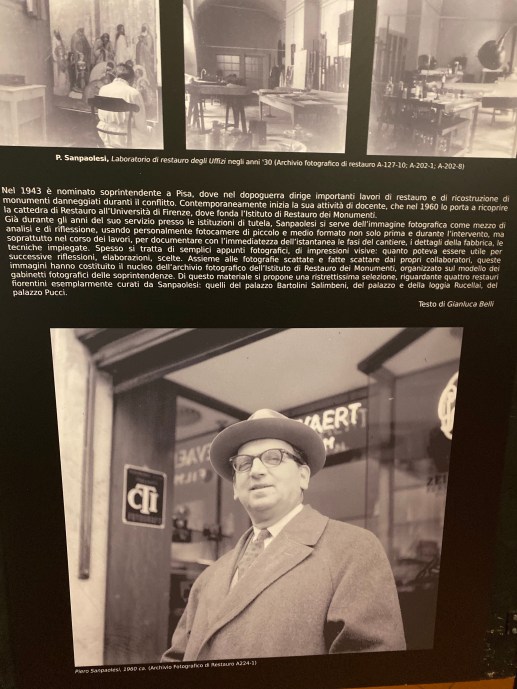
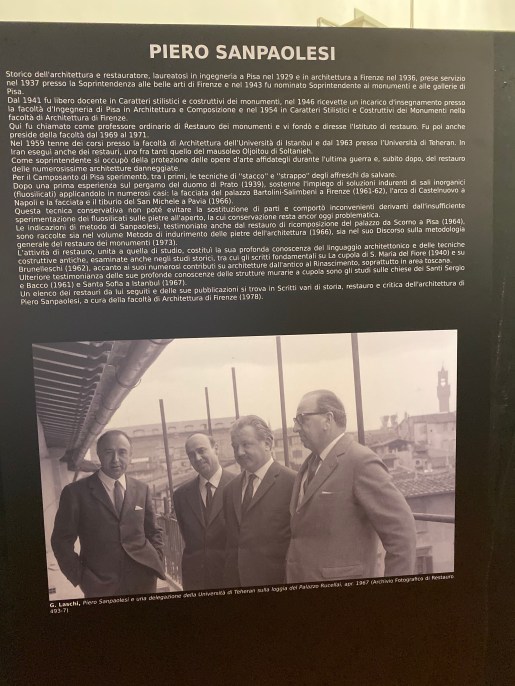
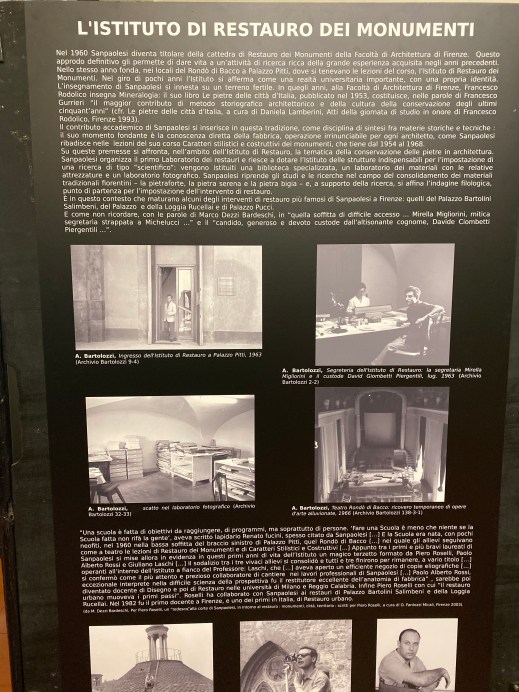
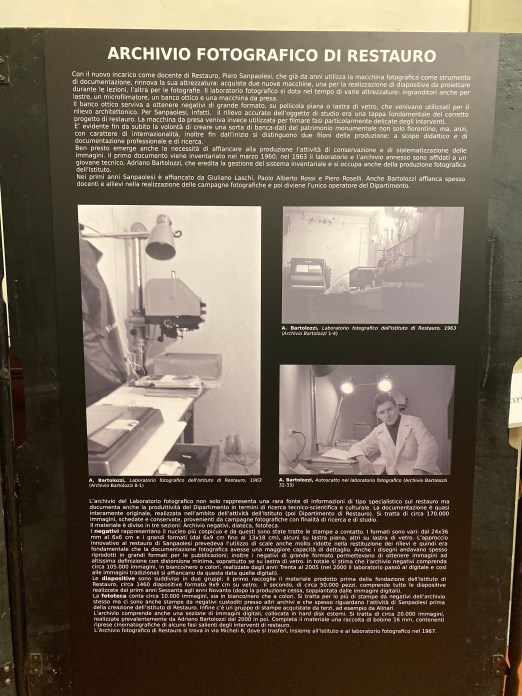
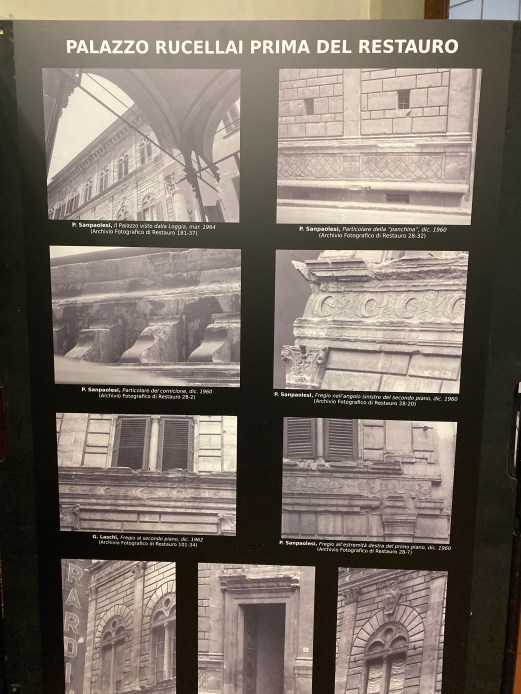
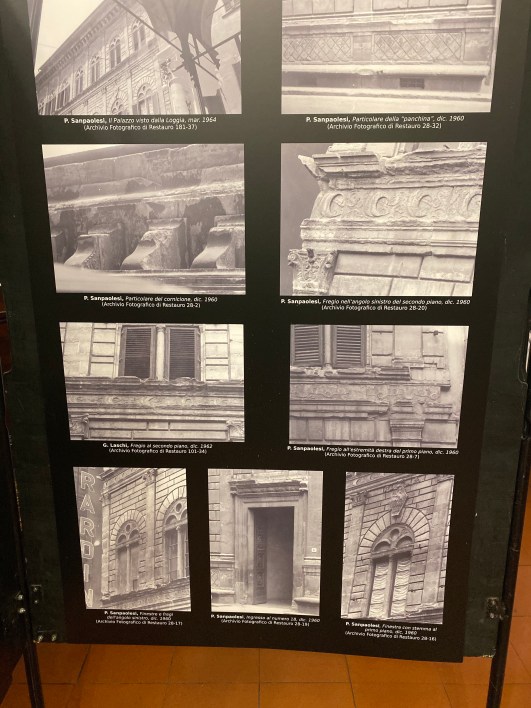
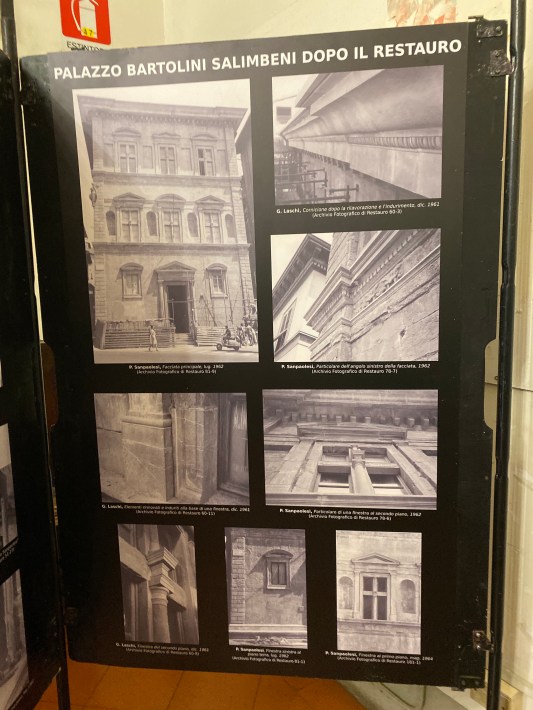
There’s an interesting exhibition of vintage photography documenting the restoration of some famous Florentine palazzi on view currently at Library of Science/Technology Architecture.
It’s a small show and in a rather dark room, so my photographs below are not great. However, they show some great pictures of before and after shots of some of the wonderful Florentine palazzi. This library would be a great source for any scholar working in the fields connected to the city of Florence.
I just discovered an artisanal workshop last week in Florence. The shop is old and has an excellent pedigree. I’ve never had a big interest in the art of mosaics or pietre dure, so I’ve never sought out the shops.
But, I’ve always remembered that no less an expert than Giorgio Vasari described the finished works as “eternal paintings.”
And, I found out that the art form is more appealing to me than I had earlier realized. Just check out, in particular, this great studio and their artworks.
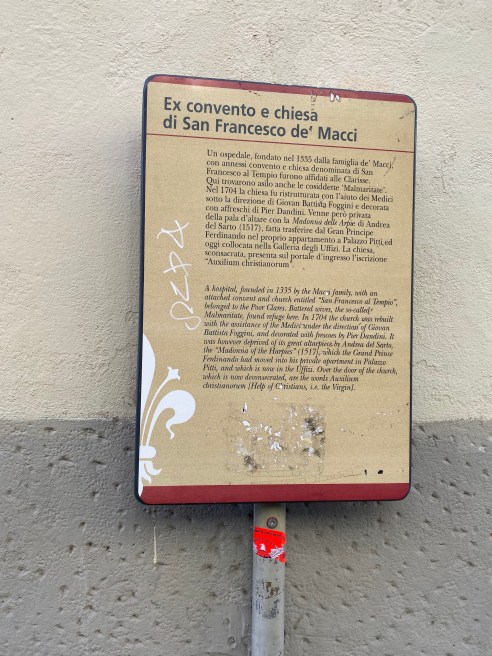
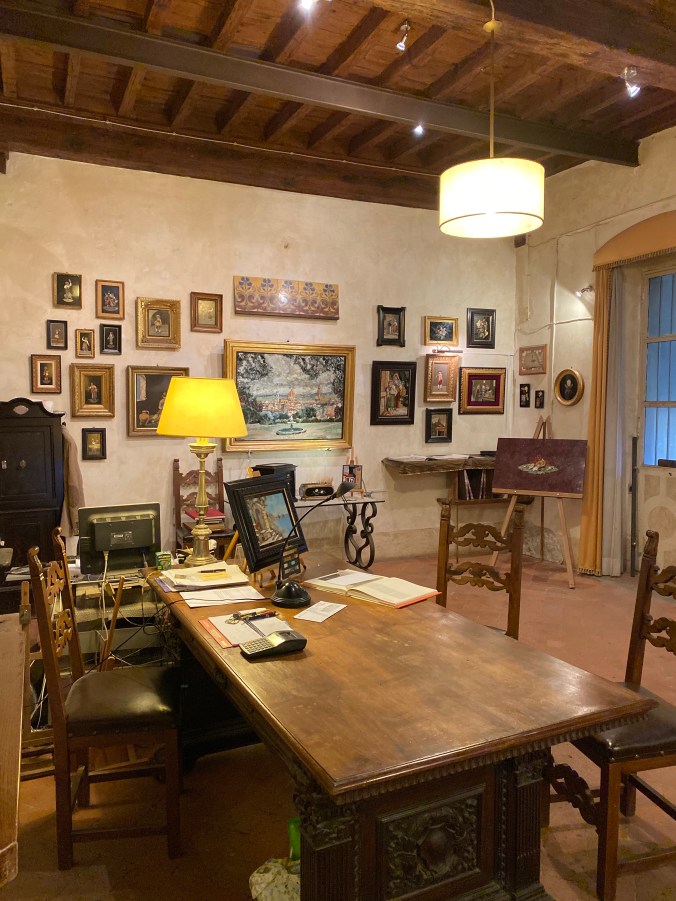
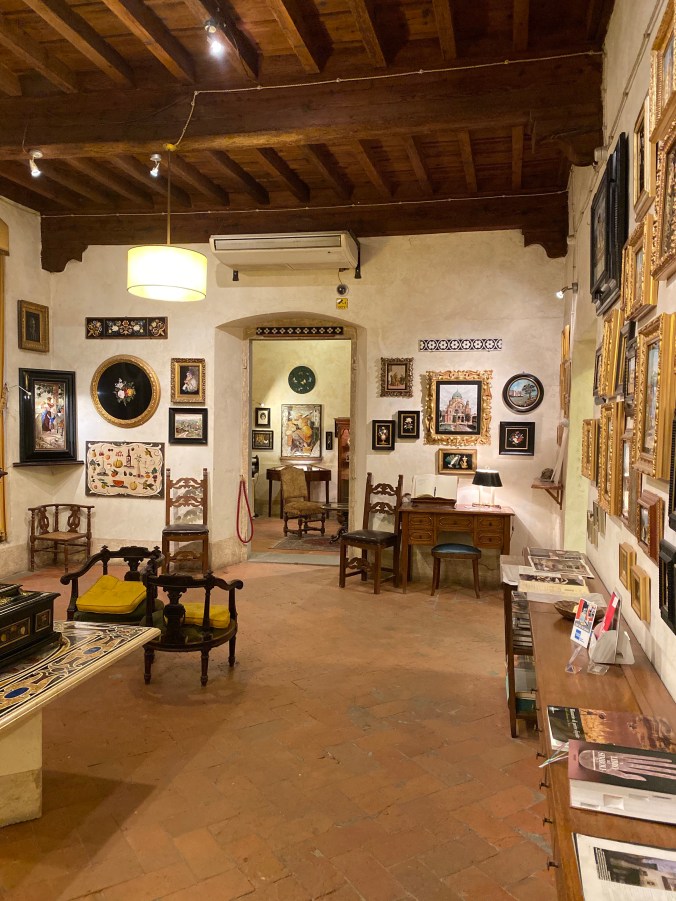
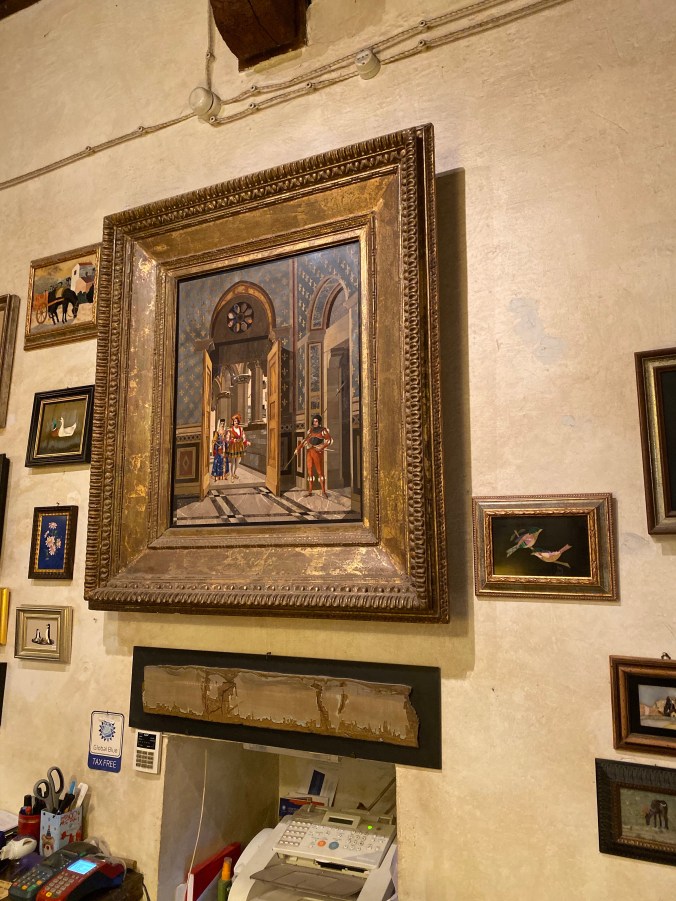
First, the location: the studio is housed within this important old palazzo, which is reason enough to pay them a visit. It is housed within:
From the Lastrucci website:
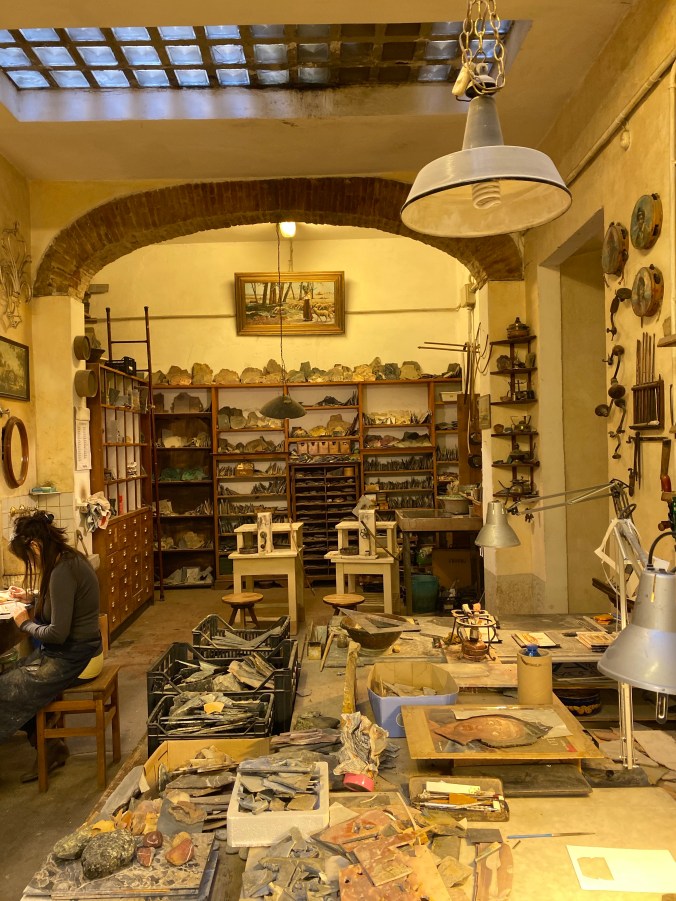
The artistic studio of the Masters Jacopo and Bruno Lastrucci is situated in the ancient Spedale di San Francesco de’ Macci in Florence, in the street of the same name, just a few steps from the celebrated Basilica di Santa Croce.
The medieval building dates back to 1335 and for several centuries housed the famous “Madonna of Harpies,” a painting by Andrea del Sarto now in the collection of the Uffizi Gallery.
A visit to these historical rooms, which today form the headquarters of the Studio Musivo Lastrucci, is certainly an unforgettable experience.
All of the mosaics are entirely produced in the according to the original techniques dating back to the 16th century, which highlight the natural color of every stone.
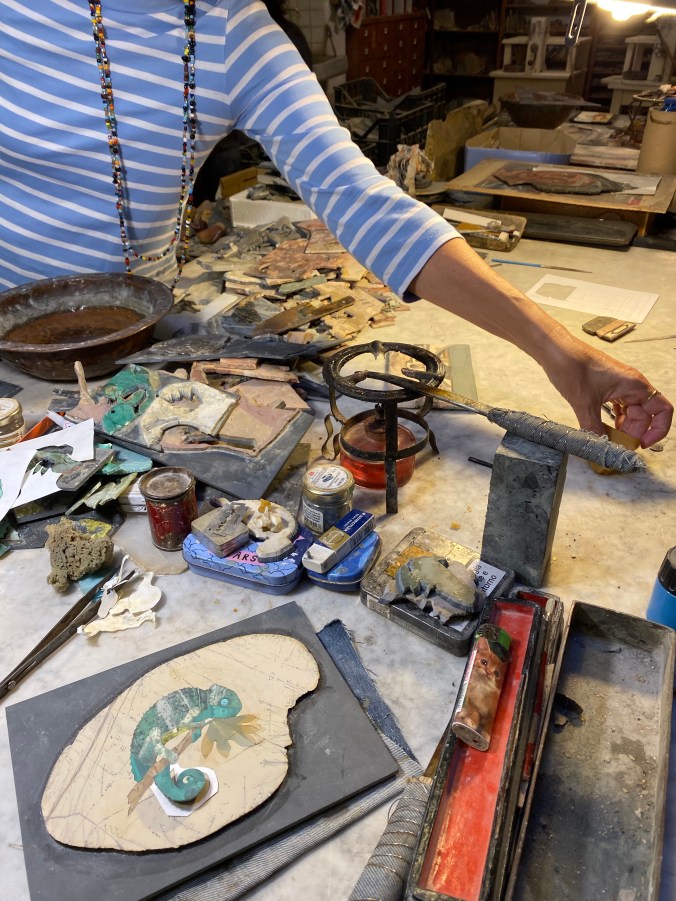
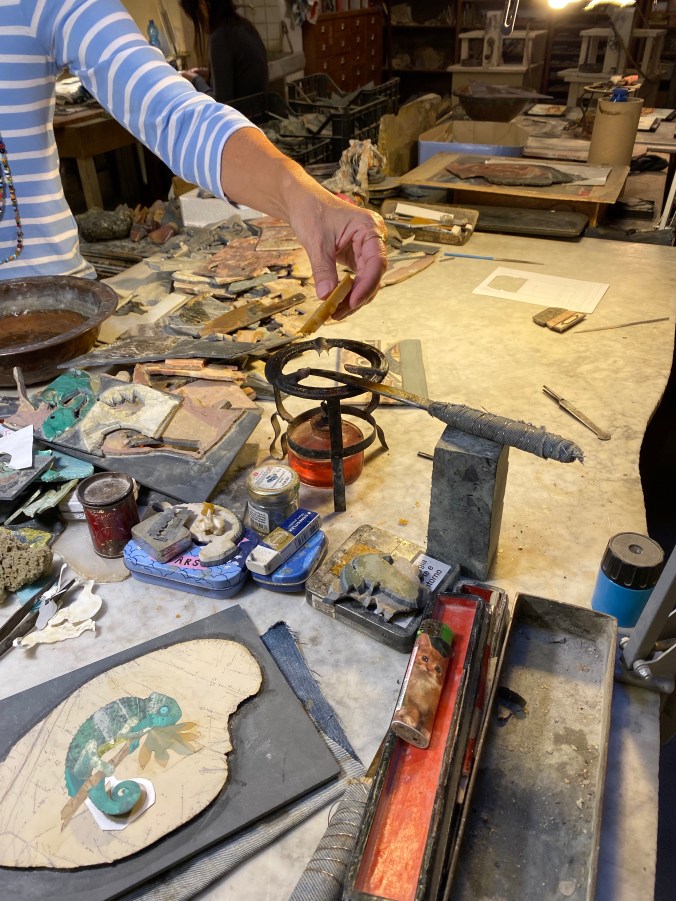
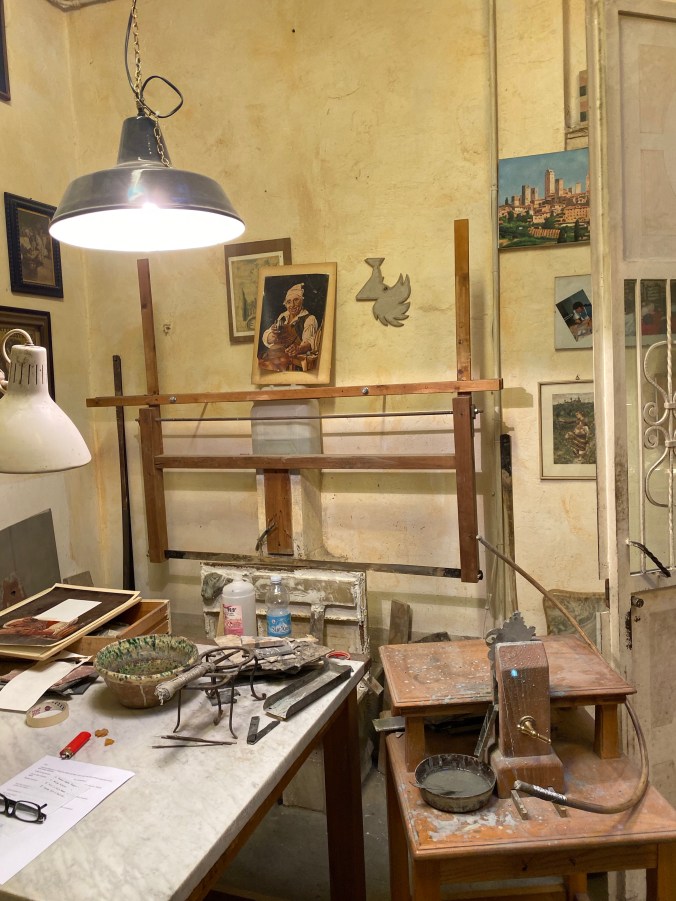
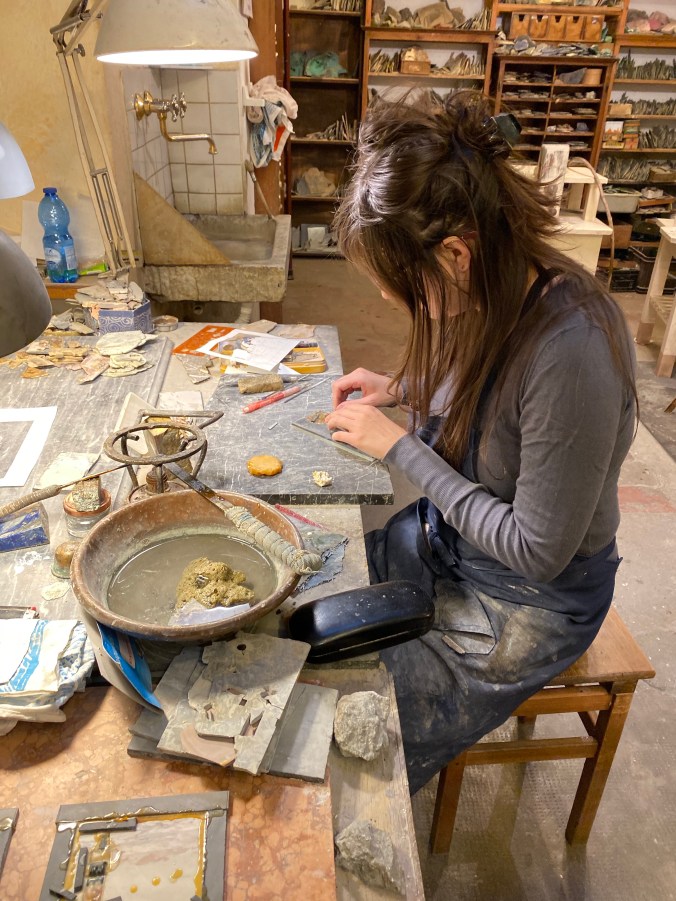
As in the 16th century, every piece is cut with a simple saw made of a tree branch bent in the form of a bow with an iron wire stretched from end to end and covered with water and emery powder; the pieces are then glued together with a mixture of virgin wax and pine resin.
The tools used are of ancient origin; progress and technology have not been able to create suitable substitutes for them, because the original tools were crafted for recreating a sense of beauty that modern technology is unable to reproduce.
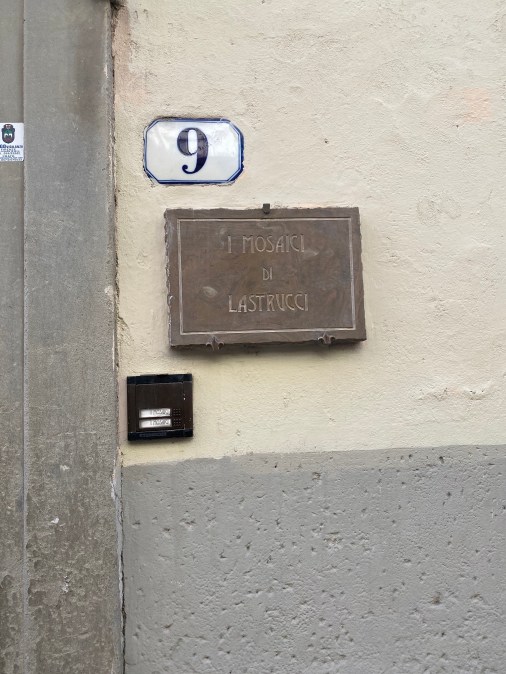
The artists personally follow the whole creative process and all mosaics are entirely produced in the studio of the Masters Iacopo and Bruno Lastrucci, situated in Via de’ Macci 9 and annexed to the Galleria Musiva, selling Florentine mosaics of their own production.
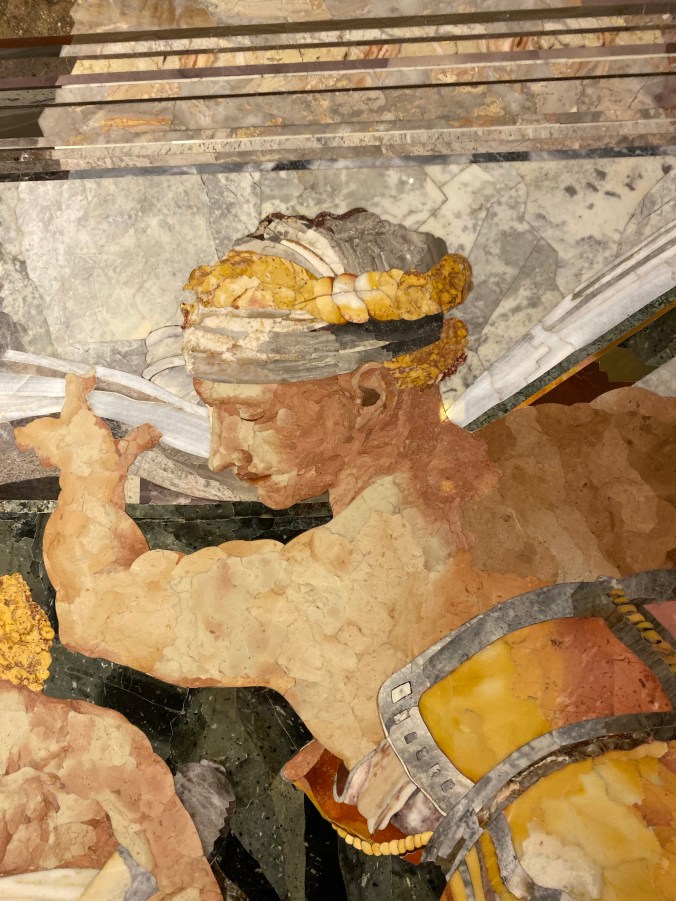
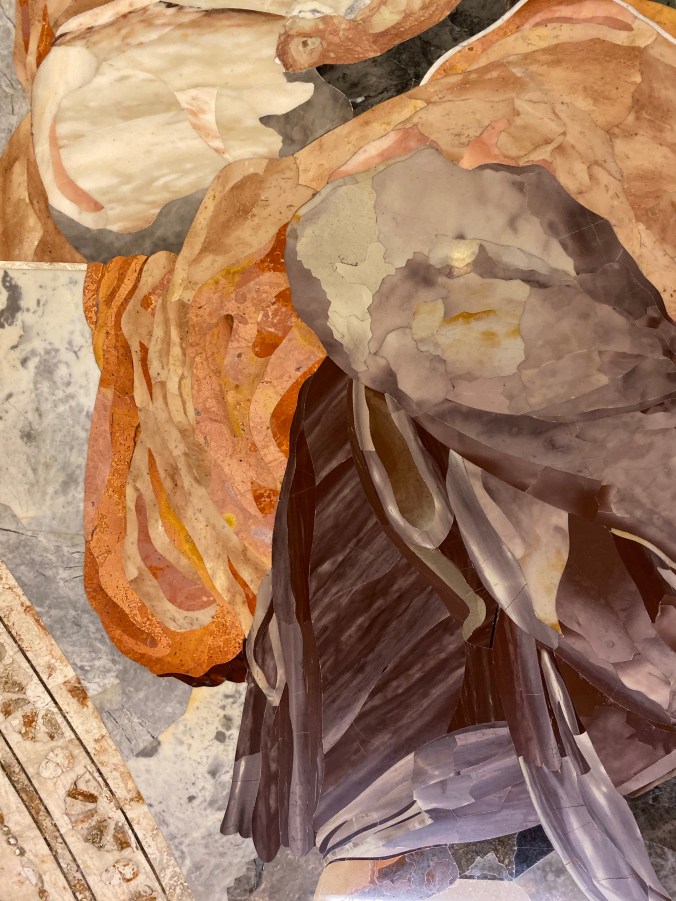
Something I want to clear up in case you, like me, were/are confused about the art form known as commesso Fiorentina. I thought the name commesso Fiorentina referred to some sort of Florentine commission, or office, or something official promoting the artisanal artworks of Florence. In fact, it is the (kind of inexact, if you ask me) name given to the fine art of making pictures with stone inlay. Put another way, this ain’t your grandma’s mosaic.
I was happy to read online that in appreciating commesso Fiorentina, I’m not the only one who confused it with regular mosaics. I always thought a mosaic is a mosaic is a mosaic. Ho hum. But commesso Fiorentina is in fact is a very separate (and elevated) technique, that just happened to have been created and developed in Tuscany.
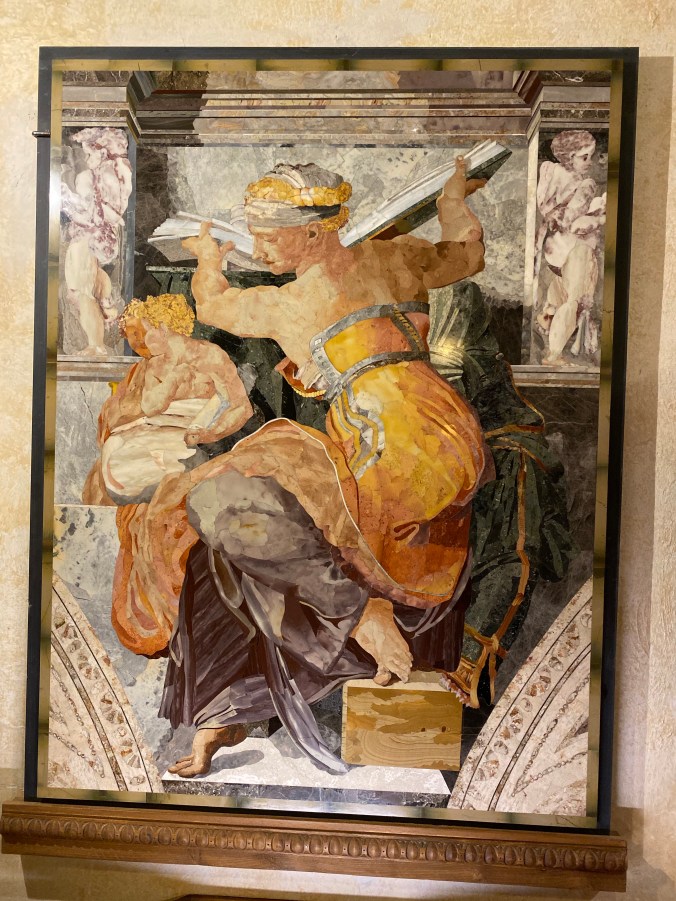
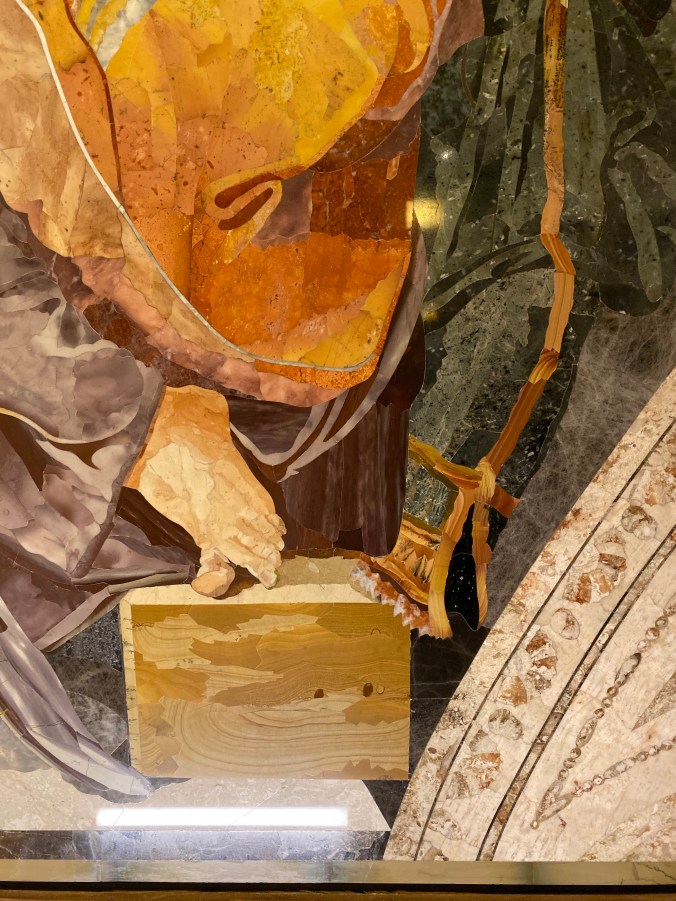
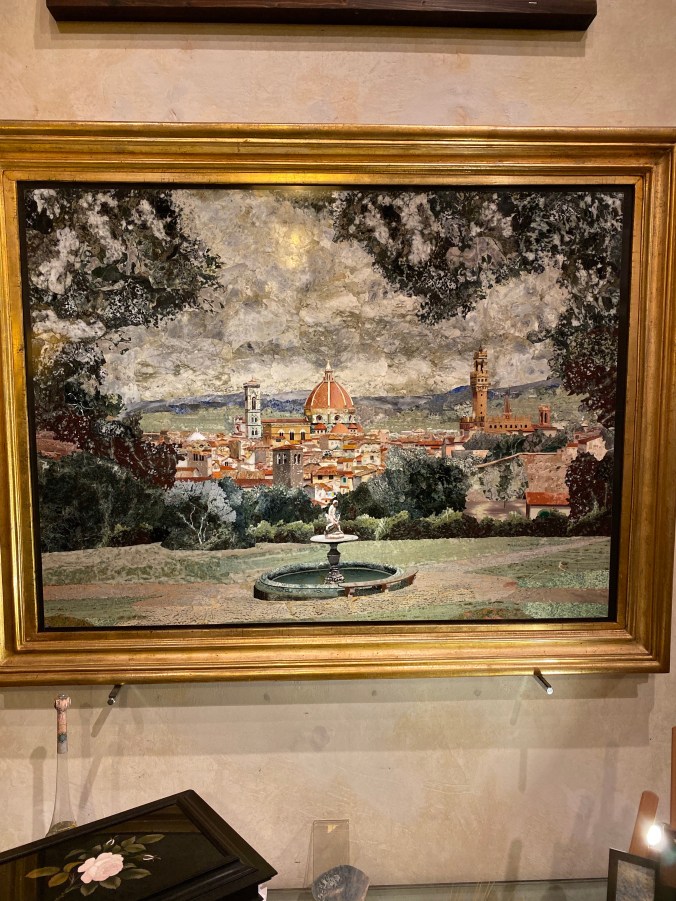
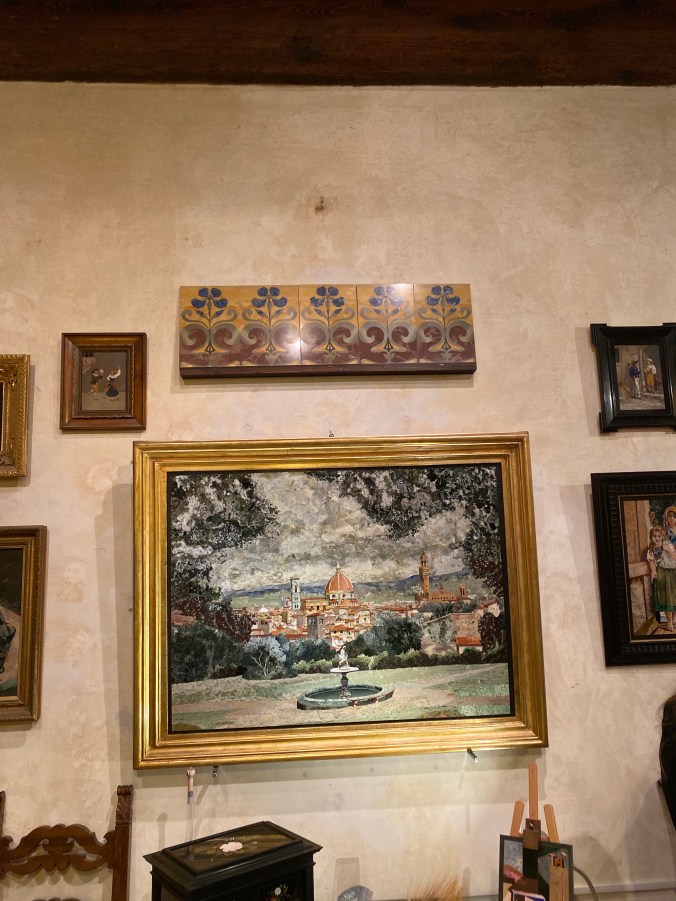
Here’s an example:
Perhaps you won’t be surprised to learn that the Medici family was the first to recognize qualities of this technique and they played a big role in promoting it. Cosimo I had a strong interest in ancient precious marbles, and his interest extended to a new experimentation with precious stones.
Francesco I lured stone artists to Florence and Ferdinando I started the construction of the family mausoleum in San Lorenzo, adopting this artistic technique.
Here are the stages of a production in stone:
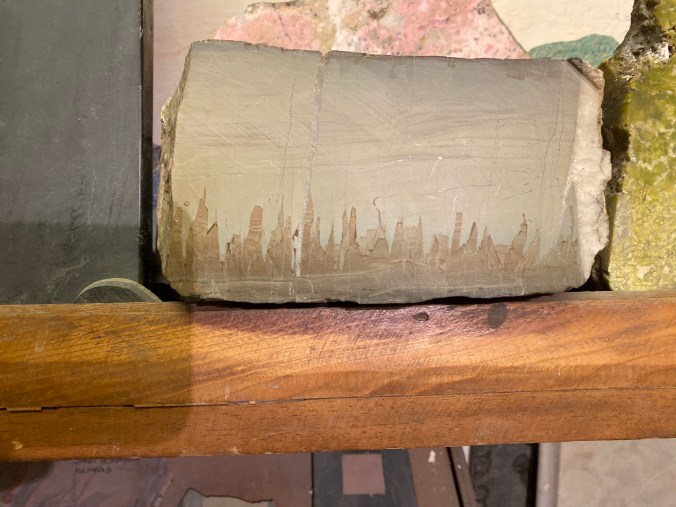
The idea comes to life in a preparatory drawing and then continues with the choice of the stones that will be used in the execution of the work – porphyry, lapis lazuli, granite or other precious stones.
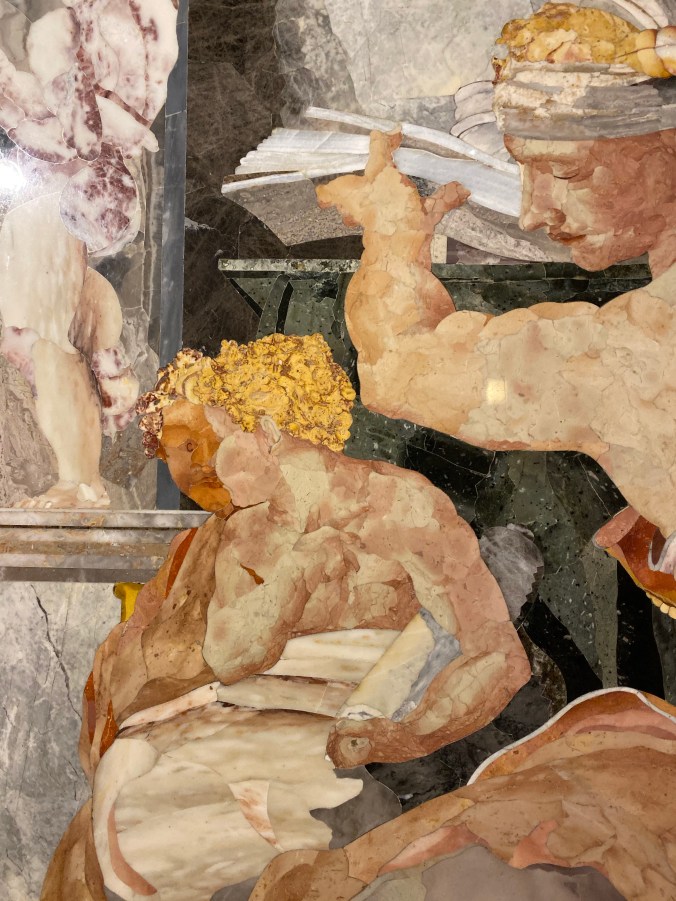
Then the stones are cut, but they are not cut geometrically like mosaics. This, in fact, is one of the enormous differences as compared to mosaic. There is a particular and age-old way of cutting the stones in commesso Fiorentina. The stone cutting and the impeccable finishing and polishing work that follows, are part of what makes this technique exceptional.
The Studio Lastrucci was awarded the 2010 special Prize of Bottega Artigiana Fiorentina (under the patronage of UNESCO).
After working for years as artistic director of the most famous Florentine mosaic studio and workshop, in 2011, master Bruno, along with his son, decided to work exclusively on his own creations in the art studio in Via de ‘ Macci 9.
Bruno began his studies in this ancient art at the tender age of eight. Once he finished primary school, he spent all of his time in the mosaic workshop of Montici, owned by an American artist, Richard Almond Blow. The Montici school produced collaborations with some international contemporary painters.
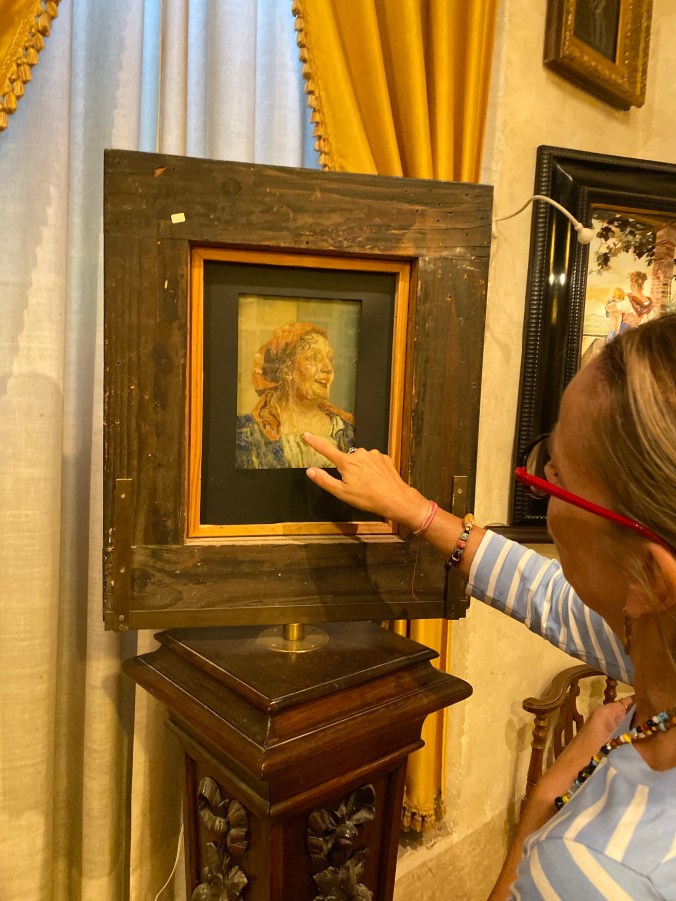
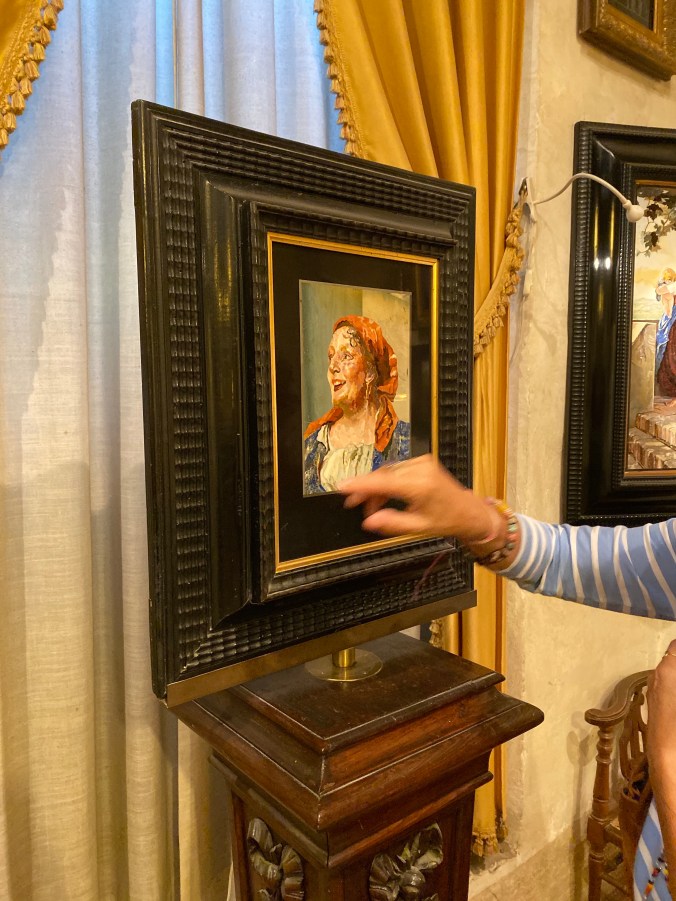
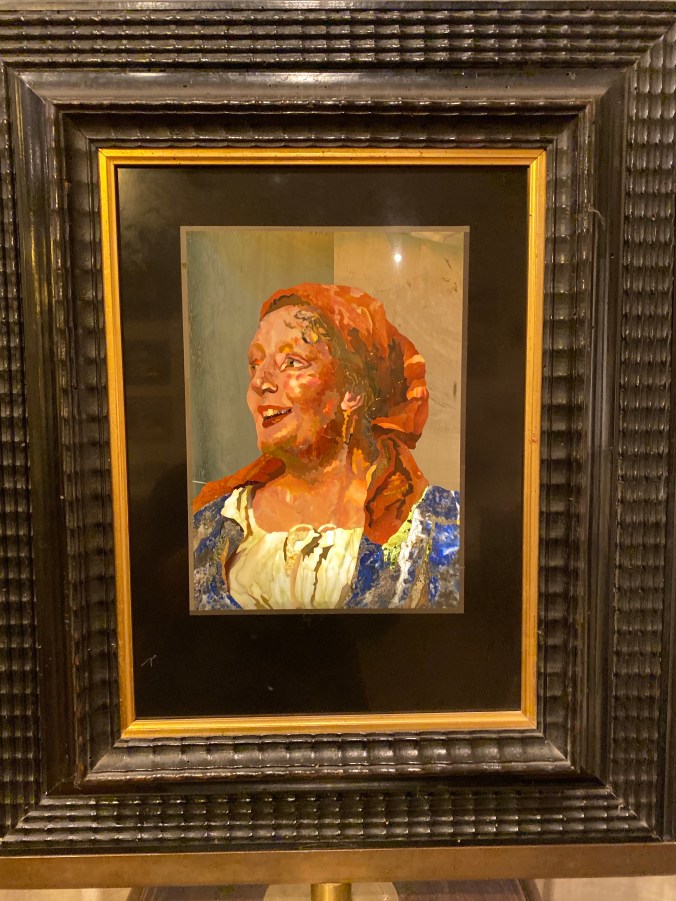
Bruno Lastrucci is a craftsman and visionary artist engaged in the technique of commesso fiorentina and he uses only the traditional tools and techniques. He focuses mainly on portraiture; his celebrated portrait of Joseph Lancaster is in the collection of the Lizzadro Lapidary Art Museum, and other important works of art are in prestigious private collections.
His passion and dedication was transmitted to son Iacopo, who was also apprenticed in the art.
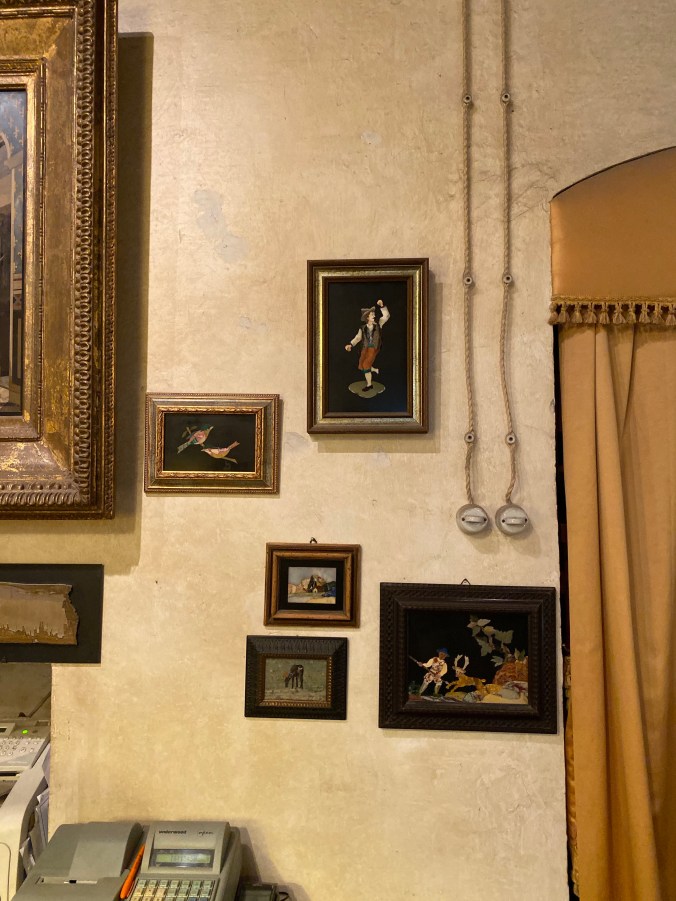
The masters Jacopo and Bruno Lastrucci perform the artisan work of the Florentine technique known as Commesso Fiorentino. This technique entails the use of hot glues (beeswax primarily) and uses only natural colored stones. The technique dates back to the Medici period, and the Medici family was a great patron of it. The technique, of course, dates back to the classic mosaic artistry of the Roman era, using the artistic inlay of stones, with the creation of very realistic pictures, similar to paintings.
Although the working of hard stones has ancient origins, it was thanks to the support of the Medici that the work was perfected, to the point to that a specifically established entity, the Opificio delle Pietre Dure, still exists today.
The largest number of works made to order are kept at the Opificio delle Pietre Dure, a renowned institute in the field of restoration.
The ancient factory was founded by Ferdinando I, who needed to train the workers needed to carry out the ambitious project of the Chapel of the Princes in San Lorenzo.
This first reality merged then, at the beginning of the 20th century, with the birth of the first modern restoration laboratory in Italy.
On the occasion of the tragic flood of 1966, the factory was confirmed as the excellence that it had already demonstrated to be, bringing back to light some extraordinary masterpieces that could have disappeared forever.
Examples of committed works can be found right inside the Chapel of the Princes.
Given the funeral tone of the work, more muted and dark colors were chosen with porphyry and granite for the upper part of the structure; in the wainscot instead, the colors become more vivid, to reproduce the coats of arms of the families loyal to the Medici . In the niches the statues of the Grand Dukes should have entered, also these in the order, the work turned out however too ambitious and only two were realized.
The salesman is a small jewel belonging to the city of Florence , still made today and a great treasure to be preserved, preserved and admired.
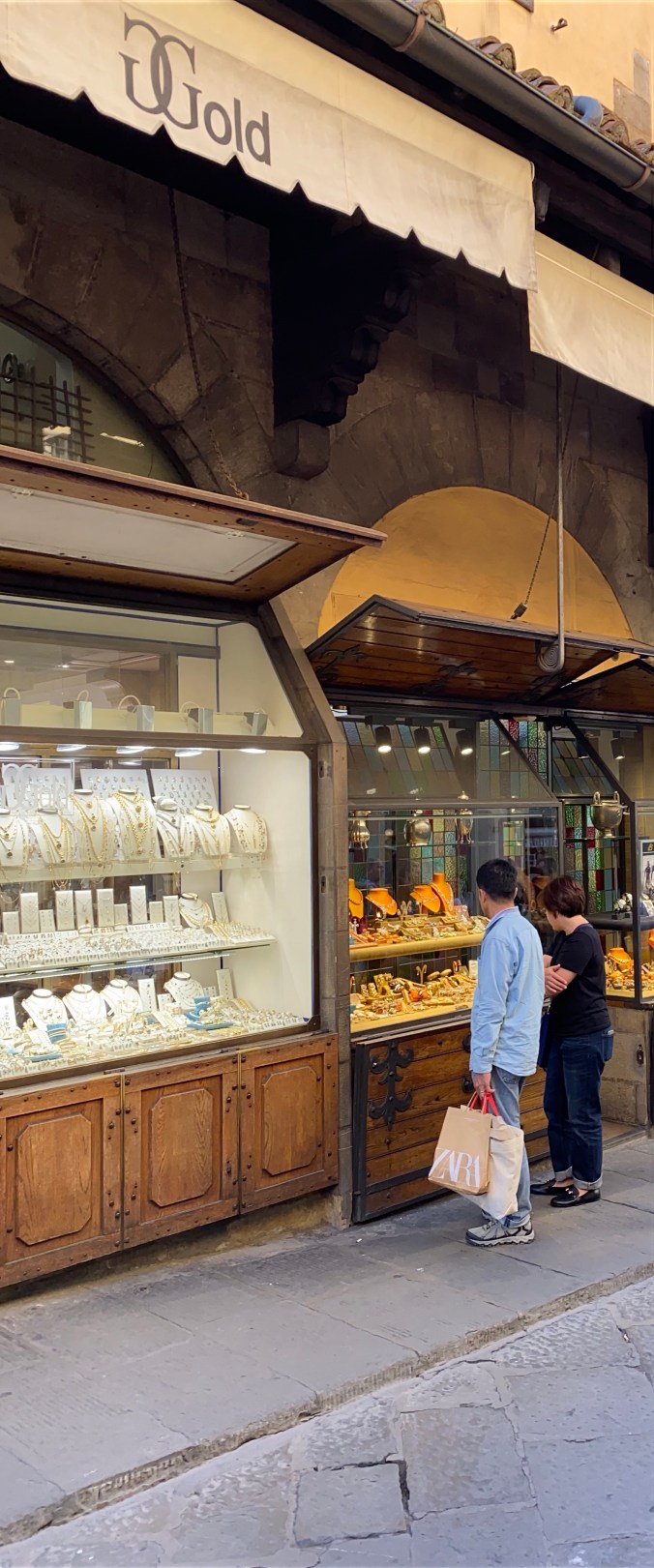
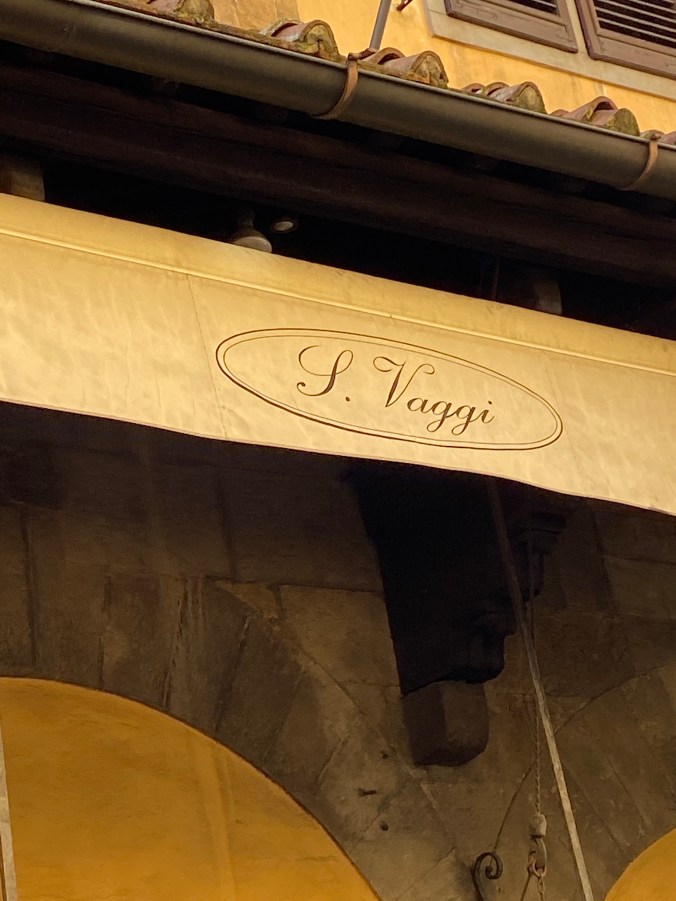
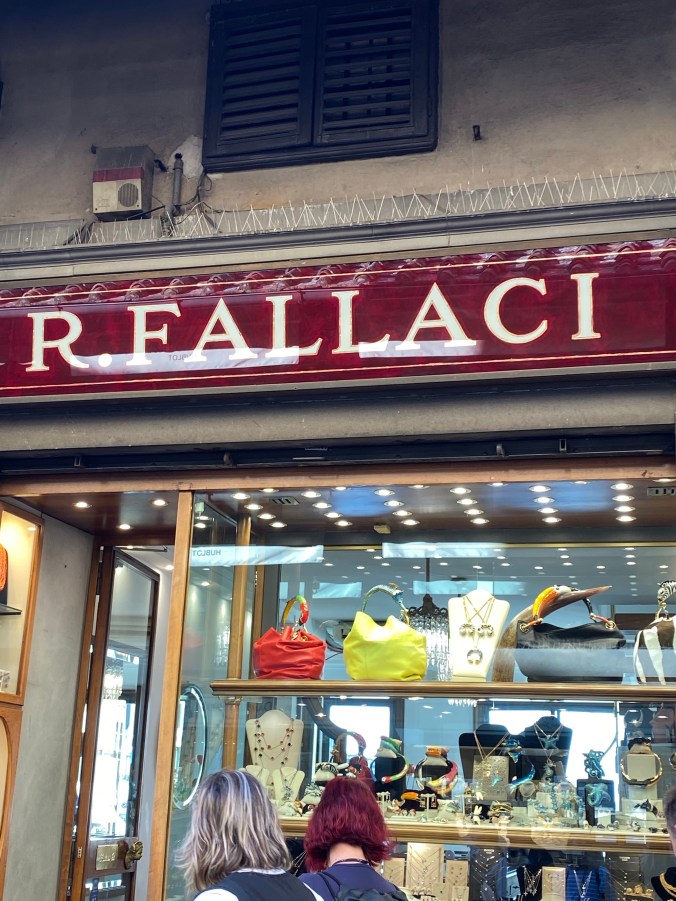
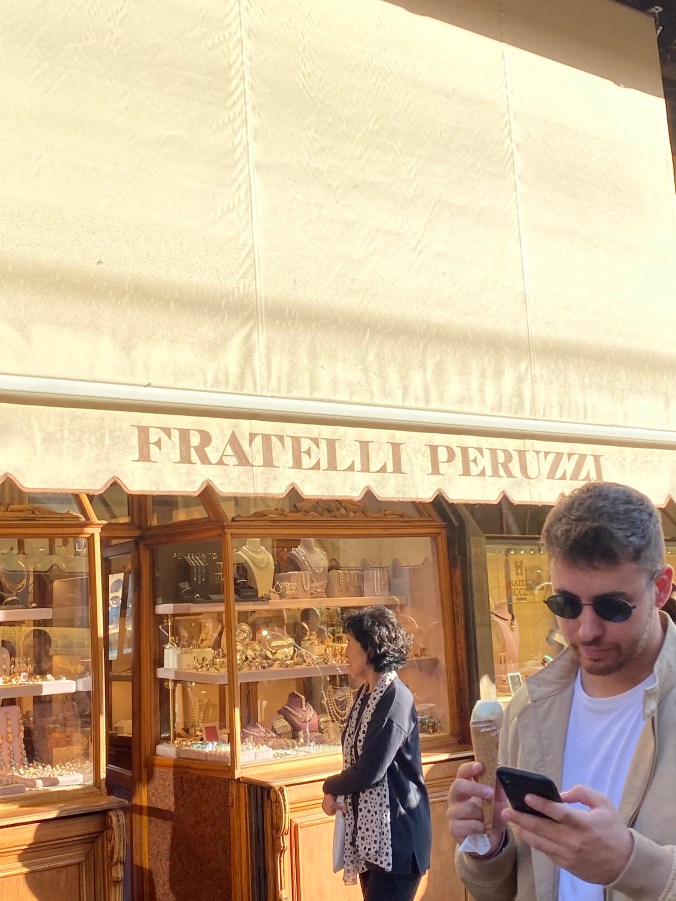
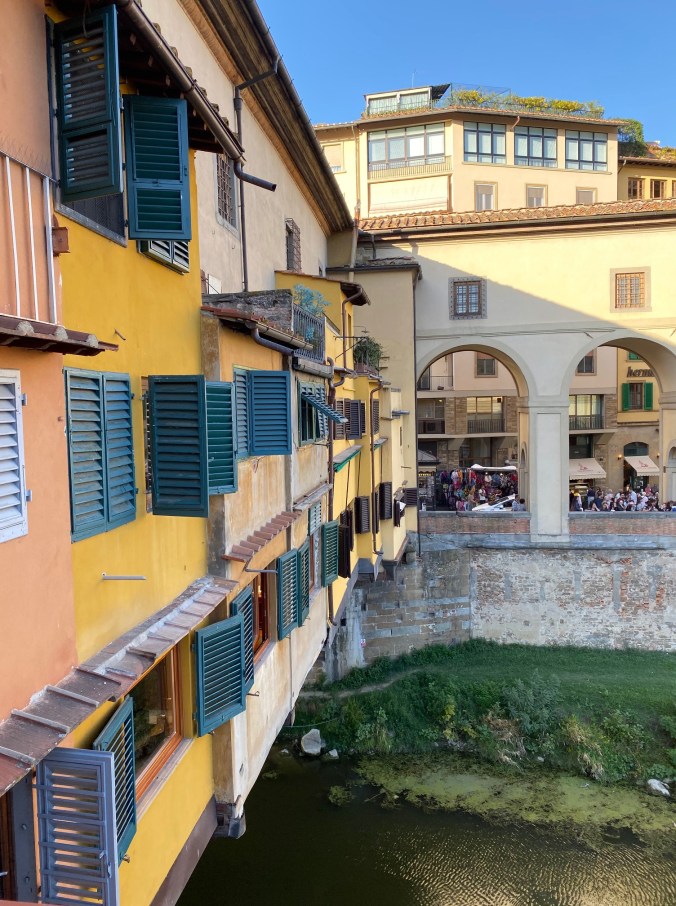
I’ve been going to and from the Ponte Vecchio for decades. I’ve watched some of the shops change over the years (as indeed Florence has changed). I am no expert on the jewelry shops that line the famous bridge, but I am informed by knowledgeable persons that these shops pictured below are some of the oldest and have the finest reputations. Just my public service to my reader. :-))
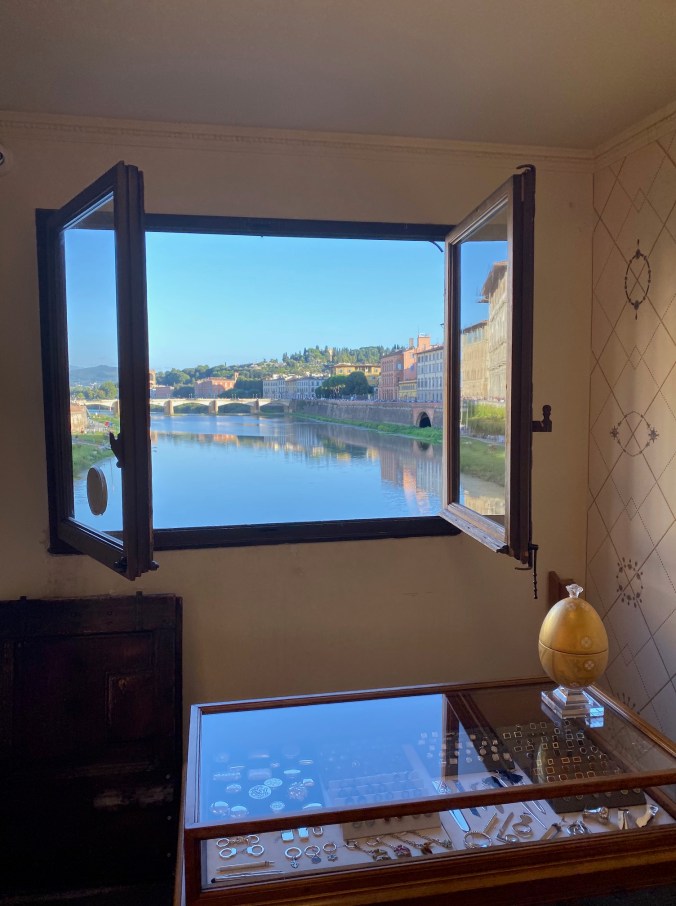
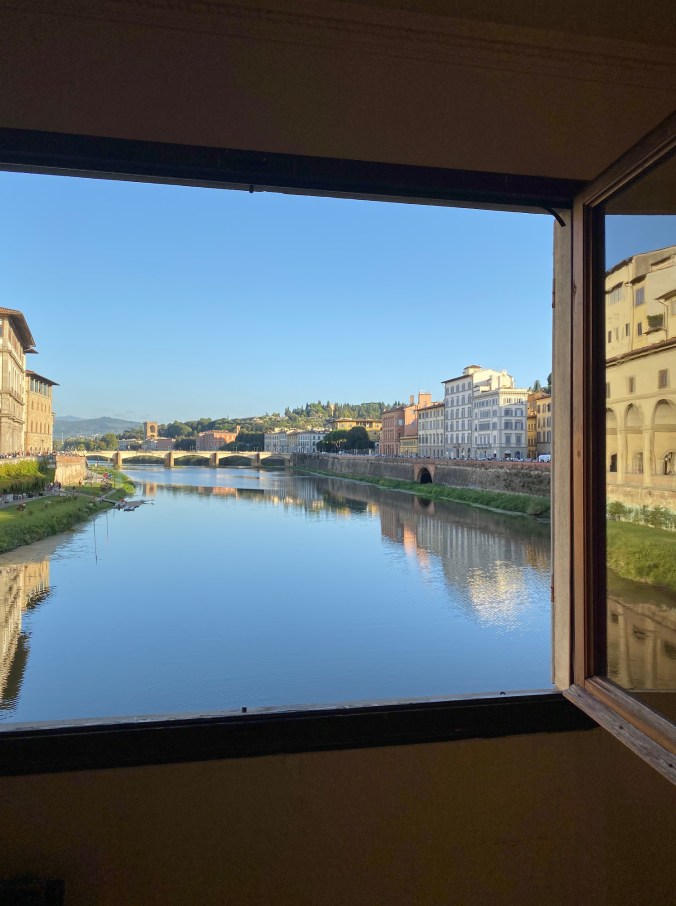
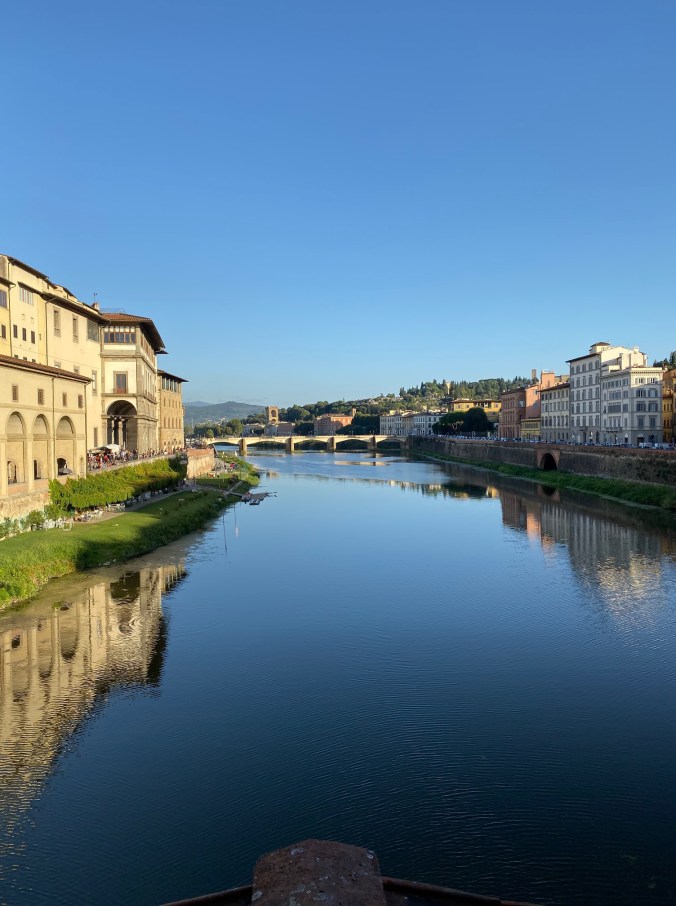
Last week I did something very unusual for me. I shopped in a jewelry store on the famed Ponte Vecchio. Looking at the photos I took from that shop on that beautiful autumn day makes me wonder if I purchased because I was entranced by the view. Maybe or maybe not. I must say, I do love what I bought.
But, check it out! I think you’ll understand!
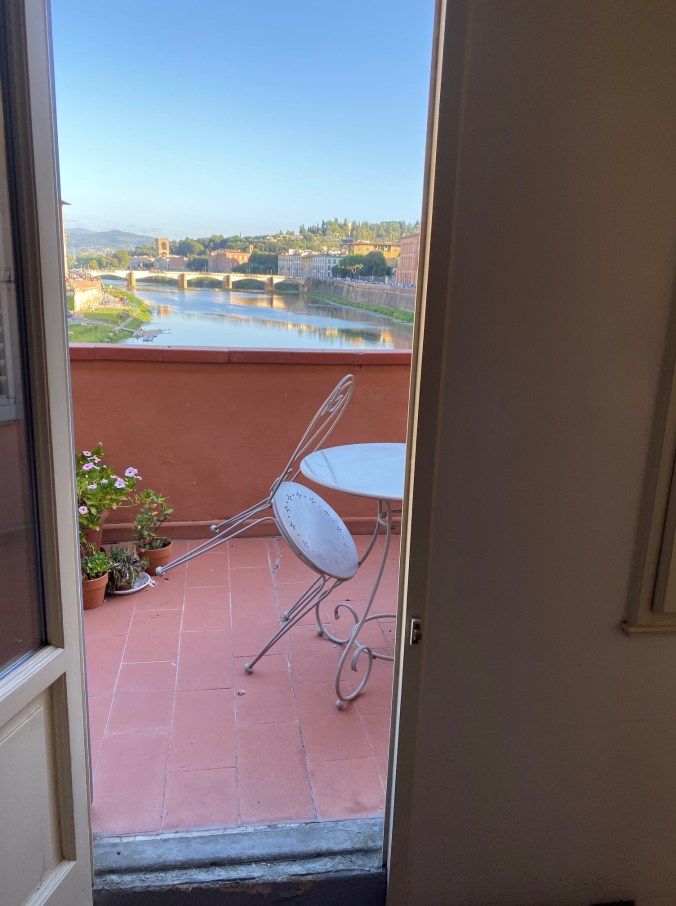
I was invited to go upstairs in the tiny Ponte Vecchio shop to take in the view from the terrace above. Amazing.
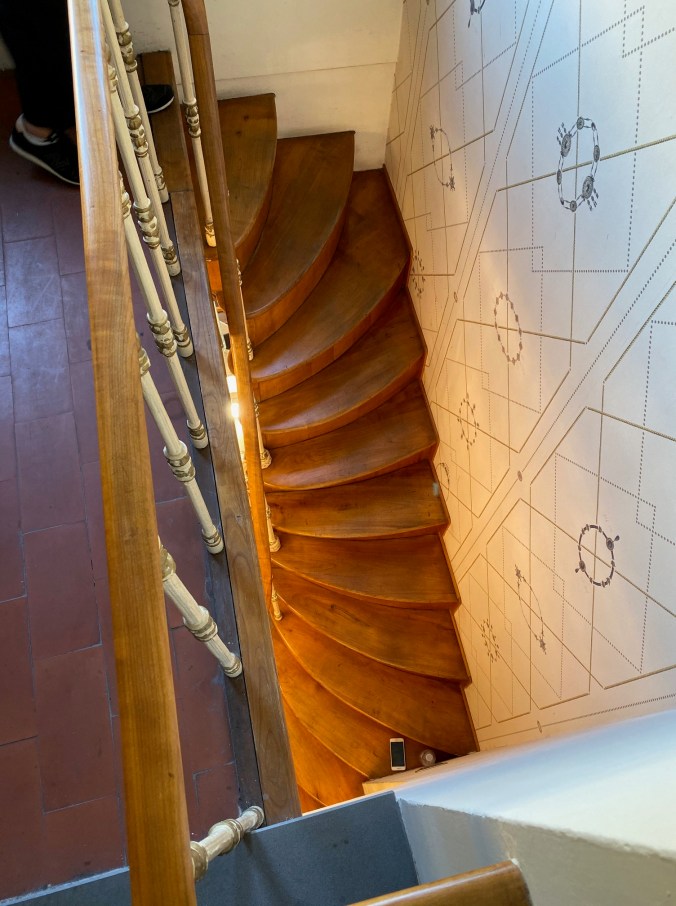
The tiny wooden stairway that led to the upper level was a work of art. The photo below does not do it justice. It was taken from above, looking down.
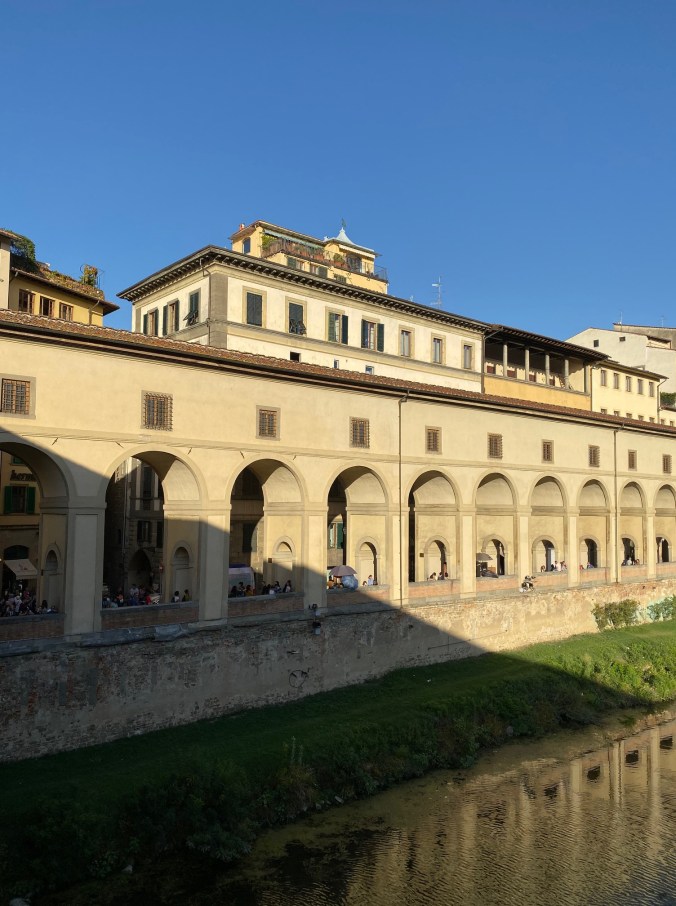
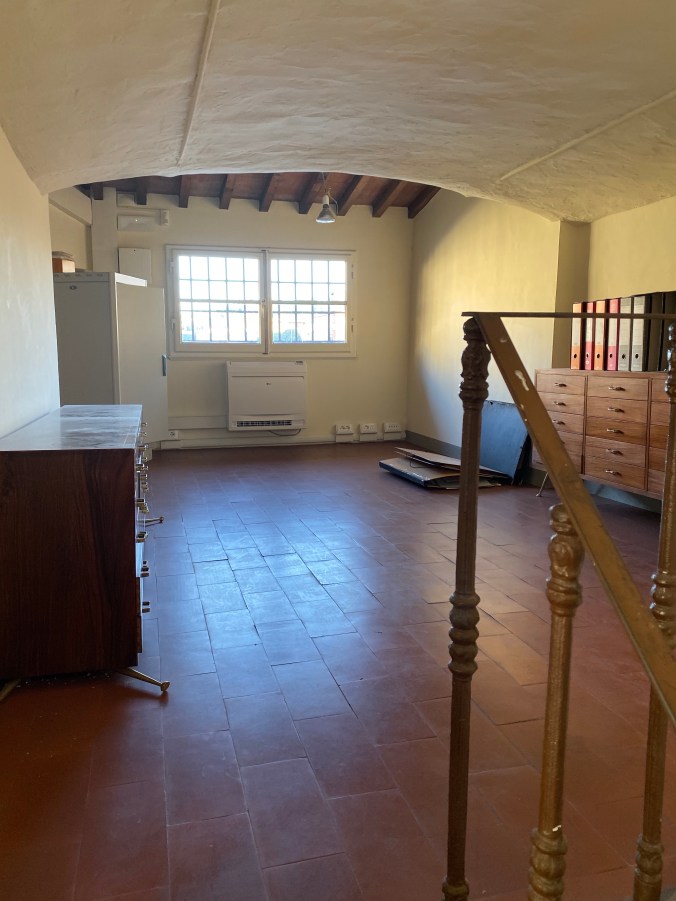
I was very surprised to see how spacious the upper level was. I didn’t see it, but I am told that from the bathroom up here, you can see into the Vasari Corridor.
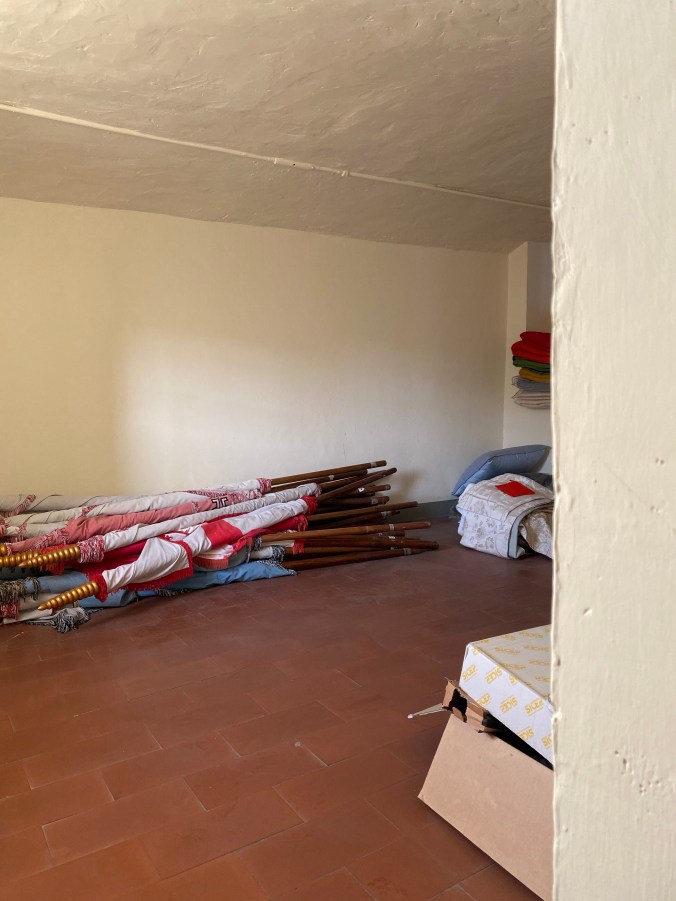
Looking at these 2 large rooms in this supremely situated space, I had to wonder about creating an apartment to live here. A nice pipe dream.
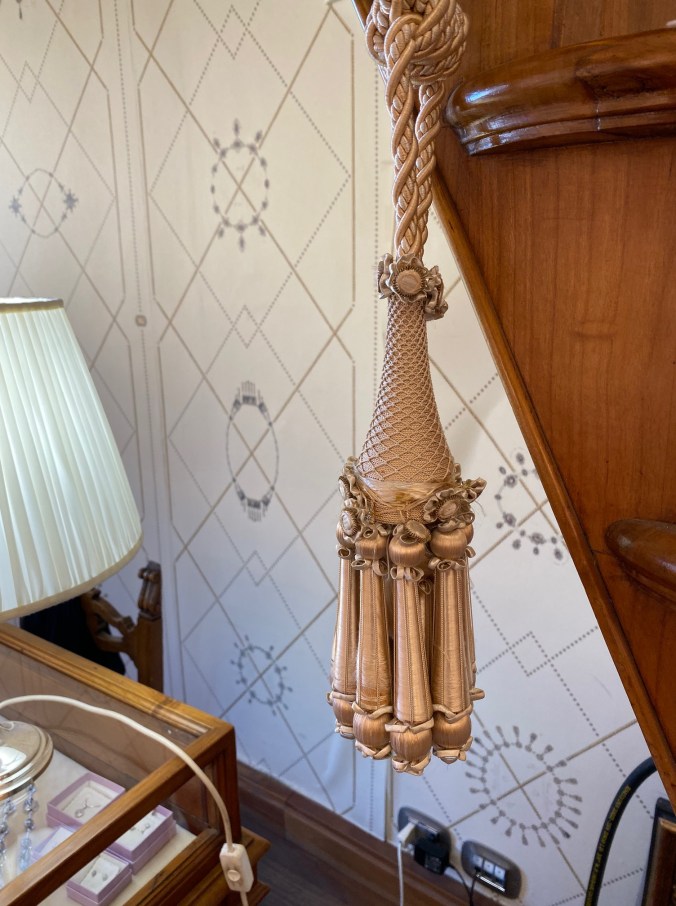
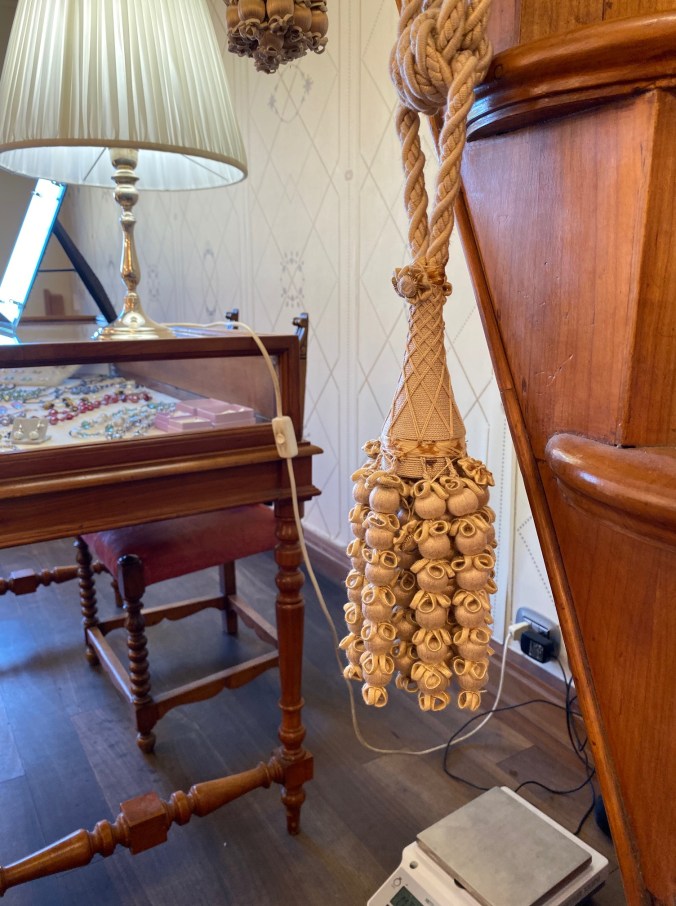
And last, but not least, I am always fascinated by the textile trim work to be found in this beautiful country!
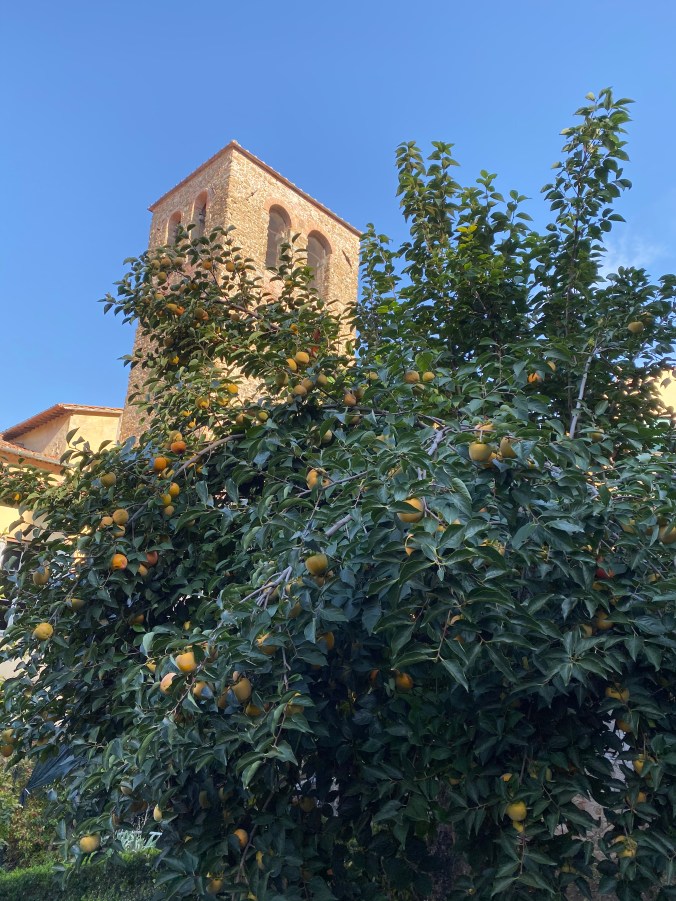
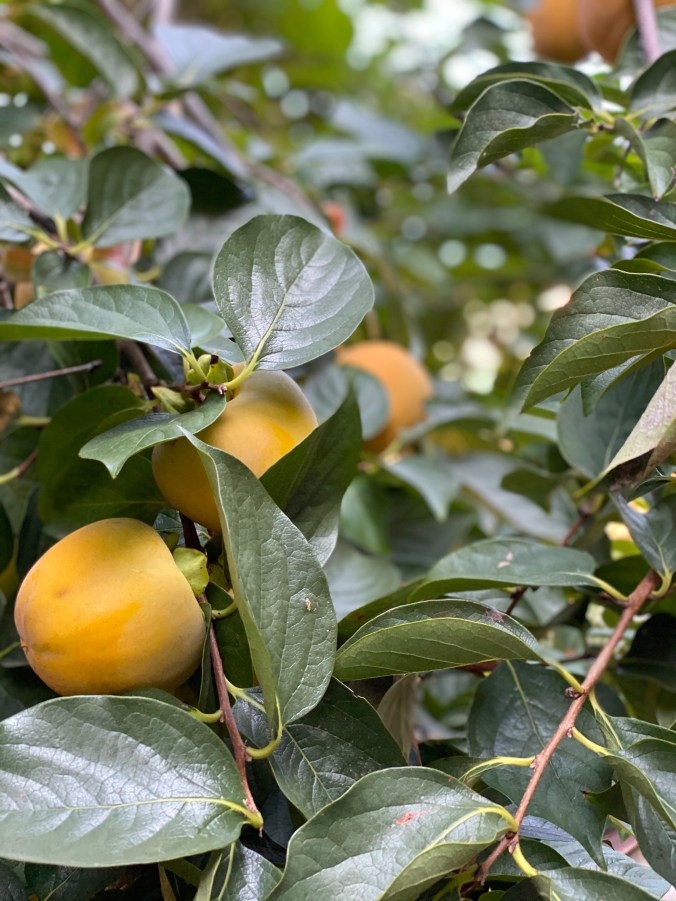
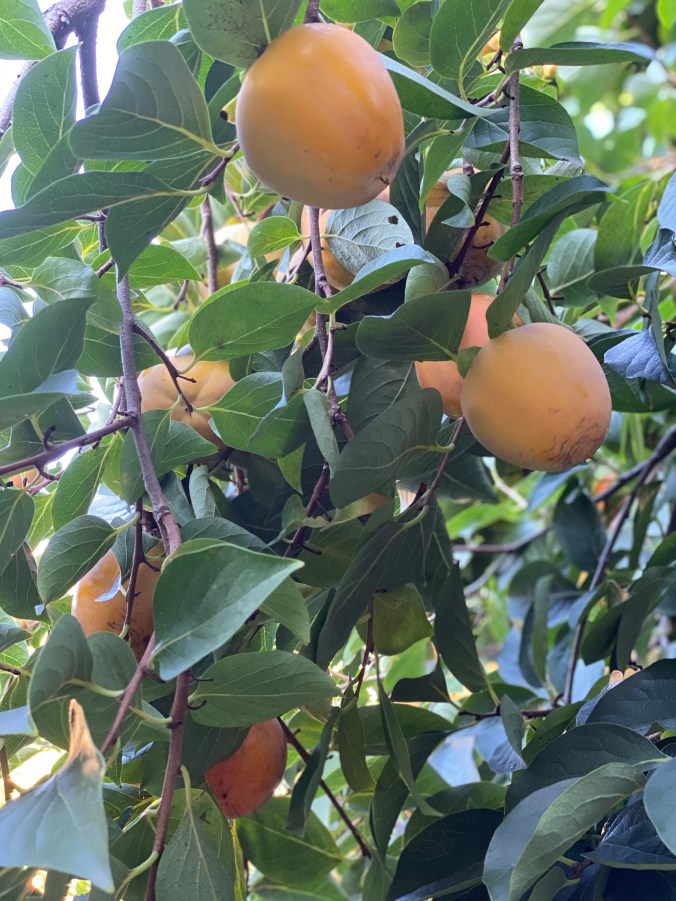
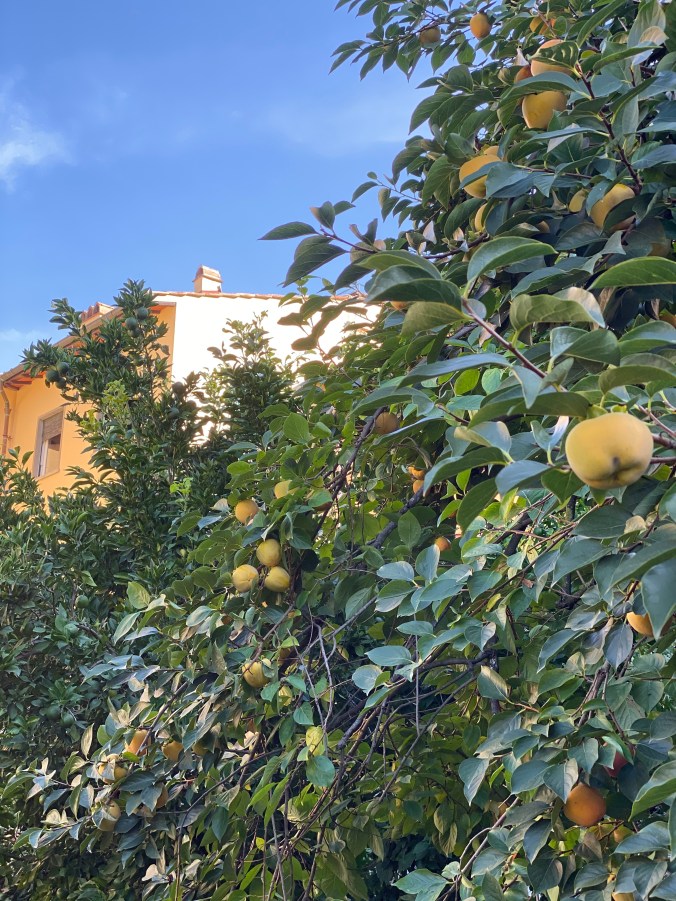
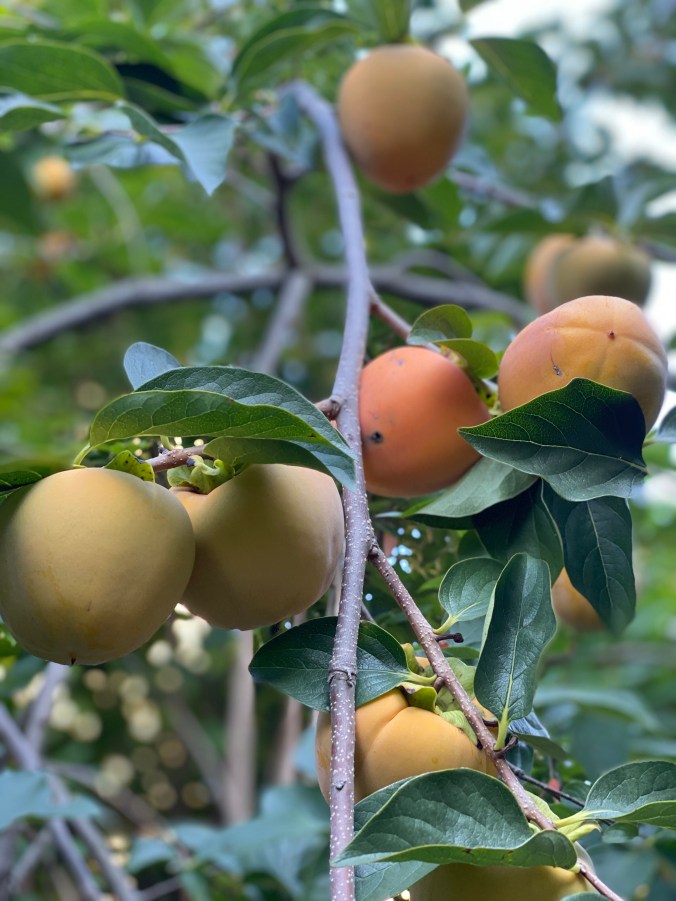
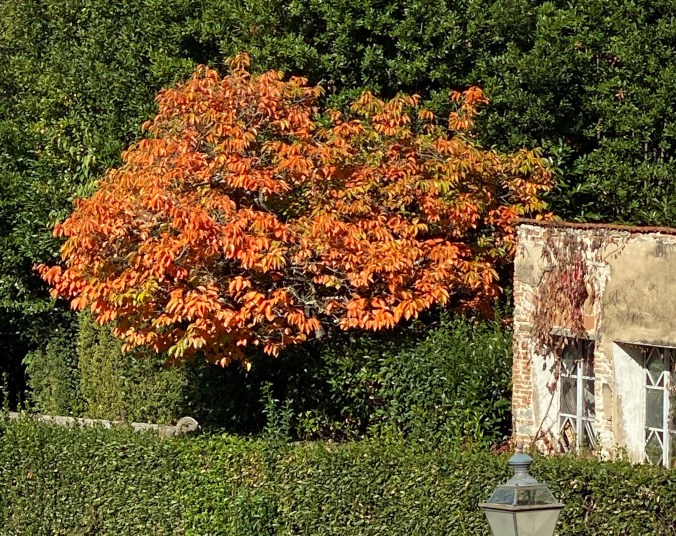
October, baptize me with leaves! Swaddle me in corduroy and nurse me with split pea soup. October, tuck tiny candy bars in my pockets and carve my smile into a thousand pumpkins. O autumn, O teakettle, O grace!
























 ‘


You must be logged in to post a comment.