When Queen Victoria built something, she really built something. She had this memorial constructed to memorialize her beloved husband, Prince Albert, who died in 1861 of typhoid fever at the age of 42.

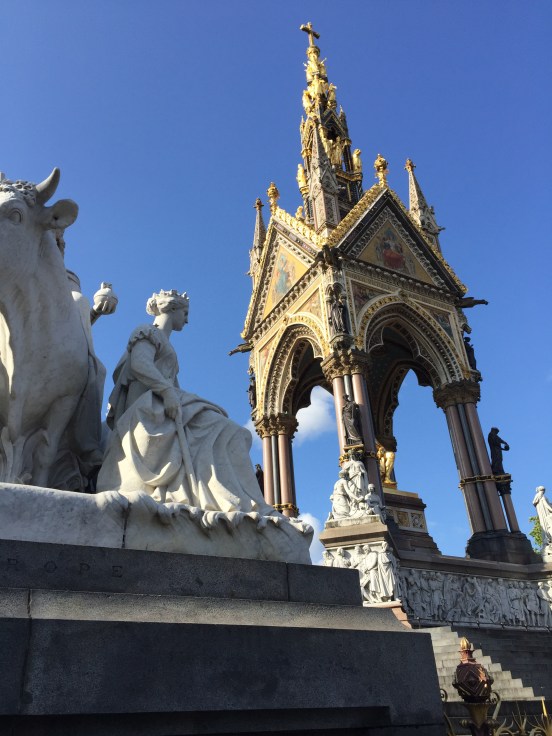
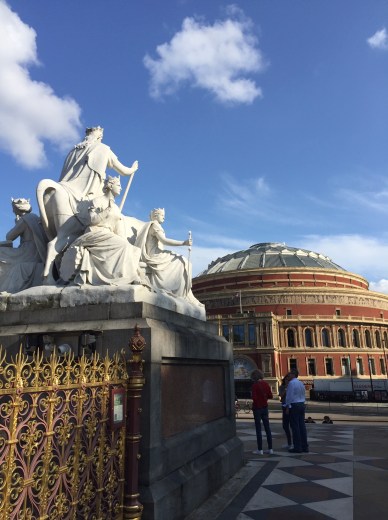
The Albert Memorial in Kensington Gardens is one of London’s most ornate monuments. Located opposite the Royal Albert Hall, this elaborate memorial was designed by George Gilbert Scott.
It would seem that the Albert Memorial was influenced by the series of 13th Century Eleanor Crosses (Charing Cross perhaps being the most famous) and other statues in Edinburgh and Manchester. The Albert Memorial is, without a doubt, one of the grandest high-Victorian gothic extravaganzas anywhere.
The memorial shows the seated figure of Prince Albert, who holds the catalogue of the Great Exhibition, held in Hyde Park in 1851, behind which he was a major moving force, for he helped to organize it.
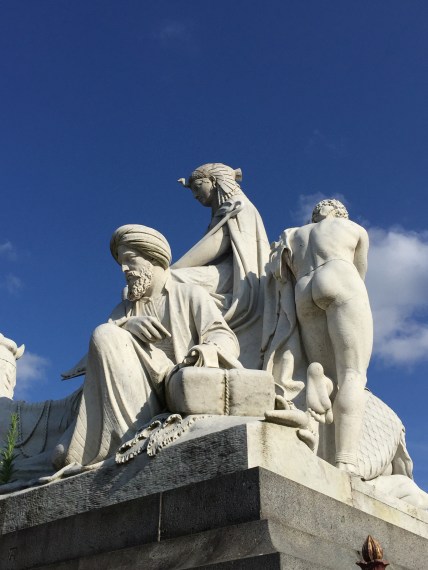
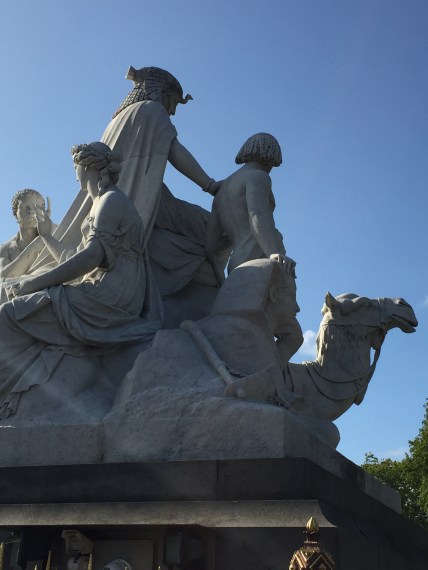
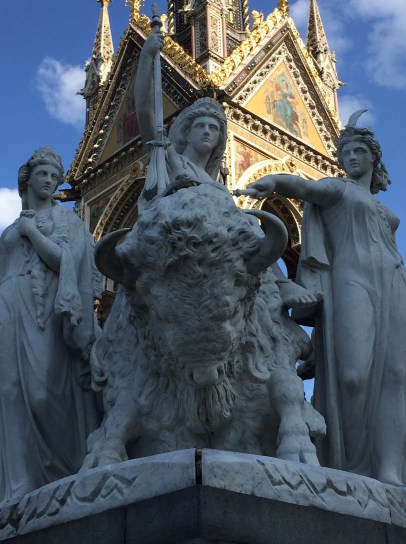
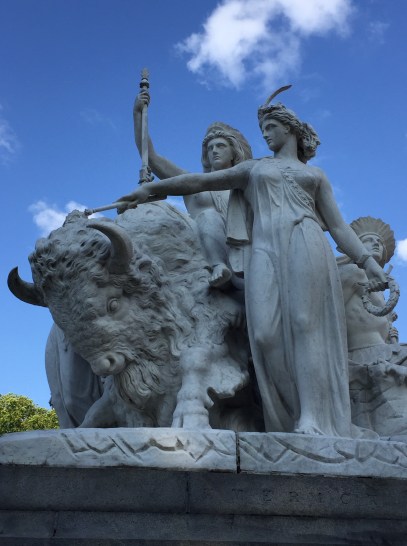
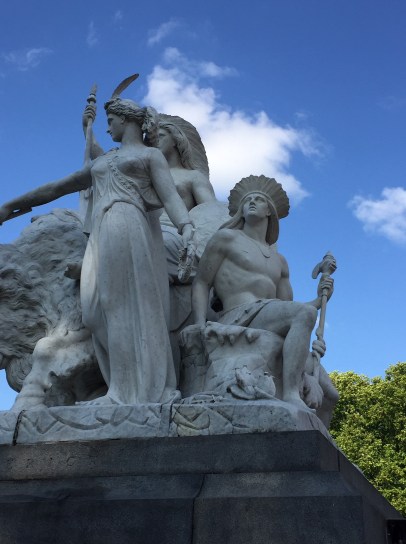
Marble figures representing Europe, Asia, Africa and America stand at each corner of the memorial, and higher up are further figures representing manufacture, commerce, agriculture and engineering. Yet further up, near the top, are gilded bronze statues of the angels and virtues.
All around the base of the memorial the Parnassus frieze depicts celebrated painters, poets sculptors, musicians and architects, reflecting Albert’s enthusiasm for the arts. There are 187 exquisitely carved figures in the frieze.
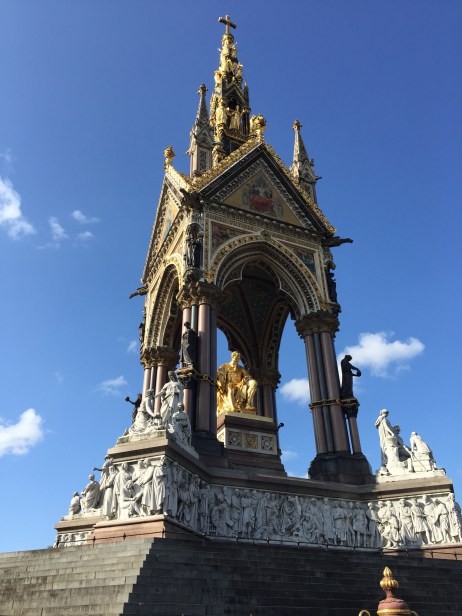
Albert Memorial
The Albert Memorial from the south side
Location Kensington Gardens, London
The Albert Memorial, directly north of the Royal Albert Hall in Kensington Gardens, London, was commissioned by Queen Victoria in memory of her beloved husband Prince Albert, who died in 1861.
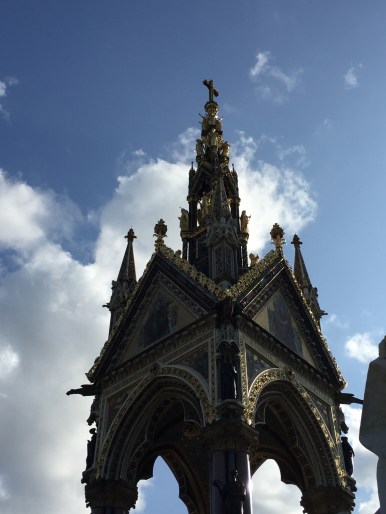
Designed by Sir George Gilbert Scott in the Gothic Revival style, it takes the form of an ornate canopy or pavilion 176 feet tall, in the style of a Gothic ciborium over the high altar of a church, sheltering a statue of the prince facing south. It took over ten years to complete, the £120,000 cost (the equivalent of about £10,000,000) met by public subscription.
The memorial was opened in July 1872 by Queen Victoria, with the statue of Albert ceremonially “seated” in 1876.
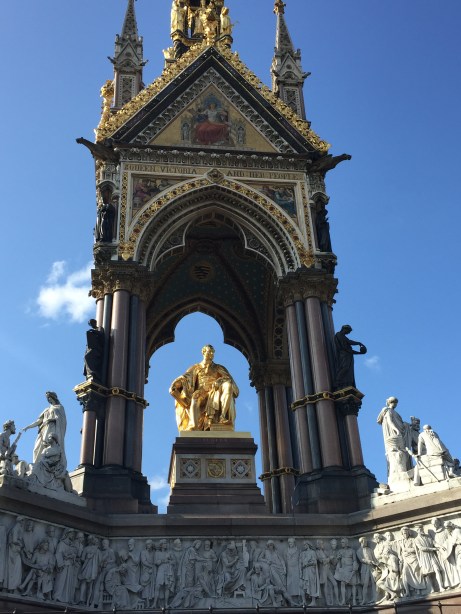
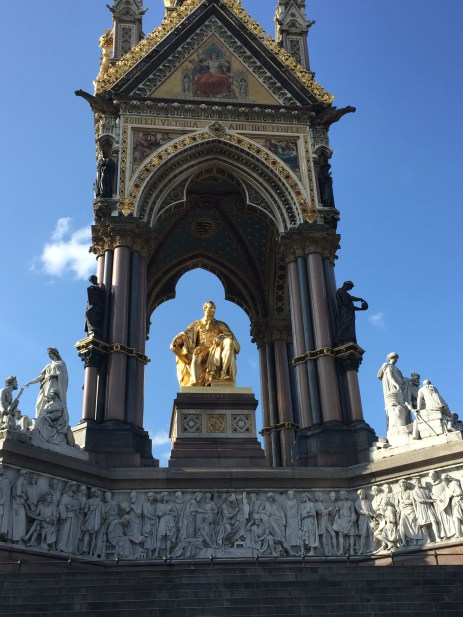
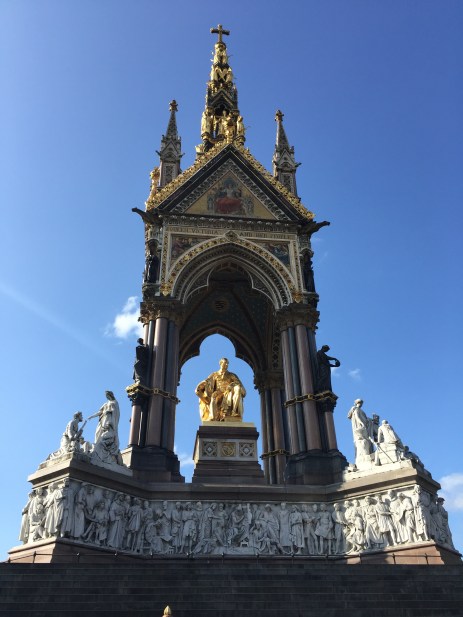
The central part of the memorial is surrounded by the elaborate sculptural Frieze of Parnassus (named after Mount Parnassus, the favorite resting place for the Greek muses), which depicts 169 individual composers, architects, poets, painters, and sculptors. Musicians and poets were placed on the south side, with painters on the east side, sculptors on the west side, and architects on the north side. Henry Hugh Armstead carved the figures on the south and east side, the painters, musicians and poets (80 in total), and grouped them by national schools. John Birnie Philip carved the figures on the west and north side, the sculptors and architects, and arranged them in chronological order.
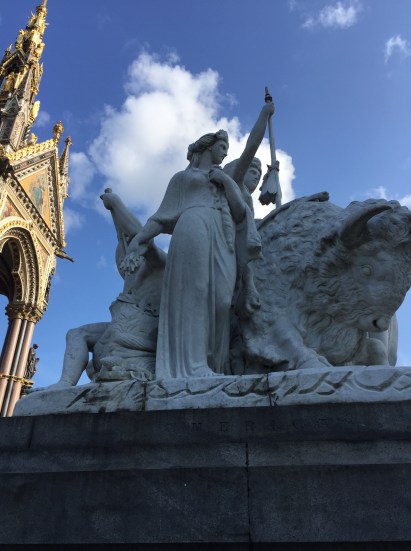
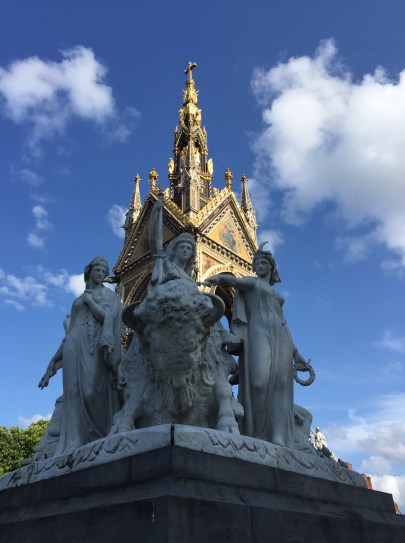
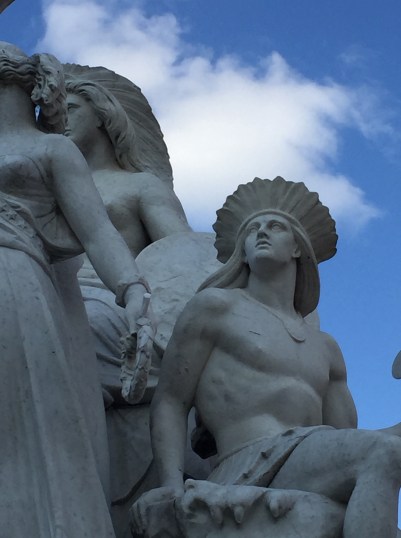
The sculptor Henry Hugh Armstead coordinated this massive effort among many artists of the Royal Academy, including Thomas Thornycroft (carved the “Commerce” group), Patrick MacDowell (carved the “Europe” group, his last major work), John Bell (carved the “America” group), John Henry Foley (carved the “Asia” group and started the statue of Albert), William Theed (carved the “Africa” group), William Calder Marshall, James Redfern (carved the four Christian and four moral virtues including Fortitude[8]), John Lawlor (carved the “Engineering” group) and Henry Weekes (carved the “Manufactures” group). The Scottish sculptor William Calder Marshall carved the “Agriculture” group. The figure of Albert himself, although started by Foley, was completed by Thomas Brock, in what was Brock’s first major work.


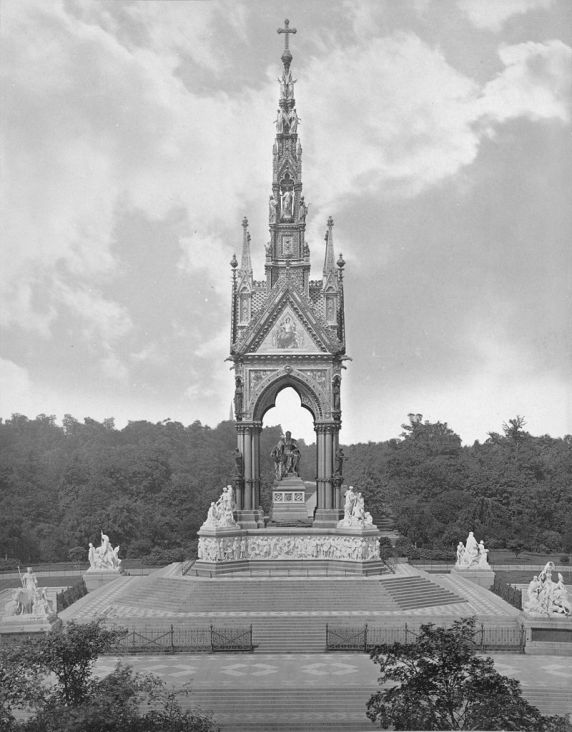
Armstead created some 80 of the figure sculptures on the southern and eastern sides of the memorial’s podium. The north and west sides were carved by the sculptor John Birnie Philip. Armstead also sculpted the bronze statues representing Astronomy, Chemistry, Rhetoric, and Medicine.
Henry Weekes carved the allegorical work Manufactures (1864–70). Although Weekes was not on Queen Victoria’s original list of sculptors, being selected to work on the project only after John Gibson declined to participate, his group occupies the preferable south side of the finished monument. A central female figure holds an hourglass, symbolising the critical nature of time to industry, while an ironworker stands at his anvil and a potter and weaver offer their wares.[6][9]
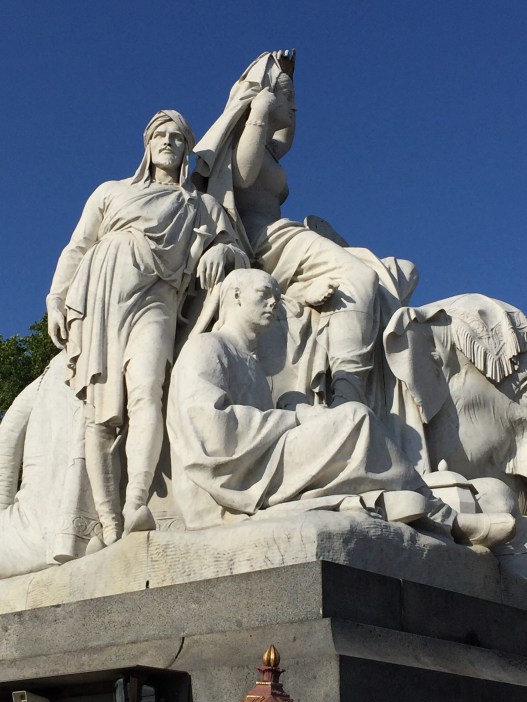
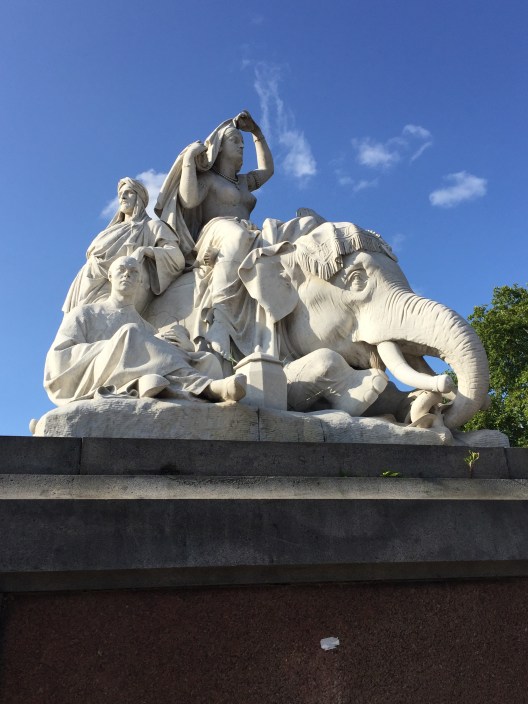
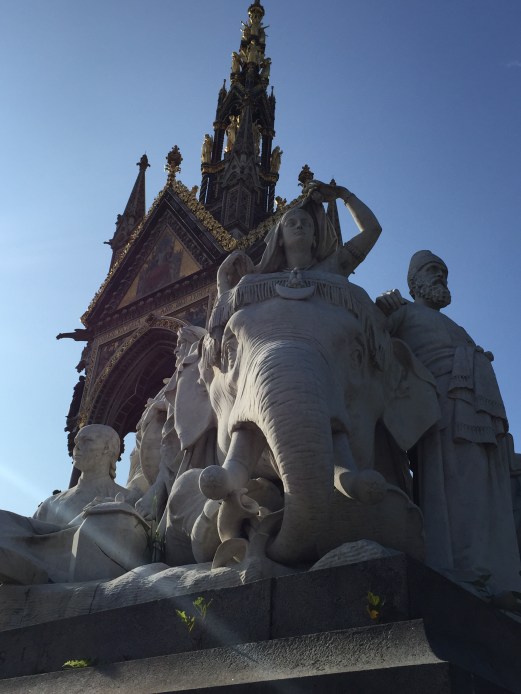
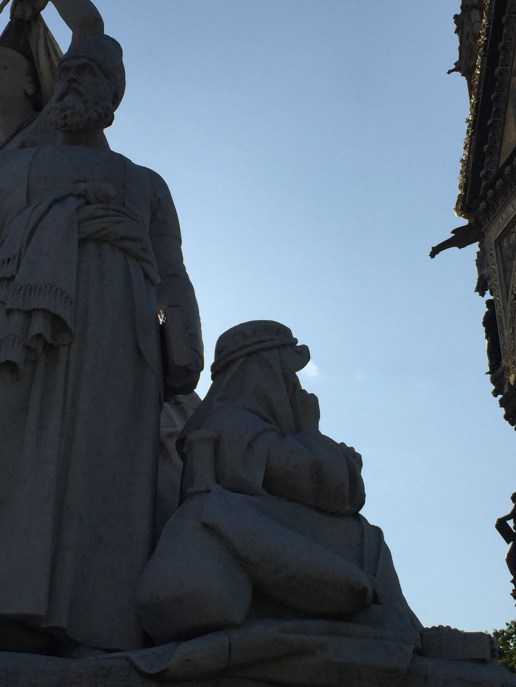
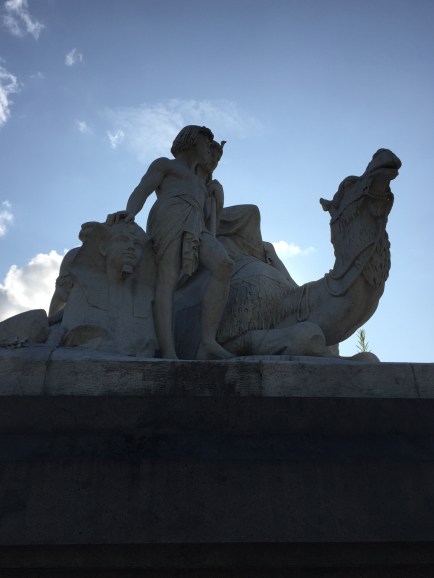
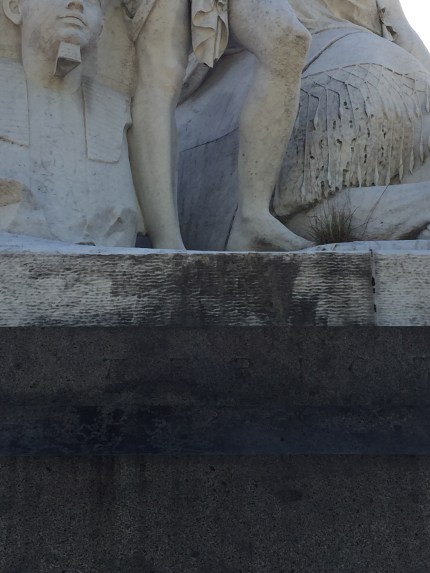
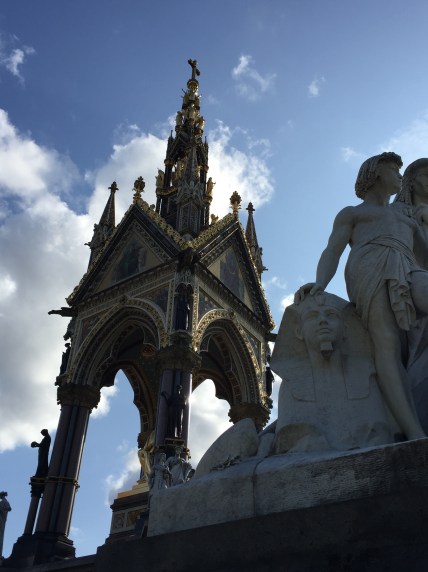
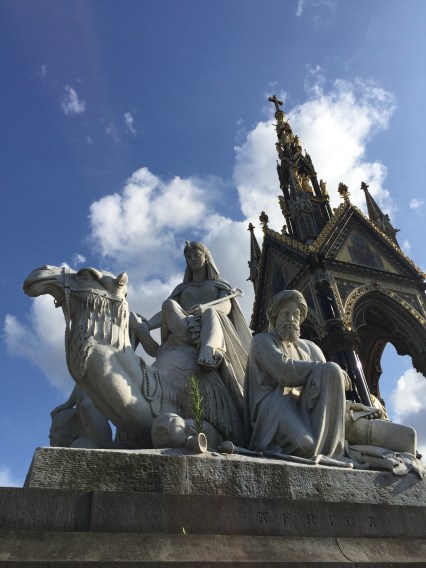
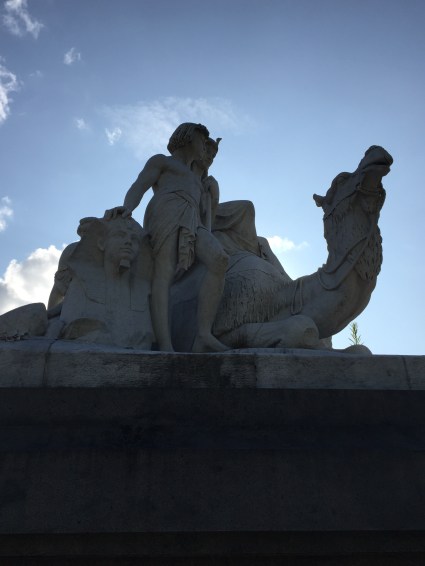
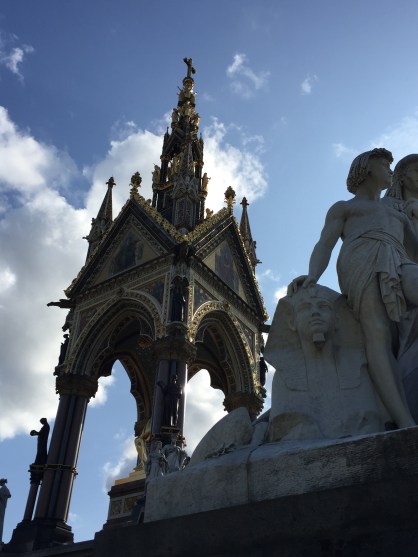
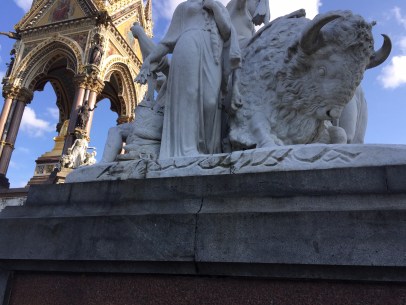
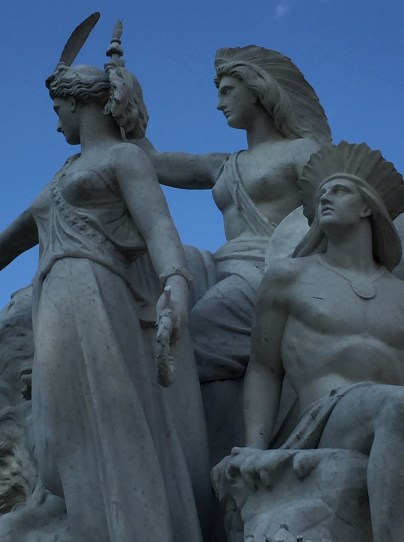
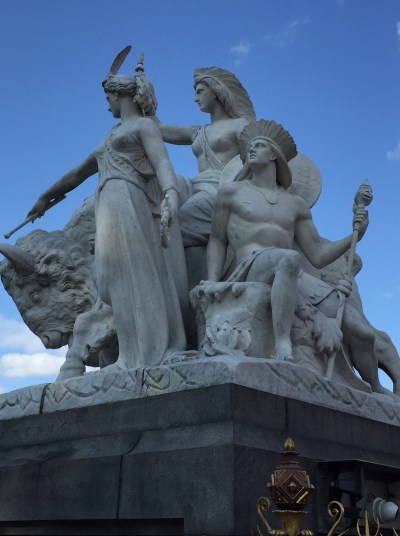
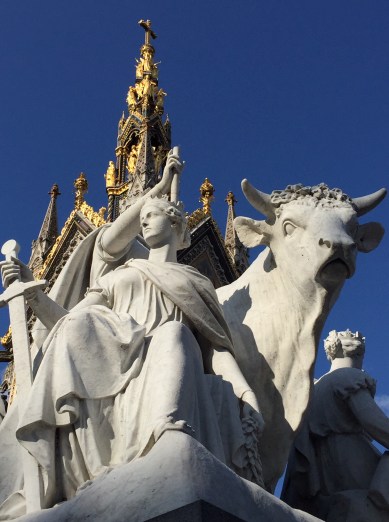
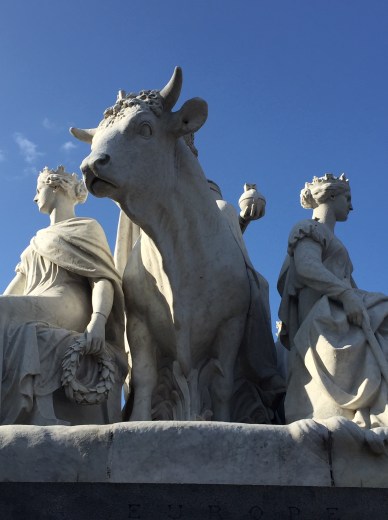
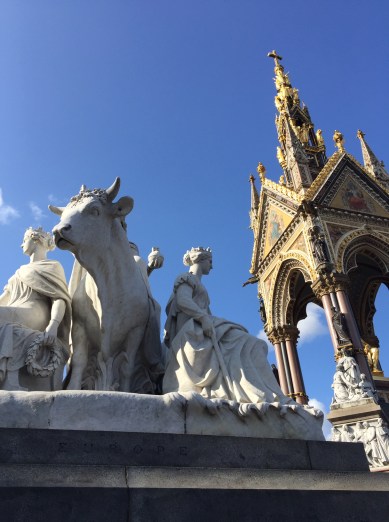
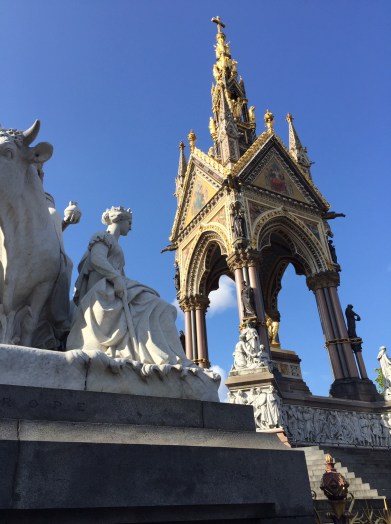
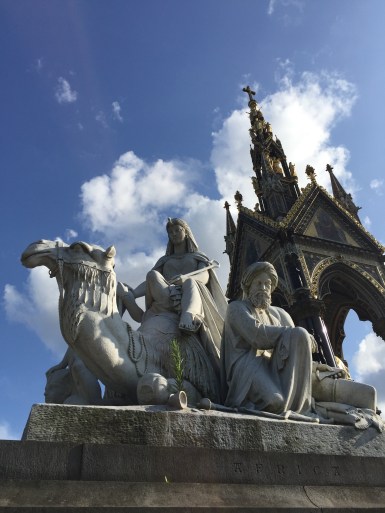
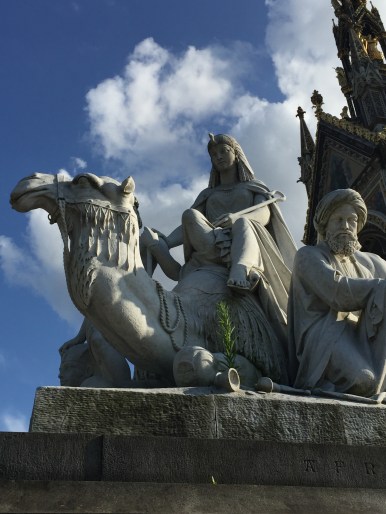
At the corners of the central area, and at the corners of the outer area, there are two programmes of allegorical sculpture, or at least sculptures of personifications: four groups depicting Victorian industrial arts and sciences (agriculture, commerce, engineering and manufacturing), and four more groups representing the traditional four continents: Africa, the Americas, Asia and Europe at the four corners, each continent-group including several ethnographic figures and a large animal: A camel for Africa, a bison for the Americas, an elephant for Asia and a bull for Europe. These groups represent something of a blend of traditional iconography for the continents personified, and an attempt to update them.
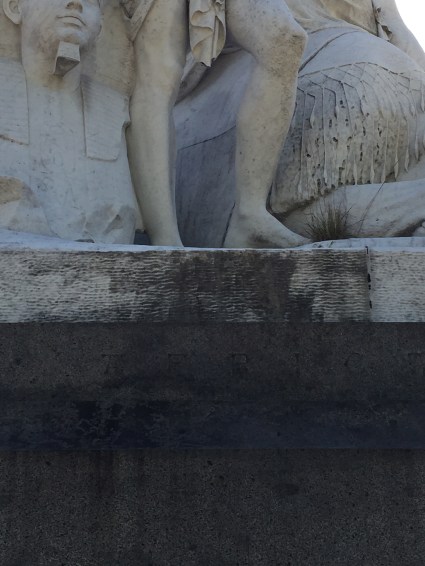
The 4 corners of the outer memorial are marked with sculptures representing the earth’s 4 continents.
Here is Asia:


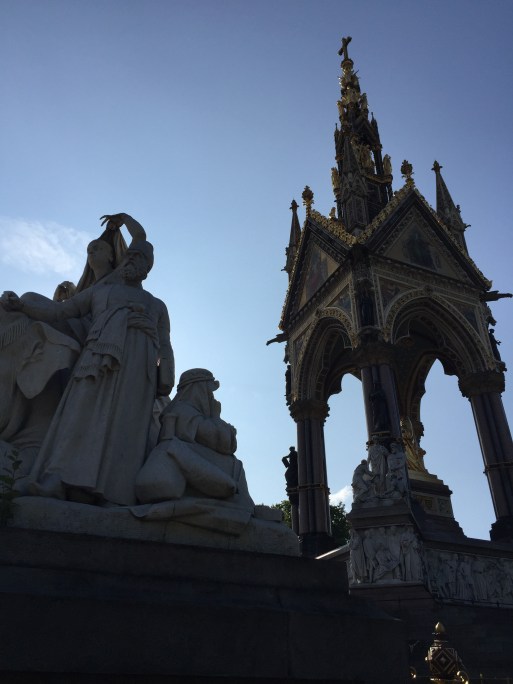

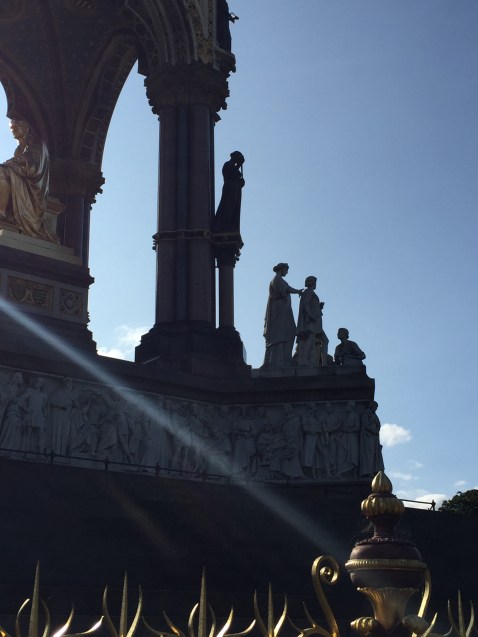
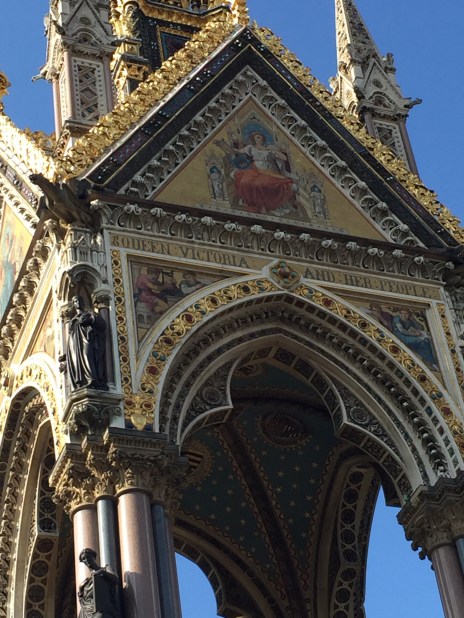
The form of the monument “is clearly derived” from the Gothic Scaliger Tombs outside a church in Verona, The mosaics for each side and beneath the canopy of the Memorial were designed by Clayton and Bell and manufactured by the firm of Salviati from Murano, Venice.
The memorial’s canopy features several mosaics as external and internal decorative artworks. Each of the four external mosaics show a central allegorical figure of the four arts (poetry, painting, architecture and sculpture), supported by two historical figures either side. The historical figures are: King David and Homer (POESIS – poetry), Apelles and Raphael (painting), Solomon and Ictinus (architecture), and Phidias and Michelangelo (sculpture). Materials used in the mosaics include enamel, polished stone, agate, onyx, jasper, cornelian, crystal, marble, and granite.
Around the canopy, below its cornice, is a dedicatory legend split into four parts, one for each side. The legend reads: Queen Victoria And Her People • To The Memory Of Albert Prince Consort • As A Tribute Of Their Gratitude • For A Life Devoted to the Public Good.
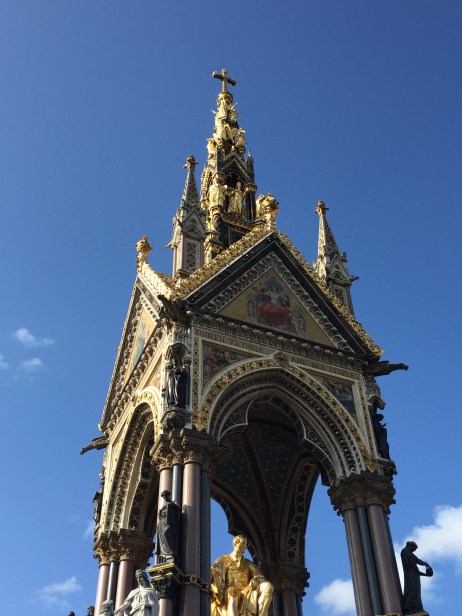
The pillars and niches of the canopy feature eight statues representing the practical arts and sciences: Astronomy, Geology, Chemistry, Geometry (on the four pillars) and Rhetoric, Medicine, Philosophy and Physiology (in the four niches).
Near the top of the canopy’s tower are eight statues of the moral and Christian virtues, including the four cardinal virtues and the three theological virtues. The virtues are: Faith, Hope, Charity and Humility, and Fortitude, Prudence, Justice and Temperance. Humility is considered to be annexed to the virtue of temperance. Above these, towards the top of tower, are gilded angels raising their arms heavenwards. At the very top of the tower is a gold cross.

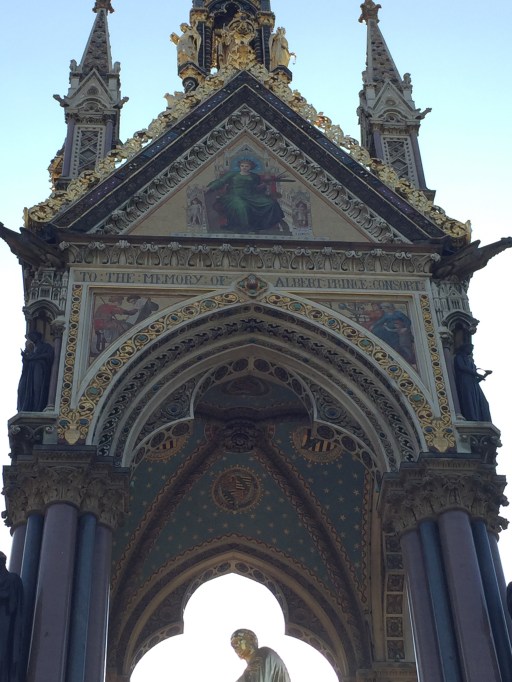
Here is Africa:
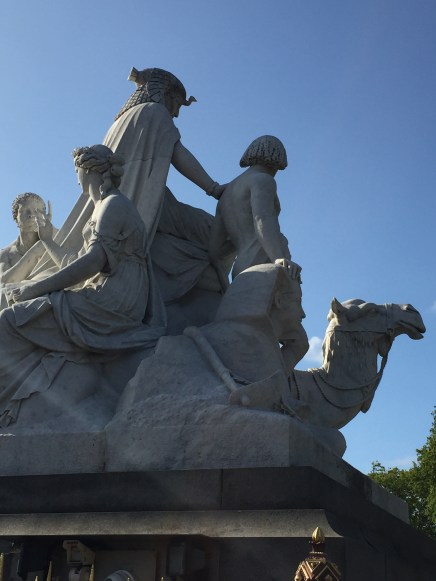


Here is America:


Here is Europe:
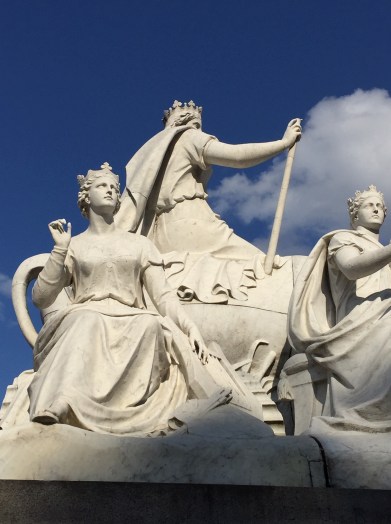
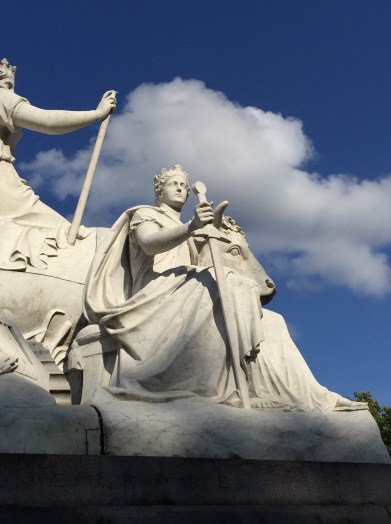


And here is America:











You must be logged in to post a comment.