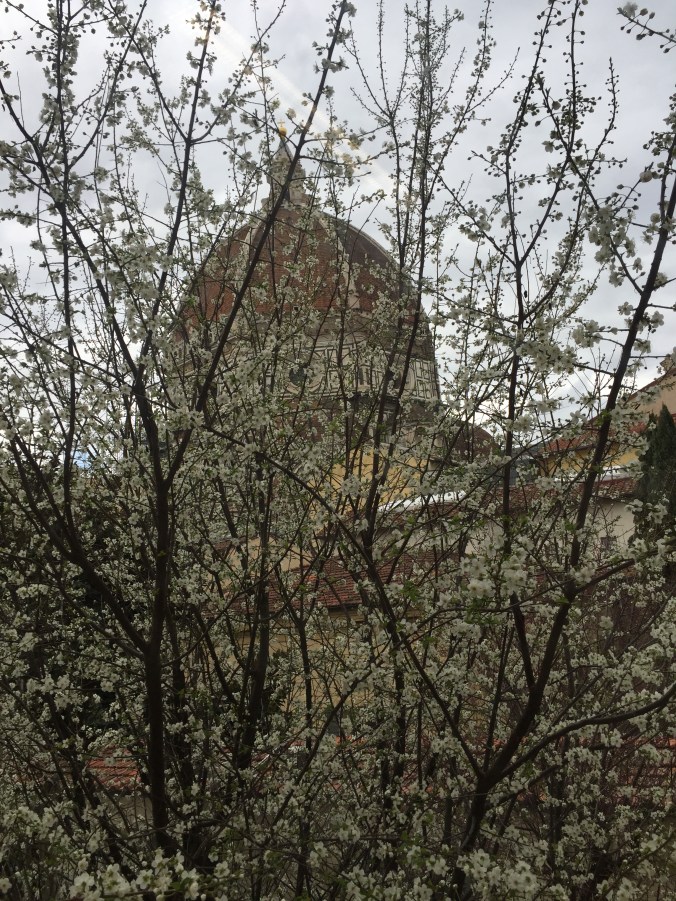
The beautiful Prato Cathedral (aka il Duomo di Prato) is dedicated to the 1st Christian martyr, Saint Stephen.
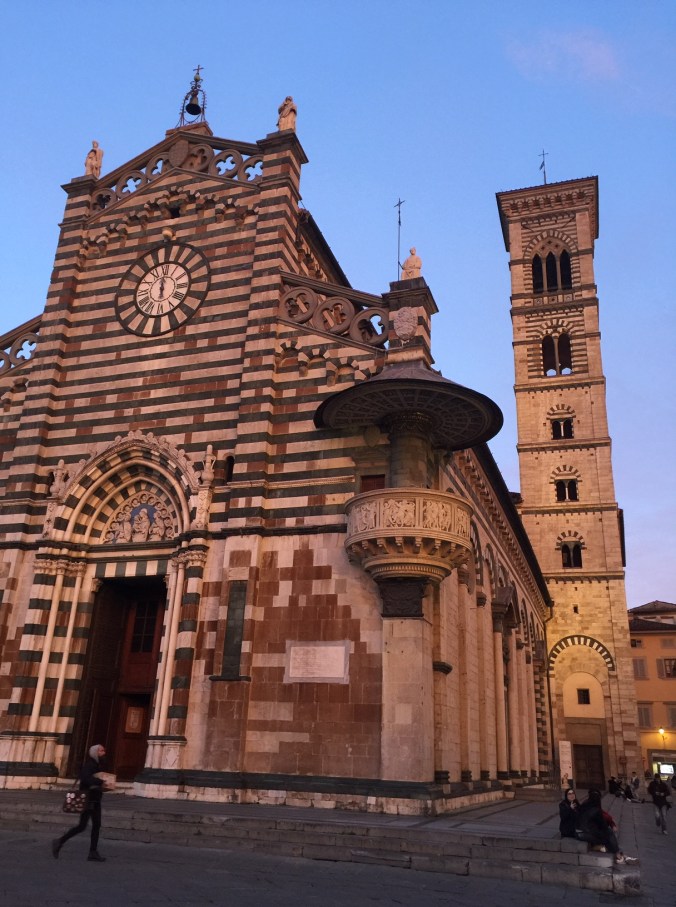
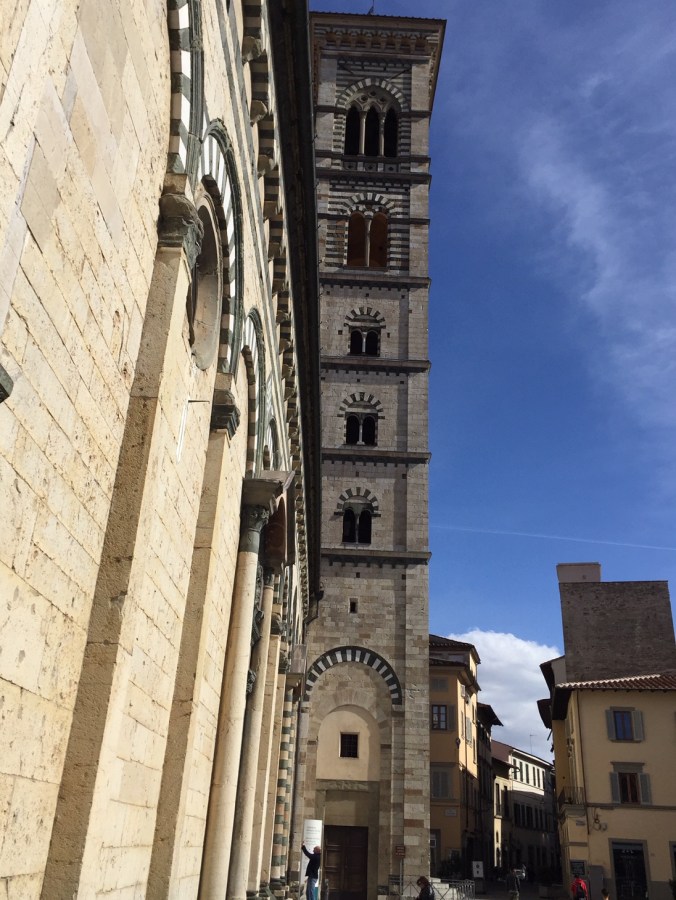
The original church of Saint Stephen was built in a green meadow (“a prato”) after an appearance of the Virgin Mary near the first-known settlement in Prato, the Borgo al Cornio. That village was located in the present-day center of Prato.
The first building was a small parish church, documented to AD 994 as the Pieve di Santo Stefano. The expansion of the church began in the 15th century and transformed the modest building into one of the most lovely Gothic-Romanesque buildings in Tuscany.
The current structure dates from the Romanesque period of the 12th century: the nave, side walls and greater part of the bell tower remain from this date. The upper stage of the bell tower was constructed in 1356.
La Sacra Cintola
During the 14th century, the cathedral acquired an important relic, the Sacra Cintola or Belt of the Holy Virgin. With this immensely valued relic, a larger and grander church was desired. Accordingly, the building was enlarged by the addition of a transept, which is attributed to Giovanni Pisano but is probably the work of a pupil of Nicola Pisano. The Cintola Chapel was also built at this time to house the relic.
In the early 15th century, a new façade was given to the cathedral, built in the International Gothic style. Placed right in front of the old facade, the intervening space provided a narthex or corridor leading to a highly unusual bit of church architecture: the external pulpit, built by Michelozzo and decorated by Donatello between 1428 and 1438.
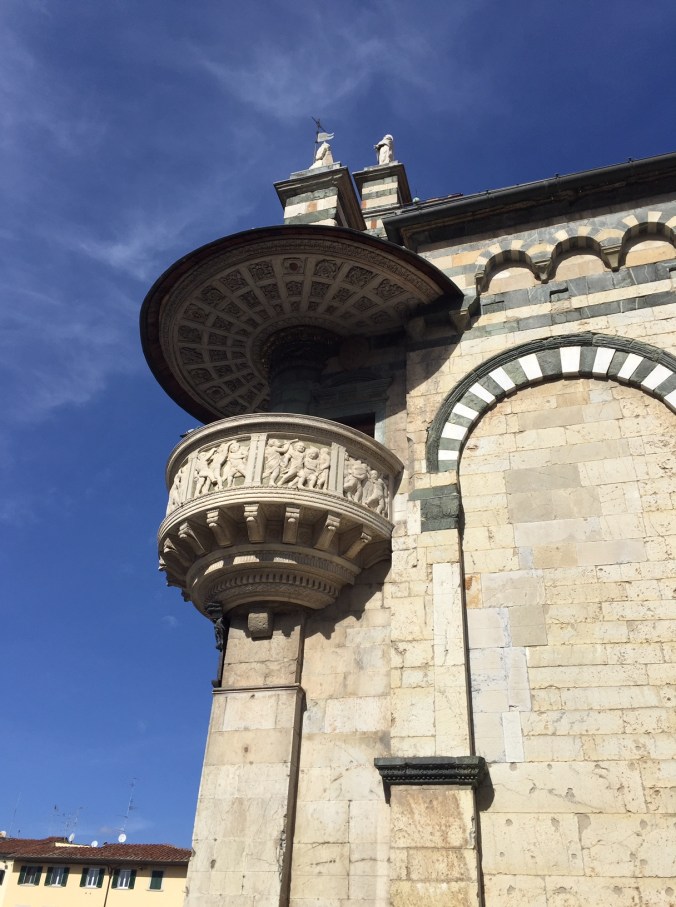

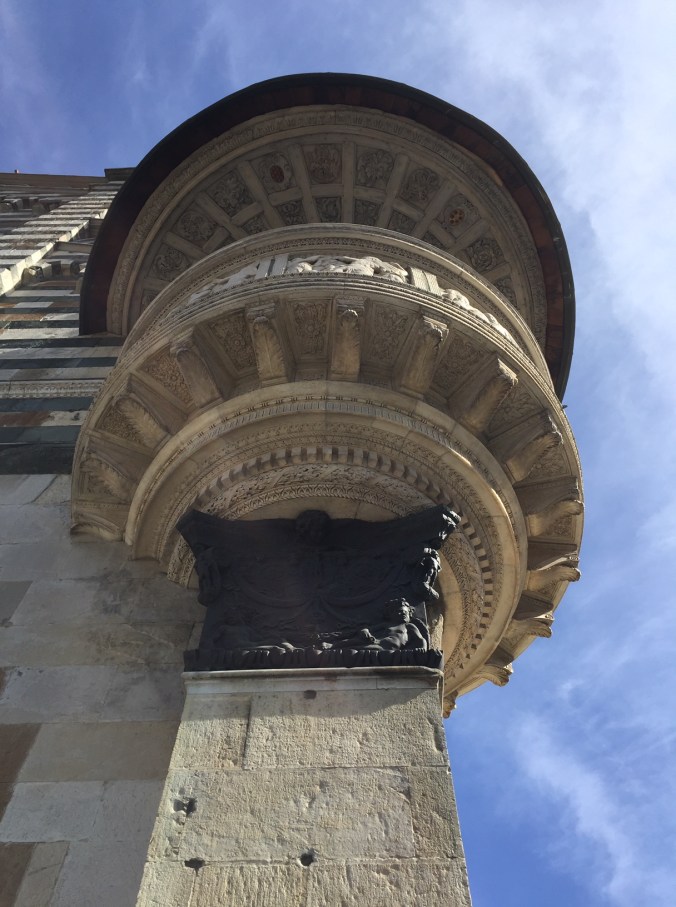
The seven rectangular relief sculptures that Donatello created for the outer face of the exterior pulpit designed by Michelozzo are reminiscent of his sculptures for the Cantoria in the Florence Duomo.
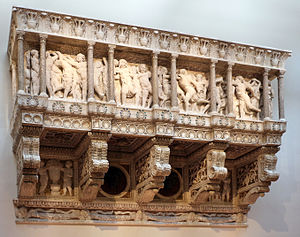
Both sets of sculptures treat the figure of the dancing cherubs and are formed in front of subtly colored mosaic background, which gives the surfaces a very lively appearance.
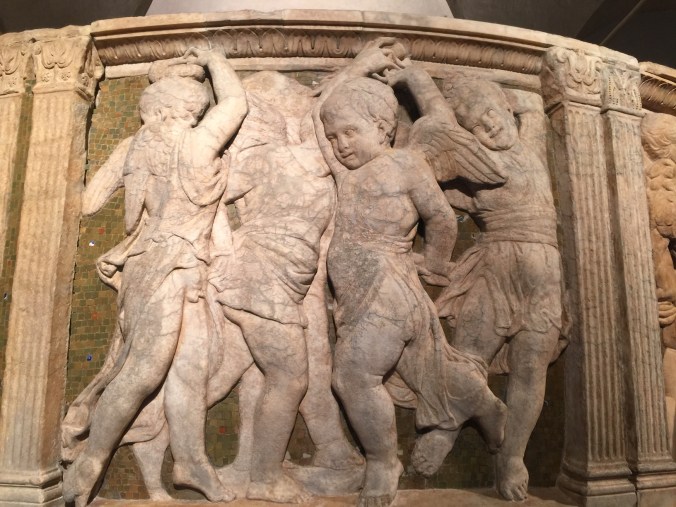
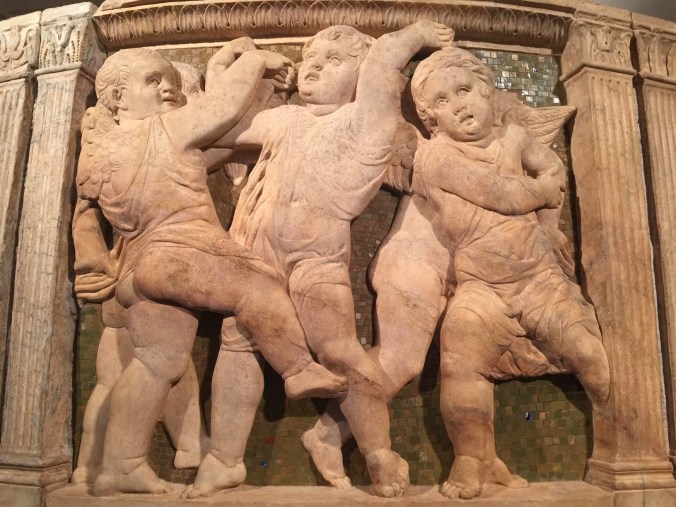
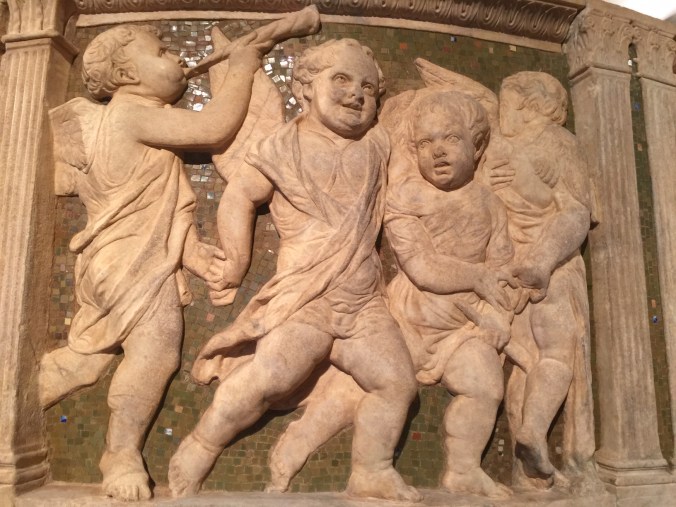

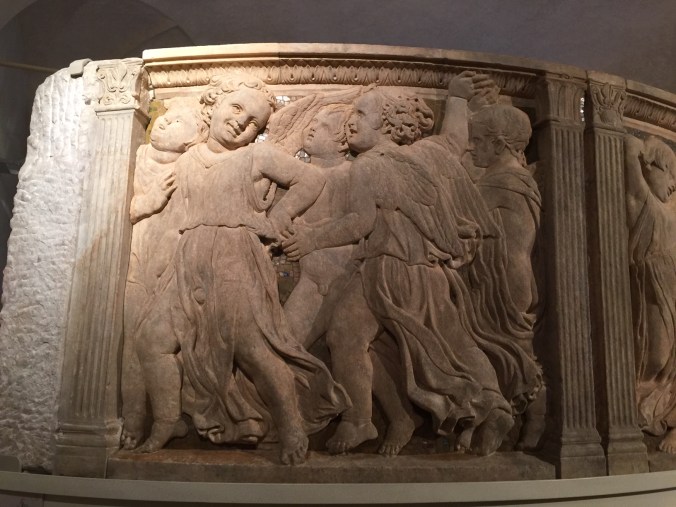
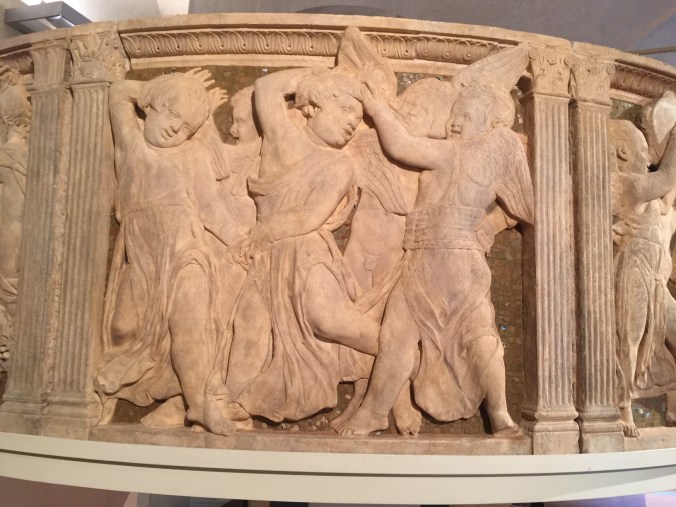

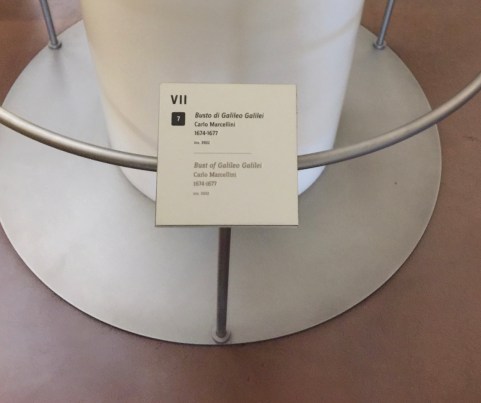
In 1967 the Donatello works were removed from the exterior pulpit and are kept in the cathedral’s museum. Reproductions were installed on the exterior of the pulpit, and provide a very similar ambience.

The façade has a single central portal with a lintelled doorway surmounted by a Gothic arch. In the lunette over the door is a glazed terracotta sculpture by Andrea della Robbia depicting the Madonna with Saints Stephen and John.
Below the central gable, a decorative clock is set into the façade, in place of a central window. It is surrounded by segments of the contrasting marble and forms part of the harmonious design.
Inside the church stands a notable Renaissance pulpit in white marble (1469–1473). The parapet has reliefs by Antonio Rossellino, portraying the Assumption and the Stories of St. Stephen, and by Mino da Fiesole portraying the Stories of St. John the Baptist.
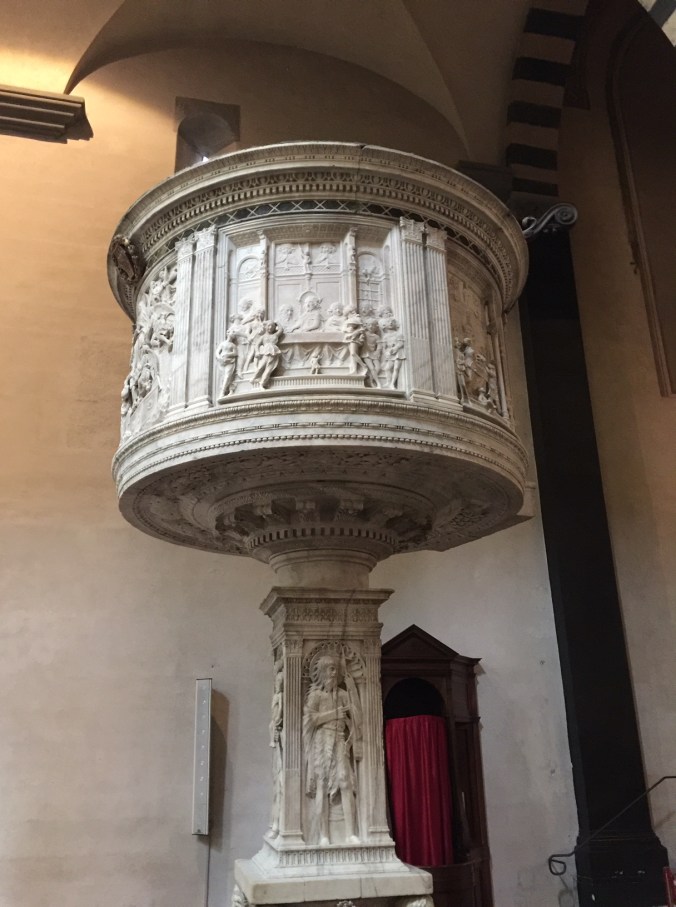
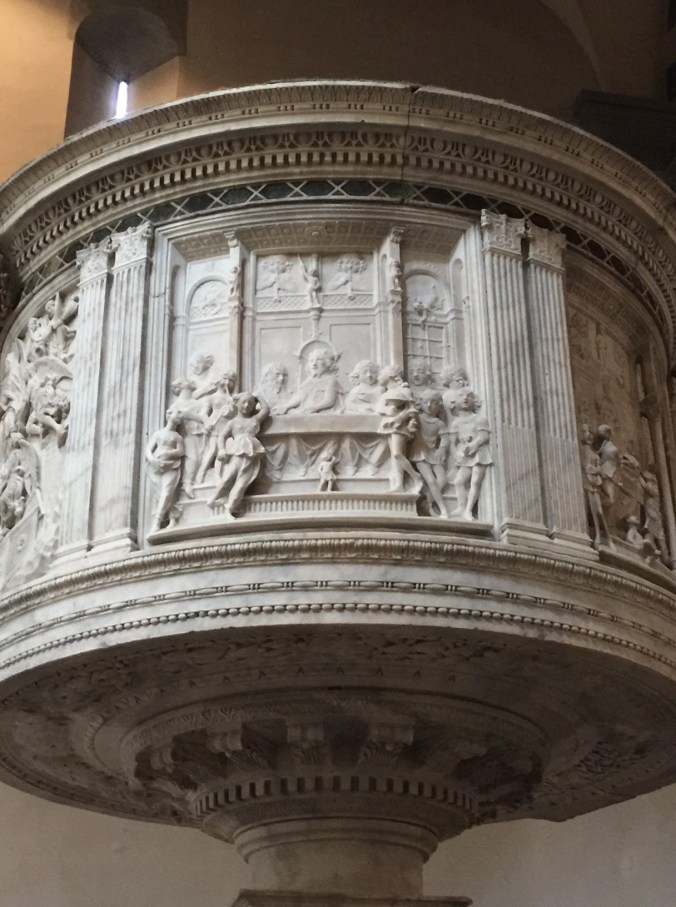
The base is decorated with sphinxes.
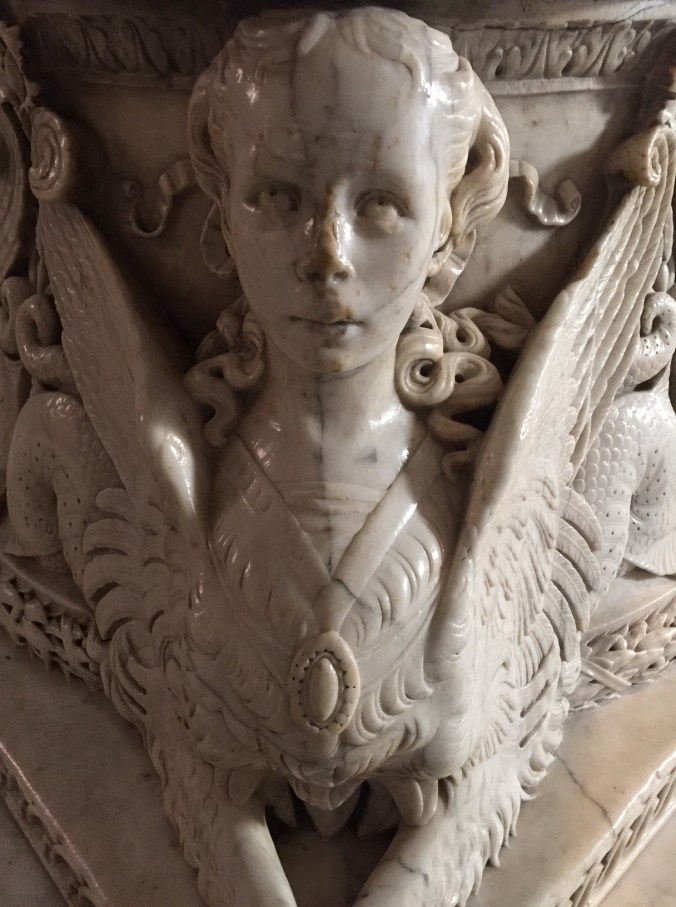
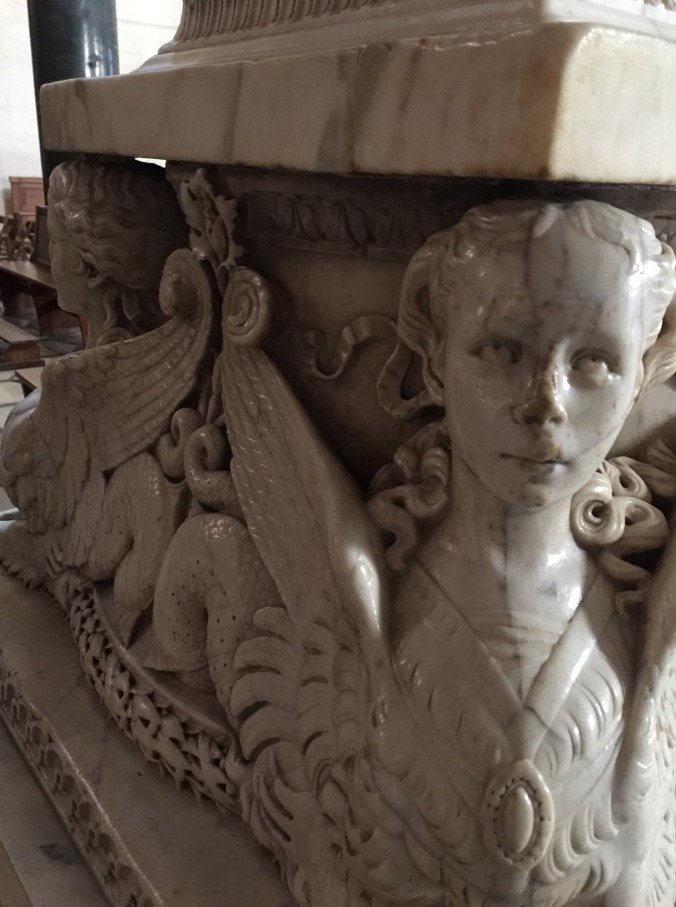
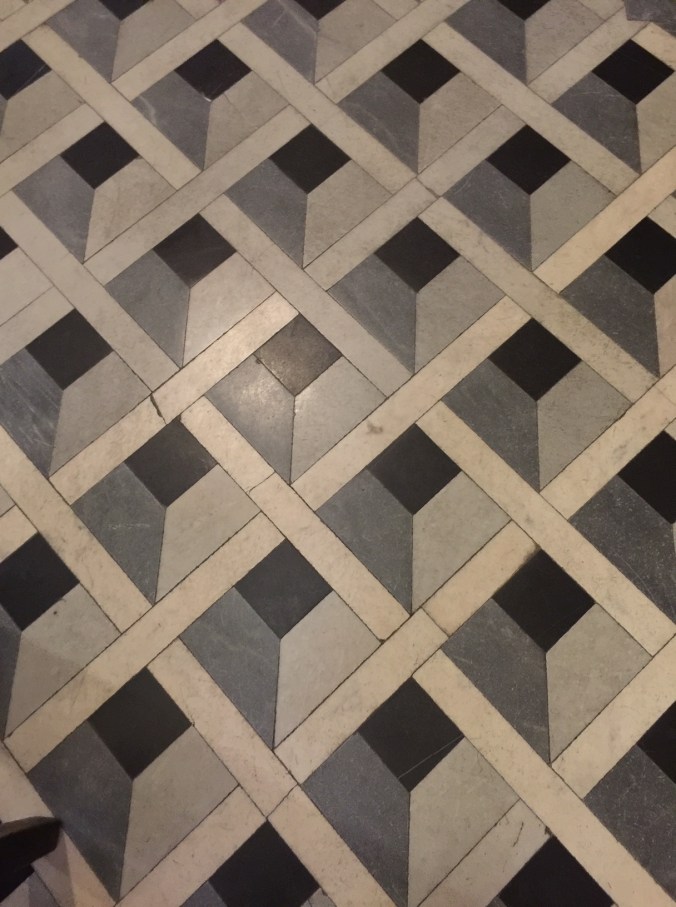
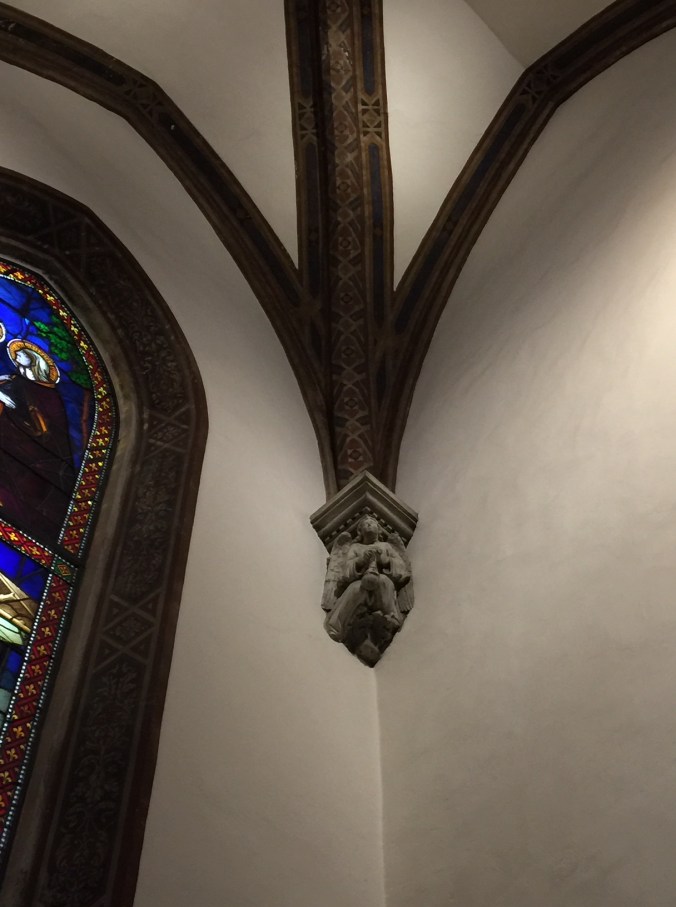
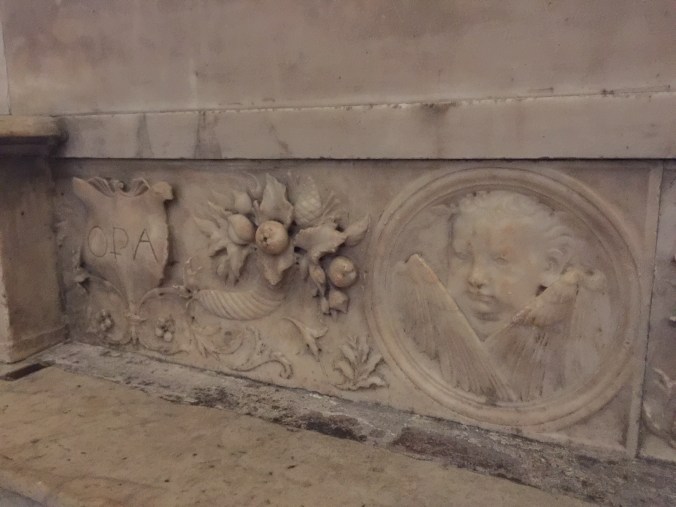
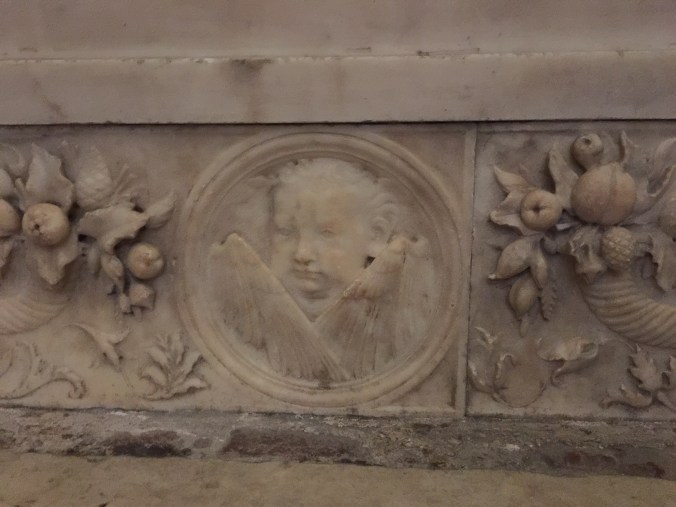
Here are some pictures of miscellaneous elements inside the Duomo, all of which caught my eye:
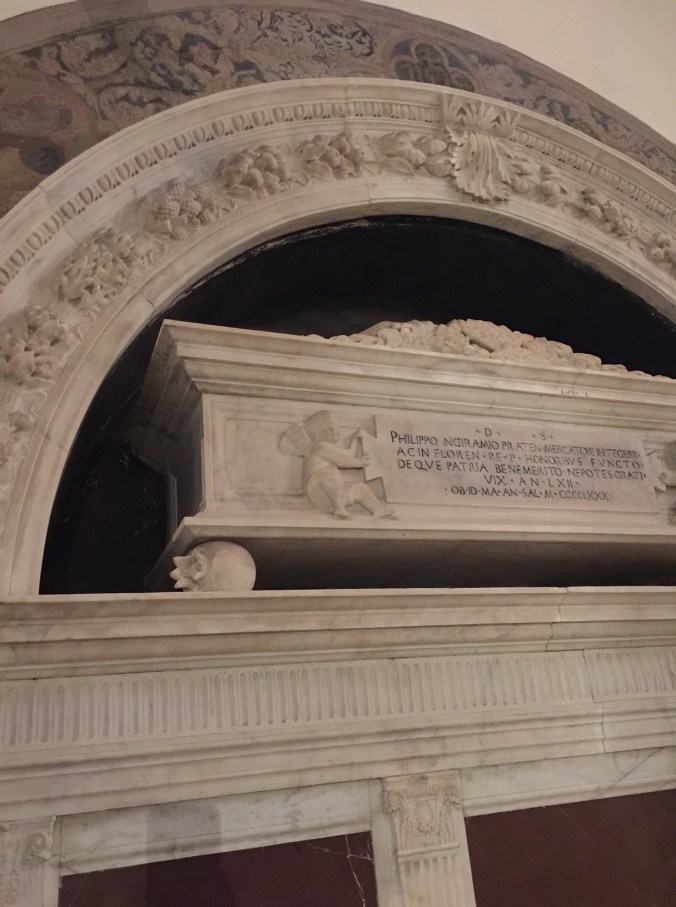
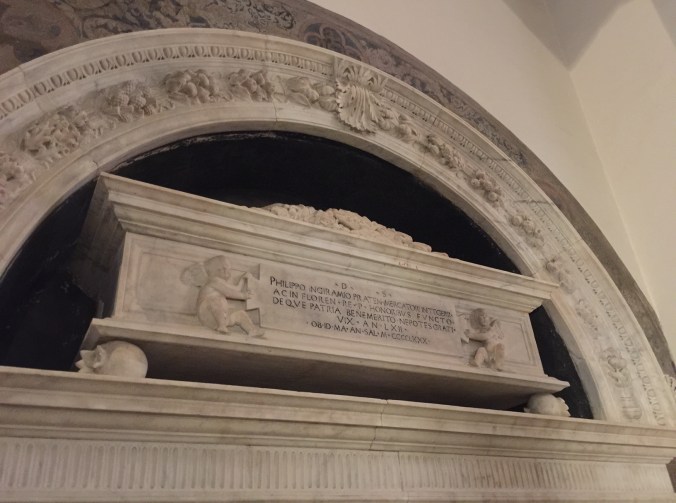
The sarcophagus rests on pieces of simulated fruit: they appear to be pomegranates and this is the first time I’ve ever seen such a treatment.


A floor pattern in one of the chapels:
Capitals derived from designs of angels; who needs an acanthus leaf when you can use an angel instead????
A small staircase leads from the old church to the 14th-century transept, which has five high cross vaults, each ending in an apse divided by pilasters. The presbytery has three works by the American artist Robert Morris (2000–2001).
In the south arm of the transept is the Renaissance tabernacle by the Da Maiano brothers: the Madonna with Child terracotta (1480) is by the more famous Benedetto.
The chapels can be accessed through a 17th-century balustrade in polychrome marble, for which parts of the Renaissance choir were re-used (including crests and cherubims).
In the south arm of the transept, the Vinaccesi Chapel houses a notable Deposition of Christ from the 13th century. It also has 19th-century frescoes by the Pratese painter Alessandro Franchi.
Chapel of the Sacred Girdle – fresco by Agnolo Gaddi
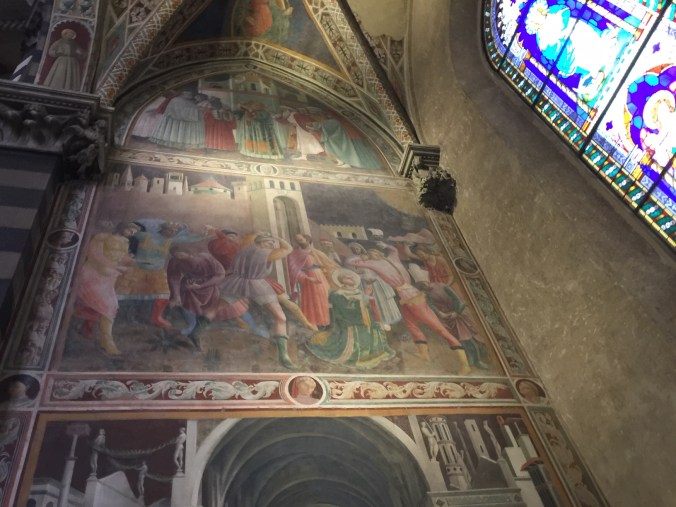
Next is the Assumption Chapel, which was frescoed in 1435-1436 by the so-called Master of Prato and by a young Paolo Uccello, who painted the Stories of the Virgin and St. Stephen, completed by Andrea di Giusto in the lower section. They show a bizarre fantasy of enchanted figures caught in a wide range of brilliant colors, and surrounded by Brunelleschi-like architecture.
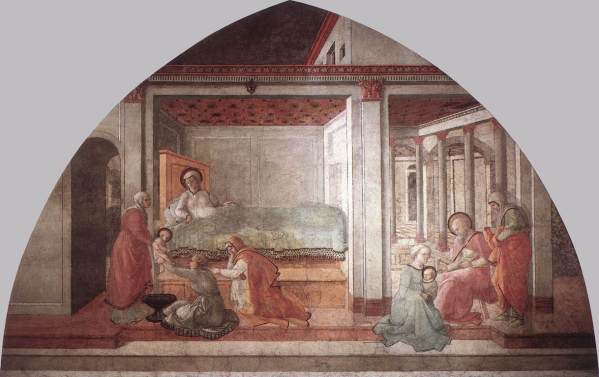
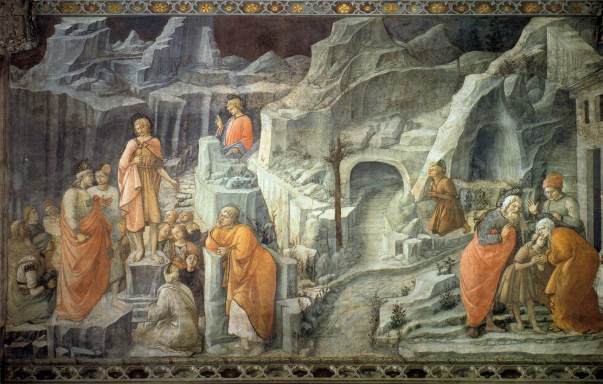
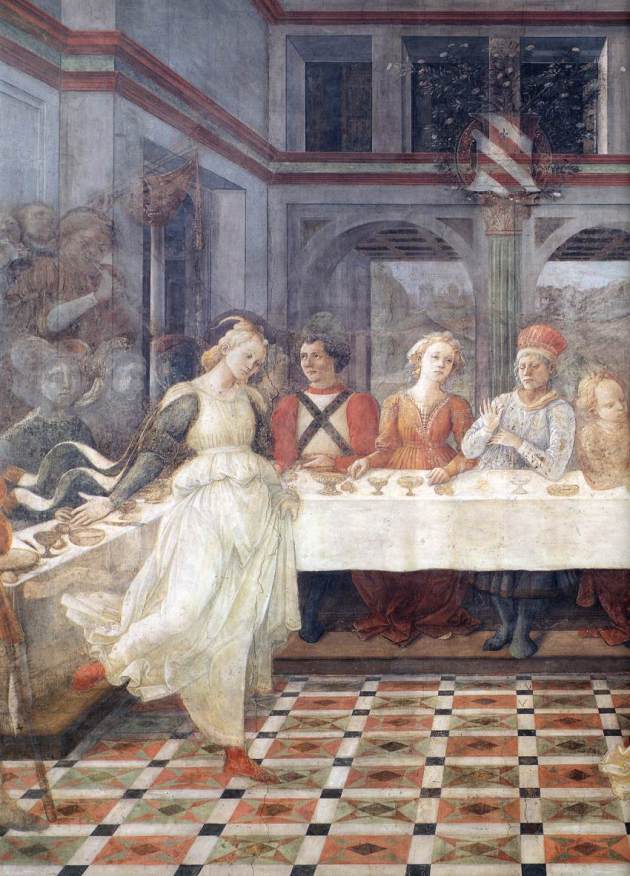
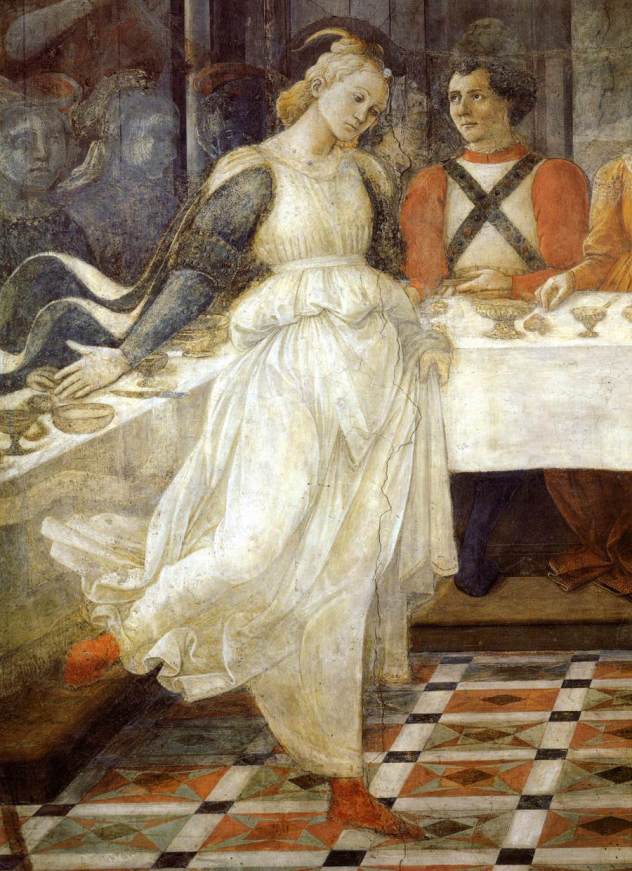
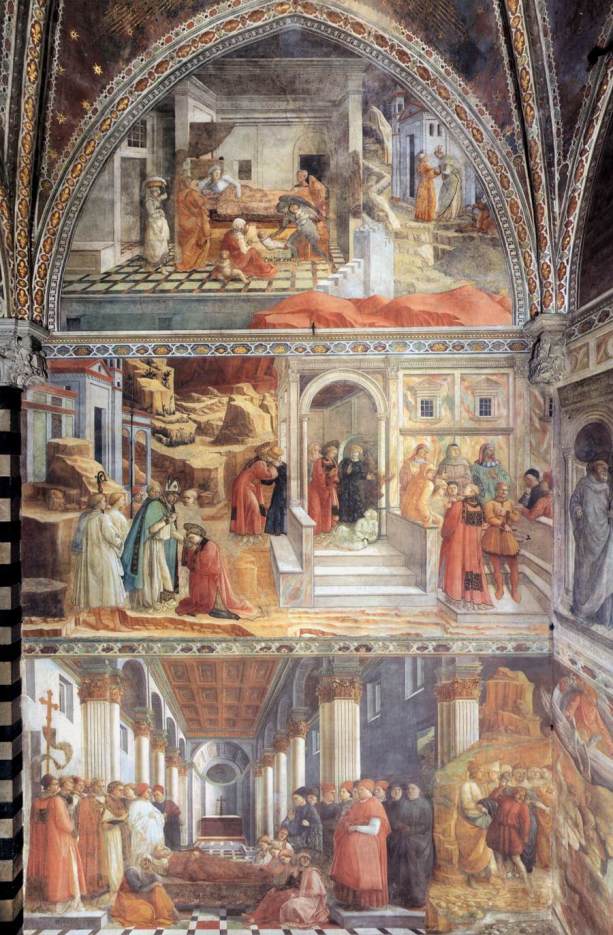
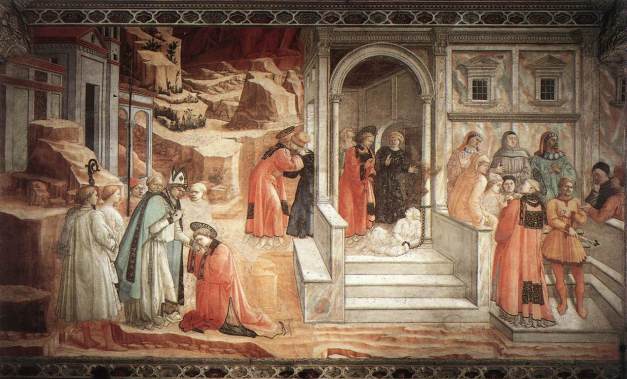
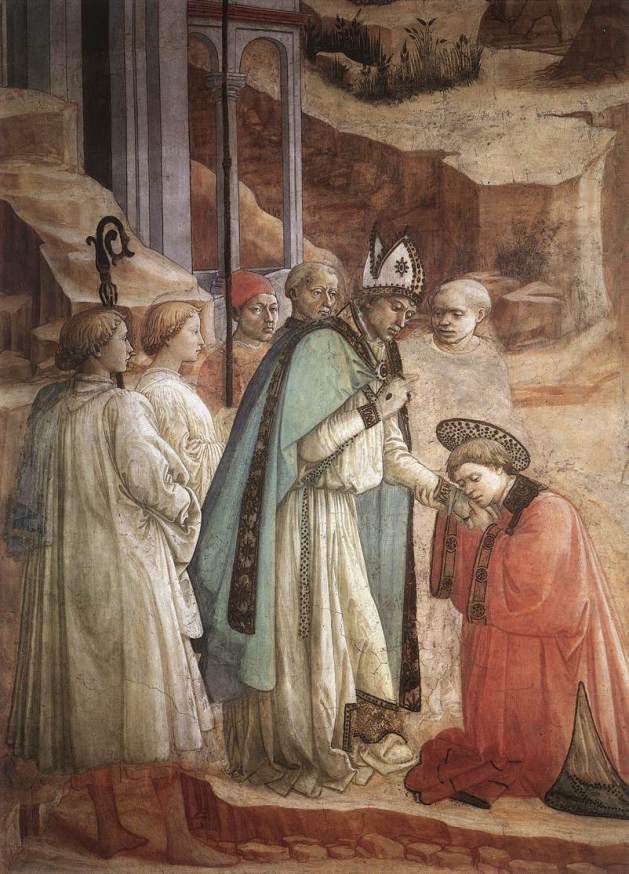
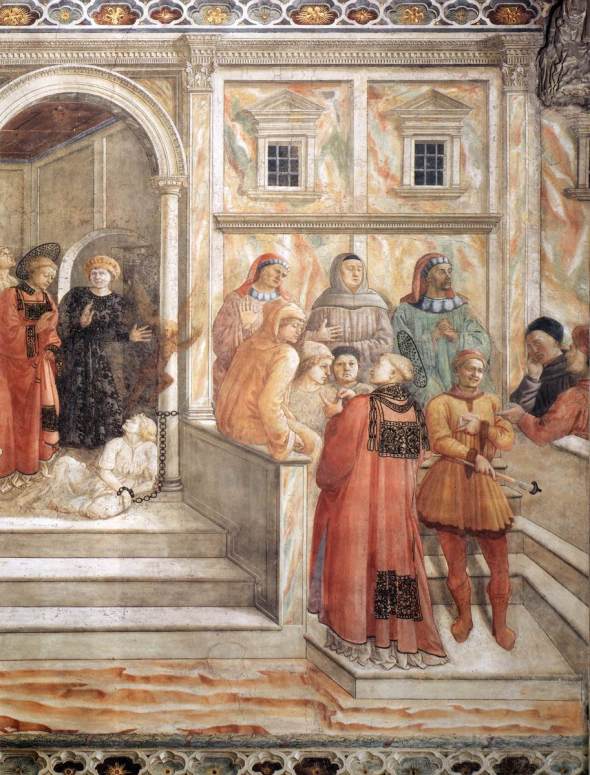
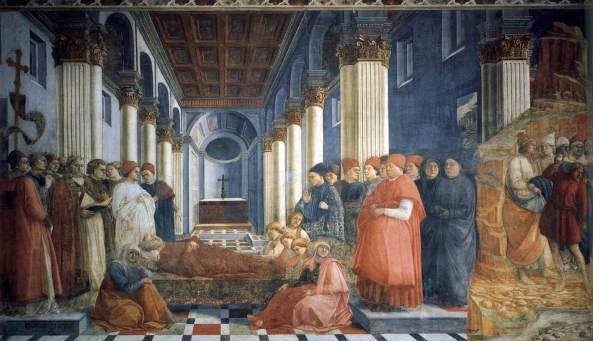
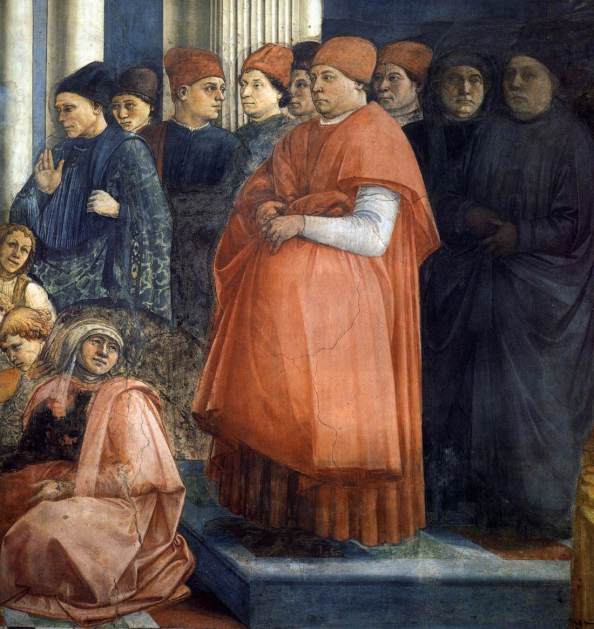
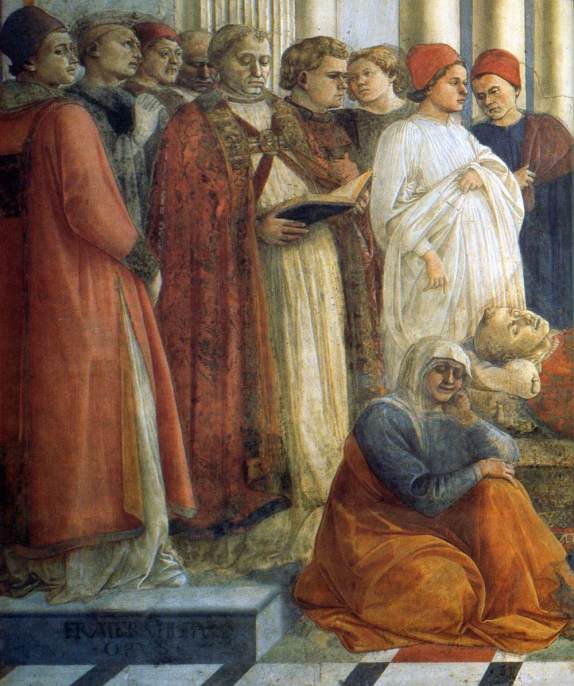
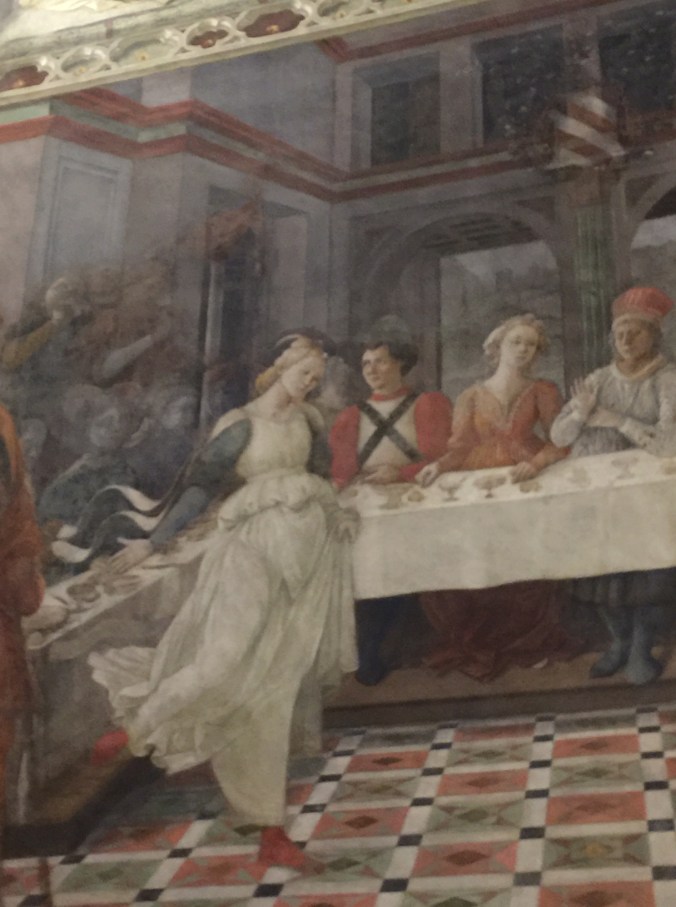
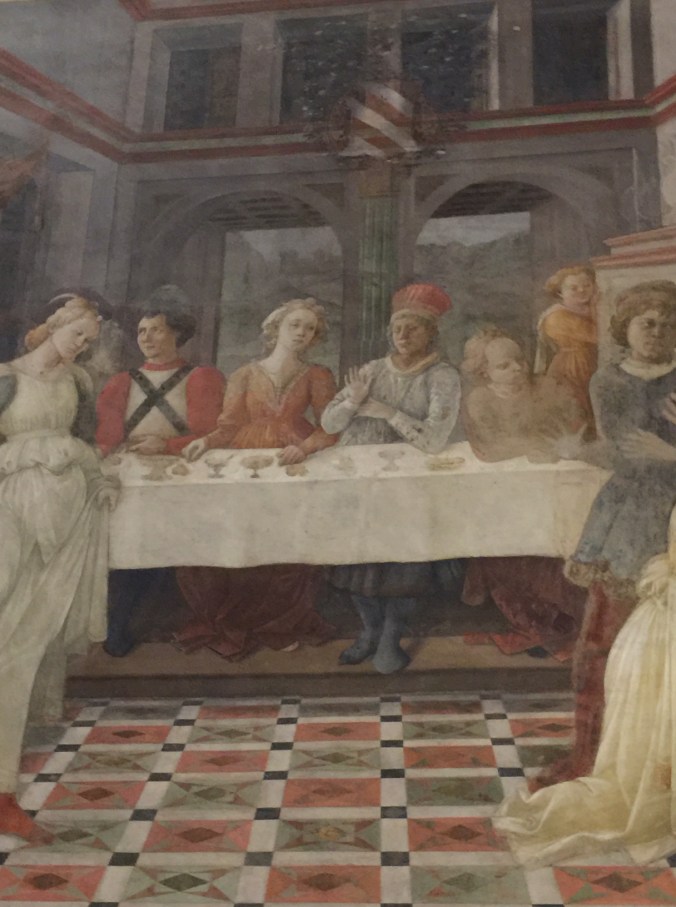
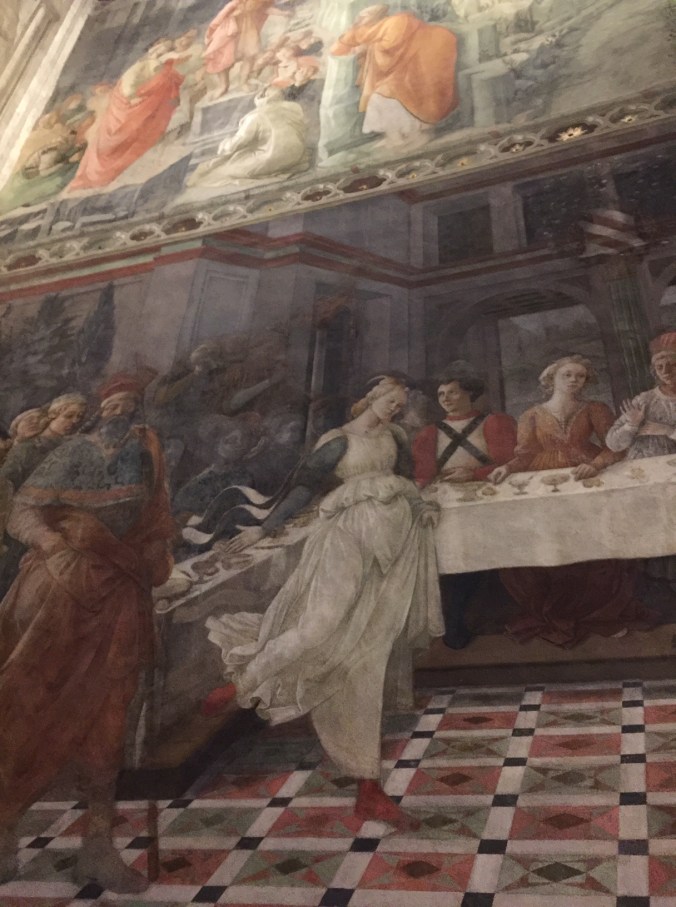
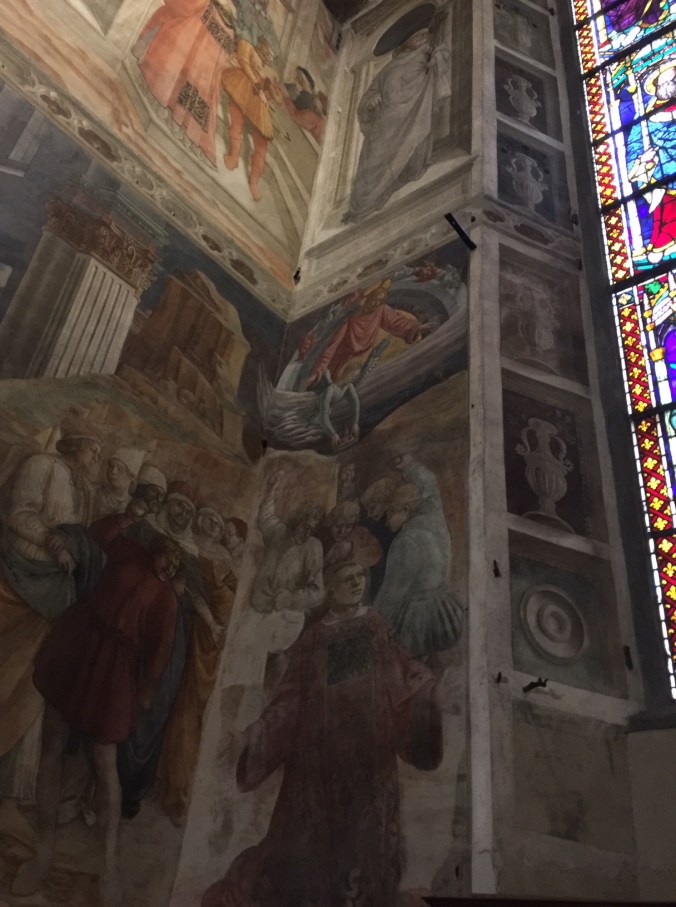
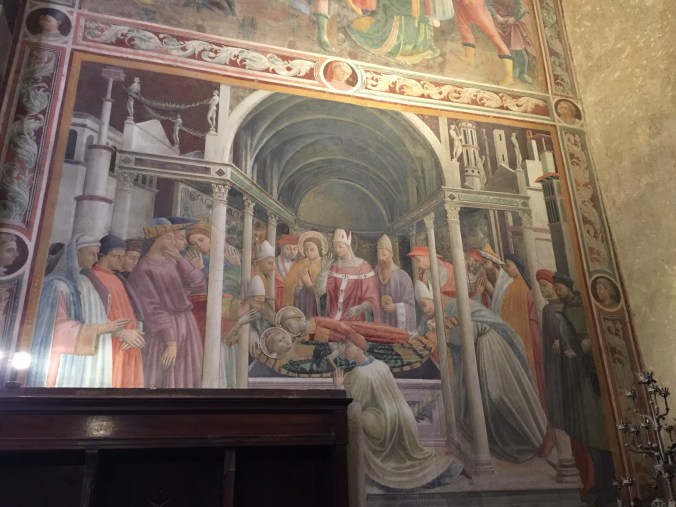
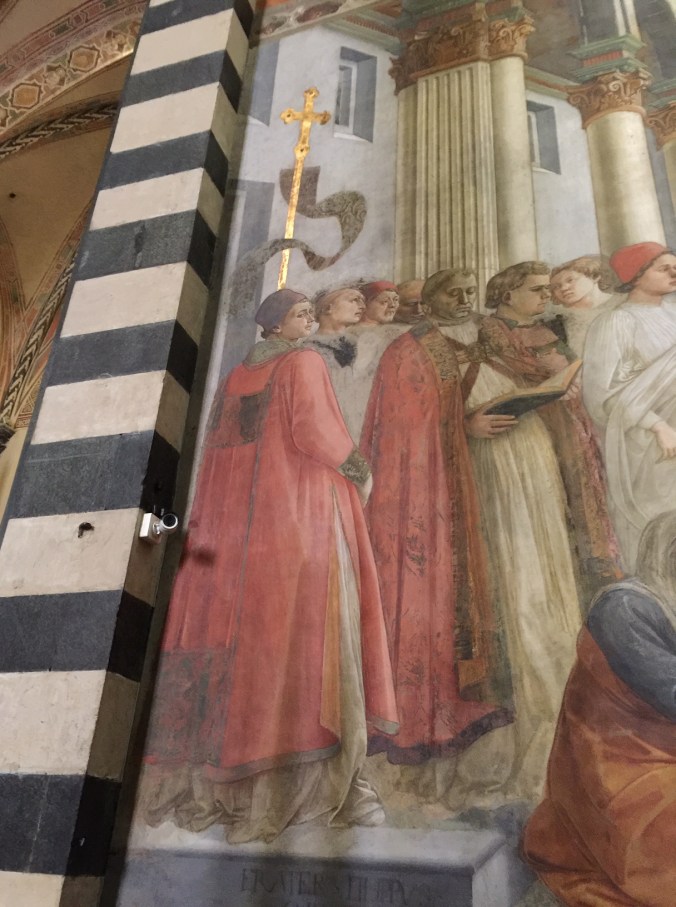
In the main chapel, or chancel, Filippo Lippi and Fra Diamante painted the Stories of St. Stephen and St. John the Baptist. On the lower north wall are depicted the Obsequies of St. Stephen, in which Lippi portrayed Pope Pius II, set in a Palaeo-Christian basilica, as an imposing figure in scarlet costume. On the right is the artist’s self-portrait. On the opposite wall is Herod’s Banquet, showing a large hall in which Salome is performing her ballet, and the handing over of the head of John the Baptist to Herodias. The altar is by Ferdinando Tacca (1653).
The Manassei Chapel was frescoed by a pupil of Agnolo Gaddi in the early 15th century with Stories of St. Margaret and St. James. The last chapel on the left, the Chapel of the Inghirami, houses a funerary monument attributed to Benedetto da Maiano and a stained glass window from the early 16th century.
Cintola Chapel
The Cintola Chapel (Italian: Cappella del Sacro Cingolo) is located under the last arch of the north aisle, next to the counter-façade. It houses the Sacra Cintola or Girdle of Thomas, the belt which, according to the tradition, was given to Saint Thomas by the Virgin Mary during the Assumption. It was brought to Prato in the 13th century.
The chapel has frescoes of Stories of the Virgin and the Cintola by Agnolo Gaddi (1392–1395), which are notable for their luminous colors. Also noteworthy is the panorama of Prato in the Michael’s Return scene.
The 18th-century altar, which encloses the Cintola, is crowned by a marble Madonna with Child (c. 1301), and is considered one of Giovanni Pisano’s masterpieces.
I’ll be writing more posts covering the frescoes and cortile of the Duomo. Stay tuned!
These marble floors…oh, if only they could speak about what they have seen!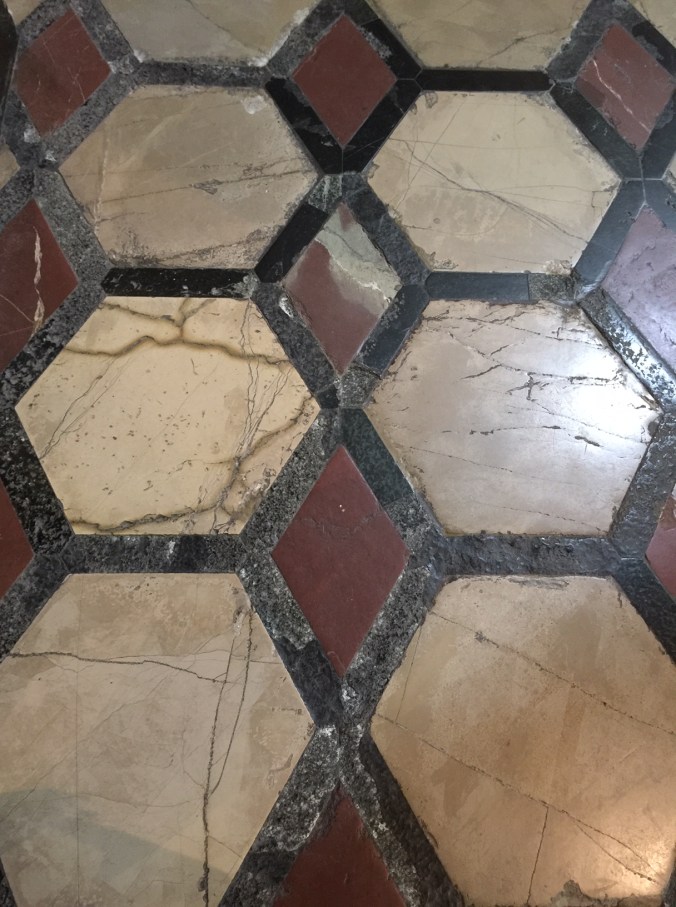




 Love the “g” made out of stars!


 ‘
‘
























You must be logged in to post a comment.