Polizia a cavallo ride the premises of Villa Demidoff, offering protection and beauty at the same time. Sign me up for protection, please!
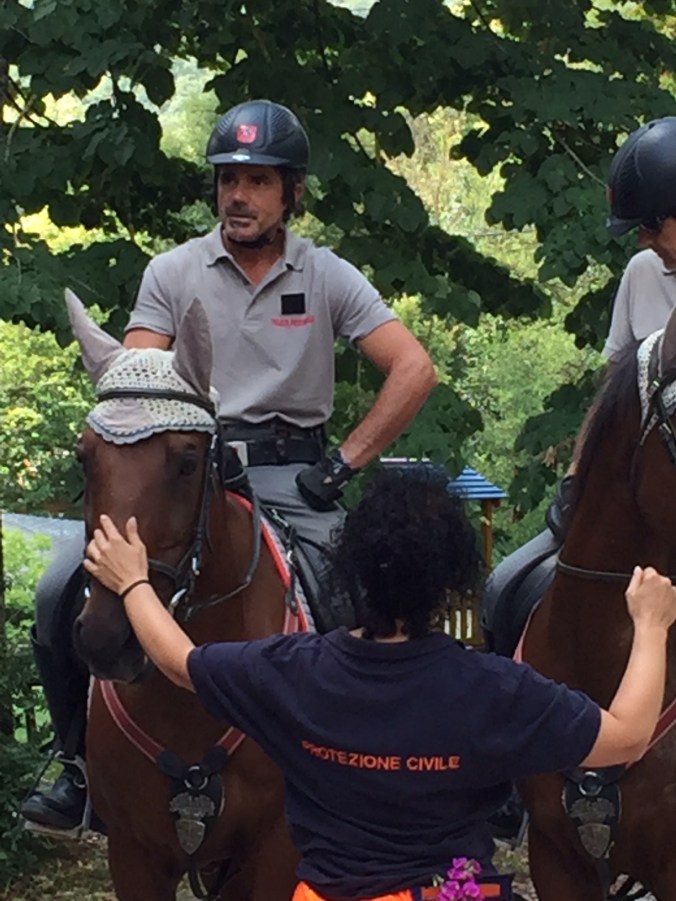
Polizia a cavallo ride the premises of Villa Demidoff, offering protection and beauty at the same time. Sign me up for protection, please!










Here’s how the bridge looks today:
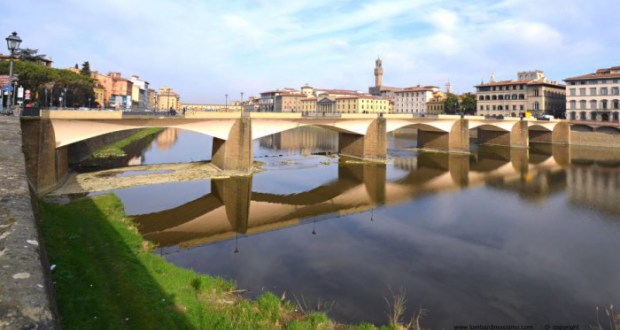
Here’s how it looked around 1875:
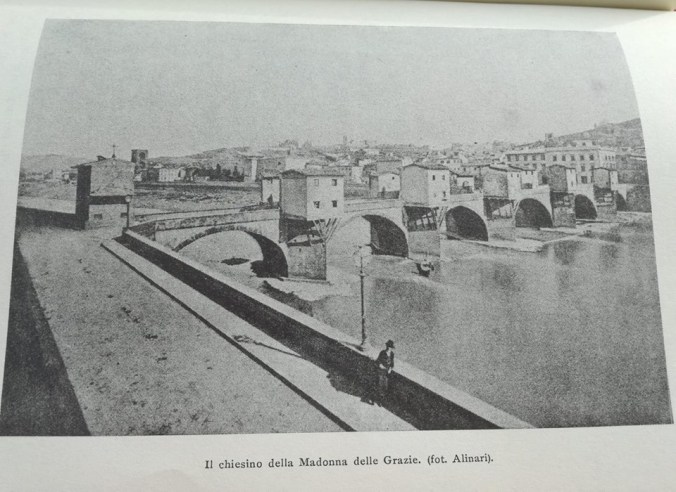
It looked like this for a few centuries before it was rebuilt in the late 19th century. Here, for example, is a 17th century engraving of the bridge.

You can read all about this bridge’s fascinating history, begun, as it was, before the Ponte Vecchio! Until the last part of the 19th-century, it looked like this, with the houses on it in which nuns lived.
See: https://en.wikipedia.org/wiki/Ponte_alle_Grazie
Here’s how it looks today:

Here’s how it looked about 125 years ago.
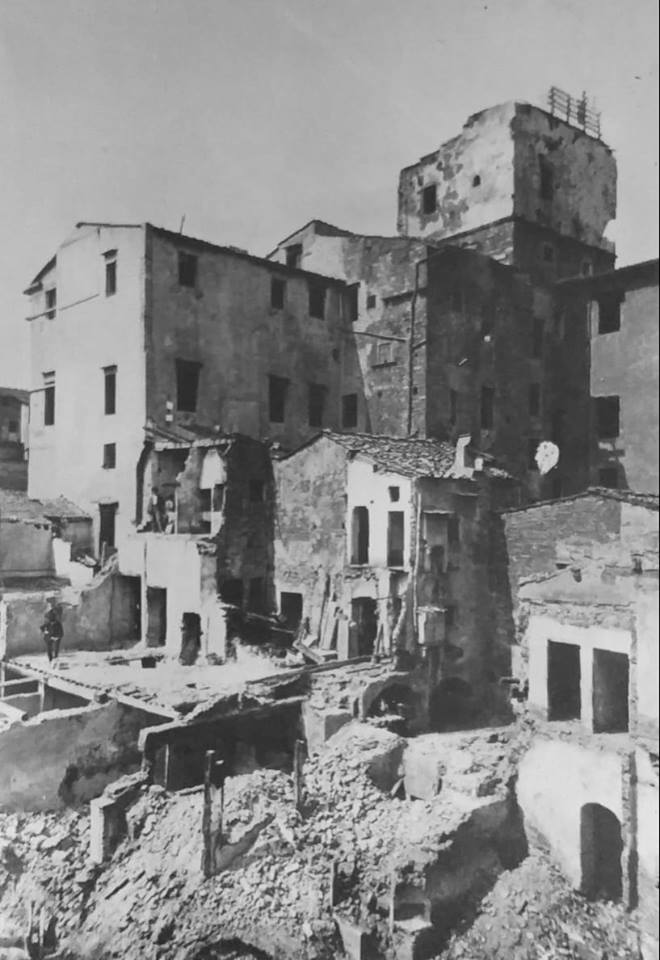
The present appearance of the piazza is the result of the city planning carried out when Florence was the capital of Italy (1865–71), and after, with particularly intense renovation activity in this Piazza between 1885 and 1895. The vintage photo below shows the old houses in the process of demolition, to make way for the showy new Piazza della Repubblica.
A good summary of this very important ground in Florence can be found here: https://en.wikipedia.org/wiki/Piazza_della_Repubblica,_Florence

EVA-S-001043-8128
Two ultra stylish travellers prepare for their flight wearing (on the left), a wool and mohair coat and (right) a raincoat both by Aquascutum. The hats are by Jenny Fischer and the bags by Salvatore Ferragamo. Date: 1959
Mandatory photo credit:
© Mary Evans / Alinari Archives
WARNING:
Permission must be required for non editorial use. Please contact Alinari Archives
Collection:
© Mary Evans / Alinari Archives

APA-S-SC0146-1262
Salvatore Ferragamo visiting the United States
Mandatory photo credit:
Archivi Alinari, Firenze
WARNING:
Permission must be required for non editorial use. Please contact Alinari Archives
Photographer:
Image date:
1920 – 1930
Place of photography
United States
Collection:
Alinari Archives-Alinari Archive, Florence

APA-F-014644-0000
Craftsmen at work in the studio of footwear designer and manufacturer Ferragamo in Palazzo Feroni, Florence.
Mandatory photo credit:
Archivi Alinari, Firenze
CREATIVE USE:
allowed
Image date:
1937
Place of photography
Florence
Collection:
Alinari Archives-Alinari Archive, Florence

RCT-F-025529-0000
Shapes for Ferragamo shoes
Mandatory photo credit:
Toscani Archive/Alinari Archives Management, Florence
WARNING:
Permission must be required for non editorial use. Please contact Alinari Archives
Photographer:
Image date:
12/1952
Place of photography
Italy
Collection:
Toscani Archive/Alinari Archives Management, Florence

RCT-F-025531-0000
Ferragamo testing a pair of shoes on a model
Mandatory photo credit:
Toscani Archive/Alinari Archives Management, Florence
WARNING:
Permission must be required for non editorial use. Please contact Alinari Archives
Photographer:
Image date:
12/1952
Place of photography
Italy
Personaggio:
Ferragamo Salvatore
Collection:
Toscani Archive/Alinari Archives Manag
How we are lucky to catch whatever we can, for however long we have, in peace, under a blue sky, in late summer.
Having lived all of my life outside of India and other countries that experience a monsoon season, I never really thought about living in a monsoon, let alone what one would wear for that experience!
I really enjoy blogging. It’s a good thing to like, because otherwise, it would be very easy to stop.
The occasional response from a reader is one of the most enjoyable parts of blogging. For example, I just got this notification from my WordPress host that someone in India liked a recent post of mine (the last one on Grace Kelly) and made a comment. It is up to me to decide if I approve the comment or not. I did.
But what was really funny to me is this notification:
(name omitted by me) liked your post on get back, lauretta!
They thought Grace Kelly, a selection was pretty awesome.
You should go see what they’re up to. Maybe you’ll like their blog as much as they liked yours!
Great posts worth seeing from (name omitted by me):
Shortlisted #1
Daily Essentials for Workplace
Here is the Most Fashionable Piece to wear in the Monsoon

IFA-S-AAA079-0085
Grace Kelly (1928-1982), American actressPrincess of Monaco for his marriage to Rainier III,
Mandatory photo credit:
Index/Alinari Archives, Florence
WARNING:
Permission must be required for non editorial use. Please contact Alinari Archives
Collection:
Index/Alinari Archives, Florence

TOP-F-030815-0000
Cheek to cheek. Oscar and beautiful Grace Kelly.She won the academy award for Best Actress in 1954 for her role in “The Country Girl”1955, Personalities, Grace Kelly
Mandatory photo credit:
2005 / TopFoto / Alinari Archives
WARNING:
Permission must be required for non editorial use. Please contact Alinari Archives
Image date:
1954
Collection:
TopFoto / Alinari Arc

RCT-F-051388-0000
Grace Kelly on the day of her marriage to Ranieri of Monaco
Mandatory photo credit:
Toscani Archive/Alinari Archives Management, Florence
WARNING:
Permission must be required for non editorial use. Please contact Alinari Archives
Photographer:
Image date:
1956
Place of photography
Monaco
Collection:
Toscani Archive/Alinari Archives Management, Florence

ULL-F-039770-0000
Frank Sinatra (1915-1998) with Grace Kelly in “High Society”, 1956
Mandatory photo credit:
Ullstein Bild / Alinari Archives
WARNING:
Permission must be required for non editorial use. Please contact Alinari Archives
Image date:
1956
Collection:
Ullstein Bild / Alinari Archives

LLA-S-00HP04-0454
Prince Rainier of Monaca and Grace Kelly at the airport.
Mandatory photo credit:
Luigi Leoni Archive / Alinari Archives
WARNING:
Permission must be required for non editorial use. Please contact Alinari Archives
Photographer:
Image date:
1956-1960
Place of photography
Italy
Personaggio:
Ranieri III Grimaldi, Kelly Grace
Collection:
Luigi

VEL-F-046355-0000
Grace Kelly and Prince Ranieri III in Rome: Crowd in Via del Corso awaiting the arrival of Monaco princes. In the background, the Alinari store
Mandatory photo credit:
Luce Institute/Alinari Archives Management, Florence
WARNING:
Permission must be required for non editorial use. Please contact Alinari Archives
Photographer:
Image date:
03/05/1957
Place of photography
Rome, via del Corso
Collection:
Luce Institute/Alinari Archives Management, Florence

TOP-F-247938-0000
Prince Rainer of Monaco with Princess Grace 1956
Mandatory photo credit:
2005 / TopFoto / Alinari Archives
WARNING:
Permission must be required for non editorial use. Please contact Alinari Archives
Image date:
1956
Place of photography
Monaco
Collection:
TopFoto / Alinari Archives

TEA-S-470206-B05B
Grace of Monaco (Grace Kelly 1929-1982) with Prince Ranieri (Ranieri III 1923-2005) visiting the Capitol in Rome
Mandatory photo credit:
Archivi Alinari, Firenze
WARNING:
Permission must be required for non editorial use. Please contact Alinari Archives
Photographer:
Image date:
1970
Place of photography
Rome
Personaggio:
Ranieri III Grimaldi, Kelly Grace
Collection:
Team/Alinari

TEA-S-470206-B35A
Grace of Monaco (Grace Kelly 1929-1982) visiting the Capitol in Rome
Mandatory photo credit:
Archivi Alinari, Firenze
WARNING:
Permission must be required for non editorial use. Please contact Alinari Archives
Photographer:
Image date:
1970
Place of photography
Rome
Collection:
Team/Alinari

TEA-S-470206-B16B
Grace of Monaco (Grace Kelly 1929-1982) visiting the Capitol in Rome
Mandatory photo credit:
Archivi Alinari, Firenze
WARNING:
Permission must be required for non editorial use. Please contact Alinari Archives
Photographer:
Image date:
1970
Place of photography
Rome
Collection:
Team/Alinari

CCA-F-000362-0000
To Catch a Thief, 1955, Alfred Hitckock, Grace Kelly, Carry Grant, Jessie Royce Landis, John Williams, USA
Mandatory photo credit:
Paramount pictures / Collection Christophel/Alinari Archives
Permission and restrictions:
Editorial use only
WARNING:
Permission must be required for non editorial use. Please contact Alinari Archives
Image date:
1955
Place of photography
United States
Collection:
Collection Christophel/Alinari Archives

TOP-S-HIP022-4594
Princess Grace and Prince Rainier of Monaco, grand masquerade ball, Ca’ Rezzonico, Venice, 1966
Mandatory photo credit:
Keystone Archives/HIP / TopFoto / Alinari Archives
WARNING:
Permission must be required for non editorial use. Please contact Alinari Archives
Image date:
1966
Place of photography
Venice, Ca’ Rezzonico
Personaggio:
Ranieri III Grimaldi, Kelly Grace
Collection:
TopFoto / Alinari

FVA-S-117002-0148
Grace Kelly attending a masquerade party in Ca’ Rezzonico, Venice
Mandatory photo credit:
Archivi Alinari, Firenze
WARNING:
Permission must be required for non editorial use. Please contact Alinari Archives
Photographer:
Image date:
09/09/1967
Place of photography
Venice, Ca’ Rezzonico
Collection:
Alinari Archives-Ferruzzi Donation, Florence

FVA-S-117002-0151
Grace Kelly attending a masquerade party in Ca’ Rezzonico, Venice
Mandatory photo credit:
Archivi Alinari, Firenze
WARNING:
Permission must be required for non editorial use. Please contact Alinari Archives
Photographer:
Image date:
09/09/1967
Place of photography
Venice, Ca’ Rezzonico

TOP-S-HIP004-6811
Princess of Monaco Grace Kelly (1929-1982), reads the story of the Nativity for Yorkshire Television
Mandatory photo credit:
Keystone Archives/HIP / TopFoto / Alinari Archives
WARNING:
Permission must be required for non editorial use. Please contact Alinari Archives
Image date:
1973
Place of photography
Great Britain

MBA-F-084746-0000
Church of San Francesco d’Assisi al Fopponino: west façade, Giò Ponti (1891-1979), Milan
Mandatory photo credit:
Schtze-Rodemann / Bildarchiv Monheim / Alinari Archives
Copyright:
ARTIST’S COPYRIGHT MUST ALSO BE CLEARED : The utilization of works by artists who are living or who died less than 70 years ago requires the additional authorization of the copyright holder or their agent, which often coincides with your country’s National Rights Society (DACS in the UK, ADAGP in France, VG Bildkunst in Germany, SIAE in Italy etc.).
WARNING:
Permission must be required for non editorial use. Please contact Alinari Archives
Artist:
Ponti, Giovanni called Gio (1891-1979)
Date of artwork:
1961-1964
Style and artistic movement:
Rationalist Architecture
Location:
Milan
Photographer:
Place of photography
Milan
Collection:
Bild

VBA-S-004298-2333
View of Pirelli skyscraper called “Pirellone” in Duca d’Aosta square in Milan. The fixtures are of the “La Curtisa” company in Bologna
Mandatory photo credit:
Archivi Alinari, Firenze
Copyright:
ARTIST’S COPYRIGHT MUST ALSO BE CLEARED : The utilization of works by artists who are living or who died less than 70 years ago requires the additional authorization of the copyright holder or their agent, which often coincides with your country’s National Rights Society (DACS in the UK, ADAGP in France, VG Bildkunst in Germany, SIAE in Italy etc.).
WARNING:
Permission must be required for non editorial use. Please contact Alinari Archives
Artist:
Ponti, Giovanni called Gio (1891-1979) –
Studio Ponti-Fornaroli-Rosselli –
Studio Valtolina-Dell’Orto
Date of artwork:
1955-1960
Style and artistic movement:
International Art of 20th Century
Rationalist Architecture
Contemporary art
Location:
Milan
Photographer:
Image date:
04/06/1959
Place of photography
Milan, Duca d’Aosta square
Collection:
Alinari Archives-Villani Archive, Florence

DEA-S-009500-0396
Italy, 20th century Chair. Aluminum, vynil, bakelite. Designer Giò Ponti for the Montecatini Office Building, Milan, 1938
Mandatory photo credit:
DeA Picture Library, licensed by Alinari
Copyright:
ARTIST’S COPYRIGHT MUST ALSO BE CLEARED : The utilization of works by artists who are living or who died less than 70 years ago requires the additional authorization of the copyright holder or their agent, which often coincides with your country’s National Rights Society (DACS in the UK, ADAGP in France, VG Bildkunst in Germany, SIAE in Italy etc.).
WARNING:
Permission must be required for non editorial use. Please contact Alinari Archives
Collection:
DeA Picture Libra

DEA-S-009400-2812
Glassware, Italy, 20th century Morandian bottles Designer Giò Ponti, 1946 Manufactured 1956
Mandatory photo credit:
DeA Picture Library, licensed by Alinari
Copyright:
ARTIST’S COPYRIGHT MUST ALSO BE CLEARED : The utilization of works by artists who are living or who died less than 70 years ago requires the additional authorization of the copyright holder or their agent, which often coincides with your country’s National Rights Society (DACS in the UK, ADAGP in France, VG Bildkunst in Germany, SIAE in Italy etc.).
WARNING:
Permission must be required for non editorial use. Please contact Alinari Archives
Collection:
DeA Picture Library, lic

DEA-S-00A300-1330
Green ceramic vase designed by Gio Ponti (1891-1979), Richard Ginori manufactory of Doccia
Mandatory photo credit:
DeA Picture Library, licensed by Alinari
Copyright:
ARTIST’S COPYRIGHT MUST ALSO BE CLEARED : The utilization of works by artists who are living or who died less than 70 years ago requires the additional authorization of the copyright holder or their agent, which often coincides with your country’s National Rights Society (DACS in the UK, ADAGP in France, VG Bildkunst in Germany, SIAE in Italy etc.).
WARNING:
Permission must be required for non editorial use. Please contact Alinari Archives
Artist:
Ponti, Giovanni called Gio (1891-1979)
Date of artwork:
1925-1930
Style and artistic movement:
International Art of 20th Century
Photographer:
Collection:
DeA Picture Library

MFV-F-V00036-0000
Antonio Maraini and Gio Ponti by a fireplace in Torre di Sopra, Florence
Mandatory photo credit:
Fosco Maraini/Gabinetto Vieusseux Property©Fratelli Alinari
WARNING:
Permission must be required for non editorial use. Please contact Alinari Archives
Photographer:
Image date:
1930 ca.
Place of photography
Florence, Torre di Sopra
Personaggio:
Ponti Gio, Maraini Fosco
Collection:
Fosco Maraini/Gabinetto Vieusseux Property©Fratelli Alinari
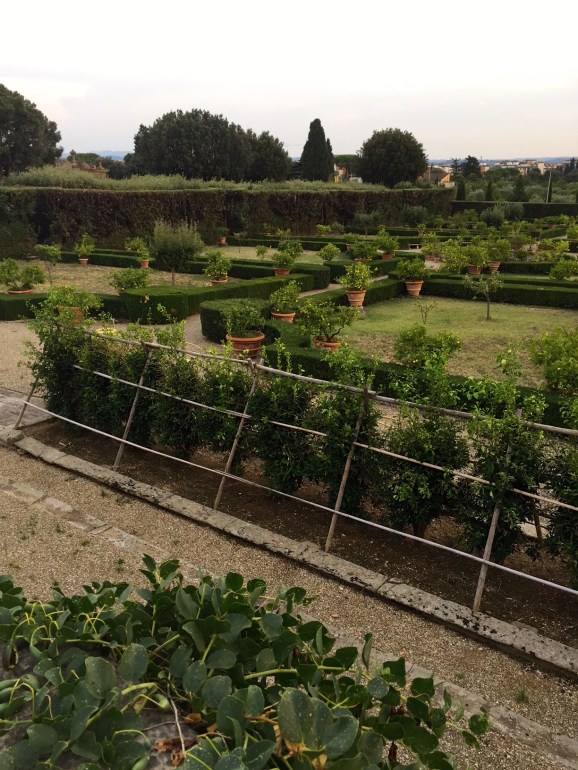
I recently visited, on a lovely parcel of land just outside of beautiful Firenze, a once-magnificent villa known as Villa la Quiete. Located upon the Castello hill, at the foot of the Monte Morello, this villa is considered to be among the most important settings of its kind. It takes its name from a fresco by Giovanni da San Giovanni entitled, La Quiete, which dominates the winds (see below).
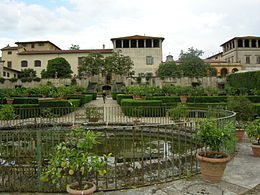
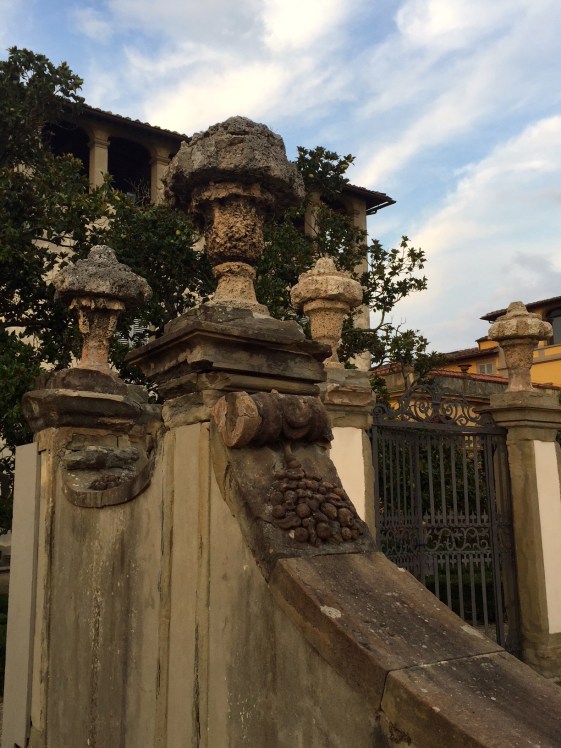
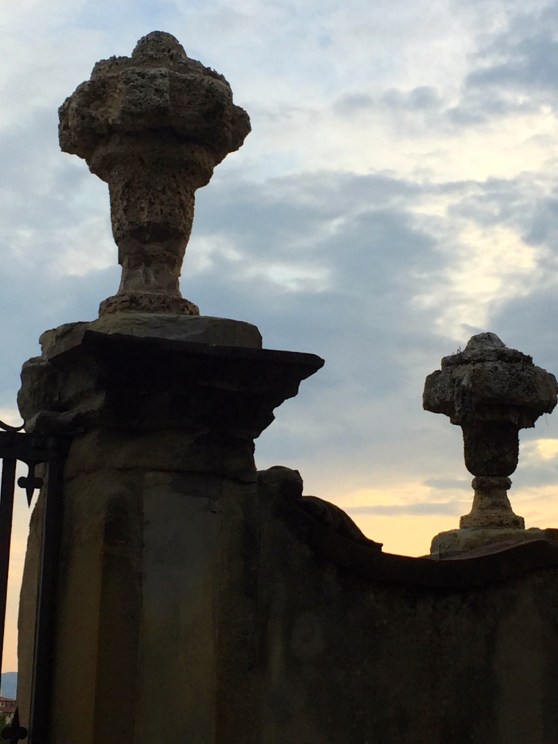
The Medici family particularly loved this area and owned some of its most beautiful residences, including the Villa di Careggi, Villa di Castello, and the Villa della Petraia. You can locate Villa la Quiete on these 2 Google Earth slides below and, in the last one, also locate the 3 Medici villas just mentioned.
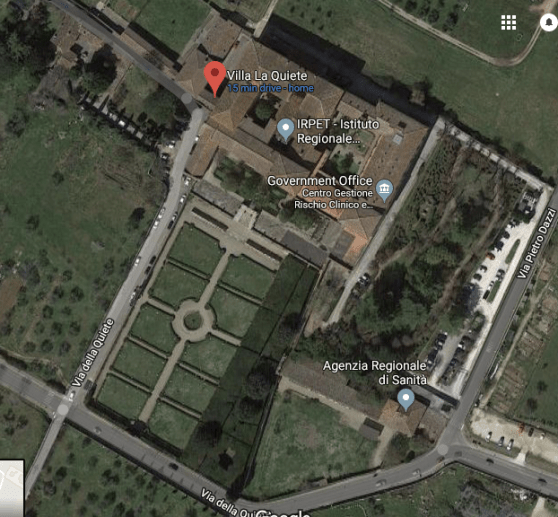
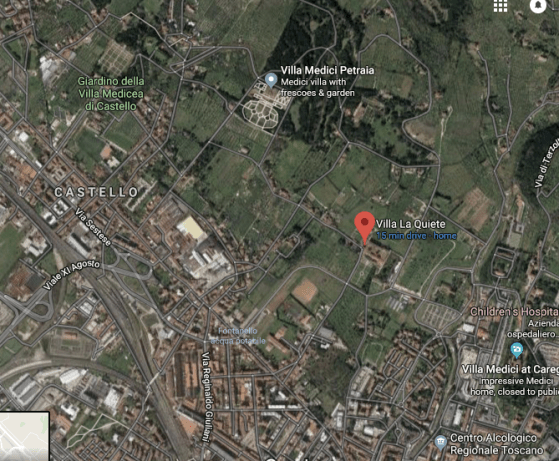
This parcel of land has lots of history, naturally. In 1438 it was given by the Florentine Republic to the condottiere Niccola da Tolentino, for his military services. In 1453 the Medici acquired the land, and later Cosimo I passed it to the commander of the Order of Santo Stefano.
In 1627 the property was again acquired by a Medici, this time by Cristina di Lorena. She had the palazzo rebuilt, and had a suspended passage constructed (a small variant of the Vasari Corridor), connecting the villa to a nearby Camaldolese monastery. Cristina also commissioned the painting of la quiete che pacifica i venti, by Giovanni da San Giovanni in 1632.
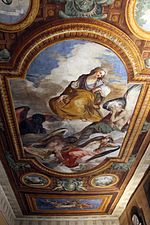
Cristina’s name even appears in another fresco, by Giovanni da San Giovani. in which curious anagram masquerading as a hymn inscribed on a scroll supported by putti in flight.
The villa has, thereafter, been known as Villa la Quiete.
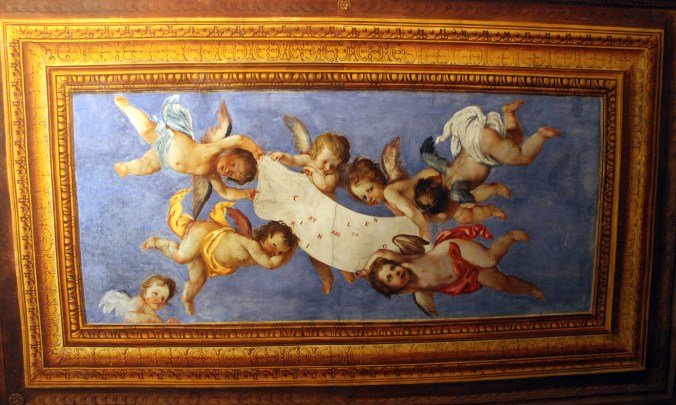
The complex was bequeathed to Cristina’s grandson, the Grand Duke Ferdinando II. Later on, in 1650, the villa was sold to Eleonora Ramirez de Montalvo, who dedicated it as a country retreat for a congregation she founded, the Montalves. At that time the villa was called Istituto della Quiete.
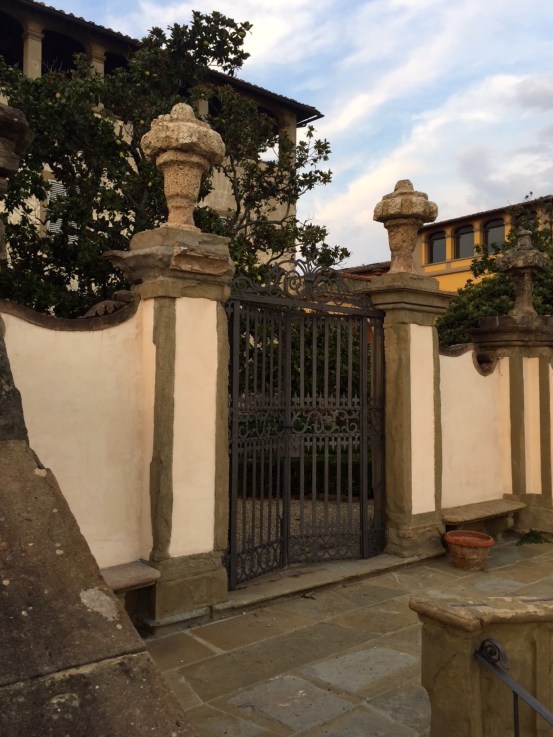
After Eleonora’s death, her friend the Grand Duchess Vittoria della Rovere administered the Institute, and sponsored the construction of the Montalve church, completed in 1688.
Anna Maria Luisa de’ Medici, the last descendant of the Medici family, resided in the villa between 1720 and 1730 and she furnished it with objects from the Palazzo Vecchio and Palazzo Pitti.
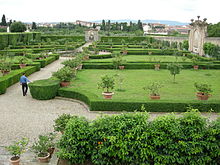
Anna Maria had the villa renovated and redecorated and she installed a beautiful grand garden, bringing water to it by a pipe to the nearby Fonte delle Lepricine.
The director of this new, vast garden was the botanist Sebastiano Rapi, who just happened to be the person in charge of the Giardino Boboli. Rapi, with the support of Anna Maria, brought the best botanical and fruit species from the various Medici villas.
Even today, the specimen magnolia trees they selected still grow in a courtyard connecting the garden to the palazzo.
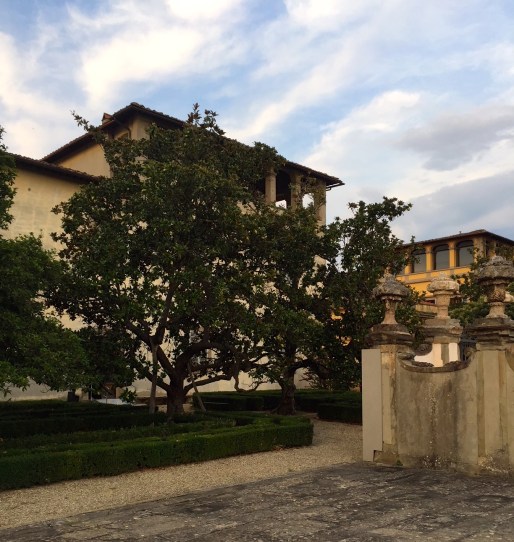
The garden today remains one of the rare examples of an 18th-century garden, with no changes in the plantings, other than refreshing them. You can see the layout of the formal, rectangular gardens, lined with pots of lemon trees, in the Google slide:
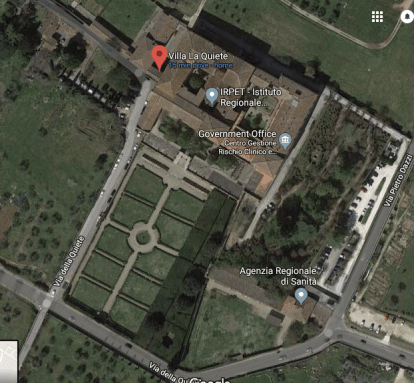
The secular order of Montalve, dedicated to the education of girls of good family, only had to abandon their church of San Jacopo di Ripoli in 1886, and they brought their numerous furnishings and works of art with them to the Villa la Quiete.
It was only in 1937 that the order became religious. The villa complex remained for a long time the seat of the education institute, ending only in 1992. The last pupil graduated in 2001.
In February 1992 the villa, together with the entire real estate of the Conservatory of the Montalve alla Quiete, passed University of Florence. A small part of the villa has been used by the University for the Center for Culture for Foreigners and Polo offices.
It is possible to visit the villa, as I did, only by appointment and in the months of July and August on Tuesday and Thursday evenings. To arrange a visit, contact the Ufficio Servizi Didattico Divulgativi, Sistema Museale D’Ateneo, tel 055-2756444 or by email to edumsn@unifi.it.
In a few days I will be writing a post about the artworks located in the villa.
“The thought strikes me, as it has so often in thinking things over, that had I been somewhat older when I was younger, how much more I could have profited by my opportunities” said by artist Elihu Vedder.
Vedder, Elihu. The Digressions of “V”: Written for His Own Fun and That of His Friends. Boston: Houghton, 1910
Sirpa Salenius. Sculptors, Painters, and Italy: Italian influente on Nineteenth American Art: 3 (OltreOceano) (Kindle Locations 1805-1807). Simplicissimus. Kindle Edition.


You must be logged in to post a comment.