The flowers are very large and magnificent! I love my iphone camera, but it didn’t live up to its potential with this shoot.
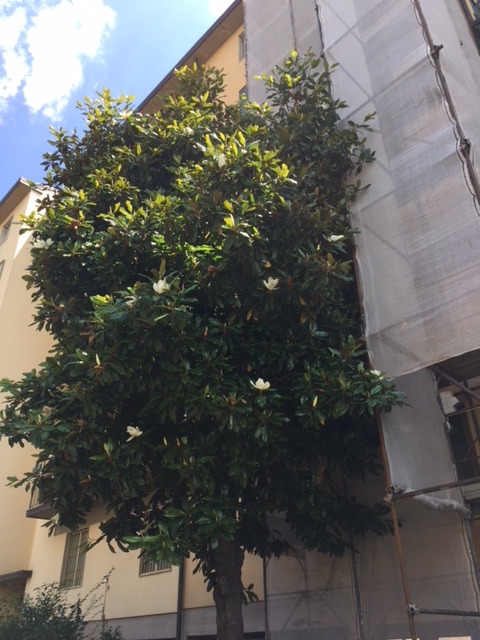


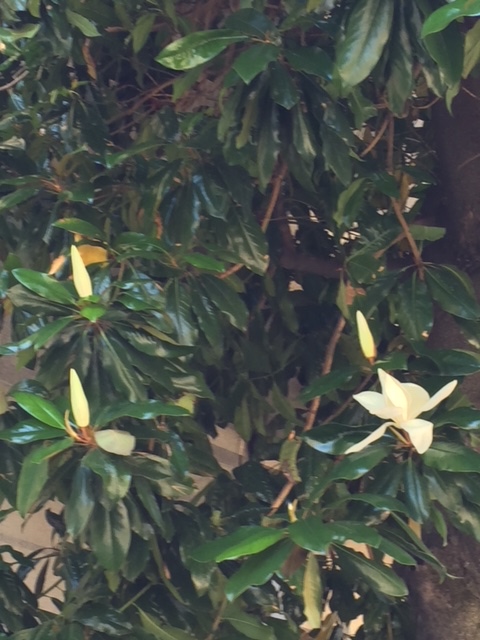

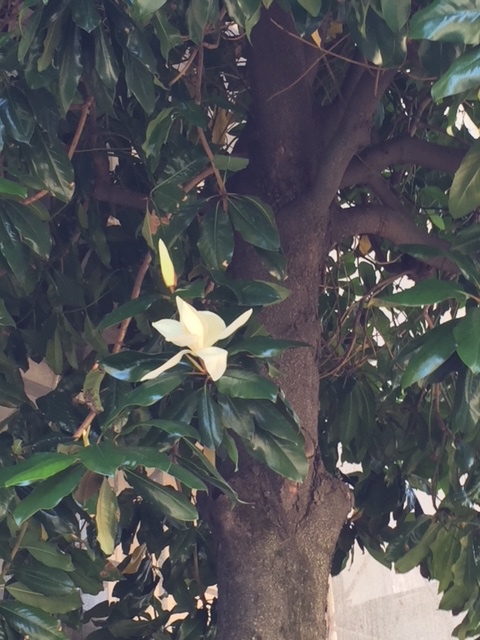
The flowers are very large and magnificent! I love my iphone camera, but it didn’t live up to its potential with this shoot.
The morning wind spreads its fresh smell.
We must get up and take that in,
that wind that lets us live.
Breathe before it’s gone.
—Rumi
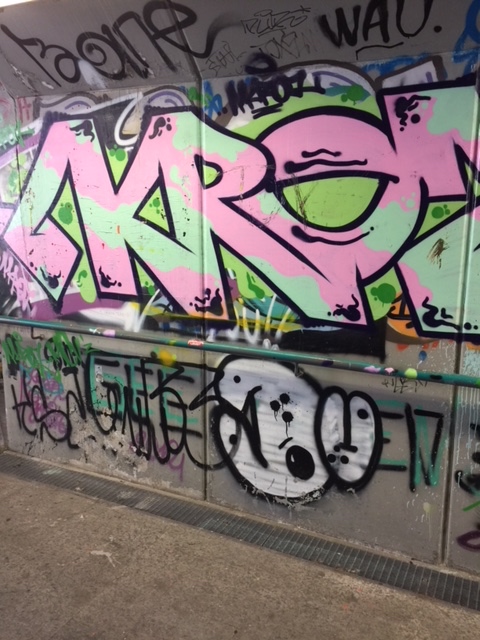
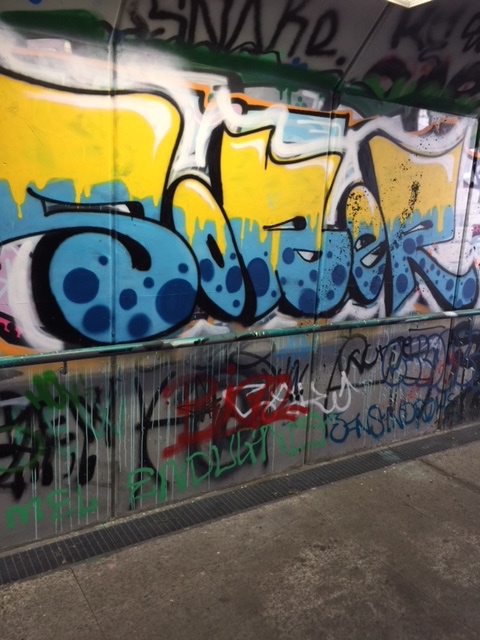
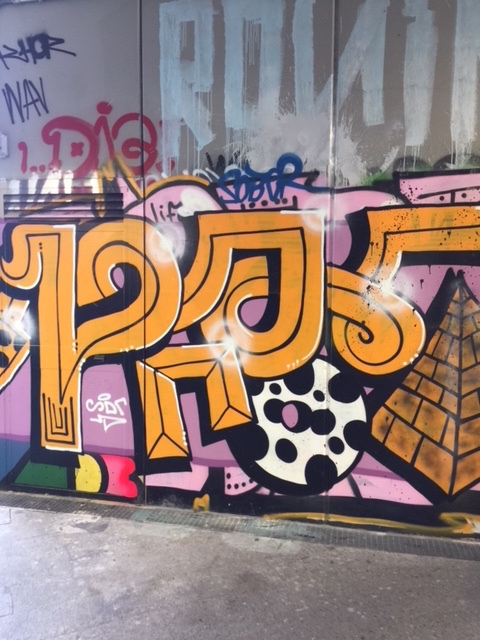
The Japanese [have a] notion of wabi-sabi, of seeing beauty in simple, earthy things that are imperfect and fleeting: the remains of a graffitied wall revealing large old stones beneath it; green tendrils peeking over walls. “Wabi-sabi is a beauty of things imperfect, impermanent and incomplete,” writes the designer and writer Leonard Koren in his meditation on the subject. Wabi-sabi, he says, can spring from “a sad-beautiful feeling,” a kind of melancholy: “The mournful quarks and caws of seagulls and crows. The forlorn bellowing of foghorns.”
Orhan Pamuk used the Turkish word huzun to describe his city’s communal melancholy in his novel Istanbul, just as his fellow countryman Ahmet Hamdi Tanpinar did more than half a century earlier in A Mind at Peace. Huzun is a feeling, a heartache, as Pamuk puts it; something he said could be seen in Istanbul in an ancient clock tower, an old postcard seller, a fisherman heading out to sea, neglected mosques, “everything being broken, worn out, past its prime.” I made my way up ever more stairs, with
Rosenbloom, Stephanie. Alone Time: Four Seasons, Four Cities, and the Pleasures of Solitude, Penguin Publishing Group. Kindle Edition.

Today’s issue of The Florentine carried the following news item. Before reading the article, just consider for a moment: how many hospitals do you know that:
I know the answer is none! It is mind blowing to consider all of this! (I was lucky enough to walk by this hospital 2x a day for almost 10 months; my Italian language school is across the street. It was comforting to know that when I truly lost my mind [because learning another language is molto difficile!], I was not too far from medical treatment. :-) )
The oldest hospital in Florence, Santa Maria Nuova, has launched a fundraising campaign during its 730th year.

On June 21, the Santa Maria Nuova Foundation has organized an invitation-only fundraising dinner with the sole purpose of restoring the hospital’s basements.
The subterranean zone of the historic building is home to “Leonardo’s basins”, supposed to be where Da Vinci dissected human cadavers, although records bear no proof of this having occurred, and the underground passageway that the oblate nuns, the hospital’s former nurses, used to reach the wards from the nearby convent.

On June 23, the hospital will be opening its doors to the public with a book presentation scheduled at 11am, free guided tours at 7pm (meet outside the hospital entrance at 6:50pm) and a classical concert at 9pm in the church of Sant’Egidio.
“We are delighted to welcome Florentines to celebrate the city’s oldest hospital, which is 730 years old this year,” announced Giancarlo Landini, president of the Santa Maria Nuova Foundation. “It’s an opportunity to remember the history of this extraordinary place of care and help, which was founded in 1288 by Folco Portinari, the father of Beatrice immortalized by Dante, and who thanks to the generosity of benefactors was able to receive important works of art.
We also celebrate today’s Santa Maria Nuova, showing how we have reached this restoration and we will look to the future, considering how to make the most of our artistic and historic heritage, starting with the restoration and renewal of the former crypt of the church of Sant’Egidio and the hospital’s basements, the reason why the foundation has organized the fundraising dinner on June 21.”
At the press presentation, Tuscany’s health councillor Stefania Saccardi commented, “In recent years, the regional health unit has modernized the hospital while protecting its historic value. Now, through the hospital’s foundation, the time has come to restore its basements.”
Summertime, and the livin’ is easy…

A beautiful film for a relaxing, lovely summer evening is Katharine Hepburn in Summertime. This achingly bittersweet dream of a film was directed by David Lean and released in 1955. The debonair Rossano Brazzi played Miss Hepburn’s love interest and the movie was based on the play The Time of the Cuckoo by Arthur Laurents.
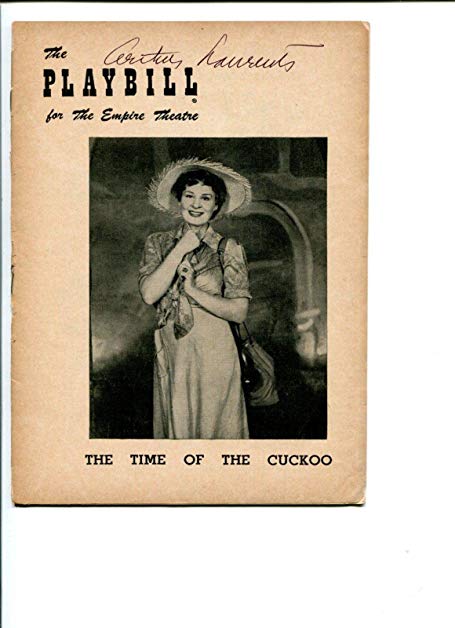
Beginning with Summertime, Lean began to make internationally co-produced films financed by the big Hollywood studios.


Interestingly, Arthur Laurents had written The Time of the Cuckoo specifically for Shirley Booth, who starred in the 1952 Broadway production and won the Tony Award for Best Actress for her performance.
Ever faithful Wikipedia tells us that: Italian officials initially resisted director David Lean’s request to allow his crew to film on location during the summer months, the height of the tourist season. The local gondolieri, fearful they would lose income, threatened to strike if he was given permission to do so.

The problem was resolved when the American production company, United Artists, made a generous donation to the fund for the restoration of St. Mark’s Basilica. Lean also had to agree to a Catholic cardinal that no short dresses or bare arms would be seen in and around the city’s holy sites.
In one scene, Miss Hepburn’s character, Jane Hudson, falls into a canal when she steps backward while photographing Di Rossi’s shop in Campo San Barnaba.


Hepburn was concerned about her health and didn’t want to be in the Venetian waters. Lean persuaded her to do it anyway because he felt it would be obvious if there was a stunt double.
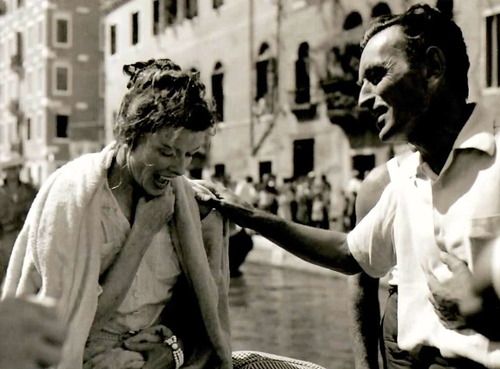
Lean poured a lot of disinfectant into this spot on the canal, but that caused the water to foam, which only added to Hepburn’s reluctance. The coup de grace was that he needed to film the scene 4 times until he was satisfied with the results. That night, Hepburn’s eyes began to itch and tear. She eventually was diagnosed with a rare form of conjunctivitis that plagued her for the remainder of her life.

Don’t forget it was the 1950s in a conservative world. Upon seeing the completed film, the Production Code Administration head, Geoffrey Shurlock, notified United Artists that the film would not be approved, because of the theme of adultery. Of particular concern was the scene in which Jane and Renato consummate their relationship. Eighteen feet of footage was deleted, and the PCA granted its approval.
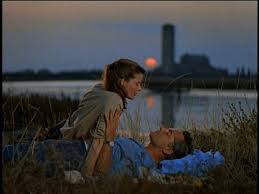
The National Catholic Legion of Decency, however, objected to a line of dialogue that was later trimmed, and the organization bestowed the film with a B rating, designating the film “morally objectionable in part.”
In later years, Lean described the film as his favourite. He became so enamoured with Venice during filming he made it his second home.
Bosley Crowther of The New York Times observed that:
“The challenge of making Venice the moving force in propelling the script has been met by Mr. Lean, as the director with magnificent feeling and skill…through the lens of his color camera, [captures] the wondrous city of spectacles and moods. It becomes a rich and exciting organism that fairly takes command of the screen. And the curious hypnotic fascination of that labyrinthine place beside the sea is brilliantly conveyed to the viewer as the impulse for the character’s passing moods…It is Venice itself that gives the flavor and the emotional stimulation to this film.”

The film was successful: It was nominated for the BAFTA Award for the Best Film; David Lean won the New York Film Critics Award for Best Director and was nominated for the Academy Award for Best Director. Hepburn was nominated for the Academy Award for Best Actress and was also was nominated for the BAFTA Award for Best Foreign Actress.
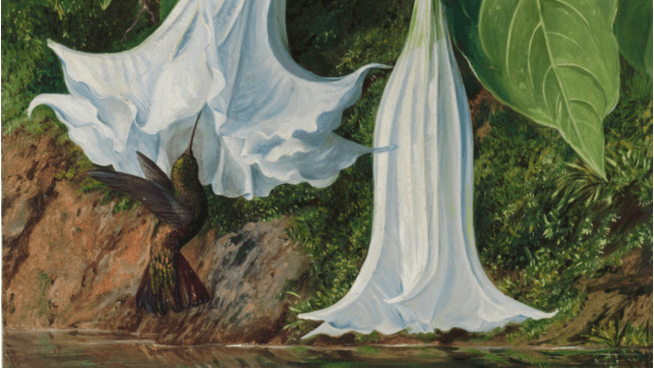
It wasn’t uncommon for early women explorers to have a taste for solitude. Take Marianne North, the Englishwoman who in the 1800s circumnavigated the globe unaccompanied, spending thirteen years traveling and skirting Victorian convention.
Her paintings of flowers and landscapes hang at the Royal Botanic Gardens at Kew, outside central London.
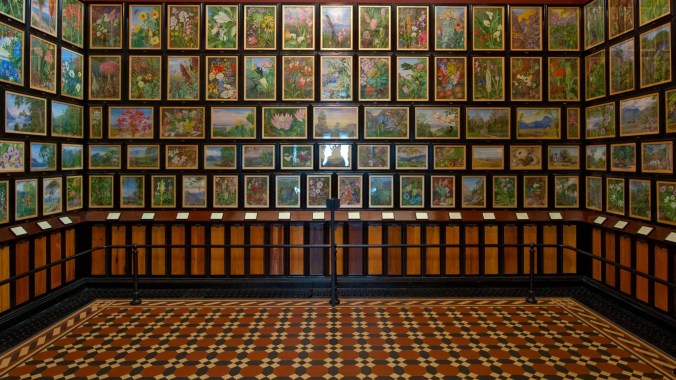
In her autobiography she recounts her travels, which she didn’t begin until she was forty.
In Nainital in the Himalayas in India’s Uttarakhand state, she liked sitting in the sun.
In Philadelphia, she walked the parks and Zoological Gardens enjoying idle days.
In the Bunya Mountains of Queensland, Australia, she said she enjoyed “my entire solitude through the grand forest alone.” Today, a genus of tree and several plant species are named for her.**
You can see North’s work here: https://www.kew.org/mng/gallery/
**Rosenbloom, Stephanie. Alone Time: Four Seasons, Four Cities, and the Pleasures of Solitude, Penguin Publishing Group. Kindle Edition.
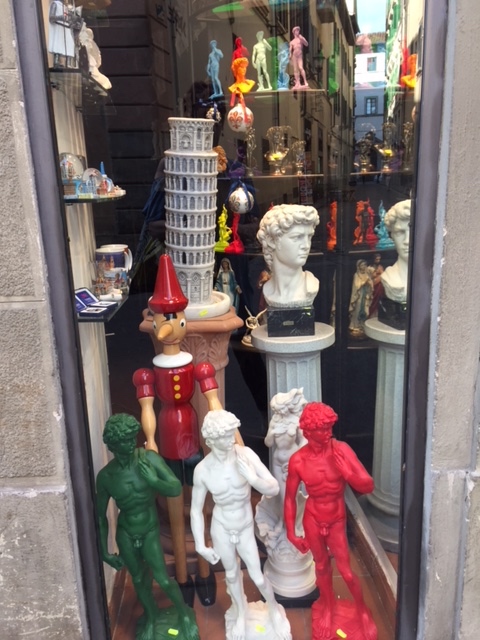
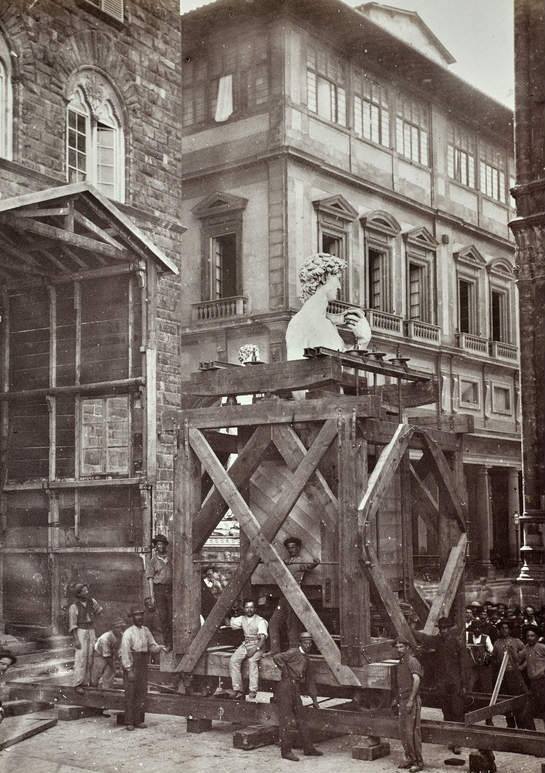
Il David ( originale ) di Michelangelo ingabbiato,poggiato su rotaie. Poi sarà trasportato all’Accademia di Belle Arti. Foto di Vincenzo Paganori .


You must be logged in to post a comment.