Horti Annalena, Firenze
There’s an amazing private garden in the Oltrarno section of Florence that just might win the award in my book for the finest garden of its type in Florence. I’ve seen quite a few of them, and so far, this is my favorite.
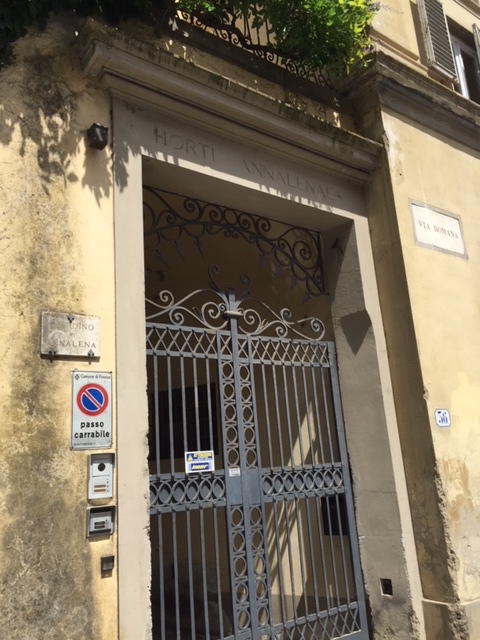
It is the Horti Annalena, as you can see in the picture of the engraved sign over the main door. Look at the picture carefully and you can also find the street sign, which will help you locate the garden in the Oltrarno.
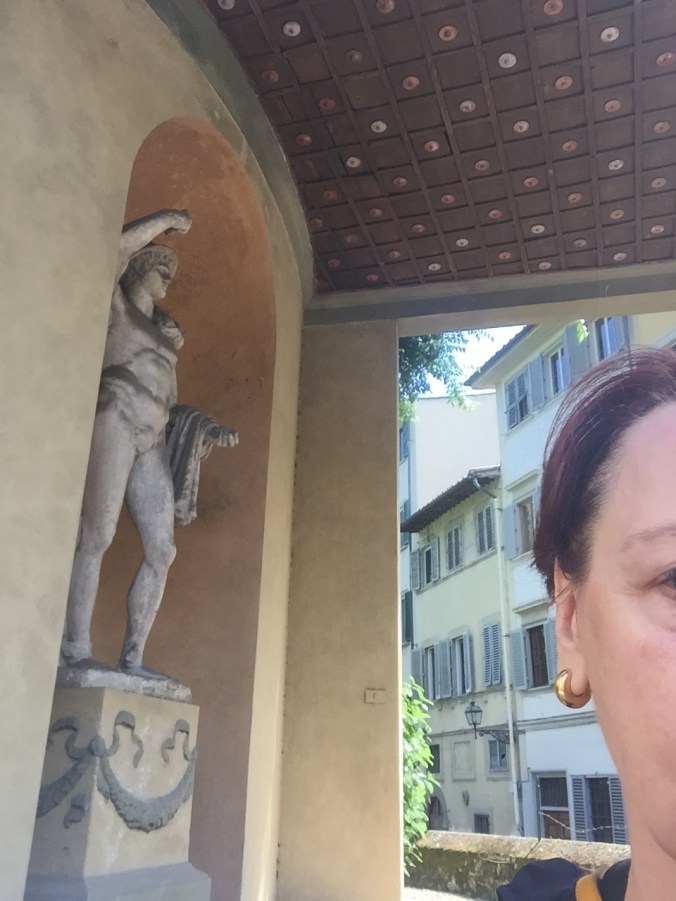
Today we enter the garden through this opening, which is graced with marble statues on either side.
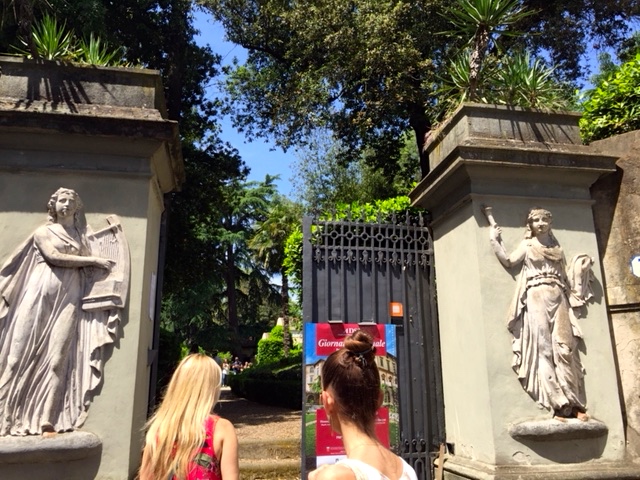
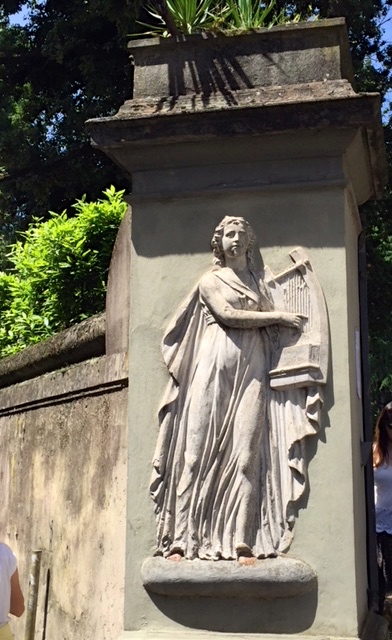
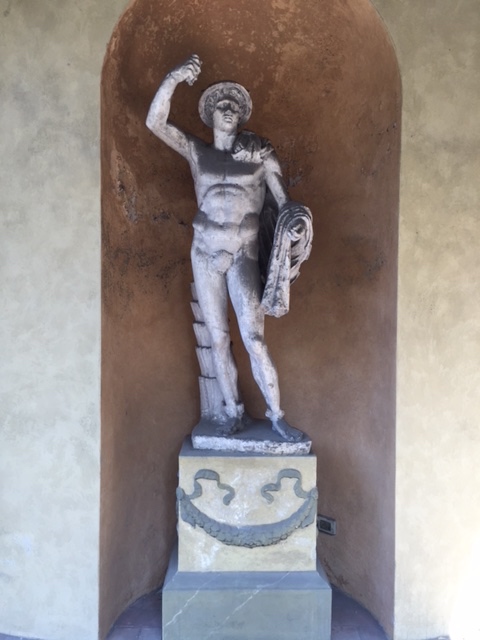
The fine statues represent 2 of the muses one might find in a garden space: a figure personifying music on the left:
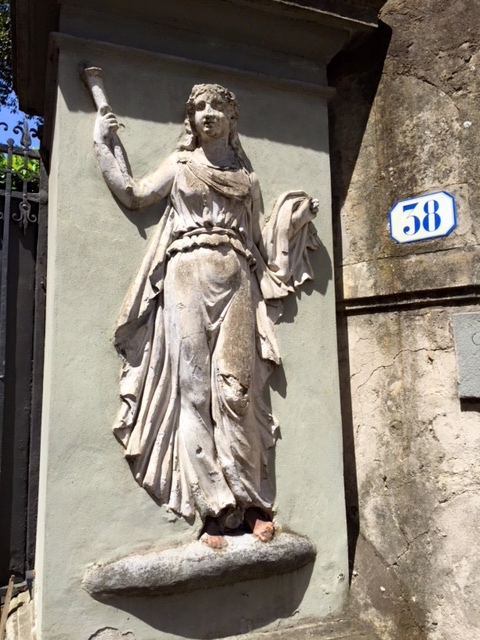
And, I am sorry to admit, but I don’t know what the 2nd muse specifically represents. She holds what I think is a torch, so perhaps she signifies knowledge or enlightenment. Gardens will give you either or both.
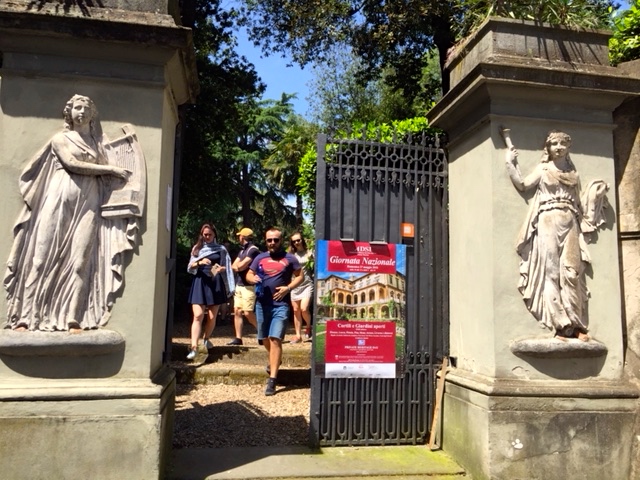
I guess that random guy shown in my picture below must be Superman, or so his t-shirt says. I hope he acquired the powers granted by these two marble muses. One can only hope!
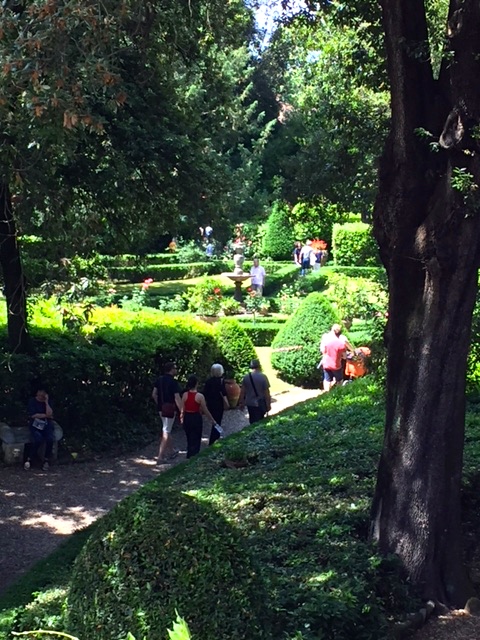
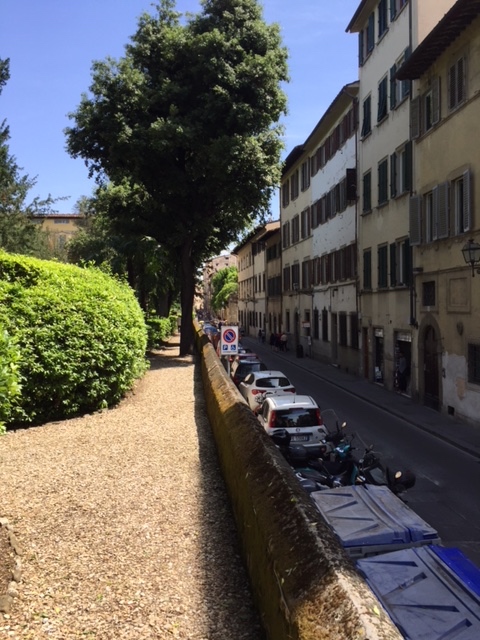
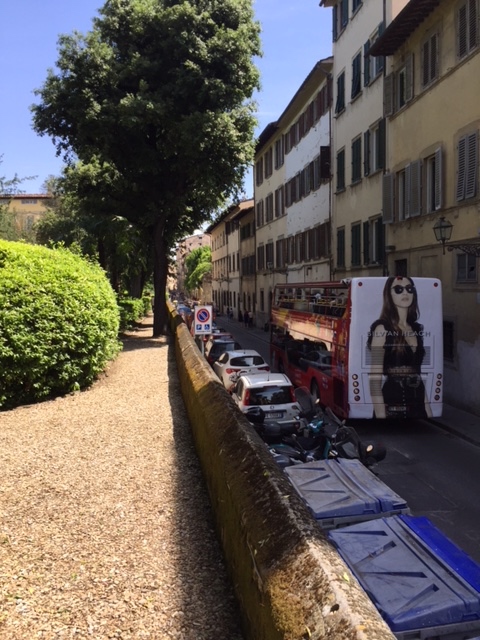
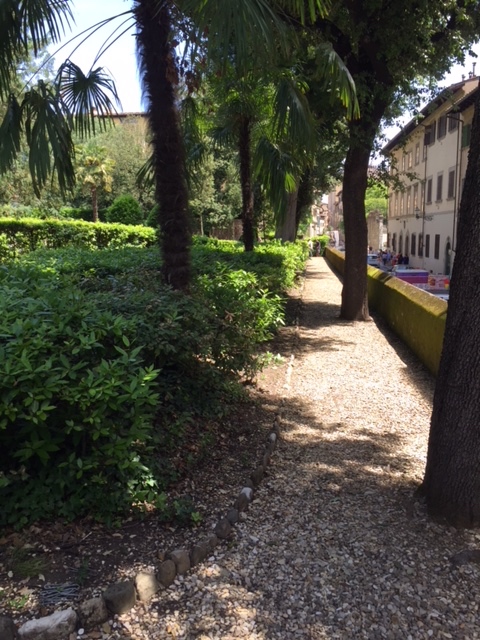
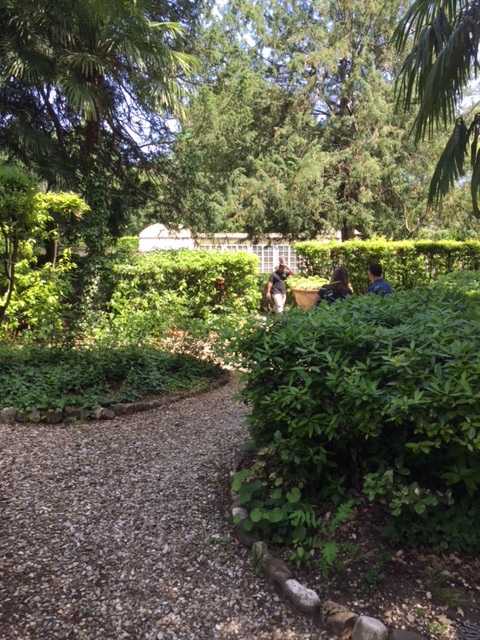
Once you enter the Horti Annalena, otherwise known as the Corsi Giardino, you are presented with this incredible view. When you imagine it in your mind’s eye, be sure to include birdsong. Trust me, it’s there!
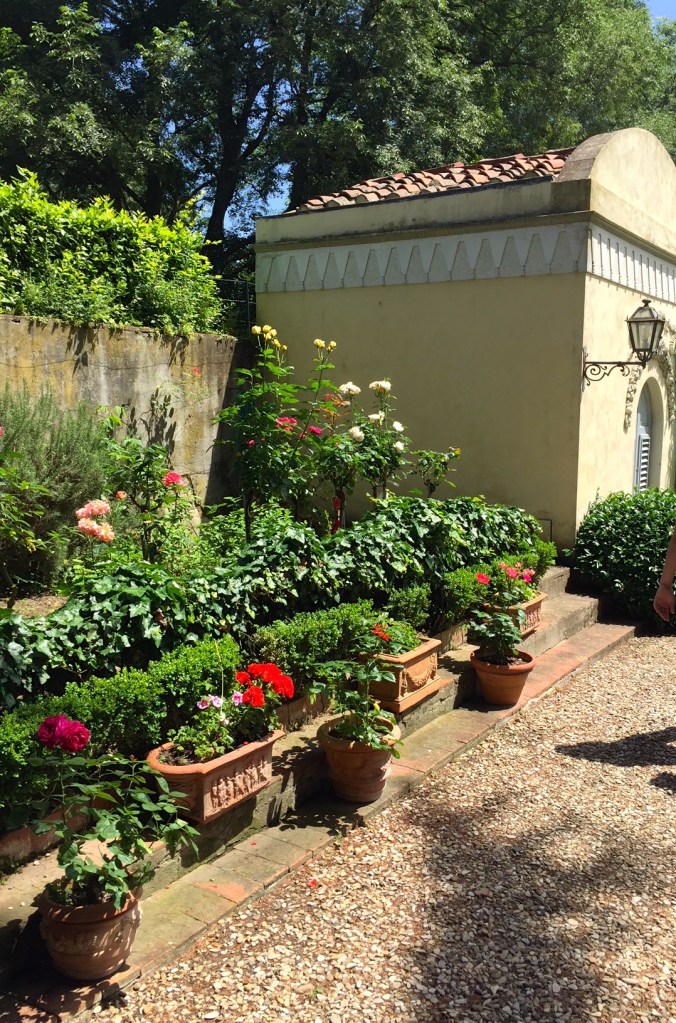
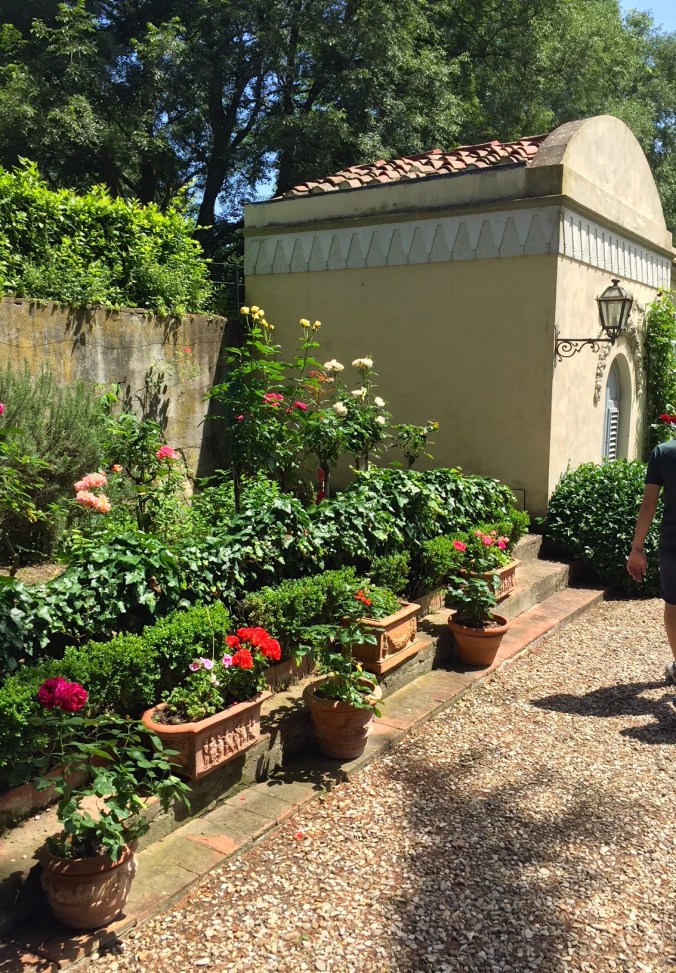
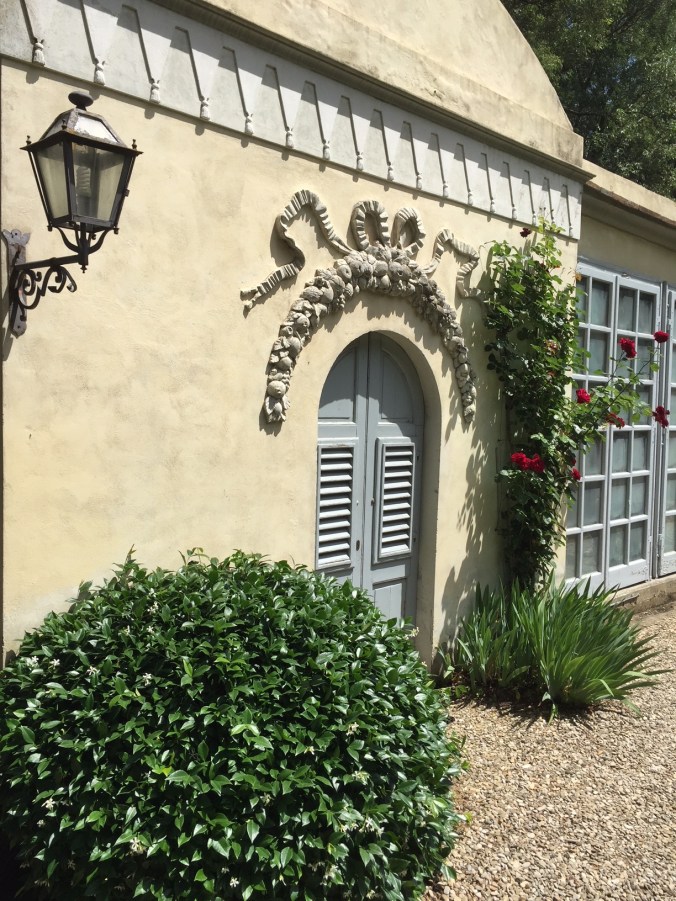
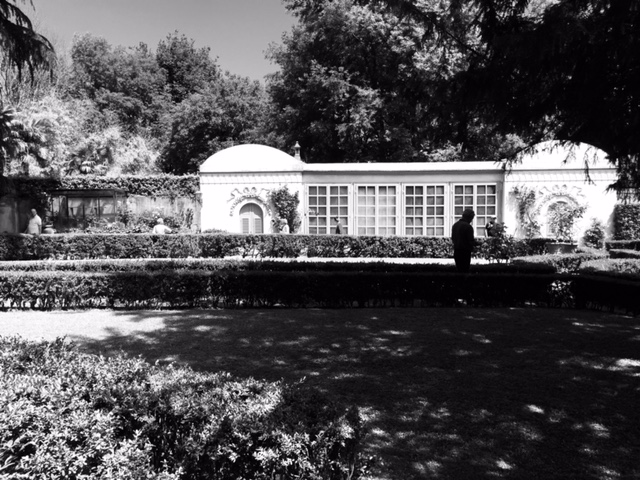
I do not know what in the heck happened in the picture below! How I switched to black and white is beyond me, but at least you get a view of this pretty little garden house inside the Corsi Giardino.
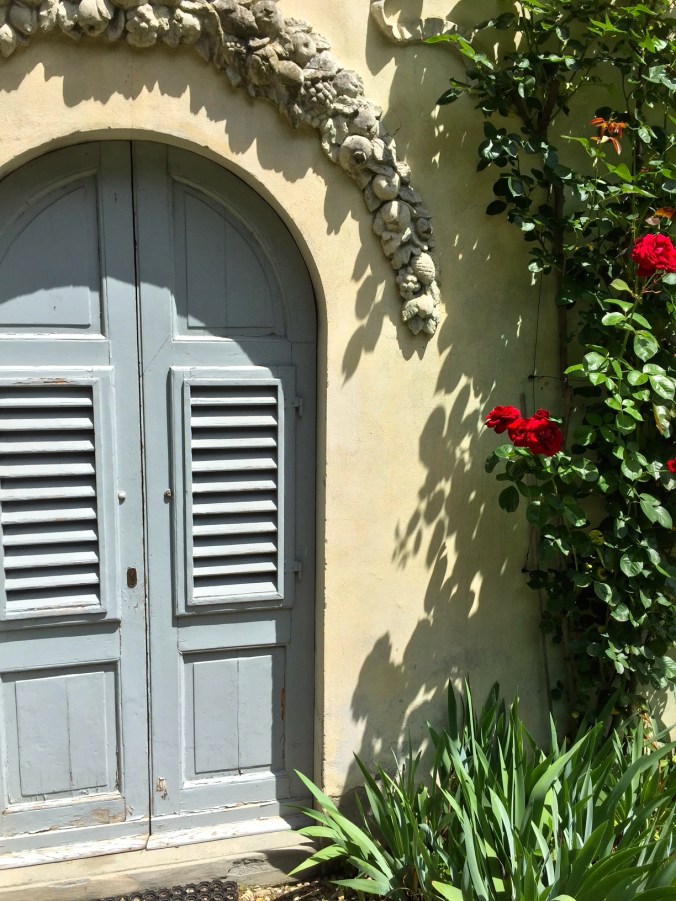
Back to color, fortunately!
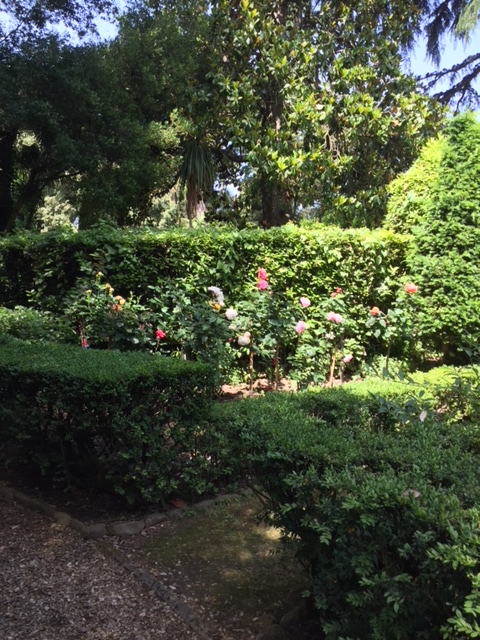
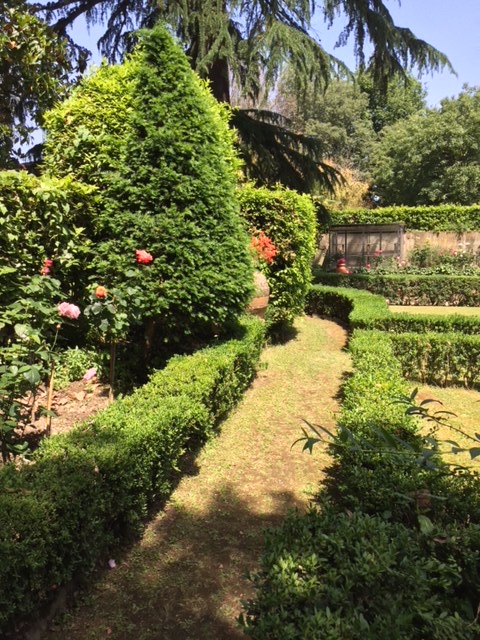
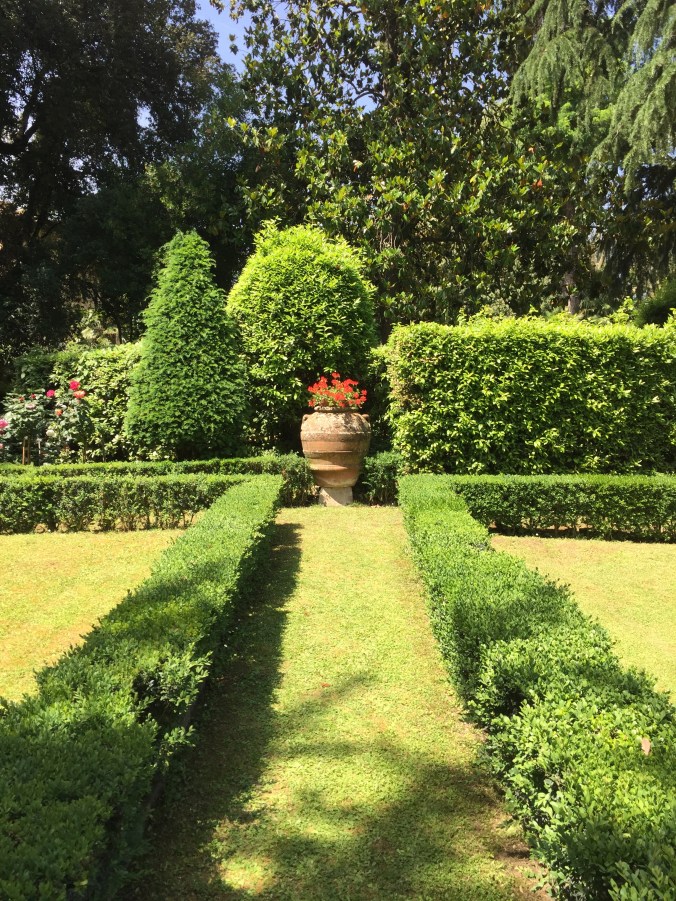
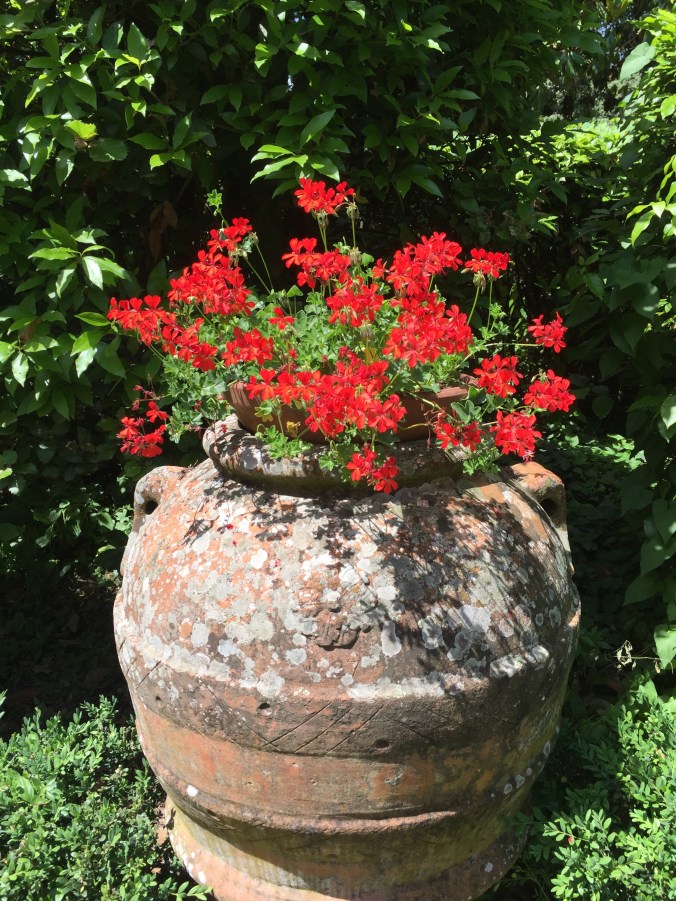
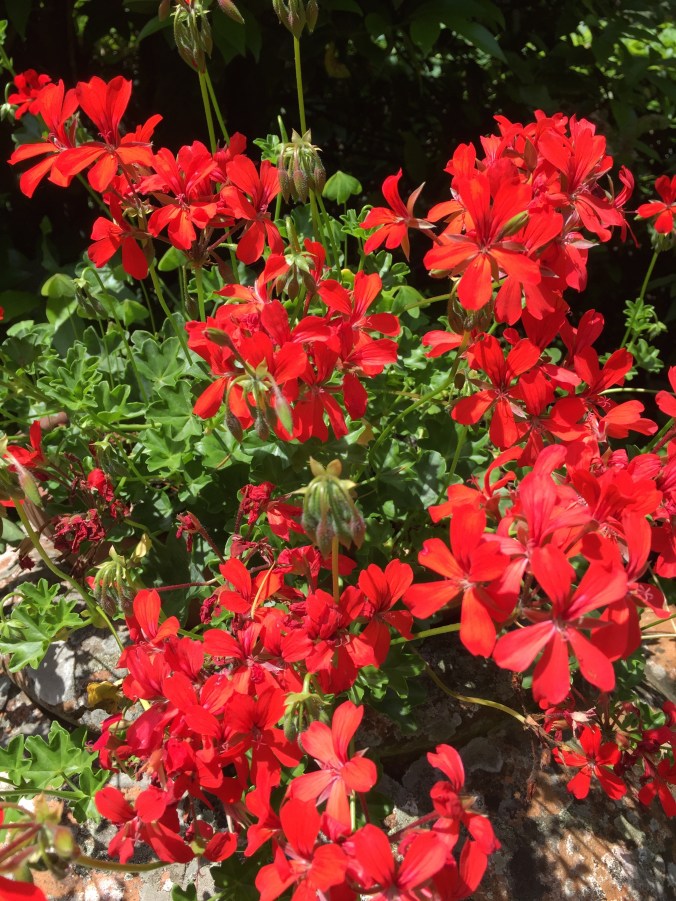
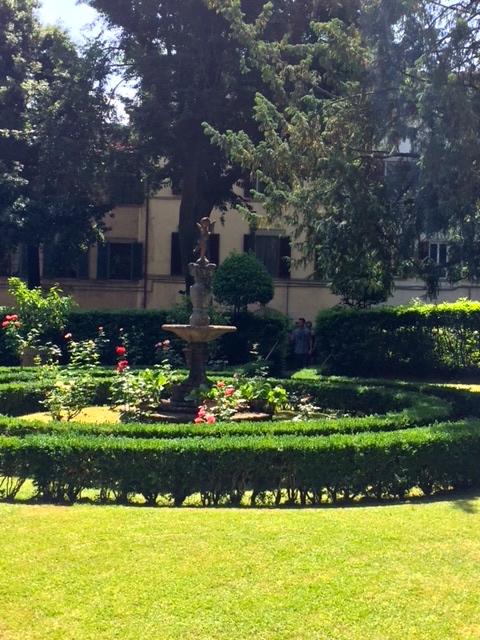
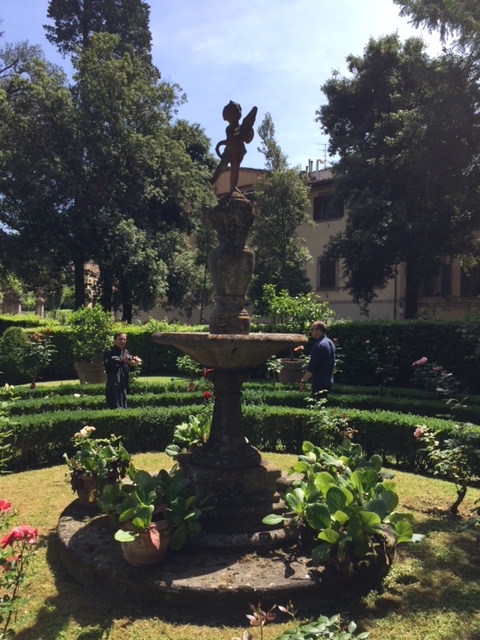
No garden is worth its salt unless it has a fountain! And Giardino Corsi has one, of course.
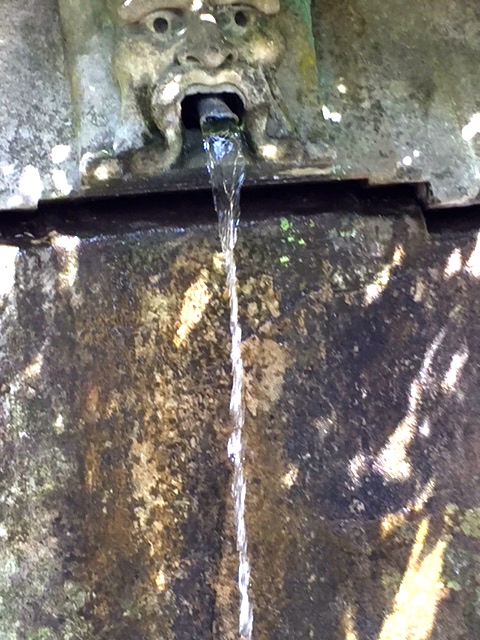
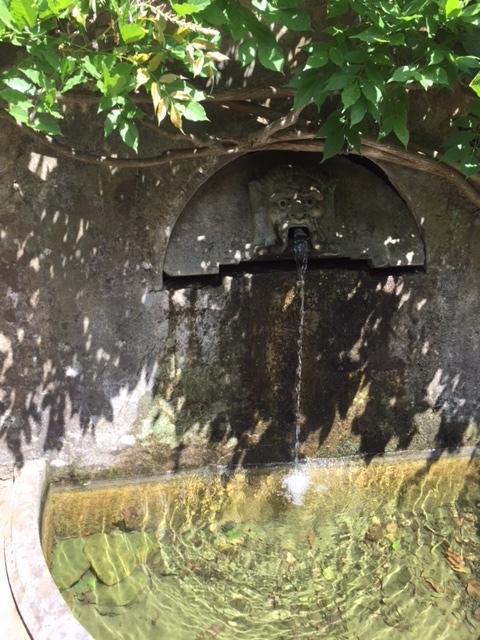
On a surrounding wall of the garden you will find steps to climb above the fountain. You will be glad you climbed them, for you are presented with this view of a gate to the Boboli Gardens.
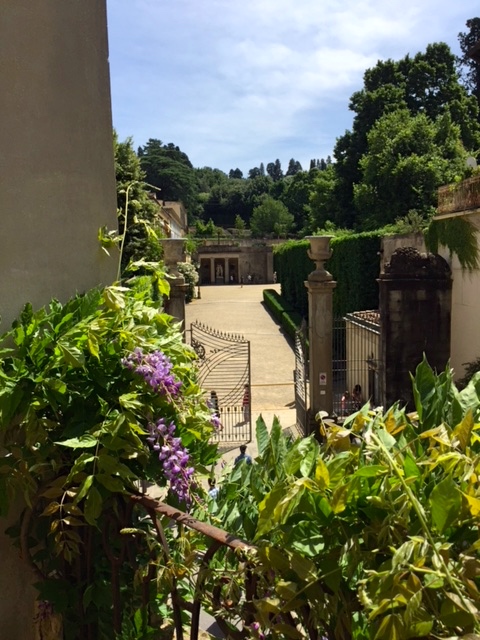
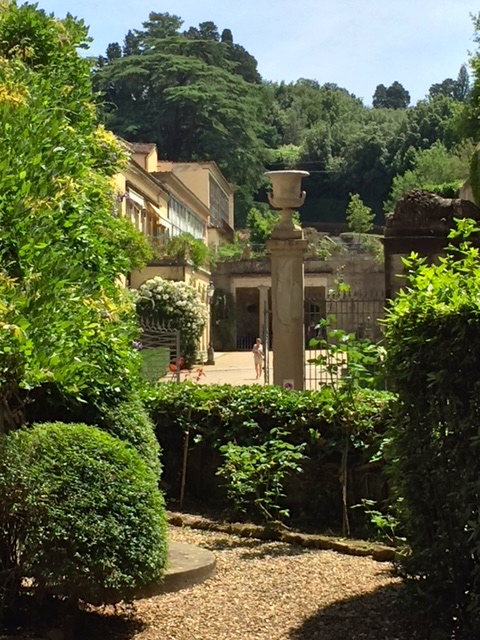
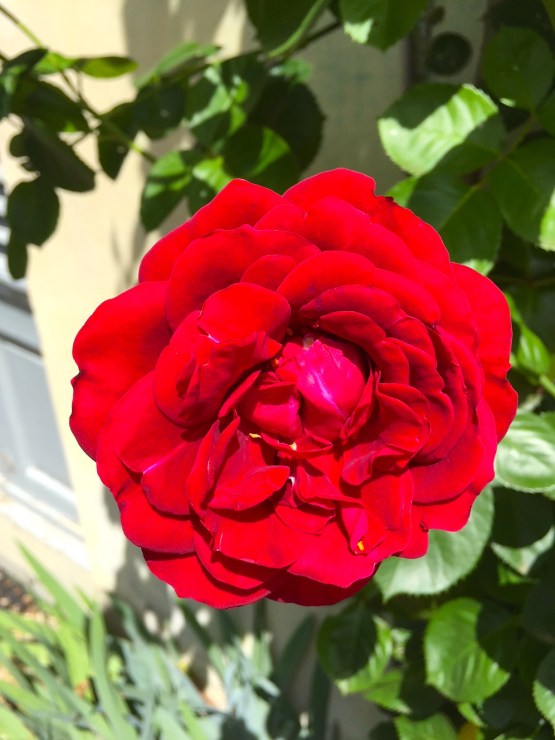
On the day I visited the garden, wisteria was still trimming the corners of many vistas, including this one.
I think it’s pretty clear, this garden is a gem!
Maria Callas sings Puccini as Lauretta
The case for time alone, with art
[The painter] Delacroix [was] himself a proponent of alone time. (His former apartment and studio on the beautiful Place de Furstenberg is a museum as well.)

“How can one keep one’s enthusiasm concentrated on a subject when one is always at the mercy of other people and in constant need of their society?” he wondered in his journal. “The things we experience for ourselves when we are alone are much stronger and much fresher.”
Research suggests this is true. One study, part of a project supported by the Swiss National Science Foundation, found that visitors who attended an exhibition at a fine-art museum with other people found it significantly less thought-provoking, were less convinced by the exhibition design, and were less able to enjoy the museum space in silence than those who toured the museum alone.
Those who went with companions experienced the beauty of the artworks to a lesser extent, and were less able to experience a deep connection to the art. For the study, more than five hundred and fifty visitors to the Kunstmuseum St. Gallen in Switzerland were given an electronic data glove to wear as they toured the museum. The glove enabled the researchers to record the paths of the participants, as well as other information, including the time they spent in front of the artworks, their speed, heart rate, and fluctuations in skin conductance level, a potential indicator of emotional processes.
The subjects also filled out visitor surveys before entering the exhibition and after leaving it.
The study, published in the journal Museum Management and Curatorship, found that conversation interfered with visitors’ making a connection to the art. People who weren’t discussing the art with a companion were more frequently and more strongly emotionally stimulated by it. They were able to “enter the exhibition with ‘all of their senses open and alert’ to a greater degree.”
When I go to a museum with friends, I remember the outing. When I go alone, I remember the art.
Certainly, visiting a museum as a social occasion is a wonderful way to spend time with people we love. But there are also upsides to going by oneself, as the research suggests.
A person’s response to a work of art may be an emotional, private experience. There are paintings and sculptures you want to fall into, wrestle with, or simply sit across from in silence.
Indeed, while conventional wisdom holds that social interaction helps museum visitors learn by discussing what they’re seeing with fellow attendees, a study published in Curator: The Museum Journal, challenged that notion, showing that there is no meaningful learning advantage to going with others or going alone; both can be equally beneficial, just in different ways.
In the weeks after their visit, “solitary visitors were just as likely as paired visitors to have discussed the things they had seen or learned with family or friends,” researchers at Queensland University of Technology in Brisbane, Australia, reported. For the study some forty solo visitors and forty visitors in pairs were observed and interviewed duringtheir visit to the Queensland Museum.
Four weeks later, 40 percent of participants took part in a follow-up telephone interview. When asked how being on their own contributed to their experience, the most common response was that it allowed them to explore the exhibition at their own pace.
Other reasons offered related to having greater choice and control, and freedom from distraction. Participants had responses like “I can look at what I want to look at,” “I can get more immersed in it,” “I can feel what I feel without input from others,” and “You miss more when you are in a group.”
Rosenbloom, Stephanie. Alone Time: Four Seasons, Four Cities, and the Pleasures of Solitude, Penguin Publishing Group. Kindle Edition.
Il giardino di Palazzo Giucciardini, Firenze
I was lucky enough to pay a visit recently to the beautiful garden behind the Palazzo Guicciardini in the Oltrarno in Florence. Florence is blessed with a multitude of these private oasises, but they are difficult to visit for obvious reasons.
You enter this garden through an arched entryway, and the visual excitement mounts as you get closer to the garden.
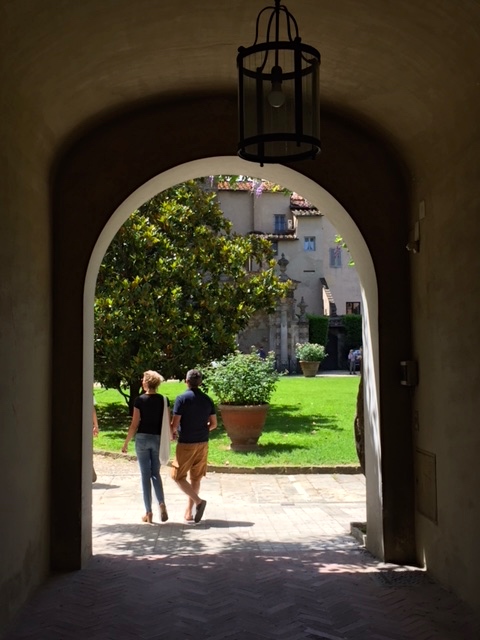
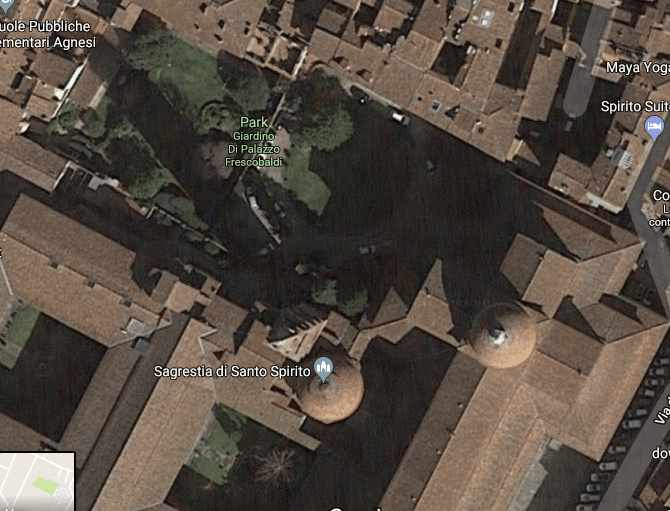
Upon leaving the arched walkway, you suddenly are presented with this beautiful borrowed view of the Santo Spirito campanile, the back of which abuts the garden.
Please notice the pale lavender blooms of the wisteria vine that trims the arch. In a word: gorgeous.
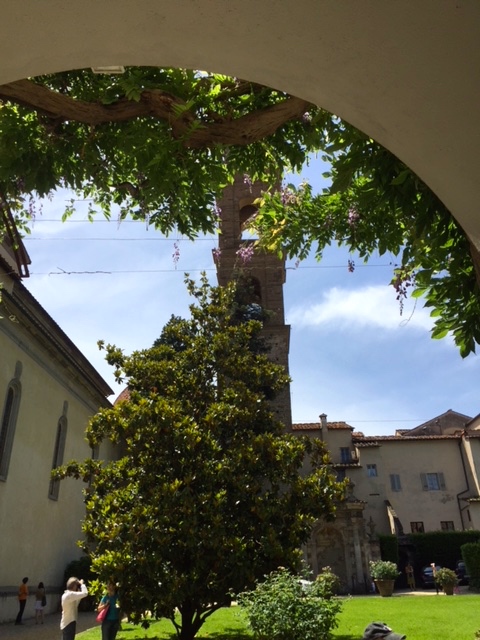
The campanile forms a truly dramatic backdrop for the large, grassy garden.
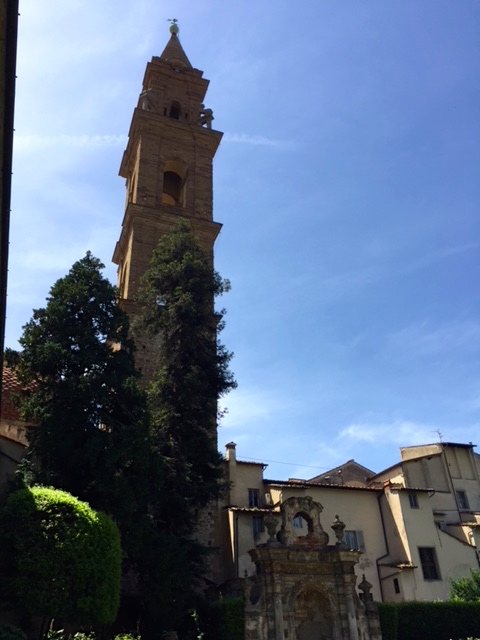
On the back section of the wall that surrounds the Giucciardini garden, a large elaborate fountain was built many centuries ago, and it most certainly was placed in this particular spot to make the optimum use of the borrowed vision of the campanile.
As you can see in the pictures below, together the fountain, tall trees, and borrowed campanile form a composition that invites the eye to travel up, up and up.
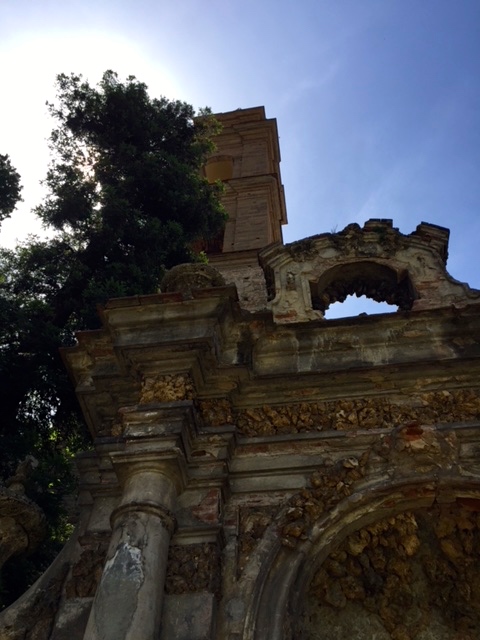
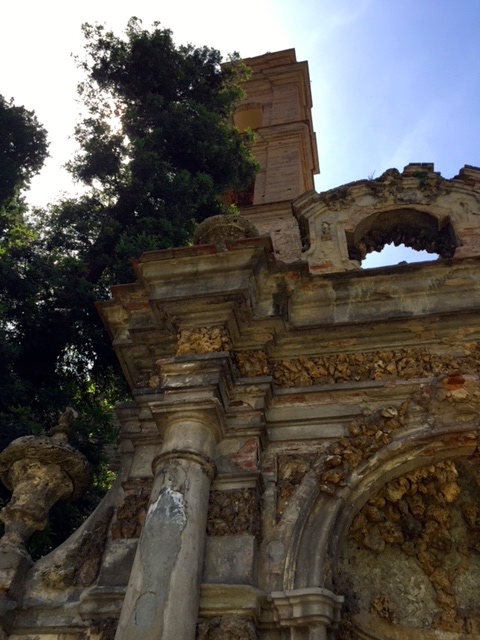
As seen in these pictures, the fountain itself was decorated with the rough, 3 dimensional plaster work typical of a garden grotto. I have seen many such fountains around Italy, and think they were probably a less-expensive way for the owner of the garden to create an impression of a grotto, even if they couldn’t for some reason have a true grotto experience created.
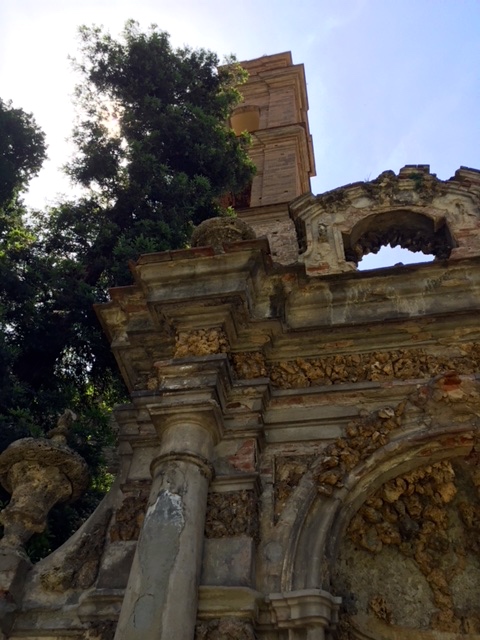
The central back section of the groto-esque fountain doesn’t have any significant sculpture or inlaid mosaics, which are typical of such compositions. This makes me wonder if it once had something to draw the eye to this privileged spot in the structure, but whatever it once was, it has simply disappeared over the centuries.
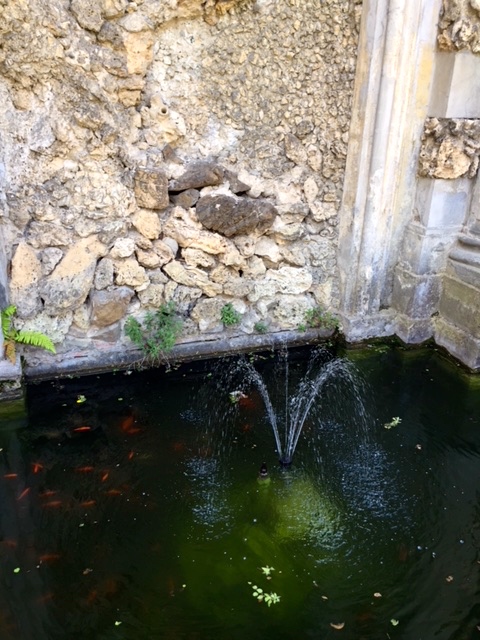
In any event, the fountain is still a lovely asset in the large garden, and it almost magnetically draws the visitor to it, where you can stand in the shade and listen to the small splashing fountain water play and watch the koi swimming to and fro in the at the base of the fountain.
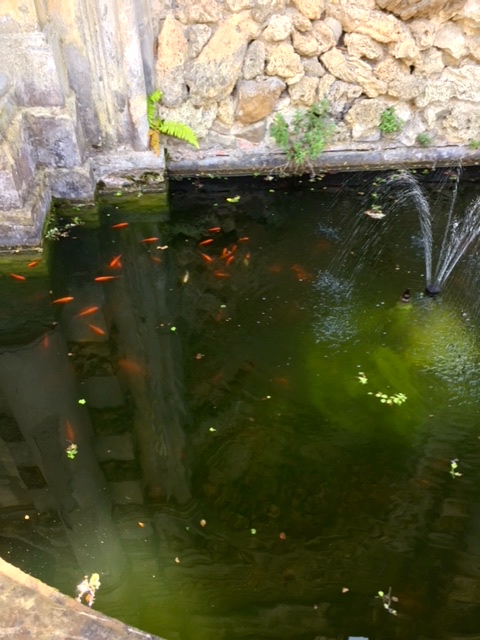
The view below shows you the garden’s relationship to Santo Spirito.
On a new day
So many words that belong to yesterday,
now we need to say new things.
Rumi
Magnolia trees in Florence
After living in Seattle for a few years, I’ve yet to see any other micro-climate produce the the amazing magnolia trees that grow there. But, Florence is no slouch when it comes to these monumental trees.
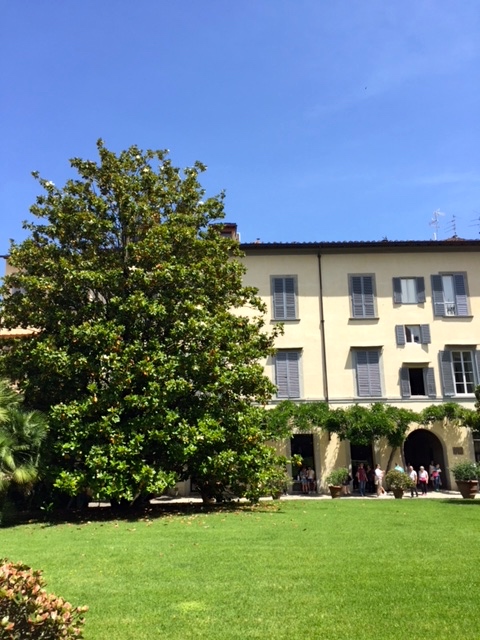
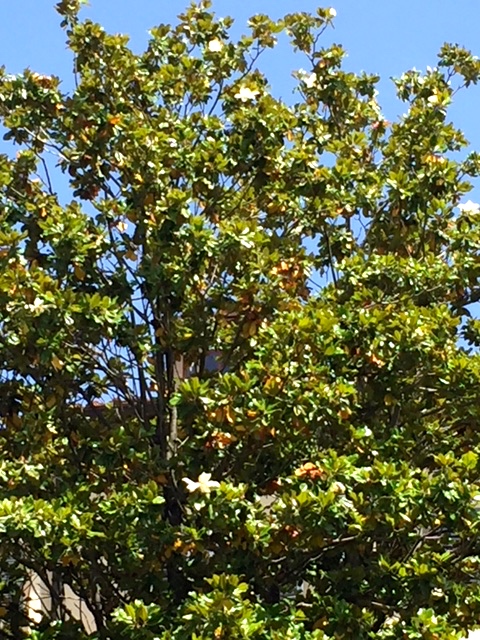
Last weekend I was in the lovely garden behind the Palazzo Guicciardini, and this beautiful speciman was putting on a pretty show. My pictures, unfortunately, do not capture the majesty or the beauty of the big white blossoms, but I hope you get the picture. Look at the top section in this picture below and you will see some of the white blooms.

Another closer view:
Here’s a view I found on the internet to better show the white blooms.
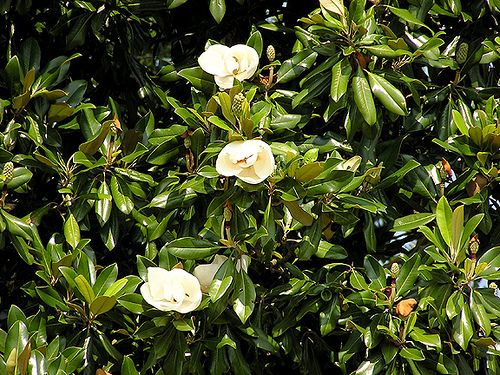
And yes, the blooms are gorgeous, but even the foliage of this tree is lovely.

Exit enter in Florence
Spotted another great work by street artist Exit/Enter this week. He takes a metal cover or a small window on any Florentine wall, and uses the irregularity as a part of his design. I love his light-hearted take.
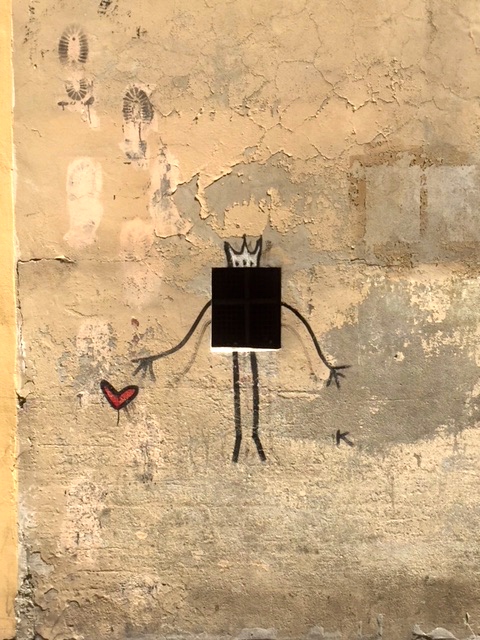
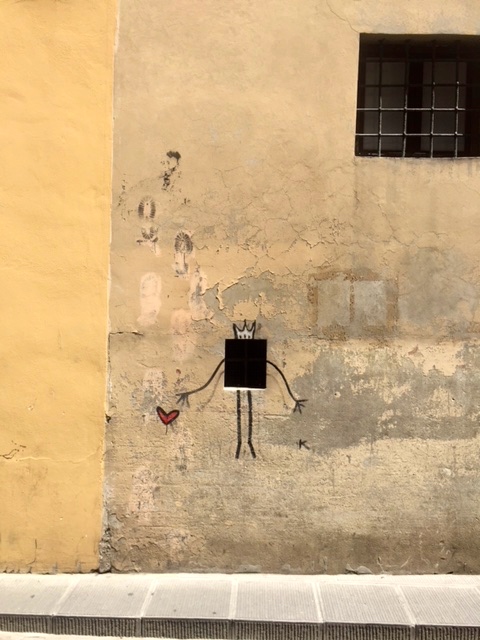
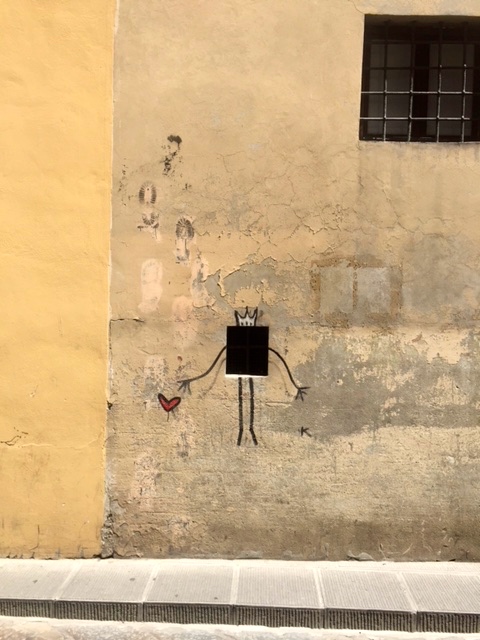
Exit/Enter: un narratore di storie in continuo movimento – Urban Lives
To be, or not to be
About eating healthily, that is.
That was not the question today!
I’m not very proud, but it was a lark and very enjoyable! Today I had a chocolate croissant from Riviore for breakfast, and, since I found myself near my favorite gelateria in the Oltrarno, I treated myself to artigianale gelato for lunch (with 2 flavors: buontalenti and chocolate [the chocolate was so rich and chocolately it was almost too intense]; the buontalenti was heaven on earth)! There was a bit of a chocolate theme happening, and I’m not a chocoholic.
I didn’t take pictures, bc you know what both of these things look like. ;-)
June foods in Italy
Italians love zucchini and in June you can take advantage of the start of the season’s zucchini and pumpkin flower production and eat the flowers! Fior di zucca is a perfect appetizer served fried, but you can also enjoy the vegetable baked or cooked into a risotto.
Strawberries are another June favorite. Though they begin producing from May and go well into June, there’s nothing better than a delicious – and fresh – strawberry gelato on a hot June afternoon!
Cherries have been good and getting better every day. They won’t be here long, unfortunately.
For a typical Italian treat, don’t miss figs, which have their first harvest at the end of June. Look for the big, purple variety.


You must be logged in to post a comment.