Audrey Hepburn took to her apartment. “I have to be alone very often,” she told Life magazine in 1953. “I’d be quite happy if I spent from Saturday night until Monday morning alone in my apartment. That’s how I refuel.”
Thinkers, artists, and innovators from Tchaikovsky to Barack Obama, from Delacroix and Marcel Marceau to Chrissie Hynde and Alice Walker, have expressed the need for solitude. It’s what Rodin has in common with Amy Schumer; what Michelangelo shares with Grace Jones.
Philosophers and scientists spent much of their lives in solitude, including Descartes, Nietzsche, and Barbara McClintock, the Nobel Prize–winning geneticist who resisted having a telephone until she was eighty-four.
Countless writers, including Shakespeare, Dickinson, Wharton, Hugo, and Huxley, mined solitude as a theme. Symphonies and songs, poems and plays, and paintings and photos have been created in solitude.
For the creative person, “his most significant moments are those in which he attains some new insight, or makes some new discovery; and these moments are chiefly, if not invariably, those in which he is alone,” Storr wrote in his seminal book, Solitude: A Return to the Self. While other people can be one of our greatest sources of happiness, they can at times nonetheless be a distraction.
Their presence may also inhibit the creative process, “since creation is embarrassing,” as the writer Isaac Asimov said. “For every new good idea you have, there are a hundred, ten thousand foolish ones, which you naturally do not care to display.”
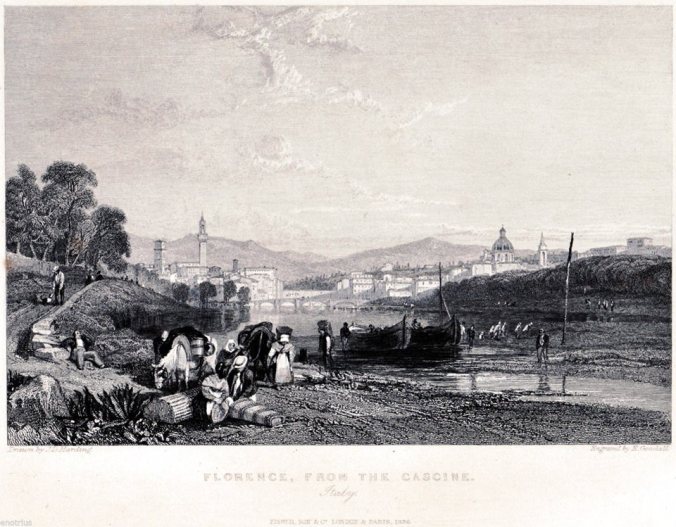
Monet slashed his paintings before the opening of an exhibition in Paris, declaring the canvasses unworthy to pass on to posterity. Robert Rauschenberg flung his early works into the Arno.
Yet just as alone time can be important for creation (and possible subsequent destruction), it can also be necessary for restoration. Some of the latest research has found that even fifteen minutes spent by ourselves, without electronic devices or social interaction, can decrease the intensity of our feelings (be they good or bad), leaving us more easygoing, less angry, and less worried.
Studies led by Thuy-vy Nguyen, published in the Personality and Social Psychology Bulletin, suggest that we can use solitude or alone time as a tool, a way to regulate our emotional states, “becoming quiet after excitement, calm after an angry episode, or centered and peaceful when desired.”
Alone, we can power down. We’re “off stage,” as the sociologist Erving Goffman put it, where we can doff the mask we wear in public and be ourselves. We can be reflective. We have the opportunity for self-evaluation, a chance to consider our actions and take what Westin called a “moral inventory.” We can also take inventory of all the information that has accumulated throughout the day. We can organize our “thoughts, reflect on past actions and future plans, and prepare for future encounters,” as the psychologist Jerry M. Burger wrote in the Journal of Research in Personality.
Even Bill Clinton, exemplar of extraversion, acknowledged that as president he scheduled “a couple of hours a day alone to think, reflect, plan, or do nothing.” “Often,” he said, “I slept less just to get the alone time.”
This notion of reflection harks back to an ancient Greek principle known as epimelesthai sautou. The philosopher Michel Foucault translated it as “to take care of yourself,” and though it was once “one of the main rules for social and personal conduct and for the art of life,” Foucault observed that there is a tendency, particularly in modern Western society, to view caring for oneself as almost immoral. And yet alone time has the potential to leave us more open to others.
And yet alone time has the potential to leave us more open and compassionate toward others. John D. Barbour, a professor of religion at St. Olaf College in Northfield, Minnesota, has written that while solitude involves the self, it’s not necessarily narcissistic. He’s suggested that the solitude sought by biblical prophets helped shape their perspective and may have made them more sensitive to the suffering of people who were less powerful or outsiders. “Solitude at its best,” he wrote, is not about “escaping the world, but toward a different kind of participation in it.”
Unfortunately, there’s a tendency in our own age of scant nuance to conceive of solitude and society as either-or propositions: You’re either alone on your couch or you’re organizing dinner parties.
That’s an unhelpful (and often wrong) distinction. The psychologist Abraham H. Maslow found that self-actualizing people—those who have attained the highest tier of his hierarchy of human needs—are capable of being more than one thing at one time, even if those things are contradictory. They can besimultaneously individual and social; selfish and unselfish.
Burger wrote that people with a high preference for solitude don’t necessarily dislike social interaction, and aren’t necessarily introverted. They probably spend most of their time around others, and enjoy it; he said it’s simply that, relative to others, they more often chose to be by themselves because they appreciate the reflection, creativity, and renewal that solitude can offer.
Rosenbloom, Stephanie. Alone Time: Four Seasons, Four Cities, and the Pleasures of Solitude. Penguin Publishing Group. Kindle Edition.









You must be logged in to post a comment.