If you admire great paintings, you’ll be even more in awe when you consider that for most of history, artists had to make their own paint from oil, pigment, and sometimes eggs. Watch this video to see the process and as a plus, you can practice your Italian skills!
Here it is:
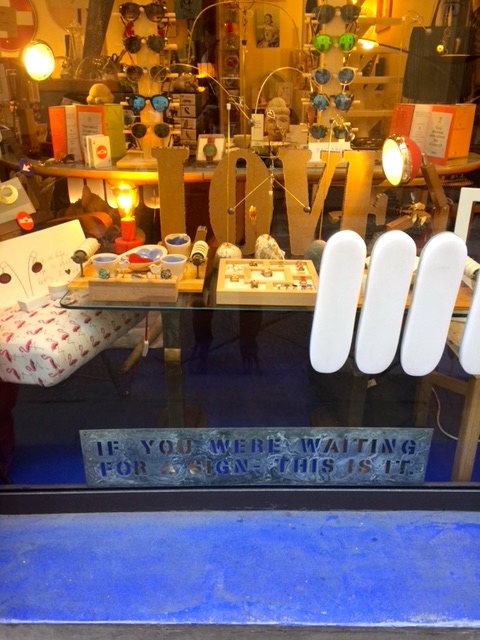
Been waiting for a sign?
Artwork hidden from the Nazis
With the Academy Awards coming up soon and two of the best films nominated for best picture (Darkest Hour and Dunkirk) dealing with art hidden from Nazis in the U.K., comes this timely exhibition.
The National Gallery in London celebrates how it hid priceless paintings from Nazis in a Welsh mine. The gallery’s display will recall the summer of 1940 when, following Dunkirk, the British feared invasion.
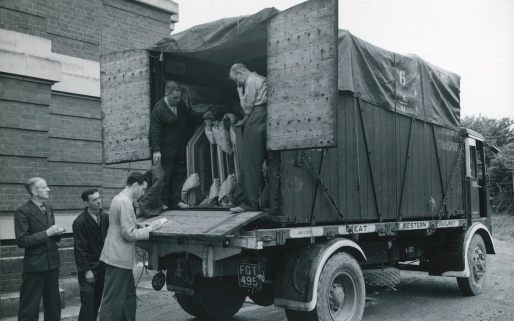
The new exhibition shows 24 archival photographs detailing how paintings were removed, packed, transported and stashed in a disused slate mine in Snowdonia, along with a picture of how it looks today.
A new 30 minute film about the rescue mission, capturing an “immersive” dance and spoken word performance, has been commissioned to accompany it, to be broadcast on BBC Two.
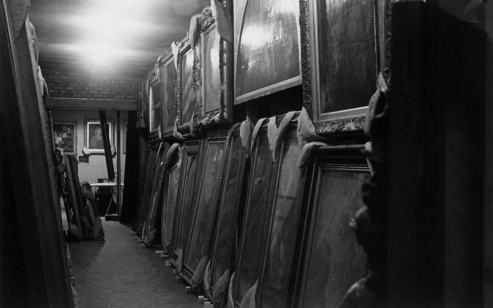
In 1940, the Bristish feared for the safety of the national art collection: Winston Churchill is known to have personally intervened to veto a plan to take them to Canada by ship, fearing a u-boat attack could leave paintings lost at sea.
Instead, curators agreed to hide works in the Manod mine, enlarging its entrance with explosives and building small brick “bungalows” inside to protect them from damp.
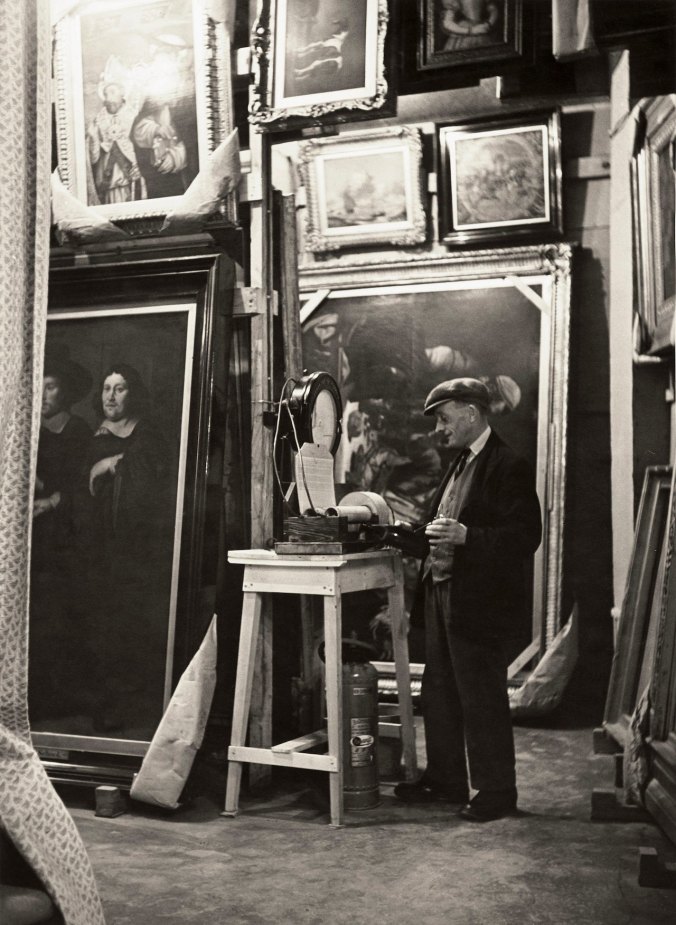
Monitoring the conditions the paintings were kept in further led to “valuable discoveries” about how best to protect them, a spokesman for the gallery said, explaining air conditioning was then added to the renovated London gallery after the war.
How to create a Renaissance panel painting
The technique and materials are made clear in this excellent video. Then, all you need is talent!
Decisions, decisions
We all know that Easter is coming. When I was a little girl, Easter was fun because it happened in spring–which meant that the long ghastly winter was on the wane–and usually involved a great new fluffy pastel dress and matching shoes. Sometimes even a hat (or a bonnet?) and gloves were involved. One year I got pale blue patent leather shoes and I loved them so much, I can still remember them!
At this point in life, Easter doesn’t mean much to me. No holiday does, for that matter. Ennui, I suppose.
But Easter is a Really Big Deal in Italy. Really Big.
I came home one day recently to find this notice on the door of my building. It tells me that tomorrow, on Tuesday, 20 February, between 4 and 8 p.m., the parish priest will come to my building to give the blessing to anyone who wants to receive it, in advance of Pasquale.
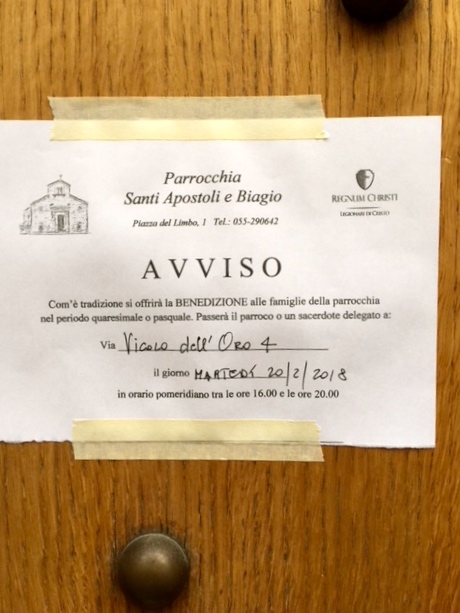
I mean really, the priest comes to my apartment to bless me? I would love to be a party to that!
I may or may not be able to be home for this blessing. I have already rsvp-ed to an invitation to visit Michelangelo’s tomb in Santa Croce with the art restorer who recently finished cleaning the monument and I would hate to miss it. But, I also hate to miss the blessing.
Decisions, decisions! And both are such exquisite offerings only to be found here, in Florence!
Florence in the year 1300, a city of towers
As this film says, back in Dante’s day, Florence was a vertical city, from it’s tall walls that circled the citta’ to its many, many towers.
Old wine, I mean really old wine!

Deep inside Monte Kronio on Sicily seen above, an ancient secret has been kept for millennia in the hot, humid and sulfurous caves.
People have been visiting the caves of Monte Kronio since as far back as 8,000 years ago. They’ve left behind vessels from the Copper Age (early 6th to early 3rd millennium B.C.) as well as various sizes of ceramic storage jars, jugs and basins. In the deepest cavities of the mountain these artifacts sometimes lie with human skeletons.

One of the most puzzling of questions around this prehistoric site has been what those vessels contained. What substance was so precious it might mollify a deity or properly accompany dead chiefs and warriors on their trip to the underworld?
Using tiny samples, scraped from these ancient artifacts, the analysis of scientists revealed a surprising answer: wine. And that discovery has big implications for the story archaeologists tell about the people who lived in this time and place.

In November 2012, a team of expert geographers and speleologists ventured into the dangerous underground complex of Monte Kronio. They escorted archaeologists from the Superintendence of Agrigento, going down more than 300 feet to document artifacts and to take samples. The scientists scraped the inner walls of five ceramic vessels, removing about 100 mg (0.0035 ounces) of powder from each.

It was found that 4 of the 5 Copper Age large storage jars contained an organic residue. Two contained animal fats and another held plant residues, thanks to what was believed to be a semi-liquid kind of stew partially absorbed by the walls of the jars.
But the 4th jar held the greatest surprise: pure grape wine from 5,000 years ago, and these Monte Kronio samples are some of the oldest wines known so far for Europe and the Mediterranean region.
This is an incredible surprise, considering that the Southern Anatolia and Transcaucasian region were traditionally believed to be the cradle of grape domestication and early viticulture. Later studies used Neolithic ceramic samples from Georgia, and pushed back the discovery of traces of pure grape wine even further, to 6,000-5,800 B.C.
There are tremendous historical implications for how archaeologists can now understand Copper Age Sicilian cultures.
From an economic standpoint, the evidence of wine implies that people at this time and place were cultivating grapevines. Viticulture requires specific terrains, climates and irrigation systems.
Archaeologists hadn’t, up to this point, included all these agricultural strategies in their theories about settlement patterns in these Copper Age Sicilian communities. It looks like researchers need to more deeply consider ways these people might have transformed the landscapes where they lived.
The discovery of wine from this time period has an even bigger impact on what archaeologists knew about commerce and the trade of goods across the whole Mediterranean at this time. For instance, Sicily completely lacks metal ores. But the discovery of little copper artifacts – things like daggers, chisels and pins had been found at several sites – shows that Sicilians somehow developed metallurgy by the Copper Age.
The traditional explanation has been that Sicily engaged in an embryonic commercial relationship with people in the Aegean, especially with the northwestern regions of the Peloponnese. But that doesn’t really make a lot of sense because the Sicilian communities didn’t have much of anything to offer in exchange for the metals. The lure of wine, though, might have been what brought the Aegeans to Sicily, especially if other settlements hadn’t come this far in viticulture yet.
Wine has been known as a magical substance since its appearances in Homeric tales. As red as blood, it had the unique power to bring euphoria and an altered state of consciousness and perception.
All of this is taken from https://www.thelocal.it/20180215/prehistoric-wine-italy-inaccessible-caves-rethink-ancient-sicilian-culture
Urban climbs in Florence
Here are two of my favorite urban climbs in the Renaissance citta’, the Torre di Arnolfo and the Torre San Niccolò.
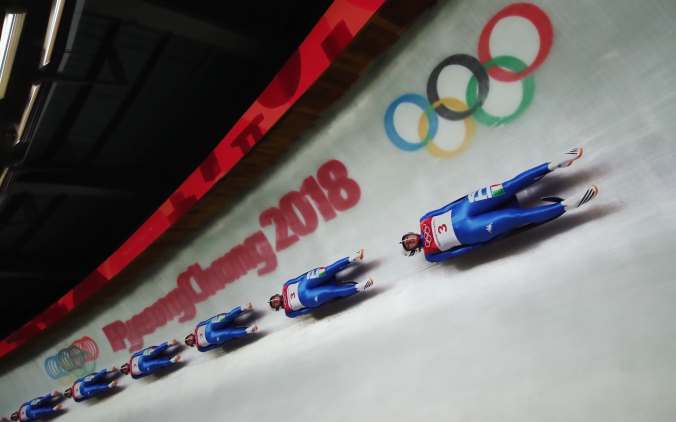
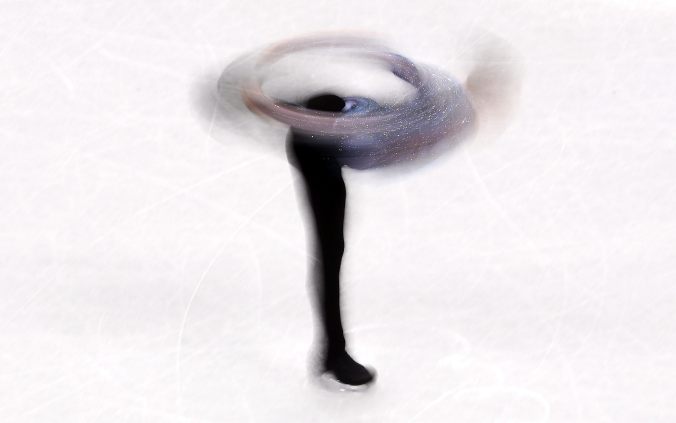
Olympic fever




Curator Duchess of Cambridge
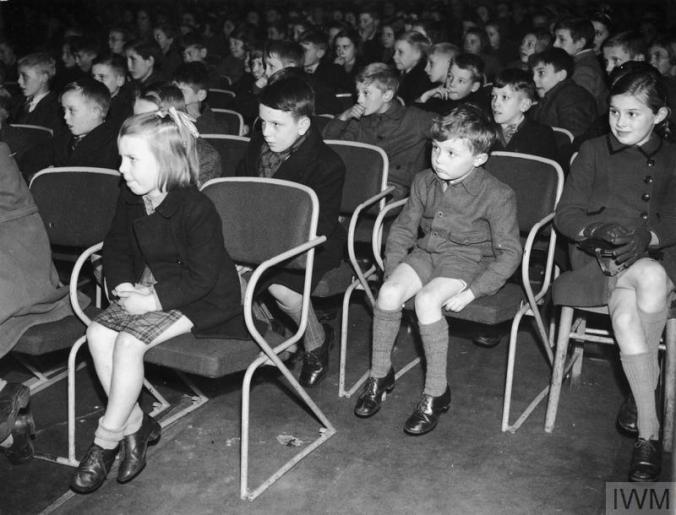
“The Duchess of Cambridge is to put her history of art degree to good use as she curates her first exhibition at the National Portrait Gallery, in a photographic celebration of childhood.
The Duchess, who is patron of the gallery, has selected key Victorian photographs for a special “Patron’s Trail”, which will see her write labels telling visitors about the works.
The extraordinary project will see her follow in the footsteps of Victoria and Albert, who were enthusiastic supporters of photography from its invention, and make use of her St Andrews degree.
Writing about her involvement, the Duchess, who according to her husband takes photographs of Prince George and Princess Charlotte every day, called herself an “enthusiastic amateur photographer”, disclosing she wrote her undergraduate thesis on 19th century images.
The exhibition, entitled Victorian Giants: The Birth Of Art Photography, is based on rarely-seen works from groundbreaking photographers Oscar Rejlander, Lewis Carroll, Julia Margaret Cameron and Lady Clementina Hawarden, some of which have been borrowed from the Royal Collection.”
Photo from Google Images
 get back, lauretta!
You must be logged in to post a comment.