


One last look at Florence at Christmas

A tree composed of silverware in a design studio.

IMG_7091IMG_7092


Last minute gifts:

IMG_7061


The main side streets around the Centro:

IMG_7071

IMG_7053


The northwest corner of the Ponte Vecchio:

IMG_7072IMG_7073


Near Ponte Santa Trinita:

IMG_7108IMG_7109


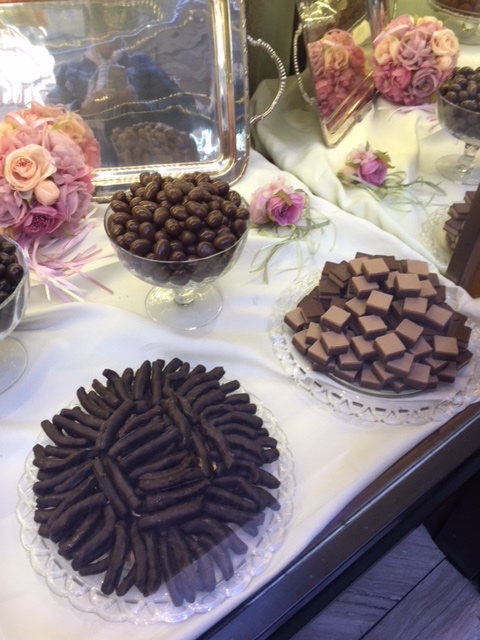
Candy store: Mignone:

IMG_7046


Piazza del Duomo:

IMG_7048IMG_7049IMG_7050IMG_7051

IMG_7052


The beautiful tree near the Duomo.  Last year it was adorned with Florentine flour-de-lis ornaments, but not this year.

IMG_7054IMG_7055


Il Palazzo Vecchio:

IMG_7035IMG_7037IMG_7038


Rinascente department store:

IMG_7057IMG_7060IMG_7058IMG_7059


More side streets:

IMG_7047IMG_7066IMG_7067IMG_7068IMG_7069IMG_7045IMG_7065IMG_7064IMG_7063

What does a stylish Italian newborn wear anyway?

When I was eight months pregnant with my son, the private clinic where I was to give birth gave me a list of clothes to bring with me for the newborn. There were articles of clothing that I’d never heard of before: bodino, ghettina, tutina.

They all ended in -ino or -ina, which meant they were little and cute, but what were they?

If this wasn’t enough to send my hormone-assaulted brain into a spin, the clinic specified the required type of fabric. So my fetus and I set out to find a ghettina di lana leggera (light wool leggings) and other outfits that would compose his first foray into the world of Italian fashion.

My plan was to hand the list to the lady in the store with my credit card and be done with it. The shopkeeper was around sixty, a beautiful, gravelly-voiced grandmother. I was done for.

Approximately two hours and hundreds of euros later, my fetus and I emerged, sweaty and agitated. The signora had regaled me with questions. Which kind of cotton do you prefer? Lace at the collar or on the sleeves? Oh, she was full of questions.

But somehow I couldn’t get up the nerve to ask mine. I had only two, and they were fundamental at that point in time. Which is cheaper?

And, where is the bathroom?

Later, I handed my completed assignment over to Raffaella [mother-in-law]. She put her glasses on to examine the list and to feel the tiny garments. She was Giorgio Armani before a Vogue photo shoot. She was a Hollywood image consultant.

She described the workmanship of each minuscule article, saying things like “cross-stitch embroidery” and “cream and sky-blue appliqué.” I tried to figure out if these descriptions meant the clothes passed the test. I did not want to visit the exacting, gravelly-voiced grandmother at the baby store again.

My son was not yet at term and his look was already being scrutinized. He would have to be stylish and elegant as soon as he saw the light of day. Weren’t they going to give him a couple of months to get into the swing of things? Couldn’t he be given a few weeks of leeway on account of his American, sweatpant-wearing mother? “Hmmmm…” Raffaella would have to think about it, work on it, match some of these things with items she had bought. But it looked like my job was over. Hallelujah.

“You know, in the U.S., we usually buy baby clothes that can go in the washing machine,” I ventured, finding renewed confidence in my ninth month.

“Are you serious? They get ruined that way! What about the satin lock-down stitch?”

I didn’t mention that we also tend not to spend two hundred bucks on a wardrobe that would last less than a month, and that was destined to be covered with milk and vomit.

It was pointless. I didn’t want my son to get the figlio di nessuno, the “no one’s kid” label, as soon as he was born, so I let Nonna Raffaella handle my newborn’s wardrobe. After all, I figured, who cares what they dress him in? I had enough on my mind.

Wilson, Katherine. The Mother-in-Law Cure (Originally published as Only in Naples): Learning to Live and Eat in an Italian Family (p. 208). Random House Publishing Group. Kindle Edition.


How Italians drink coffee

In Italy coffee is not a social drink—it is a drug. It is not drunk; it’s mainlined. No sooner does the tiny espresso cup and saucer touch the counter than whoosh, in goes a quarter-pound of sugar, and whoosh the thing is downed in one gulp, and the caffeine is racing through your veins and you’re ready to attack—literally—the world.

From Máté, Ferenc. The Hills of Tuscany: A New Life in an Old Land (Augustana Historical Society Publication) (p. 38). Albatross. Kindle Edition.

In Italy, the sound of coffee in a bar is clinking porcelain. It is cacophony, racket, loud voices arguing and laughing over the ssssshhhh of the espresso machine. These sounds, a prelude to the hit of that syrupy black nectar that is called caffè, remind me that everything is possible. I can fight the good fight.

I think the fundamental difference between the experiences of coffee in the United States and coffee in Italy comes down to the concept of “to go.”

In America, coffee is taken to go because there’s a lot of liquid to be consumed. It accompanies you as you go about your morning. There is comfort in the feel of large quantities of lava-hot liquid under your fingers, of knowing that this coffee will be with you for hours. Your big hot cup of American coffee or latte or macchiato or whatever else Starbucks has decided to name it, will be held close, cuddled and nursed. Your very own grown-up sippy cup, thanks to that marvelous plastic mouthpiece (a beccuccio, or little beak, they would call it in Italian), which enables you to sip without spilling or scalding your mouth. Sipped and dripped. American coffee is sippy and drippy. It is like the saline bags that are linked to an intravenous drip: the level of fluid in your bloodstream never drops below a certain level.

Italian espresso, on the other hand, is a hit. A fast, intense bang to your veins. It is a one-gulp switch of the wrist that wakes and revs you up in an instant. For this reason, Italian coffee to go makes no sense.  You can get your one-gulp hit somewhere other than the bar as long as it’s close by and the whole endeavor is performed quickly.

From Wilson, Katherine. The Mother-in-Law Cure (Originally published as Only in Naples): Learning to Live and Eat in an Italian Family (p. 136). Random House Publishing Group. Kindle Edition.