Italic script

This is obviously in Italic script.

This isn’t.

But what is it, exactly, and where did it come from?

images-3

Well, like so many of the great things in life, it comes from Renaissance Italy.  Its influence was pervasive and all modern fonts are based upon it.

Italic script, also known as chancery cursive, is a semi-cursive, slightly sloped style of handwriting and calligraphy that was developed during the Renaissance in Italy. It is one of the most popular styles used in contemporary Western calligraphy.

Let’s get into the weeds, shall we?  Italian weeds are my favorite place to be.

images

Italic script is based largely on Humanist minuscule. The capital letters in Italic script are the same as the Humanist capitals, modeled on Roman square capitals. The Italian scholar Niccolò de’ Niccoli was dissatisfied with the lowercase forms of Humanist minuscule, finding it too slow to write. So, he created the Italic script, which incorporates features and techniques characteristic of a quickly written hand: oblique forms, fewer strokes per character, and the joining of letters.

Perhaps the most significant change to any single character was to the form of the a, which he simplified from the two-story form to the one-story form ⟨ɑ⟩ now ubiquitous to most handwriting styles.

images-2

Under the influence of Italic movable type used with printing presses, the style of handwritten Italic script moved towards disjoined, more mannered characters. By the 1550s the Italic script had become so laborious that it fell out of use with scribes.

The style became increasingly influenced by the development of Copperplate writing styles in the eighteenth century. The Italic script style used today is often heavily influenced by developments made as late as the early 20th century. In the past few decades, the italic script has been promoted in English-speaking countries as an easier-to-learn alternative to traditional styles of cursive handwriting. In the UK this revival was due in part to Alfred Fairbank’s book A Handwriting Manual (1932).

A modern version called Getty-Dubay was introduced in 1976.

images-5

Those silly ancient Romans…

42000-kremer-vermilion-pigment-genuine-from-china-50g-936-p

During the Renaissance the color of red was achieved in painting with the use of vermilion.
“Vermilion was made from cinnabar, a brick-red mineral the ancient Romans believed came from the blood of dragons crushed to death under the weight of elephants.”**

So silly and yet so specific!

images


**King, Ross (2012-10-30). Leonardo and the Last Supper (p. 149). Bloomsbury Publishing. Kindle Edition.

Ssshhhhh!

marco4

Convents and monasteries were places of silence. The importance of silence was stressed in the cloister of San Marco, where the first image that greeted friars and visitors alike was Fra Angelico’s fresco of Peter of Verona with his finger to his lips. Silence was preserved in the cloisters, the church, and the dormitory. To keep the friars on their toes, each convent had an officer, the circator, whose job was to move quietly among the brothers “at odd and unexpected moments” to see if they were growing slack.

King, Ross (2012-10-30). Leonardo and the Last Supper (p. 60). Bloomsbury Publishing. Kindle Edition.

Sumptuous textiles and Leonardo in Renaissance Florence

images

Leonardo had a fascination with curly hair. His own hair, as one early biographer attests, was long and curly, and his beard “came to the middle of his breast, and was well-dressed and curled.”  He evidently took pride in his appearance.

Besides his well-dressed hair and curled beard, he had a taste for colorful clothing. Florence was renowned for its luxurious textiles— silks and brocades with names like rosa di zaffrone (pink sapphire) and fior di pesco (peach blossom). But most of these exotic fabrics were exported to the harems of Turkey because sumptuary laws— regulations against ostentatious dress— meant Florentines necessarily favored more sober colors. Not so Leonardo, whose wardrobe in later life, an audacious mix of purples, pinks, and crimsons, flouted the dictates of the fashion police.


One list of his clothes itemized a taffeta gown, a rose-colored Catalan gown, a purple cape with a velvet hood, a coat of purple satin, another of crimson satin, a purple coat of camel hair, dark purple hose, dusty-rose hose, black hose, and two pink caps.

King, Ross (2012-10-30). Leonardo and the Last Supper (p. 26). Bloomsbury Publishing. Kindle Edition.

images-2

Florence had a thriving cloth industry, and Leonardo designed numerous machines for the textile trade, such as hand looms, bobbin winders, and a needle-making machine that he calculated would produce forty thousand needles per hour and revenues of a mind-boggling sixty thousand ducats per year. All of these inventions he no doubt hoped would find their place in Florentine industry. In about 1494 he drew plans for a weaving machine, and in the same pages he outlined a project for a canal by which, he claimed, Florence’s Guild of Wool Merchants could transport their goods through Tuscany and, by extracting revenues from other users of the canal, boost their profits in the process. These pursuits reveal the breadth of Leonardo’s interests, the scope of his ambitions, and the depth of his conviction that there was no task that could not be improved through technology and invention. None of his plans seems, however, to have tempted the hardheaded merchants of Florence.

King, Ross (2012-10-30). Leonardo and the Last Supper (p. 119). Bloomsbury Publishing. Kindle Edition.

Quattrocento Fiorenza

site_162618-6859

With fifty thousand people, Florence must have been an impressive sight for a young man like Leonardo arriving from Vinci. “Nothing more beautiful or more splendid than Florence can be found anywhere in the world,” the scholar Leonardo Bruni had declared in about 1402. Fifty years later, a Florentine merchant, taking stock of his hometown, believed it even more resplendent than in Bruni’s day, with beautiful new churches, hospitals, and palaces, and with prosperous citizens sauntering through the streets in “expensive and elegant clothing.” Florence at this time could boast fifty-four dealers in precious stones, seventy-four goldsmith shops, and eighty-three silk-weaving firms. There was, the merchant acknowledged, a further attraction: the astonishing proliferation of Florence’s architects, sculptors, and painters.  Highly conspicuous by the time Leonardo arrived in Florence were frescoes, statues, and buildings by men like Giotto, Brunelleschi, Masaccio, Donatello, and Lorenzo Ghiberti.

fiorenza2

King, Ross (2012-10-30). Leonardo and the Last Supper (pp. 23-24). Bloomsbury Publishing. Kindle Edition.

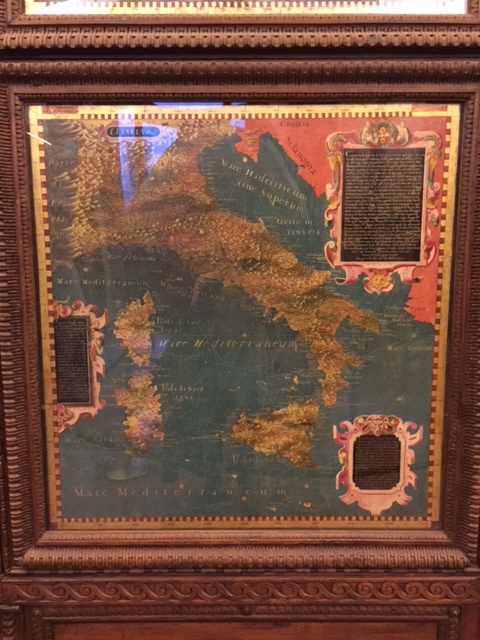
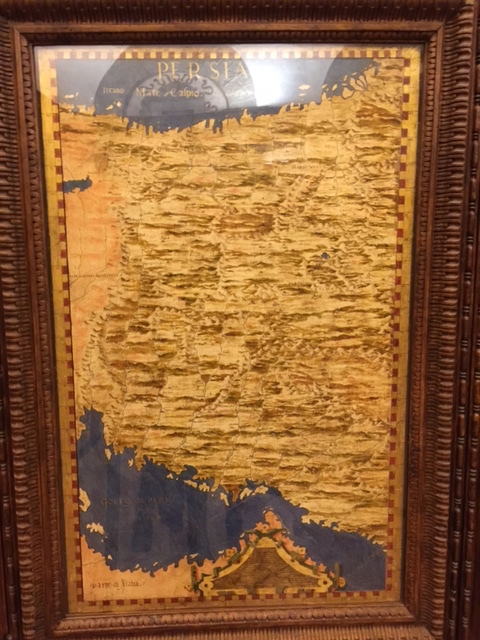
Palazzo Vecchio, Firenze: an idiosyncratic tour

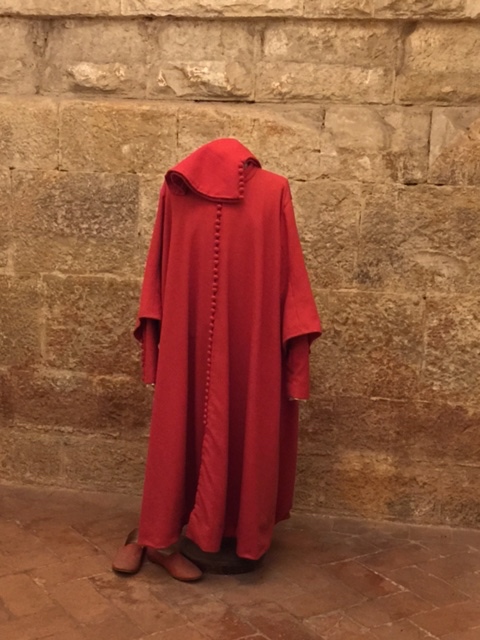
By the Middle Ages, the Florentine republic was ruled by a council, known as the signoria. The signoria was chosen by the gonfaloniere (titular ruler of the city), who was elected every two months by Florentine guild members.  Below is the robe and shoes typically worn by the counsil members.

img_0664img_0665


The magnificent Salone dei Cinquecento.  Absolutely amazing!

img_0673

img_0717img_0731img_0732

img_0750img_0752img_0753img_0754img_0755img_0756img_0757img_0758img_0759img_0760img_0761img_0762img_0763img_0764img_0765img_0766img_0767img_0768


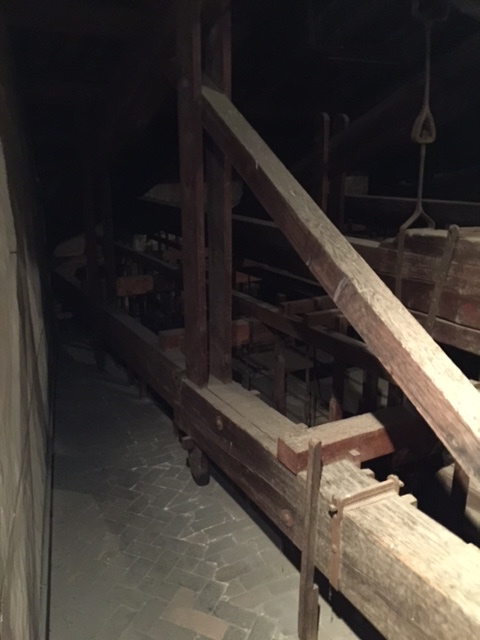
My tour group got to climb into the rafters over the main Salone and marveled not only at the engineering feat, but the fact that most of these timbers were placed in the 14th century.  Oh, what this lumber has endured–manmade and natural.


img_0682

img_0683


img_0690

img_0691img_0700img_0701


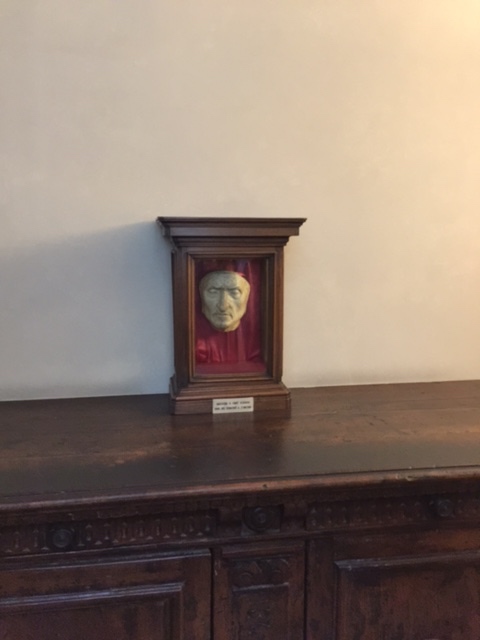
Dante’s death mask below.

img_0708


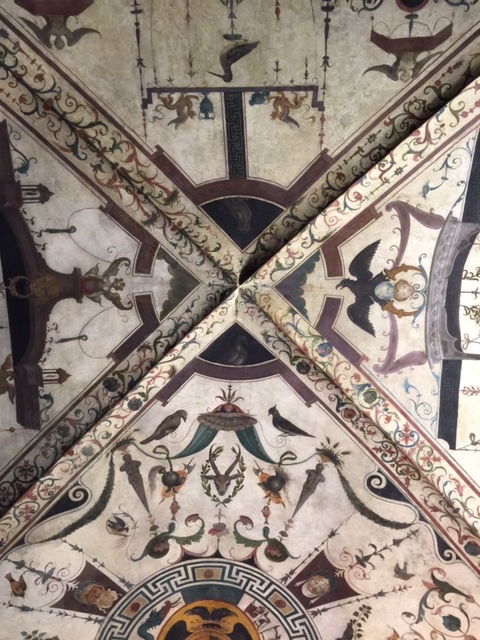
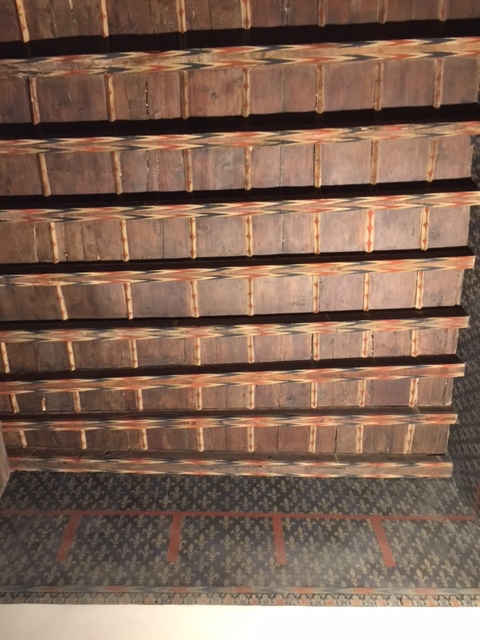
The painted ceiling of the room in which the Dante mask is stored.

img_0709img_0740img_0741img_0742img_0743img_0744img_0745img_0746img_0747img_0748img_0749