
Just messing with you! This topic gets more hits on my blog than any other besides new post. Weird. Because I wore this dress back in the day, but I’m not an expert on it!
Just messing with you! This topic gets more hits on my blog than any other besides new post. Weird. Because I wore this dress back in the day, but I’m not an expert on it!
Are you ready to see some more window displays? Andiamo!
You’ll have visions of Pucci, Armani, Gucci, Dolce & Gabbana, Miu Miu, and many other designers dancing in your head, so get ready!
Hundreds of gold bows drift at the mannequin’s feet.


Enter 1952 if you dare:
There are some shots of Giovanni Battista Giorgini, who started it all in Florence, for those with eagle eyes.
Ciao a tutti!


They both appreciated fine design and they both attended Reed College in Portland, Oregon. How about that!
I’ll be posting on Pucci presto. Steve Jobs is outside my area of expertise though I use nothing but Apple products!
Viva il Reed College!
Resuming the fashion story from Part 1 and all photographs are from the Giorgini Archivio in Florence or from Google Images:
Once Count Giorgini got the Italian high fashion ball rolling on the heels of the highly successful catwalk shows he initiated in Florence in the early 1950s, buyers from all over the world were knocking on the doors of the new Italian ateliers, placing orders around the clock.
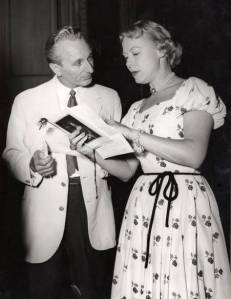
In this photo from the Giorgini Archive in Florence, we have Count Giorgini and the buyer from an American department store, c. 1952. (Is it just me or does everyone wonder how a woman dressed like this could be entrusted as a buyer for a leading American department store? It’s hard to see how her look is one that should be duplicated.)
Simultaneously, Hollywood royalty likewise descended upon Italian fashion houses. Stars such as Audrey Hepburn and Elizabeth Taylor; directors like Alfred Hitchcock; and even politicians including President Harry S. Truman (President of the US from 1945-1951) all found their way to the Italian fashion shows and supported the new ateliers.

The photo above, also in the Giorgini Archivio, Florence, shows Count Giorgini with the American actress Gloria Swanson.

Elizabeth Taylor was seen on and off the set in Rome where she was filming Cleopatra.

Audrey Hepburn filmed Roman Holiday in Rome in 1952 and was a general jetsetter throughout the 1950s and 1960s
The picture below shows Alfred Hitchcock and his wife boarding a plane in Rome in the 1960s.


Above, Hitchcock at a press conference in Rome, mid 60’s.

Above, Hitchcock in Italy. Below he directs Birds, and from the way his actresses are dressed, you know he was highly interested in high fashion from Italy and elsewhere.


Above is President Harry S. Truman and his wife landing with friends in Naples. Below is proof that the President knew how to shop!

Count Giovanni Battista Giorgini played a major role in all the high fashion shows in Italy until 1965. Every year he made sure that new ideas and new talents were showcased in his shows.
The photo below, from Giorgoni Archivio, shows the Count with his models and other principal players in the fashion extravaganzas.

In the 1960s, Giorgini took a gamble on another new challenge, the development of a market for Italian design in Japan. Some of the relationships he began that far back are still important for the Italo-Japanese relationship today. Among the most important Japanese clients is Isetan, one of the largest department stores in that country.

The Isetan flagship store in Shinjuku is considered to be one of the most influential department stores in Japan. The store is often first with showcasing new trends and new products. In particular, the fashion and food floors are thought to be very trendsetting.
Once again, Count Giorgini successfully called the Japanese market place for high western fashion long before any other westerner even thought of the idea. Proof is the fact that Vogue magazine developed a very successful Japanese edition.

The section below attests to the Japanese interest in Italian design:

This stunningly beautiful editorial, La Canzone Del Mare, showcases the latest Dolce and Gabbana Alta Moda collection for Vogue Japan’s October 2014 issue. Photographed by Boo George, it was shot in Capri, Italy – also where the Italian design duo presented their fall collection in July.
The ultra luxurious fashions were modeled by Dalianah Arekion, Nadja Bender and Kinga Raziak, with styling by Anna Dello Russo and Giovanna Battaglia.
Getting back to what 1960s fashion looked like in Italy, the following section is (taken from this site: http://www.moda.com/fashion-history/60s-italian-fashion-1.shtml) a perfect way to enter the period.
1960s Italian Fashion  Red pants and top with black shoes, from 1966. Red pants and top with black shoes, from 1966. White with green and purple flowers dress and coat, from 1960. White with green and purple flowers dress and coat, from 1960. Morning dress of red fuchsia wool, corded silk hat. By Sarli fashion house in Rome. Inspired by the Russian line. Morning dress of red fuchsia wool, corded silk hat. By Sarli fashion house in Rome. Inspired by the Russian line. Evening dress yellow satin, printed big red and pink flowers. By Eleanora Garnett fashion house in Rome. From 1960. Evening dress yellow satin, printed big red and pink flowers. By Eleanora Garnett fashion house in Rome. From 1960. Hot pink wool ensemble. Collarless, cardigan jacket straight-lined and slashed across the hips with a giant bow of pink velvet. By Fontana Sisters’ fashion house in Rome. From 1960. Hot pink wool ensemble. Collarless, cardigan jacket straight-lined and slashed across the hips with a giant bow of pink velvet. By Fontana Sisters’ fashion house in Rome. From 1960. Black dress with multicolored flowers. By Cesare Guidi. From 1960. Black dress with multicolored flowers. By Cesare Guidi. From 1960. Two-piece sports dress, pants of elastic jersey, loose shirt of laminated silk. By Emilio Schuberth fashion house in Rome. From 1960. Two-piece sports dress, pants of elastic jersey, loose shirt of laminated silk. By Emilio Schuberth fashion house in Rome. From 1960. Evening dress, made of pink silk, embroidered with silver paillettes. By Fabiani fashion house in Rome. From 1960. Evening dress, made of pink silk, embroidered with silver paillettes. By Fabiani fashion house in Rome. From 1960.
Afternoon dress, white silk jersey with blue flowers, blue woolen jersey overcoat. By Mirsa fashion house in Rome. From 1960.
Evening dress, emerald-green, golden and black brocade. By Renato Balestra fashion house in Rome. From 1961.
Golden tan cape, made from shantung organdy. By Renato Balstra fashion house in Rome. From 1962. |
||
Ask any fairly sophisticated person you know where the two following photographs were taken, and chances are very good…


that the viewer will know instantaneously that the pictures were taken in Italy. Certo!
And that same person will also no doubt know that in Italy presenting una bella figura is one of the most important aspects of daily life. Italians, male and female, are well known for their sense of style and its major component, fashion. Italy is rightly recognized as a hub of fashion, with many eminent names such as Armani, Dolce & Gabbana, Donatella Versace, Missoni, Prada, Cavalli, Valentino, Taccini, Gucci, Garavanni and Moschino and many more in the mix. These designers are in great local and international demand. But it hasn’t always been this way.
So, how did this situation evolve?

It would seem that one man had a vision to form a world of high Italian fashion to compete with the French haute couture. This new Italian high fashion incentive, first formed in the mind of Giovanni Battista Giorgini, rose like a phoenix out of the ashes of WWII and came to forefront of the world stage.
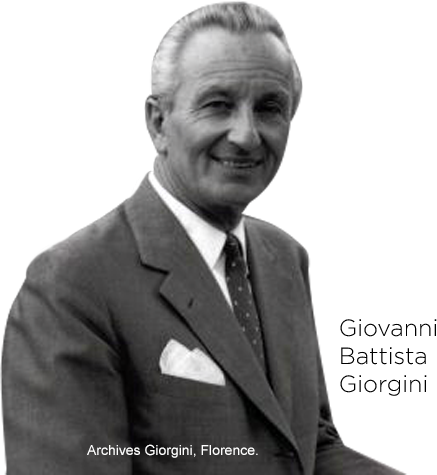
Florentine count, Giovanni Battista Giorgini (1898-1971), was perfectly poised to bring his vision to fruition, for he knew the American market very well, having been involved in exporting Italian fashion goods to North America since 1923. He had been involved in promoting Italian craftsmanship–specifically the “Made in Italy” initiative– in the United States until the 1929 Stock Market Crash and the dastardly political developments in Fascist Italy brought his efforts to a close.

Photo above from Archivio Giorgini in Florence.
Giorgini’s ambitions for Italian fashion were set aside while the world was caught up in chaos and he served in the armed forces of his country during the lead-up to WWII. During the conflict, Giorgini was in the army, in command of a brigade near Bagni di Vinadio in Piedmont.
By the time the last Allies efforts were underway to take Florence from the Germans, Giorgini and his wife and three sons were living in the Oltrarno neighborhood of the city. It was through that neighborhood that the first column of the Allied army approached Florence. The entire Giorgini family were fluent in English and Giorgini offered to make his home the Allies’ headquarters. The Allies command gratefully accepted.
In 1944, Giorgini was appointed director of the Allied Force Gift Shop, a store for the Allied Force troops. Under his management this successful operation was repeated in other Italian cities. When the War ended, Giorgini was able to return to the United States in an effort to reignite his exporting business, which had been on hold for almost twenty years.
Within a few years, Giorgini was supplying the largest American and Canadian importers and distributors with the finest of Italian products. Among his clients were well-known retailers including I. Magnin; B. Altman; Bergdorf Goodman; H. Morgan; Tiffany; Bonwit Teller and others. To these leading department stores Giorgini exported the best Italian products such as home and fashion accessories including knitted and woven textiles, leather, shoes, as well as ceramics and glass.
Giorgini was uniquely qualified in his role as a successful entrepreneur, although he always preferred the artistic end of the enterprise, not the business end. He was not always comfortable in his role as promoter of Italy to North American businesses, for he was first and foremost a passionate collector of art and antiques, as well as being himself a designer.
Despite his reluctance to operate as a businessman, he always was one step ahead of avant-garde trends. His uncanny ability allowed him to guide Italian manufacturers in modifying their products so that they could meet the ever changing new demands from the marketplace.
It was Giorgini’s brilliance that allowed him to intuit that the incredible artisan craftsmanship for which Italy was known could be brought to bear on the damaged fashion world in post war Italy. He knew that craftsmanship was vital, but was not, alone, enough on which to base the fashion renaissance he foresaw.
He rightly believed that it would take two things to launch the dream he had:
#1 the enhanced production of the high quality textiles for which Florence has always been famous
and
#2 brand new ideas from highly talented designers. Giorgini wanted to stimulate the best and brightest in Italy to create and export an entirely new field of high Italian fashion to the world. And indeed he did bring it about.

Prior to this time, Italian fashion and textile businesses were simply copying their French counterparts, but not adding anything beyond fine craftsmanship to the mix. That wasn’t good enough for Giorgini: he foresaw a world in which Italy not only held its own with its French colleagues, but Italy surpassed them. He set about making this new world happen.
Giorgini’s out-going personality coupled with his aristocratic heritage and his inherent good taste, made him ideal for his role in public relations. He knew how to capitalize on his background and interests, as well as how to enhance his orbit of acquaintances.
In the late 1940s and early 1950s, one by one, Giorgini made contact with the leading Italian producers of textiles and clothing, and convinced them to cooperate with his idea. He did the same thing with American buyers and journalists.
Giorgini would often tempt these movers and shakers in the burgeoning field of international fashion by inviting them to share in elegant evenings in his lovely home on Florence’s Via dei Serragli. His beautiful house, furnished with art and antiques, created an environment of elegance and opulence that charmed his foreign guests. There he entertained them with extravagant dinners with concerts and/or dances. It was very hard for anyone to resist. Why would anyone want to?!
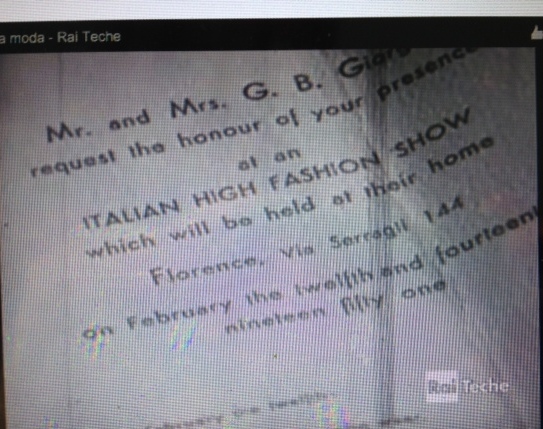
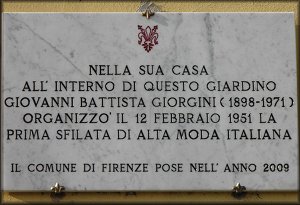
Once he had some of the fundamentals in place, Giorgini issued a carefully planned and strategic invitation to European nobility to a big event, a full day of a runway show, held on February 12, 1951 in the ballroom of his beautiful home at #144, Via dei Serragli. One might even be tempted to say that Giorgini had learned some strategies from the U.S. military, so carefully was his initiative planned!
Here’s a photo of the invitation Giorgini and his wife extended
Giorgini’s deep knowledge of the North American markets led him to set his sights on bringing the buyers for American department stores to Florence to show them a series of Italian collections for Spring/Summer 1951. He planned his event so that the American buyers could just pop down to Italy to see what was happening there, right after they had been to Paris catwalk shows. After all, he reasoned, they were already in Europe so perche no? Giovanni Giorgini was a brilliant strategist!
He gave each of his invited guests this challenge: the ladies were kindly requested to wear dresses of pure Italian inspiration. The reason for this unusual request, he further explained, was to present pure Italian fashion as something special to behold.
The first “Italian high fashion show” featured Carosa, Fabiani, Simonetta, the Fontana sisters, Schuberth, Vanna, Noberasco, Marucelli and Veneziani.

In the meantime, the Florentine marquise, Emilio Pucci, had himself already obtained a photo shoot for one of the leading American fashion magazines, Harper’s Bazaar and he invited buyers to see his own collection at Palazzo Pucci. The accessories shown with Pucci’s garments were created by Fratti, Canesi, Proyetti, Gallia & Peter from Milan, the baroness Reutern, Romagnoli, Canessa from Rome and Biancalani from Florence.
Of course Giorgini did not forget to invite the press to his event. Bettina Ballard, then a fashion editor at Vogue, wrote Giorgini a triumphant letter after the event, saying: “Everybody seems interested in Italian fashion, alongside Vogue. I am sure we will be doing something together in the short term.”
Once again, I thank the gods of fortuna for the internet and Youtube. Check out this footage of one of Giorgini’s 1951 fashion shows:
The event at Via dei Serragli was a huge success. Models wore dresses on a single catwalk from the most important Italian designers of the period. Each model carried a number in her hand so that the buyers from I. Magnin, Bergdorf Goodman, B. Altman and other high-end American department stores could identify the maker.
Savvy Giorgini had also invited journalists to his event, including the correspondent for Women’s Wear Daily. Even though the buyers and journalists had just been at the Paris catwalk shows, Italian fashion scored a big win that winter evening in 1951.
American buyers had to wire their firms in the States for increased budgets to purchase from the Italian ateliers; the ateliers themselves were slammed with so many orders that it was almost unbelievable. The American buyers were over the moon with excitement over their new discovery of a previously untapped fashion resource, but were also keen on the price factor. Italian designs at this time were about a third the cost of their Paris equivalents.
It is further said that both Emilio Pucci and Schuberth began their careers that night.
Making the most of the wind under their sales by the fabulous and successful coming-out party at Giorgini’s home, a second fashion event was held the following year at the Grand Hotel in Florence.

These fashion extravaganzas proved to be such a success that Florentine leaders joined the bandwagon and sought a more suitable setting. They enhanced the exhibition of Italian fashion design by hosting it in the Sala Bianca, or the chandeliered and opulently decorated white room, at the famed Palazzo Pitti.
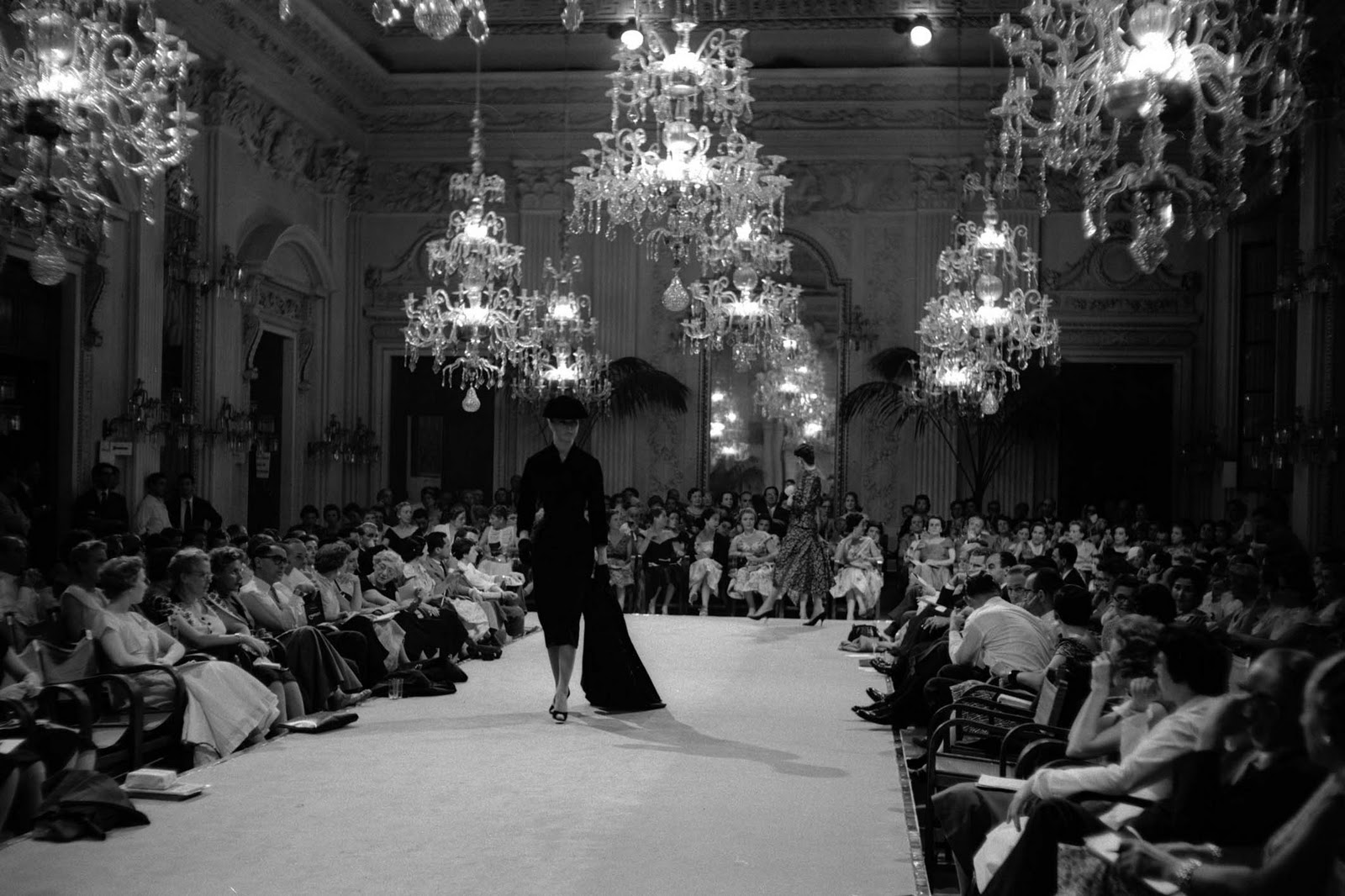


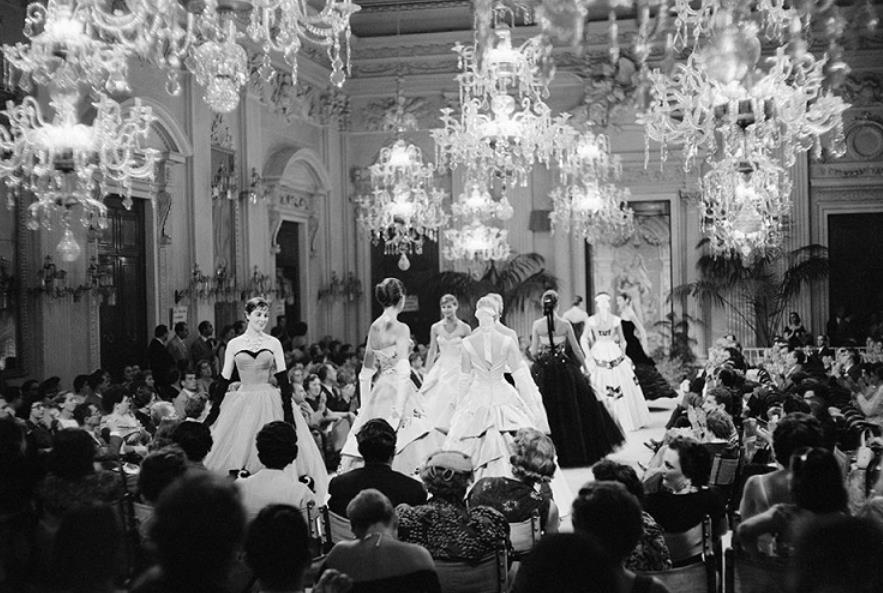
From this beginning in February of 1951, created by Giorgini, new talents were spawned, including Capucci, Galitzine, Krizia, Valentino and Mila Schon.
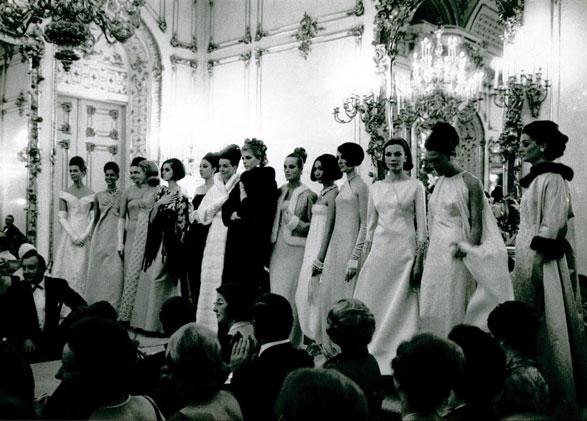

Giorgini continued to work with these shows and each year he increased their excitement by launching new initiatives, such as one year it was all about “textile promotion”.
Giorgini was also the first person to fully understand the potential of the new importance of prêt à porter, or ready-to-wear, and the so-called boutique lines. One could almost call the count a democrat. He was all over making high fashion available to regular people.

It’s a fact: Giovanni Battista Giorgini launched the world of Italian high fashion design! I am sure I speak for aficionado’s everywhere when I exclaim one big grazie a Giorgini!
This story isn’t finished, however, and I’ll be back with a second post presto. Stay tuned!
Updated: Nov. 12, 2014 I would like to thank the Director of the Archivio Giorgini in Florence, Mr. Neri Fadigati, for reading this post and making suggestions for improving it.
But in the meantime, here is a vintage video from 1959, which shows Giorgini speaking about Italian fashion at about 4 minutes in.
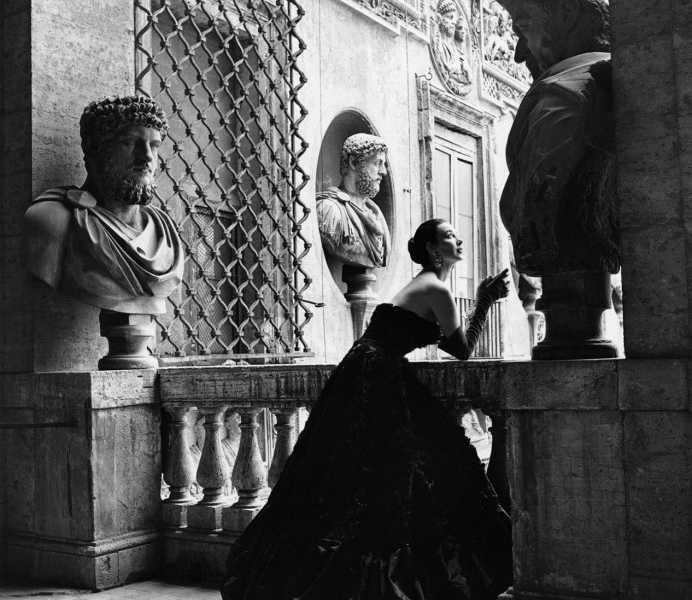
Gown above by Simonetta.
Last summer the V & A in London had an important exhibition on Italian fashion called The Glamour of Italian Fashion 1945 – 2014. Much of this post is taken from the website link, given at the bottom.
Both women’s and menswear were highlighted in the show, with an emphasis on the techniques, materials, and expertise for which Italian fashion is renowned.
The V & A included around 100 ensembles and accessories by leading Italian fashion houses including Simonetta, Pucci, Sorelle Fontana, Valentino, Gucci, Missoni, Giorgio Armani, Dolce & Gabbana, Marni, Fendi, Prada and Versace.
Here’s a video (Click on the “Vimeo” button to see it) about the opening of the show:
The Glamour of Italian Fashion 1945 – 2014 
The Glamour of Italian Fashion 1945 – 2014
Years following WWII:
Following the despair of the 1940s, Italy’s post-war government aimed to reinvigorate a country weakened in spirit and in physical and financial ruin. American aid helped Italy get back up on its feet, with support provided through the Marshall Plan.
Even the fashion world was helped by these conscious efforts to rebuild: the swift retooling of Italian factories alongside efforts by the country’s many entrepreneurs helped fashion become a cornerstone of Italy’s post-war recovery.

As clothing designers and textile manufacturers gradually resumed trading, their stylish designs responded to a hunger for glamor after years of wartime deprivation. Italian high fashion and fine tailoring became one of Italy’s most successful and popular exports.
Return to Luxury post WWII:

The fashion industry gradually built itself a luxury market. Giovanni Battista Giorgini launched Italy’s first internationally recognized fashion shows. In 1952, he secured the use of the Sala Bianca (White Hall), an opulent, chandelier-lit gallery in Florence’s famed Pitti Palace, for the landmark catwalk shows that would be held in the Renaissance city throughout the 50s. This exciting moment propelled Italian fashion onto the world stage, front and center.
Hollywood on the Tiber:
During the 1950s and 1960s, so many Hollywood films were shot on location in Italy that Rome was nicknamed “the Hollywood on the Tiber.” Movie stars like Audrey Hepburn and Elizabeth Taylor became almost ambassadors for Italian fashion, which fueled a keen international appetite for the luxe clothing fabricated in Italy. (Please see my earlier post on Roman Holiday and Funny Face; I am a huge fan of Miss Hepburn.)
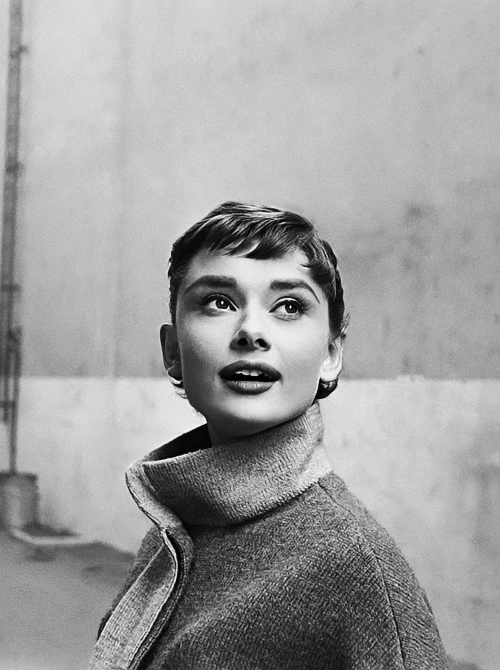
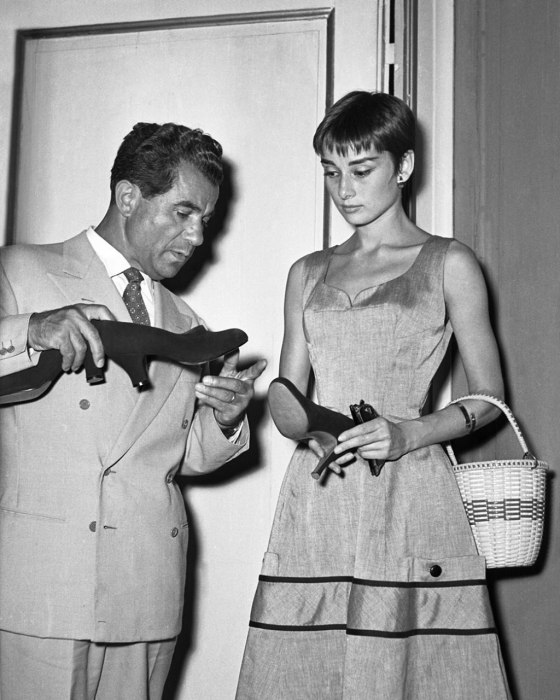
Salvatore Ferragamo discusses shoes with Audrey Hepburn

Throughout the 1950s and 1960s, Italy’s economy had grown rapidly, driven in part by the fashion and textile sectors. In the years that followed, despite social and political instability, Italy’s fashion industry blossomed. Numerous fashion and related manufacturing businesses started up, many of them family-run.
Tailoring
Italy’s reputation for tailored clothing developed internationally thanks to popular images of stylishly dressed Italian actors. Marcello Mastroianni’s trim suits in the 1960 film La Dolce Vita inspired fashion-conscious men everywhere.

That movie alone popularized the men’s Italian suit worldwide. Made to measure suits for an individual client were the launching pad for a growing international clientele, followed by the increasingly popular ready-made suits of later decades.

A well-tailored suit requires precisely cut fabric and exact fit, along with fine finishing details. The smallest design elements, such as the shape of a pocket or sleeve, often differed from region to region. A Neapolitan suit could be distinguished from one produced in Rome.
The emergence of ready to wear:
From the early 1970s, the popularity of couture gave way to enthusiasm for manufactured fashion. Milan – with its fashion press, advertising industry, and nearby clothing and textile factories – became Italy’s new fashion capital.


Made in Italy:
‘Made in Italy’ was a marketing campaign that celebrated a rainbow of premium goods: cinema, art, food, tourism, design and, chief among them, fashion. This decades-long, international promotional campaign ensured that ‘Made in Italy’ became the mark of style.
Cult of the designer:
Since the mid-1990s, fashion has become ever more international. Many more Italian designers have become celebrities in their own right and solidified their country’s reputation as a global tastemaker. These designers sell a universe of goods across continents, from clothing to furniture to hotel interiors. Some have transformed long-established family firms into international luxury brands. All have a devoted following.
The designers in this section are at varying stages on the journey to recognition. Some have the tradition of generations behind them. Others emerged onto Italy’s fashion scene only a few seasons ago. What unites them is a loyal clientele, an emphasis on Italian production, and a place at the top end of fashion, where Italy’s designers continue to find their competitive advantage.
The bright spot in Italy’s generally sober economic outlook is the limitless demand for a taste of Italian style. Italian fashion companies are still influential, even as Italy’s reputation has suffered.
What will ‘Made in Italy’ mean in future?
The years since 2000 have been marked by political scandal, immigration tensions and economic problems. Italy’s once famed networks of textile production and related industries are thinning. Its premium fashion houses are increasingly foreign-owned. Chinese factories, workers and consumers are now intertwined with the destiny of the Italian-made.
Sponsored by Bulgari:
Bulgari is proud to sponsor this exhibition. Bulgari is an emblem of Italian creativity and craftsmanship, renowned for its distinctively Italian style. From the 1960s Bulgari was acclaimed for creative designs incorporating colored gemstones. This exhibition features legendary jewels once owned by Elizabeth Taylor.


A couple of last looks from the exhibition:


The V & A exhibition also asked the question of what the future might hold for Italian fashion, including a short documentary about the future of the Italian fashion industry vis a vis competition from lower-wage markets such as India and Asia and also the marketing power of the established fashion houses, which makes it harder for newcomers to gain a foothold. Thought provoking stuff.
I didn’t post anything in the past two weeks doesn’t mean I didn’t do anything!
So, let me catch you up!

I encountered a stand of hollyhocks while looking for an iced Americano.

I went to see the exhibit at SAM on Japanese Fashion of the past 30 years. Love this dress!

Here’s another masterpiece from the exhibition.

And one more in black that proves my point that turbans are under utilized!
What’s that you say? You didn’t know I had a position on the wearing of turbans? Well I certainly do!
Here’s how I know:

That’s me in the brown turban while in Morocco climbing a mountain of sand in the Sahara Desert. I can tell you that turbans not only look good and add drama and mystery, they serve the useful purpose of keeping the sand out of your mouth and nose.

This camel driver knows the truth!
Ciao, ragazzi!

The next painter in my blog series on “American art” is John Singer Sargent.
Wow. What a painter. He could handle paint and create compositions as well as any artist from any country from any time period since oil paint was developed c. 1450.
Now that’s a big statement and I know it. I am going to illustrate his mastery with more of his work below.
For starters, allow your eye to get lost in the facile handling of pigment with long stokes of the brush in this detail:

Keeping in mind that this work is actually just a collection of colors on a flat canvas, you start to understand his mastery.
After you have studied the detail, you want to go back to the whole composition, so here it is:
Wouldn’t you love to talk to this woman and find out: what time of day is it and is she ready to go out or has she just returned home? Is she tired, is she bored, has she been jilted, has she jilted someone else? These would just be my starting questions.
Her long, flowing hair let down around her shoulders may be a clue. I’d assume that if she were about to go out her hair would be up. Just a guess, though.

For drama, you cannot top Sargent. Check out the controlled energy in the figure of this gorgeous dancer and the intense concentration of her accompanying musicians.
So yes, he could paint exotic subject matter. But he could also create unforgettable images of home life. I love the title of this work, Carnation, Lily, Lily, Rose, almost as much as I love the painting itself.


This stunning portrait, which today is known as Madame X and is in the collection of the Metropolitan Museum of Art, created a big stir. In the woman’s hauteur and her nonchalant exposure of bare flesh, the painting was very unorthodox.
Here’s a great photograph of Sargent in his studio with the painting.

And, although Sargent knocks me out with his oil paintings, I doubt very much that there has ever been a watercolorist who could top his handling of this unforgiving medium. It doesn’t hurt that his subject matter in watercolor is often street or water scenes of Venice.

So, back to the same old question: what is American about American art? The answer becomes increasingly irrelevant as the physical world became much smaller–as travel and communications expanded– in the late 19th-century. Sargent, like Cassatt and Whistler in discussed in earlier posts, was born in the United States and had many patrons here. Other than that, he was a cosmopolitan man of the world, and painting among the best of them.
Ciao for today.


 get back, lauretta!

You must be logged in to post a comment.