Horticulture
Almost unreal
The beauty I see on a normal daily walk this time of year is almost unreal!
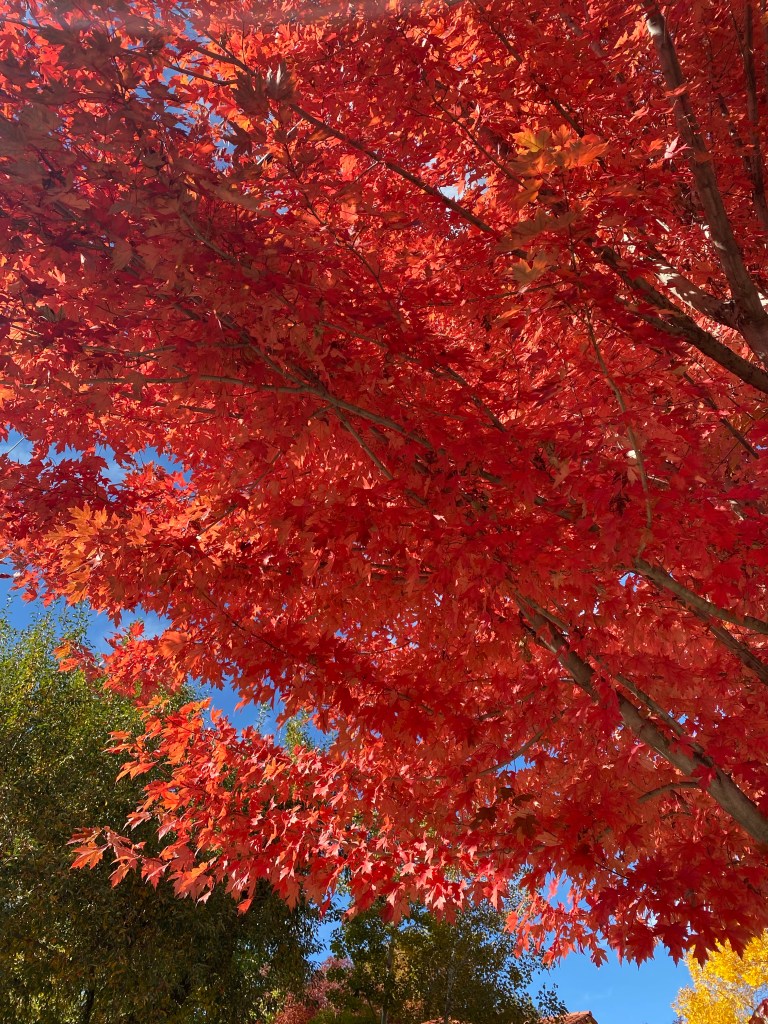




orti

Moving to Tokyo
Not me, but my friend Shiketsu Kou. I met this young Chinese man in language school in Florence, Italy. We immediately hit it off and became good friends. We’ve maintained our now long-distance friendship for over 6 years.
Rudy, which is his nickname, has been studying in Okayama Station, Japan for some time now and has been wanting to move to Tokyo and continue his studies. He was recently accepted in a school near Tokyo and just moved by train, while shipping his belongings in boxes through the postal system. Here is the envelope in which his acceptance was sent to him. He and I both think it is handsome, with a lovely stamp!

I’m eagerly follow his progress. It’s a big move to go near Tokyo, but Rudy is an ambitious young man who is absorbing Japanese language like a sponge.
I thought you might be interested in following his life as well, as he starts a new chapter near Tokyo. The following pictures show his move from Okayama to near Tokyo and setting up in his new student apartment.

Rudy found a new companion on the train ride! Ha ha.

The train ride.
First look at his apartment. A Japanese friend in Okayama helped Rudy find this place and he rented it sight unseen. He is very happy with it.

His sleeping quarters are in the attic space over the hallway. Below is a detail.

His new place has all the amenities as 20 something man needs for the student/bachelor life. He was particularly pleased with his high functioning toilet!



His building and a place to park a future bike.


Below, his kitchen area.


Below, the Japanese postal system delivered his boxes right on schedule, on the first day of his life here. He arrived late the night before and camped out until his things arrived.
After his boxes arrived, Rudy set out to find supplies, restaurants, and begin to explore his neighborhood.


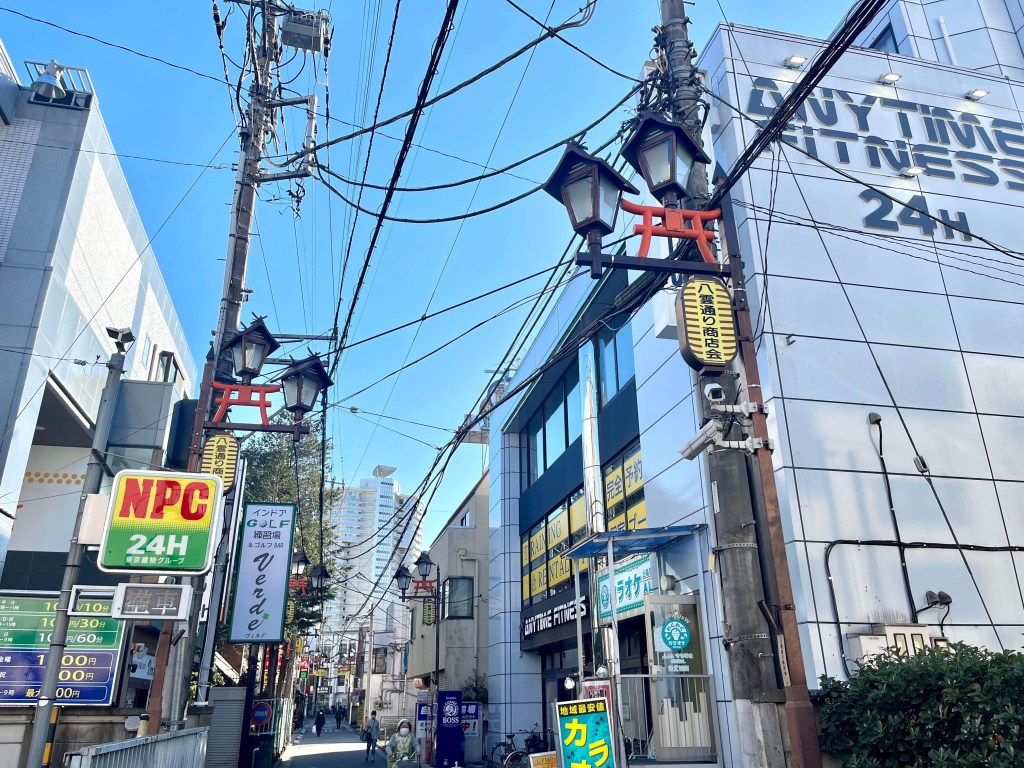
Probably explaining why Rudy and I initially hit it off and became fast friends: he notices the beauty around him. He happens to know how much I love camellia plants!
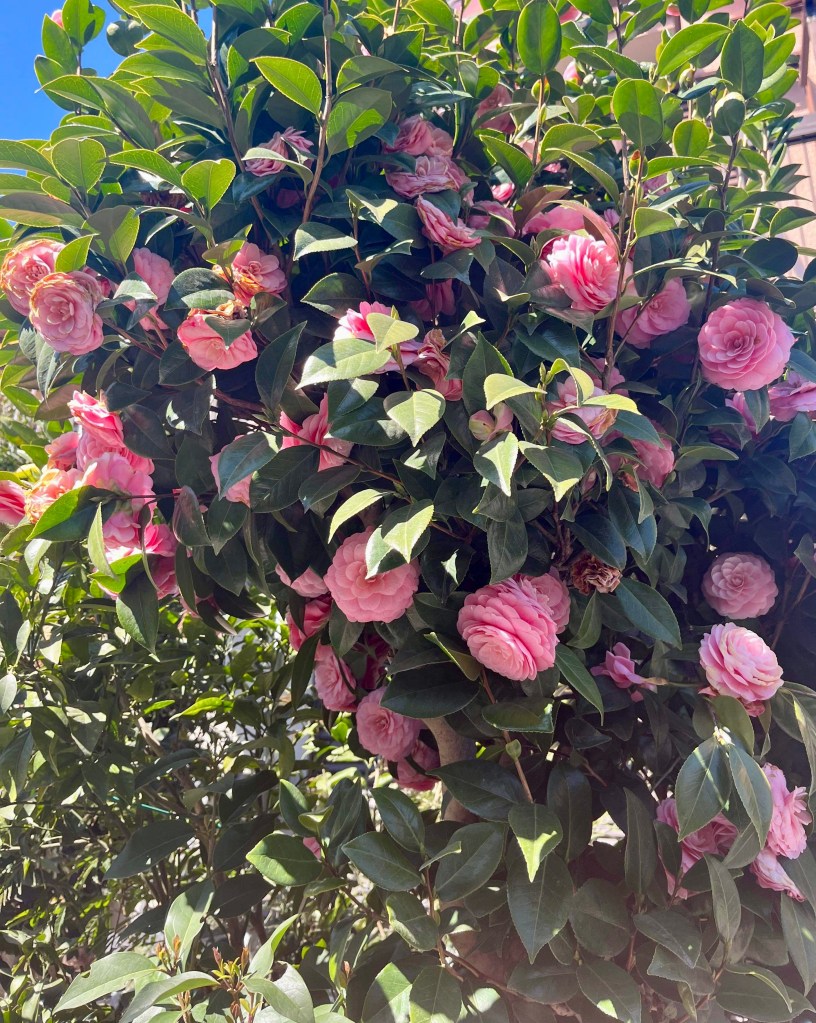


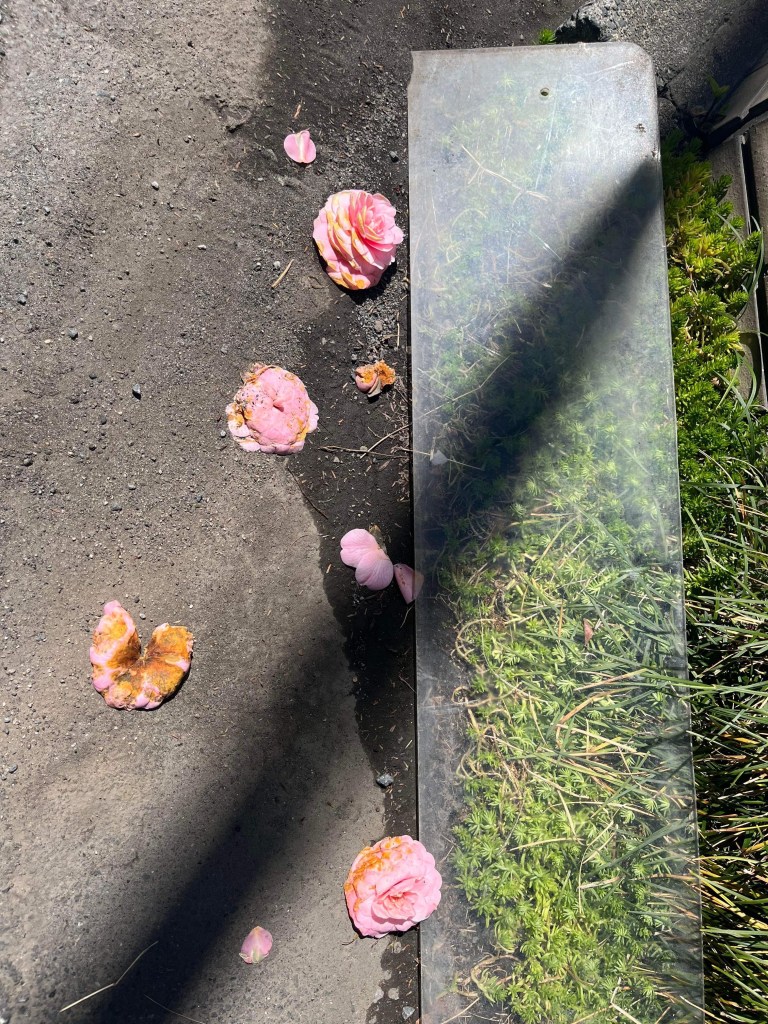
Actually, I decided the magnolia tree needs its own large spot!
Finding delicious food!


I’ll be posting more as Rudy settles in. I hope to visit him in time for next year’s cherry blossom season. Good luck, Rudy! I’m rooting for you!
One thousand words

March 8, 2015
Seattle, Washington, weeping willow branches with new growth shot from below
International Women’s Day (among other things)
Pacific Northwest Ballet: you say Forsythe, I say forsythia!

The photo above and the copy below are takend from PNB’s website.
A William Forsythe triple threat, including two PNB premieres, presents distinctive works from a dance maker legendary for his radical inventiveness. Forsythe achieves perfect neo-classical form in The Vertiginous Thrill of Exactitude, a dizzy delight of refined technique and crystalline pointe work. A sampler of duets, individually re-worked for PNB, New Suite’s multiple pairings articulate a diversity of forms as well as matters between the sexes. In the Middle, Somewhat Elevated returns: endlessly prized by dancers and audiences, its relentless pace and fierce physicality serve as paradigm for Forsythe’s revolutionary impact on 21st-century ballet.
The forsythia pictures are from all over the place! It’s springtime people! Even if you are still shoveling snow in much of the USA! Spring is coming!


Now that’s what I call a wisteria vine!
Besides being on-call yesterday for the etiquette police (https://wordpress.com/post/48620893/7789/), I wandered around the Palazzo Medici-Riccardi, taking in as many of its many marvels as possible.
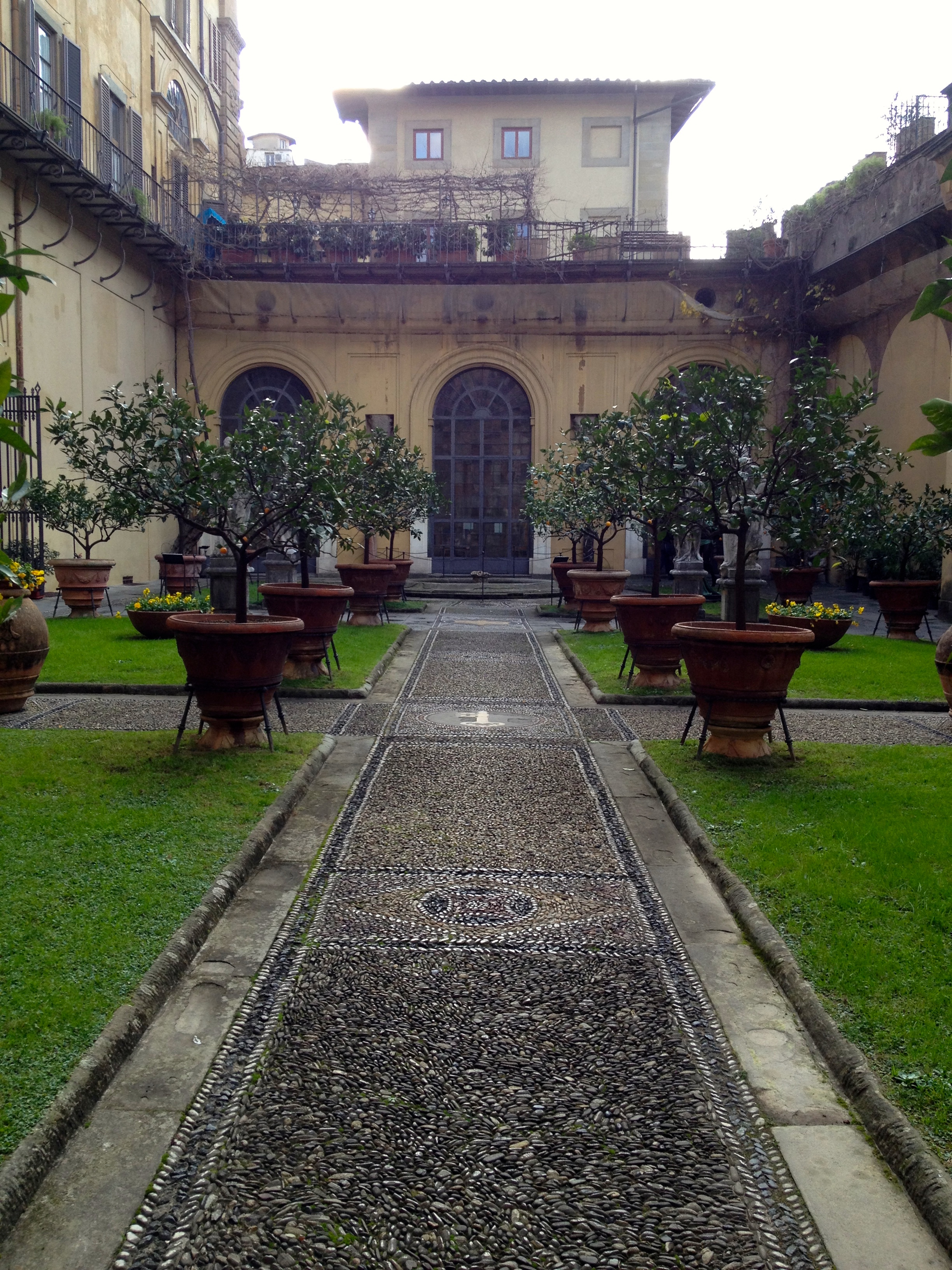
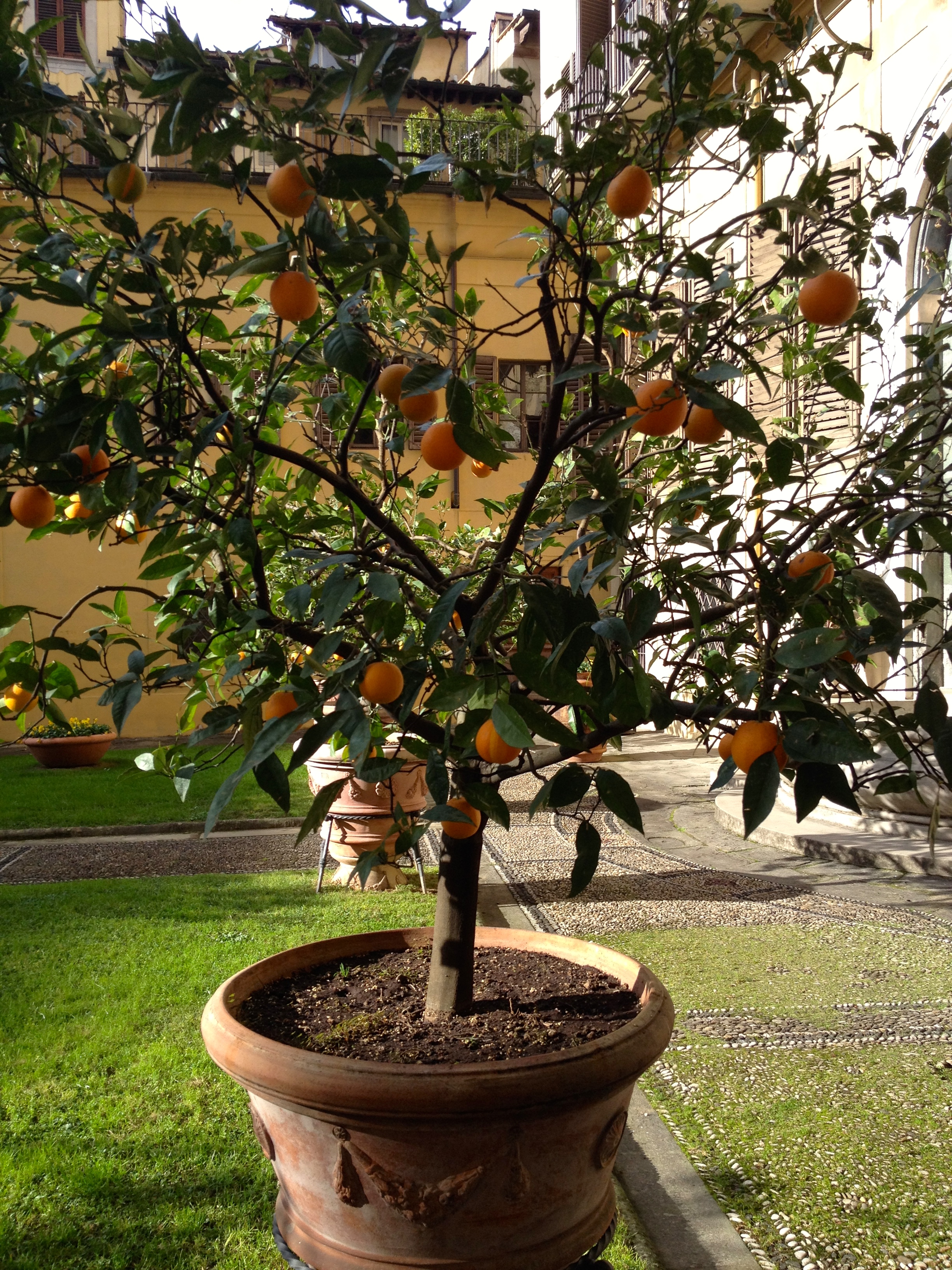
The potted orange trees were looking delightful, bearing their fruit like Christmas tree ornaments.
You know how much I love potted citrus trees in Italy in winter.
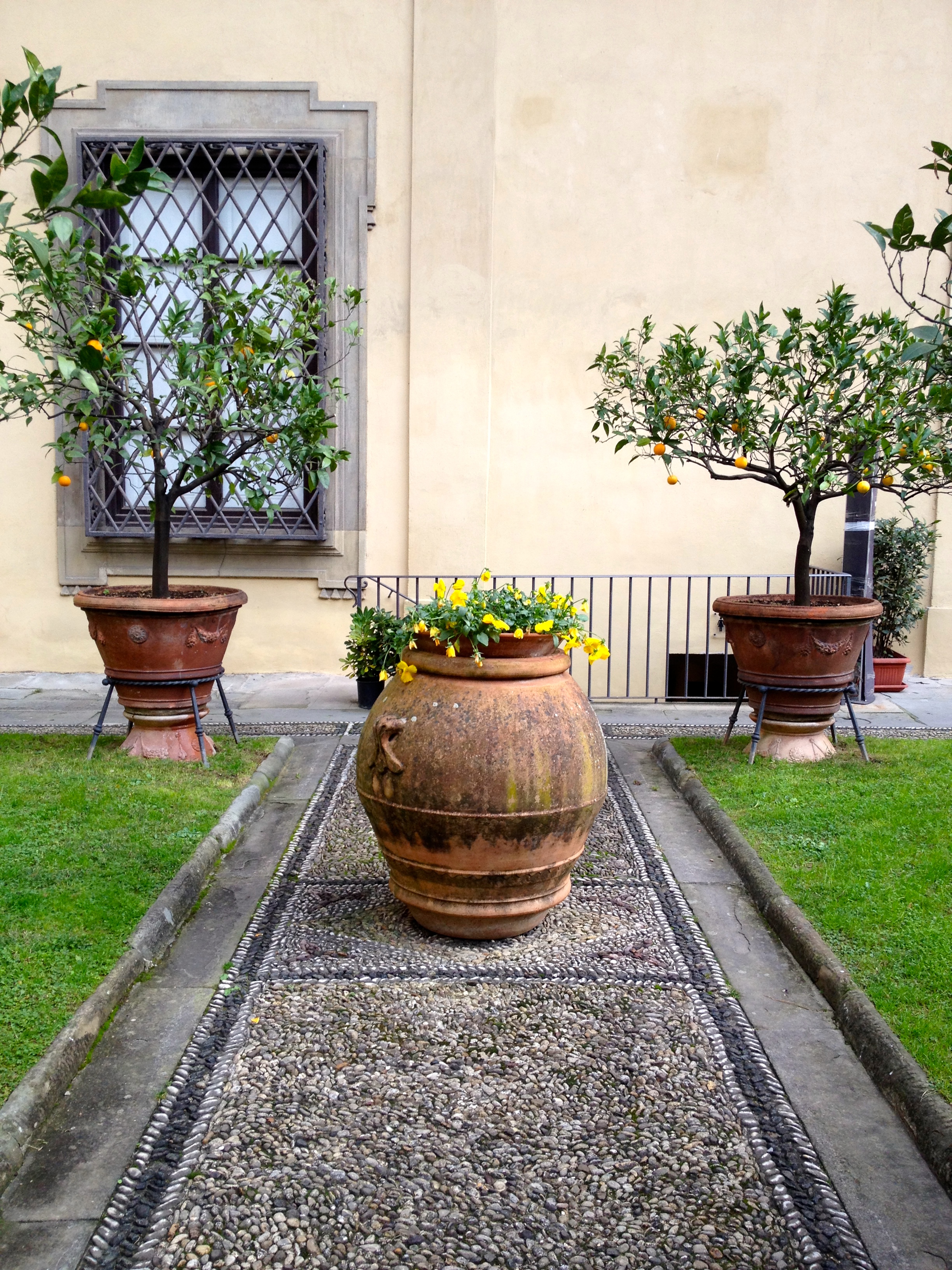
The pansies were holding their cheerful heads up very high, reaching for the warm rays of sunlight.

Much of the pathway system throughout the garden is made from these hand-set riverstones in concrete. I first saw this technique used in Japan, but obviously great cultures think alike when it comes to some things.
Hold that thought on the possible influence of Asian techniques for below.
I also like the way the moss has added its own organic modification to the image presented to us. You can really see the moss on the pavement 3 pictures up, the one of the close-up of the orange tree. Isn’t that moss wonderful! And it adds a slight earthy fragrance to the garden, and maybe a little humidity. Moss rocks!
And, at one end of the great formal garden, I noticed a very large and obviously very aged wisteria vine. It added a majestic contrast of wild nature into this otherwise very orderly landscaped space.

This wisteria trunk is magnificent, for its wildness and strength (wisteria can be a weed in some places). It’s being partially held up by a wire support as you can clearly see. All wisterias need supports, whether they’re in nature or in a man-made garden.
The vine has been severely pruned, obviously, over the centuries, and I couldn’t help but wonder if it were growing here when Lorenzo de Medici was living here in the quattrocento. It’s possible.
The picture below shows a younger vine trunk on the opposite side of the courtyard. The two vines are strategically placed so that they meet over one end of the courtyard, covering it with lavender colored blossoms in a manner I can only imagine for its stunning beauty.
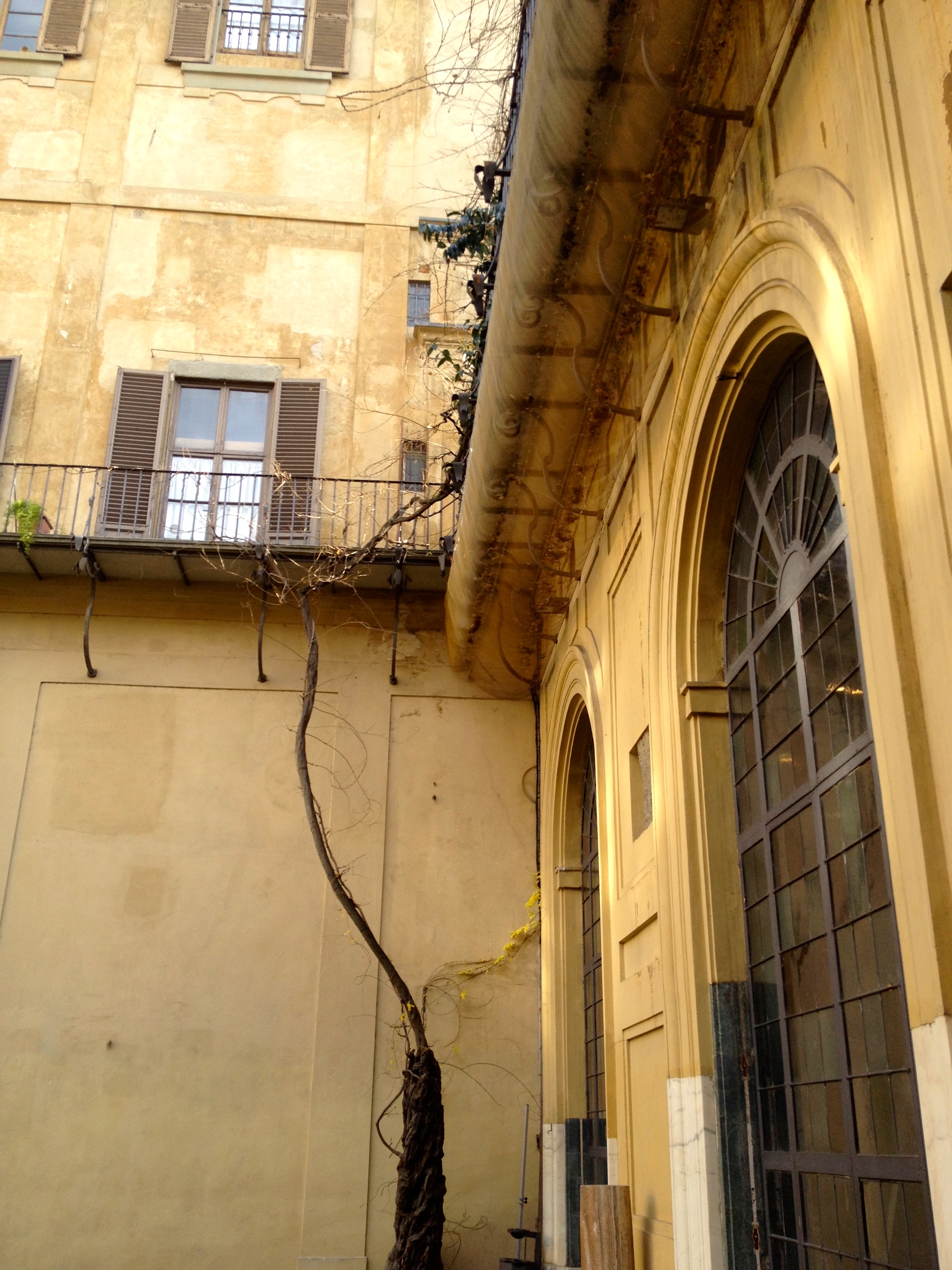
I know an old wisteria vine in Seattle quite well. When I give tours of the Seattle Japanese Garden to visitors, I never fail to walk them by the braided trunk of that vine and challenge them to guess how old it is. I don’t have a great picture of the Seattle vine trunk available right now, but if you look at the lower right corner in the following picture, you can make out some of the trunk’s volume and shape.

This Seattle wisteria plant is about 100 years old, for it was planted in the 1960s when it was already known to be about 40 years old. The landscape architect for the Japanese Garden hand-selected most if not all of the specimen in that landscape, and it is not a coincidence that an already mature wisteria plant was placed in the Seattle garden.
So, if the Seattle wisteria is about 100, with a diameter of the trunk at about 6 inches
Just imagine how old the Florence wisteria must be with its largest diameter at about 20 inches. I think you are starting to get the picture.
So, you see, it is possible that this plant has watched 600 years of human activity in and around it. We always say, “if walls could talk.” In this case, I wish plants could talk. Think what this vine could tell us about the people who lived and plotted here. It boggles the mind.
And, as far as aesthetics: well, for a person with a vivid horticultural imagination, my mind can go wild with visions of the Florence wisteria in bloom in a few months. As a reminder of wisteria’s glory, take a quick look at the Seattle Japanese Garden vine in bloom about 8 months ago.
Love, love, love. Pendulous racemes, as heavy with flower as a hanging bunch of grapes. Lavender color. Beauty.

POW! Gets me every time. A beauty knock-out!
OK, so one last point: remember the East meets West confluence I noted above with the inlaid riverstone pavement? Well, add this to the mix. The source, as always, is my home boy, Wikipedia:
Wisteria (also spelled Wistaria or Wysteria) is a genus of flowering plants in the pea family, Fabaceae, that includes ten species of woody climbing vines native to the Eastern United States and to China, Korea, and Japan. Some species are popular ornamental plants, especially in China and Japan.
Uh-huh, that’s right, wisteria, especially the ornamental type, is native to Asia. So, we can say with confidence that just as Italy (read Europe) was importing porcelains, teas, silks and exotic spices from the East, plant collectors were hustling hither and yon all over Asia, looking for plant sources that could be grown in Europe and which European would like to grow in their gardens.
I am an art historian by training and, as surely as we study provenance as a tool for determining a painting’s authenticity, horticulturalists study when and how plant materials were introduced to other continents. It is completely plausible that the paving river stones and the use of the ornamental wisteria informed the Medici patrons who built this palazzo, or the Riccardi family who later enlarged it–or perhaps just the garden designers and workers who created this formal giardino— with layers of culture that only the well-informed–then and now–can truly appreciate. I live for those people. I am one of those people.
And, finally, a wondrous yet superficial fact: did you know that you can tell if the vines are from China or Japan by whether the vine twines itself around its support in a clock-wise or counter-clockwise pattern. The Chinese varieties twine clockwise; the Japanese counter-clockwise. Isn’t nature grand! I just love it for its complications and patterns.
Now, if your mind works like mine does, you are going to ask me which way the Florence wisteria twines.
And I am going to admit that I have no idea, because I wasn’t thinking about that yesterday when I was there, and also because the vines had been so severely pruned that there was no obvious indicator of twining direction.
Which obviously means I will have to come back to Florence in May and June to get to the bottom of this mystery.
Ha ha. Don’t I wish!
January 12, 2015; Boboli Gardens

Lemon tree, very pretty
“Lemon tree very pretty and the lemon flower is sweet
But the fruit of the poor lemon is impossible to eat.”
I honestly didn’t even know I knew these lyrics.***
But, I am a boomer and I inhaled these lyrics while snacking on potato chips, sipping Coca Cola, sitting at our gray formica and chrome table, in our kitchen with the pink refrigerator, wearing my cut-off shorts, and my white Ked “tennis shoes” even though I had yet to play tennis! I had a pixie haircut, was tall for my age and what people referred to as “skinny.” What I wouldn’t give to be skinny again!
Oh, and I had tanned skin. I am very fair with light eyes and I had to burn the top layer of my skin off in order to tan. With baby oil and iodine and/or “suntan lotion” that made me burn faster, allegedly. I am paying for the tanned skin now.
Did you know that Coco Chanel popularized tanning in the 1920s? Up until then, only the poor were tanned because they had no choice but to work outdoors. But, I digress.
And the memories, such as this memory about lemon tree lyrics, show up unannounced. It’s kinda crazy.
So, back to the present.
Today, I followed a path into this secret garden.
How can you not go through this arch when given the chance?

And what a reward!
Potted lemon trees bearing lemons.


Oh, and p.s., there was a potted orange tree too. But I don’t know any lyrics or poems about orange trees.
Or, do I?
No, I don’t. What a relief.

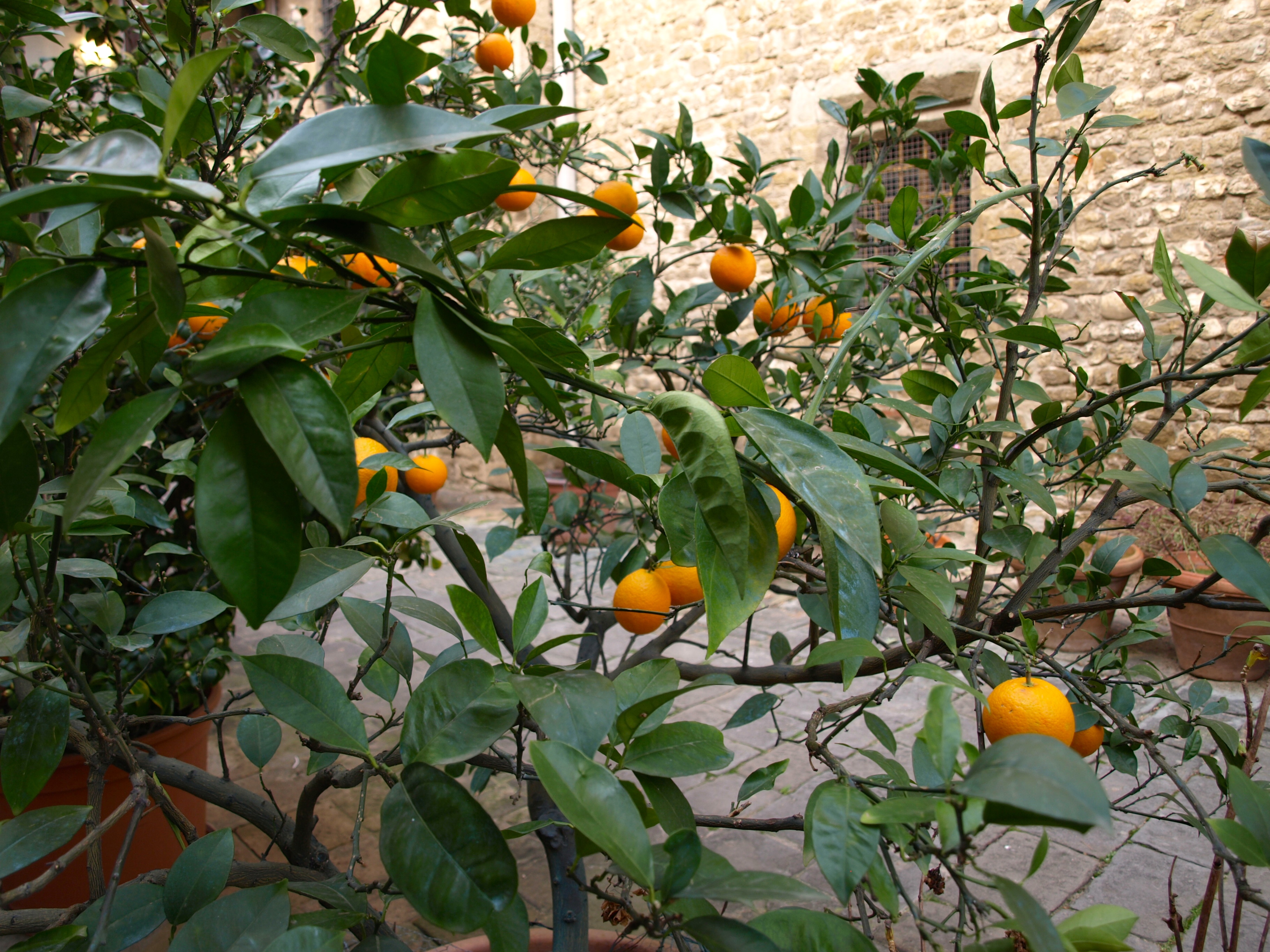
And a potted camellia tree/shrub, which wasn’t doing so well, and made me miss Seattle where camellias are blooming beautifully right now.
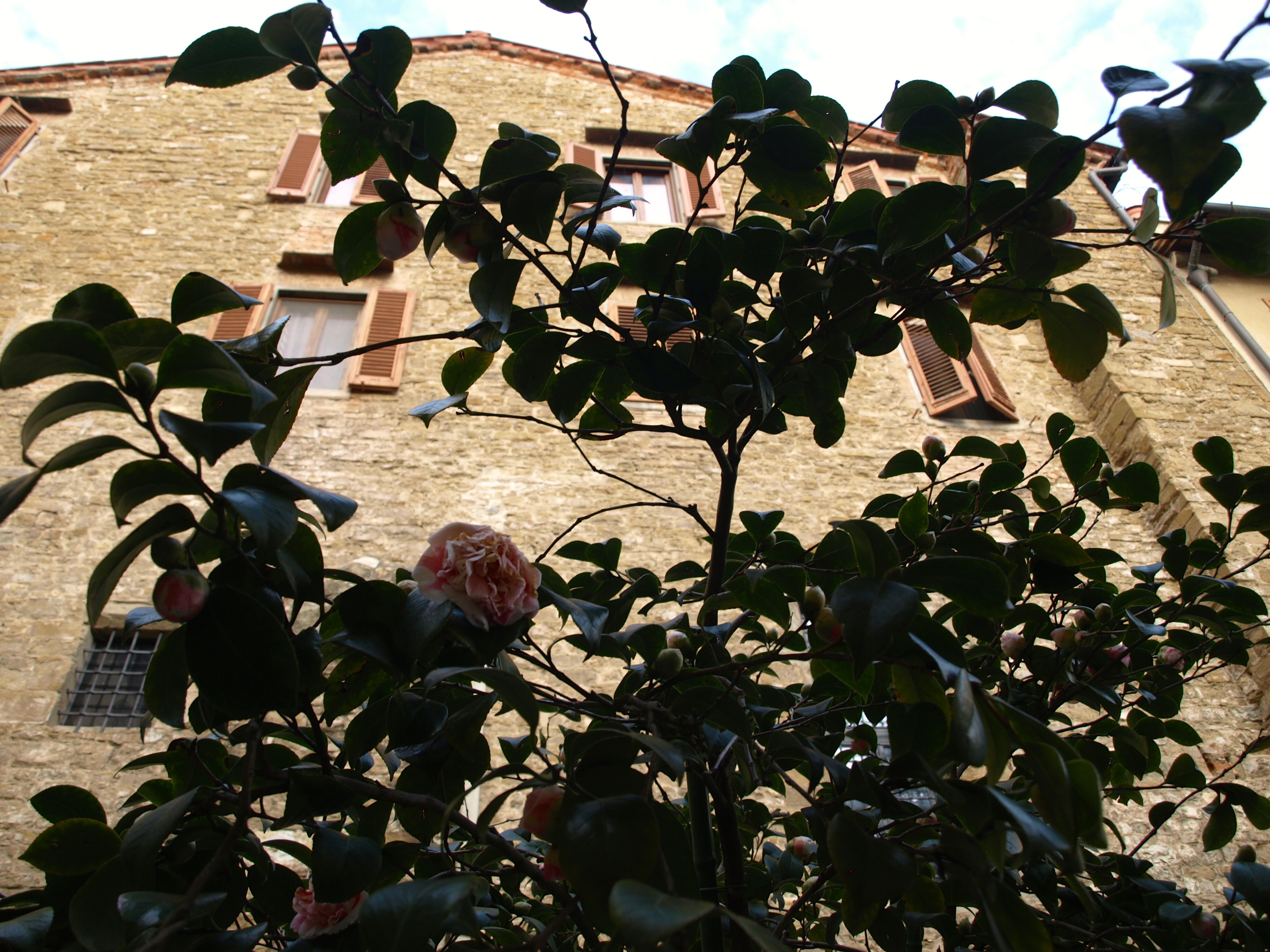
The light pink camellia blossoms don’t show well in this photo, but they were really not doing well.
Oh, and another p.s., this isn’t really a secret garden. It is the entryway for the Leather School of Santa Croce. Anyone who has stamina to walk a long way to enter the leather school can see the potted plants and more!
***Will Holt wrote Lemon Tree in the 1950s, basing the tune on a Brazilian folk score arranged by Jose Carlos Burle and made popular by Wilson Simonal. The lyrics compare love to a lemon tree: the tree is pretty, the flower is sweet, but the fruit is impossible to eat. Hmm. Interesting. Thanks to Wikipedia, as usual.
I probably listened to the song on the radio in the late 1950s or 1960s. My dad always had the radio on in his truck and in our house. I might have heard the version recorded by Peter, Paul and Mary, or by The Kingston Trio or any other number of recording artists from the period. In 1965, Trini Lopez’s recorded version of Lemon Tree hit number 20 on the Hot 100 and I probably heard it, and memorized it unknowingly, that year. :-))
It’s November! Do you know where your flowers are?
Check out these hydrangeas still in bloom just beneath my bedroom window.


Of course the hydrangeas are not at their peak, as in this picture:


But what the heck! It’s November and I am happy with this view.

Seattle Japanese Garden in autumn
Here’s how the garden looked today. Pretty awesome. I don’t think many words are necessary!


White camellias in bloom!


The pictures of the glossy green leaves above are a camellia shrub. You can see the flower buds swelling. They’ll open this winter.


Espaliered cotoneaster.

I think the red berries are a viburnum, judging from the leaves.


See the rock to the right of the lantern in the water? Two turtles sunning.

They were ready for their close-up shots.


This plant is this red…these are not flowers, they are leaves!
 get back, lauretta!
You must be logged in to post a comment.